e99 Online Shopping Mall

Geometry.Net - the online learning center Help  
Home  - Science - Animal Biology (Books)

  1-20 of 100 | Next 20
A  B  C  D  E  F  G  H  I  J  K  L  M  N  O  P  Q  R  S  T  U  V  W  X  Y  Z  

click price to see details     click image to enlarge     click link to go to the store

$35.98
1. Animal Biology and Care
 
$5.95
2. The Encyclopedia of Animal Biology
 
$9.00
3. Life: The Science of Biology:Volume
 
4. Biology of Animal Behavior 2e
 
$1.57
5. Animal Biology (Prentice Hall
$28.40
6. Biology Takes Form: Animal Morphology
$75.00
7. Biology of Animals
 
$51.95
8. Biology Of Animal Behavior
$73.76
9. Companion Animals: Their Biology,
$55.95
10. Animal Locomotion (Oxford Animal
$12.43
11. The Origin of Animal Body Plans:
$23.00
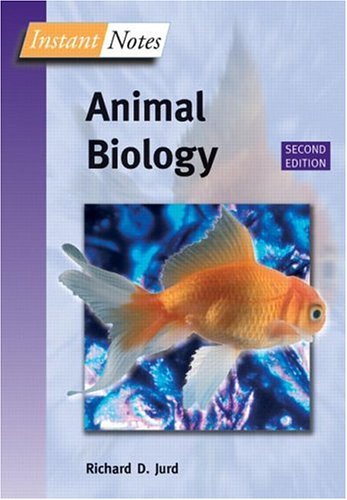
12. Instant Notes in Animal Biology
$31.31
13. General Techniques of Cell Culture
 
$50.00
14. Invitation to Biology, Part 2:
$60.99
15. Animal Architecture (Oxford Animal
$49.00
16. Animal Eyes (Oxford Animal Biology
$34.95
17. Anthropomorphism, Anecdotes and
$4.89
18. Animals and Their World (Young
$134.05
19. Animal Sciences: The Biology,
 
20. Man and animal in the zoo: Zoo

1. Animal Biology and Care
by Sue Dallas
Paperback: 304 Pages (2006-06-16)
list price: US$39.99 -- used & new: US$35.98
(price subject to change: see help)
Asin: 1405137959
Average Customer Review: 5.0 out of 5 stars
Canada | United Kingdom | Germany | France | Japan
Editorial Review

Book Description
Following the success of the first edition, this new edition has been expanded to include more information on small mammals, birds and fish. Intended as a foundation text for those on animal care, nurse auxiliary and veterinary care assistant courses, it introduces essential theoretical background information and clearly outlines the practical skills necessary when embarking on the care of any animal.


  • Designed specifically to meet the requirements of animal care, pre-veterinary nursing auxiliary and care students;


  • Provides basic training in animal biology and care, with particular attention given to those subjects that students find difficult to understand, such as anatomy and physiology;


  • New chapter additions on fish and birds.

Clearly and simply laid out, with over 150 illustrations, Animal Biology and Care 2e will be invaluable to all those training or working in animal care. ... Read more

Customer Reviews (1)

5-0 out of 5 stars Highly recommended, "student friendly" basic introduction.
In Animal Biology And Care, Sue Dallas provides a comprehensive introduction for animal care and pre-veterinary nursing students in basic animal biology and care, with particular attention to anatomy andphysiology. Section 1 introduces the reader to basic animal cell and tissuestructure, organ structures and systems. Section 2 focuses on animal healthand husbandry, as well as the basic requirements for animal health, diseasetransfer, and the effect of micro-organisms on body systems. Section 3covers the nursing procedures for an animal and includes an introduction tomedical terminology. Offering a clear, "student friendly" textwhich is enhanced with more than 150 illustrations, Animal Biology And Careis highly recommended, basic, essential reading for anyone training orworking in the field of animal care. ... Read more


2. The Encyclopedia of Animal Biology (The Encyclopedia of Animal Series)
 Hardcover: 144 Pages (1987-09)
list price: US$29.95 -- used & new: US$5.95
(price subject to change: see help)
Asin: 0816018170
Canada | United Kingdom | Germany | France | Japan

3. Life: The Science of Biology:Volume III: Plants and Animals
by William K. Purves, David Sadava, Gordon H. Orians, H. Craig Heller
 Paperback: 332 Pages (2003-12-08)
list price: US$51.95 -- used & new: US$9.00
(price subject to change: see help)
Asin: 0716758105
Average Customer Review: 4.5 out of 5 stars
Canada | United Kingdom | Germany | France | Japan
Editorial Review

Book Description
Authoritative, thorough, and engaging, Life: The Science of Biology achieves an optimal balance of scholarship and teachability, never losing sight of either the science or the student. The first introductory text to present biological concepts through the research that revealed them, Life covers the full range of topics with an integrated experimental focus that flows naturally from the narrative. This approach helps to bring the drama of classic and cutting-edge research to the classroom—but always in the context of reinforcing core ideas and the innovative scientific thinking behind them. Students will experience biology not just as a litany of facts or a highlight reel of experiments, but as a rich, coherent discipline.

The new edition builds on Life's enduring strengths by doing what this acclaimed text has always done: combine a contemporary view of the discipline with innovative teaching and learning features. New chapters and essays, an enhanced art program, and standard-setting media and supplements combine to make this edition the finest yet. ... Read more

Customer Reviews (27)

5-0 out of 5 stars Life - The Science of Biology 8th edition (by Sadava & et al)
This book arrived rapidly and I was quite pleased. The book also came in great condition as if new, even though it was used.I am a happy shopper.Great seller.Great product.I would buy again from the seller - good business! I feel like a valued customer.

5-0 out of 5 stars impressive and thorough
An undergraduate, freshman level biology class I took used this as its textbook.It is thorough and detailed, packed with information on a broad range of biological topics, written in a highly accessible manner that requires no special training to understand.It covers such topics as the cell, heredity, evolution, plants, animals, and ecology.It's not quite as well written as the finest textbooks I've read, such as Alberts' Molecular Biology of the Cell or Kandel's Principles of Neural Science, but it's well written nonetheless.Anyone interested in the subject of biology should give this a read.Author of Adjust Your Brain: A Practical Theory for Maximizing Mental Health.

5-0 out of 5 stars Wonderful textbook!
I graduated from college in the early 70's with a B.S. major in Physics. Having retired from the business world, I recently discovered the absolutely wonderous advances in what I believed to be the "non-physical" sciences. Hooray for E.O.Wilson's concept of concilience!

I'm studying Biology using "Life" and its associated website. What amazing fun! I love this book and it is the best textbook I've ever studied. This book is not a good "read" - it's a great book to study!

4-0 out of 5 stars good book
i bought this text cause it was required for class. It's pretty good, i don't know why you'd read it for fun, but it's a pretty goodtextbook.

5-0 out of 5 stars I'm in Biology heaven
Ah, the holy grail of textbooks: To find a textbook that is completely clear, explains all aspects of the subject, lets you understand rather than just memorize so you can think independently on the subject and actually enjoyable to read.Textbooks like those are incredibly rare and they are worth their weight in gold once you find them.Looks like we found one for biology. ... Read more


4. Biology of Animal Behavior 2e Im
by GRIER
 Paperback: 112 Pages (1994-01-01)

Isbn: 0697234932
Canada | United Kingdom | Germany | France | Japan

5. Animal Biology (Prentice Hall World of Nature)
by Steve Parker
 Hardcover: 95 Pages (1992-08)
list price: US$15.00 -- used & new: US$1.57
(price subject to change: see help)
Asin: 0130334081
Canada | United Kingdom | Germany | France | Japan

6. Biology Takes Form: Animal Morphology and the German Universities, 1800-1900 (Science and Its Conceptual Foundations series)
by Lynn K. Nyhart
Paperback: 428 Pages (1995-10-15)
list price: US$35.00 -- used & new: US$28.40
(price subject to change: see help)
Asin: 0226610888
Canada | United Kingdom | Germany | France | Japan
Editorial Review

Book Description

Morphology—the study of form—is often regarded as a failed science that made only limited contributions to our understanding of the living world. Challenging this view, Lynn Nyhart argues that morphology was integral to the life sciences of the nineteenth century. Biology Takes Form traces the development of morphological research in German universities and illuminates significant institutional and intellectual changes in nineteenth-century German biology.

Although there were neither professors of morphology nor a morphologists' society, morphologists achieved influence by "colonizing" niches in a variety of disciplines. Scientists in anatomy, zoology, natural history, and physiology considered their work morphological, and the term encompassed research that today might be classified as embryology, systematics, functional morphology, comparative physiology, ecology, behavior, evolutionary theory, or histology. Nyhart draws on research notes, correspondence, and other archival material to examine how these scientists responded to new ideas and to the work of colleagues. She examines the intertwined histories of morphology and the broader biological enterprise, demonstrating that the study of form was central to investigations of such issues as the relationships between an animal's structure and function, between an organism and its environment, and between living species and their ancestors.
... Read more

7. Biology of Animals
by Cleveland P. Hickman
Paperback: Pages (1999-10)
list price: US$132.45 -- used & new: US$75.00
(price subject to change: see help)
Asin: 0072398396
Average Customer Review: 5.0 out of 5 stars
Canada | United Kingdom | Germany | France | Japan
Editorial Review

Book Description
Biology of Animals is an introductory one-semester text for science majors and non-majors. This respected text has been a best-seller for more than 20 years as a result of it's accuracy, quality illustrations, clarity of writing, and current research and taxonomy. ... Read more

Customer Reviews (1)

5-0 out of 5 stars great book for learningbasic biological systems
I used this book in a zoology course freshman year; however, it is still an active reference for overview in many of my upper biology couse. I would suggest it for anyone wanting a starting point in the biological sciences. ... Read more


8. Biology Of Animal Behavior
by James W. Grier, Theodore Burk
 Hardcover: 890 Pages (1992)
list price: US$51.95 -- used & new: US$51.95
(price subject to change: see help)
Asin: 0801626994
Canada | United Kingdom | Germany | France | Japan

9. Companion Animals: Their Biology, Care, Health, and Management
by Karen L. Campbell, John R. Campbell, James E. Corbin
Hardcover: 640 Pages (2004-07-25)
list price: US$112.40 -- used & new: US$73.76
(price subject to change: see help)
Asin: 0131136100
Canada | United Kingdom | Germany | France | Japan
Editorial Review

Book Description
Comprehensive and up-to-date, this book makes a useful reference devoted to companion animals. It provides underpinning principles and time-tested practical information for those preparing for careers related to the health and quality of life of all creatures—with special emphasis on companion animals.Chapter topics include choosing a dog or cat; companion birds, reptiles, amphibians, rodents, ferrets, and lagomorphs; medical records and case histories; feeding and nutrition; care, management, and training of dogs and cats; fitting, grooming, and showing; companion animal health; kennel/cattery design and management; career opportunities associated with companion animals; and trends/future of companion animals and related functions.For pet food manufacturers, pet stores, pet owners, pet breeders, and veterinary medical groups. ... Read more


10. Animal Locomotion (Oxford Animal Biology Series)
by Andrew A. Biewener
Paperback: 296 Pages (2003-08-28)
list price: US$59.95 -- used & new: US$55.95
(price subject to change: see help)
Asin: 019850022X
Canada | United Kingdom | Germany | France | Japan
Editorial Review

Book Description
This book provides a clear foundation, based on physical biology and biomechanics, for understanding the underlying mechanisms by which animals have evolved to move in their physical environment. It integrates the biomechanics of animal movement with the physiology of animal energetics and the
neural control of locomotion. The author also communicates a sense of the awe and fascination that comes from watching the grace, speed, and power of animals in motion.
Movement is a fundamental distinguishing feature of animal life, and a variety of extremely effective mechanical and physiological designs have evolved. Common themes are observed for the ways in which animals successfully contend with the properties of a given physical environment across diversity
of life forms and varying locomotor modes. Understanding the common principles of design that span a diverse array of animals requires a broad comparative and integrative approach to their study.This theme persists throughout the book, as various modes and mechanisms of animal locomotion are
covered. Since an animal's size is equally critical to its functional design, the effects of scale on locomotor energetics and mechanics are also discussed.
Biewener begins by examining the underlying machinery for movement: skeletal muscles used for force generation, skeletons used for force transmission, and spring-like elements used for energy savings.He then describes the basic mechanisms that animals have evolved to move over land, in and on the
surface of the water, and in the air. Common fluid dynamic principles are discussed as background to both swimming and flight. In addition to discussing the locomotor mechanisms of complex animals, the locomotor movement of single cells is also covered.Common biochemical features of cellular
metabolism are then reviewed before discussing the energetic aspects of various locomotor modes.Strategies for conserving energy and moving economically are again highlighted in this section of the book.Emphasis is placed on comparisons of energetic features across locomotor modes. The book
concludes with a discussion of the neural control of animal locomotion.The basic neurosensory and motor elements common to vertebrates and arthropods are discussed, and features of sensori-motor organization and function are highlighted.These are then examined in the context of specific examples
of how animals control the rhythmic patterns of limb and body movement that underlie locomotor function and stability.
... Read more


11. The Origin of Animal Body Plans: A Study in Evolutionary Developmental Biology
by Wallace Arthur
Paperback: 357 Pages (2000-09-11)
list price: US$45.00 -- used & new: US$12.43
(price subject to change: see help)
Asin: 0521779286
Average Customer Review: 5.0 out of 5 stars
Canada | United Kingdom | Germany | France | Japan
Editorial Review

Book Description
While neo-Darwinism has considerable explanatory power, it is widely recognized as lacking a component dealing with individual development, or ontogeny.This lack is particularly conspicuous when attempting to explain the evolutionary origin of the thirty-five or so animal body plans, and of the developmental trajectories that generate them. This significant work examines both the origin of body plans in particular and the evolution of animal development in general. Wallace Arthur ranges widely in his treatment, covering topics as diverse as comparative developmental genetics, selection theory, and Vendian/Cambrian fossils. He places particular emphasis on gene duplication, changes in spatio-temporal gene-expression patterns, internal selection, coevolution of interacting genes, and coadaptation. The book will be of particular interest to students and researchersin evolutionary biology, genetics, paleontology, and developmental biology. ... Read more

Customer Reviews (2)

5-0 out of 5 stars Different evolutionary contexts when body plans originated
Let's see, my take on the book in a nutshell: the conditions under which evolution operated during the Cambrian/Vendian times were different from the conditions following that time in two main ways, and these differences can potentially account for the origin of the many animal body plans during those early periods and the lack of new ones since.

First, ~550 million years ago most animals were very much simpler (fewer cells, for example) than they are today, so changes to their developmental programs would have been better tolerated.The more complex any system is (the more parts it has, the more coordinated and well-matched those parts must be, etc.), the more rigidly constrained and less amenable to a given magnitude of change it is.So the simpler developmental processes (simpler adult-form end product, fewer interactions between developmental genes, etc.) of early animals would have allowed for a 'large-scale' change to be incorporated into that animal's ontogeny, though if a change of the same magnitude were to occur today, it would be too disruptive to the complex developmental program and would be eliminated (note that 'large-scale change' refers to the adult form: the actual change that caused that altered end result could be a typical small scale mutation, in an early developmental stage).The author is not proposing Goldschmidt's "hopeful monsters" that occur due to 'macromutations', but rather an intermediate position between that and the "only micromutations" view of gradualistic neo-Darwinism.And, as just mentioned, mutations in developmental processes (even ones that resulted in 'macromutations' in the adult form) would have been more tolerated in the simpler animals that existed ~550 mya than they would be in today's.

Second, ~550 million years ago animal diversity was extremely more limited than it is today, so there was a huge number of open niches: a plentitude the likes of which has never again existed on our planet.An organism that happened to find itself in one of the multitude of open niches (by means of a "semi-macro" mutation, the product of a change in a developmental gene) would have faced little if any competition.The reduced external competition would potentially allow the morpholigical variation(s), that would otherwise likely have been eliminated, to persist. (The sudden change could leave the organism with a lower level of internal coordination: over time, internal cooadaptation could evolve to 'catch up' with the change in morphology: these internal adjustments would leave no trace in the fossil record).

Combining these two ideas produces a reasonable explanation of the 'explosion' in new body plans in Vendian/Cambrian times.

Of course there's much more to the book than my above "nutshell" presentation.The Evo-Devo perspective presented in the book allowed me to view evolution in a new way: it gave me a better understanding of the "creative" side of evolution than I had before when viewing things solely from a gradualistic, neo-Darwinian frame of reference.

PS:The book is "aged" (1997) but is not outdated.

5-0 out of 5 stars Body plans, hox genes, and developmental biology
This work is a technical introduction to evolutionary developmental biology and introduces a very different perspective on evolution from what one is used to in the usual biology texts. In spite of its moderate difficulty, to a non-specialist, it is actually much clearer than simplified versions of Darwinism, and one can recommend it strongly as a perspective on the separate current to the Neo-Darwinian synthesis that has flowed from its nineteenth century origins parallel to Darwin. In the age of the Genome this dark side of the moon as to theoretical paradigms is coming into full view. The book starts with an exhortation to the reader "to believe that current evolutionary theory based on natural selection and adaptation in natural lineages is, at the very least, incomplete..." The author asks, did "evolution really have an early 'morphogenetic' phase during which most major body plans originated?" The difficulty of explaining the fact that no phylum-level body plans have arisen in the last 500 my becomes one of the starting points of the book. In general this perspective asks for the creative aspect of development beyond the destructive aspect of natural selection models. From there the book proceeds to the issues of cladism, body plans, genetic regulation, and many other topics in a comprehensive presentation.The crucial significance of all this for understanding evolution and extricating oneself from disinformation in the Darwin debate are obvious. Much of the boilerplate and blah-blah of the public discourse on evolution can be left behind in a fast getaway into some better fare than the current offerings. We are beginning to catch a glimpse of a new world of evolution, one that has been with us all along in embryo, as forseen by such biologists as Soren Lovtrup in Darwinism: Refutation of a Myth. That day is now arriving. ... Read more


12. Instant Notes in Animal Biology (Bsolete Notes Series.N01/15/04)
by Richard Jurd
Paperback: 312 Pages (2004-03-12)
list price: US$35.95 -- used & new: US$23.00
(price subject to change: see help)
Asin: 1859963250
Canada | United Kingdom | Germany | France | Japan
Editorial Review

Book Description
Instant Notes titles focus on core information and are designed to help undergraduate students come to grips with a subject quickly and easily.

Instant Notes in Animal Biology, 2/e is a student-friendly compendium of the essentials of animal biology. In four well-organized sections, the book reviews the Animal Kingdom, phylum by phylum; covers key coordinating principles; describes aspects of comparative physiology; and reviews reproductive physiology and developmental biology from birth through ageing. The new edition has been reviewed and updated and remains a concise, comprehensive overview of the field designed to provide accessible information in a format which is ideal for both ease of learning and rapid revision. ... Read more


13. General Techniques of Cell Culture (Handbooks in Practical Animal Cell Biology)
by Maureen A. Harrison, Ian F. Rae
Paperback: 172 Pages (1997-10-13)
list price: US$37.99 -- used & new: US$31.31
(price subject to change: see help)
Asin: 052157496X
Average Customer Review: 5.0 out of 5 stars
Canada | United Kingdom | Germany | France | Japan
Editorial Review

Book Description
Cell culture techniques are invaluable to the modern researcher but difficult to carry out successfully. As part of the series of Handbooks in Practical Animal Cell Biology, this volume offers a concise practical guide to the basic essentials of the technique. Researchers new to cell culture will find a clear explanation of the essential equipment of a tissue culture facility, including tissue culture media and sera. It describes methods for growing suspension and adhesion cultures, including how to store cells and prepare primary cultures from cells.For those already culturing cells, the handbook will act as a handy reference to the basic techniques.The essence of the book is to deal with the generalities of cell culture and to give a grasp of the basic concepts before involvement in more specialized work in the field. Ideal for anyone moving into tissue cell culture techniques or looking for a concise reference book. ... Read more

Customer Reviews (1)

5-0 out of 5 stars From Book to Bench-Cell Culturing Made Easy
Whether a first year college student or a seasoned researcher, General Techniques of Cell Culture is a must.GTCC simplifies the complicated world of cell culturing without insulting. The authors, Maureen A. Harrisonand Ian F. Rae, make no assumptions about their readers, and take the taskof explaining large amounts of scientific information in an organized andeasy to read format. This handbook goes beyond general lab techniques andprovides not only the "how-to", but also gives the developing labthe where at, as it rounds out each section with a directory of servicesand researchable references. By providing time honored techniques, GeneralTechniques of Cell Culture also takes some of the trial and error out ofpropagating healthy cells in the lab. This alone should make the transitionfrom book to bench less tedius and more productive. ... Read more


14. Invitation to Biology, Part 2: Diversity, Animals and Plants (Sections 5, 6 and 7) (Invitation to Biology, Secs. 5-7)
by Helena Curtis, N. Sue Barnes
 Paperback: 474 Pages (1994-02-15)
list price: US$57.95 -- used & new: US$50.00
(price subject to change: see help)
Asin: 087901735X
Average Customer Review: 4.5 out of 5 stars
Canada | United Kingdom | Germany | France | Japan

Customer Reviews (3)

4-0 out of 5 stars Good Introduction
I have no prior background in Biology except for some dabblings at High School, so this book was definitely informative.

The text is simple for the non-biologist to follow, good diagrams, and easy explanations.

It still needs more work, because many ideas put forth could have been put in very concise words.

5-0 out of 5 stars An excellent introduction to the subject
As a volunteer science reader for Recording for the Blind and Dyslexic, I have probably read 20 beginning Biology texts cover to cover in the past 10 years.This one is by far my favorite.It is extremely well-written, has amazing illustrations, and is one of the few introductory texts that treats plant biology as more than a footnote to the biology of animals.
The book never talks down to the reader and is engaging enough that even volunteeers with no interest or background in science looked forward to working with it and on more than one occassion I had to stop recording because my monitor wanted to ask quetions about the current subject.

5-0 out of 5 stars Still Using IT!
I'm a student in a medical school and I'm still using this book whenever I need good quality pictures of anything from microscobic views of miosis to relatively simpler and understandable illustrations and tables. ... Read more


15. Animal Architecture (Oxford Animal Biology)
by Mike Hansell
Paperback: 334 Pages (2005-03-17)
list price: US$76.45 -- used & new: US$60.99
(price subject to change: see help)
Asin: 0198507526
Canada | United Kingdom | Germany | France | Japan
Editorial Review

Book Description
Construction behaviour occurs across the entire spectrum of the animal kingdom and affects the survival of both builders and other organisms associated with them. Animal Architecture provides a comprehensive overview of the biology of animal building. The book recognizes three broad categories of built structure: homes, traps, and courtship displays. Even though some of these structures are complex and very large, the behaviour required to build them is generally simple and the anatomy for building unspecialized. Standardization of building materials helps to keep building repertoires simple, while self-organizing effects help create complexity. In a case-study approach to function, insects demonstrate how homes can remain operational while they grow, spiderwebs illustrate mechanical design, and the displays of bowerbirds raise the possibility of persuasion through design rather than just decoration. Studies of the costs to builders provide evidence of optimal designs and of trade-offs with other life history traits. As ecosystem engineers, the influence of builders is extensive and their effect is generally to enhance biodiversity through niche construction. Animal builders can therefore represent model species for the study of the emerging subject of environmental inheritance. Building, and in particular building with silk, has been demonstrated to have important evolutionary consequences.This book is intended for students and researchers in comparative animal biology, but will also be of relevance and use to the increasing numbers of architects and civil engineers interested in developing ideas from the animal kingdom. ... Read more


16. Animal Eyes (Oxford Animal Biology Series)
by Michael F. Land, Dan-Eric Nilsson
Paperback: 244 Pages (2002-02-07)
list price: US$65.00 -- used & new: US$49.00
(price subject to change: see help)
Asin: 0198509685
Average Customer Review: 4.5 out of 5 stars
Canada | United Kingdom | Germany | France | Japan
Editorial Review

Book Description
Animal Eyes aims to provide a comprehensive account of all known types of eye. It takes the diversity of optical mechanisms as a framework, but many other aspects of the structure and function of eyes are examined. Visual ecology, for example, the way that eyes are specifically adapted to the lifestyles of the animals that bear them,is another important theme. The 'design philosophy' of eyes is explored, too: what are the physical constraints on the way that an eye performs its functions, and how are these addressed by the different types of eye? Early and closing chapters look at the properties of light critical to vision, and factors in eye adaptation like spatial resolution, sensitivity, and movement, while the central sections assess the capabilities of a wide variety of eye types. ... Read more

Customer Reviews (3)

4-0 out of 5 stars stinky, but informative
For some reason people often quote Darwin as being especially uncertain about whether the existence of the eye was a problem for his theory of evolution.But he actually spent some time analyzing how eyes could evolve.Here's what he said:

"Reason tells me, that if numerous gradations from a simple and imperfect eye to one complex and perfect can be shown to exist, each grade being useful to its possessor, as is certain the case; if further, the eye ever varies and the variations be inherited, as is likewise certainly the case; and if such variations should be useful to any animal under changing conditions of life, then the difficulty of believing that a perfect and complex eye could be formed by natural selection, should not be considered as subversive of the theory."

It turns out that he was right -- the current best estimate for the time to evolve a "camera" eye from a light-sensitive spot is about 500,000 years.Piece of cake.

Because eyes are relative easy to evolve, and because lighting conditions differ substantially across the planet, there is a great variety of eyes to be found and studied.That's what this fascinating book is about.The structure and function of eyes are determined by two main constraints:the ecological niche inhabited by the organism and, of course, optics.The main challenges are to capture enough light to enable the animal to see accurately and to focus the light so as to maximize resolution.Thus the balance between sensitivity and acuity will be determined by the environment in which the animal lives (and of course natural selection).It helps to know a bit about optics before tackling the book (or to be willing to look up the basics).

I have a somewhat unusual complaint about this book:It smells bad, apparently because of chemicals used in the production of the color plates inserted into the middle.Control experiments with other books failed to support the null hypothesis that the smell was coming from me or my immediate environment.

5-0 out of 5 stars Fascinating variation across the animal kingdom

This book started with 'what makes a good eyeball' and went on to describe the amazingly different arrangements for vision with examples from animals like hawks, scallops, shrimp and cats. I wouldn't agree with a previous reviewer that the book is jargon-free, but I was richly rewarded for blowing past the unexplained biology words like 'phototaxis' or the optical calculations. The illustrations clearly explain the concepts.

This book is a rare find - fascinating throughout, it gave me a deeper understanding of the variety of solutions life will find.

5-0 out of 5 stars Darwin's Scariest Problem: Origin of the Eyeball
This book is a treasure for anyone with an interest in the puzzle that fascinated and terrified Darwin:-the origins of such an exquisitely-designed and multi-purpose structure as the eye.

In succinct and accessible prose, supplemented by 130 superb graphics and 16 colour plates, these two genius-savants of the world of eyeballs share 60 years of acquired wisdom about the breathtaking diversity of eyes on our planet, where even today new kinds of optical arrangements are being discovered in the eyes of different creatures.

Both authors have made numerous discoveries of new kinds of eyes and came together professionally when they independently discoveredan image-forming system that uses mirrors instead lenses. In the book they share their extensive knowledge of eyes in a straight-talking and approachable waywithouttalking down to the reader,yet withoutusing specialist jargon. The clean graphics equal the text in weight and importance if one bears in mind the old adage about pictures being worth thousands of words, .......especially pictures like these, which cannot be drawn withouta perfect understanding of the optical world being illustrated. Even if one has little knowledge of optics, the clear diagrams enable one to grasp the essential details of the different eye designs. There are also "boxes" outside the main text for those who would like added details about lens systems and optical design.Engineers may be interested to discover that different animals independently "invented" most of the optical designs currently being used in man-made devices, and that some discoveries, such as the box-mirror design without lenses, have been successfully used in industry after being inspired by the discoveries in animals of these two biologists.

The book sets the diversity of optical design into an evolutionaryframeworkwhich helps to reduce the immensity of the puzzle with which Darwin originally grappled, while perhaps adding some new aspects. We still have some distance to go to understand the origins of many aspects of the diversity of eye design, particularly how multi-purpose eyes appeared that seem to combine, into the one design, all the specialized solutions seen in different animals . The book highlights such questions, and answers others, in a particularly clear way that may owe something to the authors' expertize with straight-tending paths of light.

The book is also very timely, given the vigorous current debate about the evolution of eyes and the possibility of a single "master gene" (pax6) thatinitiates the development of all kinds of eyes. This book is essential, fascinating reading for anyone interested in that debate if they are to be aware of the mind-boggling variety of eyes and optical systems involved. Even if that hot debate does not interest you, there is enormous satisfaction to be gained in contemplating these radically different solutions adopted by animals to image their worlds. ... Read more


17. Anthropomorphism, Anecdotes and Animals (Suny Series in Philosophy and Biology)
Paperback: 518 Pages (1996-11)
list price: US$34.95 -- used & new: US$34.95
(price subject to change: see help)
Asin: 0791431266
Canada | United Kingdom | Germany | France | Japan

18. Animals and Their World (Young Discoverers: Biology Facts and Experiments)
by Sally Morgan
Paperback: 32 Pages (2002-04-15)
list price: US$7.95 -- used & new: US$4.89
(price subject to change: see help)
Asin: 075345498X
Canada | United Kingdom | Germany | France | Japan
Editorial Review

Book Description
Each book in this highly visual, activity-based series starts off with basic information and gradually introduces more complex principles. ... Read more


19. Animal Sciences: The Biology, Care, and Production of Domestic Animals
by John R Campbell, M. Douglas Kenealy, Karen L. Campbell, John Campbell, M. Kenealy, Karen Campbell
Hardcover: 528 Pages (2002-03-13)
list price: US$147.81 -- used & new: US$134.05
(price subject to change: see help)
Asin: 0073661759
Average Customer Review: 5.0 out of 5 stars
Canada | United Kingdom | Germany | France | Japan
Editorial Review

Book Description
This 24-chapter book is aimed to serve as a text for college students and others desiring a comprehensive introduction to the biology, care, and production of domestic animals and freshwater fish raised to provide food, as well as companionship and recreation for billions of humans around the globe. ... Read more

Customer Reviews (1)

5-0 out of 5 stars Good
Another satisfied purchase.The book was in great condition and it saved me so much money going through Amazon. ... Read more


20. Man and animal in the zoo: Zoo biology;
by Heini Hediger
 Unknown Binding: 303 Pages (1970)

Isbn: 0710063687
Canada | United Kingdom | Germany | France | Japan

  1-20 of 100 | Next 20
A  B  C  D  E  F  G  H  I  J  K  L  M  N  O  P  Q  R  S  T  U  V  W  X  Y  Z  

Prices listed on this site are subject to change without notice.
Questions on ordering or shipping? click here for help.

site stats