e99 Online Shopping Mall

Geometry.Net - the online learning center Help  
Home  - Science - Archaeology (Books)

  1-20 of 100 | Next 20
A  B  C  D  E  F  G  H  I  J  K  L  M  N  O  P  Q  R  S  T  U  V  W  X  Y  Z  

click price to see details     click image to enlarge     click link to go to the store

$19.95
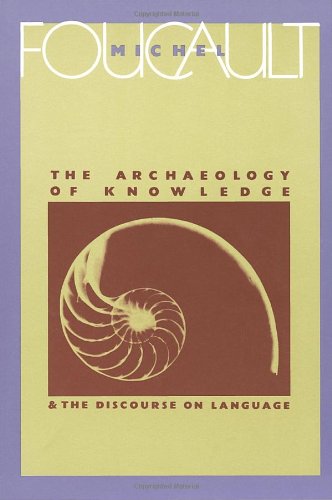
1. Archaeology of Knowledge (Routledge
$13.06
2. Hands-On Archaeology: Real-Life
$38.00
3. Archaeology Essentials: Theories,
$80.00
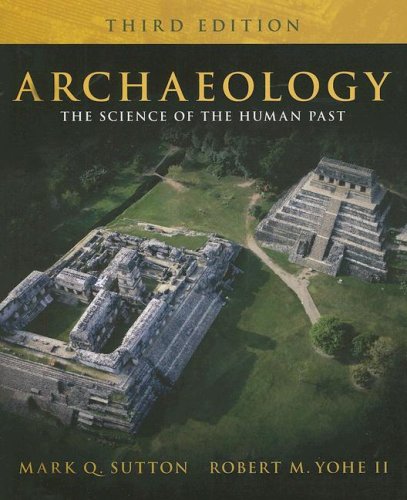
4. Archaeology
$68.99
5. Greek Art and Archaeology, 4th
 
$27.00
6. Archaeology and the New Testament
$19.00
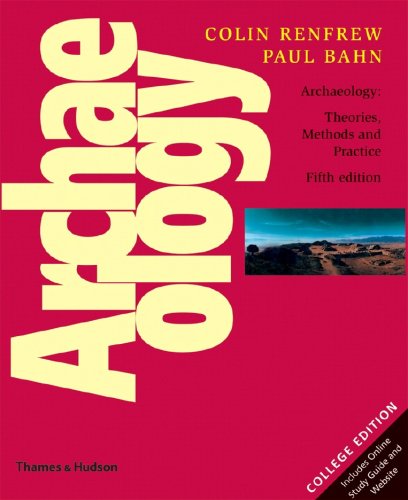
7. Archaeology: Theories, Methods,
$27.70
8. The World Encyclopedia of Archaeology:
$7.98
9. Discovery!: Unearthing the New
$65.34
10. Archaeology: Down to Earth, 3rd
$10.19
11. Bible Archaeology: An Exploration
$24.95
12. The Archaeology of Disease
$42.80
13. Archaeology: A Brief Introduction
$39.98
14. Geographical Information Systems
$41.82
15. The Archaeology of Ancient Australia
$8.95
16. Archaeology for Kids: Uncovering
$12.67
17. Archaeology, History, and Custer's
$32.91
18. Pottery in Archaeology (Cambridge
$21.79
19. The Archaeology of Death and Burial
$70.25
20. Understanding Physical Anthropology

1. Archaeology of Knowledge (Routledge Classics)
by M. Foucault
Paperback: 224 Pages (2002-08-09)
list price: US$21.95 -- used & new: US$19.95
(price subject to change: see help)
Asin: 0415287537
Average Customer Review: 4.5 out of 5 stars
Canada | United Kingdom | Germany | France | Japan
Editorial Review

Book Description
"Next to Sartre's Search for a Method and in direct opposition to it, Foucault's work is the most noteworthy effort at a theory of history in the last 50 years." -- Library Journal ... Read more

Customer Reviews (7)

3-0 out of 5 stars Obtuse but important
Foucault is not a light read - you will spend several hours just trying to interpret this text.His wording is unusual and complicated, and sentences can run on for almost a paragraph.Sometimes you'll just want to tear your hair out.

Nonetheless, this book is important.The theories Foucault presents in this book, while nearly impossible to cite correcly, do reappear in many modern texts, especially ones about modern literature or the academy.My suggestion is you read it with the assistence of others, preferably including someone with more academic experience (i.e. a professor.)

3-0 out of 5 stars Foucault on Facts
Viewed against the background of Foucault's other books, *The Archaeology of Knowledge* is a curious work. In it, Foucault not only explicates the results of his early books on madness, medicine, and the history of the human sciences: he also offers programmatic statements that link up his methods with the main stream of 20th-century French historical researches. The *episteme* linking seemingly disparate fields of inquiry is here explicitly presented against the background of Ferdinand Braudel's *duree*, and other famed devices for recontextualizing historical facts. For Foucault is intent on demonstrating his method without reference to (*against*) the philosophical luminaries that had until then monopolized such meta-theory.

The uninformed, and perhaps some of the informed, may be surprised to find Foucault actually considering the fact itself: hardly a promising beginning for showing how everything seemingly natural about social life hinges on systems of power. But it is precisely the historical fact that Foucault is concerned with, the dry, value-free content of the "archive": he is interested in the conditions of the possibility of grasping the events of the world in the manner of the historian, and proceeds to elaborate a system for comparing and construing such data without reference to processes of consciousness or any other valorizing quantity from outside history.

He proceeds to do this by elaborating a pragmatics of discourse quite unlike linguistics of the Saussurean (or Gricean) variety, studying how contexts of information combine to produce a happening intelligible as an event, not only as a linguistic counter or evidence of an intention. His analysis strongly resembles that of the celebrated Thomas Kuhn, who in truth aimed not to relativize science but to explain its true "background" in actual scientific practice. Drawing many examples from (and correcting naivete in) his books *History of Madness*, *Birth of the Clinic* and *The Order of Things*, Foucault attempts to show how an intellectual history can carefully collate and juxtapose historical information without imposing an idealizing "mentality" on the originators of a discourse.

Recapping as it does his work of the Sixties, fans of Foucault's analyses in *Discipline and Punish* and *The History of Sexuality* may expect this book represents only "transitional" views of Foucault's, later discarded in favor of a full-blooded Nietzschean pursuit of power relations. But "genealogical" theories are not ignored here, particularly in Foucault's inaugural address for the College de France, "The Order of Discourse", generously included at the end of this volume. It is true that Foucault's theory does not represent the program of a "history of truth" elaborated in "Truth and Juridical Forms", early lectures on the history of the penal system included in volume 3 of the New Press's *Essential Works*. But by the same token those interested in the French social theorists who preceded Foucault will find that Foucault's engagement with their problems, especially those of his teacher Althusser, is here much more explicit than elsewhere.

In conclusion, this book is unlikely to grab you unless you have already made a significant investment in Foucault, or "contemporary" history more generally. But for anyone who has indeed spent some time thinking about such things, this book is an anodyne statement of important and influential views about history and how it is done.

5-0 out of 5 stars Indispensible
Do not be fooled by those who dismiss this as a mere curiousity in Foucault's oeuvre.This difficult work is absolutely essential for understanding his central concept of 'discourse'.All of his works are better understood after a careful reading of this difficult work; this is true even for the later 'geneaological' works.

5-0 out of 5 stars Archaeology, the Archean, the Archaic, and the Archive
The Conclusion of this book (Chapter V) is perhaps the most interesting.Foucault appears to be corresponding with an undisclosed someone, wether with himself as a self critique, or with a critic.I won't put asside the possibility he is coversing with someone from the Tavistock Inst.; as Tavistock Publications Lim. was the first place of translation for this text.If he had not suceeded, in his archaeology of knowledge, an undermining of structuralism, with the thesis on human discourse, then perhaps it is because of a lack of conviction on part of this "someone" or on part of himself.

Understanding the implication of Foucault's thought process from a first read requires a refflective reader and in many ways requires a far-reaching mind from the start.This work is composed of a terminal plethora of architectures and teleological plethoras of exemplifications from science and history. Economics, stats, documents, records, and items from all discourses are examined and presented as artifacts of discursive knowledge.The Archeaology itself is the thematic for the Archive, and the archive is the preservatory of knowledge, that such discursive knowledge is preserved is archaeology.Foucault's task then is to undermine the archives of knowledge and present that knowledge back upon the structural framework of rational discourse.With observational power and radical ability, Foucault goes beyond the framework and invisibly subordinates it's needs to be observed and it's intention to be ritcheous (ritcheous in all that it accounts for, and ritcheous of the observer.)From the most primordial archean, to the revival of the primal archaic state, to the archaology of all knowledge, Foucault shows that in a way discourses built upon historical facts are like artifacts themselves.Here in the conclusion we see that the problematic of language (langue) as the derivational principal of discourses, cannot be made paletable (literaly!)

And so the audition fails because language or the "langue" is not sufficiently constructed for what it represents in discursive practice.At the zenith of the teleological project,when temporal conceptualization extinguishes itself from being quantified into being qualified, at the last quarter of the era,perhaps this work will be gleamed from the resevoire and conrgessively discussed.

5-0 out of 5 stars Another (difficult) chapter in Foucault's oeuvre
"Archaeology Of Knowledge" finds Foucault at his barest, trying to build up his own theory.Like others have said, it is fascinating to see how much he tries to encompass and how extremely difficult his own enterprise is.Foucault spends many pages trying to explain to us what he means by "discoursive formation", "object formation", "formation of concepts", etc., and the place where his own theory stands vis-à-vis a so-called "history of ideas".You can learn lots from this book, because, like myself, sometimes you get lost in Foucault's magistral writing, his fabulous way of weaving history and thus cannot clearly follow his own particular method of research.If you want to see some of his (earlier, almost stricly discourse-oriented) key concepts clarified, reading this book will prove very fruitful.As always, you're left with a lot of questions and with a distinctive feeling of "now what?".But then again, that's what's so utterly beautiful and engaging about Foucault... he forces you to think for yourself and provides you of the right tools to do it.
I read the spanish translation of this book so I can't comment on the english one, but the contents of this book are priceless. ... Read more


2. Hands-On Archaeology: Real-Life Activities for Kids
by John R. White
Paperback: 194 Pages (2005-09)
list price: US$19.95 -- used & new: US$13.06
(price subject to change: see help)
Asin: 1593631626
Average Customer Review: 5.0 out of 5 stars
Canada | United Kingdom | Germany | France | Japan
Editorial Review

Book Description
Written by renowned archaeologist John White, Ph.D., this book shows any teacher or parent how to help kids become young archaeologists. Imagine the thrill students will experience as they discover artifacts from the past. There isn't a single student who won't love the activities in this book!

From creating simulated archaeology digs in the classroom, to digs in the community, this book is a how-to for teaching archaeology. Of equal importance is that, which learning the discipline of archaeology, students will be acquiring skills in math, biology, geology, art, geography, history, and language skills, as well as motor, social, and conceptual skills.

Hands-On Archaeology shows teachers everything they will need to help students conduct real-life archaeological digs. Packed with activities, this book first offers small-scale activities that can easily be conducted in the classroom using everyday materials. Then, the author takes kids out if the school to an empty lot in the community. Students will not just learn about archaeology--they will be archaeologists!

Grades 4-10 ... Read more

Customer Reviews (1)

5-0 out of 5 stars Excellent resource for the classroom teacher
When I read the description of this book on Amazon I assumed it would be full of stand-alone "rainy-day"-type kids' activities.I was wrong.The book actually contains a complete archaeology curriculum made up of 43 activites (lessons) which can be modified to fit students in grades 4-10. It is designed for teachers who (like me) know little or nothing about archaeology.Each activity is described in detail with objectives, material lists, vocabulary lists, etc. The later activities build on the earlier ones.There are also several worksheets included, but these are not time-killers or games; they are used to document and build on the hands-on portion of each lesson. This is a great book, designed for real learning, and I would highly recommend it for classroom teachers and for groups of home schoolers.However, it does not exactly fit my needs.The group I am working with will have only a limited amount of instructional time, so we will not be able to complete more than four or five lessons and none of these activities stand alone.But I am so impressed by the quality of the material in this book that I am going to try to adapt it and at least give my students a good introduction to the subject.And, although it will take me some time to finish reading the book, I know I will also learn a lot in the process. ... Read more


3. Archaeology Essentials: Theories, Methods and Practice, Abridged Edition
by Colin Renfrew, Paul Bahn
Paperback: 288 Pages (2007-03-26)
list price: US$46.87 -- used & new: US$38.00
(price subject to change: see help)
Asin: 050028637X
Canada | United Kingdom | Germany | France | Japan
Editorial Review

Book Description
An abridged version of the bestselling textbook on what archaeologists do and how they do it.

This new volume has all the authority of Colin Renfrew and Paul Bahn's groundbreaking guide to all aspects of archaeology, but it has been carefully rewritten to provide a readable and compact introduction to archaeology for those new to the field. No other book of this length can match its range of essential information and explanation.

Long-established techniques are carefully explained as well as exciting new methods as the authors describe the ways in which archaeologists seek to explain and interpret the remote past of humankind. 200 illustrations. ... Read more


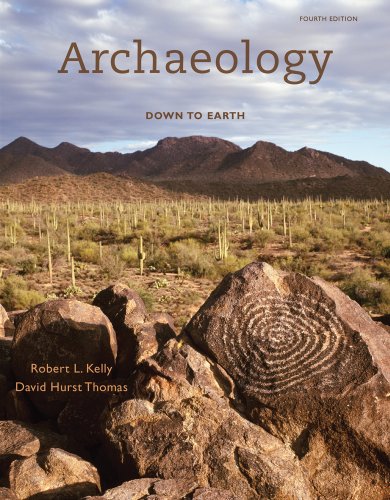
4. Archaeology
by David Hurst Thomas, Robert L. Kelly
Hardcover: 600 Pages (2005-01-03)
list price: US$112.95 -- used & new: US$80.00
(price subject to change: see help)
Asin: 0155058991
Canada | United Kingdom | Germany | France | Japan
Editorial Review

Book Description
This new edition by David Hurst Thomas and Robert L. Kelly pairs two of archaeology's most recognized names--with a combined 70 years of experience--for the first time. David Hurst Thomas of the American Museum of Natural History and Robert L. Kelly of the University of Wyoming bring readers a textbook rich with examples drawn from their experiences leading excavations over the past thirty years. A major revision, this fourth edition of ARCHAEOLOGY reflects the most recent research and changes in the field, while covering the core concepts in an exceptionally student-friendly fashion. This edition continues a tradition of academic rigor and engaging writing style that have made this text one of the most well-respected and best-selling texts in the discipline. The new edition is enhanced with full-color photos and a completely new design. The rich array of supplemental resources includes a new companion website, as well as the option to use a new CD-ROM, DOING FIELDWORK: ARCHAEOLOGICAL DEMONSTRATIONS developed by the authors. ... Read more


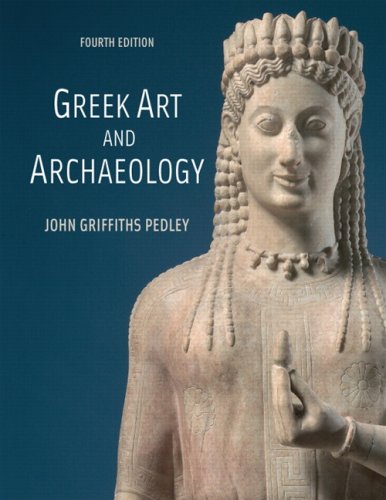
5. Greek Art and Archaeology, 4th Edition
by John Griffiths Pedley
Hardcover: 400 Pages (2007-03-15)
list price: US$120.00 -- used & new: US$68.99
(price subject to change: see help)
Asin: 0132380625
Average Customer Review: 5.0 out of 5 stars
Canada | United Kingdom | Germany | France | Japan
Editorial Review

Amazon.com
This revised edition of John Griffiths Pedley's 1993 survey covers 3,000 years of Greek history with nearly 400 illustrations and an authoritative text that centers on material culture, especially pottery, statuary, and architecture. Greek Art and Archaeology incorporates recent scholarship on matters such as influences from the Near East and the spread of Greek ideas to other parts of the Mediterranean. Of special interest is Pedley's building-by-building history of the Parthenon, including a useful survey of its metopes and friezes. He also offers well-considered stylistic notes on familiar objects, such as the Laocoön group and the Nike of Samothrace. ... Read more

Customer Reviews (3)

5-0 out of 5 stars Fabulous
I am so happy i got this book from amazon. It shipped fast and came in perfect condition. Best of all i got it for $75, instead of $130 if i bought it from my school.

5-0 out of 5 stars Awesome
Great if you like archaeology, get the hardcover version too, its worth it, wont die over time!

5-0 out of 5 stars Ancient Art made easy...
This was a required text for an art history course I took in college, and, being an art history major, I found this to be an easy read.It made the material easy to understand, and the color and black-white photographs were excellent.Pedley covers the entire spectrum of Greek art admirably, makes connections to primary sources, and outlines the various styles so that even a student NOT interested in the subject comes away with something.Anyone needing a reference on Ancient Greek Art or wanting to learn about the subject will find his book to be invaluable! ... Read more


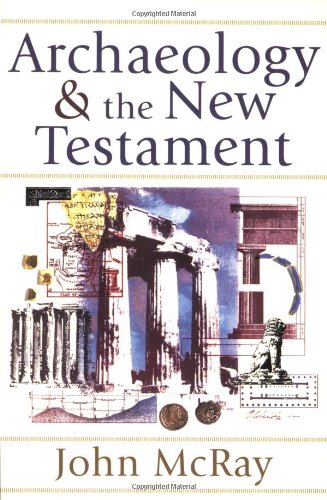
6. Archaeology and the New Testament
by John McRay
 Paperback: 432 Pages (2008-02-01)
list price: US$39.99 -- used & new: US$27.00
(price subject to change: see help)
Asin: 0801036089
Average Customer Review: 5.0 out of 5 stars
Canada | United Kingdom | Germany | France | Japan
Editorial Review

Book Description
Veteran archaeologist John McRay sheds light on the biblical text by examining archaeological discoveries in Archeology and the New Testament. As he tours sites associated with the ministry of Jesus, the journey of Paul, and the seven churches of Revelation, he shows the pervasive influence of society, architecture, and religion on the peoples of the first century and on the New Testament. The book includes maps, charts, diagrams, a glossary of terms, and more than 150 photographs that help the ancient world come alive. ... Read more

Customer Reviews (4)

5-0 out of 5 stars Great lessons for newcomers to archeology
After reading Archeology and the Old Testament by Hoerth, this book fills out the needed holes. For a newcomer to the field of archeology this book helps to understand some of the basics. Very well put together and infromative. The development of ideas is clear and insightful. This book is a winner, and I recommend this for any student of the Bible who seeks to teach the Word of God in it's context. You will find yourself quoting from this book in your sermons!!! Gary Van Daele

5-0 out of 5 stars Great lessons for newcomers to archeology
After reading Archeology and the Old Testament by Hoerth, this book fills out the needed holes. For a newcomer to the field of archeology this book helps to understand some of the basics. Very well put together and infromative. The development of ideas is clear and insightful. This book is a winner, and I recommend this for any student of the Bible who seeks to teach the Word of God in it's context. You will find yourself quoting from this book in your sermons!!! Gary Van Daele

5-0 out of 5 stars Quick Review
An up to date discussion of the more important archaeological finds relevant to New Testament studies.Packed with social and cultural insights and written clearly.

5-0 out of 5 stars A thorough, well written and illustrated work.
Although a scholarly, the author has done an excellent job of thoroughly presenting the current state of the archaeology of the New Testament in a manner both the scholar and layman will find approachable andthrilling.

The author handles all significant topics of New Testamentarchaeology from the life of Christ to the missionary journeys of theApostle Paul in a systematic manner.For example, the author discusses andillustrates where Christ was templed by the devil from the pinnacle of thetemple. In another example, fascinating pictures of 1st century life comealive through discussions of the dates and events that occured as Paullived and shared the word of God with people at the various cities on hisjourneys.This weaving of biblical passages with the archaeological datamake the book readable and sheds new light on the Bible and the historicalsites.

There are detailed discussions of the city planning, civiccenters, housing, commercial activities, entertainment, and the methods anddifficulties of travel in the Roman world. There is a special chapter onarchaeology and ancient documents.

The book is very well illustrated andincludes detailed maps of most archaeological sites. There are manyphotographs and numerous Endnotes for further study. ... Read more


7. Archaeology: Theories, Methods, and Practice
by Colin Renfrew, Paul Bahn
Paperback: 640 Pages (2004-07)
list price: US$31.25 -- used & new: US$19.00
(price subject to change: see help)
Asin: 0500284415
Average Customer Review: 4.5 out of 5 stars
Canada | United Kingdom | Germany | France | Japan
Editorial Review

Book Description
The best-selling textbook on what archaeologists do and how they do it—completely revised and redesigned.

For the Fourth Edition, new theoretical approaches, such as agency, materiality, and engagement theory, are added and earlier approaches analyzed afresh. Field methods and scientific techniques have been updated throughout, and new emphasis is placed on climate change and its impact on human affairs. The latest information on topics as varied as the Iceman, Pleistocene extinctions, and llama domestication is included, along with the most up-to-date material on GIS and surveying technology.

New topics will be introduced to emphasize the ever-changing face of modern archaeology, and additional special box features will be included, as well as discussion of the archaeological techniques needed to study the material culture of the twentieth and twenty-first centuries. A key component of the new edition will be the introduction of a dedicated Web site and study guide to accompany the textbook itself. Over 600 illustrations. ... Read more

Customer Reviews (12)

5-0 out of 5 stars Just What I Was Looking For
I did a lot of research and finally got this one from the library, but I ordered it from Amazon.com about three chapters in because I loved it so much.

It covers each topic with in archaeology in good depth, but not too much information. There are great inlays with information on particular sites that illustrate the points discussed in the chapter. I have a minor in Archaeology and I found this book to be an excellent refresher and very interesting.

5-0 out of 5 stars Perfect for beginners
We were assigned to tests for my Principle of Archaeology class this semester. This one and the one from Sharer-Ashmore. I bought both of them. The material in both is specific, it covers all the major topics of the discipline and they are great.

What sets this one apart, is the format. It is easier for beginners to digest the information and is not filled with dense data that will end up confusing most who read. I would recommend it for both classes and for others who wish to know more about the discipline

3-0 out of 5 stars Mother-in-law goes back to school
my 87 year old M-i-L is at SFSU this semester. Taking an Archaeology Methods course. The only thing I know about the book is it's damned expensive. Glad I could get it used from Amazon

5-0 out of 5 stars This is a wonderful textbook.
It is well written, and lavishly illustrated.It is the kind of book that makes you want to get up and start an excavation.If you are interested in the past, and how to figure out the mysteries of the past, then this book is a gold mine.I loved the way that it took complex subjects and made them so easy to understand.Why it was enjoyable.What a wonderful and special book.I really recommend this book.

5-0 out of 5 stars Excellent catalogue of just about anything in archaeolgy
Renfrew and Bahn have set up great book, almost a catalogue, about archaeological practice. Fairly every subject they mention is laid out with great precision, and the accompanying schemes and pictures couldn't have been chosen better. If you like to dive into the subject of archaeology, whether it concerns its history, their dating methods, excavation practices, the goals archaeology pursues or whatever else, you can't go wrong here. ... Read more


8. The World Encyclopedia of Archaeology: The World's Most Significant Sites and Cultural Treasures
Hardcover: 400 Pages (2007-10-11)
list price: US$59.95 -- used & new: US$27.70
(price subject to change: see help)
Asin: 1554073111
Canada | United Kingdom | Germany | France | Japan
Editorial Review

Book Description

The definitive reference on the art and science of archaeology.

The World Encyclopedia of Archaeology is a sweeping exploration of archaeology that spans the globe from the beginning of recorded history and earlier. Here is a comprehensive view of the past as seen through the remnants of civilizations as they emerge and expand. The book begins by defining modern and ancient archaeology and gives the history of archaeology through the centuries. The different types of archaeology are explored, along with the techniques used for each and the problems, concerns and issues archaeologists face today.

The main section of the book details each region of the world, with the authoritative text revealing the fascinating history of important archaeological sites. This global perspective includes more than 700 illustrations. The atlas section with detailed maps provides placements throughout history.

Accurate, in-depth and up to date, The World Encyclopedia of Archaeology is compelling reading. It serves as an outstanding reference for professionals, researchers, history buffs and general readers.

The World Encyclopedia of Archaeology includes:

  • The first humans
  • Early hunter-gatherers and farmers
  • Megalithic builders
  • The Bronze Age
  • The Greeks and Romans
  • The Dark Ages
  • Ancient Mesopotamia
  • The Persian Empire
  • Nomadic states
  • The Indus civilization
  • China's dynasties and empires
  • Japan and Southeast Asian kingdoms
  • Early Mesoamericans
  • The Maya, Aztec and Inca
  • Ancient Egypt and the Upper Nile
  • Iron Age Africa
  • Australian Aborigines.

Highlights:

  • Compiled and written by an international team of archaeologists and historians
  • Reveals the most up-to-date findings and their significance
  • Organized geographically by region and key sites
  • Uncovers the world's most important sites and treasures
  • Spans all periods of human settlement
  • Locator guide to sites by country
  • List of World Heritage Sites
  • 18 special features focus on intriguing topics
  • Further readings and a glossary
  • More than 700 color illustrations
  • Attractive maps that show locations of key sites.
... Read more

9. Discovery!: Unearthing the New Treasures of Archaeology
Hardcover: 256 Pages (2007-10-29)
list price: US$40.00 -- used & new: US$7.98
(price subject to change: see help)
Asin: 0500051496
Average Customer Review: 5.0 out of 5 stars
Canada | United Kingdom | Germany | France | Japan
Editorial Review

Book Description
New archaeological treasures and finds that reshape our view of the past, recounted by the discoverers themselves.

An unprecedented look inside contemporary archaeology, Discovery! reveals the most exciting, significant, and astonishing finds from the last fifteen years. Many of the book's contributions are written by the discoverers themselves, who give firsthand accounts of their work and assess the significance. They include famous Egyptologists such as Zahi Hawass, Kent Weeks, and Alain Zivie; pioneering underwater explorers such as Franck Goddio; and leading excavators and scientists from America, Britain, China, France, Germany, Italy, Scandinavia, and elsewhere.

Discovery! spans two million years of history, from the latest fossil discoveries that rewrite the story of human origins to wrecks of early submarines and ironclads from the American Civil War. There are revelations about the pyramids of Giza, a just-discovered royal tomb in the Valley of the Kings, and gold-filled burials of Assyrian queens at Nimrud, Iraq. Italy's Ice Man and spectacular Inca mummies from high in the Andes bring us face to face with people from the past, while stunning wall paintings from San Bartolo in Guatemala revolutionize our knowledge of the ancient Maya.

International in scope and totally authoritative, the book is illustrated throughout with spectacular photographs, many taken at the very moment of discovery. 295 illustrations and photographs, 290 in color. ... Read more

Customer Reviews (3)

5-0 out of 5 stars AN ABSOLUTE ARCHAEOLOGICAL VISUAL FEAST
I just received the book today and although I have not yet read it, I am unbelievably impressed by the beautiful pictures. The book is filled with page after page of color pictures covering all areas of the archaeological world from Egyptian tombs and mummies to Incan mummies and the ice man of Europe. Visit Egypt, Peru, England, the Middle East, Turkey, China and many more places. Although the emphasis is on ancient archeology, more recent discoveries are included such as Jamestown, Virginia and the ironclad ships of the American Civil War. The various archeological sites are covered in 246 fascinating pages. Concise stories about each site allows the reader to get good basics for further reading. A different author writes about each site in 2-4 pages. DISCOVERY! is a great book for anyone interested in archeology and history and for someone who enjoys travel. The pictures alone make this a wonderful book and the most amazing fact of all is Amazon's very low price for such a high quality book.

5-0 out of 5 stars The Best Archaelology Book for General Readers
A work of art in and of itself, "Discovery!" illuminates the most significant archeological discoveries of the past 15 years. Many of the accounts published here are by the discovers themselves, accounts written with a general audience in mind. The editor/compiler, Brian M. Fagan, is Emeritus Professor of Anthropology at the University of California<
While the text is the most important element of the book, it also contains 320 illustrations, 312 of them in full color. These expert photographs allow the reader to see and examine the artifacts that are described in such careful detail in the text.<
Thames & Hudson is a publisher that has long produced some of the most important and beautiful art books in the world. This one is literally world-ranging in its scope. The finds are from the proverbial "four corners of the Earth" and some date back into unimaginable prehistory.<
Science buffs and art lovers alike will find this book a necessary addition to their libraries. Even casual readers will find themselves captivated and enthralled.

5-0 out of 5 stars A world-wide approach to some two million years of discovery is embellished by gorgeous photos
Archaeological discoveries are usually limited to technical journals and scientific circles, but DISCOVERY offers keys to understanding to general-interest readers and public lending libraries strong in science for lay readers. This covers all the important archaeological discoveries of the last 15 years that have changed how we know the past. Many are written by the discoverers themselves, who provide first-hand accounts of their finds. A world-wide approach to some two million years of discovery is embellished by gorgeous photos - many taken at the moment of discovery - and make for an outstanding presentation recommended as a 'must' acquisition for any collection strong in science for lay readers.

Diane C. Donovan
California Bookwatch ... Read more


10. Archaeology: Down to Earth, 3rd edition
by David Hurst Thomas, Robert L. Kelly
Paperback: 384 Pages (2006-01-05)
list price: US$82.95 -- used & new: US$65.34
(price subject to change: see help)
Asin: 0495008583
Average Customer Review: 5.0 out of 5 stars
Canada | United Kingdom | Germany | France | Japan
Editorial Review

Book Description
This new brief edition pairs two of archaeology's most recognized names-- David Hurst Thomas of the American Museum of Natural History and Robert L. Kelly of the University of Wyoming-to bring a passionate, down-to-earth introduction to archaeological method and theory to the classroom. Designed both for students who intend on pursuing a career in archaeology, as well as those who do not, the authors give students a more immediate, concrete impression of what the practice of archaeology is all about. They include well-chosen examples that show how archaeologists have worked through actual problems in the field and in the lab. After using this text, students will be better able to ask questions, solve problems, and discern "truth" from "fiction." Students will not only learn about the nature of archaeological data and how archaeologists do such things as archaeological survey and excavation, they will also develop their sense of scientific logic and gain a better understanding of what career opportunities are available for archaeologists.This edition is enhanced with new pedagogical features, many more photos and a completely new design to help students prioritize and learn the material presented. A rich array of supplemental resources includes a new companion website, as well as the option to use a new CD-ROM, DOING FIELDWORK: ARCHAEOLOGICAL DEMONSTRATIONS also developed by the authors. ... Read more

Customer Reviews (1)

5-0 out of 5 stars Great textbook perfect for independent study!
I'm taking this class via independent study and this book is a great read!It does not read like the normal text books at all. ... Read more


11. Bible Archaeology: An Exploration of the History and Culture of Early Civilizations
by Alfred Hoerth, John McRay
Hardcover: 288 Pages (2006-02-01)
list price: US$29.99 -- used & new: US$10.19
(price subject to change: see help)
Asin: 0801012872
Average Customer Review: 3.0 out of 5 stars
Canada | United Kingdom | Germany | France | Japan
Editorial Review

Book Description
Although it's most often associated with the excavation of historical sites, archaeology is more so a quest to recover a better understanding of early civilizations-their language, history, and culture. This comprehensive and accessible guide offers full-color maps, photographs, and diagrams to introduce readers to biblical archaeology. By sharing knowledge and insight into the historical contexts and cultural settings of the biblical narratives, the authors give readers glasses through which they can truly experience the life and work of such godly men as Abraham and Moses, as well as Jesus and his disciples. As a result, readers can achieve a more accurate interpretation of the biblical text and gain a greater understanding of their faith. ... Read more

Customer Reviews (2)

4-0 out of 5 stars Biblical Archaeology in perspective
I like this book a lot. It's a very accessible introduction to the world of Biblical Archaeology. It shows how Biblical Archaeology fits as a scientific discipline within the other realms of archaeology of the ancient world. It also shows how what we know about the Biblical world from archaeology fits in with what we know archaeologically about other nearby ancient civilizations. Modern scientists treat these realms as separate disciplines but in the ancient world they were inter-related and we profit by better understanding the relationships. This book is bountifully illustrated with beautiful color photographs, many photographs and perspectives that I haven't seen in other books on Biblical Archaeology.

2-0 out of 5 stars Disappointed
This book is really a brief history of the ancient world. The first 94 pages have little to do with the Bible much less Bible archaeology. If you want a thumb nail sketch of the "Rise and Fall of the Assyrian Empire," or the"Rise and Fall of the Chaldean Empire," or "Egypt prior to Abraham," you might like this book. Otherwise, you will be disappointed. ... Read more


12. The Archaeology of Disease
by Charlotte Roberts, Keith Manchester
Paperback: 338 Pages (2007-02)
list price: US$24.95 -- used & new: US$24.95
(price subject to change: see help)
Asin: 0801473888
Average Customer Review: 5.0 out of 5 stars
Canada | United Kingdom | Germany | France | Japan
Editorial Review

Book Description
The Archaeology of Disease shows how the latest scientific andarchaeological techniques can be used to identify the common illnesses andinjuries from which humans suffered in antiquity. Charlotte Roberts andKeith Manchester offer a vivid picture of ancient disease and trauma bycombining the results of scientific research with information gathered fromdocuments, other areas of archaeology, art, and ethnography. The bookcontains information on congenital, infectious, dental, joint, endocrine,and metabolic diseases. The authors provide a clinical context for specificailments and accidents and consider the relevance of ancient demography,basic bone biology, funerary practices, and prehistoric medicine. Thisfully revised third edition has been updated to and encompasses rapidlydeveloping research methods of in this fascinating field. ... Read more

Customer Reviews (1)

5-0 out of 5 stars Well-written and intelligible
Well-written and intelligible book on the archaeology of disease.
Good discussions both of manifestations of disease in individual
skeletal remains, and in populations.Mostly oriented towards
disease per se, but there's a good chapter on trauma, as well.
Especially good coverage of dental disease.Oriented towards an
academic, rather than towards a lay, audience, but I found it
very readable nonetheless. ... Read more


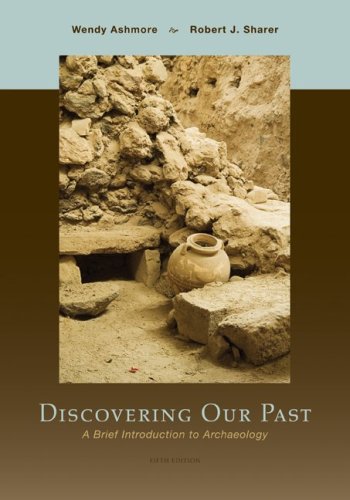
13. Archaeology: A Brief Introduction
by Brian M. Fagan
Paperback: 400 Pages (2005-03-13)
list price: US$67.40 -- used & new: US$42.80
(price subject to change: see help)
Asin: 0131928112
Average Customer Review: 4.5 out of 5 stars
Canada | United Kingdom | Germany | France | Japan
Editorial Review

Book Description

For introductory level courses in Archaeology and as a supplement for courses in Physical Anthropology where the instructor would like to integrate archaeology. This introduction to the fundamental principles of method and theory in archaeology, is the only book that also exposes students to archaeology as a career.The book begins with the goals of archaeology, then goes on to consider the basic concepts of culture, time, and space, and the finding and excavation of archaeological sites.

... Read more

Customer Reviews (2)

4-0 out of 5 stars Solid intro to science and ethics of archaeology
Brian Fagan is a lively writer with a clear enthusiasm for his profession., an enthusiasm that is in fact quite contagious.The scientific progression of archaeology has historically taken a somewhat circuitous course, with different theories and methods competing for the limelight.With this is mind, one can understand what a difficult task it would be to sum up this history, methodology and theory in one short book.Overall, Mr. Fagan has done an admirable job, and peppers the book with illustrative examples form prehistory.Nonetheless, there are some sections (particularly on archaeological theory) where I found myself reading and re-reading sentences trying to dissect exactly what he was trying to get at.I came away with a solid, though not complete, understanding of archaeologic fundamentals and the reality of archaeology -- and for a more complete picture, I will likely move on to longer, and more advanced, books.

5-0 out of 5 stars Better than a textbook
Have you ever wondered how pieces of long lost civilizations find a home in museums?Perhaps a dashing hero discovered them while escaping enemies?No.Real archaeologists spend countless hours researching information on a particular subject and only then does on-site excavation begin.

This book is for those that want to know more.Brain Fagan takes a subject that many are interested in and actually puts it into perspective.Most people don't understand the numerous factors that are involoved in archaeology.The book provides a wonderful introduction to those willing to get their feet wet.

I highly recommend this book to the armchair archaeologists that want to know more about the craft and science.This is a great pre-requisite to The Oxford Companion to Archaeology (a book edited by Fagan as well). ... Read more


14. Geographical Information Systems in Archaeology (Cambridge Manuals in Archaeology)
by James Conolly, Mark Lake
Paperback: 358 Pages (2006-05-29)
list price: US$48.00 -- used & new: US$39.98
(price subject to change: see help)
Asin: 0521797446
Canada | United Kingdom | Germany | France | Japan
Editorial Review

Book Description
Geographical Information Systems (GIS) is a rapidly developing archaeological method which is moving from the domain of the computer specialist into that of the broader archaeological community. This comprehensive manual on the use of GIS in archaeology explores the concept of GIS and illustrates how it can be adapted for practical use. Examining issues such as spatial databases, data acquisition, spatial analysis, and techniques of visualization, the book is an essential tool for both students and professional archaeologists. ... Read more


15. The Archaeology of Ancient Australia
by Peter Hiscock
Paperback: 338 Pages (2007-12-11)
list price: US$46.95 -- used & new: US$41.82
(price subject to change: see help)
Asin: 0415338115
Canada | United Kingdom | Germany | France | Japan
Editorial Review

Book Description

This book is an introduction to the archaeology of Australia from prehistoric times to the eighteenth century AD. It is the only up-to-date textbook on the subject and is designed for undergraduate courses, based on the author's considerable experience of teaching at the Australian National University. Lucidly written, it shows the diversity and colourfulness of the history of humanity in the southern continent.

The Archaeology of Ancient Australia demonstrates with an array of illustrations and clear descriptions of key archaeological evidence from Australia a thorough evaluation of Australian prehistory readers are shown how this human past can be reconstructed from archaeological evidence, supplemented by information from genetics, environmental sciences, anthropology, and history. The result is a challenging view about how varied human life in the ancient past has been.

... Read more

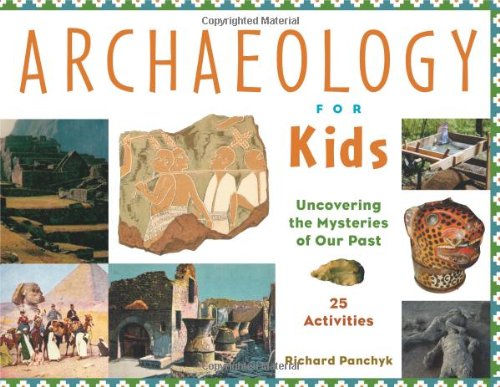
16. Archaeology for Kids: Uncovering the Mysteries of Our Past, 25 Activities (For Kids series)
by Richard Panchyk
Paperback: 160 Pages (2001-10-01)
list price: US$14.95 -- used & new: US$8.95
(price subject to change: see help)
Asin: 1556523955
Average Customer Review: 4.5 out of 5 stars
Canada | United Kingdom | Germany | France | Japan
Editorial Review

Book Description

This activity book features 25 projects such as making a surface survey of a site, building a screen for sifting dirt and debris at a dig, tracking soil age by color, and counting tree rings to date a find, teaches kids the techniques that unearthed Neanderthal caves, Tutankhamun&#8217;s tomb, the city of Pompeii, and Tenochtitlan, capital of the Aztec empire. Kids will delight in fashioning a stone-age tool, playing a seriation game with old photographs of cars, &#8220;reading&#8221; objects excavated in their own backyards, and using patent numbers to date modern artifacts as they gain an overview of human history and the science that brings it back to life.
... Read more

Customer Reviews (2)

4-0 out of 5 stars Archaeology can be fun
I purchased this for our 12 year old daughter along with several other books on Archaeology for her use during our "Independent Activities Period" over the summer.I read through it quickly and found it generally well written and interesting.I would have liked more text on how archaeologists do their work, more details on the discovery processes, and more describing how a small fragment is used to reconstruct the original.My impressions is that the book is written more for the High School crowd.She is reading about a chapter a day and asks good questions over the material.Overall, I'm pleased with the purchase.

5-0 out of 5 stars A great set of practical activities for teaching students about archaeology
"Archeology for Kids: Uncovering the Mysteries of Our Past" is intended to foster a curiosity about this particular science in budding archeologists.Richard Panchyk begins with a Time Line that starts in 65 million B.C. when the last dinosaurs died out and ends in 1997 when a new Egyptian burial ground was found, containing almost 10,000 mummies.Actually it is not the end of the dinosaurs but the first Ramapithecus, Australopithecus and other human ancestors that matter more because this time focus on not only key historic events such as the end of Roman Empire and the American Civil War, but key events in the field of archeology, such as when Schliemann began searching for the city of Troy and the Australopithecus remains of "Lucy" being found.This will give teachers an idea of where (and when) this book can be helpful in teaching about the past to today's students.Then there are the more than 25 activities that will help those young students understand archeology and the ancient cultures that have been uncovered.

Panchyk beings with an Introduction addressing the question, What Is Archaeology?The short answer is that archeology is the best tool we have for solving the mysteries of ancient lives.The goal of this book is to teach young students about how archaeologists work and what they have discovered (so far) about the past.That is why the first chapter outlines the eight basic steps of archeology, which begins with the question "What do you want to find?" and ends with the preservation of what you find.In between we learn that having money is just as important as engaging in excavation.Once you know the basics of the science, then you can look at six particular periods and places of ancient history that have been studied in this manner.

Chapter 2 is devoted to The First People and has activities for making molds of footprints and a spark in the dark, measuring brain capacity, and how to create stone tools.You can see that these are real world activities.There is also a section that explains why most archaeological sites are underground even if ancient people did not live there.Chapter 3, The Ice Age and the New Stone Age, includes an experiment to see what sort of items are preserved well in ice, building a Paleolithic fireplace, making cave art and a microlith tool, experimenting with agriculture, and an exercise to see what we can learn from finding animal bones about diet and lifestyle.Chapter 4, The First Civilizations, focuses on Sumeria, Babylon and Egypt, and has a pair of interesting sidebars, one that lists some of the common remains of civilizations that can be used to identify them and another concerning independent invention of things like makeup and writing.This chapter includes a seriation game (putting things in date order), a problem involving what happens when different people have different money and want to buy things from each other, an exercise involving pottery classification, and how to build your own screen for sifting artifacts.

Chapter 5 is about Greece and Rome, and off of Schlimeann's discovery of what he believe to be Troy there is the first part of a stratigraphy game.You will also find an underwater archaeology game and instructions on how to make an oil lamp.Chapter 6 is about discovering The New World and has assignments for finding the circumference of an artifact and a lesson on how to preserve artifacts, along with the second part of the stratigraphy game.The final chapter is about Historical Archaeology, and deals with the science as it applies to studying what happened only a couple of hundred years ago rather than thousands of years in the past.Reading historical maps, finding a historical site, figuring out tree rings, creating a time capsule, using historical documents, and learning about occupations from things like city directories and phone books, are the final activities.The back of the book includes a Glossary of key terms (e.g, "artifact," "superposition"), Web Sites for Further Exploration, and a Bibliography.

"Archaeology for Kids" is intended for kids ages 9 and up, and if there is an activity book in this series that has more practical and real world activities than this one, it does not come to mind.I am sure that teachers could adapt most of these activities to other times and places so that they are not just of use in studying the most ancient cultures.This entire series of activities books from Chicago Review Press are excellent supplemental books for teachers covering a wide range of subjects."Archaeology for Kids" is one of four volume beginning with an "A," the others being "Africa for Kids," "American Folk Art for Kids," and "The American Revolution for Kids."Teachers who are looking for educational activities should check out the entire catalogue of books because they are sure to find several that will prove useful. ... Read more


17. Archaeology, History, and Custer's Last Battle: The Little Big Horn Reexamined
by Richard A. Fox
Paperback: 411 Pages (1997-09)
list price: US$15.16 -- used & new: US$12.67
(price subject to change: see help)
Asin: 0806129980
Average Customer Review: 4.5 out of 5 stars
Canada | United Kingdom | Germany | France | Japan

Customer Reviews (18)

5-0 out of 5 stars Detailed, thorough, and unconventional
Since 1983, when a range fire cleared away much of the grass and underbrush at the Custer Battlefield along the Little Big Horn in Montana, archaeologists have had a chance to investigate the field and, using the material evidence uncovered, have made their own contributions to the mountains of interpretations of what happened that fateful day, June 26, 1876, when Custer and his Seventh Regiment were wiped out.Richard Allan Fox was one of those original archaeologists, and this book is a careful and detailed study of his findings - and interpretations. (In terms of the historical record it is always wise to remember that no members of Custer's immediate command survived the fight and that Indian eyewitness accounts, often contradictory and self-serving, must be carefully scrutinized; many historians refuse to give any credence to them at all.)

Fox, basing many of his conclusions on archaeological evidence, particularly shell casings found on the field, offers accounts of what happened that differ from the standard view, mainly in the following areas: he believes Custer and his men maintained an offensive tactical mode almost up to the very end; he believes at least one company of Custer's men made a reconnaissance beyond Cemetery Ridge (where the Visitors Center is today) down to the river (most other historians think nothing of importance occurred in this sector); he believes that the Medicine Tail Coulee descent to the river was also a reconnaissance move and not an attack that was eventually foiled; and he believes the standard image of Custer and his men fighting in unison to the last man to the very end on Custer Hill did not occur: many soldiers by the end were running for their lives toward the Deep Ravine just south of Custer Hill. Fox offers other discrepancies - Crazy Horse did not make a sweeping attack from the north across Cemetery Hill but rather made a more direct assault across the river and up the Deep Ravine - all of which, of course, is conjecture.

In fact, all of what Fox postulates is within the realm of possibility (he certainly is not among the crazies who, for example, have Custer's men all committing suicide), and he makes a good case for everything he says. But no matter how credible Fox makes his case to be, it, like all other interpretations, must remain only speculative. No one will ever know for sure exactly what happened that hot afternoon, but Fox offers a thorough analysis, thoughtful and credible. I put the book near the top of the pile of those worth giving a second look at regarding the Custer fight.

5-0 out of 5 stars I'll pile on too!
Let me pile on with most of the other reviewers.This is a fascinating read and unique insight into the Battle of the Little Big Horn.

5-0 out of 5 stars The New History
This analysis of the Little Bighorn has/will set a new standard for historical writing. Unlike 90% of the historical liturature produced in the USA now days, this book is unfettered by PC bias. It is pure history amplified by first class archaeology. Whether you are a Custer buff or not, read it to find out how history should be written.

5-0 out of 5 stars What Really Happened at Custer's Last Stand
This is an outstanding book and essential for anyone curious about the real story of Custer's Last Stand based on Archaeological digs made on the battle field which answers many questions as to what happened and what the evidence showed as compared to popular history. A real must have for anyone who wants to know the truth and understand what happened in this great American Battle. Well written and clear and concise.

5-0 out of 5 stars The Custer Myth exploded....
I first read this book when it was first published, and after two visits to the Battlefield.I have since visited the Field again and was suprised to see that the NPS has now adopted the Fox thesis as the probable flow of events.If one follows the self guided tour, one will see the events as laid out by this seminal work in the application of forensic science and archeology.I give a wink to the trial lawyer reviewer, who would undoubtably know plenty about misrepresenting data.As a scientist and data analyst, I think Fox drew conclusions well within the limits of his statistical analysis.For those who don't know statistics, or think they do, I will state this one statistical fact.Half of all Americans are below average in intelligence.Think about that if you think you know statistics.It is a simple and incontrovertable fact.Fox makes no outrageous claims, unless of course you are one who hoplessly clings to outdated notions spoon fed to you as a child, and watched too many matinee westerns.Having personally read the now discredited works of S.L.A. Marshal on how soldiers react in combat, I was disappointed to see Fox rely on some of his conclusions, he could have cited other more authoritative and less questioned works.
None the less, I see no problem with Fox interpreting his data in light of the only eye witness accounts.History is usually written by the victors.Why should we discount the Native American's version of events out of hand, especially when Fox's data can be seen to corroborate it?Subsequent digs on the battlefield have recoved a plethora of remains that if we are to believe the Army, should have been under the marker at the crest of the hill, not under or around the individual markers.The fact is that all the marker pairs examined really represent only one body and not two.So much for the noble bunkmates going down fighting together or engaging in a suicide pact as the myth would have you believe.Even contemporary accounts have officers bodies on Last Stand Hill with Custer, and not with the remains of their commands.This begs the question, what do soldiers do when they see their commanding officers run?

The myth that Custer's was the only body not mutilated on the field is another questionable page in the myth, and most think it was in deferrence to Libby Custer's sensibilities.Tom Custer was only identified by a distinctive tattoo.Custer had recently shorn his distinctive hair, and the indians did not know who they were fighting, and probably could have cared less.

I am amazed that anyone actually believed all the going down fighting myth making that typified the Little Big Horn.It tells me that they have read little other first hand historical accounts of men in battle.The situation on that hot lonely desolate hillside, commands spread out over almost a mile assailed by gunfire from all sides, horses rearing, friends and colleagues obscured by smoke and dust, thoughts of being alone and left behind running through each man's mind,would have un-nerved a veteran trooper, not to mention the tired raw immigrants that made up a large part of the command.I think the real image of an ambitious ill planned attack disintegrating into a panicked inglorious route, does more to illustrate the true character of the man in command than it does to cast a shadow on the bravery of the men who put misplaced trust in him.
The Custer Luck finally ran out. ... Read more


18. Pottery in Archaeology (Cambridge Manuals in Archaeology)
by Clive Orton, Paul Tyers, Alan Vince
Paperback: 287 Pages (1993-06-25)
list price: US$36.99 -- used & new: US$32.91
(price subject to change: see help)
Asin: 0521445973
Average Customer Review: 5.0 out of 5 stars
Canada | United Kingdom | Germany | France | Japan
Editorial Review

Book Description
The study of pottery has become increasingly important over the past century, providing the archaeologist with information on many aspects of the past, including chronology, trade and technology.Recent scientific developments and statistical techniques have further contributed to this analysis of pottery. Pottery in Archaeology covers information obtained from over fifty years practical experience in the field and the latest research. The book will be essential reading for students, field archaeologists and anyone interested in working with pottery. ... Read more

Customer Reviews (1)

5-0 out of 5 stars excellent introduction to ceramics in archaeology
orton and friends take the reader through all the aspects of the most common archaeological find: the pot sherd.at the end, you will know how to classify any random bit of ceramic you come across.

the book is very well written; it's amazing how the rather dry subject comes alive.very much a "practical knowledge" sort of read.

every serious dig should have one in their field house. ... Read more


19. The Archaeology of Death and Burial
by Michael Parker Pearson
Paperback: 256 Pages (2003-07-02)
list price: US$31.00 -- used & new: US$21.79
(price subject to change: see help)
Asin: 0750932767
Average Customer Review: 4.0 out of 5 stars
Canada | United Kingdom | Germany | France | Japan

Customer Reviews (1)

4-0 out of 5 stars Excellent Survey of World Funerary Practices
Written as a great guide to world funerary practices for undergraduates and the curious layperson, Parker Pearson's, "The Archaeology of Death and Burial" presents excellent traditionalist, processualist, and post-processualist theories and empiracal evidence of death archaeology worldwide. ... Read more


20. Understanding Physical Anthropology and Archaeology
by Barry Lewis, Robert Jurmain, Lynn Kilgore
Paperback: 504 Pages (2006-06-28)
list price: US$123.95 -- used & new: US$70.25
(price subject to change: see help)
Asin: 0534623964
Canada | United Kingdom | Germany | France | Japan
Editorial Review

Book Description
This streamlined, full-color text is a thorough and well balanced introduction to the fields of physical anthropology and archaeology. Now with a new co-author, Barry Lewis brings his expertise in research methods and his experience with North American and South Indian archaeology to this edition.The author teams' conversational writing style and high interest features such as "Digging Deeper", and also new features such as "At a Glance", "Focus Questions" and "Cutting Edge Research" helps students grasp the material and enjoy learning in the process. At the beginning of each chapter the authors also point students and instructors to the media appropriate for that chapter.In addition to the text and Basic Companion Website, Wadsworth offers a Premium Companion Site and several technology based products such as an Online Virtual Laboratories or CD-ROM, the Hominid Fossils CD-ROM and Basic Genetics CD-ROM. See the supplement section for details. ... Read more


  1-20 of 100 | Next 20
A  B  C  D  E  F  G  H  I  J  K  L  M  N  O  P  Q  R  S  T  U  V  W  X  Y  Z  

Prices listed on this site are subject to change without notice.
Questions on ordering or shipping? click here for help.

site stats