e99 Online Shopping Mall

Geometry.Net - the online learning center Help  
Home  - Science - Cave Biology (Books)

  1-20 of 27 | Next 20
A  B  C  D  E  F  G  H  I  J  K  L  M  N  O  P  Q  R  S  T  U  V  W  X  Y  Z  

click price to see details     click image to enlarge     click link to go to the store

 
1. Book 1: Caves of Southeastern
 
$22.06
2. Histology and Cell Biology (Mosby's
 
3. Cave Life: Evolution and Ecology
 
4. Caves and caving: A guide to the
 
5. The systematics and biology of
 
6. A preliminary bibliography of
$30.00
7. Rapid Review Histology and Cell
$32.95
8. Histology and Cell Biology (Book
 
$100.06
9. Mosby's USMLE Step 1 Reviews:
 
10. Rapid Review Histology and Cell
$2.49
11. Adaptation and Natural Selection
$118.00
12. Biodiversity Response to Climate
$14.50
13. Dark Life: Martian Nanobacteria,
 
14. Discovering the Human Body
 
$5.95
15. A morphometric analysis of the
$225.00
16. Caves And Speleology in Bulgaria
$92.39
17. Early Modern Humans at the Moravian
 
18. Cave Life
 
19. The Myotragus balearicus: Paleopathology
$8.95
20. Comparison of endogeic and cave

1. Book 1: Caves of Southeastern Pennsylvania, Book 2: Geology and Biology of Pennsylvania Caves (Plus 17 Fold-out Cave Maps)
by Jr. J. R. Reich
 Paperback: Pages (1974-01-18)

Asin: B00122ASPW
Canada | United Kingdom | Germany | France | Japan
Editorial Review

Product Description
Book 1: 120 pages. Book 2: 103 pages. 17 maps are of various sizes ranging from 2-folds to 9-folds. ... Read more


2. Histology and Cell Biology (Mosby's Success in Medicine)
by E. Robert Burns, Mosby, M. Donald Cave
 Hardcover: 250 Pages (1996-01)
list price: US$25.95 -- used & new: US$22.06
(price subject to change: see help)
Asin: 0815189273
Canada | United Kingdom | Germany | France | Japan

3. Cave Life: Evolution and Ecology
by David C. Culver
 Hardcover: 200 Pages (1982-10-21)
list price: US$32.50
Isbn: 0674104358
Canada | United Kingdom | Germany | France | Japan

4. Caves and caving: A guide to the exploration, geology and biology of caves (A little guide in colour)
by Marc Jasinski
 Unknown Binding: 159 Pages (1969)

Asin: B0007JXID0
Canada | United Kingdom | Germany | France | Japan

5. The systematics and biology of the cave-crickets of the North American tribe Hadenoecini (Orthoptera Saltatoria, Ensifera, Rhaphidophoridae, Dolichopodinae) ... - Museum of Zoology, University of Michigan)
by Theodore Huntington Hubbell
 Unknown Binding: 124 Pages (1978)

Asin: B0006D2DBU
Canada | United Kingdom | Germany | France | Japan

6. A preliminary bibliography of Mexican cave biology with a checklist of published records, (Association for Mexican Cave Studies. Bulletin)
by James R Reddell
 Unknown Binding: 184 Pages (1971)

Asin: B0006W3EZA
Canada | United Kingdom | Germany | France | Japan

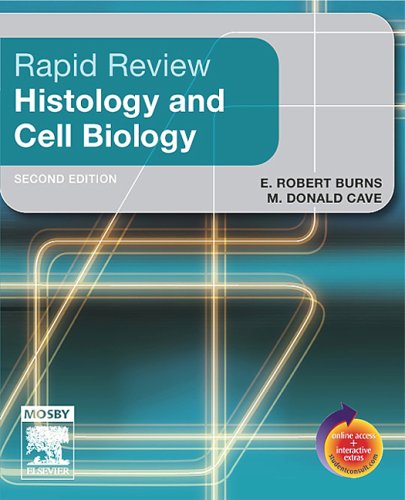
7. Rapid Review Histology and Cell Biology: With STUDENT CONSULT Online Access (Rapid Review)
by E. Robert Burns, M. Donald Cave
Paperback: 336 Pages (2006-11-15)
list price: US$34.95 -- used & new: US$30.00
(price subject to change: see help)
Asin: 0323044255
Average Customer Review: 5.0 out of 5 stars
Canada | United Kingdom | Germany | France | Japan
Editorial Review

Book Description
Get the most from your study time...and experience a realistic USMLE simulation! These new additions to the Rapid Review Serieshighly rated in the First Aid rankingsmake it easy for you to master all of the basic science material covered on the USMLE Step 1 Exam. ... Read more

Customer Reviews (1)

5-0 out of 5 stars Histology made ridiculously simple... and clear.
I like this book for my histology class because it has a great online link to a lot of questions, questions in the back of the book (USLME style) and it has amazing succinct info on histology.

If you're a med student and don't have time for your histology class, this will teach you what you need to know for exams in an organized manner. Good luck. ... Read more


8. Histology and Cell Biology (Book with CD-ROM)
by E. Robert Burns, M. Donald Cave
Paperback: 324 Pages (2002-05-15)
list price: US$32.95 -- used & new: US$32.95
(price subject to change: see help)
Asin: 0323008348
Average Customer Review: 3.0 out of 5 stars
Canada | United Kingdom | Germany | France | Japan
Editorial Review

Book Description
Part of Mosby's Rapid Review series, Rapid Review Histology and Cell Biology provides essential, need-to-know material for both course study and USMLE preparation. Every book in the Rapid Review series presents information in an easy-to-read outline format that combines concise content with explanatory illustrations and Board-style questions. Clinical information is integrated throughout whenever possible, and a CD-ROM with 500 questions, answers, and rationales is included with each book. ... Read more

Customer Reviews (2)

5-0 out of 5 stars good book
I am a second year medical student. I disagree with the previous poster. This book is incredibly well written and clinically relevant, especially to the USMLE. This book integrates alot of the molecular biology that is showing up frequently on the usmle. If you like the style of the rapid review series...this will fit you.

And to the previous poster, ideally we would all be using "TEXTS" to study for the usmle. You can't compare review books with major texts.

1-0 out of 5 stars Caveat Emptor!
I am a freshman medical student at the University of Arkansas in Little Rock. If there is one thing that I can do for my colleauges is to wave ared flag and tell you NOT to buy this book. Firstly, the organization isextremely poor. Secondly, some information is inaccurate and/or outdated.Finally, the material is obviously condensed from a superior text onHistology by Gartner & Hyatt. Although, G&H is more expensive, itis well worth your money. The two color illustrations are also"modified from" other texts. ... Read more


9. Mosby's USMLE Step 1 Reviews: Histology & Cell Biology (Macintosh)
by E. Robert Burns, M. Donald Cve, Donald Cave
 Paperback: 250 Pages (1996-01-15)
list price: US$38.95 -- used & new: US$100.06
(price subject to change: see help)
Asin: 0815113358
Canada | United Kingdom | Germany | France | Japan

10. Rapid Review Histology and Cell Biology
by M.D Cave
 Paperback: Pages (2002)

Asin: B000OUC9SW
Canada | United Kingdom | Germany | France | Japan

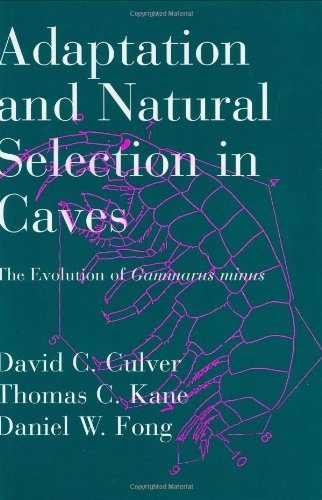
11. Adaptation and Natural Selection in Caves: The Evolution of Gammarus minus
by David C. Culver, Thomas Kane, Daniel Fong
Hardcover: 240 Pages (1995-03)
list price: US$55.50 -- used & new: US$2.49
(price subject to change: see help)
Asin: 0674004256
Average Customer Review: 4.5 out of 5 stars
Canada | United Kingdom | Germany | France | Japan
Editorial Review

Book Description

The harsh environment of caves--dark, damp, sparse of food--is home to a variety of "bizarre" creatures. Biologists, for their part, often treat these delicate, colorless organisms having no eyes, or at least greatly reduced eyes, as mere oddities with little to tell us about a topic as grand as evolution. Focusing on one cave-dwelling crustacean, Gammarus minus, this book shows that, to the contrary, cave life can provide a valuable empirical model for the study of evolution, particularly adaptation.

Authors David Culver, Thomas Kane, and Daniel Fong marshal many years of extensive research into the genetics, ecology, morphology, and systematics of Gammarus minus. They explain how these biological factors have been shaped by physical constraints, such as the structure and development of caves and karst terrains, groundwater hydrology, and drainage basin patterns. Their work reveals the advantages of caves for studying natural selection: the highly simplified habitats found underground serve as a natural laboratory for the evolutionary biologist, and the distinctive morphological features of cave fauna provide a wealth of data on evolutionary history and natural selection.

A detailed evolutionary study of a single organism in a particular environment, this book advances Gammarus minus as a paradigm for cave colonization and adaptation, and as a general case study of the role of natural selection and adaptation in evolution.

... Read more

Customer Reviews (2)

5-0 out of 5 stars Evolutionary Biology - A Subterranean Study
The evolution of Gammarus minus is the subject of a remarkably interesting text published by Harvard University Press. Gammarus who? Gammarus what? Gammarus minus is a little freshwater crustacean, an isopod, that inhabits surface streams, springs, and caves.

We all have some knowledge of the theory of natural selection and evolution, and yet, I suspect that few fully recognize the complexity and difficulty in conducting research in evolutionary biology. Just how does one go about proving or disproving some aspect of evolutionary theory?

David Culver, Thomas Kane, and Daniel Fong argue that caves and cave animals are valuable empirical models for the study of evolution, particularly for the study of adaptation. The unusual morphology of cave fauna makes them "quintessential examples of evolutionary tradeoffs, a recurring theme in the study of adaptation". Also, as the cave environment is more uniform and less complex than most habitats, the analysis of environmental effects on selection is accordingly less difficult. And convergent evolution in many isolated cave systems offers a degree of repeatability that is often absent in evolutionary studies.

This text, Adaptation and Natural Selection in Caves, is remarkably well-organized and clearly written, and is accessible to the layman interested in cave biology and ecology.

However, I caution the reader. This is not a popular book on evolution for the layman. This is a detailed, well-documented, thoughtful, multidisciplinary scientific study whose primary audience is active researchers and graduate students in the biological sciences.

Evolutionary biology requires a wide background. The reader will encounter biospeleology, ecology, electrophoresis, genetics, isopod morphology, karst geology, stream hydraulics, and systematics. As advanced statistical techniques are commonly used in genetic and evolutionary studies, the reader will meet the F statistic, dendrograms, k-means clustering, rank-3 biplots, correlation matrices, and short discussions on determining the optimal splines for curve fitting.

The glossary was quite helpful with terms like adaptive radiation, allozyme, apomorphic, exaptation, electrophoresis, gene flow, homoplasy, neoteny, and vicariance.

While this text may require some persistence, it is well-worth the effort. I commend Culver, Kane, and Fong for providing an intriguing look at a complex, interdisciplinary research topic.

I recommend first reading, chapter by chapter, the concise introductions and the concluding summaries. Then return to the beginning of the book to study the chapters in more detail. The summaries are clearly written and allow the reader to quickly and easily develop an overview of each chapter.

As a final comment, Adaptation and Natural Selection in Caves would be an excellent choice for a reading assignment for undergraduates in biology, ecology, genetics, morphology, and limnology. Culver, Kane, and Fong clearly answer the question: Just how does one go about proving or disproving some aspect of evolutionary theory?

4-0 out of 5 stars A truly unique study in the field of evolution
When it comes to evolution, almost anyone can quote Darwin's theory of natural selection...but how many people set out to prove it?In this book, the authors present the beginnings of tackling this ambitious task.Their approach is truly unique...rather than examining the diversity of all life, they have focused twenty-plus years of research on a tiny, rather obscure, cave crustacean.By drawing from numerous scienfific fields (ecology, systematics, mathematics, limnology, evolutionary theory, even molecular genetics) the authors have produced one of the most complete pictures of the effect of natural selection on a single animal.Amateur cavers might find the techical aspects of the book somewhat daunting, while expert scientists may view the study as too limitied -- yet both can appreciate the ramifications of what this study, of a little shrimp, might someday teach us about ourselves. ... Read more


12. Biodiversity Response to Climate Change in the Middle Pleistocene: The Porcupine Cave Fauna from Colorado
Hardcover: 407 Pages (2004-08-02)
list price: US$145.00 -- used & new: US$118.00
(price subject to change: see help)
Asin: 0520240820
Canada | United Kingdom | Germany | France | Japan
Editorial Review

Book Description
This book chronicles the discovery and analysis of animal fossils found in one of the most important paleontological sites in the world--Porcupine Cave, located at an elevation of 9,500 feet in the Colorado Rocky Mountains. With tens of thousands of identified specimens, this site has become the key source of information on the fauna of North America's higher elevations between approximately 1 million and 600,000 years ago, a period that saw the advance and retreat of glaciers numerous times. Until now, little has been understood about how this dramatic climate change affected life during the middle Pleistocene. In addition to presenting state-of-the-art data from Porcupine Cave, this study also presents groundbreaking analysis on what the data from the site show about the evolutionary and ecological adjustments that occurred in this period, shedding light on how one of the world's most pressing environmental concerns--global climate change--can influence life on earth. ... Read more


13. Dark Life: Martian Nanobacteria, Rock-Eating Cave Bugs, and Other Extreme Organisms of Inner Earth and Outer Space
by Michael Ray Taylor
Hardcover: 288 Pages (1999-04-09)
list price: US$23.00 -- used & new: US$14.50
(price subject to change: see help)
Asin: 0684841916
Average Customer Review: 5.0 out of 5 stars
Canada | United Kingdom | Germany | France | Japan
Editorial Review

Amazon.com
The microbes that caver Michael Ray Taylor calls "dark life" are found deep in the earth, in boiling oceanic vents, Antarctic ice, and lots of other places far from the reach of the sun's energy. These "extremophiles" are energy opportunists, subsisting on chemicals, radioactivity, or the faint light of molten rock. The study of these organisms is quite new, and scientists are learning that examining them may provide hints about the possibility of extraterrestrial life. Dark Life is a first-person tour of the places Taylor has looked for archaebacteria and other strange microorganisms--Lechuguilla Cave in New Mexico, the hot springs of Viterbo in central Italy, NASA laboratories, and the halls of academia. Taylor met with passionate scientists searching for answers about how things can live deep in the earth and if they can survive in the unimaginable cold of outer space while hitchhiking on meteors. Dark Life chronicles the triumphs and disappointments of this new field of science with engaging and personal stories.

The steady but frustrating progress of science is never more apparent than in the passages relating to the rise and fall of ALH84001. The potato-sized meteorite from Mars (and the scientists who analyzed it) enjoyed brief but frenzied attention when it was announced that microscopic forms in the rock may have indicated the presence of nanobacteria. But if you're expecting resolution to this question in Dark Life, be warned: to Taylor, it's the journey that's most exciting. --Therese Littleton Book Description

In a narrative that combines cutting-edge science with intense physical adventure, Dark Life tells the fascinating story of the quest to find life far underground and deep in space.

Able to thrive without sunlight or oxygen, dark life is a mass of subterranean bacteria that would likely tip the scale if weighed against all other living matter combined. Journalist Michael Ray Taylor takes us from Antarctic lakes to Hawaiian volcanoes to the satellites of Jupiter in search of these mysterious underground creatures that are redefining our understanding of evolution.

Taylor serves as a field assistant on several key scientific expeditions. He descends deep into New Mexico's tortuous Lechuguilla Cave and focuses powerful NASA microscopes on never-before-seen life-forms. He accompanies a young NASA intern who unknowingly kicks off a raging international scientific debate when she uncovers traces of dark life in a rock extracted from nearly two miles below Washington State -- traces that appear identical to the "micro-fossils" found in a Martian meteorite. He meets another scientist who has staked his reputation on using dark life to generate a cure for breast cancer. Throughout his adventures, Taylor gains unique insight into a growing controversy about the very definition of life itself -- an issue that scientists had long ago considered settled. Whether he is exploring the structures of a mysterious cell or reconnoitering tropical caves, Michael Ray Taylor is an adventurer for the new millennium. ... Read more

Customer Reviews (11)

5-0 out of 5 stars Politics, personalities, and science of the dark world
_Dark Life_ by Michael Ray Taylor was a very interesting book. The author began it writing as a science journalist - having written a previous book on cave exploration as well has having articles published in such magazines as _Audubon_ - but over the course of the two and a half years he worked on this book went from becoming an observer to an active participant, a point he himself made several times in amazement and wonder. Originally he had set out to chronicle what was known about "dark life," microorganisms that dwell far underground or in the deep sea, organisms that derive their nourishment from sources independent of sunlight. These organisms, which have been found in such varied places as salt domes, Antarctic ice cores, and in highly acidic caves, have continually challenged notions of what life can tolerate, organisms so common that they may outnumber surface organisms (indeed Taylor rejected the commonly used term "extremophile" as he believes the term implies that these organisms are a "rare curiosity"). Taylor wrote of the history of the search for these microbes, the personalities involved, and where current research was in the field (as well as possible applications of this research).

Somewhere along the way he became part of the story, as he became the friend and later colleague of several of the researchers he covered. While not a trained scientist per se, at least not in the field of microbiology, he assisted in and even proposed a number of experiments in the search for controversial nanobacteria (microbes with a size of less than 0.2 micrometers, once thought to be too small to be an independent functioning organism or at least too small for a prokaryotic organism, including known bacteria and archaea; not a virus) in a variety of environments, mostly notably Hot Springs National Park in Arkansas. By the end of the book he was regularly exchanging email with researchers, providing samples for them, and even had co-authored a few presentations at various seminars.

Much of the book is focused on personalities - understandable given Taylor's increasing personal involvement in the story himself - though mainly in the context of research on the topic at hand. The main characters (if you will) in the book were Larry Mallory (a scientist who had devoted his career to harvesting and culturing cave microbes in a promising search for a cure for cancer, particularly from microbes from the fascinating Lechuguilla Cave in New Mexico, an interesting place described in great detail in the book), Bob Folk (a colorful scientist who discovered nanobacteria and their presence in a number of substances and had been in the lead in efforts to prove that microorganisms are vital in the formation of travertine in caves and hot springs as well as in some cases at least entire caves and cave systems), and Anne Taunton (an undergraduate student who as part of a NASA internship became embroiled in the efforts to determine whether or not the famed Martian meteorite ALH 84001 contained fossils of extraterrestrial nanobacteria). Others are followed to lesser degrees, among them Finnish nanobacteria expert E. Olavi Kajander, who had done pioneer work showing that nanobacteria may be the possible agents of many maladies such as kidney stones, Alzheimer's, and Mad Cow Disease that involve mineral precipitation in the body.In large measure these and other personalities faced considerable skepticism, criticism, and worse in their studies, as scientists found it hard to accept (in different instances) what was thought of as "impossibly" small bacteria, biological origins for various types of minerals and mineral formations, and the presence of microfossils in ALH 84001. Mallory had to leave his university because he was essentially denied tenure, the administration not believing his study of cave microorganisms important, Folk faced considerable criticism for suggesting that such substances as travertine owed their origins to bacteria, and Taunton (and the team she worked with) had a very difficult time with several scientists - including even her own undergraduate academic advisor - over efforts to demonstrate that the ALH 84001 microfossils were evidence of Martian life or even life of any kind. Although Taylor did a good job of showing the fact there was sometimes intense and even rather personal criticism in science, I don't know if he always showed why people had such a hard time accepting bold new theories. In particular some of the opposition to ALH 84001 fossils was quite heated.

Though much of the focus was on personalities, politics, and the process of research the microbes were much discussed as well, many with bizarre biologies. Some cold-loving organisms were termed "psychrophiles," capable of growth below freezing, at -5 degrees Celsius, organisms that exhibit slower metabolisms at temperatures above freezing and death at anything approaching human body temperature (organisms that for years - like many other examples of dark life - proved difficult to study and culture in the lab). Some organisms found in apparently solid rock two miles deep, existing only on hydrogen and water, have unbelievably slow metabolisms, appearing to divide cells no more than once per century. Though many caves and indeed individual pools in caves produced unique microorganisms there were also astonishing similarities; the closest relatives to some sulfur-oxidizing thermophilic (heat-loving) bacteria from a cave in Kentucky were found to be a sulfur-oxidizing, symbiotic bacterium from a deep sea polychaeta worm, a relationship that has not yet been explained.

At least as far as this reader is concerned Taylor made his case that nanobacteria exist, that they are key in the formation of some minerals and many caves, and I am very open to the idea that ALH 84001 may indeed contain Martian microfossils. I enjoyed reading about the discussions scientists had about whether or not subsurface Antarctic lakes such as Lake Vostok and Jovian moon of Europa might have dark life and hope that both can be analyzed in the not too distant future.

5-0 out of 5 stars Geology & Biology Intwined
For starters I will never look at my mineral collection quite the same again. Dark Life has shown that nanobacteria (only recently confirmed)is the absolute frontier of a new world. Minerals and "life" coexist and the nanobacteria "feed" upon the chemical compositions of minerals. The scientific world will be turned on its' head in the near future as a whole new science emerges. This book is easy to understand for those of us who aren't scientits but who are interested. As one who also has Multiple Sclerosis the possible connection with nanobacteria and mineral plaques in the brain was astounding as I read it.

4-0 out of 5 stars Damn interesting, heavy on the human drama
I read this book after buying on a discout shelf in some clearance book seller.It was a pleasant surprise.It, as I wrote in the title, a little heavy on human drama and soap operatic themes.The science behind it is absolutely interesting and has spurred me to read further on the topic of nanobacteria.This is a great starting out book, but not a great book for those reading for the science of it.

5-0 out of 5 stars Nanobacteria, A New Form of Life and Its Pathology in Humans
Nanobacteria have been researched by many prominent scientists worldwide. This book looks at the findings of scientists with respect to Nanobacteria and the science of Geology. Nanobacteria, specifically Nanobacterium Sanguineum, have been studied by scientists and medical researchers as they pertain to causing human disease or Pathology as well. Nanobacterium Sanguineum is a Nanobacteria that is approximately 10,000 times smaller than regular bacteria. It replicates from 1000 to 10,000 times slower than regular bacteria as well. It grows in the human system in blood, and has been found by various medical researchers and scientists to cause many human problems. Some of the various diseases that it has either been implicated to be involved with or to cause are: Calcification in atherosclerotic plaque, kidney stones, calcification in the lenses of eyes that ultimately causes "cataracts", soft tissue calcification in scleroderma, calcification in tumors, calcification in arthritis or osteoarthritis and other pathological disease states in humans. These Nanobacteria colonize and secrete a "biofilm" over themselves that causes them to be covered by a calcium "shell". These Nanobacteria are implicated to be the cause of all calcification in the human system that you were not born with, that you subsequently develop as you age. These Nanobacteria are also implicated in causing some forms of cancer and "apoptosis" or cell death. Scientists are now working on ways to eradicate Nanobacterium Sanguineum with prescription medications. Please keep your eyes open for further research regarding Nanobacteria. Try surfing on the web for "nanobacteria". Sincerely, Gary S. Mezo, President of the Academy of Medical NanoScience, Tel:813-264-2241.

5-0 out of 5 stars Space science can still be an adventure - here's your guide.
This book documents journeys of discovery and transformation at several levels.It documents a journalist's personal journey from observer to active participant.It also serves as a chronicle of the journeys beingtaken by scientists all over (and underneath) the Earth and across oursolar system to obtain an understanding of life's amazing ability to existand thrive in the most improbable places.

The author starts out as aspelunking (cave exploring) science journalist and ends up as an activeparticipant in the science he had originally set out to cover.In so doinghe has provided an interesting mix of observer and participantperspectives.Being a seasoned cave explorer, the author is at home andadept at describing the techniques and hazards of natural laboratories suchas Lechuguilla Cave located in New Mexico.

Astrobiologists havefound caves to be excellent laboratories for the extreme environments thatmay be found on other worlds such as Mars.Moreover, the amazingadaptations Earth life has made to these environments also serve asindicators of what is possible in terms of life's ability to adapt - andmay be indicative of what we might find underneath Mars.Getting around inthese caves is not your run of the mill field trip.Sulfurous and causticfumes, anoxic conditions, temperature extremes, risk of injury, and amyriad of other hazards all combine to make these explorations somethingthat only skilled individuals should undertake.In so doing, the rewardsto the risk takers are obvious - and are thoroughly documented by theauthor.

There is much more to this book than crawling around stinkycaves with excited astrobiologists.There is tedious work back at the lab,and the inevitable politics that accompanies academic life andgovernment-sponsored research.Given that the discoveries being made aboutlife in extreme environments are brushing aside long held views aboutbiology, the politics can get rather nasty at times.The author provides acogent description of what happens when the politics and dogma of sciencecollide with new data and ideas.As you read this book you can almost hearthe old paradigms crumbling as life's very definitions get anoverhaul.

In describing some of the research done at NASA on theALH84001 Martian meteorite, Taylor provides a classic description ofparadigm crumbling - and the threat it can represent to the status quo. The events described surround the work of a student involved in acareer-making discovery (possible fossils within a piece of Mars) and anadvisor who disputes the findings and seeks to thwart her education atevery turn.

While not nearly as dramatic, the author describes manyother situations wherein old accepted notions about what life is and whereit can be found are challenged.As you travel around - and under - theworld with Taylor, you learn about life at abyssal ocean depths, withinrocks miles under the Earth's surface, in the cold dry Antarctic, withinvolcanic deposits, and within highly radioactive environments.Such arethe abodes of Earth's so-called "extremophiles".

Ifastrobiologists have learned anything in the past decade or so, it is thatEarth life is capable of existing everywhere that it can theoreticallyexist.Since some of these "extreme environments" may well passfor "normal" elsewhere in the solar system, the chances offinding life elsewhere start to become quite probable.It is that excitingprospect which is woven by the author throughout the fabric of thisbook.

The author has gone to great physical extremes to write thisbook - and it shows.If you want a status report on how astrobiologistsare using the Earth as a laboratory for what life may be possible on otherworlds, this is it.Moreover, if you are looking for proof that sciencecan still be a bona fide adventure in this Internet-shrunken world, thenthis book offers that as well.

... Read more


14. Discovering the Human Body
by Godfrey Cave
 Hardcover: Pages (1992-11-26)

Isbn: 1854710842
Canada | United Kingdom | Germany | France | Japan

15. A morphometric analysis of the Late Pleistocene Human Skeleton from the Moh Khiew Cave in Thailand [An article from: HOMO - Journal of Comparative Human Biology]
by H. Matsumura, S. Pookajorn
 Digital: Pages
list price: US$5.95 -- used & new: US$5.95
(price subject to change: see help)
Asin: B000RR78FG
Canada | United Kingdom | Germany | France | Japan
Editorial Review

Book Description
This digital document is a journal article from HOMO - Journal of Comparative Human Biology, published by Elsevier in . The article is delivered in HTML format and is available in your Amazon.com Media Library immediately after purchase. You can view it with any web browser.

Description:
Few Late Pleistocene human remains have been found in Southeast Asia and the morphological features of the people of that age are still largely unknown due to the virtual lack of human remains in the area. Recent excavations at the Moh Khiew Cave in Thailand resulted in the discovery of a Late Pleistocene human skeleton in a relatively good state of preservation. An AMS radiocarbon date on the charcoal sample gathered from the burial gave a result of 25,800+/-600BP, implying that the inhabitants of Moh Khiew Cave resided in a part of Sundaland during the last glacial age. In debates on the population history of Southeast Asia, it has been repeatedly advocated that Southeast Asia was occupied by indigenous people akin to present-day Australo-Melanesians prior to an expansion of migrants from Northeast Asia into this area. Morphometric analyses were undertaken to test the validity of this hypothesis. In the present study, cranial and dental measurements recorded from the Moh Khiew remains are compared with those of early and modern samples from Southeast Asia and Australia. These comparisons demonstrate that the Moh Khiew specimen resembles the Late Pleistocene series from Coobool Creek, Australia in both cranial and dental measurements. These results suggest that the Moh Khiew skeleton, as well as other fossil remains from the Tabon, Niah and Gua Gunung sites, represents a member of the Sundaland population during the Late Pleistocene, who may share common ancestry with the present-day Australian Aborigines and Melanesians. ... Read more


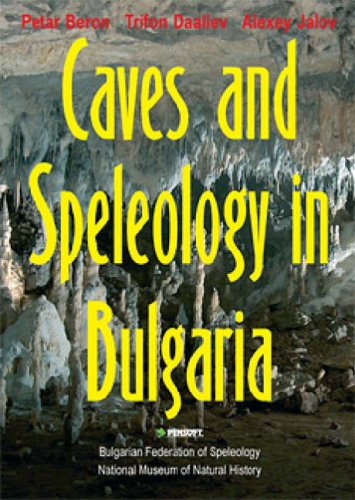
16. Caves And Speleology in Bulgaria
by P. Beron, T. Daaliev
Hardcover: 600 Pages (2006-11-30)
list price: US$225.00 -- used & new: US$225.00
(price subject to change: see help)
Asin: 954642241X
Canada | United Kingdom | Germany | France | Japan

17. Early Modern Humans at the Moravian Gate: The Mladec Caves and their Remains
Hardcover: 528 Pages (2007-10-09)
list price: US$199.00 -- used & new: US$92.39
(price subject to change: see help)
Asin: 3211235884
Canada | United Kingdom | Germany | France | Japan
Editorial Review

Book Description
The Upper Paleolithic fossils of the Mladec caves, South Moravia, excavated at the end of the 19th century, hold a key position in the current discussion on modern human emergence within Europe and the fate of the Neanderthals. Although undoubtedly early modern humans - recently radio carbon dated to 31.000 years BP - their morphological variability and the presence of archaic features are indicative to some degree of regional Neanderthal ancestry. The beautifully illustrated monograph addresses - for the first time - the complete assemblage of the finds, including the human cranial, post cranial, teeth and jaw fragments of several individuals (most of them stored at the Natural History Museum Vienna) as well as the faunal remains and the archaeological objects. Leading scientists present their results, obtained with innovative techniques such as DNA analysis, 3D-morphometry and isotope analysis, which are of great importance for further discussions on both human evolution and archaeological issues. ... Read more


18. Cave Life
by Christiane Gunzi
 Turtleback: 29 Pages (2002-02)
list price: US$12.37
Isbn: 060617799X
Canada | United Kingdom | Germany | France | Japan

19. The Myotragus balearicus: Paleopathology and the palynological analysis of the soil of the deposit; two studies ... Cave of Muleta, Soller, Mallorca, Spain, 1962-68,
by William H Waldren
 Unknown Binding: Pages (1968)

Asin: B0007IVPAY
Canada | United Kingdom | Germany | France | Japan

20. Comparison of endogeic and cave communities: microarthropod density and mite species richness [An article from: European Journal of Soil Biology]
by X. Ducarme, Henri M. Andre, G. Wauthy, P. Lebrun
Digital: Pages
list price: US$8.95 -- used & new: US$8.95
(price subject to change: see help)
Asin: B000RR1D2A
Canada | United Kingdom | Germany | France | Japan
Editorial Review

Book Description
This digital document is a journal article from European Journal of Soil Biology, published by Elsevier in 2004. The article is delivered in HTML format and is available in your Amazon.com Media Library immediately after purchase. You can view it with any web browser.

Description:
Quantitative studies of mite communities in endogeic and cave ecosystems are scarce. In this paper, we tested and validated the hypotheses that (1) deep soil and cave mite communities are distinct and (2) that species composition is more variable in caves than in deep soils. Mites were sampled in May, November, and January at 15-20 cm depth in three temperate forest soils and at the surface of sediments in two caves situated directly below two of these soils. Endogeic mite densities ranged from 77 to 225 individuals/dm^3 vs. 9 to 43 in caves. Organic matter was found to be the main factor correlated to density in soils while flooding are thought to profoundly affect cave communities: it introduce accidental species that eventually die without breeding, inducing a sharp seasonal variation in mite density. Mite richness estimates amounted to about 80 species in most locations. (1) Cave populations were distinct from endogeic ones and migration between those habitat compartments is thus supposed to be infrequent. (2) Both the fragmented structure and flooding that lead to the addition of accidental species, are invoked to explain the larger variability of cave communities compared to soil communities. ... Read more


  1-20 of 27 | Next 20
A  B  C  D  E  F  G  H  I  J  K  L  M  N  O  P  Q  R  S  T  U  V  W  X  Y  Z  

Prices listed on this site are subject to change without notice.
Questions on ordering or shipping? click here for help.

site stats