e99 Online Shopping Mall

Geometry.Net - the online learning center Help  
Home  - Science - Ceramics (Books)

  Back | 21-40 of 100 | Next 20
A  B  C  D  E  F  G  H  I  J  K  L  M  N  O  P  Q  R  S  T  U  V  W  X  Y  Z  

click price to see details     click image to enlarge     click link to go to the store

$15.21
21. Making & Installing Handmade
$20.24
22. Setting Up Your Ceramic Studio:
$14.11
23. Modern Japanese Ceramics: Pathways
$19.01
24. Ceramic Extruding: Inspiration
$17.09
25. Ceramic Houses and Earth Architecture:
$31.32
26. Naked Clay: Ceramics Without Glaze
$16.43
27. 500 Animals in Clay: Contemporary
$66.45
28. The Ceramic Process: A Manual
$15.17
29. The Essential Guide to Mold Making
$10.17
30. Glazing Techniques (Ceramics Class)
 
$71.59
31. Ceramics in America 2005 (Ceramics
$18.45
32. Paperclay: For Ceramic Sculptors
$16.49
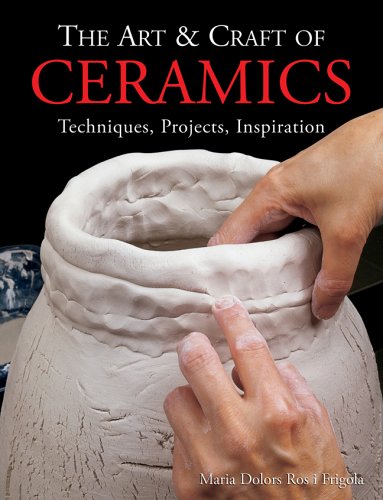
33. The Art & Craft of Ceramics:
 
$66.83
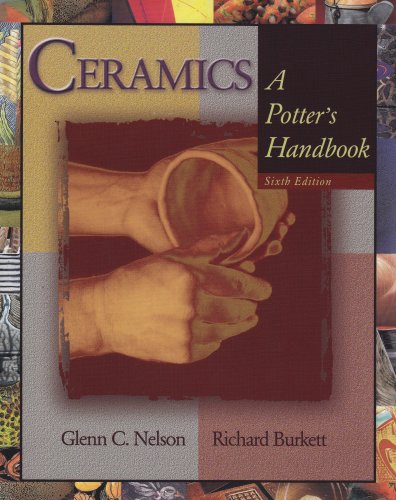
34. Ceramics: A Potter's Handbook
$4.20
35. How to Install Ceramic Tile
$3.95
36. Decorating Ceramics: Over 300
$14.29
37. Inside Japanese Ceramics: Primer
$19.01
38. The Penland Book of Ceramics:
$7.54
39. Antique Trader Pottery & Porcelain
$27.93
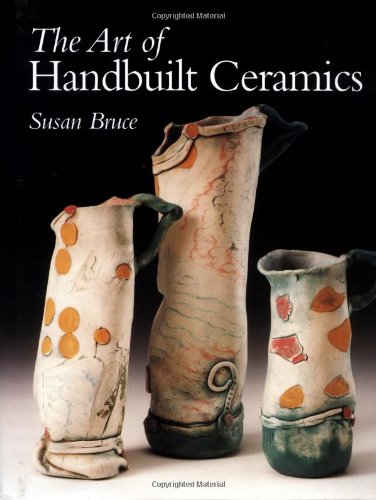
40. The Art of Handbuilt Ceramics

21. Making & Installing Handmade Tiles (A Lark Ceramics Book)
by Angelica Pozo
Hardcover: 160 Pages (2005-04-01)
list price: US$24.95 -- used & new: US$15.21
(price subject to change: see help)
Asin: 1579905250
Average Customer Review: 5.0 out of 5 stars
Canada | United Kingdom | Germany | France | Japan
Editorial Review

Book Description

With more than 70,000 copies sold, Lark's Handmade Tiles and its beautiful ideas have delighted crafters everywhere, and whetted their appetites for more. They'll find just what they're looking for in these dozen ceramic tile projects, which include everything from trivets to tabletops to stepping stones. The wealth of practical, visually breathtaking information covered here includes everything from design and formation through decoration and site installation, making this manual an absolute must in every ceramics and home improvement library. Find out about basic tools and materials, glaze application, and techniques for making slab tiles. Get the lowdown on mosaics, and stamped, carved, and inlaid designs. With these techniques, even beginning crafters can start working fast, and move on to simple stair risers, a kitchen backsplash, and an exquisite window surround.

Praise for Handmade Tiles:
"The definitive guide to tile and how to make it. This is a book that demands your perusal."--The Tile Heritage Foundation.
... Read more

Customer Reviews (6)

5-0 out of 5 stars Excellent Resource Book
This is a well written book full of good advice and sound techniques.It provides good step by step photographs of each technique that shows each process clearly.The book also provides a great range of images for inspiration and ideas.An excellent book for beginners through to the experienced.

5-0 out of 5 stars A must have for all tile-makers!
I have been an collector of pottery and tiles for many years. After signing up for a class to make tiles, I purchased this book. It has wonderful detailed explanations and illustrations of many tile making and decorating techniques. I refer to it often and enjoy looking at the many beautiful handmade tiles in this book. If you love working with and collecting pottery like I do . . . GET THIS BOOK!!

5-0 out of 5 stars Clay person
This is an essential book for anyone undertaking clay tile making.Many claim to be that essential book, but based on what is available in my local library, this one really is it.Her projects and those of a range of others included in the book are both great illustrations of the many processes involved and useful for stimulating the creative ideas of her readers.
I'm sick of renewing my library copy.I'm gonna buy my own.

5-0 out of 5 stars Great ideas and techniques
The techniques represented were unique. There were many examples of other clay artists works. Ms. Pozo presented step by step photo processing for each technique. She started with clay basics and moved forward through firing ranges, shrinking, warping, cracking and glazes. She gave excellent usable information on the installation processes.

4-0 out of 5 stars Good solid reference book
This book has a little of everything.If you are just starting out in tile-making it would be an excellent choice.There area LOT of different decorating techniques, and a very wide range of applications.The book is laid out well, with plenty of photos, so you can see finished examples of the techniques being described in the text below on the page.It would be an excellent beginner-to-novice book.

Personally, I prefer Frank Giorgini's "Handmade Tiles", because it has more technical information, glaze recipes, firing information, etc., but if I were starting out to make tiles on my own and taking them elsewhere for firing, I think Pozo's book would be a better choice. ... Read more


22. Setting Up Your Ceramic Studio: Ideas & Plans from Working Artists (A Lark Ceramics Book)
by Virginia Scotchie
Paperback: 128 Pages (2005-03-01)
list price: US$17.95 -- used & new: US$20.24
(price subject to change: see help)
Asin: 1579906729
Average Customer Review: 3.0 out of 5 stars
Canada | United Kingdom | Germany | France | Japan
Editorial Review

Book Description

"Scotchie gives us an insider's look at [how to] assemble vibrant, creative studio spaces. Floor plans are provided...The photographs are excellent."--Library Journal

Take a photographic tour of 10 beautiful ceramics studios, and discover exactly how and why each design so perfectly meets the artist's particular needs. Author and ceramist Virginia Scotchie covers all the practical decisions about equipment, workflow, and safety that go into setting up a new studio, from using the space effectively and dealing with lighting, electrical, and ventilation needs, to establishing a small business office. Every ceramist will find inspiration in Michael Sherrill's spacious and adaptable studio, so suited to his large-scale sculptures; Alice Munn's intimate and tidy atelier; and Ben Owen III's highly organized layout, arranged for volumes of production work and featuring a separate gallery.
... Read more

Customer Reviews (5)

1-0 out of 5 stars Are YOU rich?
This book annoyed me as it is for people with plenty of money to throw at an architecturally designed, no holds barred, studio space. How many artists have this kind of money? As has been said too, it offers no practical advice for measuring, designing or actually setting up the actual studio.
Waste of time buying this unless you just want to look at pretty photos of idyllic conditions.

2-0 out of 5 stars underwhelmed
There was less of this book than I expected.Just pretty photos, no solid advice.Most important, no measurements!

4-0 out of 5 stars Good but be careful !
It's full of beautiful pictures, showing wonderful studios. The book could be more practical showing details of how to design a studio with measurements, precautions, equipment suppliers, etc.
Good as ideas for lay-outs and artist's work

5-0 out of 5 stars Love Lark Books!
This book is wonderful for potters. It's full of inspirational pictures of not only studios, but the artist's work. All the Lark books I own are fantastic!

4-0 out of 5 stars Classy, but limited.
The studio examples are regionally limited to the author's home base area (Southeastern U.S.).The good part of this restricted view is that the photographs are numerous and pretty fantastic.The drawback is there's a lot of us who have to factor in different weather and terrain conditions--depending on where we live.
The plans shown didn't have any measurements showing scale, so it was hard to get a true feeling as to how the various pieces of equipment filled the space.The graph paper used as a backdrop for these plans only caused more confusion, as there was nothing to show if each graph square equaled one square foot, or four.
I would suggest--to anyone designing a studio--that you beg, borrow or buy your own graph paper and do your drawing to scale.Also draw your equipment to scale and cut out silhouettes so you can try out many approaches to placement.
None of the studio plans matched my desires or needs, but the examples are varied enough that bits and pieces of almost all were helpful in designing my new studio.Pay particular attention to the information on traffic and work flow.It will help whether you work alone or have students sharing the space.
All in all, a presentation with classy paper, pictures, and prose--and all at a great price. ... Read more


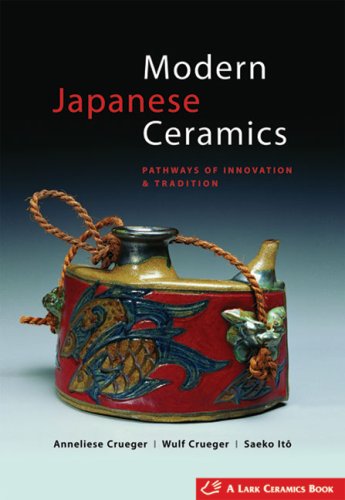
23. Modern Japanese Ceramics: Pathways of Innovation & Tradition
by Anneliese Crueger, Wulf Crueger, Saeko Ito
Paperback: 328 Pages (2007-06-01)
list price: US$24.95 -- used & new: US$14.11
(price subject to change: see help)
Asin: 1600591191
Average Customer Review: 4.5 out of 5 stars
Canada | United Kingdom | Germany | France | Japan
Editorial Review

Book Description

For more than 30 years, Dr. Anneliese and Dr. Wulf Crueger—guided by Saeko Itô—have devoted themselves to studying, understanding, and collecting Japanese ceramics. Today, they share the rich fruits of their knowledge with this lavishly illustrated volume based on their own collection. The equivalent of Roberts Museum Guide, devotees of beautiful ceramics can pick it up and use it to select and visit potters as they undertake an artistic tour of the country. Organized geographically, it goes from kiln to kiln—which in Japan may refer to a lone site or an entire ceramics region that contains hundreds of workshops. Along the way, they outline the history, development, and unique stylistic characteristics of each area’s work, and the traditions that inspired it.
... Read more

Customer Reviews (3)

5-0 out of 5 stars Just what I was looking for...
Having already had an interest in Japanese pottery, when I moved to Fukuoka in Kyushu last year, I realized that Kyushu pottery was not just the famous Arita/Imari ware or even Karatsu-yaki.I looked in vain for a book which would give me some background on the many types of pottery in Kyushu that boasted a history of hundreds of years.I wanted something published fairly recently, knowing that there were talented young potters carrying on the work of generations.Naturally I thought I would find it among Japanese language publications, but no, I found it in this one.I rely on it.In addition to the history of the various types of pottery, it contains pictures of representative pieces and even directions to the kilns/pottery towns toward the back.I wish it also had directions by car in some cases, but I understand why that might difficult.Now if only we could add descriptions of hot springs near the pottery towns, it would be a dream come true!

5-0 out of 5 stars ANiftyLittle Book! I like it!
I tend to agree with the reveiw above....The title is misleading,it is not a book about modern Japanese ceramics. Most of the photos are of works done in the 1800's, but there are some interesting examples of more contemporary works in the final chapters, and those were indeed very interesting. But I was not displeased with this book,in fact, it was quite the reverse. I have very little knowledge of Japanese techniques, I tend to work in underglazes and North American technical ways of firing, so, a chance to see a completley different perspective on ceramics from a Japanese cultural point of veiw is a great thing for me.
Its a great little book, loaded with photos, technical info, and the works in the final chapters has me interested in purchasing another book on real contemporary Asia ceramics...Amazon has such a one,I think I may order it today, in fact!
One the whole, it's great value for the money, I would recommend it to anyone who is curious about Japanese approaches to this art form.

3-0 out of 5 stars more tradition than innovation
First, the good -- this book contains lots of beautiful pictures of Japanese pottery from the 1990's and early 21st century. For that alone, it may be worth purchasing this book. Now the not-so-good -- if you are expecting to see cutting edge, modern ceramics from Japan, this is not the book for you. The text focuses largely on the history of Japaneses pottery and makes only a slight attempt to review the work of contemporary potters. The illustrations of pottery, while visually appealing, also fall largely (although not exclusively) into the category of traditional forms and firing methods. Although I am always happyto look at traditional Japanese pottery, I found little in this book that could provide inspiration for my own more modern work. ... Read more


24. Ceramic Extruding: Inspiration & Technique
by Tom Latka, Jean Latka
Paperback: 143 Pages (2001-04)
list price: US$29.95 -- used & new: US$19.01
(price subject to change: see help)
Asin: 0873419030
Average Customer Review: 5.0 out of 5 stars
Canada | United Kingdom | Germany | France | Japan
Editorial Review

Book Description
Most ceramists own a pugmill or hand extruder and view it as simply a utilitarian device for making handles or coils. But the extruder can be the starting point for a variety of inventive and creative works of art. Extruder experts Tom and Jean Latka teach the basics of extruder use as well as how to make your own dies. Step-by-step projects include napkin rings, vases, umbrella stands, wine coolers, planters, sconce lighting, platters, sculpture, and more.

- 12 projects with step-by-step instructions
- Photo gallery of works by skilled, creative, and talented artists
- Solid and hollow extrusions
- Additive or subtractive methods of construction for pottery and sculpture ... Read more

Customer Reviews (7)

4-0 out of 5 stars An Excellent resource book
A great book on the technical aspects of extruding.Lots of good photos for ideas and explanations.A good start for anyone into handbuilding or adding flair to their thrown work.

5-0 out of 5 stars A highly enjoyable how-to artbook
Ceramic Extruding: Inspiration & Technique by professional studio artists Tom and Jean Latka, is a thoroughly "user friendly" guide ideal for both aspiring ceramics workers and dedicated hobbyists to the use of a ceramic extruder or pugmill in new and wondrous ways to craft memorable and adventurous artworks in this challenging medium. More than 200 color photographs illustrate the easy-to-follow, step-by-step instructions, as well as display possibilities for the finished product. Ceramic Extruding is a highly enjoyable how-to artbook and a strongly recommended addition to any personal, professional, or art school reference collection.

5-0 out of 5 stars Art teacher loves this book
If you have been waiting for the best book on ceramic extrusion, it is
available now Ceramic Extruding by Jean and Tom Latka successfully answers the question of, "Why are all of those clay extruders rusting on potter's walls?" Their answer is thus:Ceramists, like everyone else, have to be inspired to create beautiful work.This book acts as a magical muse for artists by showing over 300 quality photos of beautiful work by some of the finest international contemporary artists working in the medium today.This book's focus is on the recent emergence of extruded ceramic art as dynamic and surprisingly varied form of creative expression.

"Though the words extrude and extrusion are not ones most people encounter in everyday conversation, we live in a world where we are surrounded by extruded objects.Our brick houses and their tile roofs are made from extruded clay.We shower on extruded tiles, send our smoke and fumes up extruded chimneys and our waste down extruded sewers.From the round O's in your breakfast cereal to the pasta on your dinner plate, extruded objects occupy every conceivable nook and cranny of our lives".Beginning with bricks, Ceramic Extruding details the history of the extruder then demonstrates the ease, as well as the necessity, of using an extruder in one's pottery.The book is organized in a logical manner in order to guide the reader by employing numerous step-by-step instructional methods.
Essentially, Ceramic Extruding is a how-to book and the projects gradually become more advanced.Apart from the photos, another subject that distinguishes this book from other books on the market is its comprehensive theory of extrusion and was the only chapter I had to read twice.It is a difficult subject.The authors give detailed information on why extruders act in the manner in which they do.For instance, I didn't know that clay moves faster down the center of the barrel than clay closer to the walls. This information is useful for artists who want to design their own dies.

Educators take note:As a teacher, I know how it feels to give students a
blank canvas and ask them to be creative. In contrast Ceramic Extruding
shows how to create a limitless supply of foundation material from the
extruder for the student.

The book truly has an international cast of artists, photos of ceramics
spanning from Australia to Inge Pedersen in Norway.I became aware of
several renowned European ceramicists.AntonioCumella, Alessio Tasca, Elina
Brandt-Hanson, Jim Robison.Other artist's work that impressed me was Ken Williams, Jutta Golas, and Jack Sures.Jean and Tom Latka have an excellent body of work apart from each other, but their collaborative work shines superior.

Everyone has been waiting for the next thing in clay.Well Latka's Flying
Hybrid Extruder and Michael Sherrill's novel extruder/wheel could lead to
the new revolution in clay.The quick release system makes these extruders user friendly. The expansion box is larger than most other machines, and in the case of Flying Hybrid, it out performs slab machines by making slabs faster and more superior.Oddly enough, slab machines compress the clay from the center of the roller to the edges.This creates an unstable molecular structure and cracks result.The clay is evenly compressed in the Vertical Flying Hybrid.An 18"x24" slab is the result when an 8" cylindrical shape 18" long is extruded and sliced lengthwise.

I would like to sum up with a quote from Michael Cohen."It is important to find a well-made extruder that is adaptable to your needs.As for the
wheel, once you learn how to use it, one question ultimately remains:What are you going to make?After mastering centrifugal force and friction, perhaps it's now time to use gravity and inertia to make a personal statement. Like throwing, it only looks easy."

"Extruding clay takes on a wonderful new meaning when you use the extruder as you would any tool---as one step in the making process, not as an end in itself.The extruder's contribution to the studio can be as profound and influential as the potters wheel --- a slab for the imagination to leap off from".Jean Latka

Two thumbs up!Burn the other extruder books; this is the only one you will ever need.
I am an college art teacher at U.S.C. and find it the best book for my introduction course on the Extruder.
...

5-0 out of 5 stars BEST BOOK ON EXTRUDER FOR EDUCATORS
The bookhas an international cast of artists, photos of ceramics
spanning from Australia to Inge Pedersen in Norway.I became aware of
several renowned European ceramicists.AntonioCumella, Alessio Tasca, Elina
Brandt-Hanson, Jim Robison.Other artist's work that impressed me was Ken Williams, Jutta Golas, and Jack Sures.Jean and Tom Latka have an excellent body of work apart from each other, but their collaborative work shines superior.
Peter Helm

5-0 out of 5 stars PHOTOS OF GREAT CERAMICS
This Krause Publication book, which means it is great, it is about the creative use of the extruder: its history, manufacture and
production contributions and the creative uses being employed by studio clay artists.
Over 300 color photos of creative work by a cast of international artists showing innovative uses for the extruder.
The best book on extrusion.
Andy Ganhal ... Read more


25. Ceramic Houses and Earth Architecture: How to Build Your Own
by Nader Khalili
Paperback: 233 Pages (1996-09-01)
list price: US$26.95 -- used & new: US$17.09
(price subject to change: see help)
Asin: 1889625019
Average Customer Review: 4.5 out of 5 stars
Canada | United Kingdom | Germany | France | Japan
Editorial Review

Book Description
How to build, step by step, an adobe and ceramic architecture that is affordable and self-help. How to build arches, vaults, domes, and utilize the natural energy of wind, sun-and-shade to help save forests and create a sustainable architecture. How to fire and glaze an entire building after it is constructed from clay-earth on site. A NEW UPDATE CHAPTER introducing the Superadobe technology, building with almost any on-site soil using sandbags and barbed wire. ... Read more

Customer Reviews (7)

5-0 out of 5 stars Pure Inspiration
It's important to understand that what is truly new and fresh can't be responsibly reduced to a cookbook.Building a house is a major undertaking, and different parts of the earth have different climates, different needs, and different earth underfoot to build from.

Khalili inspires his readers to think more openly, he urges experimentation while sharing what is known.His buildings are gorgeous, with an openness and simplicity that inspires us to question the standard boxes most of us live in.

Also inspirational is his obvious deep humanity; his love for both building AND people has enabled him to leave the usual paths and use the best qualities of the old, while infusing it with modern understanding to create wonderful new, achievable designs.I am awed.I've read this book twice, I'm building the models he recommends so I can more fully understand the structures of arch and domes, and hope to take his workshop next summer.

This is life affirming as well as life-changing.

5-0 out of 5 stars Great book by a great architect
This is a great book. I haven't read it page for page yet, but in it goes with my favourites. It concentrates on Khalili's monolithic fired ceramic houses and has a lot of detail. It leaves no stones unturned if you want a building of this type.

Sadly, the book was published before Khalili invented Superadobe or Earth Bag building. For a good book on Earthbag, I recommend "Earthbag Building: The Tools, Tricks and Techniques"
by Kaki Hunter. Another book - which is more general is "Alternative Construction; Contemporary Natural Building Methods" by Lynne Elisabeth and Cassandra Adams.

5-0 out of 5 stars Excellent Book!
awesome resource and "how-to" book for those interested in this earth friendly type of architecture

3-0 out of 5 stars Work in Progress
The author is obviously a person of great vision and enormous generosity of spirit.The book is very good, and I hope that a rating of three stars isn't some insult where no insult is deserved.I was very disappointed because I expected a serious discussion of superadobe techniques, which I regard as possibly more practical than the ceramic constructions.The book has only seven pages treating superadobe.Those are pasted as an afterthought, right at the end.They don't constitute a detailed and serious discussion.As much information can be found on the calearth.org web site.So, I felt that the advertisements of the book were a little misleading.

The book itself is an education on classical earth construction and the improvement produced by firing it.As a person unfamiliar with architecture and construction, I had hoped to find something like a cookbook.Just tell me how to build a nice house easily, and I'd be happy to do it.Part of the education is to realize that things aren't quite so simple.Many issues arise, and, at the time of its writing, not all of them are well understood or totally settled.In particular, the details of firing a house into its ceramic status is not only explained in a partial way, but clearly more work is required to get a full understanding.The author could successfully fire houses himself, but the process was not reduced, at this writing, to entirely simple formulas for the use of lay persons.In that sense, each person working from the book would need to take on some considerable personal responsibility.It might not all work correctly.Consequently, I don't consider this book to be an especially good guide for a novice or amateur builder.That doesn't mean it isn't worth reading.However, I wouldn't read it, put up my own dome adobe house, and then sit down for tea underneath my own dome.The thing would probably fall in.

5-0 out of 5 stars Rebuilding safely in Iran and elsewhere, after earthquakes
If ever a book was inspired by compassion for earthquake victims, this is it. Aware of the bitter experience of Middle East peoples with seismic disasters, architect Nader Khalili pulls together what works in those same cultures to show how we can build affordable housing that will survive major earthquakes.

Key principles: Use the earth (clay) underfoot as your building material. Spare the forests and watersheds.

Use simple human-scale building elements, like bricks or sandbags that ordinary people can stack by hand.

Use the arch, dome, and vault. These architectural forms work where post and beam timbers are not available. They are seismically stable. They are not subject to the gravitational loads that make flat roofs cave in over time. They make climatically comfortable spaces with sun and shade surfaces that circulate hot and cool air appropriately.

Fire the clay structure to make it a strong unitary enclosure, like an inverted teacup. It will slide safely over seismically moving earth.

Ceramic Houses - and Khalili's work generally - offers a timely recipe for new development and rebuilding in seismically active areas like the Middle East, and, take note, California. It's no accident that Khalili's prototype structures have been built and approved by local authorities in Hesperia, CA.

Nader Khalili brings together the clay and earth underfoot, the architectural vocabulary of arch, dome, and vault, and simple building technques that ordinary people can use to build seismically safe, comfortable, inexpensive, and beautiful houses. ... Read more


26. Naked Clay: Ceramics Without Glaze
by Jane Perryman
Hardcover: 182 Pages (2004-12-15)
list price: US$49.95 -- used & new: US$31.32
(price subject to change: see help)
Asin: 0812238486
Average Customer Review: 5.0 out of 5 stars
Canada | United Kingdom | Germany | France | Japan
Editorial Review

Book Description
A growing number of ceramic artists now choose not to glaze their work. Instead, they use an unglazed--naked--surface to express their ideas and concerns. From slips and terra sigillata to burnishing, engobes, oxide washes and additions to the clay body, there is a wide range of techniques these artists can employ to achieve the finishes they desire. As these techniques are suitable for a broad spectrum of processes, subject matter and context (from slipcasting to handbuilding, from high to low firing temperatures, from figurative to conceptual, from domestic to public), the scope of the work produced by these artists is enormous.

In Naked Clay Jane Perryman not only presents the finished ceramics and techniques of an international group of artists but she also investigates their ideas and areas of inspiration to further an understanding of their work. Each artist presented here has a unique style and way of working, but they are all connected through their committed relationship to the material and their desire to express their ideas using 'naked' clay.

This beautifully illustrated book will inform and inspire not only students, professionals, and teachers, it will fascinate collectors and, indeed, anyone with an interest in contemporary ceramics. ... Read more

Customer Reviews (2)

5-0 out of 5 stars Favourite Book of all time
This has to be the best book about naked clay around.It is filled with inspirational artists who have been very generous with sharing their working methods and knowledge.The photographs of the art work are fabulous and show good detail of the work. A must in any collection.

5-0 out of 5 stars EXCELLENT!
This book is quite a spiritual book, a holistical approach to clay, art and human beeings. I did love it! It shows people achieving his own voice in clay, out of glazes. A real treasure! ... Read more


27. 500 Animals in Clay: Contemporary Expressions of the Animal Form (A Lark Ceramics Book)
by Lark Books
Paperback: 426 Pages (2006-11-28)
list price: US$24.95 -- used & new: US$16.43
(price subject to change: see help)
Asin: 1579907571
Average Customer Review: 4.5 out of 5 stars
Canada | United Kingdom | Germany | France | Japan
Editorial Review

Book Description

No other volume has ever presented such a diverse and captivating collection of contemporary animal-themed ceramics. Juried by distinguished artist and educator Joe Bova, this magnificent gallery includes pieces from an international group of artists; the beautifully crafted works range from the representational to the abstract, from artful realism to provocative surrealism (including animal-human hybrids). Ann Marais’ image of a waterfowl painted onto a porcelain dish has a restrained, Asian quality. Sharkus’ painted and smoke-fired stoneware turtle could easily be mistaken for the living creature. Bova provides astute and illuminating commentary overall, with selected artists’ notes.
... Read more

Customer Reviews (5)

5-0 out of 5 stars Fantastic Book!
I've been wanting to get into ceramics for a while and this book was just the thing to get my creative juices flowing. It has many (500 actually) beautiful pieces to admire, with such a wide array of styles. It's definitely not a "how to" book, with just enough info to get a basic idea of how each piece was created, but the beautiful photographs and variety makes it well worth purchasing.

2-0 out of 5 stars 500 animals in clay
Without being able to review the book beforehand, I was disappointed that the figures were so very complex.I had hoped that judging from the cover bunny that they may match my elementary start at sculping simple clay figures.

5-0 out of 5 stars Not zoology 101....
I work in ceramic materials, and this book has to be right beside 500 figures as my 2 very favorite books from lark. I am not bothered by the lack of technical information, usually if one has been working in ceramics for a while, it is pretty easy to see what the artist used,and the book does provide descriptions in glazing methods and clay bodies!
Mostly, I found this book a hoot in seeing how other artist view critters, the artistic interpretation is amazing, and often very humorous! Again, I took my copy to the shared studio I work in, and everyone was spellbound at the variety of works...My copy is getting a bit dusy now...I might order a second one, and give my old one to the studio library...

5-0 out of 5 stars Great inspirational book
As a potter, I love books like this just as much as those with more technical information. I turn to them over and over when the muse is taking a little siesta. Tons of great ideas here for everyone, no matter what your style.

5-0 out of 5 stars 500 Animals in Clay:Contemporary Expressions of the Animal Form
Like all the 500 Lark books this one has beautiful photographs and lots of inspiration.If you are an animal lover, and ceramist, like I am you will love it.I would like a little more information about how the pieces are created, but that is rarely the case with these books - still well worth the price. ... Read more


28. The Ceramic Process: A Manual And Source of Inspiration for Ceramic Art And Design
by Anton Reijnders
Hardcover: 320 Pages (2005-12-05)
list price: US$69.95 -- used & new: US$66.45
(price subject to change: see help)
Asin: 0812239326
Average Customer Review: 5.0 out of 5 stars
Canada | United Kingdom | Germany | France | Japan
Editorial Review

Book Description
Process is integral to every clay piece, and this volume follows the logic of the steps of creation. The beginning chapters explain the early steps such as clay preparation and the various techniques of making. Following chapters are devoted to the later steps of drying and firing. Also included are numerous glaze and clay recipes, using a range of widely available materials. Complex and large-scale work, always demanding special attention and specialized knowledge, is comprehensively covered.

The European Ceramic Work Centre (EKWC) is an international studio dedicated to the ceramic arts, in all of their various forms. Drawn from the resources at the EKWC, this volume elucidates every aspect of the ceramic process, from wedging clay to packing kilns. This useful resource will be valuable to potters of every skill level. Extensively and vividly illustrated, the book demonstrates complicated techniques visually. In addition to the helpful diagrams, works produced at EKWC are used as examples of the methods described in the text, offering specific uses for procedures.

The Ceramic Process emphasizes the experimentation with materials and technique that is crucial to a potter's development and success. Ultimately, the reader will gain an understanding of every aspect--artistic as well as technical--of the creation of ceramic pieces. ... Read more

Customer Reviews (2)

5-0 out of 5 stars Ceramic Process
This is not about the book, but about Amazon. Initially, the book arrived printed upside down in the binding and
with it cut badly with the tops of the pages missing. Following an email, Amazon reversed the charges and sent a new book which arrived in good condition. I would give Amazon high marks for addressing this problem.
The book itself is excellent.

5-0 out of 5 stars Best buy for those serious about clay
Phenomenal book. It covers the entire ceramic process from the constituents of the clay to drying, firing and glazing or decorating. The descriptions border on the scientific but are written in such a way that you can pick the book up to read for leasure.

Within its pages you will find how to mix a clay for a specific purpose, how to support huge statues and keep small tiles straight. How to fire bisquit and how to glaze (in detail and with recepies, but this is not a glaze book) or decorate. Whether you want to cast 10 thee pots or make a lifesize sculpture of an giraffe you will find hints and tips on how to do it. Everything you need to take your ceramics over the edge.

The artworks that illustrate the book and are used as examples might not be to everyones taste (they come from a school for experimental ceramics afterall) but they fit the explanations perfectly.

If you are serious about your ceramics and want to buy one book that explains the process without specialising on only one type of application (tiles, pots, sculpture) look no further!

If you are new to pottery of sculpture the contents might be a bit daunting. ... Read more


29. The Essential Guide to Mold Making & Slip Casting (A Lark Ceramics Book)
by Andrew Martin
Hardcover: 160 Pages (2007-04-01)
list price: US$24.95 -- used & new: US$15.17
(price subject to change: see help)
Asin: 1600590772
Average Customer Review: 4.0 out of 5 stars
Canada | United Kingdom | Germany | France | Japan
Editorial Review

Book Description

For potters, mold making is invaluable because it allows them to slip-cast identical multiples of their work—and this newly revised, now in color edition of Andrew Martin’s classic is the definitive guide to the craft. No other volume has shown the processes in such how-to detail. It’s overflowing with hundreds of photos, key techniques, projects, master artist profiles, and troubleshooting tips. A thorough introduction addresses materials and tools, and presents Martin’s simple, unique template method for making clay prototypes. Create easy one-piece molds to make tiles, bowls, and platters, or multi-piece molds for more complex forms. An extensive overview covers slip formulation, while offering highly desired slip recipes for low-, mid-, and high-fire clay bodies. This will be the standard reference in every ceramist’s library.
... Read more

Customer Reviews (8)

2-0 out of 5 stars Not the whole story
This book seemed to me to be a good start, but maybe was rushed to production. There are a number of significant issues with this publication:
* Poorly organized - rather than taking you through a step-by-step process for each important phase of mold making and slip casting, the information is scattered throughout. Including information on other artists adds to the value of this book, but detracts from fundamental goal of teaching you how to slip cast.
* Missing/minimized information - 'Begin with the water and .25 percent of sodium silicate.' How the heck do you get to .25 percent sodium silicate? Does it come only in liquid form, or is there a powder available? Is the liquid form measured by volume or weight? Is the liquid considered 100%,or is it diluted? The tile-making example looked really cool. But two whole paragraphs on the silly fill tubes? And nothing after pouring the slip into the mold. How long to wait? How do you remove the tile after you open the mold? What if the tile doesn't want to come out? And (on page 68) "Mix the Hydrocal and pour it into the frame." Ok - nothing - nothing about mixing Hydrocal. How much water? How long to wait? Is it the same as #1 Plaster? Also (page 19) "Then sand the whole exterior...Sand the interior surfaces as well..." Huh? Why do that? Is it optional, or a key step to getting a successful cast? Also, how long do you dry the molds before you can use them? It's a mystery....
* Instructions don't work - I followed the mixing and pouring of plaster and slip down to the last available detail, including the cone 7 Hensley/Polseno recipe. The casts won't come out of the molds. From Troubleshooting, suggests the mold is too wet (how long do you let the things dry?) or too much EPK, but I used the recipe in the book!
The author is obviously an accomplished artist, and I was inspired by the introduction, coming to see slip casting as a legitimate form of artistic expression. However, the book seems to miss the mark for novices just getting started. After some rather extensive efforts, I'm really frustrated, but I'm not giving up! Now looking for other references.
Good luck!

4-0 out of 5 stars An Excellent resource book
This book is well written and shows very good photos.Mold making can be hard and very messy so having a clear idea of what you are going to be doing is important.Andrew Martin shows you step by step how to approach mold making beginning with very simple molds through to complex molds.Lots of lovely inspiring photos from master artists.This is a great book for any ceramics library.

5-0 out of 5 stars Best mold book on the market.
In preparation for teaching mold making at Utah State University, I purchased 4 different mold-making books. After careful examination I decided that Andrew Martin's book is the one I'll use as my text for the class. I wouldn't recommendit for someone who is trying to learn to make molds without a base knowledge in clay and plaster, but, as a text book in an intermediate to advanced setting, this book is the one to use.

5-0 out of 5 stars Great Book
I had to get this book for a college ceramics course. It is great. It has everything I need for making molds. A definite must have for anyone in ceramics.

3-0 out of 5 stars My coments
The Essential Guide to Mold Making & Slip Casting (A Lark Ceramics Book)
I did not expect such a hard book to follow. This book is not for green beginners. Terminology not explained and I found the photos unreconizable. ... Read more


30. Glazing Techniques (Ceramics Class) (Ceramics Class)
by Joaquim Chavarria
Hardcover: 64 Pages (1999-05-01)
list price: US$14.95 -- used & new: US$10.17
(price subject to change: see help)
Asin: 0823005925
Average Customer Review: 2.5 out of 5 stars
Canada | United Kingdom | Germany | France | Japan

Customer Reviews (9)

1-0 out of 5 stars not a very goog buy
I didn't find this book interesting, it doesn't help you the way others can help. I have 3 books of this colection and all of them are weak.

1-0 out of 5 stars A waste of time and money
If you are seriously looking for good information or ideas, look else where.We got three of the books in this series and found them all a waste of time and money.We can't even feel good about trying to re sell them.
The Kastan Pottery crew.

1-0 out of 5 stars this book is horrible
Around my studio we had a copy of this book that no one would take and everyone laughed at.The work shown in the book is terrible- i mean really really bad art- dated and just ugly. The glazes are dated too- some even using lead (a poison that should only be used if you really know what you are doing).The only plus i can say for this book is that it has luster recipes -something i've never seen anywhere else(it's made of frit and bismouth subnitrate or something) all in all BUY A DIFFERENT BOOK! there are much better ones out there or start getting magazines (ceramics monthly and claytimes) that always have lots of glaze recipes and articles.

2-0 out of 5 stars Interesting and technical, but not much help for beginners
I purchased throwing techniques and decorating techniques from the same author and found both books to be wonderful. My skill level went far beyond what I could currently do in a matter of weeks using the techniques listed in the book. However, this book failed to impress me. The illustrations were nice, and it provides good detail for making and applying your own glazes, but unless you own your own set of kilns and have a workshop, this book is best to be borrowed from a friend or checked out from the library.

5-0 out of 5 stars Excellent jumping off point starter book...
This and the authors book Decorating Techniques are two books I wouldn't be without even after decades of working with clay and making mostly Raku bowls.I love the photos and text and encourage would be clay workers to get both books.This is not a book for the timid or someone who needs grade school instructions. But if you have a sense of adventure and want a good starting or jumping off point then buy both books.

There is as the author shares, something so wonderful about working with clay and seeing something go from a slab of clay to something with form and then colour(s). And then seeing what we have created with our own hands grace our environment. Raw clay that takes form and now holds food, drink, flowers or air. ... Read more


31. Ceramics in America 2005 (Ceramics in America)
 Paperback: 340 Pages (2005-12-13)
list price: US$60.00 -- used & new: US$71.59
(price subject to change: see help)
Asin: 0972435352
Average Customer Review: 5.0 out of 5 stars
Canada | United Kingdom | Germany | France | Japan
Editorial Review

Book Description
A new annual from the Chipstone Foundation. ... Read more

Customer Reviews (2)

5-0 out of 5 stars 5 stars
"Ceramics in America" is a wonderful publication. For the first volume of this journal, it is very well put together. The journal has lots of information on ceramics made and used in America. It is very helpful to those who are not very familiar with American ceramics.

5-0 out of 5 stars A finely crafted volume
This book is a must-have for ceramics enthusuasts!Having worked with historic ceramics for several years, I was familiar with many of the authors selected to write for the first "Ceramics in America" monograph.As much as I eagerly anticipated the work, I was not prepared for the level of excellence which has been achieved here.This volume contains cutting-edge ceramics research, illustrated with the latest in pottery technology and documentary history of the field. I was particularly impressed with two articles highlighting pottery techniques: the submission by Don Carpentier and Jonathan Rickard on annular or "dipt" wares, and also the work of team Michelle Erickson/Rob Hunter, who demonstrate early English slipwares production.This is yet another triumph for the Chipstone Foundation, who has successfully sponsored Luke Beckerdite's "American Furniture" series for years.This book is very highly recommended for archaeologists, collectors, curators, and other material culture specialists. ... Read more


32. Paperclay: For Ceramic Sculptors 3rd Edition
by Rosette Gault
Paperback: 142 Pages (2003-07-30)
list price: US$22.00 -- used & new: US$18.45
(price subject to change: see help)
Asin: 0963879332
Average Customer Review: 3.5 out of 5 stars
Canada | United Kingdom | Germany | France | Japan
Editorial Review

Book Description

Imagine, invent, model, carve, or simply play with a level of expressive freedom never quite possible in traditional clay. Just mix a favorite high or low fire earthenware, terra cotta, raku, stonewares, or porcelain with recycled paper. Ultra versatile affordable P'Clays increase pleasure and satisfaction. Use with or without a kiln. From beginner to expert, get answers to practicle questions answered now. A new section is included for classroom teachers, children, elders, and more. Tile or architectural scale projects in high fire stoneware and porcelain forming and casting methods are new to this edition, too.
... Read more

Customer Reviews (2)

2-0 out of 5 stars You need this book, but be forewarned . . .
There are few books out there on paper clay, so if you're one who learns by reading there's precious little to choose from. If you're interested in the medium, you probably need to have this book. But be forewarned: though it contains lots of information not currently available from other sources, it's one of the worst-produced books I've seen in a very long time.

The book was evidently never put through a professional editing process, and it shows. It's full of typos, punctuation errors, and confusing sentences. After reading the first few pages, I concluded (erroneously, as it turns out) that English was not the author's first language. Here is a sample garbled sentence, admittedly one of the worst: "Join between bone and soft is usually better that same join at would be leatherhard." Some sections read more like the author's notes rather than a finished manuscript.

Many of the illustrations have been reduced so small that it's difficult to discern what's being shown -- and some of the labels, reduced along with the illustrations, contain type that literally required a magnifying glass to read.

The author decided to use a question-and-answer format for the entire book, which quickly becomes tiresome. As a result, there's no "narrative" to the book and the information is disjointed and episodic.

The book I received, although it says it's the 2007 "third edition," does not look like the one pictured here. Instead, it's printed in a very horizontal format (about 9 inches wide by 5 inches deep), which is awkward to hold and irritating to use.

If you have the patience to deal with all this, much information about paper clay can be gleaned from this book. The author quite obviously knows a lot and seems willing enough to share that with her readers. However, I believe the publisher does her, and us, a disservice by going into a third edition without taking care of these fundamental problems.

5-0 out of 5 stars easy and clear
i have found this companion boock easy and clear to follow.it have beeing a great help developing new forms in my studio. ... Read more


33. The Art & Craft of Ceramics: Techniques, Projects, Inspiration (A Lark Ceramics Book)
by Maria Dolors Ros i Frigola
Hardcover: 160 Pages (2006-10-28)
list price: US$29.95 -- used & new: US$16.49
(price subject to change: see help)
Asin: 1579909124
Canada | United Kingdom | Germany | France | Japan
Editorial Review

Book Description

Beginners eager to explore the world of ceramics, as well as experienced potters seeking new techniques and ideas, will find this colorful, technique-packed manual absolutely inspiring. Lavishly illustrated and visually attractive, it provides both practical and creative information on tools and materials, production processes, glazing, and decorative techniques—including detailed explanations of clays, kilns, and accessories. Explore essential methods for modeling (hand building, wheel turning); for decorating the pieces (slips, glazes, colored engobes); and for properly firing the finished piece at both low and high temperatures. Put all that new knowledge to work on six step-by-step projects—from a large, oval sculpture formed by extrusion and wheel-throwing to a beautifully simple functional vessel—all created by top ceramists.

... Read more

34. Ceramics: A Potter's Handbook
by Glenn C. Nelson, Richard Burkett
 Paperback: 456 Pages (2001-11-20)
list price: US$98.95 -- used & new: US$66.83
(price subject to change: see help)
Asin: 0030289378
Average Customer Review: 5.0 out of 5 stars
Canada | United Kingdom | Germany | France | Japan
Editorial Review

Book Description
This classic handbook introduces students to the fundamentals of the ceramic arts, beginning with a comprehensive history of ceramic materials, techniques, and practices up to the present day and then moving to a detailed presentation of ceramic techniques from the most basic to the complex. This new edition has been thoroughly updated throughout to incorporate the many new resources and materials available to ceramists as well as the most current techniques and technical and safety information. ... Read more

Customer Reviews (1)

5-0 out of 5 stars A great book for beginners as well as seasoned ceramicists
A wealth of knowledge can be found in this timeless book that covers all the major aspects of ceramics.

For the novice, it covers the the world's history of ceramics. Discusses clay and glaze compositions and gives step
by step explanations of the various techniques from wheel throwing to hand building to making plaster molds for
slip casting.

For the advanced ceramist, there is good information of various kilns and their construction. It offers analysis of
several major clays, frits, and feldspars as well as other useful reference tables including some recipes for
glazes from low fire to high fire.

I first bought the book in '82 as a college freshman and it has proven a valuable aid ever since.It is on the top of
my "required reading" list for anyone interested in getting involved with studio ceramics. ... Read more


35. How to Install Ceramic Tile
by Jill Fox
Paperback: 96 Pages (1989-05)
list price: US$9.95 -- used & new: US$4.20
(price subject to change: see help)
Asin: 0897211421
Average Customer Review: 5.0 out of 5 stars
Canada | United Kingdom | Germany | France | Japan
Editorial Review

Book Description
The detailed decriptions of products and easy-to-follow directions in this exciting home-improvement guide, will enable most home-owners to easily lay ceramic tile, marble, and other finished stone products, and repair existing installations as well.

... Read more

Customer Reviews (1)

5-0 out of 5 stars It worked for me!
I bought this book ten years ago and never got around to doing the tiling job I though I would. Finally, two houses later, I again wanted to tile. I was going to take a "how-to" class at Home Depot, but could never manage to get there, so I read this book instead and took notes as I went along. I measured my floor and went in to Home Depot with my list of needed items. I've now successfully tiled my bathroom and kitchen and plan to do the fireplace. This book had all of the information I needed on the "how-to" though I'm now looking at other books for ideas on tile design. ... Read more


36. Decorating Ceramics: Over 300 Easy-to-Paint Patterns
by Nicky Cooney
Paperback: 128 Pages (2002-03-28)
list price: US$17.95 -- used & new: US$3.95
(price subject to change: see help)
Asin: 0806975652
Average Customer Review: 5.0 out of 5 stars
Canada | United Kingdom | Germany | France | Japan
Editorial Review

Book Description

Pick one of 300 stunning designs and a variety of festive themes. Large pictures demonstrate how to work with templates, use a range of techniques. “In addition to providing patterns for decorating various forms, [it] explains such techniques as transferring designs from templates, masking, stenciling, sponging, stamping and sgraffito.”—Ceramics Monthly.
... Read more

Customer Reviews (4)

4-0 out of 5 stars Great Studio Book
As a Ceramic Teacher I have found this book to be very useful in the studio. There are so many ideas and designs to look at, as the title says over 300 designs, simple and easy to understand. The designs are easy to follow for beginers and give great ideas as to how to lay out design work on ceramic. Advance students have followedsome of the ideas, adding their own designs to a more advance level. Anyone who has a studio with beginers this is a must..A great studio tool.

5-0 out of 5 stars Great for Ideas
I really enjoy painting ceramics as a hobby and use this book every weekfor ideas and inspiration.It covers a wide range of subjects, from fruitsto flowers to lettering and animals, design specific for your ceramic pieceso you can get an idea what might look nice on a teapot, for example. Itis a great starting point to see how designs, shapes and colours worktogether.This book should be available in every ceramics studio!

5-0 out of 5 stars Excellent instructions particularly for beginners.
Excellent instructions for beginners but not so simple that the more advanced painter will be bored.300 patterns with ideas for many more.I will be using this with Mentally Challenged Adults.I have a copy myselfand am ordering this copy for them to use.

5-0 out of 5 stars Catálogo
Señores Gare: Me es grato poder comunicarme con ustedes y felicitarlos por su ceramica,que es muy linda,como puedo adquirir la revista Decorating Ceramics May 99, ya que através de internet no lo puedo hacer. ¿ SE podríaenviarla através de una agencia?, y yo mandaría los dolares. ¿Me puedenmandar su dirección e- mail y su casilla para poderles escribir? Mi nombrees Elizabeth Hendrickson de Solis. Huancavilca # 712 Y Rumichaca.Teléfonos: (593-4)414419, 413634, 406292,493954, 441754. ... Read more


37. Inside Japanese Ceramics: Primer Of Materials, Techniques, And Traditions
by Richard L. Wilson
Paperback: 192 Pages (1999-10-01)
list price: US$22.95 -- used & new: US$14.29
(price subject to change: see help)
Asin: 0834804425
Average Customer Review: 4.5 out of 5 stars
Canada | United Kingdom | Germany | France | Japan
Editorial Review

Book Description
This practical and supremely useful manual is the first comprehensive, hands-on introduction to Japanese ceramics. The Japanese ceramics tradition is without compare in its technical and stylistic diversity, its expressive content, and the level of appreciation it enjoys, both in Japan and around the world. Inside Japanese Ceramics focuses on tools, materials, and procedures, and how all of these have influenced the way traditional Japanese ceramics look and feel. A true primer, it concentrates on the basics: setting up a workshop, pot-forming techniques, decoration, glazes, and kilns and firing. It introduces the major methods and styles that are taught in most Japanese workshops, including several representative and well-known wares: Bizen, Mino, Karatsu, Hagi, and Kyoto. While presenting the time-tested techniques of the tradition, author Richard L. Wilson also accommodates modern technologies and materials as appropriate. Wilson has gathered a wealth of information on two fronts—as a researcher of Japanese pottery and art history, and as a potter who has studied and worked for years with master Japanese potters. In his introduction, he provides a short history of Japanese ceramics, and in closing he looks beyond traditional methods toward ways in which Western potters can make Japanese methods their own. Richly illustrated with 24 color plates, over 100 black-and-white photographs, and over 70 instructive line-drawings, Inside Japanese Ceramics is indispensable for potters as well as connoisseurs and collectors of Japanese ceramics. Above all, it is an invitation to participate—to study, make, touch, and use the exquisite products of the Japanese ceramic tradition. ... Read more

Customer Reviews (2)

4-0 out of 5 stars A Great Intro to Yakimono
This book may look like a quick , light read, but it is a great introduction to Japanese wood fired ceramics (yakimono).A good amount of illustrations help to guide you along with the well thought out, enjoyable writing.A good addition to the academic library and a nice resource for artists as well.

5-0 out of 5 stars An essential guide for the potter or the collector.
This volume presents not only the "how-to" of Japanese ceramics, but broader considerations of their significance within the context of world ceramics.Richard Wilson has not only trained extensively withJapanese potters, but is also thoroughly familiar with the many historicalceramic types which form the tradition which continues today. Virtually no art potters today remain unaffected by the tremendous impactof Japanese ceramics, and Wilson's book provides the contemporary ceramistwith a reference that is at once useful and inspiring.The text is clearand straightforward in the explanatory sections while at the same timeconveying to the reader the fascinating historical and cultural context onwhich the many techniques are based.The color illustrations are firstclass, and the technical photographs, illustrations and diagrams are clear,easy to read and appropriately placed. As in his earlier volume, TheArt of Ogata Kenzan, Wilson has taken great pains to ensure that hisinformation is both accurate and as complete as possible.Eschewing pasttendencies of Western ceramists to mainly focus either on the externals ofJapanese pots or on a touchy-feely, pseudo-philosophical/religous approach,Wilson sees the essence of Japanese ceramics as intrinsically linked toproduction process and functionality.As he summarizes, "(TheJapanese ceramics legacy) suggests... renouncing artistic individualism...and rededicating oneself to personal discipline and harmony with materials,processes, and the user community.It implies thinking about the pots aspart of an ongoing process, a relaxed conversation with the world, ratherthan as a kind of personal decree." Through this book, RichardWilson has provided a great volume of reference not only for those who"do" ceramics, but for those who love ceramics as well. ... Read more


38. The Penland Book of Ceramics: Masterclasses in Ceramic Techniques
by Lark
Hardcover: 208 Pages (2003-03-28)
list price: US$34.95 -- used & new: US$19.01
(price subject to change: see help)
Asin: 157990338X
Average Customer Review: 4.5 out of 5 stars
Canada | United Kingdom | Germany | France | Japan
Editorial Review

Book Description

“This book is valuable for its insights into the working techniques and philosophies of established ceramic artists.”—Library Journal. “One of those rare publications that actually meets its claim to give ‘master classes’ in ceramic technique. As a context for enjoying the inventive ways in which these artists make their ceramics, it is difficult to see how the formula could be bettered.”—Ceramic Review.
... Read more

Customer Reviews (6)

5-0 out of 5 stars Eye Candy for the Ceramic Artist
I really enjoy this book.I say that in the present tense because this is not a book you sit and read cover to cover.You select parts as selecting a piece of chocolate from a box of candy, read it, savor it, and save the rest for later. It offers wonderful artist profiles and then these featured artists offer a gallery of their favorite artists' works.It is biographical, inspirational, and instructional at an advanced level.

4-0 out of 5 stars A Facinating Book
I especially enjoyed the work of Sergei Isupov and Michael Sherrill, but none of the other artists were less than spectacular including the gallery of complementary work.I'm especially appreciative of the artists for sharing their inovative techniques with us.Thanks to the Penland School, also, for bringing their art to our attention.

3-0 out of 5 stars Masterclass with incomplete information
The title of the book leads one to expect to receive the technical information needed to try any of the techniques demonstrated. The book does not always live up to this promise. For example, the multilayered slip technique presented by Mary Barringer demonstrates the use of slips before and after bisquing. The most critical factor here would be the composition of the slip to accommodate the shrinkage of the bisque. Granted, there are many slip recipes out there, but not all will work here. I don't need to see pictures of her brushing the slip on. That is the stuff of beginner books (if even) not "Master classes". The physical techniqes of building , modelling and shaping are well illustrated, and so the book does have its value. Michael Sherril's use of extruded clay to make his fantastic sculptures was eyeopening, and well demonstrated.

5-0 out of 5 stars penland book of ceramics
The pictures were great, also I liked the instructional part.The example of how to tell if the glaze is deflocuulated by putting your hands in and watch how it flows was so visual, I have used it every time I defluculated a glaze.
It also shwed a different way to have your way with the clay, like those things that look like bananaas, how do you do that with clay, the book explained it in enough detail for your to copy,in your own style.I am very pleased with this book.

5-0 out of 5 stars Impressive artistry, step by step
THE PENLAND BOOK OF CERAMICS is certainly large and colorful.The Penland School of Crafts, located in the mountains of North Carolina, seems large enough to be considered a community."Today the school encompasses 43 buildings located on 400 acres of land.Each year approximately 1,200 people come to Penland for instruction and another 12,000 pass through as visitors."(p. 205).I expected to find more pictures in the book of the interesting three-dimensional conglomeration on the cover, which is probably not a bunch of bananas, but maybe the artist thought it was.The colors are similar to the "Yellowstone Rhododendron, 2001" and "Mountain Magnolia, 2001" shown on page 53.Even if it is supposed to be a bunch of bananas, that would not make it the most surreal thing in this book.

I have had difficulty thinking about objects that appear to be weird in three dimensions, so the complexity of many of the pieces seems miraculous to me, but the step-by-step explanations of the process of constructing a few items demonstrate the possibilities of getting there bit by bit.The first artist featured in the book, Clara "Kitty" Couch, produces terra cotta vessels that open out at the top with an edge so thin, looking so flimsy, that the first picture in the hands on series, "Rolling out the slab" (p. 17), showing the clay under a rolling pin, ought to produce an immense leap in the understanding of how the material is originally flattened before it is formed.There are also pictures of Joe Bova "Rolling out a 12-pound (5.4 kg) slab to a thickness of at least 1/2 inch (1.3 cm) on a piece of plywood" (p. 152) and Mary Barringer "applying texture with a tectured roller" (p.198).A description of Kitty Couch's work is called "Contemplative Coilings" (p. 12), but she does not try to make it all from one long rope.She describes adding flat coils, one at a time, "When the base has become firm so that it can support itself."(p. 13).More complicated layers of clay were used to produce Becky Gray's "Autumn Leaf Bowl" shown on page 24.

The works which I found most imaginative were by Sergei Isupov on pages 168 to 185.By painting faces at odd places, such as under the armpits of a figure called "To Cast a Spell" (pp. 168, 176 - 185 and back cover), the spooky line of Rilke's poem, "Archaic Torso of Apollo," `there is no spot that does not see you' (Translated by Walter Kaufmann in 20 German Poets, pp. 220-223) seems aptly illustrated.

There are some specialized techniques and equipment in this book that I will not try to describe.Some combinations are so much like architecture that it is not surprising to see a box that actually looks like a building, Angelica Pozo's "White Oak Temple Box, 1997.17 3/4 x 10 3/4 x 16 inches (46.6 x 27.3 x 40.6 cm).Cut, carved, extruded, press-molded, and hand-formed mosaic tile from terra cotta; terra sigillata; glaze cone 04; glass mosaic.Photo by artist."(p. 27). ... Read more


39. Antique Trader Pottery & Porcelain Ceramics Price Guide (Antique Trader Pottery and Porcelain Ceramics Price Guide)
Paperback: 768 Pages (2006-10-09)
list price: US$24.99 -- used & new: US$7.54
(price subject to change: see help)
Asin: 0896894185
Average Customer Review: 4.5 out of 5 stars
Canada | United Kingdom | Germany | France | Japan
Editorial Review

Book Description
"Features both U.S. and European produced items, giving collectors the most complete guide to pottery and porcelain

Appeals to active auction market - pottery and porcelain category represents nearly 210,000 auctions on the largest online site

Most comprehensive full color guide on the market

Collectors and dealers of prestigious pottery and porcelain ceramics will see their collections in a new light thanks to the colorful new edition of Antique Trader Pottery and Porcelain Ceramics Price Guide. Coverage of U.S. and European-produced pieces from the 18th century through the mid-20th century involves: *Access to more than 13,000 listings including current values and detailed descriptions *Historical details and collecting tips, to aid collectors in the search for greater knowledge of their hobby *3,300 color photos, useful in identifying rare pieces and accurately identifying specific makers items

Perfect for new collectors, expert enthusiasts, dealers and appraisers, this new edition will help anyone make better collecting decisions." ... Read more

Customer Reviews (19)

5-0 out of 5 stars A 'must' any serious collector should have.
What do you get in this overall pottery guide which is clearer than specialized ceramics price guides? For one the ability to contrast values for different specialized ceramics, from American and English to European and Oriental. For another, you get a general 'bible' of over 10,000 price listings, over 3,000 color photos, and collecting guidelines key to successful pottery and porcelain investing. A 'must' any serious collector should have.

Diane C. Donovan
California Bookwatch

5-0 out of 5 stars Great book to stimulate your interest!
This great little reference guide is a bargain - the price and the information.It is a easy to use price guide - not a table top book - but useful anyway.I collect Limoges and love Debby DuBay's books but I can't carry them while antiquing - The Antique Trader's books give me enough info so I don't make any major mistakes while purchasing Limoges.

4-0 out of 5 stars Love Limoges and this book is a great value but if you want
to read about the history of antique Limoges or want info on the back stamps or marks suggest Antique Limoges at Home or Collecting Hand Painted Limoges Porcelain.

5-0 out of 5 stars Great Value Guide!Love the section on Limoges!
Thanks to the editors of the Antique Trader, I found the wonderful books by Debby DuBay, Collecting Hand Painted Limoges Porcelain, Antique Limoges at Home and Living With Limoges.Thank you!Highly recommend!

1-0 out of 5 stars Not what I had hoped for
I purchased this from Amazon based on the reviews listed here and was sadly disappointed.I had expected sort of a systematic catalog of porcelain and pottery pieces.This listed a number of items, but with no real depth at all.It is hit or miss.The chances that you can evaluate any individual item you may be interested in is very small.I returned mine to Amazon. ... Read more


40. The Art of Handbuilt Ceramics
by Susan Bruce
Hardcover: 160 Pages (2000-10-01)
list price: US$50.00 -- used & new: US$27.93
(price subject to change: see help)
Asin: 1861263627
Average Customer Review: 4.0 out of 5 stars
Canada | United Kingdom | Germany | France | Japan
Editorial Review

Book Description

Potters have been using traditional handbuilding methods for generations, but new methods are now eagerly being tried, inspiring a host of discoveries in contemporary ceramics. This book begins with an historical and cultural overview of world ceramics, then moves on to an introductory section for beginners. With the aid of clear instructions and step-by-step photos, the novice learns all the traditional handbuilding and glazing methods. In addition, the author's special interest in surface decoration introduces innovative new ways of monoprinting on clay and texturing with clay slips. Advanced students are then shown how to explore the exciting possibilities of paperclay. This comparatively new medium, which is extremely strong and versatile, allows artists to scale new heights of creativity. Fully illustrated with color photos, The Art of Handbuilt Ceramics includes all the information necessary to progress from beginner to artist.
...