e99 Online Shopping Mall

Geometry.Net - the online learning center Help  
Home  - Science - Ecosystems (Books)

  1-20 of 100 | Next 20
A  B  C  D  E  F  G  H  I  J  K  L  M  N  O  P  Q  R  S  T  U  V  W  X  Y  Z  

click price to see details     click image to enlarge     click link to go to the store

$71.99
1. Ecology: From Individuals to Ecosystems
$39.97
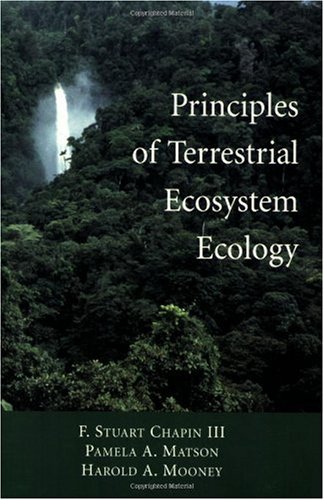
2. Principles of Terrestrial Ecosystem
$80.94
3. Science of Ecosystem-based Management:
$28.50
4. The Law and Policy of Ecosystem
$24.90
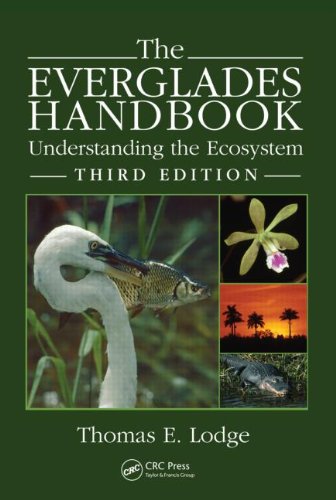
5. Ecosystems of Florida
$62.80
6. Fire in California's Ecosystems
$27.44
7. Cities as Sustainable Ecosystems:
$15.44
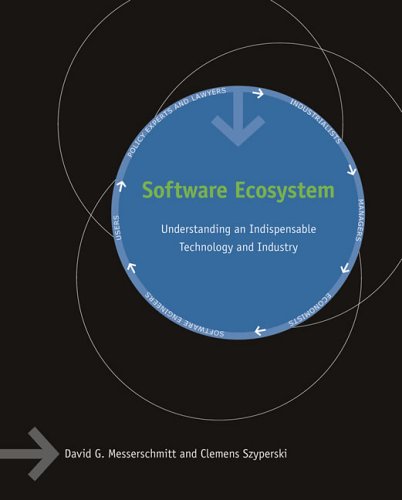
8. Agile Software Development Ecosystems
$37.20
9. Self-Organization in Complex Ecosystems.
$169.95
10. Restoration of Aquatic Ecosystems:
11. Ecosystem Geography
$30.10
12. Stability and Complexity in Model
$68.70
13. Dynamics of Marine Ecosystems:
$137.22
14. Terrestrial Ecosystems
$22.97
15. Evolution of Fossil Ecosystems
$23.04
16. Boundary Waters: Wilderness Ecosystem
$14.90
17. Ecosystems and Human Well-Being:
$51.99
18. Biodiversity and Ecosystem Function
$76.08
19. Biodiversity and Ecosystem Functioning:
$47.90
20. Ecosystem Management: Adaptive,

1. Ecology: From Individuals to Ecosystems
by Michael Begon, Colin A. Townsend, John L. Harper
Paperback: 752 Pages (2006-01-14)
list price: US$95.95 -- used & new: US$71.99
(price subject to change: see help)
Asin: 1405111178
Average Customer Review: 4.5 out of 5 stars
Canada | United Kingdom | Germany | France | Japan
Editorial Review

Book Description
Begon, Townsend, and Harper's Ecology has long been regarded as the definitive textbook on all aspects of ecology. This new edition provides a comprehensive treatment of the subject, from the first principles of ecology to the current state of the field, and aims to improve students' preparedness to address the environmental problems of the new millennium.

Thoroughly revised and updated, this fourth edition includes:


  • three new chapters on applied ecology, reflecting a rigorous, scientific approach to the ecological problems now facing mankind
  • discussion of over 800 new studies, updating the text throughout
  • an updated, user-friendly design with margin notes and chapter summaries that serve as study aids
  • dedicated website at www.blackwellpublishing.com/begon

The resulting textbook is easy to use, lucid and up-to-date, and is the essential reference for all students whose degree program includes ecology and for practicing ecologists. ... Read more

Customer Reviews (3)

4-0 out of 5 stars GOOD FOR SCIENCE OLYMPIAD!
I may be the only person reviewing this book who's not in college.Anyway, I ordered this book because I needed to study for an event in science olympiad dealing with ecology.Ever since I received it, I have gotten first place at every tournament!The plethora of real-world examples in this book were very helpful.My only problem with it were the "illustrations". Come on, diagrams? Maybe... but illustrations? NO WAY!Except a few here and there.I also didn't like how all the diagrams were the exact same color.

5-0 out of 5 stars good, solid review of Ecology
I'm a grad student in ecology, and this book is a wonderful review of the subject.The writing is straightforward and includes lots of examples from the scientific literature.

It's well written and has many levels, so it would be just as valuable for an undergrad with an interest in ecology as it is for the grad student boning up for qualifying exams (me!).Much better than comparable ecology books that I used as an undergraduate.

4-0 out of 5 stars intricate interrelationships
The ecology presented in the text emphasises an interdependence between the individual organisms that constitute an ecosystem. This interdependence can be understood in several ways, as explained. Using a flow of energy through the system. Where you start with an infalling of sunlight to drive photosynthesis. Building from there into an intricate mesh of relationships.

Another view follows the flow of matter in an ecosystem. As on the ocean floor. Where photosynthesis is not feasible. This ecosystem might be usefully seen as depending on a continual descending of matter from the upper ocean. Granted, this ultimately is driven by sunlight. But following the bookkeeping of matter flow is perhaps a more meaningful approach for benthic ecosystems. ... Read more


2. Principles of Terrestrial Ecosystem Ecology
by F. Stuart Chapin III, Harold A. Mooney, Melissa C. Chapin
Paperback: 472 Pages (2004-01-09)
list price: US$56.95 -- used & new: US$39.97
(price subject to change: see help)
Asin: 0387954430
Average Customer Review: 5.0 out of 5 stars
Canada | United Kingdom | Germany | France | Japan
Editorial Review

Book Description
The ecosystem approach to ecology treats organisms and the physical elements of their environment as components of a single, integrated system. This comprehensive textbook outlines the central processes that characterize terrestrial ecosystems, tracing the flow of water, carbon, and nutrients from their abiotic origins to their cycles through plants, animals, and decomposer organisms. As human activity becomes an increasingly dominant factor in natural processes around the globe, landscape dynamics over time and space have become the focus of recent attention. This book synthesizes current advances in ecology with established theory to offer a complete survey of ecosystem pattern and process in the terrestrial environment.Featuring review questions at the end of each chapter, suggestions for recommended reading, and a glossary of ecological terms, Principles of Terrestrial Ecosystem Ecology will be an important text suitable for use in all courses on ecosystem ecology. Resource managers, land use managers, and researchers will also welcome its thorough presentation of ecosystem essentials.About the Authors F. Stuart Chapin, III is Professor of Ecology at the Institute for Arctic Biology, University of Alaska at Fairbanks. Pamela Matson is Professor in the Department of Geological and Environmental Sciences and the Institute of International Studies, Stanford University; Director of the Earth Systems Degree Program and co-director of the Center for Environmental Science and Policy, Stanford University; and currently serves as president of the Ecological Society of America. Harold A. Mooney is Professor of Environmental Biology at Stanford University. ... Read more

Customer Reviews (4)

4-0 out of 5 stars Essential for ecology
This textbook is excellent for life science students who want to approach ecology from the point of view of ecosystem functioning. A precise and clear systematic description of ecosystems organisazion is given, from physiology to complex communities organization. It also focuses on the emrgence of new functions and features every time the complexity level increases, which is essential to have a full systematic comprehension of ecosystems. Underlying physical-chemical processes are always taken into considaration, which contributes to easily understand all the general aspects of ecosystem functions. A must read.

5-0 out of 5 stars good for the ecosystem ecologist in everyone
a technical book written for ecosystem ecologists but easy to read.I had to get it for a class, but it was well put-together and organized.

5-0 out of 5 stars Absolutely Top Notch.
This is one heck of a book!I'm very, very impressed.I'm certainly going to use for my courses, and I think it will be used by many others teachers and professor.I think it will find itself along side Schlesinger's Biogeochemistry as a standard textbook for ecologists and global change scientists.

The text is written by some of the best ecologists on the planet, and is very complete and up-to-date.Amazingly, it is also very well written and completely understandable to the average biology student.

I especially like the organization of the book into four major sections:context, mechanisms, patterns, and integration.This works very, very well.

Each chapter is about the right length, with the right level of detail.I also like the use of highlighting, and the list of suggested readings.They work very well.

Overall, this is a fantastic book -- destined to become a classic in the field.

5-0 out of 5 stars Crisp and clear !!
My research is on integration of terrestrial carbon modelling with remote sensing and I was looking for a book which explains different aspects of the terrestrial ecosystem along with latest research results. This book by some of the famous researchers on the subject explains in a very lucid way every aspects of the terrestrial ecosystem while not failing to include the minute yet important details of the same. I found the chapters on carbon input to terrestrial ecosystems, terrestrial production processes and global biogeochemical cycle very stimulating. The book starts with the basic concepts and then go on to dig deeper to help nourish the curiosity with latest findings and reports. Best for begineers in ecosystem ecology or related field to get a crisp and clear idea on complex interlinking of different processes of the earth's terrestrial ecosystem. Additional readings at the end of each chapter would cater the need for the more hungry ones to go deeper. very nicely sequenced and fun to read with excellent drawings/diagrams. ... Read more


3. Science of Ecosystem-based Management: Narragansett Bay in the 21st Century (Springer Series on Environmental Management)
Hardcover: 570 Pages (2008-02-01)
list price: US$89.95 -- used & new: US$80.94
(price subject to change: see help)
Asin: 0387352988
Canada | United Kingdom | Germany | France | Japan
Editorial Review

Book Description

... Read more

4. The Law and Policy of Ecosystem Services
by J.B. Ruhl, Steven E. Kraft, Christopher L. Lant
Paperback: 360 Pages (2007-05-21)
list price: US$35.00 -- used & new: US$28.50
(price subject to change: see help)
Asin: 1559630957
Canada | United Kingdom | Germany | France | Japan
Editorial Review

Book Description

The Law and Policy of Ecosystem Services is the first comprehensive exploration of the status and future of natural capital and ecosystem services in American law and policy. The book develops a framework for thinking about ecosystem services across their ecologic, geographic, economic, social, and legal dimensions and evaluates the prospects of crafting a legal infrastructure that can help build an ecosystem service economy that is as robust as existing economies for manufactured goods, natural resource commodities, and human-provided services. The book examines the geographic, ecological, and economic context of ecosystem services and provides a baseline of the current status of ecosystem services in law and society. It identifies shortcomings of current law and policy and the critical areas for improvement and forges an approach for the design of new law and policy for ecosystem services.
Included are a series of nine empirical case studies that explore the problems caused by society’s failure to properly value natural capital. Among the case study topics considered are water issues, The Conservation Reserve Program, the National Conservation Buffer Initiative, the agricultural policy of the European Union, wetland mitigation, and pollution trading.
The Law and Policy of Ecosystem Services is a groundbreaking look at the question of whether and how law and policy can shape a sustainable system of ecosystem service management. It is an accessible and informative work for faculty, students, and policy makers concerned with ecology, economics, geography, political science, environmental studies, law, and related fields.
... Read more

5. Ecosystems of Florida
by Ronald L. Myers
Paperback: 765 Pages (1990-09)
list price: US$34.95 -- used & new: US$24.90
(price subject to change: see help)
Asin: 0813010225
Average Customer Review: 5.0 out of 5 stars
Canada | United Kingdom | Germany | France | Japan

Customer Reviews (1)

5-0 out of 5 stars THE Indispensible guide to the ecology of Florida
For more than a decade, 'Ecosystems of Florida' has become the standard by which all other books on Florida's unique ecology are judged.The flora, fauna, soil, climate, and hydrological characteristics of all of Floridasecosystems are explained in exhaustive yet accessible detail.The bookalso has general information about the soil, climate, and geologicalhistory of Florida that helps the reader explore the ecosytem chapters witha broader understanding of the ecology of the state as a whole.Concludingchapters tie in the influence of people to the history of Florida's ecologyand explain the role people will take in shaping or breaking Florida'snatural areas in the future.This book has become more than a reference tome.It presents a very complex set of information in a clear, easily-read,and entertaining format that makes it hard to put down. ... Read more


6. Fire in California's Ecosystems
Hardcover: 596 Pages (2006-11-29)
list price: US$75.00 -- used & new: US$62.80
(price subject to change: see help)
Asin: 0520246055
Canada | United Kingdom | Germany | France | Japan
Editorial Review

Book Description
Fire is both an integral natural process in the California landscape and growing threat to its urban and suburban developments as they encroach on wildlands. Written by many of the foremost authorities on the subject, this comprehensive volume, an ideal text and authoritative reference tool, is the first to synthesize our knowledge of the science, ecology, and management of fire in California. Part I introduces the basics of fire ecology. It includes an historical overview of fire, vegetation, and climate in California; overviews of fire as a physical and ecological process; and reviews the interactions between fire and the physical, plant, and animal components of the environment. Part II explores the history and ecology of fire in each of California's nine bioregions. Part III examines fire management in California, including both Native American and post-European settlement; discusses current issues related to fire policy and management, including air quality, watershed management, invasive plant species, native species, and fuel management; and considers the future of fire management. ... Read more


7. Cities as Sustainable Ecosystems: Principles and Practices
by Peter Newman, Isabella Jennings
Paperback: 296 Pages (2008-01-31)
list price: US$35.00 -- used & new: US$27.44
(price subject to change: see help)
Asin: 1597261882
Canada | United Kingdom | Germany | France | Japan
Editorial Review

Book Description

Modern city dwellers are largely detached from the environmental effects of their daily lives. The sources of the water they drink, the food they eat, and the energy they consume are all but invisible, often coming from other continents, and their waste ends up in places beyond their city boundaries.


Cities as Sustainable Ecosystems shows how cities and their residents can begin to reintegrate into their bioregional environment, and how cities themselves can be planned with nature’s organizing principles in mind. Taking cues from living systems for sustainability strategies, Newman and Jennings reassess urban design by exploring flows of energy, materials, and information, along with the interactions between human and non-human parts of the system.


Drawing on examples from all corners of the world, the authors explore natural patterns and processes that cities can emulate in order to move toward sustainability. Some cities have adopted simple strategies such as harvesting rainwater, greening roofs, and producing renewable energy. Others have created biodiversity parks for endangered species, community gardens that support a connection to their foodshed, and pedestrian-friendly spaces that encourage walking and cycling.


A powerful model for urban redevelopment, Cities as Sustainable Ecosystems describes aspects of urban ecosystems from the visioning process to achieving economic security to fostering a sense of place.

... Read more

8. Agile Software Development Ecosystems (The Agile Software Development Series)
by Jim Highsmith
Paperback: 448 Pages (2002-04-05)
list price: US$49.99 -- used & new: US$15.44
(price subject to change: see help)
Asin: 0201760436
Average Customer Review: 4.5 out of 5 stars
Canada | United Kingdom | Germany | France | Japan

Customer Reviews (10)

5-0 out of 5 stars Great Intro to Agile
Jim Highsmith does an excellent job of introducing you to the agile software philosophy. This book includes the basic motivation for agility in the software arena, the foundational philosophies of agile, a review of the top 7 agile approaches being used today (XP, Scrum, DSDM, FDD, ASD, LD, and Crystal), interviews with the leading proponents, and a comparison of Agile versus a more rigorous process-oriented approach.

If you are new to Agile approaches or just looking to fine-tune your current software methodology, this book is an excellent start.

1-0 out of 5 stars It's amazing what stuff gets published...
A group of us where we work were going through this book together. We were hoping for a good introduction to the various agile processes, or "ecosystems" as the book suggests. What we found was that the book is very disorganized and greatly lacking in detail. For a book that clocks in at almost 450 pages, it was mostly fluff. There was quite a bit of convincing that the author was trying to do, but did not provide much detail as to the "how to" part.

Most of the first set of chapters was like that. The next section covered interviews with various folks who are involved with actually developing and/or using ASDE's. When we started going through those chapters, it improved some, but still kept repeating the same stuff in the first section of chapters. Ok, ok, we get it. ASDE's are the best thing since sliced bread. Let's move onto the actualy detail already?

So we gave up on the interviews and skipped ahead to the end of the book where it talks about the various ASDE's. Unfortunately, it was more of the same. The chapter on Crystal was a joke. It said pretty much nothing.

My suggestion: don't buy this book. It's a waste of your money or your company's money.

4-0 out of 5 stars Not bad, but read this second :)
I found the book a good read, but feel that for trying to "show people the light", it gives sceptics a bit too much ammunition.Craig Larman's "Agile and Iterative Development: A Manager's Guide" is better written, of more immediate practical value and more likely to win over the sceptics.Try Larman's book first, then this one for further perspectives...

4-0 out of 5 stars Good first introduction to Agile methods
If you're new to Agile methods, this is a great place to start. The overviews and perspectives brought by the interviews provide an excellent introduction. The most useful thing in the book is the section near the end with a discussion of how to shape your own Agile methodology -- it's short, but a really useful set of practical steps.

Unfortunately, the interviews drag on a little bit and also start to feel a little bit repetitive. One or two of the high-level overviews are *so* high-level that you come out of them wondering what a concrete picture of it really looks like, especially since, if you go high enough, several of the approaches start to look the same.

5-0 out of 5 stars Double WOW!!
To me, as a developer, Bob Martin's "Agile Software Development" deserved the first WOW! As a manager, Jim Highsmith's "Agile Software Development Ecosystems" merited that WOW again. ... Read more


9. Self-Organization in Complex Ecosystems. (MPB-42) (Monographs in Population Biology)
by Ricard V. Sole, Jordi Bascompte
Paperback: 392 Pages (2006-03-06)
list price: US$47.50 -- used & new: US$37.20
(price subject to change: see help)
Asin: 0691070407
Average Customer Review: 5.0 out of 5 stars
Canada | United Kingdom | Germany | France | Japan
Editorial Review

Book Description

Can physics be an appropriate framework for the understanding of ecological science? Most ecologists would probably agree that there is little relation between the complexity of natural ecosystems and the simplicity of any example derived from Newtonian physics. Though ecologists have long been interested in concepts originally developed by statistical physicists and later applied to explain everything from why stock markets crash to why rivers develop particular branching patterns, applying such concepts to ecosystems has remained a challenge.

Self-Organization in Complex Ecosystems is the first book to clearly synthesize what we have learned about the usefulness of tools from statistical physics in ecology. Ricard Solé and Jordi Bascompte provide a comprehensive introduction to complex systems theory, and ask: do universal laws shape the structure of ecosystems, at least at some scales? They offer the most compelling array of theoretical evidence to date of the potential of nonlinear ecological interactions to generate nonrandom, self-organized patterns at all levels.

Tackling classic ecological questions--from population dynamics to biodiversity to macroevolution--the book's novel presentation of theories and data shows the power of statistical physics and complexity in ecology. Self-Organization in Complex Ecosystems will be a staple resource for years to come for ecologists interested in complex systems theory as well as mathematicians and physicists interested in ecology.

... Read more

Customer Reviews (1)

5-0 out of 5 stars Very good
The book was sent very fast and I received it in excellent conditions ... Read more


10. Restoration of Aquatic Ecosystems: Science, Technology, and Public Policy
by Committee on Restoration Public Policy
Hardcover: 576 Pages (1992-05)
list price: US$49.95 -- used & new: US$169.95
(price subject to change: see help)
Asin: 0309045347
Canada | United Kingdom | Germany | France | Japan

11. Ecosystem Geography
by Robert G. Bailey
Paperback: 204 Pages (1995-12-27)
list price: US$41.95
Isbn: 0387945865
Average Customer Review: 5.0 out of 5 stars
Canada | United Kingdom | Germany | France | Japan
Editorial Review

Book Description
The analysis and management of ecosystems rely increasingly on sound geographical knowledge. Ecosystem Geography is a landmark contribution which brings the geographer's tools - maps, scales, boundaries, and units - to the study of ecosystems. The author, a senior geographer and program manager with the U.S. Forest Service, has distilled more than two decades of research on ecosystem mapping and classification. His work has had a growing influence on how government and academic scientists are using ecological data to monitor biodiversity, manage land holdings, and interpret the results of climatic change. Ecosystem Geography features spectacular graphics, including diagrams, photographs, and abundant maps. It will be welcomed by ecologists, geographers, land and resource specialists, and anyone involved in the study of ecosystems. ... Read more

Customer Reviews (1)

5-0 out of 5 stars Understanding Ecosystem Dynamics
Most people find pleasure in being part of the wildness of a natural environment. There is a diversity and complexity that fascinates and inspires awe. Yet, what makes up the uniqueness of a particular environment has been debated for a long time. Most often when looking at nature we try to see the parts as stable entities rather than the dynamics of whole system.

In this book, Dr. Bailey has taken a Geographers prospective of looking at the whole and then showing how the parts fit together. His solution of this world scale jigsaw puzzle has produced an unmatched insight into ecosystem structure and function. He explains how regional ecosystem boundaries are a function of climate properties that provide the energy to sustain life. At a different scale, other inputs from geology, soil, watershed, and physiography temper the mix of life forms that form an ecosystem.

Throughout this book the emphasis is on spatial relationships among the components that make up ecosystems. However these are not static systems because, at all scales, spatial units of ecosystems and their processes also interact to provide life sustaining natural services.

This is one science book that is easy to read because Dr. Bailey took a great deal of care to explain his reasoning using familiar terms. There is an excellent glossary to explain concepts contained in those words that are not so familiar. Numerous pictures and illustrations clearly present the many ecosystem concepts covered in this book. Finally, a map inside the back cover illustrates the Ecoregions of the Continents. ... Read more


12. Stability and Complexity in Model Ecosystems (Princeton Landmarks in Biology)
by Robert M. May
Paperback: 292 Pages (2001-04-01)
list price: US$45.00 -- used & new: US$30.10
(price subject to change: see help)
Asin: 0691088616
Average Customer Review: 5.0 out of 5 stars
Canada | United Kingdom | Germany | France | Japan
Editorial Review

Book Description

What makes populations stabilize? What makes them fluctuate? Are populations in complex ecosystems more stable than populations in simple ecosystems? In 1973, Robert May addressed these questions in this classic book. May investigated the mathematical roots of population dynamics and argued-counter to most current biological thinking-that complex ecosystems in themselves do not lead to population stability. Stability and Complexity in Model Ecosystems played a key role in introducing nonlinear mathematical models and the study of deterministic chaos into ecology, a role chronicled in James Gleick's book Chaos. In the quarter century since its first publication, the book's message has grown in power. Nonlinear models are now at the center of ecological thinking, and current threats to biodiversity have made questions about the role of ecosystem complexity more crucial than ever. In a new introduction, the author addresses some of the changes that have swept biology and the biological world since the book's first publication.

... Read more

Customer Reviews (1)

5-0 out of 5 stars a classic
A facsimile reprinting of the 1974 Second Edition. It is great that Princeton University Press has made again available this classic work in mathematical biology. There is a wealth of mathematical ideas and methods, carefully written. Several Appendices provide additional mathematical background. All in all, this books continues to be a source of information and inspiration to this day. ... Read more


13. Dynamics of Marine Ecosystems: Biological-Physical Interactions in the Oceans
by Kenneth Mann, John Lazier
Paperback: 512 Pages (2005-12-19)
list price: US$80.95 -- used & new: US$68.70
(price subject to change: see help)
Asin: 1405111186
Average Customer Review: 4.5 out of 5 stars
Canada | United Kingdom | Germany | France | Japan
Editorial Review

Book Description
The new edition of this widely respected text provides comprehensive and up-to-date coverage of the effects of biological–physical interactions in the oceans from the microscopic to the global scale.

  • considers the influence of physical forcing on biological processes in a wide range of marine habitats including coastal estuaries, shelf-break fronts, major ocean gyres, coral reefs, coastal upwelling areas, and the equatorial upwelling system
  • investigates recent significant developments in this rapidly advancing field
  • includes new research suggesting that long-term variability in the global atmospheric circulation affects the circulation of ocean basins, which in turn brings about major changes in fish stocks. This discovery opens up the exciting possibility of being able to predict major changes in global fish stocks
  • written in an accessible, lucid style, this textbook is essential reading for upper-level undergraduates and graduate students studying marine ecology and biological oceanography
  • ... Read more

    Customer Reviews (3)

    4-0 out of 5 stars Very good book!
    This books deals shows some features in oceanic dynamics and ecology in different scales, from millimetres to thousand of kilometres. Maybe not the easiest reading book, because is deep and sound, but it's essential for oceanographers and marine biologists and ecologists, researchers and graduate students.

    5-0 out of 5 stars Mann & Lazier review
    I am a graduate student in oceanography, and I have extensively used Dynamics of Marine Ecosystems by Mann and Lazier to study for exams.Mann & Lazier take the time to explain the concepts of physical oceanography in simple terms and are careful to relate all of the physical processes to biological systems.There is, of course, some math, but advanced calculus is not required.The authors are from Nova Scotia, and my only criticism is that they mostly cite examples from the North Atlantic and neglect other oceans.I have used two companion books with this volume: Introduction to Physical Oceanography by John Knauss, which is more physics and less biology, and Biological Oceanography by Charles Miller, which is more biology and less physics.

    5-0 out of 5 stars "BELOW SURFACE CHANGES!"
    Are you studying and working in the area of marine ecology and biological oceanography? If you are, this book is for you! Authors K. H. Mann and J. R. N. Lazier, have written an outstanding 3rd edition of a book about the ecology of open-ocean communities.

    Mann and Lazier, begin with an overview of marine ecology and how it has come of age. Then, they explore the intimate relationships between the small-scale processes in sea water and the lives of plants and animals. The authors continue by discussing the physical processes that affect the vertical distributions of light, heat, and nutrients, so as to better understand the dynamics of phytoplankton production. In addition, they also discuss the vertical structure in coastal waters--freshwater run-off and tidal mixing. The authors also examine the special places where wind-induced upwelling is the dominant mechanism for bringing new nutrients to the surface. Then, the authors investigate the distinctive physical and biological properties found in each type of coastal waters fronts. Next, they explore some of the interesting consequences of tidally induced water movement. Then, the authors begin to consider the ocean basins in their entirety. Next, they review some of the most exciting developments of the decade (1995-2005). The authors continue by describing the mechanism of global warming and the present-day global carbon cycle. Finally, the authors discuss questions for the future.

    This excellent book also includes discussions of the physical-biological interactions and how they provide plausible mechanisms by which the atmospheric changes might be linked to the food webs and the fish-stock changes. Furthermore, the book has clearly met a need and found a very receptive audience, in the authors' review of the developments in marine ecology, as an integrated physical, chemical, and biological discipline.
    ... Read more


    14. Terrestrial Ecosystems
    by JohnD. Aber, Jerry M. Melillo
    Hardcover: 556 Pages (2001-03-09)
    list price: US$159.95 -- used & new: US$137.22
    (price subject to change: see help)
    Asin: 0120417553
    Average Customer Review: 4.0 out of 5 stars
    Canada | United Kingdom | Germany | France | Japan
    Editorial Review

    Book Description
    Covering the complexities and interconnected nature of the world, as well as the impact of mankind on the environment, this interdisciplinary book presents a holistic view of ecosystem function and is designed to help students understand and predict the environmental future of the Earth. The authors provide a complete view of the environment--from the Taiga Forests of interior Alaska to the desert plains of the Serengeti. While retaining the previous edition's basic four-part structure, the authors have reviewed every topic (and consulted the recent literature in each case) in order to present the most complete and accurate picture of the state of ecosystem studies today. ... Read more

    Customer Reviews (1)

    4-0 out of 5 stars buy the new edition
    This is a great book but you should buy the second edition (hardback) which is more up to date and has color artwork in places. ... Read more


    15. Evolution of Fossil Ecosystems
    by Paul A. Selden, John R. Nudds
    Paperback: 192 Pages (2005-03-01)
    list price: US$40.00 -- used & new: US$22.97
    (price subject to change: see help)
    Asin: 0226746410
    Average Customer Review: 4.0 out of 5 stars
    Canada | United Kingdom | Germany | France | Japan
    Editorial Review

    Book Description

    Major advances in our understanding of the history of life on Earth have been achieved through the study of exceptionally well-preserved fossil sites, known scientifically as fossil Lagerstätten. The examination of such sites provides a surprisingly complete picture of the evolution of ecosystems throughout the ages. In Evolution of Fossil Ecosystems, Paul A. Selden and John R. Nudds celebrate these unique and rare preserves of ancient ecosystems with succinct summaries of fourteen of the better-known fossil Lagerstätten—including the Ediacara in South Australia, the Hunsrück Slate in Germany, the Santana and Crato Formations in Brazil, and the La Brea Tar Pits in Los Angeles.

    Beginning with a general introduction to fossil Lagerstätten, Evolution of Fossil Ecosystems goes on, chapter by chapter, to consider each fossil site, detailing its evolutionary position and significance; a brief history of the locality; its background sedimentology, stratigraphy, and paleoenvironment; its biota and paleoecology; and its commonalities with similar Lagerstätten. Considering deposits both marine and terrestrial, the book covers one fossil site from the Precambrian era, five sites from the Paleozoic era, five sites from the Mesozoic era, and three sites from the Cenozoic era.

    Illustrated with hundreds of color photographs and drawings, Evolution of Fossil Ecosystems is a sophisticated yet accessible guide to these critical sites. Containing useful appendixes listing important museums, instructions on how to visit the fossil sites, and additional suggested reading, this book will attract students, academics, and professionals in paleontology, evolution, and the earth and life sciences, as well as dedicated amateurs interested in fossils and geology.
    ... Read more

    Customer Reviews (2)

    3-0 out of 5 stars Disappointed
    I had looked forward to receiving this book but was more than disappointed when it arrived. I have been fascinated with fossils for the last 68 years and own a large number of books on fossils - several on individual "Lagerstatten" sites.

    The "Lagerstatten" fossil sites have always been of great interest to me as they preserve such a wonderful and complete window on the past.

    I have hunted extensively in one of the sites listed - Pit 11 of Mazon creek were many soft bodied fossil creatures are preserved. I was lucky enough to find one unique specimen that resides in the Field Museum in Chicago.

    I have two other books covering several "Lagerstatten" fossil sites and they are both quite interesting.The problem with this book is that there is so little on each site and the pictures are quite quite small.The "Tully Monster" from Pit 11 is unrecognizable unless you had held one of them in your hand and knew what they looked like.


    The BIG plus for this book is that they cover several sites that are not listed in my other "Lagerstatten" books and the pictures are in color even though quite small and for that I am also most thankful. Expanding the number and size ofpictures and expanding the text describing the material at each site would make this book worth 5 stars. I hope the authors decide to do just that in the future.

    5-0 out of 5 stars Very Interesting and enjoyable!
    I really enjoyed this book. Well-organized, beautifully illustrated. A great read for anyone who loves paleontology and geology.
    Being an amateur, though, I can't but note that a glossary of terms would be very helpful. ... Read more


    16. Boundary Waters: Wilderness Ecosystem
    by Miron Heinselman
    Paperback: 384 Pages (1999-03)
    list price: US$29.95 -- used & new: US$23.04
    (price subject to change: see help)
    Asin: 081662805X
    Average Customer Review: 5.0 out of 5 stars
    Canada | United Kingdom | Germany | France | Japan

    Customer Reviews (2)

    5-0 out of 5 stars Masterpiece
    This beautifully produced book is the summation of the author's life work in studying the Boundary Waters. Furthermore, it is the inspiration and groundwork for all subsequent work in the area. His intimacy with the ecosystem inspires awe at every turn. His great achievement was in using tree-ring analysis to reconstruct the entire fire history of the area, thus illuminating the dynamics of forest change.

    5-0 out of 5 stars A must read for all BWCA visitors!
    I have traveled the BWCA for 30 years, but until reading this book never understood much about the history and ecology of the area. Bud Heinselman spent his life intently studying this magnificent forest, and left us awonderful legacy in this book.

    He spent decades studying the fauna andflora of the BWCA, especially the trees of the forest. Combining thatinformation with his rich knowledge of the more recent history of the BWCA,especially of logging and mining, helps one understand just how the foresthas come to be as it is today.

    He covers all aspects of the BWCA'secology: water, rocks, fish, trees, et. al. You may not realize how foreignthe smallmouth bass is to the area, or even how close the area came tobeing developed and lost forever. He provides maps of the area with theforests dated to their most recent burn or logging: you are able to look upyour favorite canoe routes and determine what trees are prevalent andwhy.

    One of his major points is that modern fire fighting has altered thenatural ecology of the area: as fire has been suppressed, fuel on theforest floor has increased, leading to the potential for more severe"crown" fires which destroy even the ancient white and redpines.

    This book is a must-read for all BWCA visitors and deserves aplace in the library of anyone that cares about ecology. TH Bracken MDsrtrout@yahoo.com ... Read more


    17. Ecosystems and Human Well-Being: Synthesis (Millennium Ecosystem Assessment Series)
    by Millennium Ecosystem Assessment
    Paperback: 160 Pages (2005-05-22)
    list price: US$15.00 -- used & new: US$14.90
    (price subject to change: see help)
    Asin: 1597260401
    Average Customer Review: 5.0 out of 5 stars
    Canada | United Kingdom | Germany | France | Japan
    Editorial Review

    Book Description

    The Millennium Ecosystem Assessment Synthesis Report boils down the findings of the four working groups into a simple, straightforward description of Earth’s ecological health and its linkages to human well-being. It answers a series of key questions, such as:

    How have ecosystems changed over the past 50 years?

    What are the most critical factors causing ecosystem damage?

    What options do we have for better conserving, restoring, and benefiting from ecosystems?

    The volume then presents a snapshot of the health and prospects for each of the main services that ecosystems provide, including the provision of food, water, timber, fuel, climate regulation, disease prevention, and others. The Synthesis Report will prove ideal for students and laypersons interested in a quick, but nuanced, understanding of the state of Earth’s ecosystems.

    ... Read more

    Customer Reviews (1)

    5-0 out of 5 stars blue ribbon panel presents its conclusions
    In June 2001 the Millennium Ecosystem Assessment was launched under the auspices of the United Nations at the request of Secretary-General Kofi Annan. The resulting effort has been a remarkable collaboration of over 1,300 blue ribbon scientists from 95 countries, a governing board of the broadest possible stakeholders--international organizations, financial institutions, health workers, governments, business leaders, NGOs, and indigenous peoples, and funding from broad and diverse quarters. The MA was tasked to "assess the consequences of ecosystem change for human well-being and to establish the scientific basis for actions needed to enhance the conservation and sustainable use of ecosystems and their contributions to human well-being." Scientific credibility, policy relevance, and well-being for all human beings guide the report. Their first product was Ecosystems and Human Well-Being: A Framework for Assessment (2003), which set out the conceptual and methodological foundations of the project.

    The current Synthesis focuses on four core questions. How have ecosystems changed over the last 50 years? What have been the gains and losses? What are the prospects for the next 50 years? How might we reverse ecosystem degradation and enhance human well-being? In addition, the Synthesis reviews their findings on nine key questions, and then adds five appendices. Where needed, the report qualifies the "certainty" of their findings as "very certain, high, medium, low and very uncertain." Some losses, for example, are already irreversible. Nonlinear changes are more complicated to predict. Tradeoffs are quite common and shift responsibilities and costs to different stakeholders. Monetary-market values are important, but so are non-monetary-non-market ones. One finding is clear: a disproportionate share of ecosystem degradation is being borne by the very poor who are most impacted by it. The Synthesis does not admit to simple solutions, and reads as a very sober and sobering document, but in fact it identifies itself as guardedly optimistic in the sense that our wise choices in the future could make significant, positive differences.

    The very first sentence of the Bible invests our world with an inherent value, in and of itself: God created the world, declared it very good, and then asked human beings to manage it as His stewards. That alone, it would seem, would cause Christians to care very deeply about issues of environment and ecosystems. In addition, there is a utilitarian argument to make. We are, as the Synthesis puts it, "fundamentally dependent upon" and "integral parts of" the ecosystem. Our fate is bound up with the fate of the planet. You might not know know about biomes, eutrophication, or mean trophic levels. I didn't. But you will still understand much of this important document. I hope it finds its way into the hearts and minds of many believers and their churches. ... Read more


    18. Biodiversity and Ecosystem Function (Springer Study Edition)
    Paperback: 528 Pages (1994-07-26)
    list price: US$99.95 -- used & new: US$51.99
    (price subject to change: see help)
    Asin: 3540581030
    Canada | United Kingdom | Germany | France | Japan
    Editorial Review

    Book Description
    With the accelerating loss of biodiversity there is increasing concern about how this loss may be affecting ecosystem processes, or services, that are of benefit to human well being. The limited studies that address the principal question directly, species numbers versus system function, are evaluated. Moreover, the degree of redundancy within systems, the ubiquity of keystone species, the tightness of species interactions from mutualisms to food webs, the resilience of systems to perturbation, the interactions of landscape units are explored, as is also how policy decisions are driven in this research area.
    This book brings together the disciplines of population biology and ecoysystem science, both directed toward evaluating the consequences of human-driven disruptions of natural systems. ... Read more


    19. Biodiversity and Ecosystem Functioning: Synthesis and Perspectives (Enviromental Science)
    Paperback: 312 Pages (2002-11-28)
    list price: US$85.25 -- used & new: US$76.08
    (price subject to change: see help)
    Asin: 0198515715
    Canada | United Kingdom | Germany | France | Japan
    Editorial Review

    Book Description
    The relationship between biodiversity and ecosystem functioning has emerged as one of the most exciting and dynamic areas in contemporary ecology. Increasing domination of ecosystems by humans is steadily transforming them into depauperate systems. How will this loss of biodiversity affect the functioning and stability of natural and managed ecosystems? This volume provides the first comprehensive and balanced coverage of recent empirical and theoretical research on this question. It reviews the evidence, provides bases for the resolution of the debate that has divided scientists on these issues, and offers perspectives on how current knowledge can be extended to other ecosystems, other organisms and other spatial and temporal scales. It cuts across the traditional division between community ecology and ecosystem ecology, and announces a new ecological synthesis in which the dynamics of biological diversity and the biogeochemical functioning of the earth system are merged. ... Read more


    20. Ecosystem Management: Adaptive, Community-Based Conservation
    by Gary Meffe, Larry Nielsen, Richard L. Knight, Dennis Schenborn
    Hardcover: 336 Pages (2002-10-01)
    list price: US$55.00 -- used & new: US$47.90
    (price subject to change: see help)
    Asin: 1559638249
    Average Customer Review: 5.0 out of 5 stars
    Canada | United Kingdom | Germany | France | Japan
    Editorial Review

    Book Description

    Today's natural resource managers must be able to navigate among the complicated interactions and conflicting interests of diverse stakeholders and decisionmakers. Technical and scientific knowledge, though necessary, are not sufficient. Science is merely one component in a multifaceted world of decision making. And while the demands of resource management have changed greatly, natural resource education and textbooks have not. Until now.

    Ecosystem Management represents a different kind of textbook for a different kind of course. It offers a new and exciting approach that engages students in active problem solving by using detailed landscape scenarios that reflect the complex issues and conflicting interests that face today's resource managers and scientists. Focusing on the application of the sciences of ecology and conservation biology to real-world concerns, it emphasizes the intricate ecological, socioeconomic, and institutional matrix in which natural resource management functions, and illustrates how to be more effective in that challenging arena.

    Each chapter is rich with exercises to help facilitate problem-based learning. The main text is supplemented by boxes and figures that provide examples, perspectives, definitions, summaries, and learning tools, along with a variety of essays written by practitioners with on-the-ground experience in applying the principles of ecosystem management.

    Accompanying the textbook is an instructor's manual that provides a detailed overview of the book and specific guidance on designing a course around it.

    Ecosystem Management grew out of a training course developed and presented by the authors for the U.S. Fish and Wildlife Service at its National Training Center in Shepherdstown, West Virginia. In 20 offerings to more than 600 natural resource professionals, the authors learned a great deal about what is needed to function successfully as a professional resource manager. The book offers important insights and a unique perspective dervied from that invaluable experience. ... Read more

    Customer Reviews (2)

    5-0 out of 5 stars Great Summary of Ecosystem Management Concepts
    If you are interested in Ecosystem Managment, than you probably have heard of most of the concepts in this book.However, this book provides a good easy to read (and easy to understand) summary of concepts related to Ecosystem Managment.

    5-0 out of 5 stars A highly recommended contribution to Environmental Studies
    The collective and collaborative effort of Gary K. Meffe (Adjunct Professor, Department of Wildlife Ecology and Conservation, University of Florida), Larry A. Nielsen (Fisheries biologist and Den of the College of Natural Resources, North Carolina State University), Richard L. Knight (Professor of Wildlife Conservation, Colorado State University), and Dennis A. Schenborn (Chief of Planning and Budget for the Bureau of Fisheries Management and Habitat protection of the Wisconsin State Department of Natural Resources), Ecosystem Management: Adaptive, Community- Based Conservation is an intelligently organized, "reader friendly" textbook which is an ideal resource and teaching tool for discusses a wide range of environmental issues including: genetic diversity in ecosystem management, landscape-level conservation, single-species land management, the skill and art of keeping fragile ecosystems in balance; methodology, examples, and mathematical models. An astute presented and detailed college-level text, Ecosystem Management is a welcome and highly recommended contribution to Environmental Studies reference collections in general, and Ecosystem Management curriculum reading lists in particular. ... Read more


      1-20 of 100 | Next 20
    A  B  C  D  E  F  G  H  I  J  K  L  M  N  O  P  Q  R  S  T  U  V  W  X  Y  Z  

    Prices listed on this site are subject to change without notice.
    Questions on ordering or shipping? click here for help.

    site stats