e99 Online Shopping Mall

Geometry.Net - the online learning center Help  
Home  - Science - Electrical Engineering (Books)

  1-20 of 100 | Next 20
A  B  C  D  E  F  G  H  I  J  K  L  M  N  O  P  Q  R  S  T  U  V  W  X  Y  Z  

click price to see details     click image to enlarge     click link to go to the store

$34.48
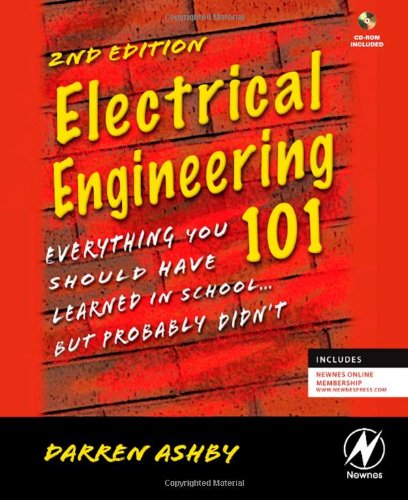
1. Electrical Engineering 101: Everything
$86.85
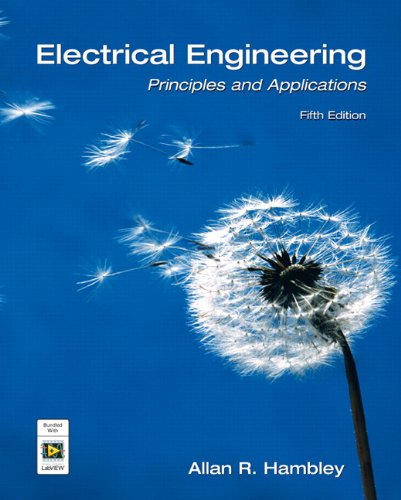
2. Electrical Engineering: Principles
$161.28
3. Electrical Engineering Reference
$58.00
4. Principles and Applications of
 
$115.00
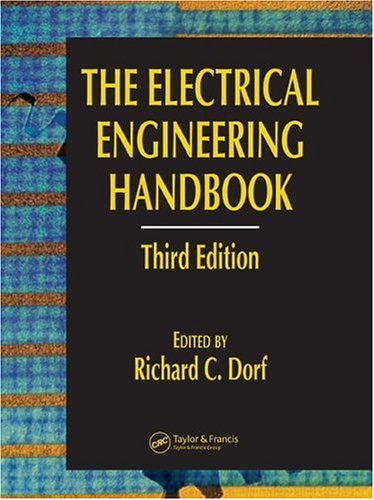
5. Electrical Engin Hdbk The
$56.70
6. Practice Problems for the Electrical
$24.99
7. Principles and Applications of
$50.26
8. Fundamentals of Electrical Engineering
$62.00
9. Electrical Engineering: A Pocket
$8.00
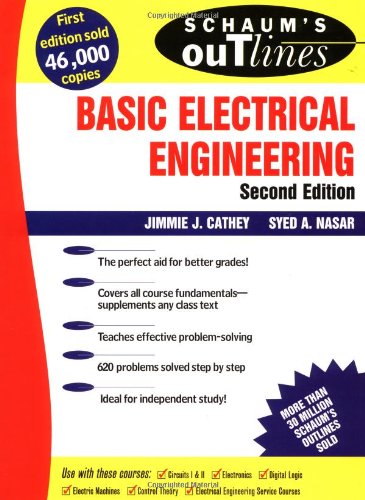
10. Schaum's Outline of Basic Electrical
$37.10
11. Electrical & Computer Engineering
$80.61
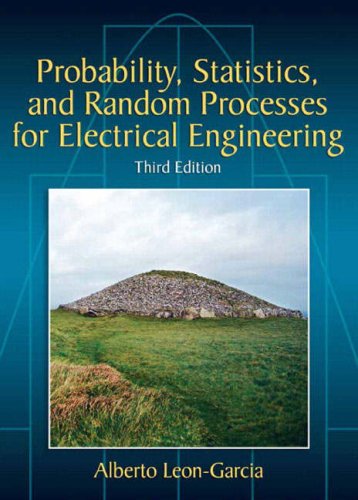
12. Probability, Statistics, and Random
$108.99
13. Standard Handbook for Electrical
$98.70
14. Electrical Engineering PE License
$19.29
15. The Handbook of Electrical Engineering
$45.47
16. Electrical Engineering: Problems
$25.00
17. The Engineering Handbook, Second
$75.00
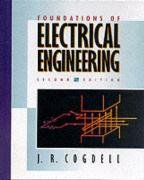
18. Foundations of Electrical Engineering
$76.95
19. PE Sample Questions and Solutions:
$41.40
20. Electrical Engineering PE Problems

1. Electrical Engineering 101: Everything You Should Have Learned in School but Probably Didn't
by Darren Ashby
Paperback: 352 Pages (2005-12-13)
list price: US$43.95 -- used & new: US$34.48
(price subject to change: see help)
Asin: 0750678127
Average Customer Review: 4.5 out of 5 stars
Canada | United Kingdom | Germany | France | Japan
Editorial Review

Book Description
The formal education of an electrical engineer is primarily mathematics and theory, with little practical information taught. Every beginning engineer needs a mentor to teach them the things that aren't taught in engineering school, but often lacks such a guide. This book fills that gap between theory and practice. Written by an expert electronics engineer who enjoys teaching the practical side of engineering, it covers all the subjects that a beginning EE needs to know: intuitive circuit and signal analysis, physical equivalents of electrical components, proper use of an oscilloscope, troubleshooting both digital and analog circuits, and much more.

The accompanying CD-ROM contains a reference library of electronics information, with demo simulation software and engineering calculators.

*Covers the engineering basics that have been either left out of a typical engineer's education or forgotten over time

*No other book offers a wealth of "insider information" in one volume, specifically geared to help new engineers and provide a refresher for those with more experience

*The accompanying CD-ROM contains a reference library of electronics information, with demo simulation software and engineering calculators ... Read more

Customer Reviews (15)

2-0 out of 5 stars Nice idea but disappointing so far...
I'm an ME student who has just found himself thrown in the deep end on some EE courses. This book seemed to be the perfect supplement to the somewhat harder text books I have been given to study.

The book opens very nicely, friendly and chatty. I did though expect the book to spell everything out, but it seems to make many of the same mistakes my lecturers made. In the opening pages it starts talking about RLC circuits without any explanation of what one is. The author seems to be falling for the same trap engineers always fall for; assuming laymen (normal people) understand what they're talking about when they use abbreviations or new terminology.

I finally stopped reading and write and this review when I found a paragraph repeated twice on the same page. This book means well, but seems to full of oversights and poor editing leaving the reader somewhat disappointed by a book that promised not to be like their education up till now.

I will now return to reading as this book does offer many good explanations and insights. I will adjust this review if the book manages to redeem itself.

5-0 out of 5 stars Makes EE look easy
This book is an easy read after you've gone through EE. Makes you see the forest from the trees. Spend so much time in early circuits classes just trying to figure out currents, gains and voltages that all I could do was the math (the trees). This book has helped not only to review concepts, but to help me see what these components are doing (the forest). Enjoying the book.

5-0 out of 5 stars Electrical Engineering 101
Wonderful book. Well written, to the point with lots of humor. Should be recommended reading for Freshman EE students.

5-0 out of 5 stars Great resource for anyone that wants to get a basic understanding of EE
My background is Mechanical Engineering and I found this book to be extremely useful and interesting.I purchased this book in order to get a better understanding of the EE basics.Like most universities a ME takes a EE 101 course that is essentially a weed out course.The problem with a weed out course is that in the end you don't have a solid understanding of what the underlying basics are.If this sounds familiar, you should definitely buy this book.

The author (Darren Ashby) addresses this concern.This book is full of schematics and there are often various relationships made between the Electrical/Mechanical disciplines which are very useful.This book also includes a useful CD-ROM that contains a "Rule of Thumb" reference guide, an "Equations Reference" guide as well as some other useful tools/calculators.

Highly recommend.

5-0 out of 5 stars Author comment
Please be aware that the error in the equations has been corrected and all new books are shipping with it fixed.

thanks,

Darren ... Read more


2. Electrical Engineering: Principles and Applications (4th Edition)
by Allan R. Hambley
Hardcover: 944 Pages (2007-04-07)
list price: US$143.00 -- used & new: US$86.85
(price subject to change: see help)
Asin: 0131989227
Average Customer Review: 2.5 out of 5 stars
Canada | United Kingdom | Germany | France | Japan
Editorial Review

Book Description
The author's guiding philosophy in writing this book has three elements: to present basic concepts to readers in a general setting, to show how the principles of electrical engineering apply to specific problems in their own fields, and to remove frustration from the learning process. Emphasizing the basic concepts of the field, this book covers circuit analysis, digital systems, electronics, and electromechanics. This book develops theoretical and experimental skills and experiences in the following areas: basic circuit analysis and measurement, first- and second-order transients, steady-state ac circuits, resonance and frequency response, digital logic circuits, microcontrollers (68HC11), computer-based instrumentation, diode circuits, electronic amplifiers, field-effect and bipolar junction transistors, operational amplifiers, ac and dc machines, and more. For engineers or any other professionals who need a solid foundation in the basics of circuits, digital systems, analog electronics, and electromechanics. ... Read more

Customer Reviews (17)

4-0 out of 5 stars Excellent book
The book is in very good condition as it was described on the list. Highly recommended for Amazon seller.

5-0 out of 5 stars thank you for deliverying qiuckly.
i satisfy this book that is story and pakageing and delivery time and so on.

4-0 out of 5 stars Good Advanced Text.
It does not seem that many people like this book.I used it for a sophmore level analog circuits course at my university.I found it to be an excellent text and very helpful in understanding electrical engineering.This text is designed to be read with a paper and pencil in hand.It is not a sit down and understand it kind of book.It requires some sincere and dedicated study, as the topic demands.It presents a number of difficult problems to help stretch the analytic capabilities of the student.It also comes with some very useful software.It isn't the best text book I have ever seen but it is close.

2-0 out of 5 stars Not a good book
I had to get this book because my school required it but if I had the choice I would look for a better book.This book has no answers in the back and a select few on the book resources.The example problems are not very helpfuland the book is confusing in almost every way.

1-0 out of 5 stars Utter Waste of Time
Want to learn electrical engineering? Sit in a chair and do absolutely nothing for 10 hours. You won't learn anything, but you will learn more than what this book has to offer. ... Read more


3. Electrical Engineering Reference Manual, for the Electrical and Computer PE Exam, 7th ed.
by John A. Camara
Hardcover: 748 Pages (2006-11-30)
list price: US$256.00 -- used & new: US$161.28
(price subject to change: see help)
Asin: 1591260965
Average Customer Review: 4.0 out of 5 stars
Canada | United Kingdom | Germany | France | Japan

Customer Reviews (7)

4-0 out of 5 stars I think it's good!
I bought this book as it was referred by many others as a good reference for PE exam and as the others say, it's good for morning (bridth) section only.

4-0 out of 5 stars Helpful for the PE Exam
This book sits on my shelf next to the Physics Handbook and other reference titles.I don't use very often, but then I don't use the others very often either.That's why they are called reference books.This volume is excellent for its overt purpose, which is to help you pass the PE exam.It covers a huge swath of the wide field of electrical engineering, in sufficient detail to provide a working grasp of the terminology and principles, though not so much as to guide detailed design work; there are other books for that.Sections range from reviews of basic material to discussion of reasonably sophisticated topics such as information theory.It can be likened to an electronics oriented version of the World Book encyclopedia, written for the technically literate.As such, it is designed to be concise and accessible, easy to flip open and zero in on any topic.In other words, it is great for an open book exam, and it is handy anytime you might want a fast introduction to or refresher on any given topic.Beyond the comprehensive collection of theory, on a down to earth practical note there are wire tables and a chapter on the national electrical code.There is also a section on professional matters, such as economic analysis, law, and ethics, which might make it the only book on your shelf where you can find this.Because it is very good at what it does, this was one of just four books I took into the exam room, in contrast to one idiot who brought in four *crates* of stuff to waste time looking through.Because it is very good at what it does, it is a permanent addition to my electrical engineering reference library.Would I have purchased it even if I never needed it for exam study material?I think the answer is yes.It is that broad and useful.

5-0 out of 5 stars invaluable reference
This is a great reference book, both for electrical engineering in general and the PE exam in particular.I used this book as my primary source while studying and working problems for the exam.It also had all the info I needed during the exam.As a fairly young engineer without loads of experience behind me, I leaned heavily on this book before and during the exam and was very satisfied with it.The sections are concise and to the point, and the formulas are easy to pick out quickly from the text.I've had it about 6 months now and have already used it a few times on the job as well.

If there are any drawbacks, one might be that it has so many sections that it can take a little while to look things up sometimes.While this makes for a good comprehensive reference, one has to be well-versed in it to be able to dig for info quickly during the exam.Also, some of the sections don't go into as much detail as some exam questions.In my experience, these areas gave good overviews but didn't give the formulas, coefficient explanations, etc. necessary to attack some exam problems.These don't detract significantly from my overall opinion of the book though.

During the exam, the only books I used were this one, my NEC Handbook, the practice problems manual that accompanies this book, and the NCEES practice exams manual.I had a few other textbooks and some study course manuals with me during the exam, but never reached for any of them.This and the Code were all the reference materials I used.And I passed!(The practice problems book and NCEES exam book are also highly recommended; some problems mirrored those on the exam and each enabled me to get a precious few more solutions that I wouldn't have gotten otherwise.)

In conclusion, this is a great reference book for electrical engineering as a whole, and I wouldn't recommend stepping into the PE exam room without a copy on hand.

2-0 out of 5 stars Very little useful information
I found that the reference manual was missing many important parts (that were on the test), and most of the materials that are on the Power section of the exam are missing, or lack the depth of information to be of any use for studying.

5-0 out of 5 stars Must-have reference manual for the PE
I took the April 07 exam and passed. There's no better reference to have for such a comprehensive exam and many other test-takers I saw had the same book. My study regimen consisted of two months of quality studying. The best way to study - do problems, problems, problems! I used this manual, the NCEES sample questions and solutions, Six-minute solutions, Camara's practice exam, and Prof. Ken's free morning question set. On two saturdays before the exam I set aside 8 hours and took the practice exams to get myself disciplined and prepared, and it really helped. ... Read more


4. Principles and Applications of Electrical Engineering
by G. Rizzoni
Paperback: Pages (2006-03-01)
list price: US$84.38 -- used & new: US$58.00
(price subject to change: see help)
Asin: 0071254447
Average Customer Review: 1.5 out of 5 stars
Canada | United Kingdom | Germany | France | Japan
Editorial Review

Book Description
Rizzoni is designed for the sophomore/junior level, Introduction to Electrical Engineering course required for non-EE majors. The most widely used book for this course, Rizzoni introduces non-majors to the three basic areas of electrical engineering: circuits, electronics, and electromechanics. The second edition continues the tradition of focusing on the topics and issues of interest to the non-electrical engineering student. To maintain student interest in these topics, Rizzoni provides numerous links between electrical engineering and other engineering fields. ... Read more

Customer Reviews (16)

1-0 out of 5 stars This is NOT Electrical Engineering!
This is an introduction to electronics, not an electrical engineering text.

Where are the books to teach electrical engineering?Industrial Electrical... from high voltage plant power to designing electrical circuits for machines (NOT electronics on a circuit board).Where are the texts to teach proper selecting components; sizing components; proper, legal, and safe wiring methods; laying out and building electrical enclosures and panels; and overall electrical design of industrial machinery?

I don't want to read a book on how to build a "toy" power supply or build a circuit of five components.I want a book (or books) to teach me how to design REAL machines, using power supplies, control relays, and safety devices.

1-0 out of 5 stars Absolute waste of money
I don't know what else to say other than this book is quite possibly the worst engineering book ever written.As has been stated previously, it is full of errors.Not only that, but this book is about as organized as a twoyear-old's toy box!The meat of the text blends in with examples, several "help" boxes scattered throughout are a huge distration (and not very helpful), and the reader can go through a chapter without knowing where one concept ends and another begins.
If your school uses this book, petition them to use another.Unfortunately, since this guy is a professor here at OSU, we have to use it.If you're forced to buy it, get the Schaum's outlines instead - they do a much better job teaching the subject.

1-0 out of 5 stars Horrible
This is the absolute worst text I've ever used for any class. It excels at writing volumes that explain nothing. The mistakes in the text, problems, and solutions are too numerous to make this book have even marginal utility. Important principles are explained through applications that often require additional knowledge and just confuse people. If you have a class that requires this text, buy ANY other circuits text and photocopy the problem sets. Tell your prof that (s)he should dump this book. It's a complete waste of your time and money to even attempt to deal with this text.

1-0 out of 5 stars Excessive errors
I am currently in a engineering circuits class that requires this book. The 5th edition has a letter attached for the first page stating the company's commitment to accuracy. The letter then describes 7 steps taken to verify the content and accuracy.

I have just started and chapter 2 is loaded with errors in the example and homework problems.

I wish I could get my money back or a manual filled with corrections. I can not even do the homework or read the chapters on my own with confidence because there is no telling when I am wrong or the book is.

1-0 out of 5 stars Awful textbook, avoid
I'm glad to see that I'm not the only one who has struggled with this textbook. It made simple concepts seem more difficult than those in my most advanced classes (I'm about to graduate). If you have to use this textbook for a class, I recommend getting another book out of the library to learn the concepts. Better yet, photocopy the problems you need from a friend and avoid this book all together. ... Read more


5. Electrical Engin Hdbk The
by Richard C. Dorf
 Paperback: 2696 Pages (1993-06-30)
list price: US$115.00 -- used & new: US$115.00
(price subject to change: see help)
Asin: 0849301858
Average Customer Review: 4.5 out of 5 stars
Canada | United Kingdom | Germany | France | Japan
Editorial Review

Book Description
Now in its second printing, The Electrical Engineering Handbook is the most contemporary, comprehensive engineering handbook to be produced in decades. The Electrical Engineering Handbook features 2,700 pages filled with valuable tables, formulas, and definitions; contributions from 242 leading authors, professors, and researchers in electrical engineering; and an extensive cross-referencing and indexing system unmatched by any other available handbook. AT $99.95, The Electrical Engineering Handbook is more than a source of information, it's an outstanding value! ... Read more

Customer Reviews (3)

5-0 out of 5 stars A solid Comtemporary Reference Work
The Electrical Engineering Handbook, Third Edition - 6 Volume Set edited by Richard C. Dorf (Electrical Engineering Handbook Series: CRC Press) comprised six hefty volumes available individually as Circuits, Signals, and Speech and Image Processing; Electronics, Power Electronics, Optoelectronics, Microwaves, Electromagnetics, and Radar; Sensors, Nanoscience, Biomedical Engineering, and Instruments; Broadcasting and Optical Communication Technology; Computers, Software Engineering, and Digital Devices; Systems, Controls, Embedded Systems, Energy, and Machines.
In two editions spanning more than a decade, The Electrical Engineering Handbook stands as the definitive reference to the multidisciplinary field of electrical engineering. Our knowledge continues to grow, and so does the Handbook. For the third edition, it has expanded into a set of six books carefully focused on a specialized area or field of study. Each book represents a concise yet definitive collection of key concepts, models, and equations in its respective domain, thoughtfully gathered for convenient access. The purpose of The Electrical Engineering Handbook, 3rd Edition is to provide a ready reference for the practicing engineer in industry, government, and academia, as well as aid students of engineering. Combined, they constitute the most comprehensive, authoritative resource available.
Providing the basic information needed for a thorough understanding of each area, this Third Edition comprises the following six volumes:
Circuits, Signals, and Speech and Image Processing
Electronics, Power Electronics, Optoelectronics, Microwaves, Electromagnetics, and Radar
Sensors, Nanoscience, Biomedical Engineering, and Instruments
Broadcasting and Optical Communication Technology
Computers, Software Engineering, and Digital Devices
Systems, Controls, Embedded Systems, Energy, and Machines
Encompassing the work of the world's foremost experts in their respective specialties, The Electrical Engineering Handbook, Third Edition remains the most convenient, reliable source of information available. This edition features the latest information, the broadest scope of coverage, and new material on nanotechnologies, fuel cells, embedded systems, and biometrics. The engineering community has relied on the Handbook for more than twelve years, and it will continue to be a platform to launch the next wave of advancements.
Each volume is edited by Richard C. Dorf, and is a comprehensive format that encompasses the many aspects of electrical engineering with articles from internationally recognized contributors. The goal is to provide the most up-to-date information in the classical fields of circuits, signal processing, electronics, electromagnetic fields, energy devices, systems, and electrical effects and devices, while covering the emerging fields of communications, Nanotechnology, biometrics, digital devices, computer engineering, systems, and biomedical engineering. In addition, the final section provides a complete compendium of information regarding physical, chemical, and materials data, as well as widely inclusive information on mathematics. Many articles from theses six volumes have been completely revised or updated to fit the needs of today, and many new chapters have been added. Two indexes have been compiled for each volume to provide multiple means of accessing information: the subject index and index of contributing authors. The subject index can also be used to locate key definitions. The page on which the definition appears for each key (defining) term is clearly identified in the subject index.
The Electrical Engineering Handbook, 3rd Edition is designed to provide answers to most inquiries and direct the inquirer to further sources and references. It is likely that this handbook will be referred to often and that informational requirements will be satisfied effectively.

The purpose of Circuits, Signals, and Speech and Image Processing is to provide a ready reference to subjects in the fields of electric circuits and components, analysis of circuits, and the use of the Laplace transform. We also discuss the processing of signals, speech, and images using filters and algorithms. Here we provide the basic information for understanding these fields. We also provide information about the emerging fields of text-to-speech synthesis, real-time processing, embedded signal processing, and biometrics.
The information is organized into three sections. The first two sections encompass 27 chapters and the last section summarizes the applicable mathematics, symbols, and physical constants.
Most articles include three important and useful categories: defining terms, references, and further information. Defining terms are key definitions and the first occurrence of each term defined is indicated in boldface in the text. The definitions of these terms are summarized as a list at the end of each chapter or article. The references provide a list of useful books and articles for follow-up reading. Finally, further information provides some general and useful sources of additional information on the topic.
Numerous avenues of access to information are provided. A complete table of contents is presented at the front of the book. In addition, an individual table of contents precedes each section. Finally, each chapter begins with its own table of contents. The reader should look over these tables of contents to become familiar with the structure, organization, and content of the book. For example, see Section II: Signal Processing, then Chapter 18: Multidimensional Signal Processing, and then Chapter 18.2: Video Signal Processing. This tree-¬and-branch table of contents enables the reader to move up the tree to locate information on the topic of interest.

The purpose of Electronics, Power Electronics, Optoelectronics, Microwaves, Electromagnetics, and Radar is to provide a ready reference to subjects in the fields of electronics, integrated circuits, power electronics, optoelectronics, electromagnetics, light waves, and radar. We also include a section on electrical effects and devices. Here we provide the basic information for understanding these fields. We also provide information about the emerging fields of microlithography and power electronics.
The information is organized into four sections. The first three sections encompass 29 chapters and the last section summarizes the applicable mathematics, symbols, and physical constants.
Most articles include three important and useful categories: defining terms, references, and further information. Defining terms are key definitions and the first occurrence of each term defined is indicated in boldface in the text. The definitions of these terms are summarized as a list at the end of each chapter or article. The references provide a list of useful books and articles for follow-up reading. Finally, further information provides some general and useful sources of additional information on the topic.
Numerous avenues of access to information are provided. A complete table of contents is presented at the front of the book. In addition, an individual table of contents precedes each section. Finally, each chapter begins with its own table of contents. The reader should look over these tables of contents to become familiar with the structure, organization, and content of the book. For example, see Section II: Electromagnetics, then Chapter 17: Antennas, and then Chapter 17.2: Aperture. This tree-and-branch table of contents enables the reader to move up the tree to locate information on the topic of interest.

The purpose of Sensors, Nanoscience, Biomedical Engineering, and Instrumentsis to provide a ready reference to subjects in the fields of sensors, materials and nanoscience, instruments and measurements, and biomedical systems and devices. Here we provide the basic information for understanding these fields. We also provide information about the emerging fields of sensors, nanotechnologies, and biological effects.
The information is organized into three sections. The first two sections encompass 10 chapters and the last section summarizes the applicable mathematics, symbols, and physical constants.
Most articles include three important and useful categories: defining terms, references, and further information. Defining terms are key definitions and the first occurrence of each term defined is indicated in boldface in the text. The definitions of these terms are summarized as a list at the end of each chapter or article. The references provide a list of useful books and articles for follow-up reading. Finally, further information provides some general and useful sources of additional information on the topic.
Numerous avenues of access to information are provided. A complete table of contents is presented at the front of the book. In addition, an individual table of contents precedes each section. Finally, each chapter begins with its own table of contents. The reader should look over these tables of contents to become familiar with the structure, organization, and content of the book. For example, see Section II: Biomedical Systems,
then Chapter 7: Bioelectricity, and then Chapter 7.2: Bioelectric Events. This tree-and-branch table of contents enables the reader to move up the tree to locate information on the topic of interest.


The purpose of Broadcasting and Optical Communication Technology is to provide a ready reference to subjects in the field of communications, including broadcasting, equalization, optical communication, computer networks, ad hoc wireless networks, information theory, satellites and aerospace, digital video processing, and mobile communications. Here we provide the basic information for understanding these fields. We also provide information about bandwidth modulation, phase-locked loops, telemetry, and computer-aided design and analysis of communication systems.
The information is organized into two major sections. The first section encompasses 13 chapters and the last section summarizes the applicable mathematics, symbols, and physical constants.
Most articles include three important and useful categories: defining terms, references, and further infor¬mation. Defining terms are key definitions and the first occurrence of each term defined is indicated in boldface in the text. The definitions of these terms are summarized as a list at the end of each chapter or article. The references provide a list of useful books and articles for follow-up reading. Finally, further information provides some general and useful sources of additional information on the topic.
Numerous avenues of access to information are provided. A complete table of contents is presented at the front of the book. In addition, an individual table of contents precedes both sections. Finally, each chapter begins with its own table of contents. The reader should look over these tables of contents to become familiar with the structure, organization, and content of the book. For example, see Section I: Communications, then Chapter 1: Broadcasting, and then Chapter 1.1: Modulation and Demodulation. This tree-and-branch table of contents enables the reader to move up the tree to locate information on the topic of interest of today and many new chapters have been added.

The purpose of Computers, Software Engineering, and Digital Devices is to provide a ready reference to subjects in the fields of digital and logical devices, displays, testing, software, and computers. Here we provide the basic information for understanding these fields. We also provide information about the emerging fields of programmable logic, hardware description languages, and parallel computing.
The information is organized into three sections. The first two sections encompass 20 chapters and the last section summarizes the applicable mathematics, symbols, and physical constants.
Most articles include three important and useful categories: defining terms, references, and further infor¬mation. Defining terms are key definitions and the first occurrence of each term defined is indicated in boldface in the text. The definitions of these terms are summarized as a list at the end of each chapter or article. The references provide a list of useful books and articles for follow-up reading. Finally, further information provides some general and useful sources of additional information on the topic.
Numerous avenues of access to information are provided. A complete table of contents is presented at the front of the book. In addition, an individual table of contents precedes each section. Finally, each chapter begins with its own table of contents. The reader should look over these tables of contents to become familiar with the structure, organization, and content of the book. For example, see Section II: Computer Engineering, then Chapter 17: Parallel Processors, and then Chapter 17.2: Parallel Computing. This tree-and-branch table of contents enables the reader to move up the tree to locate information of the topic of interest.

The purpose of Systems, Controls, Embedded Systems, Energy, and Machines is to provide a ready reference to subjects in the fields of energy devices, machines, and systems, as well as control systems and embedded systems. Here we provide the basic information for understanding these fields. We also provide information about the emerging fields of embedded systems.
The information is organized into three sections. The first two sections encompass 20 chapters, and the last section summarizes the applicable mathematics, symbols, and physical constants.
Most chapters include three important and useful categories: defining terms, references, and further information. Defining terms are key definitions and the first occurrence of each term defined is indicated in boldface in the text. The definitions of these terms are summarized as a list at the end most chapters or articles. The references provide a list of useful books and articles for follow-up reading. Finally, further information provides some general and useful sources of additional information on the topic.
Numerous avenues of access to information are provided. A complete table of contents is presented at the front of the book. In addition, an individual table of contents precedes each of the sections. Finally, each chapter begins with its own table of contents. The reader should look over these tables of contents to become familiar with the structure, organization and content of the book. For example, see Section I: Energy, then Chapter 2: Alternative Power Systems and Devices, and then Chapter 2.1: Distributed Power. This tree-and- branch table of contents enables the reader to move up the tree to locate information on the topic of interest.

4-0 out of 5 stars Excellent but Not Always Easy to Learn From
This is a good handbook, and its topic coverage is almost complete. I say "almost" because it has almost nothing to say about something that I was specifically looking for, namely, vacuum tubes. (Contrary to popular notion, up this day tubes have not been replaced by transistors for high-power, high frequency communications.) On the other hand, the handbook includes exotic topics (e.g. bioelectricity) which are of professional interest to a minority of engineers. There are 118 chapters with an average of 25 pages per chapter. The physical book itself is quite attractive; the paper quality is good. The print is sharp, but a few diagrams must have been printed with a dot-matrix printer. The contents quality and readability varies from writer to writer, but there is general professionalism in most of the chapters. In a sense, this book is neither here nor there. What I mean is that some of the chapters do not go into sufficient details for learning purposes, yet the level can be quite advanced. For example, if you want to learn something about electromagnetics, there is a whole section of 260 pages on this subject. Yet the third page of this section already brings in tensor calculus, which is a bit daunting for the learner. Some other chapters are, however, relatively easy to follow. The handbook invites hours and hours of browsing. I think it is excellent for three categories of people: (i) practicing engineers who want to explore other areas; (ii) practicing engineers who want to look at their own areas of specialization from a fresh angle; and (iii) students who are making important decisions about their field of specialization. It is not the right book, and may in fact be the worst book, for the struggling student and for exam preparation. This handbook is one of the best items in my library, and it represents money well spent. In fact, with 2700 pages, it only costs about the same as Schaums Outlines per page. My closing opinion: This book, being a CRC and IEEE Press joint publication, is slightly biased towards IEEE in its references. In my opinion, this book does not provide good advice for further reading for the non-specialist. Although IEEE accounts for less than 20% of electrical engineering literature worldwide, and less than 10% of textbooks, IEEE publications account for almost half the bibliographical references in this handbook. Many standard non-IEEE books and respected authorities have been omitted, perhaps for lack of space.

4-0 out of 5 stars The books a part of every electrical engg.
This book is really good. it has covered almost every fundamental what an electrical engg. looks out for. It will be really helpful for the designers who are looking out for some basics. Moreover it is a compilation of all fundamentals in one book and is a bible. Hence, it should be a part ofevery electrical engineer's collection of books. ... Read more


6. Practice Problems for the Electrical Engineering PE Exam: A Companion to the Electrical Engineering Reference Manual, 7th ed.
by John A. Camara
Paperback: 264 Pages (2006-11-30)
list price: US$90.00 -- used & new: US$56.70
(price subject to change: see help)
Asin: 1591260973
Average Customer Review: 2.0 out of 5 stars
Canada | United Kingdom | Germany | France | Japan

Customer Reviews (1)

2-0 out of 5 stars Not like the actual exam.
The sample questions in this book must be based off of an exam 20 years ago, because the questions were nothing like that of the exam. The types of questions, and the way that they are phrased are nothing like the exam. ... Read more


7. Principles and Applications of Electrical Engineering with CD-ROM and OLC Passcode Bind-In Card
by Giorgio Rizzoni
Hardcover: Pages (2003-07-08)
list price: US$140.00 -- used & new: US$24.99
(price subject to change: see help)
Asin: 0072493518
Average Customer Review: 1.0 out of 5 stars
Canada | United Kingdom | Germany | France | Japan
Editorial Review

Book Description
The fourth edition of Principles and Applications of Electrical Engineering provides comprehensive coverage of the principles of electrical, electronic, and electromechanical engineering to non-electrical engineering majors.Building on the success of previous editions, this text focuses on relevant and practical applications that will appeal to all engineering students. ... Read more

Customer Reviews (1)

1-0 out of 5 stars Terrible experience
Way too many errors. I don't understand why there are so many errors even after they put a "Our commitment to accuracy" statement on the first page of the book.

Terrible, terrible experience. Avoid it if possible. ... Read more


8. Fundamentals of Electrical Engineering (Oxford Series in Electrical and Computer Engineering)
by Leonard S. Bobrow
Hardcover: 1184 Pages (1996-03-07)
list price: US$132.00 -- used & new: US$50.26
(price subject to change: see help)
Asin: 0195105095
Average Customer Review: 3.0 out of 5 stars
Canada | United Kingdom | Germany | France | Japan
Editorial Review

Book Description
The second edition of the highly successful Fundamentals of Electrical Engineering is thoroughly expanded and updated. The text is divided into four parts: circuits, electronics, digital systems, and electromagnetics. Although it delves in depth into each of these topics, the text represents more than your basic survey of the basics of electrical engineering. A solid understanding of the fundamental principles on which modern electrical engineering is based is also provided. This edition includes a chapter on circuit analysis software SPICE, with a detailed discussion of the PC version known as PSPICE (from MicroSim Corp.). Numerous drill exercises have been added to this new edition, reinforcing ideas presented in the examples. There are over 1,000 end-of-chapter problems. This text is suitable for a variety of electrical engineering courses. It can be used as a text for an introduction to electrical engineering for both majors and non-majors or both, or can be split and the various chapters utilized for an introduction to circuits course, a first electronics course, or for a course on digital electronics and logic design. ... Read more

Customer Reviews (4)

4-0 out of 5 stars Better than average, but not the only book for the EE.
Decent introduction for anyone with a basic understanding of electronics.The text starts off with fundamental rules, ohm's law, kcl, kvl, etc.There is a really nice explanation of how diodes and transistors work on the electron level.Some very good information is here for anyone who would like to know HOW something actually works.

This book, however, falters when applying techniques to real world situations.But this is a book of the fundamentals of EE.It won't be the only EE book on my shelf, but it has it's place.

5-0 out of 5 stars Great Reference
This is a great reference for topics in Electrical Engineering. It is not the greatest for introductory coursework. Going through it can be quite a daunting task. Great for looking up concepts and ideas. Overall a great book, but again, not for introductory coursework.

2-0 out of 5 stars Not a very accessible text
This book was required for a class I took on Electrical Engineering. I wish I had never bought it.

Overall the text seems very complete, but difficult to get into, and relatively useless as a study aid. Normally I prefer my course texts on introductory material to be very explanatory, and hopefully clear. This book is neither. Rather than spell things out in simple terms, the author makes it quite a chore to follow through on both his logic and equation progressions.

I imagine that if you already knew everything, and just needed a nice fat book on Electrical Engineering for reference, this one would do nicely. It however makes for a very frustrating intro.

1-0 out of 5 stars Lots of mistakes
Don't buy it unless the profs threaten you to. The book doesn't give enough examples, skip lots of steps in the examples that are given. Worst of all, it has tons of MISTAKES in it! ... Read more


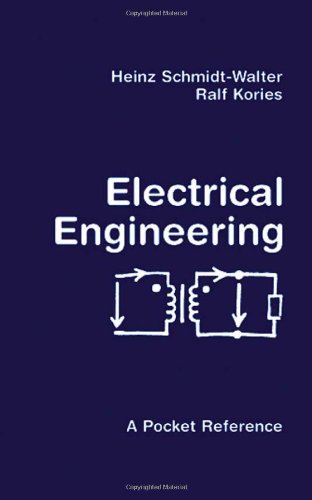
9. Electrical Engineering: A Pocket Reference
by Heinz Schmidt-Walter, Ralf Kories
Paperback: 686 Pages (2007-07)
list price: US$69.00 -- used & new: US$62.00
(price subject to change: see help)
Asin: 1596932449
Average Customer Review: 5.0 out of 5 stars
Canada | United Kingdom | Germany | France | Japan
Editorial Review

Book Description
This essential pocket reference offers a well-organizedresource for accessing the basic electrical engineering knowledgeprofessionals and students need for their work. Produced with a special,durable Permalin cover, this compact-sized (4.5" x 7.5") resource providesa quick and easy way to grasp fundamental principles and theirapplications. Practitioners also find an extensive collection oftime-saving equations that help simplify their daily projects.

Supported with more than 500 diagrams and figures, 60 tables, and anextensive index, this unique book is organized to help engineers find theinformation they need in an instant, from DC and AC systems, electric andmagnetic fields, networks, to signals and systems, digital and analogelectronics, and power supplies. The Pocket Reference also includesappendices with useful mathematical relations in a notation suitable fortheir application. No other book concentrates so much practical andfundamental electrical engineering knowledge in one compact and valuablevolume. ... Read more

Customer Reviews (1)

5-0 out of 5 stars Excellent, concise EE reference
It's been over 10 years since I completed my electrical engineering studies.I was looking for something that would help refresh my memory, and that I could refer to for formulas and graphs, as I jump back in to do my master's degree.This book seemed a little pricey, but compared to the other books out there, this one is the only thing I could find that met all my requirements: compact, sturdy, and thorough, covering all topics of electrical engineering, from analog to digital (I don't care so much about power systems, but that's in there too).

Formulas, graphs, and tables are all clearly laid out and easy to read/understand.No space is wasted with sample problems, which are best reserved for textbooks and test-prep books.Figures are used extensively todepict graphs, circuits, etc., which add nicely to the readability of the sections.

The book itself is nice and compact (the size of a medium sized paper back novel), and very well made.It appears to be a sewn book (same binding as for hardcover), and the cover is sturdy and vinyl coated.

I see that the earlier edition (Electrical Engineering) is available from Amazon for a discounted price.As far as I can tell (from comparing the table of contents and page numbers), the first 9 chapters are the same.The new edition adds one more chapter - Chapter 10: Electric Machines. ... Read more


10. Schaum's Outline of Basic Electrical Engineering
by J. J. Cathey
Paperback: 335 Pages (1996-11-01)
list price: US$16.95 -- used & new: US$8.00
(price subject to change: see help)
Asin: 0070113556
Average Customer Review: 1.5 out of 5 stars
Canada | United Kingdom | Germany | France | Japan
Editorial Review

Book Description

Students will quickly understand the popularity of this helpful sourcebook--the first edition sold 46,000 copies! The chief emphasis is on solving realistic problems, hundreds of which are included with detailed solutions. This popular study guide concisely yet clearly covers all the areas taught in two-semester survey courses and serves as an ideal review for electrical engineers and others looking for high ratings on the Professional Engineer's Examination.

... Read more

Customer Reviews (2)

2-0 out of 5 stars Poor execution of a good idea
The idea was to have the essentials of AC/DC circuit analysis, linear circuits, electronic circuits, digital logic circuit design, electromechanical machines, and control theory in one handy outline. The problem is, any one of these subjects is way too complex and deep as it is presented in most universities for the book to be helpful for undergraduate electrical engineering students. Also, on the whole, this material is far from basic. The material on electromechanical machines and control theory is usually taught in junior or senior undergraduate courses.Thus, this book would be most helpful to a professional or someone returning to graduate school for a master's degree in electrical engineering who needs some review on material that they have previously mastered but possibly forgotten. Unfortunately, as the other reviewer pointed out, this book is chock full of errors, thus rendering the book pretty much useless in the problem solving department. If a revised second edition of this book ever comes out with corrections to all of the current errors, I would recommend it to the target audience I have already mentioned, but definitely not to undergraduate engineers who are seeing this material for the first time.

1-0 out of 5 stars Needs proofread, BADLY!
I'm presently using this as a textbook in an into-level EE class. The book is a great concept - give a book of problems and enough information on the theory to solve them, including some step-by-step examples. And, sometimes, it works well. What kills it are the repeated glaring errors in the answers it gives for the questions - so far, I'd venture to say that, after the first couple chapters, more then 10% of the answers are wrong, be it from swapping a sign someplace or an outright mistake in understanding on the part of the person who solved the problem. This makes the book uterly and totally unacceptable - it has as much potential to damage someone's knowledge of electronics as to teach the person. ... Read more


11. Electrical & Computer Engineering PE Sample Exam (Pe Exam Preparation)
by Edward Graham
Paperback: 170 Pages (2007-12-15)
list price: US$39.95 -- used & new: US$37.10
(price subject to change: see help)
Asin: 1427761434
Average Customer Review: 1.0 out of 5 stars
Canada | United Kingdom | Germany | France | Japan

Customer Reviews (1)

1-0 out of 5 stars I hope this is not representative of the actual PE exam
If the PE test is anything like this book, the only people who will be passing this will be university professors.The problems in this book weren't necessarily bad problems, they were just much too in depth to be completed in a six minute time frame.All of these examples are from the morning section.I never made it to the afternoon section.

There is one controls problem which consists of a 9th order characteristic polynomial.Wouldn't a 3rd or 4th order serve the same purpose?

There are problems for transformers with 3 and four windings, but there are no problems for two-winding transformers.I assume that at least 95% of all transformers are 2 winding.

There is a linear circuit analysis problem which involves three AC sources, all with different frequencies.Two frequencies would still be sufficient to demonstrate proficiency with superposition.

There is nothing wrong with these problems given as homework problems.They are theoretically rigorous.But I cannot imagine that the actual test will contain problems like these.I also own two other sample PE tests: "Electrical and Computer Engineering Sample Questions and Solutions" by NCEES, and "Electrical and Computer PE Sample Examination" by John A. Camara.I would highly recommend either of these books over the Kaplan book. ... Read more


12. Probability, Statistics, and Random Processes For Electrical Engineering (3rd Edition)
by Alberto Leon-Garcia
Paperback: 832 Pages (2008-01-07)
list price: US$143.00 -- used & new: US$80.61
(price subject to change: see help)
Asin: 0131471228
Average Customer Review: 2.5 out of 5 stars
Canada | United Kingdom | Germany | France | Japan
Editorial Review

Book Description

This is the standard textbook for courses on probability and statistics. While helping students to develop their problem-solving skills, the author motivates students with practical applications from various areas of ECE that demonstrate the relevance of probability theory to engineering practice. Included are chapter overviews, summaries, checklists of important terms, annotated references, and a wide selection of fully worked-out real-world examples. In this edition, the Computer Methods sections have been updated and substantially enhanced and new problems have been added.

... Read more

Customer Reviews (25)

3-0 out of 5 stars Book is good but...
The book is a solution set for "Probability and Random Processes for Electrical Engineering". It has some solutions, but not all. I would say about 30% of the problems' answers are given, which is good; but it would be better if they can reduce the font size and include more answers.

1-0 out of 5 stars Useless product
buying this is one grave mistake I did..I thought this book will contain all solutions from text book or atleast good explanation to the existing solutions. it has nothing. 10-15 solutions from each chapter is not worth buying at this price. Those 10-15 solutions we can do if we want. The reason for buying solution manual is to have a quick review of all the questions before going to exam.Then what for is this. I strongly recommend not to buy this book.

5-0 out of 5 stars Don't know why it's getting all these negative reviews...
...maybe I'm just dumb.This was the textbook for a senior/ first-year grad student EE probability course.I found it well-organized and well-written, with plenty of examples designed to illustrate and reinforce important concepts.I cannot answer as to its mathematical rigor, not being a mathematician, but as an engineer I found the derivations thorough (i.e., not a lot of skipped steps or hand waving).Yes, the homework problems at the end of the chapters were harder than the examples: aren't they supposed to be?And yes, not many answers were given in the back of the book, but the nature of the material is such that having the answer doesn't really help you.For worked problems, I highly recommend the Schaum's Outline (which saved my bacon on a number of homework problems).

I did very well in that course, and feel that reading this book gave me a firm grasp of the material.

4-0 out of 5 stars Good book ... stop whining
I took Random Processes as an online course, and guess who was giving the lectures? The same Leon-Garcia.This is not a book for those who go to class, fall asleep during the lecture or spend the two hours thinking about what to do after class, hoping that then they can just open the book and understand everything just glancing over it.The book and the class lecture complement each other.
I didn't have any problem understanding 90% of the concepts explained in the book, although there are some examples that the book does not explain in detail, but they were thoroughly explained in the lectures.
So, depending how well your professor explained the concepts you could end up liking or hating this book.I like it.It is not perfect, but it is a good book to keep as reference.

2-0 out of 5 stars Very few solved problems
This book contains solutions to very few back of the chapter problems making it almost useless and definitely not worth the price ... Read more


13. Standard Handbook for Electrical Engineers
by Donald G. Fink, H. Wayne Beaty
Hardcover: 2000 Pages (2006-08-25)
list price: US$195.00 -- used & new: US$108.99
(price subject to change: see help)
Asin: 0071441468
Average Customer Review: 4.0 out of 5 stars
Canada | United Kingdom | Germany | France | Japan
Editorial Review

Book Description
The Standard Handbook for Electrical Engineers has served the EE field for nearly a century. Originally published in 1907, through 14 previous editions it has been a required resource for students and professionals. This new 15th edition features new material focusing on power generation and power systems operation – two longstanding strengths of the handbook that have recently become front-burner technology issues. At the same time, the entire format of the handbook will be streamlined, removing archaic sections and providing a quick, easy look-up experience. ... Read more

Customer Reviews (2)

3-0 out of 5 stars Engineer's review
I had an old version and replace it with this version.Not much updating.Still a good reference for electrical distribtion engineers but was disappointed with the lack of topics fromn the last 20 years.

5-0 out of 5 stars Excellent book for your EE library
I checked out the 12th edition of this book from the library and found it to be an excellent resource.Very informative covering detailed aspects of many areas of EE design.Lots of figures, tables and pictues showing you what equipment and systems look like if you've never seen them before.The 14th edition is very similiar, only larger pages and updated figures and content.This is an excellent resource. ... Read more


14. Electrical Engineering PE License Review (Pe Exam Preparation)
by Lincoln Jones
Paperback: 269 Pages (2007-12-15)
list price: US$109.95 -- used & new: US$98.70
(price subject to change: see help)
Asin: 1427761299
Canada | United Kingdom | Germany | France | Japan

15. The Handbook of Electrical Engineering
Paperback: 1104 Pages (2005-10)
list price: US$29.95 -- used & new: US$19.29
(price subject to change: see help)
Asin: 0738601713
Average Customer Review: 1.0 out of 5 stars
Canada | United Kingdom | Germany | France | Japan

Customer Reviews (1)

1-0 out of 5 stars Not what you would expect
Somebody put together curves and equations from other books to make quick money. You will be disapointed. don't buy it ! ... Read more


16. Electrical Engineering: Problems & Solutions
by Lincoln Jones
Paperback: 250 Pages (2004-07-28)
list price: US$49.15 -- used & new: US$45.47
(price subject to change: see help)
Asin: 1419521314
Canada | United Kingdom | Germany | France | Japan
Editorial Review

Book Description

This book is the companion guide to Electrical Engineering:License Review.Detailed step-by-step solutions are provided for all problems.Also includes a complete 8-hour practice exam.
... Read more

17. The Engineering Handbook, Second Edition (Electrical Engineering Handbook Series)
Hardcover: 2808 Pages (2004-06-25)
list price: US$159.95 -- used & new: US$25.00
(price subject to change: see help)
Asin: 0849315867
Average Customer Review: 5.0 out of 5 stars
Canada | United Kingdom | Germany | France | Japan
Editorial Review

Book Description
First published in 1995, The Engineering Handbook quickly became the definitive engineering reference. Although it remains a bestseller, the many advances realized in traditional engineering fields along with the emergence and rapid growth of fields such as biomedical engineering, computer engineering, and nanotechnology mean that the time has come to bring this standard-setting reference up to date.New in the Second Edition· 19 completely new chapters addressing important topics in bioinstrumentation, control systems, nanotechnology, image and signal processing, electronics, environmental systems, structural systems · 131 chapters fully revised and updated · Expanded lists of engineering associations and societies The Engineering Handbook, Second Edition is designed to enlighten experts in areas outside their own specialties, to refresh the knowledge of mature practitioners, and to educate engineering novices. Whether you work in industry, government, or academia, this is simply the best, most useful engineering reference you can have in your personal, office, or institutional library. ... Read more

Customer Reviews (1)

5-0 out of 5 stars An Excellent Engineering Reference
This huge book contains almost everything the practicing engineer needs, including definitions of engineering terms, solutions to common problems, rules-of-thumb, tables and equations, and references to other engineering sources.

Keep in mind that no matter how big (2800+ pages) an engineering reference could be, there is no way that you will be able to find every single detail in every field of engineering covered in enough depth to write your thesis. You will find the fundamental information, principles, quick calculations methods, illustrations, and diagrams, which will save the industrial practitioner valuable time.

I really believe this book is an excellent engineering reference. I am an Electronic Engineer, but I have been working for the last 16 years as an Instrumentation, Automation and Process Control Engineer for the Oil & Gas Industry. As a result I have been involved with Chemical and Mechanical Engineering issues in a day to day basic. I found this book to be a helpful reference in those fields and also in other very different fields, like engineering economics and management.

I own this book, and for me it was a very good investment. ... Read more


18. Foundations of Electrical Engineering (2nd Edition)
by John R. Cogdell
Paperback: 944 Pages (1995-10-17)
list price: US$113.40 -- used & new: US$75.00
(price subject to change: see help)
Asin: 0130927015
Average Customer Review: 4.0 out of 5 stars
Canada | United Kingdom | Germany | France | Japan

Customer Reviews (3)

2-0 out of 5 stars Mostly useless to any EE
The style is pretty basic and bland.It provides not a whole lot of material.

It could probably be condensed to a smaller text if it were more concise and instructive

5-0 out of 5 stars Excellent
Not for the COLLEGE level student, nor the "soon to drop out" university student.Very good calculus based introduction to circuits and devices.If you are looking for a algebraic introduction to circuits and devices, I suggest Electronics Fundamentals: Circuits, Devices, and Applications
by Thomas L. Floyd

5-0 out of 5 stars Great Introductory Textbook for Electrical Engineering
Of the many introductory EE textbooks that I have seen, Cogdell's book stands out because it covers the basics and isn't limited to just electronics, covering the full gamut of electrical engineering fromtransformers and motors to digital logic.Has great practical examples:jump-starting a car's dead battery, how much voltage is output from anaudio amplifier driving 25W into a speaker, etc.

Covers: Kirchhoff's Laws(KVL and KCL),Thevenin and Norton Equilavant circuits,R-L-C circuits, filters,transformers and autotransformers,3-phase AC power lines, electrical safety,Op-amps,BJT and FET transitors,basic digital logicdesign,electrical motors,some linear system, RF, andcommunications.

Buy Cogdell and Sedra&Smith and Horowitz and you willhave a complete fundamentals of electronics library. ... Read more


19. PE Sample Questions and Solutions: Electrical and Computer Engineering (Book & CD-ROM)
by Ncees
Paperback: 201 Pages (2001-12)
list price: US$76.95 -- used & new: US$76.95
(price subject to change: see help)
Asin: 1932613110
Average Customer Review: 4.5 out of 5 stars
Canada | United Kingdom | Germany | France | Japan
Editorial Review

Book Description
Study efficiently using the PE Sample Questions and Solutions book and companion CD-ROM.Containing detailed exam specifications and statistics, the Sample Questions and Solutions book offers well over 100 practice questions and solutions for your review.The Electrical and Computer sample book has 40 in the breadth portion and 40 in each of the three depth modules for a total of 160 questions.After thoroughly studying the sample book, test yourself against the companion CD-ROM.Providing hints when you need it, the CD-ROM sets up a realistic test experience--allowing you to measure your knowledge in a timed, simulated exam.After the simulation, you will be presented with a full analysis of your score, permitting you to flag content areas for review as appropriate. ... Read more

Customer Reviews (3)

5-0 out of 5 stars The only exam from the actual test-makers
This was a great sample problem set and the question format was just like the real exam. This was an important part of my references for preparation. I passed in April 07. Note that I found the CD worthless and it had the same questions in the book.

4-0 out of 5 stars An OK book
It is a pretty good book to have as review as potential sample problems for the exam.I never really read the explanations following the questions as I deciphered that myself.There are actually easier ways to solve some of the problems in my opinion.I never used the CD as it contained the same problems as the book instead of new problems.But overall, I would recommend this book as a good basis for sample questions for the PE exam.Beware, focus on antenna problems on the PE exam though.They stumped me, but I did well enough!

5-0 out of 5 stars Well Worth the Money!
I passed the PE (the first time around) recently.These sample questions are very helpful and help determine whether you are ready for the PE exam.To help others in their preparation, I generated a sample exam for the morning session (klkaiser).This sample exam, and the complete solutions, are free and provided as pdf's. ... Read more


20. Electrical Engineering PE Problems & Solutions (P E Exam Preparation)
by Lincoln Jones
Paperback: 224 Pages (2007-12-15)
list price: US$44.95 -- used & new: US$41.40
(price subject to change: see help)
Asin: 1427761302
Canada | United Kingdom | Germany | France | Japan

  1-20 of 100 | Next 20
A  B  C  D  E  F  G  H  I  J  K  L  M  N  O  P  Q  R  S  T  U  V  W  X  Y  Z  

Prices listed on this site are subject to change without notice.
Questions on ordering or shipping? click here for help.

site stats