e99 Online Shopping Mall

Geometry.Net - the online learning center Help  
Home  - Science - Electromagnetism (Books)

  Back | 21-40 of 100 | Next 20
A  B  C  D  E  F  G  H  I  J  K  L  M  N  O  P  Q  R  S  T  U  V  W  X  Y  Z  

click price to see details     click image to enlarge     click link to go to the store

$52.60
21. Essentials of Electromagnetism
$45.92
22. Maxwell's Equations and the Principles
$7.82
23. Beginning Physics II:Waves, Electromagnetism,
 
$58.00
24. Multivalued Fields: In Condensed
$154.04
25. Mathematical Models of Hysteresis
 
$75.00
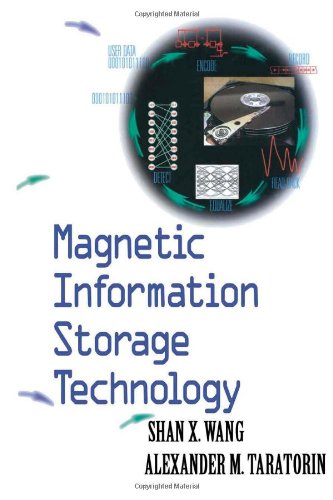
26. Magnetic Information Storage Technology
$60.00
27. Classical Field Theory: Electromagnetism
 
28. The principles of electromagnetism
$79.95
29. Nonlinear Diffusion of Electromagnetic
$134.83
30. Electromagnetic Compatibility
 
$28.00
31. Spacetime and Electromagnetism:
 
32. Introduction to the Principles
$115.00
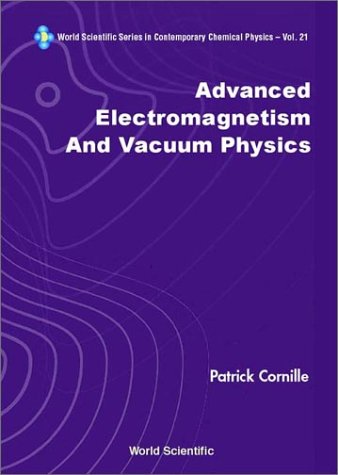
33. Advanced Electromagnetism and
$83.32
34. Applied Electromagnetism and Materials
$142.45
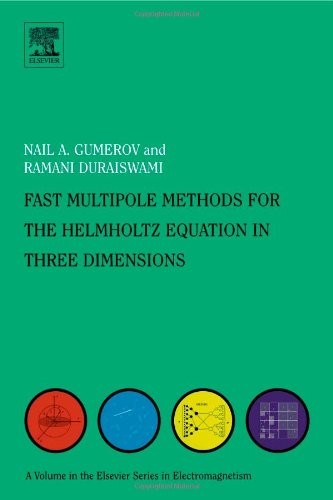
35. Fast Multipole Methods for the
$95.00
36. Magnetic Resonance Imaging: Physical
$127.00
37. Characterization andMeasurement
 
38. Electromagnetism and Quantum Theory
$14.31
39. Collective Electrodynamics: Quantum
$22.05
40. A manual of magnetism, including

21. Essentials of Electromagnetism (MacMillan Physical Science Series)
by David Dugdale
Hardcover: 363 Pages (1997-05-08)
list price: US$129.95 -- used & new: US$52.60
(price subject to change: see help)
Asin: 1563962535
Average Customer Review: 5.0 out of 5 stars
Canada | United Kingdom | Germany | France | Japan
Editorial Review

Book Description
Market: Students in undergraduate courses in electromagnetism. This innovative textbook provides students with a modern view of the unity of electromagnetism by forsaking the traditional historically ordered development for a more logically ordered one. This approach involves the introduction of Maxwell's equations at the earliest opportunity to serve as the basis for everything that follows. ... Read more

Customer Reviews (1)

5-0 out of 5 stars A unique, logical and comprehensive approach to the topic.
A logical as oppose to historical development of the subject.As arigorous work the reader is well rewarded with a thorough command of thetopic.Much better than traditional text books.An excellent teachingtool. ... Read more


22. Maxwell's Equations and the Principles of Electromagnetism (Physics Series) (Physics (Infinity Science Press))
by Richard Fitzpatrick
Hardcover: 438 Pages (2008-01-28)
list price: US$69.95 -- used & new: US$45.92
(price subject to change: see help)
Asin: 1934015202
Canada | United Kingdom | Germany | France | Japan
Editorial Review

Product Description
Designed for upper division electromagnetism courses or as a reference for electrical engineers and scientists, this book introduces Maxwell s equations and electromagnetic waves as soon as possible (i.e., in the first third of the book), and then discusses electrostatics, magnetostatics, induction, etc., in the light of those equations. The book also provides a thorough treatment of vector field theory which emphasizes the rotational invariance of the dot and cross products, together with div, grad, and curl, and thus gives a clear physical motivation for the use of those constructs to describe electric and magnetic fields. Unlike many competing books, Maxwell s Equations & the Principles of Electromagnetism covers topics such as advanced potentials, retarded fields, forces on dielectric liquids, antenna theory, and Faraday rotation.*BRIEF TABLE OF CONTENTS:1. Introduction. 2. Vectors and Vector Fields. 3. Time-Independent Maxwell s Equations. 4. Time-Dependent Maxwell s Equations. 5. Electrostatic Calculations. 6. Dielectric and Magnetic Media. 7. Magnetic Induction.8.Electromagnetic Energy and Momentum. 9. Electromagnetic Radiation. 10. Relativity and Electromagnetism. Appendixes. Index. ... Read more


23. Beginning Physics II:Waves, Electromagnetism, Optics and Modern Physics
by Alvin Halpern
Paperback: 592 Pages (1998-06-01)
list price: US$17.95 -- used & new: US$7.82
(price subject to change: see help)
Asin: 0070257078
Average Customer Review: 5.0 out of 5 stars
Canada | United Kingdom | Germany | France | Japan
Editorial Review

Book Description
If you want top grades and thorough understanding of beginning physics, this powerful study tool is the best tutor you can have! It takes you step-by-step through the subject and gives you accompanying related problems with fully worked solutions. You also get hundreds of additional problems to solve on your own, working at your own speed. Famous for their clarity, wealth of illustrations and examples, and lack of dreary minutie, SchaumÕs Outlines have sold more than 30 million copies worldwideÑand this guide will show you why! ... Read more

Customer Reviews (1)

5-0 out of 5 stars A Big Help in your Modern Physics Course
Physics 212 (Modern Physics) is a required course for Aerospace Engineering Students at KFUPM University in Saudi Arabia. I bought this book instead of Schaum's Outline of Modern Physics (ISBN 0070248303) as it was out of print when I needed to buy it. Only 107 out of 527 pages of this book, which I bought, covers the chapters related to modern physics. Therefore, it does not, to my way of thinking, worth to buy it if Schaum's Outline of Modern Physics (ISBN 0070248303) is on stock. However, if this book, which I did not buy, is out of print. Then I have got another talk.

Schaum's outline Beginning physics II: waves, electromagnetism, optics, and modern physics explains modern physics concepts very well indeed.More importantly, it solves problems clearly. Moreover, it helped me a lot in doing my homeworks problems quickly. Finally, it has a lot of solved problems of different ideas that I did not find in the textbook I used for this course, which was Modern Physics (ISBN 0030015472).

I strongly believe that you can make use of this book not only in your modern physics, but also in freshman physics courses as it covers topics such as waves and electromagnetism, which I had already studied in my freshman year physics courses. So, this book could be helpful for you inmore than two physics courses and, in that case, you will hit two birds with one stone if you buy this book. In addition, it is possible that you find Schaum's Outline of Modern Physics (ISBN 0070248303) to be not good. Then, in that event, you know the alternative: Make a beeline to this book.

(Dear readers: Please note that I have rated only the modern physics chapters of this book). ... Read more


24. Multivalued Fields: In Condensed Matter, Electromagnetism, and Gravitation
by Hagen Kleinert
 Paperback: 500 Pages (2008-05-31)
list price: US$58.00 -- used & new: US$58.00
(price subject to change: see help)
Asin: 981279171X
Canada | United Kingdom | Germany | France | Japan

25. Mathematical Models of Hysteresis and their Applications: Second Edition (Electromagnetism)
by Isaak D. Mayergoyz
Hardcover: 498 Pages (2003-08-15)
list price: US$190.00 -- used & new: US$154.04
(price subject to change: see help)
Asin: 0124808735
Canada | United Kingdom | Germany | France | Japan
Editorial Review

Book Description
This new edition has been significantly revised and updated to reflect advances in the field since the publication of the first edition, such as the systematic experimental testing of Preisach models of hysteresis. The author has, however, retained the two most salient features of the original,the emphasis on the universal nature of mathematical models of hysteresis and their applicability to the description of hysteresis phenomena in various areas of science, technology and economics and its accessibility to a broad audience of researchers, engineers, and students.

· Provides a unique emphasis on the development of universal mathematical models of hysteresis
· Accessibility to a broad audience, using simple and complex mathematical tools, application to various areas of science.
· Presents new theoretical and experimental results ... Read more


26. Magnetic Information Storage Technology (Electromagnetism) (Electromagnetism)
by Shan X. Wang, Alex M. Taratorin
 Hardcover: 536 Pages (1999-04-28)
list price: US$102.00 -- used & new: US$75.00
(price subject to change: see help)
Asin: 0127345701
Average Customer Review: 4.0 out of 5 stars
Canada | United Kingdom | Germany | France | Japan
Editorial Review

Book Description
This text explains how hard disk drives operate, how billions of bytes of digital information are stored and accessed, and where the technology is going. In particular, the book emphasizes the most fundamental principles of magnetic information storage, including in-depth knowledge of both magnetics and signal processing methods. Magnetic Information Storage Technology contains many graphic illustrations and an introduction of alternative storage technologies, such as optic disk recording, holographic recording, semiconductor flash memory, and magnetic random access memory.

* Provides the fundamentals of magnetic information storage and contrasts it with a comparison of alternative storage technologies
* Addresses the subject at the materials, device and system levels
* Addresses the needs of the multi-billion-dollar-a year magnetic recording and information storage industry
* Emphasizes both theoretical and experimental concepts
* Condenses current knowledge on magnetic information storage technology into one self-contained volume
* Suitable for undergraduate and graduate students, as well as seasoned researchers, engineers and professionals in data and information storage fields ... Read more

Customer Reviews (1)

4-0 out of 5 stars Excellent overview of magnetic recording for the engineer.
Wang and Taratorin present the best technical overview of magnetic recording I have seen to date.What I found especially valuable is the extensive discussion of both the characteristics and measurement of theprincipal non-linearities impacting magnetic recording. These include suchthings as non-linear transition shift, hard-easy transition shift, MRassymetries, and self erasure.The books focus is on therecording/playback processes, but also includes a reasonable introductionto coding and partial response channel design.For readers who want moredetails on the codes used historically, Mee and Daniel's works are better. ... Read more


27. Classical Field Theory: Electromagnetism and Gravitation
by Francis E. Low
Hardcover: 439 Pages (1997-02-07)
list price: US$130.00 -- used & new: US$60.00
(price subject to change: see help)
Asin: 0471595519
Average Customer Review: 2.5 out of 5 stars
Canada | United Kingdom | Germany | France | Japan
Editorial Review

Book Description
The author uses a unique approach which emphasizes the field theoretic aspects of gravitation and the strong analogies between gravitation and the other areas that are studied in physics. The theory-centered text begins with the simplest experimental facts then proceeds to the corresponding differential equations, theoretical constructs such as energy, momentum and stress and several applications. End-of-chapter problems provide students with an opportunity to test their understanding, serve as an introduction to and a review of material not included in the book and can be used to develop examples, extensions and generalizations of the material presented. ... Read more

Customer Reviews (3)

1-0 out of 5 stars If you already own Jackson, Griffiths, and Barut, don't bother
Difficult to understand, very few examples, and the problems aren't very good at telling you what they are asking for. Maybe good if you already have a decent understanding of E&M, but this is not an appropriate text for a first graduate level class. Use Jackson for most stuff, fill in the gaps of what you missed as an undergraduate with Griffiths, and use Barut for the field theory stuff.

5-0 out of 5 stars Classical field theory reviewed by a master.
Francis Low is an outstanding theoretical physicist who also happens to have an interest in education. He wrote marvellous lectures on quantum scattering, where the misteries of the so-called Sommerfeld radiation condition were clarified (and derived!) by using wave-packets. His name in science was mademainly by the epoch-making paper, with Gell-Mann, which introduced the now ubiquitous renormalization group. It is noble of him to dedicate some of his time to write his vision of electrodynamics and gravitation, as examples of classical field theory. This is an advanced book, meant to deepen and unify concepts. But Francis Low would'nt stop at that. You'll find fresh views almost at every page, mainly on the electrodynamics part, his turf. Some criticism has been made, by Robert Wald, for instance, about his treatment of gravitation, which is more or less alla Feynman, or alla Schwinger: geometry is discovered. It is not the starting point, like in Einstein. This is also welcome: it puts your mind to work along different tracks. All in all, a great reading.

2-0 out of 5 stars easy
This subject is just too simple! ... Read more


28. The principles of electromagnetism applied to electrical machines: (formerly titled: Electromagnetic problems in electrical engineering)
by B Hague
 Unknown Binding: 359 Pages (1962)

Asin: B0007E9E7O
Canada | United Kingdom | Germany | France | Japan

29. Nonlinear Diffusion of Electromagnetic Fields: with Applications to Eddy Currents and Superconductivity (Electromagnetism)
Hardcover: 412 Pages (1998-01-15)
list price: US$205.00 -- used & new: US$79.95
(price subject to change: see help)
Asin: 0124808700
Canada | United Kingdom | Germany | France | Japan
Editorial Review

Book Description
Nonlinear Diffusion of Electromagnetic Fields covers applications of the phenomena of non-linear diffusion of electromagnetic fields, such as magnetic recording, electromagnetic shielding and non-destructive testing, development of CAD software, and the design of magnetic components in electrical machinery. The material presented has direct applications to the analysis of eddy currents in magnetically nonlinear and hysteretic conductors and to the study of magnetization processes in electrically nonlinear superconductors. This book will provide very valuable technical and scientific information to a broad audience of engineers and researchers who are involved in these diverse areas.

Key Features
* Contains extensive use of analytical techniques for the solution of nonlinear problems of electromagnetic field diffusion
* Simple analytical formulas for surface impedances of nonlinear and hysteretic media
* Analysis of nonlinear diffusion for linear, circular and elliptical polarizations of electromagnetic fields
* Novel and extensive analysis of eddy current
losses in steel laminations for unidirectional and rotating magnetic fields
* Preisach approach to the modeling of eddy current hysteresis and superconducting hysteresis
* Extensive study of nonlinear diffusion in
superconductors with gradual resistive transitions (scalar and vertorial problems) ... Read more


30. Electromagnetic Compatibility in Power Systems (Elsevier Series in Electromagnetism)
Hardcover: 328 Pages (2006-12-21)
list price: US$170.00 -- used & new: US$134.83
(price subject to change: see help)
Asin: 0080452612
Canada | United Kingdom | Germany | France | Japan
Editorial Review

Book Description
A large amount of natural or artificially produced physical phenomena are exploited for practical applications, even though several of them give rise to unpleasant consequences. These ultimately manifest themselves under form of malfunction or definitive failure of components and systems, or environmental hazard. So far, manifold categories of inadvertent or deliberate sources have been discovered to simultaneously produce useful effects in some ways but adverse ones in others. In particular, responsible for the growing interest in the last decades for Electromagnetic Compatibility (EMC) has been the progressive miniaturisation and sensitivity of electronic components and circuits, often operating in close proximity to relatively powerful sources of electromagnetic interference. Potential authors of books on the subject-matter are fully aware of the fact that planning production of manageable handbooks capable to treat all the EMC case studies of practical and long-lasting interest could result in a questionable and difficult undertaking. Therefore, in addition to textbooks providing a thorough background on basic aspects, thus being well-tailored for students and those which want to get in contact with this discipline, the most can be made to jointly sustain a helpful and practicable publishing activity is to supply specialised monographs or miscellanies of selected topics. Such resources are preferentially addressed to post-graduate students, researchers and designers, often employed in the forefront of research or engaged for remodelling design paradigms. Hence, the prerequisite for such a class of publications should consist in arousing critical sense and promoting new ideas. This is the object of the present book which tries to rather discuss special subjects, or throw out suggestions for reformulating conventional approaches, than to appear as a reference text. A common motivation encouraged the contributors to bringing together a number of accounts of the research that they have undertaken over the late years: willing to fill the important need of covering EMC topics rather proper to transmission and distribution of electric power than, more usually, to Electronics and Telecommunication Systems.


- EMC topics for Power Systems, at last!
- Investigating EMC features of distributed and/or complex systems.
- A broad body of knowledge for specific applications.
- A stimulating support for those which are engaged in the forefront of research and design.
- An example of how breaking ideas should be encouraged and proudly applied.
- A fruitful critique to overcomplicated and unpractical models.
- A comprehensive resource to estimate the important role of EMC at lower frequencies. ... Read more


31. Spacetime and Electromagnetism: An Essay on the Philosophy of the Special Theory of Relativity
by J. R. Lucas, P. E. Hodgson
 Paperback: 328 Pages (1990-07-19)
list price: US$35.00 -- used & new: US$28.00
(price subject to change: see help)
Asin: 0198520387
Canada | United Kingdom | Germany | France | Japan
Editorial Review

Book Description
That space and time should be integrated into a single entity, spacetime, is the great insight of Einstein's special theory of relativity, and leads us to regard spacetime as afundamental context in which to make sense of the world around us.But it is not the only one.Causality is
equally important and at least as far as the special theory goes, it cannot be subsumed under a fundamentally geometrical form of explanation.In fact, the agent of propagation of causal influence is electromagnetic radiation.In this examination, the authors find support for a rationalist
approach to physics, never neglecting experimentation, but rejecting a simple empiricist or positivist view of science. ... Read more


32. Introduction to the Principles of Electromagnetism
by Walter Hauser
 Hardcover: 623 Pages (1971-09)
list price: US$23.75
Isbn: 0201028212
Canada | United Kingdom | Germany | France | Japan

33. Advanced Electromagnetism and Vacuum Physics (World Scientific Series in Contemporary Chemical Physics, 21)
by Patrick Cornille
Hardcover: 792 Pages (2003-09)
list price: US$115.00 -- used & new: US$115.00
(price subject to change: see help)
Asin: 9812383670
Canada | United Kingdom | Germany | France | Japan
Editorial Review

Book Description
This book is aimed at a large audience: scientists, engineers, professors and students wise enough to keep a critical stance whenever confronted with the chilling dogmas of contemporary physics. Readers will find a tantalizing amount of material calculated to nurture their thoughts and arouse their suspicion, to some degree at least, on the so-called validity of today's most celebrated physical theories. ... Read more


34. Applied Electromagnetism and Materials
by André Moliton
Hardcover: 346 Pages (2006-12-18)
list price: US$99.00 -- used & new: US$83.32
(price subject to change: see help)
Asin: 0387380620
Canada | United Kingdom | Germany | France | Japan
Editorial Review

Book Description
Applied Electromagnetism and Materials picks up where Basic Electromagnetism and Materials left off by presenting practical and relevant technological information about electromagnetic material properties and their applications. This book is aimed at senior undergraduate and graduate students as well as researchers in materials science and is the product of many years of teaching basic and applied electromagnetism. Topics range from the spectroscopy and characterization of dielectrics and semiconductors, to non-linear effects and electromagnetic cavities, to ion-beam applications in materials science. ... Read more


35. Fast Multipole Methods for the Helmholtz Equation in Three Dimensions (Elsevier Series in Electromagnetism)
by Nail A Gumerov, Ramani Duraiswami
Hardcover: 426 Pages (2005-01-27)
list price: US$180.00 -- used & new: US$142.45
(price subject to change: see help)
Asin: 0080443710
Average Customer Review: 5.0 out of 5 stars
Canada | United Kingdom | Germany | France | Japan
Editorial Review

Book Description
This volume in the Elsevier Series in Electromagnetism presents a detailed, in-depth and self-contained treatment of the Fast Multipole Method and its applications to the solution of the Helmholtz equation in three dimensions. The Fast Multipole Method was pioneered by Rokhlin and Greengard in 1987 and has enjoyed a dramatic development and recognition during the past two decades. This method has been described as one of the best 10 algorithms of the 20th century. Thus, it is becoming increasingly important to give a detailed exposition of the Fast Multipole Method that will be accessible to a broad audience of researchers. This is exactly what the authors of this book have accomplished.

For this reason, it will be a valuable reference for a broad audience of engineers, physicists and applied mathematicians.

The Only book that provides comprehensive coverage of this topic in one location.

Presents a review of the basic theory of expansions of the Helmholtz equation solutions

Comprehensive description of both mathematical and practical aspects of the fast multipole method and it's applications to issues described by the Helmholtz equation ... Read more

Customer Reviews (1)

5-0 out of 5 stars Some additional content from the book
Link to the table of contents, book outline and preface
http://www.umiacs.umd.edu/~ramani/FMM_HELMHOLTZ/prelims.pdf

Link to Chapter 1 of the book
http://www.umiacs.umd.edu/~ramani/FMM_HELMHOLTZ/Introduction.pdf

Link to the cover
http://www.umiacs.umd.edu/~ramani/FMM_HELMHOLTZ/GumerovWT.pdf

Short table of contents
Preface xvii
Acknowledgments xxiii
Outline of the Book xxv

Chapter 1. Introduction 1
1.1 Helmholtz Equation 1
1.2 Boundary Conditions 15
1.3 Integral Theorems 25
1.4 What is Covered in This Book and What is Not 37

Chapter 2. Elementary Solutions 39
2.1 Spherical Coordinates 39
2.2 Differentiation of Elementary Solutions 65
2.3 Sums of Elementary Solutions 73
2.4 Summary 86

Chapter 3. Translations and Rotations of Elementary Solutions 89
3.1 Expansions over Spherical Basis Functions 89
3.2 Translations of Spherical Basis Functions 93
3.3 Rotations of Elementary Solutions 117
3.4 Summary 137

Chapter 4. Multipole Methods 139
4.1 Room Acoustics: Fast Summation of Sources 139
4.2 Scattering from a Single Sphere 143
4.3 Scattering from Two Spheres 150
4.4 Scattering from N Spheres 161
4.5 On Multiple Scattering from N Arbitrary Objects 168
4.6 Summary 170

Chapter 5. Fast Multipole Methods 171
5.1 Preliminary Ideas 171
5.2 Multilevel Fast Multipole Method 196
5.3 Data Structures and Efficient Implementation 207
5.4 Summary 222

Chapter 6. Complexity and Optimizations of the MLFMM 225
6.1 Model for Level-Dependent Translation Parameters 225
6.2 Spatially Uniform Data 227
6.3 Error of MLFMM 236
6.4 Optimization 238
6.5 Non-uniform Data 248
6.6 Adaptive MLFMM 264
6.7 Summary 283

Chapter 7. Fast Translations: Basic Theory and O(p^3) Methods 285
7.1 Representations of Translation and Rotation Operators 286
7.2 Rotational-coaxial translation decomposition 306
7.3 Sparse matrix decomposition of translation and rotation operators 313
7.4 Summary 338

Chapter 8. Asymptotically Faster Translation Methods 339
8.1 Fast Algorithms Based on Matrix Decompositions 340
8.2 Low- and High-Frequency Asymptotics 361
8.3 Diagonal Forms of Translation Operators 387
8.4 Summary 416

Chapter 9. Error Bounds 417
9.1 Truncation Errors for Expansions of Monopoles 417
9.2 Truncation Errors for Expansions of Multipoles 432
9.3 Translation Errors 439
9.4 Summary 462

Chapter 10. Fast Solution of Multiple Scattering
Problems 465
10.1 Iterative Methods 466
10.2 Fast Multipole Method 472
10.3 Results of Computations 487
10.4 Summary 498

Color Plates 499

Bibliography 509

Index 515
... Read more


36. Magnetic Resonance Imaging: Physical Principles and Applications (Electromagnetism)
by Vadim Kuperman
Hardcover: 182 Pages (2000-03-03)
list price: US$138.00 -- used & new: US$95.00
(price subject to change: see help)
Asin: 0124291503
Average Customer Review: 4.0 out of 5 stars
Canada | United Kingdom | Germany | France | Japan
Editorial Review

Book Description
This book is intended as a text/reference for students, researchers, and professors interested in physical and biomedical applications of Magnetic Resonance Imaging (MRI). Both the theoretical and practical aspects of MRI are emphasized. The book begins with a comprehensive discussion of the Nuclear Magnetic Resonance (NMR) phenomenon based on quantum mechanics and the classical theory of electromagnetism. The first three chapters of this book provide the foundation needed to understand the basic characteristics of MR images, e.g.,image contrast, spatial resolution, signal-to-noise ratio, common image artifacts. Then MRI applications are considered in the following five chapters. Both the theoretical and practical aspects of MRI are emphasized. The book ends with a discussion of instrumentation and the principles of signal detection in MRI.

Key Features
*Clear progression from fundamental physical principles of NMR to MRI and its applications
*Extensive discussion of image acquisition and reconstruction of MRI
*Discussion of different mechanisms of MR image contrast
*Mathematical derivation of the signal-to-noise dependence on basic MR imaging parameters as well as field strength
*In-depth consideration of artifacts in MR images
*Comprehensive discussion of several techniques used for rapid MR imaging including rapid gradient-echo imaging, echo-planar imaging, fast spin-echo imaging and spiral imaging
*Qualitative discussion combined with mathematical description of MR techniques for imaging flow ... Read more

Customer Reviews (2)

5-0 out of 5 stars Great book on MRI.
This is a very useful textbook which deal with the theory and practical applications of MRI.The first chapters examine the fundamentals of magnetic resonance.The book includes a comprehensive discussion of the basic mechanisms of MR contrast including T1, T2-weighted images, diffusion weighted images, MRI imaging of flow. The last part of the book considers MRI instrumentation including design of superconducting and resistive magnets.

3-0 out of 5 stars Not a bad overview
This book isn't a bad overview of basic MRI fundamentals.I would have liked it better if it had a bit more background in the basic physics involved because I've found that there is a HUGE gap between these basic beginning books and the advanced ones.The beginning ones assume you know nothing and the advanced ones assume you've got a PhD in high energy particle physics. ... Read more


37. Characterization andMeasurement of Magnetic Materials (Electromagnetism)
by Fausto Fiorillo
Hardcover: 647 Pages (2004-12-22)
list price: US$190.00 -- used & new: US$127.00
(price subject to change: see help)
Asin: 0122572513
Canada | United Kingdom | Germany | France | Japan
Editorial Review

Book Description
Correct and efficient measurements are vital to the understanding of materials properties and applications. This is especially so for magnetic materials for which in last twenty years, our understanding and use have changed dramatically. New or improved materials have been created and have reached the market. The Soft amorphous alloys, the Fe-based rare-earth magnets and the giant magnetorestrictive and magnetoresistive materials have all posed challenges to measurement. At the same time new digital measurement techniques have forced a change in laboratory and commercial measuring setups. A revision of measuring standards also occurred in the 1990s with the result that there is now a lack of up-to-date works on the measurement of magnetic materials.

The basic objective of this work is to provide a comprehensive overview of the properties of the hard and soft magnetic materials relevant to applications and of thoroughly discussing the modern methodologies for employed in the measurement of these properties. The balance of these topics results in a complete text on the topic, which will be invaluable to researchers, students and practitioners in industry. It will be of significant interest not only to scientists working in the fields of power engineering and materials science but also to specialists in measurement who be able to easily find all the information they need.

* Comprehensive overview of the properties of the hard and soft magnetic materials

* Provides applications and discusses thoroughly themodern methodologies for employed in the measurement of these properties

* Provides the latest up-to-date works on the measurement of magnetic materials ... Read more


38. Electromagnetism and Quantum Theory (Electrical Science)
by Dale M. Grimes
 Hardcover: 151 Pages (1970-02-13)

Isbn: 0123031508
Canada | United Kingdom | Germany | France | Japan

39. Collective Electrodynamics: Quantum Foundations of Electromagnetism
by Carver A. Mead
Paperback: 159 Pages (2002-08-07)
list price: US$20.00 -- used & new: US$14.31
(price subject to change: see help)
Asin: 0262632608
Average Customer Review: 4.0 out of 5 stars
Canada | United Kingdom | Germany | France | Japan
Editorial Review

Book Description
In this book Carver Mead offers a radically new approach to the standard problems of electromagnetic theory. Motivated by the belief that the goal of scientific research should be the simplification and unification of knowledge, he describes a new way of doing electrodynamics--collective electrodynamics--that does not rely on Maxwell's equations, but rather uses the quantum nature of matter as its sole basis. Collective electrodynamics is a way of looking at how electrons interact, based on experiments that tell us about the electrons directly. (As Mead points out, Maxwell had no access to these experiments.)

The results Mead derives for standard electromagnetic problems are identical to those found in any text. Collective electrodynamics reveals, however, that quantities that we usually think of as being very different are, in fact, the same--that electromagnetic phenomena are simple and direct manifestations of quantum phenomena. Mead views his approach as a first step toward reformulating quantum concepts in a clear and comprehensible manner.

The book is divided into five sections: magnetic interaction of steady currents, propagating waves, electromagnetic energy, radiation in free space, and electromagnetic interaction of atoms. In an engaging preface, Mead tells how his approach to electromagnetic theory was inspired by his interaction with Richard Feynman. ... Read more

Customer Reviews (11)

5-0 out of 5 stars Bohr and Heisenberg Refuted
As of today, Thanksgiving, 22November2007, there are ten reviews of this book posted. None of them, nor all of them together, is adequate. I urge prospective buyers to read the American Spectator interview with Carver Mead. The Spectator has taken down its copy, but a few are still available online. Google "Carver Mead Collective Electrodynamics Spectator Interview", withoug quotation marks.

One reviewer says here that Mead's arguments against Bohr and Heisenberg were advanced during the 1930's, and were refuted. I wonder if he understands anything anyone has said. The Spectator writes,

"Central to Mead's rescue project are a series of discoveries inconsistent with the prevailing conceptions of quantum mechanics. One was the laser. As late as 1956, Bohr and Von Neumann, the paragons of quantum theory, arrived at the Columbia laboratories of Charles Townes, who was in the process of describing his invention. With the transistor, the laser is one of the most important inventions of the twentieth century. Designed into every CD player and long distance telephone connection, lasers today are manufactured by the billions. At the heart of laser action is perfect alignment of the crests and troughs of myriad waves of light. Their location and momentum must be theoretically knowable. But this violates the holiest canon of Copenhagen theory: Heisenberg Uncertainty. Bohr and Von Neumann proved to be true believers in Heisenberg's rule. Both denied that the laser was possible. When Townes showed them one in operation, they retreated artfully.

"In Collective Electrodynamics, Mead cites nine other experimental discoveries, from superconductive currents to masers, to Bose-Einstein condensates predicted by Einstein but not demonstrated until 1995. These discoveries of large-scale, coherent quantum phenomena all occurred after Bohr's triumph over Einstein."

When all the waves of all the atoms in a system are synchronized, the system is coherent. Scientists during the 1930's were not able to synchronize the waves. When all atoms are synchronized, matter is a wave. Mead proves this by experiment. When the waves are not synchronized, they interfere with each other. Perhaps it is true, what some reviewers say here, that Mead does not really develop a complete theory of electrodynamics; but he does demonstrate conclusively from actual experiments his main contention:

Bohr taught the correspondence principle, which says that as quantum numbers get large, the behavior approximates a Newtonian mechanical system. But modern experiments show that as quantum numbers get large, behavior diverges more and more from a mechanical system. What large quantum numbers develop into is an electrodynamical system. Under that paradigm, if the system is coherent, Mead has a perfect solution to Schrodinger's wave equation; and the uncertainty principle disappears.

1-0 out of 5 stars "Not even wrong"
This is an unusual book and not an easy one to review.
Perhaps the best starting place is the publisher's summary:

[BEGIN PUBLISHER'S SUMMARY (from the book's back cover)]

"In this book Carver Mead offers a radically new approach to the standard problems of electromagnetic theory.Motivated by the belief that the goal of scientific research should be the simplification and unification of knowledge, he describes a new way of doing electrodynamics---collective electrodynamics---that does not rely on Maxwell's equations, but rather uses the quantum nature of matter as its sole basis.Collective electrodynamics is a way of looking at how electrons interact, based on experiments that tell us about the electron directly.(As Mead points out, Maxwell had no access to these experiments.)"

"The results Mead derives for standard electromagnetic problems are identical to those found in any text.Collective electrodynamics reveals, however,that quantities that we usually think of as being very different are, in fact, the same---that electromagnetic phenomena are direct manifestations of quantum phenomena.Mead views this as a first step toward reformulating quantum concepts in a clear and comprehensive manner.''

[END PUBLISHER's SUMMARY]

It was this summary that persuaded me to order, sight unseen, this small (132 pages) but relatively inexpensive book to read on vacation. I didn't expect a lot from it, but I hoped that it might furnish some new insights.I was very disappointed that I learned nothing of substance from it.

Indeed, I think that the above summary borders on false advertising.The book does not convincingly obtain classical electrodynamics from accepted quantum mechanical principles nor from experiments to which "Maxwell had no access". Its motivation is presented in such a vague and sloppy way that I regard it as yet one more of the endless accumulation of dreary papers which Pauli, in a famous remark, characterized as "not even wrong", i.e., too vague to be meaningful.

The book only sketchily describes the "experiments that tell us about the electron directly".These are experiments with superconducting coils, which reveal not the behavior of individual electrons, but behavior of a system of a large number of electrons coupled in poorly understood ways (hence the collective" in the book's title).Most of the book's development is based on just one experimental fact---that the magnetic flux of a superconducting loop is quantized, i.e., the flux can take on only values which are a constant multiple of integers.The book views such a system as a primitive system "having only one degree of freedom".

Before proceeding to sketch the book's main argument, I have to make some mathematical remarks.It is well known that classical electrodynamics can be plausibly developed starting with just one mathematical object---the four-potential A, which is a 1-form on four-dimensional Minkowski space. The electromagnetic field tensor F, a 2-form, is the differential of the potential 1-form:F = dA.It would be too difficult to give precise definitions here, but they can be found in my book *Relativistic Electrodynamics and Differential Geometry* and many other places. The 4-current J is then defined as (or, from a more physical point of view, assumed to be) the codifferential (covariant divergence) of the field tensor. This mathematical structure is equivalent to Maxwell's equations.

In summary, from any physical situation in which a 1-form
on Minkowski space appears naturally, one can plausibly recover much of the mathematical structure of classical electrodynamics. For example, if within the logical structure of thermodynamics there were a naturally occurring 1-form on Minkowski space, one might claim to "derive" electrodynamics from thermodynamics by identifying this "natural" thermodynamic 1-form with the electromagnetic potential A.

The only problem would be if the thermodynamic definition of A were somehow in physical conflict with the electrodynamic definition.But if A should be an unmeasurable quantity within thermodynamics, then this problem would not exist.

The essence of Mead's argument is that within quantum mechanics, there is a naturally occurring 1-form on three-dimensional space with the property that integrating it over a superconducting loop gives the phase change of the "wave function" of the loop, which must be a constant multiple of an integer.Also, integrating the space part of the four-potential 1-form A over a loop gives the magnetic flux threading the loop, which for a superconducting loop is observed to be a constant multiple of an integer.This suggests identifying the "phase change" 1-form with a constant multiple of the space part of A.
Later the full A is recovered by hand-waving analogies. In my opinion, the main problem with his argument is that his construction of the "phase change" 1-form is so vague, sloppy, and problematic that it is "not even wrong".

Another difficulty is that the electrodynamic potential 1-form
has special properties which may or may not be possessed by Mead's "phase change" 1-form, a point which Mead does not address.Since there seems no way to experimentally determine Mead's "phase change" 1-form independently of electromagnetic measurements, his identification of the "phase change" 1-form
with a constant multiple of the electrodynamic 1-form seems physically sterile.

I cannot point out the precise difficulties with his construction without using symbols which are unavailable here.
A more extensive review on my website gives the mathematical details of some of the problems with it.

Is there anything of interest in the book?
Well, some may find of interest an 11-page "Personal Preface" describing, among other things, the author's relationship with and impressions of Richard Feynman. Mead was an undergraduate student of Feynman and later his colleague at Caltech.

I have mixed feelings about these.
His reminiscences sound sincere, but also seem to me to have a
flavor of name-dropping.For example, he discusses a "sticking point" in his development of electrodynamics which held him up for years, and informs us that "it is resolved in this treatment in a way that Feynman would have liked". It seems presumptuous to claim to know what a great, deceased physicist would have thought about this work.

4-0 out of 5 stars Coherent, Concise, and Challenging
For those of us who were fascinated by Feynman's presentation of the vector potential field A, this book is irresistable.Mead tries to build the foundations of electricity and magnetism anew, and does a fascinating job of it.

There is a lot of history and historiography mixed in with this short book, but I myself find that fascinating.If you're interested in how the currents of thought might have eddied, or where key suggestions were missed, or what from Einstein may have been underappreciated, you'll enjoy this side of the book.

All that said, this book is chewy, and does only a mild amount of hand-holding in walking through the math.This is NOT anybody's first book of mathematical physics - but if you have enjoyed reading books by (e.g.) Feynmann, Misner/Thorne/Wheeler, Herb Kroemer, Andy Grove, Morse/Feshbach, Francon, Ichimaru, Khinchin, Papoulis, Polya, Sapriel, or Wiener, you're part of the natural audience for this book.If you liked "The Elegant Universe" you may love this book (and find some common themes), but this book is more mathematically demanding.On the other hand this is no mere tome, and does not require more than undergraduate competence.

I would have liked to see more visualization aids - some of the concepts in this formulation lend themselves very well to a visual presentation.I'm going to be rereading this book, and I'm really looking forward to expository textbooks which may follow this line of presentation.

If you're in doubt, buy this - it's challenging, but very broad and brilliant, and is not only about electrodynamics.

5-0 out of 5 stars Successor to Feyman's Red Books
From time to time I ask people if there's been anything better than Feyman's "Lectures in Physics," and the answer is generally no, that's about all there is...

Seems to me this beautiful book is at least the start of the current generation's canonical physics text set.

5-0 out of 5 stars Pioneering Research
Carver Meade is a Pioneer. Like Einstein, he recognized thatMaxwell's Equations (ME) are not correct because they are based on the assumption that the electronis a point particle. This myth was handeddown fromthe Greek Democritus. Like Milo Wolff before him, Meade deduces thatthe electronisquantumwave structure, as proposed by Schroedinger. Wolff's book is also soldhere at Amazon.com.
Meade uses the properties of a wave structure toprovide new equations for the analysis ofelectronic engineering ciruits - very usefulin thedesign ofmicro chips. He also shows how thecollective behavior of waves is thecause of low-temperature behavior. ... Read more


40. A manual of magnetism, including galvanism, magnetism, electromagnetism, electrodynamics, magnetelectricity, and thermoelectricity. With 180 original illustrations.
by Michigan Historical Reprint Series
Paperback: 340 Pages (2005-12-20)
list price: US$23.99 -- used & new: US$22.05
(price subject to change: see help)
Asin: 142553452X
Canada | United Kingdom | Germany | France | Japan
Editorial Review

Product Description
This volume is produced from digital images created through the University of Michigan University Library's preservation reformatting program. ... Read more


  Back | 21-40 of 100 | Next 20
A  B  C  D  E  F  G  H  I  J  K  L  M  N  O  P  Q  R  S  T  U  V  W  X  Y  Z  

Prices listed on this site are subject to change without notice.
Questions on ordering or shipping? click here for help.

site stats