e99 Online Shopping Mall

Geometry.Net - the online learning center Help  
Home  - Science - Engineering (Books)

  1-20 of 100 | Next 20
A  B  C  D  E  F  G  H  I  J  K  L  M  N  O  P  Q  R  S  T  U  V  W  X  Y  Z  

click price to see details     click image to enlarge     click link to go to the store

$72.40
1. Materials Science and Engineering:
$147.35
2. Civil Engineering Reference Manual
$4.00
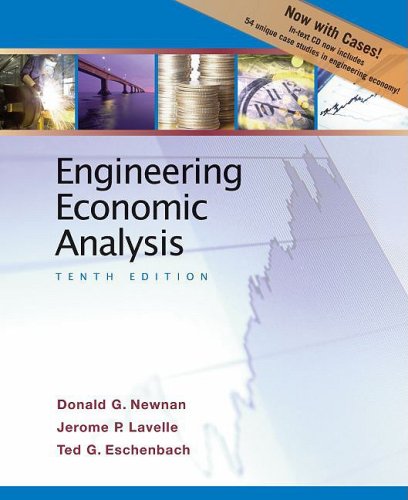
3. Engineering Economic Analysis
$63.20
4. FE Review Manual: Rapid Preparation
$38.56
5. Advanced Engineering Mathematics,
$161.28
6. Mechanical Engineering Reference
$11.25
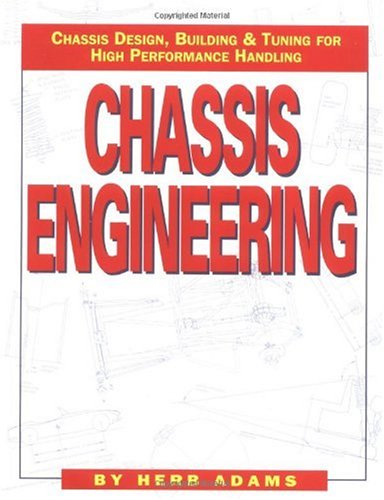
7. Chassis Engineering HP1055
$34.48
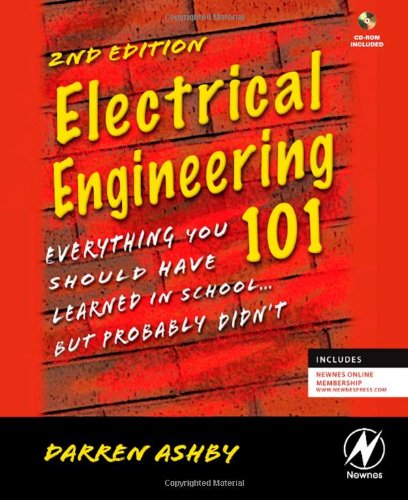
8. Electrical Engineering 101: Everything
$56.70
9. Practice Problems for the Mechanical
$49.83
10. Software Engineering: (Update)
 
11. Engineering Statistics
$75.00
12. Fundamentals of Engineering Thermodynamics
$17.74
13. Engineering Formulas
$52.92
14. Practice Problems for the Civil
 
$131.00
15. Engineering Economy (14th Edition)
$88.99
16. Principles of Foundation Engineering
$141.00
17. Shigley's Mechanical Engineering
$95.00
18. Software Engineering: A Practitioner's
$121.00
19. Isv Control Systems Engineering
$68.38
20. Simplified Engineering for Architects

1. Materials Science and Engineering: An Introduction
by William D., Jr. Callister
Hardcover: 832 Pages (2006-02-17)
list price: US$158.95 -- used & new: US$72.40
(price subject to change: see help)
Asin: 0471736961
Average Customer Review: 4.5 out of 5 stars
Canada | United Kingdom | Germany | France | Japan
Editorial Review

Book Description
Building on the extraordinary success of six best-selling editions, Bill Callister's new Seventh Edition of MATERIALS SCIENCE AND ENGINEERING: AN INTRODUCTION continues to promote student understanding of the three primary types of materials (metals, ceramics, and polymers) and composites, as well as the relationships that exist between the structural elements of materials and their properties. ... Read more

Customer Reviews (17)

5-0 out of 5 stars Perfect...
Great book...does a good job of deriving things from first principles. Excellent reference, everything is well-organized. One minor complaint: I wish that the section on analyzing phase diagrams with the lever rule came with a few more examples and better explanations. For that, if I could, I would dock a quarter of a star.

4-0 out of 5 stars Good book, though much overpriced
The quality of Callister's educational approach on basic Materials Science is out of question. His long time experience in the area is reflected by the success of the prior editions of this book. As Materials Science evolves quite fast -almost day by day- textbooks need to adapt. In this respect, Callister has demonstrated to be on top of the wake always.

My concerns arise when I compare this edition with the prior one and find very few enhancements in terms of the text itself. The only noticeable aspect in the printed edition is the use of more colors in the graphs. The publisher (Wiley) tries to justify the steep price of this book by placing online additional perks for educators and students. Honestly, although I may sound "old-schoolish," I believe that all that is unnecessary and cannot justify overpricing this resource.

As a college professor of a minority school, I do not feel fine by requiring this expensive book to my students. Yes, it can -in time- become a reference for the students; but then, as a reference, the web perks will become unusable since Wiley will keep changing them with newer editions. Most likely, due to its price, most of the students will try to sell their copies. Indeed, they will realize that there are better "reference" texts than this one.

4-0 out of 5 stars Great Tool
Great introductory book. It built upon many of the concepts I had learned in my General Chemistry couses. Having previously worked in metal fabrication, I now learned what the metal specification numbers meant and why some types of metals are harder or softer than others.

4-0 out of 5 stars Very easy to understand
Although i found it to be mundane at times, it was a great book when it came to teaching the material.the examples are made very clear and the text cleanly explains anything that you may find confusing.very highly recommended

5-0 out of 5 stars an introduction
The depth, clarity with which he surveys materials science concepts will make this text indispensable for both studying and practicing engineers for years to come. Without a doubt, this is one of the most well written textbooks I have ever had the pleasure of reading.All the figures are well drawn, the green fonts here and there seem quiet. All the tough theories, concepts just jump out of the line and hit my forehead. ... Read more


2. Civil Engineering Reference Manual for the PE Exam, 10th Edition
by Michael R. Lindeburg
Hardcover: 1424 Pages (2005-12-15)
list price: US$224.00 -- used & new: US$147.35
(price subject to change: see help)
Asin: 1591260434
Average Customer Review: 4.0 out of 5 stars
Canada | United Kingdom | Germany | France | Japan
Editorial Review

Book Description
The Most Trusted Reference for the Civil PE Exam…is Also the Most Up-To-Date

As the most comprehensive reference and study guide available for engineers preparing for the breadth-and-depth civil PE examination, the tenth edition of the Civil Engineering Reference Manual provides a concentrated review of the exam topics. No other exam-focused publication is more complete. CERM10 provides the topical review and the support material you need to pass the civil PE exam.

New for the 10th Edition New structural design standards Updates to over 14 chapters 12 new concrete column interaction diagrams Revised tables of data and fundamental constants 100 new index entries

Organized by Subject Areas Covered on the Exam Environmental Geotechnical Structural Transportation Water Resources

... Read more

Customer Reviews (58)

5-0 out of 5 stars real great
it contains all what you realy need ,not forget any ,and not overexplain
like it is exact what you (as an engineer) should look for .

5-0 out of 5 stars you need this to pass the PE exam
take 3 months of your life and spend them working every problem in this book, then you may just pass the PE exam.

good for the exam and an overall good reference book

4-0 out of 5 stars Great Reference Material
This CERM is a great resource to have for studying and is very useful for the morning(breadth) session of the PE.I don't think I used it at all for the afternoon session as the industry resources are needed for the afternoon (depth) session.It's a must have.

5-0 out of 5 stars PE Review
The best resource you can get to refresh your memory in preparation for the PE exam!

5-0 out of 5 stars Is there an 11th edition of the Lindbergh PE review book coming out soon?
Does anyone know if the 11th edition will be coming out anytime soon? I will be taking the PE exam in 2008, and I need to buy a book, but I don't want to buy the 10th and then the 11th comes out right away...I'm in a dilemna because I need the book NOW to start studying!

Thanks!! ... Read more


3. Engineering Economic Analysis
by Donald G. Newnan, Ted Eschenbach, Jerome P. Lavelle
Paperback: 250 Pages (2006-10-30)
list price: US$16.50 -- used & new: US$4.00
(price subject to change: see help)
Asin: 0195171497
Average Customer Review: 5.0 out of 5 stars
Canada | United Kingdom | Germany | France | Japan

Customer Reviews (4)

5-0 out of 5 stars Clear, easy
Very clear explanations.Found it really easy to understand and apply to my own business.You could breeze through this book in a week by spending a few hours on it a day.

5-0 out of 5 stars good
it isgood book come with student guide with the half price, good deal thank you amazon

4-0 out of 5 stars Change of Pace
This book explores a whole different side of chemical engineering. Useful as a reference but some of the problems are extremely difficult. Overall good book

5-0 out of 5 stars An excellent resource.
This is a well written text on the subject with the subject matter well presented. Another feature is the CD. Excellent spreadsheets. ... Read more


4. FE Review Manual: Rapid Preparation for the General Fundamentals of Engineering Exam (F E Review Manual), 2nd ed.
by Michael R. Lindeburg
Paperback: 872 Pages (2006-06-30)
list price: US$86.00 -- used & new: US$63.20
(price subject to change: see help)
Asin: 1591260728
Average Customer Review: 4.5 out of 5 stars
Canada | United Kingdom | Germany | France | Japan
Editorial Review

Book Description
The FE Review Manual is designed to prepare you to pass the general FE exam even if you have very limited study time. You get an efficient review of all the current exam topics; diagnostic exams so you can see what areas you need to study; more than 1,150 practice problems (with solutions); a realistic simulation of the complete 8-hour exam; and free software to help reinforce what you've learned. Plus, the Review Manual is completely in sync (same terminology, formulas, topic order, etc.) with the NCEES handbook that is used during the exam. This combination is so effective that the publisher offers a unique "Pass or Don't Pay" Guarantee: pass the exam, or get a full refund for the book.

Please note, software is not included in the book, but you may request software by using the form inside the book.The software is free, but thereis a $4.95 shipping fee. ... Read more

Customer Reviews (85)

5-0 out of 5 stars FE book review
this was a great buy for a reasonable price, i am pleased with the service and the acceptable delivery speed.

5-0 out of 5 stars Great help
This covers just about all I could ask for. Even helps to get through the classes I'm currently attending. Great help!

5-0 out of 5 stars A new edition of a classic FE prep manual
This book is a new edition of a long-running FE preparation manual. It covers all the materials in the FE morning exam, and the questions in the book are very similar to the real FE test. If you feel that your background in the basic math/physics/engineering science areas are getting rusty, then this is the book to go for.

5-0 out of 5 stars Good for Exam(FE)!
This book is a amazing one for FE Test!
I hope I will pass the Exam with this book on October!

5-0 out of 5 stars Very useful book
I strongly recommend this book for passing EIT in the first go. I had lost in touch with some specific subject basics of engineering. I worked through this book for one month which got me on track with the 'A to Z' of engineering problem solving methods. Then I took the sample exam from the NCEES FE study materials and gradually gained confidence required to face the exam. After I passed the exam, I was just thanking Micheal R. Lindeburg in my mind for writing this book. ... Read more


5. Advanced Engineering Mathematics, Student Solutions Manual and Study Guide
by Erwin Kreyszig
Paperback: 260 Pages (2006-10-06)
list price: US$43.95 -- used & new: US$38.56
(price subject to change: see help)
Asin: 0471726443
Average Customer Review: 3.5 out of 5 stars
Canada | United Kingdom | Germany | France | Japan
Editorial Review

Book Description
This market leading text is known for its comprehensive coverage, careful and correct mathematics, outstanding exercises and self contained subject matter parts for maximum flexibility.

Thoroughly updated and streamlined to reflect new developments in the field, the ninth edition of this bestselling text features modern engineering applications and the uses of technology. Kreyszig introduces engineers and computer scientists to advanced math topics as they relate to practical problems. The material is arranged into seven independent parts: ODE; Linear Algebra, Vector Calculus; Fourier Analysis and Partial Differential Equations; Complex Analysis; Numerical methods; Optimization, graphs; and Probability and Statistics. ... Read more

Customer Reviews (89)

3-0 out of 5 stars Student Manual
The book is good. It gives some idea about the questions but the fact is that mainly the desired questions are not solved in these type of Manuals. Still it can help

3-0 out of 5 stars Disappointed, but it was still useful
To be honest, I wish I had looked through this book before purchasing it - because I wouldn't have if I knew how few solutions it contained.Most solutions manuals I've owned have all of the even numbered problems, but this one only contains a few even numbered from each section.While the ones included are useful, they are still crammed together in a small space and there aren't enough of them.The explanations of the solutions are very concise, as if they were attempting to work out the problem in as small a space as possible; sometimes sacrificing understanding.Only buy this if you are in desperate need of any help in your class that you can get - it won't help much, but it's still a resource.

5-0 out of 5 stars My overall impression is this: it's a great book
It's exactly what most 4 and 5 star reviews say it is.The only real issue I have that no other review (not even a 1, 2, or 3 star review) mentions is this. The book doesn't provide notes for conceptual pitfalls that can and will arise when reading it.A good example is the word "vector."There are actually 2 types of vectors mentioned: one from the linear algebra camp, the other from the vector calculus school of thought.These two types of vectors are actually quite different.A vector calculus vector almost always refers back to a 2 or 3 dimensional description of the motion or transmission of mass, energy, waves, and particles in a vertical/horizontal plane or in three-dimensional space; whereas a linear algebra vector more-often-than-not represents an arbitrary set of ordered numbers in a 1XN or NX1 matrix that is simply meaningless as a physical vector.

5-0 out of 5 stars Great Buy!
For a pretty cheap price, this book provides some nice "tutor" type problems.It contains some odd problems that have answers in the back of the textbook.It goes step by step through the selected problems, often giving one example for each main type of problem discussed in the book.I would reccomend it!

2-0 out of 5 stars barely anything
This review book has maybe one measly sample problem per section.and solutions manual means that they put in answers to the example problems that they work out.Lets just say it's useless unless you only don't understand one basic problem per section. ... Read more


6. Mechanical Engineering Reference Manual for the PE Exam, 12th Edition
by Michael R Lindeburg
Hardcover: 1288 Pages (2006-07-31)
list price: US$256.00 -- used & new: US$161.28
(price subject to change: see help)
Asin: 1591260493
Average Customer Review: 4.5 out of 5 stars
Canada | United Kingdom | Germany | France | Japan

Customer Reviews (11)

5-0 out of 5 stars Worked for me
This was my major "P.E. Exam" reference for both the prep & the actual exam (11th edition). I've also found it a great addition to my collection of desk references.

Buy it, study it, use it, and good luck!

5-0 out of 5 stars Must have for the PE exam
This book is a must have for the PE Mechanical Exam, however like anything if you do not put any time into learning the material and knowing where to find the equations you will have trouble during the exam...you must do your homework. If you want to pass the exam the first time follow the author's suggestion on how many hours need to be devoted to study. The only criticism I have for the book is the order in which some of the material is presented. Along with this book you need to purchase the practice problems by Lindeburg. During the exam you may want to bring in a few of your undergrad text books depending on the specific test you will be taking. Overall the author has done an excellent job taking a very broad subject and compressing it down into an easy to use book.

3-0 out of 5 stars Great book, bad binding
The book is excellent, but the physical quality of the bound text is not good. I bought the 11th edition. Admittedly, it was used; but it was in excellent shape. Almost immediately the pages began falling out. Eventually they fell out in clumps.

I think that PPI should publish the book in sections rather than as one giant text. I'm sure that a large book places greater stress on its pages than does a smaller one.

This book is relatively expensive. It is a fact that many of my engineering books have fallen apart and others, used an equal amount, did not. It must have to do with the quality of the binding.

I'd rather pay another $25.00 for the book and not have it disintegrate.

1-0 out of 5 stars Horrible Review Manual
I would be embarrassed to put my name on this book. The layout of the book is completely out of order, who starts an engineering review with Fluids and doesn't cover the very basics of Statics until section 43? I understand that this is not a novel and doesn't need to read like one, but some logical flow of material would be nice. It would also be helpful if the review problem book that goes with this manual used equations out of this manual. At least 1/4 of the problems use formulas that seem to have come out of thin air. Oh yeah, ideal gas law pv=Rt is nowhere to be found in the entire book. How this manual became the standard is beyond me. Maybe there is nothing better out there, but I'm certain that there is nothing worse. Hopefully Mark's will get me through the exam next month.

5-0 out of 5 stars Wonderful Reference for the Test
I couldn't have passed without it.I was a great information source for the test and I use it at work, as well. ... Read more


7. Chassis Engineering HP1055
by Herb Adams
Paperback: 144 Pages (1992-11-19)
list price: US$19.95 -- used & new: US$11.25
(price subject to change: see help)
Asin: 1557880557
Average Customer Review: 4.0 out of 5 stars
Canada | United Kingdom | Germany | France | Japan

Customer Reviews (23)

5-0 out of 5 stars so, you wanna build a suspension
This book is a great early step in understanding suspensions. No one book can tell you how to build a sports car suspension, but this one is easy to read, and left me in a place where I was beginning to be able to ask intelligent questions, and also assuaged a signifigant amount of my fear. Ackerman effect, castor, camber, toe-in, anti-dive, anti-squat, and much more will be demystified in this fine book.

4-0 out of 5 stars good addition
book starts with basics of suspension.if your planning modifying or completely design a suspension this is a nice book to add to the library.

3-0 out of 5 stars Not what you would expect
I recently purchased this book and have read it twice from front to back.It had a lot of good solid information, however the title is decieving in the fact that it has the word "engineering" in it.This book touches lightly on the subject of engineering, however it stops there.This book is mainly designed for those with Camaros or Corvettes and doesnt really give much information regarding independent suspensions or anything else besides what may be found on those two vehicles.I am by no means an engineer but I do know a thing or two about mechanics and this book does not help me to understand the complete dynamics involved in a vehicle chassis.It barely goes into detail about shocks or springs and the only information that seems relevant to that is "How to cut your springs".This book is written more for the back-yard mechanic than for the aspiring automotive engineer.

4-0 out of 5 stars Great Reference
Tons of information, Good explanations of suspension angles and the effects on tire attitude, handling, and weight transfer.

2-0 out of 5 stars Save your money
Book goes over a lot of information in a very short time, but not much of that information is worth anything unless you're building a circle-track or drag car. Took the hit and ordered Stanforth's Competition Car Suspension. ... Read more


8. Electrical Engineering 101: Everything You Should Have Learned in School but Probably Didn't
by Darren Ashby
Paperback: 352 Pages (2005-12-13)
list price: US$43.95 -- used & new: US$34.48
(price subject to change: see help)
Asin: 0750678127
Average Customer Review: 4.5 out of 5 stars
Canada | United Kingdom | Germany | France | Japan
Editorial Review

Book Description
The formal education of an electrical engineer is primarily mathematics and theory, with little practical information taught. Every beginning engineer needs a mentor to teach them the things that aren't taught in engineering school, but often lacks such a guide. This book fills that gap between theory and practice. Written by an expert electronics engineer who enjoys teaching the practical side of engineering, it covers all the subjects that a beginning EE needs to know: intuitive circuit and signal analysis, physical equivalents of electrical components, proper use of an oscilloscope, troubleshooting both digital and analog circuits, and much more.

The accompanying CD-ROM contains a reference library of electronics information, with demo simulation software and engineering calculators.

*Covers the engineering basics that have been either left out of a typical engineer's education or forgotten over time

*No other book offers a wealth of "insider information" in one volume, specifically geared to help new engineers and provide a refresher for those with more experience

*The accompanying CD-ROM contains a reference library of electronics information, with demo simulation software and engineering calculators ... Read more

Customer Reviews (15)

2-0 out of 5 stars Nice idea but disappointing so far...
I'm an ME student who has just found himself thrown in the deep end on some EE courses. This book seemed to be the perfect supplement to the somewhat harder text books I have been given to study.

The book opens very nicely, friendly and chatty. I did though expect the book to spell everything out, but it seems to make many of the same mistakes my lecturers made. In the opening pages it starts talking about RLC circuits without any explanation of what one is. The author seems to be falling for the same trap engineers always fall for; assuming laymen (normal people) understand what they're talking about when they use abbreviations or new terminology.

I finally stopped reading and write and this review when I found a paragraph repeated twice on the same page. This book means well, but seems to full of oversights and poor editing leaving the reader somewhat disappointed by a book that promised not to be like their education up till now.

I will now return to reading as this book does offer many good explanations and insights. I will adjust this review if the book manages to redeem itself.

5-0 out of 5 stars Makes EE look easy
This book is an easy read after you've gone through EE. Makes you see the forest from the trees. Spend so much time in early circuits classes just trying to figure out currents, gains and voltages that all I could do was the math (the trees). This book has helped not only to review concepts, but to help me see what these components are doing (the forest). Enjoying the book.

5-0 out of 5 stars Electrical Engineering 101
Wonderful book. Well written, to the point with lots of humor. Should be recommended reading for Freshman EE students.

5-0 out of 5 stars Great resource for anyone that wants to get a basic understanding of EE
My background is Mechanical Engineering and I found this book to be extremely useful and interesting.I purchased this book in order to get a better understanding of the EE basics.Like most universities a ME takes a EE 101 course that is essentially a weed out course.The problem with a weed out course is that in the end you don't have a solid understanding of what the underlying basics are.If this sounds familiar, you should definitely buy this book.

The author (Darren Ashby) addresses this concern.This book is full of schematics and there are often various relationships made between the Electrical/Mechanical disciplines which are very useful.This book also includes a useful CD-ROM that contains a "Rule of Thumb" reference guide, an "Equations Reference" guide as well as some other useful tools/calculators.

Highly recommend.

5-0 out of 5 stars Author comment
Please be aware that the error in the equations has been corrected and all new books are shipping with it fixed.

thanks,

Darren ... Read more


9. Practice Problems for the Mechanical Engineering PE Exam: A Companion to the Mechanical Engineering Reference Manual, 12th Edition
by Michael R Lindeburg
Paperback: 592 Pages (2006-07-31)
list price: US$90.00 -- used & new: US$56.70
(price subject to change: see help)
Asin: 1591260507
Average Customer Review: 3.5 out of 5 stars
Canada | United Kingdom | Germany | France | Japan
Editorial Review

Book Description
Practice Problems for the Mechanical Engineering PE Exam contains all 500+ practice problems in the Mechanical Engineering Reference Manual, along with fully-explained, step-by-step solutions. With this book, you will see not only what the correct answer is, but why it is correct and the most efficient way to solve the problem. ... Read more

Customer Reviews (6)

3-0 out of 5 stars not representative of exam grade questions
I recommend this manual only as a means for working additional problems once you've exhausted your textbook sample problems.I just took the ME PE exam yesterday and the problems on the actual exam should take no longer than 5 minutes to work, IF you know what tools (equations, etc) to use.The sample problems in this book took me, on average, about 35 minutes each to work.90% of them are far more difficult than anything you'll see on the actual exam.

I think time would be much better spent simply working the "easy" problems out of your old textbooks.

3-0 out of 5 stars Didn't get to use it
Book was fine condition but didn't get to do any of the practice problems before my exam, which I passed thanks to the reference book.

4-0 out of 5 stars Things to know before purchasing this manual and sample exam
The practice problems are all written in SI and English units yet there will only be in English units on the Mechanical PE exam. All problems have both units, however if you are interested in becoming proficient with conversions this may actually distract you. This could be confusing to someone studying and trying to improve the ability to work in different systems.

Be particularly aware of the sample exam. The following quote is an excerpt from a forum on the exam which I just read. I am dissapointed to read that the Sample exam is not reflective of the actual PE exam. I too just bought this for the purpose of taking a timed practice exam but now will send it back and find a more appropriate practice exam.

"I was going to take the PPI ME sample exam under timed conditions but thank goodness I flipped through it first. As soon as I saw the SI units I knew it wouldn't be representative of the NCEES exam, at least in that regard. I saw it as being pointless working problems in the SI system since they won't be on the real exam and all my studying has been in the English system."

5-0 out of 5 stars Good PE Review Material
I recommend this book if you are studying for the PE exam.The problems are numerous and relevant.The solutions are easy to follow.

You do NOT need to have Lindeburg's study guide to use the Practice Problems.He does refer to the appendices in his study guide (steam tables, etc) by page number, BUT if you have the reference elsewhere (which you should), you can do all the problems in the book.

3-0 out of 5 stars New edition contains practice problems
If you bought the reference book, buy this book.I know it's spendy, but do it. The 12th edition contains several great exam grade problems that anyone taking the PE exam should take time to work beforehand. I worked about 1/2 of the problems in this book, and felt well prepared for the exam.I was hoping the exam problems would be easier, but about half were about the same as the problems in this book (the other half were easier).

My frustrations were that the 12th edition still contains errors, and no errata was published when I bought this book, most were simple and straight forward, but some were frustrating.

The practice problems contain some problems that require references or ideas that are not contained in the reference book (see the problems in chapter 19, fluid power, and note that the book does not contain any methods for calculating hydraulic impedence)...there are only maybe 4 problems like this in the book, so it's not a big deal.

Also, I don't know why the author labeled many problems (1 hour limit)...some were very easy (like 2 minute problems), while other problems that weren't labeled (1 hour limit) took quite a while to compute.It'd be nicer if they were labeled (easy, med, hard) or something of that nature to make studying easier, so you could work all the problems in the area you want to emphasize in, while just doing the 'easy' ones in other areas.
... Read more


10. Software Engineering: (Update) (8th Edition) (International Computer Science Series)
by Ian Sommerville
Hardcover: 864 Pages (2006-06-04)
list price: US$116.80 -- used & new: US$49.83
(price subject to change: see help)
Asin: 0321313798
Average Customer Review: 4.0 out of 5 stars
Canada | United Kingdom | Germany | France | Japan

Customer Reviews (4)

4-0 out of 5 stars Comprehensive
This book is a good book to learn from, it can be a little boring at times but in general it is a good study tool that keeps subject matters seperate where they should be

4-0 out of 5 stars Good high-level book
This is a good high-level book for a first software engineering course. It mentions things like critical systems, object oriented programming, and real -time systems, but at a very high level; so it should not be used for a specialized course. It provides many helpful examples and diagrams. My only complaint is that the chapters are very long, and a lot of things are repeated several times. I think this book could easily be 75% shorter without loosing any important information.

5-0 out of 5 stars A nice book in software engineering
I bought this book as a required textbook for my grad course.I've learned a lot from my past misconception and misunderstanding between software science and software engineering just after reading a few chapters from the book.

The book covers wide aspects of engineering a software, both technical aspects and non-technical aspects (social, laws, ethics) although not in deep-breath details.

I highly recommend this book for any students who want to know about software engineering, pracicing software engineers who want to enhance their engineering ana managerial capability in developing a good software or for self-study for anybodywho want to jump into software business.

4-0 out of 5 stars see new chapters on Web Services and Aspect programming
It has been 2 years since Sommerville put out the 7th edition of this book. So what has changed? Three new chapters have been added at the end of the 8th edition.

One is entitled "Service-oriented software engineering". All about Web Services, which is a burgeoning field. The 7th edition just had a relatively brief explanation about XML and the sundry services developing atop it. Now the 8th edition goes into those, like the Web Service Description Language, and the Business Process Execution Language. To be sure, the chapter is not an exhaustive explanation of the syntax and usages of these languages. For that, you need to consult books devoted to them (and these do indeed exist). Rather, the chapter furnishes a concise overview that gives you the essence of what they can do. I actually think the chapter should have been simply called "Web Services". The actual title, while accurate, is too indirect.

Another new chapter looks at aspect oriented programming. Again, just an overview. But it does convey accurately what AOP offers. Centred around the key idea of cross cutting concerns. And that conventional object oriented code tends inevitably to have closely related code scattered thru many classes; making maintenance harder. It is by no means clear that AOP will ever become common. But it is one of the most intriguing ideas to arise recently, and Sommerville is correct in explaining it.

In the existing chapters brought over from the 7th edition, I do still disagree with his remarks on Extreme Programming. While XP does have some laudatory features, I take issue with the constant refactoring and the pair programming, as well as having a customer onsite at the developers' place. The latter is simply not realistic in some projects.

While pair programming, and not having programmers responsible for specific parts of the code, totally ignores different levels of expertise. Some programmers are simply better (or more experienced) than others. A real danger is having 2 neophyte programmers unwork complex code made by a senior programmer, that they simply did not understand. If you have done any programming, you will encounter subroutines that are highly intricate and intrinsically hard to understand. Typically, these subroutines are only a small part of the total code. But they might play a crucial part. They should be associated with specific programmers, who are responsible for them.

Another reason against pair programming is when the programmers are not just "pure" programmers. They might have backgrounds in various engineering or scientific fields, where this background is needed for the project. So a programmer/engineer versed in mechanical design, and who has to code accordingly, has different responsibilities from another programmer who has to deal with modelling the electrical circuitry, for example. At the design level, it makes eminent sense to sometimes pair these, when the domains overlap. But at the programming level, each can't usually do the other's work. ... Read more


11. Engineering Statistics
by Douglas C. Montgomery
 Hardcover: Pages (2008-03-05)

Isbn: 0471771856
Average Customer Review: 4.0 out of 5 stars
Canada | United Kingdom | Germany | France | Japan
Editorial Review

Book Description
* Concise and complete coverage of probability.
* Thorough coverage of regression modeling, design of engineering experiments, and statistical process control.
* Wide range of problem levels. ... Read more

Customer Reviews (5)

5-0 out of 5 stars Must Have This Stat Book
I think every engineer must have this book.It is written for engineers in design/development.

2-0 out of 5 stars PLEASE READ- THERE IS A PROBLEM WITH MY BOOK
My book does not include the appendix at the back.It stops right after chapter 8.I bought my book new on Amazon and it came in shrink wrap.It is not an international addition.I found at least one other classmate who had the same problem as me.If at all possible, please send me the pages from the back appendices.

5-0 out of 5 stars Great Examples and data tables
Has been very useful in support my post grad studies in systems engineering. Has very good explanationsof subject material and great index of tables for analysis. Highly recommend for anyone conducting research or how to apply real life data for analysis.

5-0 out of 5 stars helpful
This book helped me to solve many types of engineering problems which require an appreciation of variability and some understanding of how to use both descriptive and analytical tools in dealing with variability.

2-0 out of 5 stars Full of errors.There are better books.
This book is a terrible statistics book.It is full of inconsistancies and mistakes.Believe me there are much better books out there. ... Read more


12. Fundamentals of Engineering Thermodynamics
by Michael J. Moran, Howard N. Shapiro
Hardcover: 944 Pages (2007-03-09)
list price: US$154.95 -- used & new: US$75.00
(price subject to change: see help)
Asin: 0471787353
Canada | United Kingdom | Germany | France | Japan
Editorial Review

Book Description
Now in a Sixth Edition, Fundamentals of Engineering Thermodynamics maintains its engaging, readable style while presenting a broader range of applications that motivate student understanding of core thermodynamics concepts. This leading text uses many relevant engineering-based situations to help students model and solve problems. ... Read more


13. Engineering Formulas
by Kurt Gieck, Reiner Gieck
Hardcover: 580 Pages (2006-06-05)
list price: US$34.95 -- used & new: US$17.74
(price subject to change: see help)
Asin: 0071457747
Average Customer Review: 5.0 out of 5 stars
Canada | United Kingdom | Germany | France | Japan
Editorial Review

Book Description
This is a revision of the famed pocket guide giving engineers, scientists, technicians, and students thousands of essential technical and mathematical formulas and hundreds of diagrams to simplify and speed their calculations. ... Read more

Customer Reviews (15)

5-0 out of 5 stars 4 years of college between the covers
The fun thing about this book is that it has everthing you learned (or should have learned) getting your Engineering degree. It's all there! It usually takes some time to sort thru what all the vaiables mean, and often you have to flip between look up tables, but it is so charming to find EVERYTHING in one spot in a book so small you can carry it in your front pocket.

5-0 out of 5 stars Great Tool
This book is a great tool for engineering students and expeienced engineers alike!

5-0 out of 5 stars Super Handy
This book is a newer version to the one my father lent me while on my first internship.I recommend this book to any engineer, since you can find all the formulas you might ever need all in a nice pocket size book.

4-0 out of 5 stars Excellent reference book
This a must have for all engineers, it contains the simplest to more complex formulae required for day to day engineering calculations & design.

5-0 out of 5 stars Excellent book, I am always using it
A book that will never get dusty, always something to look up. Wonderful addition to my library and desk. ... Read more


14. Practice Problems for the Civil Engineering PE Exam: A Companion to the Civil Engineering Reference Manual,10th Edition
by Michael R. Lindeburg
Paperback: 672 Pages (2005-12-15)
list price: US$84.00 -- used & new: US$52.92
(price subject to change: see help)
Asin: 1591260485
Average Customer Review: 4.0 out of 5 stars
Canada | United Kingdom | Germany | France | Japan
Editorial Review

Book Description
The best way to prepare for the civil PE exam is to solve problems - the more problems, the better. Practice Problems for the Civil Engineering PE Exam provides you with the breadth and depth of problem-solving practice you need to successfully prepare for the exam. ... Read more

Customer Reviews (18)

5-0 out of 5 stars Tough problems that help you learn
I'vejust started to use this book and the problems are tough!I thought my chances on the PE exam were quite bleak, but the goal of the book is to expose you to very difficult complex problems so that when you get to the exam you breeze through.I appreciate this method a lot and am sure to have the confidence to take on the exam.In comparison to the NCEES sample questions, I would consider this book the much better buy.The NCEES sample questions are good to have but these practice problems are a better way to prepare.

Good luck!

1-0 out of 5 stars Save Your Money
The 9th Edition CERM contains practice problems in it but no solutions.This book contains the same problems as those shown in the 9th Ed. CERM, and also contains the solutions. However, the solutions do not always give a clear indication as to why the method was chosen to solve the problem.Sometimes an equation is manipultated to solve the problem but the explanation is left out as to why that equation works, which leaves you to look through another reference book to confirm that it does or else believe the author but remain uncertain how he arrived at the new manipulated equation.There are definitely other reference materials out there that are better study guides and make better use of one's study time.

5-0 out of 5 stars Good reference book
I haven't taken the PE exam yet. But it works as a good book for daily practice.

5-0 out of 5 stars Great Reference Book.
Great reference book.It has almost every civil eng. eq that you need for the PE.

1-0 out of 5 stars Not worth it
This book is full of multi-part problems that take a lot of time.Many state in the problem one hour limit.While it's good to do review of the topics, nothing like this is on the test and it takes WAY too long to do these problems.I used it for a week and tossed it on the shelf.Six minute solutions are MUCH better- more realistic problems, more realistic time frames for problems.Definitely would not recommend this book. ... Read more


15. Engineering Economy (14th Edition)
by William G Sullivan, Elin M Wicks, C. Patrick Koelling
 Hardcover: 688 Pages (2008-05-10)
list price: US$131.00 -- used & new: US$131.00
(price subject to change: see help)
Asin: 0136142974
Average Customer Review: 4.5 out of 5 stars
Canada | United Kingdom | Germany | France | Japan
Editorial Review

Book Description
Used by engineering students worldwide, this best-selling text provides a sound understanding of the principles, basic concepts, and methodology of engineering economy. Built upon the rich and time-tested teaching materials of earlier editions, it is extensively revised and updated to reflect current trends and issues, with an emphasis on the economics of engineering design throughout. It provides one of the most complete and up-to-date studies of this vitally important field. For those in the engineering profession. ... Read more

Customer Reviews (5)

4-0 out of 5 stars Very good reading!
The best book in engineering economics that I have seen so far. Easy reading, easy to digest the material. My only "complaints" is that the "answer to questions" (in the back of the book) should include cash flow diagrams, and the templates on the CD should be formatted to look professional.

Minor glitches to a great book!

5-0 out of 5 stars Useful to the student and the professional
Just as engineers must accurately model technical solutions to a problem, they must also model the economic impact of those technical solutions. This is a very good book for both the engineering student and the practicing engineer. Unlike many texts on straight economics, it is not just filled with narrative. It has many well-explained formulas and examples using those formulas throughout. The numerous exercises included throughout the book involve open-ended problem statements and iterative problem-solving skills, which are the real-world skills you'll need on the job. Various engineering disciplines are presented. FE exam-style questions have been added to help prepare engineering students for that milestone examination. Passing the FE exam is a first step in getting licensed as a "Professional Engineer" or PE. A good companion to this book is the Schaum's Outline on Engineering Economics. This is one of those textbooks where having the latest edition is really better, since the laws of finance are man-made and do change over time. The following is the table of contents for the latest edition:

FUNDAMENTALS OF ENGINEERING ECONOMY.
1. Introduction to Engineering Economy.
2. Cost Concepts and Design Economics.
3. Money-Time Relationships and Equivalence.
4. Applications of Money-Time Relationships.
II.ENGINEERING ECONOMY IN ACTION.
5. Applications of Money-Time Relationships.
6. Comparing Alternatives.
7. Depreciation and Income Taxes.
8. Price Changes and Exchange Rates.
9. Replacement Analysis.
10. Dealing with Uncertainty.
III. ADDITIONAL TOPICS IN ENGINEERING ECONOMY.
11. Evaluating Projects with the Benefit/Cost Ratio Method.
12. Engineering Economy Studies in Investor-Owned Utilities.
13. Probabilistic Risk Analysis.
14. Capital Financing and Allocation.
15. Dealing with Multiattributed Decisions.
Appendixes.

5-0 out of 5 stars Great book!
I was pleasantly surprised to have enjoyed this book during my engineering coursework. It gave good insight and practical examples to understanding engineering costs.

5-0 out of 5 stars Engineering Economy

This is a well written book.The examples are very helpful.I have been learning the material with no external instruction, only the book.

3-0 out of 5 stars A practical guide for the manager
I first used this book as a student-I found it useful then, today I insist that all managers reporting to me review, and use, the concepts and techniques provided by the authors.

The book is useful, in that concepts are well explained, the examples are relevant, but most important for me is that it provides managers who have little or no experience in determining project costs with a handy means (including formulae and worked examples) of doing so.

I have tried to get copies of the most recent edition, the popularity seems to be such that the book is sold out. I most readily recommend this to anyone who needs to justify capital expenditure, who needs to do project costing, and who has to prepare proposals for submission to the boss (or the board of directors)in order to obtain funds for capital expansion, refurbishment or simply equipment upgrades. ... Read more


16. Principles of Foundation Engineering
by Braja M. Das
Hardcover: 480 Pages (2006-07-26)
list price: US$145.95 -- used & new: US$88.99
(price subject to change: see help)
Asin: 0495082465
Average Customer Review: 4.0 out of 5 stars
Canada | United Kingdom | Germany | France | Japan
Editorial Review

Book Description
Braja M. Das' Sixth Edition of PRINCIPLES OF FOUNDATION ENGINEERING maintains the careful balance of current research and practical field applications that has made it the leading text in foundation engineering courses. Featuring a wealth of worked-out examples and figures that help students with theory and problem-solving skills, the book introduces civil engineering students to the fundamental concepts and application of foundation analysis design. Throughout, Das emphasizes the judgment needed to properly apply the theories and analysis to the evaluation of soils and foundation design as well as the need for field experience. The sixth edition contains many new homework and worked-out problems. ... Read more

Customer Reviews (7)

5-0 out of 5 stars Buen libro para estudiantes de Maestria
El libro es una buena referencia para una persona que esta haciendo una maestria en ingenieria civil.

2-0 out of 5 stars Lacks explanation
This book appears to be useful, but in reality, it isn't. The formulas are given without stating their inherent assumptions and limitations. Somewhere in the book the author states: "for an overconsolidated clay, cohesion is greater than zero; for a normally consolidated clay, it is zero." No further explanation.
This is a "cookbook" type of text, perfectly suited for today's mediocrity infested mentality: grind thru a formula and produce some numbers, fast. To that end, it's a great book. My sincere recommendation to the author: double the size of the book, and turn it into an insightful, meaningful, useful book.

5-0 out of 5 stars Principles of Foundation Engineering
Exelent textbook that helped me in numerous project assignments over the last 7 years. I'd highly recommend it to practicing geotechnical/structural engineers.

5-0 out of 5 stars Resourceful and Relevant for professional practice
The content of the book is extremely useful for civil and foundation engineers involved in the design and construction of foundation structures. The construction problems discussed in the examples are very relevant andhelpful to the design engineers. The illustrations given in this book arefairly easy to understand which enable me to relate them to the similargeotechnical problems faced in the construction industry in my country.Imay recommend the book to be one of the referenced text book for my mastersdegree student.

I sincerely feel that this is a very good book as far asfoundation design and construction practice are concern.

4-0 out of 5 stars Resourceful and Relevant for professional practice
The content of the book is extremely useful for civil and foundation engineers involved in the design and construction of foundation structures. The construction problems discussed in the examples are very relevant andhelpful to the design engineers. The illustrations given in this book arefairly easy to understand which enable me to relate them to the similargeotechnical problems faced in the construction industry in my country.Imay recommend the book to be one of the referenced text book for my mastersdegree student.

I sincerely feel that this is a very good book as far asfoundation design and construction practice are concern. ... Read more


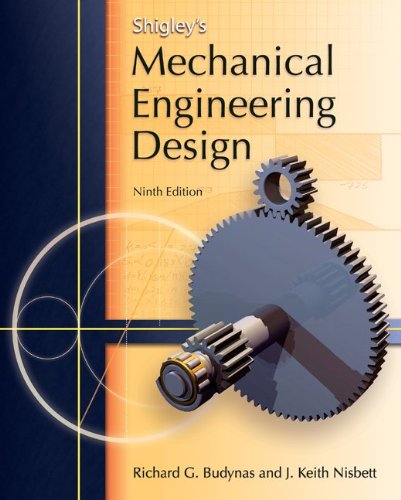
17. Shigley's Mechanical Engineering Design (Mcgraw-Hill Series in Mechanical Engineering)
by Richard Budynas, J. Keith Nisbett
Hardcover: 1059 Pages (2006-10-25)
list price: US$176.25 -- used & new: US$141.00
(price subject to change: see help)
Asin: 0073312606
Average Customer Review: 2.0 out of 5 stars
Canada | United Kingdom | Germany | France | Japan
Editorial Review

Book Description
The eighth edition of Shigley's Mechanical Engineering Design maintains the basic approaches that have made this book the standard in machine design for over 40 years. At the same time it combines the straightforward focus on fundamentals instructors have come to expect with a modern emphasis on design and new applications. Overall coverage of basic concepts are clear and concise so that readers can easily navigate key topics. This edition includes a new case study to help illuminate the complexities of shafts and axles and a new finite elements chapter. Problem sets have been improved, with new problems added to help students progressively work through them. The book website includes ARIS, which is a homework management system that will have 90 algorithmic problems. ... Read more

Customer Reviews (1)

2-0 out of 5 stars Might be a Good Reference Book
As a senior ME student, I think Shigley's Mechanical Engineering Design may be a good reference book, but find it is a poor text. Most topics are covered quickly and equations presented with little or no emphasis on any engineering derivation. This will frustrate engineers who enjoy knowing why the equations work. Also many of the answers found in the back of the book are simply incorrect. This inhibits the value of the problems found at the end of each chapter. The book covers a myriad of engineering topics which makes it fine to pull off the shelf to find the correct equation to use. However as a text, it lacks the engineering and mathematical depth to help one understand why the equations presented are true and why they work. ... Read more


18. Software Engineering: A Practitioner's Approach
by Roger S Pressman, Roger Pressman
Hardcover: 880 Pages (2004-04-02)
list price: US$128.13 -- used & new: US$95.00
(price subject to change: see help)
Asin: 007301933X
Average Customer Review: 3.0 out of 5 stars
Canada | United Kingdom | Germany | France | Japan
Editorial Review

Book Description
For over 20 years, Software Engineering: A Practitioner's Approach has been the best selling guide to software engineering for students and industry professionals alike.

The sixth edition continues to lead the way in software engineering.A new Part 4 on Web Engineering presents a complete engineering approach for the analysis, design, and testing of Web Applications, increasingly important for today's students.Additionally, the UML coverage has been enhanced and signficantly increased in this new edition.

The pedagogy has also been improved in the new edition to include sidebars.They provide information on relevant softare tools, specific work flow for specific kinds of projects, and additional information on various topics.Additionally, Pressman provides a running case study called "Safe Home" throughout the book, which provides the application of software engineering to an industry project.

New additions to the book also include chapters on the Agile Process Models, Requirements Engineering, and Design Engineering.The book has been completely updated and contains hundreds of new references to software tools that address all important topics in the book.

The ancillary material for the book includes an expansion of the case study, which illustrates it with UML diagrams.The On-Line Learning Center includes resources for both instructors and students such as checklists, 700 categorized web references, Powerpoints, a test bank, and a software engineering library-containing over 500 software engineering papers.TAKEAWY HERE IS THE FOLLOWING: 1.AGILE PROCESS METHODS ARE COVERED EARLY IN CH. 4 2.NEW PART ON WEB APPLICATIONS --5 CHAPTERS ... Read more

Customer Reviews (66)

1-0 out of 5 stars Roger Pressman, thanks for Engineering Confusion!
I used this book in my Grad class and I'm still confused. I don't know what to make of this book. On the one hand, I think the author tries to cover most of the important topics, but on the other, the book falls short in intellectual substance.

Problems at the end of each chapter are very time consuming, and in some cases cannot be answered at all. This makes me wonder if the author can answer any of those tough questions that he wants you to ponder.

If you're looking for a good SE textbook, don't buy this one. You will regret it!

There is nothing much in this text that's closely related to what the author is asking you to consider. His book is based on fluff, and lacks the important stuff; just a bunch of snippets.

You will get an "F".

This is by far the worst textbook I have ever read, and isn't worth $128 dollars.

Thanks for nothing Roger, but you deserve at least 1 star!

4-0 out of 5 stars Worthy Tome
This is a good book. I have several editions of this book, including a very early one. In my view, in looking for a thorough perspective of software engineering, there are two major routes: McConnell/Weigers series or one of the comprehensive volumes by Pressman or Sommerville. McConnell's books (Code Complete, Rapid Software Development, and Software Estimation) and Weigers (Software Requirements) are each highly detailed. Hence, four-plus books. Pressman encapsulates (sic) the whole shebang into one big comprehensive volume. Not as detailed as those Microsoft Press authors, but that's not a drawback. If you've been practicing for a long time and you're the project manager, sometimes a substantive overview is what you need, not minute details. You're not living in the deep details anyway, your engineers are. Plus, the coverage of the more advanced development technologies, like formal methods, are very good and not included in the Microsoft Press books. Bottom line: if you're a technology director or project manager and want the big picture (in one place), get Pressman. If you're a systems analyst or software engineer and want the larger view, get McConnell and Weigers. (I have not read the Sommerville text, but from the table of contents there's a chapter on security which the other books only cover lightly.)

5-0 out of 5 stars Great for studying for the CSDP Exam
I had the 4th edition of the book back in college.When I started studying for the CSDP (Certified Software Development Professional) Exam, I ordered the 6th edition.The 6th edition is a huge improvement over the 4th.

This book covers just about everything you need to know on the subject of software engineering.Great book, great reading.Applying the concepts on the job will help out tremendously in your career.

5-0 out of 5 stars Excellent Source Material
I'm not a student. I am software development manager and have over 20 years of real-world experience developing sophisticated banking and financial applications. I have one of the original first addition books, and I have to say that this book was critical to my learning software engineering principles. The criticism of this book are unfounded in my opinion. This book contains the critical elements to implement SE principles.

The complaints seem to be from students and they seem to think it is a poor text book. Well, that's probably a good sign, as good text books are usually worthless for real world examples, and books that give you worthwhile information aren't usually good text books.

If you look through all the 5 star reviews, they are from Software Engineers working in the field. If you look at all the 1 star reviews, they are all from students who, frankly don't know what really is important and what isn't when it comes to developing quality software. (I know I didn't when i was a student). That alone gives speaks volumes about the book.

Some said that Code Complete is a better book. Where do you think the authors of Code Complete got their material? This book is first published 15 years before Code Complete. Code Complete is a good book, but doesn't explain the "why" of things, whereas this book does.Studying this book will give you the "why" on certain principles so you can enact them to whatever situation you are in. It is not an "ABC" book on how to do "XYZ."

The theories and examples on the programmer productivity were very valuable to me, and I have saved me countless hours and money on developers time because I learned how to maximize programmer productivity. This book is the framework on how to development high-quality software. I can speak from experience that the software I've been respopnsible for developing, using the priniciples I learned from this book, has been excellent. The software failure rates I have experienced are far lower than industry averages. I have some applications that have run for many years without any software failures. It can be done, but this doesn't garantee your success. This book shows you the blueprint. You still need experienced developers to be able to create high-quality code, but only by following the principles laid out in the book.

Perhaps if all you students had to see all the poorly written software in use in the world, you would appreciate this book more.This book is well worth it the price. If you plan on having anything to do with software development, keep this book, and don't sell back to a book store. I ordered the latest version and read it, and Pressman has done a good job in keeping up with the latest in software engineering. With out a doubt, the book is worth the price. My copy has paid for itself many times over.

2-0 out of 5 stars Too much borrowed material, not enough analysis
We are using this book as a textbook for a class I am in.I am not impressed with the quality of this book (except maybe the binding, that's nice.)The book is a strung-together list of passages from academic papers, books, and articles.It would be much improved if the author had digested and explained the sources he was quoting.There are boxed short quotes which are meant to be humorous, but are often off-target and distracting.This book doesn't so much elucidate and teach, as throw a bunch of primary source information at you, and leave you to sort it out.

Another feature of the book which didn't work for me was that there are imaginary conversations between the members of a software development team in every chapter.The dialogue was a little too expository, and somehow like an after-school special.As a female developer, I was annoyed that the developers in these dialogs had male names (except for the gender-neutral Jamie) and the person in marketing had a female name.I'm sure that the author did not intend to be exclusive, in fact he sprinkled the "she" pronoun throughout the text when referring to the developer as a generic entity.Still, there could have been some better choices made in the dialogues, or they could have been omitted entirely.

I gave this book two stars, because, as I mentioned, it does not do a very good job of teaching for a textbook.On the other hand, it does touch on a lot of important topics in the field of Software Engineering, so I can not fault the material that it attempts to cover. ... Read more


19. Isv Control Systems Engineering
by Norman Nise
Hardcover: 888 Pages (2008-02)
list price: US$121.00 -- used & new: US$121.00
(price subject to change: see help)
Asin: 0470169974
Average Customer Review: 4.5 out of 5 stars
Canada | United Kingdom | Germany | France | Japan
Editorial Review

Book Description
Emphasizing the practical application of control systems engineering, the new Fourth Edition shows how to analyze and design real-world feedback control systems. Readers learn how to create control systems that support today's advanced technology and apply the latest computer methods to the analysis and design of control systems.
* A methodology with clearly defined steps is presented for each type of design problem.
* Continuous design examples give a realistic view of each stage in the control systems design process.
* A complete tutorial on using MATLAB Version 5 in designing control systems prepares readers to use this important software tool. ... Read more

Customer Reviews (13)

4-0 out of 5 stars Great
Very complimentary to the main text if you are actually trying to learn and have the time and energy to go over more examples.

2-0 out of 5 stars This book is lacking
I do not recomend this book because the author gives poor explanations. In chapter 5, he explains steady state error for unity feed back HORRIBLY. He says the value of c(t) must be infinite or nonzero, but doesnt bother to show why. This book needs more work making concepts clearer and making less assumptions.

Its not all bad, but its not 5 stars everyone else has given it. I have read good textbooks, this isnt one of them.

5-0 out of 5 stars Great Text!!
As a student in control systems engineering, I found this text to be very valuable (I had the 3rd Edition then).As an engineer, I found it to be my everyday reference.A few years back, I jumped ship from the engineering field and have obtained a PhD in another field of science and to my surprise, I still reference this text today.Great Text!!Dorf and Bishop is not bad but Nise takes first place.

5-0 out of 5 stars Best Book for understanding the fundamentals of Control Systems
Norman Nise has done a great job with this book.This book is a first hand guide for beginners who have absolutely no knowledge of Control Systems and its purposes. The book with its details of each methodology & its purposes gives an indepth view of the subject. This is excellent tool for beginners (for understanding the fundamentals) and gradually upgrading to a better level by able to design systems. The Skill Assessment Exercises are able to bring out the key techniques to solve any problem. A must buy for all people interested in Control Systems Engineering and looking for a book where fundamentals can be cleared.

4-0 out of 5 stars Very well written but a bit too "Mickey Mouse"
For an applied math (and physics, to an extent) text, it is surprisingly interesting! The chapters are pretty easy reads but the coverage is thorough. In fact, it's too thorough at times. Nise has a little habit of taking a relatively simple concept and beating it to death. However, this is a good thing if you're a slow learner.

My one complaint is the "Mickey Mouse" factor. The problems are just too simple on the whole. I enjoy simple problems, but there aren't enough challenging ones. Even the long "practical" problems are generally pretty easy. Even so, the use of MATLAB in many of the problems is excellent.

A great feedback and control systems book. I highly recommend it. ... Read more


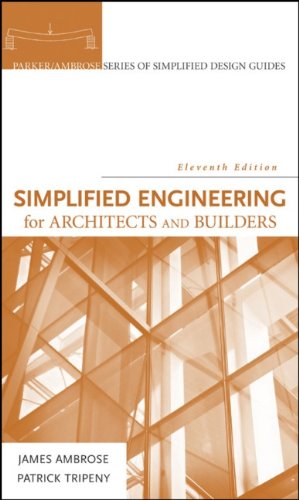
20. Simplified Engineering for Architects and Builders
by James Ambrose, Patrick Tripeny
Hardcover: 656 Pages (2005-12-16)
list price: US$90.00 -- used & new: US$68.38
(price subject to change: see help)
Asin: 0471676071
Average Customer Review: 3.5 out of 5 stars
Canada | United Kingdom | Germany | France | Japan
Editorial Review

Book Description
The definitive reference for design and construction-in an updated edition!

Entering its seventh decade as the industry leader, Simplified Engineering for Architects and Builders remains the reference of choice for designers and constructors. This new Tenth Edition is thoroughly revised and updated to reflect the latest practices in the design of structures.

Long considered a standard in the field, this bestseller provides a clear, accessible presentation of the engineering information that is essential for architects and builders. Offering a concise, highly readable introduction to the investigation and design of ordinary structures for buildings-including information on structural analysis, materials, and systems-this thoroughly updated Tenth Edition includes:
* A new focus on Load and Resistance Factor Design Method (LRFD) for steel and concrete structures
* The latest building and material codes
* A wealth of exercise problems and illustrative examples
* Essential formulas for the solution of structural problems
* More than 200 descriptive illustrations
* Simple solutions to everyday problems architects and builders encounter
* Coverage of wood, steel, concrete, and masonry structures
* A new companion Web site packed with learning resources

An unparalleled resource for students and professionals in architecture, construction, and civil engineering, Simplified Engineering for Architects and Builders, Tenth Edition boils structural engineering down to its essentials and provides the simple design solutions that are used for the vast majority of buildings. ... Read more

Customer Reviews (5)

2-0 out of 5 stars Wrong presentation for the target audience
The book's title claims to be simplified engineering for architects and builders, members of the latter group often having no engineering training.As such, I expected the book to cover key structural and other building engineering issues in engineering terms in an appropriate tutorial format.Instead, the book is a collection of reference materials, distilled down.I majored in EE in college and took several semesters of static and dynamic engineering courses, and still had problems with this book because of the lack of contextual information to the presentation.This book does not at all deliver on the goal defined by its title.

1-0 out of 5 stars Overrated - This book is "broken"
GOOD:The book does an excellent job presenting steel concepts and is adequate in concrete.

POOR:As an instructor for structures courses for architects, this book is simply disastrous.The wood section, also, is incomplete.Errors run rampant through the book's text, examples, and problem solutions through the book.Even within the same edition, book answers can vary book to book.Furthermore, current methods are mixed with the old leading to an incorrect presentation of the subject matter.In short, this book falls far short of the reputation which preceded it.

5-0 out of 5 stars A very g