e99 Online Shopping Mall

Geometry.Net - the online learning center Help  
Home  - Science - Gis (Books)

  1-20 of 100 | Next 20
A  B  C  D  E  F  G  H  I  J  K  L  M  N  O  P  Q  R  S  T  U  V  W  X  Y  Z  

click price to see details     click image to enlarge     click link to go to the store

$48.88
1. GIS Tutorial Updated for ArcGIS
$21.16
2. The ESRI Guide to GIS Analysis
$21.20
3. The ESRI Guide to GIS Analysis:
$18.19
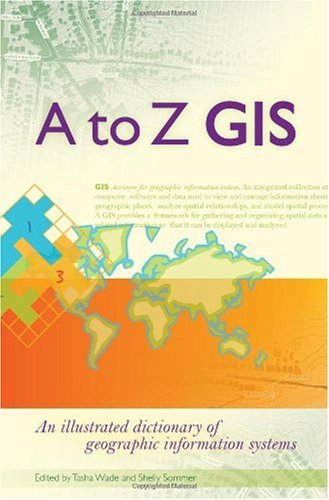
4. A to Z GIS: An Illustrated Dictionary
$35.00
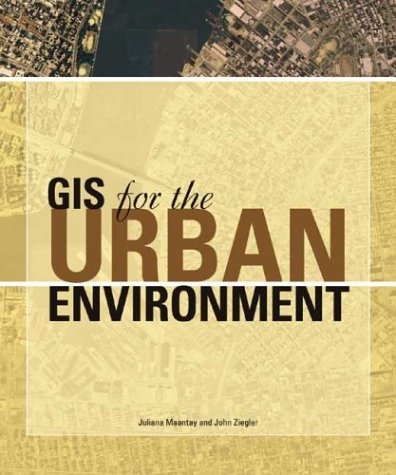
5. GIS for the Urban Environment
$50.31
6. GIS Tutorial for Health
 
$35.70
7. Gis Fundamentals: A First Text
$16.97
8. GIS for Web Developers: Adding
$11.99
9. GIS for Everyone
$14.98
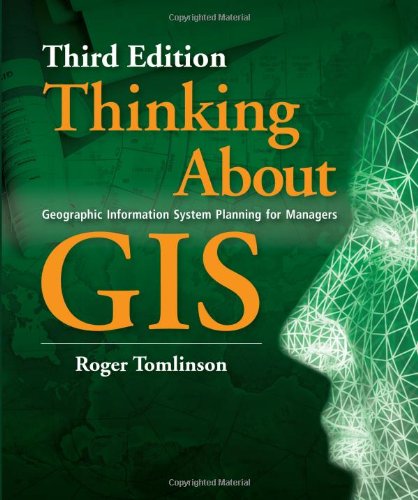
10. Thinking about GIS: Geographic
$89.00
11. Open Source GIS: A GRASS GIS Approach
$69.95
12. GIS Tutorial: Workbook for ArcView
$46.71
13. GIS and Public Health
$37.75
14. Arc Hydro: GIS for Water Resources
$31.28
15. Placing History: How Maps, Spatial
$26.90
16. Unlocking the Census with GIS
$29.76
17. Hypothetical City Workbook III:
$80.24
18. Internet GIS: Distributed Geographic
$53.54
19. GIS: A Computing Perspective,
$7.99
20. Disaster Response: GIS for Public

1. GIS Tutorial Updated for ArcGIS 9.2: Workbook for Arc View 9, second edition
by Wilpen L Gorr, Kristen S Kurland
Spiral-bound: 354 Pages (2007-07-01)
list price: US$79.95 -- used & new: US$48.88
(price subject to change: see help)
Asin: 158948178X
Average Customer Review: 4.5 out of 5 stars
Canada | United Kingdom | Germany | France | Japan
Editorial Review

Book Description
This study guide meets a growing demand for effective GIS training by combining ArcGIS tutorials and self-study exercises that start with the basics and progress to more difficult functionality. Presented in a step-by-step format, the book can be adapted to a reader's specific training needs, from a classroom of graduate students to individaul study. Readers learn to use a range of GIS functionality from creating maps and collecting data to using geoprocessing tools and models for advanced analysis. the authors have incorporated three proven learning methods: scripted exercises that use detailed step-by-step insturctions and result graphics, Your Turn exercises that require users to perform tasks without steo-by-step instructions, and exercise assignements that pose real-world problem scenarios. A fully functioning, 180-day trial version of ArcView 9.2 software, data for working through the tutorials, and Web-based teacher resources are also included. ... Read more

Customer Reviews (2)

5-0 out of 5 stars GIS Tutorial
My book got here on time for me to turn in my assignments for school and in perfect condition.

4-0 out of 5 stars GIS Tutorial Updated for ArcGIS 9.2: Workbook for Arc View 9, second edition
After completing a couple lessons I have learned about making maps, adding layers, bookmarking, viewing and selecting from the data, labeling, and much more. I look forward to adding to the progress I've already made. Previous students in the GIS course, as well as my instructor, said that the first edition of the book (or its accompanying data disk) was full of "bugs," but this edition seems to be bug-free. The lessons take you through the skills twice before it's time to do the assignment. If you don't remember how to perform the skills, the assignment takes a long time. Every detail of the assignment is important (e.g. font size, color, etc.), so read it carefully. Also, as in other workbooks, it would be nice if there were an index so you could more easily go back to those skills you don't quite remember how to do. ... Read more


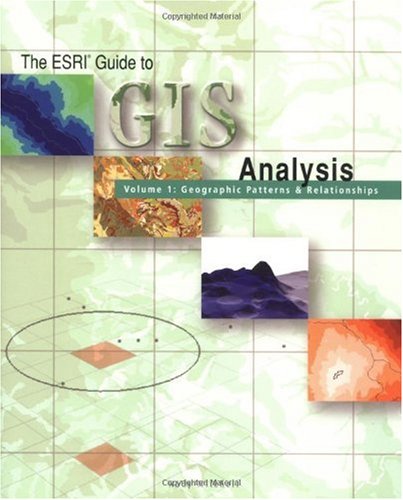
2. The ESRI Guide to GIS Analysis Volume 1: Geographic Patterns & Relationships
by Andy Mitchell
Paperback: 186 Pages (1999-08-01)
list price: US$34.95 -- used & new: US$21.16
(price subject to change: see help)
Asin: 1879102064
Average Customer Review: 4.5 out of 5 stars
Canada | United Kingdom | Germany | France | Japan
Editorial Review

Book Description
How to conduct accurate analysis using powerful GIS software tools. ... Read more

Customer Reviews (5)

4-0 out of 5 stars analyzing spatial patterns concepts
This book presents concepts of analyzing spatial patterns include mapping where things are, mapping the most and least, mapping density, finding what's inside, finding what's nearby, and mapping change.Some of the best sections were tables comparing methods, for example: comparing standard classification schemes, contrasting mapping density versus building a density surface, methods to determine if features are inside another and straight-line distance versus network versus surface distance methods of comparing distance.There was no discussion of systematically analyzing variability in geospatial data, which would be important in understanding statistical differences.The section on mapping change surprisingly stayed away from discussions of level of trend.

Although good on concepts, this does not mention the specific tool in ArcGis or the various extensions.I would have appreciated some cross-reference to specific ArcGIS tutorial or help on methods to do these.

5-0 out of 5 stars Great place to begin
Some ESRI books are only extended marketing brochures. This is not. If you need a book that will help you understand GIS analysis, this is a great place. Mastering the techniques described in this book will cover 75% of the demands in the market. The book is referenced and so if you need more you can seek out the sources used to write the book.

This book is for GIS analysts, not for folks interested in building databases. This is an essential reference for GIS analysts. that is heavily booked marked and sits on the self near my desk so I can refer to it. It is useful for people starting out and experienced GIS users.

It is weak on network analysis and remote sensing. So look elsewhere for that.

4-0 out of 5 stars A Great Starting Point
You have to take this book for what it is.An extremely basic, starting point for any would-be GIS Analyst.The book contains wonderful examples of how one may use GIS to analyze "real world problems" using both raster and vector models.This book in essence shows people how GIS can be used to analyze problems, without specifically showing them how to analyze problems.I would recommend this book for people who are new to GIS analysis and IT managers who's departments use GIS.While this book will not demonstrate how GIS problems are solved, it illustrates what kinds of problems can be solved using a GIS, any GIS.This book, although it is published by a software company, is not a software manual by any stretch of the imagination (and it was not intended to be one).The examples can be replicated on any commercially available GIS package.

Note:Do not buy this book if you are an advanced GIS user, you probably already know most of what is contained in the book.

5-0 out of 5 stars Good 2nd Book for GIS beginners
After reading "GIS for Everyone", which shows you how to do some basic things with GIS, this book shows you what to do. There's an ample supply ofexamples in this book, although somewhat repetative. Theextensive use of color was surprising given the relatively low cost of thisbook compared to similar titles. Some of the GIS images are quite small anda small reading magnifier will help seeing the differences that, forexample, changes in cell size can make in GIS images.

This book helpsyou make the transition from making maps to doing GIS analysis.

5-0 out of 5 stars call it GIS Analysis for dummies
while it doesn't get into specifics about actually using any GIS software, this book explains in layman's terms the basics of spatial relationships.if you're ready to start getting beyond just making maps with GIS, this isan excellent place to start. ... Read more


3. The ESRI Guide to GIS Analysis: Volume 2: Spatial Measurements and Statistics
by Andy Mitchell
Paperback: 252 Pages (2005-07-01)
list price: US$34.95 -- used & new: US$21.20
(price subject to change: see help)
Asin: 158948116X
Average Customer Review: 2.0 out of 5 stars
Canada | United Kingdom | Germany | France | Japan
Editorial Review

Book Description

Backed by the collective knowledge and experience of the world's leading Geographic Information Systems (GIS) company, the concepts and methods presented in this volume will allow users to unleash the full analytic power of their GIS. The most commonly used spatial statistical tools are described in detail along with their applications in a range of disciplines, from crime analysis to habitat conservation. GIS users will learn how features are distributed, how to analyze the pattern created by the features, and how to determine the relationships between them. Four general statistical concepts are discussed, including testing statistical significance, defining spatial neighborhoods and weights, and using statistics with spatial data. Advice on determining which statistical tool to use in a given situation is also provided.
... Read more

Customer Reviews (2)

1-0 out of 5 stars Lacks specific instructions
Although the book gives nice examples on ways to analyze spatial data, this ESRI book lacks specifics on how to do this in their base software or extensions.Documentation for CrimeStat by Ned Levine and Associates explains spatial analysis better, is free and is cited in this book. The documentation for CrimeStat is also better.

3-0 out of 5 stars Geared toward non-programmers
This is a lightwieght description on GIS concepts and how to use GIS software, not how to develop GIS software. ... Read more


4. A to Z GIS: An Illustrated Dictionary of Geographic Information Systems
Paperback: 288 Pages (2006-09-01)
list price: US$24.95 -- used & new: US$18.19
(price subject to change: see help)
Asin: 1589481402
Average Customer Review: 5.0 out of 5 stars
Canada | United Kingdom | Germany | France | Japan
Editorial Review

Book Description

An invaluable resource for anyone who uses or encounters GIS terminology in the classroom, on the job, or in the field, this dictionary contains more than 1,600 terms covering the entire lexicon of geographic information systems. Terms have been selected from GIS operations such as analysis, data management, and geocomputation; from rapidly evolving uses of GIS for modeling, GIScience, and Web-based GIS; and the GIS foundation fields of cartography, spatial statistics, computer science, surveying, geodesy, and remote sensing. Hundreds of subject-matter experts and GIS educators have reviewed the definitions, ensuring the authoritative coverage that is a necessity for managers, programmers, users, and students discovering the interdisciplinary nature of GIS.
... Read more

Customer Reviews (1)

5-0 out of 5 stars Essential to understanding the terminology of both computer and geography worlds.
Books about GIS are usually quite technical, surveying the applications and computer potentials of geographic information systems, so it's refreshing to note that A TO Z GIS: AN ILLUSTRATED DICTIONARY OF GEOGEPHIC INFORMATION SYSTEMS is something different: a simple set of geography and cartography definitions designed to defines values, coordinates, reference systems, representations, and GIS data processing methods and routines. Students of GIS will find this essential to understanding the terminology of both computer and geography worlds.

Diane C. Donovan
California Bookwatch ... Read more


5. GIS for the Urban Environment
by Juliana Maantay, John Ziegler
Hardcover: 600 Pages (2006-08-01)
list price: US$79.95 -- used & new: US$35.00
(price subject to change: see help)
Asin: 1589480821
Average Customer Review: 4.5 out of 5 stars
Canada | United Kingdom | Germany | France | Japan
Editorial Review

Book Description
This introduction to urban planning applications and problem solving with CIS is appropriate for students and professionals in the fields of geography, urban studies, urban planning, urban public health, urban environmental assessment, and hazard and emergency management. Technical jargon is minimized while the analytical concepts are fully described, enabling full use and understanding of GIS techniques. Infused in the included laboratory exercises are real-world activities that are often required in urban GIS projects but rarely included in prepared lab work, such as data acquisition, integrating data into the GIS, and manipulation of real data. Project design and analysis methodologies are also demonstrated with real-life examples of urban GIS projects. ... Read more

Customer Reviews (6)

5-0 out of 5 stars Great reference for GIS
The book is chocked full of great reference material a text book that will make the transition to reference book as soon as your class ends. I purchased it for a class and plan to keep it. It is not a book that teaches you how to use ArcMap, but helps you to think through things like themes, setting scales, deciding projection systems, etc.

5-0 out of 5 stars Great for Teaching Classes
For years I have been looking for the perfect text book for GIS and Urban Planning and I have finally found it. This text book creates a solid foundation for Urban Planners who want to learn GIS.

1-0 out of 5 stars Bullshit
I purchased the book in January and I have yet to recieve it! I want my damn money back. School's almost over!

5-0 out of 5 stars Great Purchase
This book was sent to me brand new, and in great condition. I am really satisfied with my purchase and the time it took to recieve it. Thanks.

5-0 out of 5 stars GIS Made Easy
This excellent book covers new technology in Urban planning with a maximum of clarity and interest.It is
in college textbook format. ... Read more


6. GIS Tutorial for Health
by Kristen S Kurland, Wilpen L Gorr
Spiral-bound: 320 Pages (2007-10-01)
list price: US$79.95 -- used & new: US$50.31
(price subject to change: see help)
Asin: 1589481798
Average Customer Review: 5.0 out of 5 stars
Canada | United Kingdom | Germany | France | Japan
Editorial Review

Book Description
Designed to benefit health management students and practitioners, this illustrated tutorial is an introduction to help students investigate patterns of uninsured and poor populations, prepare spatial data to analyze environmental hazards, analyze youth pedestrian injuries, and more. This edition is updated for ArcGIS 9.2. ... Read more

Customer Reviews (4)

5-0 out of 5 stars Great Resource!
I'm working on a teaching moduel for an independent study in GIS and I purchased this book to help me understand how GIS can be used in the Health field. IT'S OUTSTANDING! For any GIS instructor out there, you should check out this book, because the chapter assignments are brilliant from a teaching stand point. They force the user to really explore how GIS is used in the world today and look beyond the simple tutorial commands to introduce you to the software. The assignments make you explore the internet for data and learn how GIS is being used elsewhere. By far the best GIS book I've used sofar.

4-0 out of 5 stars Excellent practical learning
This tutorial is written in clear and concise language.It introduces basic GIS operations in a logical stepwise progression which is ultimately a comprehensive basic course.The tutorial is very hands-on and interactive and it makes very good use of screenshots and other illustrations.It is a very effective learning tool in the field of public health GIS.

5-0 out of 5 stars Simple instruction with compact content ...
Although there is a very minimal incompatibility of this book if used with ArcGIS 9.2. (the software given with the book is 9.1 version), this book is still categorized as an excellent book for the Elementary GIS learner. This book is very helpful for Public Health professionals in learning how to create, analyze, display and inform the geographic health information which will be well complemented with health statistical facts and figures. The curricullum, the guidance, and the exercises given are well prepared that allows me to want to explore the endothelial layer other than just the epithelial layer of this knowledge.

I would recommend this book as a starting point of the journey to engage and marry GIS knowledge and practice with its excitements.

5-0 out of 5 stars The combination makes it a top pick for college-level health profession GIS course assignments.
College-level collections strong in GIS mapping and health will want GIS Tutorial for Health: one of the few texts to apply GIS software to health profession research and objectives. Health care policy and planning within the GIS system leads students to design maps to investigate and analyze patterns of health, injuries, environmental hazards and more. The workbook helps students learn and maintain GIS software skills with specific application for the health sciences, going beyond your usual GIS focus on general geographic and population mapping information to address the specifics of the health industry. It comes with two CDs: one offers data to juxtapose with the book's exercises and case study examples; the other includes a 180-day trial of ArcGis9.1. The combination makes it a top pick for college-level health profession GIS course assignments.

Diane C. Donovan
California Bookwatch ... Read more


7. Gis Fundamentals: A First Text on Geographic Information Systems.
by Paul V. Bolstad
 Paperback: Pages (2005-07-30)
list price: US$42.00 -- used & new: US$35.70
(price subject to change: see help)
Asin: 0971764719
Canada | United Kingdom | Germany | France | Japan

8. GIS for Web Developers: Adding 'Where' to Your Web Applications
by Scott Davis
Paperback: 176 Pages (2007-10-09)
list price: US$34.95 -- used & new: US$16.97
(price subject to change: see help)
Asin: 0974514098
Average Customer Review: 4.5 out of 5 stars
Canada | United Kingdom | Germany | France | Japan
Editorial Review

Book Description
There is a hidden revolution going on: geography is moving from niche to the mainstream. News reports routinely include maps and satellite images. More and more pieces of equipment cell phones, cars, computers now contain Global Positioning System (GPS) receivers. Many of the major database vendors have made geographic data types standard in their flagship products.

GIS for Web Developers introduces Geographic Information Systems (GIS) in simple terms and demonstrates hands-on uses. With this book, you'll explore popular websites like maps.google.com, see the technologies they use, and learn how to create your own. Written with the usual Pragmatic Bookshelf humor and real-world experience, GIS for Web Developers makes geographic programming concepts accessible to the common developer.

This book will demystify GIS and show you how to make GIS work for you. You'll learn the buzzwords and explore ways to geographically-enable your own applications. GIS is not a fundamentally difficult domain, but there is a barrier to entry because of the industry jargon. This book will show you how to "walk the walk" and "talk the talk" of a geographer.

You'll learn how to find the vast amounts of free geographic data that's out there and how to bring it all together. Although this data is free, it's scattered across the web on a variety of different sites, in a variety of incompatible formats. You'll see how to convert it among several popular formats including plain text, ESRI Shapefiles, and Geography Markup Language (GML).

With this book in hand, you'll become a real geographic programmer using the Java programming language.You'll find plenty of working code examples in Java using some of the many GIS-oriented applications and APIs.You'll be able to:

  • Find free sources of GIS data on the web
  • Browse GIS data using open source desktop viewers
  • Manipulate GIS data programmatically
  • Store and retrieve data using geographically-enabled databases
  • Explore free web toolkits like Google Maps
  • Publish and consume web services using Open Geospatial Consortium (OGC) interfaces ... Read more

    Customer Reviews (6)

    4-0 out of 5 stars Learn To Use GIS In Your Web Apps
    GIS (Geographic Information Systems) is one of the most important development technologies to be applied in the past few years.By using GIS concepts you can learn to apply geographic code to any and all applications easier and better than ever before.With 'GIS for Web Developers: Adding 'Where' to Your Web Applications' you can learn the ins and outs of how and why you will want to add a GIS presence to your application.With plenty of maps, code samples, and a look at the different GIS viewers and editors out there in the world today, this is a good book for any developer that wants to learn more about GISs and their relationship to GPSs.

    Good introduction to the technology.

    **** RECOMMENDED

    4-0 out of 5 stars A Real "Map Guy" Shows You How to Get There
    We have a hard time as software engineers mastering our own concepts. Once we are asked to work in a non-trivial domain like geospatially-enabled environments, it is easy to get lost (pun intended). This book acts as a map to the world of maps. It shows you where you are; in this case, building web-based applications that need to visualize spatially-oriented data. It shows you where you can go without taking too many trips down unnecessary rabbit holes. In short, Scott walks masterly on the very fine line of theory and practice making it both useful and instructive.

    In addition to the informational content, the book is one of the more beautiful computer books I've seen recently. The decision to go with color plates for the images is key. In order to fully appreciate the power of visual contexts like this, you have to see the richness of the data.

    I worked on one of the first "whole Earth" environments 14 years ago and would have gone bananas for a book like this. The field has changed pretty dramatically since then with the emergence of both the Web and rich and complicated standards like those we are seeing from the OGC. This book lays enough foundation of the theory and catches you up to the new and sexy tools available to us now.

    We are not genetically-programmed to stare at words and tables. We are visual creatures and gain real insights when we can see relationships literally laid out in front of us.

    Do your customers and users a favor and add some "where" to your applications. Do yourself a favor and pick up this guide to help you along the way.

    5-0 out of 5 stars Excellent, easy summary of a complex subject
    Prior to reading this book, my experience with mapping technologies was limited to writing Google Maps applications and using its geocoder.I didn't even really understand what a geocoder was.

    Scott Davis provides a friendly, easy-going assist to learning the bizarre complexities and conventions associated with real mapping technologies.I was frankly dismayed at the state of the art, with its odd compromises and incomplete, conflicting tools.But Scott leads the reader through the maze quite effectively.

    If you're ready to move beyond simple markers and lines, this book shows the way to _real_ mapping applications.

    4-0 out of 5 stars Knowing Where to Start...
    The book is a *solid primer* for understanding GIS data and its usage.

    It will walk you through vectors, projections, and rasters. You'll be introduced to spatial databases and OCG (with a focus on Open Source tools).

    This will get you going... places :)

    5-0 out of 5 stars An important key to advanced programming
    GIS FOR WEB DEVELOPERS: ADDING WHERE TO YOUR WEB APPLICATIONS tells how to add geographic information into reports and programming ventures: an important key to advanced programming, as many major database vendors have made geographic data a standard feature of their products. Geographic Information Systems are explained using a simple survey and projects geared to hands-on instruction. College-level students of programming will find it an excellent introduction, as suitable to classroom assignment and use as it is to a lending library.

    Diane C. Donovan
    California Bookwatch
    ... Read more


  • 9. GIS for Everyone
    by David E. Davis
    Paperback: 196 Pages (2003-04-01)
    list price: US$19.95 -- used & new: US$11.99
    (price subject to change: see help)
    Asin: 1589480562
    Average Customer Review: 4.0 out of 5 stars
    Canada | United Kingdom | Germany | France | Japan
    Editorial Review

    Book Description
    A self-guided tour of GIS and how it benefits consumers and businesses alike ... Read more

    Customer Reviews (9)

    5-0 out of 5 stars GIS 101
    This book is an excellent introduction to GIS technology.It is a great starting place for those of us new to the technology.

    5-0 out of 5 stars A good place to start!
    The book with the CD are very useful to learn the basics about ESRI GIS principles. I was looking for a book to help gain some insight into how GIS works; this fulfilled the need.

    3-0 out of 5 stars Beware of software glitches on the CD-Rom
    Received this tutorial today and imediately started on the lessons. Oops! There are two Glaring errors---so far--in the lesson plans. On page 49, when doing the Address Matcher exercise, an error appears: Cannot Build Geocoding Index. No way to get around it, unless you skip the rest of that lesson and move on. On page 75, at least on my home version of XP, cannot save the file to any format. Call to ESRI Support yielded little to no help at all. I only gave this rating a 3, because the overall lessons are great and it is something worth knowing, but the glitches dampen a bit of the enthusiasm. Hopefully, there wont' be any more on the CDRom.

    2-0 out of 5 stars Should change the title
    to ArcExplorer for everyone.
    The book is a great introduction for those who want to have a more or less thorough tour of what a GIS is capable of. Being an ESRI press book, it was more or less obvious that its only approach was goin to be through ESRI products (ie. ArcExplorer)
    Anyway, the book only shows what can be done with the already processed, already "ArcMade" datafiles. It fails to explain anything else of the GIS creation process.
    If you're looking for a technical book, forget it.

    5-0 out of 5 stars wonderful stocking stuffer
    I recommend buying several copies of this book and sending them out to friends & family you might want to offer more of a glimpse into GIS than just sending them to an online atlas.It comes with ESRI's free GIS viewer ArcExplorer and a decent set of data to get started with, and AE itself is a handy tool for letting folks explore work you've done, or sending them work you've done for them (road trip!).Has an appendix for Import71, which is handy. ... Read more


    10. Thinking about GIS: Geographic Information System Planning for Managers
    by Roger Tomlinson
    Paperback: 320 Pages (2007-06-01)
    list price: US$29.95 -- used & new: US$14.98
    (price subject to change: see help)
    Asin: 1589481585
    Average Customer Review: 3.5 out of 5 stars
    Canada | United Kingdom | Germany | France | Japan
    Editorial Review

    Book Description
    Updated and easier to use, this third edition of the GIS classic details a planning model developed for designing data and technology systems that will meet an organizations specific needs, whether its an enterprise-wide GIS or a single-shop launch. ... Read more

    Customer Reviews (6)

    4-0 out of 5 stars Excellent Book and Service
    I ordered book by ordinary delivery method. The book came on time and I am happy, Thanks Amazon.

    3-0 out of 5 stars Software no-good
    The software that comes with this book is too old to register and use.The graduate class I needed it for required the use of the software.If this product is used for college studies, buy it brand new from the bookstore.

    5-0 out of 5 stars Discussions of how to plan and lunch a successful GIS system within a business environment
    Roger Tomlinson's Thinking About GIS: Geographic Information System Planning For Managers has been revised and updated to provide practical details on how to implement a GIS system - and Tomlinson is known as the creator of GIS, so is in the perfect position to provide the methodology behind the practices. His background launching GIS systems around the world lends to discussions of how to plan and lunch a successful GIS system within a business environment.

    5-0 out of 5 stars GIS for Managers, Not for Teckies
    This book starts off saying 'If you're holding his book, perhaps it's because you've been charged with launching or implementing a geographic information system a GIS for your organization.' That single sentence pretty well sums up the intent, the intended audience, and the direction that this book takes.

    This is a new paperback edition that has been updated in response to customer input and with data updated to reflect happenings since the last edition. The bulk of the book hasn't changed that much, after all the basic concepts of what GIS can do for you and how to implement it haven't changed that much. To be sure the details of the available software have changed a bit, but the basic concepts have not.

    This is not a technical book on doing GIS, this is a book for managers that will tell him what can be expected from a GIS system and gives the manager enough information that he won't be snowed by the teckies implementing the system.

    1-0 out of 5 stars DO NOT ORDER THIS EDITION
    There is a revised, updated version of this text (that is less expensive) - and if you order this one, Amazon will ship it to you, charge you for it and not refund the sale.They claim that its not their fault that they'll ship you an outdated edition.

    Check the publication date and get the updated softcover edition! ... Read more


    11. Open Source GIS: A GRASS GIS Approach
    by Markus Neteler, Helena Mitasova
    Hardcover: 406 Pages (2007-11-15)
    list price: US$99.00 -- used & new: US$89.00
    (price subject to change: see help)
    Asin: 038735767X
    Average Customer Review: 4.5 out of 5 stars
    Canada | United Kingdom | Germany | France | Japan
    Editorial Review

    Book Description

    With this third edition of Open Source GIS: A GRASS GIS Approach, we enter the new era of GRASS6, the first release that includes substantial new code developed by the International GRASS Development Team. The dramatic growth in open source software libraries has made the GRASS6 development more efficient, and has enhanced GRASS interoperability with a wide range of open source and proprietary geospatial tools.

    Thoroughly updated with material related to the GRASS6, the third edition includes new sections on attribute database management and SQL support, vector networks analysis, lidar data processing and new graphical user interfaces.All chapters were updated with numerous practical examples using the first release of a comprehensive, state-of-the-art geospatial data set.

    Open Source GIS: A GRASS GIS Approach (third edition) preserves the continuity of previous editions by maintaining the proven books structure and continues to target a professional audience composed of researchers and practitioners in government and industry as well as graduate students interested in geospatial analysis and modeling.

    ... Read more

    Customer Reviews (3)

    5-0 out of 5 stars A must for a GRASS user
    Open Source GIS:A GRASS GIS Approach is now on its third edition.I have all three editions.It is remarkable how much the program has advanced in six years.The third edition deals with version 6.x and is still invaluable to older users and new users alike.Many changes occurred between 5.x and 6.x.Sites have been replaced with point vectors.The GUI interface has advanced.Things are just not done the same way they used to be and since this is a UNIX program, the changes may not be intuitive for people used to the Mac or Windows OS.

    GRASS is a free alternative to to ARC GIS.This book will help the user to unleash GRASS's power.

    4-0 out of 5 stars A very good introduction to the many capabilities of GRASS GIS
    I waited several months for this 3rd edition of Neteler and Mitasova's 'Open Source GIS: A GRASS GIS Approach'. I'm not disappointed.

    Pros:
    1. The book is a major re-write of the earlier edition, and uses GRASS version 6.x - which has many improvements from earlier GRASS versions
    2. It has tons of example applications, drawn and derived from an up-to-date sample dataset for North Carolina. Examples span the fields of hydrology, remote sensing,and a large number of standard GIS operations on vector and raster datasets.
    3. It is well organized and succinct in its language.

    Cons:
    1. There are several typos.
    2. Some of the examples may not exactly work on your own system - the authors acknowledge this, as each version of GRASS has some variations in dependent packages and libraries.
    3. Some of the pages are not cross-referenced right.

    [...]

    To summarize:
    I first used GRASS (version 4.3) in the year 2000. While I recognized back then how powerful GRASS is, I found it quite difficult to learn and to appreciate. In 2005-07, I revisited GRASS (version 6.0) for my dissertation research, and found that it had improved vastly. This book is an excellent way for readers to get a taste of how powerful GRASS 6.x is. It will be most useful for students and researchers who learn by doing - you will not learn GRASS (or any other GIS software) by just reading. Also, this book alone will not answer all your questions about GRASS - use the friendly and resourceful GRASS mailing lists for specific help with your own GRASS GIS projects.

    Get into this book and GRASS GIS, only if you are willing to use the command line! If you are a programmer and are used to learning new languages/software, you probably do not need this book - the material on the GRASS website would be enough for you. If like me, you dont consider yourself a programmer but 'can do' when needed, this book will be very useful.

    I hope that a more affordable paperback version of the third edition comes out!

    4-0 out of 5 stars nice alternative
    As GIS continues to grow in many usages, it was inevitable that someone [actually a bunch of blokes] would consider an open source GIS package. The book describes one, GRASS; and specifically version 5.3. It offers many visualisation conveniences of the prioprietary packages. Very easy and intuitive usages.

    GRASS also relieves some of the burden of designing a GIS database that the visualisation draws upon. Though you be aware that the emphasis is on the latter.

    The book does raise the issue of what is needed for you to use a prioprietary package, in lieu of GRASS. Especially if the "entry level" capabilities of the current GRASS are enough for your needs. ... Read more


    12. GIS Tutorial: Workbook for ArcView 9.0 (GIS Tutorial series)
    by Wilpen L. Gorr, Kristen S. Kurland
    Spiral-bound: 368 Pages (2005-09-28)
    list price: US$69.95 -- used & new: US$69.95
    (price subject to change: see help)
    Asin: 1589481275
    Average Customer Review: 4.5 out of 5 stars
    Canada | United Kingdom | Germany | France | Japan
    Editorial Review

    Book Description

    This teaching tool is designed with both self-study users and classroom users in mind, offering nine steps for learning ArcView GIS software that have been developed and tested at the GIS labs at Carnegie Mellon University. This hands-on approach simulates how a GIS project would be developed, covering map design, GIS outputs, importing spatial and data attributes, digitizing, address matching, spatial data processing, and spatial analysis. A companion CD-ROM includes additional exercises for each tutorial chapter provides and integrative cases that cut across chapters. The book also includes a full working copy of ArcView GIS software (good for 180 days from the date of installation) and all of the sample data required to run the exercises.
    ... Read more

    Customer Reviews (10)

    5-0 out of 5 stars Good preliminary to Mastering ArcGIS
    We used Mastering ArcGIS in a GIS practicum course-dual level, and did 2 chapters a week including all exercises.I had had several GIS theory courses with a bit of GIS practice,and found it frustrating, although I got through it.I then decided to use the GIS Tutorial book to pick up some stuff I might not know, and to prevent me from forgetting it all over the summer.It would have been much better to use this book first--I have learned a lot I didn't know--then progress to the Mastering ArcGIS book.I admit I'm older than the average college student-we didn't even have calculators when I was a student the first time, so I didn't grow up with computers, but had one once they came out.If any professors are reading, use this book first for your GIS lab.

    5-0 out of 5 stars GIS review
    This is a great publication for beginning GIS users. It goes through each ArcView function in a step by step process with visual aids for each step so you know you are on the right track. The tutorial CD is very helpful too.

    5-0 out of 5 stars Fantastic GIS Tutorial!!!
    I originally purchased this book for a college class that I am taking. It is easy to follow and self-explanatory. It is so easy to use that you almost don't need a professor to teach you. This book is wonderful. Almost anyone could pick it up, install the software that comes with it and be using GIS in moments- with ease. This book will wt your appetite for what GIS is capable of doing. There seem to be no limits, just one's imagination.

    4-0 out of 5 stars Great Tutorrial - needed for getting started
    Im into my sixth class in GIS and this tutorial covers a lot of what I got bits and pieces of. Its a great book that walks you through everything. I'm up to chapter 6. Some vague things and some mis-prints

    3-0 out of 5 stars A fine primer, but flawed
    If you're looking for a step-by-step-hold-your-hand-guide to ArcView then this is your book. However ...and this is a big However... you'd better learn each lesson thoroughly as you go along, because there is no index. Let me repeat... no index. Oh, sure there's pages and pages of ESRI software license agreement, but no index. That being said, it is a fine reference and a good place to learn the basics. ... Read more


    13. GIS and Public Health
    by Ellen K. Cromley, Sara L. McLafferty
    Hardcover: 340 Pages (2002-02-06)
    list price: US$55.00 -- used & new: US$46.71
    (price subject to change: see help)
    Asin: 1572307072
    Average Customer Review: 5.0 out of 5 stars
    Canada | United Kingdom | Germany | France | Japan
    Editorial Review

    Book Description

    This clearly written resource provides a comprehensive introduction to the use of geographic information systems (GIS) in analyzing and addressing public health problems. The book lays a solid foundation in GIS, guides the reader through basic concepts and methods, and emphasizes practical applications. Described are ways that GIS can be used to map health events, identify disease clusters, investigate environmental health problems, and understand the spread of communicable and vector-borne infectious disease. Also covered are strategies for assessing patterns of health services delivery and assisting community groups in identifying local health issues. Each chapter includes numerous tables, figures, and concrete examples, as well as useful references and Internet resources. Complementing the book is a special website featuring sample GIS databases that users can download for hands-on practice with a variety of spatial analytical techniques.
    ... Read more

    Customer Reviews (2)

    5-0 out of 5 stars Great text / reference / primer for Health GIS
    This book provides a really excellent introduction and overview of the growing field of GIS applications in public health.Thorough and complete, well- and clearly-written, it covers everything a GIS student or beginning practitioner needs to know to get started in this young but rapidly expanding field.It is especially valuable when used in conjunction with a practical tutorial workbook such as GIS Tutorial for Health.

    5-0 out of 5 stars THE BOOK IS AMAZING
    This is the best book ever!! Everyone should read it, it's life changing! ... Read more


    14. Arc Hydro: GIS for Water Resources
    by Dr. David Maidment
    Paperback: 220 Pages (2002-08-01)
    list price: US$59.95 -- used & new: US$37.75
    (price subject to change: see help)
    Asin: 1589480341
    Canada | United Kingdom | Germany | France | Japan
    Editorial Review

    Book Description
    Written for hydrologists, GIS specialists, and scientists from many disciplines who create computer models of water resources, this book presents an improved standard for creating and using data in hydrologic projects. The ArcGIS hydro data model is the latest innovation in GIS modeling and increases the potential to integrate data from many sources to solve a wider range of water resource problems. This guide shows how hydrology projects work and how they can work better: by integrating local, regional, national, and international data to create a deeper understanding of the earth's water problems. ... Read more


    15. Placing History: How Maps, Spatial Data, and GIS Are Changing Historical Scholarship
    Paperback: 313 Pages (2008-01-01)
    list price: US$49.95 -- used & new: US$31.28
    (price subject to change: see help)
    Asin: 1589480139
    Canada | United Kingdom | Germany | France | Japan
    Editorial Review

    Book Description
    In the last decade, historical GIS has emerged as a promising new methodology for studying the past. Historical GIS is the use of geographic information systems software and allied geospatial methods for historical research and teaching. Placing History: How Maps, Spatial Data, and GIS Are Changing Historical Scholarship offers case studies and essays on key issues involving historical GIS, highlighting the unprecedented range of tools to visualize historical information in a geographical context. Quantitative social science historians are embracing GIS to facilitate the mapping of large datasets, but anyone with access to the software and the skills to use it can include mapping in research. This change is little short of revolutionary considering how few scholars or students made maps even ten years ago. Historical maps are suddenly in great demand as digitally modified, georeferenced images that enable researchers to study GIS as a visual medium of communication and analysis. ... Read more


    16. Unlocking the Census with GIS
    by Alan Peters, Heather MacDonald
    Paperback: 328 Pages (2005-02-01)
    list price: US$44.95 -- used & new: US$26.90
    (price subject to change: see help)
    Asin: 1589481135
    Average Customer Review: 4.0 out of 5 stars
    Canada | United Kingdom | Germany | France | Japan
    Editorial Review

    Book Description

    Seeking to demystify the census and explaining the potential of GIS for understanding people, places, and local economies, this guide explains how geographic information systems (GIS) can significantly ease data management, allowing for new ways to analyze and present relationships among variables.
    ... Read more

    Customer Reviews (2)

    3-0 out of 5 stars Unlocking Census With GIS
    A useful books for demographers who desire to understand how GIS can be applied to census data. A suitable student reference since it combines demographic know-how with GIS technology in an attempt to give the user exposure to both worlds.

    5-0 out of 5 stars An in-depth tutorial on using American FactFinder
    The U.S. Census provides many complex pieces of data about millions of diverse people, and urban planners, demographers and researchers depend on the data but often face insurmountable problems sifting it for relevant information. Enter Unlocking The Census With GIS, a description of how geographic information systems can be used by both novices and experienced users to analyze and maintain integrity of census data and related information. The spatial format particularly lends to creating economic and data indicators: chapters provide an in-depth tutorial on using American FactFinder, on using databases to link census data, and on translating such data to analytical maps, tables and charts.
    ... Read more


    17. Hypothetical City Workbook III: Exercises and GIS Data to Accompany Urban Land Use Planning, Fifth Edition
    by Ann-Margaret Esnard
    Paperback: 136 Pages (2006-04-10)
    list price: US$30.00 -- used & new: US$29.76
    (price subject to change: see help)
    Asin: 0252073460
    Canada | United Kingdom | Germany | France | Japan

    18. Internet GIS: Distributed Geographic Information Services for the Internet and Wireless Network
    by Zhong-Ren Peng, Ming-Hsiang Tsou
    Hardcover: 720 Pages (2003-03-31)
    list price: US$110.00 -- used & new: US$80.24
    (price subject to change: see help)
    Asin: 0471359238
    Average Customer Review: 4.0 out of 5 stars
    Canada | United Kingdom | Germany | France | Japan
    Editorial Review

    Book Description
    * Provides case studies in each chapter illustrating how principles work in practice.
    * Compares strengths and weaknesses of off-the-shelf software packages. ... Read more

    Customer Reviews (1)

    4-0 out of 5 stars good refrence for GIS reader
    this book is very nice for people who do not have any background of GIS the book start describing the content of GIS and give a general information about the internet layers ,GIS component the book is agood refrence overall is a very good book to own ... Read more


    19. GIS: A Computing Perspective, Second Edition
    by Michael Worboys, Matt Duckham
    Hardcover: 448 Pages (2004-05-12)
    list price: US$89.95 -- used & new: US$53.54
    (price subject to change: see help)
    Asin: 0415283752
    Average Customer Review: 4.5 out of 5 stars
    Canada | United Kingdom | Germany | France | Japan
    Editorial Review

    Book Description
    GIS: A Computing Perspective, Second Edition, provides a full, up-to-date overview of the state-of-the-art in GIS, both Geographic Information Systems and the study of these systems-Geographic Information Science. Analyzing the subject from a computing perspective, the second edition explores conceptual and formal models needed to understand spatial information, and examines the representations and data structures needed to support adequate system performance. This volume also covers the special-purpose interfaces and architectures required to interact with and share spatial information, and explains the importance of uncertainty and time. The material on GIS architectures and interfaces as well as spatiotemporal information systems is almost entirely new.The second edition contains substantial new information, and has been completely reformatted to improve accessibility. Changes include: · There is also a new chapter on spatial uncertainty · Complete revisions of the bibliography, index, and supporting diagrams · Supplemental material is offset at the top of the page, as are references and links for further study · Definitions of new terms are in the margins of pages where they appear, with corresponding entries in the index ... Read more

    Customer Reviews (5)

    5-0 out of 5 stars An unabashed advanced GIS textbook
    I'm not your average GISer. I have a BS in Mathematics and worked for 15 years as a software developer. This book was a required text for the class in Advanced Vector GIS that was part of my MS in GIS. I currently use it as a reference as I work on my PhD in pure GIScience.

    This book covers GIS data structures and databases in a way that a Computer Scientist wouldappreciate. It covers GIS algorithms in a way that an Applied Mathmetician would like. It covers GIS topology in a way that a Pure Mathmetician could learn from. It covers uncertainty in a way that a Statistician would enjoy.

    If you are, say a graduate student in mathematics or computer science and want to understand what all the GIS hype is about, you've found a great, concise volume that covers an intense amount of information. If you are a geographer who needs to formalize some language concerning theory and methods for a publication, then this is a good start.

    If you are looking for something like "how to delineate a watershed in ArcView 9", skip it and look elsewhere.

    3-0 out of 5 stars Computer Science coursebook
    I approached this volume with high hopes, but these were largely frustrated. If, like me, you hope to gain something of immediate application, this is not your book. It is very much a computer science coursebook rather than something of direct use to a practitioner. That is to say that it is an overview of the field, with little at the programming level.

    5-0 out of 5 stars Excellent introductory book on GIS
    Having read many books of the kind I can state with confidence that this one is the best introductory book on the topic. The authors claim that the book is best-suited to people approaching GISs with a computer-science perspective and/or background and this should be taken into consideration by all prospective buyers. However, the book should still be a most valuable resource to readers from other backgrounds, as it remains the most comprehensive in its domain, and is very readablethanks to the lucid writing style of the authors.

    Each chapter except the first, which serves as a general introduction, deals with a particular sub-discipline within GIS. Chapter 2 describes the basics of databases.
    Chapter 3 clarifies important topological and metric concepts.
    Chapter 4 enters the area of field vs. object data models.
    Chapter 5 deals with raster and vector structures as well as with computational geometry and geometric algorithms.
    Chapter 6 moves even closer to the physical computer level and discusses indexes (access structures) and trees.
    Chapter 7 is about architectures (distributed, homogeneous, heterogeneous systems).
    Chapter 8 talks about GIS-interfaces.
    Until that point, the book has a very logical structure with each chapter being the logical extension of the next.
    Chapters 9 and 10 exist only in this second edition and provide some brief excursions into the topics of handling uncertainty andtime in GIS respectively. They go into somewhat less detail than the previous chapters, yet are very well written.

    Remember that this book is introductory, hence dont expect to learn the intricate details of topics such as databases and computational geometry. The authors manage however, to strike a fine balance between the amount of concepts and methods being presented and the degree of detail to which each of them is analysed. Therefore the book retains its clear introductory character while maintaining a very high informational content. In addition, the authors have done a fantastic job at compiling relevant bibliographies at the end of each chapter where the readers may pursue additional details should they wish to. The graphics and figures are also self-explanatory and do a fine job at complementing the text. Verbosity and typos are scarce if at all existent.

    I recommend this book as the most comprehensive overview of, and a very good reference source for, GISs. It will be invaluable not only for newbies but also for mid to hi-level experts who wish to consolidate their knowledge or have a trusted reference. Undoubtedly, an indispensable resource in the library of anyone interested in geographic information systems.

    5-0 out of 5 stars Excellent Book on GIS Technical Infrastructure
    I was impressed with the authors for their clear and lucid style, assembling and relating diverse topics in a simplistic view, ranging from computer science to philosophy, to present a brilliant holistic view of GIS technical infrastructure.

    5-0 out of 5 stars A clear description of the architecture of a GIS
    This book fills a very important gap in the GIS literature. There are many good introductory book about GIS (try Burrough, for example), but they have been mostly written having a geographer or an earth scientist as their prospective reader. By contrast, Worboys writes for the computer engineer or programmer who wants to understand how a GIS really works inside. The author is a leading researcher on the field, and the book is clearly and concisely written. If you are a computer professional working in the GIS area, you'll find this book invaluable. ... Read more


    20. Disaster Response: GIS for Public Safety
    by Gary Amdahl
    Paperback: 140 Pages (2001-04-01)
    list price: US$19.95 -- used & new: US$7.99
    (price subject to change: see help)
    Asin: 1879102889
    Canada | United Kingdom | Germany | France | Japan
    Editorial Review

    Book Description
    Illustrates the best new strategies for mitigation, response, and recovery from both natural and human disasters using GIS technology. ... Read more


      1-20 of 100 | Next 20
    A  B  C  D  E  F  G  H  I  J  K  L  M  N  O  P  Q  R  S  T  U  V  W  X  Y  Z  

    Prices listed on this site are subject to change without notice.
    Questions on ordering or shipping? click here for help.

    site stats