e99 Online Shopping Mall

Geometry.Net - the online learning center Help  
Home  - Science - History Of Science (Books)

  1-20 of 100 | Next 20
A  B  C  D  E  F  G  H  I  J  K  L  M  N  O  P  Q  R  S  T  U  V  W  X  Y  Z  

click price to see details     click image to enlarge     click link to go to the store

$39.98
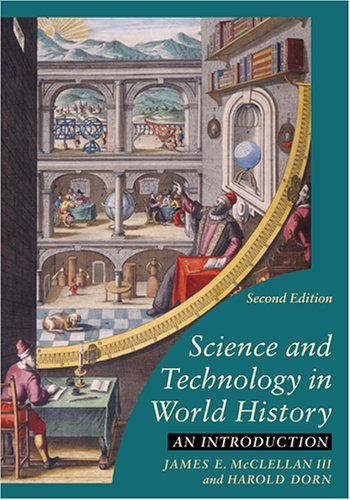
1. Science and Technology in World
$15.00
2. Review for the CLEP Social Science
$22.85
3. A History of Ideas in Science
$34.99
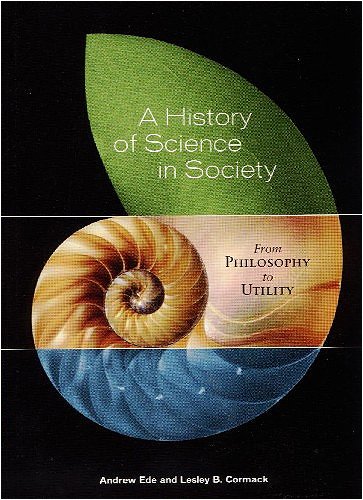
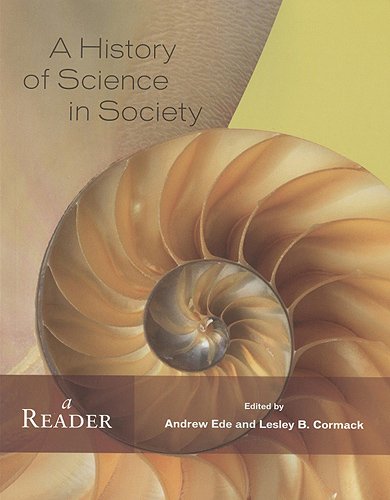
4. A History of Science in Society:
$14.91
5. The Story of Science,Newton at
$10.13
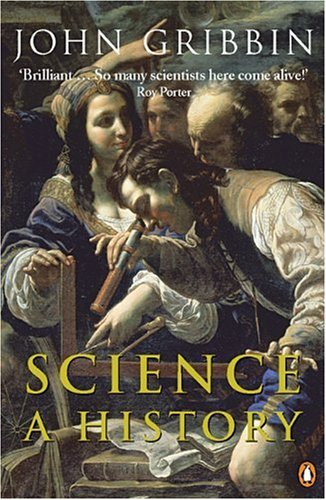
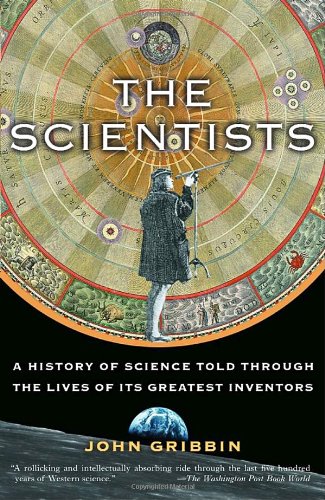
6. The Scientists: A History of Science
$19.75
7. History of Women in the Sciences:
$19.17
8. Inside Science Education Reform:
$24.99
9. The History of Science Fiction
10. Brave New World: History, Science,
 
$515.00
11. Images of Science: A History of
$5.00
12. The Norton History of the Environmental
$8.70
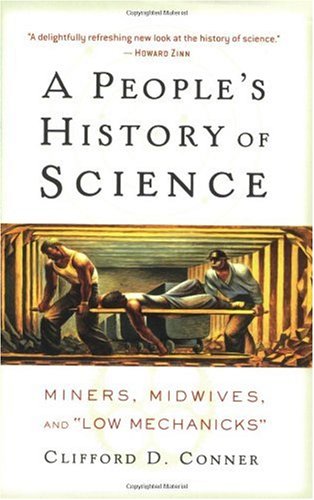
13. A People's History of Science:
$24.81
14. Science in History, Vol. 2: The
$9.49
15. Crazy Chemistry (Weird History
$19.50
16. A Brief History of Disease, Science
 
$21.25
17. The Norton History of the Mathematical
$14.95
18. Russia.Britain.Byzantium.Rome.History:Fiction
$40.46
19. Science and Earth History: The
$17.48
20. An Elusive Science: The Troubling

1. Science and Technology in World History: An Introduction
by James E. McClellan, Harold Dorn
Hardcover: 496 Pages (2006-04-28)
list price: US$65.00 -- used & new: US$39.98
(price subject to change: see help)
Asin: 0801883598
Average Customer Review: 4.5 out of 5 stars
Canada | United Kingdom | Germany | France | Japan
Editorial Review

Book Description

Now in its second edition, this bestselling textbook may be the single most influential study of the historical relationship between science and technology ever published. Tracing this relationship from the dawn of civilization through the twentieth century, James E. McClellan III and Harold Dorn argue that technology as "applied science" emerged relatively recently, as industry and governments began funding scientific research that would lead directly to new or improved technologies.

McClellan and Dorn identify two great scientific traditions: the useful sciences, patronized by the state from the dawn of civilization, and scientific theorizing, initiated by the ancient Greeks. They find that scientific traditions took root in China, India, and Central and South America, as well as in a series of Near Eastern empires, during late antiquity and the Middle Ages. From this comparative perspective, the authors explore the emergence of Europe and the United States as a scientific and technological power.

The new edition reorganizes its treatment of Greek science and significantly expands its coverage of industrial civilization and contemporary science and technology with new and revised chapters devoted to applied science, the sociology and economics of science, globalization, and the technological systems that underpin everyday life.

... Read more

Customer Reviews (9)

3-0 out of 5 stars introductory textbook to the subject "history of technology" and "history of science)
The main thesis of this book is to show how technology and science developed largely independentlyof each other throughout almost all of history.Science and Technology in World Literally is quite literally an undergraduate course book.In view of the complexity of the subject matter, I found this to be a boon rather thenhindrance.The authors do an amazing job summarizing complex material.

SciTechinWorHis (my abbreviation for the lengthy title) begins with a survey of the "pristine" civiliastions of earth:the middle east, india, china, south america, central america.. and... uh that's it.These are alll the original civilisations who started raising crops.The authors point out at that all of these civilisations were empires that built large hydraulic projects to help raise more food.Most of them also built large monuments (the pyramids in egypt).In these "prisitine" civilisations, the central government used "scientists" for calendar purposes."Technology" was made these civilisation's possible in the first place- farming improvements and the maniuplation of water to supply large urban populations.In these pristine civilisations science was sponosored by the emperor to achieve practical ends.Technology enabled these civilisations in the first place.And so, technology precedes science.Indeed, technology is one of the things that makes us "human" whereas "science" only comes into play AFTER civilisation and "history" begin.

In that way, the authors make the point- right at the beginning- that technology is quite central to being human, whereas science requires some form of organization.

After running through Egypt, Mesopatamia, India, China, The Aztecs and the Inca, he moves into the "greek miracle" and we are off to the races.After the multi cultural preamble, the book gets locked on europe and chapter by chapter we move through greece, to rome, to the middle ages, to the scientific revolution.Two hundred pages and nine chapters in, this book settles into chapters consisting of mini bios:Copernicus, Galileo, Newton.Then with the advent of the industrial revolution, they march through the "modern" period.Throughout the writing is crisp, and as a non-science type, I found this book quite useful as a survey and introduction to the subject.

4-0 out of 5 stars Good intro-level textbook; needs supporting materials
This is a great introduction for an undergraduate level class on the history of sci/tech/med. However, as other reviewers have pointed out, there are some rough patches as the work nears the 20th century. Even though some glossing is necessary in a massive overview, I was particularly disturbed by the boilerplate explanation of mid-19th c. Darwinism without much reflection on the German, French, and English precursors (Lamarck is the exception, of course) and oversimplifying the impact on the religious community (who generally accepted "evolution" while rejecting "natural selection"). For an undergraduate course, I recommend supplementing these segments of the book with R. Richards Romantic Conception of Life or The Meaning of Evolution and/or P. Bowler's The Non-Darwinian Revolution. For upper level courses or tutorials, I would relegate this work to "recommended overview."

All that being said, I was impressed with the broad geographic scope and McClellan's ability to account for the vast majority of the ancient, medieval, and early modern material in an interesting and nuanced fashion.

5-0 out of 5 stars Must buy
This is an awesome book. It portrays a very well organized anrrative of science in history. I do not even major in history yet I kept the book. Awesome.

4-0 out of 5 stars Outstanding book, except...
I agree with the previous reviewers on their accessment of the book--with the exception of the very last part of it.In fact, the chapter on modern physics has so many mistakes that it is almost rendered unusable, which is odd because the quality of the rest of the book is so high.

I wouldn't expect that two authors would be able to pull off what they have tried to do here (with such a breadth of material), but I believe that if they invite a guest author (or editor) to help with the chapter on the history of modern physics they will be fully successful in a subsequent edition.

5-0 out of 5 stars History Through Science and Technology
This is an ambitious study of human history through its scientific and technological development.It begins with prehistoric times and ends with the many accomplishments of the late twentieth century.No area of the world is neglected, with much attention paid to the great civilizations of Asia in particular.There are also many mini-biographies of such worthies as Copernicus, Newton, Galileo, Edison, etc. which place them in the context of their time and the overall theme of technological development.The book is scholarly but not dry.Attempts have been made to appeal to the laymen through notes on "Cool Websites" and the like, and this is successful.Its a good overview of world history from a less than usual angle. ... Read more


2. Review for the CLEP Social Science and History Examination
by Ann Garvin, Eileen Curristine
Paperback: 310 Pages (2006-03-26)
list price: US$16.95 -- used & new: US$15.00
(price subject to change: see help)
Asin: 1560301503
Average Customer Review: 3.5 out of 5 stars
Canada | United Kingdom | Germany | France | Japan
Editorial Review

Book Description
This study guide contains all the information you need to pass the Social Science and History CLEP test. It has been updated to prepare you to do well on the new computerized version of the test as well as on the older paper based test.

Comex Systems, Inc. has been the leading CLEP test preparation company for over 30 years. ... Read more

Customer Reviews (8)

5-0 out of 5 stars 3.0 credit hours
I got three credit hours by taking a 3 hour test cant beat that for savingmoney, book helped me do this.

3-0 out of 5 stars Do not use this book alone for test!
This book gave me a general idea of what would be on the CLEP test, but when I actually took the test, the exam questions were MUCH harder then the review questions in the book. I passed, but would not recommend using this book alone!

4-0 out of 5 stars Great Book
This book came just in the neck of time, I needed it right away.It helped me and i felt very confident.Thanks

2-0 out of 5 stars a little help
This book is NOT enough to pass the CLEP.It IS easy to read and does provide much knowledge.HOWEVER, I would have failed had I relied solely on this book. I also used Peterson's CLEP Success which helped me pass the exam much more than this book.I would suggest using them both.

1-0 out of 5 stars Not even close!
I used this book solely as a review for the CLEP exam, and received a score of 55 (barely passing) as opposed to the actual CLEP books - I got a 96 using the "official CLEP guide".

This book barely has any of the actual test material included in it, and the test had many, many things not even remotely touched upon in the book.I definitely will NOT use this brand again. ... Read more


3. A History of Ideas in Science Education: Implications for Practice
by George E. DeBoer
Paperback: 269 Pages (1991-02)
list price: US$22.95 -- used & new: US$22.85
(price subject to change: see help)
Asin: 080773053X
Average Customer Review: 4.0 out of 5 stars
Canada | United Kingdom | Germany | France | Japan

Customer Reviews (1)

4-0 out of 5 stars Useful but dry
DeBoer presents good detail about the history of key ideas in science education. It primarily focuses on the field as it has evolved in the US, but he does bring in information about early influences from Europe. It's very enlightening to think that many of the "reform" movements of the last 30 years are reincarnations of arguments from almost 100 years ago. That being said, the book isn't great. I think DeBoer's writing style is dry and at times clunky. You'll really want to know this information to get through it all. ... Read more


4. A History of Science in Society: From Philosophy to Utility
by Lesley B. Cormack, Andrew Ede
Paperback: 458 Pages (2004-05-20)
list price: US$49.95 -- used & new: US$34.99
(price subject to change: see help)
Asin: 1551113325
Average Customer Review: 4.0 out of 5 stars
Canada | United Kingdom | Germany | France | Japan
Editorial Review

Book Description
A History of Science in Society: From Philosophy to Utility is a concise overview that introduces complex ideas in a non-technical fashion without sacrificing the sophistication and richness of the subject.

Andrew Ede and Lesley B. Cormack trace the history of science through its continually changing place in society and explore the link between the pursuit of knowledge and the desire to make that knowledge useful.

Along the way, they discuss the specfics of scientific investigation and discovery. Beginning with a small group of philosophers in ancient Greece and ending with nano-technology, A History of Science in Society covers a vast sweep of time and subject matter. Among the many topics discussed are issues such as intellectual competition, gender and class, the economic exploitation of knowledge, and changing ideas about the environment and our relationship to it. Also included are more than 50 illustrations. ... Read more

Customer Reviews (1)

4-0 out of 5 stars elegant overview
The book has an ambitious remit of explaining the role of science in various societies, since the scientific method first emerged in ancient Greece. Of necessity, much detail has to be omitted. But the authors show skill in explaining the essence of the scientific method, and why some societies, like the Britain that started the Industrial Revolution, were able to apply it successfully.

It is not a book about the intricate details of the sciences. It furnishes an elegantly written overview that gives a nontechnical reader an appreciation of how the sciences developed. ... Read more


5. The Story of Science,Newton at the Center
by Joy Hakim
Hardcover: 256 Pages (2005-10-25)
list price: US$24.95 -- used & new: US$14.91
(price subject to change: see help)
Asin: 1588341615
Average Customer Review: 4.5 out of 5 stars
Canada | United Kingdom | Germany | France | Japan
Editorial Review

Book Description
The story of science continues with the reclusive Copernicus and his astounding theory that the sun is at the center of the universe, and closes with the basics of atomic theory, offering intriguing portraits of the scientists who built on each other's theories in their tireless pursuit of answers. 300 color photographs, illustrations, and maps. ... Read more

Customer Reviews (6)

5-0 out of 5 stars Wonderful!
I can't sing Hakim's praises enough - from her History of US series to the The Story of Science, all three volumes so far.I've been an avid science fan my whole life, but not a hard science major, and I gasped all the way through these books as I learned things I never knew, but thought I'd known, or finally understood things I'd known about but that had puzzled me.Get over the "distracting" sidebars - they didn't bother me at all and they were full of great stuff.I ate these books up and I was only reading them to preview for my homeschooler who hates math and is bored by science, but loves history.Joy Hakim has a wonderful ability to take a huge subject (all of US history, for instance, and the development and progress of scientific thought in this case) and make it manageable, new and a fun read.My daughter is discovering that science and math really are amazing and play a critical, pivotal role in the unfolding of human history.

5-0 out of 5 stars Another Great Book!
I notice that one negative review has been repeated on multiple Joy Hakim books verbatim.

I LIKE the sidebars and pictures.There is a ton of ART history and beautiful graphic design work in the books.Perhaps it is because my husband, son and I are all artists, but we particularly enjoyed the layout of the books.I felt a fusion of science with art in the presentation.

The history is sound, well presented, and detailed enough in scope to touch on mathmatical concepts supporting the science.

I'd reccomend this book for lovers of science history and for older homeschoolers.It is a bit too serious for younger homeschoolers.To me, this is more a book for a older preteen or teen audience.

5-0 out of 5 stars This has been a WONDERFUL resource!
My daughter is homeschooled, and after reading the entire History of US Series, I knew this science series would be a must.Honestly, I learned so much about US history than I ever learned in all my years of schooling through Ms. Hakim's books.Same with the "Story of Science" Series.Some may find the sidebars distracting, but we kind of made them into a separate lesson and learned a great deal of little-known facts.And it isn't only history or science - the author weaves a little bit of everything into these books in these sidebars.I really can't recommend her books enough.So far, they have been THE favorite resource in our four years of homeschooling!

5-0 out of 5 stars great resource
Although I agree that the sidebars are distracting, the book is a delight--and not at all condescending or arrogant.My homeschool daughter and I tried skipping the sidebars and returning to them after we had finished the text proper.It didn't work because the sidebars give anecdotal information that works best when read with the text proper.I'm guessing Ms. Hakim went through the same thought process before deciding on the layout.I do question that the text is meant for middle school.Although Ms. Hakim does write "to" that age level, the subject matter may be more appropriate for high school and thus benefit from a less familiar (although still conversational) style.I hope that Ms. Hakim will provide workbooks to accompany the books eventually.And, we are all waiting for the world history via Hakim!

1-0 out of 5 stars I returned my copy for a refund.
I was sorely disappointed by the actual content- the text, the *words* which were supposed to communicate something of the glory and wonder of science to my children.

The book had promise- I was impressed with a my first glance in the bookstore. It's beautifully laid out- lovely pictures, interesting sidebars- but once I sat down and tried to read the text, those sidebars were horribly, awfully distracting.I don't know who chose the formatting, but it's guaranteed to interrupt any chain of thought a reader might have. At least one 'sidebar' interrupted the flow of a passage in midsentence, then the 'sidebar' continued on, taking up two entire pages before returning to the next word in the interrupted sentence!

It's like a commercial or a video game- distracting to the utmost. I also thought the writing was choppy, a little bit condescending, and very much designed to foster a sort of vacuous, uninformed arrogance in the student.

Ancient history, says a well educated homeschooling father I've read from time to time, should not be taught as 'how the peasants lived back then,' because we really aren't any smarter than those who went before us.We stand on their shoulders so we have more information at our fingertips, information they discovered, but we are not smarter than they.It is a natural tendency to think that we are 'it,' that nobody has thought the thoughts we have, figured out the things that we know, and that we have advanced beyond any society before us. This is a superficial understanding at best, and a broad study of history should go a long way toward correcting that. Unfortunately, Hakim's book encourages that attitude.She does seem to teach science history along the lines of 'how the peasants lived.'

At the beginning of her book she hubristically tells her students that when they finish reading her book they will know more than Isaac Newton.Since he invented Calculus, that's just a bizarre thing to say. She's feeding her readers a false image of what it means to 'know' and what knowledge is, and just who Isaac Newton really was. They will, perhaps, have more facts at their disposal, assuming they remember everything.

They will know more history, since much of what is in her book happened after Newton's death. But will they have more knowledge than Isaac Newton? That is highly doubtful, and it does not do students any favors to confuse knowledge with a handy list of data points.
... Read more


6. The Scientists: A History of Science Told Through the Lives of Its Greatest Inventors
by John Gribbin
Paperback: 672 Pages (2004-08-10)
list price: US$17.95 -- used & new: US$10.13
(price subject to change: see help)
Asin: 0812967887
Average Customer Review: 4.5 out of 5 stars
Canada | United Kingdom | Germany | France | Japan
Editorial Review

Book Description
A wonderfully readable account of scientific development over the past five hundred years, focusing on the lives and achievements of individual scientists, by the bestselling author of In Search of Schrödinger’s Cat

In this ambitious new book, John Gribbin tells the stories of the people who have made science, and of the times in which they lived and worked. He begins with Copernicus, during the Renaissance, when science replaced mysticism as a means of explaining the workings of the world, and he continues through the centuries, creating an unbroken genealogy of not only the greatest but also the more obscure names of Western science, a dot-to-dot line linking amateur to genius, and accidental discovery to brilliant deduction.

By focusing on the scientists themselves, Gribbin has written an anecdotal narrative enlivened with stories of personal drama, success and failure. A bestselling science writer with an international reputation, Gribbin is among the few authors who could even attempt a work of this magnitude. Praised as “a sequence of witty, information-packed tales” and “a terrific read” by The Times upon its recent British publication, The Scientists breathes new life into such venerable icons as Galileo, Isaac Newton, Albert Einstein and Linus Pauling, as well as lesser lights whose stories have been undeservedly neglected. Filled with pioneers, visionaries, eccentrics and madmen, this is the history of science as it has never been told before.


From the Hardcover edition. ... Read more

Customer Reviews (17)

4-0 out of 5 stars Scientific biography but not quite science
I found this book well written enough to read through its 616 pages of text.It offers interesting biographical sketches of a great number of scientists and gives the reader some idea of the historical processes of science's advance.However, as the actual science described becomes increasingly sophisticated, Gribbin's powers of exposition fail him. It is simply inexplicable that someone would write such a long history, covering the rise of modern physics, chemistry, genetics, etc. WITHOUT INCLUDING HARDLY A SINGLE EXPLANATORY DIAGRAM OR ILLUSTRATION!!! Unless you come to the book already armed with a strong background in science, you will probably find yourself excusing yourself from really understanding much of what is being talked about in the last 250 pages of the book.

5-0 out of 5 stars Enjoyable and Rewarding
Wayne Booth (The Company We Keep) describes a good author as a friend. Well, John Gribbin is definitely a friend. While I do not agree with his mild and barely mentioned aethism, his love of science is heartfelt as he brings it to life through individual human beings.

This is not a dull science book. It has no formulas or math except to explain scientific laws as simply as possible. Neither is it a "science for dummies" either. Instead, this book is best read by the fireside. It is top quality literature which is insightful and deep while retaining the human element all the way through. Given its inexpensive price, this book is a winner all around.

I would recommend this book to anyone who loves stories. I would especially recommend this book for anyone interested in the history of scientific ideas and the people who advanced them. This book is also useful material for college courses in science, history or literature.

5-0 out of 5 stars How to Get Your Nonscientist Teenager Interested in Science
This is the book to buy for that teenager who loves the humanities, religion, literature but is AFRAID of science.Astrophysicist John Gribbin writes superbly about the great developments of Western Science from Copernicus to Einsteinor Mendel, Darwin, and Watson and Crick. He truly has a gift for explaining the basics of science without burying the reader in mathematics or technical language.The strategy is to explain scientific advances through the lives of the great men who pushed the limits of scientific advances...such as the race to discover the spiral helix structure of DNA or the thought experiments of Farady and Einstein.

3-0 out of 5 stars Not so Comprehensive as the title suggests
A good book hat gives historical narrative accounts of the many scientists in history. I do not like about it the fact that it overlooks or give slight attention to some important areas of science like Mathematics. Also it totally overlooks the contribution of the Arab and that of other peoples of the orient.
So its title is somewhat exaggerated, it focuses more on natural sciences developed and evolved in the western parts of the world.

5-0 out of 5 stars Entertaining and Enlightening
This is a well-written, highly entertaining and enlightening book.As the title says, this is a book about scientists; however, it is not just a series of biographies, but rather uses the lives of the scientists to tell the history of science.It is written by a scientist for a general audience (little or no mathematics is used), but it is illuminating for a scientist (such as myself) as well.It puts Physics, and to a somewhat lesser extent Chemistry and Biology in a historical context and shows how these disciplines evolved.The author is a proponent of the incremental view of the development of science and makes a compelling argument that the advancement of science is not solely due to the work of individual geniuses, but rather is due to the incremental development of technology, which makes new instruments possible, and to the incremental accumulation of previous discoveries.He believes that when the right technology is developed and sufficient discoveries made, the stage is then set for what appears to be a scientific revolution, created by some towering intellect, but that the discovery would have come about without that towering figure.He makes a case that even the towering achievements of Newton and Einstein would have eventually been made by others.In the case of Newton, he points out that Robert Hooke and Edmond Halley were well on the way to formulating the laws of gravity (although without the mathematical genius of Newton).He makes a similar case for the work of Einstein, but I think that insofar as General Relativity is concerned, it is much less clear that this is the case.Many examples are given where the same discovery is made independently, sometimes being published at the same time, sometimes with an earlier work (such as the work of Gregor Mendel) having been unappreciated at the time only to be rediscovered after someone else made the same discovery later on.

Using the life of scientists as the framework for this history shows how the social (largely religious) and political factors influenced the lives of the scientists and thus the evolution of science.For instance, the author contends that the treatment of Galileo by the Church retarded the development of science in Italy and caused the focus of the development of science to shift from Renaissance Italy to more welcoming northern Europe.What would have happened had Newton not fled Cambridge to escape the plague (giving him a lot of free time to think about gravity) or had Lavoisier not been beheaded in the French Revolution?(The author would contend that while these were pivotal events for the scientists involved, science would have gone on the same trajectory without them, but perhaps retarded by the absence of Newton's sojourn or sped up had Lavoisier lived to make more contributions.)

Many scientists have been the subject of biographies but often are biased in their favor.Gribbin often gives a somewhat different view of things.For instance, in Newton biographies Robert Hooke is often portrayed in a less than favorable light, always claiming to have made the same observation as Newton but some years before.Gribbin holds the view that in many instance Hooke did discover things first, but that since Newton outlived Hooke he as able to use his position to write Hooke out of the picture, or at least down-play his considerable accomplishments.

I have a few quibbles and because of these, if I could have done so, I would have given the book four and a half instead of five stars.The book is very heavily weighted towards the work of English and Scottish scientists.Then comes the French, then the Germans and early in the history the Italians.Americans are, in my opinion, given short shrift.To be sure there was little science in America (with the exception of Benjamin Franklin, whose accomplishments are discussed briefly) in the 18th and early 19th century.(Benjamin Thompson's life is covered, but his scientific accomplishments were preformed in England and Europe.)What is surprising and what highlights the author's bias is the lack of any discussion of J. Willard Gibbs.Gibbs, the father of Chemical Thermodynamics, is mentioned just once, in a one-sentence reference to his work on Statistical Mechanics, whereas textbooks on Chemical and Metallurgical Thermodynamics are largely concerned with his work.Nicola Tesla (the developer of the AC motor and the true father of radio) is not even mentioned, nor is Charles P. Steinmetz (the man who put AC electricity on a firm scientific and mathematical basis).Neither Tesla nor Steinmetz was born in America, but their scientific contributions were made there.There is also a lack of any discussion of engineering science (for instance, structural mechanics, transistors, integrated circuits or computers).It is hoped that is future editions of this book the author will rectify some of these deficiencies, particularly with regards to the work of Gibbs.
... Read more


7. History of Women in the Sciences: Readings from Isis
Paperback: 450 Pages (1999-01-01)
list price: US$20.00 -- used & new: US$19.75
(price subject to change: see help)
Asin: 0226450708
Average Customer Review: 4.0 out of 5 stars
Canada | United Kingdom | Germany | France | Japan
Editorial Review

Book Description

Why is it that some women have created successful careers in science, when historically there have been so many barriers that exclude women from engaging in scientific work? At last, here is a comparative history that illuminates some of the patterns that have emerged in the history of women in science.

This book features some of the most influential and pioneering studies of women in the sciences, with a special focus on patterns of education, access, barriers, and opportunities for women's work in science. Spanning the 17th through the 20th centuries, the book demonstrates the meaning and power of gender experienced by women in the sciences.

Individual chapters focus on exceptional women whose unusual initiativee and particular circumstance led them to engage in science: Laura Bassi, Nettie Stevens, Maria Winkelmann, and others. Chapters on women's access to science discuss collaboration with family members in the domestic sphere, the impact of primers and popular science writing, and formal education in public schools and advanced research institutions. There are examinations of the reasons for clusters of women working in "female friendly" sciences such as botany and physiology in the 19th century and astronomy in the U.S. during the early 20th century.

This important and useful book provides a thoughtful and detailed overview for scholars and students in the history of science, as well as for feminist historians, scientists, and others who who want a comparative and historical analysis of women in the sciences.

Contributors include Janet Browne, Paula Findlen, Peggy Aldrich Kidwell, Ann Hibner Koblitz, M. Susan Lindee, Carolyn Merchant, Margaret W. Rossiter, Londa Schiebinger, Nancy Leys Stepan, and Deborah Jean Warner.
... Read more

Customer Reviews (1)

4-0 out of 5 stars women and science
I needed this book for a class and the book is great and amazon was fast at delivery. ... Read more


8. Inside Science Education Reform: A History of Curricular and Policy Change (Ways of Knowing in Science and Mathematics, 18)
by J. Myron Atkin, Paul Black
Paperback: 208 Pages (2003-04)
list price: US$31.95 -- used & new: US$19.17
(price subject to change: see help)
Asin: 0807743186
Canada | United Kingdom | Germany | France | Japan

9. The History of Science Fiction (Palgrave Histories of Literature)
by Adam Roberts
Paperback: 368 Pages (2007-12-10)
list price: US$26.95 -- used & new: US$24.99
(price subject to change: see help)
Asin: 0230546919
Canada | United Kingdom | Germany | France | Japan
Editorial Review

Book Description
The first comprehensive critical history of SF for thirty years, this book traces the origin and development of science fiction from Ancient Greece, via its rebirth in the seventeenth-century, up to the present day. It covers both literary SF and cinema/TV.The History of Science Fiction argues that, even today, this flourishing cultural idiom is shaped by the forces that determined its rise to prominence in the 1600s: the dialogue between Protestant and Catholic worldviews, the emerging technologies of the industrial age, and the cultural anxieties and excitements of a rapidly changing world. Now available in paperback, it will be of interest to all students, researchers and fans of SF. ... Read more


10. Brave New World: History, Science, and Dystopia (Twayne's Masterwork Studies, No 39)
by Robert S. Baker
Paperback: 156 Pages (1989-12)
list price: US$19.00
Isbn: 0805781218
Canada | United Kingdom | Germany | France | Japan

11. Images of Science: A History of Scientific Illustration
by Brian J. Ford
 Hardcover: 216 Pages (1993-01-28)
list price: US$55.00 -- used & new: US$515.00
(price subject to change: see help)
Asin: 0195209834
Canada | United Kingdom | Germany | France | Japan
Editorial Review

Book Description
This spectacularly illustrated book chronicles the exciting progress of scientific investigation through the ages as it has been mirrored in the art used to document its ideas and breakthroughs.From the cave paintings of prehistory through the ancient civilizations of Egypt, Assyria, and
Greece to Renaissance drawings and modern microscopy, these images reveal the hidden influences and cultural pressures of their times in addition to chronicling and communicating a wealth of contemporary observation and knowledge.The author has organized each section of this survey by taking some
of the earliest surviving examples of illustration, and moving through time to the present. Thus separate chapters focus on the animal world, herbs and the birth of botany, physics and the science of non-living matter, mankind in the world; the world in space; and other seminal topics.This
organization, and its freedom from a fixed chronology, has enabled the author to show science actually shaping its own story, with surprisingly sophisticated images emerging centuries in advance of today's high-tech instrumentation.The illustrations--most of which are from the British Library
collections--have been chosen from among the best preserved in the world, some never before reproduced.All help to show how scientific illustration first arose; how it mirrored in many ways the value systems of the science of its time; how images were borrowed, transformed, and occasionally came
to predict future discoveries; and how science evolved from one breathtaking era to the next.This is a work that will stimulate and inspire all readers interested in art and science, and the ingenuity of the scientific mind. ... Read more


12. The Norton History of the Environmental Sciences (Norton History of Science)
by Peter J. Bowler
Hardcover: 634 Pages (1993-09)
list price: US$35.00 -- used & new: US$5.00
(price subject to change: see help)
Asin: 0393035352
Canada | United Kingdom | Germany | France | Japan

13. A People's History of Science: Miners, Midwives, and "Low Mechanicks" (Nation Books)
by Clifford D. Conner
Paperback: 424 Pages (2005-10-18)
list price: US$17.95 -- used & new: US$8.70
(price subject to change: see help)
Asin: 1560257482
Average Customer Review: 4.0 out of 5 stars
Canada | United Kingdom | Germany | France | Japan
Editorial Review

Book Description

We all know the history of science that we learned from grade school textbooks: How Galileo used his telescope to show that the earth was not the center of the universe; how Newton divined gravity from the falling apple; how Einstein unlocked the mysteries of time and space with a simple equation. This history is made up of long periods of ignorance and confusion, punctuated once an age by a brilliant thinker who puts it all together. These few tower over the ordinary mass of people, and in the traditional account, it is to them that we owe science in its entirety.

This belief is wrong. A People's History of Science shows how ordinary people participate in creating science and have done so throughout history. It documents how the development of science has affected ordinary people, and how ordinary people perceived that development. It would be wrong to claim that the formulation of quantum theory or the structure of DNA can be credited directly to artisans or peasants, but if modern science is likened to a skyscraper, then those twentieth-century triumphs are the sophisticated filigrees at its pinnacle that are supported by the massive foundation created by the rest of us.
... Read more

Customer Reviews (16)

5-0 out of 5 stars One of the best books I've read
An absolutely stunning history of science from hunter-gatherers to office workers. In the great tradition of popular history, Mr. Connor argues that it was the common people, not the elites, who have been the developing force behind a great portion of science. Taking the view that the deed comes before the word (in biblical terms), Mr. Connor shows that it was the DIY spirit common to all people low and high that explains much of the technological development, whilst scientific methods arose from people's daily experience of trying to make a living.

In contradiction to the bollocks in our history and science books, science is not just the realm of elite Heroes of Science but is the empirical experiences of working people grappling with the worlds. Empirical trial-by-error experience comes before theoretical pondering, no matter what our ivory tower intellectual elite may like us to believe.

Again, great book. Buy it!

3-0 out of 5 stars Close but no cigar
Being of a generally socialist bent, I am very sympathetic to the project of "people's histories", ever since it was conceived by A.L. Morton's excellent A people's history of England, but that does not mean that we should be uncritical towards what is actually written. Not just Howard Zinn's prototype book (People's History of the United States: 1492 to Present) in the modern series should be evaluated with care, but this goes as well for other books in this series, including this one, the "People's History of Science" by Clifford Conner.

Conner's thesis is that although the history of science has often been portrayed in the usual "Great Men" style as the work of a privileged few brilliant men (and yes, almost only men) seeing further than anyone elses and inventing wondrous new sciences and technologies, in reality most of established academia during the ages was of no value whatever, and real scientific progress resulted through the experiments and practice of artisans, painters, miners, etc., not through the academic thinking of the learned.
Tracing a chronology of technological development, Conner gives a convincing if not entirely open-and-shut case for this thesis, in particular when it comes to demonstrating the great advances in science made by the lowly and unacademic during the ancient periods as well as the Middle Ages and the Renaissance. Equally, Conner gives women and non-Europeans their due, quite correctly emphasizing the large advances in technology made by the Chinese, the Native American societies, the Arabs, and so on, often ages before any European ever conceived of the thought. Conner does this quite well, in the process also repudiating the popular view of the natives as the "noble savages living in communion with nature"; in reality the various Indian tribes were masters at the manipulation of nature to their advantage, such as forestry and the genetic selection of edible plants to improve agriculture.

However, this book also has clear and evident downsides. Conner's own specialization seems to be in the history of science during the period of the Renaissance through the 18th-19th Centuries, for it is the chapters on this that are by far the best part of the book and particularly worth reading. On other subjects, however, he is much less informed. Especially the chapter on science in ancient Greece is woefully erroneous: Conner has bought completely into the oft-refuted theories of Martin Bernal, including even the slanderous commentary on Karl Otfried Müller, which even Bernal himself has since withdrawn. The entire "out of Africa" tendency of this chapter is as wrong and unscientific as that idea itself. But that's not all, since Conner's understanding of Plato is also horribly mangled, leading him to either ignore or completely misunderstand the possibly progressive elements in Plato's "Republic". For example, when discussing Plato's political views, Conner at no point even deems it worth mentioning that in Plato's ideal society men and women would have an equal opportunity to lead if worthy, surely a very revolutionary view in his time (compare it to Aristoteles!). He also does not understand Plato's conception of the various classes in his society, which are explicitly opposed to the idea of castes one are born into, unlike what Conner seems to assume. Conner even quotes Marx who refutes the point he is trying to make in that context.

I do not know enough about most of the other subjects Conner writes on without being specialized in them, like classical China, prehistoric societies, and so on, to judge whether that suffers from similar flaws, but at least if he gets these things that I do happen to know so horribly wrong, that bodes ill for the trustworthiness of the entire book. So do take his analysis with a grain of salt at all times, and check the sources elsewhere. Additionally, the book contains many minor spelling errors and wrong expressions in foreign languages cited; not a big deal, but something a competent editor should have caught and removed.

On the whole, the book's chapters on the so-called Scientific Revolution are very good, and his commentaries on other historians of science are worth reading. His thesis is also sufficiently proven to be convincing, if not enough to be certain; it may be added though that he does not establish very well that the Great Men theory of the history of science is actually still supported by contemporary historians, making his case seem a bit obsolete. And his use of sources is very narrow and occasionally wholly incorrect at times, so be skeptical when reading.

5-0 out of 5 stars A great work
This book is outstanding, a comprehensive history of how we became who we are via science. The author has done us all a favor--revealing why we think and act like we do--and the social, cultural and economic consequences thereof. Science is too beneficial to be left in the hands of the elite, and too complex to be reduced to a few aphorisms. This book lets us know where and how it actually came about. This should be required reading for all students, and a refreshing review for those of us who have read all about the advance of science. The author is to be congratulated for illuminating our past and exposing our biases. Great work!

5-0 out of 5 stars Correcting an imbalance
Clifford D. Conner's book provides an eye-opening, refreshing and in some respects quite controversial account of how science has developed over the centuries. His focus has been not on the handful of names that are so well-known in each field of science, but on the many little-known or anonymous researchers, inventors and innovators who made equally important important -- and sometimes greater -- contributions to humanity's understanding of nature.

For some time now, the way political history is taught in schools and textbooks has started to move away from the old "great man" approach that privileges the top generals and officeholders and ignores the contributions of the many ordinary people who actually brought about change. There is still a long way to go before the study of history loses its elitist bias, but a good number of historians are now seeking to uncover the "hidden histories" of the poor and the marginalized, without whom the leading figures would have been able to accomplish very little. Unfortunately, teaching and writing about the history of science has not yet progressed so far. It is still studded with the accounts of individual and identifiable "geniuses" who made stunning breakthroughs.

Conner makes a laundable effort to correct that imbalance. He demonstrates convincingly that some of the breakthroughs commonly identified with certain individuals were actually made earlier by others. He shows that the process of scientific advancement has been a far more collective effort than we have been led to believe. And he argues strongly that future historians of science should go further than he himself is able to do in such a general overview, in order to throw light on how the history of medicine, botany, physics or some other specific scientific field might benefit from a similar "people's history" perspective.

Conner's emphasis is important not only in terms of history, that is, the understanding of how scientific knowledge has developed from the past. It also contributes to current debates about contemporary scientific practice. In today's Africa, for example, development experts highlight how vital it is for the continent to overcome the "scientific divide" if agricultural productivity, health and general well-being are to progress beyond their currently poor levels. But which science should Africa utilize? Only that which is patented and sold at high cost by Western corporations? Or also that which is created and practiced every day by African farmers, artisans, healers, herbalists, chemists and innovators? "Science as it exists today," Conner argues, "was created out of folk and artisanal sources; it became what it is by drawing heavily on those sources." Some international financial institutions, such as the World Bank, have already begun to acknowledge that such "indigenous knowledge" can make an essential contribution to Africa's development, in conjunction with world scientific expertise. (Conner, incidentially, shows that such global scientific understanding has itself been enriched over the centuries by the work of numerous Africans.)

Conner's insights, documented detail and substantive arguments would be reason enough to pick up this book. But it is also very well written, in clear and understandable terms. It is a history of science that can be easily read by non-scientists. I highly recommend it.

5-0 out of 5 stars Challenging Interpretation Ruffles Feathers
It seems that Cliff Conner's challenging interpretation has ruffled some feathers.The fact that he dares to think that there has been gender and racial and class bias impacting on the history of science immediately damns him in the eyes of some reviewers on this site.

One reviewer has been so upset that he felt compelled to reach for the most terrible label ever: "post-modernist."It seems to me that there is nothing of the sort in Cliff Conner's conceptions or vocabulary.He may be a small "d" democrat, even a good old-fashioned Marxist, but not one of those terrrible, terrible post-modernists (although they, too, happen to talk about the impact of bias on science).

To speak of such things is apparently reason for some folks to uncork their bottle of insults, and splash about unpleasant accusations.That's too bad, since it can easily be documented that social bias and elitism have had an impact among scientists as well as among intellectual historians.It's not such a controversial point.

Rather than getting bent out of shape over Conner's statement of the obvious, the reader should relax and follow the flow of this clearly written book.What Conner shows is rooted in the anthropologically sound understanding that science is a collective process of comprehending and changing the world around us.This is hardly to deny the fact that there have been outstanding and "craftsman-like" individuals who have sythesized the work of others to develop new insights and make exciting breakthroughs.(For every such genius, of course, there are a number of intellectual thieves -- some of whom fare badly in Conner's book -- but that it is another matter.)Unlike so many intellectual historians, however, Conner's focus is on the collective process, the unacknowledged heroines and heroes, Conner's "Miners, Midwives, and 'Low Mechaniks'" (as well as hunters and gatherers and early horticulturalists) whose efforts were essential to the forward movement of science.

This is a very good book. As with any such work one can disagree with this or that aspect of the interpretation, of course.But it can be read profitably in conjunction with more standard works which focus on the contributions coming from the "great names" in science.Is it the last word in the history of science?Of course not.But it does offer us, in a very readable and often compelling form, essential dimensions of the story. ... Read more


14. Science in History, Vol. 2: The Scientific and Industrial Revolution
by J. D. Bernal
Paperback: 356 Pages (1971-03-15)
list price: US$40.00 -- used & new: US$24.81
(price subject to change: see help)
Asin: 0262520214
Canada | United Kingdom | Germany | France | Japan
Editorial Review

Book Description
J. D. Bernal's monumental work Science in History is the first full-scale attempt to analyze the relationship between science and society throughout history, from the perfection of the first flint hand ax to the construction of the hydrogen bomb. This remarkable study illustrates the impetus given to and the limitations placed upon discovery and invention by pastoral, agricultural, feudal, capitalist, and socialist systems, and conversely the ways in which science has altered economic, social, and political beliefs and practices.

This second volume focuses on the period of development and the establishment of modern science. It begins with work of the Renaissance and continues with a discussion of the stimulus given to scientific develpment by emerging seventeenth-century capitalism. A final section takes up the industrial revolution and the manner in which science and technology transformed the whole nature of human society. ... Read more


15. Crazy Chemistry (Weird History of Science)
by John Townsend
Paperback: 56 Pages (2006-10-25)
list price: US$9.49 -- used & new: US$9.49
(price subject to change: see help)
Asin: 1410923835
Canada | United Kingdom | Germany | France | Japan
Editorial Review

Book Description
Chemicals are everywhere, and some are deadly - they can burn flesh, choke us or even blast us to bits.This book shows how chemists through the ages risked their lives with poison gases, lethal liquids and dangerous reactions.Read how they tried to turn ordinary metals into gold, how urine was made into a glow-in-the-dark explosive, and how chemistry can catch murderers. ... Read more


16. A Brief History of Disease, Science and Medicine
by Michael Kennedy
Hardcover: 528 Pages (2004-02)
list price: US$29.95 -- used & new: US$19.50
(price subject to change: see help)
Asin: 0974946648
Average Customer Review: 5.0 out of 5 stars
Canada | United Kingdom | Germany | France | Japan
Editorial Review

Book Description
This introduction to the history of medicine begins with the evolution of infectious diseases at the end of the last ice age. It describes the origin of science and medicine in ancient civilizations, including China and India. The first third of the book covers the early period that is considered the "classical" history of medicine. The remainder describes the evolution of modern medicine and surgery up to the present. The final chapter is a history of medical economics and explains the origin of health insurance, HMOs and medical malpractice lawsuits, subjects explained nowhere else in the medical school curriculum.

There is a 40 page index and over 550 footnotes, most of them references to the original articles described in the text. A bibliography of essential sources is also included. ... Read more

Customer Reviews (10)

5-0 out of 5 stars I'm the author
I got a chuckle from a recent review by Seven Octaves. It was similar to a review in the Bulletin of the History of Medicine. Everyone wishes I had added a few hundred pages on their favorite subject. The book was written for medical students and nurses and pre-med students. I have been surprised at the acceptance by non-medical people. The idea was to provide what every young medical student or nurse or pre-med student should know. Salvarsan is of historic significance only. Erlich is important for his concept of the receptor that predicted antibiotics. The Bulletin reviewer would have preferred more on ancient medicine. I agree. But I would need a two volume work. It is being reprinted and will be available for a while. Thanks for all the nice, and not so nice, comments. Even the guy who thinks my writing is terrible.

4-0 out of 5 stars Fine Book
Other reviewers have stated what this book is about, but I don't think this is quite a 5-star book however.Even though the title is "brief", he made no mention of all was the growth of plastic surgery following all the disfigured soldiers returning fromWW1.Paul Ehrlich's development Salvarsan didn't even get an entire page devoted to it.Some history on treatments for others diseases are lacking or absent.This book could have been really good if the author threw in a few hundred more pages, (easy for me to say) but it's still a fine reference.

5-0 out of 5 stars The Return of Humanism in Medicine: Hope for the Future!
In this litigious time when physicians and all medical care workers tend to live under an umbrella of suspect brought on by the intervention of the media, vast lawsuits, big business (pharmaceutical companies) intervention, and computer access to data, there has occurred a response in the medical facilities to promote 'defensive medicine' to instruct the nascent students how to cope with the antagonistic world outside the halls of the teaching hospitals. This has resulted in less emphasis on the learning of the skills of the time honored Doctor-Patient relationship and in creating the aura that physicians dwell in glass dome sanctuaries of science: the quiet moments of sharing personal fears and concerns and relieving the pain in the souls of the patient and patients' families seem relics of the past house-call/caring-physician image. Michael Kennedy in his book A BRIEF HISTORY OF DISEASE, SCIENCE & MEDICINE has done more to rectify this widening gap between physician and patient than any volume I have read. This meticulously written, dignified yet very warm and honest look at medicine from the Ice Age to the era of molecular and genetic concepts for the present and the future reads more like a fascinating novel than an academic treatise. There are facts and histories discussed here which will enlighten not only the general public but also the men and women of medicine - from premed student to retired doctor. It is simply an amazing source of knowledge while simultaneously being an honest, no-holds-barred review of how we came to this point in healthcare. And if ever there were a time when this book was needed, it is certainly now. Read this fascinating tome and learn not only the extraordinary progress made in the mystery of disease and physical meanderings away from the 'normal', but at the same time see just how vulnerable is the scientist and physician in dealing with new aspects of the art of practicing medicine through time. Kennedy and his colleagues have added an important adjunct to the re-entry of humanism in the teaching of medicine at his alma mater: this book demonstrates that journey of commitment to resurrect the precious healing relationship between the doctor and those who approach him for succor. Read this book for a highly dignified history of medicine, for some amazing insights into disease process, and for reassurance the perhaps the return of the sanctity of healthcare delivery is a possibility. A fine and very important achievement, Dr. Kennedy!

5-0 out of 5 stars The product of a three year research project
A Brief History Of Disease, Science & Medicine is the product of Dr. Michael Kennedy's three year research project to write a book that would fill the unfortunate gaps in most medical student's educational curriculums, and also be of considerable value for the non-specialist general reader seeking a clearer understanding of the long history behind what we commonly recognize as the history of medical development from superstition to science. The first eight chapters aptly cover the history of early medicine and science described in more detail than typical medical history. Then Dr. Kennedy goes on to cover the discovery of anesthesia and antisepsis, the development of modern medicine and surgery, and concludes with a history of medical economics (including the origin of medical malpractice litigation). A Brief History Of Disease, Science & Medicine is enthusiastically recommended any and all for personal, professional, academic, and community library History of Medicine reference collections.

5-0 out of 5 stars Fascinating and highly informative
This fascinating book is an up-to-date history of medicine and medical science. The book begins with a fascinating look at medicine and diseases from prehistoric times to the early nineteenth century, when so little of such things were truly understood. Then, the pace of the book picks up, when the speed of breakthroughs in medical understanding and technology began to simply explode. And then, the final, more modern, chapters spread out, covering everything from DNA and anesthesia to the economics of medicine.

This book was originally designed with medical students and young physicians in mind, but it is no dry textbook. Instead, this book is a fascinating read, covering a whole lot of subjects, without becoming boring. What I especially liked was that the author obviously deeply understands non-Western medicine, and he made sure to include in it in the book. This book is a great read with lots of fascinating information (for example: did you know that King Henry VIII of England probably suffered from syphilis, and that the disease probably had a major role in history?). Overall, I found this to be a fascinating and highly informative book, and I highly recommend it to you! ... Read more


17. The Norton History of the Mathematical Sciences: The Rainbow of Mathematics (Norton History of Science)
by Ivor Grattan-Guinness
 Hardcover: 817 Pages (1998-12)
list price: US$35.00 -- used & new: US$21.25
(price subject to change: see help)
Asin: 0393046508
Average Customer Review: 4.5 out of 5 stars
Canada | United Kingdom | Germany | France | Japan
Editorial Review

Amazon.com
From zero to infinity, mathematics has always been more about thoughts than thinkers. Professor Ivor Grattan-Guinness has chosen to focus on concepts, rather than the geniuses who first articulated them, in The Norton History of the Mathematical Sciences, and this new retelling brings a freshness to what had formerly seemed a dry subject. He certainly hasn't neglected great mathematicians--Pythagoras and Ramanujan each get their due--but his real heroes are number theory, algebra, and their cousins.

Grattan-Guinness isn't afraid of his subject, and he expects the same of his readers; in fact, he knits equations into his narrative rather than setting them apart like most other math books. Much of the History covers the explosive developments of the 19th century, when mathematics matured and diversified beyond Euclid's wildest dreams, though of course there is also extensive material on mathematics from other times, from the ancient world to the present. Scholarly and well-organized, the book is intended more for research and exploration than straight-through reading, but the author's lucid prose occasionally makes it difficult to stop reading. Mathematics underlies all of modern science; read The Norton History of the Mathematical Sciences to get a grasp on the deepest infrastructure of our times. --Rob Lightner Book Description
A comprehensive and authoritative account of the developmentof the subject that lies at the heart of so many sciences. Beginning withthe Babylonian and Egyptian mathematicians of antiquity, IvorGrattan-Guinness charts the growth of mathematics through its refinementby ancient Greeks and then medieval Arabs, to its systematic developmentby Europeans from the Middle Ages to the early twentieth century. Thebook describes the evolution of arithmetic and geometry, trigonometry andalgebra, the interplay between mathematics, physics, and mathematicalastronomy, and "new" branches such as probability and statistics,"succeeding masterfully in viewing the history of mathematics from a newperspective." ... Read more

Customer Reviews (4)

5-0 out of 5 stars A Must-Read for Mathematicians, Scientists, and Engineers
This magnificent work covers mathematics from its recorded beginnings to the end of World War I. It provides remarkable insight into the development of the various branches of mathematics, and into the connections between mathematical and scientific ideas. Readers will find a wealth of interesting and useful information, including a superb bibliography. Highly recommended!

5-0 out of 5 stars A Brilliant Rainbow
This much-needed book provides valuable insights into the history of the mathematical sciences. Readers will find a wealth of interesting and useful information, including an excellent bibliography. Highly recommended!

5-0 out of 5 stars A Magnificent Account of the History of Mathematics
This milestone in the history of mathematics-history covers mathematics from its recorded beginnings to the end of World War I. It is a synthesis of remarkable historical and mathematical scope. Professor Grattan-Guinness has established a new paradigm of excellence in the field of mathematics-history.

3-0 out of 5 stars An extensive, but complicated overview of math
While the Rainbow of Mathematics covers the entire realm of the History ofMathematics, it ignores the layman or "nonmathematician." Covering the early developments of all the main branches of mathematics,the author requires the reader to have an extensive background in thefield.Unlike most good histories of mathematics that focus on eachindividual and their accomplishment, this book takes a tour of the conceptsof math with only a brief glance onto the lives of the great mathmaticianswho shaped the world. I would only recommend those with a moderately goodmathematical background to read this book.While this book glorifies theconcepts, the one who wants to view the history of mathematics andappreciate the individuals involved will not find this book agreeable. Unlike Men of Mathematics by E.T. Bell, the chapters are arranged byconcept instead of person and I found myself drowning in a sea of technicalmathematical ideas in the later chapters that deal with the calculus. ... Read more


18. Russia.Britain.Byzantium.Rome.History:Fiction or Science? Chronology vol.IV
by Anatoly T.Fomenko, Gleb V.Nosovskiy
Paperback: 727 Pages (2008-01-08)
list price: US$14.95 -- used & new: US$14.95
(price subject to change: see help)
Asin: 2913621104
Canada | United Kingdom | Germany | France | Japan
Editorial Review

Product Description
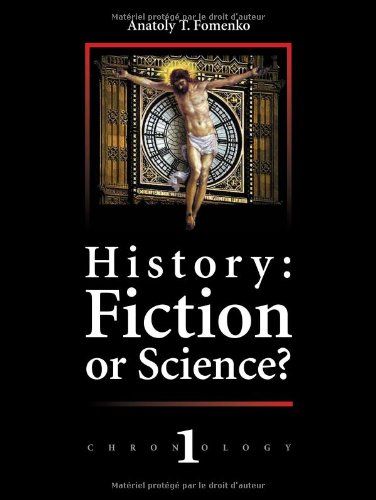
Why, oh why the mainstream historians do not gratify prominent mathematician Doctor Fomenko with laurels, but call the riot police? For example, the English historians rage at the suggestion that the history of Ancient England was de facto a Byzantine import transplanted to the English soil by the fugitive Byzantine nobility. As te sign of recognition of the special role of the English historians who consider themselves the true scribes of World History, the cover of the present book portrays Tintoretto's Jesus Christ crucified on the Big Ben. The Russian historians brand it all as pseudoscience: because Dr Fomenko asserts that there was no such thing as the Tartar and Mongol invasion followed by over two centuries of slavery, providing a formidable body of documental evidence to prove his assertion. The so-called 'Tartars and Mongols' were the actual ancestors of the modern Russians, living in a trilingual state with Arabic and Turkic spoken as freely as Russian. The ancient Russian state was governed by a double structure of civil and military authorities and the hordes were actually professional armies with a tradition of lifelong conscription (the recruitment being the so-called 'blood tax'). Their 'invasions' were punitive operations against the regions that attempted tax evasion. Dr Fomenko proves that official Russian history is a blatant forgery concocted by a host of German scholars brought to Russia by the usurper dynasty of the Romanovs. Their ascension to the throne was the result of conspiracy, so they charged these German imports historians with the noble mission of making Romanovs reign look legitimate. Dr Fomenko proves Ivan the Terrible to be a collation of four rulers, no less. These rulers represented the two rival dynasties - the legitimate Godounovs and the ambitious Romanov upstarts. The European historians fume because Fomenko blows consensual Russian history to smithereens, successfully removing a crucial cornerstone from underneath the otherwise impeccable edifice of World History. Per Dr Fomenko all medieval European Kings and Princes were but breakaway vice-regents and vassals of the Global Empire who badly needed glorious and very ancient past in order to legitimize their independence from the Empire. Dr Fomenko adds insult to injury, wiping out one by one: the Ancient Rome: the foundation of Rome in Italy is dated to the 14th century A. D., the Ancient Greece and its numerous poleis, which he identifies as the mediaeval crusader settlements on the territory of Greece, the Ancient Egypt: the pyramids of Giza become dated to the 11th to 14th century A. D. and identified as the royal cemetery of the Global Empire, no less. The civilization of the Ancient Egypt is irrefutably dated to the 11th to 15th century A. D. following the breakthrough in decoding of the ancient Egyptian horoscopes cut in stone. Arabic historians may find some consolation in the crucial historical role of the Ottoman Empire in the 16th - 17th century. The trouble is that this empire was initially a proto-Christian state, with Hagia Sophia identifiable as Temple of Solomon, but built in 1550-1557 A.D. by Sultan Suleiman according to Fomenko! The Divinity excommunicates Dr Fomenko because the history of religions according to Fomenko looks as follows: the pre-Christian period (before the 11th century and Jesus Christ ), Bacchic Christianity (11th to 12th century, before and after Jesus Christ), Jesus Christ Christianity (12th to 14th century) and its subsequent mutations (15th to 17th cy) into Orthodox Christianity, the Catholicism, Protestantism, Islam, Buddhism, and so on..and The Old Testament written after the New Testament in xiv-xvi cy A.D.! Saint Augustine was quite prescient when he said: 'be wary of mathematicians, particularly when they speak the truth.' ... Read more


19. Science and Earth History: The Evolution/Creation Controversy
by Arthur N. Strahler
Hardcover: 575 Pages (1999-11)
list price: US$62.00 -- used & new: US$40.46
(price subject to change: see help)
Asin: 1573927171
Average Customer Review: 4.5 out of 5 stars
Canada | United Kingdom | Germany | France | Japan

Customer Reviews (12)

5-0 out of 5 stars Good Science but it won't Convince a Creationist
The people who believe in creation science have a real problem. They are bound to a literal intrepretation of the bible which is now a couple of thousand years old and what little science that can be found in the bible is based on Aristotle. In the centuries since there has been a lot of evidence discovered about things like the Earth going around the Sun. And of course there's hundreds of years of evidence, study, experiments, etc. pretty well proving evolution.

But if evolution is right, then the history of the earth as contained in the Bible has to be wrong. And if that part of the Bible is wrong, why the whole concept of salvation may be wrong. And if that is the case, why their whole religion makes no sense.

This particular book is more geology/physics oriented than most. It discusses things like Noah's flood, and how the speed of light is a constant. Of course to the creationist (Oooophs, I forgot, that's a bad word, it's Intelligent Designer) none of this will matter.

If you're interested in amore recent book with more biological reference, consider Unintelligent Design by Mark Perakh.

5-0 out of 5 stars Full of Answers -- Complete
I found this book after a creationist posed some potential problems to me regarding a 4.5 billion y.o. earth. After reading several sections of this book, I am very pleased with the presentation of the material and the depth with which it is covered. The rebuttles to creationism in this book are thorough and often go into more detail than necessary (although I found the depth more interesting and useful if further questions arose).

There are many topics covered in this book.I used information from it on the following potential problems:
-content of the oceans (poor dating method due to "residence times" of elements in the ocean)
-the moon's recession from the earth (consistent with expected age of the moon, websites were also useful in researching this topic)
-radiometric dating with uranium and other radioactive materials (very in depth info on this, and if understood, very convincing of why this is a good dating method)
-decline of the speed of light (this book blows this idea out of the water)
-carbon 14 dating and the earth's magnetic field (these really tie together, and Strahler addresses both very well, showing that C-14 has had variations throughout time, and the magnetic field also variates and can actually flip, as has been observed in the sun; these two tie together since the magnetic field influences how much C-14 is in the atmosphere)
-oil fields (explains how it isn't just a bunch of pools underneith earth, but is in porous rock, which doesn't really support Noah's flood; plus C-14 dating shows it is too old to be from Noah's flood)
This is certainly not an exhaustive list of what is in this book, but these were the topics I found most useful. Because this book was published in 1987, don't expect too much on more recent fields (such as using DNA to discredit the story of Adam and Eve living just 6,000 years ago).

This book will explain holes in the creationist story (either can be used to expose these holes or to realize, for creationists, that there isn't a problem).This is quite possibly the most interesting book I have picked up in the last year and I would highly recommend it to any person who believes in a young earth or to anyone debating this topic.

5-0 out of 5 stars Solid as a rock!
With an exhaustive overview of the geologic and evolutionary history of our planet, Strahler vigorously rebuts a multitude of Christian creationist assertions.Strahler takes some effort to expose the faulty logic, poor science and devious methods Christians have used to impair the public's perception of evolution.The author is able to fully detail each creationist assertion and how science refutes them.If there is a pivot point in this presentation, it would be the spurious "human" tracks "found" in a Texas riverbed.Many facets - the age of the earth, the path of evolution and the role of analysis - are exemplified by the circumstances surrounding this artefact.

While Strahler leaves no doubt over his view of Christian creationists, he provides such a wealth of their material that the book might well be considered "balanced".It is certainly thorough in presenting a history of modern creationism and its spokesmen [if there are any women active in promoting "creation science" they don't appear here].Strahler lays a foundation by comparing science and pseudo-science.The contrast between empirical research and declaration from assertion should be apparent to all, but Strahler spells it out carefully and clearly.From this beginning he takes us through a succession of topics, exhibiting the creationist declarations, then depicting the errors in them.In some cases, the errors are simply false, while others are twisted use of words or ideas.Strahler set himself a monumental task in composing this book, but as someone with long experience in the geologic column, perhaps there is no-one better qualified to assess the material.

This is a rich trove for almost anyone interested in the planet's history.Most of the line drawings and other illustrations are worthy of close attention.Although set as a counter to false thinking, there is a massive amount of material on such topics as radiometric dating, cosmology, geological processes, fossil analysis and the evolution of humanity.Each area acknowledges the leaders in the research.While crediting good studies, Strahler is careful to note where his fellow scientists have been slipshod or dismissive over word usage in dealing with creationists or simply reporting their science.A worthwhile book for a wide spectrum of readers.[stephen a. haines - Ottawa, Canada]

3-0 out of 5 stars Disappointment: The "New" 1999 "Edition" is Only a Reprint
I was disappointed that except for an additional preface, the 1999 "edition" is only a reprint of the first edition from 1987.Outside of the new preface, the book does NOT include "responses to new attacks on evolutionary theory" as promised on the front cover.However, far from being "superficial," the book still contains a wealth of detailed and accurate information that is utterly fatal to creationist fantasies.

It is true that Strahler (p. 135) falsely blames creationist John Woodmorappe of misrepresenting the contents of an article on the radiometric dating of some Hawaiian basalts. In reality, the distortions originated from creationist H. Morris.Nevertheless, Strahler's rebuttal of the distortions is valid.

Clearly, Strahler needs to update this book and respond to the blatant misquotes, misconceptions, and errors that permeate the tabloid literature that continuously streams from various creation "institutes" that claim to be doing "research" or have "answers." For example, geologists have known since at least the early 1960's that SOME magmas travel rapidly through crusts, as fast as several ten's of kilometers per month.Since the first printing of Strahler's book, creationists have distorted the literature on magma movement and cooling, including some of the references in Strahler.Creationists illogically imply that because SOME magmas travel quickly and smaller plutons may cool rapidly, ALL magmas must travel and cool quickly.As a specific example, Strahler needs to supplement his discussions on p. 212-213 and further describe how the cooling of huge plutons, such as the Sierra Nevada Batholith of California (p. 213), took more than 10 million years and how this and many other plutons thoroughly refute creationist claims that the Earth is only 6,000 to 10,000 years old.Strahler should also discuss the 1989 Science article by Odom and Rink that destroys creationist claims for "ex nihilo" polonium halos.

3-0 out of 5 stars Disappointment: The "New" 1999 "Edition" is Only a Reprint
I was disappointed that except for an additional preface, the 1999 "edition" is only a reprint of the first edition from 1987.Outside of the new preface, the book does NOT include "responses to new attacks on evolutionary theory" as promised on the front cover.However, far from being "superficial," the book still contains a wealth of detailed and accurate information that is utterly fatal to creationist fantasies.

It is true that Strahler (p. 135) falsely blames creationist John Woodmorappe of misrepresenting the contents of an article on the radiometric dating of some Hawaiian basalts. In reality, the distortions originated from creationist H. Morris.Nevertheless, Strahler's rebuttal of the distortions is valid.

Clearly, Strahler needs to update this book and respond to the blatant misquotes, misconceptions, and errors that permeate the tabloid literature that continuously streams from various cr