e99 Online Shopping Mall

Geometry.Net - the online learning center Help  
Home  - Science - Human Genetics (Books)

  1-20 of 100 | Next 20
A  B  C  D  E  F  G  H  I  J  K  L  M  N  O  P  Q  R  S  T  U  V  W  X  Y  Z  

click price to see details     click image to enlarge     click link to go to the store

$84.98
1. Human Molecular Genetics, Third
$82.70
2. Human Genetics
$126.25
3. Human Genetics
$39.95
4. Human Genetics: Concepts and Applications
$69.16
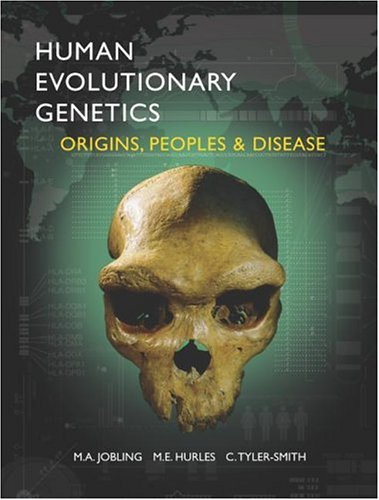
5. Human Evolutionary Genetics: Origins,
 
$46.20
6. Human Genetics, concepts and Applications:
 
$89.00
7. Human Genetics: Concepts and Applications
$23.86
8. An Introduction to Human Molecular
$9.99
9. Case Studies Workbook to accompany
$47.98
10. Analysis of Human Genetic Linkage
$46.56
11. Basic Human Genetics
$40.57
12. Human Genetics and Genomics (HUMAN
$97.45
13. Short Protocols in Human Genetics
$130.80
14. Current Topics in Human Genetics:
$63.87
15. Molecular Genetics and the Human
$6.96
16. Human Genetic Engineering: A Guide
$79.07
17. The Ethics and Governance of Human
 
18. Human Genetics, Bioethics And
$109.99
19. Genetic Programming IV: Routine
$82.93
20. Genetics and the Search for Modern

1. Human Molecular Genetics, Third Edition
by Tom Strachan, Andrew Read
Hardcover: 696 Pages (2003-11-21)
list price: US$110.00 -- used & new: US$84.98
(price subject to change: see help)
Asin: 0815341822
Average Customer Review: 4.5 out of 5 stars
Canada | United Kingdom | Germany | France | Japan
Editorial Review

Book Description
Following the completion of the Human Genome Project the content and organization of the third edition of Human Molecular Geneticshas been thoroughly revised.
* Part One (Chapters 1-7) covers basic material on DNA structure and function, chromosomes, cells and development, pedigree analysis and the basic techniques used in the laboratory.
* Part Two (Chapters 8-12) discusses the various genome sequencing projects and the insights they provide into the organization, expression, variation and evolution of our genome.
* Part Three (Chapters 13-18) focuses on mapping, identifying and diagnosing the genetic causes of mendelian and complex diseases and cancer.
* Part Four (Chapters 19-21) looks at the wider horizons of functional genomics, proteomics, bioinformatics, animal models and therapy.
There are new chapters on cells and development and on functional genomics. The sections on complex diseases havebeen completely rewritten and reorganized, as has the chapter on Genome Projects. Other changes include a new section on molecular phylogenetics (Chapter 12) and the introduction of 'Ethics Boxes' to discuss some of the implications of the new knowledge. Virtually every page has been revised and updated to take account of the stunning developments of the past four years since the publication of the last edition of Human Molecular Genetics.

features:
* Integration of Human Genome Project data throughout the book
* Two new chapters 'Cells and Development' (Chapter 3) and 'Beyond the Genome Project: Functional Genomics, Proteomics and Bioinformatics' (Chapter 19)
* Completely rewritten and reorganized coverage of complex disease genetics
* Increased emphasis on gene function and on applications of genetic knowledge, including ethical issues
* More prominence given to novel approaches to treating disease, such as cell-based therapies, pharmacogenomics, and personalized medicine
* Special topic boxes that include detailed coverage of ethical, legal and social issues, including eugenics, genetic testing and discrimination, germ-line gene therapy and genetic enhancement, and human cloning
* Contains two indices: a general index and one that contains names of diseases and disorders. ... Read more

Customer Reviews (15)

5-0 out of 5 stars Nice illustrations
This book is a pretty good read for thoes with advanced genetics knowledge. It reviews some of the more basic processes in the beginning before diving into the human stuff. As a warning though, it doesnt really hide anything like a beginning bio book so know what your getting yoruself into.

5-0 out of 5 stars clinical geneticist
each addition of this text provides a close to current state of the science review of human molecular genetics, it is an excellent way to update onself about the field.

5-0 out of 5 stars Excellent Reference Text Book for Moelcular Biology
I have used this book earlier for my post-doctoral research work and now I am using this book for the online Medical Laboratory Diagnostic course that I am taking. This is an excellent text book for students and researchers. This booknot only offers detailed insight into the fundamentals of human molecular genetics but also gives a review ofDNA and chromosome structure and function, cellular development, population genetics, cancer genetics, gene therapy, and different techniques of molecular genetic, its applications, and analyses. The figures and illustrationscomplement the text very well and are easy to understand. I would highly recommend "Human Molecular Genetics" by Tom Strachan and Andrew P. Read to senior-level college students, undergraduate students, graduate students, technologist working in a Molecular Diagnostic Laboratory and researchers.

5-0 out of 5 stars Good book, nice figures.
I've only read through chapter 8 so far, but the text is understandable and the figures are clear and helpful--especially in the human genome project chapter, which had the potential to be very confusing.

4-0 out of 5 stars Excellent reference for students and researchers.
This book offers detailed insight into the fundamentals of human molecular genetics.The contents review DNA and chromosome structure and function, cellular development, population genetics, cancer genetics, gene therapy, and a myriad of molecular genetic techniques, applications, and analyses. The figures and illustrations beautifully complement the text with easily understood captions and legends.The organization of the book is such that the reader can easily find a topic of interest without thumbing through the entire text.I would highly recommend "Human Molecular Genetics" by Tom Strachan and Andrew P. Read to senior-level college students, graduate students, and researchers.This is a must-have in the library of any geneticist. ... Read more


2. Human Genetics
by Ricki Lewis
Paperback: 448 Pages (2005-11-15)
list price: US$130.31 -- used & new: US$82.70
(price subject to change: see help)
Asin: 0073101435
Average Customer Review: 4.0 out of 5 stars
Canada | United Kingdom | Germany | France | Japan
Editorial Review

Book Description
Human Genetics, Seventh Edition, is a non-science majors human genetics text that clearly explains what genes are, how they function, how they interact with the environment, and how our understanding of genetics has changed since completion of the human genome project. It is a clear, modern, and exciting book for citizens who will be responsible for evaluating new medical options, new foods, and new technologies in the age of genomics. ... Read more

Customer Reviews (5)

5-0 out of 5 stars Informative material
I bought this book for a class I am taking. It has great pictures and explanations, which are beneficial in the understanding of the material.

4-0 out of 5 stars A textbook you can use
For professors who are thinking of using this book, as a student I felt it engaged me immensely. For students who are contemplating shelling out the $$ for the book, I don't quite know what to tell you. The book is very easy to read, lots of colorful pictures, not just dry text. Each chapter starts off with a semi-personal story about the topic at hand. My teacher didn't use it that often for work but I found it helpful to support what I was learning in class. Great reference. Human Genetics is a very interesting topic and can get any lay person to talk about their views on what kind of world they want to see.

4-0 out of 5 stars fast service
i was very happily suprised when i saw the book in the mail.their expedited shipping is really expedited shipping

2-0 out of 5 stars The Human Drama
I needed it for class, she gets too caught up in social causes and debates.Having to deal with emotional issues in a science book is trash.If I wanted a book on morals, and social causes, with the emotions I would buy one.I want a science book, cut and dry.She should get a life.

5-0 out of 5 stars easy to read text
great text book for genetics course. I use it at NYU. Easy to read, great illustrations, helpful index. ... Read more


3. Human Genetics
by Ricki Lewis
Paperback: 442 Pages (2007-09-21)
list price: US$130.31 -- used & new: US$126.25
(price subject to change: see help)
Asin: 0077221273
Canada | United Kingdom | Germany | France | Japan

4. Human Genetics: Concepts and Applications w/ bound in OLC card
by Ricki Lewis
Paperback: 440 Pages (2004-02-27)
list price: US$122.50 -- used & new: US$39.95
(price subject to change: see help)
Asin: 0072951745
Canada | United Kingdom | Germany | France | Japan
Editorial Review

Book Description
Human Genetics, 6/e is a non-science majors human genetics text that clearly explains what genes are, how they function, how they interact with the environment, and how our understanding of genetics has changed since completion of the human genome project. It is a clear, modern, and exciting book for citizens who will be responsible for evaluating new medical options, new foods, and new technologies in the age of genomics. ... Read more


5. Human Evolutionary Genetics: Origins, Peoples and Disease
by Matthew Hurles
Paperback: 450 Pages (2003-12-09)
list price: US$87.00 -- used & new: US$69.16
(price subject to change: see help)
Asin: 0815341857
Average Customer Review: 5.0 out of 5 stars
Canada | United Kingdom | Germany | France | Japan
Editorial Review

Book Description
"This is an absolutely superb book!I have been recommending it enthusiastically to professional colleagues, graduate students, and even the occasional highly motivated undergraduate student ever since it was published last year, and the response to the book has been overwhelmingly positive.Not only is the book unique in terms of topical coverage, but it is also extremely well executed.In fact, it is one of the best textbooks on any subject that I have read.It belongs on the shelves of everyone interested in the genetic aspects of human evolution.There is also much of value in it for paleoanthropologists, historical linguists, archaeologists, and human biologists (biological anthropologists), as well as for geneticists with various complementary specialties and interests.

… The text is clearly written, and the illustrations are excellent.The boxed supplementary text is especially informative, whether just explanatory information or an opinion piece by an outside expert.There is a real richness to the mtDNA and Y-chromosome data presented in a phyolgenetic/phylogeographic framework in the three chapters on prehistoric range expansion and global colonization.Students have found chapters 3-6 (about genome diversity) quite helpful and have deemed the text's brief excursions into the realm of mathematics to be effectively presented and not overly technical.Appropriate Web sites are mentioned throughout the book, to foster independent research.I must confess that I learned something new (and important) from every chapter in the book!

… This new compendium emphasizes the enormous explosion in knowledge derived from human haploid systems and molecular genetic markers, and, as such, it is a most worthy successor.It should quickly become the book to consult for genetic information pertinent to the evolution of our species.To the authors, I offer both a sincere thank you and a hearty congratulations for a job well done!"

American Journal of Human Genetics, 76:0, 2005 ... Read more

Customer Reviews (3)

5-0 out of 5 stars A great book all around
I ordered this book when I first began my research using DNA markers. I found it very easy to read and highly informative, even beyond my own interests.It's a great reference to have around and a must read for anyone working in the field of human genetics, both from a clinical or academic perspective. Its organization lends it suitable for a good textbook in an advanced evolutionary genetics course as well.

5-0 out of 5 stars A must have book for this field
Very up-to-date (msot references are from 2000 to 2003),
and well-written.

You will become an expert in this filed after studying this classic!

I bought a copy for myself, and another one for my advisor.

I have read it twice in a week!

5-0 out of 5 stars Essential reading
Clearly laid out like one of the classic undergraduate textbooks (e.g. Genes VII, Albers et al.), this is the only up-to-date introduction in the field.

The authors make great efforts to link advances in genetics to other fields (e.g. linguistics, anthropology), as well as to organise chapters around key issues such as the spread of agriculture, offering space to key authors in these associated fields. Bibliographic/website sources are also well documented.

Evidently, coverage is broad rather than deep, but if you need some basic background (e.g. I wanted to understand how Y-chromosome sequence data illuminated prehistoric migrations but needed some basic information on microsatellites) before proceeding to original papers, then this is the book for you. ... Read more


6. Human Genetics, concepts and Applications: Case Workbook to accompany
by Ricki Lewis
 Paperback: 106 Pages (2007-03-30)
list price: US$54.00 -- used & new: US$46.20
(price subject to change: see help)
Asin: 0072848545
Canada | United Kingdom | Germany | France | Japan

7. Human Genetics: Concepts and Applications
by Ricki Lewis
 Paperback: 44 Pages (2007-01)
-- used & new: US$89.00
(price subject to change: see help)
Asin: 0072848537
Canada | United Kingdom | Germany | France | Japan

8. An Introduction to Human Molecular Genetics: Mechanisms of Inherited Diseases
by Jack J. Pasternak
Hardcover: 656 Pages (2005-06-03)
list price: US$95.95 -- used & new: US$23.86
(price subject to change: see help)
Asin: 0471474266
Canada | United Kingdom | Germany | France | Japan
Editorial Review

Book Description
An Introduction to Human Molecular Genetics
Second Edition
Jack J. Pasternak
The Second Edition of this internationally acclaimed text expands its coverage of the molecular genetics of inherited human diseases with the latest research findings and discoveries. Using a unique, systems-based approach, the text offers readers a thorough explanation of the gene discovery process and how defective genes are linked to inherited disease states in major organ and tissue systems. All the latest developments in functional genomics, proteomics, and microarray technology have been thoroughly incorporated into the text.
The first part of the text introduces readers to the fundamentals of cytogenetics and Mendelian genetics. Next, techniques and strategies for gene manipulation, mapping, and isolation are examined. Readers will particularly appreciate the text's exceptionally thorough and clear explanation of genetic mapping. The final part features unique coverage of the molecular genetics of distinct biological systems, covering muscle, neurological, eye, cancer, and mitochondrial disorders. Throughout the text, helpful figures and diagrams illustrate and clarify complex material.
Readers familiar with the first edition will recognize the text's same lucid and engaging style, and will find a wealth of new and expanded material that brings them fully up to date with a current understanding of the field, including:
* New chapters on complex genetic disorders, genomic imprinting, and human population genetics
* Expanded and fully revised section on clinical genetics, covering diagnostic testing, molecular screening, and various treatments
This text is targeted at upper-level undergraduate students, graduate students, and medical students. It is also an excellent reference for researchers and physicians who need a clinically relevant reference for the molecular genetics of inherited human diseases. ... Read more


9. Case Studies Workbook to accompany Human Genetics
by Ricki Lewis
Paperback: 160 Pages (2004-03-19)
list price: US$44.38 -- used & new: US$9.99
(price subject to change: see help)
Asin: 0072846062
Average Customer Review: 4.5 out of 5 stars
Canada | United Kingdom | Germany | France | Japan
Editorial Review

Book Description
Introductory human genetics for non-science majors. Assumes no previous knowledge of biology. ... Read more

Customer Reviews (2)

4-0 out of 5 stars Decent..........
This is a good book, but the topic is so enormous that the book is too broad and should be more specific.The book is an overview of so many areas and it doesn't go into much detail.A excellent book for someone who is illiterate in human genetics like an undergraduate.

5-0 out of 5 stars Excellent overview of the subject.
Very good read.Thorough discussion of underlying science and technology trends. Call me if you want more info : 510-664-3016. Peter Thottam.genesisla@aol.com. ... Read more


10. Analysis of Human Genetic Linkage
by Jurg Ott
Hardcover: 416 Pages (1999-03-17)
list price: US$80.00 -- used & new: US$47.98
(price subject to change: see help)
Asin: 0801861403
Average Customer Review: 4.0 out of 5 stars
Canada | United Kingdom | Germany | France | Japan
Editorial Review

Book Description

The first and still the only book of its kind, this volume offers a concise introduction to human genetic linkage analysis and gene mapping. Jurg Ott provides mathematical and statistical foundations of linkage analysis for researchers and practitioners, as well as practical comments on available computer programs and websites. Each chapter ends with a set of problems, whose solutions are found at the end of the book.

New to this edition is a chapter on complex traits, such as diabetes, some cancers, and psychiatric conditions. Also new is an overview of nonparametric approaches to linkage and association analysis. A chapter on two-locus inheritance introduces the reader to many of the intricate aspects of complex traits. Although the book's primary audience is in the field of genetics, physicians and others without sophisticated training in genetics can understand and apply the principles and techniques discussed.

Praise for the previous edition:

"Overall the book achieves an excellent compromise between presenting important conclusions and working out the details... Analysis of Human Genetic Linkage is a good book that has been made substantially better. It continues to be the standard reference for every linkage analyst's library and to provide an excellent introduction for the interested beginner with a background in the biological or mathematical sciences."--American Journal of Human Genetics

... Read more

Customer Reviews (2)

3-0 out of 5 stars Too many mistakes!
I can not believe that One can make so many mistakes for such a 400 pages book.On page 12, there are 2 major mistakes which will lead anyone who is not an expert in this area to hell.

5-0 out of 5 stars THE book.
This is THE book on the subject. The bible of the field by a master. ... Read more


11. Basic Human Genetics
by Elaine J. Mange
Paperback: 456 Pages (1998)
list price: US$81.95 -- used & new: US$46.56
(price subject to change: see help)
Asin: 0878934979
Average Customer Review: 5.0 out of 5 stars
Canada | United Kingdom | Germany | France | Japan

Customer Reviews (1)

5-0 out of 5 stars Excellent for genetics "newbies"
My professor gave me this book & I love it. Has simple explanations and great diagrams to ease in learning the basics of genetics. ... Read more


12. Human Genetics and Genomics (HUMAN GENETICS: A PROBLEM-BASED APPROACH (KORF))
by Bruce R., MD, PhD Korf
Paperback: 288 Pages (2006-12-22)
list price: US$57.95 -- used & new: US$40.57
(price subject to change: see help)
Asin: 0632046562
Average Customer Review: 4.0 out of 5 stars
Canada | United Kingdom | Germany | France | Japan
Editorial Review

Book Description
Human Genetics and Genomics, Third Edition, is the new rendition of the classic textbook Human Genetics: A Problem-Based Approach. Thoroughly updated and restructured, this brand new edition uses both a classic didactic approach to teach basic genetic concepts and a problem-based approach to demonstrate the clinical applications of genetics in medical practice. By combining both these approaches, Human Genetics and Genomics is suitable both as a textbook for genetics courses, and as a bridge into the clinical environment.

The third edition features greater emphasis on cutting edge technologies and the latest genetic issues, and a vast array of new pedagogy, such as:


• Clinical snapshots covering major genetic disorders
• Ethical Implications boxes discussing related ethical issues
• Key summary points at the beginning of each chapter and Q&As at the end of each chapter for self-assessment
• Hot topics covering new and emerging areas in genetics
• Recommended reading for each chapter
• A companion website ... Read more

Customer Reviews (3)

5-0 out of 5 stars Great clinically-based format.
Clear and compelling, each topic presented in a clincal setting

4-0 out of 5 stars Good for medical doctor or students
When I read this book, I was very excited the plot of it. Start with patient case, end with resonable explaination of genetic base of disease. I think it is highly recommandable to the doctors andmedical students whowant to connect basic and clinical aspect of medical genetics.

3-0 out of 5 stars A good supplement.
This text would make a wonderful supplement to a more detailed moleculargenetics text.The book's strength is that it uses a case-study approach,using specific disorders as models of genetic concepts.The weakness ofthe book is how it deals with biochemistry.I feel it assumes the readerhas a pretty good prior understanding of everything from DNA structure andmolecular dogma to molecular genetic analysis and lab technique.Overall,a very readable book. ... Read more


13. Short Protocols in Human Genetics
Paperback: 898 Pages (2004-10-13)
list price: US$129.00 -- used & new: US$97.45
(price subject to change: see help)
Asin: 0471694185
Canada | United Kingdom | Germany | France | Japan
Editorial Review

Book Description
Short Protocols in Human Genetics is a compendium of methods from Current Protocols in Human Genetics, part of the well-known series that set the standard of excellence for laboratory manuals. Short Protocols in Human Genetics provides coverage of the latest methods in human genetics, including collecting family histories and pedigrees, linkage analysis, molecular genetics, physical mapping, clinical testing, and cytogenetics. ... Read more


14. Current Topics in Human Genetics: Studies in Complex Diseases
Hardcover: 964 Pages (2007-11-12)
list price: US$138.00 -- used & new: US$130.80
(price subject to change: see help)
Asin: 9812704728
Canada | United Kingdom | Germany | France | Japan
Editorial Review

Product Description
The sequencing of the human genome has brought human genetics into a new era of study resulting in the generation of an explosive amount of information. Application of genomic, proteomic, and bioinformatics technologies to the study of human genetics has made it possible for human genetic diseases to be studied on an unprecedented scale, both in silico and in the wet lab. This volume provides up-to-date coverage of the broad range of research topics in this fascinating area. In the first part of the book, a whole spectrum of approaches to human genetics research is reviewed for both background and the latest progress. In the second, important topics related to genetic research of various complex human diseases are discussed. The robust content and diverse array of subjects allow the book to serve as both a concise encyclopedia that introduces basic and essential concepts of human genetics and an in-depth review of the current understanding of genetic research in human diseases. ... Read more


15. Molecular Genetics and the Human Personality
Hardcover: 378 Pages (2002-03)
list price: US$74.00 -- used & new: US$63.87
(price subject to change: see help)
Asin: 0880487550
Average Customer Review: 5.0 out of 5 stars
Canada | United Kingdom | Germany | France | Japan
Editorial Review

Book Description
In the 1960's and 1970's, personality and mental illness wereconceptualized in an intertwined psychodynamic model. Biologicalpsychiatry for many un-weaved that model and took mental illness forpsychiatry and left personality to psychology. This book bringspersonality back into biological psychiatry, not merely in the form ofpersonality disorder but as part of a new intertwined molecular geneticmodel of personality and mental disorder. This is the beginning of a newconceptual paradigm!! This breakthrough volume marks the beginning of anew era, an era made possible by the electrifying pace of discovery andinnovation in the field of molecular genetics. In fact, several types ofgenome maps have already been completed, and today's experts confidentlypredict that we will have a smooth version of the sequencing of the humangenome which contains some 3 billion base pairs Such astounding progresshelped fuel the development of this remarkable volume, the first ever todiscuss the brand-new and often controversial field of molecular geneticsand the human personality. Questioning, critical, and strong onmethodological principles, this volume reflects the point of view of its35 distinguished contributors all pioneers in this burgeoning field andthemselves world-class theoreticians, empiricists, clinicians,developmentalists, and statisticians. For students of psychopathology andothers bold enough to hold in abeyance their understandable misgivingsabout the conjunction of molecular genetics and human personality, thiswork offers an authoritative and up-to-date introduction to the moleculargenetics of human personality. The book, with its wealth of facts,conjectures, hopes, and misgivings, begins with a preface byworld-renowned researcher and author Irving Gottesman. The authorsmasterfully guide us through Chapter 1, principles and methods; Chapter 4, animal models for personality; and Chapter 11, human intelligence as ... Read more

Customer Reviews (1)

5-0 out of 5 stars Surprise, surprise!
The authors describe two personalities, "harm avoidance" and "novelty seeker."They, and others, have identified the genes responsible for these traits. I have two grandsons less than a year apart. The oldest when crawling on the floor and came to a step, he would not proceed.The other coming less than a year later simply tumbled over the step. At four and five when I took them to the park, the oldest climbed the slide, thought about it and climbed down. He repeated this several times before sliding down.The other simply climbed up and slid down; then tried to climb up the slide.At the Chinese restaurant the eldest will still only eat white rice. The othergobbles everything.The eldest can not ride a bike, the younger has been struggling to ride before he was big enough. The eldest is not at all interested in a driver's license. The younger got his license as soon as he was old enough to apply.
The eldest can perform solo on the stage, publish the school paper, etc, but he avoids harm.
My father was a "novelty seeker" and so was I and one of my three sons. He started international travel at age 16, when he went to spend a year at school in Turkey. He spent his last college year in India. When he traveled Japan he would stay at Buddhist monasteries. He has become an art historian and leads tours to Burma and India. (Can you imagine what his tours are like?) He recently married a Thai.
I never thought much about this personality correlation till I read this book. It is not too technical and I think you will find some of your friends or some of your children described.
... Read more


16. Human Genetic Engineering: A Guide for Activists, Skeptics, and the Very Perplexed
by Pete Shanks
Paperback: 264 Pages (2005-05-10)
list price: US$16.95 -- used & new: US$6.96
(price subject to change: see help)
Asin: 1560256958
Average Customer Review: 5.0 out of 5 stars
Canada | United Kingdom | Germany | France | Japan
Editorial Review

Book Description

The debate over human Genetic Engineering (GE) is about to go mainstream. Not as a one-day wonder about cloning or a theological disagreement about embryos, but as a major political issue, driven in part by a grassroots movement of opposition.

Human Genetic Engineering is a highly readable and entertaining guide. It explains in accessible language for a popular audience the essential questions that will arise in the future debates: What is human GE? Will it work? What perspectives should we remember? Who is doing what, and why?
... Read more

Customer Reviews (2)

5-0 out of 5 stars Slouching toward GATTACA?
Pete Shanks has written a terrific introduction to human genetic engineering and the fraught issues it raises. The basic question he takes on: How do we get what's good out of human biotechnology, but make sure we don't wake up one morning and find ourselves in GATTACA?

"Guide to Human Genetic Engineering" covers the cloning of people and pets, "transhumanism," eugenics, sex selection, designer babies, gene doping, stem cells, and more. It welcomes beneficial uses of biotechnology, but cuts through the techno-boosterism that characterizes far too much of the current public discussion of these issues.

The book's appearance is engaging, with a table or pull quote or something else visually interesting on almost every page. The writing is top-notch -- entertaining, even funny and intermittently irreverent, but without ever losing sight of the seriousness and importance of the subject matter. The author clearly explains the technical basics, and goes beneath the surface of the political and social controversies, but not so deep as to lose "perplexed" or simply curious readers. He makes it clear what he thinks, but it's obvious that he respects what others think too.

I recommend this book very highly.

5-0 out of 5 stars Choosing where we should go
This is a great primer and source-book on just about everything connected with human genetic engineering -- cloning, stem cells, the fertility industry, gene therapy (and how it hasn't worked), and even the history of eugenics. There's really nothing like it. Every chapter has got suggestions for further reading, there's an appendix listing all the best websites and books ... and on top of it all, Shanks can really write. Clear, concise, accessible; this is the best introduction to the subject yet. ... Read more


17. The Ethics and Governance of Human Genetic Databases: European Perspectives (Cambridge Law, Medicine and Ethics)
by Matti Häyry, Ruth Chadwick, Vilhjálmur Árnason, Gardar Árnason
Hardcover: 296 Pages (2007-05-28)
list price: US$95.00 -- used & new: US$79.07
(price subject to change: see help)
Asin: 0521856620
Canada | United Kingdom | Germany | France | Japan
Editorial Review

Book Description
The Medical Biobank of Umeå in Sweden, deCODE's Health Sector Database in Iceland, the Estonian Genome Project and the UK Biobank contain health data and genetic data from large populations. Some include genealogical or lifestyle information. They are resources for research in human genetics and medicine, exploring interaction between genes, lifestyle, environmental factors and health and diseases. The collection, storage and use of this data raise ethical, legal and social issues. In this book, bioethics scholars examine whether existing ethical frameworks and social policies reflect people's concerns, and how they may need to change in light of new scientific and technological developments. The ethical issues of social justice, genetic discrimination, informational privacy, trust in science and consent to participation in database research are analyzed, whilst an empirical survey, conducted in the four countries, demonstrates public views of privacy and related moral values in the context of human genetic databases. ... Read more


18. Human Genetics, Bioethics And Intellectual Property: International Perspectives
by William Cornish
 Hardcover: Pages (2009-02-28)

Isbn: 052186481X
Canada | United Kingdom | Germany | France | Japan

19. Genetic Programming IV: Routine Human-Competitive Machine Intelligence (Genetic Programming)
by John R. Koza, Martin A. Keane, Matthew J. Streeter, William Mydlowec, Jessen Yu, Guido Lanza
Hardcover: 624 Pages (2003-07)
list price: US$110.00 -- used & new: US$109.99
(price subject to change: see help)
Asin: 1402074468
Average Customer Review: 4.5 out of 5 stars
Canada | United Kingdom | Germany | France | Japan
Editorial Review

Book Description

Genetic Programming IV: Routine Human-Competitive Machine Intelligence presents the application of GP to a wide variety of problems involving automated synthesis of controllers, circuits, antennas, genetic networks, and metabolic pathways. The book describes fifteen instances where GP has created an entity that either infringes or duplicates the functionality of a previously patented 20th-century invention, six instances where it has done the same with respect to post-2000 patented inventions, two instances where GP has created a patentable new invention, and thirteen other human-competitive results. The book additionally establishes:

GP now delivers routine human-competitive machine intelligence

GP is an automated invention machine.

GP can create general solutions to problems in the form of parameterized topologies.

GP has delivered qualitatively more substantial results in synchrony with the relentless iteration of Moore's Law.

... Read more

Customer Reviews (2)

4-0 out of 5 stars Table of contents
Since the "look inside" doesn't contain the toc, here it is from Barnes&Nobles:

Table of Contents
1 Introduction 1
2 Background on genetic programming 29
3 Automatic synthesis of controllers 49
4 Automatic synthesis of circuits 129
5 Automatic synthesis of circuit topology, sizing, placement, and routing 175
6 Automatic synthesis of antennas 205
7 Automatic synthesis of genetic networks 221
8 Automatic synthesis of metabolic pathways 229
9 Automatic synthesis of parameterized topologies for controllers 281
10 Automatic synthesis of parameterized topologies for circuits 301
11 Automatic synthesis of parameterized topologies with conditional developmental operators for circuits 341
12 Automatic synthesis of improved tuning rules for PID controllers 367
13 Automatic synthesis of parameterized topologies for improved controllers 387
14 Reinvention of negative feedback 413
15 Automated reinvention of six post-2000 patented circuits 421
16 Problems for which genetic programming may be well suited 483
17 Parallel implementation and computer time 515
18 Historical perspective on Moore's law and the progression of qualitatively more substantial results produced by genetic programming 523
19 Conclusion 529

5-0 out of 5 stars Gp here we Go
Since using evolutionary algorithms for my work, it is easy to see how many of the current EAs can be used to solve or tackle various real world problems. But what Koza does once again is to argue the case that GP is more than just an optimization algorithm but instead an algorithm that tries to show what AI should do and how user and AI should interact to solve a problem. Once again numerous examples are given, with detail on how problems are laid out so as to get the best results from the GP. Koza shows that with well thought out planning GP's can be applied to all sorts of fields.
In one of the chapters he presents the characteristics a problem should have for GP to be applicable.
All-round Great work, my advice get all his books and digest how he approaches various problems with GP. This example format Koza uses is far more useful than talking about what GP is and its theory. Though for a good intro into Evolutionary Algorithms including GP get either Foundations of Genetic Programming or an Introduction to Genetic Programming. An all round good intro is Introduction to Evolutionary Computing. ... Read more


20. Genetics and the Search for Modern Human Origins
by John H. Relethford
Hardcover: 264 Pages (2001-04-20)
list price: US$99.95 -- used & new: US$82.93
(price subject to change: see help)
Asin: 0471384135
Average Customer Review: 4.5 out of 5 stars
Canada | United Kingdom | Germany | France | Japan
Editorial Review

Book Description
A major debate in anthropology concerns the relationship between anatomically modern humans and earlier "archaic" humans including the Neandertals. What was the origin of modern humans? Did we arise as a new species in Africa 200,000 years ago and then replace archaic human populations outside of Africa, or are our origins part of a single evolving lineage extending back over the past two million years? In addition to fossil and archaeological evidence, anthropologists have increasingly turned to using genetic data on living populations to address this question. Patterns of genetic variation within and between living human populations are felt to contain clues as to our species' evolutionary history, and provide a reflection of the past.

This book reviews the modern human origins debate focusing on the genetic evidence relating to our origins, including genetic variation in living humans and recent discoveries of ancient DNA from fossil specimens. Following a brief introduction to the problem and a review of evolutionary genetics, the book focuses on gene trees and the search for a common ancestor, genetic diversity within populations, genetic distances between populations, the use of genetic data to reconstruct ancient demography, and Neandertal DNA. The main point of the text is that although the genetic data are often compatible with a replacement model, they are also compatible with some multiregional models. The concluding chapter makes the case that modern human origins are mostly, but not exclusively, out of Africa. ... Read more

Customer Reviews (3)

4-0 out of 5 stars Within and Between: Evolution of the Study of Human Origins
Coming from a perspective outside the field of biological anthropology I am always struck by a certain level of hesitation upon embarking on a document written by someone from within this technical field. While evolutionary theory is the main tenant of both this field as well as my field of study, evolutionary psychology, the approaches, suppositions, and terminologies are often perceived as being different and very distinctive. Likewise, the conflict within the field itself, the various approaches, and contrasting interpretations utilizing the same evidence can easily leave an outsider (not to mention insiders!) feeling overwhelmed and confused. After reading Relethford's Genetics and the Search for Modern Human Origins, some of this hesitation, and some of the seeming non-overlap between scientific groups, has been lifted.

Relethford offers a clear, well-constructed argument on the modern human origins debate that has been volleyed back and forth between (and within!) the different areas of anthropology. He presents a basic background in the area of evolutionary theory, genetics, and the archeological evidence; an in-depth review of the various genetic studies and a strong argument for the application for the various computer-modeling techniques currently used. What is especially refreshing is that rather than relying on one technique (i.e. computer models or archeological evidence) and by not taking a definitive stance on one model alone to explain the time and place of human origins, he presents the perspectives of the central models of human evolution as a moderator, rather than a competitor. This manner allows the evidence itself to engage the reader into developing their own interpretation, rather than forcing them to accept the authors' own biases.

The evidence presented throughout the book is used mainly to pit the African replacement model and the Multiregional evolution model against each other, in what Chamberlin (1897) called "the method of multiple working hypotheses" and Platt (1964) called "strong inference". By comparing the evidence to each model, rather than trying to fit it all within one chosen framework, Relethford arrives at the conclusion that modern humans arose from a "Mostly Out of Africa" scenario. This suggests that humans did indeed first arise in Africa, with subsequent evolutionary forces (mutation, natural selection, genetic drift, gene flow, and the interaction of) mediated by inter and intra-continental migrations, affecting their evolution both within this continent of origin and throughout the world. Overall, the genetic patterns elucidated by human DNA studies (mtDNA, Y-chromosome, and nuclear) suggest that Africa was the point of origin, with an initial migration toward the Middle East, branching off to Europe, Asia and Oceania, with a smaller (yet still substantial) return migration back home to Africa.

Likewise, Relethford examines some of the controversy surrounding the placement of Neandertal's in relation to human lineage's. Were Neandertal's a distinct sub-species of archaic human which contributed genetic material to modern humans, or are we completely free of Neandertal genes? This issue is explored within the context of the archeological evidence which suggests that there are certain Neandertal characteristics in human bone structure, and the genetic evidence which supports the latter proposition. Again by careful expression he explains the evidence in the light of each model, and suggests that the best fit is still up in the air.

Overall, the issues this book explores are well articulated and are examined in a style that doesn't necessitate substantial background knowledge in the study of human genetic variation or modeling formulas. However, Relethford also doesn't ignore those who are well-versed in such areas. Genetics are discussed in a technical manner and mathematics are explained at the end of the book in "Chapter Notes".

A few notes of caution must be expressed upon opening this book. First, this book should be read while attempting to leave your preconceived biases behind. This book is aimed at giving an unbiased presentation of the current evidence for the origins of modern humans. As such, it should be read with an open mind. Second, there are some minor editorial, and factual mistakes made within the book. These mistakes are, for the most part, unnoticed by individuals without a background in either genetics or genetic theory as applied to modern human origins. For individuals who wish to use this book as a tool for learning the basics of genetics this may be a detriment. Third, because new evidence within this and other fields utilizing evolutionary theory are changing daily, some of the evidence offered here may quickly become dated. However, the main approach of this book, the overarching perspective, and the engaging manner in which it is written, should make it a must read for anyone interested in gaining at least a rudimentary understanding of this area of scientific scrutiny.

By assimilation of bones and stones, genes, memes, and models, Relethford sifts through the various forms of evidence for the emergence and subsequent existence of Homo sapiens. He accomplishes this feat in a calming integrated manner that makes sense to those who may think that the techniques and approaches common within the field are inherently different from their own. As such he has showed, at least to this reader, that once again the within group variation may be more prevalent than between group variation.

5-0 out of 5 stars Lucid and Engaging
"Relethford writes...in a lucid and engaging manner. He dispassionately examines the major controversies surrounding modern human origins and clearly identifies the ways in which the genetic data impinge on the predictions of the explanatory models....[T]his book will appeal to the general science reader, as well as being suitable for upper-level undergraduate and graduate courses in Biological Anthropology." (American Journal of Human Biology)

5-0 out of 5 stars .
The modern human origins debate is finally illuminated with the first clear and understandable discussion of the genetic arguments on both sides. Relethford is a key player in this debate, and he brings to it a sorely needed perspective, placing the exciting laboratory results in the theoretical frame that explains them, and doing it in manner that the rest of us can grasp.It's good writing, because it's good thinking, and Relethford is to be congratulated for his efforts in clarifying and explaining the complex issues that underlie the conflict between Multiregional evolution and the Eve Theory. --Milford H. Wolpoff, Paleoanthropology Laboratory, University of Michigan ... Read more


  1-20 of 100 | Next 20
A  B  C  D  E  F  G  H  I  J  K  L  M  N  O  P  Q  R  S  T  U  V  W  X  Y  Z  

Prices listed on this site are subject to change without notice.
Questions on ordering or shipping? click here for help.

site stats