e99 Online Shopping Mall

Geometry.Net - the online learning center Help  
Home  - Science - Industrial Engineering (Books)

  1-20 of 100 | Next 20
A  B  C  D  E  F  G  H  I  J  K  L  M  N  O  P  Q  R  S  T  U  V  W  X  Y  Z  

click price to see details     click image to enlarge     click link to go to the store

$155.56
1. Industrial Power Engineering Handbook
$55.00
2. Industrial Plasma Engineering:
$199.00
3. Handbook of Industrial Engineering,
$128.99
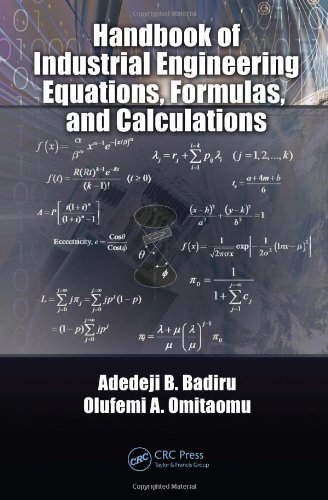
4. Handbook of Industrial and Systems
$130.19
5. Maynard's Industrial Engineering
$64.49
6. Engineering Economy
$92.00
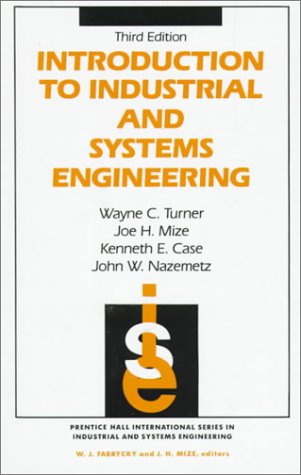
7. Introduction To Industrial And
$52.76
8. Laser Processing of Engineering
 
$24.95
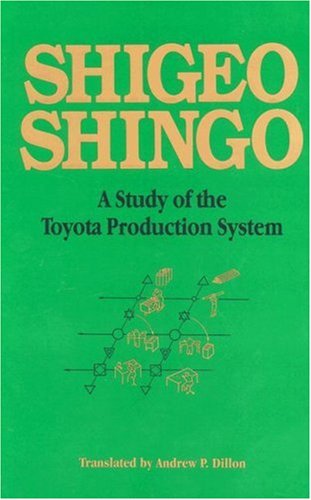
9. Study of TOYOTA Production System
$110.92
10. Reverse Engineering: An Industrial
$49.99
11. Advanced Engineering Mathematics
$32.32
12. Industrial Machinery Repair: Best
$99.89
13. Systems Engineering and Analysis
$87.86
14. Maintenance Engineering Handbook
$59.99
15. Engineering Economy (9th Edition)
$96.13
16. Handbook of Reliability Engineering
$153.30
17. Industrial Engineering Projects:
$65.00
18. Engineering Design: A Materials
$163.00
19. Quality Engineering Handbook,
$74.88
20. Engineering Documentation Control

1. Industrial Power Engineering Handbook (Newnes Power Engineering Series)
by KC Agrawal
Hardcover: 992 Pages (2001-11-15)
list price: US$190.00 -- used & new: US$155.56
(price subject to change: see help)
Asin: 0750673516
Average Customer Review: 5.0 out of 5 stars
Canada | United Kingdom | Germany | France | Japan
Editorial Review

Book Description
Never before has so much ground been covered in a single volume reference source. This five-part work is sure to be of great value to students, technicians and practicing engineers as well as equipment designers and manufacturers, and should become their one-stop shop for all information needs in this subject area.

This book will be of interest to those working with: Static Drives, Static Controls of Electric Motors, Speed Control of Electric Motors, Soft Starting, Fluid Coupling, Wind Mills, Generators, Painting procedures, Effluent treatment, Electrostatic Painting, Liquid Painting, Instrument Transformers, Core Balanced CTs, CTs, VTs, Current Transformers, Voltage Transformers, Earthquake engineering, Seismic testing, Seismic effects, Cabling, Circuit Breakers, Switching Surges, Insulation Coordination, Surge Protection, Lightning, Over-voltages, Ground Fault Protections, Earthing, Earth fault Protection, Shunt Capacitors, Reactive control, Bus Systems, Bus Duct, & Rising mains

*A 5-part guide to all aspects of electrical power engineering

*Uniquely comprehensive coverage of all subjects associated with power engineering

*A one-stop reference resource for power drives, their controls, power transfer and distribution, reactive controls, protection (including over voltage and surge protection), maintenance and testing electrical engineering ... Read more

Customer Reviews (6)

5-0 out of 5 stars Absolute Best!
This is the best combination of practical and theoretical electrical engineering ever published - period.It covers both IEC and ANSI requirements in depth. It is now my working bible! You have to buy it to understand!


5-0 out of 5 stars Absolute in content
A must have have for every practising Electrical Engineer. The USP of the book lies in its blending of theory with Practical know how of the technology which is a rare find in literature.

5-0 out of 5 stars A Unique Handbook
Extract from a review by Bhaskar Sinha, Dy. G. M. (Engg.), BHEL,
published in Beacon, house journal of IEEE Delhi Section, Vol.21,No.1, (June 2002)

The release of a new title by the renowned technical publishing house of Newnes / Butterworth-Heinemann is usually a noteworthy event for the technical fraternity.The title under review has come as a surprise, not only because it far exceeds the standard usually set for handbooks but also because it has achieved the unique distinction of being a reference work equally useful and valuable for industry professionals, practising engineers, consultants, technicians, students, teachers, research scholars and all others professionally interested in industrial power systems.

By virtue of their diversity, complexity and size, industrial power systems throw a formidable challenge to the electrical engineer.Standard electrical engineer's handbooks do not address the requirements of this special field completely.For the large number of day-to-day problems faced by production, operation and maintenance engineers working in industries there are few dedicated reference books to fall back upon for guidance.The ones that are available also do not cover the ground adequately.The present work is perhaps the most complete industrial power systems handbook currently available.

This is a reference for all engineers in design and application, protection and testing, production, project engineering, project implementation and maintenance. The text is structured into five parts. The essential theory of each topic is covered first, followed by industrial practice information.The idea is that detailed theory can always be gleaned from textbooks.Agrawal knows where exactly he must draw the line between theory and application engineering.

Mr. Agrawal has effectively bridged the gap between theory and practice in his book.Clear application data and guidelines, manufacturer's practices, application practices, commercially available ratings of machines, selection, operation and maintenance of equipment and plant, troubleshooting - all are covered in every conceivable detail.The material is cleverly keyed in to the recommendations of international standards organisations like ISO, IEEE, ANSI, BSI, DIN, IEC, etc.

One detailed flip-through leaves you convinced of the publisher's claim that "never before has so much ground been covered in a single volume reference source". Apart from doing yeomen's service to practising engineers, the author has done a great favour to teachers at technical institutes who have limited access to information from the Industry.Students will now not be deprived of this kind of information since teachers can always refer this excellent handbook to reply to questions raised in the classroom.

The production values of the book are excellent.Each page is lavishly illustrated with high quality drawings, graphs and photographs.The overall structuring of the book is excellent.

There is no capsule biography of the author anywhere in the book.For most readers Agrawal will remain only a name.

At the end of it all, the book emerges as a landmark achievement in its field.When you put it down, you cannot help wishing there were separate handbooks of identical character in the areas of transmission, distribution and utilization too.

5-0 out of 5 stars Must Read
Information is vast, useful and rare.
Rare Blend of theoretical study with pratical data and tips.
Material of immense use to practcing engineers.
All 32 chapters are very interesting.
Book gives concept of one of window shopping elimenating the need for hunting information at several places.
Book is indeed a commendable endeavour.
The book can surely be termed as a handbook on these subjects.

5-0 out of 5 stars Complete Book
Book is of immense practical use as treatment of subjects is comprehensive and covers widely confornted problems and issues. ... Read more


2. Industrial Plasma Engineering: Applications (Industrial Plasma Engineering, Vol 2)
by J Reece Roth
Paperback: 658 Pages (2001-12-15)
list price: US$55.00 -- used & new: US$55.00
(price subject to change: see help)
Asin: 0750305452
Canada | United Kingdom | Germany | France | Japan
Editorial Review

Book Description
Written by a leading expert in the field, the paperback edition of Industrial Plasma Engineering, Volume 2: Applications to Nonthermal Plasma Processing provides a background in the principles and applications of low temperature, partially ionized Lorentzian plasmas that are used industrially. The book also presents a description of plasma-related processes and devices that are of commercial interest. The text is suitable for students or in-service users with a physics and calculus background at the sophomore level. These two volumes are intended to be used as textbooks at the senior or first-year graduate level by students from all engineering and physical science disciplines and as a reference source by in-service engineers. ... Read more


3. Handbook of Industrial Engineering, 2nd Edition
Hardcover: 2816 Pages (1992-01)
list price: US$275.00 -- used & new: US$199.00
(price subject to change: see help)
Asin: 0471502766
Average Customer Review: 5.0 out of 5 stars
Canada | United Kingdom | Germany | France | Japan
Editorial Review

Book Description
Unrivaled coverage of a broad spectrum of industrial engineering concepts and applications
The Handbook of Industrial Engineering, Third Edition contains a vast array of timely and useful methodologies for achieving increased productivity, quality, and competitiveness and improving the quality of working life in manufacturing and service industries. This astoundingly comprehensive resource also provides a cohesive structure to the discipline of industrial engineering with four major classifications: technology; performance improvement management; management, planning, and design control; and decision-making methods.
Completely updated and expanded to reflect nearly a decade of important developments in the field, this Third Edition features a wealth of new information on project management, supply-chain management and logistics, and systems related to service industries. Other important features of this essential reference include:
* More than 1,000 helpful tables, graphs, figures, and formulas
* Step-by-step descriptions of hundreds of problem-solving methodologies
* Hundreds of clear, easy-to-follow application examples
* Contributions from 176 accomplished international professionals with diverse training and affiliations
* More than 4,000 citations for further reading
The Handbook of Industrial Engineering, Third Edition is an immensely useful one-stop resource for industrial engineers and technical support personnel in corporations of any size; continuous process and discrete part manufacturing industries; and all types of service industries, from healthcare to hospitality, from retailing to finance.
Of related interest . . .
HANDBOOK OF HUMAN FACTORS AND ERGONOMICS, Second Edition
Edited by Gavriel Salvendy
(0-471-11690-4) 2,165 pages 60 chapters
"A comprehensive guide that contains practical knowledge and technical background on virtually all aspects of physical, cognitive, and social ergonomics. As such, it can be a valuable source of information for any individual or organization committed to providing competitive, high-quality products and safe, productive work environments."-John F. Smith Jr., Chairman of the Board, Chief Executive Officer and President, General Motors Corporation
(From the Foreword) ... Read more

Customer Reviews (3)

5-0 out of 5 stars Can't say anything under 'Totally Satisfied'
As soon as I received this book, I started realize the price is great compared to what the book is offering. We IE usually need to remember some things we learnt while we were studying, and instead of looking for it in many many books, you'll find it here. A friend of mine bought the Maynard's, and sincerely, Salvendy's is a lot better, better focused and clearly explained everything. Great buy!!

5-0 out of 5 stars Perfect
In one word; perfect!
It is a must for an industrial, and system engineer
it serves and explains every useful information we need.
Thank you!

5-0 out of 5 stars A Sturdy Reference Manual.
One of the best, if now the only, Reference manuals specifically written and aimed towards the practice of the wide field of industrial engineering. Within this massive 'CODEX' an IE can find information covering almost eveyarea in the vast field. Not meant as an introduction to the field, Ihowever highly recomend it for the practicing members of our field. ... Read more


4. Handbook of Industrial and Systems Engineering
Hardcover: 768 Pages (2005-12-15)
list price: US$149.95 -- used & new: US$128.99
(price subject to change: see help)
Asin: 0849327199
Average Customer Review: 5.0 out of 5 stars
Canada | United Kingdom | Germany | France | Japan
Editorial Review

Book Description
Responding to the demand by researchers and practitioners for a comprehensive reference,Handbook of Industrial and Systems Engineering offers full and easy access to a wide range of industrial and systems engineering tools and techniques in a concise format. Providing state of the art coverage from more than 40 contributing authors, many of whom are "rising stars" in this area, this volume emphasizes systems engineering aspects and expands beyond the topics found in the existing references in this field.The handbook is a one-stop source for industrial and systems engineering. It introduces new technologies, offers a systems integration approach, and provides coverage of information engineering. Part I delivers a general introduction featuring references to the origin of industrial engineering and its ties to the Industrial Revolution. Parts II and III cover the fundamentals of industrial and systems engineering. Part IV contains chapters on manufacturing and production systems, while part V addresses new technologies. The book concludes with general applications of both industrial and systems engineering. ... Read more

Customer Reviews (1)

5-0 out of 5 stars Superb Handbook and Overview
Whether you are an experienced Industrial Engineer or work in one of the 40+ areas in which handbook reviews you will find this reference invaluable.As with any handbook, there are some tradeoffs between comrpehensiveness and space, but the editor has done a great job at making these choices wisely.In particular, the organization of the book flows well through the issues, while the depth of the individual chapters provides sufficient detail to provide a good understanding (and in many cases application) of the issue without losing itself in the details.Excellent references provide a route ahead for those who want to learn more.I'd expect this book to be the standard in its class for some time. ... Read more


5. Maynard's Industrial Engineering Handbook
by Kjell B. Zandin, Harold B. Maynard
Hardcover: 2048 Pages (2001-05-15)
list price: US$184.00 -- used & new: US$130.19
(price subject to change: see help)
Asin: 0070411026
Average Customer Review: 4.0 out of 5 stars
Canada | United Kingdom | Germany | France | Japan
Editorial Review

Book Description
Explore the latest IE issues and challenges

Brought fully up to date by expert Kjell Zandin, Maynard’s Industrial Engineering Handbook, Fifth Edition puts exhaustive application-driven coverage of industry principles and practices, materials and systems, at your fingertips. Covering everything from work measurement and material flow, to facilities and quality control, this unparalleled reference is nothing less than the most in-depth, hands-on IE reference available. Designed for industrial engineers who are challenged to do more, in more arenas, this new edition introduces you to both traditional and the latest, most efficient, and cost-effective IE methods and technologies. In 133 solution-packed chapters--90 percent completely new--from 176 expert contributors worldwide, you can explore the Kazien approach to methods engineering, design for assembly,statistical quality control, lean manufacturing, agile production, demand flow technology, and much, much more. You’ll be brought up to speed on breakthroughs in information technology, computer simulation, sensors and controls, economic analyses, robotics, planning, management, organization, and more. 24 case studies illuminate real-life applications, from company turnarounds using IE techniques to neural network applications and implementing a paperless warehouse management system. ... Read more

Customer Reviews (9)

4-0 out of 5 stars Still a Demand for the Industrial Engineering Function
There is a definite demand for this handbook based on the price I would say. Honestly, it is wide-ranging in its scope of the IE function reflecting the diversity of Industrial Engineering in general. I like the concise format for that very reason. I am an old fashioned Motion and Time Study IE and the ever evolving nature of the field based on exponentially improved communications and technology at our fingertips has slanted and re-postured the nature of Industrial Engineering. This new slant is well represented here and is an indispensable source of reference for new IEs and the old timers like myself. I was recently told that an Engineer is an Engineer is Engineer etc. That may be but you still have to say current in your field. This handbook is an invaluable concise reference and a good starting point for whatever diverse topics you wish to review and investigate.

2-0 out of 5 stars Demasiado volumen, poco didáctico.
El voluminoso libro consiste en un compendio de diferentes artículos que cubren múltiples aspectos del campo de la Ingeniería Industrial, todos ellos descritos por autoridades en la materia (principalemente profesores de Universidad).

Justamente es el enfoque lo que hace ser un texto casi de introducción para cada uno de los temas tratados. La amplitud de los temas, son de tal calibre que o bien la descripción queda corta o bien el autor quiere incluir el máximo de detalle que llega a ser intratable como introducción.

Cada uno de los capítulos, son de por sí temas que merecen una descripción más detallada en libros por separado.

Para mi gusto, el mismo objetivo se cubre ampliamente en los libros del profesor Roger G. Schroeder (Operations Management), con una didáctica muchísimo más clara y con ejemplos más actualizados.

Carlos Ortega
2006-01-30

1-0 out of 5 stars A generic and almost useless manual
I've been a professional IE for more than 15 years and I bought this "manual" thinking that it would actually be a summary of the most important tools used in this profession, but I realized that it is not.It is way to general and it has lost most of the formulas and calculations that are required as an IE.There is too much wording and too little math.If you are a manager and you don't care for the how to, this is good for you.If you are in the field, and you need a quick reference on how to calculate things and how to implement them , you got to look for another book.

5-0 out of 5 stars Dream Come True Manual for IE
As an IE graduate I've first entered manufacturing and progressed to service management in the airlines, this is still the bible for my daily work reference. Topics cover enormous grounds useful in multi industries and yet each topic is given ample depth. Chapters are structured for easy reference and search. Even if you're not an IE, there is just so much you can use in the book.

5-0 out of 5 stars Great Reference for Industrial Engineer
A great reference book for engineers who would like to implement process re-engineering. Industrial Engineering tools & methods are provided in this book. ... Read more


6. Engineering Economy
by Leland T Blank, Anthony Tarquin, Leland Blank
Hardcover: 768 Pages (2002-08-20)
list price: US$120.00 -- used & new: US$64.49
(price subject to change: see help)
Asin: 0072432349
Average Customer Review: 2.5 out of 5 stars
Canada | United Kingdom | Germany | France | Japan
Editorial Review

Book Description
This student-friendly text on the current economic issues particular to engineering covers the topics needed to analyze engineering alternatives. Students use both hand-worked and spreadsheet solutions of examples, problems and case studies. In this edition the options have been increased, with an expanded spreadsheet analysis component, twice the number of case studies, and virtually all new end-of-chapter problems. The chapters on factor derivation and usage, cost estimation, replacement studies, and after-tax evaluation have been heavily revised. New material is included on public sector projects and cost estimation. A reordering of chapters puts the fundamental topics up front in the text. Many chapters include a special set of problems that prepare the students for the Fundamentals of Engineering (FE) exam.

This college-level text provides students and practicing professionals with a solid preparation in the financial understanding of engineering problems and projects, as well as the techniques needed for evaluating and making sound economic decisions. Distinguishing characteristics include learning objectives for each chapter, an easy-to-read writing style, many solved examples, integrated spreadsheets, and case studies throughout the text. Graphical cross-referencing between topics and quick-solve spreadsheet solutions are indicated in the margins throughout the text. While the chapters are progressive, over three-quarters can stand alone, allowing instructors flexibility for meeting course needs. A complete online learning center (OLC) offers supplemental practice problems, spreadsheet exercises, and review questions for the Fundamentals of Engineering (FE) exam.

... Read more

Customer Reviews (11)

1-0 out of 5 stars Worst Engineering Text I've Had Yet
The Blank-Tarquin Engineering Economy Text is the worst I've encountered in my undergrad studies. Instead of clarifying, illustrating, and simplying - it befuddles, complicates, and obfuscates the subject. An additional frustration is for example, is in the 6th edition, which I had the misfortune to have to buy, doesn't have a single answer in the back to aid a student in learning. In short, if your course uses this awful text, drop it immediately, or you'll be in for one miserable semester.

1-0 out of 5 stars Ridiculous
I think there is probably a chance that this is the most poorly written textbook I've ever encountered.

I was going to hold off giving it a bad review until I got through the class, but at this rate I'm not even totally sure I will. I've just re-read the difference between nominal and effective interest for (no hyperbole) the 10th time, and I'm no closer to understanding it. Bad examples, useless derivations, poor explaining. I only wish I could give it a zero.

5-0 out of 5 stars Helped me earn an A
I don't understand where all of the negative reviews are coming from.The 6th edition of this textbook was used in my Financial Aspects of Engineering class my final semester.Officially it is a 400 level course, but in reality it is more like a 200 level course.I literally skipped half of the lectures (remember, it was my final semester) and still earned an A in the class.I think grades were based on a bell curve like most engineering courses, so it's not like everyone received an A.Since I missed so many lectures, I had to rely very heavily on the textbook to learn the material.

I sold the book after the course was over to get some quick cash, but I'm regretting it.I can't remember anything now, and the subject matter of this textbook is starting to be more relevant in my personal and professional lives, so I'm going to buy it again.I highly recommend it as a reference and introduction to real world economic and financial problems.

1-0 out of 5 stars "How to make a good student want to drop out of college"
As someone who loves to learn, this is the most incomplete, illogically written textbook I've ever encountered. As a disclaimer, usually I have better things to do than review books online for complete strangers, but thankfully I can vent here, or I may have been compelled to use it to shatter my living room window, which wouldn't be good.

At best, it meanders back and forth between actual formulas and their complementary Excel formulas, which leaves the reader wondering why they should learn the real thing when Excel can do it for them anyway; but its Excel teachings follow the incomplete style of the book, so there's little chance of improving your Excel skills either. To be fair, on page 671 it lets you in on a brilliant secret: that you can obtain help from Excel by "left-clicking" on the help bar...but even fails to mention the F1 key...par for the course!

At worst, the questions at the end of each chapter (which affect ones GPA and entire future) vary just enough with the examples in the chapter, that it is impossible for the student to solve them without using outside means, like contacting the professor 24/7 which I may have to.

If you think I'm being unfair or have any bias, I'll put it to you this way: Suppose you had never driven a car before, and I wrote a book on how to open the door, turn the key, put it in drive, etc. and then gave you an exam on how to rebuild the engine.

I'm so disgusted with this book, I'd rather be spending this semester in North Korea, where I'd definitely learn more.

1-0 out of 5 stars Horrible Book
This book doesn't explain anything.It just shows a bunch of formulas and doesn't give any hint about when and how to use them one.One of the worst textbooks I've encountered in college (and I'm in my last semester).I wholeheartedly agree with all the negative feedback. ... Read more


7. Introduction To Industrial And Systems Engineering (3rd Edition)
by Wayne C. Turner, Joe H. Mize, Kenneth E. Case, John W. Nazemtz
Paperback: 540 Pages (1992-08-21)
list price: US$123.60 -- used & new: US$92.00
(price subject to change: see help)
Asin: 0134817893
Average Customer Review: 5.0 out of 5 stars
Canada | United Kingdom | Germany | France | Japan
Editorial Review

Book Description

Providing a broad introduction to industrial and systems engineering,this book defines industrial and systems engineering, describes itplace in the business world, and offers a wide picture of the functionalareas with some solution techniques. Divided into three parts, the referenceexplains the role industrial and systems engineering play in an organizationand how to manage and control the function ... covers elementary systemstheory and feedback ... presents a typical problem for each of the majormethodologies of industrial and systems engineering and provides the toolsand techniques for effectively solving it ... discusses computerization ofthese techniques ... emphasizes the relationship of industrial engineeringto such areas as operations research and ergonomics ... explores integratedsystems design, showing how the I.E. must bring together all the detailedpieces into an integrated system ... adds coverage of simulation ...and updates data where applicable. Suitable for industrial and systemsengineers.

... Read more

Customer Reviews (2)

5-0 out of 5 stars Helped me pass the PE!
Great introductory text for a non-IE. Very broad, covers most of the range of the IE topic. I used it as a study aid when studying for the PE exam; I passed, and I credit much of that to this book.

Good: Covers lots of stuff that was on the exam, including:
-Industrial processes (metal cutting, Taylor tool life eqn)
-Facility layout
-Facility location (traveling salesman, milk run algorithms)
-Operations planning (forecasting demand, EOQ, exponential forecasting)
-Project management (PERT, crashing, forward/backward pass)
-Good introduction to stats and probs in the appendix

Not-so-good:
-Lots of wasted space on management theory (get a business text instead)
-Computer stuff is out-of-date

It does not go into substantial detail, so it is (as titled) an introductory text. Still, I highly recommend it to the non-IE.

5-0 out of 5 stars my handbook
needed so bad. as my handbook in this second college years learning industrial engineering. last year, i failed passing the subject. ... Read more


8. Laser Processing of Engineering Materials: Principles, Procedure and Industrial Application
by John Ion
Hardcover: 576 Pages (2005-05-11)
list price: US$65.95 -- used & new: US$52.76
(price subject to change: see help)
Asin: 0750660791
Canada | United Kingdom | Germany | France | Japan
Editorial Review

Book Description
The complete guide to understanding and using lasers in material processing!

Lasers are now an integral part of modern society, providing extraordinary opportunities for innovation in an ever-widening range of material processing and manufacturing applications. The study of laser material processing is a core element of many materials and manufacturing courses at undergraduate and postgraduate level. As a consequence, there is now a vast amount of research on the theory and application of lasers to be absorbed by students, industrial researchers, practising engineers and production managers. Written by an acknowledged expert in the field with over twenty years' experience in laser processing, John Ion distils cutting-edge information and research into a single key text.

Essential for anyone studying or working with lasers, Laser Processing of Engineering Materials provides a clear explanation of the underlying principles, including physics, chemistry and materials science, along with a framework of available laser processes and their distinguishing features and variables. This book delivers the knowledge needed to understand and apply lasers to the processing of engineering materials, and is highly recommended as a valuable guide to this revolutionary manufacturing technology.

* The first single volume text that treats this core engineering subject in a systematic manner
* Covers the principles, practice and application of lasers in all contemporary industrial processes; packed with examples, materials data and analysis, and modelling techniques
* Accompanied by extensive examination questions plus a companion website with instructor's solutions manual ... Read more


9. Study of TOYOTA Production System from Industrial Engineering Viewpoint
 Hardcover: 363 Pages (1981)
-- used & new: US$24.95
(price subject to change: see help)
Asin: 4820702653
Canada | United Kingdom | Germany | France | Japan

10. Reverse Engineering: An Industrial Perspective (Springer Series in Advanced Manufacturing)
Hardcover: 242 Pages (2007-12-06)
list price: US$139.00 -- used & new: US$110.92
(price subject to change: see help)
Asin: 184628855X
Canada | United Kingdom | Germany | France | Japan
Editorial Review

Book Description

Reverse engineering is the process of discovering the technological principles of an object or component through analysis of its structure and function. Such analysis can then be used to redesign the object very quickly using computer-aided design in concert with rapid-manufacturing processes to produce small numbers of components adapted to the needs of a particular customer. This way of working has huge benefits of speed and flexibility over traditional mass-production-based design and manufacturing processes.

This edited collection of essays from world-leading academic and industrial authors yields insight into all aspects of reverse engineering:

The methods of reverse engineering analysis are covered, with special emphasis on the investigation of surface and internal structures.

Frequently-used hardware and software are assessed and advice given on the most suitable choice of system.

Rapid prototyping is introduced and its relationship with successful reverse engineering is discussed.

Importantly, legal matters surrounding reverse engineering are addressed as are other barriers to the adoption of these techniques.

Applications of reverse engineering in three significant areas: automotive, aerospace, and medical engineering are reported in depth.

Reverse Engineering is a "must have" title for anyone working with advanced modern manufacturing technologies, either with a view to researching and improving them further or to making their company leaner and more agile in a competitive manufacturing marketplace.

... Read more

11. Advanced Engineering Mathematics
by Kenneth Stroud, Dexter Booth
Paperback: 1280 Pages (2003-04-01)
list price: US$64.95 -- used & new: US$49.99
(price subject to change: see help)
Asin: 0831131691
Average Customer Review: 5.0 out of 5 stars
Canada | United Kingdom | Germany | France | Japan
Editorial Review

Book Description

  • Uses a unique technique-oriented approach that takes the reader through each topic step-by-step.
  • Features a wealth of worked examples and progressively more challenging exercises.
  • Contains Test Exercises, Learning Outcomes, Further Problems, and Can You? Checklists to guide and enhance learning and comprehension.
  • Expanded coverage includes new chapters on Z Transforms, Fourier Transforms, Numerical Solutions of Partial Differential Equations, and more Complex Numbers.
... Read more

Customer Reviews (8)

5-0 out of 5 stars Outstanding Math Books
The text is designed to meet the specific needs of engineering students who needs adanced math to complete their degree.The text is written for self-study and is completely self-contained.I think that the Advanced Engineering Mathematics text definitely has all of the math you could expect to use in electrical engineering.The nicest part of the text is the fact that the authors use bite-sized chunks of information.You will not get fancy derivations or cute stories at the beginning of the chapter.If you want all types of physical insight or mathematical modeling,this is not your book. If you are like most engineers and need to make it past this material,then the "cookbook" like feel of the text is exactly what you need.

4-0 out of 5 stars Great for Self-Study of Applied Engineering Mathematics
I'll begin with the one problem I've found in this book (the only reason it doesn't get five stars): in the working of some of the example problems, the author leaves out numerous steps, does some odd algebraic manipulation, and some of the example answers are flat-out wrong (there are a couple in the section on Fourier Transforms). Now to all the great aspects...this book covers an extremely wide array of topics, assuming only an elementary knowledge of calculus and differential equations, addressing (in detail) many techniques frequently utilized by engineers with almost no rigor (great if you're an engineering student wanting to learn applied mathematics, not so good for pure mathematics students). The topics include numerical methods for solving algebraic equations, the Laplace Transform, the Z-Transform, Fourier Series and the Fourier Transform, power series solutions of ODE's, numerical methods for ODE's and PDE's, partial differentiation, analytic solution of PDE's, integral functions, matrix algebra, multiple integration, vector calculus, complex analysis, and linear optimization. The author's pedagogical approach is perfectly-suited to self-instruction, and I have been able to work through the book and most of its problems (for which all answers are provided) relatively quickly. My only problem with the content of the book (other than the aforementioned occassional errors) is in the coverage of multiple integration, where a large amount of work is devoted to line and surface integrals of scalar fields (including determining whether the line integral of a differential in x, y, and z is conservative without any discussion of curl). I just personally think this is the wrong approach for line and surface integrals, which are easiest to understand (IMHO) in the context of vector fields and vector calculus. Overall, I feel this is an excellent book for engineering students, and could even serve as a good starting point for mathematics students as an intro to the methods of harmonic analysis, PDE's, and complex analysis, before jumping into the theory of these fields. I whole-heartedly recommend this book.

5-0 out of 5 stars Great for reviewing math relevant to graduate engineering studies
This book is the sequel to Stroud's excellent "Engineering Mathematics", which focused on the undergraduate engineer and the math that he/she should know by graduation. This book continues on with crystal-clear discussions of numerical methods, linear algebra including the singular value decomposition and its uses, linear programming methods, multiple integration, and partial differential equations, to name a few of the topics covered. Just because the mathematics is more advanced in this book does not mean that it is any less clear than its less advanced predecessor. Stroud continues his tradition of holding your hand and leading you through every question you might have about working various types of math problems. I particularly liked his coverage of partial differential equations and numerical linear algebra topics. That is because it is hard to find advanced math books on these topics that are not written by pure mathematicians. Thus most of those books have a tendency to go overboard on proofs and not focus on the practical matters engineers must know in order to solve problems. The only negative thing I can say about the book is that it references Stroud's other book on engineering math, "Engineering Mathematics", during some of the explanations, possibly putting you at a disadvantage if you don't have it handy. I highly recommend this book as a reference every engineer should own.
NOTE: For some strange reason this review of "Advanced Engineering Mathematics" is appearing under that book and also "Vector Analysis" by the same authors. This is NOT a review of "Vector Analysis", just to clear up any confusion!

5-0 out of 5 stars It is impossible to "not learn" what is being taught
The programmed instruction approach is used very effectively by Stroud to make sure the student fully understands exactly what is being taught.

Brilliant!

5-0 out of 5 stars A fantastic book to get you upto speed. I keep a copy of it.
Useful for Engineering math. If you have to use step functions, second order differenital equations , Get this book. I used it and i got great marks for math. I think any book by K.A. Stroud is fantastic. This book has sets of questions and fully worked out answers. As with most math,theres lots of short cuts in math. Laplace transforms show you that theres a quick solution to second order or higher ,differiential equations.Being fast at this allows you to solve control theory questions quickly. ... Read more


12. Industrial Machinery Repair: Best Maintenance Practices Pocket Guide (PLANT ENGINEERING SERIES)
by Ricky Smith, R. Keith Mobley
Paperback: 544 Pages (2003-05)
list price: US$39.95 -- used & new: US$32.32
(price subject to change: see help)
Asin: 0750676213
Average Customer Review: 5.0 out of 5 stars
Canada | United Kingdom | Germany | France | Japan
Editorial Review

Book Description
Industrial Machinery Repair provides a practical reference for practicing plant engineers, maintenance supervisors, physical plant supervisors and mechanical maintenance technicians. It focuses on the skills needed to select, install and maintain electro-mechanical equipment in a typical industrial plant or facility.

The authors focuses on "Best Maintenance Repair Practices" necessary for maintenance personnel to keep equipment operating at peak reliability and companies functioning more profitably through reduced maintenance costs and increased productivity and capacity.

A number of surveys conducted in industries throughout the United States have found that 70% of equipment failures are self-induced. If the principles and techniques in this book are followed, it will result in a serious reduction in "self induced failures".

In the pocketbook format, this reference material can be directly used on the plant floor to aid in effectively performing day-to-day duties. Data is presented in a concise, easily understandable format to facilitate use in the adverse conditions associated with the plant floor. Each subject is reduced to it simplest terms so that it will be suitable for the broadest range of users. Since this book is not specific to any one type of industrial plant and is useful in any type of facility.

·The new standard reference book for industrial and mechanical trades

·Accessible pocketbook format facilitates on-the-job use

·Suitable for all types of plant facilities ... Read more

Customer Reviews (4)

5-0 out of 5 stars Excellent resource.
This is an excellent well organized resource for those in the manufacturing business. Everyone liked it so much we bought three more at work!!

5-0 out of 5 stars "Best Pocket Guide Ever Written on Maintenance Repair"
"Industrial Machinery Repair is a must reading for all maintenance personnel and management.It clearly shows how to improve equipment reliability and performance.Ricky Smith does a wonderful job at making the complicated day-to-day maintenance issues very plain and simple. If you are serious about maintenance in your organization, then you must read Industrial Machinery Repair."

5-0 out of 5 stars A book for all maintenace professionals
We have recommended this book to all our maintenance personnel in the US and Europe as a "must have" in their locker.

5-0 out of 5 stars The New Standard for Industrial Machinery Repair Guides
I keep pouring over my new copy of Industrial Machinery Repair - Best Maintenance Practices Pocket Guide as each chapter is better than the last.This handbook is a must have for anyone involved in industrial maintenance and machinery repair.Ricky Smith and Keith Mobley speak in human voices that we can all understand and they offer information that can be put to immediate use.In addition, the handbook includes a very comprehensive maintenance skills assessment that is worth the the entire price.Buy a copy for every maintenance person at your plant.Terrence O'Hanlon, Reliabilityweb.com ... Read more


13. Systems Engineering and Analysis (4th Edition) (Prentice-Hall International Series in Industrial and Systems)
by Benjamin S. Blanchard, Wolter J. Fabrycky
Hardcover: 816 Pages (2005-05-15)
list price: US$139.00 -- used & new: US$99.89
(price subject to change: see help)
Asin: 0131869779
Average Customer Review: 3.5 out of 5 stars
Canada | United Kingdom | Germany | France | Japan
Editorial Review

Book Description

This reference examines the engineering of both natural and human-made systems and the analysis of those systems. For the engineering of systems, the authors emphasize the process of bringing systems into being. Regarding analysis, they explore the improvement of systems already in existence. Includes a wealth of new and revised figures throughout. Features significant revisions and new material on Bringing Systems Into Being (Ch. 2); Conceptual Design (Ch. 3); Design For Supportability (Ch. 15); Design For Affordability - Life-Cycle Costing (Ch. 17). Adds material on the integration of design disciplines in the systems engineering. Concludes each chapter with new Summary Extensions. Provides a new supplier evaluation checklist. Includes a new appendix that lists 35 key related web sites. A useful reference for electrical, electronic, and automotive engineers, as well as professionals in the aeronautics, astronautics, and manufacturing industries.

... Read more

Customer Reviews (7)

1-0 out of 5 stars mixed bag
we used this book for undergrad se classes i taught.
unfortunately there are not a lot of alternatives.
(we *also* used buede for another class and mandel for project management etc).

the authors know their stuff, unfortunately some of it got lost in translation. perhaps because a lot of the material got translated from govt publications.

this is more like a handbook than a textbook.for the handbook user just get sage's tome.for a textbook -- well this is least worst for an intro to SE.for supporting areas other books are better.

what is good is excellent.but what is bad is frustrating.
they tried to cover way too much in one book and got confused with SE and OR and management techniques and quality and a whole bunch of other stuff that is really tangential to SE.

and the materialgets covered at uneven levels of detail so it is not a good handbook nor a good textbook just a good pile of notes on a lot of se related stuff.

previous editions had many errors and did not come with any answers to the problems, many of which were confusing as stated.

the first part of the book really introduces SE.The rest of the book is for review by someone who has specialised in the areas they cover.

The book would be much better if they concentrated on SE and left the other stuff to other books.i have not checked with the publisher for current availability,but previously there was no instructors guide and no answers to the questions.that is a big drawback for classroom use.

this would be best for an experienced person who wanted to review SE or get an introduction to a specialised topic relating to SE.

the dsmc/dau se handbook is (was?) free on the internet from various govt sites and does a great job of introducing SE.you should look at that resource before buying this book.indeed, unless you are using it in a class you might just want to borrow this from a library instead of buying it.


2-0 out of 5 stars Too much information crammed in one single book
I agree with Keith here on the irritant QUOTE "constant referencing of graphs and figures, as well as notations from previous chapters, it really inhibits my learing when I have to keep flipping back and forth to follow a train of thought. There are also a few chunks of the book that are very, very hard to follow the logical train of thought and require meticulious attention to the detail, and often require rereading. UNQUOTE.


My nit-picks:

The book fails to explain the logic behind some of the concepts. An example follows: The author mentions the Mean Service Time Under Control Formula on Page 318(Section 10.6.4) Unfortunately, the text doesn't seem to explain why the procedure is used that way in the book.

There are some typos in the book, and some unknowns:
Page 319: reference to "equation 10.38" must read as "equation 10.40". Similarly, reference to "equation 10.41" must read as "equation 10.43".

Additionally, the sections on PERT/CPM as well as Statistical Process Control seem to get into a lot of advanced detail, skipping important concepts.

You may want to look at other resources for Optimization Theory Chapters as it is not covered in detail in this book.(as required by the rigors of the course I'm taking!)

In a nutshell- the book can be greatly improved by expanding on the "WHYs" behind some of the concepts mentioned above, for eg section 10.6.4

3-0 out of 5 stars High-level view
Very much the 30,000 foot view of systems engineering. I picked this book up because I saw it referred to all over the place, and assumed that it was reasonably definitive. Sadly, it is not. What the book does do is give the reader a reasonably good high-level overview of systems engineering in general, and of some of the techniques involved in estimating the "ilities" of a given system design. However, the level of detail on any one subject area is very light, and the bias of the book is very much toward DoD-style systems engineering. A good book for systems engineering managers. System designers should also seek out Wymore's "Model-Based Systems Engineering" for a thorough understanding of requirements and design.

4-0 out of 5 stars Great Introduction to Systems Engineering
I took a course in school that used this book and I really enjoyed the book and what it taught me about systems engineering.The authors do a great job of walking the student through the systems engineering process, and ginving a general overview of the steps.The later chapters expand upon this overview to give the detail needed to actually carry out the process.The last part of the book expands upon the "-ilities" of systems engineering which are the authors partiucalr areas of interest.I think anyone interested in systems engineering should get this book, its a great resource.A few things I didn't like was the constant referencing of graphs and figures from previous chapters, it really inhibits my learing when I have to keep flipping back and forth to follow a train of thought.There are also a few chunks of the book that are very, very hard to follow the logical train of thought and require meticulious attention to the detail, and often require rereading.I'm hoping the authors with put out an updated and expanded edition soon, that compensates for these shortfalls.

5-0 out of 5 stars excellent system engineering book!
I'm currently teaching graduate students and used this as a text book last semester. I suppose students have enjoyed this book very much. I appreciate the author and ...'s excellent work as well. ... Read more


14. Maintenance Engineering Handbook
by Lindley R. Higgins, Keith Mobley, R. Keith Mobley
Hardcover: 1504 Pages (2001-10-31)
list price: US$157.50 -- used & new: US$87.86
(price subject to change: see help)
Asin: 0070288194
Average Customer Review: 4.0 out of 5 stars
Canada | United Kingdom | Germany | France | Japan
Editorial Review

Book Description
MAINTENANCE ENGINEERING HANDBOOK Sixth Edition

The latest science, technology, and management solutions for facility maintenance issues

The one reference you can bank on for current answers to virtually any maintenance question, Lindley R. Higgins’ and R. Keith Mobley’s Maintenance Engineering Handbook provides the best of today’s strategies and technologies from the world’s leading experts.


• One-stop source of answers on all maintenance engineering functions, from managing, planning, and budgeting to solving environmental problems
• New coverage of the latest computer applications, maintenance technologies, and tools
• Strategies, equipment, techniques, and tips for facilities from industrial plants to residential complexes, institutions, schools, hospitals, and office buildings

NEW IN THIS EDITION


• Technology updates
• Improvements in prevention and prediction
• Equipment testing and monitoring tools
• The latest computer programs
• Advances in maintenance economics
• Guidance on insurance administration
• New maintenance techniques for centrifugal air compressors, centrifugal pumps, and other equipment

Maintenance Engineering’s Most Current, Comprehensive, and Complete Reference

A McGraw-Hill Classic


55 SPECIALISTS
Buildings and grounds
Computer applications
Corrosion and cleaning
Costs and controls
Electrical equipment
Estimates and budgets
Instrumentation and monitoring tools
Inventory
Lubrication
Measuring, servicing, testing
Mechanical equipment
Organization and management
Parts and components
Personnel and policies
Practices and prevention
Sanitation and housekeeping
Specialized equipment
WeldingDownload Description
The one reference you can bank on for current answers to virtually any maintenance question, Lindley R. Higgins? and R. Keith Mobley?s Maintenance Engineering Handbook provides the best of today?s strategies and technologies from the world?s leading experts. ... Read more

Customer Reviews (1)

4-0 out of 5 stars Great reference work for the professional maintenance engineer
This book contains over 1500 pages of figures and often dense text. It is the only book of its kind that I know of written clearly for the degreed maintenance and facilities engineer. This book is an edited work by several dozen authors who are all leading maintenance practitioners and experts in their field. The book covers both management and technical issues associated with the maintenance of the modern physical plant.

In reference to management issues, the chapter entitled "Operating Policies of Effective Maintenance" successfully deals with the strategic decisions that Maintenance managers must make, including issues such as whether or not to outsource, shift coverage, whether to decentralize or centralize maintenance, and the use of standard practice sheets and work instructions. The chapter on "Operating Practices to reduce Maintenance Work" provides a basic yet well-formulated introduction to concepts of predictive and preventive maintenance. There is fairly comprehensive coverage of how best to provide incentive payments for maintenance workers, which may or may not be applicable in certain industrial situations.

The Chapters "An Introduction to the Computer in Maintenance" and "Computerized Planning and Scheduling" run the risk of being out of date before the book has long been published. However, the principles that these chapters cover remain somewhat timeless, and also provide a useful starting point for those wishing to understand more about these aspects. Newer younger grads in the field willprobably already know this material. The Chapters entitled "Maintenance Stores and Inventory Control" and "Maintenance Storerooms" are very well written. They are particularly valuable since this topic gets relatively little attention from maintenance professionals, and these chapters show their importance.

The chapter entitled "Work Measurement" should give even experienced planners new ways to look at how they estimate job durations, and the chapter entitled "Work Simplification" introduces standard industrial engineering techniques to maintenance personnel, who often are industrial engineers by training, but sometimes are not. The tools discussed include charting tools and techniques thatassist planners in identifying ways to make repair tasks quicker and simpler. Planners will also benefit from reading the chapter "Estimating Repair and Maintenance Costs".

The chapters on the technical aspects of maintenance are also well-written, and could be useful both as a reminder for engineers about some fundamental concepts, as well as providing useful information for craftspeople to assist with troubleshooting and ensuring that sound maintenance quality standards are implemented. There is also a very useful introduction to the three main predictive maintenance technologies - vibration analysis, oil analysis and thermography. These sections would equip anyone with a mechanical engineering background to be able to know what questions to ask of experts in these fields.

There is a small section entitled "Sanitation and Housekeeping" that may not be relevant to maintenance engineers or tradespeople, but it is included in keeping with the book's high standard of completeness.

There are a few areas of maintenance engineering that are not covered in this book. In particular, reliability centered maintenance (RCM) and its derivatives are not covered.Reliability modeling techniques such as Weibull Analysis and Root Cause Analysis get mentioned in one brief paragraph in the chapter on vibration analysis, which is a rather odd place for the subject. With all of the recent emphasis on Six Sigma, maybe the thinking was that this would better be handled on a book on that subject. Among the technical sections, there are some fairly common equipment types that are not covered. For example, there is no coverage of the maintenance of hydraulic systems, boilers, PLC's, or distributed control systems.

In spite of these few shortcomings, this is certainly an excellent reference for the maintenance engineer for most facets of the job including planning, financial, organizational, and hands-on technical aspects. The table of contents is as follows:

SECTION 1 - ORGANIZATION AND MANAGEMENT OF THE MAINTENANCE FUNCTION
Chapter 1 - Introduction to the Theory and Practice of Maintenance
Chapter 2 - Operating Policies of Effective Maintenance
Chapter 3 - Area and Centralized Maintenance Control
Chapter 4 - Operating Practices to Reduce Maintenance Work
Chapter 5 - Incentive Payment of Maintenance Workers
Chapter 6 - Reports from Maintenance
Chapter 7 - Maintenance Skills Training

SECTION 2 - THE HORIZONS OF MAINTENANCE MANAGEMENT
Chapter 1 - Corrective Maintenance
Chapter 2 - Components of Effective Preventive Maintenance
Chapter 3 - Predictive Maintenance
Chapter 4 - Maintenance Work Order Planning
Chapter 5 - An Introduction to the Computer in Maintenance
Chapter 6 - Computerized Planning and Scheduling
Chapter 7 - Maintenance Stores and Inventory Control
Chapter 8 - Maintenance Storerooms
Chapter 9 - Internet for Maintenance and Engineering

SECTION 3 - ESTABLISHING COSTS AND CONTROL
Chapter 1 - Economics of Preventive Maintenance
Chapter 2 - Work Measurement
Chapter 3 - Rating and Evaluating Maintenance Workers
Chapter 4 - Work Simplification in Maintenance
Chapter 5 - Estimating Repair and Maintenance Costs

SECTION 4 - MAINTENANCE OF PLANT FACILITIES
Chapter 1 - Maintenance of Low-Sloped Membrane Roofs
Chapter 2 - Concrete Industrial Floor Surfaces - Design, Installation, Repair, and Maintenance
Chapter 3 - Painting and Protective Coatings
Chapter 4 - Maintenance and Cleaning of Brick Masonry Structures
Chapter 5 - Maintenance of Elevators and Special Lifts
Chapter 6 - Air-Conditioning Equipment
Chapter 7 - Ventilating Fans and Exhaust Systems
Chapter 8 - Dust-Collecting and Air-Cleaning Equipment
Chapter 9 - Piping
Chapter 10 - Scaffolds and Ladders

SECTION 5 - MAINTENANCE OF MECHANICAL EQUIPMENT
Chapter 1 - Plain Bearings
Chapter 2 - Rolling-Element Bearings
Chapter 3 - Flexible Couplings for Power Transmission
Chapter 4 - Chains for Power Transmission
Chapter 5 - Cranes - Overhead and Gantry
Chapter 6 - Chain Hoists
Chapter 7 - Belt Drives
Chapter 8 - Mechanical Variable-Speed Drives
Chapter 9 - Gear Drives and Speed Reducers
Chapter 10 - Reciprocating Air Compressors
Chapter 11 - Valves
Chapter 12 - Pumps - Centrifugal and Positive Displacement

Section 6 - MAINTENANCE OF ELECTRICAL EQUIPMENT
Chapter 1 - Electric Motors
Chapter 2 - Maintenance of Motor Control Components
Chapter 3 - Maintenance of Industrial Batteries (Lead-Acid, Nickel-Cadmium, Nickel-Iron)
Chapter 4 - Illumination

Section 7 - SANITATION AND HOUSEKEEPING
Chapter 1 - Organizing the Sanitation-Housekeeping Personnel
Chapter 2 - Maintaining Plant Sanitation and Housekeeping
Chapter 3 - Industrial Housekeeping
Chapter 4 - Cleaning Industrial Plant Offices

Section 8 - INSTRUMENTS AND RELIABILITY TOOLS
Chapter 1 - Mechanical Instruments for Measuring Process Variables
Chapter 2 - Electrical Instruments for Measuring, Servicing and Testing
Chapter 3 - Vibration - Its Analysis and Correction
Chapter 4 - An Introduction to Thermography
Chapter 5 - Tribology

Section 9 - LUBRICATION
Chapter 1 - The Organization and Management of Lubrication
Chapter 2 - Lubricating Devices and Systems
Chapter 3 - Planning and Implementing a Good Lubrication Program

Section 10 - MAINTENANCE WELDING
Chapter 1 - Arc Welding in Maintenance
Chapter 2 - Gas Welding in Maintenance

Section 11 - CHEMICAL CORROSION CONTROL AND CLEANING
Chapter 1 - Corrosion Control
Chapter 2 - Industrial Chemical Cleaning Methods ... Read more


15. Engineering Economy (9th Edition) (Prentice-Hall International Series in Industrial and Systems Engineering)
by Gerald J. Thuesen, W.J. Fabrycky
Paperback: 637 Pages (2000-06-09)
list price: US$113.33 -- used & new: US$59.99
(price subject to change: see help)
Asin: 013028128X
Average Customer Review: 1.0 out of 5 stars
Canada | United Kingdom | Germany | France | Japan
Editorial Review

Book Description

This book emphasizes the concepts and techniques of analysis that prove useful in evaluating the economic feasibility of engineering systems, projects, and services for decision purposes. It also familiarizes the engineer with operations and operational feasibility necessary to considerations of the design process. Chapter topics cover economic and cost concepts; interest formula; calculations of economic equivalence; equivalence involving inflation; bases for comparison and decision-making among alternatives; evaluating production operations and replacement alternatives; accounting; income taxes in economic analysis; decisions under risk and uncertainty and involving multiple criteria; and estimating economic elements. For a basic understanding of mathematical modeling in complex operational systems, essential to a growing number of engineers today.

... Read more

Customer Reviews (3)

1-0 out of 5 stars Full of errors
This book has errors page after page.Poor examples and no answers in the back to see if you can follow the dribble typed out before the practice problems.

Don't purchase.I've used it in two class at two different schools and I still say it is weak!

1-0 out of 5 stars Poor construction
Only took one shot of .45ACP to go from cover to cover once the course was over.Weak.

1-0 out of 5 stars Unacceptable Text
This text is largely a mass of theoretical discussion with very few example problems to illustrate concepts.A large percentage of the problems that are used as examples are hard to follow, and others haveobvious typos. Language is too formal and, at times, condescending.Thistext was required for an undergraduate course in Engineering Economics.Myunderstanding is that this is the first year it was used at my college and,due to large number of complaints, will be the last. ... Read more


16. Handbook of Reliability Engineering and Management
by W. Grant Ireson, Clyde F. Coombs, Richard Y. Moss
Hardcover: 816 Pages (1995-12-01)
list price: US$132.00 -- used & new: US$96.13
(price subject to change: see help)
Asin: 0070127506
Average Customer Review: 1.0 out of 5 stars
Canada | United Kingdom | Germany | France | Japan
Editorial Review

Book Description
Responsible For Reliability? Look No Further! Finally, a working tool that delivers expert guidance on all aspects of product reliability. W. Grant Ireson and Clyde F Coombs, Jr.'s new Second Edition of Handbook of Reliability Engineering and Management gives you the specific engineering, management, and mathematics data you need to design and manufacture more reliable electronic and mechanical devices as well as complete systems. You'll find proven industry practices for defining and achieving reliability goals--real how-to information, not theoretical generalities. You also get new methods for determining overall product reliability. . .the latest design techniques for extending a product's life cycle. . .tested strategies for incorporating reliability into new product development. . .and more. ... Read more

Customer Reviews (1)

1-0 out of 5 stars Wait for the NEXT Edition.
"Handbook of Reliability Engineering and Management", Second Edition,Edited by W. Grant Ireson, Clyde F. Coombs, Jr. and Richard Y. Moss,McGraw Hill, 1996.

This is the second edition of the Handbook, which first appeared in 1988.There are individual contributing authors for each of the 27 chapters; the resultant is already out of date.The current "Limbo" status of military documents, such as Military Standard 105 and Military Handbook 217F, makes this present edition of the Handbook out of date in 2000. Will Military Handbook 217F ever be revised to provide up-to-date models for the failure rates of modern electronic components?

This Handbook would benefit from better editing.For example, as a Handbook, it is expected that the index in the back of the physical book would contain page references to pertinent reliability terms and techniques.Today's technology emphasizes Environmental Stress Screening, ESS.The term, ESS, has been around for at least 15 years (or so: I recall doing an IEEE paper on ESS in 1988). It is expected that ESS and related terms such as HALT (Highly Accelerated Life Testing) and HASS, would be readily found in the Handbook's index.They are not.

Same thing holds true for Software Reliability, where the chapter's author uses the cute term, "SMERFS Model" (p. 22.15),but this term will not be found in the index. (SMERFS = Statistical Modeling and estimation of reliability functions for software.)By the way, from a technical point of view, this chapter'shalf page on the various modelsfor software reliability is very skimpy.For example, Dr. Michael Elbert has written an entire IEEE paper on the selection of the proper model for software reliability.It would be expected that a Handbook would be more complete than just a small portion of a page.In Chapter 22, on Software Reliability, the author references a paper on the Rayleigh curve by "Gaffney" (p. 22.13).The reference at the back of Chapter 22 gives the reference's name as "John Gafney".This is a discrepancy that should have been caught by the editors.I suspect that the correct spelling is "Gaffney", but both can not be correct.

There are other editorial lapses:on page 16.24, Bellcore failure rates are compared to MIL-HDBK-217, and it is state thatBellcore "... provides generally better failure rates than does MIL-HDBK-217F, which is supposedly based on field experience in communications equipment." The way this sentence is presented implies that MIL-HDBK-217F is based upon experience in communications equipment, when, as most reliability practitioners know, MIL-HDBK-217F failure rates are based on environments from Ground, Fixed, to Ground, Benign, to Naval Sheltered and Airborne, etc, and on equipment from radios to radars to sonars, air data computers and fire control units.This inconsistency in the use of the language ought to have been caught by the editors.

On page 16.6, there is a nice comparison of FITs to failures per million hours to %failure per 1000 hours. The Editors should make the reader aware that a billion in American usage (1 with nine zeroes after it) is not the same as European usage.Chapter 6, on FMEAs is totally into the Risk Priority Number method where "gray beards" sit around and use the "Delphi" approach to ascertainthe probability of an event, the severity of that failure and whether or not the failure can be detected.This is a very subjective method, and, in my humble opinion, RPN is being supercededby more objective, quantitative methods (see IEC 61508).

In summary, prudent purchasers should await the next edition of this Handbook, if that edition considers all the changes taking place in the availability of military standards and the new leadership role of international standards in the reliability arena.For example, IEC 300, on "Dependability" is not even mentioned.

John Peter Rooney, ASQ Certified Reliability Engineer #2425. ... Read more


17. Industrial Engineering Projects: Practice and Procedures for Capital Projects in the Engineering, Manufacturing and Process Industries
by Joint Developme
Hardcover: 303 Pages (1998-10-16)
list price: US$210.00 -- used & new: US$153.30
(price subject to change: see help)
Asin: 0419225102
Average Customer Review: 1.0 out of 5 stars
Canada | United Kingdom | Germany | France | Japan
Editorial Review

Book Description
This handbook provides a clear explanation of the commercial, contractual and statutory aspects of a capital project in the process industries from feasability studies, through commissioning/contract; to construction operation. ... Read more

Customer Reviews (1)

1-0 out of 5 stars Too confusing, and too vague
This book has no clear direction and too little detail too be of any use. I am in the oil & gas business, but am not an engineer and hoped this book would give me some insights, it didn't. Would not recommend it to anyone. ... Read more


18. Engineering Design: A Materials and Processing Approach
by George Dieter
Hardcover: 816 Pages (1999-08-11)
list price: US$149.38 -- used & new: US$65.00
(price subject to change: see help)
Asin: 0073661368
Canada | United Kingdom | Germany | France | Japan
Editorial Review

Book Description
The third edition of Engineering Design represents a major reorganization and expansion. The revision has resulted from the recognition that engineering students need more structure to guide them through the design process. Chapters have been reordered to be more in the natural progression of the design process. The book is broader in content than most design texts, but now contains much more prescriptive guidance on how to carry out design. ... Read more


19. Quality Engineering Handbook, Second Edition, Revised and Expanded (Quality and Reliability)
Hardcover: 744 Pages (2003-04-01)
list price: US$179.95 -- used & new: US$163.00
(price subject to change: see help)
Asin: 0824746147
Average Customer Review: 4.0 out of 5 stars
Canada | United Kingdom | Germany | France | Japan
Editorial Review

Book Description
Written by one of the foremost authorities on the subject, the Second Edition is completely revised to reflect the latest changes to the ASQ Body of Knowledge for the Certified Quality Engineer (CQE). This handbook covers every essential topic required by the quality engineer for day-to-day practices in planning, testing, finance, and management and thoroughly examines and defines the principles and benefits of Six Sigma management and organization. The Quality Engineering Handbook provides new and expanded sections on management systems, leadership and facilitation principles and techniques, training, customer relations, documentation systems, domestic and international standards, and more. ... Read more

Customer Reviews (5)

5-0 out of 5 stars GreatResource
Why I initialy purchased it as a study aid, I have found it to be an excellent resource providing practical examples for on the job use.

4-0 out of 5 stars Good book - can be found cheaper
New @ asq.org for less. Why is it so much higher here?

4-0 out of 5 stars Useful and Good But ...
As other reviewers mentioned, Pyzdek can help you make it over the CQE exam hurdle. In fact it is probably helpful for those who wish to clear the CQM or CQT hurdles. It may aslo be a helpful supplament for Six-Sigma folks. The volume also serves competently as a handbook and reference. Importantly, it includes an adequate bibilography so that the reader can easily pursue more specialized or more fundamental soruces.

But ...

Neither the material nor the presentation distinguishes this book from its many competitors.

Too often the index enties have incorrect page numbers. In an age of computer automated indexing, mistakes of this kind really grate on a reader who expects more. Further, a quality handbook should set a better example!

2-0 out of 5 stars OK - but just
I bought this book to prepare for the ASQ CQE exam.This was my primary reference book and I did pass the exam - so there must be some merit to this book.However, it is frustrating.My criticisms include:

- the index doesn't point to the right pages, making it very difficult to use (especially in an open book exam)
- some of the graphs have no labelling at all (Fig IV.28)
- some material is repeated (eg central limit theorem)

This book has some good stuff in it and is aimed at getting you through the CQE exam.It will also be useful for a practicing quality engineer.However, it is in many cases separate articles, procedures and discussions stuck together with little flow.A good review and editing would do a lot for this book.

4-0 out of 5 stars A concise study book for taking and passing the CQE test.
This book has just the right amount of pictures and charts to balance the text.I wanted a study book that would be used as a day to day reference and something that I could use during my CQE test to "jog" my memory.The numerous graphs help me to answer generic SPC problems better than all that verbage found in other "helpful texts". ... Read more


20. Engineering Documentation Control Handbook : Configuration Management for Industry
by Frank B. Watts
Hardcover: 265 Pages (2000-03-01)
list price: US$79.00 -- used & new: US$74.88
(price subject to change: see help)
Asin: 0815514468
Average Customer Review: 5.0 out of 5 stars
Canada | United Kingdom | Germany | France | Japan
Editorial Review