e99 Online Shopping Mall

Geometry.Net - the online learning center Help  
Home  - Science - Insects (Books)

  Back | 21-40 of 100 | Next 20
A  B  C  D  E  F  G  H  I  J  K  L  M  N  O  P  Q  R  S  T  U  V  W  X  Y  Z  

click price to see details     click image to enlarge     click link to go to the store

$76.41
21. The Insects: Structure and Function
$1.99
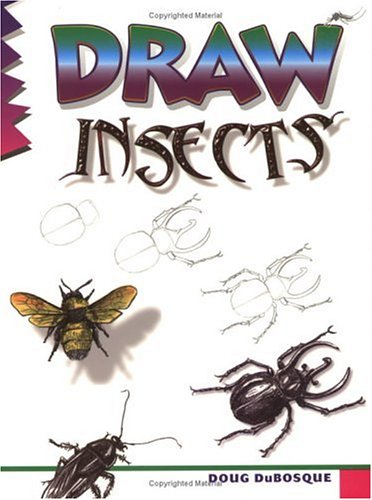
22. Draw Insects (Draw)
$12.82
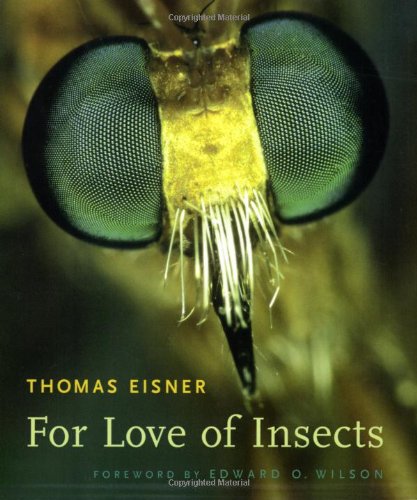
23. For Love of Insects
$10.94
24. A Field Guide to Common Texas
$48.99
25. The Life of Insects: A Novel
$55.56
26. Physiological Systems in Insects,
$56.05
27. Introduction to Insect Biology
$70.80
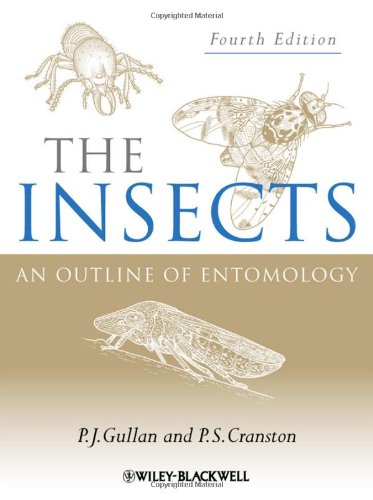
28. The Insects: An Outline of Entomology
$3.93
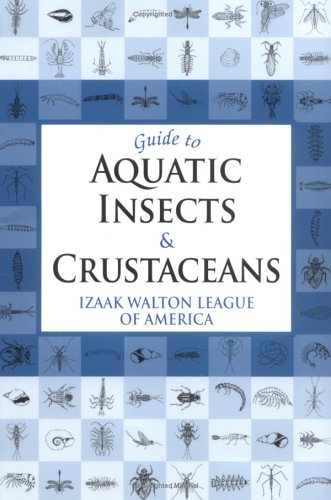
29. Guide to Aquatic Insects And Crustaceans
$15.89
30. Insects of the Pacific Northwest
$2.23
31. How to Draw Insects (How to Draw
$0.01
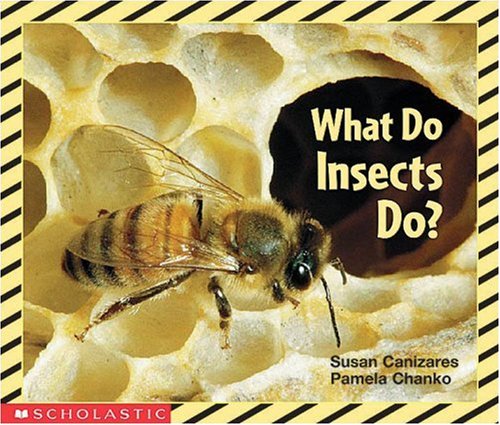
32. What Do Insects Do (Science Emergent
$9.02
33. Insect (DK Eyewitness Books)
$63.25
34. Insect-Plant Biology
$12.68
35. California Insects (California
$17.53
36. The Anatomy of Insects & Spiders:
$9.25
37. Flowers, Butterflies and Insects:
$32.50
38. Principles of Insect Morphology
 
39. How to know the insects (The Pictured
$11.49
40. Insects and Gardens: In Pursuit

21. The Insects: Structure and Function
by R. F. Chapman
Paperback: 788 Pages (1998-11-28)
list price: US$90.00 -- used & new: US$76.41
(price subject to change: see help)
Asin: 0521578906
Average Customer Review: 4.5 out of 5 stars
Canada | United Kingdom | Germany | France | Japan
Editorial Review

Book Description
The Insects takes a detailed look at how insects function as animals. This textbook brings together basic anatomy and physiology and relates them to behavior. Coverage emphasizes the roles of different functional systems in the context of the whole organism using studies of many different species as examples. Unlike other texts, The Insects does not dwell on classification, opting instead to take an in-depth look at physiology, providing any biologist with a better basic understanding of how insects work. A long-awaited update of a well established standard text and respected reference work for students and researchers in zoology, entomology and physiology, this fourth edition has been rewritten throughout, while retaining the successful structure of the earlier editions. Illustrations have been augmented with electron micrographs, and expanded reference sections will make this volume a valuable addition to all biologists' bookshelves. ... Read more

Customer Reviews (4)

5-0 out of 5 stars A solid text
This is a solid text on the structure and physiology of insects.It has been used in two of my graduate level entomology classes, and none of the instructors have said "I wish Chapman had done ... differently".

4-0 out of 5 stars Good text for advanced students
Chapman's book is a comprehensive and well-written entomology text.Not only does he cover all the basic topics in entomology, he does so in depth.This text may be too detailed and overwhelming for begining entomologystudents but is great for more advanced students.The one problem I havewith this book is that Chapman often uses jargon without defining orexplaining it, leaving the reader to look it up or remain confused.

4-0 out of 5 stars Illinois Physiology Class Recommends Chapman's Text
The following comments were written by graduate and undergraduate members of an advanced class in insect physiology taught Spring Semester 2000.

Chapman's book is interesting and covers a variety of topics.It is interesting for learning about how much insects differ between orders. Chapman gives many examples of different phenomena in insects.As astudent, though, all the examples and different phenomena make studyingfrom the book difficult and overwhelming.It is useful as a reference, abook to read to clarify topics discussed in lecture.But it is veryspecific with the examples.

Chapman's textbook is comprehensive.Itcovers all aspects of insect physiology.It has full and updatedliterature citations for each chapter, which is very helpful for furtherreading.The language is simple and precise.But it is a little bitconservative and has slight coverage of some hot topics.The coveragefavors insect structure and morphology.

For me as a student the Chapmantext was very helpful, because it is clearly structured and it coversnearly all important fields of insect physiology and structure.The newedition is very up-to-date and gives good examples from recentinvestigations.It is a bit too focused on research conducted in the US,but this probably reflects the fact that most of the important research isconducted there.The illustrations are very clear and helpful.

I usedthis textbook in an advanced insect physiology class.To be perfectlyhonest, this book was a minor part of the class for me.I skimmed throughit, used it for references, and as a sort of entomology handbook.From myperspective, it was a very complete source of information.At times it wasa bit heavy on detail, but the information I needed was all there andclearly stated.

This book is not one that is useful to read from front toback.It is an excellent reference book that should be owned by allentomologists.Three or more specific examples are given for each topicinstead of a generic example for all insects.This is useful because itgives you the range of known physiology of insects that can be compared tothe reader's "insect of choice."

Chapman gives all the detailsan entomologist needs to know about insects.It may be a bit confusing dueto the vast number of insects, but it is a good resource to own and keep. Chapman is very thorough.

One of the strengths of Chapman's new editionof Insects, Structure and Function is the wealth of examples.Everysection of the book has examples from just about all of the orders ofinsects, although grasshoppers seem to rule disproportionately.A weaknesswith all of these wonderful examples is the cumbersome way Chapman places alist of them at the beginning of a section.He intends them to be asauthoritative fleet of representatives who give some scale and scope to thesubject being presented.They unfortunately end up as a heavy flotillathat diverts the reader's attention from the information sought. There areplaces in the book where subjects that are usually treated together or thatwork as a whole system are poorly integrated.Digestion and nutrition areso separately treated (they are in different chapters) that the readerfinds herself having to cross reference from section to section to makecogent sense of what nutrients have to do with digestion.Strangely, whenChapman presents the great variety of insect form and function one has asense of cacophony.Instead of giving us a unity, or eventhe illusion ofunity, of how form and function interact we are presented with vignettes ofresearch.But these vignettes do not provide us with the pretty and easyto get to views that we find on the Internet.We find ourselves lostsomewhere in a tome that is more intent on directing our attention tovariation than to presenting us with direct descriptions.But then again,how do you argue with the only author in English who has been brave enoughto try to make a synthetic analysis of the most diverse group of animals onearth?

5-0 out of 5 stars AN ESSENTIAL BOOK !!!!!!!!!
If you have Wiggleswort's Insect Physilology, Borror's Introduction to Entonology and Chapman's Insects Structure and Function, you have the best basic Entomology sources. Yes, is a little expensive but, It is not thelife expensive too?. Buy it !!!!!!!!!!!!!! ... Read more


22. Draw Insects (Draw)
by Damon J. Reinagle, D. C. DuBosque
Paperback: 64 Pages (1997-12)
list price: US$8.95 -- used & new: US$1.99
(price subject to change: see help)
Asin: 0939217287
Average Customer Review: 5.0 out of 5 stars
Canada | United Kingdom | Germany | France | Japan

Customer Reviews (1)

5-0 out of 5 stars CREATES HOURS OF FUN.
This is by far one of my favorite "children's" drawing books.I say children, but trust me, adults will find it just as useful and just as enchanting.The author, Doug DuBosque gives us step by step instructions on how to draw a wide range of insect critters.These drawings are in black and white (I find using a simple #2 pencil the best, along with some nice grade drawing paper) and are quite detailed. Now the word detailed may sound intimidating, but it actually is not at all once you get started.His lines and instructions are so simple that the very young can follow them with very little outside help.I photograph these little creatures and find, in my spare time, that is is quite gratifying to be able to draw what I photograph...it is sort of a hobby with me, one that I take great pleasure in.This book gives you a great start.Along with the wonderful drawings (step by step) the author offers, he also has provided a very readable and understandable text.The other books in his series are just as well done, it is just that I am particular to insects.In this small volume, the author also includes spiders, ticks, mites, centipedes and millipedes.All in all, a great little book and if you are interested in such things, a great by.As an added bonus, I have found that ifyou give a small kid a few pencils, a stack of scrap paper and this book, you can expect to not hear from them for a couple of hours or more, which, in my opinion, is far better than the T.V. or interrupting my naps.The kids seem to love this one. ... Read more


23. For Love of Insects
by Thomas Eisner
Paperback: 464 Pages (2005-10-31)
list price: US$21.00 -- used & new: US$12.82
(price subject to change: see help)
Asin: 0674018273
Average Customer Review: 5.0 out of 5 stars
Canada | United Kingdom | Germany | France | Japan
Editorial Review

Book Description

Imagine beetles ejecting defensive sprays as hot as boiling water; female moths holding their mates for ransom; caterpillars disguising themselves as flowers by fastening petals to their bodies; termites emitting a viscous glue to rally fellow soldiers--and you will have entered an insect world once beyond imagining, a world observed and described down to its tiniest astonishing detail by Thomas Eisner. The story of a lifetime of such minute explorations, For Love of Insects celebrates the small creatures that have emerged triumphant on the planet, the beneficiaries of extraordinary evolutionary inventiveness and unparalleled reproductive capacity.

To understand the success of insects is to appreciate our own shortcomings, Eisner tells us, but never has a reckoning been such a pleasure. Recounting exploits and discoveries in his lab at Cornell and in the field in Uruguay, Australia, Panama, Europe, and North America, Eisner time and again demonstrates how inquiry into the survival strategies of an insect leads to clarifications beyond the expected; insects are revealed as masters of achievement, forms of life worthy of study and respect from even the most recalcitrant entomophobe. Filled with descriptions of his ingenious experiments and illustrated with photographs unmatched for their combination of scientific content and delicate beauty, Eisner's book makes readers participants in the grand adventure of discovery on a scale infinitesimally small, and infinitely surprising.

... Read more

Customer Reviews (24)

5-0 out of 5 stars Jumping on the bandwagon
Let me put in my two cents' worth, as well.This is a fabulous book even for those who aren't into bugs.Eisner is a warm and wonderful writer who's enthusiasm for insects is infectious.It inspired me to a) raise some cockroaches to study their behavior (and thereby risk divorce), and b) search for spiders by flashlight (and thereby risk neighborly opprobrium).
Buy the book, kick up, relax, and enter the surprisingly fascinating world of insects and chemistry.

5-0 out of 5 stars For the Love of Insects, Indeed!
Thomas Eisner is J. G. Schurman Professor of Chemical Ecology at Cornell University and his life long fascination of the insect world has blessed us with an extraordinary, in-depth knowledge of bugs and their awesome capabilities, esp., in chemical defenses which have led to the discovery of many helpful medicines, etc.

Eisner's many beautiful color photos and micro-photography turn this book into a coffee-table txt book on insect ecology and this is worth the price of admission on just that aspect alone.

The famous sociobiologist/entomologist, friend and research collaborator of Eisner, E. O. Wilson, "Diversity of Life", et al., wrote the Foreword to this book and gives a good summation on the focus of this book: "The many behaviors he [Eisner] has discovered and explained, and their implementation by life around us, amazing in a variety and precision, are the worthy focus of this book." Well put.

After the Foreword is a great quote about insects in general: "What makes things baffling is their degree of complexity, not their sheer size... a star is simpler than an insect." From: [Martin Rees, "Exploring Our Universe and Others," Scientific American, December 1999]

In the Prologue, Eisner has given a great appraisal of the insect world in: "They have succeeded in one major respect where humans have failed. They are practitioners of sustainable development. Although they are the primary consumers of plants, they do not merely exploit plants. They also pollinate them, thereby providing a secure future, both for themselves and for their plant partners." Indeed, symbiosis, harmony...

...And, Eisner on his hopes for this fine book: "If this book contributes in any way toward bolstering the preservationist spirit, as I hope it might, it will have fulfilled it's purpose."

It has certainly "edified" my preservationist spirit and will no doubt do the same for others!

5-0 out of 5 stars For Love of Insects
This is an excellent book to share the insect world as they protect themselves from their environments.

3-0 out of 5 stars book missed the mark
I purchased the book as a Christmas Gift for an 11 yr old very bright nephew who is fascinated with insects.After reading other reviews it seemed as though the book was written a little more with younger reader in mind.Either I misinterpreted the reviews or overestimated the nephew's interest.
He opened it, thumbed through it, was unimpressed, read a little here and there and was further unimpressed, walked away and actually left the book at my house.Had I not inscribed the inside front cover, I would have returned it.One of these days maybe I will read it and post a review from a different prospective.Also, one of these days, I will learn that children, bright or not, prefer toys for Christmas - not books. *sigh*
A. Michaels

5-0 out of 5 stars Buy this book!
Easily readable!If you ever had an interest in bugs, it will be rekindled here.Superlative, you might as well buy two because you will be giving one away to a friend. ... Read more


24. A Field Guide to Common Texas Insects (Gulf's Field Guide Series,)
by Bastiaan M. Drees
Paperback: 352 Pages (1998-06-25)
list price: US$19.95 -- used & new: US$10.94
(price subject to change: see help)
Asin: 0877192634
Average Customer Review: 5.0 out of 5 stars
Canada | United Kingdom | Germany | France | Japan
Editorial Review

Book Description
Meet the wild world of common Texas insects with this colorful and thorough introduction. Now you can identify that critter that just crawled under your bed or landed in your backyard. This extensive guide is packed with 384 color photos, thousands of facts and figures, and dozens of illustrations. ... Read more

Customer Reviews (4)

5-0 out of 5 stars Has had every bug I wanted to identify so far
They say that everything in Texas either pricks, bites, or stings, and that isn't COMPLETELY true, but it's close.With this book in hand, you can identify your multi-legged assailant rapidly and accurately and decide whether you need hospitalization and an exterminator or just a Benadryl and a fly swatter.Besides, not all the bugs of Texas are bad bugs--they might still bite and sting, but YOU might not be the target species and the target species might be your enemy: look them up BEFORE you swat.

5-0 out of 5 stars High-quality resource
I was impressed by the overall quality of this book.I wanted an easy-to-use resource book to identify the hundreds of insects I routinely see at my central Texas home, and that's what I got and more!The book was clearly organized with well written description of insects, and in center of book were 63 pages of beautiful, high-quality color photos of the 381 most common insects found in Texas.My only constructive suggestionwould be that the "Life Cycle" commentary did not always provide the life expectancy of specific insects.

4-0 out of 5 stars Very Helpful
This book is very helpful in identifying common Texas insects.Our children love to look up bugs in this book.The only bad thing is having to flip back and forth from the color pictures to the description of the insect.Otherwise, a good book.

5-0 out of 5 stars A Field Guide to Texas Insects
I found this book to extremely useful for quick field identifications. The pictures are great, as is the accompying descriptive text. The book is well organized so looking up a particular insect is easy. Also the book not onlydescribes various insects but also gives vital information about them, suchas their life cycles, impact on man and the enviroment, where they can befound, and what they eat. ... Read more


25. The Life of Insects: A Novel
by Victor Pelevin
Paperback: 192 Pages (1999-02-01)
list price: US$14.00 -- used & new: US$48.99
(price subject to change: see help)
Asin: 0140279725
Average Customer Review: 4.0 out of 5 stars
Canada | United Kingdom | Germany | France | Japan
Editorial Review

Amazon.com
Victor Pelevin has the sort of unbridled comedic imagination that can make most writers seem insipid by comparison. Born in 1962, the Russian writer has already published three story collections as well as a splendidly funny take on the Soviet space program, Omon Ra. From time to time his effects lurch out of control, yet Pelevin's manic level of invention tends to carry us along until he regains his equipoise. Certainly this is the case with The Life of Insects. This time, Pelevin sets his story in a sleazy Crimean resort town, where his characters eat, drink, make merry, make love... and turn into insects. This is no soft-focus allegory: the author is superbly specific about his entomological creations. "Arthur and Arnold had turned into small mosquitoes," he writes, "of that miserable hue of gray familiar from prerevolutionary village huts, a color that in its time had reduced many a Russian poet to tears." The sex scenes are a mite (as it were) much, though nothing more gruesome than you'd see in your average PBS documentary. Still, Pelevin's best trick is to makes his six-legged protagonists appear all too human. A self-doubting cicada, for example, finds himself envying the relative ease of an ant's life: "But he never dwelt on such comparisons, aware that once he stopped and began to compare himself with others, it would begin to seem that he had already achieved a great deal, and he would lose the sense of resentment toward life that was essential to continue his struggle." The Life of Insects is a black-comic Metamorphosis for the 1990s, minus Kafka's gravity and with an extra dose of Slavic neurosis.--William DaviesBook Description
In a sophisticated display of allegory, fantasy, and philosophical inquiry, Victor Pelevin creates an Ovidian, shape-shifting world that never fails to resonate on various strata with our own.

The Life of Insects opens with a trio of investors--two Russians and one American--discussing business prospects in the Crimea, when, suddenly, they reveal themselves to be mosquitoes in search of hemoglobin and glucose. Other figures morph from human to insect (and back again) in this thoroughly disorienting yet strangely familiar Kafkaesque novel. Both a parody of traditional Russian prose and a savage commentary of post-Soviet culture, The Life of Insects is a triumphant act of storytelling that succeeds in making "insect aspirations and anxiety feel so fragile and so soberingly universal" (The New York Times Book Review). ... Read more

Customer Reviews (23)

4-0 out of 5 stars ...Kafka's 'The Metamorphosis'?
It seems to me that the plot of `The Life of Insects' might well derive from `The Metamorphosis' [Die Verwandlung - 1915], a famous story by Franz Kafka:

A young man (Gregor) awakes one morning in the form of a giant dung beetle. Gregor is unable to speak in his insect form, and never successfully communicates with his family at all after his physical appearance is revealed to them. However, he seems to retain his cognitive faculties, which is unknown to his family.

Although I believe that a review by Matt Curtin (Columbus, OH USA, see below) is interesting, I feel doubt that Pelevin's book is, as Matt writes, `an allegorical commentary on Russian society'. I could hardly generalize on Russian life, as it is so mosaic and buzzing. Nor am I sure that `Readers of Russian works will feel at home in The Life of Insects, as the story and its presentation has a distinctly Russian feel to it'. ...Um... It seems to me that I feel at Kafka's home.

I think the book represents european influence in Russian literature.

5-0 out of 5 stars Love Love Love!
This was my first book by V. Pelevin, and I loved it!The story is very well built, very intriguing and unique.It's so unpredictable and the subjects of alcohol, marihuana, and mushrooms pop up so often, it makes you wonder if the author himself was on drugs when he wrote it!The hallucinating visions in the book bring you to the USSR era once again. Yeah.. been there, done that..Though, Pelevin chooses a very different angle to deliver the story, so it's worth the read. I definitely recommend it if you are not threatened to get lost in the Russian names (it looks like all my English speaking friends have troubles with those doesn't matter if they read Tolstoy or Pelevin..)

4-0 out of 5 stars beauty in the bleak
"The Life of Insects" is not for the Disney-minded, though it delves quite frequently in the silly and absurd, and uses animals -- well, insects -- to represent people. The book is written as a comical "Metamorphosis," at times witty, silly, morbid and profound. Humanity is viewed as insects through some dismal, cosmic microscope. We are the insects always trying to find the light, but finding only darkness, pushing along a ball of dung (our corporeal body) and never rising above our materialistic predicament. As much as the novel describes these squallid Russian characters living in a sad state of affairs, reduced to the cruel plight of an insect existence, Pelevin is also pointing out that the majority is weak-minded in the first place, never questioning their dim fate and resigned to make contact only with dung. Pelevin's prose slaps the reader in the face, both poetic and philosophical, a mix of Bukowski, Emily Dickinson and Andy Goldsworthy, a stark raving loner, content to watch the paint peel and pick up from it designs of brutal bent.

5-0 out of 5 stars An organic picture of Russian society.
In 1994, Russian author Viktor Pelevin first published his commentary on Russian society after perestroika and even after the fall of the Soviet Union. While many reviewers focus on the unique Russian character of Жизнь Насекомых [The Life of Insects], I was struck by its quality as an allegorical commentary on Russian society. While obvious comparisons to certain Russian masters like Chekhov and Turgenev seems inevitable, I thought more of the allegories and social commentaries of authors such as Zamyatin, Nabokov, and even Orwell. I read a 1996 translation into English by Andrew Bromfield.

The Life of Insects Rather than focus on the story of a single protagonist working his way through society, Pelevin opts to tell several stories in a single novel, allowing a picture to emerge of a society as a whole, not from the top-down as if by some Soviet-style central design, but rather from the bottom-up, where individuals live their own lives, only vaguely aware of others outside of their sphere. The Life of Insects becomes a commentary on modern society, Russian society, with various factions each being represented by some variety of insect, beginning with enterprising mosquitoes in a clear reference to the "New Russians" that emerged at the collapse of the Soviet Union.

Readers of Russian works will feel at home in The Life of Insects, as the story and its presentation has a distinctly Russian feel to it, something of a fatalist acceptance that whatever superficial changes we might make, nothing will ever be fundamentally different. Especially in the case of ants and dung beetles, we are shown very clearly that for whatever struggles might take place at the individual level, circumstances far beyond our control will dictate the manner of our daily lives as we hope to produce another generation of the species before we meet our own ends. If we live long enough to observe and pause long enough to reflect, we'll see our children doing exactly as we did-and only then will we really understand why our parents said what they said and did what they did as we struggled to reach maturity.

Some will be more pensive, actively thinking about where they are going instead of being shocked to see history repeating itself in front of their eyes. They will think about terms like paradise that people talk of, thinking about how pointless it is to dig, always to dig through the dirt, where breakfast and lunch are largely the same, and one always struggles to dig well enough to reach the surface. When finally getting there, realizing just what it means, and unable to share the insight.

Others will be more social, staying abreast of the news, sharing observations, insights, and experiences with others. While they experience their own ups and downs, their friends will be there, always supportive and a force for balance and stability. The trick, of course, is not to attract too much attention along the way, lest they find themselves on the receiving end of some action by the authorities to limit their influence.

Each of these has particular meaning in modern Russian society, with commentary not being difficult to follow-the text fairly clearly spells out the necessary parallels. Even so, similar lessons can certainly be drawn for other social structures as well.

I thought the translation equal to the task of presentation of the book in English, making it accessible even to those unfamiliar with Russian society beyond a place where one might see abbreviations such as NKVD and KGB. (One unexpected joy comes from familiarity with the issue of translation of language between Russian and English and the ability to sense the quality of translation. I am anxious to see the text in the original language and what construction Pelevin himself used that required Bromfield's nice little trick with the use of Ai- й + а, perhaps? Addendum: as it turns out the text is available online and it was just as I suspected.)

I thought the text an interesting tour of contemporary Russian society, as told by someone who lives within it but clearly sees it not just as a whole but in all its parts. The novel's structure was worthy to carry its ideas and the ideas worthy of consideration for society more broadly.

4-0 out of 5 stars Unique and challenging
Pelevin, one of few prominent Russian modern writers, impressively creates a cast of characters that exist simultaneously as humans and insects.The transformations and comparisons are fascinating, as is the portrait of Russian life during perestroika.The book is heavily philosophical though and much of it is hard to comprehend.According to a Russian friend, "the only way to understand some of it is to smoke a joint, then read it." ... Read more


26. Physiological Systems in Insects, Second Edition
by Marc J. Klowden
Hardcover: 688 Pages (2007-09-07)
list price: US$69.95 -- used & new: US$55.56
(price subject to change: see help)
Asin: 0123694930
Canada | United Kingdom | Germany | France | Japan
Editorial Review

Book Description
As the largest living group on earth, insects can provide us with insight into adaptation, evolution, and survival. The 2nd edition of this standard text for insect physiology courses and entomologists provides the most comprehensive analysis of the systems that make insects important contributors to our environment. Physiological Systems in Insects discusses the role of insect molecular biology, nueroendocrinology, biochemistry, and genetics in our understanding of insects. Organized according to insect physiological functions, this book is fully updated with the latest and foundational research that has influenced understanding of the patterns and processes of insects.

* Full update of a widely used text for students and researchers in entomology and zoology
* Includes recent research that uses molecular techniques to uncover physiological mechanisms
* Includes a glossary of physiological terms
* New, extended section on locomotive systems
* Provides abundant figures derived from scientific reports ... Read more


27. Introduction to Insect Biology and Diversity
by Howell V. Daly, John T. Doyen, Alexander H. Purcell
Hardcover: 696 Pages (1998-03-19)
list price: US$117.00 -- used & new: US$56.05
(price subject to change: see help)
Asin: 0195100336
Canada | United Kingdom | Germany | France | Japan
Editorial Review

Book Description
Extensively revised and reorganized, the second edition of Introduction to Insect Biology and Diversity serves as an ideal text for courses in general entomology with laboratory sections. Written for students who have completed an introductory course in biology, it provides an in-depth treatment of both the biology of insects and their classification, including keys for identification for over four hundred families. The common insects of North America are discussed as well as species found elsewhere in the world.Parts I and II provide reading material for lectures: Part I: Insects as Organisms, covers morphology, physiology, and behavior, including social behavior. Part II: Insect Ecology, begins with population biology and includes chapters on insects in relation to their environments and pest management. Part III, Insect Diversity, provides source material for the laboratory. The classification of insects, their evolution, and fossil record are discussed first, followed by coverage of each order in terms of general biology and ecology, keys for identification of families, and, in some chapters, discussion of the biologies of families. All insect orders and over four hundred families of insects are treated.This second edition features new chapters on population biology, insects and microbes, pest management, and methods for making an insect collection. It is illustrated with new line drawings by Barbara Boole Daly and many new photographs, including 48 in color, by Edward S. Ross. A unique feature in a text of this kind, these color photographs allow students to witness a variety of life forms and habits that they normally would not have the opportunity to observe in nature. ... Read more


28. The Insects: An Outline of Entomology
by P. J. Gullan, Peter Cranston
Hardcover: 528 Pages (2004-09-13)
list price: US$93.95 -- used & new: US$70.80
(price subject to change: see help)
Asin: 1405111135
Average Customer Review: 4.0 out of 5 stars
Canada | United Kingdom | Germany | France | Japan
Editorial Review

Book Description
TO ACCESS THE ARTWORK FROM THE BOOK, PLEASE VISIT www.blackwellpublishing.com/gullan.


This established and popular textbook is the definitive guide to the study of insects; a group of animals that represent over half of the planet’s biological diversity.

  • Completely updated and expanded, this new edition examines all aspects of insect biology including anatomy and physiology, ecology and evolution of insects, insect behaviours such as sociality, predation, parasitism and defense, medical and veterinary entomology and methods of collection, preserving and identifying insects.
  • Features new chapters on the methods and results of studies of insect phylogeny and a new review of insect evolution and biogeography.
  • Includes expanded sections on species diversity, social behaviour, pest management, aquatic entomology, parasitology and medical entomology.
  • Successful strategies in insect conservation are also covered for the first time, reflecting the increasing threat to natural ecosystems from environmental changes.
  • Boxes highlighting key themes, suggestions for further reading and illustrations, including specially commissioned drawings and colour plates, are included throughout.
  • The artwork from the text is available for instructors either via CD-ROM or by visiting www.blackwellpublishing.com/gullan.
  • ... Read more

    Customer Reviews (1)

    4-0 out of 5 stars Bugs are Awesome
    This is a great book for learning just about anything you could ever want to know about insects.It discusses insect sociality, body systems, reproduction, interaction with plants, evolution, environmental tolerance, pest control, and other topics.I learned so much from this book.It was amazing to me to learn just how intricate insects really are.This understanding really strengthened my faith in God and the creation. ... Read more


    29. Guide to Aquatic Insects And Crustaceans
    by Kami Watson-ferguson, Cindy Han, Jason Mcgarvey, Leah Miller
    Paperback: 74 Pages (2006-03-13)
    list price: US$7.95 -- used & new: US$3.93
    (price subject to change: see help)
    Asin: 0811732452
    Canada | United Kingdom | Germany | France | Japan
    Editorial Review

    Book Description
    From the damselfly to the whirligig beetle, our nation's streams are teeming with critters. This convenient, inexpensive guide allows you to identify any that you find--whether you're working on your fly tying, researching the local insect life, or just mucking around in the river. Also includes information on the river conservation and management work performed by the Izaak Walton League, making this an especially valuable resource for stream monitors, biologists, and other specialists. ... Read more


    30. Insects of the Pacific Northwest (Timber Press Field Guide)
    by Peter Haggard, Judy Haggard
    Paperback: 296 Pages (2006-03-01)
    list price: US$24.95 -- used & new: US$15.89
    (price subject to change: see help)
    Asin: 0881926892
    Average Customer Review: 4.0 out of 5 stars
    Canada | United Kingdom | Germany | France | Japan
    Editorial Review

    Book Description
    The only comprehensive guide to insects of the Pacific Northwest, this handy reference is perfect for hikers, fishers, and naturalists. With coverage from southwestern British Columbia to northern California, from the coast to the high desert, it describes more than 450 species of common, easily visible insects and some noninsect invertebrates, including beetles, butterflies and moths, dragonflies, grasshoppers, crickets, cicadas, flies, bees, wasps, ants, spiders, millipedes, snails, and slugs. The more than 600 superb color photographs, helpful visual keys, and clear color-coded layout will make this field guide an invaluable resource for nature lovers throughout the region. ... Read more

    Customer Reviews (4)

    5-0 out of 5 stars an excellent book
    This is a very comprehensive, well photographed book. I even found all the oak galls I have on my property. I initially ordered this as a christmas present, and liked it so much I ordered one for myself.

    5-0 out of 5 stars Spectacular Book
    This book is fabulous for Humboldt County and almost as good for Mendocino County because it is so specific for this area.Most books of this nature are not specific to the northcoast of CA.The photographs are fabulous.And one thing I like is that it is not limited to the normal insects.It has galls caused by insects and some of the spiders, etc.Great job.

    Dave Bengston

    4-0 out of 5 stars Yeah, it could be better, but 60 pages of beetle photographs...
    Timber Press is usually pretty dependable when it comes to producing regional field guides and Peter and Judy Haggard's new insect guide certainly qualifies as a nice little regional field guide. When placed in a head-to-head against the Lone Pine analog _Bugs of Oregon and Washington_, it wins hands down (Lone Pine can be pretty hit-or-miss ranging from the indispensable _Plants of the Pacific Northwest Coast_ and _Amphibians of Oregon, Washington and British Columbia_ to the down right useless _Birds of the Pacific Northwest Coast_).

    Where _Bugs_ comes in at 160 pages with only one critter per page illustrated competently by Ian Sheldon, _Insects_ comes in at 295 pages with photographs of several species per page. The front 20% is beetles, easily the most comprehensive and useful section. It includes many of my favorites (_Calligrapha multipunctata_, _Ellychnia hatchi_) though Rain beetles (_Pleocoma_) and the snail-eating _Scaphinotus_ are curiously absent....

    The Lepidoptera section is the largest section and includes plenty of caterpillars. The overly linear may find the sorted-by-size format that mixes the moths with the butterflies and discards taxonomic formalities a bit frustrating. There is, however, a key at the front that most non-entemologists will have no trouble using to navigate and since we non-entemologists have no expectations about what the order should be it's okay.

    The most interesting section has photos of insect galls from wasps and gall midges. Dragonflies, true flies and most aquatic species (mayflies, stoneflies, etc) are woefully under represented and one gets the impression that the authors just left out species that were too hard to photograph or weren't particularly photogenic.The non-insect invertebrates section seems almost tacked on as an after-thought.

    I'm sure that entemology purists will find plenty to complain about, just as ornithology purists complain about what's missing in bird guides and botany purists complain about omissions in plant guides, but for the rest of us- a regional guide with at least 100 beetle photographs will prove to be well worth buying.If Amazon allowed half stars, I'd rate this a 3.5, but since they don't, I'll round up to 4...

    2-0 out of 5 stars Nice idea, but very incomplete
    First of all, I should acknowledge that there are hundreds of thousands of species of insects, and you can't expect a single book to cover all of them, even for a small area of the globe.That said, this book is still woefully lacking any sense of completeness.It seems to have gone overboard in covering "cute" insects (ten full pages of ladybird beetles, about half the book devoted to butterflies and moths), while leaving some things out completely.Earwigs and silverfish, for example, are entirely absent, as are the various aquatic bugs (water striders, backswimmers) that you find swimming on or under the water in most ponds.And while the book claims to cover some non-insect invertebrates, there's no mention whatsoever of pill bugs or even centipedes.

    The organization could use some work, too; it's odd that all the families of Lepidoptera are sorted alphabetically, instead of at least divided first into butterflies vs. moths.

    On the bright side, the photographs are excellent. ... Read more


    31. How to Draw Insects (How to Draw (Dover))
    by Barbara Soloff Levy
    Paperback: 32 Pages (1998-12-23)
    list price: US$2.95 -- used & new: US$2.23
    (price subject to change: see help)
    Asin: 0486405893
    Canada | United Kingdom | Germany | France | Japan
    Editorial Review

    Book Description

    Easy-to-follow guide shows would-be artists of all ages how to create accurate images of a grasshopper, monarch butterfly, tarantula, caterpillar, cicada, praying mantis, walking sticker, scorpion, carpenter ant, Japanese beetle, inchworm, centipede, termite, and 17 other insects. Step-by-step diagrams not only help create figures that are fun to draw but also teach fundamentals.
    ... Read more

    32. What Do Insects Do (Science Emergent Readers)
    by Susan Canizares, Pamela Chanko
    Paperback: Pages (1998-08)
    list price: US$2.50 -- used & new: US$0.01
    (price subject to change: see help)
    Asin: 059039794X
    Average Customer Review: 3.0 out of 5 stars
    Canada | United Kingdom | Germany | France | Japan

    Customer Reviews (1)

    3-0 out of 5 stars Insect Review
    The book by Canizares delineates insects with high definition and colors. The title of the book is complemented with every page in the book by the quality and action of the pictures. It is authentic, sticks to the theme and will appeal to the curiosity of children. The type of print is perfect and the words are well chosen. The detailed pictures helps tell the story while shaking the young reader's imagination. The insects are captured in frame-like borders and the quality of the paper fits the purpose of the book. There is a real meaning given to the book by its rhythmetic and moving insect characters. As a science book for young children everything is present. ... Read more


    33. Insect (DK Eyewitness Books)
    by Laurence Mound
    Hardcover: 72 Pages (2007-06-25)
    list price: US$15.99 -- used & new: US$9.02
    (price subject to change: see help)
    Asin: 0756630045
    Canada | United Kingdom | Germany | France | Japan
    Editorial Review

    Book Description
    Some of the most popular selections from the formidable Eyewitness backlist are now available with a clip-art CD included-with no increase in price! ... Read more


    34. Insect-Plant Biology
    by Louis M. Schoonhoven, Joop J. A. van Loon, Marcel Dicke
    Paperback: 421 Pages (2006-02-02)
    list price: US$99.00 -- used & new: US$63.25
    (price subject to change: see help)
    Asin: 0198525958
    Canada | United Kingdom | Germany | France | Japan
    Editorial Review

    Book Description
    Half of all insect species are dependent on living plant tissues, consuming about 10% of plant annual production in natural habitats and an even greater percentage in agricultural systems, despite sophisticated control measures. Plants possess defences that are effective against almost all herbivorous insect species. Host-plant specialization, observed in over 80% of these animals, appears to be an effective adaptation to breach these defence systems. The mechanisms underlying plant defence to invading herbivores on the one side, and insect adaptations to utilize plants for nutrition, defence and shelter on the other, are the main subjects of this book. In the case of plants exposed to insect herbivores, they include the activation of defence systems in order to minimize damage, as well as the emission of chemical signals that may attract natural enemies of the invading herbivores and may be exploited by neighbouring plants that mount defences as well. For insects, they include complex bevioural adaptations and their underlying sensory systems (with their implications for learning and nutritional plasticity), as well as the endocrinological aspects of life cycle synchronization with host-plant phenology.Insect-Plant Biology discusses the operation of these mechanisms at the molecular and organismal levels and explicitly puts these in the context of both ecological interactions and evolutionary processes. In doing so, it uncovers the highly intricate antagonistic as well as mutualistic interactions that have evolved between plants and insects. The book concludes with a chapter on the application of our knowledge of insect-plant interactions to agricultural production.This multidisciplinary approach will appeal to students in biology, agricultural entomology, ecology, and indeed anyone interested in the principles underlying the relationships between the two largest groups of organisms on earth: plants and insects. ... Read more


    35. California Insects (California Natural History Guides)
    by Jerry A. Powell, Charles L. Hogue
    Paperback: 398 Pages (1980-09-08)
    list price: US$19.95 -- used & new: US$12.68
    (price subject to change: see help)
    Asin: 0520037820
    Average Customer Review: 4.0 out of 5 stars
    Canada | United Kingdom | Germany | France | Japan
    Editorial Review

    Book Description
    California has a vast number of insect species: estimates run 30,000-35,000 or more, and even in the better known groups, new species occasionally are discovered. This volume is the first attempt in more than half a century to summarize knowledge of this rich insect fauna, and the first work ever to provide a field guide for beginning students, and the nonspecialist reader. It selects about 600 of the more characteristic kinds of insects to represent the huge variety known. Most of these are conspicuous kinds often noticed in cities or in natural areas by gardeners, hikers, fishermen, etc. For each insect, distinguishing features of its appearance, features of its biology, and its geographical distribution in California are summarized: and an illustration (photograph or drawing) is given of the adult or some other stage.
    California Insects will serve as a convenient, compact introduction to the identification and understanding of these often strange and fascinating creatures. Used with other information sources cited in the text, it provides the student, collector, or naturalist a means of efficiently developing knowledge of specialized groups of insects. ... Read more

    Customer Reviews (1)

    4-0 out of 5 stars An enjoyable read for Californians
    Having mastered Bugs of Northern California, the perfect local book for beginners, I was ready to move on, and this book is the perfect next step--limited to California, but still very complete. There is one set of color plates, so those expecting color photos for every bug will be disappointed. However, what I love are the descriptions--they are well written and very informative. Even limited to California, there are more flies than I will ever be able to identify, yet the descriptions of their differences are still fascinating. ... Read more


    36. The Anatomy of Insects & Spiders: Over 600 Exquisite Forms
    by Claire Beverley, David Ponsonby
    Paperback: 288 Pages (2003-04-01)
    list price: US$16.95 -- used & new: US$17.53
    (price subject to change: see help)
    Asin: B0007MTTHG
    Average Customer Review: 4.5 out of 5 stars
    Canada | United Kingdom | Germany | France | Japan
    Editorial Review

    Book Description
    The gossamer wings of a dragonfly, the scarlet carapace of the lady beetle, the spectacular shape of the hawkmoth. The insect world teems with exotic forms and inspired renowned devotion in illustrators of the late 19th century. In a volume as jewel-like as its subject, The Anatomy of Insects & Spiders presents page after page of select engravings, woodcuts, and drawings from the Victorian era, the golden age of insect illustration. Meticulously rendered, they are paired with observations from early naturalists. The notes may describe the classification of the insect, how its body is constructed, its behavior and preferences, or its habitat. Arranged by insect type and covering all the families from bees and moths to ants and flies, The Anatomy of Insects & Spiders reveals detail that is normally seen only under a microscope. A natural for admirers of insect society, this charming volume is both a distinctive introduction and lively armchair companion. ... Read more

    Customer Reviews (5)

    4-0 out of 5 stars Beautiful engraving-style pictures
    It is a wonderful book although smaller than I had originally thought and it only includes the "woodblock" cut style images and very little color. But besides being not what I expected, it is truly a fabulous book and I am more than glad I purchased it. I only wish it were bigger scale so I could examine the woodcuts better. Really incredible.

    4-0 out of 5 stars Helpful
    I wouldn't recommend this book to the average reader on the grounds that I don't think they will have much of a use for it.I would recommend it to students and professionals as a reference book to have on hand to go with the rest of your personnal library.I have many different insect books myself and have found this one to be somewhat useful though I have many others that I would use before it.I got this one as a bargain book and that's about all I would spend on it.If your like me though you have a lot of different books to compliment this one and they all turn out useful in the end.

    5-0 out of 5 stars Pretty to Look At
    As a biologist, I get my fill of technical language and new terminology.This book is a welcome blend of art, history, and bugs.The reproductions are very well done and I was suprised at the number and variety of sketch-like prints that were included.

    Would make a nice gift for a friend who is curious about the natural world.

    5-0 out of 5 stars Nice overview
    Great drawings throughout the book.Its technical (as expected from the title being anatomy) but not so technical that you feel like its a lecture.One thing I especially like is that in the descriptions of the insects there is interesting "trivia" that makes this a fun read.Here's a quick excerpt:"the bombardier beetle emits a puff of a volatile chemical, followed by a popping sound, thereby giving it its name.Early naturalists likened this form of defense to humans' use of gunfire."

    4-0 out of 5 stars authoritative without being overly scientific
    The Anatomy of Insects admitedly only scratches the surface of entomology, but what it covers is done in exquisite detail.The book begins with a primer on insect anatomy before broadly covering the taxonomy of the major insect orders of beatles, wasps (including bees and ants) termites (including dragonflies and mayflies), butterflies, moths, fleas (and flies), grasshoppers (and crickets), stick insects (including mantises and cockroaches), and spiders.

    There is little specific information about each species, but plenty of general information about the order, and enough detail to give the lay reader (such as myself) a good "feel" for the critters.However, the diagrams and plates of the insects are what drew me to the book.

    Many of the pictures are from Victorian era prints, some are more recent etchings, but all are remarkable and beautiful in their own right.(I know, who would have thought of "bugs" as beautiful?)It really is an interesting read, with an excellent biliography for further reading if a specific order or genus strikes your fancy; but the depiction of theses small animals is what makes this book such a treasure. ... Read more


    37. Flowers, Butterflies and Insects: All 154 Engravings from "Erucarum Ortus" (Dover Pictorial Archive Series)
    by Maria Sibylla Merian
    Paperback: 160 Pages (1991-06-01)
    list price: US$14.95 -- used & new: US$9.25
    (price subject to change: see help)
    Asin: 0486266362
    Average Customer Review: 4.0 out of 5 stars
    Canada | United Kingdom | Germany | France | Japan
    Editorial Review

    Book Description

    Fine-line images of roses, butterflies, tulips, caterpillars, and other specimens of plant and insect life in elegant full-page compositions. These plates are considered among the finest achievements of a great age of floral painting and the engraver's art. Reprinted from the classic, influential works of the famed artist/entomologist Merian (1647–1717). New English captions.
    ... Read more

    Customer Reviews (1)

    4-0 out of 5 stars Flowers Butterflies and Insects
    I bought this book to use as clip art for graphic design projects.I was pleased to see that there were many "usable" insect representations.Unfortuantely, there were fewer pieces of"usable" flower art (for my project anyway) because most of theleaves have been eaten by the insects! ... Read more


    38. Principles of Insect Morphology (Comstock Book)
    by R. E. Snodgrass
    Paperback: 667 Pages (1993-12)
    list price: US$39.95 -- used & new: US$32.50
    (price subject to change: see help)
    Asin: 0801481252
    Average Customer Review: 5.0 out of 5 stars
    Canada | United Kingdom | Germany | France | Japan

    Customer Reviews (3)

    5-0 out of 5 stars Principles of insect morphology
    I`m a biologist student and think that it has an old but really good information. And its an excellent book for all the people that its interested to start learnig enthomology, this book its practically the base for insect study.

    5-0 out of 5 stars The classic text for insect morphology
    This text is incredibly useful for its many drawings and for providing the vocabulary of this subject.Useful for anyone who is really interested in insect structure and function.

    5-0 out of 5 stars This book has great diagrams!
    If you are interested in learning about insect morphology, this is the book to have.Snodgrass's illustrations are used in most of the current books on insects, so he is the first source.I would highly recommend thisbook to anyone who really wants to learn about how insects are designed andhow they function. ... Read more


    39. How to know the insects (The Pictured key nature series)
    by Roger G Bland
     Hardcover: 409 Pages (1978)

    Isbn: 0697047539
    Average Customer Review: 4.5 out of 5 stars
    Canada | United Kingdom | Germany | France | Japan

    Customer Reviews (3)

    5-0 out of 5 stars Excellent!
    I've gotten interested in insects just because of my own curiosity but wanted to learn a bit about their Families and species so I picked up this book (recommended by a teacher of a naturalist class on insects).It is an incredibly complete book with excellent drawings, discussions of common species, easyu to understand layout of orders and families without getting tooooo technical.Just what I needed to get my feet wet in being able to id and learn about specific insects I come across in the garden and elsewhere.

    5-0 out of 5 stars Review of How to Know the Insects
    I have owned a copy of this book for many years and consider it to be the best classification guide available for undergraduates and serious amatuer collectors.An index\glossary provides hundreds of terms related to external morphology that can be memorized and the identification procedure is both simple and efficient.There are plenty of detailed illustrations.
    The only downside is that this book has not been revised in many years.It most likely contains errors, because systematics is an ever-changing field.Most of it is accurate, however, and any serious insect collector can compensate for the outdated information by visiting a public library or museum.
    This book is probably out of print.Get it now!

    4-0 out of 5 stars A Great Book for Insect Collectors!
    I bought this book for my summer Etomology class.It is a very helpful book when you are trying to identify insects, however some of the insect characteristics are hard to see in the diagrams compaired to the realinsect. A disecting microscope is strongly recommended when useing thisbook, since most of the characteristics deal with segments on the legs orantennae, as well as wing veins.These structures hare very hard to seewith the naked eye. If a mistake is made in classification it is easy toback track and find your mistake, becuase each step has the number of theprevious step.This book also gives you a good description of the insect'scharachteristics, habitat, and other usefull information to verify theinsect being classified. With this book I was able to classify all of myinsects for my collection.I did need some help from the professor and theproctor, however most was just to double check myself.I also used thePeterson's Insect Guide to double check my classification. If you arelooking for a book to identify insects for a collection, I stronglyrecommend this one.However, if you need a book for quick identificationin the feild, this isn't the best book for that purpose.For feildpurposes use a insect feild guide. ... Read more


    40. Insects and Gardens: In Pursuit of a Garden Ecology
    by Eric Grissell
    Paperback: 345 Pages (2006-02-01)
    list price: US$19.95 -- used & new: US$11.49
    (price subject to change: see help)
    Asin: 0881927686
    Average Customer Review: 5.0 out of 5 stars
    Canada | United Kingdom | Germany | France | Japan
    Editorial Review

    Book Description
    Professional entomologist and amateur gardener Eric Grissell suggests that it might be time to declare a truce with the insects in our lives. With a sound basis in science and a practical grounding in gardening experience, Grissell introduces the reader to the role of insects in garden ecology. His insightful account of insect biology is supported by gorgeous photographs, which reveal a captivating beauty and illustrate the vital interdependence between insects and plants. Now available in paperback, this book will be loved by anyone seeking a greater appreciation and understanding of these often-maligned garden visitors. Awards for this book: American Horticultural Society Book AwardGarden Writers Association Garden Globe AwardsNew York Times Editor's Choice - Best Books for Gardening ... Read more

    Customer Reviews (6)

    5-0 out of 5 stars Insects and Gardens: In Pursuit of a Garden Ecology
    I recommend this book often on my online gardening group.It is a valuable resource for all gardeners not just for the information, crash course, if you will, on entymology, but also for the author's own personal advice on gardening near the end of the book.The book goes through each group of insects one by one explaining all about them very well.He explains why spraying for insects is a bad idea whether you are spraying chemical, or organic spray formulas.That goes against most current teaching, but in applying it in my own gardens I found to be incredible for its truthfulness.He explains why spraying once creates a cycle of forever spraying the garden because it kills off the predator insects that would otherwise kill the bad insects, and drives away other creatures that would do the job for you....that it is better to create a balance to do the job and how to do that.It is a book you may well refer to often in your gardening experience no matter whether you follow his advice on spraying, or not.

    5-0 out of 5 stars A must read for every gardener
    Even if you are a casual gardener and not building a wildlife habitat you should read this book.The first half is a basic Entymology 101 for the gardener with the second half covering practical application.Every gardener should have an understanding of what is happening out there.It should be on every gardeners 'essentials' list.And on top of all of the great information in this book it also is interesting enough to hold your attention.

    5-0 out of 5 stars Must read for the serious gardener
    Experienced gardeners are used to the idea that it's impossible (and not the least bit desirable) to have an insect-free garden. The main message of Eric Grissell's book is that a good garden teams with insect life, and that's how it should be.

    This is decidedly not a book about how to deal with insect pests. In fact, the author urges us to stop thinking of insects only as enemies to be battled. "Plants and insects have interacted for hundreds of millions of years. Why should we gardeners feel compelled to change this situation in an hour or an afternoon?" he asks.

    Grissell's aim is to show gardeners another way. Create a garden filled with variety, he urges. As you might guess, the ordinary yard with its swath of lawn, sprinkling of annuals, evergreen foundation shrubs and tree or two doesn't cut it when it comes to diversity. Instead, he suggests planting as many different plants as you can, and creating a variety of habitats; for example, adding water to the garden creates a new habitat that almost instantly attracts all sorts of life from frogs, toads to dragonflies and birds. If we gardeners achieve diversity, Grissell concludes, "We will have so many plants to think about that no plant will become sacred. And then we will be free of the garden and free to garden."

    5-0 out of 5 stars Stewardship of our gardens
    I found the ideas in this book to be very exciting and the author to have a great sense of humor. I have a Backyard Wildlife Habitat, but I hadn't given enough thought to the role of insects in my garden. After reading this book, I am looking at my garden with new eyes. The author has provided some very good reasons for gardening the way I tend to do anyway - pack it with as many different plants as possible, leave it a little messy, and don't use pesticides. It's very nice to have this approach validated and especially to know why it seems to work! Now I just have to get an insect identification book ...

    5-0 out of 5 stars Award winning book
    Insects and Gardens is a double award winning book.It received two of the "Top 10" 2002 Garden Globe Awards presented by the Garden Writers Association of America -- one for Best Book and one for Best Writer, and comes highly recommend by the people who write about gardening. Author Eric Grissell, who is a research entomologist with the USDA, received Best Writing for his clear and concise look at the life of insects and how they "work" to our benefit in our gardens.Publisher Timber Press received the Best Book for an outstanding gardening book overall.Only five individuals and five companies were selected out of a field of more than 300 entries to receive a 2002 Garden Globe Award. The book was selected by a panel of garden communication experts - some Pulitzer Prize winners themselves -- who look for the best books, magazines, writers and photographers in the country.The book was evaluated on accuracy of information, ability to communicate, content, organization, style and originality.If you are interested inthe relationships of insects to gardens, to each other and to humans, and how they benefit your garden, this is a must have in your library... ... Read more


      Back | 21-40 of 100 | Next 20
    A  B  C  D  E  F  G  H  I  J  K  L  M  N  O  P  Q  R  S  T  U  V  W  X  Y  Z  

    Prices listed on this site are subject to change without notice.
    Questions on ordering or shipping? click here for help.

    site stats