e99 Online Shopping Mall

Geometry.Net - the online learning center Help  
Home  - Science - Mammals (Books)

  1-20 of 100 | Next 20
A  B  C  D  E  F  G  H  I  J  K  L  M  N  O  P  Q  R  S  T  U  V  W  X  Y  Z  

click price to see details     click image to enlarge     click link to go to the store

$12.48
1. Peterson Field Guide to Mammals
$37.80
2. A Guide to the Mammals of China
$26.86
3. Mammal Tracks & Sign: A Guide
$19.10
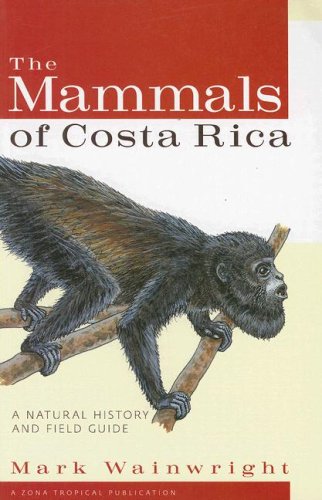
4. The Mammals of Costa Rica: A Natural
$34.65
5. A Guide to the Mammals of Southeast
$15.60
6. National Audubon Society Guide
 
$30.47
7. Biology of Marine Mammals
$12.95
8. Starting Your Career as a Marine
$15.40
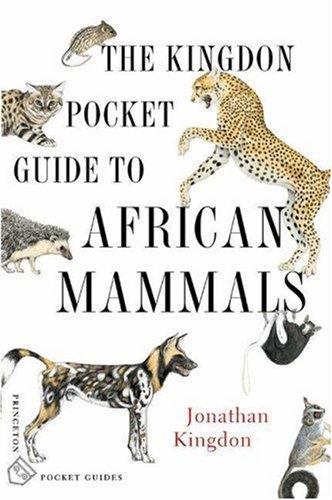
9. The Kingdon Pocket Guide to African
$57.06
10. Marine Mammals of the World: A
$18.00
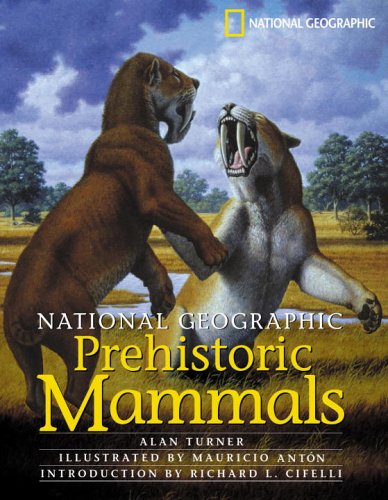
11. National Geographic Prehistoric
$11.24
12. National Audubon Society Field
$4.74
13. Is a Camel a Mammal? (Cat in the
$17.95
14. The Safari Companion: A Guide
$34.40
15. Mammals of Madagascar: A Complete
$3.79
16. About Mammals:A Guide For Children
$7.75
17. Smithsonian Handbooks: Mammals
$50.40
18. The Kingdon Field Guide to African
$29.00
19. Mammals of North America (Princeton
$24.29
20. After the Dinosaurs: The Age of

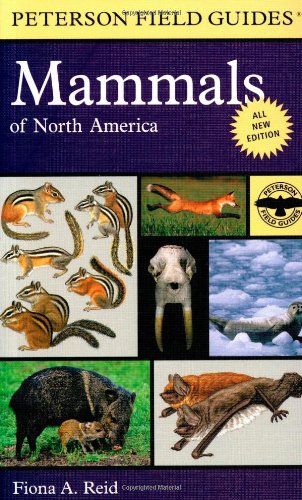
1. Peterson Field Guide to Mammals of North America: Fourth Edition (Peterson Field Guide Series)
by Fiona Reid
Paperback: 608 Pages (2006-11-15)
list price: US$20.00 -- used & new: US$12.48
(price subject to change: see help)
Asin: 0395935962
Average Customer Review: 5.0 out of 5 stars
Canada | United Kingdom | Germany | France | Japan
Editorial Review

Book Description
A Field Guide to Mammals of North America The most comprehensive, in-depth, and current guide to North American mammals, this book covers all the mammals found in North America north of Mexico, including those that live in near-shore waters. The only guide to include paintings and photographs of the animals as well as photographs of mammal skulls, it has 80 color plates, plus 46 additional colour illustrations and black-and-white drawings, nearly 400 range maps, and more than 100 colour photographs. ... Read more

Customer Reviews (4)

5-0 out of 5 stars Great Guide
A thorough guide to North American animals. Lot's of color plates and informative. It even covers animals in their stages like a fox in winter and midsummer and how their coats change color.

To put it simply you won't be disappointed.

5-0 out of 5 stars Top notch mammal guide
This new guide is hands down the best mammal guide for North America currently available.An impressive volume and effort by the author.The artwork is superb, the photography crisp, and the phylogeny and other science accurate and up to date.

5-0 out of 5 stars The Best Holiday Present in Thirty Years
Fiona Reid has created a tour-de-force in The new Peterson Field Guide to Mammals of North America, the first update of the Peterson series on mammals in thirty years.This is the best Peterson Field guide ever, the ideal gift or stocking stuffer and a must have for anyone who loves environment, natural history, the outdoors and wildlife, from your budding naturalist eight-year old to your birder grandmother in Wisconsin.

The new guide combines all the best features of recent ground-breaking field guides in a completely new book.It is both encyclopeadic and accessible, beautiful to hold in the hand and, as has always been the case with the Peterson series, the perfect size to take to the field.It will also look very good on your window sill and be handy next time that bear or ermine comes to the feeder.

A revision was of Peterson's Mammal Guide was long overdue and Fiona Reid has gone about it masterfully.In comparing the new and the old guide, one need only look at the new paintings to realize how much we needed this brand new treatment of North American mammals and to see how beautiful a book this is.Our knowledge has advanced tremendously, even for better known groups such as the carnivores; but it is when you spend some time with groups such as the bats and the chipmunks that you begin to realize just how far we have come since the last edition in our understanding of the mammalian diversity we see around us.Brilliant author-biologist-artist Fiona Reid has captured the traditional basics of a field guide with astounding plates and just the right amount of detail on ranges, biology, morphology, and even environmental threats.

This is the new gold-standard of field guides.

5-0 out of 5 stars A vast improvement over 3rd edition!
As someone majoring in Wildlife Science, I needed to have a field guide for my studies.I bought the previous edition about 3 yrs ago, but found it lacking.For example, it showed the historic range of raccoons, but not the current (expanded) range.It also used older genera (plural for genus) names & had very few bat species depicted.These & other factors made it impractical for me to use the book in my studies.

However, this new edition appears to be much more applicable for someone like me.It has color maps (the 3rd edition's maps were black & white) which are included in the species accounts (rather than at the end).Introduced species & their populations are shown in blue; historic ranges are shown using dashed lines; & sea mammals' ranges are included (no ranges were given for them in the 3rd ed.).Select maps are even shown with county lines drawn in in large states like CA & TX so residents can easily determine whether a species is in their county or not.

The color plates are better too.Animals are depicted in more natural body positions & appear more lifelike.There are many many more bat species depicted than in the 3rd ed. Sea mammals are included in the color plates; in the third edition, they were only depicted in black & white drawings. Introduced species (like the Blackbuck) are also depicted in this section.Select black & white animal tracks are included in the color plate section, rather than on the inside cover.

Skull identification is very important to biologists, since skulls are often all you'll find of an animal.This book has color photos of various skulls. The 3rd ed. had only black & white photos, which wasn't so bad, but I like the color photos better. Also, the dental formulae are given in this section for the respective genera. I will say, however, that I did like the dental formulae chart in the 3rd ed. because it summarized them all in 1 place, rather than spreading them out over several pages.

Immediately following these plates is a section of illustrated shrew teeth & molars of sm mammals.On the page just before the Species Accounts section is a depiction of pocket gophers with grooves on their incisors, a feature often used to distinguish between them.

Although most color photos are found in the skull section, there are more throughout the species accounts.

Species' names have been updated too.In the 3rd ed, the author chose to stick w/ some of the older names.In this edition, the accepted names (like Spermophilus) are used & even Bison bison was updated to Bos bison.

In the species accounts, common names other than the one Reid used are written in sm uppercase letters below the line w/ the common & scientific names. For example:
COYPUMyocastor coypus (introduced)
NUTRIA

The species accounts describe the animal, sounds it makes, similar species, habits, habitat, range, & even its status (whether it's common or endangered, & which organization lists them as such, such as the USFWS & the CITES appendix #).The previous edition included eyeshine colors (which are included in some entries in this new edition), number of mammae, & economic impacts, but for the most part these features were left out of this edition. However, I doubt many people will miss them.

I think this edition is excellent.I only had my book for a day & yet I found all the improvements mentioned above.I recommend putting a self-adhesive plastic book cover on your book because the plasticized coating wears a bit quickly. (Note:I've had my book just over a year now and am slightly editing my comments to fix minor typos & improve the flow a bit :})
... Read more


2. A Guide to the Mammals of China
Hardcover: 576 Pages (2008-02-28)
list price: US$60.00 -- used & new: US$37.80
(price subject to change: see help)
Asin: 0691099847
Canada | United Kingdom | Germany | France | Japan
Editorial Review

Book Description

China's stunning diversity of natural habitats--from parched deserts to lush tropical forests--is home to more than 10 percent of the world's mammal species. A Guide to the Mammals of China is the most comprehensive guide to all 556 species of mammals found in China. It is the only single-volume reference of its kind to fully describe the physical characteristics, geographic distribution, natural history, and conservation status of every species. An up-to-date distribution map accompanies each species account, and color plates illustrate a majority of species. Written by a team of leading specialists, including Professor Wang Sung who provides a history of Chinese mammalogy, A Guide to the Mammals of China is the ideal reference for researchers and a delight for anyone interested in China's rich mammal fauna.

  • The definitive, comprehensive, up-to-date guide to all of China's 556 mammal species
  • High-quality color plates accompany the detailed text
  • Each species account comes with a distribution map
  • Organized taxonomically for easy reference
  • Includes an extensive bibliography
... Read more

3. Mammal Tracks & Sign: A Guide to North American Species
by Mark Elbroch
Paperback: 792 Pages (2003-09)
list price: US$44.95 -- used & new: US$26.86
(price subject to change: see help)
Asin: 0811726266
Average Customer Review: 5.0 out of 5 stars
Canada | United Kingdom | Germany | France | Japan
Editorial Review

Book Description
*2003 National Outdoor Book Award Winner *Detailed track and trail data for 135 species with actual-size track illustrations in one section *Scat photos and data for dozens of animals

The most thorough treatment of the subject ever published, this amazing guide brings together clear track and trail illustrations, range maps, and full-color photographs showing feeding signs, scat, tunnels, burrows, bedding areas, remains, and more, to give a wealth of information about hundreds of mammal species living in North America. How to find, identify, measure, and interpret the clues mammals leave behind--explained and illustrated like never before. Includes essays that contextualize tracking as a developing science continually garnering more interest and participation; included also are instructive anecdotes from the author's work as a tracker and wildlife expert. An invaluable resource for beginning or professional trackers and wildlife enthusiasts in all North American locations. ... Read more

Customer Reviews (20)

5-0 out of 5 stars Incredible field reference manual
I very much enjoyed this book.The author goes into painstaking detail of many many animals (probably some you've never heard of).Not only are the tracks explained, but the possible gaits of each animal, along with the most likely ones are given great attention.There are even sections given to animal scat, what each animal eats, what claw marks might look like and one of my favorites: how to identify predators and prey from kill sites.

This book will remain the standard to the lay person and advanced tracker for quite some time (or at least until wild animals all have GPS embedded in them).

Kudos!

5-0 out of 5 stars Great illustrations and descriptions
This book has very clear pictures and descriptions.It is a great guide to help you identify tracks and scat when you are in the mountains.It is a great resource to use when you see tracks or scat and want to know what animal left them.

5-0 out of 5 stars Mammal Tracks Review
Great book - very thorough collection of mammal tracks and more.Very much worth the money.

5-0 out of 5 stars Excellent resource
This book has great photos of scat, prints, and other animal sign. I was able to use it to definitively identify otter scat on my property. Information is grouped by type of sign, so all the scat pictures are together, for example, and those are subdivided by how they look (pellets, amorphous, etc.). For many animals there are several examples of scat showing what you might see if the animal had been eating berries, or meat, or whatever. In addition to the photographs are drawings and scale data, and other information about animals and their habits. Though as you can tell, I mostly use it for scat identification.

5-0 out of 5 stars A huge help!
I am earning a B.S. in wildlife management and I was needing a book that would help me with mammel signs.I reviewed several and found that they were not what I was looking for.After purchasing Mammal Tracks & Sign: A Guide to North America Species, I found that it was a huge help! This book gives understandable descriptions and a lot of pics of mammal dens, feces, tracks, and other signs. I encourage anyone who is in the wildlife perfession or just the everyday wildlife lover to purchase a copy. ... Read more


4. The Mammals of Costa Rica: A Natural History and Field Guide
by Mark Wainwright
Paperback: 488 Pages (2007-07)
list price: US$29.95 -- used & new: US$19.10
(price subject to change: see help)
Asin: 0801473756
Average Customer Review: 4.5 out of 5 stars
Canada | United Kingdom | Germany | France | Japan
Editorial Review

Book Description
From the raucous mantled howler monkeys and the charismaticwhite-nosed coatis to the elusive jaguar, The Mammals of Costa Rica offersauthoritative accounts of the fascinating creatures of the neotropics. Withmore than four hundred spectacular illustrations and a wealth of detailedinformation drawn from firsthand observation, new research, and synthesisof the scientific literature, this book describes all of Costa Rica'sreadily identifiable terrestrial and freshwater mammals. The clear andentertaining text is perfectly suited to meet the needs of naturalists,students, and researchers, as well as both experienced and first-timevisitors to Costa Rica and the American tropics.

The mammal descriptions include key identification features, range maps,vocalizations, local folklore and mythology, and comprehensive informationabout natural history and conservation. The color illustrations show notonly the mammals themselves but also their tracks, foods, and skulls. Alsoincluded are illustrations of numerous other animals and plants with whichthe mammals have close ecological links. By presenting mammals in a broadercontext, The Mammals of Costa Rica provides an entry point into a generalstudy of tropical ecology and conservation. ... Read more

Customer Reviews (3)

5-0 out of 5 stars I'm glad this book is available!
I have not had a chance to examine this book in depth, but I've looked through it a few times and it has all the essential info you would expect to find, and good photos too.

It certainly is worth the price and I'm glad we bought it!

3-0 out of 5 stars Excellent descriptions of mammals, but didn't see many mammals
This book has excellent and very detailed writeups and illustrations on mammals of Costa Rica.You can learn much about the creatures.I enjoyed the three-toed sloth, in particular. I rated it only 3 stars from a cost/benefit viewpoint -- we didn't see all that many species of mammals in Costa Rica, so in retrospect, I would have gone with the $10 tourist guide laminated foldout of all types of flora and fauna, and read up on what I saw afterwards, rather than carry this book in my pack.

5-0 out of 5 stars comprehensive guide!
As the author of a travel guide to Costa Rica (Explore Costa Rica, Fifth Edition), which covers flora and fauna (in detail), I can attest that this is a great book to take with you and makes a superb companion to Explore Costa Rica (which will be a great help with the rest of your trip)Explore Costa Rica, 5th Edition (Explore Costa Rica) ... Read more


5. A Guide to the Mammals of Southeast Asia
by Charles M. Francis
Hardcover: 392 Pages (2008-03-23)
list price: US$55.00 -- used & new: US$34.65
(price subject to change: see help)
Asin: 0691135517
Canada | United Kingdom | Germany | France | Japan
Editorial Review

Book Description

Southeast Asia is home to more than 500 mammal species. This richly illustrated field guide is the most comprehensive reference to all mammals currently known to exist in mainland Southeast Asia, including Myanmar, Thailand, Laos, Vietnam, Cambodia, peninsular Malaysia, and Singapore. Every species is covered in full, from elephants and rhinos to dolphins, monkeys, carnivores, bats, mice, and shrews. The detailed text describes key identification features, ecology, habitat, distribution, and status. Seventy-two high-quality color plates depict most of the species covered, and there are distribution maps for easy reference. Charles Francis gives practical guidance on how to find and study mammals and covers important topics such as conservation. A Guide to the Mammals of Southeast Asia is a one-of-a-kind resource for naturalists and researchers and ideal for general readers.

  • The most up-to-date and complete guide to the mammals of Southeast Asia
  • Generously illustrated with 72 full-color plates
  • Comprehensive text aids identification
  • Line drawings illustrate footprints and technical details
  • Distribution maps
... Read more

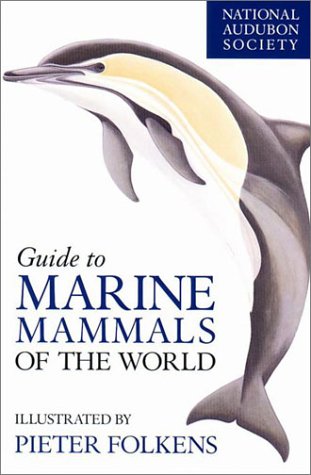
6. National Audubon Society Guide to Marine Mammals of the World (National Audubon Society Field Guide Series.)
by Brent S. Stewart, Phillip J. Clapham, James A. Powell
Turtleback: 528 Pages (2002-04-02)
list price: US$26.95 -- used & new: US$15.60
(price subject to change: see help)
Asin: 0375411410
Average Customer Review: 5.0 out of 5 stars
Canada | United Kingdom | Germany | France | Japan
Editorial Review

Book Description
The National Audubon Society Guide to Marine Mammals of the World describes in fascinating detail all 120 species of the world's whales, dolphins, porpoises, seals and sea lions, manatees, Marine and Sea Otters, and the Polar Bear. Written by a team of experts and featuring more than 320 illustrations, 418 photographs, and 123 maps, this new guide offers more authoritative, up-to-date, and accessible information than any book previously published on the subject.

Organized by the four major groups of marine mammals—marine fissipeds, pinnipeds, cetaceans, and sirenians—the species descriptions include:

Full-color paintings, some depictingmales and females, juveniles, subspecies, or special features. Color photographs showing appearance in the wild and illustrating typical behaviors. Life history data, including length and weight at various life stages, and life span. Range and habitat text and a full-color range map based on the most current information. Facts about social organization, surface behaviors, swimming, and diving. Information on mating behavior, breeding, and the rearing of young. Details about food items and foraging techniques. Estimates of population in the wild, plus current and historic threats.

A general introduction outlines the evolution and taxonomy of marine mammals, distribution, migration, watching guidelines, identification techniques, organizations and laws that protect marine mammals, and more.

Introductions to groups include comparative size illustrations, discussion of behaviors particular to the group, and other unique features.

A useful illustrated glossary of terms and an index of species names complete the guide.

Exquisitely detailed illustrations, stunning photographs, and clearly written text combine to make this an indispensible reference source for marine mammal watchers and anyone interested in the natural world. ... Read more

Customer Reviews (9)

5-0 out of 5 stars Great field guide
I work on a small passenger ship, and we always keep a copy of this book on the bridge for mammal sightings. The photos are great, as are the overview charts showing comparative sizes. The descriptions of behavior give people some insight into the lives of these wonderful creatures.

5-0 out of 5 stars Superb book
This book is really great as it's full of very informative and interesting facts as well lots of colour photos and every species mentioned is illustrated. Excellent.

5-0 out of 5 stars National Audubon Society Guide to Marine Mammals of the World
This is the only book we use on the Monterey Peninsula to go out whale watching with.It identifies quickly and covers all the marine mammals.Perfect field guide.

5-0 out of 5 stars Awesome
This books is very informational.I have gotten a lot of information from it and the pictures are fabulous!I would recommend this book to anyone interested in Marine Mammals.My daughter wants to be a Marine Biologist/Marine Mammal Trainer and this book gave her all the right information at the right time.

5-0 out of 5 stars Much more than expected!
Audubon has certainly delivered their best in this marine life field guide! When I bought this, I expected it to be the usual good Audubon repeat of their previous field guides. I was quite impressed by the number of species inserted, and the special illustrations used along with it. There are a surprising number of families and subspecies listed also.
The whales and dolphins section is the best part of the guide, listing rare and endangered species. I don't suspect anyone has heard of the "Tucuxi" dolphin, have they? Rather than just listing commonly seen or normal species, Audubon has done extensive research on others, and has inserted dozens or more in each family section, making identification completely unmistakable. The seals and sea lions covered are no different in variety and number of listings. However, many of the seals listed are subspecies of 6 previous listings.
The binding is usual quality by Audubon publishers, making an excellent reading book, whether on a boat trip, in a car, or simply in an easy chair at home. Forget other Marine Mammal Guides, and make an extensive search for this! ... Read more


7. Biology of Marine Mammals
by John E. Reynolds
 Paperback: 586 Pages (2007-08-01)
list price: US$50.00 -- used & new: US$30.47
(price subject to change: see help)
Asin: 1588342506
Average Customer Review: 5.0 out of 5 stars
Canada | United Kingdom | Germany | France | Japan

Customer Reviews (4)

4-0 out of 5 stars Bueno pero...
El libro como información es muy bueno. A lo largo de todo el libro se puede encontrar un compendio excelente acerca de todo lo relacionado a la biología marina, con buena información y con una aparente excelente bibliografía. El único gran problema son los gráficos, fuera excelente a full color, pero todos los gráficos son en escala de grises.

5-0 out of 5 stars excellent resource on marine mammals
I personally feel this book is one of the best comprehensive reviews of marine mammal biology out there.Both of the editors as well as all of the authors of the book are reknowned in their fields of marine mammal science. Reynolds and Rommel compiled a great resource for aspiring marinescientists as well as professionals.

5-0 out of 5 stars Exelente libro
El contenido es muy bueno, una obra de consulta permanente y actualizada. Cubre todos los enfoques. Realmente es un muy buen compendio de información que por lo general es difícil de conseguir.

5-0 out of 5 stars biology of marine mammals
excelente mamotreto, grandiosas imagenes y contenido ... Read more


8. Starting Your Career as a Marine Mammal Trainer
by Terry S. Samansky
Paperback: 144 Pages (2002-07-01)
list price: US$16.95 -- used & new: US$12.95
(price subject to change: see help)
Asin: 0971985324
Average Customer Review: 4.0 out of 5 stars
Canada | United Kingdom | Germany | France | Japan
Editorial Review

Book Description
This behind-the-scenes look at careers in marine mammal care and training addresses questions such as What is it really like to be a trainer? and How can I become one, too? and offers strategies and alternatives to help identify potential career options in this field. It covers a variety of aspects involved in being a trainer, from typical days on the job and training different behaviors to the kind of education needed and the value of swimming and scuba skills. This thorough guide contains a comprehensive bibliography for additional reference and an invaluable resource directory with extensive contact information for more than 150 educational, governmental, and professional sources around the world. ... Read more

Customer Reviews (7)

4-0 out of 5 stars A new bible!
Finally, I have a book that I can turn to, to answer all of my questions about marine animal training! It has become like a bible to me, and whenever I can, I flip through. All the tips seem like they would give you the back door advantage, meaning you'd have a better advantage than a person who hasn't read it, in getting a job!

2-0 out of 5 stars Needs more detail
This book is okay, but would have been MUCH more useful had the writer included more specifics. Sure, you need to take psychology courses, but which courses are most useful??? It's well written, but more of an overview, which (for me) was not very useful.

3-0 out of 5 stars obvious but good
If you're just beginning to think about a career with marine mammals than this is a great book, that might change your perspective and help you decide if being a marine mammal trainer is really what you want to do. However if you're already on your way to becomming one than most of it you have probabily already figured out your self. I did however find the directory of marine mammal facilities, including specifically what animals they have, extremely helpful. especially the international section. I do have a few corrections however, first the pittsburg zoo no longer has an amazon river dolphin, it passed away in 2002 and to the best of my knowledge the brooklyn aquarium does not have dolphins, only belugas.

5-0 out of 5 stars A must read for preparing for this career!!!!
This book is an easy read and gives simple explanations. However, it is packed with valuable tips! I recently had an interview for an internship in marine mammal training and every question that they asked in the interview was on the list of questions that were in this book. It gives great tips on how to prepare for the career and what the employers are REALLY looking for.

5-0 out of 5 stars A book after my own heart!
Finally!A book that was written after my own heart!I've had the same dream to one day work with marine mammals since I was 7 years old. I'm 18 now, and that dream has still not changed. But because it is such a competative and unique job, it's not every day you run into a dolphin trainer and therefore, it's difficult to get direct information about just how to go about doing this.Of course I've researched many different books about these beautiful animals, but it's not every day that you find a guide on how to actually achieve this dream career!Imagine how thrilledI was to find this book!It's an inside look at working with marine mammals, by a senior trainer himself.Terry gave me tips and suggestions that I would never have thought of, nor realized until it was perhaps too late.Preparing youself with the proper experience is one of the most important things, and with the help of the "aquarium guide" I discovered that there is a small marine aquarium, not 40 minutes from me, where they have volunteer programs that involve the rescue and rehabilitation of dolphins, otters, and sea turtles.Thank you to Terry Samansky for this wonderful book!I'm sure I will be referring to it throughout my continued career search! ... Read more


9. The Kingdon Pocket Guide to African Mammals (Princeton Pocket Guides)
by Jonathan Kingdon
Paperback: 272 Pages (2005-01-10)
list price: US$24.95 -- used & new: US$15.40
(price subject to change: see help)
Asin: 0691122393
Average Customer Review: 4.5 out of 5 stars
Canada | United Kingdom | Germany | France | Japan
Editorial Review

Book Description

This is an essential guide for anyone with an interest in wildlife who visits Africa--from the tourist on safari to the more experienced naturalist. Compact and beautifully illustrated, it is ideal for use in the field, while its coverage is the most comprehensive for any book of its size.

  • First pocket guide to cover every species of terrestrial African mammal
  • Adapted from the highly acclaimed Kingdon Field Guide to African Mammals
  • Fully illustrated with the author's superb color artwork
  • Easy-to-read distribution maps
  • Concise text and clear layout for quick, easy reference
  • Practical format makes it ideal for use in the field
... Read more

Customer Reviews (5)

4-0 out of 5 stars Not comprehensive, but very good!
Probably this is the best field guide, the drawings are beautiful but strangely, the Dromedary is missing from this book albeit it is native to Northern Africa.

5-0 out of 5 stars Excellent
This guide was an excellent reference on Safari, small size and well organized format made The Kingdon Pocket Guide to Africa easy to use in the field.

4-0 out of 5 stars African Mammals Book
It is a good book...diagrams are detailed well and descriptions are good of the animals....good guide book for college classes.

5-0 out of 5 stars If Kingdon or Estes say it, believe it !!
Excellent information if studying.Kingdon is an excellent source of CORRECT information when it comes to African animals.

5-0 out of 5 stars The Best Guide for Field Use in Africa!
This compact little guide is a condensed version of The Kingdon Field Guide to African Mammals by the same author. That book is easily the best overview of African mammals, with detailed info on each species/genus, but it is not really practical for use as a field guide (see my review of it).

This book contains the same illustrations arranged in a format that makes them handier for actual identification in the field.
It is very comprehensive, covering every single species of African mammals with the exception of bats, rodents, insectivores, elephant-shrews and hyrraxes, which are usually represented by one species for each genus. But every single genus is represented, and of rodents, every species of squirrel is dealt with separately.
Maps and brief info on distribution and ecology of each taxon is now to be found on the pages facing the illustrutions.
The latter are a mixed bag, as in the original work: while most are quite good, even excellent and life-like, others are quite awful, either showing animals with stiff, straight limbs/bodies as if drawn with a ruler (like the Crowned Monkey) or in highly unnatural positions (like the Potto with the limbs twisted out, or the Cheetah standing up like a circus horse).

All things considered, this is easily the best field guide to mammals of Africa, though for more in-depth information on each taxon, you may still want to have the original book in addition to this one. ... Read more


10. Marine Mammals of the World: A Comprehensive Guide to Their Identification
by Thomas A. Jefferson, Marc A. Webber, Robert Pitman
Hardcover: 592 Pages (2007-11-05)
list price: US$69.95 -- used & new: US$57.06
(price subject to change: see help)
Asin: 0123838533
Canada | United Kingdom | Germany | France | Japan
Editorial Review

Book Description
With coverage on all the marine mammals of the world, authors Jefferson, Webber, and Pitman have created a user-friendly guide to identify marine mammals alive in nature (at sea or on the beach), dead specimens in hand, and also to identify marine mammals based on features of the skull. This handy guide provides marine biologists and interested lay people with detailed descriptions of diagnostic features, illustrations of external appearance, beautiful photographs, dichotomous keys, and more. Full color illustrations and vivid photographs of every living marine mammal species are incorporated, as well as comprehendible maps showing a range of information. For readers who desire further consultation, authors have included a list of literature references at the end of each species account. For an enhanced understanding of habitation, this guide also includes recognizable geographic forms described separately with colorful paintings and photographs. All of these essential tools provided make Marine Mammals of the World the most detailed and authoritative guide available!

* Contains superb photographs of every species of marine mammal for accurate identification
* Authors collective experience adds up to 80 years, and have seen nearly all of the species and distinctive geographic forms described in the guide
* Provides the most detailed and anatomically accurate illustrations currently available
* Special emphasis is placed on the identification of species in problem groups, such as the beaked whales, long-beaked oceanic dolphin, and southern fur seals
* Includes a detailed list of sources for more information at the back of the book. ... Read more


11. National Geographic Prehistoric Mammals (National Geographic)
by Alan Turner
Hardcover: 192 Pages (2004-10-01)
list price: US$29.95 -- used & new: US$18.00
(price subject to change: see help)
Asin: 0792271343
Average Customer Review: 4.5 out of 5 stars
Canada | United Kingdom | Germany | France | Japan

Customer Reviews (12)

5-0 out of 5 stars Prehistoric fan
My son loves this book and has been studying it since he got it for Christmas.

3-0 out of 5 stars National Geographic Prehistoric Mammals
In contrast to a previous book written by Alan Turner and illustrated by Muricio Anton, "The Big Cats and their fossil relatives,"This book disappoints.The artwork by Anton is excellent, but the text is superficial and light.A very nice coffee table book for the general reader, and perhaps a very good introduction for children, age 12 and older.

5-0 out of 5 stars Excellent
This is an excellent publication. Easy to read with great graphics. A fine addition to the library.

4-0 out of 5 stars Somewhat disappointing.
As far as printing quality, solid info and artistic craftsmanship go, this is a (very) good book. But it's also a somewhat boring one, lacking a more daring, dynamic approach to the various prehistoric ecosystems and the relationships between various species. Also, as a Brazilian, I must protest about the lazy approach to the information on prehistoric South American faunas, which relies wholly on the information provided by Argentinian sites studied by Darwin in the XIXth. Century, completely ignoring the recent work made by Brazilian researchers on sites such as the Itaborai formation, just in the neighbourhood of Rio de Janeiro; also ignored is the Rio National Museum, with its fine fossil specimens excavated in the Lagoa Santa site during the late XIXth. Century including complete skeletons of a ground sloth and a sabertooth.

5-0 out of 5 stars Great Book!
National Geographic has produced another beautiful book, packed with information and detailed, gorgeous illustrations.I bought this book for my 5 yr old grandson who wanted to know what animals came after the dinosaurs.There are too many and some difficult words to read it all directly to him, but I found it easy to paraphrase.He always asks how big animals are, so the comparisons of animals to the size of a man (his daddy) are just what was needed.This will be a book he can return to for many years to come.I'm so impressed with this book I may have to buy one just for me. ... Read more


12. National Audubon Society Field Guide to North American Mammals: (Revised and Expanded) (Audubon Society Field Guide)
by NATIONAL AUDUBON SOCIETY
Turtleback: 992 Pages (1996-05-21)
list price: US$19.95 -- used & new: US$11.24
(price subject to change: see help)
Asin: 0679446311
Average Customer Review: 4.5 out of 5 stars
Canada | United Kingdom | Germany | France | Japan
Editorial Review

Amazon.com
Consider the lynx, a medium-sized cat of boreal regions of North America, "a solitary animal, associated with the opposite sex only during mating." Consider the Oldfield mouse, Peromyscus polionotus, once abundant in abandoned fields and beaches from South Carolina to northern Florida. These are but two of the 390 species covered in this densely informative, well-illustrated guidebook to the mammals of North America, with photographs keyed to textual descriptions that cover a given animal's physical features, range and habitat, breeding characteristics, and behavior (and, helpfully, that list other animals with which it might be confused). This easy-to-use handbook makes a superb addition to any naturalist's library. --Gregory McNameeBook Description
From a stop-action photograph of the amazing flying squirrel to Big Horn Sheep perched on a rock face, this guide puts the world of mammals in your hands. Illustrated with more than 300 full-color photographs, each species account includes information on physical characteristics, size, similar species, breeding, tracks and other signs, habitat, and range, as well as commentary on feeding, nesting, and other behaviors. Easy-to-read range maps, detailed anatomical illustrations of different mammals, track illustrations, and a state-by-state location guide make this the decisive authority on North American mammals. ... Read more

Customer Reviews (7)

4-0 out of 5 stars indispensible for any naturalist's library
As with all the Audubon Field Guides, so too with this one - it is well made, with good binding and a durable leatherette cover; the index is well organized with links to the color plates; and the color photos are the best of any of the field guides.

The descriptions, albeit way too brief, are concise and straight forward. There are 390 mammal species covered - range and habitat, behavior patterns, and track illustrations round out the textual information.

This edition was updated in 1996, so it's not as dated as some of the other Audubon guides. Although the #1 deficiency of these guides is the inadequate summaries (the details really need to be fleshed out), these guides are on the whole better than the Peterson and Stokes guides. This volume has its place in any serious naturalist's library.


Extracts: A Field Guide for Iconoclasts

The Cloud Reckoner

5-0 out of 5 stars Great as always
If you have seen any of the other Audobon Society Books, you know how good they are.They provide the necessary information on kinds of animals I've never even heard of.I like that the book includes color photographs as well.

5-0 out of 5 stars Field Guide to North American Mammals
From the shrews to the bears, this guide is what one should have in the field. . .especially in Alaska.

5-0 out of 5 stars Awesome Field Guide
This guide includes all sorts of animals in and around my area.It has a very thorough explanation of the animals and how to identify them.Whats really useful is the pictures.There are several pictures for each species including Summer coat & Winter coat.This is especially helpful if you are out animal watching during different times of year.I love going out exploring and coming home to look up the critters I saw.

5-0 out of 5 stars The best ..................
These are the BEST field guides we have ever owned.We have the trees, western USA birds, trees and sealife ones and they are a wonderful size and fit easily into a coat pocket or glove compartment of ones car and of course a back pack.They make a GREAT gift and during the Christmas season a great stocking stuffer.

They are so complete as far as information goes, telling the reader what the migration and nesting habits are, where the birds can be found and they have wonderful photographs that are so useful when out on a hike.Our son loved them growing up and with a set of binoculars on a hike a person can find hours passing and not realize it.

The covers on the books (vinyl) make it easy to keep them clean.Buy at least one and I assure you, you will be hooked.......... ... Read more


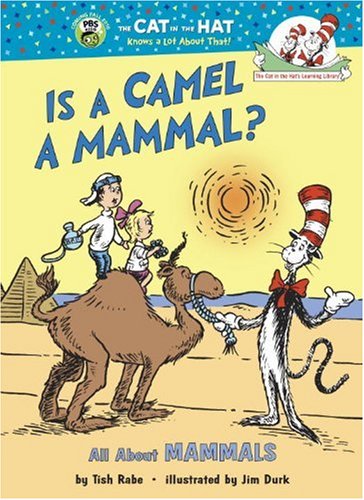
13. Is a Camel a Mammal? (Cat in the Hat's Lrning Libry)
by Tish Rabe
Hardcover: 48 Pages (1998-10-13)
list price: US$8.99 -- used & new: US$4.74
(price subject to change: see help)
Asin: 0679873023
Average Customer Review: 5.0 out of 5 stars
Canada | United Kingdom | Germany | France | Japan
Editorial Review

Amazon.com
From pygmy shrews to bandicoots, this book will remind you it's not just Dr. Seuss who created strange and wonderful creatures!Is a Camel a Mammal? discusses myriad mammals in the entertaining rhythms that made Seuss famous. While the Cat in the Hat is the central narrator of this fact-filled tale, count on Thing One and Thing Two for supplying the actions that accompany such tidbits as "Their hair can be soft, like the fur of a kitten, or the wool from a lamb that you knit from a mitten."While the author forced some of the rhymes, the book still makes a great starting place for early readers with a serious interest in unusual animals. A sure hit for post-zoo story time. (Preschool to early reader) --Jill Lightner Book Description
The Cat in the Hat takes Dick and Sally on a Seussian safari to observe (and pontificate about) the many different kinds of mammals. An invaluable tour for all animal lovers!   ... Read more

Customer Reviews (1)

5-0 out of 5 stars Educational and Entertaining
My children, ages 5 and 3, and I love this Dr. Seuss style educational book.It is filled with lots of facts about mammals and distinguishs between mammals and non-mammals.The beginning of the book tells thereader that mammals breathe air, are warm to the touch and grow hair.Therest of the book illustrates these three characteristics.I particularilyliked the page which shows that mammals can live in different types ofenvironments, "Mammals live on cold mountains and hot, burning sand,down deep in the oceans or out on dry land."The ending is delightfulas the child learns that she is a mammal, too.Finally, I enjoyed thisbook because it included a glossary of terms and suggestions for furtherreading on the subject of mammals. ... Read more


14. The Safari Companion: A Guide to Watching African Mammals Including Hoofed Mammals, Carnivores, and Primates
by Richard D. Estes
Paperback: 458 Pages (1999-12)
list price: US$30.00 -- used & new: US$17.95
(price subject to change: see help)
Asin: 1890132446
Average Customer Review: 4.5 out of 5 stars
Canada | United Kingdom | Germany | France | Japan
Editorial Review

Book Description
Since its original publication in 1993, The Safari Companion has been the best field guide to observing and understanding the behavior of African mammals. An indispensable tool for naturalists traveling to Africa, this new edition has been revised to acknowledge the enthusiasm to those watching these magnificent animals at zoos and wildlife parks, and on film.The Safari Companion enables readers to recognize and interpret visible behavioral activities, such as courtship rituals, territorial marking, aggression, and care of young. Each account of over 80 species includes a behavioral table in which the unique actions of the hoofed mammals, carnivores, and primates are described for easy reference. In addition, useful maps show the major national boundaries, vegetation zones, and game parks relevant to the guide. The book includes an extensive glossary, as well as tips on wildlife photography, a list of organizations working to protect African wildlife, and advice on where and when to see the animals. ... Read more

Customer Reviews (22)

4-0 out of 5 stars Good second guide
This is geared a little more toward those with more experience in the field.It isa little more scientific than Kingdon and offers some very good information.However, if you had to choose just one book, Kingdon would be a better choice.

5-0 out of 5 stars Well Written, by and Expert
I just returned from Tanzania, and used this book while on Safari in Serengetti, Ngorongoro crater, Lake Manyara, and Tarangire.

The main strength of the book is the high level overview given to game viewing in the beginning and at the beginning of each animal section.Without some background in behavioral biology it is tough to watch the animals and find it interesting for too long.After reading the opening to this book I was able to take much more from watching big herds of grazers than the tourists I was with.

Richard Estes is clearly an expert in the field, but he writes in a fashion that is easy to understand for a layman.He also gives some personalization to his accounts, giving personal tips for a good game drive.

The only issue with the book is that it is sometimes difficult to match the behavior of the animals in the field to the book in the limited time that is available on safari, so I would suggest that anyone interested read the sections about the animals they expect to see before the safari, and have those pages marked for reference during the game drive.

5-0 out of 5 stars Excellent Safari Companion
This book was an engrossing and wonderful read as we undertook the Safari.
It provided insight into the behavior and special characteristics of each animal that we saw, and made the sightings much more interesting than just the identification of each species.
Recommended highly!

2-0 out of 5 stars In my experience, this isn't very useful
I've been to Tanzania's national parks twice, and watched a lot of game in both the popular and the less-crowded parks. Estes came with me the first time, based on my interest in the animals and reviewers' comments found here; and this last time I took along the (copied) pages for a dozen or so animals (zebras, elephants, wildebeest, giraffes, etc).

His work is certainly interesting and I fully expected it would be a useful Safari Companion. But it hasn't lived up to expectations.

I know I've been fortunate to have guides who were very knowledgable: getting us into interesting situations, pointing out behavior and being able to answer lots of questions. In the evening, though, I've often checked to see what Estes might have to say about what we'd seen; and, typically, I didn't learn anything new. That, by itself, doesn't justify leaving Estes behind. But with few exceptions, fairly careful reading of Estes beforehand didn't prepared me to "see" behavior that might otherwise have been missed over the course of 5 weeks of game watching. I'm certain it's not that the behavior Estes describes doesn't occur; it's just that we tourists rarely have the opportunity to observe animals for long enough periods for it to happen!

After my second trip, I got a copy of "The Kingdon Field Guide to African Mammals" and I might take it along next time as a close substitute for Estes. For very easy identification of the common animals and birds of East Africa, however, I'll continue to rely on Withers and Hosking, "Wildlife of East Africa" in preference to the "National Audubon Society Field Guide to ..." (which I also own).


3-0 out of 5 stars Not for the average safari
This is a great book for people that want to know about all the variations of antelope, birds etc.If you're looking to go on your first safari and will be amazed by the sight of your first lion, this book is overkill for you.

If you're well educated on animal species, this is a good book for you. ... Read more


15. Mammals of Madagascar: A Complete Guide
by Nick Garbutt
Paperback: 304 Pages (2007-08-28)
list price: US$39.95 -- used & new: US$34.40
(price subject to change: see help)
Asin: 030012550X
Average Customer Review: 5.0 out of 5 stars
Canada | United Kingdom | Germany | France | Japan
Editorial Review

Book Description

The mammals that inhabit Madagascar are among the most extraordinary in the world. This portable guide offers a full survey and classification of all the Malagasy mammals, both endemic and introduced, including many new species only recently identified. With vivid color photographs, line illustrations, and maps, Mammals of Madagascar: A Complete Guide is an essential volume for any tourist or biologist who visits the island—or wishes to.
The guide provides descriptions of the physical and behavioral characteristics of each species as well as information about habitat and distribution. To further aid identification, the book lists top mammal-watching sites in the rainforests, deciduous forests, and spiny forest areas. Streamlined and completely updated, this book replaces Nick Garbutt’s classic earlier work, Mammals of Madagascar, and takes its place as the definitive guide to the mammals of the world’s fourth-largest island.
Published in association with Christopher Helm/A & C Black Publishers Ltd.
... Read more

Customer Reviews (2)

5-0 out of 5 stars Breathtaking
OK, so maybe you aren't a nature freak, and lemurs don't rank high on your list. Well, did you see the cartoon film "Madagascar"? See the lemur king singing "I like to boogie?" Even if you don't fall in love with this book your kids will. Because Madagascar was separated by oceans from all other landmasses for millions of years, its mammals evolved on entirely different trajectories from the rest of the world. Lemurs are remarkable creatures -- genetically part of the same primate branch as apes and homo sapiens. When you study them, lemurs strike you as big rats --- until you pay attention to their fingers, eyes, movements and colony behavior. And then you start to see human characteristics, and it is a bit jarring -- and funny.

5-0 out of 5 stars Outstanding!
Ecotourists visiting Madagascar are really lucky.
After the excellent Birds of the Indian Ocean Islands: Madagascar, Mauritius, Réunion, Rodrigues, Seychelles and the Comoros, an excellent, affordable field guide to mammals in now finally available!

It's hard to know where to start praising this book, but perhaps most importantly, it really IS complete, describing all mammal species found in Madagascar.
The species accounts are incredibly detailed, not only providing extensive info on each species' appearence, behaviour, habitat & distribution, but even telling you where to go to see each one!
Of course excellent photographs (except for a few obscure rodents and bats) and very detailed range maps accompany each species as well.
Additionally, there are highly informative chapters on the various habitats found in Madagascar, on conservation issues, and finally detailed descriptions of the country's top mammal-watching sites, with lists of the most important species to be expected, access, facilities, best season to visit...
For those seriously interested, there is an incredibly long bibliography listing as well.

If I really had to make one complaint about this book, it would be that the format is a bit too large to be convenient for carrying in the field. I wish it could be smaller and thicker, but this size may have been necessary to accomodate several impressive full-page sized photographs.
... Read more


16. About Mammals:A Guide For Children
by Cathryn Sill, John Sill
Paperback: 48 Pages (2000-03)
list price: US$7.95 -- used & new: US$3.79
(price subject to change: see help)
Asin: 1561451746
Average Customer Review: 4.0 out of 5 stars
Canada | United Kingdom | Germany | France | Japan
Editorial Review

Book Description
ELEMENTARY SCHOOL TEACHER and author Cathryn Sill accurately answers the first questions of young naturalists through explaining what mammals are, how they live, and what they do. With the help of illustrations from noted wildlife illustrator John Sill, About Mammals explores the charm and wonder of the huge variety of animals that fall into this diverse category. ... Read more

Customer Reviews (1)

4-0 out of 5 stars My 2 y.o. son likes this book a lot.
My son really enjoys all of the books in this series.I like that the illustrations are realistic and that species names are included.And as he gets older he really enjoys the additional information that's included in the back of the book! ... Read more


17. Smithsonian Handbooks: Mammals (Smithsonian Handbooks)
by Juliet Clutton-Brock
Turtleback: 400 Pages (2002-03-01)
list price: US$20.00 -- used & new: US$7.75
(price subject to change: see help)
Asin: 0789484048
Average Customer Review: 5.0 out of 5 stars
Canada | United Kingdom | Germany | France | Japan
Editorial Review

Book Description
The most visually appealing guides to the natural world that one can buy. Packed with superb full-color photography, detailed descriptions, and highlights of key facts, Mammals is the latest addition to the Smithsonian Handbook series. Including more than 500 profiles each with its own spread, there isn't a more reliable identification guide on the market. ... Read more

Customer Reviews (4)

5-0 out of 5 stars One of my favourites!
While this book is certainly not comprehensive (especially in regards to the rodents and bats), it has hundreds of crisp, clear photos. The descriptions for each species is brief, but there are still many interesting facts to learn from the text.
I bought this book mainly for its value as a photographic reference(I'm a visual artist) and becaus I particularly love small mammals and this book has plenty of animals that even I wasn't totally familiar with.
My only complaint about this book is the sort of briefness of it; I honestly think they could have squeezed in a few more species, but they did manage to get most of the important ones, and I believe all of the families are at least represented.
This is a great book for both kids who like to look at pictures and learn about animals and for adults who appreciate the wonders of nature.

5-0 out of 5 stars Excellent Guide for Mammal Enthusiasts
I highly recommend this book as a photo-encyclopedic guide to mammals for children, students and adults who have a general interest in mammals.My review for this book is based on its use as an educational reference guide, not as a guide that one would carry with them out in the field.(It might be suitable for that use, but I am not qualified to review it in that manner.)We use this guide with our son, and I have given it as a gift to children interested in mammals, after looking at all of the top mammal guides listed on Amazon and in Borders.

The key selling point for me is the 1000+ close-up color pictures of more than 450 species in the handbook. Every entry has at least one picture.The text is concise and informative.The book starts with informative introductory sections with excellent explanatory text and photos on "What is a Mammal", "Evolution", "Diversity", "Anatomy", "Reproduction", "Social Groups", "Sense and Communication", "Locomotion", "Feeding", "Desert Mammals", "Grassland Mammals", "Forest Mammals", "Polar and Mountain Mammals", "Aquatic Mammals", "Watching Mammals", "Threatened Mammals","Conservation", "Mammals and Humans", and "Classification"

The book covers the 21 different orders that make up the class Mammalia.Within each of these orders, individual species entries are arranged according to the family they belong to.Each entry includes the following information:scientific family name, scientific name of species, common name of species, common name of order, current population status of species in the wild, map of area or areas where species may be found, food eaten by species, average number of young, gestation period, social grouping of species, details of appearance and behavior, body size, tail length, weight in imperial and metric units, information on distribution and habits, photograph of species with annotations pointing out specific features.

The book is engaging, easy to use, and captivates the user.It will satisfy the mammal enthusiast and provide many hours of exploration.Having looked at all the other top name brand guides, I think that a hobbyist or mammal tracker might find it a bit glitzy, as opposed to a detailed field guide.But it certainly deserves a place on the shelf for mammals enthusiasts.It is suitable for young children (who can flip through, find a picture, and have the information read to them), students and adults.

5-0 out of 5 stars get them all
these books are the very best if you want accuracy,i plan to have the entire collection of them by years end.

5-0 out of 5 stars Extraordinary book
I looked for this kind of book my whole life, I think. It includes all the less-known species that most books avoid because they are "too exotic", such as olingo, but also the species found in familiar areas around home (wood mice, water vole), so you can see that your region is an important part of the world.
For a book of this size, it basically has everything in it. Of course, volumes can be told about each of the species, but this is the most comprehensive work on mammals of the world, packed into a medium-sized volume, that I have ever seen. ... Read more


18. The Kingdon Field Guide to African Mammals (Kingdon Field Guide)
by Jonathan Kingdon
Paperback: 494 Pages (2003-03-31)
list price: US$58.26 -- used & new: US$50.40
(price subject to change: see help)
Asin: 0713665130
Average Customer Review: 4.5 out of 5 stars
Canada | United Kingdom | Germany | France | Japan
Editorial Review

Book Description
Jonathan Kingdon, one of the foremost authorities on African mammals, has written and illustrated this new field guide which sets new standards in African mammalogy. The author covers all the known species of African land mammal in a concise text providing full information on identification, distribution, ecology, evolutionary relationships, and conservation status. The focus is always on the mammals as seen in the field and on their ecology and evolutionary interrelationships. Introductory profiles summarize the characteristics of the various mammal groups, and the author simplifies many of the more complex groups of mammals by referencing genera. Twelve newly recognized species of bushbaby, fourteen newly named baboons, guenons, and mangabeys and nine newly described colobus monkeys contribute to a modern treatment of the monkeys. New species of bats, rodents, and fox as well as a fully revised listing of the duikers, squirrels and genets are included. Kingdon combines his long personal experience of life in Africa and his artistic talent with the best that modern natural history and biological science can offer. With over 480 color pictures and 280 maps covering some 1,100 mammal species, this book is an essential companion to all visiting Africa or with an interest in the mammals of the continent.

Key Features:
* Employs the most up-to-date classification and lists all 1,150 known species
* Focuses on mammals as seen in the field and in their evolutionary interrelationships ... Read more

Customer Reviews (10)

5-0 out of 5 stars Best Guide for African Mammals
Well worth carrying along, would not opt for the pocket guide.We have used this book on several trips to Africa (East, South and Central) and have always found it useful.It is a great guide to have and pass around with others as you discuss what you have seen.It is also useful to have to make notes so you remember what you took pictures of when you get home.Between Kingdon and Estes, would recommend Kingdon if you can only take one guide book with you.

5-0 out of 5 stars An excellent book for wildlife study
This book is beautifully illustrated and the text explains clearly the animals life style, habitat and diet. Brilliant.

5-0 out of 5 stars A must for African Animal lovers

Having seen a dilapidated old copy of this book in the hands of our safari guide,in Tanzania whose knowledge was unbelievable, we just had to have one when we got home.The information contained is unsurpassed.Kingdon's researchinto the genetic background and the locations of the animals is amazing.Illustrations,diagrams etc. very reader friendly. A great book.

4-0 out of 5 stars About the Best Currently, but Could Be Improved
First let me say that in general I find this book excellent, and highly recommend it to anyone interested in the mammalian fauna of Africa.
It is very comprehensive, covering every single species of African mammals with the exception of bats, rodents, insectivores, elephant-shrews and hyrraxes, which are usually represented by one species for each genus. But every single genus is represented, and of rodents, every species of squirrel is dealt with separately.
The information accompanying each species is very detailed and appears up to date.

Now for the shortcomings:
1) The illustrations are next to the description of each species. Given how detailed/long the texts are, this means that usually there are just 1 or 2 species shown on each page, so to compare all antelopes you must look through a hundred pages or so - not very practical in a field guide!
2) Maps are often pages away from the text and illustration, with no reference to their whereabouts. I often thought there was no map for a species/genus, only to find it pages away, combined with the map for another taxon.
3) While illustrations are identified by the species' English name, the maps are confusingly id'ed by Latin names only. If you aren't familiar with the latter, it takes some cross-reference to find out which species' range you are looking at.
4) The illustrations vary so much in standard that it is hard to believe they were drawn by one person... While most are quite good, even excellent and life-like, others are quite awful, either showing animals with stiff, straight limbs/bodies as if drawn with a ruler (like the Crowned Monkey) or in highly unnatural positions (like the Potto with the limbs twisted out, or the Cheetah standing up like a circus horse).

Note that a cheaper, condensed version of this guide, without the first 3 shortcomings listed above and more practical for field use is now available: The Kingdon Pocket Guide to African Mammals. It is probably the book you would want to take to Africa while keeping this one at home for reference.

5-0 out of 5 stars Outstanding Guide
This guide book is simply one of the best regional mammal guide books in existance. As well as providing good descriptions of the mammals, it looks at them in the context of their evolutionary history. It does contain a few errors, as is to be expected in a book of this scope. For example, servals are reported from Egypt, where, as far as I am aware, they have not been recorded in historic times. Overall, however, the book is outstanding.I used it throughout a 14-month trip to Africa and it never let me down. ... Read more


19. Mammals of North America (Princeton Field Guides)
by Roland W. Kays, Don E. Wilson
Paperback: 240 Pages (2002-11-01)
list price: US$19.95 -- used & new: US$29.00
(price subject to change: see help)
Asin: B000F9RK3G
Average Customer Review: 3.5 out of 5 stars
Canada | United Kingdom | Germany | France | Japan
Editorial Review

Book Description

This is the most comprehensive and up-to-date field guide to the mammals of North America. Written by two leading authorities, no other reference covers all resident species north of Mexico, mammals large and small. With full-color illustrations for every one of the 442 species, Mammals of North America shows the user how to identify any mammal encountered, from mouse to moose, bat to baleen whale, Abert's Squirrel to the Yuma Myotis.

The core of the book consists of 108 color plates featuring exceptionally detailed mammal illustrations. Each species is depicted on these plates, with subspecies, geographic, and sexual variation portrayed whenever relevant. The artwork is supplemented by maps showing present range and by a short paragraph of text highlighting key identification characteristics and relevant aspects of the animal's behavior and ecology. All the artwork, maps, and text for a species are on two facing pages, eliminating the need to flip through the book to learn about an animal. Mammal signs are often more easily found than the animals themselves, so illustrations of tracks and scat are also included.

North America's mammal fauna is one of the best documented in the world, and the authors have scoured the continent's outstanding mammalogy literature to make this book as accurate and up-to-date as possible. Amateur naturalists will appreciate the complete coverage, detailed range maps, and outstanding artwork; professionals will welcome the inclusion of subspecies variation and the illustration of obscure traits crucial in distinguishing some pairs of similar species. This spectacular guide is the definitive one-volume resource on the mammals of a vast and tremendously varied continent.

  • 108 color plates with illustrations for all 442 of North America's mammal species north of Mexico
  • Subspecies, geographic, and sexual variation depicted when relevant
  • Artwork is supplemented on facing pages by range maps and by concise text noting key identification traits and relevant aspects of behavior and ecology
  • Tracks and scat illustrated as well
  • Well-documented, accurate, and completely up-to-date
... Read more

Customer Reviews (9)

3-0 out of 5 stars Good enough for a fieldguide
Good illustrations, a couple of sentences about ecology per species. Broad topic, small book, does what it can.

2-0 out of 5 stars A disappointment
I'd looked forward to this book for a long time, but now that it's here, I'm not so sure I'm going to get rid of my Burt and Grossenheider.My current favorites among the Rodentia--packrats and grasshopper mice--are painted so badly here as to be unrecognizable, as biologically accurate as Du"rer's rhinoceros but without anything like the artistic interest.What's really disappointing, though, is that with this book available, I can't imagine another mammal guide appearing for years to come.

1-0 out of 5 stars Title and description are misleading and inaccurate
The last time I checked, North America includes Mexico.The book does not, as advertised, show illustrations of all species of North American mammals; species found only south of the Rio Grande are not included.Just once I would like to see a guide to North Ameican mammals that really covers all of North America.

5-0 out of 5 stars Accurate, up-to-date, easy to use guide
The new guide book by Kays and Wilson is a great resource for identifying the mammals of North America.The old Peterson mammal guide book is badly out of date, both with respect to range and taxonomy.For example, it lists Grizzly Bear and Wolverine as residing in Colorado, when neither species has been sighted in the state in nearly 30 years.The new Kays and Wilson book also places the range map on the same page as the species description, which is MUCH more useful than placing all of the maps collectively in the back of the book (as is done with Peterson).The illustrations are sharp andthe descriptions concise; everything that you would want in a field guide.The book also includes supplemental sections on tracks, scat and surface profiles for marine mammals (all of which are missing from the old Peterson mammal book).

3-0 out of 5 stars A continents answer to mammal identification
The long awaited new field guid is out and I was able to get a copy. The first up to date treatment of all 442 North American mammals lies in front of me. I'm involved in mustelid research for the last ten years and when the pre-announcement came out, saying that all relevant subspecies, geographical and sexual variation to be included it was a must for me to get a copy.
I think in a coloured field guide the painted plates are the most important and hence most discussable part of such a book. My mood after carefully checking the guide is a little bit neutral as I don't know if it is well done or a catastrophy due to unbelivable bad "art" included in parts. Two illustrators made a fantastic job. Both have their own differnt stile and I can't decide if one is the better. Todd Zalewski painted the Opossum, Armadillo, Porcupine, Sewellel, Muskrat, Beaver, Marmots and all the squirrel relatives except the Chipmunks as well as the vole-lemming relatives in a briliant, colourfull and sharp art. The impression of the faces of especially the rodents results in indepth studies of these mammals. Great in a word ! Elizabeth McClelland was responsible for Gophers, Pocket Mice, Kangaroo Rats and the Ungulates. Her paintings are less colourfull and less sharp in contrasts but are brilliant due to her exact way of leading the brush when creating fur structure. When looking into the painted eyes you could think her candidates will jump out of the plates emediately. Brilliant ! Her talent is especially shown by some painting of gophers which were painted from a slight forewart angle.
What is strongly influencing the complete result are plates which show the complete opposite. If you are interested in Hares and Rabbits, Pikas, Jumping Mice, Woodrats, Rats and Grasshopper Mice don't buy this book ! A person called Ron Klingner made them. If you remember the film "Braindead" and the Devilmonkey you have an impression of what I'm talking about. One hardly can imagin if this guy ever had something to do with art or natural painting. Sorry, but words are missing. If shrews and moles are your favourit mammals you also should rethink your amazon order. Nancy Halliday sent her candidates either in a body building studio or fed those tiny animals untill fatt roles are visible through the fur. To me proportions also seem to be questionably. However, her chipmunks are better done.
But back to one ofthe promisses mentioned above and my particular interest im mustelids. It is a shame that for species with a lot of fur variation like the Long-tailed weasel or the Marten there is not much to get from the new guide. Although Martes americana varies from nearly blackish to light yellowish specimens there is only a tiny 4x3 cm drawing of one specimen in one corner of the relevant plate. Not to mention the more than two dozen subspecies of Mustela frenata to be found in North America. In general the carnivore plates are dissappointing although they are better than the Klingner caricatures. I would have wished that "Fisher-Powel" had discussed the artistric interpretation of the carnivores with his wife. In fact it seemed that he did so only concerning his favoured species which is quite well done.
To come to an end: Two artists have made a spectacular good job but I really asked myselfe who is to be made responsible for the inclusion ofthese desastrous plates by Mr. Ron Klingner who should get back to his work in painting undercups, vases or animal comics.

Kay Fuhrmann ... Read more


20. After the Dinosaurs: The Age of Mammals (Life of the Past)
by Donald R. Prothero