e99 Online Shopping Mall

Geometry.Net - the online learning center Help  
Home  - Science - Mathematics (Books)

  Back | 21-40 of 100 | Next 20
A  B  C  D  E  F  G  H  I  J  K  L  M  N  O  P  Q  R  S  T  U  V  W  X  Y  Z  

click price to see details     click image to enlarge     click link to go to the store

$54.43
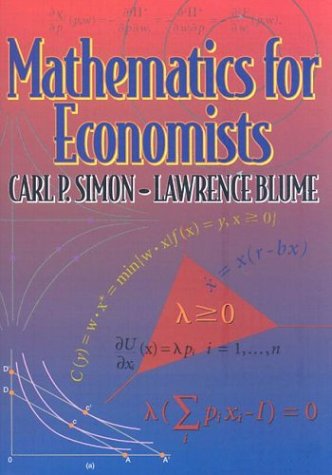
21. Mathematics for Economists
$10.42
22. Schaum's Outline of Discrete Mathematics,
$97.39
23. Finite Mathematics (9th Edition)
$90.00
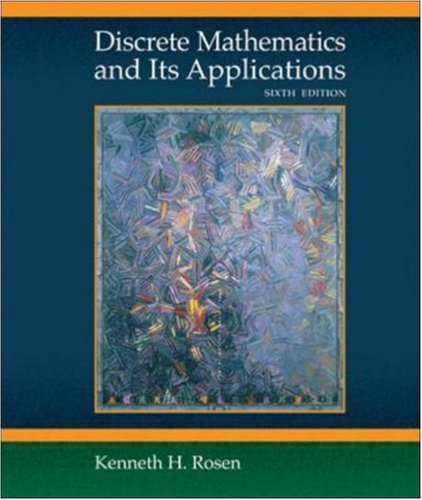
24. Discrete Mathematics with Applications
$38.90
25. Applied Mathematics for Database
$10.41
26. The Official SAT Subject Tests
$25.40
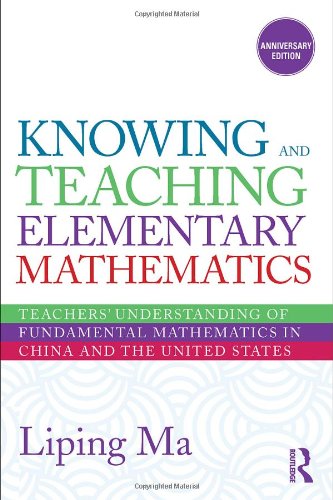
27. Knowing and Teaching Elementary
$11.26
28. The Language of Mathematics: Making
 
$113.60
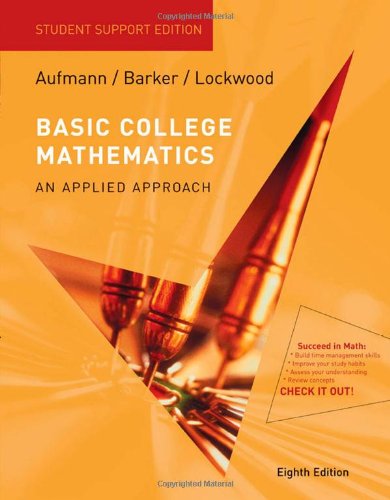
29. Basic College Mathematics
$77.75
30. Basic College Mathematics (5th
 
$6.98
31. Concepts of Modern Mathematics
$79.98
32. Mathematics with Applications
$94.00
33. Mathematics for Elementary Teachers:
$52.83
34. Fundamentals of Mathematics (10th
$74.99
35. Excursions in Modern Mathematics
$66.74
36. Mathematics Methods for Elementary
$61.65
37. Mathematics for the Trades (8th
$22.36
38. Student's Solutions Manual: Mathematics
 
$75.00
39. Mathematics Of Investment And
$91.00
40. Helping Children Learn Mathematics

21. Mathematics for Economists
by Carl P. Simon, Lawrence E. Blume
Hardcover: 954 Pages (1994-04-19)
list price: US$142.50 -- used & new: US$54.43
(price subject to change: see help)
Asin: 0393957330
Average Customer Review: 4.0 out of 5 stars
Canada | United Kingdom | Germany | France | Japan

Customer Reviews (19)

4-0 out of 5 stars A great book
I simply recommend this book to every student of economics fed up about do not understand at all basic mathematics. The book is so brigthly written,clear and helpful. I am in a master in economics and the only thing I can say is that I need something like that when facing daily challenges.

3-0 out of 5 stars Useful for advanced students
This is a very interesting case. People must understand that books on mathematics must be adequate to the level of knowledge and to the goal in terms of study. Basically we can consider that Simon and Blume is for students that:
a) Wish to follow to graduate programs - PhD
b) Have a solid knowledge on Mathematics

This book is NOT for undergraduate students and/or for students that have lack of knowledge on mathematics. I suppose that for a beginner it is wiser to buy and to study books that cover the Essentials on Mathematics for Economics. If you are entering in a Bs/BA in Economics and you don't have a solid mathematical preparation, there are better options available.

If you are a graduate student that wish to follow a PhD program, then this book it is for you.

1-0 out of 5 stars Not worth the price
This book is essentially a reference manual for a professor. If you don't already know the material you will not learn it from this book. The price is outragous. This was the worst economics book I have ever bought. Please don't waste your money.

5-0 out of 5 stars IF you are doing /have done maths, read this book
This book is beautiful.
clear simple explinations built up in a clear way.
1) explicitly defined Theorems
2) proofs with clear starts and ends.
3) starts at level that should be within the grasp of able A-level students
i.e. not much knowledge assumed.
4) contains goods maths followed by economic examples that use it.
5) A wellcome counterpoint to economic books and lectures that use bad maths
i) theorems with out showing the conditions are met
ii) use floating 'dx's
6)goes to a level beyond undergraduate level to give a strong powerbase.
7)Mathematics is the languageof economics.
Until you are master of the relevant sections, understanding economics
will for you be like reading the Ancient Bible and not knowing hebrew.
Therefore even if yours economics degree includes maths techniques
modules, you will find yourself using maths, you have not been taught yet.
So buy this book and get on top of the maths in your course.
8)get it before you go, read it before you get to uni and then you can
spend the first few weeks partying instead of reading maths to keep on
top of your course.
9)read this book and feel like a million dollars.
10) if you have NO INTEREST IN ECONOMICS, and are doing maths get this
book and it will be a good primer on a whole heap of modules from
Linear Algebra to Analysis.


1-0 out of 5 stars Not for the Math Econ Novice
I purchased this book on the recommendation of one of my Ph.D. program professors who likes it better than de la Fuente's book. I agree that it's better than Fuente, but that's not saying much.Simon and Blume wrote the book for people who not only already know mathematical economics, but who also think fluently in mathematics.It's not for the beginning Ph.D. candidate in economics, but for the accomplished professor.If you already know the material, I suspect that Simon and Blume will allow you to quickly reference any of the topics it covers.If you're struggling to learn mathematical economics, however, don't try to use this book because it will reinforce any fears you might have about your ability to learn the subject in the first place. ... Read more


22. Schaum's Outline of Discrete Mathematics, 3rd Ed. (Schaum's Outlines)
by Seymour Lipschutz, Marc Lipson
Paperback: 474 Pages (2007-06-21)
list price: US$18.95 -- used & new: US$10.42
(price subject to change: see help)
Asin: 0071470387
Average Customer Review: 5.0 out of 5 stars
Canada | United Kingdom | Germany | France | Japan
Editorial Review

Book Description

Discrete mathematics becomes more and more important as the digital age goes forward. This newly revised third edition updates all areas of the subject.

... Read more

Customer Reviews (1)

5-0 out of 5 stars Good combination of theory and practice
Schaum's series are really about theory and practice problems and again, this book serves to 2 purposes

1/ illustrate how theory and practice are combined together with plenty of previously solved problems
2/ teach and guide beginners how to solve it ... Read more


23. Finite Mathematics (9th Edition) (MathXL Tutorials on CD Series)
by Margaret L. Lial, Raymond N. Greenwell, Nathan P. Ritchey
Hardcover: 744 Pages (2007-10-12)
list price: US$130.67 -- used & new: US$97.39
(price subject to change: see help)
Asin: 0321428293
Average Customer Review: 3.5 out of 5 stars
Canada | United Kingdom | Germany | France | Japan
Editorial Review

Book Description
Key Message: Lial, Greenwell, and Ritchey continue their tradition of integrating relevant, realistic applications with current data sources to provide an application-oriented text for students majoring in business, management, economics, or the life or social sciences. The many opportunities for technology use allow for increased visualization and a better understanding of difficult concepts. In addition to MyMathLab®, a complete online course solution, a comprehensive series of video lectures is available for this text.

Key Topics: Algebra Reference, Linear Functions (shares with CWA, Brief, and Combo), Systems of Linear Equations and Matrices, Linear Programming: The Graphical Method, Linear Programming: The Simplex Method, Mathematics of Finance, Logic, Sets and Probability, Counting Principles: Further Probability Topics, Statistics, Markov Chains, Game Theory

Market: For all readers interested in Finite Mathematics. ... Read more

Customer Reviews (4)

1-0 out of 5 stars Does NOT come with a Tutorial on CD
I purchased this book brand new and full priced because it is listed as havinga MathXL Tutorial on CD.I felt the aid of interactive instruction would be beneficial.Since having recieved this book and inquiring of Amazon, I find the book does NOT come with a CD but with an online address for a website with instruction which costs and ADDITIONAL $35.00 to access.The title is incorrect and misleading, and making this transaction with Amazon has been disappointing.I will think twice before I make another.Finite Mathematics (9th Edition) (MathXL Tutorials on CD Series)

5-0 out of 5 stars Great condition
This book was only used for one semester.It is in great condition looks brand new.I bought it brand new and kept it in the same condition.

4-0 out of 5 stars I recommend this book
I took an online class over the summer and used this book. Eventhough the teacher was not helpful, the book was. All the exercises were extremely helpful and the text was simple and easy to read. I would recommend this book for any who has to take this class.

4-0 out of 5 stars It passes the test for adoption consideration
As a reviewer and educator, I encounter many textbooks that can be used in the lower level classes such as basic statistics, algebra, precalculus and finite mathematics. Since the material to be covered in these classes has been established by consensus, it is a rare occasion when there is a significant difference in coverage. In addition, there is a natural order to many of the topics, so the differences in sequence also tend to be minimal. All of this leads to a routine sameness of the books, especially when examined by someone experienced in the topic.
Therefore, when examining a book for adoption consideration, my primary concern is how easy it will be for the students to read it. This requires that you intentionally dumb yourself down, reading the explanations in detail, looking for simplistic clarity. If a book has that feature, then it is most likely a good choice. With the exception of including solutions to a large percentage of the problems, all other aspects of the book are secondary. (I consider the lack of solutions to problems in a math book to be a fatal flaw.) In general, I consider the inclusion of more problems of the same type to be trivial padding; after all, the value added by including ten more routine matrix addition problems is minimal. In finite mathematics, it is possible to include problems based on circumstances that actually occur in the real world. The cost of manufacturing some items is in fact locally linear and the allocation of resources can be described by a matrix. Therefore, the realism of the applied problems must also be a consideration when examining a finite math text.
With these conditions of acceptance established, I can say that this book passes the test. The explanations have the simplistic clarity that students need and solutions to many of the problems are included. Many problems demonstrate reasonably practical conditions where finite mathematics is used in the world, and the appropriate background for the problems is given. While no decision has yet been made concerning what book to use next year, this one has been placed on my list of the top three finalists for further consideration.
... Read more


24. Discrete Mathematics with Applications
by Susanna S. Epp
Hardcover: 928 Pages (2003-12-22)
list price: US$171.95 -- used & new: US$90.00
(price subject to change: see help)
Asin: 0534359450
Average Customer Review: 4.5 out of 5 stars
Canada | United Kingdom | Germany | France | Japan
Editorial Review

Book Description
Susanna Epp's DISCRETE MATHEMATICS, THIRD EDITION provides a clear introduction to discrete mathematics. Renowned for her lucid, accessible prose, Epp explains complex, abstract concepts with clarity and precision. This book presents not only the major themes of discrete mathematics, but also the reasoning that underlies mathematical thought. Students develop the ability to think abstractly as they study the ideas of logic and proof. While learning about such concepts as logic circuits and computer addition, algorithm analysis, recursive thinking, computability, automata, cryptography, and combinatorics, students discover that the ideas of discrete mathematics underlie and are essential to the science and technology of the computer age. Overall, Epp's emphasis on reasoning provides students with a strong foundation for computer science and upper-level mathematics courses. ... Read more

Customer Reviews (15)

5-0 out of 5 stars Before you buy
Hello all,

Just like many reviewers, I give this book 5 stars, why? First of all I am a senior
majoring CSE and I hate all college text books. This book is an exception. The first three chapters is introduction to logics nothing much. From chapter four on the good stuff starts, induction, set theory, recursion, representations, and more. The book has lots of examples and exercises, also the answers to selected exercise are on the back of the book, (not just answers also the work). Above all this book is really good but before you buy it hear this:


/***********************************************************************************
I wouldn't recommend that you buy this book why? Because the second edition
is same as this book, the only difference is the cover Image and the exercise
problems. So copy the homework problems from the copy at your college's library
and use the second edition as a reference. Also the second edition costs only $5.0
or less
**********************************************************************************/

Thank you and good luck

cheers

5-0 out of 5 stars Perfect book for its purpose
This book serves as a terrific introduction to concepts which are of paramount importance in upper-level math courses, most notably Probability Theory, Real Analysis, and Abstract Algebra.Moreover, it provides a solid basis for computer science majors who wish to write more logically sound and efficient programs.I regularly referred back to this in my Real Analysis and Probability courses, and I imagine others would do the same.Also, Dr. Epp's clear, conversational style doesn't hurt the student's confidence later in more rigorous academic enterprises, as well as a concise layout and reasonable pace.Highly recommended.

5-0 out of 5 stars Good explainations.
This book explained concepts very well. The chapters were easy reads and I even referrred to this text for a Math Reasoning class. If you are a math genius and hate explainations then don't get this book. But if you like to fully understand what you are doing then I would suggest this book.

5-0 out of 5 stars Great book
Wow, this is a great book. I bought this book as a secondary helper book to a really bad math textbook and this book helped me tons. It only seemed to help during the first half of the semester because by the end it wasn't covering the same material as the class was. But it covered the material that it did really really well.

It also has really good problems with good solutions that explain what's going on. Something that so many other math books seem to lack on Discrete math. Just a great book.

5-0 out of 5 stars Great text on discrete mathematics especially for non-math majors
I used an earlier edition of this textbook in a discrete mathematics class that was required for those of us with a non-CS background enrolled in a MSCS program at Virginia Tech, and I found this to be an excellent and complete book on the subject. If you find yourself enrolled in a class using this book, you can be sure of two things - your instructor knows how to select good textbooks and also it won't matter if your instructor is a good teacher since this book does all of the work for him/her.

If you are enrolled in a class on discrete math and this textbook is not assigned, might I suggest you get a used copy of the previous edition. It is just as good as this current edition and used copies can easily be found dirt cheap. If you buy a copy of a previous edition the topics you'd be missing that are new to this edition would be expected value, conditional probability, Bayes' theorem, modular arithmetic, Fermat's little theorem and the Chinese remainder theorem, andRSA cryptography.

The author has included illuminating examples of all concepts throughout the textbook, defined all terms, and makes sure that each new concept introduced builds on previously explained material. Subjects covered include the logic of computation, including the predicate logic that is necessary for fully understanding artificial intelligence, methods of proof including the method of induction and also the terminology of sequences, number theory and combinatorics, O-notation and the calculation of the efficiency of algorithms, graph theory and discrete structures, and an introduction to concepts from the theory of computation. There are many exercises included, with the solutions to selected exercises in the back of the book.

This book only assumes mathematical maturity at the level of precalculus, excluding trigonometry. I highly recommend this text especially to students who are transitioning to computer science from some other discipline and need a firm foundation in the basics of that field.You'll find it useful as a foundational text for studying artificial intelligence, the theory of algorithms, mathematical models of computation, and the theory of computation. Another useful book on this subject is the "Schaum's Outline of Discrete Mathematics".

The table of contents are as follows:
1. The Logic of Compound Statements
2. The Logic of Quantified Statements
3. Elementary Number Theory and Methods of Proof
4. Sequences and Mathematical Induction
5. Set Theory
6. Counting
7. Functions
8. Recursion
9. O-Notation and the Efficiency of Algorithms
10. Relations
11. Graphs and Trees
12. Finite State Automata and Applications ... Read more


25. Applied Mathematics for Database Professionals (Expert's Voice)
by Lex de Haan, Toon Koppelaars
Hardcover: 376 Pages (2007-06-21)
list price: US$49.99 -- used & new: US$38.90
(price subject to change: see help)
Asin: 1590597451
Average Customer Review: 4.5 out of 5 stars
Canada | United Kingdom | Germany | France | Japan
Editorial Review

Book Description

Relational databases hold data, right? They indeed do, but to think of a database as nothing more than a container for data is to miss out on the profound power that underlies relational technology. A far more powerful way of thinking lies in relational technology's foundation in the mathematical disciplines of logic and set theory.

Databases contain truths or propositions describing some area of interest such as a business. Those truths are organized into sets. Operations from logic and set theory can be applied to existing sets of truths to derive new sets of truths. Applied Mathematics for Database Professionals introduces you to this way of thinking, to the logic and set theory that underlies relational database technology. All this may sound abstract now, but there are profound benefits from the deeper understanding you'll gain from this book. You'll learn to

  • Become a better database designer. You'll make fewer mistakes, and your designs will be more flexible in response to changing data needs.
  • Use the expressive power of mathematics to precisely specify designs and business rules.
  • Communicate effectively about design using the universal language of mathematics.
  • Develop and write complex SQL statements with confidence.
  • Avoid pitfalls and problems from common relational bugaboos such as null values and duplicate rows.

The math that you learn in this book will put you above the level of understanding of most database professionals today. You'll better understand the technology and be able to apply it more effectively. You'll avoid data anomalies like redundancy and inconsistency. Understanding what's in this book will take your mastery of relational technology to heights you may not have thought possible.

This book is reviewed and endorsed by C. J. Date and features a foreword by the same.

... Read more

Customer Reviews (3)

5-0 out of 5 stars A Very Valuable Volume on the Relational Model
This book from Lex de Haan (RIP) and Toon Koppelaars is a very welcome addition to those relatively few technical volumes to date that attempt to apply the rigours of a sound theoretical mathematical framework to the Relational Model, and the varied and various manifestations thereof.

This well written and well structured book takes the reader gently through rudimentary relations and sets in Part I, to the more complex database-related aspects in Part II, and finally culminating in Part III where the theoretical is applied to the practical - in this case through Oracle, but will equally apply to any of the major Database Management System (DBMS) vendors.

Although the reader is taken `gently' through the learning process, I believe that any experience in Formal System Specification would be a great help to the reader, similarly with any degree of knowledge of relations and sets. With no knowledge of either of these then the curve may not be so `gentle', but what can be assured, however, is that the exercises are well enough designed to bring the knowledge levels up appropriately as the book progresses.

Conversely, what probably isn't of great assistance is a high degree of proficiency with SQL, with its manifold attendant shortcomings and deficiencies. The difficulty here arises where the reader will tend to approach it logically from an SQL perspective (with the perhaps now instinctive mental workarounds), where this book approaches from a much more logically complete, theoretically sound, and neutral angle.

That said, however, there is much of value in this book for the seasoned SQL practitioner, if only to alert as to how incomplete the current DBMS offerings are, how this (potentially) compromises data integrity on several levels (tuple, table, database), how to avoid those same shortcomings, and on how to exploit the maximum declarative constraining from those same DBMSes in their current incarnations. For the not so seasoned, it will lay a solid, sound theoretical basis that will serve very well throughout a career with databases.

5-0 out of 5 stars Only for those who want to master the database
Finally, a book has come along that is not a simple restating of the manual.This is not a book that will tell you how to install a database or how to write RMAN scripts.

This book deconstructs all of what it is to be a database.This book is like a vivsection on the "brain" of an RDBMS (specifically, but not exclusively, Oracle).

Why this book succeeds is because it walks you, step-by-step, through the simple (yes simple) and well defined (yes, you don't really have to guess) logic that the database uses for EVERY request made of it.

It is a must-have for anyone serious about truly understanding why databases work the way they do.Have you sat in any of those meetings where people guessed or even voted on how they thought the database worked?It's so silly.

This book will not help you get certified with any database.Certifications are vendor specific and cover a lot more than the narrow focus of this book.So you'll be disappointed if you expect a broad database education.

The narrow focus of this book is laying out the internal rules of the database's "thought process."If you understand the power of that narrow focus, this book is for you.If not, keep it on your wish list and I'll bet you'll come back to it someday.

I have made this book mandatory reading for my Oracle and SQL Server DBA's (the only databases I currently have DBA's for).

While it is in no way a complete database education, I think no database education can be complete without it.

3-0 out of 5 stars Formal Database Specification
Writing a book is no easy task. Completing a book when your co-author and friend passes away early in the process, must be a monumental task, this is what Toon Koppelaars achieved with this work.

I ordered this book expecting it to contain examples of using statistics, probability and data mining algorithms as applied to databases. In retrospect, I am not sure why I made that assumption. It is actually about formally specifying database designs using logic and set theory. This book is reviewed and endorsed by C. J. Date and features a foreword by him, which would be high praise for any book on the subject of databases.

It is split into 3 parts and 12 chapters as follows:
1. Logic: Introduction
2. Set Theory: Introduction
3. Some More Logic
4. Relations and Functions
5. Tables and Database States
6. Tuple, Table, and Database Predicates
7. Specifying Database Designs
8. Specifying State Transition Constraints
9. Data Retrieval
10. Data Manipulation
11. Implementing Database Designs in Oracle
12. Summary and Conclusions

If you've studied mathematics (or a tertiary subject with a mathematics element to it) you will most probably be familiar with the sections on set theory and logic. If you have not then they provide an as excellent introduction to these topics that you are likely to find anywhere.

This book makes the following claims and I have made my comments against each one:

"This book will help you":
* "Become a better database designer. You'll make fewer mistakes, and your designs will be more flexible in response to changing data needs." I agree 100% that having a good, if not intuitive, grasp of logic and basic set theory will help you to create better DB schemas.
* "Use the expressive power of mathematics to precisely specify designs and business rules." I am not sure how useful this is, and I have a mathematics background. I personally feel that having another notation to express the database design seems to break the DRY (Don't Repeat Yourself) principle.
* "Communicate effectively about design using the universal language of mathematics." Personally, I do not think this applies unless you are at the top of your game and/or have a theoretical bias and you are communicating with someone similar.
* "Develop and write complex SQL statements with confidence." Absolutely agree. I am often surprised at the number of software developers that do not have a thorough grasp of logic.
* "Avoid pitfalls and problems from common relational bugaboos such as null values and duplicate rows". Probably, but then 3NF will go a long way to achieving that.
I would be the first to agree that a good, basic mathematics grounding is desirable if you want to confidently design databases that scale well and are modelled correctly.
The mathematics that you learn in this book will certainly put you above the level of understanding of most database professionals. But I am not convinced that alone will enable you to better understand the technology and be able to apply it more effectively. It will help you to avoid data anomalies like redundancy and inconsistency, which are not uncommon problems in the world of databases!
On the whole, I enjoyed reading this book, but I'm not sure if I learnt anything I could immediately put to use when designing and refactoring databases. I did not put a great deal of effort into learning and understanding the formal database specification language described in this book purely because I could not see an immediate benefit when balanced against the effort required to learn a new notation, and I may well have overlooked something crucial that would indeed enable me to create better database designs.

http://mitch-wheat.blogspot.com

Disclosure: The Perth .NET User Group is a member of the Apress User Group Program. Apress make copies of their books available for user group libraries, and the copy reviewed here was kindly donated by them. ... Read more


26. The Official SAT Subject Tests in Mathematics Levels 1 & 2 Study Guide (Official Sat Subject Tests in Mathematics Levels 1 & 2 Study Guide)
by The College Board
Paperback: 216 Pages (2006-08-08)
list price: US$18.95 -- used & new: US$10.41
(price subject to change: see help)
Asin: 0874477727
Average Customer Review: 3.5 out of 5 stars
Canada | United Kingdom | Germany | France | Japan
Editorial Review

Book Description
Every year more than 230,000 high school students take a SAT Subject Test in Mathematics. The Official SAT Subject Tests in Mathematics Levels 1 2 Study Guide is the only source of official questions and answer explanations for these exams, and it is the only guide developed by the test maker. In addition to two full-length, previously administered practice tests for each exam level, this book also contains complete solutions, answer explanations, and test-taking strategies. ... Read more

Customer Reviews (7)

5-0 out of 5 stars Excellent
I think the study guide will be very beneficial to me.I believe I chose the right book...

3-0 out of 5 stars Disappointing
Unfortunately, this book only has two practice tests.It is really tough to adequately prepare for this exam with so few problems.I recommend Barron's book instead.

2-0 out of 5 stars Not very useful
Not very useful if you want to study for maths level 1/2.only useful for part time end moment practice but not worth its money.

5-0 out of 5 stars Great Book!
It wasn't good for review, but really good because it has two OFFCIAL math IIC tests. I used Barron's for review and used both of these practice tests (answers and explanations in the back) to score a 790 on the real exam.

3-0 out of 5 stars Pretty Good
The new Math Level 1 and 2 Book is not too bad. However, it is overpriced. This book is the same price as the SAT book with all the Subjects. Just because it has the answers explained does not mean it should be this expensive. I recommend buying from Amazon, since they significantly lower the price by about 30%.

I took the Level 2, so I do not know what the Level 1 was like. In actuality it only has one test for each; the second one they give is in the old SAT Subject Tests book (the one that's Red, white and blue).

This is a good supplement to Barron's. I took Math Level 2 the first time in October for a score of 720, then retook it in December and got 800 with this book and Barron's. ... Read more


27. Knowing and Teaching Elementary Mathematics: Teachers' Understanding of Fundamental Mathematics in China and the United States (Studies in Mathematical Thinking and Learning.)
by Liping Ma
Paperback: 192 Pages (1999-08)
list price: US$31.95 -- used & new: US$25.40
(price subject to change: see help)
Asin: 0805829091
Average Customer Review: 4.5 out of 5 stars
Canada | United Kingdom | Germany | France | Japan
Editorial Review

Book Description
Chinese students typically outperform U.S. students on international comparisons of mathematics competency. Paradoxically, Chinese teachers receive far less education than U.S. teachers--11 to 12 years of schooling versus 16 to 18 years of schooling.

Studies of U.S. teacher knowledge often document insufficient subject matter knowledge in mathematics. But, they give few examples of the knowledge teachers need to support teaching, particularly the kind of teaching demanded by recent reforms in mathematics education.


This book describes the nature and development of the "profound understanding of fundamental mathematics" that elementary teachers need to become accomplished mathematics teachers, and suggests why such teaching knowledge is much more common in China than the United States, despite the fact that Chinese teachers have less formal education than their U.S. counterparts.


The studies described in this book suggest that Chinese teachers begin their teaching careers with a better understanding of elementary mathematics than that of most U.S. elementary teachers. Their understanding of the mathematics they teach and--equally important--of the ways that elementary mathematics can be presented to students, continues to grow throughout their professional lives.


Teaching conditions in the United States, unlike those in China, militate against the development of elementary teachers' mathematical knowledge and its organization for teaching. The concluding chapter of the book suggests changes in teacher preparation, teacher support, and mathematics education research that might allow teachers in the United States to attain profound understanding of fundamental mathematics.
... Read more

Customer Reviews (18)

5-0 out of 5 stars Guess the Profession of the Only Person Thus Far to Give this Book a One-Star Rating
That's right: a teacher (undoubtedly an American teacher), and even worse, one working on a master's degree in education. And yet, she (to pick a gender to use) is unable to see any worth in this great book. Furthermore, her review illustrates one of the problems with many teachers today in the US: the lack of critical thinking skills, not to mention an apparent ignorance about research methodologies.

That reviewer complained that the author "neglects to even mention any cultural differences between the two societies that she is comparing" and saw that failure as a fallacy that undermined everything said in the entire book.How cultural differences would alter any of the valuable lessons that we can learn from this book about a better way of teaching mathematics in elementary school and the importance of teachers having an in-depth knowledge of the subjects that they are teaching is completely lost on me.Maybe that's because they would not make any difference!

Math is a universal language, and we should be able to learn something from other cultures who we already know are producing children who consistently outscore American children by a wide margin.

And guess what: one of the basic goals of cross-cultural studies is to find out if others are doing something better and, if so, whether their methods can be applied successfully to help us do something, like teaching mathematics, better.Of course there are some cultural differences between the US and China, but so what? The point is to examine other societies who are apparently doing a better job in some area and see what they are doing differently and what can we learn from them.

The fact that a teacher found this book "boring and not worth the paper that it is printed on" should tell those of you not working in the field of education how bad it already is in our schools and how much worse it is probably going to get in the future. I teach remedial mathematics at the college level. In case any of you reading my comments did not know it, many of our schools are, and for some time now have been, graduating kids from high school who cannot add and subtract integers because they do not understand the most basic facts about our number system and how it works.None of my students have even heard the term "base 10," which is what the "composing" and "decomposing" concepts used by the Chinese teachers relies so heavily upon, and is what determines the value of every number in the system that we use in everyday life (computers, of course, use base 2).

Is there any hope for improvement in the future? Frankly, I don't think so because we just keep throwing money at the problem (giving it to the same people who helped cause the problems), rather than doing those things that are necessary to bring about meaningful changes.

5-0 out of 5 stars Highly Recommended for Early Ed. Teachers
I am a college student who purchased this book for a class project. It was VERY HELPFUL. I used the chapter on division by fractions to teach my class ways to make it easier, and the reasoning behind the methods. It was so accurate on how American teachers teach, that anyone who will be teaching math to students should really review this book to learn helpful methods for students. I aced my lesson plan for the class I taught.

Topics in this book range from subtraction, to multiplication, division, representations of fractions, and more.
The case study comparisons between the Chinese teachers and the American teachers was shocking. A must read for anyone going into Elementary Education, or working in an Elementary School system.

5-0 out of 5 stars shows how important a profound understanding of fundamental mathematics is for teaching
Knowing and Teaching Elementary Mathematics is a book that compares and contrasts American and Chinese approaches to teaching elementary mathematics ie arithmetic and elementary geometry. The author argues that Chinese teachers have a more profound understanding of elementary mathematics than their American counterparts and provides pretty good evidence of this. While this aspect of the book is useful, the authors explanation of just what profound understanding of fundamental mathematics amounts to is much more useful. For example rather than using the technique of borrowing to subtract, the author recommends using something called decomposing a number which means understanding that, for example, the 2 in 23 is two tens so in 23 - 15 you move one ten from the 20 part and carry it over to the ones as a ten so 10 + 3 = 13 then you proceed to subtract 5 from 13. Of course the end result is the same but the student learns about the structure of numbers in the process ie that 23 = 2* 10 + 3 * 1. Anyway this is a very useful book. It is also a little bit embarrassing as I was not fully knowledgeable about some of the examples she used. For instance although I knew the process for computing (1 and 3/4 )/ (1/2) I couldn't for the life of me come up with a story to explain why you would want to do that. Anyway, this is a very eye opening book about the state of mathematics education in America and also just what it means to be proficient in elementary mathematics.

1-0 out of 5 stars Cure for Insomnia
Ma's book would put anyone to sleep.As a student working on a Masters in Special Education, this book was horrible.Basically, Ma compares Chinese teachers to American teachers in the area of Mathematics.She neglects to even mention any cultural differences between the two societies that she is comparing.This alone creates a fallacy for all of the generalizations that Ma makes about teachers from both countries. In summary, this book is long, boring and not worth the paper that it is printed on.

4-0 out of 5 stars The Key Differences Between Chinese and American Teaching Methods
For many years, I have heard about how Asian countries typically outperform America in tests relating to concepts in mathematics. I've often wondered why; I thought perhaps it's because testing is more rigorous in these countries or perhaps the students have more homework and are able to practice math more frequently. However, after reading this book, it appears the teaching method may make the biggest difference. Better teachers have probably had better experiences of being taught when they were students. This cycle continues on, therefore producing more competent students and perhaps fostering an interest in teaching in the future.
Much of the data contained in this book is based upon interviewing 23 American elementary-level teachers and 72 Chinese elementary-level teachers in regards to teaching processes. Each chapter deals with a different scenario: subtraction with regrouping, multi-digit multiplication, division by fractions, and relationship between perimeter and area. The point of each topic analysis is to see how the different teachers responded to each of these concepts.How would they teach it? Would they provide additional examples outside of the textbook? How would they correct a students mistake? I found Chapter 4's scenario particularly interesting: how would a teacher prove (or disprove) a student's unconventional new theory about area and perimeter?
Many excerpts from the teacher interviews are provided to show the differences between the understanding of the U.S. teachers and the Chinese teachers. The biggest problem with the American teachers that I noticed was that a fairly large majority of them were usually unsure of the rationale of why particular math concepts were carried out a certain way. Even when the math procedures were carried out correctly, the American teachers seemed much more unsure of their own knowledge than the Chinese teachers. The Chinese teachers usually provided more concise responses in regards to teaching the different types of material, as well as providing alternate ways to approach the problem.
The Chinese teachers most often showed a very deep understanding of the topic at hand, going above and beyond any of the American teachers' explanations. The most interesting observation is made by one of the teachers in Chapter 1; Tr. Chen mentions: "The operation of subtraction with decomposition (the Chinese term for subtraction with regrouping) is the application of several ideas rather than a single one. It is a package, rather than a sequence, of knowledge.". This "knowledge package" term is mentioned several times later on in this book, and I think it is an incredibly important indication of the difference between Chinese and American teaching methods. Every subject in mathematics, at the elementary level and higher levels, can be related to other important operations. For example, subtraction with regrouping should not be taught alone, as if it isn't relation to other concepts; it should be related to subtraction without regrouping, addition and subtraction as inverse operations, and so on. Many more examples of knowledge package diagrams are given in the book.
In conclusion, I find that "Knowing and Teaching Elementary Mathematics" would be a helpful book to read for anyone interested in wanting to improve their method of learning or teaching mathematics. For that matter, many of the techniques employed by the Chinese teachers interviewed could be applied to other subjects as well; integration of how one topic is directly related to others in a "knowledge package" is incredibly helpful in better understanding any subject. ... Read more


28. The Language of Mathematics: Making the Invisible Visible
by Keith Devlin
Paperback: 352 Pages (2000-03-13)
list price: US$20.00 -- used & new: US$11.26
(price subject to change: see help)
Asin: 0805072543
Average Customer Review: 4.5 out of 5 stars
Canada | United Kingdom | Germany | France | Japan
Editorial Review

Amazon.com
Keith Devlin is trying to be the Carl Sagan of mathematics, and he is succeeding. He writes: "Though the structures and patterns of mathematics reflect the structure of, and resonate in, the human mind every bit as much as do the structures and patterns of music, human beings have developed no mathematical equivalent of a pair of ears. Mathematics can be seen only with the eyes of the mind." All of his books are attempts to get around this problem, to "try to communicate to others some sense of what it is we experience--some sense of the simplicity, the precision, the purity, and the elegance that give the patterns of mathematics their aesthetic value."

Life by the Numbers, Devlin's companion book to the PBS series of the same name, is heavily illustrated and soothingly low on equations. But as he says, wanting mathematics without abstract notation "is rather like saying that Shakespeare would be much easier to understand if it were written in simpler language."

The Language of Mathematics is Devlin's second iteration of the approach he used in Mathematics: The Science of Patterns. It covers all the same ground (and uses many of the same words) as the latter, but with fewer glossy pictures, sidebars, and references. Devlin has also added chapters on statistics and on mathematical patterns in nature. --Mary Ellen Curtin Book Description

"The great book of nature," said Galileo, "can be read only by those who know the language in which it was written. And this language is mathematics." In The Language of Mathematics, award-winning author Keith Devlin reveals the vital role mathematics plays in our eternal quest to understand who we are and the world we live in. More than just the study of numbers, mathematics provides us with the eyes to recognize and describe the hidden patterns of life—patterns that exist in the physical, biological, and social worlds without, and the realm of ideas and thoughts within.

Taking the reader on a wondrous journey through the invisible universe that surrounds us—a universe made visible by mathematics—Devlin shows us what keeps a jumbo jet in the air, explains how we can see and hear a football game on TV, allows us to predict the weather, the behavior of the stock market, and the outcome of elections. Microwave ovens, telephone cables, children's toys, pacemakers, automobiles, and computers—all operate on mathematical principles. Far from a dry and esoteric subject, mathematics is a rich and living part of our culture. An exploration of an often woefully misunderstood subject, The Language of Mathematics celebrates the simplicity, the precision, the purity, and the elegance of mathematics.
... Read more

Customer Reviews (20)

5-0 out of 5 stars What is Math?
If you ever really wondered whats behind all of the numbers this is thebook that you want. Very easy to read and explains everything you wanted to know about Math.

2-0 out of 5 stars Too difficult
For trying to be a popular exposition on mathematics Devlin's book is too difficult for the lay reader. Unless you have university level mathematics in your luggage you won't understand much. The explanations of basic conepts are missing, the proofs are not there and the history is condensed into a few pages. Thus if your mathematical imagination cannot fill in these gaps you will not extract much pleasure from this book. You will rather be frustrated. I myself have read mathematics at the university and still couldn't follow him everywhere. The problem is that the labeling of the book is misleading. This is not a book of popularized mathematics. This is leizure time reading for mathematics professors and math-freaks. If you want to read something that is easy to understand but still interesting try some of the American Mathematical Society's wonderful publications (you can find them all on amazon).

5-0 out of 5 stars Highly recommended for students who fear or dislike mathematics
When I studied physics in a grad school, I used math with fear and incompetence. This book brought back love for math that I felt before it got too hard for me to enjoy it.

1-0 out of 5 stars The author lack of knowledge about mathematical history
The author reviews mathematical history but mentions no India nor China. He presented a biased view of mathematical history.
The books is misleading in that regard.

5-0 out of 5 stars advanced math amateur reader
Enormous subject matter explained and illustrated beautifully.Good read for overall view of the field. ... Read more


29. Basic College Mathematics
by Margaret L. Lial
 Hardcover: Pages (2005-08-15)
list price: US$113.60 -- used & new: US$113.60
(price subject to change: see help)
Asin: 0321362853
Average Customer Review: 4.0 out of 5 stars
Canada | United Kingdom | Germany | France | Japan

Customer Reviews (6)

4-0 out of 5 stars Good book for personal library.
I purchased this book for my personal library, and I was not disappointed by how the material in the book presents math in an enjoyable way.

5-0 out of 5 stars Excellent Teaching Vehicle
Not having paid much attention in school (60 yrs ago) and learning computer programming dicated the need for a refresher course in basic mathematics.The author's approach to teaching is to demonstrate the problem and its various solutions and then provide numerous (up to 60 or more problems for the student to work.Answers are provided only for the odd-numbered review exercises.Chapter tests and cumulative review exercises have answers to all the problems.The text is written in clear language that is easily understandable.As with all endeavors effort is needed on the part of the student.The title is somewhat misleading in that I view this book as a "review" or "refersher" course in basic math not as an introduction to college mathematics which I assumed to be on a much higher plane.At the present I am a third of the way through the book and enjoy it.I highly recommend this book for someone who needs to catch up on their abc's of math.Unlike a lot of books this one has plenty of the hands-on approach to doing math.If you need to learn numbers, this is the place to start.

4-0 out of 5 stars I hate math but I love this book!
at the ripe old age of 45, I had to retake math and for somebody whose math skills aren't above fourth grade, I dreaded the idea.This book made things easy for me.The only reason I do not give it 5 stars is that the algebra section was severely lacking but one math book cannot cover everything.I even used this book in my allied health math class and that book for that class STANK.I resorted back to this book many times as a refresher.My professor for the allied health math class would explain a long, drawn-out version of how to find an answer and a simple shortcut was supplied in this book.I would have the answer before the professor was even half way done with HIS method! I can't imagine ever giving up this book.

2-0 out of 5 stars Basic College Mathematics
I was terribly disappointed as the text received is the instructors edition with all answers noted within the text. As a student of course this text was not what I thought I was purchasing. It was too late to return the text as the semester was in session at the time the text was purchased. I will definitely not use this service again as there will questions as to what I will receive and there is no time for returning and reordering text. Thanx for asking

5-0 out of 5 stars The best Basic College Mathematics book
The book is really easy to read and follow directions.
I like the exercise reviews after each class and the test at the end of each chapter it is very helpful.
I really recomend this book. ... Read more


30. Basic College Mathematics (5th Edition) (Tobey/Slater Wortext Series)
by John Tobey, Jeffrey Slater
Paperback: 816 Pages (2004-11-06)
list price: US$126.67 -- used & new: US$77.75
(price subject to change: see help)
Asin: 0131490575
Average Customer Review: 4.0 out of 5 stars
Canada | United Kingdom | Germany | France | Japan
Editorial Review

Book Description
This clear, accessible treatment of mathematics features a building-block approach toward problem solving, realistic and diverse applications, and chapter organizer to help users focus their study and become effective and confident problem solvers. The Putting Your Skills to Work and new chapter-end feature, Math in the Media, present readers with opportunities to utilize critical thinking skills, analyze and interpret data, and problem solve using applied situations encountered in daily life.Chapter 7, Geometry, has been extensively revised and re-organized to include a new section 7.1 on angles and new section 7.4 devoted to triangles. Increased coverage of estimating with fractions and decimals with new “To Think About” exercises in Sections 2.5, 2.8, and 3.3 and a new lesson in Section 3.7. Coverage of fractions in Chapter 2 has been expanded as follows: Section 2.6 now begins with a discussion of least common multiples so that the subsequent coverage of least common denominators is more complete; a new lesson on order of operations in Section 2.8 offers readers additional review of these rules and practice applying them to fractions; and a new mid-chapter test on fractions appears after Section 2.5. Percent applications are now covered in two sections (Sections 5.4 and 5.5) to allow for a more patient presentation of this important topic. ... Read more

Customer Reviews (6)

3-0 out of 5 stars Missing pages
The book is in good condition, however it is missing many pages.This is not helpful.It was represented as only slight wear from use.This is disappointing for a student to discover while working.

4-0 out of 5 stars Just the basics
The text 'Basic College Mathematics' is used at the college where I tutor in mathematics as the foundational course for mathematics in all programmes.While many students test out of this level into algebraic topics, for those students whose mathematics is decades old, or was never perfect in the beginning, this book offers a fairly clear and systematic approach to mathematics topics.

The chapters cover the broad topics in this order:Whole Numbers, including the basic arithmetical functions (addition, subtraction, multiplication, and division), was well as basics of exponents and rounding; Fractions, including the basic arithmetical functions as well as beginning to deal with mixed numbers and order of operations; Decimals, including the basic arithmetical functions as well as continuing with order of operations and decimal/fraction conversions; Ratio and proportion ideas; Percentages theoretical and applied; Basic Measurements and conversions of units between British/American units and metric standards; Geometry at the most basic level of shapes and arithmetical formulas dealing with those shapes for area, perimeter, etc.; Statistics at a very elementary level, such as reading charts and graphs, histograms, and the three concepts of mean, median and mode; Signed and special numbers, including the negative numbers, as well as scientific notation; and finally a brief introduction to Algebra, which introduces the basic concepts of variables, like terms, and equations.

Each of the chapters deals with things in a mathematical as well as an 'English' way - explaining in words the concepts and operations being carried out in the numbers.Each section of each chapter covers only a few key concepts, with enough problems for solving that reinforce the principles thoroughly.Each section also as word problems (story problems) to test the real-world applicability of the numerical/mathematical concepts being presented, so when students ask (as they always do and shall), 'When am I ever going to use this?' there are examples drawn from typical situations.

Tobey and Slater have also worked to make various connections with geometry, graphs and charts, tables, as well as internet resources to provide the most up-to-date and useful text.There are specific problems along the way that assume the use of calculators (as most of real-life mathematics now involves calculators).

The book's design is interesting from a graphic-design standpoint, but from the standpoint of clarity to the students, the pages are a bit `busy'.While I appreciate the need to reduce the number of pages in an effort to keep the costs down (text-book prices are typically higher than popular-book prices, and this text is no exception), more white space on the pages would probably help the accessibility and make it a little less intimidating.

This book serves as a good foundation for students to proceed at our college forward into Beginning Algebra (another book by Tobey and Slater on this topic is used for the next-level course), and then further into Intermediate Algebra and beyond.

5-0 out of 5 stars AWSOME!
Super Kids restored my faith in buying over the internet. Book was perfect and got me fast!

5-0 out of 5 stars AWSOME!
Super Kids restorted my faith in buying over the internet. Book was perfect and got me fast!

5-0 out of 5 stars Thumbs Up For This Book!
This book offers great examples which clearly illustrate how to work out a problem from the beginning to the end.I was very impressed with this book and wished that I had this book when I was in high school.I found it to be a wonderful book with good examples.I was especially impressed with the chapter organizer at the end of each chapter.I routinely would copy these to and use these to study before a test.I have maintained an A average in that class the entire time.For anyone having trouble with basic math.... get this book!You will be glad you did. ... Read more


31. Concepts of Modern Mathematics
by Ian Stewart
 Paperback: 352 Pages (1995-02-01)
list price: US$12.95 -- used & new: US$6.98
(price subject to change: see help)
Asin: 0486284247
Average Customer Review: 4.5 out of 5 stars
Canada | United Kingdom | Germany | France | Japan
Editorial Review

Book Description

In this charming volume, a noted English mathematician uses humor and anecdote to illuminate the concepts of groups, sets, subsets, topology, Boolean algebra, and other mathematical subjects. 200 illustrations.
... Read more

Customer Reviews (10)

3-0 out of 5 stars Yes and No.
Starting a new graduate program in Mathematics but without an immense background in the area, I was looking for a book to prime the pump and give me a heads up on various areas and concepts. In a sense to draw an outline which I can fill in as I take classes and learn more details.

The book *sort of* worked for this. The first couple of chapters are pretty good, talking about set theory, functions etc in a really really common sense way.This was very well presented perfect for me and I started to lay a conceptual foundation for understanding much of the more critical concepts in math. But then he just gets esoteric and frustratingly caught up on seemingly pretty trivial stuff. I was looking forward to the section on modulus operations for instance, but then the material just implodes on itself and loses a real sense of the "forest" for some pretty insignificant trees. Stewart used to write a "Mathematical Recreations" column in Scientific American and I feel like the writing in these sections is similar to that style of content. Perhaps fun to fool around with, cute and clever, but really way off mark for someone trying to lay down the steel strut foundation of the house of mathematics.

I'm only about 1/3 of the way through so we'll see how the rest of the book goes. I hope he keeps down the ratio of cute and clever / foundational.

5-0 out of 5 stars This is it!
Most of the time Math seems to be dry.This one breaks the mold and brings Math alive.I couldnt put this one down until the end!

5-0 out of 5 stars Just what I was l looking for
I was not looking for a book on math when I bumped into this volume, I was looking for a book about math. What I really had in mind was a book on tales and curiosities. Dr. Ian Stewart's text is nothing of the kind but was nevertheless delightful to read. His style is clear and elegant yet impressively precise. And the topics are covered just to the right extent. But be aware it is definitely no book for the layman. Some parts are quite involved and even with some mathematical background you may find yourself flipping back and forth trying to grasp some beautiful or strange new mathematical concept. I strongly recommend it to all non-mathematician scientists.

5-0 out of 5 stars all of mathematics should be explained this way
This book explains mathematics so you can use it well.. Now how many mathematics books can say that?

After some months of writing this review, I feel compelled to further the comments on this wonderful little book.

If you take any scholarly book on mathematic, the language is laconic and dry. If you take a mathematical popularization as the ones that Dr. Stewart writes so well, you may be yearning for a little explaining of some issues. This book fills that void, for example in the chapter about sets, he deals with basic concepts I have not seen in deeper texts, on defining functions he also does it again!! its the inner working explained so you can have beeter tools to tackle the big themes

4-0 out of 5 stars VALUABLE FOR BOTH STUDENTS AND TEACHERS
Wow! At last that scary image of mathematics has been successfully unveiled here. What a book! What an author!
I just wish that all authors (and teachers) are as down-to-earth as the author of this book.
Whether you are a student or a teacher, there is a comfortable niche for you in this well-written well-illustrated book. "Concepts of Modern Mathematics" is one book, which succeeded in demystifying all those scary issues surrounding general mathematics. Ian Stewart truly deserve an award for having devised a way of making this possible. His effort is our gain; and, maths has suddenly become very interesting.
Both the illustrations and the explanations flowed smoothly. Very easy to grasp! One other fine thing about this wonderful book is that it did justice to all the branches of modern mathematics. Its impressive tentacles embraced the likes of algebra, geometry, hyperspace, numerical analysis, topology, set theory and so on.
This book testified that Ian Stewart is an experienced teacher, who really knows how to impart knowledge. In fact, any human being who is not mentally retarded, will find the contents of this book very interesting and very easy to understand. Ian Stewart's "Concept of Modern Mathematics" is the best companion for any student who wish to build a solid foundation on general mathematics. You simply won't know how easy this book is until you read through its pages. ... Read more


32. Mathematics with Applications (9th Edition)
by Margaret L. Lial, Thomas W. Hungerford, John Holcomb
Hardcover: 1008 Pages (2006-03-20)
list price: US$130.67 -- used & new: US$79.98
(price subject to change: see help)
Asin: 0321334337
Average Customer Review: 1.0 out of 5 stars
Canada | United Kingdom | Germany | France | Japan
Editorial Review

Book Description

This edition of Mathematics with Applications continues to be an excellent learning tool for applied mathematics students. As always, the text includes the popular margin exercises as well as comprehensive review of algebraic topics, but with this revision comes the fresh insight of a new co-author. Also, at our customers' request, this textbook has additional calculus content, allowing the book to be all that you need and more.

... Read more

Customer Reviews (2)

1-0 out of 5 stars still havent received the book
I was told that the books i purchased would be shipped in 2 days. It has been over a week since I should have received the book and I finally got an email this morning saying it will not be shipped until Feb 11th another 2 weeks from now. dont use amazon !!!!!!!!!!!!!!

1-0 out of 5 stars good book but very expensive
Each chapter has examples and problems but no much explanation to solve the problems. Expensive book considering the information and help provided by the book. Same information (chapter by chapter) can be found in many other similar books, which may be lesser in price. ... Read more


33. Mathematics for Elementary Teachers: A Conceptual Approach
by Albert B. Bennett, Ted Nelson
Hardcover: 804 Pages (2006-06-19)
list price: US$127.81 -- used & new: US$94.00
(price subject to change: see help)
Asin: 0073224626
Average Customer Review: 2.0 out of 5 stars
Canada | United Kingdom | Germany | France | Japan
Editorial Review

Book Description
Overview:

Albert B. Bennett, Jr. and L. Ted Nelson have presented hundreds of workshops on how to give future teachers the conceptual understanding and procedural fluency they will need in order to successfully teach elementary-school mathematics. The Seventh Edition of Mathematics for Elementary Teachers: A Conceptual Approach continues their innovative, time-tested approach: an emphasis on learning via specific, realistic examples and the extensive use of visual aids, hands-on activities, problem-solving strategies and active classroom participation. Special features in the text ensure that prospective teachers will gain not only a deeper understanding of the mathematical concepts, but also a better sense of the connections between their college math courses and their future teaching experiences, along with helpful ideas for presenting math to their students in a way that will generate interest and enthusiasm. The text draws heavily on NCTM Standards and contains many pedagogical elements designed to foster reasoning, problem-solving and communication skills. The Seventh Edition will also incorporate in-text references to the virtual manipulative kit and other online resources that enhance the authors’ explanations and examples.

... Read more

Customer Reviews (5)

3-0 out of 5 stars It's a Textbook
Anyone who wants to save money can get the 5th edition for a fraction of the cost.The main difference is that sections 7.1 and 7.2 are reversed.

I have taught many times from this book and since I didn't choose the text I have no way to compare it to the alternatives.

My students find the book confusing, in part, because the book attempts to cover everything an instructor might want to teach from it.Any text covering this material would have the same characteristic.It is critical to guide students as to what is important and what is not.One cannot simply teach this textbook as is.

Much of the material covered in the text is middle school level and not part of the K-5 curriculum.That's fine as long as the instructor realizes that students aspiring to teach Kindergarten will find middle school material difficult, confusing and irrelevant to their goals.

There is not enough practice in this book to build any skill in which the student is deficient or to cover any gaps in the student's preparation.It is simply not possible to do this in a math for elementary teachers course.Students must rely on tutors for this kind of help.The textbook, then, does not proceed sequentially - like an algebra textbook would - to build skills in a systematic way but rather topically.The book veers from the very abstract to the very concrete and students have trouble with this also.

Most students who will use this book have a good grasp of place-value, operations with fractions and decimals, factoring and simple algegra.This material is covered in Chapters 1, 3-6.3.This is not the case for sets, functions, logic, all topics in geometry, and simple probability and statistics.These topics may be in the official high school curriculum but are rarely taught to mastery to the typical student who decides to become an elementary teacher.Furthermore, these topics are ignored in college math placement tests and in remedial math courses.Those responsible for designing a course that might use this book must take this reality into account.

Another challenge for students is to approach mathematics concepts in which they have a sound working knowledge from multiple learning styles.This is difficult even for those who are well prepared.The book is good resource for this.

1-0 out of 5 stars Horrible book!
Very complicated book. Bad examples and format. AN FYI for college students trying to save money, the older edition is the SAME as the newest one. What a rip off.

1-0 out of 5 stars This book made me want to drop out of grad school!
Maybe it's the teacher, perhaps it's the book. But this is one of the most difficult classes I've had in my life. All I feel like doing is pulling out my hair. This book is so unclear. If you're trying to learn math, this isn't the book for you. If you want to be confused, I highly recommend it.

2-0 out of 5 stars Unclear
This book is not clearly written.Many terms are used incorrectly or in a very questionable manner.The answers in the back of the book for all odd-numbered "homework" problems and all test questions is very helpful and convenient.If I were chosing a textbook, it would not be this.

3-0 out of 5 stars A good resource for the non-math minded
I had Bennett as an instructor and used this book throughout the course sequence. I found it to be a helpful resource for teachers who were unfamiliar or "rusty" with mathematics.However, if you are amath-minded person looking for more ideas, this book will not help youdevelop your potential. It is a good place to start thinking about ways toteach and learn mathematics, but not a great collection of information onthe whole. ... Read more


34. Fundamentals of Mathematics (10th Edition)
by William M Setek, Michael A Gallo
Hardcover: 613 Pages (2004-04-04)
list price: US$122.67 -- used & new: US$52.83
(price subject to change: see help)
Asin: 013113941X
Average Customer Review: 5.0 out of 5 stars
Canada | United Kingdom | Germany | France | Japan
Editorial Review

Book Description
Demystifying mathematics like no other, this book presents the basics in a straightforward, easy-to-understand way. The authors emphasize the development of skills and confidence in mathematics for readers with a wide range of abilities.Presents material in a thorough, patient manner with a wealth of worked examples and systematic step-by-step solutions. Revises design and layout for a more engaging, accessible presentation. Includes more real-world problems throughout. Includes more applications with real sourced data. Provides online Web exercises in each chapter, noted by a special icon for easy identification.A useful reference for anyone who needs to brush up on their mathematics skills. ... Read more

Customer Reviews (1)

5-0 out of 5 stars First Class
I have used Setek's text through several editions over a 15 year period with non-science majors and have continually found it to be a cut above other texts for similar venues with my students. He uses straightforward language and traditional coverage without mincing words or creating confusion. The student is entirely able to use and grasp both concept and function without misconceptions or error. Surely the best text of its type. ... Read more


35. Excursions in Modern Mathematics (6th Edition)
by Peter Tannenbaum
Hardcover: 640 Pages (2006-05-30)
list price: US$113.33 -- used & new: US$74.99
(price subject to change: see help)
Asin: 0131873636
Average Customer Review: 4.5 out of 5 stars
Canada | United Kingdom | Germany | France | Japan
Editorial Review

Book Description

For undergraduate courses in Liberal Arts Mathematics, Quantitative Literacy, and General Education.

This very successful liberal arts mathematics textbook is a collection of “excursions” into the real-world applications of modern mathematics. The excursions are organized into four independent parts: 1) The Mathematics of Social Choice, 2) Management Science, 3) Growth and Symmetry, and 4) Statistics. Each part consists of four chapters plus a mini-excursion (new feature in 6/e). The book is written in an informal, very readable style, with pedagogical features that make the material both interesting and clear. The presentation is centered on an assortment of real-world examples and applications specifically chosen to illustrate the usefulness, relevance, and beauty of liberal arts mathematics. ... Read more

Customer Reviews (2)

5-0 out of 5 stars it's a good book
this book explains the material in an understandable way. it has lots of examples and the homework section covers everything.
i highly recommend it.

4-0 out of 5 stars A Great Textbook
I teach a university course based on this textbook and I really like it.It is full of mathematics that students can apply readily to everyday situations, without being heavily computational. The problem sets arerelevant to the chapter text.Also, the problem sets are divided intothree categories ("walking", "jogging", and"running") based on the level of thought that must go into them. The four chapters on statistics and probability are not quite what I'd likethem to be, because in my opinion they cover too much statistical ground inhardly any depth.They would be better if they just did some basicstatistics and didn't try to get students at this level into normal curvesand standard deviations and all that. My students are particularly fond ofthe graph theory unit (chapters 5-8).In fact, their only complaint of thebook so far is the high price. ... Read more


36. Mathematics Methods for Elementary and Middle School Teachers
by Mary M. Hatfield, Nancy Tanner Edwards, Gary G. Bitter, Jean Morrow
Paperback: 475 Pages (2007-11-02)
list price: US$114.95 -- used & new: US$66.74
(price subject to change: see help)
Asin: 0470136294
Canada | United Kingdom | Germany | France | Japan
Editorial Review

Book Description
Always on the cutting-edge of mathematics teaching, the new Sixth Edition continues to integrate technology with hands-on experience and the latest research and standards. The CD packaged with this book features videos with guiding questions to analyze real teacher-student interaction in the hard-to-teach math concepts. It also includes colored patterns to download that will help readers practice hands-on manipulations as they prepare for interactive test items. ... Read more


37. Mathematics for the Trades (8th Edition)
by Robert A. Carman, Hal M. Saunders
Paperback: 848 Pages (2007-02-15)
list price: US$121.00 -- used & new: US$61.65
(price subject to change: see help)
Asin: 0132321025
Average Customer Review: 5.0 out of 5 stars
Canada | United Kingdom | Germany | France | Japan

Customer Reviews (1)

5-0 out of 5 stars It was impressive.......
They sent me exactly same day what they expected,
and I satisfy its quility.
Thank you so much!!! ... Read more


38. Student's Solutions Manual: Mathematics with Applications and Finite Mathematics with Applications
by Charles Odion, James J. Ball
Paperback: 569 Pages (2006-08)
list price: US$30.00 -- used & new: US$22.36
(price subject to change: see help)
Asin: 0321335953
Canada | United Kingdom | Germany | France | Japan

39. Mathematics Of Investment And Credit
by Samuel A. Broverman
 Paperback: 521 Pages (2004-09)
-- used & new: US$75.00
(price subject to change: see help)
Asin: 1566984750
Average Customer Review: 3.0 out of 5 stars