e99 Online Shopping Mall

Geometry.Net - the online learning center Help  
Home  - Science - Mitochondrial Genetics (Books)

  1-20 of 100 | Next 20
A  B  C  D  E  F  G  H  I  J  K  L  M  N  O  P  Q  R  S  T  U  V  W  X  Y  Z  

click price to see details     click image to enlarge     click link to go to the store

$201.00
1. Mitochondrial Function and Biogenesis
 
$5.95
2. Genetic studies in Cameroon: mitochondrial
$142.45
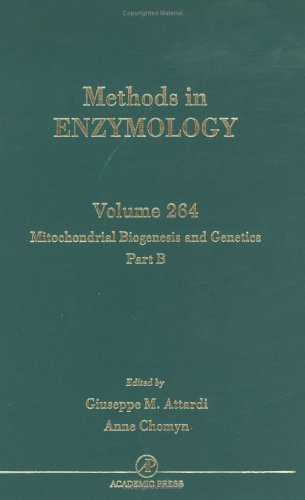
3. Mitochondrial Biogenesis and Genetics,
$85.46
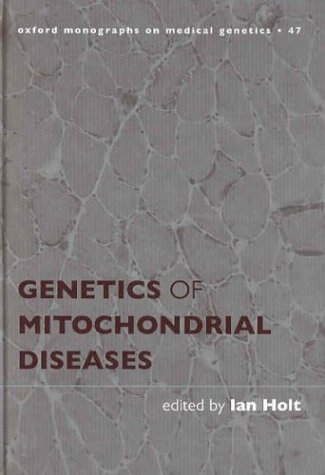
4. Genetics of Mitochondrial Diseases
 
5. The genetic function of mitochondrial
$142.45
6. Mitochondrial Biogenesis and Genetics,
 
$5.95
7. Lack of genetic divergence in
$12.50
8. The Genetic Strand: Exploring
$28.99
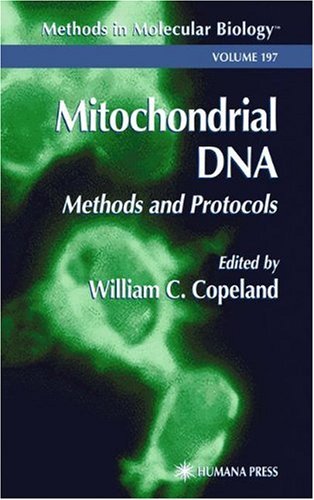
9. Mitochondrial DNA: Methods and
 
$5.95
10. mtDNA variation in the Chibcha
 
$5.95
11. Three novel mtDNA restriction
 
$5.95
12. Study of the populations of the
 
$5.95
13. Mitochondrial DNA sequence variation
 
$5.95
14. Mitochondrial DNA affinity of
 
$5.95
15. Absence of the 9-bp Deletion of
 
$5.95
16. Length Variations in the COII-[tRNA.sup.Lys]
$8.95
17. Genetic diversity in managed subpopulations
 
$5.95
18. Mitochondrial DNA studies show
 
$5.95
19. A rare mitochondrial DNA haplotype
 
$5.95
20. Major Mitochondrial DNA Haplotype

1. Mitochondrial Function and Biogenesis (Topics in Current Genetics)
Hardcover: 333 Pages (2004-06-24)
list price: US$279.00 -- used & new: US$201.00
(price subject to change: see help)
Asin: 3540214895
Canada | United Kingdom | Germany | France | Japan
Editorial Review

Book Description

Mitochondria are complex organelles, possessing a double-membrane and even their own genome, the mtDNA. They play a pivotal role in cellular metabolism, respiration, and production of ATP essential for the normal function of all human organ systems. It is not surprising, therefore, that genetic defects of mitochondrial functions cause a wide spectrum of human diseases. This book provides the first modern and truly comprehensive coverage of the biochemistry, genetics, and pathology of mitochondria in different organisms. It particularly focuses on the recent advances in our understanding of basic mitochondrial research to the consequences of dysfunction at the molecular level.

The 13 contributions written by leading researchers in the field include topics such as: mitochondrial genome evolution and mtDNA stability, mitochondrial biogenesis and protein quality control, mitochondrial morphology, assembly and function of the mitochondrial energy generation apparatus and mitochondrial metabolic pathways. These are particularly oriented to link in these various mitochondrial pathways to the clinical consequences of their dysfunctions.

... Read more

2. Genetic studies in Cameroon: mitochondrial DNA polymorphisms in Bamileke.: An article from: Human Biology
by Rosaria Scozzari, Antonio Torroni, Ornella Semino, Fulvio Cruciani, Gabriella Spedini, Silvana Augusta Santachiara Benerecetti
 Digital: 11 Pages (1994-02-01)
list price: US$5.95 -- used & new: US$5.95
(price subject to change: see help)
Asin: B000920A8G
Canada | United Kingdom | Germany | France | Japan
Editorial Review

Book Description
This digital document is an article from Human Biology, published by Wayne State University Press on February 1, 1994. The length of the article is 3025 words. The page length shown above is based on a typical 300-word page. The article is delivered in HTML format and is available in your Amazon.com Digital Locker immediately after purchase. You can view it with any web browser.

From the author: In two population samples of 77 Bamileke (Bantu sensu lato) and 18 Bakaka (Bantu sensu stricto) from southwestern Cameroon, the mtDNA RFLPs for the HpaI, HaeII, MspI, AvaII, and HincII enzymes were studied. Two of the MspI morphs had not been reported before. Six new types were found, four of which represent new combinations of previously described morphs. The AvaII morph 3 was found in association with the "African" HpaI morph 3. This finding is in line with previous observations in Negroids and demonstrates the usefulness of this combination as an indicator of black African ancestry. Two differences were noted between the groups: a lower frequency of HpaI morph 3 and a higher frequency of HaeII morph 4 in the Bakaka with respect to the Bamileke (0.44 versus 0.62 and O.17 versus 0.03, respectively). The importance of these differences could not be evaluated because the Bakaka sample was too small. Nevertheless, because the Bamileke show a relatively low frequency of mtDNA type 1 (2.1.1.1.1.-) and high frequencies of mtDNA types 2 (3.1.1.1.3.-) and 7 (3.1.1.1.1.-), they can be placed with the other Negroids so far examined, but they are closer to the Senegalese than to the Bantu from South Africa. In comparing the Bamileke and the Bantu, mtDNA type 3 (3.1.1.2.2.-) appears particularly discriminative because it is present in all the Bantu subgroups examined but not in the Bamileke. mtDNA type 39 (2.1.4.1.1.-), which was observed only in the Bamileke, might be considered likewise discriminative, although to a lesser degree.

Citation Details
Title: Genetic studies in Cameroon: mitochondrial DNA polymorphisms in Bamileke.
Author: Rosaria Scozzari
Publication: Human Biology (Refereed)
Date: February 1, 1994
Publisher: Wayne State University Press
Volume: v66Issue: n1Page: p1(12)

Distributed by Thomson Gale ... Read more


3. Mitochondrial Biogenesis and Genetics, Part B, Volume 264 (Methods in Enzymology)
Hardcover: 621 Pages (1996-03-08)
list price: US$149.95 -- used & new: US$142.45
(price subject to change: see help)
Asin: 012182165X
Canada | United Kingdom | Germany | France | Japan
Editorial Review

Book Description
The critically acclaimed laboratory standard for forty years, Methods in Enzymology is one of the most highly respected publications in the field of biochemistry. Since 1955, each volume has been eagerlyawaited, frequently consulted, and praised by researchers and reviewers alike. More than 260 volumes have been published (all of them still in print) and much of the material is relevant even today--truly an essential publication for researchers in all fields of life sciences.

Key Features
* This volume covers methodology used in
* Mitochondrial gene expression
* Mitochondrial genetics and gene manipulation
* Mitochondrial diseases and aging ... Read more


4. Genetics of Mitochondrial Diseases (Oxford Monographs on Medical Genetics, No. 47)
Hardcover: 376 Pages (2003-08-21)
list price: US$135.00 -- used & new: US$85.46
(price subject to change: see help)
Asin: 0198508654
Average Customer Review: 5.0 out of 5 stars
Canada | United Kingdom | Germany | France | Japan
Editorial Review

Book Description
Molecular genetics has revolutionised our understanding of human disease and nowhere is this more apparent than the group of diseases caused by mitochondrial dysfunction.The concept of mitochondrial diseases dates back only as far as the 1960s, and they were given little credence until mutations in mitochondrial DNA were found in the late 1980s. This international edited book summarises the advances in human mitochondrial genetics made over the past decade and a half.During that time, numerous mutations of mitochondrial DNA have been discovered and more recently mitochondrial diseases have been linked to a number of nuclear gene mutations. Although individually rare, mitochondrial diseases collectively represent a common cause of genetic disease. They have myriad effects and often manifest as common disorders such as diabetes, cardiac dysfunction and neurodegenerative disease. Effective treatments are unlikely to be found for some time for the vast majority of mitochondrial disorders and so pre-natal diagnosis and genetic counselling are of primary importance in the management of mitochondrial disease.In order to make sense of the diversity of mitochondrial disease the reader is first treated to a review of mitochondrial DNA metabolism and normal mitochondrial function.The core of the book details specific mitochondrial and nuclear mutations and the diseases they cause, whilst at the same time providing further insight into mitochondrial function.Later sections assess the role of cellular and animal models in advancing our understanding of mitochondrial diseases and the prospects for novel therapeutic strategies to combat these enigmatic disorders.Mitochondrial diseases are an increasingly recognised cause of inherited disease.Most clinicians are now aware of this group of diseases and those involved in genetic counselling will recognise the need for a greater understanding of this group of disorders.This book will also appeal to scientific and medical geneticists, and to registrars who encounter this group of diseases in the clinic. ... Read more

Customer Reviews (1)

5-0 out of 5 stars Excellent text for a specific purpose
Written specifically for those interested in the most common genetics abberations found with mitrochondrial dysfunction and disease.Not all genetic abberations are listed but then again, new ones are discovered from time to time and their effect in disease is not always well understood or varified by multiple studies.Genetics is important to understand in relation to mitrochondrial disorders especially in those who may pass the gene to their children.Unless understood by previous knowledge, this text may come across as complicated in some chapters.A technical text, best understood by those of the medical profession, geneticists and students of same.As a teaching text, a great deal of information necessary in understanding the genetics of mitrochondrial dysfunction is made available.For those who seek a well-rounded and well-written overview, somewhat technical but not difficult to understand is the book Mitochondrial Medicine Edited by DiMauro, Hirano and Schon which focus is on how disorders of the mitochondria affect various organs/systems and a chapter on current treatment techniques. ... Read more


5. The genetic function of mitochondrial DNA: Proceedings of the International Bari Conference on the Genetic Function of Mitochondrial DNA, Riva dei Tessali, Italy, 25-29 May, 1976
 Unknown Binding: 354 Pages (1976)

Isbn: 0720405866
Canada | United Kingdom | Germany | France | Japan

6. Mitochondrial Biogenesis and Genetics, Part A Genetics Part A (Methods in Enzymology)
Hardcover: 540 Pages (1995-11-15)
list price: US$149.95 -- used & new: US$142.45
(price subject to change: see help)
Asin: 0121821617
Canada | United Kingdom | Germany | France | Japan
Editorial Review

Book Description
The critically acclaimed laboratory standard for forty years, Methods in Enzymology is one of the most highly respected publications in the field of biochemistry. Since 1955, each volume has been eagerlyawaited, frequently consulted, and praised by researchers and reviewers alike. More than 250 volumes have been published (all of them still in print) and much of the material is relevant even today--truly an essential publication for researchers in all fields of life sciences.

Key Features
* Structural and functional analysis of oxidative phosphorylation complexes
* Import of proteins and RNA into mitochondria
* Ion and metabolite transport systems in mitochondria
* Biophysical methods for mitochondrial function analysis
* Mitochondrial inheritance and turnover ... Read more


7. Lack of genetic divergence in nuclear and mitochondrial DNA between subspecies of two Haliotis species.: An article from: Journal of Shellfish Research
by Zhi Yong Wang, Ka Chai Ho, Da Hui Yu, Cai Huan Ke, Wai Yan Mak, Ka Hou Chu
 Digital: 11 Pages (2004-12-15)
list price: US$5.95 -- used & new: US$5.95
(price subject to change: see help)
Asin: B000ALPYW8
Canada | United Kingdom | Germany | France | Japan
Editorial Review

Book Description
This digital document is an article from Journal of Shellfish Research, published by National Shellfisheries Association, Inc. on December 15, 2004. The length of the article is 3160 words. The page length shown above is based on a typical 300-word page. The article is delivered in HTML format and is available in your Amazon.com Digital Locker immediately after purchase. You can view it with any web browser.

Citation Details
Title: Lack of genetic divergence in nuclear and mitochondrial DNA between subspecies of two Haliotis species.
Author: Zhi Yong Wang
Publication: Journal of Shellfish Research (Refereed)
Date: December 15, 2004
Publisher: National Shellfisheries Association, Inc.
Volume: 23Issue: 4Page: 1143(4)

Distributed by Thomson Gale ... Read more


8. The Genetic Strand: Exploring a Family History Through DNA
by Edward Ball
Hardcover: 288 Pages (2007-11-06)
list price: US$25.00 -- used & new: US$12.50
(price subject to change: see help)
Asin: 0743266587
Average Customer Review: 3.0 out of 5 stars
Canada | United Kingdom | Germany | France | Japan
Editorial Review

Book Description
The Genetic Strand is the story of a writer's investigation, using DNA science, into the tale of his family's origins. National Book Award winner Edward Ball has turned his probing gaze on the microcosm of the human genome, and not just any human genome -- that of his slave-holding ancestors. What is the legacy of such a family history, and can DNA say something about it?

In 2000, after a decade in New York City, Ball bought a house in Charleston, South Carolina, home to his father's family for generations, and furnished it with heirloom pieces from his relatives. In one old desk he was startled to discover a secret drawer, sealed perhaps since the Civil War, in which someone had hidden a trove of family hair, with each lock of hair labeled and dated. The strange find propelled him to investigate: what might DNA science reveal about the people -- Ball's family members, long dead -- to whom the hair had belonged? Did the hair come from white relatives, as family tradition insisted? How can genetic tests explain personal identity?

Part crime-scene investigation, part genealogical romp, The Genetic Strand is a personal odyssey into DNA and family history. The story takes the reader into forensics labs where technicians screen remains, using genetics breakthroughs like DNA fingerprinting, and into rooms where fathers nervously await paternity test results. It also summons the writer¹s entertaining and idiosyncratic family, such as Ball¹s antebellum predecessor, Aunt Betsy, who published nutty books on good Southern society; Kate Fuller, the enigmatic ancestor who may have introduced African genes into the Ball family pool; and the author¹s first cousin Catherine, very much alive, who donates a cheek swab from a mouth more attuned to sweet iced tea than DNA sampling.

Writing gracefully but pacing his story like an old-fashioned whodunit, Edward Ball tracks genes shared across generations, adding suspense and personal meaning to what the scientists and Nobel laureates tell us. A beguiling DNA tale, The Genetic Strand reaches toward a new form of writing‹the genetic memoir.

... Read more

Customer Reviews (5)

4-0 out of 5 stars Interesting use of the technology
I found this an intriguing book.DNA technology has become almost synonymous with crime detection and paternity suits for most people, but the author, Edward Ball, chose to do a study of his ancestors, using samples of their hair kept as mementoes during the 19th Century and stored away in the secret drawer of an old desk since their collection.Each specimen was labeled with date and individual name, and the author was also possessed of considerable historical information regarding their lives, which fleshed out the family story to a great degree.My aunt Dorothy, who does the family genealogy for the Drakes, Chesters, and other branches of our family, has compiled a long list of names, birthdates, marriage dates, etc, but it contains so little that is relevant to the lives of those listed, that it has little to offer a reader who wants to connect with the past.Here the author tells a tale of a family who owned large plantations, married endogamously by habit, preference and necessity, suffering occasional insanity as a result, and lived through the trials of the Civil War and its aftermath.What a tale.It reads like a novel with expert commentary.

The author, though not himself a scientist, did an excellent job of describing the process of DNA extraction, analysis, and interpretation for the lay reader, using the technological jargon sparingly and explaining it well when it was used.Because the information he obtained pertained primarily to his own questions regarding family members, it was a more intimate look at the science and what it can and cannot do.What he discovered was pretty much what might have been expected from what he was told by others and by documents, but the sense that he made of the past was more than worth the effort.The story is very readable and well told.

4-0 out of 5 stars Part science, part history, all fascinating...
I have followed the fates of the extended Ball family and their slave descendents in Slaves in the Family and The Sweet Hell Inside by Edward Ball.Ball now gives us a more scientific emphasis in his new book, The Genetic Strand.The Genetic Strand is part science, part history and all fascinating.

The Ball family was prominent in Charleston, SC and once owned dozens of plantations on the Ashley and Cooper Rivers.The original Charleston Balls were very prolific and their family tree is both impressive and complicated.The idea for The Genetic Strand came about quite by accident.Ball purchased a group of original furnishings from Limerick Plantation, one of the many Ball plantations.One of the items was a secretary-style desk.Hidden inside a secret drawer, the author discovered a hair collection--the samples carefully snipped and wrapped in paper with names and dates.All the hair was from the 1800s and all but two were from Ball family members."The hidden drawer didn't strike me as a jewelry box as much as it did a natural history cabinet:its contents were like fossils, or teeth, little extras Louis and Mary Leakey might have kept on the mantel."

Soon after the discovery of the hair sample, Ball's mother passed away--giving the hair new meaning."The hair consisted of bits of relatives making it attractive as surrogate intimacy."Ball decides to take his hair samples and have them tested for both DNA and toxic residues.He also had his own DNA tested, as well as the DNA of two cousins, so that he could make comparisons.He was hoping to "enhance family stories" and prove his origins.Was it possible that there were some skeletons in the Ball family closet?This part of The Genetic Strand reads like a mystery.

The other part of The Genetic Strand deals with molecular biology and DNA.Ball tries to gives us a primer on DNA, including how it was identified, how it is tested, how it is transmitted, and how testing is used (forensics, paternity, criminologists, etc.).He also interviews some of the pioneers in DNA research.This is a fascinating topic--even if I didn't always understand all the details.Ball's experience with DNA testing shows that it still isn't an exact science.Also, while much has been discovered about DNA, there is still much to be learned.Several Ball relatives suffered from schizophrenia."Probably there were madness genes rattling at the bottom of the family tin, but the instruments didn't reach deep enough to find them."

My only complaint about The Genetic Strand is very minor: the children of first cousins are second cousins, not first cousins once removed.Normally I wouldn't read a book that is found in the biology section of a bookstore.But in the Genetic Strand, Edward Ball combines biology with the story he does best, and that is his historic Charleston ancestors.


1-0 out of 5 stars Author errors weaken book
Ball begins with an interesting idea - using a collection of old family hair to enrich his knowledge of his family's past.Unfortunately, the book is poorly organized and adds confusion rather than clarity to a newcomer's understanding of genealogy.Ball makes several errors which indicate that he really doesn't understand what he is doing.The editor should have spotted these errors, but somehow chose to ignore them, suggesting that the book was poorly researched and edited.

When Ball finds a collection of family hair in an old family desk, he wonders what the hair can tell him about the past. He explains that a DNA analysis of human hair is limited to the mitochondiral DNA, which he correctly notes is passed from mother to child.The mtDNA can only tell about a person's ancestors along the female line - child to mother to mother's mother, and so on. Ball seems to understand this, until a final suggestion he makes (p.104) in explaining what appears at that time to be a Native American ancestor in his family tree.He asks, "Could a Huguenot woman have become pregnant from a rape, and, afterward, decided to keep the girl?Twenty years later, this hypothetical daughter would have been marriageable, and with her mother's help, she might have found a way to navigate society.She might have been the strand of Indian DNA smuggled into the white stream." Since mtDNA is inherited only from the mother, this would not be possible.This hypothetical half-Native American girl would have had mtDNA from her white mother.DNA from her Native American father would only be found in her cellular DNA.

In another section of the book, Ball offers a few examples of studies of the Y-chromosome and human behavior, where researchers look at topics such as how often those who have the same British surname also carry a distinctive genetic marker on the Y-chromosome. Ball also mentions a similar study where the Y-chromosomes of self-identified members of the Jewish priestly lineage (Cohan)are examined for a distinctive genetic marker.In explaining this, Ball confuses the priestly lineage with the profession of the rabbi.He says that "...paternal descent from a rabbi has always been the method by which male Jews enter the clergy,"(p. 174).The priestly lineage has nothing to do with whether or not someone can become a rabbi. Some rabbis have ancestors who are rabbis, but this is roughly similar to a doctor's son becoming a doctor.When someone wants to become a rabbi he (or sometimes she) embarks on a program of study followed by ordination.The Jewish priesthood was chiefly of importance in ancient times, when worship was centralized on the Temple in Jerusalem.Membership in the priestly lineage is conferred by descent from a male who is himself in that lineage.Because there are a few limited situations in Jewish religious life where a Cohan (member of the priestly lineage) is needed,those who identify as members of this lineage usually pass on the knowledge to their children. It is surprising that Ball is so naive that he thinks that all rabbis are members of the priestly lineage, and even more surprising that his editors allowed such an error to remain in the book.

Sadly, Ball takes an interesting idea, and writes a poorly organized book with a number of misleading and confusing errors.

5-0 out of 5 stars Using DNA For A Fresh Look At The Past
Edward Ball comes from a large Southern family with a long history in Charleston, South Carolina.Using packets of hair his ancestors collected from their children and other relatives and then cached in an old desk, he attempted to learn more about his genetic background by having the DNA extracted and analyzed.He used a variety of labs in both North America and Europe, and finished with some answers and a few new puzzles.

One of the deep, dark, secrets of American genealogy is the amount of admixture to be found in most people.There is no such thing as a "pure" Indo-European, Sub-Saharan African, or Native American, though many still maintain that they are racially homogeneous.On the other hand, many who have done a little reading and a little experimenting with DNA research themselves tend to make the assumption that the science is so crystal clear that all the answers are right there, ready to be cheek swabbed and analyzed.Ball does a good job of demonstrating that both assumptions are false.His research indicated possible Native American and Sub-Saharan African ancestry mixed in with his "Nordic" Ball genes, then later indicated that such ancestry might not exist after all. The hair samples sometimes yielded much information, but often remained frustratingly silent.In chronicling his research into his family's past history Ball also gives a good overview of the science behind DNA research, making sense of highly technical terms and jargon so that general readers can get a better sense of what actually takes place in DNA analysis.

As a genealogist with a Southern family background very similar to Ball's, I enjoyed reading his stories about his ancestors and his quest to learn more about their racial makeup.One of my great-grandmothers made a collection of hair from herself and her husband and oldest son which I now possess, so I was interested in readingBall's history of this nineteenth century custom and how he made use of it.I have also had my own DNA analyzed and learned some intriguing things about my own ancestry.In my case, a family legend that a great-great-great-grandmother had been a full-blooded Cherokee Indian was disproved when my mitochondrial DNA, which I inherited from her, proved to be of European origin.

Ball has done a good job of making a highly technical science understandable and, more importantly, of demonstrating that that science is still in its infancy and capable of error and uncertainties.His book should be read by anyone considering having DNA research done or by anyone interested in this new and fascinating area.

2-0 out of 5 stars two books in one
This book consists of the authors descriptions of his cousin's lives interspersed with DNA experiences with various labs.It is only discussing mtDNA because the author is testing old hair samples and the author states that hair ONLY contains mtDNA.

I wanted to learn about the labs and the organization of this book made that very difficult ... Read more


9. Mitochondrial DNA: Methods and Protocols (Methods in Molecular Biology) (Methods in Molecular Biology)
Hardcover: 432 Pages (2002-04-02)
list price: US$145.00 -- used & new: US$28.99
(price subject to change: see help)
Asin: 0896039722
Average Customer Review: 4.0 out of 5 stars
Canada | United Kingdom | Germany | France | Japan
Editorial Review

Book Description
Internationally recognized authorities describe in great detail the methods they have perfected to analyze mtDNA and the proteins involved in its maintenance. The analytical techniques cover the purification of mtDNA from a variety of sources and the analysis of DNA for both deletions, point mutations, and damage, for replication intermediates, and for following the fate of mtDNA outside of the mitochondria. Additional analytical methods are presented for analyzing the proteins and enzymes that maintain mtDNA. Comprehensive and timely, Mitochondrial DNA: Methods and Protocols offers both basic and clinical researchers proven cutting-edge methods for analyzing mtDNA and illuminating the role it plays in the aging process, apoptosis, and possibly some cancers. ... Read more

Customer Reviews (1)

4-0 out of 5 stars Nice detailed protocols
This book is for human mtDNA analysis protocols. At last a book that gives you all the details that you don't find in journal articles. Next time please include some plant mitochondria methods and I give you five stars! ... Read more


10. mtDNA variation in the Chibcha Amerindian Huetar from Costa Rica. (mitochondrial DNA): An article from: Human Biology
by Maria Santos, R.H. Ward, Ramiro Barrantes
 Digital: 17 Pages (1994-12-01)
list price: US$5.95 -- used & new: US$5.95
(price subject to change: see help)
Asin: B00092YLKE
Canada | United Kingdom | Germany | France | Japan
Editorial Review

Book Description
This digital document is an article from Human Biology, published by Wayne State University Press on December 1, 1994. The length of the article is 5014 words. The page length shown above is based on a typical 300-word page. The article is delivered in HTML format and is available in your Amazon.com Digital Locker immediately after purchase. You can view it with any web browser.

From the author: The genetic variation in a Chibcha-speaking Amerindian tribe from lower Central America, the Huetar, was analyzed using nucleotide sequences of the hypervariable segments of the mitochondrial DNA (mtDNA) control region, the frequencies of 10 Amerindian-specific mtDNA haplotypes, and the regional distribution of private protein polymorphisms. The sequencing of 713 base pairs (bp) in the control regions of 27 individuals revealed 11 distinct lineages. These were defined by 24 variable sites and a 6-bp deletion between nucleotide pairs (np) 106 and 111. The 6-bp deletion is a new mtDNA marker that will be valuable for Amerindian taxonomic research. Control region sequences and mtDNA haplotype analyses reveal that Huetar mtDNAs are distributed in "Amer-indian clusters" A, B, and D. A maximum-likelihood phylogenetic tree suggests a single origin for the 6-bp Huetar deletion in the sample, mtDNA haplotype analysis and the presence of previously characterized private protein variants (PEPA*F, TF*DCHI, and the absence of DI*A) show that the Huetar harbor polymorphisms of considerable antiquity, suggesting an early divergence from the regional founder gene pool for this population. The data also reflect a drastic constriction in population size, an evolutionary event with a proposed central effect on Huetar genetic structure.

Citation Details
Title: mtDNA variation in the Chibcha Amerindian Huetar from Costa Rica. (mitochondrial DNA)
Author: Maria Santos
Publication: Human Biology (Refereed)
Date: December 1, 1994
Publisher: Wayne State University Press
Volume: v66Issue: n6Page: p963(15)

Distributed by Thomson Gale ... Read more


11. Three novel mtDNA restriction site polymorphisms allow exploration of population affinities of African Americans.(Mitochondrial DNA): An article from: Human Biology
by David C., Jr. McLean, Ida Spruill, Sahr Gevao, Errol Y. St. A. Morrison, Owen S. Bernard, George Argyropoulos, W. Timothy Garvey
 Digital: Pages (2003-04-01)
list price: US$5.95 -- used & new: US$5.95
(price subject to change: see help)
Asin: B0008DGYSG
Canada | United Kingdom | Germany | France | Japan
Editorial Review

Book Description
This digital document is an article from Human Biology, published by Wayne State University Press on April 1, 2003. The length of the article is 6403 words. The page length shown above is based on a typical 300-word page. The article is delivered in HTML format and is available in your Amazon.com Digital Locker immediately after purchase. You can view it with any web browser.

From the author: KEY WORDS: MITOCHONDRIAL DNA, GULLAH AFRICAN AMERICAN, RESTRICTION SITE POLYMORPHISM, ADMIXTURE, POPULATION AFFINITIES

Citation Details
Title: Three novel mtDNA restriction site polymorphisms allow exploration of population affinities of African Americans.(Mitochondrial DNA)
Author: David C., Jr. McLean
Publication: Human Biology (Refereed)
Date: April 1, 2003
Publisher: Wayne State University Press
Volume: 75Issue: 2Page: 147(15)

Distributed by Thomson Gale ... Read more


12. Study of the populations of the Balearic Islands (Spain) using mtDNA RFLPs. (mitochondrial DNA restriction fragment length polymorphisms): An article from: Human Biology
by M. Francesca Massanet, Jose A. Castro, Antonia Picornell, M. Misericordia Ramon
 Digital: 21 Pages (1997-08-01)
list price: US$5.95 -- used & new: US$5.95
(price subject to change: see help)
Asin: B00097O2TE
Canada | United Kingdom | Germany | France | Japan
Editorial Review

Book Description
This digital document is an article from Human Biology, published by Wayne State University Press on August 1, 1997. The length of the article is 6034 words. The page length shown above is based on a typical 300-word page. The article is delivered in HTML format and is available in your Amazon.com Digital Locker immediately after purchase. You can view it with any web browser.

From the author: The Balearic archipelago (Spain) is composed of three major islands, Majorca, Minorca, and Ibiza. Majorca is the largest and most populous island. Minorca is the second largest in area and third in population, and Ibiza is the smallest of the three and has the second largest population. Ibiza also shows differences from the other two islands in its landscape, vegetation, and especially origins of the founding settlements. The three islands also have been settled by people of different cultures. We have carried out a genetic analysis at the level of mtDNA RFLPs in these populations and found that the three populations are genetically structured, with differences in the RFLP haplotype frequencies reflecting the different population substrata of the three islands. In this structure Ibiza is genetically more different from Majorca and Minorca. In addition, we found a new haplotype in Minorca, named haplotype 150, which seems to originate from haplotype 56.

Citation Details
Title: Study of the populations of the Balearic Islands (Spain) using mtDNA RFLPs. (mitochondrial DNA restriction fragment length polymorphisms)
Author: M. Francesca Massanet
Publication: Human Biology (Refereed)
Date: August 1, 1997
Publisher: Wayne State University Press
Volume: v69Issue: n4Page: p483(16)

Distributed by Thomson Gale ... Read more


13. Mitochondrial DNA sequence variation across linguistic and geographic boundaries in Italy.: An article from: Human Biology
by Guido Barbujani, Michele Stenico, Laurent Excoffier, Loredana Nigro
 Digital: 18 Pages (1996-04-01)
list price: US$5.95 -- used & new: US$5.95
(price subject to change: see help)
Asin: B00093UM8I
Canada | United Kingdom | Germany | France | Japan
Editorial Review

Book Description
This digital document is an article from Human Biology, published by Wayne State University Press on April 1, 1996. The length of the article is 5260 words. The page length shown above is based on a typical 300-word page. The article is delivered in HTML format and is available in your Amazon.com Digital Locker immediately after purchase. You can view it with any web browser.

From the author: KEY WORDS: mtDNA, SEQUENCE POLYMORPHISM, GENE GENEALOGIES, GENE FLOW, LANGUAGE BARRIERS, POPULATION STRUCTURE

Citation Details
Title: Mitochondrial DNA sequence variation across linguistic and geographic boundaries in Italy.
Author: Guido Barbujani
Publication: Human Biology (Refereed)
Date: April 1, 1996
Publisher: Wayne State University Press
Volume: v68Issue: n2Page: p201(15)

Distributed by Thomson Gale ... Read more


14. Mitochondrial DNA affinity of several Jewish communities.: An article from: Human Biology
by U. Ritte, E. Neufeld, E.M. Prager, M. Gross, I. Hakim, A. Khatib, B. Bonne-Tamir
 Digital: 25 Pages (1993-06-01)
list price: US$5.95 -- used & new: US$5.95
(price subject to change: see help)
Asin: B00091ZH6C
Canada | United Kingdom | Germany | France | Japan
Editorial Review

Book Description
This digital document is an article from Human Biology, published by Wayne State University Press on June 1, 1993. The length of the article is 7324 words. The page length shown above is based on a typical 300-word page. The article is delivered in HTML format and is available in your Amazon.com Digital Locker immediately after purchase. You can view it with any web browser.

From the author: The mitochondrial DNA (mtDNA) of 332 individuals from Israel, including 270 Jews (originating from 7 communities) and 62 Arabs, was analyzed. Each mtDNA haplotype was determined by the fragment patterns of restriction enzymes HpaI, BamHI, HaeII, MspI (HpaII), and AvaII. The variability of the total sample and of each community was high. Of 40 different haplotypes, 20 were found more than once. Most haplotypes are typical of Caucasians, but African types were found among Ethiopian Jews and to a lesser extent among Arabs. The communities differed in their haplotypes: Chi-square tests among six communities showed significant differences for most pairwise comparisons and nonsignificant differences involving mainly the Moroccan Jews. In a genetic distance analysis only the Ethiopian Jews appeared to be distinguished from the other communities. According to a |G.sub.ST~ analysis, approximately 30% of the variation among the mtDNA restriction maps is attributable to differences between communities.

Citation Details
Title: Mitochondrial DNA affinity of several Jewish communities.
Author: U. Ritte
Publication: Human Biology (Refereed)
Date: June 1, 1993
Publisher: Wayne State University Press
Volume: v65Issue: n3Page: p359(27)

Distributed by Thomson Gale ... Read more


15. Absence of the 9-bp Deletion of Mitochondrial DNA in Pre-Hispanic Inhabitants of Argentina.: An article from: Human Biology
by Dario A. Demarchi, Graciela M. Panzetta-dutrai, Sonia E. Colantonio, Alberto J. Marcellino
 Digital: 13 Pages (2001-08-01)
list price: US$5.95 -- used & new: US$5.95
(price subject to change: see help)
Asin: B0008I9U96
Canada | United Kingdom | Germany | France | Japan
Editorial Review

Book Description
This digital document is an article from Human Biology, published by Wayne State University Press on August 1, 2001. The length of the article is 3814 words. The page length shown above is based on a typical 300-word page. The article is delivered in HTML format and is available in your Amazon.com Digital Locker immediately after purchase. You can view it with any web browser.

Citation Details
Title: Absence of the 9-bp Deletion of Mitochondrial DNA in Pre-Hispanic Inhabitants of Argentina.
Author: Dario A. Demarchi
Publication: Human Biology (Refereed)
Date: August 1, 2001
Publisher: Wayne State University Press
Volume: 73Issue: 4Page: 575

Distributed by Thomson Gale ... Read more


16. Length Variations in the COII-[tRNA.sup.Lys] Intergenic Region of Mitochondrial DNA in Indonesian Populations.: An article from: Human Biology
by Herlina Y. Handoko, J. Koji Lum, Gustiani, Rismalia, Hannie Kartapradja, Abdul Salam M. Sofro, Sangkot Marzuki
 Digital: 26 Pages (2001-04-01)
list price: US$5.95 -- used & new: US$5.95
(price subject to change: see help)
Asin: B0008I6JGS
Canada | United Kingdom | Germany | France | Japan
Editorial Review

Book Description
This digital document is an article from Human Biology, published by Wayne State University Press on April 1, 2001. The length of the article is 7612 words. The page length shown above is based on a typical 300-word page. The article is delivered in HTML format and is available in your Amazon.com Digital Locker immediately after purchase. You can view it with any web browser.

Citation Details
Title: Length Variations in the COII-[tRNA.sup.Lys] Intergenic Region of Mitochondrial DNA in Indonesian Populations.
Author: Herlina Y. Handoko
Publication: Human Biology (Refereed)
Date: April 1, 2001
Publisher: Wayne State University Press
Volume: 73Issue: 2Page: 205

Distributed by Thomson Gale ... Read more


17. Genetic diversity in managed subpopulations of Norway spruce [Picea abies (L.) Karst.] [An article from: Forest Ecology and Management]
by F. Maghuly, W. Pinsker, W. Praznik, S. Fluch
Digital: Pages
list price: US$8.95 -- used & new: US$8.95
(price subject to change: see help)
Asin: B000RR6AB4
Canada | United Kingdom | Germany | France | Japan
Editorial Review

Book Description
This digital document is a journal article from Forest Ecology and Management, published by Elsevier in . The article is delivered in HTML format and is available in your Amazon.com Media Library immediately after purchase. You can view it with any web browser.

Description:
Uniparentally inherited chloroplast simple sequence repeats (cpSSRs), mitochondrial markers (mt), as well as biparentally inherited nuclear simple sequence repeats (SSRs) were used to analyse genetic diversity in different subpopulations of Norway spruce in Austria. For that purpose Norway spruce individuals of different age classes, old (70-100 years) versus young (6-10 years) trees, were fingerprinted to elucidate the genetic effects caused by human management. Three populations from different elevations were selected in a restricted area. Four hundred and fifty individuals, 50 old and 100 young trees from each population, were analysed for this study. Seven paternally inherited cpSSRs revealed no variation within and among populations. In contrast, analysis of three maternal mitochondrial markers showed variation in one locus in individuals originating from the high elevation sample set. Analysis of five polymorphic nuclear SSR loci revealed 135 different alleles. Nuclear SSRs results showed that there is generally more genetic variation and heterozygosity within populations than among populations. Populations from high elevation exhibit more genetic variation than samples from middle and low elevations. ... Read more


18. Mitochondrial DNA studies show asymmetrical Amerindian admixture in afro-Colombian and mestizo populations.(Abstract): An article from: Human Biology
by Clemencia Rodas, Nancy Gelvez, Genoveva Keyeux
 Digital: Pages (2003-02-01)
list price: US$5.95 -- used & new: US$5.95
(price subject to change: see help)
Asin: B0008DBXMS
Canada | United Kingdom | Germany | France | Japan
Editorial Review

Book Description
This digital document is an article from Human Biology, published by Wayne State University Press on February 1, 2003. The length of the article is 7679 words. The page length shown above is based on a typical 300-word page. The article is delivered in HTML format and is available in your Amazon.com Digital Locker immediately after purchase. You can view it with any web browser.

From the author: KEY WORDS: MITOCHONDRIAL DNA. HAPLOGROUPS, POPULATIONS. ADMIXTURE, AFROCOLOMBIAN. MESTIZO

Citation Details
Title: Mitochondrial DNA studies show asymmetrical Amerindian admixture in afro-Colombian and mestizo populations.(Abstract)
Author: Clemencia Rodas
Publication: Human Biology (Refereed)
Date: February 1, 2003
Publisher: Wayne State University Press
Volume: 75Issue: 1Page: 13(18)

Article Type: Abstract

Distributed by Thomson Gale ... Read more


19. A rare mitochondrial DNA haplotype observed in Koreans.(Statistical Data Included): An article from: Human Biology
by Nina Snall, Marja-Liisa Savontaus, Saara Kares, Myung Sik Lee, Eun Kyung Cho, Juha O. Rinne, Kirsi Huoponen
 Digital: Pages (2002-04-01)
list price: US$5.95 -- used & new: US$5.95
(price subject to change: see help)
Asin: B0008F0HSW
Canada | United Kingdom | Germany | France | Japan
Editorial Review

Book Description
This digital document is an article from Human Biology, published by Wayne State University Press on April 1, 2002. The length of the article is 4560 words. The page length shown above is based on a typical 300-word page. The article is delivered in HTML format and is available in your Amazon.com Digital Locker immediately after purchase. You can view it with any web browser.

From the author: KEY WORDS: MITOCHONDRIAL DNA. KOREANS, HAPLOGROUPS, HVSI SEQUENCES

Citation Details
Title: A rare mitochondrial DNA haplotype observed in Koreans.(Statistical Data Included)
Author: Nina Snall
Publication: Human Biology (Refereed)
Date: April 1, 2002
Publisher: Wayne State University Press
Volume: 74Issue: 2Page: 253(10)

Article Type: Statistical Data Included

Distributed by Thomson Gale ... Read more


20. Major Mitochondrial DNA Haplotype Heterogeneity in Highland and Lowland Amerindian Populations from Bolivia.(Statistical Data Included): An article from: Human Biology
by Francesc Bert, Alfons Corella, Manel Gene, Alejandro Perez-perez, Daniel Turbon
 Digital: 20 Pages (2001-02-01)
list price: US$5.95 -- used & new: US$5.95
(price subject to change: see help)
Asin: B0008HX01Q
Canada | United Kingdom | Germany | France | Japan
Editorial Review

Book Description
This digital document is an article from Human Biology, published by Wayne State University Press on February 1, 2001. The length of the article is 5792 words. The page length shown above is based on a typical 300-word page. The article is delivered in HTML format and is available in your Amazon.com Digital Locker immediately after purchase. You can view it with any web browser.

Citation Details
Title: Major Mitochondrial DNA Haplotype Heterogeneity in Highland and Lowland Amerindian Populations from Bolivia.(Statistical Data Included)
Author: Francesc Bert
Publication: Human Biology (Refereed)
Date: February 1, 2001
Publisher: Wayne State University Press
Volume: 73Issue: 1Page: 1

Article Type: Statistical Data Included

Distributed by Thomson Gale ... Read more


  1-20 of 100 | Next 20
A  B  C  D  E  F  G  H  I  J  K  L  M  N  O  P  Q  R  S  T  U  V  W  X  Y  Z  

Prices listed on this site are subject to change without notice.
Questions on ordering or shipping? click here for help.

site stats