e99 Online Shopping Mall

Geometry.Net - the online learning center Help  
Home  - Science - Paleoanthropology (Books)

  1-20 of 69 | Next 20
A  B  C  D  E  F  G  H  I  J  K  L  M  N  O  P  Q  R  S  T  U  V  W  X  Y  Z  

click price to see details     click image to enlarge     click link to go to the store

$36.42
1. Debating HumanKind's Place in
$250.00
2. Handbook of Paleoanthropology:
 
3. Paleoanthropology
$29.70
4. The Last Human: A Guide to Twenty-Two
$94.55
5. The Evolution and History of Human
$65.27
6. From Lucy To Language
$116.38
7. Hominin Environments in the East
$111.00
8. Dental Perspectives on Human Evolution:
$15.00
9. The Dawn of Human Culture
 
$5.95
10. Paleoanthropology, 2d ed.(Review)
$84.31
11. Paleoanthropology and Paleolithic
 
$99.02
12. God-Apes and Fossil Men: Paleoanthropology
 
13. Preliminary publication of paleoanthropology
 
14. THE FOSSIL EVIDENCE FOR HUMAN
 
15. PALEOANTHROPOLOGY VOL 11990 (Paleoanthropology
 
16. The Fossil Evidence for Human
 
17. Paleoanthropology in the People's
 
18. Paleoanthropology and primate
 
19. Views of the past: Essays in old
 
20. The Fossil Evidence for Human

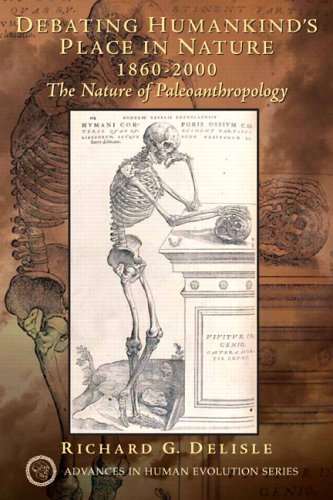
1. Debating HumanKind's Place in Nature; 1860-2000: The Nature of Paleoanthropology (Advances in Human Evolution)
by Richard G. Delisle
Paperback: 528 Pages (2006-02-05)
list price: US$60.67 -- used & new: US$36.42
(price subject to change: see help)
Asin: 0131773909
Canada | United Kingdom | Germany | France | Japan
Editorial Review

Book Description

Showing that paleoanthropology is a progressive and dynamic field, this book argues that all debates and hypotheses spring from a single general theory: the theory of biological evolution. It presents the debates and research from 150 scholars in the field, and separates the resolution of these debates through three different time periods: 1860-1890, 1890-1935, and post-1935. Topics include: the history of the field; comparative anatomy; the human fossil record; primate phylogeny; human phylogeny; and the nature of paleoanthropology. A book that will appeal to anyone interested in anthropology, it will also interest historians and others in the social sciences.

... Read more

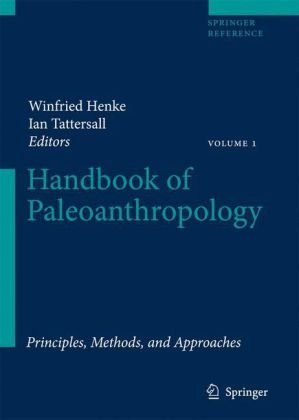
2. Handbook of Paleoanthropology: Vol I:Principles, Methods and ApproachesVol II:Primate Evolution and Human OriginsVol III:Phylogeny of Hominids
Hardcover: 2173 Pages (2007-05-29)
list price: US$999.00 -- used & new: US$250.00
(price subject to change: see help)
Asin: 3540324747
Canada | United Kingdom | Germany | France | Japan
Editorial Review

Book Description

Paleoanthropology is perhaps the most multidisciplinary of all the sciences. Any complete account of the evolution and cultural and biological context of Homo sapiens must combine information from geology, paleoecology, primatology, evolutionary biology and a host of other fields. Above all, historical information needs to be combined with, and interpreted in the light of, what we know of the living world. Paleoanthropology is also an actively developing field in which much remains to be settled. The three volumes of this handbook bring together contributions by the world´s leading specialists that reflect the broad spectrum of modern paleoanthropology, thus presenting an indispensable resource for both professionals and students alike.

Volume 1 deals with principles, methods, and approaches. In recent years, enormous advances have been made in such areas as phylogenetic analysis, paleoecology and evolutionary theory and philosophy. The contributions in this first volume present the state of the art in these fields, provide succinct introductions to them and reflect the many ways in which they interact.

As human beings are primates, Volume 2 is devoted to primate origins, evolution, behaviour, and adaptive variety. Its emphasis is on integration of fossil data with the vast amount that is now known of the behaviour and ecology of living primates in natural environments.

Volume 3 deals with the fossil and molecular evidence for the evolution of Homo sapiens and its fossil relatives (the family Hominidae or subfamily Homininae, according to taste, a matter that we have left to the individual contributors).

... Read more

3. Paleoanthropology
by Milford H. Wolpoff
 Hardcover: 936 Pages (1998-06-01)
list price: US$90.20
Isbn: 0070716765
Average Customer Review: 3.5 out of 5 stars
Canada | United Kingdom | Germany | France | Japan
Editorial Review

Book Description
Since the first edition was introduced in 1980, Paleoanthropology has been the leading text for the upper-level undergraduate or graduate course in human evolution. Written by one of the world's leading experts on the subject, and the only human evolution text written by a paleontologist with direct experience with the fossil record, this new edition offers comprehensive coverage of all aspects of human evolution. This edition has been substantially revised and rewritten.It has been expanded to include the most recent research, theories, and new developments in the field, making it the most up-to-date and complete text on the human fossil record available. ... Read more

Customer Reviews (10)

5-0 out of 5 stars A comprehensive and merticulous work
Covering the subject of Paleoanthropology is never easy, at best. This is especially so when one has a competitor of the quality of Richard Klein's "The Human Career". However, Professor Wolpoff has brilliantly succeeded at carving his own niche, with Klein's book focusing more on archaeology and his more on skeletal analyses. I would recommend students purchase both textbooks to obtain the best overall picture. Paleoanthropology is separated into four parts, with a total of 14 chapters ranging from descriptions of the process of evolution, to the distinguishing anatomical features of the Anthropoidea and the hominins, and to the late Pleistocene. A comprehensive glossary is given at the end of the book which proves invaluable. A general collection of references is found at the end of the book and more specific references can be found after each chapter. It is not a book for newcomers who should introduce themselves to the subject through a more general summary; rather it is for the dedicated amateur and scholars to utilise at graduate level and as a professional reference work. I am an archaeologist and would recommend it for anyone who is seriously interested in paleoanthropology and archaeology.

5-0 out of 5 stars The number 1 reference!
This book is not meant to be "eye candy" (although in many ways it is). It is a serious reference book with no hooks.Just the facts ...and tons OF 'em.If it is boring to any student,it is because he/she has no love of the subject or has a personal grudge of some sort. I am especially grateful for all the detailed descriptions of fossils (especially pertaining to the skull).Professor Wolpoff is a no-nonsense scientist who knows and loves his subject thoroughly!It is sad that politics have so thoroughly invaded the field of paleoanthropology.It's immature effects are plain to see in this series of reviews.Prof. Wolpoff is THE leader of one side of an important issue and critiscism is inevitable. It is also regrettable but I add this voice to thank him for his good and dedicated work.

1-0 out of 5 stars Pretentious Wolpoff strikes again!
Wolpoff's book is literally unreadable and pretentious beyond words.I took a course from Wolpoff in the past, and as with his teaching, the book is often unclear, even at defining important vocabulary terms.Even assimply a reference this mammoth book fails miserably.

5-0 out of 5 stars Praise for Paleoanthropology
"Paleoanthropology" is, and deserves to be, the standard against which all paleoanthropology texts should be measured. After introductory chapters on dating methods and evolutionary theory, it covers humanevolution beginning with Miocene primates, proceeding throughaustralopithecine and Pleistocene Homo evolution, and ending with athorough analysis of the European fossil record. "Paleoanthropology" has three major strengths. The first lies inits detailed treatment of the fossil evidence over the last 5 millionyears. Every major specimen is described clearly, precisely and thoroughly.More importantly, each specimen is placed within the context of itsevolutionary significance. Its second strength lies in its treatment of theentire organism. Archaeology and behavioral theory are combined withmorphological evidence to arrive at a detailed appraisal of what thehominid was doing and why it was doing it. Rarely do textbooks adequatelyaddress such issues. Third, "Paleoanthropology" addresses everyimportant theoretical issue in paleoanthropology. Certainly Wolpoffemphasizes his views, but, in each case, he presents the variousprotagonists' views of how the evidence supports their opposing positions.For example, the predictions of the Recent Replacement model, and thesupporting fossil and archaeological evidence, are clearly presented.Wolpoff takes a position on this and other issues. All authors do so andare seldom criticized for it. However few authors go to the lengths thatWolpoff does to present all important alternative points of view. Anyoneinterested in detailed descriptions of the fossil material and thoroughdiscussions of central theoretical issues is strongly encouraged to readthis text.

4-0 out of 5 stars Great for those well-versed in paleoanthropology
The 4 star-rating I give this book is an answer to the question, "Did the author accomplish what he set out to accomplish (as laid out in the Introduction)?"I suspect that the author under-estimated the amountof information a reader needs to be equipped with already, in order tounderstand what the book has to offer; or, perhaps, over-estimated theintelligence of the reader.As the author warns, the book is not anintroductory book, and indeed quite challenging for those going in with 2-3courses in biological anthropology.As any book would be, with 878 pages,single-spaced, two-column, 10-font Times New Roman, all black-and-white. On the other hand, the book shines for those who have a good idea aboutwhat it is among the numerous topics in human evolution that the readerwants to know.This is the book I frequently look up when developing aproject, be it an analytical, historical, or literature review, or for aquick check on data.One finds morphological descriptions of all relevantfossils, with their historical background, dates, and their places inpaleoanthropology literature.More references are in the back of the book,as a good starting point. Drawings of fossils are effective enough forthose familiar with human osteology and the fossil record to have a mentalimage.Numerous tables (116 in number) and figures (392 in number) providedrawings, numbers, lists, and comparisons within and between fossil samplesacross vast range of time and space. The author states that it is thespecific perspective of the author that is presented in the textbook, andto his credit, the interpretations are unmistakably so.The book isheavy to carry around and does not look simple, sophisticated or elegant. But I appreciate this book that presents human evolution as much more thanthe simplistic and almost flippant package of ponderings often witnessed inthe literature. ... Read more


4. The Last Human: A Guide to Twenty-Two Species of Extinct Humans
by G. J. Sawyer, Viktor Deak, Esteban Sarmiento, Richard Milner
Hardcover: 256 Pages (2007-06-28)
list price: US$45.00 -- used & new: US$29.70
(price subject to change: see help)
Asin: 0300100477
Average Customer Review: 5.0 out of 5 stars
Canada | United Kingdom | Germany | France | Japan
Editorial Review

Book Description

This book tells the story of human evolution, the epic of Homo sapiens and its colorful precursors and relatives. The story begins in Africa, six to seven million years ago, and encompasses twenty known human species, of which Homo sapiens is the sole survivor. Illustrated with spectacular, three-dimensional scientific reconstructions portrayed in their natural habitat developed by a team of physical anthropologists at the American Museum of Natural History and in concert with experts from around the world, the book is both a guide to extinct human species and an astonishing hominid family photo album.
The Last Human presents a comprehensive account of each species with information on its emergence, chronology, geographic range, classification, physiology, lifestyle, habitat, environment, cultural achievements, co-existing species, and possible reasons for extinction. Also included are summaries of fossil discoveries, controversies, and publications. What emerges from the fossil story is a new understanding of Homo sapiens. No longer credible is the notion that our species is the end product of a single lineage, improved over generations by natural selection. Rather, the fossil record shows, we are a species with widely varied precursors, and our family tree is characterized by many branchings and repeated extinctions.
Exhibition information:
Photographs of most of the reconstructions that appear in this book will be featured in exhibits appearing in the new Hall of Human Origins at the American Museum of Natural History in New York City.The opening of the Hall is planned for November 2006.
... Read more

Customer Reviews (8)

4-0 out of 5 stars One of many.
Discussions surrounding human origins have become increasingly complicated, but this book provides a useful means of looking at the variability that paleoanthropologists are finding in the fossil record.This doesn't mean that every word or species assignment is without debate, but it is a useful tool for looking at the variety of species that either share deep ancestry or are direct ancestors of modern human beings.

5-0 out of 5 stars Interpreting facial details in reconstructions
This is a marvelous book and I will not give it fewer than 5 stars, despite my small criticism of it, which is that many of the reconstructions seem to closely resemble chimpanzees or gorillas until we get to the genus Homo when, voila!, they start to resemble people. For example, take a look at Paranthopus boisei on page 137. I don't doubt that the soft tissues were correctly placed. But what do you suppose this reconstruction would look like if the builders had gone to the other extreme and made it look more like Jack Palance insead of like a gorilla? Yes, it has a short face etc, not the extreme prognathism of a gorilla. There are two extremes in making reconstructions such as these---making them look human, or making them look like apes and P. boisei looks like something a gorilla could love. No one knows the actual state of affairs in these creatures from several million years ago. That's why these reconstructions are essentially artistic opinions (assuming the underlying meat is correctly placed). But why make most of them look so very apelike? An interesting digression on such reconstructions might be to make 3 versions, one looking deliberately apelike, one deliberately human-like, and one sort of a grand average. So what would P. boisei look like if his builders had tried to groom him so that he could ride the subway without causing phones to ring at the zoo? We will never know as long as he keeps getting dressed up like a gorilla. Maybe less facial hair is all that would be needed. And it would have been nice to see more of these reconstructions from different angles besides just the one that was provided in most instances.

5-0 out of 5 stars extinct hominids
interesting book, written for a lay audience by experts in the field.Vivid reconstructions of some 20 extinct pre-humans, information about where they lived, fossil evidence, etc.Little molecular evidence.

5-0 out of 5 stars Brilliant and beautiful
Brilliant and beautiful, this book may be helpful to those who find human evolution difficult to understand or accept.

The artwork is spectacular and succeeds at bringing long-extinct hominids back from the dead.

I highly recommend this book for both casual science fans and serious students of human evolution.

I recently gave a guest lecture on early hominids at my children's school and showed the students some of the art from this book in addition to my own replica skulls. They were blown away. The story of our origins--as described by the evidence--is fascinating and irresistible to virtually everyone who has a curious mind.

--Guy P. Harrison, author of 50 Reasons People Give for Believing in a God (Prometheus)

5-0 out of 5 stars A catalogue of cousins
There's a great deal of information available to the interested seeker of human origins.What has been lacking is a good descriptive overview and logical arrangement of the fossils found.Sawyer and Deak have responded to that need with this volume.Arranged in order of the oldest to the youngest of fossil specimens, the authors summarise which parts have been uncovered. In addition, they further descriptions of the likelihood of bipedalism, the known locations with assumed roaming areas, the associated wildlife and climate information.A special feature presents the way the "man-ape" probably appeared in its natural habitat.

The oldest fossils are very fragmentary and lead more to suggestions as to how they fit in the human lineage.Some clearly were successful creatures in their own right, but likely lie in a line that died out in time.Those aged pieces need further finds to establish their place - the chief reason the authors describe the probable range they inhabited.Later, more complete, fossils offer more information.The authors begin depicting fossil pieces in a restored placement with Australopithicus afarensis, the now-famous "Lucy" revealed by Don Johanson and his team in 1973.The authors provide an almost startling image of this hominid searching the savannah for her "lost daughter" - a very human characteristic.Laetoli's preserved footprints are described with the implications for how close to modern humans A. afarensis could stride.

After "Lucy's" time, about 3.5 million years ago, hominids developed into many and varied types.Lucy's fossils were found in Ethiopia, but a million years later a new species, with robust jaws and bearing a crested cranium appeared.Paranthropus aethiopicus had nutcracker jaws and was more sturdily built than Lucy.Yet, in the same time frame, Lucy's likely direct successors also emerged.One of these may have been the first to apply tools to aid food processing.Far away in what is now South Africa, other branches of Lucy's clan may have evolved as a result of earlier forebears migrating.Within another half-million years, examples of hominids in the direct lineage to today's humans appear, only a short distance from the supposed range of Lucy's wanderings.Their descendents launched new migrations traced by finds to the east of their original homelands.

The recent find near Dmanisi in Georgia provides a look at hominid life nearly 2 million years ago.Flaked stone, likely used for meat cutting, although no bones with cut marks have yet been revealed.A contemporary of the Georgian hominid wandered yet further east, typified by the skull and thigh bone excavated by Eugene Dubois in 1891. Homo habilis has been found in other sites, demonstrating its wandering habits.The most astonishing find outside our African origins is the small hominid, H. floresienses, discovered in a cave in Indonesia.

Ultimately, of course, the sole survivor of hominid evolution, Homo sapiens, outlasted its many competitors.The last major contender alongside our species was Home neanderthalis, ranging from today's Middle East into Western Europe.The authors' coverage of this species is thorough, but not extravagant.Moving to our species, Sawyer and Deak provide a good overview of the factors used in classifying the fossils without greatly extending their coverage in comparison to the other topics.To conclude the book, they describe the techniques used in making the representative images of the various hominid species discussed in the text.The key point is how they developed the faces in the images.These stand in stark contrast to some of the historical illustrations of "early man"done earlier.

This book is a valuable resource for anyone interested in our ancestral past.Written in a straightforward manner, the authors give the available data, describing various speculations with care.They avoid dwelling on the many controversial questions that have plagued palaeoanthropology, and have no particular positions of their own to forward or defend.[stephen a. haines - Ottawa, Canada] ... Read more


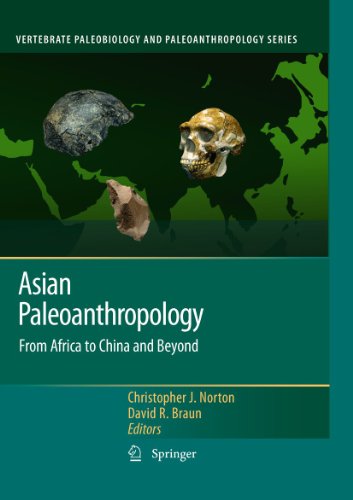
5. The Evolution and History of Human Populations in South Asia: Inter-disciplinary Studies in Archaeology, Biological Anthropology, Linguistics and Genetics ... Paleobiology and Paleoanthropology)
Hardcover: 464 Pages (2007-05-03)
list price: US$129.00 -- used & new: US$94.55
(price subject to change: see help)
Asin: 1402055617
Canada | United Kingdom | Germany | France | Japan
Editorial Review

Book Description

South Asia is home to a diverse range of prehistoric and contemporary cultures that include foragers, pastoralists, and farmers. In this book, archaeologists, biological anthropologists, geneticists and linguists are brought together in order to provide a comprehensive account of the history and evolution of human populations residing in the subcontinent. A wide range of topics and issues are addressed in this book, including hominin adaptations, behaviours, and dispersals; the origin and spread of food producing economies; and the cultural, biological and genetic relationship of foragers and settled communities. New theories, methodologies and interpretations presented in this book are bound to have a profound effect on the way in which the cultural record of South Asia is perceived and how this evolutionary history relates to events in the wider world.

... Read more

6. From Lucy To Language
by Donald Johanson, Blake Edgar
Hardcover: 272 Pages (1996-11-27)
list price: US$60.00 -- used & new: US$65.27
(price subject to change: see help)
Asin: 0684810239
Average Customer Review: 4.5 out of 5 stars
Canada | United Kingdom | Germany | France | Japan
Editorial Review

Amazon.com
In recent decades new fossil discoveries have redefined perceptions of human evolution at a remarkable pace, making it nearly impossible for the general reader to find an up-to-date account of the subject. This large-format book by science writer Edgar and paleoanthropologist Johanson--discoverer of the famous partial skeleton of "Lucy," a female hominid who lived 3.2 million years ago--gives as complete a picture as is presently known. Much mystery remains, but the earlier view of human evolution as a linear progression from apes through the hominids to the various homo species has been replaced by a more treelike analogue, one with many branches of upright-walking hominids. Truly a photo album of hominid history, the volume includes more than 200 color pictures of the major fossil discoveries, each with explanatory text.Book Description

In 1974 in a remote region of Ethiopia, Donald Johanson, then one of America's most promising young paleoanthropologists, discovered "Lucy", the oldest, best preserved skeleton of any erect-walking human ever found. This discovery prompted a complete reevaluation of previous evidence for human origins.

In the years since this dramatic discovery Johanson has continued to scour East Africa's Great rift Valley for the earliest evidence of human origins. In 1975 this team unearthed the "First Family", an unparalleled fossil assemblage of 13 individuals dating back to 3.2 million years ago; and in 1986 at the Rift's most famous location, Olduvai Gorge, this same team discovered a 1.8 million-year-old partial adult skeleton that necessitated a reassessment of the earliest members of our own genus Homo.

Johanson's fieldwork continues unabated and recently more fossil members of Lucy's family have been found, including the 1992 discovery of the oldest, most complete skull of her species, with future research now planned for 1996 in the virtually unexplored regions of the most northern extension of the Rift Valley in Eritrea.

From Lucy to Language is a summing up of this remarkable career and a stunning documentary of human life through time on Earth. It is a combination of the vital experience of field work and the intellectual rigor of primary research. It is the fusion of two great writing talents: Johanson and Blake Edgar, an accomplished science writer, editor of the California Academy of Sciences' Pacific Discovery, and co-author of Johanson's last book, Ancestors.

From Lucy to Language is one of the greatest stories ever told, bracketing the timeline between bipedalism and human language. Part I addresses the central issues facing anyone seeking to decipher the mystery of human origins. In this section the authors provide answers to the basics -- "What are our closest living relatives?" -- tackle the controversial -- "What is race?" -- and contemplate the imponderables -- "Why did consciousness evolve?"

From Lucy to Language is an encounter with the evidence. Early human fossils are hunted, discovered, identified, excavated, collected, preserved, labeled, cleaned, reconstructed, drawn, fondled, photographed, cast, compared, measured, revered, pondered, published, and argued over endlessly. Fossils like Lucy have become a talisman of sorts, promising to reveal the deepest secrets of our existence. In Part II the authors profile over fifty of the most significant early human fossils ever found. Each specimen is displayed in color and at actual size, most of them in multiple views. With them the authors present the cultural accoutrements associated with the fossils: stone tools which evidence increasing sophistication over time, the earliest stone, clay, and ivory art objects, and the culminating achievement of the dawn of human consciousness -- the magnificent rock and cave paintings of Europe, Africa, Australia, and the Americas.

In the end From Lucy to Language is a reminder and a challenge. Like no species before us, we now seem poised to control vast parts of the planet and its life. We possess the power to influence, if not govern, evolution. For that reason, we must not forget our link to the natural world and our debt to natural selection. We need to "think deep", to add a dose of geologic time and evolutionary history to our perspective of who we are, where we came from, and where we are headed. This is the most poignant lesson this book has to offer. ... Read more

Customer Reviews (14)

5-0 out of 5 stars An.McCracken is a fake. REPORT THIS

The reviewer below - An.McCracken - is a fake. He reviews countless books each day but he does not read the books, just paraphrases other people's reviews. REPORT THIS TO AMAZON. Click on (Report this) link under the review, next to the voting buttons.

5-0 out of 5 stars Paleoanthropology For Your Coffee Table
It is nearly beyond belief that this book exists.Imagine walking into Simon and Schuster and telling them that you want to make a large format, glossy color coffee table book on paleoanthropology, and that you want to spare no expense in its production!Imagine trying to convince them that the demand exists for a large scale printing, thus reducing the unit price to a mere $60!Imagine telling them that every second or third page was to be a full page studio portrait of a skull, or perhaps a mandible!And every single photo in color!Even as I hold the book in my hands, and examine Bill Kimble's life size photo of Australopithecus afarensis, I shake my head in wonder.

Yet the genuinely marvelous feature of this book is its integration of the academic side of paleoanthropology with the eye-catching photography.Whether you are a novice or an old hand, Donald Johanson's comprehensive step by step discussion will inform and entertain you.I'm a serious student of paleoanthropology, yet found new material in the many sections: sexual dimorphism, gestation, maturation, language, and emerging consciousness. I'd never seen photos of cranial endocasts, and there are four from Australopithecus on one page.And there is a great deal for everyone in the reconstruction of the appearance of early humans.The photo of a lifelike Australopithecus afarensis is positively haunting.

The book presents the paleoanthropological coursework in the first half of the book, and presents bio summaries of specific hominids in the second half, along with their cranial portraits.By the time Johanson refers to Homo ergaster's temporomandibular joint, we hardly need the parenthical definition (connects the lower jaw with the cranium).

Blake Edgar's prose and David Brill's photos enhance Donald Johanson's scholarship, resulting in a book that is stunning in appearance and easy to read.It is the state of the art by any definition.Hats off to everyone involved in this masterpiece.

4-0 out of 5 stars The many"actual size" photos are amazing!
Don Johanson typically gives great respect to the data and unfolding evidence of his most fascinating field of paleoanthropology. Lots of good up to date detail. But this book is different from all others in that David Brill's photos are truly mind-blowing...as close as one can come to viewing the fossils in real life. A must-have for any hominid-junkie.

5-0 out of 5 stars Great for just about anybody...
If you want a solid, detailed book about the search for mankind's origins this is it.The first part of the book deals with the science of paleoanthropology, the nuts and bolts of how it works, from dating fossils, firepits and artifacts to studying past climates.The book also reveals to us the debates within society about where humans came from and what it means to be human.Will the answers change the way we think about ourselves and how what we will do in the future?
The second part shows us the evidence - bones.Skulls, teeth, fingers.In clear photos, many of them actual size so we can see for ourselves what the text is telling us.It ends with a couple of pages on stone tools and their development.
The two authors did their best to make the book complete BUT they also did not talk down to the reader.They don't assume you know everything, but they don't assume you're a fossil hunter either.For pros or beginners alike.

4-0 out of 5 stars A definate must have
I borrowed this book for my Anthropology exams and I loved it. I had just the kind of information I needed and not just the badly drawn illustrations that my text book provided. I especially loved the fact that all plates are full size, and all the descriptions are generous. A good combination of Laymans terms and Anthropology. ... Read more


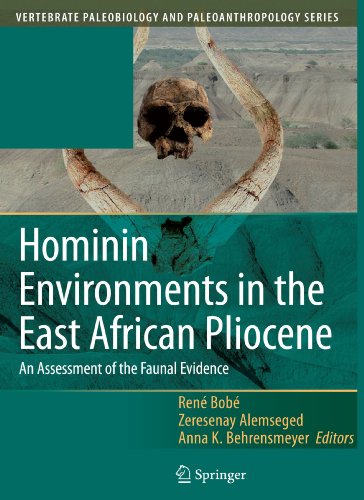
7. Hominin Environments in the East African Pliocene: An Assessment of the Faunal Evidence (Vertebrate Paleobiology and Paleoanthropology)
Hardcover: 356 Pages (2007-11-29)
list price: US$129.00 -- used & new: US$116.38
(price subject to change: see help)
Asin: 1402030975
Canada | United Kingdom | Germany | France | Japan
Editorial Review

Book Description

This volume brings together faunal analysts working at many sites spanning the East African Pliocene. Although most chapters focus on the vertebrate fauna of particular localities, authors take a broad approach that seeks to compare paleoenvironmental and paleoecological patterns across localities and among various taxonomic groups. This volume aims to synthesize large amounts of faunal data, and to present the evolution of East African vertebrates in the context of environmental and climatic changes during the Pliocene.

... Read more

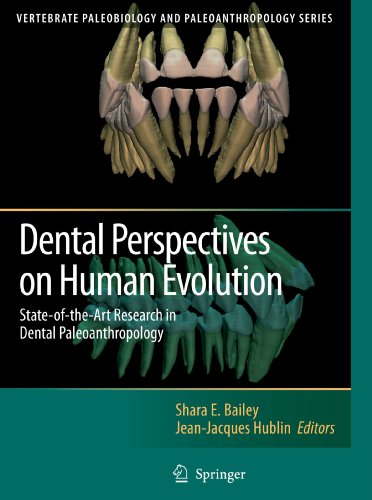
8. Dental Perspectives on Human Evolution: State of the Art Research in Dental Paleoanthropology (Vertebrate Paleobiology and Paleoanthropology)
Hardcover: 409 Pages (2007-10-04)
list price: US$129.00 -- used & new: US$111.00
(price subject to change: see help)
Asin: 1402058446
Canada | United Kingdom | Germany | France | Japan
Editorial Review

Book Description

The objective of the volume is to bring together, in one collection, the most innovative dental anthropological research as it pertains to the study of hominid evolution. In the past few decades both the numbers of hominin dental fossils and the sophistication of the techniques used to analyze them have increased substantially. Contributions focus on dental morphometrics, growth and development, diet and dental evolution. The contributed chapters include crown morphology, microstructure, microwear, stable isotope data, recent genetic research and new methodologies, including 3-D imaging, confocal microscopy and computer modeling.

This is a Volume in The Max-Planck-Institute Subseries in Human Evolution coordinated by Jean-Jacques Hublin, Max-Planck-Institute for Evolutionary Anthropology, Department of Human Evolution, Leipzig, Germany

... Read more

9. The Dawn of Human Culture
by Richard G. Klein
Hardcover: 288 Pages (2002-03-29)
list price: US$27.95 -- used & new: US$15.00
(price subject to change: see help)
Asin: 0471252522
Average Customer Review: 4.5 out of 5 stars
Canada | United Kingdom | Germany | France | Japan
Editorial Review

Book Description
A bold new theory on what sparked the "big bang" of human culture

The abrupt emergence of human culture over a stunningly short period continues to be one of the great enigmas of human evolution. This compelling book introduces a bold new theory on this unsolved mystery. Author Richard Klein reexamines the archaeological evidence and brings in new discoveries in the study of the human brain. These studies detail the changes that enabled humans to think and behave in far more sophisticated ways than before, resulting in the incredibly rapid evolution of new skills. Richard Klein has been described as "the premier anthropologist in the country today" by Evolutionary Anthropology. Here, he and coauthor Blake Edgar shed new light on the full story of a truly fascinating period of evolution.

Richard G. Klein, PhD (Palo Alto, CA), is a Professor of Anthropology at Stanford University. He is the author of the definitive academic book on the subject of the origins of human culture, The Human Career. Blake Edgar (San Francisco, CA) is the coauthor of the very successful From Lucy to Language, with Dr. Donald Johanson. He has written extensively for Discover, GEO, and numerous other magazines. ... Read more

Customer Reviews (23)

5-0 out of 5 stars Best book I've read in a long time
Who thought socioanthropology could be so interesting?This book answers the age old question of where humankind came from in a colorful way.It's structured chronologically and each chapter discusses a major era of human evolution in a succinct but sufficiently detailed way to stay informative.Also, Klein always leaves a few unanswered questions in each chapter, making this a page turner as the reader seeks the answers.

3-0 out of 5 stars Very nice overview, with problems
As other reviewers have noted, this book presents a very nice summary of the current (as of 2002) knowledge about the history of the hominid lineage(s).(I know I'm supposed to say "hominin."Can't bring myself to do it.)The title, however, promises a "bold new theory" about the apparent very rapid flowering of human cultures roughly 50K years ago, and I have two problems with the book in that regard.First, I think "theory" is too strong a word for Klein's idea, because a scientific theory should be a solid and testable explanation that takes account of all the known facts. Klein presents a plausible-sounding hypothesis -- that some sort of genetic change, probably concerning language functioning, took place 50K years ago in Africa, but he adduces little evidence to support that idea.A genetic change is a reasonable idea of what might have happened, but Klein admits he sees no way to test that idea.He just thinks it's the best explanation for the explosion of culture seen in the archeological record shortly after 50K.My second objection is more substantive: his hypothesis conflicts with the genetic and archeological evidence that human beings had spread over a very large part of the world, including all the way into Australia, well before 50K years ago.For his hypothesis to be correct, all those pre-50K humans would have to have been swept away by the new improved version, and the genetic evidence that is available shows nothing of the sort.(For a thorough exposition of the genetic evidence based on mitochondrial DNA and the Y chromosome, including much information about the times at which various important genetic events must have occurred, see Oppenheimer's "The Real Eve: Modern Man's Journey Out Of Africa.")Either the other evidence about when modern humans spread across the globe is wrong (unlikely but not ridiculous, given the uncertainties of dating), or Klein's 50K genetic change is wrong.They can only be reconciled by reconciling the dates -- maybe Klein's hypothesized genetic change took place 30K or 40K years sooner than he thinks.That, however, would place the genetic change far before the great cultural explosion that Klein supposes it to have caused.

5-0 out of 5 stars Neither "bold" nor "new," but excellent nonetheless
Professor Klein and science editor Blake Edgar refer to "innovation" as the key to the great leap forward made by humans about 50,000 years ago.This was the beginning of human culture--the "dawn" as they call it.It wasn't a change in physiology--humans had been anatomically modern for something like 150,000 years.What changed was the wiring in the brain, or the chemistry in the brain or the linkage between the modules in the brain, or, as they express it, there was a "neurological shift"--at any rate, something that would never show up in a fossil.

This is Klein's theory and it is a persuasive one, albeit one that can never be proven--well, probably can never be proven.If under some ice sheet (as the planet continues to warm) we find a 100,000-year-old human intact, perhaps an examination of his or her brain and a comparison with the modern brain will give us the proof.Barring that very unlikely event, there is no way we can see what changed.

But it doesn't matter.Formal proof of Klein's conjecture (and of course, he is hardly the first to present such a theory) is unnecessary.We know from the behavioral changes that took place in something like a twinkling of an eye that humans beginning about 50,000 years ago were suddenly different.They had a culture that developed from the use of what might broadly be called symbolism.We can see this in the petroglyphs and cave art and artifacts that they left.We can also see it in the way they displaced the Neanderthals in Europe and left no trace of Homo erectus elsewhere in the world, and how quickly they spread to the far corners of the planet.

It is easy to see that they must have had symbolic language as well.Indeed, I think language really is the key to what happened, and this is Klein's point as well.The key idea is that "language is almost a kind of sixth sense, since it allows people to supplement their five primary senses with information drawn from the primary senses of others." (p. 146)

Today's mighty culture would be impossible without written language or some means of taking down and recording and maintaining human knowledge.Prior to written language this was done through an oral tradition handed down from one generation to the next.Myths, stories, poetry, ideas, information and methods were memorized and recited.Prior to that however, prior to the use of symbolic language, there would have been only a limited ability to pass ideas down from one generation to the next.It would have been difficult to even share some ideas with a contemporary.But once symbolic language developed, people could demonstrate events and things not present with others through the use of words--that is, symbols standing for the actual objects or events--nouns and verbs.

From a representation symbolically of something seen or something that happened, it was only a step to a representation of something never seen before--such as a net for catching birds or fish or a stampede of wildebeests over a cliff.

This is the innovation that Klein refers to.This is the difference between the Late Stone Age culture and the Middle Stone Age culture, between the Upper Paleolithic and the Mousterian.A human arm can throw a spear, but a human arm extended with a lance can throw the spear farther and with more force.People could travel only so far without water, but a people who carried water in skins or watertight baskets (not preserved in the fossil record obviously!) could travel much farther.Actually I imagine that the first truly modern humans carried soup--yes, soup with its sterile, boiled water--in skins on their backs!

What this book is about then is a close and detailed description of the progression from archaic humans to fully modern humans.It is a carefully constructed argument that shows that the change was not gradual, as some would have it, but abrupt.Whatever one may think about Gould and Eldredge's punctuated equilibrium, Klein makes it clear that in the case of human evolution, a key transformation--indeed THE key transformation--occurred quickly.The most persuasive part of their argument is that the "new" humans were able to not only dazzle us with their symbolic art, etc., they were able to grow their populations and thrive in places where humanoids had never survived before.

This book is also full of interesting information about archeology and anthropology, including how fossils are dated and theories developed.One of my favorite tidbits is this: the size of archaic human populations could be surmised by the size of tortoise bones!Since tortoises were relatively easy to catch, the biggest ones, "the most visible and the most meaty" would have been taken first.So as "the number of collectors increased, average tortoise size declined." (p. 166)

For many readers, the most interesting part of the book might be the distinction that Klein and Edgar make between Homo neanderthalensis and Homo sapiens: "It doesn't follow that Neanderthals and modern humans couldn't interbreed or that they never did, but the DNA results strongly support fossil and archeological findings that if interbreeding occurred, it was rare...this inference, together with fossil evidence...justifies their assignment to...separate species..." (pp. 185-186)

This is not an easy book, but it is not unnecessarily difficult either.I think Klein and Edgar did a good job of treading that fine line between being too technical (and jargony) and not technical enough.

By the way, despite the sensational subtitle (which only appears on the cover), the authors scrupulously and wisely avoid using the word "consciousness" throughout, and nowhere do they speak of a "Big Bang of Human Consciousness."

2-0 out of 5 stars Misleading cover!
A book on human morfologic evolution
and ancient tools (stones).
A few words on culture precisely.
If you donýt want to read about
bones, stones, more bones and more
stones read instead "The Prehistory
of the Mind", by Steven Mithen.


3-0 out of 5 stars Misleading Cover
There are in-depth reviews on this site that do justice to this otherwise excellent book.I would like to focus here on the one singularly troubling aspect (of this book) that has not received much attention in the other reviews.

The book's cover gives the impression that it reveals and expounds on a significant new theory on the genesis of human consciousness.At the least, a glance at the cover will give the impression that this theory is the central thesis of the book.

Much to my surprise and disappointment, however, I had to wait till the last 3-4 pages to discover what this 'bold new theory' was!Klein merely speculates in a few paragraphs that there was a fortuitous genetic mutation, circa 50,000 years ago, that resulted in a significant advance in human brain fuction.

There is no discussion on where this mutation occurred. If Homo Sapiens had already spread out of Africa by this time (as Klein states), how did the mutation effect all of humanity? If this is such a 'bold new theory', why does Klein spend so little space discussing it?Klein admits that no physical evidence for such a hypothesis can be found - the theory is not testable. Nevertheless, this does not let him off the hook for giving his thesis the detailed exposition that it deserves.

Undoubtedly, Richard Klein is one of the greatest anthropologists today.Given that, I am disappointed that he would (ostensibly) resort to a flashy title to increase this book's popularity. Klein's theory may well be actually what happened, but then it surely deserves a more in-depth treatment than what is presented here.

If you want to read a succinct account of human evolution and tool making, this book will satisfy you.There are a few other books, however, that are better in this respect.I was expecting more..... ... Read more


10. Paleoanthropology, 2d ed.(Review) (book reviews): An article from: Human Biology
by John H. Relethford
 Digital: 4 Pages (1999-12-01)
list price: US$5.95 -- used & new: US$5.95
(price subject to change: see help)
Asin: B00099JX3C
Canada | United Kingdom | Germany | France | Japan
Editorial Review

Book Description
This digital document is an article from Human Biology, published by Wayne State University Press on December 1, 1999. The length of the article is 1118 words. The page length shown above is based on a typical 300-word page. The article is delivered in HTML format and is available in your Amazon.com Digital Locker immediately after purchase. You can view it with any web browser.

Citation Details
Title: Paleoanthropology, 2d ed.(Review) (book reviews)
Author: John H. Relethford
Publication: Human Biology (Refereed)
Date: December 1, 1999
Publisher: Wayne State University Press
Volume: 71Issue: 6Page: 1016

Article Type: Book Review

Distributed by Thomson Gale ... Read more


11. Paleoanthropology and Paleolithic Archaeology in the People's Republic of China
by Wu Rukang, John W. Olsen
Hardcover: 293 Pages (1985-02-28)
list price: US$104.00 -- used & new: US$84.31
(price subject to change: see help)
Asin: 0126017204
Canada | United Kingdom | Germany | France | Japan

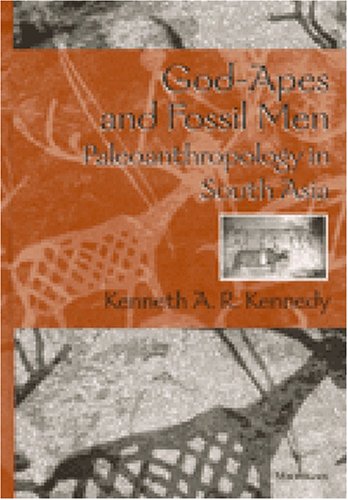
12. God-Apes and Fossil Men: Paleoanthropology of South Asia
by Kenneth A. R. Kennedy
 Hardcover: 504 Pages (2000-09-08)
list price: US$80.00 -- used & new: US$99.02
(price subject to change: see help)
Asin: 0472110136
Average Customer Review: 5.0 out of 5 stars
Canada | United Kingdom | Germany | France | Japan
Editorial Review

Book Description

Until recently the scientific study of the prehistoric peoples of India, Pakistan, Sri Lanka, and the South Asian borderlands has been neglected, beyond some cursory comments in the popular literature about archaeological discoveries. Here is a book that offers much more: a broad survey of all prehistoric cultures of the Indian subcontinent from Paleolithic to Iron Age times.
Written in a style accessible to the general reader, the book pioneers a new approach involving the integration of data from archaeological, paleontological, ecological, and anthropological investigations to offer a comprehensive picture of the origins, diversity, and lifeways of southern Asian populations. Complex scientific ideas are clearly and carefully explained in early chapters as the author considers the theories of human origins in Asia and the significance of the fossils of anthropoid apes recovered from the Siwalik hills (the "God-Apes"). Thereafter the text carries the story of human life on the subcontinent through distinct cultural periods from the Paleolithic to the Iron Age.
Over the course of the book Kenneth A. R. Kennedy demonstrates that South Asian paleoanthropology has been formed by two intellectual forces: Western scientific traditions and native Vedic traditions. The interactions of Western and South Asian scholars have produced a unique approach to the study of ancient populations in this part of the world.
No other book exists today on this subject, and God-Apes and Fossil Men: Paleoanthro-pology of South Asia serves as a model for future studies of ancient peoples and places.
Kenneth A. R. Kennedy is Professor of Ecology, Anthropology, and Asian Studies in the Division of Biological Sciences, Cornell University. He has over thirty-five years of field and laboratory research in India, Pakistan, Sri Lanka, and the borderlands.
... Read more

Customer Reviews (2)

5-0 out of 5 stars South Asian Paleoanthropology: New insight
Dear Sir,
I searched your web site under books by Dr. Kenneth K. A. Kennedy. The book entitled "God-Apes and Fossil men: Paleoanthropology of South Asia" was of interest to me I read the book from a friend. I was told that the person who writes the first review of a book gets a reward of $ 25 from your company. I wrote the review of this book and submitted to you. You published the review. It now appears on your site after the book is mentioned under the name of the author & book search. I now request you to send me the following book by speed post mail at my address. Dr. K. L. Mehra c/o Dr. Rimjhim Mehra, 8421 High Meadow Drive, PLANO, Tx-75025.

Name of book: Daniel Martin Varisco: Medieval Agriculture and Islamic Science. The almanac of a Yemeni Sultan. Used book priced at dollars 15.89.
Thanking you.
Yours faithfully,
K. L Mehra

5-0 out of 5 stars South Asian Paleoanthropology ; new insight
Five Stars:Scholarly, Comprehensive, Insightful and Superbly Good Read. August 23, 2001. Reviewer: K. L. Mehra, Former Director & Expert F.A.O., Rome, Italy.

This book is a must read for students and professionals alike, and others with interest in hominid / human skeleton remains and the information these remains hold for understanding the biological history and diversity of South Asiaýs people. Kenneth A.R. Kennedy sets forth to test the validity of some hypothesis that emerged from the interpretation of such findings. After presenting precise accounts of different viewpoints, Kennedy provides an unbiased fresh insight based on his interdisciplinary approach, integrating archaeological, geological, linguistic, fossil, and historical evidences. It contains a balanced and scholarly treatment of the latest methods used in skeleton biological analysis. The book should become a model reference work for understanding paleoanthropology of a single region. The major merit of authorýs approach has been a critical presentation of European concepts of human origins, biological diversity, and pre-historic life ways, and to appraise the reader about how those concepts were superimposed upon more native traditions, which addressed many of the same questions but from within an entirely distinctive cultural context and perceptions.Kennedy provides sufficient supportive evidences, which suggest that there was no abrupt transition or mass migration of food- producing new races into the hunting territories of longer settled people in South Asia. Faunal and floral evidences from certain sites in Rajasthan and the Ganges valley suggest incipient practices of plant and animal domestication among Mesolithic groups. Emergence of food production strategies was a gradual transition that took place in different localities at different times.Kennedy discusses paleodemographic and anatomical data, which points out that the participants in the mature phase of Harappan civilization were not a mysterious people of unknown biological origins, or migrants from other centers of high culture in western Asia, but were descendants of populations identified with the pre-Harappan cultures of northwestern sector of the sub-continent. Kennedy argues that Indian three-race concept paradigm about caste (including the status of Aryan lineage) and a western argument, favoring demic migrations, is not tenable. Professionals of different disciplines, students, and even lay people alike will all find something thought- provoking in this book. Very highly recommended. ... Read more


13. Preliminary publication of paleoanthropology
by Milford H Wolpoff
 Unknown Binding: Pages (1994)

Isbn: 007071679X
Canada | United Kingdom | Germany | France | Japan

14. THE FOSSIL EVIDENCE FOR HUMAN EVOLUTIONS:An Introduction to the Study of Paleoanthropology.
 Hardcover: Pages (1957)

Asin: B000GS3DQE
Canada | United Kingdom | Germany | France | Japan

15. PALEOANTHROPOLOGY VOL 11990 (Paleoanthropology Annual)
by Tattersall
 Hardcover: 304 Pages (1992-01-01)
list price: US$20.00
Isbn: 0815300697
Canada | United Kingdom | Germany | France | Japan

16. The Fossil Evidence for Human Evolution an introduction to the Study of Paleoanthropology
by W. E. Le Gros Clark
 Hardcover: Pages (1969)

Asin: B000UEYXAE
Canada | United Kingdom | Germany | France | Japan

17. Paleoanthropology in the People's Republic of China: A trip report of the American Paleoanthropology Delegation : submitted to the Committee on Scholarly ... Republic of China (CSCPRC report ; no. 4)
by American Paleoanthropology Delegation
 Unknown Binding: 178 Pages (1977)

Isbn: 0309026202
Canada | United Kingdom | Germany | France | Japan

18. Paleoanthropology and primate evolution (Elements of anthropology)
by James A Gavan
 Unknown Binding: 64 Pages (1977)

Isbn: 0697075249
Canada | United Kingdom | Germany | France | Japan

19. Views of the past: Essays in old world prehistory and paleoanthropology (World Anthropology)
 Unknown Binding: 445 Pages (1978)

Isbn: 0202900592
Canada | United Kingdom | Germany | France | Japan

20. The Fossil Evidence for Human Evolution: An Introduction to the Study of Paleoanthropology
by W.E. Le Gros Clark
 Hardcover: Pages (1969)

Asin: B000KUFORE
Canada | United Kingdom | Germany | France | Japan

  1-20 of 69 | Next 20
A  B  C  D  E  F  G  H  I  J  K  L  M  N  O  P  Q  R  S  T  U  V  W  X  Y  Z  

Prices listed on this site are subject to change without notice.
Questions on ordering or shipping? click here for help.

site stats