e99 Online Shopping Mall

Geometry.Net - the online learning center Help  
Home  - Science - Philosophy Of Science (Books)

  1-20 of 100 | Next 20
A  B  C  D  E  F  G  H  I  J  K  L  M  N  O  P  Q  R  S  T  U  V  W  X  Y  Z  

click price to see details     click image to enlarge     click link to go to the store

$5.30
1. Philosophy of Science: A Very
$47.97
2. Philosophy of Science: The Central
$20.46
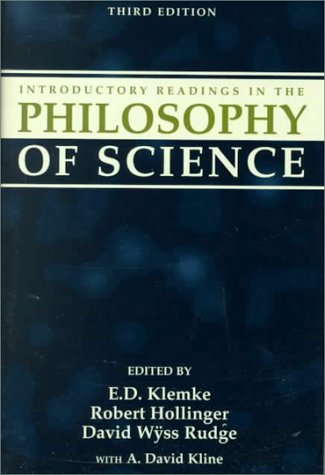
3. Introductory Readings in the Philosophy
$50.00
4. Readings in Philosophy and Cognitive
$34.70
5. A Companion to the Philosophy
$33.06
6. Philosophy of Social Science
$106.00
7. Philosophy of ScienceA Contemporary
$81.99
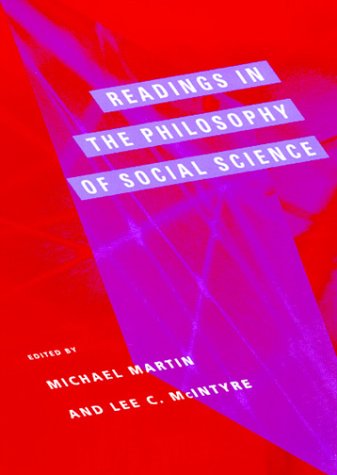
8. Readings in the Philosophy of
$37.25
9. The Philosophy of Science
$35.00
10. Philosophy of Natural Science
$21.95
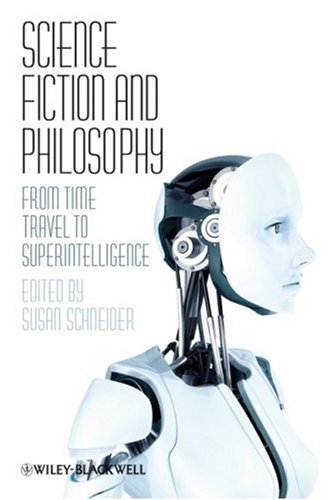
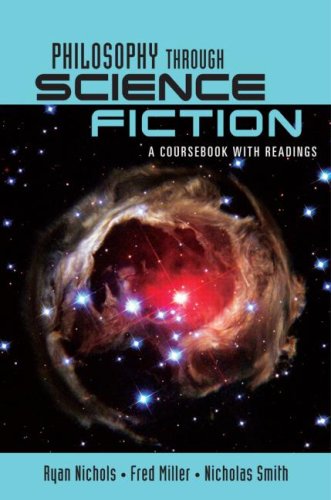
11. Philosophy and Science Fiction
$22.08
12. The Philosophy of the Social Sciences:
$192.97
13. Science under Scrutiny: The Place
$209.97
14. Rational Changes in Science: Essays
$21.99
15. Philosophy of Science and History
$13.95
16. Philosophy of Social Science:
$32.95
17. Philosophy of Science in the Twentieth
$25.00
18. Theory and Reality: An Introduction
 
19. History and philosophy of science:
 
$88.60
20. Intensive Science and Virtual

1. Philosophy of Science: A Very Short Introduction
by Samir Okasha
Paperback: 160 Pages (2002-07-15)
list price: US$9.95 -- used & new: US$5.30
(price subject to change: see help)
Asin: 0192802836
Average Customer Review: 4.5 out of 5 stars
Canada | United Kingdom | Germany | France | Japan
Editorial Review

Book Description
What is science? Is there a real difference between science and myth? Is science objective? Can science explain everything? This Very Short Introduction provides a concise overview of the main themes of contemporary philosophy of science. Beginning with a short history of science to set the scene, Samir Okasha goes on to investigate the nature of scientific reasoning, scientific explanation, revolutions in science, and theories such as realism and anti-realism.He also looks at philosophical issues in particular sciences, including the problem of classification in biology, and the nature of space and time in physics.The final chapter touches on the conflicts between science and religion, and explores whether science is ultimately a good thing. ... Read more

Customer Reviews (9)

4-0 out of 5 stars Great Introduction
I am a layman learning about Evolutionary Biology. Naturally I've been drawn into the ID/Evolution debate (in some cases on this site) and as part of that debate you end up talking a lot about what science really is, and particularly, what is a Theory. Lots of opponents of evolution cry out that it is ONLY A THEORY. True, but it is a theory (as I learned from this book) in the same sense as all other "theories"; such as the theory of gravity, theory of electricity, etc.! And so on... so anyway, I felt I needed to understand more about the "science of science".

I picked this up to get that brief education and I was richly rewarded. It provides a thorough but concise introduction to the Philosophy of Science. It covers the main topics and gives summaries of the major points of view. It gives references to further reading and even provides some charts and graphics. I now feel equipped to at least discuss the basic problems of the philosophy of science and now know where to go get more information.

My only criticism is the chapter that describes a specific problem in the philosophy of science from 3 of the main branches of science (Physics, Biology, and Psychology). I thought the Biology and Psychology examples were pretty weak - they didn't seem like much of a controversy today or terribly relevant. The controversy in Biology between Cladistics and Phenetics has some historical interest, but doesn't seem to be a pressing current issue (but I'm not a professional biologist, either, in all fairness).

That small issue aside, it was a great read. I recommend it and I'm going to go buy and read some more of the books in this series.

5-0 out of 5 stars Excellent Introduction to the Subject
In my opinion, this book is probably the best available introduction to the philosophy of science.It is also suitable for review purposes for those who already have some familiarity with the subject.

The book manages to cover much ground in a short space because it is written very concisely, yet it is also easy to read because the writing style is very clear and straightforward.

I warmly recommend this book without hesitation.

3-0 out of 5 stars Reasonable Overview For The Interested
What do philosophers think about science?This book provides a brief history of the philosophy of science, describes some logical assumptions in the practice of science and problems in science, and discusses Thomas Kuhn's scientific revolutions.The book concludes with a discussion on science and society.

Philosophy of science, as described in this book, seems to have become a rather esoteric subject removed the daily practice of scientists and the everyday use of science.Some questions that spring to mind but which are not covered in this book:Does the publication and independent verification of results lead to the self-correcting nature of science?Why is the simplest explanation the best?How can scientists who cannot easily perform experiments, such as astronomers and sociologists, make verifiable theories?

Chapter 6 presents three problems in science: Newton's view of absolute space, the classification (by feature or by genetics) of living creatures and the whether the mind is modular or not.It's not clear to me how the philosophy of science can help in resolving these problems.Newton's view was probably driven by his desire to prove the literal truth of the Bible.In this day and age of automated indexing systems, does it really matter which method is used to classify creatures?Finally, shouldn't scientists collect more data before deciding if the mind is modular or not?

This book covers a number of topics in the field but fortunately doesn't get bogged down in a deep technical discussion on any single topic.It is a reasonable overview of the topic for the interested reader and one of the better books in the "Very Short Introduction" series.

Kam-Hung Soh, 19 January 2006.
http://kamhungsoh.blogspot.com

5-0 out of 5 stars Excellent introduction
I read this book as an introduction to the philosophy of science to help me as part of my degree and found it has adressed all the necessary key issues and summarised them with clear and simplistic explanations that are easy to understand, especially for the non-philosophical readers! The straightforward explanation approach that the author uses also means that some of the more complex issues are compared and argued in a similarly pragmatic way. Key figures and dates are also given to help with further reading, however because the book is so concise i didn't need much more information for my studies . . bargain!

4-0 out of 5 stars Intro for high school students
This is a good introduction to the philosophy of science; clear, concise and well organized, but it is marred by an irritating, gender ping-pong writing style that forces the reader to contemplate the author's political bias. ... Read more


2. Philosophy of Science: The Central Issues
Paperback: 1379 Pages (1998-01)
list price: US$66.75 -- used & new: US$47.97
(price subject to change: see help)
Asin: 0393971759
Average Customer Review: 5.0 out of 5 stars
Canada | United Kingdom | Germany | France | Japan
Editorial Review

Book Description
Unmatched in breadth and depth, Philosophy of Science addresses the pivotal questions that have occupied philosophers and scientists in this century. Forty-six readings by leading thinkers such as Thomas S. Kuhn, Sir Karl Popper, and Philip Kitcher examine issues ranging from models of explanation to theoretic confirmation and prediction; from the significance of rationality, values, and objectivity to the arguments for and against scientific empiricism and realism, with two unique chapters on "Science and Pseudoscience" and "Laws of Nature." ... Read more

Customer Reviews (3)

5-0 out of 5 stars Excellent
Curd and Cover's "Philosophy of Science: The Central Issues" is both an anthology and an introduction to philosophy of science. It concentrates on the most central problems of philosophy of natural science, and does not cover philosophy of social science, or particular problems in philosophy of physics or philosophy of biology.
Among the topics covered are the nature of science, scientific explanation, induction, prediction, confirmation, reduction, objectivity, underdetermination, laws of nature and scientific realism and anti-realism. Most of the selections are excellent, including classical and contemporary readings. The majority of the book consists in the readings; however, the commentary by Curd and Cover is very extensive.
The book is organized clearly. Each section begins with a brief introduction by Curd and Cover; the readings follow this; and, finally, these are explained and summarized by Curd and Cover's commentary. A thorough and helpful glossary follows towards the end of the book.
This book is excellent, and I strongly recommend it, especially for upper-level undergraduates and graduate students in philosophy. However, I think that readers unfamiliar with analytic philosophy may find some of the readings and the commentary difficult; Chalmer's "What Is This Thing Called Science?" is a less daunting introduction.

5-0 out of 5 stars An Exemplary Anthology
I hope I won't be suspected of overstating the virtues of this book when I say that this is the single finest philosophy anthology that I've ever encountered--and, believe me, I've seen my fair share of them.Curd and Cover deserve to be commended--and I hereby commend them--for their work in editing this volume.Not only have they made compiled a very useful anthology of approximately fifty selections in contemporary philosophy of science, but they've included a very significant amount of original editorial material.Indeed, I've never seen a philosophy anthology with editorial material anywhere near this extensive or helpful.Curd and Cover provide the reader with introductions to each section; detailed and thoughtful commentaries, many of which are forty to fifty pages long, on the readings at the end of each section; a twenty-page glossary of terms; and extensive bibliographies on each of the subjects covered.Roughly a third of this book, which is 1300+ pages long, has been written by the editors.

Because of the comprehensiveness of the commentaries that Curd and Cover have included on each section of readings, this volume, unlike many such anthologies, works very well as a stand-alone introduction to the field.For these commentaries provide the necessary background that the reader needs to fully appreciate the problems with which the authors of particular selections are struggling, the arguments they present in the selections, and the importance of the various selections in contemporary thinking about how best to solve the problems of the philosophy of science.In other words, the commentaries here do much of the work that a lecturer would do, and so reading these papers along with the commentaries is like going through an excellent and wide-ranging introductory course in the philosophy of science.

This anthology is intended to introduce the most general subjects in contemporary philosophy of science.Curd and Cover emphasize work in the philosophy of science that is of importance to anyone interested in the subject, and they have deliberately tried to avoid including readings that assume the reader is familiar with a great deal of contemporary science or its history.There are sections on each of the following topics:the demarcation problem (the problem of isolating what, if anything, is essential to, and distinctive of, scientific inquiry), values and objectivity in science, underdetermination and the Duhem-Quine thesis, induction and the nature of scientific evidence, explanation, laws of nature, intertheoretic reduction, and scientific realism.Most of these sections include four or five papers (the section on realism, which is by far the largest section, contains about twice as many).And this book includes work by many of the most important figures in these areas, including Kuhn, Popper, Hempel, Lakatos, Laudan, Kitcher, van Fraassen, et al.

And the reader should note that this anthology focuses only on work in the natural sciences.None of these selections discusses philosophical issues arising in the social sciences--though the topics covered are of sufficient generality that they should be of interest to people studying the social sciences as well.Furthermore, none of these selections are primarily about the philosophical issues arising in particular natural sciences.So don't come to this anthology looking for philosophy of biology or philosophy of physics.

I'd recommend this book to anyone interested in the philosophy of science, and it's ideal for classes introducing philosophy of science to advanced undergraduates and to graduate students.

5-0 out of 5 stars Excellent introduction in the philosophy of science
Anyone who ever wondered about science in general,or what answers sciences can give us to questions we pose, and which not, if we should believe what science tells us or rather not, what it is that sets apartphysics and astrologie, or if the picture that science gives us in its lawsand theories reflects reality or is just an instrument for science, allthose (and all those who would like to start pondering right now)can get avery profound introduction into those (and other) aspects of philosophicalcontemplation by reading this very well written and edited book. Itconsists of 9 chapters, each treating one subject by first giving a shortintroduction by the editors, then several papers by leading philosophers inthe field, and then a very well written commentary on each of those papers,that retrace and explain the papers for easier digestion. My fullestrecommendations for this book. ... Read more


3. Introductory Readings in the Philosophy of Science
Paperback: 579 Pages (1998-11)
list price: US$31.00 -- used & new: US$20.46
(price subject to change: see help)
Asin: 1573922404
Canada | United Kingdom | Germany | France | Japan

4. Readings in Philosophy and Cognitive Science (Bradford Books)
Paperback: 700 Pages (1993-11-19)
list price: US$50.00 -- used & new: US$50.00
(price subject to change: see help)
Asin: 0262571005
Average Customer Review: 4.0 out of 5 stars
Canada | United Kingdom | Germany | France | Japan
Editorial Review

Book Description
This collection of readings shows how cognitive science can influence most of the primary branches of philosophy, as well as how philosophy critically examines the foundations of cognitive science. Its broad coverage extends beyond current texts that focus mainly on the impact of cognitive science on philosophy of mind and philosophy of psychology, to include materials that are relevant to five other branches of philosophy: epistemology, philosophy of science (and mathematics), metaphysics, language, and ethics.

The readings are organized by philosophical fields, with selections evenly divided between philosophers and cognitive scientists. They draw on research in numerous areas of cognitive science, including cognitive psychology, developmental psychology, social psychology, psychology of reasoning and judgment, artificial intelligence, linguistics, and neuropsychology. There are timely treatments of current topics and debates such as the innate understanding of number, children's theory of mind, self-knowledge, consciousness, connectionism, and ethics and cognitive science. ... Read more

Customer Reviews (1)

4-0 out of 5 stars Cognitive Science for Philosophers
This excellent book gives an overview of current events in cognitive science that are relevant for philosophers. It sometimes goes into considerable technical detail - but the details are always the important ones - important for philosophy that is. If you are interested in the Philosophy of mind, this is a definite recommendation. ... Read more


5. A Companion to the Philosophy of Science (Blackwell Companions to Philosophy)
Paperback: 592 Pages (2001-08-15)
list price: US$39.95 -- used & new: US$34.70
(price subject to change: see help)
Asin: 0631230203
Canada | United Kingdom | Germany | France | Japan
Editorial Review

Book Description
Unmatched in the quality of its world-renowned contributors, this companion serves as both a course text and a reference book across the broad spectrum of issues of concern to the philosophy of science. ... Read more


6. Philosophy of Social Science
by Alexander Rosenberg
Paperback: 272 Pages (2007-08-30)
list price: US$35.00 -- used & new: US$33.06
(price subject to change: see help)
Asin: 0813343518
Average Customer Review: 5.0 out of 5 stars
Canada | United Kingdom | Germany | France | Japan
Editorial Review

Book Description
Philosophy of Social Science provides a tightly argued yet accessible introduction to the philosophical foundations of the human sciences, including economics, anthropology, sociology, political science, psychology, history, and the disciplines emerging at the intersections of these subjects with biology. Philosophy is unavoidable for social scientists because the choices they make in their disciplines force them to take sides on philosophical matters. Conversely, the philosophy of social science is equally necessary for philosophers since the social sciences must inform their understanding of human action, norms, and social institutions.

The third edition retains an illuminating interpretation of the enduring relations between the conduct of inquiry in the social sciences and the fundamental problems of philosophy, with accessible considerations of positivism, European philosophy of history, causation, statistical laws, quantitative models, and postempiricist social science, and it reflects developments in social research over the past two decades that have informed debate in the philosophy of social science. ... Read more

Customer Reviews (2)

5-0 out of 5 stars Must Read
As a recent college graduate, I can say I've learned more about the social sciences and its theoretical underpinnings from this book than I did my entire 5 years in college.While Rosenberg's survey of the social sciences is certainly not exhaustive, he covers many core family disciplines of the social sciences, such as economics and sociology, and their philosophical foundations. Moreover, Rosenberg even includes a review of critical theory, a discipline that probably would not have been mentioned by many mainstream thinkers.The way he uses the problems of philosophy, especially metaphysics and ethics, to compare and contrast the natural sciences and social sciences is powerfully insightful.For anyone interested in the study of human behavior or philosophy, this book is highly recommended.

5-0 out of 5 stars Best introduction to the real philosophy of social science
There are many books out there with the same title as this one. But if you want to know what the real issues in the philosophy of social science are, and how they connect to the basic questions of philosophy--from Plato to Popper--this is the book to read. Rosenberg uniquely combines expertise across the range of problems about social scientific method with an eye to the sides social scientists actually have to take about fundamental questions. The comparison of rational choice, functionalist, and Darwinian explanations of cross-cousin marriage rules is just one example! ... Read more


7. Philosophy of ScienceA Contemporary Introduction (Routledge Contemporary Introductions to Philosophy)
by Alex Rosenberg
Hardcover: 213 Pages (2005-06-29)
list price: US$120.00 -- used & new: US$106.00
(price subject to change: see help)
Asin: 041534316X
Average Customer Review: 4.5 out of 5 stars
Canada | United Kingdom | Germany | France | Japan
Editorial Review

Book Description
Philosophy of Science: A Contemporary Introduction introduces all the main themes in the philosophy of science, including the nature of causation, explanation, laws, theory, models, evidence, reductionism, probability, teleology, realism and instrumentalism.

This substantially revised and updated second edition of a highly successful, accessible and user-friendly text will be of value to any student getting to grips with the nature, methods and justification of science. Alex Rosenberg includes new material on a number of subjects, including:

· The theory of natural selection
· Popper, Lakatos and Leibniz
· Feminist philosophy of science
· Logical positivism
· The origins of science

In addition, helpful features add greatly to the ease and clarity of this second edition:

· Overviews and chapter summaries
· Study questions and annotated further reading
· A helpful glossary explaining key words and concepts
... Read more

Customer Reviews (5)

3-0 out of 5 stars Decent introductory textbook for students
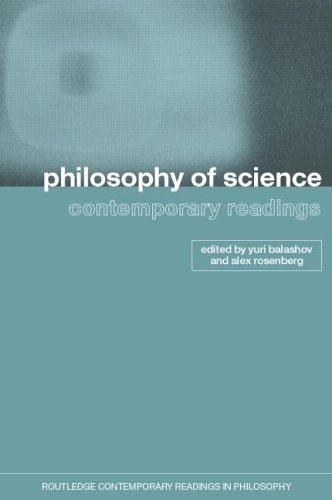
Rosenberg's introduction is well-structured and covers all the main points that would feature in an introductory philosophy of science course. It even goes beyond some of the more traditional topics, including chapters/sections on science studies and the semantic (model) view of scientific theories. However, while the book is better than some of its competitors (e.g., Ladyman's 'Understanding Philosophy of Science'), it still leaves a lot to be desired. The writing is at times awkward (commas are distributed more or less at random across the page), which makes for tedious reading. Also, the argument isn't always very clear and the author gets sidetracked quite often. Gross oversimplification may be inevitable in a textbook for students, but in this book it doesn't always make things any clearer. Given the success of the book, the author should take the time to make some serious revisions -- the second edition has not improved as much as it could have. A major positive point is the existence of a corresponding anthology (Balashov/Rosenberg) of classic texts from the philosophy of science.

5-0 out of 5 stars Time arrival in good condition
The book arrived on time in good condtion. I appreciate the quality of the book and speedy delivery. Tnanks.

5-0 out of 5 stars A review of the first six pages and the table of contents
I do not have this book. I wish I did. I read the first six pages of the book which explains how various scientific disciplines have in the course of History broken off from Science, and come to constitute fields of learning of their own, and understood that this is a very clearly written and informative book. I am sure that it will lay out clearly the major questions raised today in the Philosophy of Science. As I understand it one major idea of the work is that there are philosophical questions that Science cannot answer . Or to put this in another way that Philosophy in a sense sets the limits of scientific inquiry.
What strikes and troubles me in terms of the relationship of Philosophy and Science is that the latter produces in many cases testable conclusions, and thus has the authority of providing us ' truth'. And this when as far as I can tell or feel ' philosophical discourse ' is like discourse in the humanities, ' interpretative'. And it thus does not provide us with what is testable, objective, and ' communally held'. Of course I know that one of the questions of Philosophy of Science is whether there is such a 'thing' as ' objective truth'. But clearly in common sense terms, and in terms of the way most people think and act in the world of the mind ' scientific results' do have a quality in truth, that ' philosophical arguments ' do not.
I am curious as to how this volume deals with these questions.
I apologize for taking the reader's time. My sense is that this is a very good introduction to the whole subject.

5-0 out of 5 stars Helpful text book
I used this book in an introduction to philosophy of science course I took, along with an anthology of papers. The papers were hard to understand without this book. They were filled with a lot of jargon, and labels for different theories. This book helped me understand the labels, but it also got behind them to what the real issues between competing philosophies of science are, and how their arguments worked. It was not easy going but the effort to follow Rosenberg's presentation was worth it.

5-0 out of 5 stars Why philosphy matters to science
The great thing about this book, unlike most of the others, is that is shows how the problems of methodology and interpretation of scientific theories turn out to be the same deep problems philosophers have been wrestling with since the Greeks. It gives you all the definitions of the buzz-words in philosophy of science, but goes beyond them to tell you what's really up for grabs in debates about the nature of science, objectivity, explanation, and reality. And it ends with a great chapter on Kuhn and Quine. ... Read more


8. Readings in the Philosophy of Science: From Positivism to Postmodernism
by Theodore Schick
Paperback: 393 Pages (1999-12-10)
list price: US$84.38 -- used & new: US$81.99
(price subject to change: see help)
Asin: 0767402774
Average Customer Review: 4.5 out of 5 stars
Canada | United Kingdom | Germany | France | Japan
Editorial Review

Book Description
This anthology traces the development of thinking in the philosophy of science from logical positivism to the present. Subsequent articles often clarify or critique preceding ones. As a result, students get a sense of how philosophical theories develop in response to one another. ... Read more

Customer Reviews (3)

3-0 out of 5 stars not 'perfect'
so-so text...
it's funny that it represents reason as opposed to the faith (meaning Christian faith). The entire section is called "reason versus faith" - that's weird... Faith is not versus reason.
Book is kinda alright, but it subliminally biased a little (well, where are the unbiased textbooks anyway?)...
Text presents some good essays, but could have been better...

5-0 out of 5 stars Argumentation at Its Best!
This book is organized under 9 sections each containing several papers and excerpts written by well-known philosophers of science. Each section deals with a major theme in the philosophy of science such as the nature of scientific theories, reason vs. faith, some contemporary issues like the philosophy of physics, psychology and biology, and more.

What makes this book unique is that each paper (or excerpt) is followed by a paper (or excerpt) supporting an opposing argument to one just presented. The juxtaposition of two texts provides the reader with adequate material with which to ponder. The author's purpose does not appear to give the reader two options from which to choose the "better" argument, for this would be the fallacy of false alternative... nor does the author do this to encourage the reader to find a "happy" compromise between opposing arguments, for this would be utilizing the defeated Socratic dialectic... the purpose is to promote critical thinking in the reader. Analogically speaking, this book is to the reader (philosopher) what weights are to a body builder. It is the food for thought! A well-organized intelligent read I highly recommend!

5-0 out of 5 stars A walk in the clouds of thought
As a former student of Dr.Schick, I can credit him with teaching me the value of critical thinking, and how to do it.Here, is an excellent collection of great thinkers, with insight and commentary on the nature of life, man, and mind.Anyone who wants to know his or her place in the world, or simply enjoys lively debate and exploration into the great questions that shape our world, would appreciate this edition. ... Read more


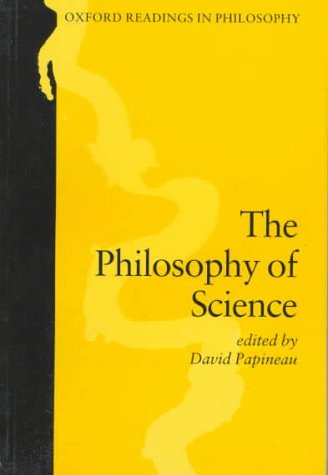
9. The Philosophy of Science
Paperback: 816 Pages (1991-06-26)
list price: US$59.00 -- used & new: US$37.25
(price subject to change: see help)
Asin: 0262521563
Average Customer Review: 4.5 out of 5 stars
Canada | United Kingdom | Germany | France | Japan
Editorial Review

Book Description
The more than 40 readings in this anthology cover the most important developments of the past six decades, charting the rise and decline of logical positivism and the gradual emergence of a new consensus concerning the major issues and theoretical options in the field. The editors have included articles on all of the major special sciences and emphasize the relation between the more theoretical and applied questions.

Part One deals with basic theoretical issues: confirmation, semantics, and the interpretation of theories; causation and explanation; and reductionism and the unity of science. In Part Two, these relatively abstract themes are illustrated and examined further in light of issues in the various special sciences such as physics, biology, psychology, and social science. ... Read more

Customer Reviews (2)

4-0 out of 5 stars A great compendium, but requires previous knowledge
As another reviewer stated, this is NOT a book for the beginner in philosophy of science. An undergraduate philosophy student who has taken other upper-level philosophy courses may have a slightly easier time with it, but some concepts are proper of scientific epistemology and require either previous expertise or thorough discussion on the instructor's part.

The content itself, of course, is excellent and quite comprehensive. Just consider your level of philosophical education and know what you're getting.

5-0 out of 5 stars Very good compilation
The book includes essays and articles from most well-known philosophers of science, in practically every branch and school (from Kuhn to Cartwright). It is an excellent text for gaining a broader insight into the subject, but not quite for beginners. An excellent addition to a science and/or philosophy library for its broad scope. ... Read more


10. Philosophy of Natural Science (Foundations of Philosophy)
by Carl G. Hempel
Paperback: 100 Pages (1966-08-15)
list price: US$42.00 -- used & new: US$35.00
(price subject to change: see help)
Asin: 0136638236
Average Customer Review: 4.5 out of 5 stars
Canada | United Kingdom | Germany | France | Japan

Customer Reviews (7)

5-0 out of 5 stars A Classic
Carl Hempel's "Philosophy of Natural Science" is an introduction to the philosophy of science by one of the twentieth century's finest philosophers of science. This book is one of the best in the popular "Foundations of Philosophy Series", and a classic in the philosophy of science.
The book is slim but quite comprehensive. It covers the structure of scientific hypotheses and their justification, the role of laws in scientific explanations, and the nature of scientific concepts and theoretical reduction, among many other topics.
Hempel is an excellent guide to a very difficult subject. He writes lucidly and argues carefully. Many of his claims are illustrated with examples from the history of science. The book also includes suggestions for further reading.
Some familiarity with analytic philosophy and the history of science will be helpful for readers of this book. But I don't think that this background is required. While those without this background may find some sections of this book difficult, I think that they'll understand a lot.
This book was published in 1966. Therefore, it does not cover some of the latest work in the philosophy of science. Needless to say, as a work of analytic philosophy, many of its claims are controversial. Nevertheless, it remains an excellent introduction to the philosophy of science.
For more recent, and sometimes easier, introductions to the philosophy of science, with some different coverage, I recommend Chalmer's "What Is This Thing Called Science?" or Hung's "The Nature of Science: Problems and Perspectives", though I have more gripes with these books than with Hempel's. I recommend these books not in place of Hempel's but in addition to it.

5-0 out of 5 stars modus tollens
PHILOSOPHY OF NATURAL SCIENCE, by Carl G. Hempel is a classic exposition of the scientific method and should be considered required reading for all scientists as well as informed lay persons. Do not let the title of this book mislead you, among its most ardent supporters are the practitioners of the social sciences in addition to the expected audience of "hard" scientists (Though PHILOSOPHY OF SOCIAL SCIENCE is another volume in this "Foundations of Philosophy" series, it is nowhere near the classic that this volume is).

Far from just a theoretical work, Hempel skillfully injects easily understandable case studies and examples into his writing. Proceeding from the basic logical construction of the scientific method to more complex ideas challenging some of the classically held views, Hempel is always accessible, always clearly understandable.

This is a surprisingly enjoyable book to read and short enough that it shouldn't intimidate anyone. There are far too few people today who understand scientific explanation and I would recommend this indispensable book for anyone's library.

Jeremy W. Forstadt

4-0 out of 5 stars Worth every page.
In this little book Carl Hempel lays out the basics of a philosophy of science, or in other words what a scientific theory must be in order to be science. This is an oversimplification in that not only does Hempel follow the well trodden track of such people as Karl Popper, but he goes much further in the way he looks at various `theories' proposed through the ages. He is not afraid to look at seemingly ludicrous theories such as vitalism but analyses them to locate what is and is not science within them. He never pre-judges anything but is willing ot give it a look no matter how strange or ridiculous. Hempel is a philosopher of science to be admired in his open views. Throughout the text he surprises the reader as he elucidates aspects of the philosophy of science which don't usually occur to a practising scientist or to many other philosophers who take much for granted.

Worth every page.

5-0 out of 5 stars An excellent introduction to a complex subject
Hempel's little book _Philosophy of Natural Science_ is a concise, lucid introduction to a complex subject. In just over a hundred pages, he discusses a wide range of problems in the philosophy of science, with an emphasis on epistemological issues. Like other books in the "Foundations of Philosophy" series (and like other good philosophy texts in general), the book not only discusses the positions of other philosophers, it also makes a case for the author's own point of view. Chapter 5, where he lays out his deductive-nomological model of scientific explanation, is worth the cover price alone. Hempel is a clear writer, and he illustrates his points with many examples from the history of science. These are both illuminating and interesting in their own right. This book is a great place to start to learn about the history and philosophy of science.

5-0 out of 5 stars I studied the book in Chinese,but now i need a English versi
Is anyone here has the book of e-version?
I need it very much,would any one sent it to me,please! ... Read more


11. Philosophy and Science Fiction
Paperback: 392 Pages (1984-04)
list price: US$28.00 -- used & new: US$21.95
(price subject to change: see help)
Asin: 0879752483
Canada | United Kingdom | Germany | France | Japan

12. The Philosophy of the Social Sciences: An Introduction
by Robert Bishop
Paperback: 403 Pages (2007-08-09)
list price: US$39.36 -- used & new: US$22.08
(price subject to change: see help)
Asin: 0826489532
Canada | United Kingdom | Germany | France | Japan
Editorial Review

Book Description
This is the definitive companion to the study of the philosophy of the social sciences. It provides the student with an accessible, comprehensive and philosophically rigorous introduction to all the major philosophical concepts, issues and debates raised by the social sciences. Ideal for use in undergraduate courses, the structure and content of this textbook-the most thorough, clearly argued and up-to-date available-closely reflect the way the philosophy of the social sciences is studied and taught.

The text examines key conceptual and methodological questions in the social sciences and illustrates how these shape the practice of research, the interpretation of findings and theory formulation in such disciplines as economics, political science and psychology. The book not only offers lucid and incisive coverage of the philosophy of the social sciences, but also extends the major debates and considers the latest directions in this growing area of philosophical interest. Robert C. Bishop's cogent and rigorous analysis is supplemented by useful pedagogical features, including key examples from philosophical writing; summaries of core debates; sample questions and exercises; and guides for further reading. ... Read more


13. Science under Scrutiny: The Place of History and Philosophy of Science (Studies in History and Philosophy of Science)
Hardcover: 204 Pages (1983-10-31)
list price: US$193.00 -- used & new: US$192.97
(price subject to change: see help)
Asin: 9027716021
Canada | United Kingdom | Germany | France | Japan

14. Rational Changes in Science: Essays on Scientific Reasoning (Boston Studies in the Philosophy of Science)
Hardcover: 248 Pages (1987-06-30)
list price: US$210.00 -- used & new: US$209.97
(price subject to change: see help)
Asin: 9027724172
Canada | United Kingdom | Germany | France | Japan

15. Philosophy of Science and History of Science
by Eric Palmer
Paperback: 268 Pages (2000-06-30)
list price: US$21.99 -- used & new: US$21.99
(price subject to change: see help)
Asin: 0738824976
Canada | United Kingdom | Germany | France | Japan
Editorial Review

Book Description
Philosophy of science and history of science have a significant relation to science; but what is their relation to each other?Analysis & review of work on the question, especially in philosophy, is the focus of this 1991 Philosophy thesis at UC San Diego. ... Read more


16. Philosophy of Social Science: Philosophical Issues in Social Thought (Traditions in Social Theory)
by Ted Benton, Ian Craib
Paperback: 212 Pages (2001-08-25)
list price: US$33.95 -- used & new: US$13.95
(price subject to change: see help)
Asin: 033377499X
Average Customer Review: 1.5 out of 5 stars
Canada | United Kingdom | Germany | France | Japan
Editorial Review

Book Description
This is the first book in the new series, is a comprehensive introduction to philosophical problems in the social sciences, encompassing traditional and contemporary perspectives. It is readily accessible, with a firm emphasis on communicating difficult philosophical ideas clearly and effectively to those from outside this discipline. Ted Benton and Ian Craib move systematically through major topic areas, from positivism to post-structuralism, using a wide variety of examples and cases to illustrate key themes. ... Read more

Customer Reviews (3)

1-0 out of 5 stars one star is too high
This is the biggest waste of money and time reading I have ever experienced.Had to read this book and use for a Social & Behavioral science undergrad degree and literally felt it did not teach me a thing about theory.WHY?BECAUSE IT IS SOOOOO BADLY WRITTEN! These social scientists should have hired a writer to express their thoughts and research work.I am not a stranger to philosophy, but this....wow.........It might as well have been written in Japanese (which I dont speak)

2-0 out of 5 stars The declivities of social science...
I found this book one day at the last minute on the shelf at my local Borders.I looked through it, it seemed promising, and gagging at the steep price tag, nonetheless went along and bought it.It was only partly worth the price.

Benton and Craib provide a fairly decent tour of the major issues in sociological thought, but their account is tainted with all the declivities that we can expect from sociologists, who as a group, often display rather muddled ideas about things.For instance, neither Benton nor Craib seem terribly well versed in evolutionary biology, which they repeatedly denigrate and refer to as 'evolutionism', and both seem to labor on in nearly complete ignorance of the full breadth of the Popperian critique of classical empiricism.Their account, devoid of any appreciation for or understanding of critical rationalism, presents science as more or less slave to the classical empiricism of the 'logical positivists' and their attacks on science and accounts of anti-science sociologies are subsequently biased as a result.The situation climaxes in the dismal panegyric to the glorious propriety of 'feminist standpoint epistemology' to which the reader is subjected in chapter nine.

For those without a strong grounding in philosophy or natural science, this primer will present a seriously misleading account of both, at many places in its tour of sociological thought.I would thus suggest a more balanced and more informed reader for an introduction to the social sciences.

1-0 out of 5 stars Horrible piece of material
This book was a requirement for me since I am a PhD candidate, and I am taking a course that needs this book. However, just because a book is required doesn't mean the book is good. I found this book very hard to read, understand, and stay focus on. I had to use this book to do assignments barely able to lift a sentence and when I did find the right statement, it was worded so gawdy that it gave me a headache. Reseach classes are hard enough...do I need a book that is just as hard....hec no. This book also was published by the authors themselves...you can see why.

I wouldnt recommend this book to anyone.

... Read more


17. Philosophy of Science in the Twentieth Century: Four Central Themes
by Donald Gillies
Paperback: 272 Pages (1993-04-15)
list price: US$32.95 -- used & new: US$32.95
(price subject to change: see help)
Asin: 0631183582
Average Customer Review: 4.5 out of 5 stars
Canada | United Kingdom | Germany | France | Japan
Editorial Review

Book Description
This book traces the development during the 20th century of four central themes in the philosophy of science. The themes, chosen for their importance are expounded in a way which does not presuppose any previous knowledge of philosophy or science. The book thus constitutes an excellent introduction to the philosophy of science. ... Read more

Customer Reviews (3)

4-0 out of 5 stars Philosophy of Science in 20th Century
This is book is used in my college honors class about scientific philosophy and structure. Good book. Points out and discusses different views, opinions, and theories.

4-0 out of 5 stars A strong development of ph. of science fundamentals.
Donald Gillies investigates four topics in his book _Philosophy of Science in the Twentieth Century_. Gillies authoritatively develops the subject matter, transparently introducing numerous philosophical concepts. The examination of historical examples of scientific practice charms the reader and provides setting for the interpretations of the examined philosophers. One is also gratified by the historical and/or biographical accounts of several philosophers and movements. While ignoring neo-Kantian and realist alternatives that have emerged during the second half of the last century, the exposition of the themes remains masterful.

In the first chapter, within historical context, Gillies gracefully formulates inductivism as a theory of scientific method. Popper's variant of empiricism is then discussed in light of this, followed Duhem's philosophy of science. By the fourth chapter, the author shifts gears and introduces Poincare's conventionalism of 1902. After treatment of the Duhem and Quine theses, Gillies chooses observation as the third theme and tackles questions about protocol sentences and theory-laden observations. The demarcation problem is the topic of chapters eight and nine. Deviating from the rest of the book, the author regrettably tries to build his own construction of modified falsificationism in the last chapter.

I appreciate Gillies' examples. Departing from the irresistible tendency to use only examples from physics, Gillies uses Kepler's discovery of elliptical orbits, the discovery of penicillin, and the discovery of sulphonamide drugs with his discussion of Popper. Newton's methodology from the Principia was effectively used as a background when explaining Duhem's ideas. Gillies makes one of the most intuitive explanations of non-Euclidean geometry I've ever seen in his presentation of Poincare.

The rich biographical accounts of Duhem, Poincare, and Wittgenstein add much value to this book. There's more -- Bacon is discussed in the introduction of inductivism, along with a history of the Vienna circle. The author synthesizes a web of relationships between many of the major names. Frequent insights, like the relation of the ideas of Carnap and Neurath to Wittgenstein, provide tasty treats.

Though not sufficient for an introduction, this book can be an integral piece while attaining a command of basic ideas in the philosophy of science.

5-0 out of 5 stars read this before you delve into heavier works
It's been a while since I read this book as I bought it when it came out and read it during a cross-country drive.It is a very nice starting point for further reading in philosophy of science.You won't walk away being anexpert--how could you with just one book under your belt?--but you'll beprepared to know the ground on which you'll have to tread when readingprimary works.

Gillies should be commended for putting in relevantbiographical and context information.It's hard for a lot of people tounderstand what groups like the Vienna Circle were up to and there havebeen all sorts of just plain wrong information circulated about them, e.g.,that they were conservatives (wrong:founding member Otto Neurath was theeconomics minister in a socialist government and most of the members weredriven out of Europe by the Nazis).IMO, philosophy cannot be properlyunderstood without understanding the particular questions and context inwhich a philosopher worked and Gillies does a good job with this. ... Read more


18. Theory and Reality: An Introduction to the Philosophy of Science (Science and Its Conceptual Foundations series)
by Peter Godfrey-Smith
Paperback: 272 Pages (2003-08-01)
list price: US$27.00 -- used & new: US$25.00
(price subject to change: see help)
Asin: 0226300633
Average Customer Review: 4.5 out of 5 stars
Canada | United Kingdom | Germany | France | Japan
Editorial Review

Book Description

How does science work? Does it tell us what the world is "really" like? What makes it different from other ways of understanding the universe? In Theory and Reality, Peter Godfrey-Smith addresses these questions by taking the reader on a grand tour of one hundred years of debate about science. The result is a completely accessible introduction to the main themes of the philosophy of science.

Intended for undergraduates and general readers with no prior background in philosophy, Theory and Reality covers logical positivism; the problems of induction and confirmation; Karl Popper's theory of science; Thomas Kuhn and "scientific revolutions"; the views of Imre Lakatos, Larry Laudan, and Paul Feyerabend; and challenges to the field from sociology of science, feminism, and science studies. The book then looks in more detail at some specific problems and theories, including scientific realism, the theory-ladeness of observation, scientific explanation, and Bayesianism. Finally, Godfrey-Smith defends a form of philosophical naturalism as the best way to solve the main problems in the field.

Throughout the text he points out connections between philosophical debates and wider discussions about science in recent decades, such as the infamous "science wars." Examples and asides engage the beginning student; a glossary of terms explains key concepts; and suggestions for further reading are included at the end of each chapter. However, this is a textbook that doesn't feel like a textbook because it captures the historical drama of changes in how science has been conceived over the last one hundred years.

Like no other text in this field, Theory and Reality combines a survey of recent history of the philosophy of science with current key debates in language that any beginning scholar or critical reader can follow.
... Read more

Customer Reviews (8)

4-0 out of 5 stars An (almost) excellent introduction to Philosophy of Science
This is by far the most convincing Introduction to Philosophy of Science that I've come across so far. As most previous reviewers agree, it is both deep and accessible, it makes a serious (not merely 'pro forma') attempt at being balanced and giving non-standard science studies a fair run for its money (unlike other books I have reviewed in the past). What's more, it even conveys a sense of the history of the debates that have shaped philosophy of science, while at the same time making the historical discussions relevant to the systematic interest of the philosophical argument. In this regard, it is much more of an introduction to philosophy of science than, for example, Losee's 'Historical Introduction to Philosophy of Science'. There are some minor problems, though, which means the book doesn't quite deserve five stars: first, the order of the chapters is somewhat idiosyncratic -- some crucial topics, such as scientific explanation, appear only on the last few pages of the book. Second, the discussion is sometimes too brief, especially when it comes to classic problems (e.g. D-N model of explanation); the author should have sacrificed one chapter (do we really need separate chapters on 'Feminism & Science' and 'The Challenge from SSK', and on 'Naturalistic Philosophy of Science' and 'Naturalism and the Social Structure of Science'?), thereby making room for a more complete discussion of standard material. Well, let's hope there will be second edition.

4-0 out of 5 stars What Is Science
For an introduction to the philosophy of science, and all its different schools of thought and its most influential thinkers, you probably can't do much better than this book. Godfrey-Smith's writing and presentation are mostly clear and accessible to the interested layperson, and he ably introduces dense concepts without the wooden and pedantic prose that ruins so many modern philosophical tracts. However, readability is still an issue here, with a very apparent pattern. Each chapter is very readable and helpful at the start, but then becomes more confusing as Godfrey-Smith delves into increasingly esoteric and tangential sub-topics related to the chapter's main topic. He also has the tendency to describe a topic by introducing it briefly then spending more time discussing counter-theories and critiques, making the reader wonder what exactly is being covered and why (e.g. "Leviathan and Latour" in Chapter Eight). And finally, Godfrey-Smith is a working philosopher of science himself, and is generally unable to avoid giving his opinions in each chapter or section, falling into the philosopher's trap of criticizing one's colleagues for not having all the answers while refusing to admit the same about one's own theories. Meanwhile, the final chapter is made up mostly of Godfrey-Smith's attempt at a unified theory. Thus, this book is not necessarily the impartial introduction that it claims to be. But aside from those variously troublesome flaws, this is still a fine foundational text for the thinking student. [~doomsdayer520~]

5-0 out of 5 stars Excellant Introduction
I found Godfrey-Smith's 'Reality and Theory' to be an excellant introduction to philosophy of science. It requires a certain basic understanding of science and a familiarity with common notions of philosophy but is nonetheless appropriate for students and those who are simply interested in reading about the philosophy of science. I am developing a curriculum for an introductory course in the history and philosophy of science and plan to use this title as one of the texts for the course.

5-0 out of 5 stars Both deep and accessible
The book covers the most important debates in philosophy of science with an amazing clarity and simplicity (it's a accessible to anyone) and still retain the deep arguments. The historical background and the multiple examples (including most of the canonic examples) are also of great interest... In my opinion, one of the best book I've read in philosophy of science.

4-0 out of 5 stars Good, solid overview
While not perfect, this is the best general intro to the Philosophy of Science I have read.Even though a few scattered parts of the book (especially the sections about the sociological aspects of science) are a bit murky, in general it's an accessible, clear, well-written overview. ... Read more


19. History and philosophy of science: Selected papers (Annals of the New York Academy of Sciences)
 Paperback: 168 Pages (1983)

Isbn: 0897662180
Canada | United Kingdom | Germany | France | Japan

20. Intensive Science and Virtual Philosophy (Transversals: New Directions in Philosophy)
by Manuel De Landa
 Hardcover: 256 Pages (2002-05)
list price: US$130.00 -- used & new: US$88.60
(price subject to change: see help)
Asin: 0826456227
Average Customer Review: 4.0 out of 5 stars
Canada | United Kingdom | Germany | France | Japan

Customer Reviews (2)

3-0 out of 5 stars Helpful so far as it goes...
De Landa's Deleuze, as presented in this and other works, has its own unique "niche" among the various ways of reading this important figure. His approach tends to take as its principal text Deleuze/Guattari's *A Thousand Plateaus* and emphasizes that difficult "subtext" surfacing throughout Deleuze's broader corpus that involves what DeLanda refers to as an "ontology" derived from chaos and complexity theory and the non-linear mathematics underlying them. "Intensive Science and Virtual Philosophy" is certainly the best available elucidation of this often perplexing strand of Deleuze's work and any serious student of Deleuze will benefit from it. The problem, addressed by the author in an "appendix" to the work, is that Deleuze quite deliberately alters his basic terminology from one work to the next, making a good deal of forcing necessary to fit other Deleuzian texts into DeLanda's "ontological schema." It is, in fact, not at all clear that Deleuze would have accepted DeLanda's claim about him operating with a fixed "ontology."And since DeLanda is convinced that the "key" to Deleuze is to be found in modern non-linear mathematical theory and its scientific applications, he tends almost completely to ignore that which constitutes another major aspect of Deleuze's work, namely, his intense and extensive engagement with the history of philosophy. As a helpful introduction to one very difficult aspect of Deleuze's work, this book excels; as a broader account of Deleuze's philosophy and its influence, it is quite limited and somewhat contrived.

5-0 out of 5 stars Good Good Stuff
Delanda is certainly not the least controversial of Deleuzeans, so I imagine some folks will dislike the (sort of) analytic flavor of this work.Nonetheless it gives--or makes a painfully valient attempt to give--what a lot of 'clarificationary' work on Deleuze ultimately fails to provide.A solid, relevant reconstruction of Deleuze's world without all the cumbersome jargon that bogs down the more continental reconstructions (e.g., Badiou's "Clamor of Being"...really an excellent book, but rough-going in the prose department).
Delanda takes his by now standard fascination with complexity theory and other cool stuff and mines Deleuze's works for its scientific & mathematic underpinnings.John Protevi's "Political Physics," another book in this series, could be seen as an intro. to this book--not to downplay the significance of Protevi's work.Where Protevi explored the possibilities for Deleuzean applications to complexity, Delanda actually applies it, fearlessly, using the analytic style, I imagine, as a way to not cower in the face of some of Deleuze's absurdities.This work should be hotly debated, but it should be deeply appreciated as well, for the age of freeplay is waning, and now that the fog is clearing it really is time to figure out what the hell Deleuze was talking about.
This is first on my list of Deleuze commentaries, and it stands as a powerful independent work in its own right.Read it.Delanda rules. ... Read more


  1-20 of 100 | Next 20
A  B  C  D  E  F  G  H  I  J  K  L  M  N  O  P  Q  R  S  T  U  V  W  X  Y  Z  

Prices listed on this site are subject to change without notice.
Questions on ordering or shipping? click here for help.

site stats