e99 Online Shopping Mall

Geometry.Net - the online learning center Help  
Home  - Science - Physics (Books)

  1-20 of 100 | Next 20
A  B  C  D  E  F  G  H  I  J  K  L  M  N  O  P  Q  R  S  T  U  V  W  X  Y  Z  

click price to see details     click image to enlarge     click link to go to the store

$16.26
1. The Physics of NASCAR: How to
$9.00
2. Physics For Dummies (For Dummies
$6.00
3. Special Topics in Calamity Physics
$117.48
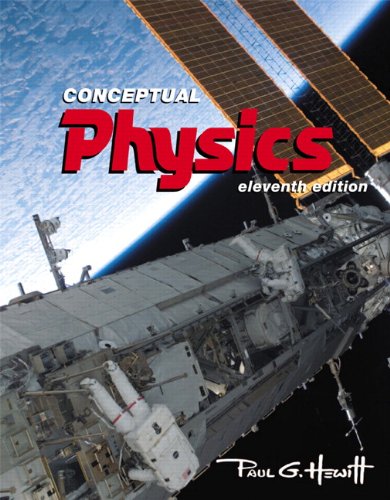
4. Conceptual Physics Package Edition
$11.79
5. Cracking the AP Physics B Exam,
$16.38
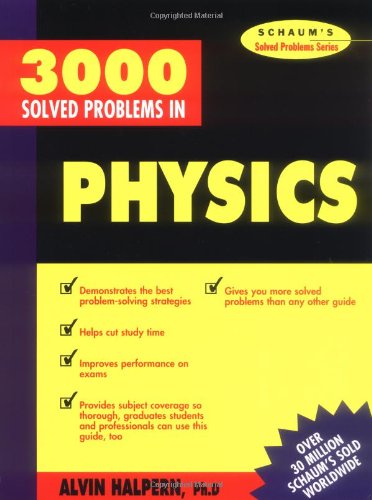
6. 3,000 Solved Problems in Physics
$6.71
7. The Tao of Physics: An Exploration
$73.17
8. Physics
$5.99
9. The Trouble With Physics: The
$11.00
10. Cracking the SAT Physics Subject
$11.72
11. Cracking the AP Physics C Exam,
 
$10.85
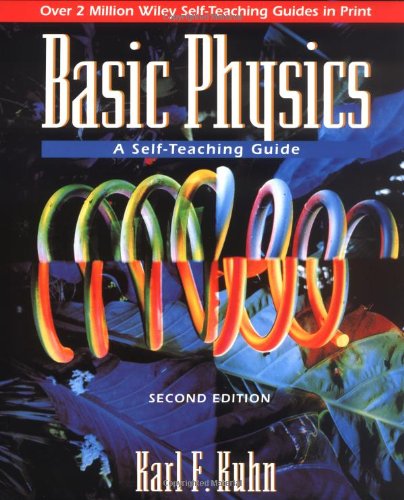
12. Basic Physics: A Self-Teaching
$10.00
13. Schaum's Outline of College Physics,
$8.98
14. The Cartoon Guide to Physics
$9.80
15. Quantum Physics and Theology:
$15.00
16. University Physics with Modern
$11.86
17. Barron's AP Physics C 2008 (Barron's
$10.73
18. Barron's AP Physics B 2008 (Barron's
$59.00
19. College Physics (with PhysicsNow)
$80.00
20. Enhanced College Physics, Volume

1. The Physics of NASCAR: How to Make Steel + Gas + Rubber = Speed
by Diandra Leslie-Pelecky
Hardcover: 286 Pages (2008-02-14)
list price: US$25.95 -- used & new: US$16.26
(price subject to change: see help)
Asin: 0525950532
Average Customer Review: 5.0 out of 5 stars
Canada | United Kingdom | Germany | France | Japan
Editorial Review

Book Description
Every NASCAR fan – at one time or another – asks the same question:Why isn’t my favorite driver winning?This is your chance to discover how much more there is to NASCAR than “Go fast, turn left and don’t crash.”If you’ve ever wondered why racecars don’t have mufflers, how “bump drafting” works, or what in the world “Let’s go up a pound on the right rear and add half a round of wedge” means, The Physics of NASCAR is for you.

In this fast-paced investigation into the adrenaline-pumping world of NASCAR, a physicist with a passion uncovers what happens when the rubber hits the road and 800- horsepower vehicles compete at 190 miles per hour only inches from one another.

Diandra Leslie-Pelecky reveals how and why drivers trust the engineering and science their teams literally build around them not only to get them across the finish line in first place, but also to keep them alive.Professor Leslie-Pelecky is a physicist in love with the sport’s beauty and power and is uniquely qualified to explain exactly how physics translates into winning races.

Based on the author’s extensive access to race shops, pit crews, crew chiefs and mechanics, this book traces the life cycle of a race car from behind the scenes at top race shops to the track. The Physics of NASCAR takes readers right into the ultra competitive world of NASCAR, from the champion driver’s hot seat behind the detachable steering wheel to the New Zealander nicknamed Kiwi in charge of shocks for the No. 19 car.

Diandra Leslie-Pelecky tells her story in terms anyone who drives a car--and maybe occasionally looks under the hood--can understand. How do drivers walk away from serious crashes? How can two cars travel faster together than either car can on its own? How do you dress for a 1800°F gasoline fire? In simple yet detailed, high-octane prose, this is the ultimate thrill ride for armchair speed demons, auto science buffs, and NASCAR fans at every level of interest.

Readers, start your engines. ... Read more

Customer Reviews (3)

5-0 out of 5 stars Don't wait for the movie
This book would translate nicely into a Discovery Channel series. You know, high-interest, science-to-the-masses kind of stuff. Give it a year; it's going to happen! I am a fan of "The Physics Of.." books, and some disappoint: they can be so thorough [read hyper-mathematic] as to resemble homework; or they can be so simplified they read like a children's book. Most land somewhere in between. Take, for instance,Adair's book on the Physics of Baseball: it's fantastic, but I wouldn't recommend it to just anyone. It contains more mathematics than the average Joe (or Jane) is equipped to handle. But this book, The Physics of NASCAR, follows the Goldilocks Principle: it's just right. Not too pithy, not too watered down. High interest, easy access, entertaining insights. If you like popular science, you'll enjoy this book. Personally, I love the way the author pulls in characters from the NASCAR family. It gives the book personality! She does a great job with the science as well. There were a couple of bobbles here and there, but she covered a LOT of ground. This book is really a text in applied physics (and biology and chemistry), sans the quantitative rigor. I would love to adapt it to my high school curriculum--it would certainly grab my students' attention. If you teach physics at the high school or college level, this book is the perfect supplement to a course on physics for non-majors, or simply a means to raise the interest/relevance level for the concepts you teach. Buy it. If it doesn't work out, then re-sell it on Amazon's Marketplace. Now there's a win-win situation! Hope that helps...

5-0 out of 5 stars A Great Book
If your other half is a NASCAR lover then this is a great book for them. I got this book for my hubby as a gift....he loved it so much that he read the entire book in one day.

5-0 out of 5 stars The science behind the speed
This is an excellent book about how NASCAR race cars are engineered to perform like they do. The author is a college Physics professor and the book is written to explain with basic scientific terms and knowledge that the average reader can understand written in a very interesting manner.

The areas discussed include aerodynamics, materials,engines, fuels, tires, shocks, drivetrain and others, and the author spent time with Elliott Sadler and the 19 team both at the shop and the track to help the NASCAR fan understand how things work like they do. I am a long time fan and also an engineer and there was a lot of info that I can use when I give fans pit road andgarage tours at Michigan Intl Speedway. This book will help me explain things to the fans in a easy way.

This would also be a great book for a young college or high school aged race car enthusiast/budding engineer to help them understand how school subjects like Physics can have exciting real world applications. I was a big racing fan when I was taking physics in high school and engineering courses in college and the textbook problems we had did not seem very relevant or interesting. A book like this would have made those subjects a lot more fun.
I own many many NASCAR and racing books and this is one of the best. Highly recommended! ... Read more


2. Physics For Dummies (For Dummies (Math & Science))
by Steve Holzner
Paperback: 384 Pages (2004-11-28)
list price: US$19.99 -- used & new: US$9.00
(price subject to change: see help)
Asin: 0764554336
Average Customer Review: 4.0 out of 5 stars
Canada | United Kingdom | Germany | France | Japan
Editorial Review

Book Description
Does just thinking about the laws of motion make your head spin? Does studying electricity short your circuits? Do the complexities of thermodynamics cool your enthusiasm?

Thanks to this book, you don’t have to be Einstein to understand physics. As you read about Newton’s Laws, Kepler’s Laws, Hooke’s Law, Ohm’s Law, and others, you’ll appreciate the For Dummies law: The easier we make it, the faster people understand it and the more they enjoy it! Whether you’re taking a class, helping kids with homework, or trying to find out how the world works, this book helps you understand basic physics. It covers:

  • Measurements, units, and significant figures
  • Forces such as displacement, speed, and acceleration
  • Vectors and physics notation
  • Motion, energy, and waves (sound, light, wave-particle)
  • Solids, liquids, and gases
  • Thermodynamics
  • Electromagnetism
  • Relativity
  • Atomic and nuclear structures

Steven Holzner, Ph.D. earned his B.S. at MIT and his Ph.D. at Cornell, where he taught Physics 101 and 102 for over 10 years. He livens things up with cool physics facts, real-world examples, and simple experiments that will heighten your enthusiasm for physics and science. The book ends with some out-of-this world physics that will set your mind in motion:

  • The possibility of wormholes in space
  • The Big Bang
  • How the gravitational pull of black holes is too strong for even light to escape

May the Force be with you! ... Read more

Customer Reviews (13)

5-0 out of 5 stars Great
I have already received a degree in physics, but am always looking at texts for further understanding and alternate perspectives. This book is good for either a beginner or someone looking strengthen their grasp of physics.

3-0 out of 5 stars Pretty good
It's pretty good, although it could be better. It would have helped to be a little more concise, or to have more examples; really just MORE. It does help, though.

5-0 out of 5 stars Facilmente comprensible
Los textos para "dummies" se traducen en España peyorativamente como "para torpes" y se deberían traducir como textos "facilmente comprensibles", ya que en absoluto son textos para torpes, sino textos muy asequibles.
Sin más, saludos

1-0 out of 5 stars waste of money
if you are really a "dummy" when it comes to physics, then this book is nearly a waste of money. It has incomplete explanations and very few examples.

2-0 out of 5 stars Anobjective review for those who are A students looking for a supplement to clarify concepts
Let me preface my review by stating that I've gotten an A+ in my first semester college physics (mechanics).The reason for purchasing this book was to decrease the time I normally spend to visualize/conceptualize what is REALLY going on with each topic.For an example, with circuits I try to imagine the current as water flowing in a hose with parellel resistors having lower resistence to this water flow in comparison to series resistors by having multiple channels for the water to flow whereas series resistors would simply add resistence hence increasing total resistence to this water flow.WhenI purchased this book, I was hoping it'd provide ways to visualize and conceptualize various topics with tangible analogies so that I could spend less time.I found this book did not achieve what I was looking for.If you potential buyers are looking for what I was looking for when I purchased this book, save your money.What this book did do is present the material which would have taken 5 pages to describe and describe it in 1 page.To me, in order to get A's in any of my classes, I need to KNOW and VISUALIZE what is really going on to the core idea of the topic.Condensing materials without elucidating the concepts in an understandable way in my opinion makes learning from this book inferior to learning from the text.

So, my point is that this book is a poor supplement book to the text.In addition, it's a poor stand alone book for those of you trying to learn physics without having to learn from a thick text book.Again, I'm coming from the perspective of someone trying to understand the concepts inside and out.I feel I do that on my own.I was simply hoping to cut down on the time with my text book by using this book as a supplement.It just didn't work out for me. ... Read more


3. Special Topics in Calamity Physics
by Marisha Pessl
Paperback: 528 Pages (2007-04-24)
list price: US$15.00 -- used & new: US$6.00
(price subject to change: see help)
Asin: 0143112120
Average Customer Review: 3.5 out of 5 stars
Canada | United Kingdom | Germany | France | Japan
Editorial Review

Book Description
“Dazzling,” (People) “Exuberant,” (Vogue) “marvelously entertaining,” (The Dallas Morning News) Marisha Pessl’s mesmerizing debut has critics raving and heralds the arrival of a vibrant new voice in American fiction. At the center of this “cracking good read”4 is clever, deadpan Blue van Meer, who has a head full of literary, philosophical, scientific, and cinematic knowledge. But she could use some friends. Upon entering the elite St. Gallway school, she finds some—a clique of eccentrics known as the Bluebloods. One drowning and one hanging later, Blue finds herself puzzling out a byzantine murder mystery. Nabokov meets Donna Tartt (then invites the rest of the Western Canon to the party) in this novel—with “visual aids” drawn by the author—that has won over readers of all ages. ... Read more

Customer Reviews (223)

4-0 out of 5 stars Rich but unsatisfying
This was an incredible first effort from a young writer. The story is absorbing and it is smartly written. The characters are kooky, but just real enough to remind you of people you really know. The main character Blue is endearing, her father is, too, and everyone else is mysterious but similarly engaging. My one criticism is that the whole thing left me wanting more--I really craved a more substantial ending. I felt that the rest of the book was SO thought out and SO thick with detail, the end was sloppy and unsatisfying. I'll certainly read Pessl's next story and hope for a similarly beautiful book with an ending that will do the rest of the story justice.

2-0 out of 5 stars Sophmoric, but a good freshman effort
This book has often been compared to Rabid: A Novel, as they are both academia-inspired suspenseful lit novels filled with elegent language and philosophy, but Special Topics is much longer and yet, somehow, slighter.

If I had not read Rabid so soon before Special Topics, I would have liked Special Topics better. However, Special Topics pales by comparison. It feels diffuse. The characters in Special Topics seem weaker, wussier, and more impressed with their own wittiness than truly intelligent.

I'm trying to judge it on its own merits, but when you've read a superior book along the same lines quite recently, it's difficult to be objective.

4-0 out of 5 stars A Special Academia Novel
Compared to other smart academic thrillers like Rabid: A Novel and The Dante Club: A Novel, Special Topics in Calamity Physics is an interesting first novel, if a bit juvenile.

At times, the author seems like a precocious college student, which is pretty much what she is, very carefully telling us just how smart she is. She is smart, but a few more years of experience might have mellowed her writing. As it is, her writing is so bright that it seems brittle.

The plot owes a debt to Lolita by Nabakov. The language owes a debt to everyone.

My book club generally liked this book, but we felt like it was too overblown and unfocussed. Try Rabid: A Novel by T.K. Kenyon for a better smart book.

Minna

4-0 out of 5 stars Sophomoric yet charming
There's no denying that Special Topics isn't perfect.Yes, the author doesn't know how to make sensible revisions, she has a love affair with flashy extended analogies, she is a bit of a show-off.But focusing on the negatives detracts from the fact that Special Topics is fun and a promising first novel.

My biggest complaint would be that the plot is not very tight.It doesn't feel cohesive.It meanders in one direction (Catcher in the Rye) then another (Nancy Drew) before pulling together for the conclusion.The result is a book that's maybe 150 pages longer than it needs to be.

However, I found the prose and local character of the book to be charming.I liked the dialogue; I liked the principal players--especially the father, a dashing, rogueish, brilliant academic type.To me, the characterizations of Blue and her father somewhat redeem the sluggish plot.

Perhaps this novel isn't as sophisticated as it wants to be, but I hardly think a first novel should be punished for high aspirations.Ultimately, with some reluctance, I stopped counting the violations of English 101 rules, and started enjoying the book, as a flawed but compelling debut in contemporary lit.And I think all but the fussiest readers will, as well.

5-0 out of 5 stars Long, But Well Worth It
Up to about the halfway mark in this book, I was going to give it four stars, simply because of the length. By the time I reached the end, however, I had decided that this book actually deserved five stars. Yes, it's a little wordy, and yes, Blue's bibliographic asides can be irritating, but I found myself just skipping those. In any case, they are entirely in keeping with her character. I reached the end of this book thinking of that line in Amadeus where a man bemoans "all the notes" Mozart puts on the page. Yet, every one of those notes belongs there, and it's the same thing with this book. I really don't think any of it could be cut without changing the book dramatically (and to its detriment). Maybe (maybe) some of the Blueblood encounters could have been pared down, but really, while there's a lot of material in this book, in my opinion, the author tied it all together skillfully and each piece builds on the next rather smoothly.

The first half of this book reminded me of a combination of The Secret History, A Separate Peace, and a John Hughes film, and yet this book is also so hard to define and describe. I absolutely loved it. I found the author's unique metaphors and similies delightful and clever. The writing is rich and beautiful and layered, and the story went in surprising directions in the second half. It provides a wealth of discussion material for book groups and certainly had me thinking about what had really happened to the characters in the end. Don't be put off by the book's length and at-times dense prose. It's well worth the time.
... Read more


4. Conceptual Physics Package Edition
by Paul G. Hewitt
Hardcover: 1079 Pages (2005-07-10)
list price: US$132.00 -- used & new: US$117.48
(price subject to change: see help)
Asin: 0805391908
Average Customer Review: 4.0 out of 5 stars
Canada | United Kingdom | Germany | France | Japan
Editorial Review

Book Description

Conceptual Physics, Tenth Edition helps readers connect physics to their everyday experiences and the world around them with additional help on solving more mathematical problems. Hewitt's text is famous for engaging readers with analogies and imagery from real-world situations that build a strong conceptual understanding of physical principles ranging from classical mechanics to modern physics. With this strong foundation, readers are better equipped to understand the equations and formulas of physics, and motivated to explore the thought-provoking exercises and fun projects in each chapter. Included in the package is the workbook. Mechanics, Properties of Matter, Heat, Sound, Electricity and Magnetism, Light, Atomic and Nuclear Physics, Relativity. For all readers interested in conceptual physics.

... Read more

Customer Reviews (43)

1-0 out of 5 stars Not conceptual
My daughter used this textbook in her HS physics class and I was apalled with how much useless information it contained.Little to no historical information about who, what and when it was discovered and how it brought about changed.Her teacher used the chapter on the conservation of energy to talk about energy conservation, an entirely different subject.I agree with teaching the concepts of physics in HS before diving into the math in college, but there are much better texts available!

1-0 out of 5 stars Not what they stated
Well, they made it seem like this is the paperback version of the hardcover. It is NOT.

This is an EXERCISE BOOK and no such description exists.

Be careful when purchasing. The only version of the book itself is the hardback version costing over a hundred bucks.

5-0 out of 5 stars Incredible textbook
Going into intro physics this semester, my boyfriend (who had aced his physics course no problem) was utterly ready to hold my hand through the ordeal.But a good instructor and this very comprehensible text makes everything quite easy to understand.Highly recommended to anyone wanting a firm grasp of physics.

5-0 out of 5 stars Very useful book for those who would like to learn physics without equations
I used Conceptual Physics by Paul G. Hewitt along with a more technical university-level introductory physics book that had a lot of equations but not much conceptual explanation.I should admit that I was not very fond of physics until I started to read this book. It explained physical concepts in a simple language that was easy to understand. Although it did not cover some of the more complicated physical concept, it did cover enough material so that I could understand most of the physics equations in my other more technical physics book much better. Conceptual Physics was even exciting to read and I usually looked forward to doing so. After finishing this book, because I understood physical concepts much better, I started to read other popular physics books. Conceptual Physics is not intended to be used in a course that requires solving physics problems based on understanding equation. So it should not be used as such unless it is accompanied by another book containing equations. But if you would like to learn conceptual physics without equation, it has a tremendous value.

1-0 out of 5 stars This book helped me learn to hate physics
As a college student forced to endure this book for an entire semester of conceptual physics, I can say with utmost certainty that this book should not be be on any teacher's list of useful text books.I chose physics to fulfill my university math requirement in order to broaden my very basic scientific knowledge, as I had never taken a physics course.However, what I found in this book (which constituted the bulk of my instruction) was a conglomeration of random examples with little cohesion, annoying illustrations that were distracting rather than helpful, badly organized chapters that left me wandering through the pages wondering what had happened, and an index that doesn't include standard items such as "static friction" or "watt".Perhaps most frustrating was the appalling lack of mathematical equations that the student is somehow supposed to magically know by the end of the chapter, when they are necessary to solve the problems.Please, if you are a physics instructor, spare your students the agony of trying to grasp an understanding of your subject through this book. ... Read more


5. Cracking the AP Physics B Exam, 2008 Edition (College Test Prep)
by Princeton Review
Paperback: 560 Pages (2008-02-12)
list price: US$18.00 -- used & new: US$11.79
(price subject to change: see help)
Asin: 0375428461
Canada | United Kingdom | Germany | France | Japan
Editorial Review

Book Description
Scoring high on the AP Physics B Exam is very different from earning straight A’s in school. We don’t try to teach you everything there is to know about physics—only the strategies and information you’ll need to get your highest score. In Cracking the AP Physics B Exam, we’ll teach you how to

·Use our preparation strategies and test-taking techniques to raise your score
·Focus on the topics most likely to appear on the test
·Test your knowledge with review questions for each physics topic covered

This book includes 2 full-length practice tests. All of our practice questions are just like those you’ll see on the actual exam, and we explain how to answer every question.

Cracking the AP Physics B Exam has been fully updated for the 2008 test. ... Read more


6. 3,000 Solved Problems in Physics (Schaum's Solved Problems) (Schaum's Solved Problems Series)
by AlvinHalpern, Alvin Halpern
Paperback: Pages (1988-03-01)
list price: US$27.95 -- used & new: US$16.38
(price subject to change: see help)
Asin: 0070257345
Average Customer Review: 4.5 out of 5 stars
Canada | United Kingdom | Germany | France | Japan
Editorial Review

Book Description

Solved Problem Series

These books help readers review and master what they've learned by showing them how to solve thousands of relevant problems. Perfect for preparing for graduate or professional exams, these detailed reminders of problem-solving techniques show readers the best strategies for answering even the toughest questions, including the types that appear on typical tests.

... Read more

Customer Reviews (23)

4-0 out of 5 stars good book
This book has plenty of practice problems and helped me to bring my grade up, but the problems seem kind of dry compared to textbook problems. Most of the problems have to do with the same situation (ex. boom, something going in a circle, inclined plane, etc.). Problems in texbooks are often more varied in style and force you think a bit more. If the problems are of a greater variety, this will definitely be 5 stars. I still recommend this for anyone who is hoping to get better grades in physics. You'll get a lot better by doing all those practice problems.

5-0 out of 5 stars Simply Excellent
I bought this book to help my daughter with her physics class.I just wanted to help her practice with a few of the easier problems given that she is still in high school. Surprisingly, I found the bookbetter in comparison to the problems given in her actual textbook.Obviously, one cannot learn physics from scratch by doing these problems alone. Some initial instruction is required.However, once the basic concepts of physics are learned, this in turn becomes an excellent practice guide in order to master the topics covered. No matter what your level of acheivement is, this book will help you get to the next level.I wish I had found this book a lot sooner.

5-0 out of 5 stars Amazing book, the naysayers are clueless about its real method ...
I never bought this book, because every time I looked at it on the shelf I quickly flipped through it, and every time decided it was full of too-simple problems, essentially just the plug & chug variety, not really much to be gained by a physics student.

But my dad had bought it to study for some engineering problems he was working on, and he didn't need it, so I grabbed it, and tucked it away for a few months.

Then I gave myself the goal of working through all 3000 problems, about 25 each night. I had hoped it would help me get better at doing these kind of problems in my head and improve my accuracy, which desperately needed improving.

Here's the deal with this book ... YES it does start with problems so simple that a high-schooler can do them, and then it drills those concepts over and over, but while that's happening, Halpern gradually increases the difficulty of the problems. For all of those people that insult this book as not challenging, I'll wager they would have a hard time with many of the problems by chapter end, at which point Halpern has developed an increasingly complex problem set. And amazingly, after working all the exercises, the problem-solver can handle many or most of them.

It's like that old movie Karate Kid, where the Ralph Machio character gets mad at his teacher for making him paint the fence all day, and then his teacher shows him that all his work has actually done something.

Halpern tells you this at the beginning of the book, that the his method will make you a "master of the art -- and should do so if used properly." The proper way of course, it to struggle with the problems that are a little harder before you are tempted to peek at the answer. (I use a folded paper to cover the answer while I look at the problem.)

If you are preparing or trying to learn all of physics, then you should skip around from chapter to chapter, rather than trying to work through a chapter at a time. This helps you synthesize a variety of information better.

There are a few typos and a few errors, but they are pretty easy to catch. And the redundancy of the problems makes errors less critical anyway.

(Halpern was a professor at my school for my MA in physics, City University of New York, although I never met him. I would like to meet him someday for helping me to become a master, although I still have a long way to go.)

5-0 out of 5 stars PERFECT
Just like it was 30 years ago.Plenty of solved problems to self learn Physics.

3-0 out of 5 stars Schaum's Solve Problems
The information in this problem book are many and some pertain to all physics have similar concepts in the way AlvinHalpen,PH.D has structure this book. Yet, for the newcomer in Physics will not easily understand. This book for resource and problems is fair!But not recommended! ... Read more


7. The Tao of Physics: An Exploration of the Parallels between Modern Physics and Eastern Mysticism (25th Anniversary Edition)
by Fritjof Capra
Paperback: 366 Pages (2000-01-04)
list price: US$16.95 -- used & new: US$6.71
(price subject to change: see help)
Asin: 1570625190
Average Customer Review: 4.0 out of 5 stars
Canada | United Kingdom | Germany | France | Japan
Editorial Review

Amazon.com
First published in 1975, The Tao of Physics rode the wave of fascination in exotic East Asian philosophies. Decades later, it still stands up to scrutiny, explicating not only Eastern philosophies but also how modern physics forces us into conceptions that have remarkable parallels. Covering over 3,000 years of widely divergent traditions across Asia, Capra can't help but blur lines in his generalizations. But the big picture is enough to see the value in them of experiential knowledge, the limits of objectivity, the absence of foundational matter, the interrelation of all things and events, and the fact that process is primary, not things. Capra finds the same notions in modern physics. Those approaching Eastern thought from a background of Western science will find reliable introductions here to Hinduism, Buddhism, and Taoism and learn how commonalities among these systems of thought can offer a sort of philosophical underpinning for modern science. And those approaching modern physics from a background in Eastern mysticism will find precise yet comprehensible descriptions of a Western science that may reinvigorate a hope in the positive potential of scientific knowledge. Whatever your background, The Tao of Physics is a brilliant essay on the meeting of East and West, and on the invaluable possibilities that such a union promises. --Brian BruyaBook Description
After a quarter of a century in print, Capra's groundbreaking work still challenges and inspires. This updated edition of The Tao of Physics includes a new preface and afterword in which the author reviews the developments of the twenty-five years since the book's first publication, discusses criticisms the book has received, and examines future possibilities for a new scientific world. ... Read more

Customer Reviews (72)

5-0 out of 5 stars The Tao of Physics
I have read and reread this book several times it helps the layman to understand the principles of quantum physics in simple yet adecuate ways.
Very good
Hilda Pomares

1-0 out of 5 stars Convincing, but for all the wrong reasons . . .
It is widely recognized, at least by those outside of science, that scientists are notorious bunglers when it comes to philosophical matters. So it is not surprising, though hardly excusable, that Capra's book displays a level of incompetence that should be immediately obvious to anyone with even a cursory background in logic or philosophy. As a matter of fact, it would be surprising if such an unqualified admirer of Taoism, whose writings Capra notes approvingly are "full of passages reflecting the Taoist's contempt of reasoning" (p. 113), should display much in the way of sound reasoning. While I was not especially sympathetic to Capra's thesis even before I read the book, I at least had high hopes for a compelling argument for his case, but that was wishful thinking. The thesis is that the worldviews of Eastern mysticism provide the best framework for understanding modern physics, and that all the advances in physics in the 20th century unanimously confirm these worldviews. However, the picture that emerges is rather one of the utter incompatibility of Eastern mysticism with physics of any kind, classical or modern.

In order to fully appreciate the force of this book, it is important to keep in mind not only the results of physics, but also the scientific endeavor itself. That endeavor consists of an incredibly strenuous exertion of the human rational faculties to uncover truths about reality that we do not know ahead of time, and to systematize the results of investigation into rigorous theories explaining the phenomena. In contrast to this, according to Capra, "all concepts about reality formed by the human mind are void" (p. 97); "the human intellect can never comprehend the Tao" (p. 113); "whenever you want to achieve anything, you should start with its opposite" (p. 115); "words can never express the ultimate truth" (p. 122); "to believe that our abstract concepts of separate 'things' and 'events' are realities of nature is an illusion" (p. 131); the particles of modern physics "are merely idealizations which are useful from a practical point of view, but have no fundamental significance" (p. 137); "all the concepts we use to describe nature . . . are not features of reality, as we tend to believe, but creations of the mind" (p. 161); "the idea of a constant 'self' undergoing successive experiences is an illusion" (p. 212); "all phenomena in the world are nothing but the illusory manifestation of the mind and have no reality on their own . . . what appears to be external does not exist in reality" (p. 277); "ultimately, there are no parts at all in this interconnected web" (p. 330); "there is no absolute truth in science" (p. 337). This collection of quotes does indeed give an excellent picture of the foundation that Eastern mysticism has to offer for science, but is it even possible to think that this view of the world constitutes fertile soil for the scientific enterprise?

A striking feature of many of Capra's central arguments is the profound gulf between his premises and his conclusions, which would be simply laughable if it were not for the fact that so many people stand to be badly led astray. For instance, Capra leaps from Einstein's famous equation E=mc^2 to the most astounding claim in the whole book, that "modern physicists . . . deny the existence of any material substance" (p. 204). Can this be serious? This is the logical equivalent of saying that "magnetism has been discovered to be an aspect of an electromagnetic field, therefore magnetism doesn't exist" or "scientists have discovered that houses are made of wood, therefore houses don't exist". One of Capra's favorite mantras is that modern physics has discovered that material particles "are not distinct entities" (p. 209). Even if we accept for the sake of the argument his repeated confusion of existence and measurability, it is difficult to see how the fact that particles interact, influence each other, and in some cases are even indistinguishable, means that they are not distinct entities.

If it were not enough to repeatedly outrage every principle of sound reasoning, Capra is equally adept at mangling the most profound discoveries of 20th century physics. He dwells at length on Einstein's General Relativity, arguing that it proves that "geometry is not inherent in nature but is imposed upon it by the mind" (p. 162). In actual fact, General Relativity is the scientific rock upon which all the floundering ships in the fleet of subjectivism are dashed. From Einstein we have learned that the true structure of space and time is actually so incredibly foreign to our everyday intuitions that it is not even possible to understand it without the formidable apparatus of non-Euclidean geometry. Capra goes on in the same chapter to give an example that "shows that we can always determine whether a surface is curved or not, just by making geometrical measurements of its surface, and by comparing the results with those predicted by Euclidean geometry. If there is a discrepancy, the surface is curved; and the larger the discrepancy is - for a given size of figures - the stronger the curvature" (p. 176). But what is it that is curved or not? Something created by our mind? Why are we doing an experiment at all if the geometry of space is nothing but a creation of the mind? But a mind sunk in the quagmires of Eastern mysticism cannot readily recognize such an obvious point. In all of science there is nothing more "objective" than Einstein's General Relativity, a fact of which Einstein himself was well aware.

But this discussion brings up another important point. I would like to know, if it is true that in modern physics "cause and effect lose their meaning" (p. 81) how, even in principle, anyone could ever do a scientific experiment in atomic physics. If the answer is that cause and effect are just illusions of the sensory world, then the question remains, how can we ever do a scientific experiment? Whence comes this illusion, and how can it possibly be trusted to be reliable? If the answer is that cause and effect are indeed principles of macroscopic and sensory reality, but that they are not a part of the unseen "ultimate reality" which underlies all the rest, then I ask, from whence arises this lawfulness in sensory reality? How do we build up from the constituents of a reality where cause and effect are meaningless to an observable world where they are no longer meaningless? This constitutes as insurmountable a leap for logic as it does for science.

As the book drags on, Capra continues to weary us with his absurdities. On p. 288 he claims that fundamental constants are "arbitrary parameters". What does this even mean? Is Planck's constant arbitrary? I would like to see Capra replace it with something else. On p. 334 he says that "scientists do not deal with truth (in the sense of a precise correspondence between the description and the described phenomena); they deal with limited and approximate descriptions of reality." This is certainly contradicted by the staggering precision achieved in modern physics, both in theories and experiments, but such a consideration would most likely not intimidate a mind infatuated with contradictions. Such was certainly not the mind of Johannes Kepler, who spent several years of his life working to account for barely a one tenth of one degree of angle disparity between the orbit of Mars and theory, convinced that the human mind, created in the image of a rational God, could precisely learn the truth about the rational creation of that God. How foreign such a mindset must really be to Eastern mystical thought. Would Kepler have undergone such Herculean intellectual exertions had he shared Capra's conviction that he could attain only limited and approximate knowledge, or would he simply have shrugged his shoulders and decided that Ptolemaic astronomy was "close enough"?

But it is least of all to history that we should look for confirmation of Capra's thesis. In the early chapters he blames Aristotle and Christianity for the ensuing "lack of interest in the material world" (p. 22). But what cultures ever displayed a more profound and studious disregard for the material world than the Eastern mystical traditions? And why would they hold in high regard something that is at best a creation of the human mind and at worst a deceptive illusion? On p. 198-199 Capra considers the idea of an oscillating and organic universe, and goes on to say that "the scale of this ancient myth is indeed staggering: it has taken the human mind more than two thousand years to come up again with a similar concept." But on the contrary, it took the human mind so many thousands of years to overcome organismic and oscillatory theories of the universe. These theories were ubiquitous in all the great ancient cultures, from the Egyptian to the Babylonian to the Indian to the Chinese to the Mayan to the Greek, and it was exactly this conception that so effectively stifled the optimistic and rational view of nature that is indispensable for science.

In conclusion, Capra has done a masterful job of presenting the relevance of Eastern mysticism to modern physics, but even a passing consideration readily reveals that this relevance is only the thorough incompatibility of Eastern mysticism with science of any kind. As Western culture steadily abandons rationality and the human ability to know truth, the philosophies of Eastern mysticism do indeed continue to gain credence and ascendance, but to exactly the same extent we will surely witness the decline of science.

5-0 out of 5 stars Slack service.
The article - a paperback book - arrived in great condition, but 3 days over the advised delivery date. No indication of whether the article was shipped as planned was given, neither was the Amazon email contact facility available to try to find out the position.
Amazon were content to claim the bargain was satisfactorily concluded, when thec item was 'missing'.

5-0 out of 5 stars cool stuff
Scientific fundamentalists have all sorts of bad things to say about this and similar books.Hey, guys, you don't like it, do a better job.While I'm waiting for that better job, which I doubt you are capable of doing, since criticism is so much easier, and you are too lazy to do a better job, I will enjoy this book and books like it.I read it when it first came out, and I still read it.THis is an exercise in fascination.

4-0 out of 5 stars Don't mention the "H" word
From a Hindu perspective I found this book a great read , written in the 70's words like Spiritualism, mysticism, New Age, paganism he should really refer to Hinduism , after all Hindus gave the world Maths and the very concept of "Zero" which is at the heart of Hindu Dharma and modern science. Tao philosophy is rooted in the worship of the ancient Hindu deity of Ganesh (Elephant god) he has one broken tusk representing life beyond two equal opposites. Also read Orientalism to make good my perspective. Hindus have to truck with science.
... Read more


8. Physics
by John D. Cutnell, Kenneth W. Johnson
Hardcover: 1088 Pages (2006-03-17)
list price: US$167.95 -- used & new: US$73.17
(price subject to change: see help)
Asin: 0471663158
Average Customer Review: 3.0 out of 5 stars
Canada | United Kingdom | Germany | France | Japan
Editorial Review

Book Description
Improving the Game

When it comes to teaching and learning physics, most pedagogical innovations were pioneered in Cutnell and Johnson's Physics--the number one algebra-based physics text for over a decade. With each new edition of Physics, Cutnell and Johnson have strived to improve the heart of the game--problem solving. Now in their new Seventh Edition, you can expect the same spirit of innovation that has made this text so successful.

Here's how the Seventh Edition continues to improve the game!

AMP Examples (Analyzing Multi-Concept Problems)

These unique new example problems show students how to combine different physics concepts algebraically to solve more difficult problems. AMP examples visually map-out why the different algebraic steps are needed and how to do the steps.

GO (Guided Online) Problems in WileyPLUS

These new multipart, online tutorial-style problems lead students through the key steps of solving the problems. Student responses to each problem step are recorded in the grade book, so the instructor can evaluate whether the student really has mastered the material.

WileyPLUS

WileyPLUS provides the technology needed to create an environment where students can reach their full potential and experience the exhilaration of academic success.

WileyPLUS gives students access to a complete online version of the text, study resources and problem-solving tutorials, and immediate feedback and context-sensitive help on assignments and quizzes.

WileyPLUS gives instructors homework management tools, lecture presentation resources, an online grade book, and more.

Visit www.wiley.com/college/wileyplus or contact your Wiley representative for more information on how to package WileyPLUS with this text. ... Read more

Customer Reviews (27)

1-0 out of 5 stars Don't be fooled and keep the receipt!
It's just physics questions in a book without any information on the topic being asked. Thought it would provide information on best approaches based on the type of question asked etc. I can find physics Q&A online for free, there is no benefit to the book.

4-0 out of 5 stars overall pretty good
This book is pretty good. I would have given it 5 stars if it were't for two reasons, both of which are typical of physics textbooks.

1. Lack of solution manual. What's the use of problems when there are no solutions to check work?

2. Labeling problems by difficulty. Once again this is a flaw of all the physics textbooks I've seen. Sometimes these labels are inaccurate. Either way seeing problem labeled difficult intimidates the student, who may very well be capable of getting the problem right.

4-0 out of 5 stars Very clear and concise book
I used this book for an introductory Physics class and it was very helpful in supplementing my professors lectures.There are some really good pictures and diagrams to help in understanding various principles.It was very clear and concise.The algebra was more helpful than any other algebra book I've had, however the author did cut some corners in procedures which made it a bit hard to follow at times.

4-0 out of 5 stars A student who loved this book
This book was wonderful, and I read it from cover to cover.Like some other reviewers, I also think that most readers would benefit from some more examples of problem-solving in the text.I didn't personally find that troublesome, as I learn more effectively when I have to work at figuring it out myself.Although, it would have gone much faster with more examples.I took calculus in college, yet I took the algebra-based physics courses, as the calculus-based courses were taught by poor instructors.I absolutely loved this book and learning about physics.The course was at 7:30 am (unavoidable) and since the instructor followed the book so carefully, I stopped going to class since it was so early.I was able to learn enough from this book alone (I would take notes on the chapters) that I could successfully complete the problem sets and take my tests and got A's both semesters, and it wasn't an easy class.I know that if we'd been using a lesser book, there's no way I could have learned all of that physics by just reading a book, as most books don't explain stuff nearly as well.I would have had to go to my early class, and probably wouldn't have understood anything!Yay for this book - it taught me stuff!

p.s. For all of you reviewers complaining about the lack of calculus: umm, it would be kind of unfair if calculus was in a book for an algebra-based physics class (of which there are many taught, even to science majors).these classes don't have calculus prerequisites most of the time.I know calculus, but not everyone who wants or needs to learn physics does.

4-0 out of 5 stars A required text
I purchsed this book because it was required for my general physics class.According to my physics professor and personally trying to follow the process of problem solving, Cutnell and Johnson falls short.The sample problems lacked "showing work" and graphics to help a student absorb the sequence of problem solving.Their methods seem more elementary than the higher level expected in a college environment. ... Read more


9. The Trouble With Physics: The Rise of String Theory, The Fall of a Science, and What Comes Next
by Lee Smolin
Paperback: 416 Pages (2007-09-04)
list price: US$15.95 -- used & new: US$5.99
(price subject to change: see help)
Asin: 061891868X
Average Customer Review: 4.5 out of 5 stars
Canada | United Kingdom | Germany | France | Japan
Editorial Review

Book Description
In this groundbreaking book, the renowned theoretical physicist Lee Smolin argues that fundamental physicsthe search for the laws of natureis losing its way. One of the major problems, according to Smolin, is the growing gulf between the speculations of theorists and reality as revealed by experiment. Ambitious ideas about extra dimensions, exotic particles, multiple universes, and strings have captured our imaginations. But these ideas have not been tested experimentally, and somestring theory, for exampleseem to offer no possibility for experimental tests. And because these ideas have tied up funding and talent to the detriment of other pursuits, they threaten to impede the progress of science. With clarity, passion, and authority, Smolin charts the rise and fall of string theory and takes a fascinating look at what will replace it. ... Read more

Customer Reviews (88)

5-0 out of 5 stars Just a great read
I really enjoyed this book. Picked it up in the airport, and didn't put it down until the flight landed. Couldn't wait to get home to read more.

The author has a fantastic way of relating a technical story.

5-0 out of 5 stars Compelling reading, even if you disagree
This book is a MUST read for anyone who believes in the importance of science as a human endeavour.

I have read many popular books on the subjects of cosmology, particle phycics, quantum mechnanics, String theory, etc.Along the way I have read countless books that purport to be for the layman; most start strong covering the topics one would expect (wave-particle duality, the uncertainty principal, special relativity, etc.), but then quickly digress into overly technical explanations that lose most laymen.A great example is Hawking's much-touted A Brief History of Time -- I'm convinced that most people who own this book have never read the whole thing.I know I didn't.

Lee Smolin's book is a rare exception.Here is a brilliant and articulate scientist capable of describing exceptionally complex ideas in very simple terms.He understands exactly where his typical reader's limits of knowledge sit, and works carefully withing those limits.He is also sure to note when he is glossing important details that true practitioners in his field would want to elaborate on.For this alone, Smolin's book is a must-read for anyone wanting to understand the broad issues being explored in today's most advanced physics programs.

More importantly, though, this is a truly COURAGEOUS book.

Smolin states that, while it is a worthwhile endeavour, String theory has unfairly dominated major research programs for too long.For sociological and political reasons, Smolin argues that String theory has squeezed out healthy scientific debate about the "foundational" issues surrounding the unification of quantum mechanics and relativity.Smolin himself is an advocate of quantum gravity, an alternate approach to String theory.It's important to note that Smolin never claims that Loop Quantum Gravity (his favoured approach) is right; his primary point is that it is an axample of an alternate approach that it is worthy of exploration but that receives little attention.

What makes Smolin brave is that he tackles his own professional community.As anyone who has achieved some success in a field will tell you, this takes a lot of guts.And though he presents all of his arguments without malice, there is little doubt that the String theory establishment would not appreciate the way it is characterized in Smolin's book.I can only imagine the nasty response that Smolin has received (actually, there are many blogs that attack Smolin mercilessly -- when not dismissing him as a crack).

Smolin ends his books with a reflection on the general state of science in the US.He paints a bleak picture of a highly "professionalized" discipline which rewards those low-risk research programs most likely to garner large grants, and a culture where reliable technical skill is valued more than risky and innovative ideas.

Even if you disagree with Smolin's assertions (and I am sure that there are many who do), he is compelling writer with interesting things to say.


5-0 out of 5 stars The Impending Crash of the "Kaluza-Klein Runaway Express" to nowhere

Each decade since the 60s, the leading researchers in advance physics have stepped away from their work just long enough to give us a "quick-and-dirty" status report on the latest developments in their field.

George Gamow (One, Two, Three infinity) did it at the beginning of the 60s; Gary Zukav (Wu Li Masters) did it at the end of the 70s; Heinz Pagels (Perfect Symmetry) did it at the end of the 80s; Timonthy Ferris (The Whole Shebang) did it at the end of the 90s; and now Lee Smolin's (The trouble with Physics) is doing the same for the current decade.

Never was this ride more difficult, nor clearer nor more exhilarating than as is demonstrated in the present volume. Professor Smolin takes us on a wild but sober ride across the landscape of current research in particle physics. For those of us who are frustrated physicists but whose brains are too ossified, or who no longer can read and understand the dizzying math in the technical journals, this summary is a welcomed contribution. In this panoramic view just slightly above the heads of what a layman can understand, Smolin invites us into his lab to meet his colleagues and his, and their theories.

Being a born maverick, skeptic and purest, all rolled into one, the view we get is not the normal ride of a "true believer" trying to peddle the latest "new theoretical fad," but that of a skeptic: grazing, browsing, and sampling, but in search of the "finest wares in the physics shop." Professor Smolin makes no bones about, nor does he mind us knowing, that he is from the "old school," where theories are forced to intersect with, and then be confronted by experimental results or else they are not accepted or respected as theories at all. As a "born-again" traditionalist, he is perfectly suited to give us an enjoyable guided tour.

The tour is a panoramic view of the quest for the unification of Quantum and Relativity theories into a general theory of everything (GUT), a quest, like that preceding both Relativity and Quantum Mechanics at the turn of the last Century, has again been described as the final frontier of physics: the integration of all the forces in nature to be brought together into one nice tidy theoretical coda. This quest has become the Holy Grail of the physical sciences and of Cosmology.

Exhibit 1 of this pursuit is the heavily touted "String Theory," and its progeny Super symmetry and Super string Theory, which all hit the stage with a bang, but since, as Professor Smolin so carefully demonstrates, have all run into heavy weather indeed, and which have, for the most part, now been forced to "cool their heels" and take a seat on the sidelines of traditional experimental developments.

A major part of "the trouble with physics" is what can only be called the "Kaluza-Klein cu de sac," or better yet the "Kaluza-Klein runaway train to nowhere."

Without giving away the plot of the book, the Kaluza-Klein formula proved to be a mathematically easier way to reinvent Relativity, by expanding the physics to several new dimensions."On paper" the Kaluza-Klein derivations looked as good as Einstein's original formulation, provided of course that one is willing to overlook a few of its not so minor "fatal side effects," such as having to "roll-up' or "curl" the unwanted and untidy extra dimensions, and being willing to forego confrontations with normal experimental results.

I agreed with Professor Smolin even before I read his book: "Curling up" (or hiding) unwanted dimensions, is no way to do good physics. Yet, this unholy technique became the template that catapulted a whole generation of physicists into prominence in the world of 21st Century physics. Smolin himself admits having rode that train part way down the track until, that is, he saw the train wreck just over the horizon about to happen. When he saw it, he ever-so-discretely dismounted, leaving his "research budget fat and tenured colleagues" to endure the impending crash all by themselves. Now that he is on the safe side of the shore, where respectable experimental physics is still being done, the train is slowing down, even as it nears impact.

There does not seem to be any possibility of rescue in sight. Five stars!

4-0 out of 5 stars I recommend this book
Excellent review of pertinent physics and the problems with academia.
We wish more academians would open up a little more. On the other hand,
we don't want them to expose their little minds, we might cut off their funding.
Bligh

5-0 out of 5 stars This book Keeps the theorits honest
One of the most balanced and factual account of the current state of the art of Physics I have read. I wish I could get a more indepth reasoning of the unsolved problems in Physics. ... Read more


10. Cracking the SAT Physics Subject Test, 2007-2008 Edition (College Test Prep)
by Princeton Review
Paperback: 528 Pages (2007-03-06)
list price: US$19.00 -- used & new: US$11.00
(price subject to change: see help)
Asin: 0375765948
Average Customer Review: 5.0 out of 5 stars
Canada | United Kingdom | Germany | France | Japan
Editorial Review

Book Description
The Princeton Review realizes that acing the SAT Physics Subject Test is very different from earning straight A’s in school. We don’t try to teach you everything there is to know about physics–only the techniques and information you’ll need to maximize your score. In Cracking the SAT Physics Subject Test, we’ll teach you how to think like the test writers and

·Master test taking strategies that will improve your score
·Use targeted review techniques to crack mechanics, kinetics, thermodynamics, modern physics, and other complex topics
·Perfect your test taking skills with practice questions and detailed answers and explanations

The 2007-2008 edition of Cracking the SAT Physics Subject Test is revised and updated to include the most current information possible. ... Read more

Customer Reviews (1)

5-0 out of 5 stars Killer Book For Sat 2 Preparation
This book is undoubtedly the best book to prepare for the physics SAT Subject Test. It has the best tests the material is given in a briefconcise and articulate manner. ... Read more


11. Cracking the AP Physics C Exam, 2008 Edition (College Test Prep)
by Princeton Review
Paperback: 576 Pages (2008-02-12)
list price: US$18.00 -- used & new: US$11.72
(price subject to change: see help)
Asin: 0375428542
Canada | United Kingdom | Germany | France | Japan
Editorial Review

Book Description
Scoring high on the AP Physics C Exam is very different from earning straight A’s in school. We don’t try to teach you everything there is to know about physics—only the strategies and information you’ll need to get your highest score. In Cracking the AP Physics C Exam, we’ll teach you how to

·Use our preparation strategies and test-taking techniques to raise your score
·Focus on the topics most likely to appear on the test
·Test your knowledge with review questions for each physics topic covered

This book includes 2 full-length practice tests. All of our practice questions are just like those you’ll see on the actual exam, and we explain how to answer every question.

Cracking the AP Physics C Exam has been fully updated for the 2008 test. ... Read more


12. Basic Physics: A Self-Teaching Guide (Wiley Self-Teaching Guides)
by Karl F. Kuhn
 Paperback: 320 Pages (1996-03)
list price: US$19.95 -- used & new: US$10.85
(price subject to change: see help)
Asin: 0471134473
Average Customer Review: 4.0 out of 5 stars
Canada | United Kingdom | Germany | France | Japan
Editorial Review

Book Description
The fast, easy way to master the fundamentals of physics

Here is the most practical, complete, and easy-to-use guide available for understanding physics and the physical world. Even if you don't consider yourself a "science" person, this book helps make learning key concepts a pleasure, not a chore. Whether you need help in a course, want to review the basics for an exam, or simply have always been curious about such physical phenomena as energy, sound, electricity, light, and color, you've come to the right place! This fully up-to-date edition of Basic Physics:

  • Has been tested, rewritten, and retested to ensure that you can teach yourself all about physics
  • Requires no math—mathematical treatments and applications are included in optional sections so that you can choose either a mathematical or nonmathematical approach
  • Lets you work at your own pace with a helpful question-and-answer format
  • Lists objectives for each chapter—you can skip ahead or find extra help if you need it
  • Reinforces what you learn with end-of-chapter self-tests
... Read more

Customer Reviews (17)

4-0 out of 5 stars Physics!
Seriously, nobody is a good physics teacher.I bought this book to improve my vanity and it has been fruitless.So in turn will you not yield fruit by buying this book.

2-0 out of 5 stars Not what I was looking for.
Because I was more into chemistry than physics in high school, I decided to brush up on physics and relearn the subject to help my kids in few years time.When the book arrived, I was truly disappointed.The book was almost like Physical Science class textbook which I took in 9th grade, which many of us had found it not difficult - and only requireslight mathematical problem solving skills.I was rather looking for "Physics"-physics, not so "BASIC"-physics.I was looking for more mathematical problem solving guide, but, this book covers more of the basic theoretical questions and not enough of "heavy-math" involving problems which I had to deal with in my senior year physics class.And looking at the cover, well, I'll be darned, "BASIC Physics".duh... :PIf only my 9th grade teacher had named the science class "Basic Physics", instead of Physical Science.

4-0 out of 5 stars I find it very helpful
I needed to remind myself some basic physics. It does the work.

5-0 out of 5 stars For the self disciplined
This book will help anyone who feels they do not comprehend as quickly as others it is a introduction to physics and provides a understanding what physics is. If your not sure what physics is and never took it in school this book will be helpful prior to you taking the course in college or highschool.

4-0 out of 5 stars Physics Well Explained
Physics is well explained in this book and easily grasped with problems and tests. The only negative is the fact that some formulas are not proven. ... Read more


13. Schaum's Outline of College Physics, 10th edition (Schaum's Outlines)
by Frederick J. Bueche, Eugene Hecht
Paperback: 448 Pages (2005-11-15)
list price: US$17.95 -- used & new: US$10.00
(price subject to change: see help)
Asin: 0071448144
Average Customer Review: 4.5 out of 5 stars
Canada | United Kingdom | Germany | France | Japan
Editorial Review

Book Description

An introduction to physics that you don't need to be a math whiz to understand

Schaum’s Outline of College Physics, Tenth Edition, is a clear, easily understood review of introductory noncalculus-based physics. It is especially helpful if you do not have a strong background in mathematics.

... Read more

Customer Reviews (7)

4-0 out of 5 stars Good supplement
This book is meant as an aid for a student taking a College Physics course based on Algebra, and not on Calculus.It covers all of the major topics for General Physics I and II, from Classical Physics, including vectors, kinematics, and dynamics all the way through Modern Physics, including Relativity and Nuclear Physics.

As is the case with all of the books of the Schaum's Outline series, this particular volume is a supplement and is not intended to replace your textbook or your professor.It is really meant for someone who has already grappled with the material from a textbook and has some idea of the concepts already.If you are approaching the material for the first time, I would advise you to steer clear of this book until you have approached it from another source.Also, if you are searching for a book with a really qualitative or intuitive approach to Physics, or one with lengthy explanations, I would recommend looking for another book.If you are looking for a supplement that you can read prior to your textbook, or for a supplement that doesn't read like a condensed textbook (as this one does), I would recommend something like Physics for Dummies.

That said, the book is divided up into various short chapters.I like that the chapters are not especially long and that while most conventional textbooks would group them into one giant chapter, this book breaks them down.For example, Coloumb's Law and Capacitance are divided into two chapters.There is a terse run-through of the material pertaining to the concept (usually they are about 1-2 pages long).If you already have tried to read your textbook, this book will probably help you, as it hits the highlights and gives you a better idea of the broad picture, allowing you to integrate your information.There are some helpful figures as well.

While the summary is useful, it does miss out on some details and does not go into proofs of equations, and it does not offer a deep, intuitive break down of the concepts.For example, it may say something in the vein of "the equations of motion are related graphically," but they will not include or explain the graphs in the text.The authors assume that you have a textbook to explain those details.In short, I can see this being particularly useful right before an exam as a quick review, but not as a primary learning source.

After the summary of the concepts, there is a section of worked problems, and a section of supplementary problems that are not worked, but to which answers are provided.The book has a plethora of problems that will test your understanding of the subject matter.The best way to learn Physics is to do problems constantly, and this book really forces you to figure out how to problem solve.The questions range from easy to difficult, and many problems are likely to challenge you.

While the problems are very helpful in reinforcing what you have learned, I do have a few minor issues.Sometimes the explanations of the worked problems can be a little too brief, and can be a little confusing.I would also have liked to see all of the problems worked through (but I do believe Schaum's has a book of 3000 fully worked problems).My biggest problem is with the formatting of the Supplemental Problems, as the editors have placed the answers right next to the questions!It is impossible not to see them.I think they should have put the answers in the back of the book.

I would say that this is an excellent resource for quick brush-ups and for problem solving help.I wish that some of the explanations of the concepts had been a little more detailed, but this is one of the best General Physics aids that I have found.I must stress once again that this book is NOT a replacement for your textbook, and that it is not some sort of shortcut or miracle book.You will have to put in a lot of work to understand Physics, and studying the summaries and problems in this book will certainly give you more confidence, and will allow you to tackle the problems set by your teacher with greater ease.This book has really helped me out.

Thank you for reading my review!Please rate, so I know whether it was of any help to you.

5-0 out of 5 stars Get this book, study it, and you will be confident in solving physics problems and do well in class!!
Oh my,I absolutely love this book!! It is by far the most useful supplementary book I've ever used! I had a horrible AP physics teacher and textbook in high school, but this book saved me. The example problems in the book show us almost all the techniques we will ever need to know for introductory physics. It's easy-to-understand, yet sophisticated enough to be useful for college physics. It covers just the right material. I've personally found that in order to do well in physics, one has to be very good at recognizing what strategies are needed for a problem and then knowing how to apply thosee techniques; studying this book helps us with just that.

The way I do it is, for each chapter first I read through the summary (not long; just about a page), then I carefully read through most of the problems, and then put the word "key" next to the few problems that I know I must absolutely internalize because they contain crucial techniques. When tests roll around, I will study those "key" problems and if time allows, the other ones as well. And if you want to do really really well on tests, make sure you take a look at the last few advanced problems as well.

I am in an intro physics course in college right now, and I still find this book useful. This book helped me aced the AP, and is helping me stay in the top portion of my class right now. And, it's helping me appreciate physics more because I have the confidence to tackle problems. It takes some time to get stuff out of it. But if you put the time into it, this book will be soooo helpful to you!! :)

5-0 out of 5 stars Great Calculus based supplementary book
Our school uses "Physics for Scientists and Engineers" by Serway and Jewett.The Schaum book of problems teaches some tougher concepts in a less complicated way.It's a "worth-your-time & effort" supplement to any calc-based physics book.

4-0 out of 5 stars Great supplement
This is a great supplement to any basic physics course. I really found it useful that it contained several problems with solutions to help you work problems out.

5-0 out of 5 stars Excellent
The book was in excellent condition and I received the delivery well before the expected date. ... Read more


14. The Cartoon Guide to Physics
by Larry Gonick
Paperback: 224 Pages (1992-02-01)
list price: US$17.95 -- used & new: US$8.98
(price subject to change: see help)
Asin: 0062731009
Average Customer Review: 4.5 out of 5 stars
Canada | United Kingdom | Germany | France | Japan
Editorial Review

Amazon.com
It's been said that before physics students can fly with Feynman they need to walk with Halliday and Resnick.Those of us who are still toddling along, however, need Larry Gonick.Gonick's characteristically quirky drawings are teamed with physicist Art Huffman's prose to produce lessons like this: picture Sir Isaac Newton driving a Mack truck labeled "Big Inertia." Ike is talking into a CB radio, saying: "Breaker one nine: force overcomes inertia and produces acceleration. Do you read?" As the jacket copy says, "If you think a negative charge is something that shows up on your credit-card bill--if you imagine that Ohm's law dictates how long to meditate--if you believe that Newtonian mechanics will fix your car," here's the book for you. --Mary Ellen Curtin Book Description

If you think a negative charge is something that shows up on your credit card bill -- if you imagine that Ohm's Law dictates how long to meditate -- if you believe that Newtonian mechanics will fix your car -- you need The Cartoon Guide to Physics to set you straight.

You don't have to be a scientist to grasp these and many other complex ideas, because The Cartoon Guide to Physics explains them all: velocity, acceleration, explosions, electricity and magnetism, circuits -- even a taste of relativity theory -- and much more, in simple, clear, and, yes, funny illustrations. Physics will never be the same!

... Read more

Customer Reviews (24)

4-0 out of 5 stars A great example of the possibilities for sequential art
Gornick has done a pretty good job of using sequential art (i.e., comics) to explain difficult abstractions. I purchased this text to help my research about comics and teaching. I was quite satisfied.

Gornick mainly uses the illustrations for 2 purposes: to 'show' various experiments and metaphors, or to toss in a gag every couple pages. It's not a very visionary use of sequential art, but basically it works. The text explanations and visual explanations integrate well, and some of the gags are actually funny.

So, for what it's trying to do, the text is successful, I'd say. I only give it 4 stars out of 5 b/c I think there is so much MORE that comics can do.

5-0 out of 5 stars Great book for anyone struggling with general physics concepts
This book was one of our text books in my introductory physics course in college.If you are struggling with general physics, this book is for you.It breaks everything down into easy to understand explanations and the illustrations are very helpful in visualizing the concepts presented.I've been referring back to it for years now.It has also helped me in studying for the MCAT, to review physics concepts that I had forgotten.

4-0 out of 5 stars Definitely not a text-book. Definitely funny!
Some books make you laugh out loud, and this is one of them.

If you are 'into' physics then you'll probably find it funnier, but I've seen it bring a smile to the face of everyone who flips through it.

I teach an aerodynamics class, and particularly found the book useful in jogging my students' memories regarding their physics fundamentals. However, I'd be really hard pressed to call this text anything more than a fun refresher text. So don't expect exam grade learning from this one.

If it were only as humourous as the Cartoon History series. But then, is it possible to make equations as funny as human behaviour?

5-0 out of 5 stars Finally!
I was a lousy science major in high school. Looking back, I have no idea why I chose the subject I did anyway. The point is, I never understood half the stuff we were going through. Now, 10 years later, I've forgotten the few things I did understand.

Thanks to the magic of Larry Gonick I get now get it! At first glance it still looks hard. They really dive right in with formulas and stuff, but after a little while it feels natural. I just wish my teacher back then had put this book in my hands. Or maybe I just gave Gonick the chance I never gave my teacher. Either way, this was an enjoyable read!

4-0 out of 5 stars Great Introduction Or Refresher
"The Cartoon Guide to Physics", first published in 1990, is one of a series of Cartoon Guides which Larry Gonick has co-authored with scientists in the field of choice; in this case it is with Art Huffman who is in the physics department at UCLA.Outside of Larry Gonick's excellent "Cartoon History of the Universe" series, this is the best of his books that I have read.

There are two sections in the book: `Mechanics', and `Electricity and Magnetism'.The first section deals with motion, forces, Newton's Laws, Energy, and associated topics.The second section deals with electricity and electrical fields, and magnets and magnetic fields.It also touches on relativity and quantum electrodynamics.They do not cover topics such as String Theory or Chaos Theory, which have become increasingly more publicized since this book was published.

This book works well as an introduction to the topic, or as a refresher.There is not enough substance for this to serve as a text book, nor do they provide a bibliography to assist the reader in finding more in depth books on any of the topics.However, Gonick does a wonderful job of blending the history of the field with the topics that are covered, and he does so in a way which does not overwhelm the reader.
... Read more


15. Quantum Physics and Theology: An Unexpected Kinship
by John Polkinghorne
Paperback: 128 Pages (2008-02-19)
list price: US$15.00 -- used & new: US$9.80
(price subject to change: see help)
Asin: 0300138407
Average Customer Review: 4.5 out of 5 stars
Canada | United Kingdom | Germany | France | Japan
Editorial Review

Book Description

Despite the differences of their subject matter, science and theology have a cousinly relationship, John Polkinghorne contends in his latest thought-provoking book.From his unique perspective as both theoretical physicist and Anglican priest, Polkinghorne considers aspects of quantum physics and theology and demonstrates that the two truth-seeking enterprises are engaged in analogous rational techniques of inquiry. His exploration of the deep connections between science and theology shows with new clarity a common kinship in the search for truth.

The author identifies and explores key similarities in quantum physics and Christology. Among the many parallels he identifies are patterns of historical development in quantum physics and in Christology; wrestling with perplexities such as quantum interpretation and the problem of evil; and the drive for an overarching view in the Grand Unified Theories of physics and in Trinitarian theology. Both theology and science are propelled by a desire to understand the world through experienced reality, and Polkinghorne explains that their viewpoints are by no means mutually exclusive.
... Read more

Customer Reviews (3)

5-0 out of 5 stars Quantum physics and theology
The book is easy to read even though the complexity of the theme it works. Polkinhorne explores the connections between science and religion, making his point clear and easy to understand.

5-0 out of 5 stars brief history of quantum physics and theology
In this slim well written volume Polkinghorne gives us a succinct comparison of the rational processes of inquiry required in both quantum physics and Chistian theology. As he says in his preface if you're looking for a book on quantum physics he has written a different work treating that subject specifically.He has also written elsewhere about his Christian faith and theology.This book's real value lies in its encouragement towards further reading.

Polkinghorne reaffirms his commitment to "critical realism" largely derived from Michael Polanyi.He then takes us on a fascinating journey of the intellectual history of quantum physics and theology. He draws a series of parallels in the two disciplines. Starting with a discussion of how science uses experience and understanding in the process of discovery he explains how the relationship bet