e99 Online Shopping Mall

Geometry.Net - the online learning center Help  
Home  - Science - Plant Biology (Books)

  1-20 of 100 | Next 20
A  B  C  D  E  F  G  H  I  J  K  L  M  N  O  P  Q  R  S  T  U  V  W  X  Y  Z  

click price to see details     click image to enlarge     click link to go to the store

$91.59
1. Biology of Plants, 7e (Ise)
$14.42
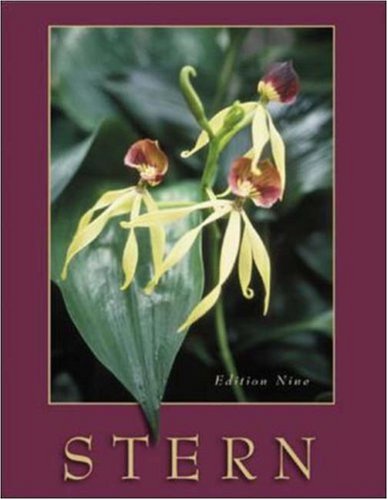
2. Introductory Plant Biology
$97.60
3. Introductory Plant Biology
$82.98
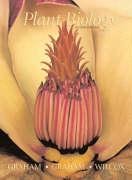
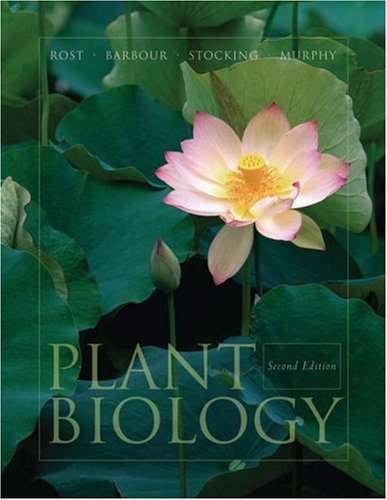
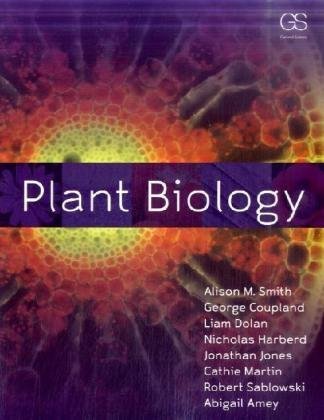
4. Plant Biology (2nd Edition)
$110.00
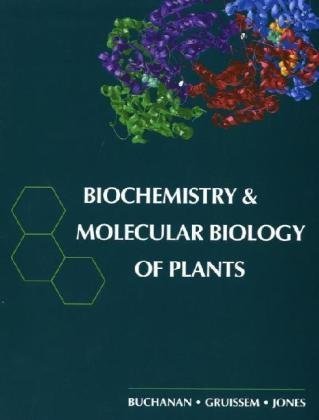
5. Biochemistry & Molecular Biology
$34.99
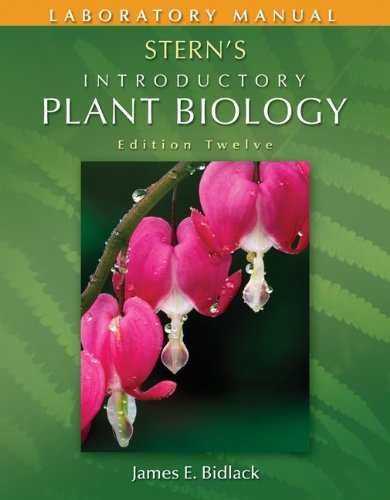
6. Laboratory Manual to accompany
$95.91
7. Plant Biology (with InfoTrac )
$43.50
8. Introductory Plant Biology
$27.95
9. Outlines & Highlights for
 
$61.00
10. Introductory Plant Biology
$106.00
11. Wetland Plants: Biology and Ecology
$48.83
12. Introduction to Plant Population
 
$19.34
13. Introductory Plant Biology
$21.69
14. The Evolutionary Biology of Plants
$0.15
15. Plant Biology (Cliffs Quick Review)
$16.00
16. Plant Biology Tutor CD-ROM Student
$105.12
17. Plant Cell Biology: A Practical
$30.00
18. Lab Manual to accompany Introductory
$29.96
19. Laboratory Topics in Botany: to
 
$26.45
20. Biology Of Marine Plants (Series

1. Biology of Plants, 7e (Ise)
by Peter H. Raven, Ray F. Evert, Susan E. Eichhorn
Hardcover: 944 Pages (2005-02-15)
list price: US$92.52 -- used & new: US$91.59
(price subject to change: see help)
Asin: 0716762846
Average Customer Review: 4.5 out of 5 stars
Canada | United Kingdom | Germany | France | Japan

Customer Reviews (9)

5-0 out of 5 stars Good overview of plant biology
The book, which covers all major aspects in plant biology, is a good reference for students. In the 7th edition some aspects are treated more in deep, including current knowledge and using a plain language and effective figures. Two chapters on ecology lack, but actually I do not miss them, because their themes, though undoubtedly important, are treated by disciplines other than botany.

3-0 out of 5 stars Way too general
Even though many teachers recommend this book, its information is way too general for a serious botany course. For example, if you want information on about Division Anthocerotophyta, you'll only find about 5 paragraphs. It is a good book for general doubts, but once you want deeper knowledge, I would really recommend Bold's Morphology of Plants and Fungi. Don't be tacken aback by its publication date (1987): it is still the most used and reverenced book on the subject. It's the Bible of botanists (just like the Alberts for Molecular Biologists), and it will come in handy whenever you study algae or fungi also.

5-0 out of 5 stars Great books
I bought this at Amazon.com from an Awesome Deal I found on DailyTool.com. Good price I got for this book.

2-0 out of 5 stars Lame shortcut, However good information
An extremely informative series (Biology of plants versions) well written and in depth.They ruined it with the 7th edition however, by putting two chapters( the ones on ecology) on the internet.So the book, even though it says it's 800 and some pages, actually is thinner than the old 6th version.Our teacher couldn't believe they had done this, as this was part of the curriculum.So, not only would we have to pay about $120 for this book, but also have to print about 100 pages.... That's a sick way to make more money out of books, i'm tired of book companies screwing students just to make some more money.I returned the 7th edition and got the 6th edition, which has basically the same information and ALL the chapters included in the book!

I don't like being this harsh, because i absolutely love the information this book has.Reading it has added another dimension to my understanding of plants.The Ecology chapters missing in the 7th edition are awesome reads, however and probably contain the best real world information that students should have.As such, i have to praise the 6th edition for it has changed my life for the better!!! :)

5-0 out of 5 stars A great botany reference!
This is one of the few text books I kept after the class. It's an invaluable general botany reference. The text is very readable, yet covers the material in great depth, which is no small feat considering the scope of the book. ... Read more


2. Introductory Plant Biology
by Kingsley R Stern
Hardcover: 624 Pages (2005-04-19)
list price: US$123.75 -- used & new: US$14.42
(price subject to change: see help)
Asin: 0073101753
Average Customer Review: 4.5 out of 5 stars
Canada | United Kingdom | Germany | France | Japan
Editorial Review

Book Description
This introductory text assumes little prior scientific knowledge on the part of the student. It includes sufficient information for some shorter introductory botany courses open to both majors and nonmajors, and is arranged so that certain sections can be omitted without disrupting the overall continuity of the course. Stern emphasizes current interests while presenting basic botanical principles. ... Read more

Customer Reviews (2)

5-0 out of 5 stars An Excellent Initial Botany Course Text
I find this text to be an excellent resource for a college student who is beginning to study botany. While the first three chapters provide an excellent review of entry-level biology concepts, the remaining chapters review and enhance botany understanding. The text provides excellent graphical representations and is easy, yet interesting, to read. I recommend both this text and the lab manual. Professor Stern had reviewers who were obviously proficient in both content area and in publishing in the english language. Kudos!

4-0 out of 5 stars continuing education student
Think the book is a good text book for introductory botany--however sometimes the authors include so much detail (i.e. in the cell biology chapters) that it obstructs understanding--no one in the class was able to understand these chapters (and we have a pretty diverse and capable group).I really like the effort to utilize the web, but believe much more content could be part of this beginning effort.Also, the citations to web sites are already out of date with web pages no longer working etc.It would be easy to keep this updated ON THE WEB i would think.Great illustrations in the text. ... Read more


3. Introductory Plant Biology
by Kingsley R Stern, James Bidlack, Shelley Jansky
Hardcover: 616 Pages (2007-02-22)
list price: US$123.75 -- used & new: US$97.60
(price subject to change: see help)
Asin: 0073314218
Canada | United Kingdom | Germany | France | Japan
Editorial Review

Book Description
This introductory text assumes little prior scientific knowledge on the part of the student. It includes sufficient information for some shorter introductory botany courses open to both majors and nonmajors, and is arranged so that certain sections can be omitted without disrupting the overall continuity of the course. Stern emphasizes current interests while presenting basic botanical principles. ... Read more


4. Plant Biology (2nd Edition)
by Linda Graham, Lee Wilcox, Jim Graham
Hardcover: 704 Pages (2005-03-25)
list price: US$135.00 -- used & new: US$82.98
(price subject to change: see help)
Asin: 0131469061
Average Customer Review: 5.0 out of 5 stars
Canada | United Kingdom | Germany | France | Japan
Editorial Review

Book Description
This book focuses readers on the function of plants and the role they play in our world. The authors emphasize the scientific method to help readers develop the critical thinking skills they need to make sound decisions throughout life. This focus on how plants work and the development of critical thinking skills together support the ultimate goal of developing scientific literacy.This book is organized around the themes of DNA science, global ecology, and evolution.The key concepts discussed in the book are molecules, cells and microbes; plant structure and reproduction; and, plant diversity and the environment.For anyone interested in botany (plant biology). ... Read more

Customer Reviews (3)

5-0 out of 5 stars Very good but also accessible
Well written - a very clear and good account of plant biology and the various concepts involved.Very good illustrations.I'm pleased to say that the chemistry aspect of plant biology is not as overwhelming (or as heavily emphasized) as it can be in some books, that are of a comparable educational level.

5-0 out of 5 stars Excellent!
OK, so I may be a little biased, but I took Linda Graham's general botany class last year, in which this book is followed to the letter.Although I didn't read the book thoroughly, Professor Graham's lectures covered everything in it.I enjoyed learning the material in this book, as is covers a wide spectrum of things about plants.Although the last couple of chapters (dealing with conservation of resources, etc.) were a bit tedious at times (since it's all stuff that has been pounded into our heads for years), the rest of the book is excellent.A nice blend of pictures, examples, and explanations.

5-0 out of 5 stars Great reference book with lots of nice photos
I've known many biology textbooks, but this has the nicest and best photos you could ever find. Though this book mainly aims for non-majors, I, a botany graduate student, still find it very useful and informative. Highly recommend this for people who want to know about general plant biology, but have been intimidated by heavy, thick textbooks. ... Read more


5. Biochemistry & Molecular Biology of Plants
Paperback: 1408 Pages (2002-05-24)
list price: US$170.00 -- used & new: US$110.00
(price subject to change: see help)
Asin: 0943088399
Average Customer Review: 4.0 out of 5 stars
Canada | United Kingdom | Germany | France | Japan
Editorial Review

Book Description
Biochemistry Molecular Biology of Plants is a major contribution to the plant sciences literature, superbly edited by three distinguished scientists, Bob B. Buchanan, Wilhelm Gruissem, and Russell L. Jones, with contributions from more than 50 world-renowned scientists. With over 1,400 pages, 1,100 full-colour original drawings and 500 photographs this work qualifies, in the words of the Science reviewer, as:
"an essential reference for practicing plant biologists and for the increasing number of scientists from other disciplines who are entering the field of plant biology. To exploit fully the wealth of new information provided by the genome projects and to integrate the metabolic, regulatory, and signal transduction pathways of complex organisms, biologists will require a solid command of biochemistry and physiology. For this reason, the publication of Biochemistry Molecular Biology of Plants could not have come at a more opportune and auspicious time."

This book is meticulously organised and richly illustrated, useful both for teaching and for reference. The multi-authored work provides a contemporary view of its subject, including molecular biology, cell biology, and plant physiology, integrated around the themes of:
* compartmentation
* cell reproduction
* energetics
* metabolism
* development

Read the words of the reviewer in CELL:
"The great strength of this book is that it has integrated its three major components (molecular biology, cell biology, and plant biochemistry) in each of the 24 chapters, resulting in a comprehensive analysis of a multitude of specific topics."

Who should buy this spectacular new text?
* Plant biologists and scientists in related fields
* Professors in departments of plant biology, plant biochemistry, plant physiology, and related fields
* Graduate and upper-level undergraduate students of plant biology
* Researchers in the pharmaceutical, biotechnology, and agribusiness industries

A CD-ROM of all illustrative matter in the book is available separately ... Read more

Customer Reviews (8)

4-0 out of 5 stars Great book, bad binding
The book is great, one of the best to learn everything about plant biology. Good explanations and pictures. Binding could be better, hardcover shouldn't be that expensive.... Losing some pages aleady after a few weeks.

2-0 out of 5 stars low value
I borrowed this book from a library during graduate school and found it to be very helpful in reviewing plant biochemistry.It is well written and has a fair amount of detail.The illustrations were well done and helpful.In spite of all the book has going for it however, it is outrageously expensive.In fairness, it is a fat book at nearly 1400 pages.Nevertheless the content does not justify the extremely high price tag, and I am disappointed that the publishers expect students to cough up this amount of money for a single text.

4-0 out of 5 stars love it
This book has the basis of Molecular and cell Biology that make you well armed. It has great pictures too. The biochemistry also is awesome, you'll find all the pathways you want. I even not gonna sell it after i graduate. I prefer keep it.

5-0 out of 5 stars Best Plant Biol. book out there
I am a PhD candidate in Plant Sciences and I work with both applied and basic researchers who work on all aspects of plant biology/agriculture etc.Everyone I work with and myself included feel that this is the best single plant biology text. It is a few years old now so some of the mol. biology will be outdated, and a couple of examples have since been proven to be different than described in the book, but this is minor. This is for the adv. undergrad or graduate student and if you are a graduate student in plant biology you should have this book-it is very expensive, but nearly every post-doc/grad student I know has a copy. Get the hardcover it will hold up better.

3-0 out of 5 stars Biochemistry & Molecular Biology of Plants
Mr. !!!
>
> I am Brazilian and I am student of Post-Graduate in Agronomy, no conditions. I do like the books:

Biochemistry & Molecular Biology of Plants
Author: Robert Buchanan, Wilhelm Gruissem, Russell L. Jones
(Paperback)
Usually ships in 1-2 weeks
Our Price: $124.95


However, I do not have acquire in the BRAZIL. Thus, I would like to know if you could help me, sending for me this books.
I thank your attention and I wait to be able to count on the your
contribution.

Yours truly,

Roberto Cunha

Street Address = Rua Dr. Milton Bandeira nº 34 ap 306
City- Viçosa
Province/State - MINAS GERAIS
Postal Code/Zip Code - 36570000
Country - BRAZIL
Evening Telephone Number - 0 31 31 38923607 ... Read more


6. Laboratory Manual to accompany Introductory Plant Biology
by Kingsley R Stern
Spiral-bound: 256 Pages (2002-07-18)
list price: US$55.00 -- used & new: US$34.99
(price subject to change: see help)
Asin: 0072909463
Canada | United Kingdom | Germany | France | Japan

7. Plant Biology (with InfoTrac )
by Thomas L. Rost, Michael G. Barbour, C. Ralph Stocking, Terence M. Murphy
Hardcover: 624 Pages (2005-03-15)
list price: US$147.95 -- used & new: US$95.91
(price subject to change: see help)
Asin: 0534380611
Average Customer Review: 3.5 out of 5 stars
Canada | United Kingdom | Germany | France | Japan
Editorial Review

Book Description
Master the science of plants with PLANT BIOLOGY with InfoTrac®! Providing a comprehensive overview of the biology of plants, this biology text combines the most current, real-world examples with information on plant biodiversity and ecology, including topics like biotechnology, economic botany, and plant/human interactions. Study aids found on the book-specific website such as quizzes, flashcards, and chapter objectives enhance your understanding of the material. Boxed applications found throughout show you the relevance of plant biology to real life and include topics ranging from bee pollination and forensic botany to the making of oak wine barrels. ... Read more

Customer Reviews (5)

4-0 out of 5 stars Very helpful
This book was extremely useful in my plant science class.The prof. taught from it and the images inside are great.Everything is well laid out and I like the chapter summaries and information.This book was expensive, but for me it was worth it!

4-0 out of 5 stars ignore that bitter student
I too used this book for my introductory botany class and actually worked for Tom Rost several years later (as my both interest and understanding of the subject grew, neither were affected in anyway but a posistive one from the use of this text).I used an older version which included a rudimentary section on fungi (I'm not sure if this edition does) as the book was written to mirror the original content of course taught a UCD but other than that it has just what you'd want to know to get you feet wet in botany.I have this book in paper back - the binding is cracking and I have officallly had pages fall out but I still pull this book out occasionally for use.

4-0 out of 5 stars This book is a great visual help to botany
I bought this book as a additional resource to a basic plant science course that I was taking.It has great pictures, and explanations on the basic proceses in plants. This is not a book that a begining self taught person could learn from easily.This is a textbook, not a home gardener's type book. The only drawback is the binding.All the books that I have seen have been falling apart.I would recommend the spiral bound edition or just live with the binding

2-0 out of 5 stars This book is junk
I'm a UC Davis student who took the plant biology course that uses this book. The professor doesn't even follow the book because it's so bad. It's unorganized, confusing, and useless for my class. Even some of the illustrations in the book are wrong. Don't buy this book if you just plan to learn plant biology. If you have to buy this book because course requirement, good luck ... Read more


8. Introductory Plant Biology
by Kingsley R Stern, Jim Bidlack, Shelley Jansky, Kingsley Stern
Hardcover: 640 Pages (2003-04-23)
list price: US$116.25 -- used & new: US$43.50
(price subject to change: see help)
Asin: 0072930381
Average Customer Review: 4.5 out of 5 stars
Canada | United Kingdom | Germany | France | Japan
Editorial Review

Book Description
This introductory text assumes little prior scientific knowledge on the part of the student. It includes sufficient information for some shorter introductory botany courses open to both majors and nonmajors, and is arranged so that certain sections can be omitted without disrupting the overall continuity of the course. Stern emphasizes current interests ethnobotanical while presenting basic botanical principles. ... Read more

Customer Reviews (7)

5-0 out of 5 stars Incredible layout!!!
I bought this book for my plant biology class.Even though I was required to only study about 3/4 of it, I read the entire thing from cover to cover.If you want to find out about plants and the natural world, take a course with this book or just buy it and read it like a good non-fiction book.The layout and format are very modern and appealing.There are sections on ecology, which are very important in understanding what is happening to our environment right now.Plus, the book doubles as a plant reference/gardening book because it has a monster appendix with stats and care information on tons of common and rare plants you might grow at home.Wonderful book, you won't be disappointed if you are curious about natural science!

5-0 out of 5 stars Great Introductory Botany Text
Introductory Plant Biology is a classic and continues to improve with each edition.I've used several editions and have always been pleased to see that it is one of the few textbooks that actually contains pertinent and updated information.The artwork is easy-to-understand. The straightforwardness and clarity of cell biology, metabolic schemes, genetics, and especially life cycles are what make this book a success.This 9th Edition of Introductory Plant Biology is the best yet.I've used several college botany textbooks and this is the most straightforward, accurate, error-free, and current book on the market.There are some new authors - Drs. Jansky and Bidlack - who have joined with Stern in this edition.They write like Stern and that makes the book flow very well.The new cell, metabolism, genetics, and biotechnology chapters bring the book up-to-date.And, as expected, Stern et al. have put together the most current taxonomic treatment of plant-related kingdoms on the market.This has been, and continues to be, the only botany textbook that my students read and understand.

5-0 out of 5 stars Students Like this Book!
This is a botany text that students actually read.The appendix offers additional information on medicinal plants and gardening.Many non-traditional students like the book for reference at home.Among textbooks on the market, this is one of the most useful books after students complete the course.I kept my book and use it frequently for gardening tips.

5-0 out of 5 stars Revision much better!
I've given Dr. Stern another chance (since my review of his 1994 version) and he came through with an excellent revised basic botany text.I'm using it for my course and will continue using it.

5-0 out of 5 stars Introductory Plant Biology, 8th Edition
This text offers students a solid introduction to the plant sciences.At an undergraduate level, the text material is well complimented by diagrams, photos, and drawings.Each chapter begins with a chapter outline and endswith review questions, discussion questions, chapter summaries, andadditional readings.The on-line student resources (available viaMcGraw-Hill Higher Education site) offer weblinks, chapter quizzes, flashcards, and other study aids.This latest edition has an additional chapteron biomes, an expanded biotechnology chapter, etc.I did not find chapter22, the gymnosperms, to be full of the inaccuracies stated by a previousreviewer.Cycads are plainly listed as the cycadophyta division; ginkgo inginkgophyta, etc.While no text is perfect, this introductory text comesclose and is my chosen text for both the continuing education and theundergraduate botany courses that I teach. ... Read more


9. Outlines & Highlights for Biology of Plants by Raven, ISBN: 1572590416 (Cram101 Textbook Outlines)
by Cram101 Textbook Reviews
Paperback: 748 Pages (2006-06-24)
list price: US$27.95 -- used & new: US$27.95
(price subject to change: see help)
Asin: 1428803653
Canada | United Kingdom | Germany | France | Japan
Editorial Review

Book Description
Never Highlight a Book Again! Cram101 Textbook Outlines give the student all of the highlights, notes, and practice-tests for their textbook. Only Cram101 is Textbook Specific, not generic. ... Read more


10. Introductory Plant Biology
by Kingsley Rowland Stern
 Hardcover: Pages (2006-01)
-- used & new: US$61.00
(price subject to change: see help)
Asin: 0072528400
Canada | United Kingdom | Germany | France | Japan

11. Wetland Plants: Biology and Ecology
by Julie K. Cronk, M. Siobhan Fennessy
Hardcover: 482 Pages (2001-06-13)
list price: US$129.95 -- used & new: US$106.00
(price subject to change: see help)
Asin: 1566703727
Average Customer Review: 5.0 out of 5 stars
Canada | United Kingdom | Germany | France | Japan
Editorial Review

Book Description
A detailed account of the biology and ecology of vascular wetland plants and their applications in wetland plant science, Wetland Plants: Biology and Ecology presents a synthesis of wetland plant studies and reviews from biology, physiology, evolution, genetics, community and population ecology, environmental science, and engineering. It provides a thorough discussion of the range of wetland plants adaptations to conditions such as life in water or saturated soils, high salt or high sulfur, as well as low light and low carbon dioxide levels.The authors include the latest research on the development of plant communities in newly restored or created wetlands and on the use of wetland plants as indicators of ecological integrity and of wetland boundaries. Over 140 figures, including over 70 original photographs, allow you to visualize the concepts, 40 tables give you easy access to definitions and data, and international examples provide you with a broad base of information.The growing consensus in wetlands literature and research suggests that methods are needed to assess the ecological health or integrity of wetlands, to set goals for wetland restoration, and to track the status and trends of wetlands. Wetland plants are emerging as important indicators, and becoming an important part of this research. Wetland Plants: Biology and Ecology contains up-to-date information on this increasingly important area in wetlands technology. ... Read more

Customer Reviews (2)

5-0 out of 5 stars VERY GOOD BOOK!
This is probably the best ecological wetland plant book that is out there right now.Very detailed.Explains it all.

5-0 out of 5 stars easy reading, good reference
Scientific in nature, but still easy to read.An excellent reference for anyone beginning the study of wetlands. Includes one chapter on constructed/treatment wetlands. ... Read more


12. Introduction to Plant Population Biology
by Jonathan Silvertown, Deborah Charlesworth
Paperback: 360 Pages (2001-12-05)
list price: US$75.95 -- used & new: US$48.83
(price subject to change: see help)
Asin: 063204991X
Canada | United Kingdom | Germany | France | Japan
Editorial Review

Book Description
This completely revised, fourth edition of Introduction to Plant Population Biology continues the approach taken by its highly successful predecessors. Ecological and genetic principles are introduced and theory is made accessible by clear, accurate exposition with plentiful examples. Models and theoretical arguments are developed gradually, requiring a minimum of mathematics.

The book emphasizes the particular characteristics of plants that affect their population biology, and evolutionary questions that are particularly relevant for plants. Wherever appropriate, it is shown how ecology and genetics interact, presenting a rounded picture of the population biology of plants.

Topics covered include variation and its inheritance, genetic markers including molecular markers, plant breeding systems, ecological genetics, intraspecific interactions, population dynamics, regional dynamics and metapopulations, competition and coexistence, and the evolution of breeding systems and life history. An extensive bibliography provides access to the recent literature that will be invaluable to students and academics alike.


  • Effective integration of plant population ecology, population genetics and evolutionary biology.
  • The new edition is thoroughly revised and now includes molecular techniques.
  • The genetics chapters have been completely rewritten by a new co-author, Deborah Charlesworth.
... Read more

13. Introductory Plant Biology
 Hardcover: Pages (2000)
-- used & new: US$19.34
(price subject to change: see help)
Asin: B000FZXGAQ
Canada | United Kingdom | Germany | France | Japan

14. The Evolutionary Biology of Plants
by Karl J. Niklas
Paperback: 470 Pages (1997-06-08)
list price: US$22.00 -- used & new: US$21.69
(price subject to change: see help)
Asin: 0226580830
Average Customer Review: 5.0 out of 5 stars
Canada | United Kingdom | Germany | France | Japan
Editorial Review

Book Description

Although they are among the most abundant of all living things and provide essential oxygen, food, and shelter to the animal kingdom, few books pay any attention to how and why plants evolved the wondrous diversity we see today. In this richly illustrated and clearly written book, Karl J. Niklas provides the first comprehensive synthesis of modern evolutionary biology as it relates to plants.

After presenting key evolutionary principles, Niklas recounts the saga of plant life from its origins to the radiation of the flowering plants. To investigate how living plants might have evolved, Niklas conducts a series of computer-generated "walks" on fitness "landscapes," arriving at hypothetical forms of plant life strikingly similar to those of today and the distant past. He concludes with an extended consideration of molecular biology and paleontology. An excellent overview for undergraduates, this book will also challenge graduate students and researchers.
... Read more

Customer Reviews (5)

5-0 out of 5 stars Extremely detailed treatment
There are many natural questions that arise when considering the evolution of plants: Why did seeds evolve? How did the three separate genomes evolve in plants? How and why did plants evolve from aquatic habitats to terrestrial ones? Why do leafy plants have the leaf arrangements that they do? What is the average time scale needed for the evolution of a new plant species? What are the largest plant species that have yet evolved? How common is horizontal gene transfer in plants? What evolutionary advantages are there in pollination? From the standpoint of molecular biology, why do plants have the particular morphology that they do, as contrasted with other forms that seem plausible with respect to physical laws but do not occur? How extensive is the plant fossil record? Can the evolution of plants, indeed of living organisms in general, be simulated on a computing machine?

These questions, among many others, are addressed in this superbly written book, which despite being targeted towards readers with an advanced knowledge of botany can still be read by anyone curious about the subject matter. Unless the reader is an expert in evolutionary biology (which this reviewer is not), it would be difficult to assess the accuracy of the subject matter as compared to other works. The author does include however many references that can be consulted if readers find it necessary to gain more details on a particular topic. In addition to the quality of the writing, there are numerous diagrams and figures that illustrate the important principles. The inclusion of diagrams in any book on botany is of course a must, given the diversity of plant morphology. For readers with a background in modeling and simulation, the author includes a highly interesting discussion on how to simulate plant evolution by using computer-generated "adaptive walks" on "fitness landscapes". Simulations of course are not a replacement for sound and painstaking experimentation and scientific hypothesis building, but they can serve as a guide to understanding, at least in a general sense, of what is possible in biological evolution. In order to really appreciate the discussion on adaptive walks, the reader will need a fairly strong background in modeling and simulation, even though the discussion is purely descriptive, with no explicit mathematical formalism put down on paper.

The book is dense, being packed full of interesting information, demands the reader frequently back up and take pause so that the information can be assimilated more effectively. But the author's writing style is concise enough to keep the book at a manageable size. The different views on evolution, most of these coming down to the time scales over which changes are occurring, find their place in the book. The Darwinian view, which of course is the predominant one in the scientific community, is referred to as 'phyletic gradualism' in this book, and encapsulates the view that evolution is essentially an adaptive walk over a fitness landscape, driven by natural selection. One other view, called 'punctuated equilibrium', is at first glance a somewhat radical hypothesis, for it allows one to drop the requirement for intermediate phenotypes and view evolutionary change as "hopscotching" (in the author's words) from one fitness peak to another. The view of punctuated equilibrium is no doubt attractive to those who are wondering why the intermediate phenotypes are frequently missing observationally. Whichever of these viewpoints is closer to the truth, the wide variability in plants is quite amazing, over and above the case for other biological lifeforms in the opinion of the author. He refers to this as 'phenotypic plasticity' in the book, and alludes to the high rate of phenotypic innovation in some time periods. The concept of phenotypic plasticity is interesting for it allows a more quantitative measure of the degree to which changes are possible, i.e. a measurement of the impediments to evolutionary changes.

When contemplating the mechanisms of evolution it is easy to fall into the trap of believing that the morphology and functioning of an organism is the result of some sort of optimization process. The marvelous ingenuity of plants in dealing with their environments and their ingenious methods of reproduction sometimes begs for an explanation that is purposeful or goal-directed. There is no reason to believe however that the current morphology and functioning of a plant is the result of adaptation through natural selection. The author's view of adaptations is that they are specific to particular environmental contexts, namely that they are features that allow biological organisms to survive under very specific environmental conditions. In addition, any benefit that an organism obtains from an adaptation must assessed in relative terms. It would not be appropriate therefore to view a particular adaptation for a particular organism in a particular environment as being appropriate to another organism in another environment, even though the environments to both are similar enough that they tempt one to believe that the adaptations can be compared meaningfully. Of course, adaptations can only work by genetic transmission from one generation to the next, and there is no guarantee that they will remain efficacious for all future generations of the organism. An adaptation the author argues, is only a set of features that increases the probability that the organism will survive or reproduce successfully for a specific environment. It is natural to ask at this point whether if given a particular plant one can ascertain whether a certain feature is adaptive or not. The author is aware of this difficulty, since it requires the identification of the selection pressures that underly the functioning of the proposed adaptation. The resolution of this problem requires years of careful experimentation and observation, a course of activity that has characterized and will continue to characterize sound science.

5-0 out of 5 stars What a fantastic book - everything you always wanted to know
A friend of mine told me about this book and said I had to read it.I am not a science student, but I found the book in my school library and read it anyway.It's a great book and I'm sure glad my friend told me about it.Plants are truly interesting, perhaps more so than animals because plantsare so different from everything we are taught about in high schoolbiology.Niklas's book is also well written.He speaks directly to thereader, using simple words to describe really complicated biologicalissues.Everything I always wondered about is found in this book.I'verecommended it to my friends.I think everybody ought to know about the'green world' that surrounds us!

5-0 out of 5 stars This is a fascinating and well written book ýý a must read.
I am a student of animal biology and this book was assigned by one of my professors as a textbook.I knew nothing about plants until I read this book, and I really dreaded the idea of having to learn about plants. Niklas's book opened my eyes to the wonder and fascination of plant biologyas well as the wonders of plant evolution, which are very different fromwhat most of us have been taught about animals.I've read this book fromcover to cover, at least twice.And each time I've picked up something newand exciting to think about.All of my friends in the class agree with me- - this is a great book and people should pay attention to it.

5-0 out of 5 stars This is a very well written and informative book
The author has written an up to date and thoughtful book about evolution using plants as examples of all major ideas.This book should be read by any one interested in evolution or plant biology.The text is easy to read, with a minimum of jargon, and the book is well illustrated.I wasespecially interested in how the author combined information for the studyof living plants with the information from the fossil record.This is oneof the best books I've read in a long time.I recommend it highly.

4-0 out of 5 stars A good start--but much is missing
The rarity of up-to-date general surveys on this topic makes this a valuable book, but I think a better job could have been done. It starts out in a promising way, with an excellent introduction to the issues and problems of evolution from the perspective of plant biology, and I found this to be the most enlightening section of the book. The writing at that point is clear and purposeful. However, things start ramping down from there. Plant evolution is dealt with in a piecemeal fashion: certain topics, notably the author's own concern with the evolution of morphology, are treated at length; other, equally important, topics, e.g., symbioses, are skipped almost entirely (there is not a single word on the evolution of mycorrhizal or nitrogen-fixation symbiosis, and very little about the various angiosperm-insect symbioses). Interactions with diseases, parasites and herbivores are virtually ignored. This seriously detracts from the book's clear intent to sketch the "big picture" in plant evolution, and the author's increasingly complicated and disconnected prose does not help matters. But for someone thirsting for knowledge on plant evolution, the book provides plenty of things to think about, and the ample bibliography points the way to more. ... Read more


15. Plant Biology (Cliffs Quick Review)
by Patricia J. Rand
Paperback: 256 Pages (2001-02-07)
list price: US$12.99 -- used & new: US$0.15
(price subject to change: see help)
Asin: 0764585606
Canada | United Kingdom | Germany | France | Japan
Editorial Review

Book Description
CliffsQuickReview course guides cover the essentials of your toughest subjects. Get a firm grip on core concepts and key material, and test your newfound knowledge with review questions.

Whether you need a course supplement, help preparing for a physics exam, or a concise reference for biology, CliffsQuickReview Plant Biology can help. This guide provides a valuable introduction to the concepts of roots, stems, leaves, flowers and fruit. In no time, you'll be ready to tackle other concepts in this book such as

  • Cell division
  • Energy and plant metabolism
  • Plant evolution
  • Fungi and viruses
  • Biogeochemical cycles
  • Plant geography

CliffsQuickReview Plant Biology acts as a supplement to your other learning materials. Use this reference in any way that fits your personal style for study and review — you decide what works best with your needs. You can flip through the book until you find what you're looking for — it's organized to gradually build on key concepts. You can also get a feel for the scope of the book by checking out the

  • Contents pages that give you a chapter-by-chapter list of topics.
  • Tabs at the top of each page that tell you what topic is being covered.
  • Keywords in boldface type.
  • Heading and subheading structure that breaks sections into clearly identifiable bites of information.

With titles available for all the most popular high school and college courses, CliffsQuickReview guides are a comprehensive resource that can help you get the best possible grades. ... Read more


16. Plant Biology Tutor CD-ROM Student Edition
by Stephen E. Schecklerl, Stewart A. Hill, David Taylor, Stephen E. Scheckler
CD-ROM: Pages (1998-03-18)
list price: US$46.95 -- used & new: US$16.00
(price subject to change: see help)
Asin: 0763704067
Canada | United Kingdom | Germany | France | Japan
Editorial Review

Book Description
Plant Tutor CD-ROM contains approximately 2,000 full-color images,dozens of animations, and three full scale experiment simulations, making it theperfect supplement to introductory courses in biology and botany. The fourteentutorials on this CD-ROM cover four themes: ecology, growth and development,reproduction, and systematics and evolution. Each tutorial, with its textualmaterial and colorful animations, provides students with a greater understandingof biological and botanical concepts. ... Read more


17. Plant Cell Biology: A Practical Approach (Practical Approach Series)
Paperback: 364 Pages (2001-08-09)
list price: US$144.00 -- used & new: US$105.12
(price subject to change: see help)
Asin: 0199638659
Canada | United Kingdom | Germany | France | Japan
Editorial Review

Book Description
With the 'post genomics' era comes an increasing demand for the techniques of cell biology, critical to interpreting the function and location of the cell's myriad proteins and macromolecules.In response, this second edition of Plant Cell Biology balances established techniques, including classical histochemistry and electron microscopy, with new developments in the field. The book covers a substantial range of methods for working on living cells, including the application of fluorescent probes, cytometry, expression systems, the use of green fluorescent protein, micromanipulation and electrophysiological techniques. Also featured are chapters on macromolecular location procedures involving immunocytochemistry and in situ hybridisation, and the book concludes with a range of biochemical techniques for the isolation of cytoplasmic organelles. The book provides advanced students, postgraduates and researchers in the plant sciences with an invaluably comprehensive guide to the ever-growing field of plant cell biology. ... Read more


18. Lab Manual to accompany Introductory Plant Biology
by Kingsley R Stern
Spiral-bound: 256 Pages (2005-04-25)
list price: US$58.75 -- used & new: US$30.00
(price subject to change: see help)
Asin: 0072528419
Canada | United Kingdom | Germany | France | Japan

19. Laboratory Topics in Botany: to Accompany Raven, Evert, Eichhorn Biology of Plants 6e
by Ray F. Evert, Susan E. Eichhorn
Paperback: 380 Pages (1998-09-15)
list price: US$24.95 -- used & new: US$29.96
(price subject to change: see help)
Asin: 1572596058
Canada | United Kingdom | Germany | France | Japan

20. Biology Of Marine Plants (Series of Student Texts in Contemporary Biology)
by Dring
 Paperback: 199 Pages (1984)
list price: US$29.95 -- used & new: US$26.45
(price subject to change: see help)
Asin: 0713128607
Canada | United Kingdom | Germany | France | Japan

  1-20 of 100 | Next 20
A  B  C  D  E  F  G  H  I  J  K  L  M  N  O  P  Q  R  S  T  U  V  W  X  Y  Z  

Prices listed on this site are subject to change without notice.
Questions on ordering or shipping? click here for help.

site stats