e99 Online Shopping Mall

Geometry.Net - the online learning center Help  
Home  - Science - Plant Physiology (Books)

  1-20 of 100 | Next 20
A  B  C  D  E  F  G  H  I  J  K  L  M  N  O  P  Q  R  S  T  U  V  W  X  Y  Z  

click price to see details     click image to enlarge     click link to go to the store

$79.95
1. Plant Physiology
$105.06
2. Plant Physiology
$39.88
3. Introduction to Plant Physiology
$64.13
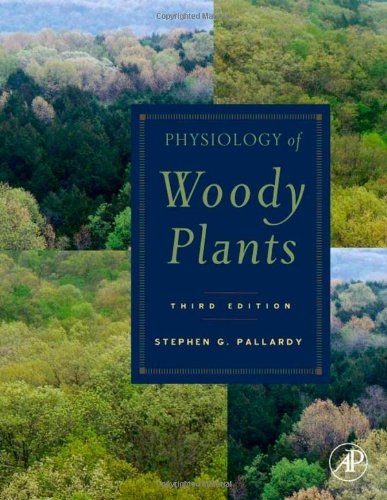
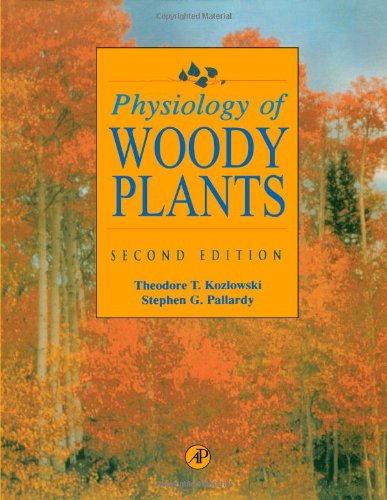
4. Physiology of Woody Plants, Third
$60.00
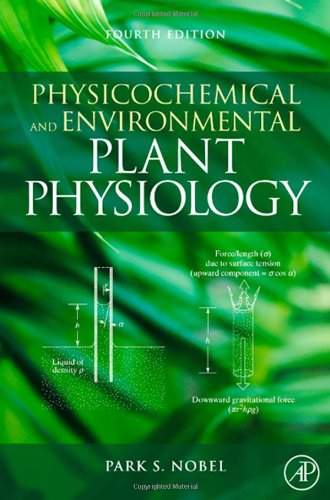
5. Physicochemical and Environmental
$49.10
6. Plant Physiology
$57.95
7. Experiments in Plant Physiology
 
8. Introduction to Biophysical Plant
$110.00
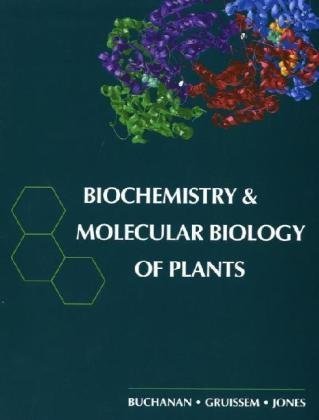
9. Biochemistry & Molecular Biology
 
10. Biophysical Plant Physiology and
$88.95
11. Handbook of Plant & Crop Physiology
$36.33
12. WEI Introduction to Plant Physiology,
$71.95
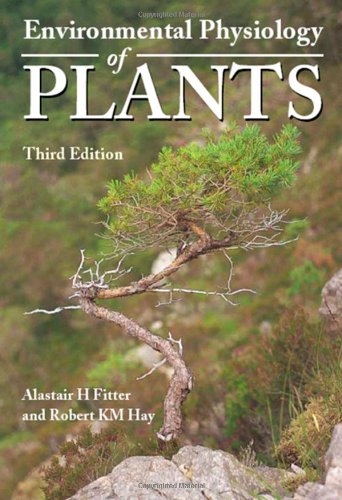
13. Environmental Physiology of Plants,
$45.95
14. Plant Physiological Ecology
$148.47
15. Biochemistry and Physiology of
$65.00
16. Physiology and Behaviour of Plants
$42.90
17. Physiological Plant Ecology
$21.69
18. The Evolutionary Biology of Plants
$54.12
19. Plants and Microclimate: A Quantitative
$63.71
20. Mineral Nutrition of Plants: Principles

1. Plant Physiology
by Lincoln Taiz, Eduardo Zeiger
Hardcover: 700 Pages (2006-06-01)
list price: US$111.95 -- used & new: US$79.95
(price subject to change: see help)
Asin: 0878938567
Average Customer Review: 5.0 out of 5 stars
Canada | United Kingdom | Germany | France | Japan
Editorial Review

Book Description
Plant Physiology, Fourth Edition continues to set the standard for textbooks in the field, making plant physiology accessible to virtually every student. Authors Lincoln Taiz and Eduardo Zeiger have again collaborated with a stellar group of contributing plant biologists to produce a current and authoritative volume that incorporates all the latest findings. Changes for the new edition include:

* A new chapter (Chapter 24) on Brassinosteroids
* A completely rewritten Chapter 16 (Growth and Development)
* Updates on recent developments in the light reactions and the biochemistry of photosynthesis, respiration, ion transport, and water relations
* In the hormone chapters, new information about signaling pathways and regulatory mechanisms
* Coverage of major breakthroughs on the control of flowering, including the latest findings on the identity of the long-sought-after photoperiodic floral stimulus, "florigen."

As with the Third Edition, material typically considered prerequisite for plant physiology courses, as well as advanced material, is posted at the companion website. New material has been added here as well, including new Web topics and Web essays. ... Read more

Customer Reviews (6)

5-0 out of 5 stars Just what I needed!
EXCELLENT book!I needed a suppliment to a Plant Phys course I was taking which didn't assign a book, purely lecture based.This book has great graphics and is easy to read!

4-0 out of 5 stars Nice Book
Well, this is a great beginner's textbook to Plant Physiology, especially when you have very little background in the field.(I major in Physics and took Plant Physiology as an elective.)The text is quite easy to understand, and there are great diagrams to complement the text.However, the text is getting a little bit out of date, as new plant hormones and genes are being discovered at a rapid pace right now.Overall, it was a pretty nice book for someone being introduced to the field.

5-0 out of 5 stars an excellent review on plant physiology for students
I teach plant physiology at the University of paris. I have bought the first edition of this boor five years ago and I have bought the new one about one month ago. It was a concise, clear and well up to date documentedreview. I appreciate particularly all the section on bioenergetic andtransport in solutes in relation with morphology and development of theplant. I appreciate also very much the part on the influence of the lighteither for the classical phytochrome or to the appartition of the effect onthe blue light. Scheme are simple, but precise and well descibed. This bookwas a very good intermediate between books of pure biochemistry or puremorphology.All information is integrated and well discussed. In the domainof the plant physiology I think really on my knowledge that this book wasactually, in the domain of the plant physiology, one of the best review,and perhaps the better.

5-0 out of 5 stars It is a useful tool for understanding plant physiology.
I teach plant physiology for biological sciences students in Bogotá, Colombia. I think this book is excelent. Also, it is written in a comprehensive English, and explainsclearly the principles of plantphysiology for everyboby including Spanish speakers. It is a very good wayto motivate undergraduate students with the knowledge in plant physiology.I would liKe to congratulate the authors.

5-0 out of 5 stars New Edition
The Second Edition of Plant Physiology builds on the strengths of the First Edition by integrating modern, state-of-the-art approaches to the study of plant function, particularly in the areas of gene regulation and molecular genetics, cell biology and signal transduction, and bioenergetics, into the framework of traditional plant physiology. The Second Edition also reflects the growing importance and prominence of biochemistry, cell biology and molecular biology in the field of plant physiology. Each chapter has been thoroughly revised to reflect new developments in the field. In addition, several new chapters have been added, including chapters on "Cell Walls," "Growth, Development and Differentiation," and "Blue Light Responses." A new chapter entitled "Gene Expression and Signal Transduction" provides a summary of current models for the control of gene expression and cell signaling pathways in prokaryotes and eukaryotes, parti! cularly those topics relevant to plants. As in the First Edition, expert contributing authors provide authoritative accounts that include important recent advances in their fields.These contributions are integrated into the unified style that made the First Edition a benchmark in the teaching of Plant Physiology. The Second Edition is extensively illustrated and will be published in two colors. ... Read more


2. Plant Physiology
by Frank Salisbury, Cleon Ross
Hardcover: 682 Pages (1991-06-25)
list price: US$201.95 -- used & new: US$105.06
(price subject to change: see help)
Asin: 0534151620
Canada | United Kingdom | Germany | France | Japan
Editorial Review

Book Description
The text provides a broad explanation of the physiology for plants (their functions) from seed germination to vegetative growth, maturation, and flowering. It presents principles and results of previous and ongoing research throughout the world. ... Read more


3. Introduction to Plant Physiology
by William G. Hopkins, Norman P. A. Hüner
Hardcover: 576 Pages (2002-07-15)
list price: US$132.95 -- used & new: US$39.88
(price subject to change: see help)
Asin: 0471389153
Average Customer Review: 2.0 out of 5 stars
Canada | United Kingdom | Germany | France | Japan
Editorial Review

Book Description
Information on chemical background, the cell, plant growth regulators and biochemistry have been integrated into the text where relevant, instead of chapters formally addressing this material.
* Emphasis is placed on underlying principles, rather than encyclopedic details.
* Epistemology, the how-we-know-what-we-know of plant physiology is also emphasized.
* Provides a good balance between traditional plant physiology and modern topics such as photo synthesis, plant biotechnology, and environmental physiology. ... Read more

Customer Reviews (5)

2-0 out of 5 stars cheaply done - numerous errors compromise its usefulness - go with Taiz & Zeiger
I cannot recommend this textbook. Its basic premise is misguided. It seems to be aiming squarely between the level of presentation in a basic botany course and a true plant physiology course. This is not an advisable half-step -- it winds up being nothing more than a protracted review of basic botany, not the opening up of a new field of study.

Its flawed premise aside, the usefulness of this book on any level is compromised by its errors. Factual errors abound -- these aren't just matters of scientific dispute, they're flat-out errors in fact. For example, the overview of the C4 syndrome consistently shows that they phosphorylation of pyruvate to PEP produces ATP, when in fact it consumes ATP. (Furthermore, it insists that 2 ATP are involved, which is supported neither by the stoichiometry nor other sources I consulted.) The stromal hexose-P pool in the diagram for the PCR (Calvin) cycle is misplaced. The table showing the stoichiometry for the same cycle is an unhelpful oversimplification -- showing only the Rubisco and carbon dioxide and ignoring the inputs and outputs of water, phosphates, electron acceptors, and hydronium ion. The diagram for the citric acid cycle does not reflect the inputs of water, which is not only confusing, it is also misleading about the basic requirements for the physiological process of respiration. The diagram for a stoma and guard cells is inadequately labeled when viewed alongside the text, and detailed examples of the less well-known graminoid stomata are absent.

The function of enzymes is all-important in this subject, and this book only mentions them in the text proper, never including them in the diagrams and tables. For example, if took a dedicated search to find the fleeting mention in the text of the important role of malic enzyme in C4 and CAM photosynthesis. In order to get through this book, I had to cross-reference continuously with Taiz and Zeiger's better book on Plant Physiology, and the book on basic botany by Raven, Evert, and Eichhorn.

Taiz and Zeiger do a far better job all around. Enzymes are consistently presented -- right alongside the reactions -- in tables summarizing physiological processes. For most processes, the Lewis diagrams of the chemicals involved are usually presented -- this is a form of illustration that can help in understanding the processes, serve as a gentle prod in recalling one's organic chemistry. So even if the level of instruction doesn't require memorizing formulas or structures, these diagrams help in learning the material. If you are even a mildly inquisitive reader you're going to be continuously puzzled by the Hopkins book, unless you have other sources to consult.

The book is 100 pages shorter and 10 bucks more expensive than Taiz and Zeiger. T&Z are now in its third edition and using full-color, whereas Hopkins is only 2-color. Furthermore, T&Z have a nice web site, and this book has no ancillary material available. I read that their editor for the ancillar materials bagged out at the last minute, so the publishers were obviously cheapskates and didn't see to it that the job got done.

Taiz and Zeiger, however, are between editions -- the 4th edition is due out in June 2006. So you may want to hold off and get that. The 3rd edition of T&Z can be had for about $50, and the 2nd edition of 1998 (2 color) for $25. The 2nd edition is great, but the many advances made since 1998 are obviously not reflected.

1-0 out of 5 stars a bad textbook to learn plant phys
This is an introductory book, so I do not expect it to go in-depth in each area. There are many typos in this book though, like a lot of page numbers in the index are not correct. Also, the book goes in an odd order, and a lot of things explained later in the book wouldv'e made it easier to understand some of the earlier things easier. a lot of newer concepts are left out too, or vaguely mentioned, like electric currents in plants. My professor often has to use graphs and charts from other books because the ones from the book are too complicated or hard to understand, such as the Z-scheme, the Q cycle, and the PCR cycle to name a few. I would not recommend this book as an introductory textbook.

4-0 out of 5 stars introduction of plant physiology
1.Why IBA biosynthetic doesn't appear inside this book?
2.Does IBA biosynthetic discovered yet?
I think it would be better if IBA biosinthetic can be described in this book.
I'm waiting your answer
thank you very much

Semarang Indonesia
rudi

1-0 out of 5 stars Terrible reading
You can understand the basic principles of this book, but that's about it. The in-depth explanation makes you want to learn about something else.

1-0 out of 5 stars the book in general
I thought that this book contained a lot of information on this subject, however this information is useless in the way it is presented.Hopkins, must have been the type of person to sit in a dark room by himself with no one around, reading botany books, because he certainly doesn't know how to relate to other people in presenting this subject. ... Read more


4. Physiology of Woody Plants, Third Edition
by Stephen G. Pallardy
Hardcover: 480 Pages (2007-10-01)
list price: US$79.95 -- used & new: US$64.13
(price subject to change: see help)
Asin: 0120887657
Canada | United Kingdom | Germany | France | Japan
Editorial Review

Book Description
Woody plants such as trees have a significant economic and climatic influence on global economies and ecologies. This completely revised classic book is an up-to-date synthesis of the intensive research devoted to woody plants published in the second edition, with additional important aspects from the authors' previous book, Growth Control in Woody Plants. Intended primarily as a reference for researchers, the interdisciplinary nature of the book makes it useful to a broad range of scientists and researchers from agroforesters, agronomists, and arborists to plant pathologists and soil scientists. This third edition provides crutial updates to many chapters, including: responses of plants to elevated CO2; the process and regulation of cambial growth; photoinhibition and photoprotection of photosynthesis; nitrogen metabolism and internal recycling, and more. Revised chapters focus on emerging discoveries of the patterns and processes of woody plant physiology.

* The only book to provide recommendations for the use of specific management practices and experimental procedures and equipment

* Interdisciplinary approach will appeal to a broad range of scientists, researchers, and growers

* Thoroughly updated with the latest research devoted to woody plants ... Read more


5. Physicochemical and Environmental Plant Physiology, Third Edition
by Park S. Nobel
Hardcover: 540 Pages (2005-01-24)
list price: US$87.95 -- used & new: US$60.00
(price subject to change: see help)
Asin: 0125200269
Average Customer Review: 4.0 out of 5 stars
Canada | United Kingdom | Germany | France | Japan
Editorial Review

Book Description
The new edition of Physicochemical and Environmental Plant Physiology uses elementary chemistry, physics, and mathematics to explain and develop key concepts in plant physiology. In fundamental ways, all physiological processes that occur in cells, tissues, organs, and organisms obey such relations. Topics include diffusion, membranes, water relations, ion transport, photochemistry, bioenergetics of energy conversion, photosynthesis, environmental influences on plant temperature, and gas exchange for leaves and whole plants. This new edition maintains the unparalleled commitment to clear presentation and improves upon the user friendliness of the previous versions.

* All illustrations have been redrawn, many in two-color
* New material includes: 14 new figures, 100 new references, 20 new equations and considerable new and revised text
* Extensive cross-referencing with a simpler system for chapter sections and subsections
* Easy-to-use format including major equations being presented at the beginning of each chapter, and calculations presented outside of the chapter text ... Read more

Customer Reviews (1)

4-0 out of 5 stars Libro de Fisiología
pienso que este libro es un valioso aporte al conocimiento de las respuestas fisiológicas de las plantas a los estímulos de su medio ambiente, ya que permite relacionar los fenómenos naturales externos(medioambientales) con el funcionamiento interno de un vegetal, apotandoinformación para el proceso de comprensión de los comportamientosvegetales, un área con mucho conocimiento incompleto todavía ... Read more


6. Plant Physiology
Hardcover: 629 Pages (1995-01-23)
list price: US$72.95 -- used & new: US$49.10
(price subject to change: see help)
Asin: 3540580166
Canada | United Kingdom | Germany | France | Japan
Editorial Review

Book Description
In this comprehensive and stimulating text and reference, the authors have succeeded in combining experimental data with current hypotheses and theories to explain the complex physiological functions of plants. For every student, teacher and researcher in the plant sciences it offers a solid basis for an in-depth understanding of the entire subject area, underpinning up-to-date research in plant physiology. The authors vividly explain current research by references to experiments, they cite original literature in figures and tables, and, at the end of each chapter, list recent references that are relevant for a deeper analysis of the topic. In addition, an abundance of detailed and informative illustrations complement the text. ... Read more


7. Experiments in Plant Physiology
by Carol Reiss
Paperback: 292 Pages (1993-10-13)
list price: US$65.80 -- used & new: US$57.95
(price subject to change: see help)
Asin: 0137012853
Canada | United Kingdom | Germany | France | Japan
Editorial Review

Book Description
Comprehensive laboratory guide for plant physiology. ... Read more


8. Introduction to Biophysical Plant Physiology (A Series of books in biology)
by Park S. Nobel
 Hardcover: 488 Pages (1974-06-10)
list price: US$25.95
Isbn: 0716705923
Canada | United Kingdom | Germany | France | Japan

9. Biochemistry & Molecular Biology of Plants
Paperback: 1408 Pages (2002-05-24)
list price: US$170.00 -- used & new: US$110.00
(price subject to change: see help)
Asin: 0943088399
Average Customer Review: 4.0 out of 5 stars
Canada | United Kingdom | Germany | France | Japan
Editorial Review

Book Description
Biochemistry Molecular Biology of Plants is a major contribution to the plant sciences literature, superbly edited by three distinguished scientists, Bob B. Buchanan, Wilhelm Gruissem, and Russell L. Jones, with contributions from more than 50 world-renowned scientists. With over 1,400 pages, 1,100 full-colour original drawings and 500 photographs this work qualifies, in the words of the Science reviewer, as:
"an essential reference for practicing plant biologists and for the increasing number of scientists from other disciplines who are entering the field of plant biology. To exploit fully the wealth of new information provided by the genome projects and to integrate the metabolic, regulatory, and signal transduction pathways of complex organisms, biologists will require a solid command of biochemistry and physiology. For this reason, the publication of Biochemistry Molecular Biology of Plants could not have come at a more opportune and auspicious time."

This book is meticulously organised and richly illustrated, useful both for teaching and for reference. The multi-authored work provides a contemporary view of its subject, including molecular biology, cell biology, and plant physiology, integrated around the themes of:
* compartmentation
* cell reproduction
* energetics
* metabolism
* development

Read the words of the reviewer in CELL:
"The great strength of this book is that it has integrated its three major components (molecular biology, cell biology, and plant biochemistry) in each of the 24 chapters, resulting in a comprehensive analysis of a multitude of specific topics."

Who should buy this spectacular new text?
* Plant biologists and scientists in related fields
* Professors in departments of plant biology, plant biochemistry, plant physiology, and related fields
* Graduate and upper-level undergraduate students of plant biology
* Researchers in the pharmaceutical, biotechnology, and agribusiness industries

A CD-ROM of all illustrative matter in the book is available separately ... Read more

Customer Reviews (8)

4-0 out of 5 stars Great book, bad binding
The book is great, one of the best to learn everything about plant biology. Good explanations and pictures. Binding could be better, hardcover shouldn't be that expensive.... Losing some pages aleady after a few weeks.

2-0 out of 5 stars low value
I borrowed this book from a library during graduate school and found it to be very helpful in reviewing plant biochemistry.It is well written and has a fair amount of detail.The illustrations were well done and helpful.In spite of all the book has going for it however, it is outrageously expensive.In fairness, it is a fat book at nearly 1400 pages.Nevertheless the content does not justify the extremely high price tag, and I am disappointed that the publishers expect students to cough up this amount of money for a single text.

4-0 out of 5 stars love it
This book has the basis of Molecular and cell Biology that make you well armed. It has great pictures too. The biochemistry also is awesome, you'll find all the pathways you want. I even not gonna sell it after i graduate. I prefer keep it.

5-0 out of 5 stars Best Plant Biol. book out there
I am a PhD candidate in Plant Sciences and I work with both applied and basic researchers who work on all aspects of plant biology/agriculture etc.Everyone I work with and myself included feel that this is the best single plant biology text. It is a few years old now so some of the mol. biology will be outdated, and a couple of examples have since been proven to be different than described in the book, but this is minor. This is for the adv. undergrad or graduate student and if you are a graduate student in plant biology you should have this book-it is very expensive, but nearly every post-doc/grad student I know has a copy. Get the hardcover it will hold up better.

3-0 out of 5 stars Biochemistry & Molecular Biology of Plants
Mr. !!!
>
> I am Brazilian and I am student of Post-Graduate in Agronomy, no conditions. I do like the books:

Biochemistry & Molecular Biology of Plants
Author: Robert Buchanan, Wilhelm Gruissem, Russell L. Jones
(Paperback)
Usually ships in 1-2 weeks
Our Price: $124.95


However, I do not have acquire in the BRAZIL. Thus, I would like to know if you could help me, sending for me this books.
I thank your attention and I wait to be able to count on the your
contribution.

Yours truly,

Roberto Cunha

Street Address = Rua Dr. Milton Bandeira nº 34 ap 306
City- Viçosa
Province/State - MINAS GERAIS
Postal Code/Zip Code - 36570000
Country - BRAZIL
Evening Telephone Number - 0 31 31 38923607 ... Read more


10. Biophysical Plant Physiology and Ecology
by Park S. Nobel
 Hardcover: 608 Pages (1983-08)
list price: US$49.95
Isbn: 0716714477
Canada | United Kingdom | Germany | France | Japan

11. Handbook of Plant & Crop Physiology Revised & Expanded (Books in Soils, Plants, and the Environment)
by Mohammad Pessarakli
Hardcover: 1000 Pages (2001-09-15)
list price: US$249.95 -- used & new: US$88.95
(price subject to change: see help)
Asin: 0824705467
Canada | United Kingdom | Germany | France | Japan
Editorial Review

Book Description
With contributions from over 70 international experts, this reference provides comprehensive coverage of plant physiological stages and processes under both normal and stressful conditions. It emphasizes environmental factors, climatic changes, developmental stages, and growth regulators as well as linking plant and crop physiology to the production of food, feed, and medicinal compounds. Offering over 300 useful tables, equations, drawings, photographs, and micrographs, the book covers cellular and molecular aspects of plant and crop physiology, plant and crop physiological responses to heavy metal concentration and agrichemicals, computer modeling in plant physiology, and more. ... Read more


12. WEI Introduction to Plant Physiology, Third Edition
by William G. Hopkins
Hardcover: 560 Pages (2003-04)
list price: US$110.80 -- used & new: US$36.33
(price subject to change: see help)
Asin: 0471379174
Canada | United Kingdom | Germany | France | Japan

13. Environmental Physiology of Plants, 3rd Edition
by Alastair H. Fitter, Robert K.M. Hay
Paperback: 367 Pages (2001-10)
list price: US$71.95 -- used & new: US$71.95
(price subject to change: see help)
Asin: 0122577663
Canada | United Kingdom | Germany | France | Japan
Editorial Review

Book Description
This is the third edition of an established and successful university textbook.The original structure and philosophy of the book continue in this new edition, providing a genuine synthesis of modern ecological and physiological thinking, while entirely updating the detailed content.New features include a fresh, unified treatment of toxicity, emphasizing common features of plant response to ionic, gaseous, and other toxins, explicit treatment of issues relating to global change, and a section on the role of fire in plant physiology and communities.The illustrations in the text are improved over previous editions, including color plates for the first time, and the authors' continuing commitment to providing wide citation of the relevant literature has further improved the reference list.This revision of Environmental Physiology of Plants will ensure the reputation of this title as a useful and relevant text well into the 21st century.

Key Features
* Includes enhanced illustrations, now with color plates
* Examines new molecular approaches which can be harnessed to solve problems in physiology
* Features new topics such as the unified treatment of toxicity, an explicit treatment of the issues relating to global change, and a section on the role of fire ... Read more


14. Plant Physiological Ecology
by Hans Lambers, F. Stuart, III Chapin, Thijs Leendert Pons
Hardcover: 540 Pages (2000-01-14)
list price: US$69.95 -- used & new: US$45.95
(price subject to change: see help)
Asin: 0387983260
Average Customer Review: 3.5 out of 5 stars
Canada | United Kingdom | Germany | France | Japan
Editorial Review

Book Description
The growth, reproduction and geographical distribution of plants are profoundly influenced by their physiological ecology: the interaction with the surrounding physical, chemical and biological environments. This textbook is notable in emphasizing that the mechanisms underlying plant physiological ecology can be found at the levels of biochemistry, biophysics, molecular biology and whole-plant physiology. At the same time, the integrative power of physiological ecology is well-suited to assess the costs, benefits and consequences of modifying plants for human needs, and to evaluate the role of plants in ecosystems.Plant Physiological Ecology begins with the primary processes of carbon metabolism and transport, plant-water relations, and energy balance. After considering individual leaves and whole plants, these physiological processes are then scaled up to the level of the canopy. Subsequent chapters discuss mineral nutrition and the ways in which plants cope with nutrient-deficient or toxic soils. The book then looks at patterns of growth and allocation, life-history traits, and interactions between plants and other organisms. Later chapters deal with traits that affect decomposition of plant material and with plant physiological ecology at the level of ecosystems and global environmental processes.Plant Physiological Ecology features numerous boxed entries that provide extended discussions of selected issues, a glossary, and numerous references to the primary and review literature. The significant new text is suitable for use in plant ecology courses, as well as classes ranging from plant physiology to plant molecular biology. ... Read more

Customer Reviews (2)

4-0 out of 5 stars Excellent reference book
I use this book as a starting point on specific topics in plant physiology & ecophysiology from the plant cell to plant global communities. Indeed, it is not an intro course in plant physiology and very broad but I would recommend this book for graduate students, it is helpful.

3-0 out of 5 stars A complex book - not for the beginner
This book covers a lot of ground, beginning with photosynthesis, plant-water relations, and plant energy balances before discussing ecological aspects of plant physiology.While it follows a logical progression from the cell to the ecosystem scale, the book is very difficult to read.The authors try to cover too much material in the book, omitting basic material in order to broaden the focus of the book.Therefore, it is definitely not for those who are looking for a basic book in either plant physiology or plant ecology.As a textbook, it is difficult for undergraduate students to understand, and seems to be geared towards graduate students and those already familiar with the field. ... Read more


15. Biochemistry and Physiology of Polyamines in Plants
by Robert D. Slocum, Hector E. Flores
Hardcover: 640 Pages (1991-12-20)
list price: US$379.95 -- used & new: US$148.47
(price subject to change: see help)
Asin: 0849368650
Canada | United Kingdom | Germany | France | Japan
Editorial Review

Book Description
Biochemistry and Physiology of Polyamines in Plants provides a comprehensive introduction to commonly used methods in polyamine research and the problems unique to plantstudies. Topics discussed include polyamine metabolism in plants, the functions of polyamines in plant growth and development, and an examination of analytical methods for polyamines and enzymes of polyamine metabolism. Agronomists, plant physiologists, and biochemists interested in polyamines in plants will find this book to be a valuable reference resource. ... Read more


16. Physiology and Behaviour of Plants
by Peter Scott
Paperback: 318 Pages (2008-03-28)
list price: US$65.00 -- used & new: US$65.00
(price subject to change: see help)
Asin: 0470850256
Canada | United Kingdom | Germany | France | Japan
Editorial Review

Book Description
Physiology and Behaviour of Plants looks at plants and how they sense and respond to their environment. It takes the traditional plant physiology book into a new dimension by demonstrating how the biochemical observations underlie the behaviour of the plant. In many ways the book parallels courses studied at university on animal physiology and behaviour. The plant has to meet the same challenges as an animal to survive, but overcomes these challenges in very different ways. Students learn to think of plants not only as dynamic organisms, but aggressive, territorial organisms capable of long-range communication.

Hallmark features include:

  • Based on a successful course that the author has run for several years at Sussex University, UK
  • Relates plant biochemistry to plant function
  • Printed in four colour throughout
  • Includes a wealth of illustrations and photographs that engages the reader’s attention and reinforce key concepts explored within the text
  • Presents material in a modern ‘topic’ based approach, with many relevant and exciting examples to inspire the student
  • An accompanying web site will include teaching supplements

This innovative textbook is the ultimate resource for all students in biology, horticulture, forestry and agriculture.  ... Read more


17. Physiological Plant Ecology
by Walter Larcher
Hardcover: 513 Pages (2003-03-10)
list price: US$54.95 -- used & new: US$42.90
(price subject to change: see help)
Asin: 3540435166
Average Customer Review: 5.0 out of 5 stars
Canada | United Kingdom | Germany | France | Japan
Editorial Review

Book Description
From the reviews of the 3rd edition: "The textbook of Walter Larcher (...) belongs certainly to the most successful manuals that ever existed." (Photosynthetica, Czech Republic)
"(...) it continues to be one of the major texts in the field of ecophysiology."(Plant Growth Regulation, The Netherlands)
"This book is really a must reading for those interested in sustainable forestry." (Journal of Sustainable Forestry, USA)
"The book, (...), should be on the shelf of any scientist, teacher, or student seeking an introduction to the field of plant ecophysiology that is also an excellent reference." (The Quarterly Review of Biology, USA) ... Read more

Customer Reviews (2)

5-0 out of 5 stars Informative, readable, authoritative.
If you are interested in physiological ecology or plant ecology, get this book.I am using it for a graduate class and finding it a rewarding read.Larcher is able to combine both a breadth of knowledge and an ability to communicate these thoughts in a logical and simple manner.I should probably also thank the translator.

5-0 out of 5 stars Walter made it easy and exciting !!
I have seen reference of it in several publications and decided to put my hands on it. It's surely is a must for any terrestrial ecosystem scientists or ecologists. I would say, Walter's book is really just so exciting to read. Detailed in a lucid way with excellent sketches. Terrestrial ecology is also included by taking into account major world species. Easy to read and interlink with nicely sequenced sections and chapters. However, those specializing in tree physiology, Taiz's book may be better. ... Read more


18. The Evolutionary Biology of Plants
by Karl J. Niklas
Paperback: 470 Pages (1997-06-08)
list price: US$22.00 -- used & new: US$21.69
(price subject to change: see help)
Asin: 0226580830
Average Customer Review: 5.0 out of 5 stars
Canada | United Kingdom | Germany | France | Japan
Editorial Review

Book Description

Although they are among the most abundant of all living things and provide essential oxygen, food, and shelter to the animal kingdom, few books pay any attention to how and why plants evolved the wondrous diversity we see today. In this richly illustrated and clearly written book, Karl J. Niklas provides the first comprehensive synthesis of modern evolutionary biology as it relates to plants.

After presenting key evolutionary principles, Niklas recounts the saga of plant life from its origins to the radiation of the flowering plants. To investigate how living plants might have evolved, Niklas conducts a series of computer-generated "walks" on fitness "landscapes," arriving at hypothetical forms of plant life strikingly similar to those of today and the distant past. He concludes with an extended consideration of molecular biology and paleontology. An excellent overview for undergraduates, this book will also challenge graduate students and researchers.
... Read more

Customer Reviews (5)

5-0 out of 5 stars Extremely detailed treatment
There are many natural questions that arise when considering the evolution of plants: Why did seeds evolve? How did the three separate genomes evolve in plants? How and why did plants evolve from aquatic habitats to terrestrial ones? Why do leafy plants have the leaf arrangements that they do? What is the average time scale needed for the evolution of a new plant species? What are the largest plant species that have yet evolved? How common is horizontal gene transfer in plants? What evolutionary advantages are there in pollination? From the standpoint of molecular biology, why do plants have the particular morphology that they do, as contrasted with other forms that seem plausible with respect to physical laws but do not occur? How extensive is the plant fossil record? Can the evolution of plants, indeed of living organisms in general, be simulated on a computing machine?

These questions, among many others, are addressed in this superbly written book, which despite being targeted towards readers with an advanced knowledge of botany can still be read by anyone curious about the subject matter. Unless the reader is an expert in evolutionary biology (which this reviewer is not), it would be difficult to assess the accuracy of the subject matter as compared to other works. The author does include however many references that can be consulted if readers find it necessary to gain more details on a particular topic. In addition to the quality of the writing, there are numerous diagrams and figures that illustrate the important principles. The inclusion of diagrams in any book on botany is of course a must, given the diversity of plant morphology. For readers with a background in modeling and simulation, the author includes a highly interesting discussion on how to simulate plant evolution by using computer-generated "adaptive walks" on "fitness landscapes". Simulations of course are not a replacement for sound and painstaking experimentation and scientific hypothesis building, but they can serve as a guide to understanding, at least in a general sense, of what is possible in biological evolution. In order to really appreciate the discussion on adaptive walks, the reader will need a fairly strong background in modeling and simulation, even though the discussion is purely descriptive, with no explicit mathematical formalism put down on paper.

The book is dense, being packed full of interesting information, demands the reader frequently back up and take pause so that the information can be assimilated more effectively. But the author's writing style is concise enough to keep the book at a manageable size. The different views on evolution, most of these coming down to the time scales over which changes are occurring, find their place in the book. The Darwinian view, which of course is the predominant one in the scientific community, is referred to as 'phyletic gradualism' in this book, and encapsulates the view that evolution is essentially an adaptive walk over a fitness landscape, driven by natural selection. One other view, called 'punctuated equilibrium', is at first glance a somewhat radical hypothesis, for it allows one to drop the requirement for intermediate phenotypes and view evolutionary change as "hopscotching" (in the author's words) from one fitness peak to another. The view of punctuated equilibrium is no doubt attractive to those who are wondering why the intermediate phenotypes are frequently missing observationally. Whichever of these viewpoints is closer to the truth, the wide variability in plants is quite amazing, over and above the case for other biological lifeforms in the opinion of the author. He refers to this as 'phenotypic plasticity' in the book, and alludes to the high rate of phenotypic innovation in some time periods. The concept of phenotypic plasticity is interesting for it allows a more quantitative measure of the degree to which changes are possible, i.e. a measurement of the impediments to evolutionary changes.

When contemplating the mechanisms of evolution it is easy to fall into the trap of believing that the morphology and functioning of an organism is the result of some sort of optimization process. The marvelous ingenuity of plants in dealing with their environments and their ingenious methods of reproduction sometimes begs for an explanation that is purposeful or goal-directed. There is no reason to believe however that the current morphology and functioning of a plant is the result of adaptation through natural selection. The author's view of adaptations is that they are specific to particular environmental contexts, namely that they are features that allow biological organisms to survive under very specific environmental conditions. In addition, any benefit that an organism obtains from an adaptation must assessed in relative terms. It would not be appropriate therefore to view a particular adaptation for a particular organism in a particular environment as being appropriate to another organism in another environment, even though the environments to both are similar enough that they tempt one to believe that the adaptations can be compared meaningfully. Of course, adaptations can only work by genetic transmission from one generation to the next, and there is no guarantee that they will remain efficacious for all future generations of the organism. An adaptation the author argues, is only a set of features that increases the probability that the organism will survive or reproduce successfully for a specific environment. It is natural to ask at this point whether if given a particular plant one can ascertain whether a certain feature is adaptive or not. The author is aware of this difficulty, since it requires the identification of the selection pressures that underly the functioning of the proposed adaptation. The resolution of this problem requires years of careful experimentation and observation, a course of activity that has characterized and will continue to characterize sound science.

5-0 out of 5 stars What a fantastic book - everything you always wanted to know
A friend of mine told me about this book and said I had to read it.I am not a science student, but I found the book in my school library and read it anyway.It's a great book and I'm sure glad my friend told me about it.Plants are truly interesting, perhaps more so than animals because plantsare so different from everything we are taught about in high schoolbiology.Niklas's book is also well written.He speaks directly to thereader, using simple words to describe really complicated biologicalissues.Everything I always wondered about is found in this book.I'verecommended it to my friends.I think everybody ought to know about the'green world' that surrounds us!

5-0 out of 5 stars This is a fascinating and well written book ýý a must read.
I am a student of animal biology and this book was assigned by one of my professors as a textbook.I knew nothing about plants until I read this book, and I really dreaded the idea of having to learn about plants. Niklas's book opened my eyes to the wonder and fascination of plant biologyas well as the wonders of plant evolution, which are very different fromwhat most of us have been taught about animals.I've read this book fromcover to cover, at least twice.And each time I've picked up something newand exciting to think about.All of my friends in the class agree with me- - this is a great book and people should pay attention to it.

5-0 out of 5 stars This is a very well written and informative book
The author has written an up to date and thoughtful book about evolution using plants as examples of all major ideas.This book should be read by any one interested in evolution or plant biology.The text is easy to read, with a minimum of jargon, and the book is well illustrated.I wasespecially interested in how the author combined information for the studyof living plants with the information from the fossil record.This is oneof the best books I've read in a long time.I recommend it highly.

4-0 out of 5 stars A good start--but much is missing
The rarity of up-to-date general surveys on this topic makes this a valuable book, but I think a better job could have been done. It starts out in a promising way, with an excellent introduction to the issues and problems of evolution from the perspective of plant biology, and I found this to be the most enlightening section of the book. The writing at that point is clear and purposeful. However, things start ramping down from there. Plant evolution is dealt with in a piecemeal fashion: certain topics, notably the author's own concern with the evolution of morphology, are treated at length; other, equally important, topics, e.g., symbioses, are skipped almost entirely (there is not a single word on the evolution of mycorrhizal or nitrogen-fixation symbiosis, and very little about the various angiosperm-insect symbioses). Interactions with diseases, parasites and herbivores are virtually ignored. This seriously detracts from the book's clear intent to sketch the "big picture" in plant evolution, and the author's increasingly complicated and disconnected prose does not help matters. But for someone thirsting for knowledge on plant evolution, the book provides plenty of things to think about, and the ample bibliography points the way to more. ... Read more


19. Plants and Microclimate: A Quantitative Approach to Plant Physiology
by H. G. Jones
Paperback: 452 Pages (1992-06-26)
list price: US$65.00 -- used & new: US$54.12
(price subject to change: see help)
Asin: 0521425247
Average Customer Review: 5.0 out of 5 stars
Canada | United Kingdom | Germany | France | Japan
Editorial Review

Book Description
This book attempts to provide a soundly based introduction to those features of the atmospheric environment of particular relevance to plants; it also describes the physical and physiological principles required for understanding how these factors affect plants.The underlying biophysics and biochemistry are explained in the context of plants growing in their natural environment.For example, gas exchange and diffusion are considered in relation to the control both of evaporation from vegetation and of photosynthesis and productivity, while energy exchanges are examined in relation to plant temperature regulation.Throughout the text a quantitative approach is adopted and the use of mathematical models is described with some examples. Physiological and ecological aspects of adaptation to different natural environments, including mechanisms of drought tolerance, are considered, as are possible ways in which this information can be used for improving crop plants for selective breeding.Practical aspects of important measurement techniques are discussed.There is a comprehensive reference list giving an introduction to recent literature, together with appendixes listing useful physical qualities.The presentation adopted is designed to emphasize the close relationship among the biophysical, physiological, and ecological aspects of the adaptation of higher plants to their aerial environment.This second edition has been fully updated and includes information on novel techniques such as chlorophyll-a fluorescence and carbon isotope discrimination, which can be applied to plants in the field, as well as coverage of topics of current concern such as global warming and atmospheric pollution. ... Read more

Customer Reviews (1)

5-0 out of 5 stars The best litterature review of plant physics around
All the editions of this book proved to be amazing compilations of information about the physical processes involved in plant physiology.
Jones reviews one by one, thermal, radiative, gaseous, ... properties, of plants in a clear concise yet exhaustive way.
Recommended for all serious scholars in plant sciences, environmental sciences, and agriculture ... Read more


20. Mineral Nutrition of Plants: Principles and Perspectives
by Emanuel Epstein, Arnold J. Bloom
Hardcover: 400 Pages (2004-08)
list price: US$84.95 -- used & new: US$63.71
(price subject to change: see help)
Asin: 0878931724
Average Customer Review: 5.0 out of 5 stars
Canada | United Kingdom | Germany | France | Japan
Editorial Review

Book Description
Nearly all the chemical elements that make up living things are mineral elements, the ultimate source of which is rock weathered into soil. In the thoroughly revised Second Edition of Mineral Nutrition of Plants: Principles and Perspectives, Epstein and Bloom explain that plant roots "mine" these nutrient elements from their inorganic substrate and introduce them into the realm of living things. The authors trace the subsequent movement of these nutrients into other plant organs, tissues, cells, and organelles, their biochemical assimilation, and their functions in plant physiology and metabolism. Treatment of these processes extends from molecular biology through global biogeochemistry. The text, illustrated in full color, is accessible both to undergraduate students in plant physiology, agronomy, horticulture, and environmental studies and to researchers in these and other plant biological fields. ... Read more

Customer Reviews (1)

5-0 out of 5 stars Such a nice piece of information about Plant Nutrition
I just received a copy of this book from Dr. Epstein. After taking a look at it, I must say that it is a great piece of information for those interesting in Plant Nutrition. You must have a copy of this book for yourself. ... Read more


  1-20 of 100 | Next 20
A  B  C  D  E  F  G  H  I  J  K  L  M  N  O  P  Q  R  S  T  U  V  W  X  Y  Z  

Prices listed on this site are subject to change without notice.
Questions on ordering or shipping? click here for help.

site stats