e99 Online Shopping Mall

Geometry.Net - the online learning center Help  
Home  - Science - Radiocarbon Dating (Books)

  1-20 of 100 | Next 20
A  B  C  D  E  F  G  H  I  J  K  L  M  N  O  P  Q  R  S  T  U  V  W  X  Y  Z  

click price to see details     click image to enlarge     click link to go to the store

$65.00
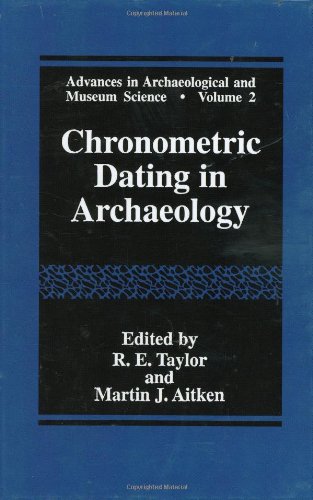
1. Chronometric Dating in Archeology
$18.50
2. Radiocarbon Dating (Interpreting
 
3. Radiocarbon Dating
 
4. RADIOCARBON DATING
 
5. Radiocarbon dating
$5.95
6. Radiocarbon dating and the ''old
 
$100.00
7. Radiocarbon Dating Literature:
$44.94
8. Bible and Radiocarbon Dating:
 
9. RADIOCARBON DATING: RECENT APPLICATIONS
$7.95
10. Radiocarbon and U-series dating
$7.95
11. Radiocarbon dating of prehistoric
 
$8.95
12. Radiocarbon dating of archaeological
$5.95
13. Radiocarbon dating of bulk peat
 
14. Radiocarbon Dating: An Archaeological
 
$57.50
15. Radiocarbon Dating and Italian
 
16. Radiocarbon dating: Proceedings
$5.95
17. Radiocarbon dating of minute gastropods
 
18. RADIOCARBON DATING
$5.95
19. Radiocarbon dating of palaeosol
 
20. Bibliography of Radiocarbon Dating

1. Chronometric Dating in Archeology (Advances in Archaeological and Museum Science)
Hardcover: 420 Pages (1997-11-30)
list price: US$198.00 -- used & new: US$65.00
(price subject to change: see help)
Asin: 0306457156
Canada | United Kingdom | Germany | France | Japan
Editorial Review

Book Description
Since World War II, there has been tremendous success in the development of new methods for dating artifacts; the so-called `radiocarbon revolution' was only the first such discovery. The increasing accuracy of the various new techniques has brought about major changes in archaeological research strategies. This important new text compiles the work of some of today's most innovative archaeologists who summarize progress in their respective techniques over the last 30 years - with an emphasis on developments of the last five - and the status of current research. ... Read more


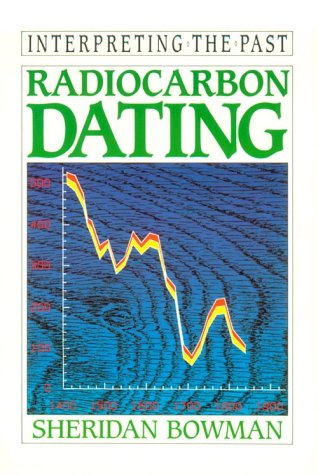
2. Radiocarbon Dating (Interpreting the Past Series)
by Sheridan Bowman
Paperback: 64 Pages (1990-04-04)
list price: US$13.95 -- used & new: US$18.50
(price subject to change: see help)
Asin: 0520070372
Canada | United Kingdom | Germany | France | Japan
Editorial Review

Book Description
Radiocarbon Dating inaugurates a new series, "Interpreting the Past," published jointly by the British Museum and the University of California Press. Approaching archaeological techniques and artifacts from an interpretive viewpoint, the series looks in detail at specific classes of artifacts that have contributed most to our knowledge of the past, and at particular investigative techniques that are now being used to refine this knowledge and thereby to question previous assumptions.
In Radiocarbon Dating, Sheridan Bowman provides a much-needed introduction to the complex field of carbon dating. Writing lucidly and knowledgeably, she explains the uses and quirks of radiocarbon results, illustrating them with such famous examples as Stonehenge and the Shroud of Turin. With its clear presentation of how to collect samples for radiocarbon dating, her book will be an invaluable source for all archaeologists and geologists. ... Read more


3. Radiocarbon Dating
by LibbyWf
 Textbook Binding: Pages (1955-07)
list price: US$7.50
Isbn: 0226479803
Canada | United Kingdom | Germany | France | Japan

4. RADIOCARBON DATING
by Willard F. Libby
 Hardcover: 175 Pages (1955)

Asin: B0000CJ8BY
Canada | United Kingdom | Germany | France | Japan

5. Radiocarbon dating
by Willard F Libby
 Unknown Binding: 175 Pages (1965)

Asin: B0007E4H3K
Canada | United Kingdom | Germany | France | Japan

6. Radiocarbon dating and the ''old shell'' problem: direct dating of artifacts and cultural chronologies in coastal and other aquatic regions [An article from: Journal of Archaeological Science]
by T.C. Rick, R.L. Vellanoweth, J.M. Erlandson
Digital: Pages
list price: US$5.95 -- used & new: US$5.95
(price subject to change: see help)
Asin: B000RR7SDI
Canada | United Kingdom | Germany | France | Japan
Editorial Review

Book Description
This digital document is a journal article from Journal of Archaeological Science, published by Elsevier in . The article is delivered in HTML format and is available in your Amazon.com Media Library immediately after purchase. You can view it with any web browser.

Description:
Archaeologists have long recognized the problem of the ''old wood'' effect in radiocarbon dating charcoal and wood samples, the age of which may be hundreds of years older than their use by humans. Such problems have resulted in significant changes in how most researchers select wood and charcoal samples for ^1^4C dating, with many now using relatively short-lived carbonized materials for dating. Despite the significant strides made in our understanding of the potential biases of the ''old wood'' effect, little emphasis has been placed on the possible impacts of dating ''old shell'' in archaeological deposits. The use of marine shell for ^1^4C dating is widespread in coastal areas around the world, including a growing emphasis on the dating of individual shell artifacts via Accelerator Mass Spectrometry (AMS). In dating shell artifacts, we have obtained several dates older than associated ^1^4C dates for short-lived subsistence remains from the same deposits, including great disparities (>10,000years) and more subtle differences (>=100years). These discrepancies appear to be due to the use of old shells by humans to make beads and other artifacts, including shells collected from fossil deposits, older archaeological sites, and beaches. The problems caused by the use of old shells to make beads and other artifacts are surmountable through careful sample selection, analysis of multiple ^1^4C dates on a variety of materials, and proper calibration procedures. ... Read more


7. Radiocarbon Dating Literature: The First 21 Years, 1947-1968 : An Annotated Bibliography
by Dilette Polach
 Hardcover: 384 Pages (1988-10)
list price: US$65.00 -- used & new: US$100.00
(price subject to change: see help)
Asin: 0125592906
Canada | United Kingdom | Germany | France | Japan

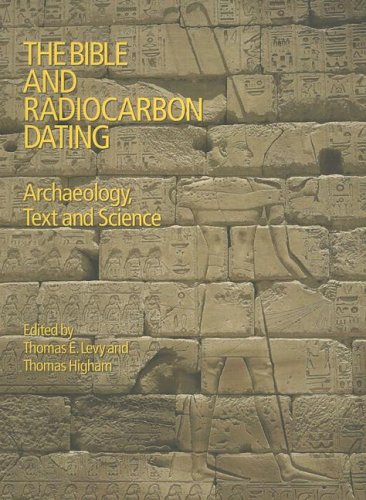
8. Bible and Radiocarbon Dating: Archaeology, Text and Science
by Thomas Higham
Paperback: 450 Pages (2005-12-30)
list price: US$49.95 -- used & new: US$44.94
(price subject to change: see help)
Asin: 1845530578
Canada | United Kingdom | Germany | France | Japan
Editorial Review

Product Description
Over the past several years, a number of Levantine archaeologists working on the Iron Age (ca. 1200 - 586 BCE) have begun to employ high precision radiocarbon dating to solve a wide range of chronological, historical and social issues. This is revolutionizing traditional 'Biblical Archaeology' which over the past several decades has been viewed as parochial. The incorporation of high precision radiocarbon dating methods and statistical modeling into the archaeological 'tool box' of the 'Biblical archaeologist' is revolutionizing the field. In fact, Biblical archaeology is leading the field of world archaeology in how archaeologists must deal with history, historical texts, and material culture. A great deal of debate has been generated by this new research direction in southern Levantine (Israel, Jordan, Palestinian territories, southern Lebanon & Syria, the Sinai) archaeology. This book takes the pulse of how archaeology, science-based research methods and the Bible interface at the beginning of the 21st century. The book brings together leading archaeologists, Egyptologists, Biblical scholars, radiocarbon dating specialists and other researchers who have embraced radiocarbon dating as a significant tool to test hypotheses concerning the historicity of aspects of the Old Testament or Hebrew Bible (hereafter, simply the Bible). Although this is an academic book that will be of great interest to Biblical scholars, archaeologists, Egyptologists, and radiocarbon specialists, the general public will also be interested because of the important issues concerning the historicity of the Bible tackled in this volume. As this book "raises the bar" in how archaeologists tackle historical issues as manifest in the interplay between the archaeological record and text, its interest will go well beyond the 'Holy Land'.

Contents
I. Introduction to the Problems
1) Introduction: Radiocarbon Dating and the Iron Age of the Southern Levant Thomas E. Levy and Thomas Higham
2) The Debate over the Chronology of the Iron Age in the Southern Levant Amihai Mazar
3) The Low Chronology Update Israel Finkelstein
4) Shishak, King of Egypt A. J. Shortland

II. Some Methodological Issues
5) Improving the Resolution of Radiocarbon Dating by Statistical Analysis Christopher Bronk Ramsey
6) The Early Iron Age Dating Project Ilan Sharon, Ayelet Gilboa, Elisabetta Boaretto and A.J. Timothy Jull

III. Around the Eastern Mediterranean in the Iron Age
7) Radiocarbon Calibration in the East Mediterranean Region Sturt W. Manning, Bernd Kromer, Sahra Talamo, Michael Friedrich, Peter Ian Kuniholm and Maryanne W. Newton
8) A Dendrochronological 14C Wiggle-match for the Early Iron Age of North Greece Maryanne W. Newton, Peter Ian Kuniholm, and Kenneth A. Wardle
9) High Precision Dating and Archaeological Chronologies Sue Sherratt

IV. Jordan in the Iron Age
10) Lowland Edom and the High and Low Chronologies Thomas E. Levy, Mohammad Najjar, Johannes van der Plicht, Thomas Higham, and Hendrik J. Bruins
11) Radiocarbon dating of the Khirbat-en Nahas site (Jordan) and Bayesian Modelling of the Results Thomas Higham, Johannes van der Plicht, Christopher Bronk Ramsey, Hendrik J. Bruins, Mark Robinson, and Thomas E. Levy
12) Mesha, the Mishor and the Chronology of Iron Age daba?MaTimothy P. Harrison and Celeste Barlow

V. Israel in the Iron Age
13) Ladder of Time at Tel Rehov Amihai Mazar, Hendrik J. Bruins, Nava Panitz-Cohen and Johannes van der Plicht
14) Quality Control of Groningen 14C results from Tel Rehov Johannes van der Plicht and Hendrik J.Bruins
15) The Groningen Radiocarbon Series from Tel RehovHendrik J. Bruins, Johannes van der Plicht, Amihai Mazar, Christopher Bronk Ramsey, Sturt W. Manning
16)14C Results from Megiddo, Tel Dor, Tel Rehov and Tel Hadar Israel Finkelstein and Eli Piasetzky
17) High or Low: Megiddo and Rehov ... Read more


9. RADIOCARBON DATING: RECENT APPLICATIONS AND FUTURE POTENTIAL.
 Paperback: Pages (1991)

Asin: B000HKOYHI
Canada | United Kingdom | Germany | France | Japan

10. Radiocarbon and U-series dating of the endemic deer Praemegaceros cazioti (Deperet) from ''Grotta Juntu'', Sardinia [An article from: Journal of Archaeological Science]
by V. Benzi, L. Abbazzi, P. Bartolomei, M. Esposito
Digital: Pages (2007-05-01)
list price: US$7.95 -- used & new: US$7.95
(price subject to change: see help)
Asin: B000PDSD6U
Canada | United Kingdom | Germany | France | Japan
Editorial Review

Book Description
This digital document is a journal article from Journal of Archaeological Science, published by Elsevier in 2007. The article is delivered in HTML format and is available in your Amazon.com Media Library immediately after purchase. You can view it with any web browser.

Description:
Radiocarbon and U-series methods (^2^3^0Th/U and ^2^3^1Pa/^2^3^5U) for absolute age determination have been applied to some fossil samples from Grotta Juntu, in North Eastern Sardinia (Italy). The remains belong to the endemic deer species Praemegaceros cazioti, which is here represented by an almost complete skeleton. The three dating methods lead to concordant ages of about 7500years BP, indicating that the skeleton was maintained as closed system after burial. Taking into consideration these results, Praemegaceros cazioti from Grotta Juntu is now the youngest representative of this species in Sardinia. ... Read more


11. Radiocarbon dating of prehistoric hearths in alpine northern Sweden: problems and possibilities [An article from: Journal of Archaeological Science]
by L.G. Liedgren, I.M. Bergman, G. Hornberg, Zackriss
Digital: Pages (2007-08-01)
list price: US$7.95 -- used & new: US$7.95
(price subject to change: see help)
Asin: B000PKI2ZA
Canada | United Kingdom | Germany | France | Japan
Editorial Review

Book Description
This digital document is a journal article from Journal of Archaeological Science, published by Elsevier in 2007. The article is delivered in HTML format and is available in your Amazon.com Media Library immediately after purchase. You can view it with any web browser.

Description:
The chronology of prehistoric Sami settlement sites has previously been established by conventional radiocarbon dating of bulk charcoal samples associated with hearths from sunken hut floors (stallo-foundations). Here we present results of a comprehensive dating exercise of stallo-foundations in the alpine area of northern Scandinavia using Accelerator Mass Spectrometry (AMS) radiocarbon dating of charcoal. Over a 3km^2 study area, AMS calibrated ages of hearth charcoal from 22 stallo-foundations across 12 sites securely date these features to between cal. AD 640 and AD 1180. Only small variations in age were found between charcoal samples from different areas of a given hearth. Statistical analysis of all the charcoal AMS radiocarbon dates obtained reveals that 12 stallo-foundations across nine sites are contemporaneous and date to the Viking Period (AD 800-AD 1050). The tightly constrained AMS-based chronology of stallo-foundations contrasts with the existing chronology based on conventional radiocarbon analysis, which places these features within a significantly greater time-frame of between AD 600 and AD 1900, with most dates ranging between AD 800 and AD 1350.This discrepancy is likely to result from the necessity of collecting composite hearth charcoal particles, which may originate from different phases of occupation, in order to achieve the required final carbon content for conventional radiocarbon analysis. We argue that the new AMS-based radiocarbon chronology of stallo-foundations presented here supersedes the existing chronology based on conventional (Gas Proportional counting) radiocarbon analysis and we advocate the use of AMS radiocarbon dating in future hearth investigations. ... Read more


12. Radiocarbon dating of archaeological samples (sambaqui) using CO"2 absorption and liquid scintillation spectrometry of low background radiation [An article ... Journal of Environmental Radioactivity]
by M.L.T.G. Mendonca, J.M. Godoy, R.P. da Cruz, Perez
 Digital: Pages
list price: US$8.95 -- used & new: US$8.95
(price subject to change: see help)
Asin: B000RR7BQW
Canada | United Kingdom | Germany | France | Japan
Editorial Review

Book Description
This digital document is a journal article from Journal of Environmental Radioactivity, published by Elsevier in . The article is delivered in HTML format and is available in your Amazon.com Media Library immediately after purchase. You can view it with any web browser.

Description:
Sambaqui means, in the Tupi language, a hill of shells. The sambaquis are archaeological sites with remains of pre-historical Brazilian occupation. Since the sambaqui sites in the Rio de Janeiro state region are older than 10,000 years, the applicability of CO"2 absorption on Carbo-sorb^(R) and ^1^4C determination by counting on a low background liquid scintillation counter was tested. In the present work, sambaqui shells were treated with H"3PO"4 in a closed vessel in order to generate CO"2. The produced CO"2 was absorbed on Carbo-sorb^(R). On saturation about 0.6g of carbon, as CO"2, was mixed with commercial liquid scintillation cocktail (Permafluor^(R)), and the ^1^4C activity determined by counting on a low background counter, Packard Tricarb 3170 TR/SL, for a period of 1000mins to enable detection of a radiocarbon age of 22,400 BP. But only samples with ages up to 3500 BP were submitted to the method because the samples had been collected in the municipality of Guapimirim, in archaeological sambaqui-type sites belonging to this age range. The same samples were sent to the ^1^4C Laboratory of the Centro de Energia Nuclear na Agricultura (CENA/USP) where similar results were obtained.were obtained. ... Read more


13. Radiocarbon dating of bulk peat samples from raised bogs: non-existence of a previously reported 'reservoir effect'? [An article from: Quaternary Science Reviews]
by M. Blaauw, J. van der Plicht, B. van Geel
Digital: Pages (2004-07-01)
list price: US$5.95 -- used & new: US$5.95
(price subject to change: see help)
Asin: B000RR0HYA
Canada | United Kingdom | Germany | France | Japan
Editorial Review

Book Description
This digital document is a journal article from Quaternary Science Reviews, published by Elsevier in 2004. The article is delivered in HTML format and is available in your Amazon.com Media Library immediately after purchase. You can view it with any web browser.

Description:
In 1995, an unexpected reservoir effect was reported in sequences of bulk ^1^4C dates of raised bog peat. In most peat studies bulk ^1^4C dates are used for obtaining chronologies. Therefore it is important to confirm and quantify such a ^1^4C reservoir effect. Five bulk peat samples from the raised bog Engbertsdijksveen were conventionally ^1^4C dated. The same core had previously been precisely dated by ^1^4C AMS dates of carefully selected above-ground plant remains. The existence of a reservoir effect in bulk peat ^1^4C samples could not be confirmed. Other explanations for the reported reservoir effect are discussed. ... Read more


14. Radiocarbon Dating: An Archaeological Perspective
by Royal Ervin Taylor
 Hardcover: 212 Pages (1987-07)
list price: US$60.00
Isbn: 0126848602
Canada | United Kingdom | Germany | France | Japan

15. Radiocarbon Dating and Italian Prehistory (Bsr Archaeological Reports, 8)
 Paperback: 289 Pages (1994-12)
list price: US$57.50 -- used & new: US$57.50
(price subject to change: see help)
Asin: 1873415117
Canada | United Kingdom | Germany | France | Japan

16. Radiocarbon dating: Proceedings of the ninth international conference, Los Angeles and La Jolla, 1976
 Unknown Binding: 787 Pages (1979)
list price: US$78.50
Isbn: 0520036808
Canada | United Kingdom | Germany | France | Japan

17. Radiocarbon dating of minute gastropods and new constraints on the timing of late Quaternary spring-discharge deposits in southern Arizona, USA [An article ... Palaeoclimatology, Palaeoecology]
by J.S. Pigati, J. Quade, T.M. Shahanan, C. Haynes
Digital: Pages (2004-02-20)
list price: US$5.95 -- used & new: US$5.95
(price subject to change: see help)
Asin: B000RQZ91M
Canada | United Kingdom | Germany | France | Japan
Editorial Review

Book Description
This digital document is a journal article from Palaeogeography, Palaeoclimatology, Palaeoecology, published by Elsevier in 2004. The article is delivered in HTML format and is available in your Amazon.com Media Library immediately after purchase. You can view it with any web browser.

Description:
Gastropod shells are commonly preserved in Quaternary sediments, but are often avoided for radiocarbon dating because some taxa incorporate ^1^4C-deficient carbon during shell formation. Recently, Brennan and Quade [(1997) Quat. Res. 47, 329-336] found that some minute taxa (Vallonia, Pupilla, and Succineidae) appear to yield reliable ^1^4C ages for late Pleistocene samples. A more rigorous evaluation of the ^1^4C inventory of minute gastropods is presented here, which involved measuring the ^1^4C activity of specimens collected live in two geologic settings that maximize the potential for ingestion of 'old' carbon: (1) alluvium dominated by Paleozoic carbonate rocks, and (2) adjacent to extant springs with highly ^1^4C-deficient water present at the surface. We found that several minute taxa, including Vallonia, incorporate significant and variable amounts of old carbon (~2 to >30%) during shell formation. The ^1^4C activities of the land snails Pupilla blandi and Euconulus fulvus, however, are indistinguishable from the ^1^4C activity of live plants. The ^1^4C activity of the semi-aquatic gastropod Catinella sp. (Family: Succineidae) deviates from modern values in the presence of ^1^4C-deficient water by an amount equivalent to ~10% of the local carbon-reservoir effect. These results imply that at least some minute gastropods can provide reliable ^1^4C ages even when ^1^4C-deficient carbon is readily available. To demonstrate an application of our findings, we ^1^4C-dated shells from P. muscorum, E. fulvus, and Succinea sp. (Family: Succineidae) recovered from the Coro Marl, a late Pleistocene spring-fed marsh deposit exposed at the Murray Springs Paleoindian site in the San Pedro Valley of southern Arizona, USA. Radiocarbon ages obtained from the minute gastropods show that the unit was deposited between ~25@?000 and 13@?000 ^1^4C years ago. The marl is situated >15 m above the modern water table at Murray Springs, and is similarly positioned in discontinuous outcrops along a ~150-km stretch of the San Pedro Valley. Thus, the ^1^4C ages of minute gastropods presented here may be used to infer the timing of high water-table levels throughout the valley. ... Read more


18. RADIOCARBON DATING
 Paperback: Pages (1951)

Asin: B000IDBCWE
Canada | United Kingdom | Germany | France | Japan

19. Radiocarbon dating of palaeosol components in moraines in Lapland, northern Sweden [An article from: Quaternary Science Reviews]
by A. Hormes, W. Karlen, G. Possnert
Digital: Pages (2004-10-01)
list price: US$5.95 -- used & new: US$5.95
(price subject to change: see help)
Asin: B000RR0IEE
Canada | United Kingdom | Germany | France | Japan
Editorial Review

Book Description
This digital document is a journal article from Quaternary Science Reviews, published by Elsevier in 2004. The article is delivered in HTML format and is available in your Amazon.com Media Library immediately after purchase. You can view it with any web browser.

Description:
Accurate geochronologies are the key for comparison of palaeoclimate records. In order to clarify problems concerning the geochronology of glacier fluctuations we dated palaeosols in moraines in the Kebnekaise mountain region of Swedish Lapland. These palaeosols already have been dated several years ago using bulk samples of the palaeosols and yielded ages of 6180-5790 and 2750-2100calyrBP. In an attempt to evaluate the sources of contamination associated with bulk samples these soils were re-dated by using Coleoptera fragments, Cenococcum geophilum spores, humic acids and woody plant tissues. The new dates reveal that the two palaeosols found within the moraines represent much longer periods of time than was previously assumed. Soil formation periods can be distinguished for periods 7800-7580, 6300-4080, 2450-2000 and 1170-740cal yr BP. These age groups point to differentiated soil formation processes, resedimentation, bioturbation and/or cryoturbation. The results show that dated terrestrial macrofossils from glacial moraines indicate climate changes that are in accordance with other proxy records in northern and central Scandinavia and in certain times off-phase with glacier fluctuations in southern maritime Norway. This throws light on possible changing interaction of forcing factors during the Holocene. ... Read more


20. Bibliography of Radiocarbon Dating (American Journal of Science Radiocarbon Supplement, Volume 1)
by Frederick Johnson
 Paperback: 42 Pages (1959)

Asin: B000XJSEFG
Canada | United Kingdom | Germany | France | Japan

  1-20 of 100 | Next 20
A  B  C  D  E  F  G  H  I  J  K  L  M  N  O  P  Q  R  S  T  U  V  W  X  Y  Z  

Prices listed on this site are subject to change without notice.
Questions on ordering or shipping? click here for help.

site stats