e99 Online Shopping Mall

Geometry.Net - the online learning center Help  
Home  - Science - Social Sciences (Books)

  1-20 of 100 | Next 20
A  B  C  D  E  F  G  H  I  J  K  L  M  N  O  P  Q  R  S  T  U  V  W  X  Y  Z  

click price to see details     click image to enlarge     click link to go to the store

$42.50
1. Method in Social Science: A Realist
$65.00
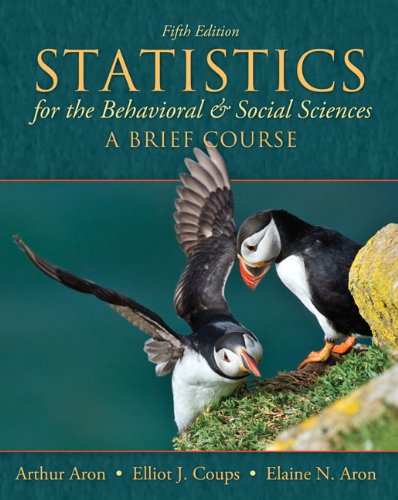
2. Statistics for the Behavioral
 
$67.98
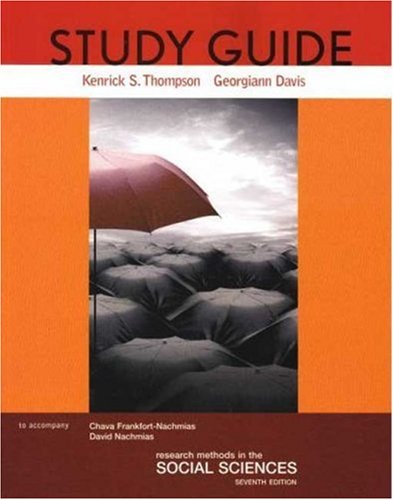
3. Research Methods in the Social
$51.00
4. Calculus for the Managerial, Life,
$62.04
5. Social Science: An Introduction
$15.00
6. Review for the CLEP Social Science
$42.49
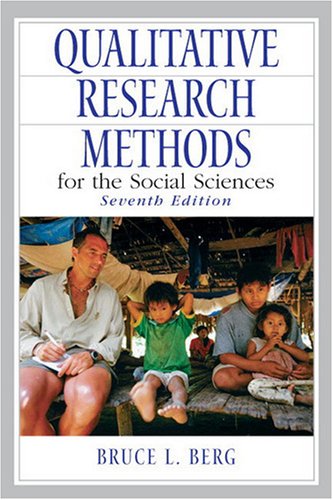
7. Qualitative Research Methods for
$89.95
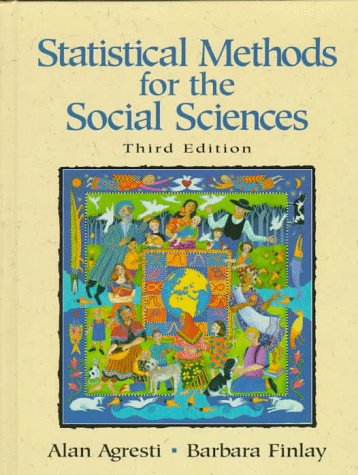
8. Statistical Methods for the Social
$26.26
9. Integrating Behavioral Social
$90.00
10. College Mathematics for Business,
$14.53
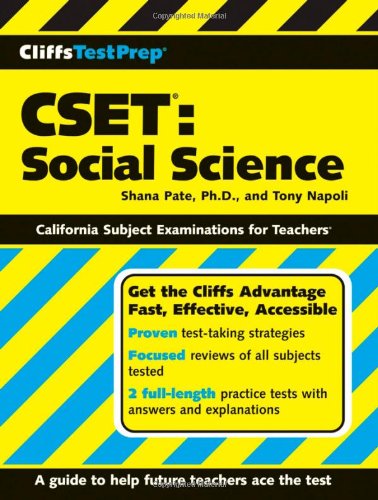
11. CliffsTestPrep CSET: Social Science
$18.98
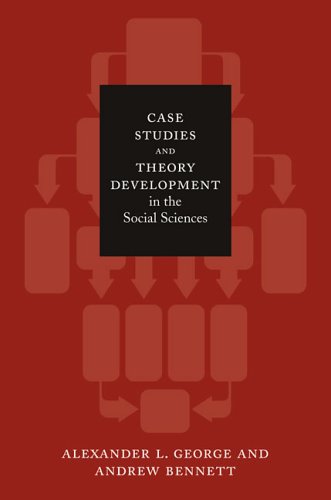
12. Case Studies and Theory Development
 
$133.65
13. Applied Multivariate Statistics
$17.79
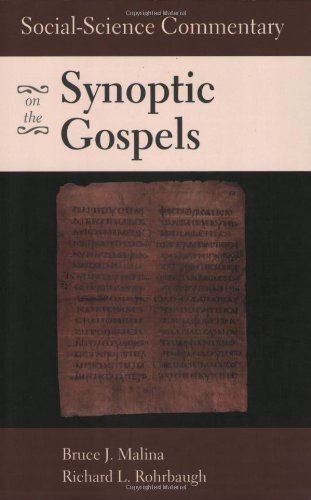
14. Social-Science Commentary on the
$50.84
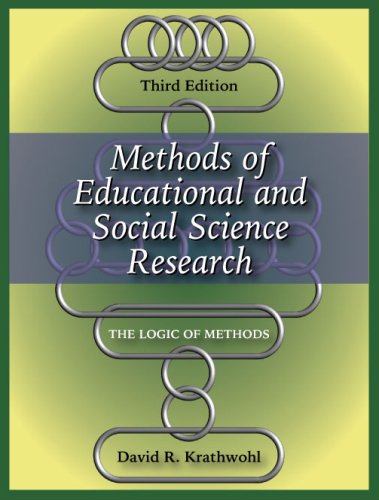
15. Methods of Educational and Social
$38.92
16. How to Build Social Science Theories
$7.50
17. Comprehension Activities For Reading
$15.70
18. Social-science Commentary on the
$16.11
19. Social Science Commentary on the
$89.99
20. Contemporary Society: An Introduction

1. Method in Social Science: A Realist Approach
by Andrew Sayer
Paperback: 328 Pages (1992-05-14)
list price: US$52.99 -- used & new: US$42.50
(price subject to change: see help)
Asin: 0415076072
Average Customer Review: 4.0 out of 5 stars
Canada | United Kingdom | Germany | France | Japan
Editorial Review

Book Description
Method in Social Science was widely praised on its first publication for providing a series of penetrating reflections on central questions in social science discourse. This second edition directly reflects new developments in the areas of philosophy and methodology. Sayer has rewritten and substantially enlarged the introduction, clarifying many of the arguments that appear in the text. There is also a short discussion of the importance of narrative form, particularly useful for students concerned with the problems of writing, composition, and presentation of their own material. ... Read more

Customer Reviews (1)

4-0 out of 5 stars A philosophical approach
Intense book. You can summarize it by saying "The book is readable independently of your ability to understand it". Is best if is used in a doctorate program where you can extrapolate the philosophy between the lines and the author's point of view. Final warning: Do not read this before going to bed. ... Read more


2. Statistics for the Behavioral and Social Sciences (4th Edition)
by Arthur Aron, Elaine Aron, Elliot Coups
Paperback: 504 Pages (2007-03-31)
list price: US$105.33 -- used & new: US$65.00
(price subject to change: see help)
Asin: 0131562789
Canada | United Kingdom | Germany | France | Japan
Editorial Review

Book Description
Here, in the fourth edition of Statistics for the Behavioral and Social Sciences, the authors have refined their text by building off an already well-established approach - emphasizing the intuitive, deemphasizing the mathematical, and explaining everything in direct, simple language - but also going beyond these principles to both further student understanding and stimulate the long-suffering community of statistics instructors. By using definitional formulas to emphasize the concepts of statistics, rather than rote memorization, students work problems in a way that keeps them constantly aware of the underlying logic of what they are doing. ... Read more


3. Research Methods in the Social Sciences w/Data Bank CD
by Chava Frankfort-Nachmias, David Nachmias
 Paperback: 552 Pages (2007-03-06)
list price: US$95.95 -- used & new: US$67.98
(price subject to change: see help)
Asin: 071675519X
Average Customer Review: 5.0 out of 5 stars
Canada | United Kingdom | Germany | France | Japan
Editorial Review

Book Description

This acclaimed text offers a comprehensive, systematic treatment of the scientific approach to research within the context of the social sciences. It leads students through seven major, interrelated stages of research methods: definition of the research problem, statement of hypothesis, research design, measurement, data collection, data analysis, and generalization.The new edition features a new Data Bank CD and an appendix introducing students to SPSS.
... Read more

Customer Reviews (4)

5-0 out of 5 stars Written clearly and comprehensive
I highly recommend this book to any social science researcher, not just the beginners intended as the primary audience.It helps remind everyone of the fundamentals that all good research should be based on.

Nachmias & Nachmias do an excellent job of clarifying sometimes difficult to understand concepts.They present basic statistical and mathematical ideas in a way designed not to scare off those of us not so good with numbers.At the same time, they cover a vast number of relevant topics.Comprehensive is the only word to use.

Only quibble: really expensive! Otherwise it's fantastic.

5-0 out of 5 stars systematic
I used this book for methodology class, thou the official textbook was the more common book of Bailey. I did so for several reasons.
1. incidentally I had not Bailey's but this book because I used this book to prepare graduate entrance exam.
2. as u know, there are not much differences among textbooks on research methods for this field might be the only area in consensus on social sciences.
This book has some weak points just like other textbooks including Bailey's. this book concentrates on quantitative methods and not much deal with qualitative methods which occupy mere 20 pages.
But I have to mention 2 strong points
1. The author presents concepts in graphic way with vivid details of research examples and illustrating live logic of field. Thou good researcher could be only with practices, it will be good to have some touch of real logic of concept in real field
2. the author put the system over various methods like observation, survey, interview etc with the logic of causation. This is why this book begins research design part with experiment which is rarely used in social sciences except psychology. Experiment is not practical one in social sciences but it's the model of all other research methods for its design meets all the condition of causation. So when we design out research, we should bear the experiment in mind. This point is maintained throughout the book. And this made the content of the book systematic

4-0 out of 5 stars A textbook thats actually readable
This is the sixth edition, which means that the still probably useful fifth and previous editions are now good for landfill duty.The price is hefty. (Why don't textbook publishers offer financing?) That said, this isa usable book, one that the reader might be tempted not to sell after classis over.The research and statistics chapters are well-written and placedin logical order.The material is comprehensive, and strikes a nicebalance between not being too technical without being too elementary.Whatappealed to me was the by-the-numbers approach, with numerous listsembedded in the text throughout.(For example, if there are seven factorsto consider in reference to the internal validity of a research design,they are boxed off and numbered, after being discussed in the text.)Thebook comes with a disk containing a 1996 general survey of social scienceissues.This is provided by way of example, and is referenced at the endof most chapters as a real-world example and 'how to' guide to researchmethedology and design.Nonetheless, you can do as I did, and read withoutusing the disk (I used it once), and still come away with completeunderstanding. This book is also free of the filler that crowds andobscures useful information in the garden variety textbook. This bookwould have gotten five stars, had it not been for the authors' annoyinghabit of using liberal examples.In a social science research text,reference to politically sensetive issues is to be expected.What annoysis that virtually every example, whether derived from real life, or anadmittedly ficticous example, is given a liberal slant.If the factorsbeing researched are education and political orientation, then liberalismcorrelates with higher education (read: conservatives are dummies).If thesubject is nominal variables, the example is party affiliation in adistrict where Democrats outnumber Republicans two-to-one.In other words,the examples serve the standard orthodoxies of our time.Don't expect tosee any on race and abortion, or the use of guns to deter crime.Thatsaid, since the main users of this book are college students, and as suchare getting much heavier doses of campus radicalism and causes du jour,this book's bias is relatively mild.If you are going to study researchmethodologies, you could do much worse than this text. -Lloyd Conway

5-0 out of 5 stars One of the most useful introductory text in this field.
I have used this text in my introductory level research class for several years.I find it to be well designed and clearly written.The authors make good use of real life examples to claarify complex topics.The textalmost teaches itself. ... Read more


4. Calculus for the Managerial, Life, and Social Sciences, Enhanced Review Edition (with CD-ROM and iLrn Tutorial, Personal Tutor with SMARTHINKING Printed Access Card)
by Soo T. Tan
Hardcover: 704 Pages (2007-05-16)
list price: US$149.95 -- used & new: US$51.00
(price subject to change: see help)
Asin: 0495384305
Average Customer Review: 3.5 out of 5 stars
Canada | United Kingdom | Germany | France | Japan
Editorial Review

Book Description
In the market-leading CALCULUS FOR THE MANAGERIAL, LIFE, AND SOCIAL SCIENCES, Soo T. Tan provides an accurate, accessible presentation of calculus combined with just the right balance of applications, pedagogy, and technology to help students succeed in the course. The new Seventh Edition includes highly interesting current applications and exercises to help stimulate student motivation. An exciting new array of supplements, including iLrn Tutorial and the Interactive Video Skillbuilder CD-ROM, provides students with extensive learning support so instructors will have more time to focus on teaching the core concepts. ... Read more

Customer Reviews (5)

5-0 out of 5 stars Tan7 Calculus solution manual-red cover with Boy on it-for managerail life.
This book is excellent it helped me a LOt.I wold have failed if it was not for this life saving book.The answers where clear and concise. This book shows step by step how to work each problem!!

I only wish it had a calculator explaination for the problems.

5-0 out of 5 stars Great Cacl text, but CD ROM not Mac compatible
We used this text book in an NYU continuing education program.The course was designed as a refresher course for potential MBA applicants.I was taking it because we truly use calculus in the analytics of our systems at work.

This is a great text book.The illustrations are terrific.The problem sets are very good as they truly use real-world problems and examples.The instruction is crisp, without excessive theoretical wanderings.

One of the best scientific and engineering texts I have used.

CON:The enclosed CD ROM does not work with the Mac OSX operating system, and although I contacted customer support, they did not have plans to make the software OSX compatible.:-(

2-0 out of 5 stars Where are the last four chapters?
This solutions book only goes through chapter 8 and the actual text has 12 chapters.I found that the answers were explained fairly well but I was very disappointed that it was missing several chapters and was probably not worth the money.

1-0 out of 5 stars THE PAPERBACK IS THE SOLUTIONS MANUAL
Unfortunately the paperback is not a a paperback edition of the textbook, but the student's solution manual.

5-0 out of 5 stars Easy to read.
I thought the book explained each topic in an easy to follow manner.There are some challenging excercises at the end of each section. Some of the exercises stumped me, but I guess that's good if you're looking to bechallenged. I bought the solutions manual which gives step by stepsolutions to the odd questions.The book doesn't cover every area ofcalculus, but I found it useful when I didn't understand what we covered inclass. ... Read more


5. Social Science: An Introduction to the Study of Society (13th Edition)
by Elgin F. Hunt, David C. Colander
Paperback: 528 Pages (2007-05-11)
list price: US$92.40 -- used & new: US$62.04
(price subject to change: see help)
Asin: 0205524060
Canada | United Kingdom | Germany | France | Japan
Editorial Review

Book Description
An unbiased introduction to the social sciences. Comprehensive coverage incorporates elements of anthropology, economics, political science, sociology, history, and geography.Anyone seeking an overview of the social sciences. ... Read more


6. Review for the CLEP Social Science and History Examination
by Ann Garvin, Eileen Curristine
Paperback: 310 Pages (2006-03-26)
list price: US$16.95 -- used & new: US$15.00
(price subject to change: see help)
Asin: 1560301503
Average Customer Review: 3.5 out of 5 stars
Canada | United Kingdom | Germany | France | Japan
Editorial Review

Book Description
This study guide contains all the information you need to pass the Social Science and History CLEP test. It has been updated to prepare you to do well on the new computerized version of the test as well as on the older paper based test.

Comex Systems, Inc. has been the leading CLEP test preparation company for over 30 years. ... Read more

Customer Reviews (8)

5-0 out of 5 stars 3.0 credit hours
I got three credit hours by taking a 3 hour test cant beat that for savingmoney, book helped me do this.

3-0 out of 5 stars Do not use this book alone for test!
This book gave me a general idea of what would be on the CLEP test, but when I actually took the test, the exam questions were MUCH harder then the review questions in the book. I passed, but would not recommend using this book alone!

4-0 out of 5 stars Great Book
This book came just in the neck of time, I needed it right away.It helped me and i felt very confident.Thanks

2-0 out of 5 stars a little help
This book is NOT enough to pass the CLEP.It IS easy to read and does provide much knowledge.HOWEVER, I would have failed had I relied solely on this book. I also used Peterson's CLEP Success which helped me pass the exam much more than this book.I would suggest using them both.

1-0 out of 5 stars Not even close!
I used this book solely as a review for the CLEP exam, and received a score of 55 (barely passing) as opposed to the actual CLEP books - I got a 96 using the "official CLEP guide".

This book barely has any of the actual test material included in it, and the test had many, many things not even remotely touched upon in the book.I definitely will NOT use this brand again. ... Read more


7. Qualitative Research Methods for the Social Sciences (6th Edition)
by Bruce L. Berg
Paperback: 400 Pages (2006-03-24)
list price: US$73.33 -- used & new: US$42.49
(price subject to change: see help)
Asin: 0205482635
Average Customer Review: 4.0 out of 5 stars
Canada | United Kingdom | Germany | France | Japan
Editorial Review

Book Description
This book offers the most comprehensive coverage of qualitative techniques of any book on the market today and does it in a way that is easy to read and follow. The author's central purpose remains a desire to instruct inexperienced researchers in ways of effectively collecting, organizing, and making sense of qualitative data, while stressing the importance of ethics in research and in taking the time to properly design and think through any research endeavor. After reading this book, fledgling researchers should be able to design, collect, and analyze data and then present their results to the scientific community. Considers seven different data collection strategies in detail. Describes focus group interviewing, one of the fastest growing styles of data collection, in detail (Ch. 5), including a new Moderator's Guide that provides the inexperienced focus group facilitator with a step-by-step guide to how the interview should be conducted.Maintains the emphasis on ethics in research (Ch. 3) including a new section on the President's apology for the Tuskegee Syphilis Study. For anyone in the social sciences who needs to develop research methodology. ... Read more

Customer Reviews (7)

4-0 out of 5 stars Qualitative Manual
Prof used this book in a PhD Qualitative Research and Evaluation class.It is a nice refrence on the practical asspects of some of the more nebular qualitative methods rubric books. Ex, it gives some insight as to interview "feeling"... Having focused on Qualitative Methods in England... you should pair it with more 'hard core' works as well. Hope this helps.

5-0 out of 5 stars Qualitative Research Methods for the Social Sciences, Fifth
Great book, but necessary for class so I am biased.

5-0 out of 5 stars For undergraduate class
This book is a textbook on qualitative research methods at undergraduate level. To be a good and useful enough textbook on research methods, it must have two features:
1. the extensive coverage of existing methods to be used in the field.
2. elucidating those methods not only in abstract and theoretical words but also with live examples from real field works to grasp real sense of each method.
Fortunately, this textbook has both aspects. It embraces from classical methods like interview, fieldwork to young methods like sociometry, historiography. Moreover, it deals with, in depth, post processing of data. For quantitative methods, such processing has been automated with such packages like SPSS or SAS. But for qualitative methods, standardizing data is tricky and complex for the nature of data. But data should be treated anyway. This book briefly introduces reader to that process. Furthermore, unlike other textbooks simply enumerating various methods, this book attempts to explain them from consistent viewpoint, dramaturgy. As you know, dramaturgy interprets the activity of research itself such social process as the object of research. Such an approach orients readers towards what the research would be like in the field. In this view, research is portrayed so in dynamic and vivid way as to get a image of research with more ease.
But as the author incessantly points out, research methods could be learned not by reading but by doing. You should practice it to know it. Explanation in textbook is no more than a map to the destination, not the destination itself.

2-0 out of 5 stars Too Vauge for Beginners, Too Basic for Experts
Berg's overview of qualitative methods has a great deal of promise, but it fell short of my expectations. I adopted this as a text in my qualitative methods course, and soon found that the treatment of various qualitative methods was overly vauge and confused students about the scope and purpose of qualitative research. In particular, Berg blurs the lines between focus groups, action research, and participant observation. One is left with a sense that all qualitative methods are equal and interchangable.

Each chapter alone is well written, but there is a lack of an overarching structure to the book that results in an over-simplification of qualitative methods. I do not plan on utilizing this text for courses again, it is too vauge for beginners and too basic for experts. It is also to general for use as a reference book.

4-0 out of 5 stars Great resource for anyone interested in qualitative research
In the most recent edition of Bruce L. Berg's Qualitative Research Methods for the Social Sciences, the author makes a number of important addition to his work. This edition has a much greater emphasis on methodology-how to collect, organize, and present qualitative data-while maintaining a strong theoretical backing. A new chapter on ethical issues in field research is perhaps the most important addition to this work. The book still appeals primarily to students and researchers in social sciences, but the author attempts to broaden his scope into other fields not typically associated with the social sciences, such as nursing and business.

In his introduction, Berg laments the absence of comprehensive books on qualitative research methods, a technique that has lost out to a more quantitative, data-driven approach to field research. Berg also criticizes the number of texts written about ethnographic methodology that focus on only one aspect of field research. Elsewhere, Berg suggests that too often books on field methods presuppose a strong background in data collection techniques that most students simply do not have. Berg attempts to rectify these problems, by providing the novice researcher with a book that offers a comprehensive view of field methods that anyone can use. He is, for the most part, successful.

While the author discusses a number of different views concerning qualitative research design, he ultimately suggests that individuals begin collecting data as soon as their ideas are formed. Berg says that there is some value in combining the "research-before-theory" and "theory-before-research" approaches. This method has the researcher conducting investigations and gathering information as needed. The author looks at this as a "spiraling" pattern, where the researcher is able to learn theory while conducting investigations and to direct his or her research based on preexisting theories. While this method has its pitfalls, it seems like a more realistic approach than the traditional "linear" method, where an individual moves from idea generation to literature review to data collection without looking back.

Much like the "spiraling" approach that the author presents, the book itself moves effortlessly between discussions of theories in qualitative research and practical advice, which is given in the "Trying it out" section at the end of each chapter. The book looks closely at seven different strategies for data collection, including "focus group interviewing," "ethnographic field strategies," and the collecting of oral traditions and "historiographies." New to this addition is the chapter on "action research," which seems in many ways reminiscent of the concept of "participant observation" found in other areas of the social sciences, particularly anthropology. This new emphasis on action research also reflects a trend in the social sciences towards the incorporation of charitable work into a field research project. Action research, according to Berg, takes into account the history, culture, and "emotional lives" of a group of people as a means of tracing the sources of that community's problems. The author points out that all field research, on one level or another, evokes social change, but action research brings about change more directly.

Closely related to this notion of action research is the book's new chapter on the ethical dimensions of field research. Unlike other books on field methods that include ethical issues at the end on the text as an afterthought, Berg's book places his chapter on ethics towards the beginning of the book, before he goes into any detail about specific projects. While the rest of the text is full of practical advice, it is obvious that Berg is not out to establish any moral absolutes regarding field research. Instead, the author presents the reader with a number of real-life scenarios where ethical concerns have come into play. Berg also presents a number of factors for the reader to consider, such as consent, privacy, and the role of institutional review boards. He also provides an historical overview of ethics in field research that gives the reader an idea of how this issue has evolved.

Berg's book is perhaps the best resource for field researchers that money can buy, but there are still some issues that the book fails to address. Since the book focuses primarily on Western research in sociology, there is not much consideration for cross-cultural problems that may arise. Elsewhere the book fails to acknowledge the rising concern over intellectual property, which is relevant to social science research. For this reason, the researcher may want to supplement his or her reading with other texts that address global issues and intellectual property rights, but, overall, this book is by far the most thorough and practical resource available for those interested in field research. ... Read more


8. Statistical Methods for the Social Sciences (3rd Edition)
by Alan Agresti, Barbara Finlay
Hardcover: 643 Pages (1997-03-18)
list price: US$124.00 -- used & new: US$89.95
(price subject to change: see help)
Asin: 0135265266
Average Customer Review: 4.5 out of 5 stars
Canada | United Kingdom | Germany | France | Japan
Editorial Review

Book Description

Assuming no prior knowledge of statistics, these authors combine their varied backgrounds—one a statistician, the other a social scientist—to introduce statistical methods with a high degree of statistical accuracy and a wealth of examples that are interesting and relevant to social scientists. The Third Edition has been both updated and improved to integrate real-world data into examples and exercises, and make coverage more accessible throughout.

... Read more

Customer Reviews (8)

4-0 out of 5 stars Pretty Standard
Standard textbook, but difficult if you're trying to build statistical knowledge outside of a class.

5-0 out of 5 stars An Excellent Book
I am a chemist.Chemists,unfortunately know very little about statistics.I was placed on a project which required me to use multiple linear regression, ANOVA, and logistic regression.I purchased this book, hoping that it would help me to learn these methods. It did.This book does an excellent job of explaining a wide variety of statistical methods in a clear manner.It is easy to read and you will be amazed at how quickly you are able to read this entire book and develop a strong statistical knowledge.


I suggest you do the examples yourself as you move through the text using Excel.I think that this adds a great deal to the learning experience, and gives you confidence.

5-0 out of 5 stars Statistics book that makes sense
I bought this book in graduate school for my statistics class, and it has continued to help me ever since in my professional career.Unlike many of the statistics books that use complex formulas to explain statistical methods, this book breaks each formula down in an easy to follow format.After explaining the concept, the authors use an example to illustrate the point, which makes things much easier to understand.Also, the Appendix which has SPSS and SAS coding for each of the statistical methods described in the book is a lifesaver!

5-0 out of 5 stars As a student and a teacher, I've loved it!
I was subjected to an earlier edition when I took statistics as an undergraduate, and I've used the 2nd and 3rd editions as a lecturer and professor, and I believe there is no preferable alternative.

Agresti and Finlay are, above all, clear and accurate. Over the last decade, I've looked at several dozen alternatives, hoping to find one that's strong in the areas where this text is weak. I've been enticed by different layouts, writing styles, even overall motifs, but am always reminded of why I (and others) have relied on this text for so long.

Some alternatives are just sloppy - poor editing, excessive typographic errors, incorrect answers in the answer keys. Some others border on incompetent, confusing basic issues and not clarifying the disputes on border issues. And some, while achieving rapport through comics, comedy, or simply light humor, lose some of the subtle finesse that statistics entails.

Now, this one ain't perfect. The subtleties and disputes are side-stepped rather than highlighted. The text and layout are a bit wordy and eye-hard. And the examples are more practical than pedagogical. The data examples could be a bit sexier.

But the meat is all there, and correct, and clear. And that's what you want in a statistics textbook. You don't need something that pretends stats is inherently fun or exciting. The lecturer should convey the power of p, the coolness of coefficients, and the holy grail of "r-squared". The text book should cover the material accurately and in detail, and this one does.

5-0 out of 5 stars Great introductory statistics book
Agresti and Finlay did an excellent job with this textbook. It includes most of the important topics generally covered in a two-semester introductory statistics sequence. These authors skillfully use graphs, practical examples, and a diversity of exercises relevant to the social sciences students' experience to illustrate the concepts studied. Summaries at the end of each chapter provide a clear overview of the important points to remember. Readers need no more than a firm high-school math background to understand its contents. This book, in my opinion, is an excellent choice for both undergrad and beginning grad students interested in acquiring a solid foundation on statistical methods. ... Read more


9. Integrating Behavioral Social Sciences with Public Health
Hardcover: 405 Pages (2001-01-15)
list price: US$39.95 -- used & new: US$26.26
(price subject to change: see help)
Asin: 1557987211
Average Customer Review: 5.0 out of 5 stars
Canada | United Kingdom | Germany | France | Japan
Editorial Review

Book Description
Presents a concise overview of successful attempts to integrate psychological knowledge with public health programs, which are often notorio usfor their less than spectacular results. A critical resource for a llthose implementing public health programs. ... Read more

Customer Reviews (1)

5-0 out of 5 stars Integrating Behavioral Social Sciences with Public Health
Scholar center provides me excellent service to ensure I ahve the book and CD on timer for my class. It will be my top choice for the future textbook sources. Thanks.
Jenny ... Read more


10. College Mathematics for Business, Economics, Life Sciences & Social Sciences (11th Edition)
by Raymond A. Barnett, Michael R. Ziegler, Karl E. Byleen
Hardcover: 1088 Pages (2007-04-09)
list price: US$144.00 -- used & new: US$90.00
(price subject to change: see help)
Asin: 0131572253
Canada | United Kingdom | Germany | France | Japan
Editorial Review

Book Description

Designed to be accessible, this book develops a thorough, functional understanding of mathematical concepts in preparation for its application in other areas. Concentrates on developing concepts and ideas followed immediately by developing computational skills and problem solving. Features a collection of important topics from mathematics of finance, algebra, linear programming, probability, and descriptive statistics, with an emphasis on cross-discipline principles and practices. For the professional who wants to acquire essential mathematical tools for application in business, economics, and the life and social sciences.

... Read more

11. CliffsTestPrep CSET: Social Science (CliffsTestPrep)
by Shana Pate, Tony Napoli
Paperback: 209 Pages (2007-10-01)
list price: US$29.99 -- used & new: US$14.53
(price subject to change: see help)
Asin: 0470165014
Average Customer Review: 2.5 out of 5 stars
Canada | United Kingdom | Germany | France | Japan
Editorial Review

Book Description
Your complete guide to a higher score on the CSET: Social Science

Why CliffsTestPrep Guides?

Go with the name you know and trustGet the information you need—fast! Written by test-prep specialists

About the contents:

Introduction

  • Format and content of the exam
  • Proven test-taking strategies and tips

  • Approaches for answering both multiple-choice and constructed-response questions

Subject Area Review

  • Focused reviews of all subjects tested: world history, U.S. history, geography, civics, economics, and California history
  • Practice questions to aid in subject review and test preparation

Two Full-Length Practice Examinations

  • Structured like the actual exam
  • Complete with answers and explanations

References for Additional Study

Test-Prep Essentials from the Experts at CliffsNotes ... Read more

Customer Reviews (2)

4-0 out of 5 stars A good study companion
Some people seem to think that a study guide will give you the exact material that will be on the test.Well, they are wrong.I looked all over for a good social science cset study guide and could not find one.I bought this book because it provides a guide on how to take the test, rather than spending hundreds of pages recapping information available in the survey books that we all own already (hopefully).There is, however, some review, but the book is valuable for familiarizing you with each subtest.I read this book cover-to-cover and completed all of the practice sections (took two days) before taking the tests.I passed all three subtests on my first attempt.You should have learned all you need from school (considering you paid attention and made reasonable effort), but this book will show you the areas that you need to study as you assess your performance on the practice sections.There is no single book that will adequately prepare you for the cset.Using the practice guidelines from the cset website, reviewing your education, reading this book, and researching areas that you show weakness, in my opinion, will prepare you for the test.I recommend this book to supplement your studies.Good Luck!!!

1-0 out of 5 stars Don't Buy This Book
Because I have appreciated Cliffs products in the past, I was suprised by this one. It will not help you pass the CSET. First of all, the section that tells you what you need to know for each subtest is so incredibly brief as to be annoying. And it doesn't even include enough information for the question in their sample tests. The sample test answers are sometimes inaccurate and often unhelpful (a,b, and c are clearly wrong, so it must be d--gee thanks). I regret purchasing this book and wish I could find something better. In the meantime, I'm just using the CA state standards for history grades 4-12. ... Read more


12. Case Studies and Theory Development in the Social Sciences (BCSIA Studies in International Security)
by Alexander L. George, Andrew Bennett
Paperback: 256 Pages (2005-02-15)
list price: US$22.00 -- used & new: US$18.98
(price subject to change: see help)
Asin: 0262572222
Average Customer Review: 4.5 out of 5 stars
Canada | United Kingdom | Germany | France | Japan
Editorial Review

Book Description
Winner of the 2006 Giovanni Sartori Book Award, given by the American Political Science Association's Qualitative Methods Section.

The use of case studies to build and test theories in political science and the other social sciences has increased in recent years. Many scholars have argued that the social sciences rely too heavily on quantitative research and formal models and thus have attempted to develop and refine rigorous methods for using case studies. This text presents a comprehensive analysis of research methods using case studies and examines the place of case studies in social science methodology. It argues that case studies, statistical methods, and formal models are complementary rather than competitive.

The book explains how to design case study research that will produce results useful to policymakers and it emphasizes the importance of developing policy-relevant theories. It offers three major contributions to case study methodology: an emphasis on the importance of within-case analysis, a detailed discussion of process tracing, and development of the concept of typological theories. Case Studies and Theory Development in the Social Sciences will be particularly useful to graduate students and scholars in social science methodology and the philosophy of science, as well as to those designing new research projects, and will contribute greatly to the broader debate about scientific methods. ... Read more

Customer Reviews (3)

4-0 out of 5 stars For Social Science studies.
Chaper 2 was somewhat helpful but nothing new. Maybe I need to read it again.

5-0 out of 5 stars Excelente livro.
Livro permite compreender a metodologia "estudo de caso" para além da mera antinomia "quantitativa" versus "qualitativa".

5-0 out of 5 stars Great Insight Into Conducting Case Studies
This book provides many wonderful insights into how to conduct case studies that can withstand methodoligical criticism from the quantoids. I have used many other texts to build case study strategies, but this one by far was the best. Concpets are made very clear and accessible, which allows for clear application of these ideas. ... Read more


13. Applied Multivariate Statistics for the Social Sciences (Applied Multivariate STATS)
by James P. Stevens
 Hardcover: 720 Pages (2001-08-01)
list price: US$135.00 -- used & new: US$133.65
(price subject to change: see help)
Asin: 0805837760
Average Customer Review: 4.0 out of 5 stars
Canada | United Kingdom | Germany | France | Japan
Editorial Review

Book Description

This best-selling text is written for those who use, rather than develop, advanced statistical methods. Dr. Stevens focuses on a conceptual understanding of the material rather than proving results. Helpful narrative and numerous examples enhance understanding, and a chapter on matrix algebra serves as a review. Printouts from SPSS and SAS with annotations indicate what the numbers mean and encourage interpretation of the results. In addition to demonstrating how to use the packages effectively, the author stresses the importance of checking the data, assessing the assumptions, and ensuring adequate sample size (by providing guidelines) so that the results can be generalized. The new edition features a CD-ROM with the data sets and many new exercises. Ideal for courses on advanced or multivariate statistics found in psychology, education, and business departments, the book also appeals to practicing researchers with little or no training in multivariate methods. Prerequisites include a course on factorial analysis of variance. It does not assume a working knowledge of matrix algebra.
... Read more

Customer Reviews (4)

2-0 out of 5 stars Poorly executed approach
Book might be good as a class text, but it is not at all suited for self-study. The SAS how to description is marginal at best. A better separation between SAS and SPSS description would have been helpful.

4-0 out of 5 stars Not for the light hearted...
This text is not meant to be an introduction to multivariate statistics so please don't purchase it if you need to warm up to the more complicated statistical methods.

4-0 out of 5 stars Pretty Satisfied
Clear and understandable explanations but not as in-depth in some areas of statistics. In general, good book to have for psychmetric analyses.

5-0 out of 5 stars A Gem! Insider's guide to software results& what to avoid.
Almost everything you need to know about how to input and read software results from someone who has actually analyzed real ( not simplified class room problems.) Very comprehensive coverage of large field. Most important,Stevens gives an insider's guide on what to avoid, what to disbelieve, andwhat is valid in this thicket of overlapping techniques. Great intro andguide to use of Statistical Power analysis, which is the linch-pin toplanning experiments and obtaining valid results.Marvelous, and usabletables not readily obtainable elswhere that actually solve complicatedproblems (e.g. intra-class correlation the implicit reduction ofsignificance.) The tablesallow you to get quick results so you canshort-circuit your cryptic and overweight software for basic problems. Myedition, especially the tables are nearly worn-out from overuse. ... Read more


14. Social-Science Commentary on the Synoptic Gospels
by Bruce J. Malina, Richard L. Rohrbaugh
Paperback: 448 Pages (2003-07)
list price: US$28.00 -- used & new: US$17.79
(price subject to change: see help)
Asin: 0800634918
Average Customer Review: 4.5 out of 5 stars
Canada | United Kingdom | Germany | France | Japan
Editorial Review

Book Description
The authors build on their earlier social-scientific works and enhance the highly successful commentary model they developed in their social-scientific commentaries. This volume is a thoroughly revised edition of this popular commentary. They include an introduction that lays the foundation for their interpretation, followed by an examination of each unit in the Synoptics, employing methodologies of cultural anthropology, macro-sociology, and social psychology. ... Read more

Customer Reviews (4)

5-0 out of 5 stars Indespensible tool for reading the synoptic gospels
Bruce Malina and Richard Rohrbaugh are members of The Context Group: Project on the Bible in its Cultural Environment, and this commentary is one of the finest fruits of their labor. The authors shed light on subtle aspects of ancient Middle East culture which go completely over our heads when we read the bible.

For instance, in ancient Palestine compliments were enviously aggressive. They implicitly accused a person of rising above others at their expense. Thus, when a man challenges Jesus by calling him a "good teacher", Jesus must fend off the accusation with a counterquestion: "Why do you call me good? No one is good but God alone?" (Mk. 10:17-18/Mt. 19:16-17/Lk. 18:18-19). In Jesus' world, honorable men didn't defend themselves when challenged -- for that would only concede ground to their opponents -- instead, they counterattacked. In the gospels Jesus proves himself an honorable man time and time again. He never answers accusatory questions directly; he is always able to change the terms of a debate and shift its ground. In Mk. 11:27-33/Mt. 21:23-27/Lk. 20:1-8 a group of temple authorities confront Jesus and demand to know by what authority he made his prophetic demonstration in the temple. Jesus responds with a counterquestion and then ends up insulting them by refusing to reveal anything at all. Then, in Mk. 12:13-17/Mt. 22:15-22/Lk. 20:20-26, a group of Herodians and Pharisees try snaring Jesus by getting him to admit having revolutionary sentiments about paying taxes. Jesus deflects their question by having them produce a coin for him, and then, holding it up for all to see, he shames them with a nasty counterquestion and tricks them into identifying themselves as idolaters before concluding with his well-known cryptic saying, "Give to Caesar what is Caesar's and to God what is God's". All of these examples show how honorable first-century Jews debated in public.

The authors illumine the values of Galilean peasants as distinct from Judean Pharisees and other temple authorities. Consider the conflict related in Mk. 7:1-25, where a group of Pharisees demand that Jesus explain why his disciples eat with unwashed hands. Jesus, naturally, doesn't deign to explain this. Instead, he counterattacks with insults -- calling the Pharisees hypocrites -- and then escalates the conflict by showing them up with scripture citations, setting his own interpretation of the Torah against theirs. But the authors do provide an explanation: "Keeping purity laws was a near impossibility for peasant farmers, who did not have the required water for ritual baths, as well as for fishermen, who came in constant contact with dead fish, dead animals, and the like. It was also very difficult for people who traveled about, such as Jesus and his disciples. The religious tradition of the Galileans had adapted itself in significant measure to the realities of peasant life."

The commentary brings to life ancient Mediterranean values as contrasted with ours in the modern West. For instance, discovering identity was not a process of self-discovery like it is with us. Identity was provided by one's peers, not by oneself. When Jesus asks Peter, "Who do you say I am?", and Peter replies, "You are the messiah" (Mk. 8:29), most of us today think that Jesus knows who he is and is simply testing his disciples to see if they know. But the authors correctly refute this: "Since Jesus rejected his own honor by leaving his family and village and living as an itinerant exorcist-healer, he needs to find out what his status is both among the public and his followers." They provide him with his messianic identity. Only when public support has grown substantially will he finally be comfortable identifying himself as the messiah (as in Mk. 14:61-62). For now, he is terrified of the title, and he "sternly orders Peter not to tell anyone about it" (Mk. 8:30).

Malina and Rohrbaugh have described just about every behavioral cue and cultural script we could think of -- how ancient gossip networks functioned, why all rich people were considered thieves, the nature of patron-client relationships, etc. This book is a priceless tool, and it has already been used as a foundation for more comprehensive treatments of the historical Jesus. Be sure to buy it and the sequel, "Social Science Commentary on the Gospel of John".

This is an updated and improved version of the earlier '92 publication, with material re-arranged for easier reading, and new commentary as well.

3-0 out of 5 stars Lots of Great Information; Not Well Organized
I found this book to be very helpful in providing a frame of reference for understanding the Synoptic Gospels.The authors correctly point out that viewing the actions, teachings and events of an agrarian society from 2,000 years ago with our modern, industrial, individualistic point of view leaves a great deal of room for misunderstanding.However, I rate this book as 3 stars because of the structure.It is not really designed to be read cover to cover, because material is repeated over and over again, as similar events occur in Matthew, Mark & Luke. I think this work could be improved considerably if the authors made more liberal use of the academic convention of "c.f."I feel that it is serious reader abuse to ask one to read through a two-page exposition toward the end of the book that is a 90% literal repeat of an earlier section, in hopes of finding the one sentence that is new.

5-0 out of 5 stars A very useful book.
I enjoyed the book that, with its companion "on the gospel of John", form a source of "inside" information that otherwise I woudln't have access to.The book is structure according to a regular commentary with additional "notes" or "reading scenarious."Unfortunately, there are no footnotes; therefore, when they tell you abuot a particular custom of that time, there is no direct reference to a primary source. Therefore, you have to take their words for it. There is a bibliography, which can help a bit, but still you're left with no way to further a specific point.

5-0 out of 5 stars The World of the Synoptics
I have found the Social-Science Commentary on the Synoptic Gospels to be very helpful in understanding the social and cultural world of the gospels. Our world is so different from the world of the first century that itrequires a real effort of think ourselves back into the first centuryMediterranean world. That's where this book comes in. It provides acommentary on each passage from the perspective of the social sciences, and"reading scenarios" which provide in-depth information on avariety of subjects, from "Age" and "Betrothal" and"Dyadic Personality to Honor-Shame Societies", "Rich, Poor,and Limited Good", and "Wife". These are short essays thatprovide background for the understanding of the social structures thatunderlie the gospel. Each Gospel is dealt with by itself to maintain theintegrity of its message. An outline of each Gospel, pictures and abibliography are also provided. I have used the book since 1995, and Ihighly recommend it to anyone seeking to deepen their understanding of theGospels. The authors have also published a Social-Science Commentary on theGospel of John which I have also found extremely helpful. ... Read more


15. Methods of Educational and Social Science Research: An Integrated Approach
by David R. Krathwohl
Paperback: 768 Pages (2004-01)
list price: US$63.95 -- used & new: US$50.84
(price subject to change: see help)
Asin: 1577663330
Canada | United Kingdom | Germany | France | Japan
Editorial Review

Book Description
This invaluable, highly successful volume presents an integrating framework that will improve readers' understanding of the research process. The author outlines four important goals for those interested in educational and social science research: to understand science as a social process through which findings become accepted as knowledge; to comprehend how the criteria by which research is judged flow from the knowledge development process, with implications for how research is done and reported; to be able to read, analyze, understand and evaluate research using a variety of approaches; to understand the importance of responsibly ethical research and value choices involved therein. To achieve these goals, a variety of learning aids are incorporated into this comprehensive text, including hallmark sections (signals of research quality), tips sections (actions that improve research quality), and key terms, application problems and exercises for each chapter. ... Read more


16. How to Build Social Science Theories
by Pamela J. Shoemaker, James William Tankard, Dominic L. Lasorsa
Paperback: 240 Pages (2003-12-15)
list price: US$48.95 -- used & new: US$38.92
(price subject to change: see help)
Asin: 0761926674
Average Customer Review: 4.0 out of 5 stars
Canada | United Kingdom | Germany | France | Japan
Editorial Review

Book Description

Click 'Additional Materials' to read the foreword by Jerald Hage

As straightforward as its title, How to Build Social Science Theories sidesteps the well-traveled road of theoretical examination by demonstrating how new theories originate and how they are elaborated. Essential reading for students of social science research, this book traces theories from their most rudimentary building blocks (terminology and definitions) through multivariable theoretical statements, models, the role of creativity in theory building, and how theories are used and evaluated. Authors Pamela J. Shoemaker, James William Tankard, Jr., and Dominic L. Lasorsa intend to improve research in many areas of the social sciences by making research more theory-based and theory-oriented.

The book begins with a discussion of concepts and their theoretical and operational definitions. It then proceeds to theoretical statements, including hypotheses, assumptions, and propositions.Theoretical statements need theoretical linkages and operational linkages; this discussion begins with bivariate relationships, as well as three-variable, four-variable, and further multivariate relationships.The authors also devote chapters to the creative component of theory-building and how to evaluate theories.

How to Build Social Science Theories is a sophisticated yet readable analysis presented by internationally known experts in social science methodology. It is designed primarily as a core text for graduate and advanced undergraduate courses in communication theory. It will also be a perfect addition to any course dealing with theory and research methodology across the social sciences. Additionally, professional researchers will find it an indispensable guide to the genesis, dissemination, and evaluation of social science theories.

... Read more

Customer Reviews (1)

4-0 out of 5 stars its a good book
The book was required for my communication research methods class. It paints a very general picture about social research. I highly recommend this book to anyone interested in social research (especially students). ... Read more


17. Comprehension Activities For Reading In Social Studies And Science
by Leann Nickelsen
Paperback: 64 Pages (2003-06-01)
list price: US$11.95 -- used & new: US$7.50
(price subject to change: see help)
Asin: 0439098386
Canada | United Kingdom | Germany | France | Japan
Editorial Review

Product Description
Grades 4-5. Forty engaging before, during, and after-reading activities and reproducibles that help students get the most from textbooks and other nonfiction. This book makes it easy to integrate reading-skill instruction into the content areas. An experienced teacher shares her research-based activities, graphic organizers, and strategies for teaching reading during social studies and science. Textbook Preview Checklist, Fact or Fiction Flip Book, Point-of-View Time Line, and lots of other great activities help students navigate their textbooks and other nonfiction. ... Read more


18. Social-science Commentary on the Letters of Paul
by Bruce J. Malina, John J. Pilch
Paperback: 419 Pages (2006-02)
list price: US$27.00 -- used & new: US$15.70
(price subject to change: see help)
Asin: 0800636406
Average Customer Review: 4.5 out of 5 stars
Canada | United Kingdom | Germany | France | Japan
Editorial Review

Book Description
This latest addition to the Fortress Social-Science Commentaries on New Testament writings illuminates the values, perceptions, and social codes of the Mediterranean culture that shaped Paul and his interactions —both harmonious and conflicted — with others. Malina and Pilch add new dimensions to our understanding of the apostle as a social change agent, his coworkers as innovators, and his gospel as an assertion of the honor of the God of Israel. ... Read more

Customer Reviews (3)

5-0 out of 5 stars Very strongly recommended reading for all students Pauline theology
Ably co-authored by Bruce J. Malina (Professor of New Testament at Creighton University, Omaha, Nebraska) and John J. Pilch (Visiting Professor at the Stadium Biblicum Franciscanum, Hong Kong and at the University of Pretoria, South Africa), Social-Science Commentary: On The Letters Of Paul is a truly in-depth study of the God of Israel and the apostle Paul's commentaries on the God of Jews and Christians. Tactfully presenting an intriguing re-definition of the scriptural collections attributed to and about Paul, On The Letters Of Paul is a scholarly analysis providing a literary understanding through the Pauline books of the New Testament and their social values, perceptions and cultural influences on the thought and theology of the foremost evangelical apostle of the fledgling Christian movement. On The Letters Of Paul is very strongly recommended reading for all students of Pauline theology, as well as the secular vision of Paul the Apostle and his collective interpretations and ideologies within the context of the early Christian church.

5-0 out of 5 stars Social Sciences vs. Pauline Theology
Conservative Pauline theology has primarily focused on what church theologians have exegeted from the commonly accepted version of the Greek New Testament.It is only until recently that religious scholars have been including subjects like sociology, anthropology, psychology, and linguistic studies in their understanding of correct hermeneutics.While "Social-Science Commentary on the Letters of Paul" bears more on liberal theology and not all of its arguments can be taken seriously (from either a faith-based or scholarly response), the book is an invaluable aid to the study of New Testament theology in general and Pauline theology in particular.It does raise important questions for the study of Pauline theology, some questions that liberal scholars need to look at more closely and some questions conservative scholars are afraid to ask.Highly recommended for college, university, and seminary level text books, or for personal use.

4-0 out of 5 stars Long-awaited commentary from the Context Group
Pauline commentary has been dominated by introspective cliche more than any other part of New Testament study, and members of the Context Group can rid us of this malaise better than anyone. Malina and Pilch, as expected, put the reader on ancient soil where honor and shame were matters of life and death, saving face more important than wealth and honesty, and soul-searching a foreign intrusion. In many ways their commentary lives up to expectations, though in others it disappoints.

The commentary follows the structure of Malina and Rohrbaugh's (second-edition) commentary on the synoptic gospels, and like its predecessor is a useful tool for identifying and understanding biblical cultural cues. The complete text of Paul's seven undisputed authentic letters is laid out in sections followed by the commentary, with pointers to more detailed reading scenarios at the end of the book.

Five letters -- I Thessalonians, I & II Corinthians, Galatians, Philippians -- are explained as products of Paul's missionary activity among Greek-speaking Israelites. Only in Romans do we see a presence of Gentiles, acknowledged briefly (Rom 11:13-32) and in most unflattering terms (pp 273-274); even in this letter Paul is presumed to addresses mostly Israelites in an attempt to persuade them how much he has much in common with them, and to "rectify the distorted gossip they may have heard about him" (p 24). Finally, Philemon shows Paul acting legitimately as a mediator between a slave and his master.

That the recipients of Paul's letters were Greek Israelites (diaspora Jews, in other words) is by far the most controversial claim staked out in the commentary, resting on the idea that circumcision was introduced into Judea only in the Maccabean period, while elsewhere Israelites shunned the practice and other "barbaric" Torah-customs. Devotion to God, the figure of Abraham, and the cries of the prophets for a forthcoming theocracy added up to the few commonalities shared among Judeans and Greeks. So Paul's converts weren't necessarily Gentiles just because they were uncircumcised. "Temple and Torah" were largely about the Judean way of being Israelite, not the Greek way.

While there's no denying the diversity of Judaism in the first century -- and while it wouldn't surprise me in the least to learn that certain aspects of the Torah weren't practiced in the diaspora, or even Galilee for that matter -- the idea that Paul confined his mission exclusively to Israelites won't hold water. The way Paul describes his converts' former lives points to non-Israelites. I could potentially buy the idea of uncircumcised Israelites (Gal 5:2), but not worshipping idols (I Thess 1:9; I Cor 12:2) (about which the authors say these "Israelites" had been "far along the way of assimilation, including adopting local worship patterns" (p 38).) "Pagan" may not be the best translation of ethne, as Malina and Pilch claim (p 79), but it certainly refers to "the other peoples", and that's exactly what Paul calls his converts in I Cor 12:2. To shift the meaning of ethne in this case to refer to a "social standing" (p 114) is getting a bit desperate.

The rest of the commentary is easy to swallow and helpful, often making sense of passages critics have had problems with. For instance, I Thess 2:14-15 is seen as authentic, plausible as coming from Paul, and compatible with I Cor 2:8. Both the Judeans and imperial rulers killed Jesus. "Judeans are proverbial killers of the prophets" (p 41), while "the rulers of this age rule by controlling people [the Judeans] who do their bidding." (p 70) This is an obvious place where a precise translation of Ioudaios clears up confusion and does away with interpolation theories owing to modern concerns.

Paul's real genius surfaces in the way he continually turns something shameful into something honorable. For instance, he boasts in his weakness (II Cor 11:30), not because he's endorsing a lame form of double-speak, as if to imply that "your weakness is my strength". Rather, in surviving hardships (II Cor 11:23b-28) through his weakness, the manly virtues of endurance, strength of resolve, and courage are demonstrated in the long run (p 158). Paul was able to turn shameful things about Christianity into something honorable, but in ways that could actually have been acceptable -- to at least some -- in a world of Mediterranean machismo.

Noticeably lacking in the book is any discussion of lying and deception. This is surprising, not only since Pilch has done so much excellent work in this area, but because Paul offers plenty of missed opportunity. I would have liked to see the authors treat Paul's deceptive rhetoric in places like I Cor 1-4, I Cor 9:19-23, and II Cor 3:7-4:6, and see how their honor-shame treatments contrast with Mark Given's sophist approach in Paul's True Rhetoric.

In the end, despite certain problems and shortcomings, this commentary belongs on the scholarly shelf, especially if the shelf is top-heavy with theological or literary intertextual approaches to Paul. It's not as sharp as Malina and Rohrbaugh's commentaries on the gospels, but it's the first of its kind for Paul, and necessary at that. ... Read more


19. Social Science Commentary on the Gospel of John
by Bruce, J. Malina, Richard, L. Rohrbaugh
Paperback: 340 Pages (1998-01-05)
list price: US$22.00 -- used & new: US$16.11
(price subject to change: see help)
Asin: 0800629922
Average Customer Review: 4.0 out of 5 stars
Canada | United Kingdom | Germany | France | Japan

Customer Reviews (5)

4-0 out of 5 stars Necessary, with mitigation
Dr. Malina's commentary on the Johanine gospel is indispensable. Face it, nobody is engaging the New Testament in this way, his commentaries are powerful and are ushering in a new era of Biblical scholarship. As to not engaging text criticism, Malina explicitly states in the introduction that the commentary will not do it and that the commentary is supplemental to other good commentaries that do engage the technicalities of the text. As for original meaning of the text, look no farther, you have found your commentary. I have one complaint about this book: the characterization of the Johanine writer as a community astral seer is dubious. I don't think Malina makes any attempt to explain or elaborate why this is the case, however it taints the commentary very little as it is only important to the prologue of John.

5-0 out of 5 stars Excellent, but...
As I said on the review of the Synoptics: I enjoyed the book that, with its companion "on the synoptic gospels", form a source of "inside" information that otherwise I woudln't have access to.The book is structure according to a regular commentary with additional "notes" or "reading scenarious."Unfortunately, there are no footnotes; therefore, when they tell you abuot a particular custom of that time, there is no direct reference to a primary source. Therefore, you have to take their words for it. There is a bibliography, which can help a bit, but still you're left with no way to further a specific point.

2-0 out of 5 stars Less than Standard.
This commentary on the fourth gospel by Malina & Rohrbaugh could by used by the critical reader for some insights into the author's social setting. Yet this method should be allowed only so much of a foothold on acommentary and should not dominate the landscape. Into this trap haveMolina & Rohrbaugh fallen into.

Moreover, there is virtually noTextual critical questions addressed at all. No interaction with opposingcommentaries. Narrative and theology are barely given weight. And finally,the historio-religious method permeates Malina & Rohrbaugh'sconclusions time and again.

Malina & Rohrbaugh's all to frequentreconstructions are torturous and hard to follow. Somehow it seems that asthe commentary progresses verse-by-verse M&R get farther and fartherfrom John's intended meaning.

A much better critical read of the fourthgospel remains Herman Ridderbos, or Rudolf Schnackenburg.

R.E Aguirre <><

5-0 out of 5 stars Indespensible tool for studying the Gospel of John
Bruce Malina and Richard Rohrbaugh show that the Christian community of John's Gospel was an "anti-society", that is, a consciously alternative society consisting of exiles, rebels, or ostracized deviants.(They note parallel examples of anti-societies, such as reform-schoolstudents in Poland, members of the underworld in India, and vagabonds inElizabethan England.)As such, it had developed its own"anti-language", that is, a resistance language used to maintainits highly sectarian religious reality.This accounts for many of thestrange expressions found in the gospel.For instance, the Christians ofthis community referred to all outsiders as people of "thisworld".They believed that all members of wider society -- especially"the Jews" -- lay outside the scope of redemption and werecompletely beyond the pale.Like all anti-societies, they overlexicalizedtheir language, which basically means that they used redundant euphemisms. Thus, "believing into Jesus", "abiding in him","loving him", "keeping his word", "receivinghim", "having him", and "seeing him" all meant thesame thing.Likewise, "bread", "light","door", life", "way", and "vine" wereall redundant metaphors for Jesus himself.This anti-language served tomaintain inner solidarity in the face of pressures (or perhaps evenpersecutions) from wider society.Unlike the religious language found inthe Synoptic Gospels or Paul's letters, John's language would have beenmeaningless in the context of wider Judeo-Christian society ("thisworld").

Understanding this social background is crucial forinterpreting the gospel as a whole and controversial passages inparticular.........................

5-0 out of 5 stars Fine Work
Dr. Malina asked me to read and review an early form of this book a few years back, of which I did not realize at the time was the first reading of this fine work.As a personal friend and past student of Dr. Malina, I cansay with full sincerity that Dr. Malina's work is some of the mostunder-acknowledged scholarly writing of our time in this area of study. This fine volume carries on the Malina tradition of scholarly excellence inchasing down and capturing with pure mind-blowing enlightenment themulti-dimensional, historical truth behind the creation and content ofJohn.This volume is an absolute necessity for anyone even halfwayattempting to respectfully comprehend John in its rightful, historicalcontext.This book is so wonderfully researched and executed that I canhardly recommend it enough.I urge anyone who has reached this review toorder this book and all others by Dr. Malina for an extremely interestingand educational look at the world of Jesus, and furthermore, a look at howmuch the modern Church has distorted and twisted hardcore Biblical truth(for one of thousands of examples, check out Dr. Malina's 1995 book onRevelation and compare it to the feeble and cheap trash put out byjokesters and ill-educated fundamentalists such as Hal Lindsey).You willnever look at John the same after reading this book, but I promise yourlife will be changed through the deep and meaningful questioning this andother Malina volumes will bring about.Do yourself and Biblicalscholarship a favor and read this great book and pass the word on. ... Read more


20. Contemporary Society: An Introduction to Social Science (11th Edition)
by John Perry, Erna Perry
Paperback: 592 Pages (2005-06-03)
list price: US$102.20 -- used & new: US$89.99
(price subject to change: see help)
Asin: 020545884X
Canada | United Kingdom | Germany | France | Japan

  1-20 of 100 | Next 20
A  B  C  D  E  F  G  H  I  J  K  L  M  N  O  P  Q  R  S  T  U  V  W  X  Y  Z  

Prices listed on this site are subject to change without notice.
Questions on ordering or shipping? click here for help.

site stats