e99 Online Shopping Mall

Geometry.Net - the online learning center Help  
Home  - Science - Social Sciences (Books)

  Back | 41-60 of 100 | Next 20
A  B  C  D  E  F  G  H  I  J  K  L  M  N  O  P  Q  R  S  T  U  V  W  X  Y  Z  

click price to see details     click image to enlarge     click link to go to the store

$33.06
41. Philosophy of Social Science
$79.05
42. Mathematical Applications: For
 
$75.00
43. The Social Sciences: A Cross-Disciplinary
$14.73
44. Interrupted Time Series Analysis
$22.76
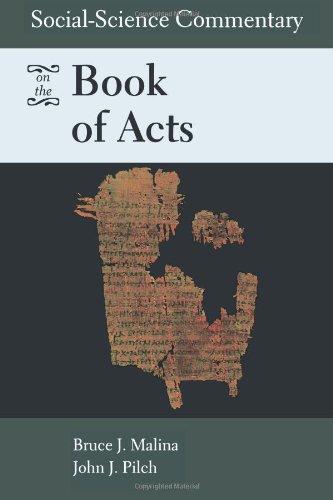
45. The Social Sciences and New Testament
$17.38
46. Interpretive Social Science: A
$17.77
47. Teaching Science for Social Justice
 
$21.80
48. Research Methods in the Social
$39.95
49. Rethinking Science, Technology,
$35.78
50. Doing a Literature Review: Releasing
$45.27
51. The Science of Social Influence
$450.00
52. The Social Science Encyclopedia
$16.95
53. Social Network Analysis (Quantitative
$16.95
54. Fuzzy Set Theory: Applications
$22.46
55. Computational and Mathematical
$16.00
56. Teaching Reading in Social Studies,
$22.08
57. The Philosophy of the Social Sciences:
$15.87
58. Multiple and Generalized Nonparametric
 
$87.75
59. Social Science Research: A Cross
 
$9.99
60. History-Social Science Framework

41. Philosophy of Social Science
by Alexander Rosenberg
Paperback: 272 Pages (2007-08-30)
list price: US$35.00 -- used & new: US$33.06
(price subject to change: see help)
Asin: 0813343518
Average Customer Review: 5.0 out of 5 stars
Canada | United Kingdom | Germany | France | Japan
Editorial Review

Book Description
Philosophy of Social Science provides a tightly argued yet accessible introduction to the philosophical foundations of the human sciences, including economics, anthropology, sociology, political science, psychology, history, and the disciplines emerging at the intersections of these subjects with biology. Philosophy is unavoidable for social scientists because the choices they make in their disciplines force them to take sides on philosophical matters. Conversely, the philosophy of social science is equally necessary for philosophers since the social sciences must inform their understanding of human action, norms, and social institutions.

The third edition retains an illuminating interpretation of the enduring relations between the conduct of inquiry in the social sciences and the fundamental problems of philosophy, with accessible considerations of positivism, European philosophy of history, causation, statistical laws, quantitative models, and postempiricist social science, and it reflects developments in social research over the past two decades that have informed debate in the philosophy of social science. ... Read more

Customer Reviews (2)

5-0 out of 5 stars Must Read
As a recent college graduate, I can say I've learned more about the social sciences and its theoretical underpinnings from this book than I did my entire 5 years in college.While Rosenberg's survey of the social sciences is certainly not exhaustive, he covers many core family disciplines of the social sciences, such as economics and sociology, and their philosophical foundations. Moreover, Rosenberg even includes a review of critical theory, a discipline that probably would not have been mentioned by many mainstream thinkers.The way he uses the problems of philosophy, especially metaphysics and ethics, to compare and contrast the natural sciences and social sciences is powerfully insightful.For anyone interested in the study of human behavior or philosophy, this book is highly recommended.

5-0 out of 5 stars Best introduction to the real philosophy of social science
There are many books out there with the same title as this one. But if you want to know what the real issues in the philosophy of social science are, and how they connect to the basic questions of philosophy--from Plato to Popper--this is the book to read. Rosenberg uniquely combines expertise across the range of problems about social scientific method with an eye to the sides social scientists actually have to take about fundamental questions. The comparison of rational choice, functionalist, and Darwinian explanations of cross-cousin marriage rules is just one example! ... Read more


42. Mathematical Applications: For the Management, Life, and Social Sciences
by Ronald J. Harshbarger, James J. Reynolds
Hardcover: 1000 Pages (2006-01-04)
list price: US$154.36 -- used & new: US$79.05
(price subject to change: see help)
Asin: 0618654216
Average Customer Review: 5.0 out of 5 stars
Canada | United Kingdom | Germany | France | Japan
Editorial Review

Book Description

Intended for a two-term applied calculus or finite mathematics and applied calculus course, Mathematical Applications, 8/e, presents concepts and skills in an approachable way for students of varying abilities and interests. The Eighth Edition retains the features that have made this text a popular choice, including applications covering diverse topics that are important to students in the management, life, and social sciences. This edition broadens the represented applications by adding a number of environmental science applications. The use of modeling has also been expanded, with modeling problems now clearly labeled in the examples.

  • New! Technology Notes have been separated into Calculator Notes and Spreadsheet Notes to provide more precise instruction for using calculators and Excel.
  • Chapter Warm Ups appear at the beginning of each chapter to allow instructors and students an easy way to assess whether the student is prepared to begin the new material.
  • Check Points ask questions and prose problems that help students check their understanding of skills and concepts before they proceed further into the chapter. Solutions appear before the section exercises.
  • New! Application Previews begin each section and establish the context and direction for the concepts that will be covered. In this edition, these previews are revisited in completely worked-out examples later in the lesson.
  • Applications contexts are clearly labeled so instructors can select the applications of interest to the students majoring in various disciplines. More than 2000 of the 5500 exercises in the book are applied problems, allowing students to learn practical applications of mathematical concepts.
... Read more

Customer Reviews (2)

5-0 out of 5 stars Math for all Industries
Covers a wide range of math applications in different industry and situations you may become part of in your career. The examples used were helpful in elaborating further on the equation and topic. Excellent quantitative book - a must have in your library beyond college life.

5-0 out of 5 stars Good Transaction
I was able to contact the seller easily and the book was in the condition as stated.Thank You! ... Read more


43. The Social Sciences: A Cross-Disciplinary Guide to Selected Sources
 Hardcover: 494 Pages (2002-06-11)
list price: US$75.00 -- used & new: US$75.00
(price subject to change: see help)
Asin: 1563089858
Canada | United Kingdom | Germany | France | Japan
Editorial Review

Book Description
It's here: the third edition of the highly acclaimed guide to the social sciences literature! Updated and expanded, this classic comprises more than 1,500 annotated citations, offering librarians and researchers fast and easy access to some of the best and most commonly used resources in the social sciences arena. The book also serves as a standard text in universities nationwide as it gives students a comprehensive overview of must-know reference sources in both print and electronic format. Prepared by leading subject specialist librarians and arranged by discipline, the book's 12 chapters cover general social sciences, political science, economics, business, history, law and justice, anthropology, sociology, education, psychology, geography, and communication. All chapters have been revised, the essays expanded, and the annotated lists of resources have been rewritten to incorporate the latest research findings and developments. ... Read more


44. Interrupted Time Series Analysis (Quantitative Applications in the Social Sciences)
by David McDowall, Richard McCleary, Errol Meidinger, Richard A., Jr. Hay
Paperback: 96 Pages (1980-08-01)
list price: US$16.95 -- used & new: US$14.73
(price subject to change: see help)
Asin: 0803914938
Average Customer Review: 5.0 out of 5 stars
Canada | United Kingdom | Germany | France | Japan
Editorial Review

Book Description
Describes ARIMA, or Box-Tiao models, widely used in the analysis of interrupted time series quasi-experiments. Assumes no statistical background beyond simple correlation. ... Read more

Customer Reviews (1)

5-0 out of 5 stars UNintimidating, compact, concise
In one skinny unintimidating book that has less heft than an issue of TV Guide (that's physical heft, not literary worth), you get all the basics.Great place to start.Terms and equations are explained with simplicity.After reading just this book you'd be able to go do some time seriesanalysis on your computer and have a clue what the output means. ... Read more


45. The Social Sciences and New Testament Interpretation
Paperback: 240 Pages (2004-04)
list price: US$29.95 -- used & new: US$22.76
(price subject to change: see help)
Asin: 1565634101
Average Customer Review: 5.0 out of 5 stars
Canada | United Kingdom | Germany | France | Japan
Editorial Review

Book Description
Methods and findings from the social sciences are increasingly important for New Testament scholars. Unfortunately, however, anthropology and related disciplines are still unfamiliar territory for many students of the Bible. This work acquaints readers with this territory by providing introductions and basic bibliographic orientations to the application of social-scientific categories to New Testament research.

"Although it is impossible to know fully how ancient people lived their daily lives, these essays come as close to realizing that goal as we moderns are likely to get. Required reading for anyone who respects Scripture enough to investigate the world in which it was written and to which its writers originally spoke . . . an invaluable resource for pastor, seminarian, and scholar alike."
—William R. Herzog II, Colgate-Rochester Divinity School ... Read more

Customer Reviews (2)

5-0 out of 5 stars Cross-cultural reading of the Bible is not a matter of choice.
I picked this text up at the regional AAR conference this spring and ended up reading 1/3 of the book that day.

"Cross-cultural reading of the Bible is not a matter of choice." (p.1)The authors intent is to help make us aware of our social distance...that we as Western individualists may not have the cross-cultural understanding to appropriately interpret the New Testament.

The authors readily admit that ancient and modern Mediterranean culture are not exact equivilents but many of the ancient characteristics persist still today which makes it a credible study for social science approach to interpretation.

Bruce Malina's essay on "Understanding New Testament Persons" was particularly helpful.I have had a growing displeasure with individualistic focus of so much Biblical interpretation over the past year and found Malina's thoughts refreshing.

As an introductory text into this conversation another very helpful aspect of this book are the references to other texts in the same field. It has been a great resource already.

5-0 out of 5 stars Excellent introductory book to Social Science interpretation
If ancient culture is what interests you, this is one of the primary texts one should begin with.Rohrbaugh has brought together a great collection of articles on honor and shame, kinship realtions, purity regulations, patron and client, among others.This is an important book for all biblical interpreters and people generally interested in ancient culture.Furthermore, the bibliographic information provided on each subject is helpful for further research.I am going to use this book with my students for years to come. ... Read more


46. Interpretive Social Science: A Second Look
Paperback: 404 Pages (1988-05-23)
list price: US$24.95 -- used & new: US$17.38
(price subject to change: see help)
Asin: 0520058380
Canada | United Kingdom | Germany | France | Japan

47. Teaching Science for Social Justice (Teaching for Social Justice, 10)
by Angela Calabrese Barton, Jason L. Ermer, Tanahia A. Burkett, Margery D. Osborne
Paperback: 208 Pages (2003-09)
list price: US$24.95 -- used & new: US$17.77
(price subject to change: see help)
Asin: 0807743836
Canada | United Kingdom | Germany | France | Japan

48. Research Methods in the Social Sciences Study Guide
by Chava Frankfort-Nachmias, David Nachmias
 Paperback: 400 Pages (2007-03-21)
list price: US$28.95 -- used & new: US$21.80
(price subject to change: see help)
Asin: 1429202998
Canada | United Kingdom | Germany | France | Japan

49. Rethinking Science, Technology, and Social Change
by Ralph Schroeder
Hardcover: 192 Pages (2007-09-27)
list price: US$39.95 -- used & new: US$39.95
(price subject to change: see help)
Asin: 0804755884
Canada | United Kingdom | Germany | France | Japan
Editorial Review

Book Description

Rethinking Science, Technology, and Social Change challenges the prevailing notion that science and technology are constructed or socially shaped. The text puts forth a case for technological determinism, based on a realistic and pragmatic account of science and technology, informed by historical comparisons. 

Schroeder begins by exploring the social organization of scientific and technological advances; the intersecting trajectories of big science and technological systems; and the impact of science and technology on economic change. He goes on to discuss the social implications of technology, including the way that it affects politics and consumption. The book then rethinks traditional theories about the relationship between science, technology, and social change. The argument presented shifts the debate on topics such as the relationship between growth and sustainability, and thus has important policy implications. This book will be of great interest to scholars, scientists, and anyone interested in understanding how science and technology are transforming our world.


... Read more

50. Doing a Literature Review: Releasing the Social Science Research Imagination (Published in association with The Open University)
by Christopher Hart
Paperback: 230 Pages (1999-03-01)
list price: US$46.95 -- used & new: US$35.78
(price subject to change: see help)
Asin: 0761959750
Average Customer Review: 4.0 out of 5 stars
Canada | United Kingdom | Germany | France | Japan
Editorial Review

Book Description
Doing a Literature Review offers students from across the social sciences and humanities a practical and comprehensive guide to writing a literature review. It takes the reader through the initial states of an undergraduate dissertation or postgraduate thesis. ... Read more

Customer Reviews (9)

3-0 out of 5 stars not for the beginners
I bought this book because it was in the medical school bookshop, and I was looking for something about literature review. However, this book is written for people in the social sciences. It has a limited value for someone in clinical research.
There are however some good things, it opens the mind to a different aspect in writing reviews. I am sure I have gained some knowledge from it but it was time consuming. It is well written and has examples.
It will not tremendously help people in clinical research.

3-0 out of 5 stars A good guide on how to analyze ideas and synthesize new ones
Hart's material will benefit anyone who needs to develop and demonstrate their expertise on a topic. He describes how the review contributes to the defense of a research topic and its findings, at the master's and doctoral levels. He presents examples of what thesis and dissertation boards look for in research proposals and papers.

The book describes techniques to extract clues about theories and methods a researcher used. Hart provides excellent guidance on how to analyze the literature on a topic, develop a map of ideas, and synthesize a new contribution.

Anyone who wants to develop their skills as a researcher, or student, should definitely purchase this book. I also shared many of this book's insights with my friends, who are not researchers.

Although I strongly recommend the book, I only rate it 3 stars. The book is unorganized, and the writing is poor.

In an example from Chapter 4, Hart presents a table of 19 common fallacies. The first column presents the type of fallacy (in no logical or methodical order). He titles the second column "What it is and how to avoid it" but only the first entry presents any "how to avoid it" data. The remaining 18 entries have no advice on avoidance.

I also felt some diagrams present no useful information; and his prose rambles and repeats itself. In short, Hart gives us dynamite information, but it is frustrating to sort through its sloppy presentation.

2-0 out of 5 stars Too little for the price
Foudn the text minimally helpful. Not full of insight but just common sense.
Cost is too high for the return.

4-0 out of 5 stars Great Resource for the Dissertation
I found this book to be a great resource as I am doing research for my dissertation. It has helped me to look at the lit review in a new light and has given me several ideas of others avenues to search.

5-0 out of 5 stars so good my advisor is going to use it
This book is great.It has all you need to complete a research paper at any level.I used it for my bachelor's project which, according to my advisor, is equivalent to a Master's thesis in content requirement.My advisor has asked me to lend him the book so he can use it to revise the current research manual supplied by the college.This book is easy to read and has a lot of useful tables and charts. ... Read more


51. The Science of Social Influence (Frontiers of Social Psychology)
by A. Pratkanis
Hardcover: 365 Pages (2007-05-17)
list price: US$65.00 -- used & new: US$45.27
(price subject to change: see help)
Asin: 1841694266
Canada | United Kingdom | Germany | France | Japan
Editorial Review

Book Description

The contributions to this volume capture the thrill of current work on social influence, as well as providing a tutorial on the scientific and technical aspects of this research. The volume teaches the student to:

  • Learn how to conduct lab, field and case research on social influence through example by leading researchers
  • Find out about the latest discoveries including the status of research on social influence tactics, dissonance theory, conformity, and resistance to influence
  • Discover how seemingly complex issues such as power, rumors, group and minority influence and norms can be investigated using the scientific method
  • Apply knowledge to current influence campaigns to find out what works and what does not.

The Science of Social Influence is the perfect core or complementary text for advanced undergraduate or graduate students in courses such as Attitudes and Attitude Change, Communications, Research Methods and, of course, Social Influence.

... Read more

52. The Social Science Encyclopedia
by Adam Kuper
Hardcover: 1000 Pages (2005-01-10)
list price: US$450.00 -- used & new: US$450.00
(price subject to change: see help)
Asin: 0415320968
Canada | United Kingdom | Germany | France | Japan
Editorial Review

Book Description
This new edition of an already classic reference work provides students, librarians, social scientists, and professionals with an invaluable compendium of the entire range of the social sciences. The 500+ entries on all of the major issues and concepts in the social sciences encompass the areas of anthropology, business, economics, education, government and politics, law and criminology, linguistics, psychology, social work, sociology, women's studies and beyond. For anyone concerned with these fields, The Social Science Encyclopedia is a truly essential resource. ... Read more


53. Social Network Analysis (Quantitative Applications in the Social Sciences)
by David Knoke, Song Yang
Paperback: 144 Pages (2007-11-14)
list price: US$16.95 -- used & new: US$16.95
(price subject to change: see help)
Asin: 1412927498
Average Customer Review: 5.0 out of 5 stars
Canada | United Kingdom | Germany | France | Japan
Editorial Review

Book Description

In the thoroughly updated edition of Social Network Analysis, authors David Knoke and Song Yang take into account the vast number of changes in the field that have occurred in the 25 years since the first edition was published. They cover various issues in basic network concepts, data collection, and network analytical methodology. They succinctly illustrate the concepts and methods related to substantive social network research problems, citing examples ranging from childrens play groups to organizations, communities, and international systems. Readers can also analyze the real and artificial

datasets incorporated throughout the book.

Key Features of the Second Edition

· Expands on the previous edition by incorporating new basic social network developments

· Provides a general overview of fundamental theoretical and methodological topics

· Clearly presents concepts by using concise language and avoiding technical complexities

Intended Audience

The texts informal approach will appeal to both students and professionals in the humanities and social sciences.

... Read more

Customer Reviews (1)

5-0 out of 5 stars Great overview of SNA
A very good beginning text that presents an overview of social network analysis (SNA).It is an easy read that will allow one to understand the basics of SNA, including an overview of the mathematical elements.Also it has a nice reference list for the reader who desires a deeper understanding. ... Read more


54. Fuzzy Set Theory: Applications in the Social Sciences (Quantitative Applications in the Social Sciences)
by Michael J. Smithson, Jay Verkuilen
Paperback: 112 Pages (2006-02-17)
list price: US$16.95 -- used & new: US$16.95
(price subject to change: see help)
Asin: 076192986X
Canada | United Kingdom | Germany | France | Japan
Editorial Review

Book Description
Fuzzy set theory deals with sets or categories whose boundaries are blurry or, in other words, "fuzzy." This book presents an accessible introduction to fuzzy set theory, focusing on its applicability to the social sciences. Unlike most books on this topic, Fuzzy Set Theory: Applications in the Social Sciences provides a systematic, yet practical guide for researchers wishing to combine fuzzy set theory with standard statistical techniques and model-testing.

Key Features:  

  • Addresses Basic Concepts: Fuzzy set theory is an analytic framework for handling concepts that are simultaneously categorical and dimensional. Starting with a rationale for fuzzy sets, this book introduces readers with an elementary knowledge of statistics to the necessary concepts and techniques of fuzzy set theory and fuzzy logic.
  • Introduces Novel Ways of Analyses: Researchers are shown alternative methods to conventional models, especially for testing theories that are expressed in set-wise terms. Issues of operationalizing graded membership in a fuzzy set and the measurement of the properties of such sets are a few of the topics addressed.
  • Illustrates Techniques and Applications: Real examples and data-sets from various disciplines in the social sciences are used to demonstrate the connections between fuzzy sets and other data analytic techniques, empirical applications of the technique, and the critiques of fuzzy set theory.
Intended Audience:  
Ideal for researchers in the social sciences, education, and behavioral sciences; as well as graduate students in the applied social sciences ... Read more

55. Computational and Mathematical Modeling in the Social Sciences
by Scott de Marchi
Paperback: 220 Pages (2005-08-22)
list price: US$26.99 -- used & new: US$22.46
(price subject to change: see help)
Asin: 0521619130
Average Customer Review: 5.0 out of 5 stars
Canada | United Kingdom | Germany | France | Japan
Editorial Review

Book Description
Mathematical models in the social sciences have become increasingly sophisticated and widespread in the last decade.This period has also seen many critiques, most lamenting the sacrifices incurred in pursuit of mathematical perfection. If, as critics argue, our ability to understand the world has not improved during the mathematization of the social sciences, we might want to adopt a different paradigm.This book examines the three main fields of mathematical modeling--game theory, statistics, and computational methods--and proposes a new framework for modeling. ... Read more

Customer Reviews (1)

5-0 out of 5 stars Review From Public Choice
Imagine that you're out for a relaxing dinner at your neighborhood bistro. Your waiter, a lanky young lad named Trey, sidles up to your table and describes the evening's specials beginning with a free range, grilled, Sonoma chicken bathed in a white wine and balsamic reduction and peppered with bits of black truffle.You think that the dish sounds wonderful and accept it for consumption with no revisions.

After reading this book, I can only guess that Scott de Marchi's reaction would be a little different.He'd point out that grilling was just one of many options. Alternatively, the chef could have fried it, baked it, braised it, seared it, roasted it, or even cooked it at low temperature in a Ziplock bag.Why did the chef choose grilling? And, oh by the way, why free range Sonoma chicken?Why not organic chicken - wouldn't its stronger taste hold up better to the wine and balsamic reduction? Heck, why not go all out and get one of those chickens that was hand-fed corn mash by Italian monks who gave it daily massages and hour long walks thru Tuscan valleys?And what about the number of possible spice and sauce combinations?Why black truffles?

The chicken entrée suffers from a curse of dimensionality.By modifying our choices on each dimension, we can create enough chicken variations to awe even the late Carl Sagan. Gourmands benefit from the curse - we can expect an original special every week.Social scientists - historians, theorists and empiricists alike - take the curse on the chin.It obliges a rethinking of how we construct and evaluate a model, or so says Scott de Marchi in this fascinating and challenging new book.To feel the effects of the curse, suppose that you're writing an empirical model of why countries go to war. In choosing variables for your regression, you pick ten from a set of twenty.You then toss in an interaction term, chosen with great care from the forty-five possible pairs.You then choose a model specification - linear, log linear, non parametric, or whatever.When you step back and look at the process of creating your empirical model, you realize that you have as many possible regressions as the bistro's chef has chicken entrees.

Suppose instead that you're writing a game theory model of first strikes.Professor de Marchi has a few questions to ask:Is the game one shot or repeated?Are moves sequential or simultaneous?Is information asymmetric?Are the players risk averse?Are preferences separable?

Given the billions of possible model specifications, the task of finding significant coefficients or proving (wink-wink) a general theorem suddenly doesn't look so impressive.Even combining the two: integrating a theoretical model and empirical analysis (EITM anyone?) looks about as hard as cooking up a little Bonferroni chicken to go with that Oregon Coast Pinot Noir. Once aware of the existence of the curse, we can see no shortage of naked emperors (some of whom de Marchi reveals with some relish).We can also try to get around it, to conjure up a counter hex.

The counter hex proposed by de Marchi consists of three parts. First, he wants us to split our data into training sets and testing sets -- a good idea, but it comes with a cost.A little math shows that dividing the data results in data sets that are, on average, only half as big, so we'll need a lot more wars for IR to have any hope of finding statistical significance.

Second, he wants us to analyze classes of models and not individual models with idiosyncratic (and possibly brittle) assumptions.In demanding that we consider classes of models, de Marchi implicitly charges some mathematical theorists with selling magic beans in the form of theorems that rely on specific functional forms.Results for a single functional form do not a general theorem make.The difference between a three person, three alternative example of a Condercet Cycle and Arrow's Possibility Theorem is the difference between predicting that a falling apple will hit the ground and formulating the theory of gravity.But proving general results is not easy.In fact, few general results exist.So why not be honest about the lack of generality rather than cooking up specific models that give the desired result?

The proposed solution, to create a feature space (dimensions on which we make various assumptions) and explore all of the models within that space, sounds good but it creates a problem unless we can increase the birth rates in Pasadena and Rochester. We still have too many models to explore. To get around the problem of too many models and too little time, de Marchi has a novel solution: use computational methods to explore the space of possible models. If we're using specific functional forms anyway, we might as well simulate them and not bother with formal proofs.Simulation is quicker.By simulating within feature space, we can distinguish robust findings from brittle examples.This approach requires combining art and science.We must constrain the feature space so that we're merely stunned and not cursed by the dimensionality.

Third, de Marchi wants our models to be more realistic.(Who doesn't?) But, how do we achieve realism and yet maintain a limited feature space that we explore in depth?Can we be realistic and remain within or at least comfortably near Chris Achen's three-variable world?de Marchi believes that we can, provided that we start simple and build up toward realism.Thus, we have complicated models as the sum of lots of simple models, all of which we understand fully as a result of exploring their feature spaces.As an example of a realistic model, he goes outside of social science and looks at machine chess programs.These programs don't just apply to chess in some metaphorical sense, as in "the Colonel Blotto game captures the essence of chess."They actually play chess and play better than people do.Having a model that plays chess produces a further advantage: the modeler can use real data from games.

Let's suppose we take a vote between continuing with the status quo and accepting de Marchi's vision of the future. The status quo consists of unrealistic, narrow models that we test using all of our data with substantial freedom over what control variables we include. de Marchi's alternative consists of cumulative realistic models (as well as nearby models to make sure that our theory is robust) that are calibrated on training sets and tested on separate data. The vote would be Roosevelt-Landon 1936 all over again.Apart from some holdouts in Vermont and Maine, de Marchi would win everywhere.However, in this election, we don't just pull levers.We have to vote with our heads, which can be thick and slow to respond.

The path de Marchi would like us to take requires nontrivial changes in how we build models and how we test them. Sure we can learn to split our data sets in two.But will we learn Perl?Will we take the time to construct a feature space?And what if that feature space reveals brittleness? Will we bail out and write a paper with quasi-linear preferences or with a one-dimensional preference space?Not only does he require that we learn new tools, he's asking us to change our standards. Rather than bestow awards on books that consist of (a) a captivating anecdote from history (b) a narrow specific functional form model that provides the key intuition (c) an empirical test with ten control variables and one interactive term that demonstrates validity of key intuition and (d) a rich case study that fills in all the gaps, we might see these books as cursed by problems of dimensionality. With so much history, so many models, and so many variables to choose from, these books should be as easy to make as the Chicken Marbella from The Silver Palate.

This critique of the status quo may get under the skin of some readers. Sure, your average PhD student can choose from among thousands of theoretical models and econometric specifications, but finding two that align -- where the econometrics support what the theory predicts - is not as easy as he makes it sound. If it were, we'd have many more papers that met this standard, and we wouldn't have summer courses sponsored by the NSF teaching students how to integrate these methods taught by (among others) Scott de Marchi.Furthermore, the models in these award-winning books aren't all that brittle.They do meet qualitative robustness criteria. Most theorists and econometricians can sniff out rigged models.We can tell a universal insight from a unicorn. When we see a model with quasi-linear preferences or the monotone likelihood ratio property, we know the rabbit has been placed in the hat, and we take the author to task accordingly.

Given that we're all aware of the curse, and we're qualitatively mindful of it when evaluating research, de Marchi's claims seem less provocative, and at the same time, more reasonable.He's advocating that we supplement our reasoned judgment with a scientific approach based on feature spaces and computational models.Any time we can replace subjective criteria with more objective, scientific criteria, we move science forward, which this book urges us to do.

Some critiques may complain that this book explains how to do it, but it doesn't actually do it. True, the book would be stronger if it took us on a complete tour of the shiny new city on the hill that it constructs. A short chapter on how de Marchi built a model (and critics may say an unrealistic one - ouch!) along with a smidgen of Perl code won't sway the masses. The book would be more convincing if had a six hundred page companion volume that took on a puzzle, defined and explored a feature space, tested the robust conclusions out of sample, and then built on the model cumulatively to create a skin tight fit to data.It doesn't.That's because neither he, nor anyone else for that matter, quite knows how to do what he'd like us to do. We're not there, at least not yet, though I suspect that midnight oil burns in Durham.

At present, we have is this slim volume, full of good ideas, deep insights, and practical advice for how to do sound methodological work and how not to do it.Given these strengths, this book should earn a cultish following among graduate students who possess a methodological bent. The book should also become standard reading in introductory methodology courses, at least in those that aren't spineless. (I mean those that don't rely on books.)If it doesn't, the discipline misses an opportunity to improve methodological training.

This is the rare book that suffers from brevity - the examples could be worked out in greater detail. It's not perfect.The argument is flawed in places.For example, not all theory has to be immediately tested to be useful.All of that preference theory comes in handy when he writes his separable preference model, yet little of it was written to be testable.Yes, the light it shines is harsh in places, but overall, the book must be seen as a huge success.It's both deep and approachable.de Marchi manages not to dull our senses with an abundance of jargon or notation.To the contrary, the reader wants even more detail, especially about computational models.

Computational modelers like de Marchi want space at the conferences and in the journals.They want to be taken as seriously as the mathematical modelers. Surely, de Marchi has advanced that cause. As his book makes clear, the existence of computational models provides an opportunity to improve social science. Computational modelers have a powerful technology and they're building a science. They've gained footholds in physics, chemistry, biology, and (egad) mathematics.Social scientists would do far better to be accepting than to be skeptical.

In sum, de Marchi's provocative, incisive, and at times brilliant introduction to computational methods can be thought analogous to one of those early maps of North America.We might quibble with the depiction of the coastline, but we cannot deny the existence of the continent.


... Read more


56. Teaching Reading in Social Studies, Science and Math (Grades 3 & Up)
by Laura Robb
Paperback: 384 Pages (2003-01-01)
list price: US$29.99 -- used & new: US$16.00
(price subject to change: see help)
Asin: 0439176697
Average Customer Review: 5.0 out of 5 stars
Canada | United Kingdom | Germany | France | Japan
Editorial Review

Product Description
Teaching Reading in Social Studies, Science and Math
Includes strategy lessons to use before, during and after reading. Explains how to support students one-on-one and how to use discussions to deepen learning, build vocabulary and use literature in the content areas. 7 x 9. 384 pages. Grades 3 and up.
Teaching Reading in Social Studies, Science and Math
Includes strategy lessons to use before, during and after reading. Explains how to support students one-on-one and how to use discussions to deepen learning, build vocabulary and use literature in the content areas. 7 x 9. 384 pages. Grades 3 and up.
... Read more

Customer Reviews (1)

5-0 out of 5 stars Excellent Methods Resource
This is a very reader-friendly book. It's easy style and appealing format will make it a handy resource in the classroom. The material is very practical and especially valuable to a new teacher. ... Read more


57. The Philosophy of the Social Sciences: An Introduction
by Robert Bishop
Paperback: 403 Pages (2007-08-09)
list price: US$39.36 -- used & new: US$22.08
(price subject to change: see help)
Asin: 0826489532
Canada | United Kingdom | Germany | France | Japan
Editorial Review

Book Description
This is the definitive companion to the study of the philosophy of the social sciences. It provides the student with an accessible, comprehensive and philosophically rigorous introduction to all the major philosophical concepts, issues and debates raised by the social sciences. Ideal for use in undergraduate courses, the structure and content of this textbook-the most thorough, clearly argued and up-to-date available-closely reflect the way the philosophy of the social sciences is studied and taught.

The text examines key conceptual and methodological questions in the social sciences and illustrates how these shape the practice of research, the interpretation of findings and theory formulation in such disciplines as economics, political science and psychology. The book not only offers lucid and incisive coverage of the philosophy of the social sciences, but also extends the major debates and considers the latest directions in this growing area of philosophical interest. Robert C. Bishop's cogent and rigorous analysis is supplemented by useful pedagogical features, including key examples from philosophical writing; summaries of core debates; sample questions and exercises; and guides for further reading. ... Read more


58. Multiple and Generalized Nonparametric Regression (Quantitative Applications in the Social Sciences)
by John Fox
Paperback: 96 Pages (2000-05-01)
list price: US$16.95 -- used & new: US$15.87
(price subject to change: see help)
Asin: 0761921893
Average Customer Review: 5.0 out of 5 stars
Canada | United Kingdom | Germany | France | Japan
Editorial Review

Book Description

This book builds on John Foxs previous volume in the QASS Series, Non Parametric Simple Regression. In this monograph readers learn to estimate and plot smooth functions when there are multiple independent variables. While regression analysis traces the dependence of the distribution of a response variable to see if it bears a particular (linear) relationship to one or more of the predictors, nonparametric regression analysis makes minimal assumptions about the form of relationship between the average response and the predictors. This makes nonparametric regression a more useful technique for analyzing data in which there are several predictors that may combine additively to influence the response. (An example could be something like birth order/gender/and temperament on achievement motivation).

Unfortunately, researchers have not had accessible information on nonparametric regression analysis, until now. Beginning with presentation of nonparametric regression based on dividing the data into bins and averaging the response values in each bin, Fox introduces readers to the techniques of kernel estimation, additive nonparametric regression, and the ways nonparametric regression can be employed to select transformations of the data preceding a linear least-squares fit. The book concludes with ways nonparametric regression can be generalized to logit, probit, and Poisson regression.

... Read more

Customer Reviews (1)

5-0 out of 5 stars Multiple and Generalized Nonparametric Regression (Quantitative Applications in the Social Sciences)
These books are what they are, detailed and informative about a particular statistical technique.They are upper level reading, but they are useful in the social sciences in particular.Sometimes, they are so upper level that they are beyond comprehension, but that is the nature of the series.
... Read more


59. Social Science Research: A Cross Section of Journal Aritcles for Discussion and Evaluation
 Paperback: 320 Pages (2007-04-30)
list price: US$44.95 -- used & new: US$87.75
(price subject to change: see help)
Asin: 1884585744
Canada | United Kingdom | Germany | France | Japan

60. History-Social Science Framework for California Public Schools K-12, 2001 updated
 Paperback: Pages (2001)
-- used & new: US$9.99
(price subject to change: see help)
Asin: 0801115310
Canada | United Kingdom | Germany | France | Japan

  Back | 41-60 of 100 | Next 20
A  B  C  D  E  F  G  H  I  J  K  L  M  N  O  P  Q  R  S  T  U  V  W  X  Y  Z  

Prices listed on this site are subject to change without notice.
Questions on ordering or shipping? click here for help.

site stats