e99 Online Shopping Mall

Geometry.Net - the online learning center Help  
Home  - Science - Taxonomy (Books)

  1-20 of 100 | Next 20
A  B  C  D  E  F  G  H  I  J  K  L  M  N  O  P  Q  R  S  T  U  V  W  X  Y  Z  

click price to see details     click image to enlarge     click link to go to the store

$39.09
1. Taxonomy for Learning, Teaching,
$65.52
2. The New Taxonomy of Educational
$75.00
3. Microbiology with Diseases by
$80.95
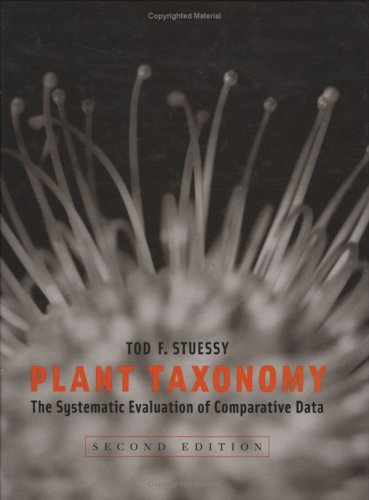
4. Vascular Plant Taxonomy
$15.56
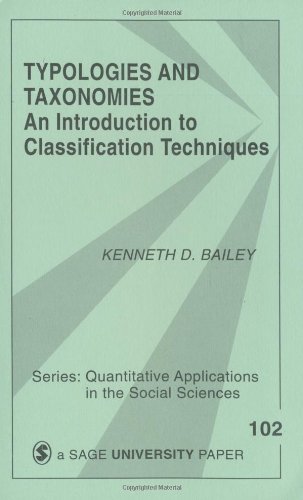
5. Typologies and Taxonomies: An
$69.90
6. Organising Knowledge: Taxonomies,
$31.00
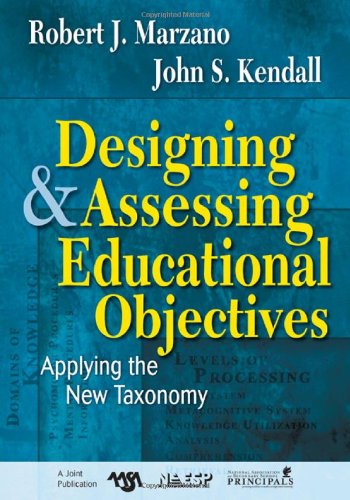
7. Designing and Assessing Educational
 
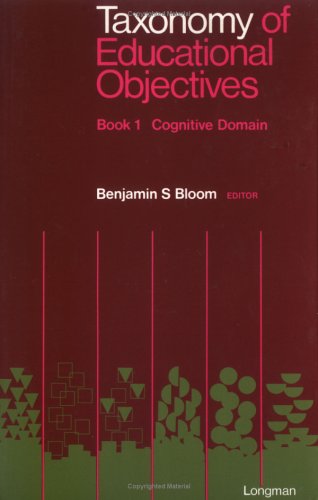
8. Taxonomy of Educational Objectives
 
$4.89
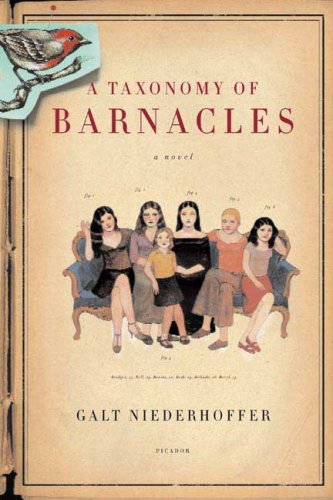
9. A Taxonomy of Barnacles
 
10. Affective Domain: The Classification
11. Taxonomy of Educational Objectives,
$60.90
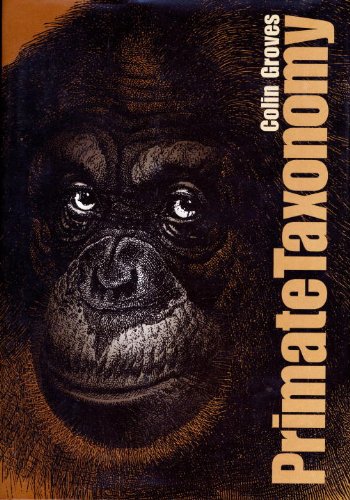
12. PRIMATE TAXONOMY (Smithsonian
 
13. Principles of numerical taxonomy
$138.11
14. World Spice Plants: Economic Usage,
 
15. An Introduction to Plant Taxonomy
$176.15
16. Virus Taxonomy: VIIIth Report
$230.27
17. Designing a New Taxonomy of Educational
$68.11
18. Transformed Cladistics, Taxonomy
$45.00
19. Taxonomies of the School Library
$40.90
20. Microbiology with Diseases by

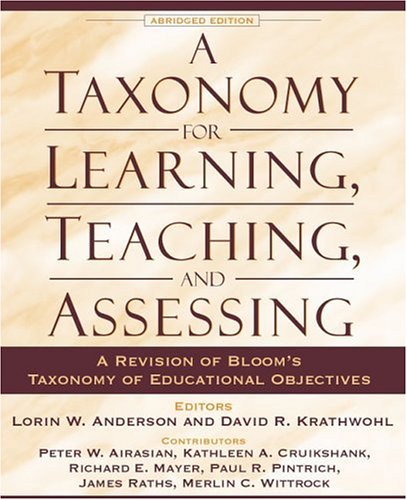
1. Taxonomy for Learning, Teaching, and Assessing, A: A Revision of Bloom's Taxonomy of Educational Objectives
by Lorin W. Anderson, David R. Krathwohl, Peter W. Airasian, Kathleen A. Cruikshank, Richard E. Mayer, Paul R. Pintrich, James Raths, Merlin C. Wittrock
Paperback: 336 Pages (2000-12-29)
list price: US$43.80 -- used & new: US$39.09
(price subject to change: see help)
Asin: 080131903X
Average Customer Review: 5.0 out of 5 stars
Canada | United Kingdom | Germany | France | Japan
Editorial Review

Book Description
B> This revision of Bloom's taxonomy is designed to help teachers understand and implement standards-based curriculums.Cognitive psychologists, curriculum specialists, teacher educators, and researchers have developed a two-dimensional framework, focusing on knowledge and cognitive processes. In combination, these two define what students are expected to learn in school. Like no other text, it explores curriculums from three unique perspectives-cognitive psychologists (learning emphasis), curriculum specialists and teacher educators (C&I emphasis), and measurement and assessment experts (assessment emphasis). This "revisited" framework allows you to connect learning in all areas of curriculum.Educators, or others interested in Educational Psychology or Educational Methods for grades K-12. ... Read more

Customer Reviews (5)

5-0 out of 5 stars An excellent revision
This book is a great addition to the original Blooms Taxonomy.I found it very informative and the explanations were very clear and helpful.

5-0 out of 5 stars Teachers should understand what they are doing
Anderson and Kratwohl (eds.) describe a taxonomy of learning and therefore teaching and assessing. Based on the original work of Bloom (1956) they develop further his ideas. Whereas Bloom described a taxonomy of the cognitive process, the new book introduces a 2nd dimension, and classifies the knowledge as such. The concepts are well described, in correct terms. Anyone teaching may easily follow the argumentation. It is shown why and how the two-dimensional taxonomy will be useful in planning, preparing and assessing curricula and lectures or "teaching events". Practical examples illustrate the well presented theory. The clear structure allows one to read the book as a whole as well as to pick out issues of special interest. It was useful for me as a Prof. at a University of Applied Sciences as a framework in order to better and quicker plan and organize a new curriculum. The book is recommended for both, new teachers at any level, as well as for experienced profs revising their lectures.

5-0 out of 5 stars Bloom's Taxonomy & Anderson's Revision
Until the 1950's the educational system within the United States had no consensus or continuity in its approach to learning."Knowledge" by interpretation meant different things to different people and professional educators had no basis by which to tie together the cornucopia of theories.By definition, taxonomy is in its widest sense, the classification of any group of likened things to include principles and ideas.Benjamin Bloom designed a hierarchical taxonomy of cognitive skills for the educator who is designing curriculum and formatting educational standards and objectives.This cognitive domain is laid out in six areas now quite familiar to teachers:knowledge, comprehension, application, analysis, synthesis, and evaluation.
Knowledge is memorization, the ability of the student to recall information.The concept can be found in lesson plans that require the student to define, recall, or label.Examples of knowledge as a cognitive skill include learning the alphabet or memorizing important dates in history.Once the ability to gather information at the knowledge stage is mastered the student proceeds to comprehension.At this stage the student begins to see word clues such as "estimate", "explain", and "summarize".The student is not generating anything new but is putting learned knowledge into his / her own words.At the application stage the student learns to use the knowledge.Key words appear such as "apply", "compute", or "demonstrate".At the analysis stage the student begins to generalize information to new or different situations.The student has yet to create anything wholly new, however, the cognitive process has sequenced from basic recognition and memory skills to those tools needed for abstract thought and creation.In the next stage, synthesis, the student begins to see key words such as "compose", "create", and "modify".The pre-schooler has gone from recognizing a Lego toy to using the toys to create something new.In the final cognitive stage, evaluation, the student gains the ability to judge or critique.He / she can now compare the creations of others and validly support, explain, or defend the work.
The educator could now function in agreement with his / her fellows in designing curriculum in an environment of consensus.Why then did Drs. Anderson and Krathlwohl feel the need to revise Blooms work?The authors answered this question in the book's Preface by stating that there were two primary reasons:first, to refocus the attention of educators on the original Bloom's Taxonomy as a document not only historical in nature but valid in context of today's standards, and, secondly, to incorporate new knowledge and thought into Bloom's framework.Though it is not so stated in the Preface, much of this new knowledge and thought is in dealing with an ever-growing populace of divergent learners and likewise with an eye toward the population of children in low socio economic situations.
The revised Bloom's Taxonomy incorporates a framework that is no longer simply linear but a grid.In Anderson & Krathwohl's revision the original six components are renamed so that they still relate directly to the original taxonomy but in terms that are both more relevant to today and simplified."Knowledge" becomes "remember", "comprehension" becomes "understand", "application" is simplified to "apply", "analysis" to "analyze", and "synthesis" becomes somewhat confusingly "evaluate" as "evaluation" changes to the more descriptive "create".This revision allows for the discrimination of higher order thinking even within the lower cognitive levels of Bloom's.For the teacher of special needs or struggling learners, this is especially useful.Simply put, you can go more places on a grid than you can on a straight line.
Anderson and Krathwohl subdivide the x-axis consisting of the renamed Bloom cognitive dimensions into a y-axis of four knowledge dimensions.These four dimensions are, like the cognitive dimensions, hierarchical.At the base is found factual knowledge; knowledge of terms, details, symbols, etc.Conceptual knowledge; classification, categorization, structures, etc follow this.From there the hierarchy advances to application with the dimension of procedural knowledge.At this level the student applies the facts and concepts.Here, for example, the student learns not only to recognize math symbols but also to apply them to an equation.The peak of this hierarchy is meta-cognitive knowledge.At this level the student applies strategies and self-awareness of his or her skills to the lesson.
This revision ranges then from remembering factual knowledge as the lowest cognitive function to creating something new with the application of meta-cognition to truly understand what has been created.The teacher can put this taxonomy to its fullest advantage by dissecting his / her exams and lesson plans to fully realize the potential of the student.It is the opinion of this reviewer that the Revised Bloom's Taxonomy is of particular use when dealing with the two extremes of the learning spectrum, the mentally disabled or struggling student and the student who excels academically.In the case of the student with cognitive deficits, the instructor who recognizes that his / her students may never pass beyond the lower processes of "remember" and "understand" in Bloom may still challenge and properly assess those students in both academic and adaptive areas by progressing from the factual knowledge dimension to procedural and meta-cognitive knowledge.With the latter, the student who is excelling and most likely placed in the school's gifted and talented program, the instructor may use Anderson and Krathwohl's revised taxonomy to insure that the student is not evaluating and creating based on memorization of facts and concepts but on using appropriate procedures and meta-cognitive skills to create something that is unique to that student's abilities.
This text is complete with examples of the taxonomy in practical application with the standards and objectives the teacher is familiar with.I am confident that once the basics of this revision are understood by the educational professional, the book will become a well-used tool in the real world of teaching today's students.

4-0 out of 5 stars A stepstone to know the taxonomy
I found it is very easy to understand the two dimensions of revised taxonomy. Basically, this book is a pratical reference while conducting research and seeting instrutional objectives.

5-0 out of 5 stars Taxonomy for Learning, Teaching, and Assessing
In an era of state-mandated standards, this book is an essential tool for teachers. Anderson et. al. show how to cut through the jargon and get down to what your students really need to learn. Finally someone has created a book that connects theory and practice, expectations and reality! This book is definitely worth reading. ... Read more


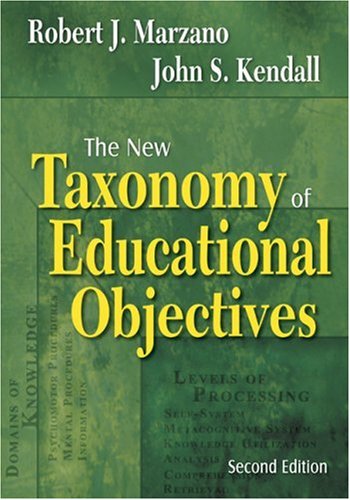
2. The New Taxonomy of Educational Objectives
by Robert J. Marzano, John S. Kendall
Hardcover: 208 Pages (2006-12-29)
list price: US$71.95 -- used & new: US$65.52
(price subject to change: see help)
Asin: 1412936284
Average Customer Review: 3.0 out of 5 stars
Canada | United Kingdom | Germany | France | Japan
Editorial Review

Book Description
 "Educational leaders wishing to infuse greater complexity, rigor, and substance into the curriculum will immerse themselves in The New Taxonomy of educational Objectives. The benefactors will be teachers who will reach beyond their current achievements and students who will develop the intellectual prowess required to master the intricacies, dichotomies, and ambiguities of life in the twenty-first and twenty second centuries."
Arthur L. Costa, Professor Emeritus
California State University, Sacramento

Motivation and metacognition, two critical components, are now strategically and meaningfully integrated. This revised hierarchy takes us beyond Bloom toward a better understanding of educational theory and practice.
Virginia Cotsis, Secondary Curriculum Specialist
Ventura County Office of Education, Camarillo, CA

"A potent tool for designing educational objectives, developing assessments, making state standards more useful to teachers and students, designing curriculum, and formulating a thinking-skills curriculum."
Carol Ann Tomlinson, Professor of Educational Leadership
Foundations& Policy, University of Virginia

A thoroughly updated guide to the nature of knowledge!

Marzano's Taxonomythe most current and comprehensive guide in 50 years to define the new standard for educationis a must-have resource for all directors of curriculum and instruction, directors of staff development, principals, and teachers. Developed by Robert Marzano and John S. Kendall, internationally recognized experts in the development and improvement of standards for education, this field-tested and proven reference contains the most current research on the nature of knowledge and cognition and a reflection of the movement to standards-based education. Based on three domains of knowledge: information, mental procedures, and psychomotor procedures; and six levels of processing: retrieval, comprehension, analysis, knowledge utilization, metacognition, and self-system thinking, this essential guide offers specific applications for:

  • Designing and classifying educational objectives
  • Creating assessments
  • Redesigning state and district-level standards
  • Formulating curriculum
  • Outlining a thinking-skills curriculum

Robert Marzano, author of 25 books, 150 articles and chapters in books, and 100 sets of curriculum materials for teachers and students in grades K12, is president of Marzano & Associates, senior scholar at Mid-continent Research for Education and Learning (McREL), and associate professor at Cardinal Stritch University.

John S. Kendall, senior director in research at Mid-continent Research for Education and Learning (McREL), has authored or co-authored six books and more than 30 articles.

... Read more

Customer Reviews (1)

3-0 out of 5 stars Typos
This book has several typos and other editing errors.Errors make it hard to follow. ... Read more


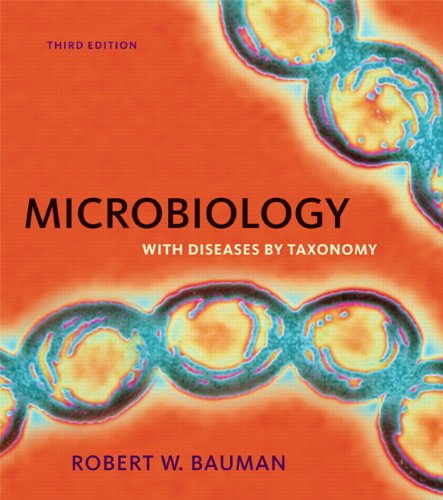
3. Microbiology with Diseases by Taxonomy (2nd Edition) (The Microbiology Place Series)
by Robert W. Bauman
Hardcover: 896 Pages (2006-01-13)
list price: US$165.40 -- used & new: US$75.00
(price subject to change: see help)
Asin: 080537678X
Average Customer Review: 5.0 out of 5 stars
Canada | United Kingdom | Germany | France | Japan
Editorial Review

Book Description
Filled with lively vignettes and cutting-edge research that highlight the intrinsic appeal of microbiology, Bauman’s Second Edition retains the book’s groundbreaking art program, includes a handy new “Microbe-at-a-Glance” feature, offers new options for the Microbiology Place website/CD-Rom, and provides instructors with a new Media Manager presentation package with 30 multi-step animations. KEY TOPICS: A Brief History of Microbiology, The Chemistry of Microbiology, Cell Structure and Function, Microscopy, Staining and Classification, Microbial Metabolism, Microbial Nutrition and Growth, Microbial Genetics, Recombinant DNA Technology, Controlling Microbial Growth in the Environment, Controlling Microbial Growth in the Body: Antimicrobial Drugs, Characterizing and Classifying Prokaryotes, Characterizing and Classifying Eukaryotes, Characterizing and Classifying Viruses, Viroids, and Prions, Infection, Infectious Diseases, and Epidemiology, Innate Immunity, Specific Defense: Adaptive Immunity, Immunization and Immune Testing, Hypersensitivities, Autoimmune Diseases, and Immune Deficiencies, Pathogenic Gram-Positive Cocci and Bacilli, Pathogenic Gram-Negative Cocci and Bacilli, Mycoplasmas, Rickettsias, Chlamydias, Spirochetes, and Vibrios, Pathogenic Fungi, Parasitic Protozoa, Helminths, and Arthropod Vectors, Pathogenic DNA Viruses, Pathogenic RNA Viruses, Applied and Environmental Microbiology. KEY MARKET: For all readers interested in the study of microbiology. ... Read more

Customer Reviews (1)

5-0 out of 5 stars great text
This text is very helpful with its readable language and diagrams.It provides a sufficient review of basic biology and is written so that one could technically skip chapters and still understand the topics.The text's website and CD provide excellent review tests, flashcards, and animations.

However in some sections and chapters, the author has not organized the flow very well, especially the immunity chapters, and the text goes a little too deep for a 1-term microbiology class.Its strengths outway the negatives enough to give it 5 stars. ... Read more


4. Vascular Plant Taxonomy
by Dirk R. Walters, David J. Keil, Bonnie Walters, Zack E. Murrell
Paperback: 560 Pages (2005-09-01)
list price: US$80.95 -- used & new: US$80.95
(price subject to change: see help)
Asin: 0757512143
Average Customer Review: 3.0 out of 5 stars
Canada | United Kingdom | Germany | France | Japan
Editorial Review

Product Description
Vascular Plant Taxonomy, Fifth Edition, by Dirk R. Walters, David J. Keil, and Zack F. Murrell, is designed to lead students throughthe world of plant taxonomy giving them a solid understanding of vegetative terminology, basic skills for data gathering and techniques. In this fifth edition, Vascular Plant Taxonomy, has been extensively updated with these outstanding features:End of chapter exercises to ensure students retain information learned.Extensive keys designed for determining plant families in both wild and cultivated groupsChapters designed to expand students' knowledge of character variation, experimental systematics, revision and monographsChapters that focus on classifying vascular plants and a discussion of cataloging, including a key for pronunciation of scientific names ... Read more

Customer Reviews (1)

3-0 out of 5 stars good in information, bad in binding and typos
The information in this book is well organized and easy to understand, with many diagrams. Unfortunately, after three weeks of use, the binding started coming undone, pages falling out, entire sections of the book are sticking out. The index was bound wrong, such as when it goes from S to the end of T then Z then back to the rest of S. There are many typos and incorrect information based on these typos, such as numbers being off or words misspelled. ... Read more


5. Typologies and Taxonomies: An Introduction to Classification Techniques (Quantitative Applications in the Social Sciences)
by Kenneth D. Bailey
Paperback: 96 Pages (1994-06-13)
list price: US$16.95 -- used & new: US$15.56
(price subject to change: see help)
Asin: 0803952597
Canada | United Kingdom | Germany | France | Japan
Editorial Review

Book Description
How do we group different subjects on a variety of variables?Should we use a classification procedure in which only the concepts are classified (typology), one in which only empirical entities are classified (taxonomy), or some combination of both?In this clearly written book, Bailey addresses these questions and shows how classification methods can be used to improve research.Beginning with an exploration of the advantages and disadvantages of classification procedures including those typologies that can be constructed without the use of a computer, the book covers such topics as clustering procedures (including agglomerative and divisive methods), the relationship among various classification techniques (including the relationship of monothetic, qualitative typologies to polythetic, quantitative taxonomies), a comparison of clustering methods and how these methods compare with related statistical techniques such as factor analysis, multidimensional scaling and systems analysis, and lists classification resources.This volume also discusses software packages for use in clustering techniques. ... Read more


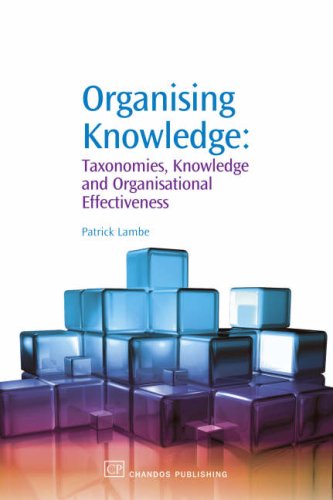
6. Organising Knowledge: Taxonomies, Knowledge and Organisational Effectiveness (Chandos Knowledge Management)
by Patrick Lambe
Paperback: 300 Pages (2007-02-08)
list price: US$69.95 -- used & new: US$69.90
(price subject to change: see help)
Asin: 1843342278
Canada | United Kingdom | Germany | France | Japan
Editorial Review

Book Description
Summary Taxonomies are often thought to play a niche role within content-oriented knowledge management projects. They are thought to be 'nice to have' but not essential. In this groundbreaking book, Patrick Lambe shows how they play an integral role in helping organizations coordinate and communicate effectively. Through a series of case studies, he demonstrates the range of ways in which taxonomies can help organizations to leverage and articulate their knowledge. A step-by-step guide in the book to running a taxonomy project is full of practical advice for knowledge managers and business owners alike.Key Features Written in a clear, accessible style, demystifying the jargon surrounding taxonomies Case studies give real world examples of taxonomies in use Step-by-step guides take the reader through the key stages in a taxonomy project Decision-making frameworks and example questionnaires Clear description of how taxonomies relate to technology applicationsThe Author Patrick Lambe is a widely respected knowledge management consultant based in Singapore. His Master's degree from University College London is in Information Studies and Librarianship, and he has worked as a professional librarian, as a trainer and instructional designer, and as a business manager in operational and strategic roles. He has been active in the field of knowledge management and e-learning since 1998, and in 2002 founded his own consulting and research firm, Straits Knowledge, with a partner. He is former President of the Information and Knowledge Society, and is Adjunct Professor at Hong Kong Polytechnic University. Patrick speaks and writes internationally on knowledge management.Readership This book is written primarily for knowledge managers and key stakeholders in knowledge management projects. However, it is also useful to all information professionals who wish to understand the role of taxonomies in a corporate setting.It may be used as a teaching text for postgraduate students in Information Studies, Library Science, and Knowledge Management, as well as at MBA level. Contents Part One: Dealing with Babel - the problem of coordination; why taxonomies are important; definitions; taxonomy as a common language; taxonomies express what is important; socially constructed; the business case for taxonomies; taxonomies in KM, collaboration, expertise management and information management; taxonomies, typologies and sensemaking Part Two: Fixing the foundations: planning your taxonomy project - understanding your context; identifying and engaging stakeholders; defining your purpose; planning your approach; communicating and setting expectations; managing myths; how NOT to do a taxonomy project; a taxonomy as a standard; digital information, hierarchies and facets Part Three: Building the floors: implementing your taxonomy project - Implicit taxonomies; evidence gathering; analysis or sensemaking; validation principles and techniques; change management and learning; taxonomy sustainability and governance; taxonomies and technology; measuring success Part Four: Looking skywards: the future of taxonomies - complexity and sensemaking; taxonomies as sensemaking frameworks and patterns; taxonomies and serendipity; taxonomies and ambiguity; anti-taxonomy and folksonomies; taxonomies, ignorance and power; taxonomies and organisational renewal ... Read more


7. Designing and Assessing Educational Objectives: Applying the New Taxonomy
by Robert J. Marzano, John S. Kendall
Paperback: 200 Pages (2008-04-01)
list price: US$31.00 -- used & new: US$31.00
(price subject to change: see help)
Asin: 1412940354
Canada | United Kingdom | Germany | France | Japan
Editorial Review

Book Description

"Marzano concisely and effectively shows how his three domains of learning and the New Taxonomy can be operationalized for teachers and administrators. This book integrates objectives, instructional approaches, and assessment options so that these critical aspects of teaching are aligned to promote student learning."
James McMillan, Professor and Chair, Foundations of Education
Virginia Commonwealth University

A hands-on guide for applying the New Taxonomy to develop meaningful and targeted educational objectives and assessments.

Translating mandated standards into concrete objectives and then creating appropriate tasks to assess student learning of those objectives can be a challenge for educators. This practical resource provides a step-by-step process that shows readers how to make designing educational objectives and creating appropriate assessment tasks a part of their day-to-day practice.

Written as a stand-alone volume, Designing and Assessing Educational Objectives reviews the framework and basic principles of Marzano's New Taxonomy and illustrates how educators can utilize Marzano's model to assess student performance on a broad scale or for a specific unit of instruction or grading period. The book explores objectives and tasks for each of the six levels of mental processingretrieval, comprehension, analysis, knowledge utilization, metacognition, and self-system thinkingand features:

  • Benchmark statements that provide a starting point for the process
  • Step-by-step models, helpful diagrams, and useful charts
  • Numerous detailed examples from multiple subject areas and grade levels
  • Application of the taxonomy's three domains of knowledge: information, mental procedures, and psychomotor procedures

Comprehensive and profound, this resource is essential for teachers, school and district administrators, curriculum directors, and assessment specialists seeking to apply standards to curriculum and instruction for measurable results.

... Read more

8. Taxonomy of Educational Objectives : The Classification of Educational Goals : Handbook I : Cognitive Domain
by Benjamin S. (editor) ; Englehart, Max D.; Furst, Edward J.; Hill, Walker H.; Krathworhl, David R. Bloom
 Paperback: Pages (1969)

Asin: B000JR46MC
Canada | United Kingdom | Germany | France | Japan

9. A Taxonomy of Barnacles
by Galt Niederhoffer
 Hardcover: 384 Pages (2005-12-27)
list price: US$24.95 -- used & new: US$4.89
(price subject to change: see help)
Asin: B000VYM6RU
Average Customer Review: 3.0 out of 5 stars
Canada | United Kingdom | Germany | France | Japan

Customer Reviews (31)

3-0 out of 5 stars A VERY mixed blessing
I really wanted to like this book.It is -- in many respects -- charming and witty, and it creates an absolutely lovely picture of New York, with gorgeous evocations of Central Park and the Upper East Side.But, in the end, it is very difficult to read.First, there is the slightly silly device of the primary characters' names, all of which begin with a "B".This would work if all of them were all equally delineated.Unfortunately, not the case.The book theoretically focuses on the six daughers of the Barnacle family -- Bell, Bridget, Betina, Belinda, Beryl, and Beth.But only the first three have any real part in the story, and -- as a result -- reading about the latter three becomes a task rather than a pleasure:one never knows which is which, or how to unravel their stories and their place in the narrative.Second, the plot tends to jump around alarmingly, with situations introduced and then abandoned.Ms. Niederhoffer is obviously talented, but in her next novel (hopefully there will be one) she needs to discipline herself, drop the cutesiness, and concentrate instead on her finely-tuned descriptive skills.

1-0 out of 5 stars Zero stars
"A Taxonomy of Barnacles," about six sisters --whose names all start with a "B"-- seemed like a quirky, different novel, so I picked it up at the bookstore without having heard or read anything about it. Well, talk about hate at first page. Niederhoffer's writing is terrible, her characters are pretentious and annoying, and the whole thing reads like the bad effort of a privileged high-school student who's been told she's so bright and precocious.

I don't know whose daughter/wife/friend Galt Niederhoffer is, but I am certain this book got published because of the author's contacts, not her talent, since unfortunately she has none.

2-0 out of 5 stars Some lively characters overwhelmed by the author's mistakes
"A Taxonomy of Barnacles" is supposedly a novel about nature versus nurture, taking its name from an early work of Darwin, and posing, in the background, the question of why Darwin, having developed his theory of natural selection in a study of barnacles, waited many years to publish it, and then focused instead on finches.

Thus, we have the contrast between the Barnacle family, a wealthy Jewish family whose patriarch made his money in pantyhose, and the Finch family, their WASPish neighbors who include a pair of identical twins.The book's introduction is well-written and intriguing, but from the start of the first actual chapter the book seems to have lost its way.Everyone in the Barnacle family has a first name starting with B, except for adopted Latrell, and they are hard to keep track of.Bell and Bridget and youngest Benita are pretty distinct, while the other three often go unmentioned for many pages.Bits and pieces are worthwhile, but the time scale is hard to follow, with some things seeming to go on forever while the book turns out to take place within a single week.

The supposed engine of the plot is a King Lear like promise by father Barry Barnacle to leave his fortune to the daughter who immortalizes the family name.Motifs of the importance of the right proposal (which I assume is the point other reviewers refer to as a shout out to Jane Austen), the similarities and differences between twins and siblings, infidelity, deception and identity switching fill the book.

Unfortunately, what does not fill the book is any sense of consistency.

The author can't make up her mind as to how identical the Finch twins actually are, just like she can't make up her mind as to whether Bella, the mother, breaks her leg (a plot point that just lies there) or it is merely a sprain.Within two paragraphs, Latrell has two different favorite places to hide (many of which are pretty hard to imagine actually working in 2006 in New York, such as hanging at the Guggenheim amongst the art after hours; does she think there are no motion detectors or cameras?).Yankee players have made up names; David Wells pitches for the Red Sox.Her basic understanding of baseball, despite the fact that it is mentioned over and over again, seems at about the level of the average American's understanding of English County Cricket.New Yorkers are not divided between fans of the Yankees and Red Sox, they are divided between fans of the Yankees and Mets.A grand slam in the bottom of the ninth when the team is four runs behind ties the game; it is not over.

Perhaps the strangest bit, though, is at the very beginning.Bridget's erstwhile boyfriend Trot, on whom she has been cheating in her heart with Billy Finch, is chided by her for having failed to bring cake to the family's Seder.He, not Jewish, failed to do so for the obvious reason that no one should bring cake to a ceremony where only unleavened bread is to be consumed.

I did laugh out loud at her making fun of my own surname on page 166.And at a few other points, which is why it rates two stars, not one.Benita is kind of fun and Beryl is rather sweet.Others have compared it to the Royal Tenenbaums (which I hated), but I think the sense of unreality and privilege comes more from Francis Ford Coppola's "Life Without Zoe", his generally unsuccessful contribution to "New York Stories".It too is a fantasy about privileged people that seems to assume that we should care about them, without going to the effort to provide us a reason why we should care.

1-0 out of 5 stars Terribly written and even worse, inaccurate. Go see "The Royal Tennenbaums" and don't waste your time!!!
Perhaps the author is one of those New Yorkers who is so priveleged that she has only traveled around the city via taxi cab... at least she could have done a little research and looked at a subway map. She ought to know, if she is truly a New Yorker (and being a New Yorker I'm not convinced)- the D train does NOT stop at 59th and Lex, and the downtown 9 train goes down the west side and does NOT stop at Astor Place, which is an east side 6 train stop. For shame. Inexcusable errors about the city!
Also, as someone else here pointed out; "....if she had an editor wouldn't she have been told that if the Barnacles and the Finches share the top floor of their apartment building that Bella Barnacle cannot possibly live above them?" The book is full of sloppy details like these. And I have never seen such an extreme example of a book that tells, and never shows.
I am reading this book on vacation and I am planning to leave it behind. It doesn't merit the suitcase space to lug it home. Go see "The Royal Tennenbaums", the movie this book was clearly ripped from, which a far, far superior narrative.

3-0 out of 5 stars Love it or Hate it
Clearly judging by the number of 5-star and 1-star reviews, this is either a love-it or hate-it book. I actually loved some parts of it and hated (REALLY hated) others. The number of errors in the book is truly staggering. The author must have thought it was clever to give everyone a name that starts with B, but if she can't even keep them straight then how does she expect the reader to? The baseball references are beyond laughable, at one point claiming Ted Williams played for the Yankees -- sacrilege!! The main characters aren't half as charming as they are intended to be, mostly coming off as overpriveleged snobs. I understand the author is trying to parody the upper class, but you have to make the characters at least a little bit likable. And the ending is a series of out-of-nowhere revelations that just sort of hang there.

That being said, there were enjoyable moments to be had. I thought the character of Benita was by far the most entertaining of the lot. There are some funny moments, but this book really could have been so much better if the rest of the characters resembled real human beings instead of caricatures. ... Read more


10. Affective Domain: The Classification of Educational Goals (Taxonomy of Educational Objectives)
by David R. Krathwohl, Bertram B. Masia, Benjamin S. Bloom
 Paperback: 214 Pages (1965-10)

Isbn: 0582323878
Canada | United Kingdom | Germany | France | Japan

11. Taxonomy of Educational Objectives, Handbook 1: Cognitive Domain
Paperback: Pages (1956-06)
list price: US$50.00
Isbn: 0582280109
Average Customer Review: 4.0 out of 5 stars
Canada | United Kingdom | Germany | France | Japan

Customer Reviews (4)

5-0 out of 5 stars Bloom's work works
I have studied Bloom's Taxonomy, as have millions of other educators, and found his work immensely helpful in clarifying educational objectives and outcomes for my students. I was introduced to Bloom in graduate school where I studied Instructional Design. It was clear; those instructors who successfully implemented Bloom's work in their own teaching were of a higher caliber, easy to understand and more successful in helping the students to learn, not just recall facts and figures.

The earlier contributor is way off in their "review" of Bloom's work; and clearly paranoid.

4-0 out of 5 stars Please ignore the reader from Gold Beach...
This is a must-read, particularly in the field of systematic Instructional Design and specifically regarding learning objectives, criterion-referenced testing, etc. Bloom's work is the foundation for countless strategies, research, models, etc.

The series on all domians is a good addition to any teacher's library, regardless of content or level.

1-0 out of 5 stars Theordore Adorno rewrite
Benjamin Bloom is a second generation transformational Marxist, dedicated to the destruction of the founding ideals that have made America great.Namely, accountability to a higher authority, the existence of revealed and absolute truth, and that man's heart is despiratly wicked, in need of internal or external restraints.Bloom and his buddies have simply cleaned up Theodore Adorno's work The Authoritarian Personality, for public consumption in teachers colleges.Bloom's work is based on false assumptions of human nature; there is no God, no absolute truth, and man is basically good, evolving, and perfectable.
Read pg. 32 where Bloom claims there is no lasting truths for all time and all places.Compare Bloom's statement with Engel's claim in Ludwig Feuerbach, "nothing is final, absolute, or sacred."In Bloom's affective domain book he blatently acknowledges Adorno and another Frankfort School Marxist as forming his "world view".The progressive restructuring educational movement has destroyed what was great in America.Read it and weep.Protect your children.

5-0 out of 5 stars Timeless classic
This book was written almost 50 years ago and it is still widely used within education around the world. Bloom set out to create a common framework for categorising academic ability and his resulting taxonomy is still the de facto standard for classifying cognitive skills. Don't be put off by the age of the book - it's very readable - which perhaps reflects the timeless nature of his subject matter. Although some of his examples have aged (and perhaps were never particularly good examples), the book is accessible and interesting - and, as I've said, as useful today as it was 50 years ago. Highly recommended to anyone involved in writing test items. If you're interested, I've tried to provide more up-to-date examples on my Web site.... ... Read more


12. PRIMATE TAXONOMY (Smithsonian Series in Comparative Evolutionary Biology)
by Groves C
Hardcover: 350 Pages (2001-04-17)
list price: US$65.00 -- used & new: US$60.90
(price subject to change: see help)
Asin: 156098872X
Average Customer Review: 4.5 out of 5 stars
Canada | United Kingdom | Germany | France | Japan
Editorial Review

Book Description
In this book, Colin Groves Proposes a complete taxonomy of living primates, reviewing the history and practice of their classification and providing an up-to-date synthesis of recent molecular and phylogenetic research. He contends that the taxonomic designation of individual species is the starting point for conservation, and that the taxonomy of living species is critical to understanding evolutionary relationships. At the heart of the book are species-by-species accounts in which Groves reviews the recent history of each group and offers many new taxonomic arrangements. He evaluates several distinctive former subspecies to full species status and reestablishes the status of a number of previously overlooked taxa. Discussing the major taxonomic issues of each group, he describes the reasoning behind his conclusions and objectively offers explanations of opposing views. He also briefly outlines a possible taxonomy of fossil primates based on the taxonomy of living primates. ... Read more

Customer Reviews (2)

5-0 out of 5 stars An authoritative treatment.
Extensive taxonomic revisions are usually published in monographic series by natural history museums, distributed to a handful of academic institutions the world over, and relegated to shelves in the bowels of libraries where they are consulted on occasion by a few specialists in each scientific generation.That Colin Groves' latest taxonomic revision is published in an attractive volume and sold on amazon.com testifies to the importance of primate taxonomy to many disciplines.I've read it from cover to cover.This revision deserves the attention.

Groves' introductory chapters describe theories and traditional methods in taxonomy, and provide useful historical context, as well as insight into his own viewpoints.For primatologists without taxonomic experience, this account will de-mystify the discipline and allow the process to be easily visualized and understood.For fellow taxonomists, Groves' descriptions of his methods and his mindset are invaluable for interpreting his conclusions, and for comparing notes.Also extremely useful are Groves' remarks both on the comparative excellence of primate holdings at major natural history museums worldwide, and on the influence and thought of past taxonomists.Knowledge like this is very truly the province of the specialist, and is very hard to come by-- close familiarity with the holdings of primate collections in museums worldwide can only be gained through expensive travel and extensive examinations, and intimate understanding of the viewpoints of taxonomists of decades and centuries past requires a comprehensive familiarity with countless old and often obscure descriptions, revisions, and monographs.

As for Groves' treatment of the primates, it is different, fresh, and full of monumental splitting (he recognizes about 330 species).Possibly it will be hard for some workers in primatology and mammalogy to stomach, as it certainly disrupts familiarity with relative rank of various taxa, and with figures of species richness in all groups.However, as many or more will welcome it as a long-needed reassessment of primate diversity, which in other current treatments is woefully underestimated.Groves has discovered over time, via careful museum research, that a large number of primate taxa named long ago but later uncritically synonymized and soon enough forgotten, are actually distinctive and recognizable species.Such taxonomic resurrections turn conservationists' attention to long-overlooked populations of primates that are deserving of high-concern conservation status.Changes in taxonomy lead to changes in policy, and this without doubt will be the most important effect of Groves' new book.An additional very useful contribution is that the book highlights and summarizes the flood of new primate taxa discovered during fieldwork in the tropics in recent years.

Of course it is important to remember, as Groves himself notes, that no taxonomic revision is the last word on the subject.In the case of primates, new species will continue to be described from the world's tropical regions, and many of the taxa Groves lists as provisional will with further research be shown to be undeserving of the rank he bestows on them.Nevertheless, Groves' take on primate taxonomy is without doubt a much more accurate characterization of living primate species diversity than other current and more traditional arrangements.For the large number of people who work with, write about, or make decisions regarding primates, this book should be considered the authoritative reference for identifying the current name, taxonomic rank, or uniqueness of a primate population.It is a most excellent contribution.

4-0 out of 5 stars A monkey puzzle treeý.
Finally, Primate Taxonomy has appeared- before this, I had heard references to it at primatological gatherings. Colin Groves needs no introduction in the area of taxonomy of many non-primate species, most recently, in resolving the question whether the African bush elephant is a subspecies, or a species in its own right (the latter). But it is probably fair to say that Colin's greatest achievement has been, the taxonomy of nonhuman primate (NHP) species. So what is Primate Taxonomy like? First, although a work aimed at a professional audience, there is much that can be appreciated by a non-scholarly audience interested in NHPs. The first few chapters deal with taxonomy, its history, and how it is done to-day. Taxonomy is the science of identifying species, placing them in the system designed by Linnaeus and familiar to all biology students, which assigns to each species a double Latin name; the first indicates the genus to which the species belongs, while the second is specific and unique to the species, eg, the rhesus monkey is Macaca mulatta, and the sacred baboon, Papio hamadryas. Related genera (like Macaca and Papio) are included in the "tribe" of the Papionini, which is part of the "subfamily" Cercopithecinae, which is part of the "family" Cercopithecidae, which is part of the "superfamily" of the Cercopithecoidea. This way, each species has its own place in a tree-like, hierarchical structure. But there is a snag: what, exactly, is a species? At first glance, this may seem obvious, but it is not. Appearances may be deceiving, with animals which look alike nevertheless being different species (the owl monkey, where chromosomal differences differentiate between very similar animals); conversely, animals that differ strikingly in their appearance may be of the same species (the historic misidentification of some gibbon species where there is sexual dimorphism in colour, as two species), and the history of taxonomy is littered with misidentifications of species. Groves provides clear descriptions of different attempts to define what makes a species, and favours the "traditional" definition, which includes a species being a population with its own ecological niche and limited distribution which does not interbreed (except in cases where territories may overlap) with another species, and which has a common behavioural repertoire distinct from other populations. Unfortunately for the taxonomist, the essential components of this (or any) definition of a species are often not known, and the only materials available are skins and skeletons (where, in case of some, it is not even known exactly where they were collected). On the other hand, in modern times, the traditional morphological criteria derived from skins and bones can be amplified by DNA analysis and other molecular biological markers, chromosome analysis, and by an increasing knowledge of behaviour, and Groves has, wherever possible, used such data in compiling his book. However, having identified a species, the taxonomist is not there yet: any species with a wide distribution covering a number of different "living conditions", or where rivers separate different populations (as in the Amazon or Congo basins) will probably have subspecies. Reading those first chapters makes one aware of the amount of work involved in the bulk of the book, where, going down the branches of the taxonomic tree, Groves lists the species and subspecies of all NHPs, from lemurs, lorises, bushbabies and tarsiers, through the New World monkeys and Old World monkeys to the great apes (Homo sapiens is listed at the very end but receives little discussion). There are brief summaries of the main features of families, subfamilies, tribes, etc, but the focus is on the species level where a general description of the genus is followed by one of a species including a list of the scientific names that species may have had since first described. This is rather helpful because one still comes across superseded names. After the description and distribution of a species, its subspecies are listed, starting with the type species (eg, Macaca fascicularis fascicularis), with for each, the characteristics which make it different, as well as the distribution. Two impressions emerge: first, the enormous variety of NHP species and subspecies that exist; and that in a world that seems to become smaller daily, new species are still being discovered, even where very little NHP habitat is left, such as on Madagascar. And this is surely the second impression, that many species, or their subspecies, are fast becoming vulnerable/threatened/endangered. So should you buy this book? If your profession is dealing with primate taxonomy in a serious way (zoos, conservation groups, government and NGO environmental and foreign aid agencies, university departments) the book is essential because of its profound scholarship. Nevertheless, I do have a few quibbles: the major one is that it would have been very good to have a summary table at the end of the book which allowed a quick overview of the proposed taxonomy. Now, if one wants to know how many subspecies of Macaca mulatta there are, for instance, one has to go to the relevant chapter and count them as listed; which is not made easier because the book's print is rather fine, and while, following convention, all scientific names are in italics, they are not otherwise highlighted and a brief entry can easily be missed. Likewise, short of counting, I could not find out how many species of NHP Groves thinks there are, and how many subspecies, overall. Such numbers would be nice to know in arguments about biodiversity and conservation. For non-taxonomists, it might have been helpful to include a kind of diagram of a "standard" NHP divided (bushmeat-like?), into portions so descriptions of fur colour distributions could be read more easily; in the text, for instance, terms like "dorsum", "saddle", "rump", "haunch" and "lumbar region", although strictly speaking referring to different parts, could be confusing. But these are minor points: Primate Taxonomy will be a tool, and subject for discussions for many years to come. It represents an outstanding feat of scholarship. ... Read more


13. Principles of numerical taxonomy (A Series of books in biology)
by Robert R Sokal
 Unknown Binding: 359 Pages (1963)

Asin: B0006AYNO8
Canada | United Kingdom | Germany | France | Japan

14. World Spice Plants: Economic Usage, Botany, Taxonomy
by Johannes Seidemann
Hardcover: 592 Pages (2005-07-21)
list price: US$189.00 -- used & new: US$138.11
(price subject to change: see help)
Asin: 3540222790
Canada | United Kingdom | Germany | France | Japan
Editorial Review

Book Description

Despite their long tradition spices are subject to international modern scientific research. This has made it necessary to disseminate knowledge to a large audience of interest. The book addresses this need by informing the reader about the complex worldwide use of spice plants.

The many spice and aromatic plants are arranged in alphabetical order of their botanical relevance. It includes all species which have been cultivated for the above purposes. It also covers species whose usage has long ceased or which are used only rarely or have become wild. In this respect the author has aimed at comprehensiveness. In total over 1400 plants have been collated.

The very extensive register of literature has been designed to facilitate intensive study of a specific plant or spice. Works both on botany and agriculture, and on chemistry, pharmacodynamics and usage have been considered.

The book is aimed principally at spice and aroma experts, pharmacists, botanists and interested lay persons. But the author also had in mind food chemists, dieticians and agricultural scientists, for whom botany, chemistry and pharmacological aspects may be of interest. It is hoped that those occupied in the spice and aroma industry involved in creating spice blends and the like will also take inspiration from the book.

... Read more

15. An Introduction to Plant Taxonomy
by Charles Jeffrey
 Paperback: 159 Pages (1982-09-30)
list price: US$25.95
Isbn: 0521287758
Canada | United Kingdom | Germany | France | Japan

16. Virus Taxonomy: VIIIth Report of the International Committee on Taxonomy of Viruses
Hardcover: 1162 Pages (2005-06-28)
list price: US$220.00 -- used & new: US$176.15
(price subject to change: see help)
Asin: 0122499514
Average Customer Review: 2.0 out of 5 stars
Canada | United Kingdom | Germany | France | Japan
Editorial Review

Book Description
This is the standard and definitive reference for virus taxonomy, generated by the ICTV approximately every 3 years. The VIII ICTV Virus Taxonomy Report provides information on 3 orders of viruses, 73 families, 9 subfamilies, 287 genera and 1938 virus species, illustrated by more than 429 pictures and diagrams, most of them in color.

* The standard official ITCV reference for virus taxonomy and nomenclature, compiling data from 500 international experts
* Covers over 6000 recognized viruses, organized by family with diagrams of genome organization and virus replication cycle
* Provides data on the phylogenic relationships between viruses belonging to the same or different taxa
* Now includes information about the qualitative and quantitative relationships between virus sequences ... Read more

Customer Reviews (1)

2-0 out of 5 stars Virus Taxonomy Classification
Physicians and other people this book is very descriptive and places viruses in each specific catagory.We keep a copy of the set at my lab.It is very good to read. ... Read more


17. Designing a New Taxonomy of Educational Objectives (Experts In Assessment Series)
by Robert J. Marzano
Hardcover: 160 Pages (2000-07-06)
list price: US$61.95 -- used & new: US$230.27
(price subject to change: see help)
Asin: 0803968353
Canada | United Kingdom | Germany | France | Japan
Editorial Review

Book Description

A critical step in helping all students achieve high standards!

Robert Marzano brings Blooms Taxonomy into the 21st century with a new model that incorporates the latest in cognitive science and research on how we learn. Students and educators reap the benefits of new ways to design instruction, curriculum and assessment. From student-led conferences to policy assessment implications, this definitive work brings assessment concepts up-to-date and offers practical solutions for todays classrooms.

Highlights include:

    • An overview of Blooms Taxonomy
    • A model for the new taxonomy
    • The knowledge domains
    • The three systems of thinking
    • The next taxonomy and the three knowledge domains
    • Applying the taxonomy to curriculum assessment design

This landmark work provides an essential roadmap for educating todays students! Easily applied by teachers, administrators, and staff development personnel.

... Read more

18. Transformed Cladistics, Taxonomy and Evolution
by N. R. Scott-Ram
Hardcover: 250 Pages (1990-03-30)
list price: US$99.00 -- used & new: US$68.11
(price subject to change: see help)
Asin: 0521340861
Canada | United Kingdom | Germany | France | Japan
Editorial Review

Book Description
This is an examination of the relationship between classification and evolutionary theory, with reference to the competing schools of taxonomic thinking. Emphasis is placed on one of these schools, the transformed cladists who have attempted to reject all evolutionary thinking in classification and to cast doubt on evolution in general. The author examines the limits to this line of thought from a philosophical and methodological perspective.He concludes that transformed cladistics does not achieve what it claims and that it either implicitly assumes a Platonic World View, or is unintelligible without taking into account evolutionary processes--the very processes it claims to reject.Through this analysis the author attempts to formulate criteria of an objective and consistent nature that can be used to judge competing methodologies and theories. Philosophers of science, zoologists interested in taxonomy, and evolutionary biologists will find this a compelling study. ... Read more


19. Taxonomies of the School Library Media Program
by David V. Loertscher
Paperback: 250 Pages (2000-01-01)
list price: US$45.00 -- used & new: US$45.00
(price subject to change: see help)
Asin: 0931510759
Canada | United Kingdom | Germany | France | Japan

20. Microbiology with Diseases by Taxonomy: Study Guide, 2nd Edition
by Mindy Miller-Kittrell, Elizabeth Machunis-Masuoka, Laura Bonazzoli
Paperback: 319 Pages (2006-03)
list price: US$44.20 -- used & new: US$40.90
(price subject to change: see help)
Asin: 0805348875
Canada | United Kingdom | Germany | France | Japan

  1-20 of 100 | Next 20
A  B  C  D  E  F  G  H  I  J  K  L  M  N  O  P  Q  R  S  T  U  V  W  X  Y  Z  

Prices listed on this site are subject to change without notice.
Questions on ordering or shipping? click here for help.

site stats