e99 Online Shopping Mall

Geometry.Net - the online learning center Help  
Home  - Science - Vertebrate Paleontology (Books)

  1-20 of 100 | Next 20
A  B  C  D  E  F  G  H  I  J  K  L  M  N  O  P  Q  R  S  T  U  V  W  X  Y  Z  

click price to see details     click image to enlarge     click link to go to the store

$68.95
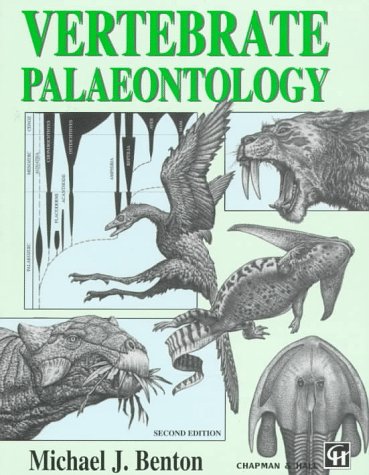
1. Vertebrate Palaeontology
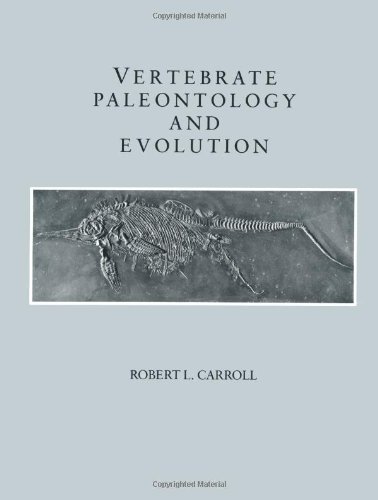
2. Vertebrate Paleontology and Evolution
 
3. Vertebrate Paleontology
$33.00
4. The Mistaken Extinction: Dinosaur
$82.45
5. VERTEBRATE PALEONTOLOGY
 
$135.17
6. Prehistoric Life: The Rise of
$55.00
7. Evolution of the Vertebrates:
$32.50
8. The Fossil Vertebrates of Florida
 
9. Vertebrate paleontology.
 
$412.49
10. Vertebrate Paleontological Techniques
 
11. Vertebrate Paleontology.
$259.25
12. Early Vertebrates (Oxford Monographs
 
13. Notes and Comments on Vertebrate
$21.88
14. Biostratigraphy and Vertebrate
 
15. The Development of the Vertebrate
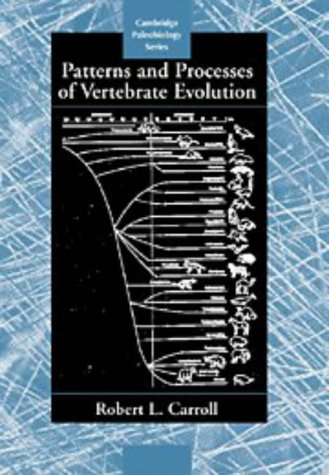
16. Patterns and Processes of Vertebrate
$75.00
17. Functional Morphology in Vertebrate
$112.64
18. Colbert's Evolution of the Vertebrates:
 
19. Vertebrate Paleontology 1092 (Benchmark
 
$13.00
20. An Agenda for Antiquity: Henry

1. Vertebrate Palaeontology
by Michael J. Benton
Paperback: 452 Pages (2000-06)
list price: US$79.95 -- used & new: US$68.95
(price subject to change: see help)
Asin: 0632056142
Average Customer Review: 4.5 out of 5 stars
Canada | United Kingdom | Germany | France | Japan

Customer Reviews (3)

5-0 out of 5 stars Excellent intermediate level book
This book provides a readable, self-contained, description of the evolution of vertebrates. I think it's a great book.

The main purpose of the opening two chapters is to provide background material for the rest of the book. The first shows how vertebrates fit into the tree of life. Enough embryology is presented to define deutrostomes. The only phylum considered in any detail is, not surprisingly, chordata. Some other phyla are described, but this is done mainly to show how they relate to chordates. This chapter is brief but lucid. The following chapter presents material on fossil excavation, cladistics and the fossil record.

After this introductory material the book progresses to its main topic. The approach is roughly chronological. As usual the focus is, for the most part, on the animals that were dominat in that time. For instance amphibians aren't considered after rise of amniotes and reptiles aren't considered after the Mesozoic.

The first topic covered is fish from the Paleozoic, at least through the Devonian period. The material is pretty much what one would expect: jawless fish, the origin of jaws, armour-plated fish, early sharks, bony fish, lung fish and a mass extinction of fish that occurred in the late Devonian. There is a chapter later in the book that covers fish evolution from the end of the Paleozoic. It treats the evolution of sharks and bony fish in more detail.

An outline of the remaining content is: amphibians, early amniotes (my favorite chapter covering synapsids/diapsids/anapsids), dinosaurs and reptiles from the Mesozoic, birds, mammals and finally a chapter on human evolution.

Each chapter begins with a list of "key questions" that will be addressed. This was useful both in providing a preview of the material to come and in providing a review of what was covered. The coverage in each chapter went along the lines of describing important genera, descriptions of how the various species made their way in the world, cladograms (of varying granularity), anatomical diagrams, photos of fossils and descriptions of important finds. One very nice feature is that some important concepts were explained in great detail, like the digits that birds have lost or how reptilian jaw bones evolved into important parts of the mammalian inner ear. Another nice feature is that the author makes it clear where there are controversies among paleontologists and explain where the weight of the evidence leads.

Aside from the main text some other good aspects of the book are that if gives lots of references (including some available on-line), the bibliography references a lot of good books and there is an appendix that gives a reasonably detailed classification of the vertebrates.

The book covers quite a lot of material in a surprisingly small number of pages, slightly less than 400 pages in the main text. I think more than enough background material is included in the book for non-specialists. However prior exposure to natural selection would be useful, although any likely readers probably have more than sufficient knowledge. Obviously any of the individual topics, like dinosaur evolution or human evolution, are considered in more detail in specialized texts. Given the vast amount of potential material I thought the level of detail was very good.

5-0 out of 5 stars Vertebrate Palaeontology
"Vertebrate Palaeontology" written by Michael J. Benton is a chronological narritive wriiten like a college text book about the subject of vertebrate palaenolology.There are a few diversions into related current subject matter throughout the text making for some interesting reading but the focus of the book is how the vertebrate palaeontologists obtain their information.

I found the book to be very informative and rather detailed in scope and breath in some areas where there is a lot of information on the subject and and rather enlightening in areas where there is less information."Verterbrate Palaeontology" is designed for palaeontology courses in college given by either the biology, geology, or palaeontology departments within the university setting, but if you are an enthusiast you can still benefit from reading this book, and experience the "how" in how information is processed in a research setting.

"Vertebrate Palaeontology" is about the evolution of the vertebrate... that is, it is about all of the historical animals that have existed prior to man's evolution and about human evolution itself.The book makes for a fascinating read and I found that it is very logical in its progression and the information that the book imparts is quite valuable in its very nature as to how animals evolved as they did and for what purpose.

Like I've said, this book is not for the novice or a young reader, but for those that truly need to read about more detailed and structured information as to why things are as they are and happened for a particular reason.Reading "Vertebrate Palaeontogy" will give the reader a structured and discplined reading as to approaching the information at hand and you'll better understand the adaptations required for the move on to land and the relationships of the early amphibians and reptiles... orgins and biology of the dinosaurs and the role that extinction plays in the whole of evolution. Reading "Vertebrate Palaeontology" will train your mind in a logical train of thinking and gives the reader a leg up on what is found and how to interpret any evidence found and the approach to which and how to handle this information in a logical manner.

I gave "Vertebrate Palaeontology" a solid 5 stars for the reasons above and that there is a wealth of information contained within its pages that will definitely give you a more enlightened view of life on earth.The reading of "Vertebrate Palaeontology" will in some areas be very taxing and others the read is absolutely enlightening... this book is written for the specialist in mind. "Vertebrate Palaeontology" has plenty of illustrations and the book has an extensive bibliography and has the works of others in this field properly footnoted for further exploration into the topic.

4-0 out of 5 stars Useful and interesting
Benton manages to write a thorough text on various vertebrate groups and their evolutionary trends, mentioning specific important species and basic morphology without making the book as dry as a bone. As one can always state about books that are overviews, one could wish for more thorough coverage of personal groups of interest, but as an overview, this is a great book. The diagrams and phylogenetic charts are very helpful, and the case studies that are provided in offset boxes are very interesting.

One major complaint about the book is the number of typos and mislabeled diagrams...it can become rather confusing. I have taken a pen to the book and with careful reading, re-reading and cross referencing, have corrected the errors in my own copy to save me the brain strain...but on the whole, this book does what one would want from it. ... Read more


2. Vertebrate Paleontology and Evolution
by Robert L. Carroll
Hardcover: 698 Pages (1987-08)
list price: US$66.95
Isbn: 0716718227
Average Customer Review: 4.5 out of 5 stars
Canada | United Kingdom | Germany | France | Japan

Customer Reviews (4)

4-0 out of 5 stars Not too bad, but dated
This is an excellent overview of the evolutionary history and osteology of the vertebrate taxa, but it is dated, particularly as regards the Archosauromorpha.It's opposition to cladistic practices for formulating phylogenies, is also noteworthy.Thus, you will find that numerous bankrupt taxa and no longer accurate classification schemes still, unfortunately, present themselves in this volume.

4-0 out of 5 stars One of the few college texybooks I kept.
This book was my textbook for Vertebrate Paleontology and Evolution at the University of Rochester back in 1992.The book is very daunting to look at if you just flip through it.However, it does a nice job of introducing concepts and terms to the reader.Its organization is straightforward, starting with the simplest vertebrates and eventually finishing with mammals.Most groups are covered well, considering that the author's cover every group of vertebrates known.The biggest problem I had with the book was the section on dinosaurs, the biggest reason why I took the class. The information on them was limited to a few pages and much of the information was out-dated even in 1992.However, if you are looking for a good book on vertebrates, this is a must have.Just realize that some of the information may not reflect our current understanding since the book is over 10 years old and many new finds have come to light, new ideas have been introduced, and old ideas reexamined.

5-0 out of 5 stars Best vertebrate paleontology book ever
Vertebrate Paleontology and Evolution is the most complete and detailed book on that subject.It is the bible for people whose major interest in on vertebrate paleontology.

5-0 out of 5 stars I spent 2 weeks chewing on this book...

...the only easily available work that goes to any depth on this intensely interesting subject.A large book of medium thickness with an average of about two drawings per page, including familial relationship diagrams.

Since the late Paleozoic, there have been two significantbranches of terrestrial vertebrates: the diapsids (crocs, dinosaurs, birds)and synapsids (pelycosaurs, theraspids, mammals).Sharing a commonancestry and evolving at times in parallel, nevertheless distinctivefeatures appear early that, though not of immediately apparentsignificance, in fact consign the lines to their separate fates.

Thepelycosaur Dimetrodon, the familiar lizard-like reptile with a sail on itsback that is often reproduced as a toy, and which I have always associatedwith the dinosaurs, is in fact a member of the synapsid line.The bookpoints out how the process on the mandible that reaches up toward thetemporal lobe is the beginning of a shift away from the ancestralquadrate-angular jaw articulation maintained by the diapsids through thebirds.With the additional points of leverage provided, mammals weredestined to become better chewers, able to move their jaws sideways inaddition to up and down.The angular bone and one other bone in themandible, incidentally, become modified to help pick up soundwaves, andeventually migrate to become one of the three bones in the middle ear. (Birds only have one bone in their middle ear, though interestingly, theirhearing appears to be just as acute.)

Mammals continued to refine theirchewing mechanism, introducing improvements to their teeth.Instead ofthe saw of teeth possessed by dinosaurs and early reptiles, the mammalsdeveloped closely occluding teeth that allowed them to grind food moreefficiently.Apparently the price for this matching of the upper and lowerteeth is that mammals cannot replace their adult teeth once lost.

Ifyou are a specialist in one of the larger groups of vertebrates, such asthe dinosaurs or the mammals, the coverage of this book will beunsatisfying.Sometimes I had difficulty determining what the definingcharacteristics that distinguished groups were, so I still can't look at askeleton and know whether it's a pelycosaur or an early theraspid.On arelated note, the relationship diagrams are not cladograms, butold-fashioned family tree type drawings, indicating not only relationshipbut the time period in which the group lived, with a thickening of thelines to show abundance. ... Read more


3. Vertebrate Paleontology
by Alfred Sherwood Romer
 Hardcover: 476 Pages (1966-06)
list price: US$45.00
Isbn: 0226724883
Average Customer Review: 5.0 out of 5 stars
Canada | United Kingdom | Germany | France | Japan

Customer Reviews (1)

5-0 out of 5 stars An overview of the history of vertebrates
This work is an excellent overview of the vast sum of information known about vertebrates.It's concise but a complete coverage of the subject, shedding light on many of the theories and controversies regarding various aspects of the subject.Romer avails himself of embryologic information, as well as geologic, to shed light on the development of these animals.He sheds enough light on the development of various anatomic areas to be interesting but not tedious for the novice reader.For this subject -- this is a great intro. ... Read more


4. The Mistaken Extinction: Dinosaur Evolution and the Origin of Birds
by Lowell Dingus, Timothy Rowe
Hardcover: 332 Pages (1997-09)
list price: US$34.95 -- used & new: US$33.00
(price subject to change: see help)
Asin: 071672944X
Average Customer Review: 5.0 out of 5 stars
Canada | United Kingdom | Germany | France | Japan
Editorial Review

Amazon.com
Did the dinosaurs disappear, or did they merely take flight? In The MistakenExtinction, two eminent paleontologists make a case for the continued existence of dinosaurs, atleast in the form of some relatively diminutive descendants: birds. To prove their point, LowellDingus and Timothy Rowe first review leading theories about the dinosaurs' extinction, pointing tothe shortcomings of each. Instead of dying out, Dingus and Rowe write, the dinosaurs merely evolvedinto another form. For skeptics troubled by such a direct link between their backyard blue jay and thelumbering T. rex, the authors point to problems with the current Linnean system of classifying life.Under a rival system known as cladistics, they contend that it's possible to identify the anatomicalcharacteristics shared by birds and dinosaurs. It's an intriguing hypothesis, and one open toconsiderable debate. Either way, this beautifully illustrated and admirably comprehensive volume hasmuch to offer birders and dinosaur buffs alike. ... Read more

Customer Reviews (8)

5-0 out of 5 stars Very entertaining!
I'm the type of person who rarely reads books for fun.Most of what I read is for my work or on rare occasions I'll grab a book at the airport if I have a long flight. Half the time I'll get bored with it and won't finish it.I'm not even sure how this book ended up on my shelf but I grabbed it about a week ago when I had to go to the hospital and wait for my mother who was having an operation. I literally had a hard time putting it down. Of course it's not fiction but in some ways it reads like fiction in that it tells a story. At times it presents itself as a murder mystery; "What killed the dinosaurs?". Even though the outcome is given away by the title, it's still a fascinating story.

The book is divided into two parts. The first part covers various theories about the cause of the death of the dinosaurs at the end of the cretaceous. The second part in some ways refutes the first part by coming to the conclusion that dinosaurs never really died at all because birds are part of the dinosaur family. I know this is still somewhat of a contentious debate among some, but the book contains some pretty convincing evidence. It's a bit technical at times but you can always get the general idea of what the author is tying to convey.

Even though this book is chiefly about dinosaurs and birds it covers a lot of stuff not directly related to the main topic but interesting never the less. For instance I did not know about the Phylogenetic system of classification before I read it.This book explains it quite well so that someone like me, who is not well versed in biology can easily understand it.

5-0 out of 5 stars Thought provoking!
This is an extremely thorough, yet readable treatment of the subject of the evolution of birds and the non-extinction of dinosaurs. The drawings in particular are excellent illustrations of the features of the lineages. The discussion of the evidence for the different causes of the extinction event that took most of the dinosaurs is clear and thorough. This is a must-read if you are interested in these issues!

5-0 out of 5 stars My Dino Dreams come true!!!
This book rocked so hard it isn't even funny!!I have loved dinosaurs ever since I was a youngster, and still find myself quite fond of those wacky beasts.This book delivers when it comes to dinos. It basically includes two parts: one concerned with the theories of dino extinction(the meteorite-impact hypothesis is given paricular attention-perhaps because one of the authors was involved in research on this hypothesis), the other with dino evolution into birds. Both are written by experts, and more than that they are experts who know how to write in an engaging and easy to understand fashion that the non-expert can understand and appreciate. The prose made the book hard to put down, and the pictures of the biological poetry we call dinosaurs are enough to bring tears to the true dinosaur lovers eyes.So if you like dinosaurs, geology, or I would even say science in general, or are just a curious soul looking for new things to learn I highly recommend this book.

5-0 out of 5 stars The Mistaken Extinction: Dinosaur Evolution-Origin of Birds
The Mistaken Extinction:Dinosaur Evolution and the Origin of Birds written by Lowell Dingus and Timothy Rowe is a dinosaur book that makes a difference.This is a frank account of how we know what we know about the dinosaurs and how the work can and should be approached. There are issues surrounding a dinosaur extinction as though they are elements in a scientific detective story; following a trail of geologic and paleontologic clues toward a solution. This book show the reader the way of intelligent thinking and the conclusions that make sense.

Over the course of this book, it will become clear that the questions being raised today actually have their roots in the debates that raged within the scientific community in the nineteenth century, when Dawin's theory of evolution first burst upon the scene. This book is divided into two parts.

The Search for the Smoking Gun is part 1.The eight chapters include: The Seductive Allure of Dinosaurs, Earlier Extinction Hypotheses, Contrating Volcanic and Impact Hypotheses, Enormoud Eruptions and Disappearing Seaways, THe Fatal Impact, Direct Evidence of Catastrophe, Patterns of extinction and Survival, and Our Hazy View of Time at the K-T Boundary.

These chapters give the reader adequate background information, to take us back to the time of the murderous extinction at the Cretaceous-Tertiary boundry of geological time.Here we find a theory of gradual extinction... a theory that most reseachers favor, but could this be true... there are convincing theories.

Part 2: Dead or Alive has ten chapters and it includes:Living Dinosaurs?, Dinosaurs Challenge Evolution, Dinosaurs and the Hierarchy of Life, The Evolutionary Map for Dinosaurs, Death by decree, The Road to Jurassic Park, Crossing the Boundary, Diversification and Decline, The Real Great Dinosaur Extinction, and The Third Wave.

Here we learn why most researchers now believe that birds and other dinosaurs sprung from the same ancient ancestors, all this stems from one of science's theories... evolution.This book is beautifully illustrated and has plenty of morphoroloigal drawings arising for comparitive anatomy.

I found the book to be a wealth of informationeasily readable and a plethora of detailed compendia on dinosaur facts.This is a book that lays out the extinction of dinosauria with great skill and clairy

5-0 out of 5 stars Comprehensive and very entertaining!
I originally bought this book for a class I'm taking, coincidentally being taught by one of the authors, Timothy Rowe.Not only does this book include facts and myths about the extinction of dinosaurs, but it makes them comprehendable, and very entertaining by including recent myths such as those presented in popular movies.A total must read for dinosaur fanatics! ... Read more


5. VERTEBRATE PALEONTOLOGY
by KAY RICHARD F
Hardcover: 608 Pages (1997-02-17)
list price: US$85.00 -- used & new: US$82.45
(price subject to change: see help)
Asin: 156098418X
Canada | United Kingdom | Germany | France | Japan
Editorial Review

Book Description
Because of its unique geographic and temporal position, the La Venta badlands in central Columbia hold special significance for understanding the evolution of vertebrate faunas in South America. John Flynn, Curator of Geology at The Field Museum, and other contributors present detailed information and interpretation about the paleobiology and environment of La Venta animals. Includes taxonomic index. ... Read more


6. Prehistoric Life: The Rise of the Vertebrates
by David Norman
 Hardcover: 246 Pages (1994-12)
list price: US$30.00 -- used & new: US$135.17
(price subject to change: see help)
Asin: 0671799401
Average Customer Review: 5.0 out of 5 stars
Canada | United Kingdom | Germany | France | Japan

Customer Reviews (5)

5-0 out of 5 stars truly outstanding book on all aspects of life on earth
This is a wonderful book, one of my five favorites when it comes to paleontology. Where to begin! First all, the book covers the entire history of life on earth, beginning with the origin of the earth itself, through the beginning of life, the advent of multicellular life, the bizarre Vendian fauna of the late Precambrian, through the now famous world of the Burgess Shale, into the explosion of life in the seas of the Cambrian, on into the debut of fishes, the conquering of land by plants, insects, and amphibians, to the development of reptiles, all the way through early mammals, dinosaurs, pterosaurs, the Cenozoic "Age of Mammals," the Ice Ages, and early man. As I have pointed out in other reviews, too many books focus exclusively or mainly on dinosaurs, and David Norman deserves high credit for not negelecting other aspects of the development of life on earth.

Second, he is thorough in his coverage on most aspects of the paleonotological record. In his section on trilobites for instance, he has photographs of trilobite fossils and artists illustrations of trilobites swimming, molting, walking, curling up in defense, egg laying, and plowing the seabed for food. The accompanying text is no less detailed and useful. On the lengthy section of conquering the land, Norman has a great diagram showing the major structural changes that fishes underwent to conquer the terrestrial world (particularly in the areas of the pelvic and pectoral girdles and the spine), several illustrations of amphibian skeletons, and several nice illustrations of early amphibians, both individually and in the context of their environment. Dinosaurs as you might imagine get a huge section, with an entire additional chapter devoted the evolution of birds and dinosaur-bird relationships (including discussion of issues of dinosaur endothermy). Marine reptiles of the Mesozoic are not neglected, with many excellent illustrations including some very fine paintings, photographs of fossils, and a diagram illustrating the differences between the swimming and body styles of three main groups, ichthyosaurs, plesiosaurs, and pliosaurs. The section on extinct mammals and mammalian evolution is quite thorough and one of my favorites, as extinct mammals are otherwise very poorly covered in the popular literature. In a readable and engaging format Norman discusses such varied topics in this area as the differences between birds and mammals with regards to the efficiency of their breathing systems, the evolutionary history of Australia's marsupials, the Great Faunal Interchange between North and South America, the evolution of whales, and the rise of grasslands and the role that played in mammalian evolution.

Third, the book, as you might gather, is richly illustrated. Though very much a great text one can sit down and read, it is packed with excellent photographs, drawings, and paintings of fossils, skeletons, animals and plants as they appeared in life, and prehistoric environments. Personal favorites include on pages 100-101 the early reptile Hylonmous scampering after a meal in a coal swamp, on pages 136-137 a scene of two Late Triassic pterosaurs fishing for a meal, and a Gigantopithecus family with associated fauna and flora on page 219.

Fourth (do you still need a reason to buy this book?) the book is very readable. Though quite accurate (though unfortunately one or two aspects of its coverage of the Burgess Shale and dinosaurs are a bit dated, hard to avoid), it is not a difficult read and one need not be a professional biologist. Relevant terms are well explained, often with the aid of diagrams and charts.

5-0 out of 5 stars It's Just Outsanding!
Norman planned this book ir order to provide a pleasant and highly understandable reading without lack of information, covering everything related to pre-historic life, from the greatest animals to the lifedevelopment hypotesis. It also brings to the reader one of the best visionsof life sucession and evolution on Earth. It's wonderfully ilustrated withsome pictures that you can see in famous museum exibitions, such as theDeinonychus attack, from Uk National History Museum (pages 158-159) andmany others. It is my favourite pre-historic book and I strongly believethat it is a must for every natural science library or collection. It'ssuitable for everyone interested in a good and clear aproach in thissubject. It's not properlly a scholar book but it can be a great help evenfor paleontology students.

5-0 out of 5 stars It is a pleasure to read!!!
This book is one of the best of its kind.It uncoveres the Evolution ofvertebrates in a perfekt way. Beautifull illustrations, which make theanimals feel closer to you then ever. This book is really a pleasure toread!!!

5-0 out of 5 stars Textbook thorough and excellent general reference.
The book is logically put together and is beautiful in format.Although our library has assigned a Youth designation, the book would make an excellent text for a full-year course in paleology at senior high school or college level, and serve as a reference work thereafter.

5-0 out of 5 stars Very thorough.
This book was very interesting because it covered vertebrates from the very beginning (origin of the universe), but it was still very thorough.Very good illustrations and pictures. ... Read more


7. Evolution of the Vertebrates: A History of the Backboned Animals Through Time
by Edwin Harris Colbert, Michael Morales
Hardcover: 488 Pages (1991-03)
list price: US$270.00 -- used & new: US$55.00
(price subject to change: see help)
Asin: 0471850748
Canada | United Kingdom | Germany | France | Japan
Editorial Review

Book Description
An investigation of the evolution of backboned animals (vertebrates), now appearing in its Fourth Edition. Traces the history of each major vertebrate group from its origin to its extinction or the emergence of the next, more advanced group. Contains drawings and illustrations depicting lifelike renderings of these creatures of the past. ... Read more


8. The Fossil Vertebrates of Florida
by JR., RICHARD C. HULBERT
Hardcover: 384 Pages (2001-02-23)
list price: US$39.95 -- used & new: US$32.50
(price subject to change: see help)
Asin: 0813018226
Average Customer Review: 4.0 out of 5 stars
Canada | United Kingdom | Germany | France | Japan
Editorial Review

Book Description
Illustrated with hundreds of photographs and drawings, this authoritative yet readable book describes the fossil vertebrates found in Florida--many unique to the state--and summarizes more than 100 years of paleontological discoveries and research. All types of vertebrates are covered, including sharks and other fish, amphibians, reptiles, birds, and mammals. The book includes a comprehensive list of every verified fossil species ever collected in Florida. ... Read more

Customer Reviews (1)

4-0 out of 5 stars Much-needed reference
This is an excellent book for Florida fossils.It is profusely illustrated and, though academically thorough, is easy for the layman to use and appreciate.It is the best reference for the fossil vertebrate fauna of Florida I've seen.The only thing I would change is to see a more detailed index. ... Read more


9. Vertebrate paleontology.
by Robert M. ed. Schoch
 Hardcover: Pages (1984)

Asin: B000OUQ6AE
Canada | United Kingdom | Germany | France | Japan

10. Vertebrate Paleontological Techniques (Vol 1)
 Hardcover: 366 Pages (1995-01-27)
list price: US$95.00 -- used & new: US$412.49
(price subject to change: see help)
Asin: 0521443571
Average Customer Review: 5.0 out of 5 stars
Canada | United Kingdom | Germany | France | Japan
Editorial Review

Book Description
This volume fulfils a long standing need of vertebrate palaeontologists, whether they be amateurs attending their first excavation, or preparators and curators, for a book that describes and explains modern palaeontological techniques and practice. The authors of this volume are all exceptional technicians in their field and the book covers everything from field specimen collecting, through conservation methods, chemical preparation, moulding, casting and painting, and mounting of vertebrate skeletons, to the final chapter devoted to the use of CT scans and X-ray methods. This book aims to describe modern preparatory techniques and skills that have usually only been passed down by example and demonstration, and that until now have rarely been standardized or put down in print. ... Read more

Customer Reviews (1)

5-0 out of 5 stars Much needed textbook for Paleontology courses
This book fills a void often encountered in many textbooks in college paleontology courses, whether undergrad or postgrad.I have found it most useful in my field explorations as well as lab techniques and even in many beginning courses. This book rates more than 5 stars and I can't wait for Volume II to come out. I will be on the wish list for it. ... Read more


11. Vertebrate Paleontology.
by ALFRED SHERWOOD ROMER
 Hardcover: Pages (1947)

Asin: B000TCEANM
Canada | United Kingdom | Germany | France | Japan

12. Early Vertebrates (Oxford Monographs on Geology and Geophysics, 33)
by Philippe Janvier
Paperback: 408 Pages (2003-10-02)
list price: US$443.00 -- used & new: US$259.25
(price subject to change: see help)
Asin: 0198526466
Average Customer Review: 5.0 out of 5 stars
Canada | United Kingdom | Germany | France | Japan
Editorial Review

Book Description
This book presents our current knowledge of the early vertebrates, which were mainly fish, but included some land vertebrates, and lived 470 to 250 million years ago. It centres on anatomical and phylogenetic questions, but includes information about fossil discovery and preparation, as well as the analysis of the characteristics from which their relationships may be reconstructed. It addresses critically both old and new problems in the evolution of certain anatomical structures and deals briefly with the animals' way of life, extinction, and former distribution.In addition, the author gives a potted history of the field of vertebrate palaentology and the rise of cladistics, a cmajor methodological revolution in comparative biology. The book is the first in this field to use a cladistic approach. For each major vertebrate group, the reader will find a diagram or relationships, or cladogram, with a selection of characters at each node, and a succinct phlyogenetic classification. ... Read more

Customer Reviews (1)

5-0 out of 5 stars The first vertebrates
Although this reference is a very detailed treatise on early vertebrate fossils, it may prove useful to the general reader trying to make sense of early vertebrate evolution because it does not reproduce photographs of the early fossils, but instead takes artistic license to illustrate them in reconstructed forms. The earliest known fossil vertebrate is Sacabambaspis/Arandaspis found in Bolivia/Australia and 470 million years old - head armor, jawless, mouth containing bony parts for scraping the seabottom, lateral eyes, two pineal eyes, gill openings, and only a median and caudal fins. At the end of Ordovician there was a period of glaciation, and then afterwards in the early Silurian there is a large appearance of both jawless and jawed fossil vertebrates - heterostracans (cephalaspids), galeaspids, thelodonts, acanthodians, shark relatives (chondrichthyans), placoderms (jawed & armored), and possibly bony fishes (osteichthyans). In the mid-Silurian tectonic plate movement created mountain ranges that subsequently eroded what became a red sandstone in many areas that were favorable to vertebrate life. In the Devonian fossils are found showing fish evolving into groups that would survive to the present, as well as tetrapods. In the Carboniferous it is found that the cartilaginous fishes and the ray-finned fishes greatly diversify, as well ferns and club-mosses are found around bays and lakes. After the Permian ended, the 'modern' vertebrate world appears in the Triassic and Jurassic - sharks, teleosts, modern amphibians, modern reptiles, birds and mammals. Lampreys, hagfishes, chimaeras, some ray-finned fish, coelacanths and lungfishes survive relatively unchanged from the emergence of the vertebrates in the Late Palaeozoic. The early vertebrate fossils, along with comparisons of extant vertebrates, are considered in detail. Origins of the vertebrate head and the tetrapod limb are then considered, followed by broader topics in evolution. ... Read more


13. Notes and Comments on Vertebrate Paleontology
 Hardcover: Pages (1968)

Asin: B000I98HX0
Canada | United Kingdom | Germany | France | Japan

14. Biostratigraphy and Vertebrate Paleontology of the San Timoteo Badlands, (UC Publications in Geological Sciences)
by L. Barry Albright
Paperback: 152 Pages (2000-03-08)
list price: US$24.95 -- used & new: US$21.88
(price subject to change: see help)
Asin: 0520098366
Canada | United Kingdom | Germany | France | Japan
Editorial Review

Book Description
The author describes forty-two fossil taxa recovered during a study of the San Timoteo Badlands that used magnetobiostratigraphy to develop a temporal framework for addressing the tectonic evolution of southern California over the last 6 million years. For the Pliocene, small mammals are an effective means of correlating a magnetostratigraphy to the Geomagnetic Polarity Time Scale when radioisotopic dates are unobtainable. ... Read more


15. The Development of the Vertebrate Skull
by Gavin, Sir De Beer
 Paperback: 12 Pages (1985-07)
list price: US$27.00
Isbn: 0226139603
Canada | United Kingdom | Germany | France | Japan

16. Patterns and Processes of Vertebrate Evolution (Cambridge Paleobiology Series)
by Robert Lynn Carroll
Hardcover: 464 Pages (1997-04-28)
list price: US$120.00
Isbn: 0521472326
Average Customer Review: 5.0 out of 5 stars
Canada | United Kingdom | Germany | France | Japan
Editorial Review

Book Description
This new text provides an integrated view of the forces that influence the patterns and rates of vertebrate evolution from the level of living populations and species to those that resulted in the origin of the major vertebrate groups. The evolutionary roles of behavior, development, continental drift, and mass extinctions are compared with the importance of variation and natural selection that were emphasized by Darwin. It is extensively illustrated, showing major transitions between fish and amphibians, dinosaurs and birds, and land mammals to whales. No book since Simpson's Major Features of Evolution has attempted such a broad study of the patterns and forces of evolutionary change. Undergraduate students taking a general or advanced course on evolution, and graduate students and professionals in evolutionary biology and paleontology will find the book of great interest. ... Read more

Customer Reviews (1)

5-0 out of 5 stars Evolution - the big picture
This reference starts off by noting problems in evolutionary theory, particularly that while short-term microevolution shows Darwinian characteristics, long-term macroevolution based on the fossil record does not, with species suddenly appearing and then persisting for long periods with few changes. Vertebrates are proposed as a model for studying evolution, noting that they are a monophyletic group, have sexual reproduction, share a similar body plan, and most importantly have an excellent fossil record. While the knowledgeable reader will find this reference interesting in its integration of the forces affecting vertebrate evolution, the more general reader will find a variety of topics from fundamentals of population genetics to evolutionary development to the origins of major vertebrate groups, useful reading. ... Read more


17. Functional Morphology in Vertebrate Paleontology
Paperback: 293 Pages (1997-10-28)
list price: US$75.00 -- used & new: US$75.00
(price subject to change: see help)
Asin: 0521629217
Canada | United Kingdom | Germany | France | Japan
Editorial Review

Book Description
A crucial task for paleontologists and paleobiologists is the reconstruction of the appearance, movements, and behavior of extinct vertebrates from studies of their bones or other, more rarely preserved parts. A related issue is the boundary between the scientific evidence for reconstruction and the need to resort to imagination. In this book, sixteen paleontologists and biologists discuss these questions, review the current status of functional studies of extinct vertebrates in the context of similar work on living animals, and present a broad philosophical view of the subject's development within the framework of phylogenetic analysis. The authors describe and debate methods for making realistic inferences of function in fossil vertebrates, and present examples where we may be confident that our reconstructions are both detailed and accurate. ... Read more


18. Colbert's Evolution of the Vertebrates: A History of the Backboned Animals Through Time
by Edwin H. Colbert, Michael Morales, Eli C. Minkoff
Hardcover: 576 Pages (2001-12-15)
list price: US$180.00 -- used & new: US$112.64
(price subject to change: see help)
Asin: 0471384615
Average Customer Review: 2.5 out of 5 stars
Canada | United Kingdom | Germany | France | Japan
Editorial Review

Book Description
Vertebrate evolution is studied through comparative anatomy and functional morphology of existing vertebrates as well as fossil records. Since the publication of the previous edition of Colbert's Evolution of the Vertebrates: A History of the Backboned Animals Through Time, there have been significant advances in the knowledge surrounding backboned animals. This latest edition of the classic text is completely revised to offer the most recent discoveries in this continually evolving field of science.Covering the various aspects of vertebrate life, from skeletal system to ecology, behavior, and physiology, the Fifth Edition includes new sections on conodonts, dinosaurs, primates, and the origin of birds, and discusses:

  • Analysis of morphological and molecular data
  • Early diversification of vertebrates
  • The evolution of dinosaurs
  • The origin of mammals
  • Early ruling reptiles
  • Basic adaptation of ungulates

Colbert's Evolution of the Vertebrates, Fifth Edition carries on its legacy as an invaluable reference for professionals in evolutionary biology and paleontology, as well as an ideal textbook for students in those fields. ... Read more

Customer Reviews (5)

1-0 out of 5 stars Obsolete!
I agree with Protero that this book is out-of-date.While I am not a paleontologist or even a biologist, I've noticed several glaring errors, such as the continued use of the phylogenetically incorrect term "mammal-like reptiles" for basal synapsids and therapsids and the inexplicable lumping together of Nimravidae and Felidae (the author speaks as if the nimravids and true saber-toothed cats such as Smilodon were the same lineage).The book seems to have a lot of good information, but I'm not sure what content I can trust.Perhaps it would be helpful in combination with a couple other solid vertebrate paleontology books for cross-reference, but I cannot recommend it alone.

1-0 out of 5 stars Badly dated--should not have been published
I knew and liked Ned Colbert, and loved the early editions of this once-classic book. He passed away on November 15, 2001, shortly after this edition appeared, so it makes it even more difficult to be honest and frank. But it is necessary, since this is a clear case of a publisher trying to push an outdated, badly conceived project on the market, and few but professional vertebrate paleontologists will realize how problematic this book has become.
In its first edition (written in 1955), Colbert's Evolution of the Vertebrates was an excellent non-technical review of vertebrate evolution as it was known almost 50 years ago. The second (1969) edition and third (1980) edition began to become more and more outdated, since Colbert retired in the 1960s, and became less and less connected to the latest developments (both in discoveries and in philosophy) that had occurred in vertebrate paleontology. By the time of the fourth edition (published in 1991), the publisher brought in Mike Morales as a younger co-author, but it made no difference-the book was badly out of date in both its approach and its facts. Most of us hoped that this would be its last edition, since there was little that could be done to salvage it. But in this edition, they have added a third author, Eli Minkoff, a biologist who is not a vertebrate paleontologist and who clearly has not kept up with the important developments that have occurred in the past decades. Consequently, the book is full of errors of both omission and commission in every chapter, and should not have been published, let alone used by anyone to teach a modern course in fossil vertebrates.
The problems are so numerous that I cannot list them all in a brief review, but I will mention a few of the more important ones here. It starts with the authors' ambivalence toward the cladistic revolution, which in the past 20 years has completely transformed the way we think about fossil vertebrates. In places, they attempt to be current by paying lip-service to cladograms, but their fundamentally old-fashioned philosophy is unchanged everywhere else. On page 16, they mention (but never explain) cladistics in one brief paragraph, and then throughout the book they place Colbert's 50-year-old diagrams (with no resolution of phylogenetic relationships) side-by-side with a cladogram of some of the same taxa-or use one of the outdated diagrams with no attempt to show more recent hypotheses at all. Again and again, they make anachronistic statements suggesting that we can't know anything about phylogeny because of a lack of a suitable ancestor, or statements like "no clear indication of relationships among gnathostomous fishes can be determined from their stratigraphic order of occurrence in the rocks" (p. 48)-as if it ever could in a group with such a poor fossil record!
Certainly, they have a right to disagree with the prevailing philosophy in their profession if they so choose, although they end up painting a very unrepresentative and inaccurate picture of what we have learned as a consequence. Even more disturbing is the clear evidence that none of the authors keep up with the new discoveries made in past 20 years. Certainly, I haven't seen any of them at the meetings of the Society of Vertebrate Paleontology during that time, and apparently they don't read the journals, either. It is jarring to read, page after page, statements, ideas, or taxonomic concepts that have become grossly outdated, and should have disappeared long ago. Among the numerous examples are: the discredited notion that jaws are derived from gill arches (p. 38); Romer's idea that tetrapods left the water to escape drying pools, or chase prey, when all the recent discoveries of Acanthostega show that the tetrapod limb appeared in fully aquatic animals long before there was any need to crawl out on land (p. 85); the idea that anthracosaurs like Seymouria had anything to do with amniote origins, when recent discoveries like Westlothiana (not even mentioned in this book) have shifted the focus elsewhere (p. 105); the failure to note (p. 154) that the latest fossils show that snakes are descended from mosasaurs; a grossly antiquated approach to Mesozoic mammals and their relationships in Chapter 19, with almost no mention of the last decade of amazing discoveries; a carnivore "phylogeny" (p. 379) that treats "Fissipedia" as a natural group, and fails to show that pinnipeds are clearly descended from bears, not from the carnivoran stem; no mention (p. 394) of Ambulocetus and all the other recent spectacular transitional whale discoveries (all published long before this book went to press); the outdated notion (p. 428) that protoceratids are related to tragulids, rather than camels; the idea that perissodactyls have anything to do with phenacodonts (p. 452), instead of the recent discoveries of Chinese taxa like Radinskya, which point in a whole new direction; the outdated idea (p. 467) that brontotheres survived the Eocene (thanks to revisions of the time scale completed a decade ago), or that chalicotheres dug up roots (p. 469) with their peculiar claws (debunked by Coombs 20 years ago); the complete failure to mention (p. 480) all the new primitive elephants like Numidotherium and Phosphatherium, which push proboscideans back to the Paleocene of North Africa. The list could go on and on, but these are among the more glaring examples of a failure to recognize or incorporate any of the past 20 years of discoveries.
Equally jarring is the repeated use of taxa that were manifestly unnatural even in 1955, and have not been used by vertebrate paleontologists in many years. The examples are too numerous to mention, but it feels like going through a time warp to read about "chondrosteans," "holosteans," "labyrinthodonts," "thecodonts," "Prototheria," "eupantotheres," "condylarths," "palaeodonts," as if anyone still practicing vertebrate paleontology took those taxa seriously. Symptomatic of this problem is the use of the archaic term "mammal-like reptiles," a misnomer that reflects several serious misconceptions. Synapsids (the "mammal-like reptiles") and the true reptiles are two distinct lineages that originated separately and simultaneously in the mid-Carboniferous, so synapsids have never been members of, or descended from reptiles (in even the broadest sense of the word). Call them "protomammals" if you will-but they are not, and have never been, reptiles!
These problems might not matter if this were just a trade book intended for the popular audience, who might not care if it is accurate or up-to-date in every detail. But I know of several institutions where paleontologists (not vertebrate paleontologists) still use this book to teach classes in vertebrate evolution, completely unaware of how grossly outdated this book had become. Nor is it the only choice on the market written at this level. Michael Benton's Vertebrate Paleontology (2nd edition, 2000, Blackwell) is fully up-to-date and much more affordable [...]. Clearly, the editors at Wiley-Liss are trying to extend their franchise long beyond its useful life, and instead of consulting with qualified vertebrate paleontologists who could have made the book up-to-date, they foisted this sad shadow of a former classic on the unsuspecting profession.

Donald R. Prothero
Department of Geology
Occidental College
Los Angeles, CA 90041
[....]

1-0 out of 5 stars Badly dated--should not have been published
I knew and liked Ned Colbert, and loved the early editions of this once-classic book. He passed away on November 15, 2001, shortly after this edition appeared, so it makes it even more difficult to be honest and frank. But it is necessary, since this is a clear case of a publisher trying to push an outdated, badly conceived project on the market, and few but professional vertebrate paleontologists will realize how problematic this book has become.
In its first edition (written in 1955), Colbert's Evolution of the Vertebrates was an excellent non-technical review of vertebrate evolution as it was known almost 50 years ago. The second (1969) edition and third (1980) edition began to become more and more outdated, since Colbert retired in the 1960s, and became less and less connected to the latest developments (both in discoveries and in philosophy) that had occurred in vertebrate paleontology. By the time of the fourth edition (published in 1991), the publisher brought in Mike Morales as a younger co-author, but it made no difference-the book was badly out of date in both its approach and its facts. Most of us hoped that this would be its last edition, since there was little that could be done to salvage it. But in this edition, they have added a third author, Eli Minkoff, a biologist who is not a vertebrate paleontologist and who clearly has not kept up with the important developments that have occurred in the past decades. Consequently, the book is full of errors of both omission and commission in every chapter, and should not have been published, let alone used by anyone to teach a modern course in fossil vertebrates.
The problems are so numerous that I cannot list them all in a brief review, but I will mention a few of the more important ones here. It starts with the authors' ambivalence toward the cladistic revolution, which in the past 20 years has completely transformed the way we think about fossil vertebrates. In places, they attempt to be current by paying lip-service to cladograms, but their fundamentally old-fashioned philosophy is unchanged everywhere else. On page 16, they mention (but never explain) cladistics in one brief paragraph, and then throughout the book they place Colbert's 50-year-old diagrams (with no resolution of phylogenetic relationships) side-by-side with a cladogram of some of the same taxa-or use one of the outdated diagrams with no attempt to show more recent hypotheses at all. Again and again, they make anachronistic statements suggesting that we can't know anything about phylogeny because of a lack of a suitable ancestor, or statements like "no clear indication of relationships among gnathostomous fishes can be determined from their stratigraphic order of occurrence in the rocks" (p. 48)-as if it ever could in a group with such a poor fossil record!
Certainly, they have a right to disagree with the prevailing philosophy in their profession if they so choose, although they end up painting a very unrepresentative and inaccurate picture of what we have learned as a consequence. Even more disturbing is the clear evidence that none of the authors keep up with the new discoveries made in past 20 years. Certainly, I haven't seen any of them at the meetings of the Society of Vertebrate Paleontology during that time, and apparently they don't read the journals, either. It is jarring to read, page after page, statements, ideas, or taxonomic concepts that have become grossly outdated, and should have disappeared long ago. Among the numerous examples are: the discredited notion that jaws are derived from gill arches (p. 38); Romer's idea that tetrapods left the water to escape drying pools, or chase prey, when all the recent discoveries of Acanthostega show that the tetrapod limb appeared in fully aquatic animals long before there was any need to crawl out on land (p. 85); the idea that anthracosaurs like Seymouria had anything to do with amniote origins, when recent discoveries like Westlothiana (not even mentioned in this book) have shifted the focus elsewhere (p. 105); the failure to note (p. 154) that the latest fossils show that snakes are descended from mosasaurs; a grossly antiquated approach to Mesozoic mammals and their relationships in Chapter 19, with almost no mention of the last decade of amazing discoveries; a carnivore "phylogeny" (p. 379) that treats "Fissipedia" as a natural group, and fails to show that pinnipeds are clearly descended from bears, not from the carnivoran stem; no mention (p. 394) of Ambulocetus and all the other recent spectacular transitional whale discoveries (all published long before this book went to press); the outdated notion (p. 428) that protoceratids are related to tragulids, rather than camels; the idea that perissodactyls have anything to do with phenacodonts (p. 452), instead of the recent discoveries of Chinese taxa like Radinskya, which point in a whole new direction; the outdated idea (p. 467) that brontotheres survived the Eocene (thanks to revisions of the time scale completed a decade ago), or that chalicotheres dug up roots (p. 469) with their peculiar claws (debunked by Coombs 20 years ago); the complete failure to mention (p. 480) all the new primitive elephants like Numidotherium and Phosphatherium, which push proboscideans back to the Paleocene of North Africa. The list could go on and on, but these are among the more glaring examples of a failure to recognize or incorporate any of the past 20 years of discoveries.
Equally jarring is the repeated use of taxa that were manifestly unnatural even in 1955, and have not been used by vertebrate paleontologists in many years. The examples are too numerous to mention, but it feels like going through a time warp to read about "chondrosteans," "holosteans," "labyrinthodonts," "thecodonts," "Prototheria," "eupantotheres," "condylarths," "palaeodonts," as if anyone still practicing vertebrate paleontology took those taxa seriously. Symptomatic of this problem is the use of the archaic term "mammal-like reptiles," a misnomer that reflects several serious misconceptions. Synapsids (the "mammal-like reptiles") and the true reptiles are two distinct lineages that originated separately and simultaneously in the mid-Carboniferous, so synapsids have never been members of, or descended from reptiles (in even the broadest sense of the word). Call them "protomammals" if you will-but they are not, and have never been, reptiles!
These problems might not matter if this were just a trade book intended for the popular audience, who might not care if it is accurate or up-to-date in every detail. But I know of several institutions where paleontologists (not vertebrate paleontologists) still use this book to teach classes in vertebrate evolution, completely unaware of how grossly outdated this book had become. Nor is it the only choice on the market written at this level. Michael Benton's Vertebrate Paleontology (2nd edition, 2000, Blackwell) is fully up-to-date and much more affordable (especially since Wiley is charging $145 for this book!). Clearly, the editors at Wiley-Liss are trying to extend their franchise long beyond its useful life, and instead of consulting with qualified vertebrate paleontologists who could have made the book up-to-date, they foisted this sad shadow of a former classic on the unsuspecting profession ...

5-0 out of 5 stars Clear and Insightful
"The book points out very cleary the climatic and geological conditions, and environment that allowed the various taxa of vertebrates to evolve and thrive.The clarity and insightfulness of the authors are highly recommended." --W.H. Tam, University of Western Ontario

5-0 out of 5 stars Great Book!
"Eminently readable and lavishly illustrated (with Lois Darling's classic drawings of reconstructed species plus up-to-date cladograms), Colbert's Evolution of the Vertebrates is the perfect book for students of vertebrate paleontology. Unlike encyclopedic reference texts which are full of confusing jargon, this is a book that can be read by the non-specialist.Colbert tells--and shows--the fascinating story of vertebrate evolution and diversity, with all of the major groups represented. With thorough yet uncluttered text and well-chosen figures, with complete coverage of paleoecology, stratigraphy, and taphonomy, this book is perfect for anyone who wishes to learn more about our "extended" family tree." --Alexander J. Werth, Ph.D., Hampden-Sydney College ... Read more


19. Vertebrate Paleontology 1092 (Benchmark Papers in Geology Series)
 Hardcover: 384 Pages (1997-06)
list price: US$71.95
Isbn: 0442280521
Canada | United Kingdom | Germany | France | Japan

20. An Agenda for Antiquity: Henry Fairfield Osborn & Vertebrate Paleontology at the American Museum of Natural History, 1890-1935 (History of American Science and Technology Series)
by Ronald Rainger
 Hardcover: 536 Pages (1991-10)
list price: US$49.50 -- used & new: US$13.00
(price subject to change: see help)
Asin: 081730536X
Canada | United Kingdom | Germany | France | Japan

  1-20 of 100 | Next 20
A  B  C  D  E  F  G  H  I  J  K  L  M  N  O  P  Q  R  S  T  U  V  W  X  Y  Z  

Prices listed on this site are subject to change without notice.
Questions on ordering or shipping? click here for help.

site stats