e99 Online Shopping Mall

Geometry.Net - the online learning center Help  
Home  - Science - Virology (Books)

  Back | 21-40 of 100 | Next 20
A  B  C  D  E  F  G  H  I  J  K  L  M  N  O  P  Q  R  S  T  U  V  W  X  Y  Z  

click price to see details     click image to enlarge     click link to go to the store

$14.17
21. Molecular Virology (Medical Perspectives)
$134.00
22. Matthews' Plant Virology, Fourth
$79.30
23. Practical Molecular Virology (Methods
 
24. Habel Fund Tech Virology
$5.00
25. Blackwell Underground Clinical
 
26. Fields Virology (Volume 2, w/o
$64.53
27. Viral Gastroenteritis (Archives
$76.88
28. HIV: A Practical Approach Volume
$91.75
29. Emerging Viruses in Human Populations,
$79.99
30. Human Herpesvirus-6, Volume 12,
 
$20.00
31. Virology
$74.95
32. Fundamentals of Plant Virology
$65.95
33. Handbook of Plant Virology
$1,120.00
34. Encyclopedia of Virology, Five-Volume
$185.41
35. Virology Methods Manual, First
 
$440.00
36. Principles and Practice of Clinical
$296.06
37. Principles and Practice of Clinical
 
$124.99
38. Handbook of Plant Virology
 
39. Virology
$64.08
40. Virus dynamics: Mathematical principles

21. Molecular Virology (Medical Perspectives)
by D. R. Harper, David R. Harper, Paul R. Kinchington
Paperback: 188 Pages (1999-02-28)
list price: US$54.95 -- used & new: US$14.17
(price subject to change: see help)
Asin: B000HWZ1CI
Average Customer Review: 5.0 out of 5 stars
Canada | United Kingdom | Germany | France | Japan
Editorial Review

Book Description
Understanding the fundamental features of viruses at the molecular level is essential for biological scientists in areas ranging from immunology to gene therapy and molecular medicine. In this revised and comprehensively updated new edition of "Molecular Virology", David Harper focuses on the essential information that every researcher and studen needs to stay informed about the rapidly changing field of virology. Topics covered in detail include: Virus structure and replication, the immune system and virus infection, vaccines and immunotherapy, antiviral drugs, cloning and gene therapy, molecular diagnostics and new and emerging viruses. "Molecular Virology," Second Edition, is a compact, up-to-date textbook that will be welcomed by researchers, students and anyone new to the fields of virology, immunology and molecular medicine who are looking for a concise summary of basic principles, applications and the latest information. ... Read more

Customer Reviews (1)

5-0 out of 5 stars a guidline to my research work
I want to buy the latest edition of this book, i.e. 3rd edition. Please let me know if the author finished his 3rd edition. Thanks for your prompt reply. ... Read more


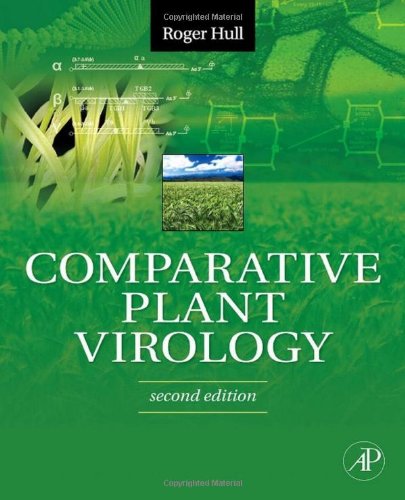
22. Matthews' Plant Virology, Fourth Edition
by Roger Hull
Hardcover: 1056 Pages (2001-09)
list price: US$134.00 -- used & new: US$134.00
(price subject to change: see help)
Asin: 0123611601
Average Customer Review: 5.0 out of 5 stars
Canada | United Kingdom | Germany | France | Japan
Editorial Review

Book Description
It has been ten years since the publication of the third edition of this seminal text on plant virology, during which there has been an explosion of conceptual and factual advances. The fourth edition updates and revises many details of the previous editon, while retaining the important older results that constitute the field's conceptual foundation.

Key features of the fourth edition include:
* Thumbnail sketches of each genera and family groups
* Genome maps of all genera for which they are known
* Genetic engineered resistance strategies for virus disease control
* Latest understanding of virus interactions with plants, including gene silencing
* Interactions between viruses and insect, fungal, and nematode vectors
* New plate section containing over 50 full-color illustrations ... Read more

Customer Reviews (1)

5-0 out of 5 stars Excellent
That the study of plant viruses is of very important does not even need to be said, given the destruction that they cause to food plants every year. This sizable book, having appreciable gravitational pull, is written for experts and students who intend to specialize in plant virology. However, anyone who is curious about the subject will find the book packed full of information, even though at times it reads more like a literature survey. In addition, many of the techniques in genetic engineering were first applied to food crops and other plants. Therefore anyone who is interested in transgenic technologies or functional genomics will find the book very informative. This reviewer was mostly interested in the effects of plant viruses on photosynthesis and the role of gene silencing, if any, in plant viruses. These topics are discussed at various places in the book.

Some of the questions that arise when reading the book include the following (not all of which are answered in the book):

1. To what extent are humans responsible for spreading viruses to plants by moving them from one place to another?
2. How is viral infection dependent on the manner of crop rotation? On the sowing time of seed?
3. How does the ecology and epidemiology of viruses with nematode vectors differ from that of viruses with air-borne vectors?
4. What role do weeds play in the incidence of virus diseases?
5. Why does viral transmission by grafting result in a different disease than from transmission by mechanical inoculation?
6. How do nepoviruses and cryptic viruses infect the gametes?
7. How many viral particles are actually needed for a successful infection?
8. Are there plant viruses that specifically target the chloroplasts?
9. How do plant viruses affect the photosynthetic processes?
10. How does the susceptibility to infection depend on light intensity?
11. How are viruses transmitted to plants by beetles?
12. What role does gene silencing play in cross-protection?
13. How are viruses used to induce sequence-specific suppression of gene expression?
14. How does post-transcriptional gene silencing (PTGS) affect virus infection? How is PTGS related to transgenic resistance?
15.What factors are responsible for the differences in symptoms caused by different strains of a plant virus?
16. Do plant viruses inhibit programmed cell death?
17. Is there any evidence for the existence of `viral genes' whose role is only in the induction of disease?
18. What are the nature of the mosaic patterns and symptoms?
19. How does viral infection affect ethylene production?
20. What are the mechanisms by which virus infection stunts growth?
21. Do plant viruses suppress the expression of genes that compete with it and enhance the expression of those that help it?
22. How do viruses move from the external phloem to the internal phloem?
23. What are the effects of viruses on plant metabolism and can the metabolism be engineered by the use of viruses?
24. What is the nature of asymmetric infection?
25. What is the connection between the triple gene block and viral movement from cell to cell?
26. What experimental methods are used to study virus movement?
27. What is the nature of subliminal infection?
28. What are the three types of viral replication?
29. In terms of field release of transgenic plants, what risks are there in the recombination between episomal and transgenic viral sequences?
30. What are the mechanisms for RNA recombination?
31 What is the difference between mutation frequency and mutation rate?
32. What proteins are involved in the replication of viral RNA?
33.How many different species of plant viruses are there?
34. What is the oldest recorded virus?
35. What species of plants have never been susceptible to viral infection?
36. Does viral infection always cause disease in the infected plant?
37. Can two viruses, each of which is deleterious to the plant, be combined to form a virus that is not?
38. Can viral infection ever induce growth in the infected plant?
39. For plants having nectar guides and infected by a virus, does this infection have an effect on the behavior of the honeybees that access the plant?
40. Why does on species of virus infect one plant species but not another?
41. How can a virus be blocked from infecting the plant?
42. How long can a virus remain in pollen or seed before it loses its power to infect?
43. Can two different viruses infecting the same plant result in an easier infection for both than each one acting alone?
44. Why do plant viruses have the shapes that they do?
45. How many genes do plant viruses have?
46. Why are cell recognition proteins not necessary for plant viruses?
47. What strategies do viruses use to overcome eukaryotic translation constraints?
48. What is ribosome shunting?
49. What is cap-snatching?
50. Where does the virus get its energy to carry out its functions?
51. What advantages are there for viruses to replicate in their insect vectors?
52. What mechanisms do plant viruses use for RNA recombination? ... Read more


23. Practical Molecular Virology (Methods in Molecular Biology)
by Mary K. Collins
Paperback: 352 Pages (1991-10-31)
list price: US$79.50 -- used & new: US$79.30
(price subject to change: see help)
Asin: 089603299X
Canada | United Kingdom | Germany | France | Japan
Editorial Review

Book Description
Mary K. L. Collins has assembled in Practical Molecular Virology a vanguard collection of readily repeatable methods for gene transfer and expression using a variety of recombinant viral vectors.

In keeping with the established tradition of the series, each technique is presented in an easy-to-follow format designed to work for the novice as well as the seasoned expert. Chapters cover:life cycles of specific retroviruses and how recombinant vectors are constructedPCR techniquespoliovirus vectorsherpesvirus vectorssyncytial assayscell lineage studiesbaculovirus and adenovirus vectorsSV40 and EBV vectorsviruses in gene transfer to eukaryotic cells

The wealth of material devoted to recombinant retroviral methods and their applications make Practical Molecular Virology and extremely timely volume, one that will find widespread use throughout biological and biomedical research. ... Read more


24. Habel Fund Tech Virology
by Karl Habel, Norman P. Salzman
 Hardcover: 527 Pages (1969-12)

Isbn: 0123126509
Canada | United Kingdom | Germany | France | Japan

25. Blackwell Underground Clinical Vignettes Microbiology I: Virology, Immunology, Parasitology, Mycology Fourth Edition
by Vikas Bhushan, Vishal Pall, Tao Le
Paperback: 132 Pages (2005-05-01)
list price: US$19.95 -- used & new: US$5.00
(price subject to change: see help)
Asin: 1405104120
Canada | United Kingdom | Germany | France | Japan
Editorial Review

Book Description
Blackwell Underground Clinical Vignettes: Microbiology I, Fourth Edition is your primary source for clinically relevant, case-based material essential for USMLE Step 1 review. Each Clinical Vignette simulates USMLE format, and includes classic buzzwords in history taking, physical examination, lab, imaging, and pathology. Microbiology I focuses on virology, immunology, parasitology, and mycology, and another volume, Microbiology II, focuses on bacteriology. This revised edition contains: / Carefully selected cases templated to fit the way you are tested and taught to think / Valuable links to Step 1 and 2 Atlases for emphasis on photographic case studies / Over 50 new cases compatible with the updated content of USMLE Step 1 Blackwell Underground Clinical Vignettes: Microbiology I, Fourth Edition is perfect for medical students. Physician assistants, nurse practitioners, and related health professionals will also find Underground Clinical Vignettes valuable. ... Read more


26. Fields Virology (Volume 2, w/o CD)
 Hardcover: 1626 Pages (2007)

Asin: B0012LJAVQ
Canada | United Kingdom | Germany | France | Japan
Editorial Review

Product Description
Volume 2 only. Does NOT include the CD ROM that comes with Volume 1. ... Read more


27. Viral Gastroenteritis (Archives of Virology. Supplementum, 12.)
Hardcover: 311 Pages (1997-01-10)
list price: US$269.00 -- used & new: US$64.53
(price subject to change: see help)
Asin: 3211829474
Canada | United Kingdom | Germany | France | Japan
Editorial Review

Book Description
Recently, rapid developments have occurred in the field of viral gastroenteritis. This book is an update of fundamental and practical aspects of viral gastroenteritis. Among the various agents that cause viral gastroenteritis, group A rotaviruses and caliciviruses are the focus of this volume because of their clinical impact and the significance of new findings about them. ... Read more


28. HIV: A Practical Approach Volume 1: Virology and Immunology (Practical Approach Series, 156)
Paperback: 304 Pages (1995-12-21)
list price: US$128.00 -- used & new: US$76.88
(price subject to change: see help)
Asin: 0199634920
Average Customer Review: 5.0 out of 5 stars
Canada | United Kingdom | Germany | France | Japan
Editorial Review

Book Description
AIDS is one of the most pressing medical emergencies of our era.Despite arguments to the contrary, the majority of AIDS researchers have agreed that there is a causal link between HIV infections and AIDS.However, it is now 12 years since the discovery of HIV and we are still a long way from understanding and controlling AIDS HIV 1 and HIV 2 are guides to studying HIV in the laboratory.HIV 1 describes studies of the virus and infected cells and covers techniques for handling HIV safely, for studying viral entry, replication, and neutralization, and basic immunological techniques.HIV 2 explores the biochemistry and molecular biology of HIV, with a section on recent approaches to drug discovery.HIV research is highly multidisciplinary so a complete compendium of all related methods would have been unreadable.Instead, these two volumes focues on the specialized techniques which are unique to studies of HIV.The books have been designed so that a novice entering HIV research can find clear instructions about how to perform standard experiments, such as assays for reverse transcriptase or antibodies to HIV.In addition the books include many novel methods which are described in detail for the first time. ... Read more

Customer Reviews (1)

5-0 out of 5 stars An excellent guide for beginners
This book is really a great help for beginners of basic research in the HIV field.It not only covers the technical approaches for conducting research on HIV but also it gives a background on basic knowledge as wellas safety measures during handling HIV in research laboratory. ... Read more


29. Emerging Viruses in Human Populations, Volume 16 (Perspectives in Medical Virology) (Perspectives in Medical Virology)
by Edward Tabor
Hardcover: 374 Pages (2007-03-26)
list price: US$98.95 -- used & new: US$91.75
(price subject to change: see help)
Asin: 0444520740
Canada | United Kingdom | Germany | France | Japan
Editorial Review

Book Description
Infectious diseases are an ever present threat to humans. In recent years, the threat of these emerging viruses has been greater than ever before in human history, due in large part to global travel by larger numbers of people, and to a lesser extent to disruptions in the interface between developed and undeveloped areas. The emergence of new deadly viruses in human populations during recent decades has confirmed this risk. They remain the third leading cause of deaths in the US and the second world-wide.

Emerging Viruses in Human Populations provides a comprehensive review of viruses that are emerging or that threaten to emerge among human populations in the twenty-first century. It discusses the apprehension over emerging viruses that has intensified due to concerns about bioterrorism.

* Presents the history of emerging viruses
* Includes chapters on SARS, Pandemic Threat of Avian Influenza Viruses, West Nile Virus, Monkeypox Virus, Hantavirus, Nipah Virus and Hendra Virus, Japanese Encephalitis Virus, Dengue and Crimean-Congo Hemorrhagic Fever Viruses
* Discusses surveillance for newly emerging diseases ... Read more


30. Human Herpesvirus-6, Volume 12, Second Edition: General Virology, Epidemiology and Clinical Pathology (Perspectives in Medical Virology)
Hardcover: 392 Pages (2006-09-14)
list price: US$98.95 -- used & new: US$79.99
(price subject to change: see help)
Asin: 0444520635
Canada | United Kingdom | Germany | France | Japan
Editorial Review

Book Description
The present book presents a comprehensive review of Human Herpesvirus-6 (HHV-6) infects up to 90% of the worlds population and can cause potentially life-threatening diseases. Clinicians typically do not search for HHV-6, and if they do, they will find only few laboratories providing the necessary diagnostic tests that can differentiate between active and latent infection. Adding to this problem is that scientists still disagree about whether serological or molecular assays will be the best diagnostic test, yet there is no disagreement about the inadequacy of many of thecurrently existing assays. Consequently, our knowledge of etiology and pathogenesis of HHV-6 associated diseases can only come from the combined efforts of clinicians, virologists, molecular biologists and pathologists. It is the prime task of this book to summarize the status quo of HHV-6 research and to further stimulate such a collaboration. It will be a valuable reference for both clinical and basic scientists including epidemiologists, virologists, practicing clinicians and infectiologists, pathologists and essentially all scientists entering the field of herpes virus research. ... Read more


31. Virology
 Paperback: 280 Pages (1988-09)
list price: US$45.95 -- used & new: US$20.00
(price subject to change: see help)
Asin: 083859462X
Canada | United Kingdom | Germany | France | Japan

32. Fundamentals of Plant Virology
by R. E.F. Matthews
Hardcover: 403 Pages (1992-05-29)
list price: US$74.95 -- used & new: US$74.95
(price subject to change: see help)
Asin: 0124805582
Canada | United Kingdom | Germany | France | Japan
Editorial Review

Book Description
Fundamentals of Plant Virology is an introductory student text covering all of modern plant virology. The author, Dr. R.E.F. Matthews, has written this coursebook based on his classic and comprehensive Plant Virology, Third Edition. Four introductory chapters review properties of viruses and cells and techniques used in their study. Five chapters are devoted to current knowledge of all major plant viruses and related pathogens. Seven chapters describe biological properties such as transmission, host response, disease, ecology, control, classification, and evolution of plant viruses. A historical and future overview concludes the text. Fundamentals of Plant Virology is a carefully designed instructional format for a plant virology course. It is also an invaluable resource for students of plant pathology and plant molecular biology.

Key Features
* Summarizes knowledge on all aspects of plant virology
* Condenses all essential material from Plant Virology 3/e
* Compares basic properties of cells and viruses
* Outlines principles of gene manipulation technology
* Discusses serological techniques including monoclonal antibodies
* Geared to student level course ... Read more


33. Handbook of Plant Virology
by Jawaid Khan, Jeanne Dijkstra
Paperback: 452 Pages (2006-06-22)
list price: US$69.95 -- used & new: US$65.95
(price subject to change: see help)
Asin: 1560229799
Canada | United Kingdom | Germany | France | Japan
Editorial Review

Book Description
All the information you need on plant viruses in a single volume

The Handbook of Plant Virology is a comprehensive guide to the terms and expressions commonly used in the study of plant virology, complete with descriptions of plant virus families down to the generic level. Rather than simply listing terms in alphabetical order, this unique book links each term to related terms within a theme and adds commentary from authors whose specific expertise adds additional dimensions to the topics. The result is an invaluable resource for research workers, educators, and students working in plant virology and pathology, crop protection, molecular biology, and plant breeding.

The Handbook of Plant Virology provides enough details and background in the discussion of each topic to present a clear and thorough understanding of terms without the lengthy analysis found in most textbooks. The book's first section covers:

the mechanics of virus classification

internal and external symptoms (with color illustrations)

isolation and purification

genome packaging

replication and gene expression

detection and identification

various methods of virus transmission

serology

forecasting disease development

recombination

control strategies

economic importance

and much more

The second section of The Handbook of Plant Virology is devoted to concise descriptions of the 81 genera and 18 families of plant viruses, including:positive-sense, single-stranded RNA viruses, such as Potyviridae, Sequiviridae, and Comoviridae

double-stranded RNA viruses, such as Reoviridae and Partitiviridae

negative-sense, single-stranded RNA viruses, such as Rhabdoviridae and Bunyaviridae

single-stranded DNA viruses, such as Geminiviridae, Pseudoviridae, Metaviridae The Handbook of Plant Virology also includes photos, illustrations, figures, diagrams, and brief, but detailed, bibliographies. The book's concise mix of information on currently assigned taxonomic families and the genera of plant viruses make it an essential reference tool for practitioners, researchers, educators, and students. ... Read more


34. Encyclopedia of Virology, Five-Volume Set, Volume 1-5, Third Edition
Hardcover: Pages (2008-07-25)
list price: US$1,120.00 -- used & new: US$1,120.00
(price subject to change: see help)
Asin: 0123739357
Canada | United Kingdom | Germany | France | Japan
Editorial Review

Book Description
Encyclopedia of Virology, Third Edition continues its success as the largest single reference source of current research in virology. Unique in its use of concise mini-review articles, this praised work covers biological, molecular, and medical topics concerning viruses in animals, plants, bacteria and insects. Now in five volumes, this new edition has been extensively revised and updated to reflect the 50% increase in identified and accepted viruses since the year 2000. With over 25% new chapters and over 1000 illustrations, this edition takes into account the new developments in virology research by including information on new emerging diseases such as avian flu, SARS and West Nile and the ability of some viruses to be used as agents of bioterrorism. Edited by leading Virologists Mahy and van Regenmortel, this third edition remains the number one all-inclusive source of information for virology researchers, students, and reference departments of academic, medical, and corporate libraries.

* Extensive coverage on AIDS and HIV, viral immunology and vaccines, the economic importance and control of virus diseases, and the origin, history, evolution and phylogeny of viruses NEW!
* Four color throughout NEW!
* Sections on future perspectives that show the direction of current research
* 25% NEW articles
* Glossary of key terms for easy referencing
* Information on viruses of human clinical interest, including the virus causing SARS NEW!
* More than 20% NEW virus classifications
* The most recent information from the 8th International Committee on Taxonomy and Classification of Viruses NEW!
* Recommendations for further reading and a list of other relevant entries ... Read more


35. Virology Methods Manual, First Edition
Plastic Comb: 374 Pages (1996-01-15)
list price: US$125.00 -- used & new: US$185.41
(price subject to change: see help)
Asin: 0124653308
Canada | United Kingdom | Germany | France | Japan
Editorial Review

Book Description
The Virology Methods Manual is a comprehensive source of methods for the study, manipulation, and detection of viruses. Edited by Brian Mahy and Hillar Kangro, this work describes the most up-to-date, definitive techniques, provided by experts in each area, and presented with easy-to-use, step-by-step protocols. This new manual will satisfy the needs of virologists and all those working with viruses who need a practical guide to methods that work!

Key Features
* Provides up-to-date techniques by experts worldwide
* Presents common, step-by-step protocols in an attractive, easy-to-use fashion
* Contains useful appendices including virus taxonomy, metabolic inhibitors, and Bio-safety in the virology laboratory ... Read more


36. Principles and Practice of Clinical Virology,Sixth Edition
by Arie J. Zuckerman
 Hardcover: 1000 Pages (2008-08-08)
list price: US$440.00 -- used & new: US$440.00
(price subject to change: see help)
Asin: 0470517999
Canada | United Kingdom | Germany | France | Japan

37. Principles and Practice of Clinical Virology
Hardcover: 912 Pages (2004-06-25)
list price: US$490.00 -- used & new: US$296.06
(price subject to change: see help)
Asin: 0470843381
Canada | United Kingdom | Germany | France | Japan
Editorial Review

Book Description
The knowledge and practice of clinical virology continues to expand. This new fifth edition has thirty-six comprehensive chapters, each of which has been extensively revised or rewritten, with the addition of new colour plates.

This updated version takes into account knowledge accumulated in molecular biology with its applications for laboratory diagnosis, immunisation and antiviral chemotherapy. Each chapter highlights the clinical features and epidemiological patterns of infection. Similarly, in response to the global concern of the threat posed by new viruses, a new chapter on Emerging Infections is included.  

There is also new material on Hospital Acquired Infections, including some advice relating to SARS, that will be of benefit to those dealing with the day-to-day management of patients in hospital. 


 Download Description
"The knowledge and practice of clinical virology continues to expand. This new fifth edition has thirty-six comprehensive chapters, each of which has been extensively revised or rewritten, with the addition of new colour plates.

This updated version takes into account knowledge accumulated in molecular biology with its applications for laboratory diagnosis, immunisation and antiviral chemotherapy. Each chapter highlights the clinical features and epidemiological patterns of infection. Similarly, in response to the global concern of the threat posed by new viruses, a new chapter on Emerging Infections is included.  

There is also new material on Hospital Acquired Infections, including some advice relating to SARS, that will be of benefit to those dealing with the day-to-day management of patients in hospital. 


 " ... Read more


38. Handbook of Plant Virology
 Hardcover: 452 Pages (2007-11-24)
list price: US$124.99 -- used & new: US$124.99
(price subject to change: see help)
Asin: 8170262224
Canada | United Kingdom | Germany | France | Japan
Editorial Review

Product Description
A comprehensive guide to the terms and expressions commonly used in the study of plant virology, complete with descriptions of plant virus families down to the generic level. Rather than simply listing term in alphabetical order, Handbook of Plant Virology links each term to related terms within a theme and adds commentary from authors whose specific expertise adds additional dimensions to the topics. The result is an invaluable resource for research workers, educators, and students working in plant virology and pathology, crop protection, molecular biology, and plant breeding. ... Read more


39. Virology
 Hardcover: 338 Pages (1989-06-05)

Isbn: 0333390636
Canada | United Kingdom | Germany | France | Japan

40. Virus dynamics: Mathematical principles of immunology and virology
by Martin A. Nowak, Robert May
Paperback: 256 Pages (2001-01-25)
list price: US$70.95 -- used & new: US$64.08
(price subject to change: see help)
Asin: 0198504179
Average Customer Review: 4.0 out of 5 stars
Canada | United Kingdom | Germany | France | Japan
Editorial Review

Book Description
We know, down to the tiniest details, the molecular structure of the human immunodeficiency virus (HIV). Yet despite this tremendous accomplishment, and despite other remarkable advances in our understanding of individual viruses and cells of the immune system, we still have no agreed understanding of the ultimate course and variability of the pathogenesis of AIDS. Gaps in our understanding like these impede our efforts towards developing effective therapies and preventive vaccines. Martin Nowak and Robert M May describe the emerging field of theoretical immunology in this accessible and well- written text. Using mathematical modelling techniques, the authors set out their ideas about how populations of viruses and populations of immune system cells may interact in various circumstances, and how infectious diseases spread within patients. They explain how this approach to understanding infectious diseases can reveal insights into the dynamics of viral and other infections, and the interactions between infectious agents and immune responses.The book is structured around the examples of HIV/AIDS and Hepatitis B virus, although the approaches described will be more widely applicable. The authors use mathematical tools to uncover the detailed dynamics of the infection and the effects of antiviral therapy. Models are developed to describe the emergence of drug resistance, and the dynamics of immune responses, viral evolution, and mutation. The practical implications of this work for optimisation of the design of therapy and vaccines are discussed. The book concludes with a glance towards the future of this fascinating, and potentially highly useful, field of study. ... Read more

Customer Reviews (1)

4-0 out of 5 stars A good introduction
This book is best described as the application of nonlinear ordinary differential equations to immunology and virology. It's primary emphasis is on understanding the time development of viral infections, drug treatments, and viral resistance of the HIV and hepatitis-B viruses.

The authors do a good job of describing the relevant equations needed to model virus dynamics. The book would be a good beginning for mathematicians interested in going into the field of mathematical immunology. And, even though it should be classified as a monograph, rather than a textbook, since there are no problem sets, students of mathematical immunology should find this book a useful introduction to the subject. In addition, the authors give a large list of references at the end of each chapter for further reading.

Mathematicians who need a background in the biology of the HIV virus will find a good discussion in Chapter 2 of the book. The authors give an historical summary of the origins and treatment of the virus in this chapter. This sets the stage for the mathematical modeling of virus dynamics in Chapter 3, where the authors define the basic reproductive ratio and write down a system of three coupled nonlinear ordinary differential equations as the basic equations of virus dynamics. They remark, though without justification, that an analytical solution of the time development is not possible, and so they use approximation schemes to solve the equations. The equations are a phenomenological representation of virus dynamics, and no attempt is made to relate the rate constants to the underlying microscopic properties/structures/processes of viruses. They do however discuss the empirical data associated with studies of SIV infections, and show convincingly there is a correlation between the initial growth of the virus and its value at equilibrium. They caution the reader that the basic model does not give the true reproductive ratio, and show how to correct for this by introducing time delays.

The efficacy of drug therapy is treated from both a mathematical and experimental viewpoint in the next chapter. This is a very enlightening discussion from the standpoint of the validation of the virus models.

The authors switch gears in the next chapter and talk about the dynamics of the Hepatitus B virus. Again, they do a good job of introducing the reader to the experimental evidence for the models of this virus.

In chapter 6, they bring in the contribution of the immune system to the basic equations. They assume that the reader is familiar with the concept of CTL responsiveness. The resulting equations are somewhat more complicated, and the authors show how the ubiquitous Lotka-Volterra equations arise with the virus being the prey, and the immune system the predator. No detailed phase space analysis is done however to study any of the equations in this chapter, which would have been useful to the reader.

The chapter on quasispecies is the most interesting one in the book, as the authors not only give a rudimentary definition of quasispecies, but they also give an indication of their complexity. Disappointingly, they mention the idea of mutation rates and their connection with chaos and self-organized criticality, but do not elaborate on this at all.

The Bonhoeffer's laws of anti-viral treatment are discussed in the next chapter and the authors show how to derive them using the basicmodel. The emergence of resistance during drug treatment is modeled by parameters which reflect the replication rates of the virus, but these parameters are again not connected with any underlying microscopic properties of the virus.

Some interesting dynamical behavior occurs for the case of multiple epitopes where the existence of quasiperiodic oscillations is shown to occur. They authors refer to this as "unpredictable" but they do not define this term in the book. The existence of quasiperiodic orbits in a dynamical system does not by itself make the system "unpredictable" or random of some sort.

This book is a very addition to the literature, and most importantly, it emphasizes the role of validating mathematical models experimentally, which takes on even greater importance given the medical ramifications of the topics in this book. ... Read more


  Back | 21-40 of 100 | Next 20
A  B  C  D  E  F  G  H  I  J  K  L  M  N  O  P  Q  R  S  T  U  V  W  X  Y  Z  

Prices listed on this site are subject to change without notice.
Questions on ordering or shipping? click here for help.

site stats