e99 Online Shopping Mall

Geometry.Net - the online learning center Help  
Home  - Scientists - Copernicus Nicolaus (Books)

  1-20 of 100 | Next 20
A  B  C  D  E  F  G  H  I  J  K  L  M  N  O  P  Q  R  S  T  U  V  W  X  Y  Z  

click price to see details     click image to enlarge     click link to go to the store

$6.00
1. Nicolaus Copernicus: Making the
$5.80
2. On The Revolutions of Heavenly
$9.69
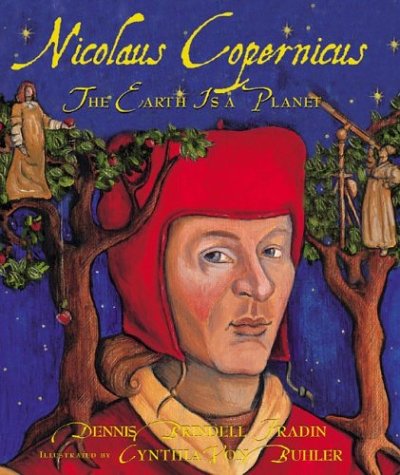
3. Nicolaus Copernicus: The Earth
 
$19.99
4. On the Revolutions: Nicholas Copernicus
$22.25
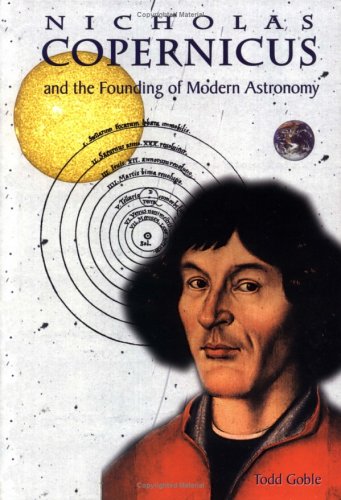
5. Nicolaus Copernicus: And the Founding
$9.46
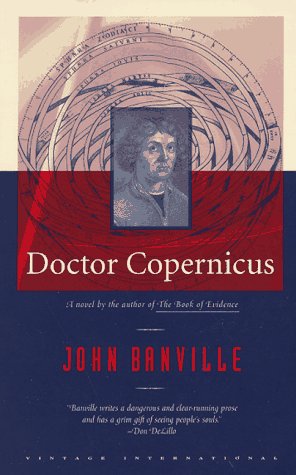
6. Doctor Copernicus
$5.42
7. Nicolaus Copernicus: Father of
 
$6.95
8. Book Nobody Read - Chasing The
 
$19.95
9. The Almagest By Ptolemy, On the
$24.95
10. Giants of Science - Nicolaus Copernicus
 
$19.75
11. The Book Nobody Read: Chasing
$24.95
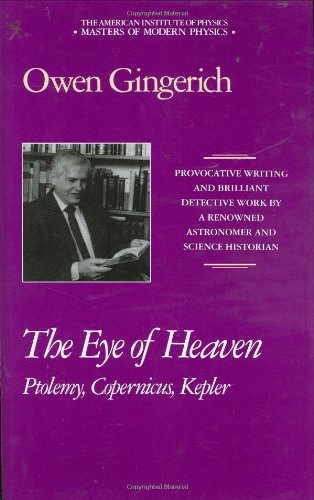
12. The Eye of Heaven: Ptolemy, Copernicus,
 
13. The Nature of Scientific Discovery:
$5.75
14. Nicolaus Copernicus: Father Of
 
15. Nicolaus Copernicus 1473/1973.
 
16. Nicolaus Copernicus, 1473-1973;:
 
17. Nicolaus Copernicus (1473-1543):
 
18. Nicolaus Copernicus, 1473-1973
 
19. Nicolaus Copernicus, 1473-1543;:
 
20. Nicolaus Copernicus, 1473-1973.

1. Nicolaus Copernicus: Making the Earth a Planet
by Owen Gingerich, James MacLachlan
Hardcover: 128 Pages (2005-06-16)
list price: US$30.00 -- used & new: US$6.00
(price subject to change: see help)
Asin: 0195161734
Average Customer Review: 5.0 out of 5 stars
Canada | United Kingdom | Germany | France | Japan
Editorial Review

Book Description
Born in Poland in 1473, Nicolaus Copernicus launched a quiet revolution. No scientist so radically transformed our understanding of our place in the universe as this curious bishop's doctor and church official. In his quest to discover a beautiful and coherent system to describe the motions of the planets, Copernicus placed the sun in the center of the system and made the earth a planet traveling around the sun. Today it is hard to imagine our solar system any other way, but for his time Copernicus's idea was earthshaking. In 1616 the church banned his book Revolutions because it contradicted the accepted notion that God placed Earth in the center of the universe. Even though those who knew of his work considered his idea dangerous, Revolutions remained of interest only to other scientists for many years. It took almost two hundred years for his concept of a sun-centered system to reach the general public. None the less, what Copernicus set out in his remarkable text truly revolutionized science. For this, Copernicus, a quiet doctor who made a tremendous leap of imagination, is considered the father of the Scientific Revolution. ... Read more

Customer Reviews (1)

5-0 out of 5 stars Succinct yet interesting
Having read and reviewed Gingerich's "The Book Nobody Read", I decided to order his & MacLachlan's "Nicolaus Copernicus", eventho' it seemed overpriced for a small book aimed at `young adults'. It succinctly yet interestingly portrays Copernicus' life and work using diagrams to describe the astronomy without resorting to math, so it seems well suited to bright teenage readers (altho' it's been sixty years since I was a teenager). Undoubtedly Oxford uses a library binding so the book can survive the rigors of high-school libraries which explains its price. And it contains far more information than available on Encarta so it's a good resource for students' research projects (or old geezers' curiosity). ... Read more


2. On The Revolutions of Heavenly Spheres (On the Shoulders of Giants)
by Nicolaus Copernicus
Paperback: 384 Pages (2004-12-31)
list price: US$14.95 -- used & new: US$5.80
(price subject to change: see help)
Asin: 0762420219
Average Customer Review: 4.0 out of 5 stars
Canada | United Kingdom | Germany | France | Japan
Editorial Review

Book Description
New to our On the Shoulders of Giants series, this groundbreaking work of astronomy proposed a heliocentric universe in which planets orbited the sun-daring to challenge the Ptolemaic ideal of the earth as the center of the universe. This essay by Copernicus (1473-1543), revolutionized the way we look at the earth's placement in the universe, and paved the way for many great scientists, including Galileo and Isaac Newton, whose theories stemmed from this model. Featuring a biography of Copernicus and an accessible, enlightening introduction, both written by the renowned physicist Stephen Hawking, On the Revolution of Heavenly Spheres provides a fascinating look at the theories which shaped our modern understanding of astronomy and physics.

Black-and-white illustrations. ... Read more

Customer Reviews (4)

5-0 out of 5 stars Planetary distances is "the chief point of all"
Copernicus puts the sun in the center of the universe. This is a great achievement not on metaphysical or philosophical grounds but rather because it provides new quantitative information about the universe, namely planetary distances. Suppose the earth is at the center and we have created a model for how the planets move with epicycles and stuff, as Ptolemy did. Such a model can give no information about planetary distances, because we could scale the orbit of Saturn, say, to make it twice as big and it would still look exactly the same seen from earth. But suppose now that we have a similar model but with the sun at the center, which is what Copernicus provides. The (relative) planetary distances are now determined, because if we scaled the orbit of Saturn then it would look the same seen from the sun but different seen from earth. So with the earth in the center we cannot determine planetary distances because we are the center of scaling, but with the sun in the center we would notice scaling and thus the planetary distances are locked, or, as Copernicus puts it, "this correlation binds together so closely the order and the magnitudes of all the planets and of their spheres or orbital circles and the heavens themselves that nothing can be shifted around in any part of them without disrupting the remaining parts and the universe as a whole". Thus he can claim triumphantly that earlier astronomers "have not been able to discover or to infer the chief point of all, i.e., the form of the world and the certain commensurability of its parts. But they are in exactly the same fix as someone taking from different places hands, feet, head, and the other limbs---shaped very beautifully but not with reference to one body and without correspondence to one another---so that such parts made up a monster rather than a man." (I'm using the translation from Goldoni's excellent article in the Mathematical Intelligencer.)

3-0 out of 5 stars A trip back in time
Very good book. It really took me back to the 1400's, when everyone thought the earth was the center of the universe, and the sum and stars revolved around the Earth. The style of writing, and the enormity of the meesage was very illuminating.

I have to admit, though, after getting into the math and the scientific explanations, it gets pretty dry. I've only gotten 1/2 way through the book. But, because it's actually written by Copernicus, it is fascinating.

And, he made all these observations almost a century before telescopes were around.

PS i was led to read this, because of the book, Galileo's Daughter, which discusses the life of Galileo, his invention of the telescope, and the persecutions he faced.

4-0 out of 5 stars Awesome.
OK, first of all, "GangstaLawya" seems to not be taking into account the fine work of Kepler, Newton, and Einstein when he suggests that we "remain agnostic" on the issue of heliocentrism. True, Copernicus himself does not excactly refute Ptolemy here (he actually was more worried about how other astronomers and Protestant theologians would react to his heliocentric system than how the Catholic church would see it... and his model wasn't fully accepted until over a hundred years after his death), but this model was later augmented by Kepler and Newton to the point where it does work better than Ptolemy's. And with all due respect, the Ptolmaic system is extremely convoluted, needlessly complicated, and downright ugly at times... so even if there's a simpler way of looking at things that works just as well, that's still a conceptial improvement. Occam's razor, y'know?

But I digress. As with most of my reviews of books like this, my concern isn't necessarily the actual book (which is usually self-evidently worthwhile), but with the presentation. I must say that it's a little awkward to see Stephen Hawking's name appear on the cover in larger type than Copernicus' and not get anything more than a very short introduction by him that doesn't say very much. In fact, there is not very much of a difference between this edition and the one published by Prometheus Books; the text is exactly the same and contains all the same diagrams. The cover is flashier (and says "Stephen Hawking!") and the type is cleaner. That's it. Those are the only real differences. In fact, the only reason I can see for this edition existing is Running Press (and Stephen Hawking) making a few bucks.

Despite all this, there isn't really anything here that detracts from the work. So basically, you can buy this copy or the Prometheus Books edtion and it won't matter; you'll get pretty much the same thing and pay pretty much the same price either way. I'll leave it up to you whether you want the flashy cover (complete with Stephen Hawking's name on it) or the plain one because that's really about as deep as the choice goes.

5-0 out of 5 stars What A Joy As Well As A Work of Art
Never before did I know a man could explain the heliocentric universe as well in this book.Of Course, Copernicus explained it centuries before my birth.But, it seems so foolish to believe the geocentric view, and I'm Catholic.Read "Dialogues" by Galileo to get the full picture ofwhat these two men said, it it truly fascinating. ... Read more


3. Nicolaus Copernicus: The Earth Is a Planet
by Dennis B. Fradin
Hardcover: 32 Pages (2004-02)
list price: US$15.95 -- used & new: US$9.69
(price subject to change: see help)
Asin: 1593360061
Average Customer Review: 4.0 out of 5 stars
Canada | United Kingdom | Germany | France | Japan

Customer Reviews (1)

4-0 out of 5 stars Wonderful, Meaty and Beautifully Illustrated
My [...] year-old astronomer-in-the-making adores Dennis Fradin's Copernicus, the reading of which has led to a desire to visit Frombork and its Nicolaus Copernicus Museum!That is the power of this beautifully illustrated biography, which touches on the social conditions in Poland at the time of Copernicus, the science of the Copernican system, as well as relating the essential story of the man himself.Parents and homeschooling families will find much to discuss and share in this book, although the text will stand on its own as well without additional enrichment or activities.

Fradin seems to have taken great care with the facts of the story. Unlike some science and biography related boks intended for children, Nicolaus Copernicus:The Earth is a Planet is *accurate* and does not lose factual credibility in its effort to make understandable how and why Copernicus arrived at his famous conclusions.Nor does the story shy away from the consequences that arose for scientists of the time who dared to contradict the Church, but rather addresses them in a non-scary, kid-appropriate way.

All in all, a wonderful effort and one I'm glad my family has experienced. ... Read more


4. On the Revolutions: Nicholas Copernicus Complete Works (Foundations of Natural History)
by Nicholas Copernicus
 Paperback: 480 Pages (1992-11-01)
list price: US$26.95 -- used & new: US$19.99
(price subject to change: see help)
Asin: 0801845157
Canada | United Kingdom | Germany | France | Japan
Editorial Review

Book Description

In 1973, on the 500th anniversary of Copernicus's birth, the Polish Academy of Sciences announced its intention to publish all of the astronomer's extant works, both in their original Latin and in modern translations. Here, available for the first time in softcover, are Edward Rosen's authoritative English translations and commentaries.

... Read more

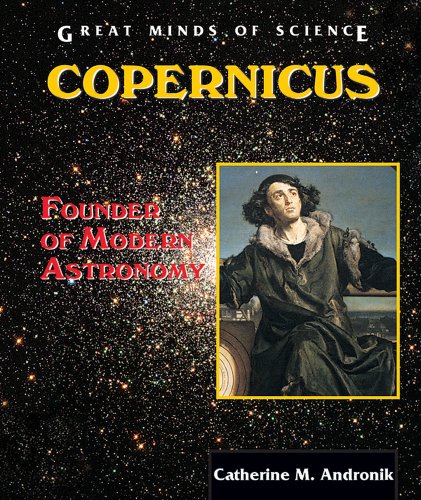
5. Nicolaus Copernicus: And the Founding of Modern Astronomy (Great Scientists)
by Todd Goble
Library Binding: 128 Pages (2003-10)
list price: US$27.95 -- used & new: US$22.25
(price subject to change: see help)
Asin: 1883846994
Average Customer Review: 5.0 out of 5 stars
Canada | United Kingdom | Germany | France | Japan

Customer Reviews (1)

5-0 out of 5 stars The Timid Revolutionary
This is a surprisingly well-written and informative biography of Copernicus considering that it is ostensibly aimed at the middle school market (ages 9-12). I suspect it's put in this category only because it is short (144 pages) and cites only a few, secondary sources.

I found this little book to be such a gem. It's enhanced with nice illustrations and portraits from the Renaissance period, many in color, as well as many relevant information sidebars, and a handy biographical timeline on Copernicus in the back. Nice teaching tools.

Having been a collector of books on Copernicus for over three decades, I found Goble's biography to be concise yet reliable. Unlike what is too often found in biographies offered for young readers, I did not find this author varnishing fact or compromising accuracy for brevity or hero worship. Based on a few but judicious selection of references, the author displays a sure hand with the facts of this visionary but timid canon's life.

We're sometimes also treated to a level of information in this brief biography usually found only in much longer ones. For example, about how money was probably a determining factor in Copernicus switching universities. In the middle of what turned out to be more than a decade studying at four universities, Copernicus spent three years attending the University of Bologna which was considered the best place in Europe for studying canon (church) law, and then he moved on to the University of Padua to study medicine. After a couple of years, when Copernicus came back for a few months to complete the examination for his degree in canon law, he did so at the smaller University of Ferrara in Italy -- probably, as is persuasively explained, because it was much cheaper. Not having all his friends from Bologna around, it was also quieter. Nice detail.

So many of us feel we have less time to read these days. I think the biggest benefit of this short read will be to allow more people to become acquainted with Copernicus -- the man whose scientific work he did quietly in his spare time and which he published only at the end of his life. His sole book ended up overturning more than medieval astronomy, it initiated the Scientific Revolution and ultimately changed our view of our place in the universe.

For a more thorough, insightful, and satisfyingly less sanitized study of Copernicus (as well as Kepler and Galileo), I'd recommend Arthur Koestler's THE SLEEPWALKERS. For mastery of the technical details and historical issues, the classic treatment is still Thomas Kuhn's THE COPERNICAN REVOLUTION. ... Read more


6. Doctor Copernicus
by John Banville
Paperback: 256 Pages (1999-06-11)
list price: US$14.45 -- used & new: US$9.46
(price subject to change: see help)
Asin: 0330372343
Average Customer Review: 4.0 out of 5 stars
Canada | United Kingdom | Germany | France | Japan
Editorial Review

Book Description
When Nicolas Copernicus (1473-1543) proved that the earth was not the center of the universe, man's conception of his cosmos and his God broke down. That shattering situation, with the great astronomer at its hub, and the toll it took on him, his church, and his world, is what John Banville skillfully reveals in this novel.

Set in a fascinating, remote world, DOCTOR COPERNICUS transcends its context, making it at once an historical and a very modern novel.

"Banville is superb...There are not many historical novels of which it can be said that they illuminate both the time that forms their subject matter and the time in which they are read: DOCTOR COPERNICUS is among the very best." (The Economist) ... Read more

Customer Reviews (8)

5-0 out of 5 stars Scientific, religious, and political revolution
This is the third Banville novel I have read and I find his writing exceptional and challenging. I first read The Sea and then Kepler. Doctor Copernicus, while less poetic than The Sea, is my favorite of the three.

I think it is significant that Banville in his Acknowledgments mentions Thomas S. Kuhn's The Copernican Revolution as a major source. This becomes evident in the second half of the book where Banville does an exceptional job of integrating into novel form Thomas Kuhn's Structure of Scientific Revolution into the narrative structure of the novel. Yet, like the works of Iris Murdoch, the philosophy and science are woven seemlessly into the novel structure, never overpowering. John Banville will win the Nobel Prize for literature one day - mark my word.

There are several strenghts in this novel that I would point out.

First, Banville captured a medieval world of turmoil, disease, filth, ignorance, and death. Yet he also captures how exceptional intelligence may be embedded in this world, rise above squalor, develop an intellectual social network for passage of ideas, and produce a product that will communicate to the future ages. And yet, Banville's genius is also to negate these concepts by revealing that exceptional intelligence is still unable to grasp the thing in itself, the nature of reality. That human squalor is a reality in all times and that Copernicus distances himself from the human condition at a price. Copernicus is also a medical physician who is powerless against the horror of syphilis. Banville also allows us no illusion that science is a process of progress marching toward truth, but he has his character Copernicus recognize that his hypotheses in fact would soon be replaced by new truth systems and these new truth systems were only a micron closer to any final reality. Thus we are presented with a picture of human genius which is shown to be limited by the short life span of humans, our inability to focus and concentrate, the wild distractions of everyday life and the pain of the human condition.

The life of Copernicus takes place during a theological revolution with political ramifications. Copernicus lives in Ermland, a Germanic state ruled primarily by his uncle, the Bishop Lucas. This tiny state falls between the Prussian and Germanic Lutheran forces and those of the Teutonic Knights and the Polish Catholic king.Thus Banville has his Copernicus experience the terrors of a theological revolution, as expressed when Copernicus must list the names of the over 2000 victims of the struggle between the Germanic states and Poland for the tiny Baltic states that lay between them. Whereas Copernicus, a Canon of the Catholic Church, no longer believes in the Medieval construction of God, neither Catholic nor Lutheran, he does cling to the rituals of Catholicism and believes that some human truth resides in these ritualistic acts that are independent of the current theology but may be linked to an ultimate reality beyond human comprehension. Thus he knows the process of revolution and he knows the revolution that his work will stimulate and he knows the costs of revolution.

Banville creates a coldly calculating Copernicus, who uses the bright but egotistical Rheticus, to move his publications forward with strategic publications and timing. That this process was supported by Catholic Bishops would indicate that there is a sub-plot in the novel of subversion of the Lutheran faith and Germanic states by taking the manuscript deep into Lutheran territory for publication and distribution.Copernicus's theories were known and discounted by Martin Luther.

The form of the novel was marvelously post-modern, using a distant all seeing narrator in the early chapters, letters and correspondence in later chapters, the acount of the angry Rheticus in the third quarter of the book, and Copernicus' death bed hallucinations as the final chapter.

The character of Copernicus is dry yet we see how this orphaned boy, reared by the cold calculating Bishop Lucas, tortured by his hedonistic brother, and finally rejecting love that he feels for young Italian physician, prepare his cold soul for the distanced work of abstracting and producing his vision of a sun centered system of planetary motion. It is his angry rejected disciple Rheticus who tells us that the world has beenfooled and that the Copernican model in fact does not place the sun at the center of the universe but only offers a model for planetary motion and that the sun now becomes a smaller force in a universewithout a center. Thus the Biblical world becomes completely unhinged.

The character of Rheticus is wonderfully written for he is bright but egotistical and this leads to his downfall and his being used as the method by which Copernicus could publish in a politically treacherous time. The conversations between Rheticus and Copernicus reveal that Copernicus grasped the nature of scientific revolution and thus was able to see his own work as launching a coneptual revolution with wide ramifications which one day would be overthrown also.

This is an exceptionally well written novel, complex and rewarding.

4-0 out of 5 stars Copernicus Ubermensch
Yes, I thoroughly agree with the other reviewers, this book is not Banville at his best. But, having said that, I must remind readers that Banville at his worst is a step above other writers at the top of their form.One might say, as a way of placing the book in Banville's oeuvre that this is Banville post-Nietzsche and pre-Proust.That is, this is Banville after he discovered Nietzsche (who, according to Wikipedia anyway, Banville regards as the greatest philosopher of our time) and before he discovered Proust, whose presence is so apparent in all of Banville's mature novels.

But what does this all mean for his representation of Doctor Copernicus herein?It means that Doctor Copernicus is a Nietzschean Ubermensch or Overman.He is, as one character herein explains, straight out of Nietzsche's Thus Spake Zarathustra, like a hawk gazing down at all the ignorant sheep of this world.

What this lends to the novel, in general terms, is a bleak, nihilistic view of the world, or, sticking with the German, Weltanschauung. Banville's Copernicus, like Nietzsche, doesn't believe that there is any absolute reality, even in his own seminal, mathematically elegant view of the world.There is no "thing in itself". There is only the creator, the Overman, and whatever values he posits on this bleak world.

And what do I think of it?Well, this view is contestable, perhaps a bit absurd, when it comes to empirical science and mathematics.But the world in which Copernicus lived was, to the modern reader, almost inconceivably bleak. It was headed toward the bleakest period in German history until the past century, the Thirty Years War, one of the most pointless and barbarous conflicts in human history. It left Germany a wasteland.The prose isn't up to the nuanced Proustian reveries of the mature Banville, but it can still sing. - But, again, what sticks with one after reading it, is a nihilistic, bleak picture of the world and of human endeavour, unredeemed by a delicious, oceanic remembrance of things past.It's not exactly a pick-me-upper.

I'll leave at that except to briefly point out that, early on in the tale, the young Copernicus is confronted with a logic problem by his teacher.The solution is not given in the book.For any compulsive puzzle-solver, like myself, this was a delight.It took me about 20 minutes to work out.Copernicus, young Ubermensch that he was, solved it, of course, instantly.

3-0 out of 5 stars Good, but Banville will do better in later novels
By now, I think I can recognize Banville's method. I've read all but "The Sea" and his first two novels; I tried "Birchwood" but found its Gothic gloom too dim. How does DC rank among his other novels? I found it matches "Kepler" not only in the obvious ways of scientific exploration within a dismal and largely uncomprehending society that lags considerably behind the driven pace that propels its restive intellectual misfits. In the use of exchanges of letters, of another perspective by a rival, and in the evocative opening and closing sections, the muddled middle is balanced by the clarity of the book's start and finish.

As with my reviews of his other novels, I will offer a sample of his prose style and his power of characterization. He introduces an early teacher of Copernicus: "his life was a constant state of vast profound annoyance. The ravages wrought by the unending war between his wilfulness and a recalcitrant world were written in nerveknots on the grey map of his face, and his little eyes, cold and still above the nose thick as a hammerhead, were those of the lean sentinel that crouched within the fleshy carapace of his bulk. He did not like things as they were, but luckily for things he had not decided finally how they should be. It was said that he had never in his life been known to laugh." (12-13)

Copernicus is another in Banville's long parade of unlikeable protagonists. The author seems more mired in the details that he brings into the Prussian/Polish/Italian/Teutonic Knights/papal power struggles that accompany first Columbus and then Luther's challenges to the status quo. That is, Banville in this rather early attempt at a historically grounded examination of one man's conceit and compulsion to expand upon and capture the visions in his mind more often than in his later novels gets too bogged down in minutiae. However factual the sources he consulted and adapted are, many of the diplomatic details, the sinister hangers-on, and the high-minded conversations only intermittently soar into the type of prose that, in the novel's beginning and end, remind you of the shifts that open Joyce's "Portrait" as well as a more accessible (barely at times) Beckettian attitude, one largely of contempt by the protagonist for his puny rivals.

This hubris, characteristic of a Banville figure, will bring Dr. C. down, and for a man who feels old at 28, the long slide does not make for a sympathetic or particularly engaging character study. Too much of the central part of the novel is taken up with languid descriptions and an air of lassitude. Less clearly even than in "Kepler," which is saying something, what Copernicus battled to present on paper remains too elusive. While this "failure to communicate" may be understandable in Banville's design to present the failure as well as the intermittent (and barely felt here) success of Copernicus, it does not make for much of a plot that pulls you in, much less a protagonist of interest to the reader.

The rival Rheticus comes to grouse and narrate for a time, as if Banville senses the doldrums, and the pace picks up considerably in the last two sections to match the opening's sense of wonder with a now dismal sensation of defeat in how one man tries to take on the whole universe and force it into his new conception of the nature of things. By no means a bad novel, and in portions rewarding, but not an equal to his later fictions of other bold failures and how they try to redeem themselves. And few novelists can match Banville's amazing ability to pull together in the last pages of his novels all of the themes and characters and poignancy that caps, it seems, his protagonists' declines and falls.

4-0 out of 5 stars Early Banville
I decided to read this book because I very much enjoyed Mr. Banville's latest novel, The Sea, and I wanted to read some of his other work.As a physicist, I was immediately attracted to his three titles on some of the great scientists: Copernicus, Kepler and Newton.As Doctor Copernicus is the first book in the sequence, I started with it and found that I enjoyed it very much.

Of course, this book is very different from The Sea.Doctor Copernicus is one of Banville's early novels and it shows.It is a young man's book.His confidence as a writer is not as evident, his vocabulary is not so wide and the prose does not have the beauty and smoothness that it will come to have.On the other hand, this is a book that believably evokes the time period--the squalor even of the rich, the plagues & poxes, the political & religious intrigues.It is fascinating to submerge oneself into this world.

Mr. Banville also creates a number of excellent characters in this novel:Copernicus' brother, Andreas, and his uncle, the Bishop Lucas are two of the best though my favorite section is the one narrated by Rheticus, a fascinating man who had great influence on Copernicus' life and work.My only complaint is the character of Copernicus himself.Perhaps it is my own extensive experience with scientific history and biography, but the Copernicus Banville creates doesn't quite match up with the Copernicus I see in my head.

Still, how could I expect it to?This didn't stop me from enjoying the novel. I recommend it.

5-0 out of 5 stars Could Life Really Have Been So Difficult?
Perhaps, the most salient quality of Mr. Baneville's novel is the medieval context in which it placed.This is a world where syphilis is a terminal and disfiguring disease, where bandits and brigands roam the countryside raping and looting at will.It is a world still lost in the dark caves of superstition and ignorance humanity retreats into when the lights of science and reason have been lost.Baneville's focus and adroit recreation of the perilous setting of late medieval Europe highlights the ultimate importance of Copernicus's astronomical theories and why they were so much more than some abstract academic exercise. ... Read more


7. Nicolaus Copernicus: Father of Modern Astronomy (Signature Lives: Scientific Revolution series) (Signature Lives: Scientific Revolution)
by Barbara A. Somervill
Paperback: 112 Pages (2005-06-01)
list price: US$9.95 -- used & new: US$5.42
(price subject to change: see help)
Asin: 0756510589
Canada | United Kingdom | Germany | France | Japan
Editorial Review

Product Description
A biography profiling the life and controversial ideas of Nicolaus Copernicus, the founder of modern astronomy who through his observations of the stars and planets, discovered that the sun was the center of the universe, which challenged the teachings of the Roman Catholic Church. Includes source notes and timeline. ... Read more


8. Book Nobody Read - Chasing The Revolutions Of Nicolaus Copernicus
by Owen Gingerich
 Paperback: Pages (2005)
-- used & new: US$6.95
(price subject to change: see help)
Asin: B000O62396
Canada | United Kingdom | Germany | France | Japan

9. The Almagest By Ptolemy, On the Revolutions of the Heavenly Spheres By Nicolaus Copernicus, Epitome of Copernican Astronomy: IV and V. The Harmonies of the World: V By Johannes Kepler. Great Books of the Western World 16
by Robert M., Ptolemy, Copernicus,Kepler Hutchins
 Hardcover: Pages (1952)
-- used & new: US$19.95
(price subject to change: see help)
Asin: B000N8RGGU
Canada | United Kingdom | Germany | France | Japan

10. Giants of Science - Nicolaus Copernicus (Giants of Science)
by Scott Ingram
Board book: 64 Pages (2004-03-19)
list price: US$24.95 -- used & new: US$24.95
(price subject to change: see help)
Asin: 156711489X
Canada | United Kingdom | Germany | France | Japan
Editorial Review

Book Description
Inspiring stories of scientific pioneers and their successes and failures along the path of scientific discovery spark interest among readers. Each of these books include:

  • Glossary
  • For More Information section
  • Index
... Read more

11. The Book Nobody Read: Chasing the Revolutions of Nicolaus Copernicus
by Owen Gingerich
 Hardcover: 306 Pages (2004)
-- used & new: US$19.75
(price subject to change: see help)
Asin: 0641767579
Canada | United Kingdom | Germany | France | Japan
Editorial Review

Product Description
Part biography of a book, part scientific exploration, part bibliographic detective story, The Book Nobody Read recolors the history of cosmology and offers a new appreciation of the enduring power of an extraordinary book and its ideas. Prodded by Arthur Koestler's claim that when it was first published nobody read Copernicus's De revolutionibus-in which Copernicus first suggested that the sun, not the earth, was the center of the universe-renowned astro-historian Owen Gingerich embarked on a three-decade-long quest to see in person all 600 extant copies of the first and second editions of De revolutionibus, including those owned and annotated by Galileo and Kepler. Tracing the ownership of individual copies through the hands of saints, heretics, scalawags, and bibliomaniacs, Gingerich proves conclusively-four and a half centuries after its publication-that De revolutionibus was as inspirational as it was revolutionary. ... Read more


12. The Eye of Heaven: Ptolemy, Copernicus, Kepler (Masters of Modern Physics)
by Owen Gingerich
Hardcover: 442 Pages (1993-04)
list price: US$44.95 -- used & new: US$24.95
(price subject to change: see help)
Asin: 0883188635
Average Customer Review: 4.5 out of 5 stars
Canada | United Kingdom | Germany | France | Japan
Editorial Review

Book Description
"I can think of few better ways of introducing students to the history of astronomy than by using The Eye of Heaven as a text....This is science at its best....Not only does Gingerich make you think, he also forces you back in time and makes you think as astronomers did then. Students need this inspiration." David Hughes, New Scientist

Astronomer and historian Owen Gingerich provides a fascinating introduction to three giants of early astronomy: Ptolemy, Copernicus, and Kepler. In these collected essays, Gingerich examines the revolution in man's conception of the universe brought about by the shift from the earth-centered cosmos of Ptolemy to the sun-centered model of Copernicus. ... Read more

Customer Reviews (2)

4-0 out of 5 stars The Eye of Heaven: Ptolemy, Copernicus, Kepler
I bought this book because I am hoping to write a book myself, giving a thumbnail sketch of history relevant to today's climate science (including Global Warming) from the Ancient Egyptians through Newton and Foucault and into the present. Real meteorology started 7 years after Foucault's work, as a direct result of what was learned from Foucault's pendulum.

I am a climate scientist, not an historian, so I have a steep learning curve to write such a book.I had previously obtained Toomer's magnificent translation of Ptolemy's "Almagest" (it shows Ptolemy to have been the world's first full-on theoretical physicist, and a magnificent teacher). I knew Toomer valued Gingerich highly, so I bought Gingerich's book. It has not disappointed. It has helped me to understand Ptolemy's fairly opaque book much better, and has also given me a much better appreciation of Copernicus the man.
I would have liked it if Gingerich had described Brahe in the same way -- we scientists value observations first, then theory -- and Ivar Peterson's "Newton's Clock" does a better job on Kepler. Nevertheless, I nearly gave this book five stars, not four.

5-0 out of 5 stars Required reading!
This book is essential for anybody who wants to understand what Ptolemy, Copernicus and Kepler really did. It's a bit more technical than "The Great Copernicus Chase", but if you're serious, you'll appreciate it.

And if you're really serious, you'll get a copy of the paper by James Evans in Am. J. Phys 56 (Nov, 1988) 1009-1024. It answered tons of technical questions for me. Just do it, you'll thank me (and Jim Evans!). ... Read more


13. The Nature of Scientific Discovery: A Symposium Commemorating the 500th Anniversary of the Birth of Nicolaus Copernicus (Smithsonian international symposia series)
by Owen Gingerich
 Hardcover: 616 Pages (1975-07)
list price: US$32.50
Isbn: 0874741483
Canada | United Kingdom | Germany | France | Japan

14. Nicolaus Copernicus: Father Of Modern Astronomy (Signature Lives)
by Barbara A. Somervill
Library Binding: 112 Pages (2005-01)
list price: US$30.60 -- used & new: US$5.75
(price subject to change: see help)
Asin: 0756508126
Canada | United Kingdom | Germany | France | Japan

15. Nicolaus Copernicus 1473/1973.
by Joachim Herrmann
 Hardcover: Pages (1973)

Asin: B000M442S0
Canada | United Kingdom | Germany | France | Japan

16. Nicolaus Copernicus, 1473-1973;: His Revolutions and his revolution
by Seymour L Chapin
 Unknown Binding: 49 Pages (1973)

Asin: B0006CA1TW
Canada | United Kingdom | Germany | France | Japan

17. Nicolaus Copernicus (1473-1543): Revolutionar wider Willen
 Turtleback: 350 Pages (1994)

Isbn: 3928186167
Canada | United Kingdom | Germany | France | Japan

18. Nicolaus Copernicus, 1473-1973
by Jerzy Szperkowicz
 Unknown Binding: 87 Pages (1972)

Asin: B0006CC0IM
Canada | United Kingdom | Germany | France | Japan

19. Nicolaus Copernicus, 1473-1543;: Domherr, Arzt, Astronom (Personlichkeit und Geschichte)
by Bernhard-Maria Rosenberg
 Paperback: 96 Pages (1973)

Isbn: 3788100729
Canada | United Kingdom | Germany | France | Japan

20. Nicolaus Copernicus, 1473-1973. His Revolutions and His Revolution. Catalogue of an Exhibition of Manuscripts and Books with an Historical Essay by Seymour Chapin.
by Nicolaus]. Linderman Library. [COPERNICUS
 Paperback: Pages (1973)

Asin: B000OR9PG4
Canada | United Kingdom | Germany | France | Japan

  1-20 of 100 | Next 20
A  B  C  D  E  F  G  H  I  J  K  L  M  N  O  P  Q  R  S  T  U  V  W  X  Y  Z  

Prices listed on this site are subject to change without notice.
Questions on ordering or shipping? click here for help.

site stats