e99 Online Shopping Mall

Geometry.Net - the online learning center Help  
Home  - Scientists - Godel Kurt (Books)

  Back | 21-40 of 77 | Next 20
A  B  C  D  E  F  G  H  I  J  K  L  M  N  O  P  Q  R  S  T  U  V  W  X  Y  Z  

click price to see details     click image to enlarge     click link to go to the store

21. Kurt Gödel
$98.80
22. Computer Science Logic: 17th International
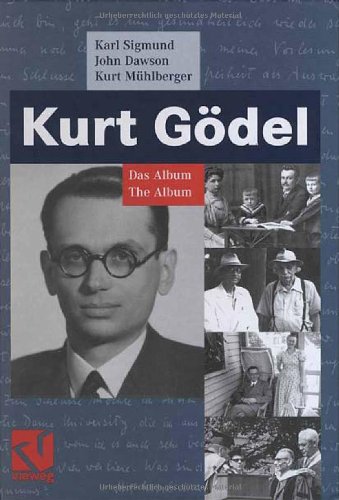
23. Kurt Gödel
 
24. Logical Dilemmas: The Life and
 
25. REFLECTIONS ON KURT GODEL
 
26. Notices of the American Mathimatical
$48.03
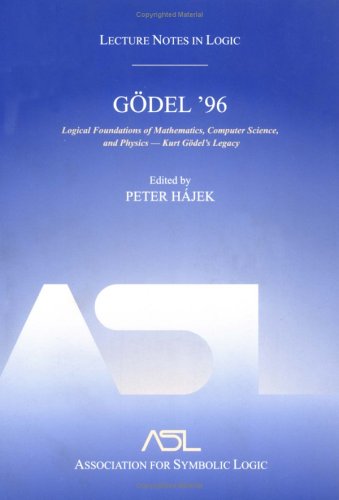
27. Gödel '96: Foundations of Mathematics,
$30.99
28. Memoirs of a Proof Theorist: Godel
$17.34
29. Godel, Escher, Bach: An Eternal
$34.80
30. Collected Works: Volume II: Publications
 
31. ON FORMALLY UNDECIDABLE PROPOSITIONS
 
$34.16
32. Obras Completas/ Complete Works
$178.95
33. Frege and Godel: Two Fundamental
$25.35
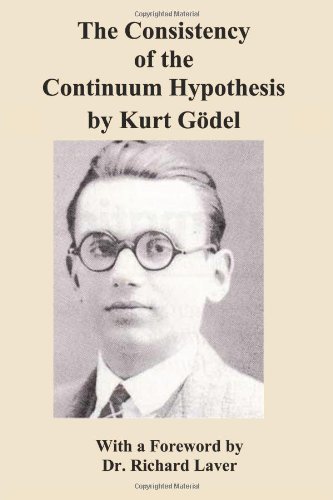
34. Consistency of the Continuum Hypothesis.
 
35. On Formally Undecidable Propositions
 
36. On Formally Undecidable Propositions
$168.88
37. Wahrheit und Beweisbarkeit 2.
$68.19
38. Wahrheit und Beweisbarkeit 1.
 
39. Consistency of the Continuum Hypothesis
$37.99
40. Collected Works: Volume I: Publications

21. Kurt Gödel
by Rebecca Goldstein
Hardcover: 312 Pages (2006-03-31)

Isbn: 3492048846
Canada | United Kingdom | Germany | France | Japan

22. Computer Science Logic: 17th International Workshop, CSL 2003, 12th Annual Conference of the EACSL, and 8th Kurt Gödel Colloquium, KGC 2003, Vienna, Austria, ... (Lecture Notes in Computer Science)
Paperback: 589 Pages (2003-09-29)
list price: US$104.00 -- used & new: US$98.80
(price subject to change: see help)
Asin: 3540408010
Canada | United Kingdom | Germany | France | Japan
Editorial Review

Book Description

This book constitutes the joint refereed proceedings of the 17th International Workshop on Computer Science Logic, CSL 2003, held as the 12th Annual Conference of the EACSL and of the 8th Kurt Gödel Colloquium, KGC 2003 in Vienna, Austria, in August 2003.

The 30 revised full papers presented together with abstracts of 9 invited presentations were carefully reviewed and selected from a total of 112 submissions. All current aspects of computer science logic are addressed ranging from mathematical logic and logical foundations to the application of logics in various computing aspects.

... Read more

23. Kurt Gödel
by Rebecca Goldstein
Perfect Paperback: 312 Pages (2007-05-31)

Isbn: 3492249604
Canada | United Kingdom | Germany | France | Japan

24. Logical Dilemmas: The Life and Work of Kurt Godel.
by John W., Jr. Dawson
 Paperback: Pages (0000)

Asin: B000UYJ29G
Canada | United Kingdom | Germany | France | Japan

25. REFLECTIONS ON KURT GODEL
by Hao Wang
 Paperback: Pages (1987)

Asin: B000ORCED0
Canada | United Kingdom | Germany | France | Japan

26. Notices of the American Mathimatical SocietyVol. 53 No. 4 April 2006 ISSN 0002-9920 :Magid, Andy ( Ed. ) " A Tribute to Kurt Godel "
by Andy ( Ed. ) Magid
 Paperback: Pages (2006)

Asin: B000UII0TA
Canada | United Kingdom | Germany | France | Japan

27. Gödel '96: Foundations of Mathematics, Computer Science and Physics?Kurt Gödel's Legacy (Lecture Notes in Logic, 6)
by Czech Republic) Godel 9 (1996 Brno, Godel 96
Paperback: 336 Pages (2000-03-20)
list price: US$50.00 -- used & new: US$48.03
(price subject to change: see help)
Asin: 1568811535
Canada | United Kingdom | Germany | France | Japan
Editorial Review

Book Description
This volume contains the proceedings of the conference Logical Foundations of Mathematics, Computer Science, and Physics-Kurt Gödel's Legacy, held in Gödel's birthplace, Brno, Czech Republic, on the 90th anniversary of his birth. The wide and continuing importance of Gödel's work in the logical foundations of mathematics, computer science, and physics is confirmed by the broad range of speakers who participated in making this gathering a scientific event.

Because of the continued interest and value of the work as a source and inspiration to younger researchers, this volume is being reissued as a co-publication of the Association for Symbolic Logic and A K Peters, Ltd. ... Read more


28. Memoirs of a Proof Theorist: Godel and Other Logicians
by Gaisi Takeuti, Nicholas Passell, Mariko Yasugi
Hardcover: 156 Pages (2003-02)
list price: US$34.00 -- used & new: US$30.99
(price subject to change: see help)
Asin: 9812382798
Canada | United Kingdom | Germany | France | Japan
Editorial Review

Book Description
...this volume is a translation of the book godel, written in japanese bygaisi takeuti, a distinguished proof theorist ...the core of the book amemoir of k godel, takeuti's per- sonal recollections ... Read more


29. Godel, Escher, Bach: An Eternal Golden Braid
by Douglas Hofstadter
Paperback: 777 Pages (1989-05-14)
list price: US$20.00 -- used & new: US$17.34
(price subject to change: see help)
Asin: 0394756827
Average Customer Review: 4.5 out of 5 stars
Canada | United Kingdom | Germany | France | Japan
Editorial Review

Amazon.com
Everything is a symbol, and symbols can combine to form patterns. Patterns are beautiful and revelatory of larger truths. These are the central ideas in the thinking of Kurt Gödel, M.C. Escher, and Johann Sebastian Bach, perhaps the three greatest minds of the past quarter-millennium. In a stunning work of humanism, Hofstadter ties together the work of mathematician Gödel, graphic artist Escher, and composer Bach.

Gödel, Escher, Bach, a Pulitzer prize-winning treatise on genius, explores the workings of brilliant people's brains with the help of historical examples and brainteaser puzzles. Not for the dim or the lazy, this book shows you, more clearly than most any other, what it means to see symbols and patterns where others see only the universe. Touching on math, computers, literature, music, and artificial intelligence, Gödel, Escher, Bach is a challenging and potentially life-changing piece of writing.Book Description
Winner of the Pulitzer Prize, this book applies Godel's seminal contribution to modern mathematics to the study of the human mind and the development of artificial intelligence. ... Read more

Customer Reviews (235)

5-0 out of 5 stars Wow... Deep thoughts, and Abstract Perspectives
I have not completed this book, and I am not sure you can ever say that you are complete with a book of this magnitude, however, it will certainly be a book I will review again and again.If you want to be challenged intellectually, this book would be the ticket.I enjoy a good challenge, and although it isn't a 'fun' read, it is valuable book to have in your personal library if you are interested in a paradigm shift in your reality.

4-0 out of 5 stars HOFSTADER'S ERROR(By James E. Spinosa)
After studying Douglas R. Hofstader's brilliant book, I discovered an error in the proof of Godel's first incompleteness theorem that invalidates the proof. The same error is in Newman & Nagel's book Godel's Proof.
The error occurs on page 447. The incorrect statement is, "a' is the arithmoquinification of u." The statement should read: a' is the arithmoquinification of the numeric value of the Godel number u. The term u represents the Godel number of a specific formula, and the word arithmoquinification is a portmanteau word coined by the author.
Godel's theorem is derived by arithmoquining a formula that Hofstader calls the "uncle" formula. On page 447, he writes,"Now all we need to do
is-arithmoquine this very uncle! What this entails is 'booting out' all the free variables-of which there is only one,namely a"-and putting in the
numeral for u everywhere. This gives us: ~Ea:Ea': where the number of S's equals the numeral for u." That is Hofstader's version of Godel's theorem or G. On page 447
he offers this interpretation of the theorem,"There do not exist numbers a
& a' that both(1)they form a TNT-proof-pair, and(2)a' is the arithmoquinification of u." But,as I have pointed out Godel's theorem does
not declare part(2)of his interpretation. Instead, the correct interpretation of part(2)is, a' is the arithmoquinification of the numeral of the Godel number u. The numeral of the Godel number u cannot be
arithmoquined because it is not a formula and therefore has neither a Godel number nor a free variable.
This invalidates the proof because we no longer have a true statement: a'
is the arithmoquinification of u that cannot be proven. Instead we have a
false statement that cannot be proven. For more info & essays on this subject,please go to www.jimssciencepage.info

5-0 out of 5 stars A whole new world
Just like other reviewers of this book, this one is seriously math-challenged. I thought I'd never make it to the end. I had to work hard sometimes. But it was one of the most worthwhile reading experiences of my life, indeed it was fascinating and I ended up recommending it to everybody (almost). This is an eccentric book, which at the beginning seems to be about everything and nothing. The author describes "self-referential systems" and wonders whether they may come to think about themselves and, ultimately, about the possibility of Artificial Intelligence (AI). This is one of the books that have taught me the most and made me think about things that for me are little or not familiar at all, like Typographic Number Theory (TNT) or propositional calculus. I don't pretend to having understood all of it perfectly, but definitely my intellectual horizon and my knowledge widened a lot. The title comes from three people whose work illustrates the wide field of self-referential systems. One is Kurt Godel, a mathematician who formulated the famous and complex Theorem of Incompletitude, which says something like in every formulation of Number Theory there are one or several propositions which are undecidable, that is, it is impossible to affirm if they are theorems of that formulation, or not. What is a formulation of Number Theory? Well, starting from an axiom (a given equation), and according to some precise rules of addition, substraction, or substitution, one develops the equation until finding (or not) some preestablished outcome. These formulations are self-referential because they turn in on themselves, that is, they take the sources of their subsequent development from the very elements present in the original axiom.

OK, where do Bach and Escher enter the picture? Simple: Escher's engravings and illustrations (of which the book offers many beautiful examples), and Bach's music, are self-referential. They present an initial theme, and then they develop by turning in on themselves according to some rules or patterns. This is also how DNA chains and the resulting organisms grow, and even some poetry. The book is written with great sense of humor and didactic skill; it intersperses "technical" chapters with funny and seemingly absurd dialogues between cartoon-like characters, which illustrate with good clarity subjects previously exposed. Mathematics, biology, computers, AI, music, painting, and language are part of the subjects taken on.

For example, this book helped me to understand better how computers and software languages work. In one of the most interesting parts, the author explains how our brains function at different levels: the strictly neuronal, the cellular, the chemical, and the symbolic. In the same way, computers work at different levels, from that which occurs between components of the microcircuits, passing through successive levels of programming, until the "symbolic" level, which is represented by what we see on the screen. Just as people don't need to know or screen what is happening with their pancreas or stomach in order to go about, but they limit themselves to eating, breathing, walking, thinking, computer users don't need to know what is going on with the circuits while they use them. We only take notice of organs or programs ewhen something's wrong: we either feel bad or the computer paralyzes. Finally, the other debate is about the possibility or not of AI, which is far from being resolved. An enormous book.

5-0 out of 5 stars What if there were no such thing as a hypothetical situation?
If pop culture threatens to turn your mind to mush or if Paris Hilton and Rush and Riley leave you wondering whether all those lovely convolutions and synapses evolved for naught, treat yourself to some brain candy. This is not a beach book. If you get it at the library you may be renewing it for a year. Hofstadter ties together Kurt Godel's Theorem (mathematical) with M.C. Escher's art and J.S. Bach's music in a wild intellectual rollercoaster that will leave your thinking muscles feeling frisky as a colt. Of the three heroes, Escher is probably most familiar. His hands drawing each other, endless waterfalls and a fascinating Mott the Hoople album cover have postered him into household art. The recursive loops that form the theoretical base for Escher are the stuff of Bach's genius, and echo in Godel's work. This plunks us smack dab into the invention of computers and the question: Is artificial intelligence possible? This statement is false. Fabulous, difficult, fun.

2-0 out of 5 stars They must have had good hash back in the 70s
I love reading books, to me "factual" knowledge really tickles my fancy, however after reading this, and I am in page 420, I am literally entirely bored out of my mind.Although maybe 3 out of all the ideas and concepts he presents were interesting to me such as the caste system, and the discussion and comparison about the ant colony to the process in which the brain functions quite entertaining along with the record discussion between the tortoise and achilles (holy crap, this is like animal farm on weed),(which is what my two starts go to), the remainder of this book is quite annyoing.

I have never taken such a long time to read a book which is so hyped up to be nothing more than half baked ideas.I am not a mathematician by any means of the word, I personally stick to history books and science books and biographies based on FACTS.I seldom read a book based on an individual's ideas and interests and religious beliefs (UGH!).

I think it is quite amazing that he is able to drag on such a long discussion about someone's theorem, and for that I applaud him (and feel bad for Godel, he must be rolling over in his grave), but it is not for me.As a "regular" joe when it comes to Math/Logic, this books certainly has turned me away from ever wanting to delve into the subject again and I sincerely recommend the "average" reader to just rent it if this peaks your curiosity.I am still not sure as to whether I want to finish this book, because if I have to look at any more parenthesis and tabs and letters, numbers, drawings, I will punch myself in the face...

For those of you who like this book, more power to ya, not for me though.I will stick to my "FACTUAL" books, not "OPINION BASED BOOKS".

PS: IF YOU WANT A QUICK OVERVIEW OF GODEL'S THEOREM of INCOMPLETENESS without the "ETERNAL GOLDEN BRAID" portion of it and half baked ideas from the disco era, just google it and read up on it, it's maybe a few pages, so save yourself the waste of time.

... Read more


30. Collected Works: Volume II: Publications 1938-1974 (Collected Works (Oxford))
by Kurt Godel
Paperback: 432 Pages (2001-06-21)
list price: US$67.00 -- used & new: US$34.80
(price subject to change: see help)
Asin: 0195147219
Average Customer Review: 4.0 out of 5 stars
Canada | United Kingdom | Germany | France | Japan
Editorial Review

Book Description
Kurt Godel was the most outstanding logician of the twentieth century, famous for his work on the completeness of logic, the incompleteness of number theory, and the consistency of the axiom of choice and the continuum hypothesis. He is also noted for his work on constructivity, the decision problem, and the foundations of computation theory, as well as for the strong individuality of his writings on the philosophy of mathematics. Less well-known is his discovery of unusual cosmological models for Einstein's equations, permitting "time-travel" into the past. This second volume of a comprehensive edition of Godel's works collects together all his publications from 1938 to 1974. Together with Volume I (Publications 1929-1936), it makes available for the first time in a single source all of his previously published work. Continuing the format established in the earlier volume, the present text includes introductory notes that provide extensive explanatory and historical commentary on each of the papers, a facing English translation of the one German original, and a complete bibliography. Succeeding volumes are to contain unpublished manuscripts, lectures, correspondence, and extracts from the notebooks. Collected Works is designed to be accessible and useful to as wide an audience as possible without sacrificing scientific or historical accuracy. The only complete edition available in English, it will be an essential part of the working library of professionals and students in logic, mathematics, philosophy, history of science, and computer science. These volumes will also interest scientists and all others who wish to be acquainted with one of the great minds of the twentieth century. ... Read more

Customer Reviews (1)

4-0 out of 5 stars Excellent material that fits lots of class uses
A summary of his statement on p. 125 on "Russell's Mathematical Logic" describes the "vicious circle principle: forbids a certain kind of circularity which is made responsible for the paradoxes. The fallacy in these, so it is contended, consists in the circumstance that one defines (or tacitly assumes) totalities, whose existence would entail the existence of certain new elements of the same totality, namely elements definable only in terms of the whole totality." This led to the formulation of a principle which says that "no totality can contain members definable only in terms of this totality, or members involving or presupposing this totality." (The vicious circle principle). (Also a "not applying to itself principle to keep the vicious circle principle from applying to itself p. 126

In describing Russell's theory of types he says, "The paradoxes are avoided by the theory of simple types which is combined with the theory of simple orders - a "ramified hierarchy""

Godel argues that the vicious circle principle is false rather than that classical mathematics is false.

p. 202 "A remark about the relationship between relativity theory and idealistic philosophy (1949a) (Note that this view supports my usual presentations in class on this!)

"The argument runs as follows:Change becomes possible only through the lapse of time. The existence of an objective lapse of time 4, however, means (or, at least, is equivalent to the fact) that reality consists of an infinity of layers of "now"

p. 203 which come into existence successively. But, if simultaneity is something relative in the sense just explained, reality cannot be split up into such layers in an objectively determined way. Each observer has his own set of "nows", and none of these various systems of layers can claim the prerogative of representing the objective lapse of time. 5" ... Read more


31. ON FORMALLY UNDECIDABLE PROPOSITIONS OF PRINCIPIA MATHEMATICA AND RELATED SYSTEMS (Godel's Incompleteness Theorem).
by Kurt.Translated by B. Meltzer. Introduction by R. B. Braithwaite. GÖDEL (GODEL)
 Unknown Binding: 72 Pages (1962)

Asin: B0000CLIGL
Canada | United Kingdom | Germany | France | Japan

32. Obras Completas/ Complete Works
by Kurt Godel
 Paperback: 469 Pages (2006-05-17)
list price: US$44.95 -- used & new: US$34.16
(price subject to change: see help)
Asin: 842064773X
Canada | United Kingdom | Germany | France | Japan

33. Frege and Godel: Two Fundamental Texts in Mathematical Logic
by Kurt Godel
Hardcover: Pages (2002-01)
list price: US$34.00 -- used & new: US$178.95
(price subject to change: see help)
Asin: 0735103186
Canada | United Kingdom | Germany | France | Japan
Editorial Review

Book Description

This volume, a shortened edition of Mr. van Heijenoort's internationally acclaimed From Frege to Gödel:A Source Book in Mathematical Logic, 1879-1931 (HUP 1967), makes available in English the two most important works in the growth of modern mathematical logic. Heralded by Leibniz, modern logic had its beginnings in the work of Boole, DeMorgan, and Jevons, but the 1879 publication of Gottlob Frege's Begriffsschrift opened a great epoch in the history of logic with the full-form presentation of the propositional calculus and quantification theory.

Frege and Gödel: Two Fundamental Texts in Mathematical Logic begins with this short book, which ushered in the classical age of mathematical logic by outlining the construction of a system of logical symbolism. The volume concludes with Gödel's famous incompleteness paper of 1931, which changed the development of logic and the foundations of mathematics by revealing the intrinsic limitations of formal systems, and brought to an end the classical phase.

Mr. van Heijenoort has provided a new introduction which sets the Frege and Gödel pieces in perspective in the development of modern logic and points out difficulties in interpretation. Editorial comments, footnotes, and bibliographic information offer additional explanatory material. ... Read more


34. Consistency of the Continuum Hypothesis. (AM-3)
by Kurt Godel
Paperback: 72 Pages (1940-09-01)
list price: US$29.95 -- used & new: US$25.35
(price subject to change: see help)
Asin: 0691079277
Canada | United Kingdom | Germany | France | Japan
Editorial Review

Book Description

Kurt Gödel, mathematician and logician, was one of the most influential thinkers of the twentieth century. Gödel fled Nazi Germany, fearing for his Jewish wife and fed up with Nazi interference in the affairs of the mathematics institute at the University of Göttingen. In 1933 he settled at the Institute for Advanced Study in Princeton, where he joined the group of world-famous mathematicians who made up its original faculty.

His 1940 book, better known by its short title, The Consistency of the Continuum Hypothesis, is a classic of modern mathematics. The continuum hypothesis, introduced by mathematician George Cantor in 1877, states that there is no set of numbers between the integers and real numbers. It was later included as the first of mathematician David Hilbert's twenty-three unsolved math problems, famously delivered as a manifesto to the field of mathematics at the International Congress of Mathematicians in Paris in 1900. In The Consistency of the Continuum Hypothesis Gödel set forth his proof for this problem.

In 1999, Time magazine ranked him higher than fellow scientists Edwin Hubble, Enrico Fermi, John Maynard Keynes, James Watson, Francis Crick, and Jonas Salk. He is most renowned for his proof in 1931 of the 'incompleteness theorem,' in which he demonstrated that there are problems that cannot be solved by any set of rules or procedures. His proof wrought fruitful havoc in mathematics, logic, and beyond.

... Read more

35. On Formally Undecidable Propositions of Principia Mathematica and Related System
by Kurt;Meltzer, B. (Transl.); Braithwaite, R. B. (Intro) Godel
 Hardcover: Pages (1962)

Asin: B000NX9RBW
Canada | United Kingdom | Germany | France | Japan

36. On Formally Undecidable Propositions of Principia Mathematica and Related Systems.Translated by B. Meltzer with an introduction by R. B. Braithwaite.1st Edition in English
by Kurt Godel
 Hardcover: Pages (1962)

Asin: B000VIP8S0
Canada | United Kingdom | Germany | France | Japan

37. Wahrheit und Beweisbarkeit 2. Kompendium zum Werk.
by Kurt Gödel
Hardcover: 448 Pages (2003-01-01)
-- used & new: US$168.88
(price subject to change: see help)
Asin: 320903835X
Canada | United Kingdom | Germany | France | Japan

38. Wahrheit und Beweisbarkeit 1. Dokumente und historische Analysen.
by Kurt Gödel
Hardcover: 448 Pages (2003-01-01)
-- used & new: US$68.19
(price subject to change: see help)
Asin: 3209038341
Canada | United Kingdom | Germany | France | Japan

39. Consistency of the Continuum Hypothesis
by Kurt Godel
 Paperback: Pages (0000)

Asin: B000VFFHDE
Canada | United Kingdom | Germany | France | Japan

40. Collected Works: Volume I: Publications 1929-1936 (Collected Works (Oxford))
by Kurt Godel
Paperback: 504 Pages (2001-05-31)
list price: US$48.95 -- used & new: US$37.99
(price subject to change: see help)
Asin: 0195147200
Average Customer Review: 3.0 out of 5 stars
Canada | United Kingdom | Germany | France | Japan
Editorial Review

Book Description
Kurt Godel (1906-1978) was the most outstanding logician of the twentieth century, noted for Godel's theorem, a hallmark of modern mathematics.The Collected Works will include both published and unpublished writings, in three or more volumes.The first two volumes will consist essentially of Godel's published works (both in the original and translation), and the third volume will feature unpublished articles, lectures, and selections from his lecture courses, correspondence, and scientific notebooks.All volumes will contain extensive introductory notes to the work as a whole and to individual articles and other material, commenting upon their contents and placing them within a historical framework.This long-awaited project is of great significance to logicians, mathematicians, philosophers and historians. ... Read more

Customer Reviews (1)

3-0 out of 5 stars The Horror!
I thought I should post a brief note to prevent other potential buyers from being misled by the editorial reviews the way I was._Choice_ says that the editors "deserve the highest praise for the design of the edition."_Mind_ says it is "beautifully produced"._The Journal of Symbolic Logic_ calls it "beautifully prepared"._Zentralblatt_ says that it "was published in a very nice and careful way".

It is reasonable to interpret these statements as referring, at least in part, to the physical appearance of the book; under that interpretation, it is my opinion that these statements couldn't be more wrong.It looks like the volume was printed in the cheapest way possible, and the page layout is amateurish at best.

It is a pity that Oxford University Press hasn't seen fit to publish an edition whose physical beauty is commensurate with the beauty of Godel's ideas. ... Read more


  Back | 21-40 of 77 | Next 20
A  B  C  D  E  F  G  H  I  J  K  L  M  N  O  P  Q  R  S  T  U  V  W  X  Y  Z  

Prices listed on this site are subject to change without notice.
Questions on ordering or shipping? click here for help.

site stats