e99 Online Shopping Mall

Geometry.Net - the online learning center Help  
Home  - Scientists - Kepler Johannes (Books)

  1-20 of 100 | Next 20
A  B  C  D  E  F  G  H  I  J  K  L  M  N  O  P  Q  R  S  T  U  V  W  X  Y  Z  

click price to see details     click image to enlarge     click link to go to the store

$45.00
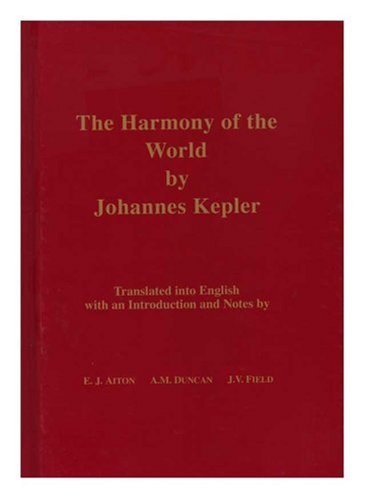
1. The Harmony of the World (Memoirs
$3.48
2. Harmonies Of The World (On the
$11.66
3. Kepler
$22.90
4. Kepler's Witch : An Astronomer's
$18.42
5. Tycho & Kepler
$14.95
6. Johannes Kepler: Discovering the
 
7. THE WATERSHED: A BIOGRAPHY OF
$4.60
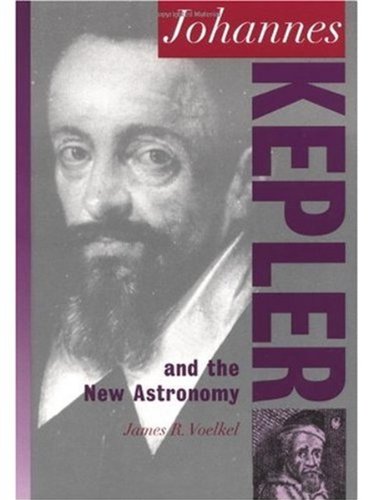
8. Johannes Kepler and the New Astronomy
$6.95
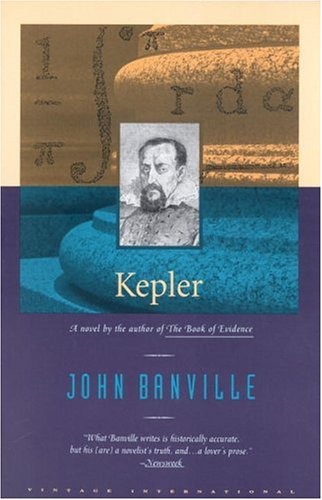
9. Kepler: A novel
$11.00
10. Johannes Kepler Life and Letters
 
11. JOHANNES KEPLER:Life and Letters
$7.70
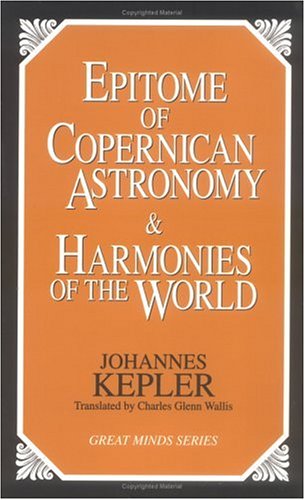
12. Epitome of Copernican Astronomy
 
13. The Watershed: A Biography of
$14.34
14. Johannes Kepler (Rowohlts Monographien)
 
$9.95
15. The cosmology of error: Mark Twain,
 
16. Troubadour of the Stars. The romantic
 
17. Johannes Kepler: Life and Letters
$26.59
18. Johannes Kepler: Discovering the
$7.89
19. Heavenly Intrigue: Johannes Kepler,
 
20. Materialien zu den Ephemeriden

1. The Harmony of the World (Memoirs of the American Philosophical Society)
by Johannes Kepler
Hardcover: 549 Pages (1997-04)
list price: US$45.00 -- used & new: US$45.00
(price subject to change: see help)
Asin: 0871692090
Average Customer Review: 3.0 out of 5 stars
Canada | United Kingdom | Germany | France | Japan

Customer Reviews (1)

3-0 out of 5 stars Brand New Item/Damaged Cover
I bought this book as brand new and was surprised when it was delivered with a weird sticky substance in various places on the cover.In trying to remove the substance I only caused more damage to the cover.My three diamond rating is due to Kepler being awesome, not Amazon.If you buy this book brand new make sure it is in mint condition or get a compensation from Amazon. ... Read more


2. Harmonies Of The World (On the Shoulders of Giants)
by Johannes Kepler
Paperback: 92 Pages (2005-01-31)
list price: US$9.95 -- used & new: US$3.48
(price subject to change: see help)
Asin: 0762420189
Average Customer Review: 5.0 out of 5 stars
Canada | United Kingdom | Germany | France | Japan
Editorial Review

Book Description
Book Five of Johannes Kepler's great masterpiece on planetary motion is presented with an introduction by the ultimate authority on this topic, noted physicist and bestselling author Stephen Hawking. Modifying Copernicus's sun-centered model of the universe, Kepler's 1619 work went on to establish laws of planetary motion, forming the basis for Newton's discoveries some 60 years later. As part of our On the Shoulders of Giants series, this translation of the original edition of Kepler's monumental essay includes an insightful biography and a highly accessible summary putting into context the significance of Harmony of the World.

Black-and-white illustrations. ... Read more

Customer Reviews (1)

5-0 out of 5 stars historically important
For students of history, here is a reprint of one of Kepler's works. Centuries old. But noteworthy because before Newton came on the scene, Kepler's work was one of the high water marks of astronomy. Plus, the material in the book was useful to Newton, when he would apply his equations to explaining various of Kepler's observations.

Plus, another attraction of this book is the introduction by Hawking. So there are two great names on the same cover. For the layman in physics, here is a noted viewpoint of Kepler's accomplishments. ... Read more


3. Kepler
by Max Caspar
Paperback: 448 Pages (1993-09-08)
list price: US$18.95 -- used & new: US$11.66
(price subject to change: see help)
Asin: 0486676056
Average Customer Review: 5.0 out of 5 stars
Canada | United Kingdom | Germany | France | Japan
Editorial Review

Book Description

Definitive biography by foremost scholar offers fascinating erudite picture of great mathematician's scientific accomplishments: formulation of laws of planetary motion, work with optics and calculus, much more. Also detailed chronicle of Kepler's public and personal life: childhood and youth, education, mother's trial as a witch, fear of religious persecution, more.
... Read more

Customer Reviews (4)

5-0 out of 5 stars The Complete Story of Johannes Kepler the Heretic Astronomer
This biography is simply the best on the life and trials of Johannes Kepler.Anyone,who is exploring the field of astronomy,should invest their time in reading this great book.It's the fascinating story of a genius scientist having to deal with the heretical zeitgeist and relentless religious persecution of his times.Ironically,more from his own protestant leadership rather than the catholic church.Kepler was like the modern Socrates during this epoch leading to the Age of Reason. Kepler supported the Greek Copernican world model,which was in direct oppossion to the teachings of all christian-jewish European schools.Kepler did not want to 'drag the owls of knowledge to Athens',yet to bring their greek pagan wisdom to the heart of the European centers of learning.This is just an excellent book for any astute historian with a budding interest in the laws of the stars above us.

5-0 out of 5 stars If you dig Kepler, you'll love this book
Like the other reviewers have said, this book is simply the best combination of an account of Kepler's life, theories, and works.

5-0 out of 5 stars Widely considered Kepler's definitive biography
Although written in 1948, Caspar's biography is today still the most comprehensive attempt to portray the person of Kepler in a unified manner. This work reflects Caspar's lifetime of work dedicated to Kepler's many publications, manuscripts, and correspondences, and, thanks to additional citations made by editor Owen Gingerich, the reader may now find where nearly all of these passages derive from. Both the common reader and serious student may benefit from this book, for it combines Kepler's scientific studies with the deeply personal conflicts of an early modern genius. Caspar's biography is fundamental not only for studies made on Kepler, but also for the Scientific Revolution in general.

5-0 out of 5 stars If you are at all serious......
....about Kepler, you must have this book. Period. ... Read more


4. Kepler's Witch : An Astronomer's Discovery of Cosmic Order Amid Religious War, Political Intrigue, and the Heresy Trial of His Mother
by James A. Connor
Hardcover: 416 Pages (2004-03)
list price: US$24.95 -- used & new: US$22.90
(price subject to change: see help)
Asin: B00076F0CA
Average Customer Review: 4.0 out of 5 stars
Canada | United Kingdom | Germany | France | Japan
Editorial Review

Book Description
Foreword by David Koch of NASA's Kepler Mission

Isaac Newton said that if he had seen farther than others, it was because he was standing on the shoulders of giants: Nicolaus Copernicus, Tycho Brahe, Galileo Galilei, and Johannes Kepler. James A. Connor focuses on one of those giants in his fascinating and largely untold story of the "Protestant Galileo," Johannes Kepler. Set against the backdrop of the witchcraft trial of his mother, Kepler's Witch vividly brings to life the tidal forces of the Reformation and Counter-Reformation, submerging us into these turbulent times, revealing not only the surprisingly spiritual nature of early modern science, but Kepler's role as a neglected hero of conscience.

The doorway into Kepler's life and times begins with the sensational witchcraft trial of his elderly mother, Katharina, an eccentric woman who, like Kepler, was too smart for the world she lived in. The story is filled with crooked judges, sadistic bailiffs, and nasty neighbors bent on the destruction of this single, half-mad old woman. Using never-before translated transcripts of the trial, Connor explains that witches in the seventeenth century were the terrorists of their day. Tragically, thousands of people -- mostly women -- had gone to the stake by the time of Katharina Kepler's trial.

Johannes Kepler's life thus became a pilgrimage, a spiritual journey into the modern world through disease and horrible injustice on the eve of Europe's terrible and bloody Thirty Years' War. Kepler was concerned with more than scientific discoveries and achievement -- he fought for peace and reconciliation between the Christian churches, even when it nearly cost him his life. Exiled twice by Catholic princes and excommunicated by his fellow Lutherans, he was unbowed in his scientific and moral vision.

Besides the witchcraft trial records and testimonies, Connor has translated many of Kepler's diary entries and correspondence into English for the first time. With a great respect for the history of these times and the life of this man, Connor's unforgettable story illuminates Kepler, a man of science, as well as Kepler, a man of uncommon faith and courage. ... Read more

Customer Reviews (16)

4-0 out of 5 stars Kepler's Witch
The last biography of Kepler I read was Koestler's _The Watershed_ and while it was fascinating it did not give me the background in the theology and the history of the period that Connor's book did.The strongest point of _Kepler's Witch_ is the insight into the religious motives behind Kepler's work and the difficulty Kepler had with the Lutheran religious authorities.Connor believes it was, in part, his refusal to take sides on the increasingly polarized religious positions of the Lutherans and Roman Catholics leading up to the Thirty Years War that led to the prosecution of his mother for witchcraft.

Kepler lived in difficult times.Connor evokes this setting well.Amidst political and theological intrigue, diseases that killed half his children before adulthood, open warfare that forced him to move from city to city, and perpetual financial hardship he still believed in the harmony of the cosmos and that led him to his scientific discoveries.

The other reviewers are correct though that the structure of the book is sometimes annoying.Each chapter opens with a long translation of a letter by Kepler.This is good.However in the chapter that follows we get the history leading up to and including events in the letter, so Connor often quotes parts of the letter back as if it was the first time the reader has heard of the events.Likewise the chapters cover chronologically overlapping material, so Connor sometime repeats verbatim descriptions of the events recounted in an earlier chapter though the context is different.The effect is jarring -- like watching a movie and you realize you are hearing the same dialogue twice.These were not major flaws, but one wonders if an editor ought to intervened and smoothed this out.

Overall, the book does work despite some minor repetitiveness.It gave me a much better understanding of the times Kepler lived in and that alone makes the book essential reading.

4-0 out of 5 stars Holy Geometry
In addition to being one of history's most influential scientists, Johannes Kepler was also a man of faith, and that is mostly the focus of this religiously focused biography. When Kepler was revolutionizing astronomy and mathematics, he also had to navigate through times of great religious strife in Europe. Here James Connor focuses on the challenges faced by Kepler as a devout Lutheran in a land of Catholics, while fighting to maintain his influence and connections during the upheavals of the Reformation and the Counter-Reformation. An associated story here (though you might think it was the main story because of the book's title) was the trial of Kepler's mother for witchcraft, and we learn more about how trumped-up and unjust charges of diabolical arts were used during those times to get rid of uppity or unpopular women. James Connor does a good all-around job of describing the political and religious history of the times in which Kepler lived.

However, there are problems with the construction of this book, as Connor's pacing and coverage are very awkward. Connor's writing style, in which he applies different levels of importance to different events, results in historical coverage that is out of chronological order and occasionally repetitive. When Connor goes into historical explanations, Kepler himself disappears from sizeable chunks of the book, while the story of his mother's witchcraft trial feels tacked on and is not successfully integrated with the larger narrative. Meanwhile, Connor writes this book from a religious point of view, which brings a fresh new light to Kepler's life story, and Connor himself has a good eye for science. However, Connor's attempts to bring out the religious influences on Kepler's scientific achievements seem forced and even reactionary. To his credit, Connor is definitely not anti-science, but in this book it seems like he couldn't stop himself from writing for anti-intellectual religious adherents, leading to an awkward mix of faith and science. This damages the effectiveness of this particular biography of Johannes Kepler, who was both a theologian and a scientist, but was more noteworthy for the latter. [~doomsdayer520~]

5-0 out of 5 stars A small world, but a big cosmos.
The critic who says Conner is telling two stories at once is right: this is a "life and times" biography.That is, the author finds the life of Johannes Kepler and the polarized, tumultuous, superstitious, expanding world he lived in equally fascinating.He made both subjects interesting for me, too.And unlike some readers, I think he joined them in a well-written, sometimes impish, sometimes melancholy, and always intelligent story.

Conner spices the narrative pot with pungent observations and quotes: "(Kepler's mother) was a little mad, but only a little, which was far more dangerous than being (like her rival) an abortionist and prostitute." "Kepler argued that astronomy is natural to humanity, as natural as singing is to songbirds."
"The harmonies were arranged in phalanxes of ever more complicated patterns coalescing into a great cosmic symphony, a music so profound that it harrowed the heart and set fire to the soul."Kepler: "'It hurts my heart that these three great blocs have ripped at the truth so terribly that I am left collecting it piece by piece, wherever I can find them . . . God already has rewarded our warring Germany with lamentation.'"

Kepler was born a Lutheran and a "catholic" Christian, and remained faithful all his life.Yet the Lutheran church excommunicated him, and the Catholics chased his family from town to town.The 16th Century being the time for witch trials as well as science (see Stark, For the Glory of God, for helpful ideas about how the various goings on in Kepler's time related to Christianity), Kepler's mother was tried as a witch, while he set science on a course to the stars.Conner tells both stories well and I think connects them well too.

It is obvious Conner likes and respects his subject.Kepler was a scientific genius, and more, a kind and sensible Christian in a world where religious professionals forgot the virtue their Lord said was the soul of the Law and the Prophets."My conscience commands me to love an enemy and not harm him . . . I ought to be an example of moderation and mildness for my enemy . . . then at last may God send us the dear desired peace."Growing up in a rather harsh and loveless home, a settled family life collateral damage to every new fad in social perversity, he managed to love God and man, and cultivate a cheerful curiosity at the world and our mysterious fellow-travelers that dance across the night sky.AsChesterton said of another Medieval figure (Francis?), Kepler lived in a small world, but a big cosmos.

2-0 out of 5 stars Where's the narrative thread?
I learned a lot of information about Kepler, Kepler's family, the thirty-years war, and the counter-reformation. The writer's prose was very readable; however, the book lacked cohesion. The book had very little information concerning with Kepler developing his scientific theories and his search for harmony. The author jumped off on bunny trails for scores of pages without mentioning Kepler. He would write about the thirty years war and the political machinations that led up to it. He would then return to the witch trial of Kepler's mother. He would then breifly spend a little time on Kepler developing his theories and how it relates to his faith. The book seemed repetitious at times. Maybe bacause the witch trial went on for so long, but the book returns again and again to that same topic and how worried and frantic Kepler was.

I had a hard time finishing it. The book was a hard read. At the end, I had a hard time placingall the pieces together. The topic was fascinating and the author did provide some interesting tidbits, but the narrative thread was hard to follow.

5-0 out of 5 stars A modern tale 400 years ago
This book is about intolerance, religious intolerance and how it led inevitably to war and small town petty intolerance and how it led to smear campaigns culminating in the witch trial of Kepler's mother.It's about good old boy networks and injustice.It's also a Hollywood movie script where a person with overwhelming odds against him does great things, but not without lots of personal tragedies all around him.It's also good history as I didn't know much about the 30 yr. war or the relationship of some scientific giants like Copernicus, Brahe, Kepler, Galileo and Newton. ... Read more


5. Tycho & Kepler
by Kitty Ferguson
Hardcover: 416 Pages (2002-03-01)
list price: US$28.00 -- used & new: US$18.42
(price subject to change: see help)
Asin: B000I2J20Y
Average Customer Review: 4.5 out of 5 stars
Canada | United Kingdom | Germany | France | Japan
Editorial Review

Book Description

On his deathbed in 1601, the Danish nobleman and greatest naked-eye astronomer, Tycho Brahe, begged his young colleague, Johannes Kepler, "Let me not seem to have lived in vain." For more than thirty years-- mostly in his native Denmark and then in Prague under the patronage of the Holy Roman Emperor, Rudolph II-- Tycho had meticulously observed the movements of the planets and the positions of the stars. From these observations he developed his Tychonic system of the universe-- a highly original, if incorrect, scheme that attempted to reconcile the ancient belief that the Earth stood still with Nicolaus Copernicus's revolutionary rearrangement of the solar system some fifty years earlier. Tycho knew that Kepler, the brilliant young mathematician he had engaged to interpret his findings, believed in Copernicus's arrangement, in which all the planets circled the Sun; and he was afraid his system-- the product of a lifetime of effort to explain how the universe worked-- would be abandoned.

In point of fact, it was. From his study of Tycho's observations came Kepler's stunning three Laws of Planetary Motion-- ever since the cornerstone of cosmology and our understanding of the heavens. Yet, as Kitty Ferguson reveals, neither of these giant figures would have his reputation today without the other. The story of how their lives and talents were fatefully intertwined is one of the more memorable sagas in the long history of science.

Set in a singularly turbulent and colorful era in European history, at the turning point when medieval gave way to modern, Tycho & Kepler is both a highly original dual biography and a masterful recreation of how science advances. From Tycho's fabulous Uraniborg Observatory on an island off the Danish coast to the court of the Holy Roman Emperor, Rudolph II; from the religious conflict of the Thirty Years' War that rocked all of Europe to Kepler's extraordinary leaps of understanding, Ferguson recounts a fascinating interplay of science and religion, politics and personality. Her insights recolor the established characters of Tycho and Kepler, and her book opens a rich window onto our place in the universe.
... Read more

Customer Reviews (7)

4-0 out of 5 stars A Good Book! Well worth your time!
Tycho and Kepler: The Unlikely Partnership That Forever Changed Our Understanding of the Heavens, by Kitty Ferguson, is a 402-page dedication to two astronomical greats of the early seventeenth century, Tycho Brahe and Johannes Kepler.Beginning with an examination of the society into which Brahe was born, the book traces him throughout his childhood and adulthood, from the building of Uraniborg, Brahe's astronomical observatory on the island of Hven to his banishment from the kingdom of Denmark.Not until nearly the hundredth page is Kepler discussed, but from that point forward, tales from each man's life are alternated.It seems that more time is devoted to Brahe.The two stories come together when the men meet, and it follows them together from that point forward.When Brahe passes away, the focus immediately and entirely shifts to Kepler and follows him to the end of the book.The story comes to an abrupt finish with Kepler's death, though the volume also contains three appendices explaining and elaborating on complex astronomical terms discussed in the body of the book.
I think Ms. Ferguson decided to recount this story because she was interested in both astronomy and history.From reading the book, one can feel the interest the author has in the subject matter.While reading this book, I became interested in the topic as well, but sometimes felt a bit lost.Occasionally, it seemed that she went too much in depth on certain topics, such as the construction of Uraniborg, which she described in great detail.In general, however, Kitty Ferguson seems to like enjoy writing about this topic, and conveys her enthusiasm in her writing.
This is a good book.I read it for a school assignment, and was not especially interested in the topic at hand at first, though I rapidly became drawn into the story.I only grew bored of the book when it began to explain complex astronomical concepts.While all ideas were explained in full and in understandable language, accompanied by appropriate pictures and diagrams, it was still somewhat tedious for someone not especially knowledgeable about astronomy to wade through.The flow of the book is excellent.It never felt rushed, and the transitions between sections focusing on each scientist were smooth.The one thing that I really disliked about this book was its sudden ending.It ends at Kepler's death; it does not even mention the impacts of Brahe and Kepler's work on later scientists.Despite this inadequacy, I was left with a good impression of Ms. Ferguson's book, and with much more knowledge about astronomy, Tycho Brahe, and Johannes Kepler than I had when beginning to read this book.

5-0 out of 5 stars Tycho & Kepler - a gooooood read
Tycho & Kepler - The Unlikely Friendship that Forever Changed Our Understanding of the Heavens is, for the most part, an excellent novel and easy read.Although it is a little confusing and dry at the times when complex astronomical concepts are being explained, they are outweighed by the wealth of historical accounts and gratuitous, but juicy tidbits.For instance, besides explaining the extensive instruments that Tycho built, Ferguson offers that he was also the first Dane to write a poem in Latin, that he had a twin that died at birth, and his aunt and uncle kidnapped him from his parents who wanted a girl and didn't much care.As for Kepler, not only did he develop the Harmonic theory, but had a miserable marriage, a mother accused and tried for witchcraft, and was the first author of a science fiction novel.Kitty Ferguson thus tells the life stories of the astronomers Tycho and Kepler in an informative, educational, yet narrative and interesting way.She effectively spans the 20-year gap between Tycho and Kepler by beginning the book describing Tycho's childhood and indeed his life exclusively up until the advent of a comet on December 27, 1571.Ferguson explains that, when Tycho saw the comet, he was out at one of his 60 manmade fish ponds on his estate at the Danish Isle of Hven, catching fish for dinner that evening.Meanwhile Kepler saw the same comet, but he was only five, and it was during a rare warm moment that he shared with his mother on a hilltop in Leonberg.Thus Kepler enters the story.For the rest of the book, Ferguson fluidly integrates the two men's lives, switching back and forth in an understandable, connected way.She eventually merges the two stories in a dynamic, functional manner, and shows how they used each other, and that many of their final results were synthesized versions of their combined efforts.Basically, Tycho provided excruciatingly accurate data that Kepler confirmed mathematically and extrapolated on.Kepler could have never figured out all that he did with out Tycho's data; he had bad eyesight and could not observe the sky he so dearly slaved for.It was because Tycho initially mistrusted Kepler that Kepler received only slight amounts of data that Kepler discovered that planetary orbits are elliptical - Tycho gave him only data on Mars, which happens to have the most extreme elliptical orbit, otherwise Kepler never would have noticed. Tycho also used Kepler to advance his own work and complete (among other things) the Rudolfine Tables, which are not merely the positions of planets, but guides to figure out what positions they are in at any time, (now, 586 years ago, or one thousand years into the future).The aptly-named chapters are elegantly punctuated with helpful pictures, like paintings of people discussed, illustrations of instruments, maps of the places mentioned, explanatory diagrams, and more.There are also obliging appendixes in the back, explaining astronomical terms (even though they are well-explained in the reading), and an index.
Just as the accomplishments of these men were great, so were their lives, which is probably why Kitty Ferguson felt compelled to tell the story of them.I would highly recommend it, even if you do not much care for astronomy.

4-0 out of 5 stars The Odd Couple
Kitty Ferguson tells the tail of the unique and often humorous relationship between Johannes Kepler and Tycho Brahe that led to some of the greatest astronomical discoveries of our time. Going against the common belief of the geocentric universe, Kepler changes the world forever with the essential help of Brahe's observation on the heavens. Although the result of their relationship is extraordinarily beneficial to astronomy, the relationship is not as peaceful as one would think. Ferguson makes this evident throughout the story and gives numerous examples of their feuding and bickering over their work together. It reminded me of a 17th century spin off of the odd couple. Both informative and entertaining, this book covers everything from Brahe's golden nose to Kepler robbery of Brahe's information and is definitely worth reading if you are interested in the subject.

5-0 out of 5 stars Tycho and Kepler
An amazing and inspirational account of one of the greatest stories in the history of science. Extremely well written and scholarly. I have average reading skills but at times found the book impossible to put down.In spots I had to stop reading it because emotions took over. The best book I ever read about the classical scientists.

5-0 out of 5 stars Experimentalist & Theorist
As a physics teacher, I like to use the background on figures from scientific history to try to generate some interest from my students.When teaching Kepler's Laws of Planetary Motion, I always make sure to talk about the contributions of Tycho Brahe.To my mind, the relationship between Brahe and Kepler is one of the earliest examples of the experimentalist/theorist relationship and, unfortunately, it is the experimentalist who is often lost to history while the theorist is remembered.I teach my students the names of both Brahe and Kepler as a small effort to rectify this unfairness.Kitty Ferguson has made a larger effort with this book and I hope she is able to reach a large readership.

Ms. Ferguson has at least given herself a chance by writing a very good book.Her prose is very engaging.She is detailed both science and biography and yet she is quite easy to understand even for those without a scientific background.And she has two extraordinarily interesting characters to talk about--Brahe, the rather spoiled Danish aristocrat who brought glory to himself against the odds in a "ignoble" profession by becoming the greatest naked eye astronomer in history, and Kepler, the poor German Protestant school teacher who had a knack for doing mathematics and finding trouble.

Though I knew the broad outline of Brahe and Kepler's story, I was surprised again and again by all I did not know.I may not be able to incorporate it all into my classes but I am glad to know the story myself.It is always interesting to see how the great ideas came into being, mostly through more fits, starts and mistakes than most people realize.Anyone interested in scientific history would be foolish to pass up reading this book. ... Read more


6. Johannes Kepler: Discovering the Laws of Celestial Motion (Great Scientists)
by William J. Boerst
Library Binding: 128 Pages (2003-04)
list price: US$27.95 -- used & new: US$14.95
(price subject to change: see help)
Asin: 1883846986
Canada | United Kingdom | Germany | France | Japan

7. THE WATERSHED: A BIOGRAPHY OF JOHANNES KEPLER
by Arthur Koestler
 Paperback: Pages (1960)

Asin: B000RB3OAU
Canada | United Kingdom | Germany | France | Japan

8. Johannes Kepler and the New Astronomy (Oxford Portraits in Science)
by James R. Voelkel
Paperback: 144 Pages (2001-10-11)
list price: US$11.95 -- used & new: US$4.60
(price subject to change: see help)
Asin: 019515021X
Average Customer Review: 5.0 out of 5 stars
Canada | United Kingdom | Germany | France | Japan
Editorial Review

Book Description
Johannes Kepler (1571-1630) is remembered, along with Copernicus and Galileo, as one of the greatest Renaissance astronomers. A gifted analytical thinker, he made major contributions to physics, astronomy, and mathematics. Kepler was trained as a theologian, yet did not hesitate to challenge church doctrine and prevailing scientific beliefs by supporting the theory of a Sun-centered solar system. As Imperial Mathematician to the Holy Roman Emperor, he analyzed the precise observations of the heavens that his predecessor, the great astronomer Tycho Brahe, had recorded. The book follows the ingenious scientist along the difficult pathway from raw data to his monumental discovery--the three Laws of Planetary Motion. Kepler also made fundamental contributions to optical theory, including a correct description of the function of the eye and a new and improved telescope design. His unique Rudolfine Tables, universal calculations of planetary motion, were unprecedented in their accuracy. James Voelkel vividly describes these scientific achievements, providing enough background in astronomy and geometry so even beginners can follow Kepler's thinking and enjoy this book. Equally captivating is his account of Kepler's tumultuous life, plagued by misery, disease, war, and fervent religious persecution. Oxford Portraits in Science is an ongoing series of scientific biographies for young adults. Written by top scholars and writers, each biography examines the personality of its subject as well as the thought process leading to his or her discoveries. These illustrated biographies combine accessible technical information with compelling personal stories to portray the scientists whose work has shaped our understanding of the natural world. ... Read more

Customer Reviews (3)

5-0 out of 5 stars TOUCHING STORY OF A GENIUS OF HIS TIMES
after reading this book you can't help but feel for this man... the tremendous upheavels he went through always worried about religious persecution but escaping it because of his position at court... but it gives a genuine feel of 'escaping by the skin of one's teeth'

then his many moves from city to city, taking family with him, all the deaths of family including children he endured and always religiously devout, believing in God and not one creed or another, always putting his heart and soul into his labors...

a remarkable story or a pious, honest, hard working, brilliant man of his times... it would have been a deep honor to know this man

5-0 out of 5 stars Kepler's work made the heliocentric theory forever undeniable
Kepler is the middle third of the great triumvirate of physicists that led humanity from a point where little was known about planetary motion to where nearly all was known. The first was Galileo Galilei and the last was Isaac Newton. Kepler contributed the three laws of planetary motion that are now named after him. They are:

*) The planets follow elliptical orbits about the sun.
*) The line connecting the planet to the sun sweeps out equal areas over equal times.
*) The square of the period of an orbit divided by the cube of the mean distance is a constant.

While Copernicus published the first convincing heliocentric theory, it was Kepler who gave the theory a mathematical foundation based on the years of accurate observations made by Tycho Brahe. It was his work that convinced the learned world that the planets orbited the sun.
When reading the history of Kepler, it is astonishing that he managed to be successful. He suffered from poor health, petty jealousies, lack of income, the death of some of his children, major religious persecution, plague and a war that devastated central Europe. He lived in a time of major religious conflict as the Reformation had moved strongly forward and the Counter-Reformation was responding violently. Kepler was a Protestant and remained so under the real threat of banishment and even death. Approximately one third of the people in central Europe perished during the widespread destruction of the thirty years war, which went on around Kepler. He was once trapped in a city placed under siege by Protestant forces and when told he must convert to Catholicism or be banished, he chose to leave.
Through it all, Kepler continued his intellectual pursuits, sometimes down false paths, but through perseverance and dedication, he was able to solve the puzzle of planetary motion. This story is not so much about the physicist persona of Kepler, it is a tale of triumph over tremendous obstacles where the result was of great benefit to all of humanity.This is a good, direct story of Kepler, his life and the environment he toiled in. I strongly recommend it as a textbook about Kepler, the history of his times and how modern physics was developed. Very little background in physics is needed to understand the presentation.

5-0 out of 5 stars Great Book about One of Astronomy's Greatest Men
This piece does a great job at showing how Kepler changed astronomy and how it changed him. ... Read more


9. Kepler: A novel
by John Banville
Paperback: 208 Pages (1993-10-05)
list price: US$12.95 -- used & new: US$6.95
(price subject to change: see help)
Asin: 0679743707
Average Customer Review: 4.5 out of 5 stars
Canada | United Kingdom | Germany | France | Japan
Editorial Review

Book Description
Johannes Kepler, master mathematician and astronomer, developed his theories in 16th century pre-Renaissance Germany. His work laid the foundation on which his successors, notably Isaac Newton, built the modern picture of the universe that held until Einstein.

The author shows us a Rabelaisian world...chaotic, muddled, and dirty. Kepler's famly mirrored this disorder, and he retreated into his own cerebrations for relief.

Kepler took the theories of his time and stood them on their head. He extracted truth from superstition and the story, in Banville's hands, is a triumph, heroic and exuberant." (E.R.S. Reviews) ... Read more

Customer Reviews (11)

5-0 out of 5 stars Astronomy and Counter Reformation forces in Kepler's life
John Banville is an exceptional writer and his biography of Kepler is excellent. Banville is able to show the frustrations in the career of an exceptional thinker and also to capture in beautiful poetic language the three principles that he developed that influenced future scientists.

Banville does a good job of showing the conflicting religions of Roman Catholicism and Lutheranism that were practices throughout the Holy Roman Empire. The more northern the state and the more remote, the more likely that the Lutheran faith was practiced. Kepler was a Lutheran but it would be difficult to claim that the followed entirely the teachings ofMartin Luther but used his own perceptions and experiences as a mathematician and scientist to interpret the gospels. He was born in Germany but taught in a Lutheran school in Graz Austria, a town that underwent forced conversions to Roman Catholicism during the counter Reformation.

Kepler is known for developing the three laws of planetary motion, his support for Copernicus, his use of the vast observations of Tycho Brahe to prove his points, and his laying the groundwork for Newton. Banville deals with the principles in a poetic language that explains the principles to the non-scientist reader in the language of myth and dream and lyric.

Kepler was hired as the assistant to Tycho Brahe, the Danish scientist who used systematic observations of the stars to establish a vast amount of observational data of the heavens. Kepler used the 10 years of observing Mars to make his breakthrough discovery that the planets do not travel around the sun in a circular path but in an ellipse. Tycho Brahe was looking for a smart assistant to help carry his work forward, Kepler was not able to agree with Brahe but was able to use the tables developed by Brahe and his assistants to prove his own theories. The novel shows that great men with great minds have difficulties following each other. Jung was forced to break with Freud and thus Kepler was forced to break with Brahe. Kepler did inherit Brahe's position as Imperial Mathematician for the Holy Roman Empire, a position for which he rarely was paid and for which he had to produce astrological charts for fortune tellers for Emperors and Generals.

Brahe is an interesting character in the novel. He wishes to use Kepler's mind and work to support his own theories and did not realize Kepler's level of brilliance and independence. Brahe lost his nose in a duel and used a gold and silver prosthetic nose. Brahe was the first to use nightly systematic observation of the heavens with recorded results over long periods of time. This resulted in his being able to be the first person in 1600 years to identify a new star in 1572, which ran counter to Church teaching that the heavens never change.Brahe was allowed to work in isolation in a castle on a Danish island, a small paradise, until he ran afoul of the Danish king and was exiled to Bohemia.

Kelper was able to also demonstrate that the planets speed up as their elipse nears the sun and then to slow down as they travel further from the sun. He was also able to develop the period formula for the elipse of each planet. His theory that a unifying force the force of gravity.

Kelper's life was sad in many ways, considering that his first marriage was unhappy since he never met the social expectations of his wife Barbara. They lost small children to disease which broke Kepler's heart. Kepler's mother is a cruel sarcastic woman who dabbles in healing which eventually gets her accused of witchcraft. He serves two Holy Roman Emperors, both of whom fail to pay him correctly. He is often under religious persecution for his Lutheran belief in a Roman Catholic court. He is in debt most of his life and yet despite all the challenges, Banville is able to show who Kepler was able to detach himself and think through complex astonomical issues to their end using mathematics, geometry and observation.

This is a thoughful and satisfying book.

4-0 out of 5 stars Elliptical Prose
A short review, for a change: I agree with the other reviewers that these "scientific" novels of the early Banville do not hold an early Renaissance tallow candle to his later work.--Please see my review of Doctor Copernicus in re this lack--but just to reiterate, Banville is still Banville, in a celestial sphere above the scrum of other writers.

Yes, as one reviewer has noted, the letters in Harmonia Mundi, the fourth part of the novel, form a chronological circuit of some sort.Call it an ellipse if you must, but methinks this is a wee bit of preciousness on Banville's part.

The other reviewers have covered all the other, ahem, shall we say, foci? - Good period detail (q.v. C.V. Wedgwood's account of the Thirty Years' War if you want more horrors from this ghastly period of history.), interesting insights into Kepler's moods, states of mind etc.

And, most of all, Banville's elegant prose in embryonic stage.How would you describe a layer of fallen snow?Banville describes it thus:

"Cold it had been that morning, the sky like a bruised gland and a taste of metal in the air, and everything holding its breath under an astonishment of fallen snow."

Even in these early works, Banville can still astonish.

2-0 out of 5 stars Novel of ideas - not Banville's forte
Kepler is a well written historical novel written during a time when Banville was attempting to write what he considered 'European novels of ideas'. In writing about the mind of a great scientist, has found a way to write about creativity without going down the established, oft cliched route of writing about writing, or painting. However it is fundamentally a poor book, which Banville has subsequently admitted. It artfully chronicles the ideas of Kepler, his struggle, but fails to invoke this in a passionate or beautiful manner.

Banville's best novels are works of art. As Beckett said of Joyce, his work is not about anything, it is about the work itself. Kepler is a novel about something, a novel of ideas. It does not work well.

5-0 out of 5 stars Excellent Biographical Novel
Close on the heels of finishing Banville's novel Doctor Copernicus, a story based on the life of Nicholas Copernicus, I started reading this novel on the life of Johannes Kepler.I had enjoyed Mr. Banville's book on Copernicus but I found that I enjoyed this book on Kepler even more.In terms of structure and power of prose, the two books are much the same but in Kepler Banville seems to know his man much better.

Doctor Copernicus powerfully evokes its time period and setting but it does so at the expense of the main character in some ways.Here, Kepler and his story seem to be more the driving force which made for an even more interesting read.Many of the main conflicts of Kepler's life are here--his struggles with Brahe, his problems with his wife, his mother's trial for witchcraft, his endless search for riches & fame along with truth--and they are brought out well through the eyes of the main character.

Banville's mastery of beautiful prose my still lie in the years following this early novel; however, he was a writer of incredible power from his earliest books.For someone interested in science as I am, reading this book is a no-brainer:it needs to be read.However, any reader will find much to enjoy here.

4-0 out of 5 stars Elliptically told, fitting Kepler's own perigrinations
This earlier historical novel in the scientific series Banville wrote in the 80s sparkles with detail. Especially in the first section, you feel the damp of a castle, the gloom of a chamber, and smell the slops and suds. It's slow going at the start, "Mysterium Cosmagraphicum," as Kepler squares off against Brahe, and tries to gain favor with the Emperor. But this part, in hindsight, dazzles the most for the density of texture, in the prose and what it describes. You glimpse the tension between teaching schoolkids basic skills and Kepler's longing to plunge into elevated research--certainly I could relate to this as a teacher! Banville sketches easily the battle between living in a decaying world and pondering in an ethereal realm timeless (so Kepler thinks) truths.

Part II lacks a title but shows how Kepler the husband must deal with the mundane among an increasingly perilous era when witches are burnt and Protestants are expelled, and how he must make a living thanks to the formidable tension created by his relationship with his father-in-law and his wife. The household and domestic strife both ring with recognizable scenes, despite the superficial differences in decor and diet, and show Banville's ability to capture drama in the everyday affairs that we too share, if in less fraught situations. Throughout the novel, a loved one's loss and the ebb and flow of intimacy within a family as expressed through Kepler's ruminations make for eloquent, yet unadorned prose that convinces you of its truth.

Part III, "Dioptrice," focuses upon his mathematical ambitions and the possibilities and competition opened up by Galileo and his telescope. Here again, the exile from favor he endures balances well with the cosmological theories he seeks to verify slowly and painfully.

For "Harmonia Mundi," part IV takes the form of not only letters to colleagues and friends relating his discoveries, but these letters, from 1605-11, form themselves an arc or an ellipse! I've never seen this before in a book. The letters start in 1605, progress chronologically to 1611, and then slowly retreat again from the verification of his contention that planets move elliptically back gradually to 1605.

For part V, fittingly titled "Somnium," the later years of Kepler are movingly described as once more he must wander out of favor with the imperial contenders within an ideologically divided Central Europe.

This book moves at an uncertain pace, mimicking its protagonist. At times, it drags, perhaps intentionally illustrating the frustrations frequently felt by Kepler within a society that does not understand his devotion to the stars or his introspective fits and starts of genius. You get--to my surprise--few of the details of Prague parading itself that I had expected, given how in the non-fictional "Prague Pictures," (also reviewed by me on Amazon) written two decades after "Kepler," the struggles of Kepler and Brahe are grippingly told by Banville in exactly this Czech context.

The prose does not leap out as vividly in later sections as the former ones, but one quote remains in my mind. Banville provides Kepler's recollection of the loss of his virginity to a teenaged girl he meets at a pub. "Yet beyond the act itself, that frantic froglike swim to the edge of the cataract's edge, he had found something touching in her skinny flanks and her frail chest, that rank rose under its furred cap of bone." (38) The female body and the sexual act have been depicted millions of ways perhaps in literature; at this late state, Banville still can make such familiar scenes vivid again. ... Read more


10. Johannes Kepler Life and Letters
by Carola Baumgardt
Paperback: 220 Pages (1953-01-01)
list price: US$15.00 -- used & new: US$11.00
(price subject to change: see help)
Asin: 0806530960
Canada | United Kingdom | Germany | France | Japan

11. JOHANNES KEPLER:Life and Letters
by Carola, with an Introduction By Albert Einstein Baumgardt
 Hardcover: Pages (1951)

Asin: B000VBQNM2
Canada | United Kingdom | Germany | France | Japan

12. Epitome of Copernican Astronomy & Harmonies of the World (Great Minds Series)
by Johannes Kepler
Paperback: 245 Pages (1995-11)
list price: US$13.00 -- used & new: US$7.70
(price subject to change: see help)
Asin: 1573920363
Average Customer Review: 4.0 out of 5 stars
Canada | United Kingdom | Germany | France | Japan

Customer Reviews (2)

4-0 out of 5 stars A small sample..
This is a republication of an old translation.

If you haven't read Kepler's own words, then this book will be both more and less than you expected. It is both a mathematical and philosophically speculative text, which in some sections can get quite technical.(Warning: the title is a bit deceiving. Only part of the Epitome is included.)

I would only give 3 stars to this book, except that english translations of Kepler's works are very few, and this book is the most financially accessible of those currently on the market. I therefore recommend it as a good first exposure.

There's no substitute to reading the original words of great thinkers, especially in gaining insight into their way of approaching the world.

4-0 out of 5 stars A small sample..
This is a republication of an old translation.

If you haven't read Kepler's own words, then this book will be both more and less than you expected. It is both a mathematical and phylsophically speculative text, which in some sections can get quite technical.(Warning: the title is a bit deceiving. Only part of the Epitome is included.)

I would only give 3 stars to this book, except that english translations of Kepler's works are very few, and this book is the most financially accessible of those currently on the market. I therefore recommend it as a good first exposure.

There's no substitute to reading the original words of great thinkers, especially in gaining insight into their way of approaching the world. ... Read more


13. The Watershed: A Biography of Johannes Kepler (Science Study Series)
by Arthur Koestler
 Paperback: 8 Pages (1985-01)
list price: US$22.50
Isbn: 0819143391
Average Customer Review: 5.0 out of 5 stars
Canada | United Kingdom | Germany | France | Japan

Customer Reviews (3)

5-0 out of 5 stars Koestler and Kepler: The Perfect Fusion
"The Watershed" by Arthur Koestler is a magnificent piece of literature that is unique, yet well organized and informative of the life and works of Johannes Kepler. Koestler does a great job in showing how the modern world-view was slowly replaced by the medieval world-view and how science has progressively advanced. He has a direct goal to demonstrate the distinction between Humanities and Sciences. I believe it is a necessary book to read for anyone interested in science. It enables the reader with agreater understanding of the universe and the planets in our solar system. It is also unique in showing the struggles Kepler and many scientists face during their lives that they must overcome. Kepler's personal writings fused with Koestler's outside commentary provide for an informative read applicable to any reader. Koestler shows how Kepler's studies directly influenced modern astronomy and physics through his three laws, which were pivotal in the works of Isaac Newton. Also, he effectively demonstrates the process in which Kepler drew up his theories and found his discoveries, as well as the resistance he faced from the general public, himself, and other factors. "The Watershed is one biography that should be read by anyone interested in physics, astronomy, or any other science.

5-0 out of 5 stars The Watershed
This book is an excellent read for all inquiring minds, young and old.As a young avid reader, it was this book and the memory of Koestler's words describing not only Kepler himself, but of the watershed crest where thought and reason began to cascade down the slope of knowledge; it was this that ignited within me the spark that touched off a greater quest for knowledge.My son is now nine, and I hope that this book may have the some of the same cathartic effect on him.

5-0 out of 5 stars Stuck between two worlds
Arthur Kooestler was a true 20th century man. At various periods in his life he was a refugee, communist, Zionist and democratic-socialist. He was a true cosmopolitan, in the positive sense, and also a student of the history of science.
The Watershed is a hymn to a forgotten hero of science - the astronomer J. Kepler who lived in the latter part of the 16th and early part of the 17th centuries. Koestler projects him as a true genius, the father of modern cosmology, who laid the foundation for modern astronomy and who paved the way for Newtonian physics but never realized the importance of his three laws. Kepler was caught between two worlds: themedieval theological world based on Aristotelian physics and modern science based on observation and calculation. If you like he was caught between his heart and his mind. This is readily seen in his works which range from the mystic to the scientific.
Keplers three laws were:
1.the planets do not orbit in circles but in ellipses.

2.the speed of the planets vary during their orbit.
3.there is an exact correlation between a planets' period of revolution around the sun and it's distance from the sun: the squares of the periods of revolution of any two planets are as the cubes of their mean distance from the sun.
In fact, Kepler had discovered gravity but didn't realize it. This great mind couln't make the the final jump into modernity. This book is a really fine portrayal of Kepler as a great thinker, a man of his times and as Everyman with the same personal problems we all experience.
I strongly reccomend this forgotten work to anybody interested in the history of science. ... Read more


14. Johannes Kepler (Rowohlts Monographien)
by Mechthild Lemcke
Perfect Paperback: 174 Pages (1995)
-- used & new: US$14.34
(price subject to change: see help)
Asin: 3499505290
Canada | United Kingdom | Germany | France | Japan

15. The cosmology of error: Mark Twain, C.S. Lewis, and Johannes Kepler in literary trialogue.: An article from: Extrapolation
by Susan Dorman
 Digital: 20 Pages (2007-03-22)
list price: US$9.95 -- used & new: US$9.95
(price subject to change: see help)
Asin: B000RRA77M
Canada | United Kingdom | Germany | France | Japan
Editorial Review

Book Description
This digital document is an article from Extrapolation, published by Thomson Gale on March 22, 2007. The length of the article is 5773 words. The page length shown above is based on a typical 300-word page. The article is delivered in HTML format and is available in your Amazon.com Digital Locker immediately after purchase. You can view it with any web browser.

Citation Details
Title: The cosmology of error: Mark Twain, C.S. Lewis, and Johannes Kepler in literary trialogue.
Author: Susan Dorman
Publication: Extrapolation (Magazine/Journal)
Date: March 22, 2007
Publisher: Thomson Gale
Volume: 48Issue: 1Page: 44(12)

Distributed by Thomson Gale ... Read more


16. Troubadour of the Stars. The romantic life of Johannes Kepler
by Olaf Saile
 Hardcover: 341 Pages (1940)

Asin: B000MWVHL2
Canada | United Kingdom | Germany | France | Japan

17. Johannes Kepler: Life and Letters
by Carola Baumgardt;IntroductionAlbert Einstein
 Hardcover: Pages (1951)

Asin: B000OKR39W
Canada | United Kingdom | Germany | France | Japan

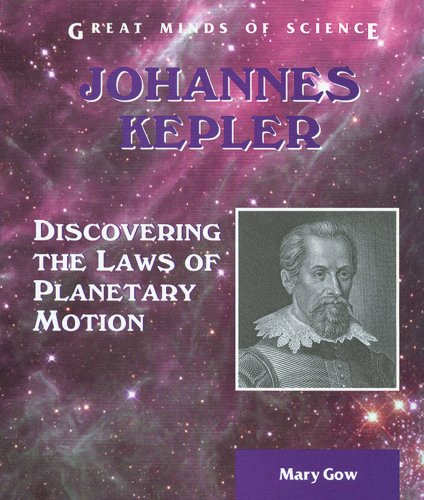
18. Johannes Kepler: Discovering the Laws of Planetary Motion (Great Minds of Science)
by Mary Gow
Library Binding: 128 Pages (2003-06)
list price: US$26.60 -- used & new: US$26.59
(price subject to change: see help)
Asin: 0766020983
Canada | United Kingdom | Germany | France | Japan

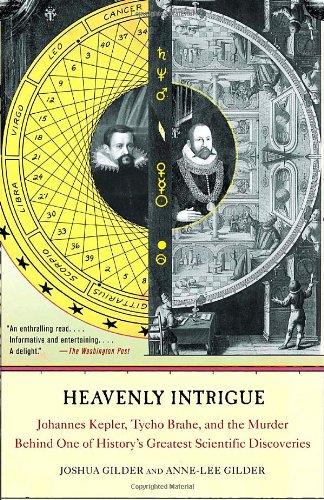
19. Heavenly Intrigue: Johannes Kepler, Tycho Brahe, and the Murder Behind One of History's Greatest Scientific Discoveries
by Joshua Gilder, Anne-Lee Gilder
Paperback: 336 Pages (2005-06-14)
list price: US$15.00 -- used & new: US$7.89
(price subject to change: see help)
Asin: 1400031761
Average Customer Review: 2.5 out of 5 stars
Canada | United Kingdom | Germany | France | Japan
Editorial Review

Book Description
Heavenly Intrigue is the fascinating, true account of the seventeenth-century collaboration between Johannes Kepler and Tycho Brahe that revolutionized our understanding of the universe–and ended in murder.

One of history’s greatest geniuses, Kepler laid the foundations of modern physics with his revolutionary laws of planetary motion. But his beautiful mind was beset by demons. Born into poverty and abuse, half-blinded by smallpox, he festered with rage, resentment, and a longing for worldly fame. Brahe, his mentor, was a flamboyant aristocrat who had spent forty years mapping the heavens with unprecedented accuracy–but he refused to share his data with Kepler. With Brahe’s untimely death in Prague in 1601, rumors flew across Europe that he had been murdered. But it took twentieth-century forensics to uncover the poison in his remains, and the detective work of Joshua and Anne-Lee Gilder to identify the prime suspect–the ambitious, envy-ridden Kepler himself. A fast-paced, true-life account that reads like a thriller, Heavenly Intrigue is a remarkable feat of historical re-creation. ... Read more

Customer Reviews (3)

2-0 out of 5 stars Not buying the whole tale...
This book discusses the lives and relationship between two key figures in astronomy, Tycho Brahe and Johannes Kepler. Brahe was a nobelman who shrugged off political life to pursue his love of science and the stars. Kepler was a commoner who also studied the heavens and developed the laws of planetary motion. Kepler is portrayed as an insecure man looking for acceptance. The book also gives me the impression that Kepler did not like Brahe, while Brahe seems to be constantly helping Kepler and his family. Kepler is given a job by Brahe and Brahe also pays Kepler out of his own pocket, while his financial situation is being resolved. However, Kepler seems to go out of his way to fight with Brahe and look for a way to get out from under Brahe's control. Regardless of the help being given by Brahe.

The main point of the book is to lay the foundation and grounds for why someone would want to murder Brahe. Namely Kepler. I am not an expert in either astronomers' life, but I find the book too one sided. I would have to do more research to come to a conclusion, but for now my verdict is out. I have read a little that brings into question some of the findings from the tests performed on Brahe's hair.

I do not think the issue is as clear cut as the book tends to conclude. The book also doesn't clearly discuss the questions with the test results. The book was still enjoyable to read, but I believe more research is required to come to any conclusions.

1-0 out of 5 stars A Fraud
I'd have some respect for this book if it were marketed at a work of fiction because that's what it is. The authors have little familiarity with any aspect of their subject. It's particularly unlikely that Tycho would have spent the last day of his life tying up loose ends, such as taking care that his common law wife and children would be his heirs, if his death were unexpected. And no one who has studied Kepler closely and honestly could imagine him capable of murder.

5-0 out of 5 stars A historical re-creation of the seventeenth-century collaboration between geniuses Johannes Kepler and Tycho Brahe
Heavenly Intrigue: Johannes Kepler, Tycho Brahe, And The Murder Behind One Of History's Greatest Scientific Discoveries is a historical re-creation of the seventeenth-century collaboration between geniuses Johannes Kepler and Tycho Brahe. Kepler's scientific brilliance laid the foundation for modern physics, and his mentor Brahe spent forty years mapping the heavens with more accuracy than any before him; yet Brahe refused to share his maps with Kepler. When Brahe died far too young in 1601, rumors circulated that he had been murdered, yet it took twentieth- century forensics to reveal the proof - poison in Brahe's remains. Authors Joshua Gilder and Anne-Lee Gilder apply detective work to point a reasoned accusation against the ambitious Kepler. Heavenly Intrigue is a simply stunning, thoroughly researched work that dares to question the personal character of great thinkers.
... Read more


20. Materialien zu den Ephemeriden von Johannes Kepler (Nova kepleriana)
by Volker Bialas
 Unknown Binding: 217 Pages (1980)

Isbn: 3769625498
Canada | United Kingdom | Germany | France | Japan

  1-20 of 100 | Next 20
A  B  C  D  E  F  G  H  I  J  K  L  M  N  O  P  Q  R  S  T  U  V  W  X  Y  Z  

Prices listed on this site are subject to change without notice.
Questions on ordering or shipping? click here for help.

site stats