e99 Online Shopping Mall

Geometry.Net - the online learning center Help  
Home  - Scientists - Schrodinger Erwin (Books)

  Back | 21-40 of 100 | Next 20
A  B  C  D  E  F  G  H  I  J  K  L  M  N  O  P  Q  R  S  T  U  V  W  X  Y  Z  

click price to see details     click image to enlarge     click link to go to the store

 
21. The Creation of Wave Mechanics
 
$23.10
22. Que Es La Vida?
 
23. Was ist Leben?
 
24. What is life? & Other Scientific
 
$149.96
25. Collected Papers on Wave Mechanics
 
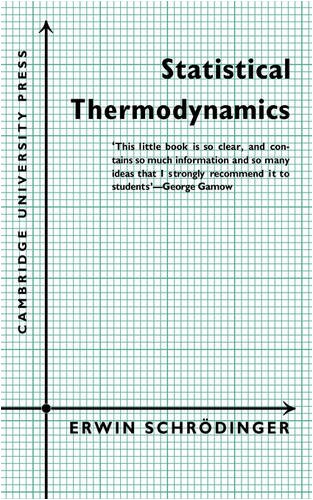
26. Statistical Thermodynamics a Course
$167.00
27. Schrödinger's Philosophy of Quantum
 
$14.00
28. Ciencia Y Humanismo
 
29. L’Espirit et la Matière Précéde
 
30. Schrodinger's Science and the
 
$4.95
31. Schrodinger's Kittens and the
 
32. Statistical Thermodynamics 2ND
$30.00
33. The Interpretation of Quantum
 
$15.24
34. La Nueva Mecanica Ondulatoria
 
35. Science and the Human Temperament
 
$42.00
36. The Interpretation of Quantum
 
37. What is Life ? : Folio
 
38. What is Life?:The Physical Aspect
 
$15.21
39. La Naturaleza Y Los Griegos
 
40. Science and Humanism: Physics

21. The Creation of Wave Mechanics ; Early Response and Applications 1925-26 (Erwin Schrodinger&the Rise of Wave Mechanics, Vol 5)
by Jagdish Mehra
 Hardcover: 614 Pages (1987-09)
list price: US$129.00
Isbn: 0387963774
Canada | United Kingdom | Germany | France | Japan
Editorial Review

Book Description
After an introduction into the historical development of science in 19th and 20th century Vienna, Schrödinger's early work on kinetic theory, atmospheric electricity, and on the atomic structure of solids, as well as his papers on statistical physics, general relativity and finally his concern with philosophy is presented. In the second chapter Schrödinger's activities in Zürich are described: atomic structure, the radiation problem and his important work on statistical mechanics. ... Read more


22. Que Es La Vida?
by Erwin Schrodinger
 Paperback: 150 Pages (2002-01)
list price: US$19.50 -- used & new: US$23.10
(price subject to change: see help)
Asin: 8472236072
Canada | United Kingdom | Germany | France | Japan

23. Was ist Leben?
by Erwin Schrodinger
 Perfect Paperback: Pages (1987)

Isbn: 3492031226
Canada | United Kingdom | Germany | France | Japan

24. What is life? & Other Scientific Essays
by Erwin Schrodinger
 Mass Market Paperback: Pages (1956)

Asin: B000KU7940
Canada | United Kingdom | Germany | France | Japan

25. Collected Papers on Wave Mechanics
by Erwin Schrodinger
 Hardcover: Pages (1982-04)
list price: US$18.00 -- used & new: US$149.96
(price subject to change: see help)
Asin: 0828413029
Canada | United Kingdom | Germany | France | Japan
Editorial Review

Book Description
This third, augmented edition contains the six original, famouspapers in which Schrödinger created and developed thesubject of Wave Mechanics as published in the original edition.As the author points out, at the time each paper was written theresults of the later papers were largely unknown to him. Thepapers and lectures in this volume were revised by the authorand translated into English, and afford the reader a strikingand valuable insight into how Wave Mechanics developed. ... Read more


26. Statistical Thermodynamics a Course of S
by Erwin Schrodinger
 Hardcover: Pages (1946)

Asin: B000QA806U
Canada | United Kingdom | Germany | France | Japan

27. Schrödinger's Philosophy of Quantum Mechanics (Boston Studies in the Philosophy of Science)
by M. Bitbol
Hardcover: 300 Pages (1996-10-31)
list price: US$167.00 -- used & new: US$167.00
(price subject to change: see help)
Asin: 0792342666
Canada | United Kingdom | Germany | France | Japan
Editorial Review

Book Description
This book gives a comprehensive account of Schrödinger'ssuccessive interpretations of quantum mechanics, culminating in theirfinal synthesis in the 1950s. Schrödinger's original position inthe realism-anti-realism debate is analyzed. His views on thewave-corpuscle issue are contrasted with Bohr's, and hisconceptions of the measurement problem are systematically comparedwith current no-collapse interpretations. ... Read more


28. Ciencia Y Humanismo
by Erwin Schrodinger
 Paperback: 150 Pages (2002-01)
list price: US$14.00 -- used & new: US$14.00
(price subject to change: see help)
Asin: 8472236269
Canada | United Kingdom | Germany | France | Japan

29. L’Espirit et la Matière Précéde de l’Élision Essai sur la Philosophie d’E. Schrödinger. Traduction, Notes et Essai Liminaire par Michel Bitbol.
by Erwin. SCHRÖDINGER
 Paperback: Pages (1990)

Asin: B000TOXTJG
Canada | United Kingdom | Germany | France | Japan

30. Schrodinger's Science and the Human Temerament
by Erwin Schrodinger
 Hardcover: 192 Pages (1935)

Asin: B000ITVIKE
Canada | United Kingdom | Germany | France | Japan

31. Schrodinger's Kittens and the Search for Reality
by John Gribbin
 Hardcover: 261 Pages (1995)
list price: US$23.95 -- used & new: US$4.95
(price subject to change: see help)
Asin: 0316328383
Average Customer Review: 4.0 out of 5 stars
Canada | United Kingdom | Germany | France | Japan
Editorial Review

Amazon.com
Astrophysicist John Gribbin first introduced the general public to the world of quantum physics in 1984 with his book In Search of Schrödinger's Cat. A dizzying, counterintuitive domain, the quantum world is so strange that Richard Feynman, the greatest physicist of his time, admitted, "nobody understands quantum physics."

Science has not stood still in the years since In Search of Schrödinger's Cat was written, and in this new book, Gribbin brings us up to speed on the latest developments. New interpretive models have been put forth about the nature of particles and light; experimental evidence has turned over many of the basic precepts of the Copenhagen interpretation, which says that until it is observed, the subatomic world exists only as a probability wave, lacking any objective reality independent of observation. The new models offer not only a paradigm independent of an observer, but also begin to unite quantum phenomena with relativity and Newtonian mechanics. This is not to say that the quantum realm has become more comprehensible. With particles existing simultaneously as particles and waves, feedback loops, and waves that move forward and backward in time, the quantum world is still a strange, strange place; it's just a little less solipsistic.

As in his previous books, Gribbin deftly translates the abstruse mathematics of these new theories into a highly readable narrative that informs as it entertains. Schrödinger's Kittens and the Search for Reality is a book that can be enjoyed by expert and layman alike. ... Read more

Customer Reviews (29)

4-0 out of 5 stars OK, but Gribbin's In Search of Schrodingers Cat is Better.
This is an OK stand-alone book, but it is better if one has read its prequel, In search of Schrodinger's Cat. This book was written ten years after the previous book, but covers much the same ground.The first 100 pages or so of this present book cover classical physics and modern physics, almost all of which was developed before the first book was written.It is focused on light, whereas the first part of Schrodinger's Cat was focused on the history of the development of quantum mechanics. Schrodinger's Kittens then spends another 100 or so pages on experimental results (most of which were obtained before Schrodinger's Cat was written) and the attempts to explain the illogical nature of these results in terms of quantum theory.

I kept getting the feeling that much of Schrodinger's Kittens was composed of things that did not make it into Schrodinger's Cat, but could have.If I could only read one, I would choose the first book, as the history of the development of quantum mechanics provides an excellent base from which to study this subject in more detail and, as it is history, it will never go out of date.The later sections of both books are involved with the interpretations of the various theories of quantum mechanics, and as new theories are developed, and new interpretations developed for old theories, these sections of the book will go out of date.

I was prepared to give only three stars to this book, but raised it to four on the basis of the last 33 pages.The previous book and almost all the present book consider the distressing consequences of quantum theory, i.e., that there is no reality unless someone is looking, or there are an infinite number of universes coexisting, or that information can actually travel instantaneously to all parts of the universe at once.The final few pages of the book are devoted to the transactional interpretation, which gets around many of the troubling aspects of other theories, if you are willing to accept the concept of things going back in time. The transactional interpretation is not popular view of quantum mechanics and I do not know if it is correct.My point is not that it is correct, but only that it is at least one approach that overcomes some of the difficulties inherent in other approaches.

Gribbin denigrates those who choose to ignore all these various interpretations and just use these theories to solve problems, calling them quantum cooks.But, finally at the last minute he takes a more reasonable position, namely, that quantum theories use models based upon analogies to things that we experience, such as the collision of billiard balls.As such, they are useful to make understanding easier, but they should not be taken too seriously, lest in the words of Richard Feynman "you will go down the drain' into a blind alley from which nobody has yet escaped" if you keep asking, "How can it be like that?"In the end, again quoting Feynman, "Nobody knows how it can be like that."Thus, neither this book, nor its prequel explain (at least to everyone's satisfaction) how things can be like what quantum theory implies they are.The importance of both books lies in the questions that they raise, not necessarily in the answers, which are being continually changed.

I would also recommend Feynman's QED as a valuable source that puts the paradoxes discussed in Schrodinger's Kittens into a much better perspective.Feynman's QED provides general information about the path integral method, which avoids the paradoxes because it avoids assuming that light (and electrons) are waves as well as particles.Gribben references Feynman and discusses the development of Feynman diagrams, but I do not feel that he adequately highlights the fact that Feynman's approach (actually the Dirac-Feynman method) avoids the distressing paradoxes that are the subject of his book.

To recap - This book can be read "on its own", but it is better to have read Schrodinger's Cat first (and Feynman's QED afterwards). You will learn about how quantum mechanics was developed (primarily from Schrodinger's Cat) and about the experimental results that raise troubling questions about the nature of the universe and of reality itself.

5-0 out of 5 stars 12 years old, still 96% relevant
Do I rate this book based on 1995 standards, or 2007 standards? I opted for 1995, this book must have taken a stupendous amount of work to assemble. Work and talent deserve a full rating.

Today it's a bit dated. As noted in a prior review, Gribbin has his heart set on the Transactional interpretation of QM, but decoherence is fashionable today. I think Leggett's inequality, which was recently proven, also goes against the Transactional intepretation. Not to mention that the transactional interpretation seems to require a closed universe and, despite Gribbin's disclaimers, severe determinism.

That's just the last chapter though, and it makes excellent reading anyway. The rest of the work is as enthralling and disorienting as it was 12 years ago. The theoretical breakthroughs that inspired this book were predicted in the mid-20th century and proven in the late 80s, so the book stands well.

It's not "merely" a book in Quantum Mechanics. Gribbin is a philosopher of science as well as a writer and physicist, and he fits a solid discourse on the nature of scientific models into his book.

It's a relatively slender, tightly written work that rewards the careful reader. I read a bit every day, which gave me time to digest and reflect. I don't recommend a single go, instead skim the last chapter then steadily work through the book.

I will never think of the photon quite the same way again. To the timeless photon all that was is, and all that will be is ...

I wonder, these days, if all of cosmology and quantum mechanics is "merely" an attempt to understand the photon ...

3-0 out of 5 stars A little old, focused on transactional (Cramer's) interpretation of Quantum Mechanics
This books claims that Transactional's (or Cramer's) interpretation of quantum mechanics has solved all the mysteries of the theory. I'm not sure that the author would hold the same opinion ten years after that (the book is dated 1996).

In fact, there is growing consensus today that the right interpretation is so called "decoherence". For a comparison of interpretations, look for Interpretation_of_quantum_mechanics in Wikipedia

Anyway, as is always the case with Gribbin's books, reading is insightful. The travel is worth the reading, although the final conclusion may be wrong. Only the final chapter (even only part of it) is devoted to explain Cramer's interpretation.

John, we'd very much like to have another book like this, but devoted to the "decoherence" approach!

3-0 out of 5 stars Well-written but not imaginitive enough
Well the whole "transaction" theory of quantum mechanics the author champions in this book is as laughable as the whole multiple-universe theory and the "Copenhagen Interpretation".It is more grasping at straws and seeking the desperate remedies the author bemoans.The fact is, we've reached the observational limits humans have because we need photons to act as measurment tools and we are trying to get to "particles" that we assert are smaller than photons (which are not in fact either particles or waves, so we are already using the wrong language to describe reality's "building blocks" already).Science has no conceptual model to discuss reality as it exists, only as people make it out to be.Thus is needs a new set of tools, or it needs in any case to stop embarrassing itself by at least shutting its collective trap until it has something to share that doesn't sound like it's the ramblings of a lunatic.

So I give the book 3 stars becasue it is well-written though, in terms of style.However the book leaves the reader knowing nothing particularly new or helpful.We still have no idea what all this stuff we call reality is.

4-0 out of 5 stars A little difficult
Although I'm not really a math/physics type person, I enjoy the popular books on the subject and have read a number.John Gribbin's book Schrodinger's Kittens and the Search for Reality was a little harder for me to get into, but there was a fair amount of new-at least to me-material.Part of the problem was that the author tended to repeat himself.Although if I plowed onward I usually discovered his purpose in doing so. Part of the problem is that he covers a lot.

The book has a fairly extensive history of the who's who of physics, starting with the early Greek philosophers for whom experiment was largely impossible (even the thermometer is a fairly new invention) to the likes of Galileo and Newton (for both of whom experiment was an imperative).The section on Modern Times is interesting in that it shows where thinking has gone wrong as well as right, and shows the interconnectedness of research in physics, one break through or thought experiment leading to further advances.I certainly found the degree to which Einstein was beholding to previous theorists surprising; he has become such an icon, that he seems to stand alone, head and shoulders above the rest.Just the idea that scientific understanding had reached a level at the turn of the century that the discovery of relativity was "ready" to be made was a surprise to me.It makes even more obvious that advances have their "time" and that much in science and technology moves forward in lock step.

In Desperate Remedies the author discusses in greater depth the various interpretations of quantum theory including, for instance, the well known Copenhagen Interpretation, David Bohm's pilot wave theory, and the many worlds theories, putting them into perspective and describing how each is different from the others and how each stands up to experiment.He has his own biases, but he is fairly up front with it, explaining his reasons for them.To those with a greater background in physics and/or math, this may seem arrogant, but to those of us who haven't a clue, it's helpful.

One of the benefits of the last chapters was that Dr. Gribbin points out clearly that all of the theories about "reality" are just paradigms that allow their authors to draw conclusions, design experiments and test results.He also points out that these same paradigms can confine thinking, confusing the metaphor with the described phenomenon, or channel thinking so much that experiments are designed to find certain things while neglecting other things. I thought his own idea of combining all of these theories and sifting out the relevant portions of each to make a master theory an interesting one.

The bibliography is fairly extensive and annotated, which allows the interested to follow up on some of the areas of interest, whether particular theories or biographies. Most of these are quite current, from the 80's and 90's, the oldest being 1873 and 1934 (Tyndall, On light; and Dunne, An Experiment with Time.)

I'm not sure I'd advise the first time dabbler to start with this book.I think it might be too confusing to start with, but it would definitely be a good one for those with at least some background in the genre.I agree with another reviewer; read 10, then go on to this one.The Universe Next Door: The Making of Tomorrow's Science by Marcus Chown, Just Six Numbers: The Deep Forces That Shape the Universe by Martin J. Rees, Matter Myth by John Gribbin, and P. C. W. Davies, and About Time by P. C. W. Davies might interest the beginner. ... Read more


32. Statistical Thermodynamics 2ND Edition
by Erwin Schrodinger
 Hardcover: Pages (1952)

Asin: B00107B07Y
Canada | United Kingdom | Germany | France | Japan

33. The Interpretation of Quantum Mechanics: Dublin Seminars(1949-1955) and Other Unpublished Essays
by Erwin Schrodinger
Paperback: 151 Pages (1995-09)
list price: US$30.00 -- used & new: US$30.00
(price subject to change: see help)
Asin: 1881987094
Canada | United Kingdom | Germany | France | Japan

34. La Nueva Mecanica Ondulatoria y Otros Escritos
by Erwin Schrodinger
 Paperback: Pages (2001-11)
list price: US$11.70 -- used & new: US$15.24
(price subject to change: see help)
Asin: 8470309560
Canada | United Kingdom | Germany | France | Japan

35. Science and the Human Temperament
by Erwin Schrodinger
 Hardcover: Pages (1935)

Asin: B000JNNC80
Canada | United Kingdom | Germany | France | Japan

36. The Interpretation of Quantum Mechanics: Dublin Seminars (1949-1955 and Other Unpublished Essays)
by Erwin Schrodinger
 Hardcover: 151 Pages (1995-09)
list price: US$55.00 -- used & new: US$42.00
(price subject to change: see help)
Asin: 1881987086
Canada | United Kingdom | Germany | France | Japan

37. What is Life ? : Folio
by Erwin Schrodinger
 Paperback: Pages (2000)

Asin: B000Y8WQ14
Canada | United Kingdom | Germany | France | Japan

38. What is Life?:The Physical Aspect of the Living Cell
by Erwin C. Schrodinger
 Hardcover: Pages (1947)

Asin: B000PGIYU2
Canada | United Kingdom | Germany | France | Japan

39. La Naturaleza Y Los Griegos
by Erwin Schrodinger
 Paperback: 150 Pages (2002-01)
list price: US$19.50 -- used & new: US$15.21
(price subject to change: see help)
Asin: 8483105330
Canada | United Kingdom | Germany | France | Japan

40. Science and Humanism: Physics in Our Time
by Erwin Schrodinger
 Hardcover: Pages (1952)

Asin: B000IXWH2I
Canada | United Kingdom | Germany | France | Japan

  Back | 21-40 of 100 | Next 20
A  B  C  D  E  F  G  H  I  J  K  L  M  N  O  P  Q  R  S  T  U  V  W  X  Y  Z  

Prices listed on this site are subject to change without notice.
Questions on ordering or shipping? click here for help.

site stats