e99 Online Shopping Mall

Geometry.Net - the online learning center Help  
Home  - Social Science - Cognitive Science (Books)

  Back | 21-40 of 100 | Next 20

click price to see details     click image to enlarge     click link to go to the store

$53.95
21. The MIT Encyclopedia of the Cognitive
$9.95
22. Dynamical Cognitive Science (Bradford
$44.95
23. The Cognitive Dynamics of Computer
$23.14
24. Cognitive Science: An Introduction
 
$10.55
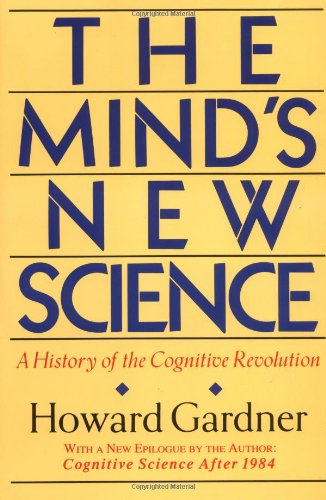
25. The Mind's New Science: A History
$29.64
26. The Embodied Mind: Cognitive Science
 
$38.00
27. Applying Cognitive Science to
$42.91
28. Current Approaches in the Cognitive
$44.88
29. A Companion to Cognitive Science
$27.50
30. A Cognitive Theory of Magic (Cognitive
$179.94
31. Minds, Brains, and Computers:
$4.15
32. What Infants Know: The New Cognitive
$26.12
33. Narrative Theory and the Cognitive
 
$109.95
34. Brain, Mind, and Human Behavior
$33.40
35. Religion, Anthropology, and Cognitive
$40.00
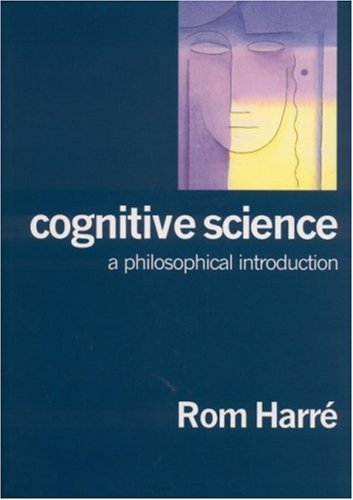
36. Cognitive Science: A Philosophical
$30.91
37. Concepts: Where Cognitive Science
$14.23
38. The Algebraic Mind: Integrating
$30.00
39. Understanding Cognitive Science
$160.00
40. Cognitive Mapping: Past, Present

21. The MIT Encyclopedia of the Cognitive Sciences (MITECS)
Paperback: 1096 Pages (2001-09-01)
list price: US$78.00 -- used & new: US$53.95
(price subject to change: see help)
Asin: 0262731444
Average Customer Review: 5.0 out of 5 stars
Canada | United Kingdom | Germany | France | Japan
Editorial Review

Amazon.com
The state-of-the-art knowledge about knowledge is contained within the MIT Encyclopedia of the Cognitive Sciences. Its 471 comprehensive entries cover topics as diverse as "Hemispheric Specialization," "Epiphenomenalism," and "Algorithms" in 1,000 to 1,500 words each, thoroughly cross-indexed and extensively referenced to launch further research. A few biographical entries are also included, highlighting such giants as Alan Turing and Santiago Ramón y Cajal. The editors selected their contributors well, assigning "Neurobiology of Consciousness" to Christof Koch and Francis Crick, for example. Even better, six longer essays introduce the Encyclopedia, each providing an overview of one of the six disciplines that overlap to form cognitive science: computational intelligence; culture, cognition, and evolution; linguistics and language; neurosciences; philosophy; and psychology. These are enormously helpful to the researcher, as they are general enough to allow easy entry but still meaty enough to be useful themselves and as pointers to specific entries. The MIT Encyclopedia of the Cognitive Sciences, while not a casual entry into the field, is an essential addition to the reference shelf for anyone seriously interested in AI, consciousness, or other aspects of natural and artificial brains. --Rob Lightner Book Description
Winner in the category of Psychology in the 1999 Professional/Scholarly Publishing Annual Awards Competition presented by the Association of American Publishers, Inc. and Choice Outstanding Academic Title, 2000.

Since the 1970s the cognitive sciences have offered multidisciplinary ways of understanding the mind and cognition. The MIT Encyclopedia of the Cognitive Sciences (MITECS) is a landmark, comprehensive reference work that represents the methodological and theoretical diversity of this changing field.

At the core of the encyclopedia are 471 concise entries, from Acquisition and Adaptationism to Wundt and X-bar Theory. Each article, written by a leading researcher in the field, provides an accessible introduction to an important concept in the cognitive sciences, as well as references or further readings. Six extended essays, which collectively serve as a roadmap to the articles, provide overviews of each of six major areas of cognitive science: Philosophy; Psychology; Neurosciences; Computational Intelligence; Linguistics and Language; and Culture, Cognition, and Evolution. For both students and researchers, MITECS will be an indispensable guide to the current state of the cognitive sciences. ... Read more

Customer Reviews (2)

5-0 out of 5 stars good book to have
i am an engineering student and i enjoy reading this book. Although many topics are about psychology, you can find all kind of different subjects that you will never find anywhere else. That is way it is so valuable. the book is very heavy.

5-0 out of 5 stars Required reading for cognitive scientists
The MIT Encyclopedia of the Cognitive Sciences - "MITECS" - is a truly excellent book.MITECS is the book I spent four years wishing for back when I started studying cognitive science.MITECS is also a very*large* book; I've set out to read all 471 articles, and I'm currently on"Computational Neuroscience" (p. 166 of 900), although I've alsoread a lot of other articles as circumstances required.From that samplesize, my comments:

The good news:There are some truly excellentarticles in this book.Microcolumns and macrocolumns, cerebellar chips,the pathways of the visual system - you can read this book and find out ahundred amazingly cool things that you never even realized you desperatelyneeded to know.Oddly enough, MITECS is also a pretty good as anencyclopedia - if you suddenly need to know more about vision, you'll findwhat you need to know in "Visual Anatomy and Physiology".(Or"Visual Processing Streams".Or "High-Level Vision". Or "Computational Vision".Or "Mental Rotation".Youdo need to do a certain amount of hunting, if it's a sufficiently broadsubject.More than half the cerebral cortex is devoted to vision - see"Mid-Level Vision" - and MITECS reflects this fact.)

MITECS*excels* as an authoritative reference; you'll almost never need to quoteanything else.If you're familiar with cognitive science, you'll oftenlaugh when you get to the end of an article and see the author's byline: "Columns and Modules" by William Calvin, "Chinese RoomArgument" by John Searle, "Evolutionary Computation" byMelanie Mitchell, "Evolutionary Psychology" by Leda Cosmides andJohn Tooby.

The bad news:If you try to read MITECS linearly, you willfind that many of the articles, perhaps even a majority, are eminentlyskippable.(For the record, I read them anyway.)As all of the articleswere written by independent individuals - none of whom could read the bookfirst, since it didn't exist yet - there is understandably a great deal ofduplication of information.Every third author feels the need to informyou that the mind is a computational information-processing system.(If Ihad one request to make of the hundreds of authors who write the nextedition, it would be:"Skip all the introductory material and thephilosophy and try to pack in as much useful detail as you can.") There are also some understandable problems with depth of coverage, madeworse by the aforesaid tendency to write introductions; whenever I read anarticle about a topic that I had earlier studied in more detail, it reallybrought home the realization that each of these 471 articles tries to covera topic about which *multiple* entire books have been written.

There areseveral things I'd like to see in future editions of this book.First andforemost is *less philosophy* and more focus on concrete details,particularly *surprising* details, or details that have somethingsubstantial to say about how the mind works.I don't want to know whatDavid Hume thought about causality; I want to know if anything interestinghappens when research subjects are asked to reason about causality.(Imust also confess myself uninterested in most of the biographical articlesthat form much of MITECS - but then, that's probably because I'm not usingit to study history.)Finally, I would like to see a neuroanatomical indexas well as a table of contents.It's already a big book, but they canafford another six pages to show a detailed neuroanatomical map, with namesfor the areas, and references to the appropriate sections of the book. Such a map would be an enormous help to those of us trying to build up aconcrete visualization of the brain.

Conclusion:This is a *really good*book.It's not so much "a good book with a few drawbacks" as"an excellent book with tremendous potential for *even more*improvement", and I mean this in all seriousness.If you're acognitive scientist, you have basically no choice but to buy this book.Ifyou're a student of the mind or a cognitive hobbyist, then this may not bethe *first* book you buy, but you will buy it sooner or later.

It's justsuch a great book. ... Read more


22. Dynamical Cognitive Science (Bradford Books)
by Lawrence M. Ward
Hardcover: 371 Pages (2001-12-01)
list price: US$50.00 -- used & new: US$9.95
(price subject to change: see help)
Asin: 0262232170
Average Customer Review: 3.0 out of 5 stars
Canada | United Kingdom | Germany | France | Japan
Editorial Review

Book Description
Dynamical Cognitive Science makes available to the cognitive science community the analytical tools and techniques of dynamical systems science, adding the variables of change and time to the study of human cognition. The unifying theme is that human behavior is an "unfolding in time" whose study should be augmented by the application of time-sensitive tools from disciplines such as physics, mathematics, and economics, where change over time is of central importance.

The book provides a fast-paced, comprehensive introduction to the application of dynamical systems science to the cognitive sciences. Topics include linear and nonlinear time series analysis, chaos theory, complexity theory, relaxation oscillators, and metatheoretical issues of modeling and theory building. Tools and techniques are discussed in the context of their application to basic cognitive science problems, including perception, memory, psychophysics, judgment and decision making, and consciousness. The final chapter summarizes the contemporary study of consciousness and suggests how dynamical approaches to cognitive science can help to advance our understanding of this central concept. ... Read more

Customer Reviews (1)

3-0 out of 5 stars Fails to deliver
Dynamical systems is an approach to studying physical systems that change over time; in contrast to the field of statistics which deals primarily with stable-state properties of systems.It is clear that both human behavior and the brain are fundamentally dynamical in nature, but despite widespread acceptance of this idea, few cognitive scientists study the brain or behavior from a dynamical perspective.This book is an attempt to demonstrate the value of applying the techniques of dynamical systems to the study of cognition.

The book is organized as a very high-level introduction to the tools and topics of dynamical systems, with simplified mathematics that are introduced gently.Unfortunately, perhaps due to its introductory nature, much of the book is spent introducing topics and surprisingly little space is given to the application of these ideas to cognitive science. Each topic (markov models, regressive processes, colored noise, chaotic systems, etc) is introduced with one to two chapters with examples from physics or other domains, followed by a comparatively short chapter on how it relates to human behavior.As a result, what is lost is the sense of how a dynamical systems approach could revolutionize the study of cognitive science. A more accurate title for this book would have been 'Introduction to dynamical systems for cognitive scientists'. This book will introduce you to the topics of dynamical systems, hint at how they apply to the study of cognition, but it will not make you an expert in the field, nor (unfortunately) will it impress you with the value of taking the time and effort to study the topics further. ... Read more


23. The Cognitive Dynamics of Computer Science: Cost-Effective Large Scale Software Development
by Szabolcs de Gyurky
Hardcover: 292 Pages (2006-07-31)
list price: US$84.95 -- used & new: US$44.95
(price subject to change: see help)
Asin: 0471970476
Average Customer Review: 5.0 out of 5 stars
Canada | United Kingdom | Germany | France | Japan
Editorial Review

Book Description
A groundbreaking, unifying theory of computer science for low-cost, high-quality software


The Cognitive Dynamics of Computer Science represents the culmination of more than thirty years of the author's hands-on experience in software development, which has resulted in a remarkable and sensible philosophy and practice of software development. It provides a groundbreaking ontology of computer science, while describing the processes, methodologies, and constructs needed to build high-quality, large-scale computer software systems on schedule and on budget.

Based on his own experience in developing successful, low-cost software projects, the author makes a persuasive argument for developers to understand the philosophical underpinnings of software. He asserts that software in reality is an abstraction of the human thought system. The author draws from the seminal works of the great German philosophers--Kant, Hegel, and Schopenhauer--and recasts their theories of human mind and thought to create a unifying theory of computer science, cognitive dynamics, that opens the door to the next generation of computer science and forms the basic architecture for total autonomy.
* Four detailed cases studies effectively demonstrate how philosophy and practice merge to meet the objective of high-quality, low-cost software.
* The Autonomous Cognitive System chapter sets forth a model for a completely autonomous computer system, using the human thought system as the model for functional architecture and the human thought process as the model for the functional data process.
* Although rooted in philosophy, this book is practical, addressing all the key areas that software professionals need to master in order to remain competitive and minimize costs, such as leadership, management, communication, and organization.

This thought-provoking work will change the way students and professionals in computer science and software development conceptualize and perform their work. It provides them with both a philosophy and a set of practical tools to produce high-quality, low-cost software. ... Read more

Customer Reviews (13)

5-0 out of 5 stars Be prepared to see the world differently ... a book far beyond software management!
Despite its title this book is an easy and entertaining read for a broad audience. While specifically written from the perspective of management of software projects, the book actually addresses management at large. It makes a concise case showing how dangerous and detrimental it is (to the successful outcome of large scale (software) projects that is, defined by the author as a "quality product on time and on budget") to separate technical leadership/management from personnel leadership/management, as so often mandated by many organizations. The "manager-architect," as termed by the author in his book, is key to success. Consequently not everybody can be up for this task, and only few who dare to try will succeed at it, as evidenced by the disconcerting fact that many "top level managers" manage nothing but major budgetary overruns (be they hidden or not), for which they are "held accountable" by society by being hailed as "America's Best Leaders." This book puts an end to such phoniness and provides especially the inexperienced/naive reader with a skill set to reveal/uncover such mismanagement and the individuals responsible.

The book is a true eye opener for aspiring and "want-to-be" managers alike. Also, having posters on "true leadership" pinned to the office wall does not magically inhale the ability of leadership into the office occupant. Leadership is an ability rather than a skill as clarified by the author. It is just like playing an instrument: it only gets you so far if you do not have it in you and practice every day. Chapter 12 "The Impact of Leadership on Software Development" should be read by any manager (aspiring, "want-to-be", or acting alike), and in particular by those who confuse management with suddenly having power over people. Moreover, management does not and should not mean "tenure" along the lines of "now I have made it, now I can relax" or "now I am in power." Rather the "Old Fritz" (Friedrich II, Prussian King) statement, simple yet true, comes to mind: "I am the first servant of the country" ("Ich bin der erste Diener meines Staates"), and serves as a good guide.

The author puts forth an interesting concept for true autonomy founded on the philosophical considerations of the human mind, upon which the AI-(IF-THEN-ELSE)-community will most likely have to choke. In doing so, the author outlines nicely the profound difference between automation and autonomy, two terms, which are often confused, intermixed, or misunderstood, even by so-called experts in the field.

If management is done right, as exemplified/laid out in this book and practiced by its author in an exemplary fashion, managers would rather have to be pitied because of their huge added responsibility for their people/troops and the projects they manage/lead (in that order!). Special attention should be paid throughout the book and in particular throughout Chapter 12 to the "Machiavellian Prince," as this kind of "leader" unfortunately exists (and not in small numbers!), and, while striving only for personal power and gain, causes a lot of damage to otherwise noble causes.

5-0 out of 5 stars Dynamite Answers!
The author of this book has deep insights and wisdom for any level of interface with computer science applications. You simply cannot go wrong for putting your weight down on patterns to follow from someone who has had success in the field. The techniques in this book go beyond basic head knowledge, into the live action of software development where the rubber meets the road. Only an experienced person can give these insights. I am very impressed with the advanced mapping, made simple. This book seems to be written for people who are looking to find answers to every day problems in a rapidly moving computer world, without fear.

5-0 out of 5 stars The Congnitive Dynamics of Computer Science..etc
Mr. deGyurky gives a great overview of his experience at JPL in organizing and developing large, complex, software systems, and delivering them on schedule, on cost. Mr. deGyurky demonstrated that the most important contribution to software management is that of leadership in life, carries over in software development also.

If you are thinking of becoming a manager of a software development project, you should check this book out, and You will be a step ahead of the game!

5-0 out of 5 stars Software Development and the Hegelian Dialectic
The author has given us a framework for conceptualizing, organizing and developing large, complex, software systems, and delivering them on schedule, on cost.

His approach to software development emphasizes two basic ideas. Unique is his application to the development process of the cognitive philosophies of the great Nineteenth Century German cognitive philosophers, principally Schopenhauer, Kant and Hegel, which De Gyurky has studied for years (- in the original Nineteenth Century High German). De Gurky also emphasizes to an extraordinary degree the active role of personal leadership required of the successful software development manager.

Far from being a purely theoretical work, the book is richly illustrated with pungent examples from De Gyurky's near-incredibly varied experience both in the US military as a Special Forces officer commanding a detachment of Montaignards in the mountains of Vietnam, as an action officer at NATO Headquarters, and as the civilian developer of very large military flight-schedule management systems as well as spacecraft software command and control systems.

All the examples are exquisitely pertinent to the software development process. But in addition, four detailed programmatic examples are presented, together with comments, figures and schedules. The author's application of the principles he developed is wholly consistent and unfailingly pertinent, if sometimes challenging, due to the likely unfamiliarity on the part of the typical software engineering reader with the application of the philosophical concepts.

In fact, the single characteristic of the book which may challenge the typical software developer is the accessibility of some of the concepts. Some of the most powerful concepts discussed, e.g., the dialectical process by which an ill-formed idea becomes an object that reflects the meeting of the minds of the design team, are likely to be unfamiliar. However this process has profound implications for the organization of the design team, its management, team-member responsibilities, and on and on. It might have been helpful if the author had expanded on these key concepts, perhaps in context closer to their original use. It would be demanding on the reader, but probably no more so than parts of the book itself.

This unique contribution is recommended to software developers interested in on-time, on-cost development of large software systems, and willing to invest in the intellectual effort required to understand the author's unique contribution. They will be well rewarded.

5-0 out of 5 stars The Science and Ethics of Computer System Development
I have read many books on systems and software development and management principles over the years.The ones that most influenced me were: "More Reliable Software Through Composite Design" by Glen Meyers; "Up the Organization" by Robert Townsend; and "Reengineering the Corporation" by Michael Hammer and James Champy.And of course no system developer's library would be complete without "Managing the Software Process" and other books by Watts Humphry, a giant in our industry.Mr. Szabolcs Michael deGyurky's book will occupy a place along side these on my bookshelf.

In this book, Mr. deGyurky has provided a completely different and refreshing, but no less important, viewpoint on systems development.As different as all the above mentioned books are, the one theme common to all of them is their focus on the "real" problem by differentiating between the truly important and the seemingly important - commonly referred to as separating the wheat from the chaff..

"The Cognitive Dynamics of Computer Science" focuses on strength of character as being indispensable to successful completion of complex systems development projects, which not only satisfy the "real" requirements, but ensure the system is delivered within an agreed to budget and schedule.This book draws on the philosophy of such estimable historical figures as Kant, Hegel and Schopenhauer, among others, in defining the behavioral characteristics of successful leaders and managers.Personal experiences in real world projects by Jet Propulsion Laboratory (JPL) provide a substantive backdrop for Mr. deGyurky's approach to managing systems development.

It is impossible to adequately relay the impact of such a book in so short a review, but I do come away with some points which derive more meaning because of my own experience:1) Design from the user in, but develop from the inside out, in layers, 2) Don't implement until you have an initial design documented and understood by the development team - expect that to change, 3) Manage change through the Project Implementation Plan (PIP), which is the Project Manager's equivalent to the Software Development Folder, 4) Don't hire staff until you have their tasks well defined (control burn rate and you have controlled your budget), 5) Make sure you understand exactly what your customer wants through constant customer involvement, 6) make your customer's goal, your goal, then incentivize the entire development team to focus on that goal as the highest priority, 7) There shall be no implementation without documented, repeatable process and standards, which should be tailored to the individual project, but at no time should process and standards replace common sense in a dynamically changing development environment, 8) Employ tools and ensure the team is involved in their selection, 9) Ensure the development team is trained in methodology, process, standards, tools and system requirements, and 10) the manager should place the needs of his customer and his team ahead of his personal goals.

All of this is done in concert with the philosophical teachings of our great philosophers, who would encourage strict honesty and ethics in dealing with our customer, subordinates, colleagues, company management, even if it means being fired.Of course, one does not fit all the meaning of a 300-page book into such a short review, and one could easily list another 10 or more points of interest.

I agree with almost everything in this excellent book, but may differ on the role played by Computer Aided Software Engineering (CASE) and Computer Aided Design (CAD) in systems development.Since CASE tools became mature enough to use effectively, I personally selected my tools, then built my process and standards around them.This includes the way I modify process and standards (including DoD) to conform to streamlining development and associated documentation.The CASE tool, when used with discipline can ensure that interface errors are avoided during the design process, as provided through automatic leveling and validation as the system design progresses.Fixed price contracts caused me to gravitate to using the latest tools available and build around them each time.

I am certain that Autonomous Cognitive systems are in our future, but not without application of increasingly sophisticated CASE tools and compilers (Autonomous Cognitive Compilers), which can parse complex combinations of Boolean expressions with many operations per expression to simulate the human thought system in making decisions.Neither can these systems be built without addressing the transducers (sensors), which would connect to and provide stimuli to be interpreted and processed by any autonomous system as the 5 senses (sight, hearing, touch, smell and taste).I look forward to Mr. deGuyrky's next book, which may address this highly complex problem.

I would only close this review with one last comment, directed to JPL.Mr. deGyurky and his team were on the right track with Ada.It is unfortunate that JPL didn't adopt this very highly typed and disciplined high order language as their standard development language.I believe it would have saved more than one failed project. Based on my 40 plus years of developing computer systems, I would humbly suggest that JPL require mandatory use of Ada in all "Class A" development projects.
... Read more


24. Cognitive Science: An Introduction to Mind and Brain
by Daniel Kolak, William Hirstein, Peter Mandik, Jonathan Waskan
Paperback: 243 Pages (2006-12-04)
list price: US$37.95 -- used & new: US$23.14
(price subject to change: see help)
Asin: 0415221013
Canada | United Kingdom | Germany | France | Japan

25. The Mind's New Science: A History of the Cognitive Revolution
by Howard Gardner
 Hardcover: 446 Pages (1985-06-26)
list price: US$22.50 -- used & new: US$10.55
(price subject to change: see help)
Asin: 0465046347
Average Customer Review: 3.0 out of 5 stars
Canada | United Kingdom | Germany | France | Japan

Customer Reviews (2)

2-0 out of 5 stars Decent supplement to broader study, but too biased by itself
The book is a history of ideas. This breaks down into some light historical content, and much presentation of positions (sometimes with a little supporting argument).

As a history, I would compare this book to what you might expect from an account of the Cuban revolution written by a relatively conscientious Castro partisan: sensitive reports of leaders' statements, factual aspects painted in slightly punched-up colors with a vague and gentle brush, heroics and ideology emphasized. Naturally, you can expect a wildly inaccurate and polemic treatment of 'life before the revolution.'

As a presentation of ideas, its main virtue is its fidelity. Gardner has taken up the opinions of a handful of big-name cognitivists and represented them here. You could tell who was saying what without any citations, just from what is written. As such, it would be undoubtedly useful for reviewing just what claims people liked to make during the revolution, not too unlike having a set of extracts from classic guerilla texts.

The claims themselves are a parade of ad hominem attacks, conclusive strikes on straw men, vast overstatements, and unbelievable exclusions (e.g., cognitive psychology can't even peripherally be bothered with: emotion, cultural or social factors, or the state of the environment at any point). There is no use in adopting these viewpoints, nor in arguing against them. They are out of touch. Gardner himself has a few interesting things to say about psychology getting involved with epistemological issues, but here they don't amount to more than an appetizer. Too bad, since I thought these were pretty interesting and much more substantive than what Gardner was reporting on.

Given the above, I would only recommend the book as supplementary material in a broader look at the history of psychology, or in order to satisfy very casual interests in the history of cognitivist ideas. You should not bother with this book if you want an introduction to or a clearer understanding of cognitivism, nor if you want support for or ammunition against cognitive work as it is practiced. If these are your goals, you should instead get in contact with research, whether by text or by directly checking out articles.

4-0 out of 5 stars Impressive.
This is a very readable, very complete introduction/history to the thinking, questions and issues underlying cognitive science from its philosophical origins. It pulls many threads together to give a cohesiveand complementary account of the development of the fields involved incognitive science in a way that garners a strong feel for the field forthose new to it, and that will grant new insights to those well acquaintedwith the field.

Damn impressive, all told. ... Read more


26. The Embodied Mind: Cognitive Science and Human Experience
by Francisco J. Varela, Evan T. Thompson, Eleanor Rosch
Paperback: 308 Pages (1992-11-13)
list price: US$30.00 -- used & new: US$29.64
(price subject to change: see help)
Asin: 0262720213
Average Customer Review: 5.0 out of 5 stars
Canada | United Kingdom | Germany | France | Japan
Editorial Review

Book Description
The Embodied Mind provides a unique, sophisticated treatment of the spontaneous and reflective dimension of human experience. The authors - argue that only by having a sense of common ground between mind in Science and mind in experience can our understanding of cognition be more complete. Toward that end, they develop a dialogue between cognitive science and Buddhist meditative psychology and situate it in relation to other traditions such as phenomenology and psychoanalysis. ... Read more

Customer Reviews (4)

5-0 out of 5 stars Saving the World Through Buddhism and Brain Science
This is perhaps the most challenging and unusual book I ever read.At first it seems similar to the other books on mind and consciousness that started appearing in the late 1980s, in response to advances in neurobiology and artificial intelligence.But the final chapters confirm that the authors were shooting for something much grander.

The writers of this book, which was first published in 1991, were a "dream team" of philosopher, psychologist, and neuroscientist (the late, great Francisco Varela).They wrote for a professional audience.An interested layperson having some familiarity with philosophy of mind issues can keep up, but only with much effort; I had to stop several times to look up a term or research an important concept.But it's worth the effort.You will review a wide variety of interesting ideas and be shown how they relate to one other, including neural networks, societies of mind, object-relations psychoanalysis, adaptive resource theory, multi-chromatic vision, evolutionary drift, nihilism, the delusion of "self", and much more.

And you will also read about Buddhism. The authors introduce Buddhist concepts every second or third chapter, noting the parallels between ancient thought and modern science (and the failures of western philosophy).Yes, this does remind one of Capra`s Tao of Physics, although the conceptual juxtapositions aren't as forced.The two biggest problems that cognitive science present for western thought involve the failure to integrate and account for subjective experience, and an increasing sense of social groundlessness as science and history reveal the world to be mostly "relative".Varela and his team believe that these problems lie at the root of a major social crisis that is now being felt in the developed world, i.e. a growing sense of nihilism.When despair and confusion become prevalent and our enemies are at the gates, can the new dark ages be far behind?

The response to this gathering storm, the authors argue, can be found in the wisdom of the Buddhist tradition.However, this isn't your father's Buddhism.Varela and company have cleaned it of any supernatural accretions such as hungry ghosts, cosmic nirvana and reincarnation.And although karma is discussed, its definition is narrowed so that it could appear in any graduate textbook on psychology without objection.

The Buddhism presented in this book appears to be fully compatible with our modern scientific viewpoint.Through awareness meditation techniques, subjective experience can be grasped and integrated in a way consistent with empiricism.And in that grasping, we can learn to stop grasping. (Love those eastern paradoxes).Instead of fighting the relativity introduced over time by Einstein, quantum physics, psychoanalysis, evolution, complexity theory and cognitive research, we can learn to embrace the end of grounding.Our science can be enriched through "embodiment", expanding science's conceptual boundaries so as to embrace subjective experience without losing precision and explanatory power.And we ourselves can learn to give up the unsustainable concept of "self" and become more open-hearted and compassionate (those words are used more than once by the authors).We can work with our everyday experiences in ways that are "liberating and transformative".

I've read some professional reviews of this book, most notably by the famous neuro-philosopher Daniel Dennett.They focus on the many technical and research-oriented discussions, and generally ignore the chapters on liberation and compassion. There is so much here regarding the techniques and directions of cognitive research that one can easily ignore the hub and concentrate on the spokes.

The cognitive field appears to have responded to these spokes, i.e. to the need to take "embodiment" and subjective experience more seriously.Neuroscientists Antonio Damasio and Gerald Edelman have discussed the need to conceptualize consciousness in light of the overall human body and its "stay alive" dynamics.Even arch-representationalist Dennett became interested in "hetrophenomenology", which seeks to document a person's subjective feelings and impressions, though not without a certain distance and skepticism.

But getting back to the axis of this book - i.e. saving the world - I will now attempt to go where better minds than my own have feared to tread.First off, one can sense a truly good intent on the part of these authors.They pictured a bridge between eastern and western ideas that could allegedly convey our half-civilized, half-atavistic species toward a more mature state of collective mind and individual being.They honestly felt that brain research had reached the point where it had something earthshaking to say to humankind, once catalyzed through the wisdom of the east.They wrote this book with a sincere sense of hope and purpose. Books like this are rare, especially in the cognitive science field.

Unfortunately, science and critical thought are not compatible with the Buddhist notions presented in this book, however denuded of supernaturalism.The authors call Buddhism a "case study" regarding the positive social effects of embracing groundlessness.Unfortunately, they don't provide a citation to that case study.I'm sure that awareness meditation, the annihilation of self, and the cessation of grasping desire have helped many people to live better lives. But as to whether it works on the scale of a particular culture, or nation, or for humankind as a whole - can we answer that question?And even if we can, what would the side-effects be?Less innovation and economic wealth?Or extreme exploitation by a cabal of charlatans, as happened with Communism?We won't be fooled again? Although Buddhism is not a religion in the same sense as Christianity and Islam, Varela and company still urge a leap of faith upon the reader.

I would recommend this book to anyone even vaguely interested in the issues of the mind - but be ready for a long, tough slog.Despite all the cold technical jargon and talk of emptiness, a sincere human warmth and idealism eventually comes forth. It's kind of like listening to John Lennon's Imagine - except that these authors couldn't expect nearly the payday (and possessions) that Lennon got for his Utopian formula.

5-0 out of 5 stars Buddhism and CogSci
This book is well worth the price if you are interested in theories of mind and Buddhism. Bert Dreyfus took some of the philosophical references to task in a review that appeared in "Mind" indicating a couple of questions concerning references to Kant's philosophy. He also points out that there is no case made in the book to support the inference that experiences derived from zazen are experiences of "reality." So there are some holes here and there...or maybe assumptions a philosopher would jump on. But I would still recommend this book. It is very interesting and lays out its facit of the Buddhist perspective quite well.

5-0 out of 5 stars Philosophy of the Body
Reading this book contributed helpfully to my studies of the phenomenology of the embodied experience.The authors argue that we cannot understand ourselves to be isolated bodies controlled by a mind that stands apart from and judges an independent environment.I would recommend this book to anyone who is interested in cognitive science, phenomenological philosophy, philosophies of embodiment, and the relationship of Buddhism to these areas of thought.

5-0 out of 5 stars This book is amazing!
This ranks up there with Chogyam Trungpa's books for clearly presented insights. Trunpa's genius is making Buddhist ideas come alive for Western readers by clearly presenting Buddhist ideas in everyday terms. This book is a wonderful addition to the same delicious feast, building a bridge from Eastern mindfulness/awareness traditions to Western scientific thought. The effect is to improve our understanding of both. Very powerful and thought-provoking. Each page is like a meal. Hungry? Chew this one slowly and enjoy every bite! ... Read more


27. Applying Cognitive Science to Education: Thinking and Learning in Scientific or Other Complex Domains (Bradford Books)
by Frederick Reif
 Hardcover: 472 Pages (2008-07-31)
list price: US$38.00 -- used & new: US$38.00
(price subject to change: see help)
Asin: 0262182637
Canada | United Kingdom | Germany | France | Japan
Editorial Review

Book Description
Many students find it difficult to learn the kinds of knowledge and thinking required by college or high school courses in mathematics, science, or other complex domains. Thus they often emerge with significant misconceptions, fragmented knowledge, and inadequate problem-solving skills. Most instructors or textbook authors approach their teaching efforts with a good knowledge of their field of expertise but little awareness of the underlying thought processes and kinds of knowledge required for learning in scientific domains. In this book, Frederick Reif presents an accessible coherent introduction to some of the cognitive issues important for thinking and learning in scientific or other complex domains (such as mathematics, physics, chemistry, engineering, or expository writing).

Reif, whose experience teaching physics at the University of California led him to explore the relevance of cognitive science to education, examines with some care the kinds of knowledge and thought processes needed for good performance; discusses the difficulties faced by students trying to deal with unfamiliar scientific domains; describes some explicit teaching methods that can help students learn the requisite knowledge and thinking skills; and indicates how such methods can be implemented by instructors or textbook authors.

Writing from a practically applied rather than predominantly theoretical perspective, Reif shows how findings from recent research in cognitive science can be applied to education. He discusses cognitive issues related to the kinds of knowledge and thinking skills that are needed for science or mathematics courses in high schools or colleges and that are essential prerequisites for more advanced intellectual performance. In particular, he argues that a better understanding of the underlying cognitive mechanisms should help to achieve a more scientific approach to science education. ... Read more


28. Current Approaches in the Cognitive Science of Religion
Paperback: 288 Pages (2002-09)
list price: US$70.00 -- used & new: US$42.91
(price subject to change: see help)
Asin: 082645710X
Canada | United Kingdom | Germany | France | Japan

29. A Companion to Cognitive Science (Blackwell Companions to Philosophy)
Paperback: 816 Pages (1999-09-17)
list price: US$44.95 -- used & new: US$44.88
(price subject to change: see help)
Asin: 0631218513
Average Customer Review: 2.5 out of 5 stars
Canada | United Kingdom | Germany | France | Japan
Editorial Review

Book Description
Unmatched in the quality of its world-renowned contributors, this multidisciplinary companion serves as both a course text and a reference book across the broad spectrum of issues of concern to cognitive science. ... Read more

Customer Reviews (2)

3-0 out of 5 stars For the postgraduate
I do agree with Nessander that it is pretty inaccessible for most laymen. However, I do like the concise but still fairly substantial papers in the rest of the companion, since I do know aspects of the field (cognitive science) well.

The book will mostly serve academics, or students at the postgraduate level who require a thorough introduction to specialised areas of cognitive science, but do not have the time to follow up on the literature. I presume that people who read it would have already had at least an undergraduate background in one of the fields covered (AI, psychology, economics etc.)

So while its audience base is limited, it still nonetheless serve a useful purpose to some readers like myself. It makes related topics accessible, without reducing it (the level of discussion that is) to the popular science level of discussion like articles in Scientific American etc. Also, it is not meant to be read from cover to cover.

2-0 out of 5 stars A Massive Book on a Massive Subject
Cognitive Science is a large and relatively new field. Its subject is how the mind works, using the tools and methods of science. In its early days in the 50's and 60's it dealt primarily with discussions of artificial intelligence, and could safely said to have concerned itself with a host of issues that today seem rather boring and out-of-date. Yet in the past two decades it has experienced a flourishing, brought to the foreground especially by the writings of popular figures such as Steven Pinker of MIT on language and others on neural networks.

This volume is massive, but it has to cover a lot of ground, since cognitive science is now an interdisciplinary field with a vast array of topics. The volume starts with an introduction and historical overview of cognitive science, which takes up 100 pages. This is an interesting introduction.

Unfortunately the remaining portion of this large volume is unsuited for the beginner. The various areas of cognitive science are treated, each in a separate article. This includes AI, neuroscience, language models, and so on, each in a rather short piece (sometimes 7-8 pages) written by an expert on that subject (including figures such as Terrence Deacon, of 'The Symbolic Species', who has an article consisting mainly of rather perplexing diagrams).

The vast range of subjects and the articles' short length does not make for the best combination. What suffers is readability and usability. It is hard to imagine what purpose exactly this volume could serve. The uninitiated will find it almost impossible to jump into - for it is certainly not an introduction, and the articles presume a decent background in the subject matter - whereas the serious student of cognitive science will almost certainly want more meat to chew on in order to get the theories and findings of the respective scientists and fields presented. All this is complicated by the fact that these theories are for the most part very recent and constantly undergoing change, which means that this book could be out of date very shortly (although the earlier, more historical sections on AI and the early days of cognitive science will remain interesting).

In summary: an ambitious work, attractively laid out, but not terribly useful for most, I would imagine. ... Read more


30. A Cognitive Theory of Magic (Cognitive Science of Religion Series)
by Jesper Sörensen
Paperback: 232 Pages (2006-12-28)
list price: US$28.95 -- used & new: US$27.50
(price subject to change: see help)
Asin: 0759110409
Average Customer Review: 5.0 out of 5 stars
Canada | United Kingdom | Germany | France | Japan
Editorial Review

Book Description
The author presents a new theory of magical actions based on a wide array of recent findings in the cognitive sciences. Analysing classical ethnographic cases, he argues that paying close attention to the underlying cognitive processes will not only explain why magical rituals look the way they do, it will also supply new insights into the role of magic in the formation of institutionalised religion. ... Read more

Customer Reviews (1)

5-0 out of 5 stars A Brilliant Synthesis
Sorensen artfully blends numerous theories about cognition to arrive at his notion of magic.Anyone interested in schema theory, cultural models, or conceptual blending will find much insight in these pages.Sorensen's pithy review of these ideas and his subsequent synthesis lead to a sophisticated theory of the cognitive underpinnings of magic.A Cognitive Theory of Magic provides a whole new perspective on this universally human proclivity.This state-of-the-art book is a must read for cognitive anthropologists. ... Read more


31. Minds, Brains, and Computers: The Foundations of Cognitive Science : An Anthology (Blackwell Philosophy Anthologies)
by Denise Dellarosa Cummins, Denise D. Cummins
Hardcover: 552 Pages (2000-01)
list price: US$82.95 -- used & new: US$179.94
(price subject to change: see help)
Asin: 155786876X
Average Customer Review: 4.0 out of 5 stars
Canada | United Kingdom | Germany | France | Japan

Customer Reviews (1)

4-0 out of 5 stars Scientific Study of Cognition Research
The book contains a sampling of original research papers of the histroy of the scientific study of congition.

Three sections include research on: Mind as Computer, Mind as Neural Network and Mind as Brain.Each section has well known authors: the two Churchlands, Chomsky, Putnam, Searle and (interestingly) Alan Turing.I have not see such an easy way to quickly find such diverse research on Cognative Science.

This research is generally "materialist" (e.g., scientific methods of observations are used to form theories) and a "dualist" (who believes mind is non-physical) will probably not agree with much of this scientific form of Philosophy of Mind.

I find this book useful for artificial intelligence research and design of future computers.Also, the ideas in the paper on *engrams* was used in science fiction's "Star Trek" to explain the (fictional) M-5 advanced computer.The book may also be found in the "Linguistics" section of book stores -- note Chomsky and Putnam both have several papers presented here.

The main reason why I can not give _five stars_ is because the most recent functional MRI papers are not included (although there are seven pared where MRI is mentioned.Yet, this is a "foundational history" book, not current research.Also, it is heavy in philosophy of Mind (good) and _not just_ pure science observation and explanatory theories only. ... Read more


32. What Infants Know: The New Cognitive Science of Early Development
by Jacques Mehler, Emmanuel Dupoux
Paperback: 212 Pages (1993-11)
list price: US$31.95 -- used & new: US$4.15
(price subject to change: see help)
Asin: 1557863709
Average Customer Review: 5.0 out of 5 stars
Canada | United Kingdom | Germany | France | Japan

Customer Reviews (1)

5-0 out of 5 stars Which cognitive mechanisms are innate and which are not
This book is ideal when you have very young children or await a baby. You learn the different phases in cognitive recognition (like pattern, speech, color or smell recognition), know when the children do really acquire theirdifferent senses and what is already "preprogrammed" when a childis born. This easy-to-read-book is a superb mix of daily language andphotographs illustrating the major cognition experiments alrdeady done onlittle children. Last but not least, this book make you think about the wayyou cognitively developped yourself. It illustrates for instance why it isso difficult to speak perfectly a foreign language when starting studyingit as a grown-up. ... Read more


33. Narrative Theory and the Cognitive Sciences (Center for the Study of Language and Information - Lecture Notes)
Paperback: 363 Pages (2003-11-01)
list price: US$27.50 -- used & new: US$26.12
(price subject to change: see help)
Asin: 1575864681
Average Customer Review: 5.0 out of 5 stars
Canada | United Kingdom | Germany | France | Japan
Editorial Review

Book Description

Research on human intelligence has postulated that studying the structure and use of stories can provide important insight into the roots of self and the nature of thinking. In that spirit, this volume focuses on narrative as a crossroads where cognitive and social psychology, linguistics, literary theory, and the recent hybrid called "cognitive narratology" intersect, suggesting new directions for the cognitive sciences. The ideas contained here demonstrate the importance of narrative as a cognitive style, a genre of discourse, and a resource for literary writing and other forms of communication.
... Read more

Customer Reviews (1)

5-0 out of 5 stars Publisher's information
Research on human intelligence has postulated that studying the structure and use of stories can provide important insight into the roots of self and the nature of thinking. In that spirit, this volume focuses on narrative as a crossroads where cognitive and social psychology, linguistics, literary theory, and the recent hybrid called "cognitive narratology" intersect, suggesting new directions for the cognitive sciences. The ideas contained here demonstrate the importance of narrative as a cognitive style, a genre of discourse, and a resource for literary writing and other forms of communication.

Table of Contents
Contributors
Preface
Acknowledgments
1. Introduction
David Herman
I: Approaches to Narrative and Cognition
2. Cognitive Psychological Foundations of Narrative Experiences
Richard J. Gerrig and Giovanna Egidi
3. Narrative Construction, Cognitive Processing, and Health
Kitty Klein
4. Semantics and Narrative in Therapeutic Discourse
William Frawley, John T. Murray, and Raoul N. Smith
II: Narrative as Cognitive Endowment
5. Double-scope Stories
Mark Turner
6. Unnarratable Knowledge: The Difficulty of Understanding Evolution by Natural Selection
H. Porter Abbott
7. Stories as a Tool for Thinking
David Herman
III: New Directions for Cognitive Narratology
8. 'Awake! Open your eyes!' The Cognitive Logic of External and Internal Stories
Manfred Jahn
9. Cognitive Maps and the Construction of Narrative Space
Marie-Laure Ryan
10. Natural Narratology and Cognitive Parameters
Monika Fludernik
IV: Fictional Minds
11. Cognitive Science, the Thinking Mind, and Literary Narrative
Uri Margolin
12. Constructing Social Space: Sociocognitive Factors in the Interpretation of Character Relations
Catherine Emmott
13. The Mind Beyond the Skin
Alan Palmer
Name Index
Subject Index ... Read more


34. Brain, Mind, and Human Behavior in Contemporary Cognitive Science: Critical Assessments of the Philosophy of Psychology
by Jeff Coulter, Wes Sharrock
 Hardcover: 230 Pages (2007-09-30)
list price: US$109.95 -- used & new: US$109.95
(price subject to change: see help)
Asin: 0773453156
Canada | United Kingdom | Germany | France | Japan

35. Religion, Anthropology, and Cognitive Science
Paperback: 312 Pages (2007-10-30)
list price: US$40.00 -- used & new: US$33.40
(price subject to change: see help)
Asin: 1594601070
Canada | United Kingdom | Germany | France | Japan
Editorial Review

Product Description
Part of the Ritual Studies Monograph Series

This book examines longstanding debates in the anthropology of religion concerning the connections between ritual and meaning, belief, politics, emotion, development, and gender. But it examines these old topics from a radically new perspective: that of the cognitive science of religion.

As such the volume identifies potential solutions to established problems but it also sets out a program for future research in the field. The volume includes a substantial introduction from Harvey Whitehouse and James Laidlaw who highlight the connections between key issues in the history of religious anthropology and the latest findings of scientific psychology. This volume, they argue, presents us with potential solutions to old problems but also with a series of new and exciting challenges. ... Read more


36. Cognitive Science: A Philosophical Introduction
by Rom Harre
Paperback: 336 Pages (2002-02)
list price: US$54.95 -- used & new: US$40.00
(price subject to change: see help)
Asin: 0761947477
Average Customer Review: 5.0 out of 5 stars
Canada | United Kingdom | Germany | France | Japan
Editorial Review

Book Description
This is the first major text to offer a truly comprehensive review of cognitive science in its fullest sense. Ranging from artificial intelligence models of neural processes and cognitive psychology to recent discursive and cultural theories, Rom Harré offers an original yet accessible integration of the field. At its core, this textbook addresses the question 'How can psychology become a science?'. The answer is based on a clear account of method and explanation in the natural sciences and how they can be adapted to psychological research.

Rom Harré has used his experience of both the natural and the human sciences to create a text on which exciting and insightful courses can be built in many ways. The text is based on the idea that underlying the long history of attempts to create a scientific psychology there are many unexamined presuppositions that must be brought to light. Whether describing language, categorization, memory, the brain or connectionism the book always links our intuitions about how we think, feel and act in the contexts of everyday life to the latest accounts of the neural tools with which we accomplish the cognitive tasks demanded of us. Computational and biological models are used to link the discursive analysis of everyday cognition to the necessary activities of the brain and nervous system.

Fluently written and well structured, this is an ideal text for students who want to gain a comprehensive view of the current state of the art with its seeming divergence into studies of meanings and studies of neurology. The book is divided into four basic modules, with suggestions for three lectures in each. The plan is related to the overall pattern of the semester programme. The reader is guided with helpful learning points, sections of study questions for review, and key readings for each chapter.

Cognitive Science: A Philosophical Introduction, with its remarkable sweep of themes, past and present, truly introduces 'the science of the mind' for a new generation of psychology students.

Cognitive Science should be indispensable reading for students at all levels taking courses in cognitive science and cognitive psychology, and useful additional course reading in other areas such as social psychology, artificial intelligence, philosophy of the mind and linguistics.

Key Points

· First major textbook to provide a link between computational, philosophical and biological models in an accessible format for students. Presents a new vision of psychology as a scientific discipline.

· Breadth of coverage - ranging from artificial intelligence, to key themes & theories in cognitive science (past and present) - language, memory, the brain and behaviour - to recent discursive and cultural theories.

· Plenty of student features to help the student and tutor including helpful learning points, study and essay questions and key readings at the end of every chapter.

... Read more

Customer Reviews (1)

5-0 out of 5 stars An Absolute Delight
I was lucky enough to have Rom Harre teach me, using this book as the main text. The book's organization and easy-to-grasp, engaging explanations will give the reader a good understanding of a hard, yet fascinating topic. Buy it, even if you don't think you're smart enough to understand the most complex machine in the (known) universe; you'd be surprised what a good teacher can do. ... Read more


37. Concepts: Where Cognitive Science Went Wrong (Oxford Cognitive Science Series)
by Jerry A. Fodor
Paperback: 192 Pages (1998-04-09)
list price: US$39.95 -- used & new: US$30.91
(price subject to change: see help)
Asin: 0198236360
Average Customer Review: 4.0 out of 5 stars
Canada | United Kingdom | Germany | France | Japan
Editorial Review

Book Description
Oxford Cognitive Science SeriesGeneral Editors: Martin Davies, Wilde Reader in Mental Philosophy, University of Oxford, UK, James Higginbotham, Professor of General Linguistics, University of Oxford, UK, John O'Keefe, Professor of Cognitive Neuroscience, University College, London, UK, Christopher Peacocke, Waynflete Professor of Metaphysical Philosophy, University of Oxford, UK, and Kim Plunkett, University Lecturer in Psychology, University of Oxford, UKThe Oxford Cognitive Science series is a forum for the best contemporary work in this flourishing field, where various disciplines--cognitive psychology, philosophy, linguistics, cognitive neuroscience, and computational theory--join forces in the investigation of thought, awareness, understanding, and associated workings of the mind. Each book will represent an original contribution to its subject, but will be accessible beyond the ranks of specialists, so as to reach a broad interdisciplinary readership.The series will be carefully shaped and steered by the general editors, with the aim of representing the most important developments in the field and bringing together its constituent disciplines. About this bookThe renowned philosopher Jerry Fodor, who has been a leading figure in the study of the mind for more than twenty years, presents a strikingly original theory of the basic constituents of thought.He suggests that the heart of a cognitive science is its theory of concepts, and that cognitive scientists have gone badly wrong in many areas because their assumptions about concepts have been seriously mistaken. Fodor argues compellingly for an atomistic theory of concepts, deals out witty and pugnacious demolitions of the rival theories that have prevailed in recent years, and suggests that future work on human cognition should build upon new foundations.This lively, conversational, and surprisingly accessible book is the first volume in the Oxford Cognitive Science Series, where the best original work in this field will be presented to a broad readership.Concepts will fascinate anyone interested in contemporary work on mind and language. Cognitive science will never be the same again. ... Read more

Customer Reviews (1)

4-0 out of 5 stars Jerry on Concepts: CogSci Made Enjoyable
This deceptively slim book was something of a delight.I was delighted for once to have a relatively brief (and devilishly tongue-in-cheek) overview of positions and thought among what too often strikes me as elitist, territorial, and occasionally even blinkered work in the nominally cross-disciplinary and open-minded field of academia that is Cognitive Science.Similarities and weaknesses among various competing theories and hypotheses were called to attention, and the (largely successful, I believe) explanation and details of the political infighting between prominent theorists was made strikingly clear. Furthermore, Fodor's relaxed language and humor helped ease me, the poor reader, through the dense and convoluted minefield that is the philosophy behind the philosophy of language.

Much as I enjoyed the book, I must refrain from a full five stars for one reason.It wasn't that I found his description and treatment of the theories he presented (particularly those I was familiar with) to be a bit shallow -- after all, Fodor isn't attempting an in-depth literature review, nor is he addressing an audience made up of more than simply his colleagues in related academic fields.Neither was it Fodor's tone, which did strike me as perhaps less than entirely professional -- but on the other hand, his flippant manner and backhanded compliments were a large part of what made the book as a whole enjoyable instead of dry, dense, and a chore to slog through (as too often academic literature of this nature seems to be).And nor was it Fodor's airy disregard for the empirical demands of modern science when he outlines his own theory of concepts -- it's been a few years since Philosophy 101, but I do vaguely remember that this is allowed.

No, my biggest concern, and greatest regret, is that Fodor spent so long criticising the prevailing view that he didn't seem to have enough space left in the book for too much exploration of his own, very interesting, ideas.Yes, yes, it's merely a starting point -- but I'm greedy, I want MORE! ... Read more


38. The Algebraic Mind: Integrating Connectionism and Cognitive Science (Learning, Development, and Conceptual Change)
by Gary F. Marcus
Paperback: 240 Pages (2003-03-01)
list price: US$22.00 -- used & new: US$14.23
(price subject to change: see help)
Asin: 0262632683
Average Customer Review: 5.0 out of 5 stars
Canada | United Kingdom | Germany | France | Japan
Editorial Review

Book Description
In The Algebraic Mind, Gary Marcus attempts to integrate two theories about how the mind works, one that says that the mind is a computer-like manipulator of symbols, and another that says that the mind is a large network of neurons working together in parallel. Resisting the conventional wisdom that says that if the mind is a large neural network it cannot simultaneously be a manipulator of symbols, Marcus outlines a variety of ways in which neural systems could be organized so as to manipulate symbols, and he shows why such systems are more likely to provide an adequate substrate for language and cognition than neural systems that are inconsistent with the manipulation of symbols. Concluding with a discussion of how a neurally realized system of symbol-manipulation could have evolved and how such a system could unfold developmentally within the womb, Marcus helps to set the future agenda of cognitive neuroscience. ... Read more

Customer Reviews (2)

5-0 out of 5 stars Symbol systems and neural substrates
This book tackles one of the most important (and poorly understood) questions in cognitive science:What is the form of human mental representation?Notice that this is nothing short of asking, what's in a mind such that it should think?..., this question is not a simple one, it has by no means been answered, and there is raging debate in cognitive science as to what its answer is....

Traditional connectionist networks that learn by back-propagation or related algorithms do not implement symbol systems in the classical sense.That is, they do not perform computations as the execution of explicit abstract rules over an alphabet of symbolic primitives and recursively specified combinations of these symbols, and they do not variablize values.For most connectionist models, this is entirely intentional.Traditional connectionists seek explicitly to build networks that are not symbol systems because they believe that minds just don't work that way, and the evidence they cite is the success of their intentionally sub-symbolic models.In fact, this opinion is the prevailing one in the field of cognitive modeling.

What Marcus (and others) is arguing, is that what is required is not the elimination of symbol systems as models of cognition, but rather models that seek to implement them on neurally realistic substrates (like models composed of simple processing units that operate in parallel).His argument is cogent, convincing and decidedly well informed.It is for this reason that this book is such an accomplishment.

5-0 out of 5 stars The mind as a hybrid of neural net and symbol processor
The Algebraic Mind is a technical analysis of what kind of computational device it would take to act like a human mind. What are the building blocks of the mind, and how can they be implemented in a brain?

Interweaving the lessons of the two traditions of cognitive science (symbol processing and connectionist networks), Gary Marcus concludes that connectionist networks are the right approach, but that current designs are not adequate.

In particular, Marcus shows the limitations of back propagation algorothms and of multilayer perceptron networks that have no initial structure and must learn everything from experience.This, he points out in the preface, has led others in the field to mistakenly assume he is anti-connectionist in general. This reveals the originality of his proposal. Rather than abandoning connectionism, Marcus proposes an original compromise, a growth path to a new kind of connnectionist network, one that can also act like a symbol processor.

For example, back propagation and similar learning algorithms used in current neural networks (multilayer perceptron models using multiple nodes to represent a variable) simply do not allow these networks to generalize abstract relations freely from experience the way biological brains are able to do in certain circumstances.Marcus argues tht such free generalization is essential to human thought, yet a serious problem for current networks.

Another limitation of current networks is in robustly representing complex relations between bits of knowledge. A third key limitation of current neural net models identified by Marcus is that they are generally not able to keep track of individuals separately from kinds.

Marcus explores how these limitations of current connectionist networks affect a variety of real problems, such as linguistic inflection, language learning, object permanence, and object tracking. Some might ask, "are these problems really so relevant to our understanding of ourselves?"

Although these questions may seem technical, they are of vital interest if we are ever to actually build mechanical computational devices that emulate the human mind as well as the "Positronic Brain" on the Starship Enterprise.As the produces of Star Trek would have it (by way of the late science fiction author Isaac Asimov) the mind is most realistically modelled as some sort of "neural network" which distinguishes itfrom a "traditional digital computer." But what's the difference?

At first, the distinction seems obvious. "Neural networks" in their current form are the result of a revolution in cognitive science known as PDP architectures, or parallel distributed processing. This architecture allows computation to occur in a highly distributed way among many parallel streams at the same time. This allows for a lot more different activity to be happening at the same time than an archictecture that forces logic to be performed in one (or a few) central places. If the operations of thought are highly parallelized in a mind, then this seems to provide a more efficient way to emulate it than a few programs running on a few CPUs.

This explains why we might imagine "neural networks" to be faster and more powerful at emulating the kinds of things a mind does than the way current desktop computers operate. Is this why, even in our science fiction, we think of "neural networks" as so much more likely to produce minds. Is it simply because they are faster? Is it because we are bored with serial computers and imagine that we need something more exotic to model the mind? What are the real issues that distinguish what a "neural network" can do from what a "traditional digital computer" can do? Can they do fundamentally different things? What would a neural network have to be able to do in order to act like a mind?

In-depth technical analyses of these important and fascinating questions (especially the last) are at the core of Gary Marcus' "The Algebraic Mind." Although it is technical cognitive science, it will repay the effort for anyone seriously interested in models of the human mind. This book reveals the boundaries of our current knowledge of the mind by exploring the limits of the best approaches available and offering a path forward. ... Read more


39. Understanding Cognitive Science
by Michael R. W. Dawson
Paperback: 352 Pages (1998-11-09)
list price: US$55.95 -- used & new: US$30.00
(price subject to change: see help)
Asin: 063120895X
Average Customer Review: 4.0 out of 5 stars
Canada | United Kingdom | Germany | France | Japan
Editorial Review

Book Description
This concise introduction to cognitive science provides undergraduate and graduate students with the theoretical foundations of classical and connectionist cognitive science to explain and teach the underlying unity of the field. ... Read more

Customer Reviews (2)

5-0 out of 5 stars It has warts but the content is solid...
This book makes an excellent cognitive science textbook at the upper undergraduate or graduate level. It's genuinely interdisciplinary and offers a balanced perspective of the field. Both classical and connectionist approaches to modeling are presented clearly and fairly. The text advocates a multi-level approach to developing hypotheses in cognitive science and this gives students coming at the field from psychology, neuroscience, computer science, linguistics and philosophy a way of organizing what they know into a common framework.

It's hard to find a better book (even if there are a few typos and the edition isn't as aesthetic as it might be).

3-0 out of 5 stars Best introductory text, worst production values
I've been teaching introductory cognitive science for about 6 years, to college sophmores.There's a real shortage of good textbooks written for this level.Dawson's book is head and shoulders above the rest. Dawson has a clear, consistent voice, which makes the book easy to use as a text.It is apparent to students that Dawson is writing with a point of view, which encourages them to approach to course with a critical eye.Most of this book's competitors are edited volumes where the chapters vary greatly in both quality and difficulty.I believe this book has improved my cognitive science course. The book has one minor drawback -- it is ugly as sin.A second edition with professional figures would be a blessing. ... Read more


40. Cognitive Mapping: Past, Present and Future (Routledge Frontiers of Cognitive Science, Volume 4)
by Rob Kitchin
Library Binding: 280 Pages (2000-06-05)
list price: US$160.00 -- used & new: US$160.00
(price subject to change: see help)
Asin: 0415208068
Canada | United Kingdom | Germany | France | Japan
Editorial Review

Book Description
This important work brings together international academics from a variety of disciplines to explore the topic of spatial cognition on a 'geographic' scale.It provides an overview of the historical origins of the subject, a description of current debates and suggests directions for future research. ... Read more


  Back | 21-40 of 100 | Next 20

Prices listed on this site are subject to change without notice.
Questions on ordering or shipping? click here for help.

site stats