e99 Online Shopping Mall

Geometry.Net - the online learning center Help  
Home  - Technology - Electronics (Books)

  1-20 of 100 | Next 20

click price to see details     click image to enlarge     click link to go to the store

$18.62
1. Teach Yourself Electricity and
$75.75
2. The Art of Electronics
$17.99
3. Getting Started in Electronics
$22.37
4. Practical Electronics for Inventors
$44.10
5. Electronic Commerce
$11.81
6. Electronics For Dummies
$11.93
7. How to Test Almost Everything
$13.41
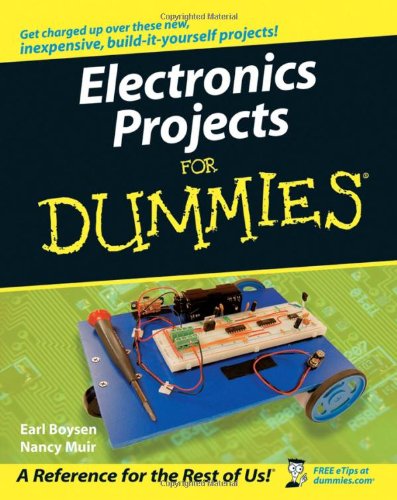
8. Electronics Projects For Dummies
$13.54
9. Tab Electronics Guide to Understanding
$72.90
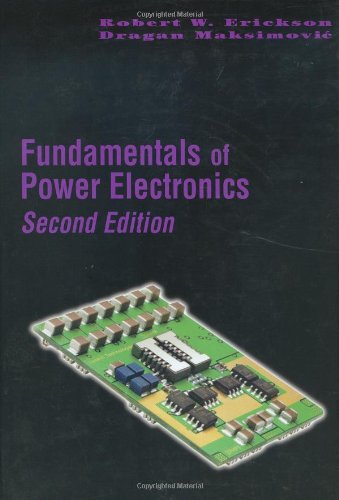
10. Fundamentals of Power Electronics
$80.33
11. Handmade Electronic Music: The
$12.95
12. Electronic Sensor Circuits &
$81.11
13. Electronic Devices (Conventional
$20.66
14. Electronic Projects for Musicians
$7.99
15. Schaum's Outline of Electronic
$79.47
16. Modern Electronic Communication
$123.07
17. Electronic Commerce 2008 (Electronic
$34.55
18. The Marine Electrical and Electronics
$50.00
19. Electronic Commerce: A Managerial
 
$12.73
20. Electronics (Wiley Self-Teaching

1. Teach Yourself Electricity and Electronics, Fourth Edition (Teach Yourself)
by Stan Gibilisco
Paperback: 698 Pages (2006-03-15)
list price: US$34.95 -- used & new: US$18.62
(price subject to change: see help)
Asin: 0071459332
Average Customer Review: 4.5 out of 5 stars
Canada | United Kingdom | Germany | France | Japan
Editorial Review

Book Description
Learn the hows and whys behind basic electricity, electronics, and communications without formal training

The best combination self-teaching guide, home reference, and classroom text on electricity and electronics has been updated to deliver the latest advances.Great for preparing for amateur and commercial licensing exams, this guide has been prized by thousands of students and professionals for its uniquely thorough coverage ranging from DC and AC concepts to semiconductors and integrated circuits.

  • Written by Stan Gibilisco, an electronics legend and McGraw-Hill's most popular TAB author
  • Perfect for hobbyists, students, and those of you who want to get ahead in tech-related careers
  • Packed with everything needed to enhance learning: 600+ illustrations, practical examples, and hundreds of test questions

NEW TO THIS EDITION:
Updated to reflect the latest technological advances in: * Computers * Robotics * Artificial Intelligence * Amplifiers * Transmitters * The Internet * High-fidelity

EXPERT HOW-TO GUIDANCE ON SOLVING PROBLEMS SUCH AS:

  • Simple current-voltage-resistance determinators
  • Power calculations
  • Designing acoustical and audio systems
  • Designing circuits and systems
... Read more

Customer Reviews (5)

4-0 out of 5 stars Solid Theory
This provides a comprehensive understanding of electronic theory at the high-school or introductory college level.It focuses more on theory then application and reads like a text-book.For this purpose it is good.It is a bit lighter on the practical side, but reading this first will provide a solid background before setting out to try your hand at home projects.

I would highly recommend this for a student considering or seeking a future in electronics or related high-tech fields as it gives a good base of understanding and also a good flavor for what future studies in electronic engineering or design will be like.

3-0 out of 5 stars Ok but others better
I bought this book along with several others to refresh my skills in basic electronics for a job test. Found it ok but the one I bought from HeathKit was far superior for re-learning the material. Best bet to learn basic electronis is to get the HeathKit one.

5-0 out of 5 stars Great book!
I just placed order for the book having read through the content online. Just reading through the content alone gave me assurance that it's gonna be a fantastic book.

5-0 out of 5 stars This will become a primary reference source on your book shelf
I bought this text to help me bone up on electronics as part of my HAM Radio advocation.I did not expect such a complete work.As I said in the title you will use this as a reference for years to come.I feel like I got more than my monies worth!

5-0 out of 5 stars I've read this book more than once.
This is a great introduction to electronics. If you're just starting out in electronics this book would make a great companion to your texts.

Clear simple explainations actually make it a fun read. You can easily read this one cover to cover.

My background is in electrical/computer engineering (graduated from Purdue Cal in 1996). ... Read more


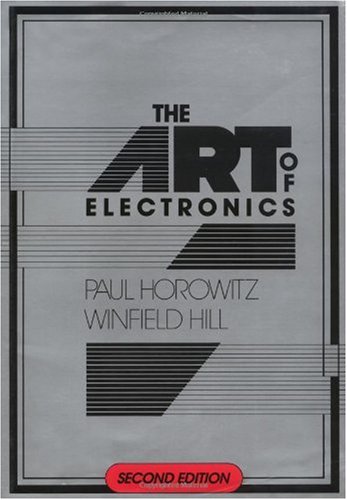
2. The Art of Electronics
by Paul Horowitz, Winfield Hill
Hardcover: 1125 Pages (1989-07-28)
list price: US$97.00 -- used & new: US$75.75
(price subject to change: see help)
Asin: 0521370957
Average Customer Review: 4.5 out of 5 stars
Canada | United Kingdom | Germany | France | Japan
Editorial Review

Book Description
This is the thoroughly revised and updated second edition of the hugely successful The Art of Electronics. Widely accepted as the authoritative text and reference on electronic circuit design, both analog and digital, this book revolutionized the teaching of electronics by emphasizing the methods actually used by circuit designers -- a combination of some basic laws, rules of thumb, and a large bag of tricks. The result is a largely nonmathematical treatment that encourages circuit intuition, brainstorming, and simplified calculations of circuit values and performance. The new Art of Electronics retains the feeling of informality and easy access that helped make the first edition so successful and popular. It is an ideal first textbook on electronics for scientists and engineers and an indispensable reference for anyone, professional or amateur, who works with electronic circuits. ... Read more

Customer Reviews (120)

5-0 out of 5 stars Great refresher and then some
It is obvious to some that this book would contain material for the design of electronics but everyone who has any interest in the subject could just as easily learn electronics by giving this a read and performing some of the practice problems.I wish this was my text book in college.The book is a very easy read as the authors keep the material light at first and build on the knowledge gained from earlier chapters.I would recommend to anyone who might be interested in the subject.

4-0 out of 5 stars A gem that needs polishing
Perhaps it is rare to review a book after 20 years of owning the 1st and then the 2nd edition. This is an invaluable book for the practicing engineer or inventor or hobbyist.It eliminates much theoretical background and gets to practical implementation.You will find a wealth of practical tips that you will never find in standard engineering textbooks.This is a reference book that I have used for many years.However I agree with the last reviewer that it is in dire need of an update. Needless to say there are 10+ years of advancing technology some of which would be valuable to included. It is still quite a useful book however. At this point, if you are a perspective buyer you may want to wait for an update.

4-0 out of 5 stars Excellent reference, but getting dated...
The Art Of Electronics combines a lot of practical information about electronics that makes it a very useful reference text.I just wish they would update it.A 2007 version would probably get 5 stars.

5-0 out of 5 stars Preparing for an interview?
Are you an undergraduate student preparing for your first interview with a semiconductor company? Or a graduate student who knows the complicated things but still fumbles with simple RC - RL circuit questions and how simple concepts relate to form the complex things you are conducting your research on? This book is for you.... I need not praise it any further as most of the good points can already be seen in the preceding 119 reviews. Everyone seems to love this book. If you're looking for a quick review of basic electronics, you should add this book to your library.

1-0 out of 5 stars Worst Electronics Book for Beginners
Those peoples who give this book four or five starts are people who already understands electronics. But very few beginners buy and use this book and so there are very few reviews from them who would give this book one or two stars. For a beginner, this book is very confusing and lacks examples and exercises with answers. ... Read more


3. Getting Started in Electronics
by Forrest M. Mims III
Paperback: 128 Pages (2003-02)
list price: US$19.95 -- used & new: US$17.99
(price subject to change: see help)
Asin: 0945053282
Average Customer Review: 4.5 out of 5 stars
Canada | United Kingdom | Germany | France | Japan
Editorial Review

Book Description
This is a complete electronics course in 128 pages! Author Forrest Mims teaches you the basics, takes you on a tour of analog and digital components, explains how they work, and shows you how they are combines for various applications.Includes circuit assembly tips and 100 electronic circuits and projects you can build and test. ... Read more

Customer Reviews (26)

2-0 out of 5 stars Still a Popular Hobbyist Item
This is a reprint, with little change, of the popular Radio Shack "how to do it" manual by Mims.Still hand-printed and having less educational value than a good textbook, it is an inexpensive way to do a few things with electronics.Should you want to develop a deeper understanding, look for a copy of Electronics Technology Fundamentals by Robert T. Paynter and Tody Boydell, a very readable and complete book at considerably greater expense.

4-0 out of 5 stars Great book for the absolute basics
This a great book if you are new or learning and trying to grasp the basics.
I picked up this book in order to brush up on the basics and it helped me grasp concepts that I did not previously understand.
The way that it is written may seen child like at first but it gets the jop done at helping you understand how the conponents work.
This would make a great gift to any high school student and above intersted in technology.

5-0 out of 5 stars Off to a Good Start
This is an excellent book to learn the fundamentals to get started learning electronics. I really don't have much of a background in electronics. I got this book because I read about it in Make Magazine. Also I have been trying to complete a correspondence course in electronics. This book reviewed what I had already learned in a fraction of the number of pages that I had to read. It also introduce things that my course hasn't cover yet. Not bad for 128 pages.

Think about it: many high schools don't have an electronics program. Mine didn't. It isn't that the material is unimportant or doesn't have job opportunities. The electronic field is huge. This is the book to start with if you know nothing of electronics and are doing a self study.

The book is easy to understand. It wasn't until it discusses "Digital Integrated Circuits" in chapter 6 that I did not have a full understanding of the material. But I guess this is just a "start" to learning such topics. But I think it works, because it is more advanced and thus gets the reader's interest. However diode and transistor gates can become complicated.

It is important to note there is not much math here except for some basic algebra. A few formulas, truth tables, and graphs of functions are present but the book uses them to show how electronics are represented and not to have the reader do many math problems.

I have yet to build the circuit projects in the back of the book. That is the next step. Forrest Mims, the author, states that you have to do them to get the complete understanding of circuits. That makes sense.

In summary, this is an excellent book and I give it a high recommendation. It is the fastest way to learn all about electronics that you were never taught.

5-0 out of 5 stars Getting Started
Getting Started in Electronics, by Forrest Mims III, is an easy-to follow guide, filled with entertaining illustrations. I find it a useful companion to the Radio Shack Electronics LearningLab, which I also have onhand. Books such as Getting Started in Electronics is definitely an excellent resource for personal library.

5-0 out of 5 stars good electronics course
good electronics course in one book.

it teaches the basics of electricity first, then teaches each part one at a time, then shows you how to put the parts together to make things.

I cant imagine a better book to learn electronics from. ... Read more


4. Practical Electronics for Inventors
by Paul Scherz
Paperback: 952 Pages (2006-09-01)
list price: US$39.95 -- used & new: US$22.37
(price subject to change: see help)
Asin: 0071452818
Average Customer Review: 4.0 out of 5 stars
Canada | United Kingdom | Germany | France | Japan
Editorial Review

Book Description

THE BOOK THAT MAKES ELECTRONICS MAKE SENSE

This intuitive, applications-driven guide to electronics for hobbyists, engineers, and students doesn't overload readers with technical detail. Instead, it tells you-and shows you-what basic and advanced electronics parts and components do, and how they work. Chock-full of illustrations, Practical Electronics for Inventors offers over 750 hand-drawn images that provide clear, detailed instructions that can help turn theoretical ideas into real-life inventions and gadgets.

CRYSTAL CLEAR AND COMPREHENSIVE

Covering the entire field of electronics, from basics through analog and digital, AC and DC, integrated circuits (ICs), semiconductors, stepper motors and servos, LCD displays, and various input/output devices, this guide even includes a full chapter on the latest microcontrollers. A favorite memory-jogger for working electronics engineers, Practical Electronics for Inventors is also the ideal manual for those just getting started in circuit design. If you want to succeed in turning your ideas into workable electronic gadgets and inventions, is THE book. Starting with a light review of electronics history, physics, and math, the book provides an easy-to-understand overview of all major electronic elements, including: Basic passive components o Resistors, capacitors, inductors, transformers o Discrete passive circuits o Current-limiting networks, voltage dividers, filter circuits, attenuators o Discrete active devices o Diodes, transistors, thrysistors o Microcontrollers o Rectifiers, amplifiers, modulators, mixers, voltage regulators

ENTHUSIASTIC READERS HELPED US MAKE THISBOOK EVEN BETTER

This revised, improved, and completely updated second edition reflects suggestions offered by the loyal hobbyists and inventors who made the first edition a bestseller. Reader-suggested improvements in this guide include:
  • Thoroughly expanded and improved theory chapter
  • New sections covering test equipment, optoelectronics, microcontroller circuits, and more
  • New and revised drawings
  • Answered problems throughout the book

Practical Electronics for Inventors takes you through reading schematics, building and testing prototypes, purchasing electronic components, and safe work practices. You'll find all thisin a guide that's destined to get your creative-and inventive-juices flowing.

Download Description
Here's the book for every hobbyist who wants to be an inventor, but needs to learn the basics of electronics to get there. Paul Scherz's reassuring step-by-step approach teaches the fundamentals in a way that requires no background in electronics. ... Read more

Customer Reviews (55)

5-0 out of 5 stars Broad, deep, practical
As someone with a technical background, but little knowledge or experience with electronics who is seeking to design and build some special purpose circuits, this is a perfect book.It is well written and very readable (a major plus).It covers the basics, and expands on them to cover some advanced principles.It is well indexed so finding topics is easy.It has a wealth of knowledge on almost every facet of modern electronics.

This book provides a broad background, and deep and practical knowledge of electronics.It provides diagrams of hundreds of circuits, so you can quickly find something close to what you are trying to do, see how it works and find enough theory and background that you can figure out how to get from the example to what you are trying to do without another reference or book.This is very useful.

I have purchased other electronics books, but this makes the rest obsolete.It is now the only one I use.While it does not replace an electrical engineering degree, it comes damn close covering most of what a bachelors program will span in the first two years.

5-0 out of 5 stars technician/electronic hobbiest opinion....
This book is written in a very simple to understand format with lots of useful charts and diagrams. A very good book for visual learners. It is a good resource book for technicians, as well as a good introduction/refresher course in electronic fundamentals. As with any books in the electronics field a very solid foundation in algebra is a must, and knowledge in calculus is helpful...I wish more of my college texts were written in this type of format and easy to understand language. I am looking forward to more books written by Paul Scherz

3-0 out of 5 stars Irritating errors. Otherwise excellent resource.

About 10% of the figures seem to contain errors.Some trivial (like units) and others more unacceptable (Op-amp oscillator in figure 9.2 has + and - inputs the wrong way round).This is not the 1st edition, so many errors of a sometimes critical nature is simply shoddy work.

Conceptually it is a truly excellent resource of >900 pages.No strangely named circuits or jargon are left untouched.V. broad coverage of topics.Finally, some explanations of how circuits work.I'm astonished by the casual way in which circuits are usually presented without any explanation of their inner workings.Here we get a very plain and understandable explanation; I am not a young child but I appreciate the text's great simplicity in this regard.

If it were error free and contained the wealth of circuits that Forrest Mims provides, it would be 5 stars.Dollar per page, it's a fantastic bargain.You can secretly download it via torrent for free, but in this case the real thing is worth having.

5-0 out of 5 stars Practical Electronics
This book is great, very straightforward and hands-on. There is just enough theory to understand electronics fundamentals if you really want to read through it. If your just looking for some sample projects to try or to tweak, this book provides some too. Provides plenty of troubleshooting tips.

4-0 out of 5 stars Great information & presentation, too many errata
This book's intended audience is the serious engineer (probably with an engineering degree in a field other than electronics) looking to get into electronics.The book's title hints at this, and the book delivers on this level.This book is too advanced for the neophyte dabbler without any math background, who will quickly get lost in the math and the lack of "cookbook" examples.Make no mistake, there are plenty of example circuits, but they're provided to illustrate concepts-- they're not intended to be a recipe for constructing a real circuit (that's for the engineer to do!)

MATH:To appreciate this book, you must have a decent math background. This includes a solid working knowledge of advanced algebra and trigonometry, along with a 10000 foot view of calculus.A full working knowledge of actually solving differential equations is NOT required, but it's extremely helpful to know what derivatives and integrals look like and what they generally mean.However, the author never requires that you actually know how to solve any differential equations.Also, this book uses complex number theory, but the author provides all the details of complex number theory in the book, so there is no need to know it before reading.

After all those caveats, this is an excellent comprehensive introductory book on virtually all fundamental phenomenon and components of electronics.This includes the physics of the various electrical phenomenon, the real-life components that make up electronic circuits, and the basic "building-block" circuits that real-life circuits are built from.See the table of contents in Amazon's "look-inside" feature for an idea of the scope of topics.If you read and understand this book cover to cover, you will be designing, building, and testing your own basic circuits, without the need to ever rely on a "cookbook" circuit again.

This book does NOT cover the following:
* Advanced building-block circuits
* Specialty components and circuits
* Techniques and guidelines for designing difficult and advanced circuits
* The many "tricks" for designing and debugging circuits that years of experience will teach
* Advanced math for detailed analysis of circuits

The author's style is, above all else, pragmatic in every respect all the way to the very end.The explanations have the unmistakable and incessant theme of "THIS IS HOW IT WORKS AND WHY".The author trudges through as much (or as little) detail as necessary to enable the bright mind to understand, and then moves on to the next topic.Even when there is pure theory out of necessity, the author's style never strays far from cornerstone of always keeping things down to earth and practical.

This book is full of extensive explanations of the "WHY" of various phenomenon and components.For example, the phenomenon of "inductance"goes on for a dozen pages or so, explaining how the motion of electrons creates a magnetic field in a charging inductor, and how the magnetic fields create a back-voltage which acts against the flow of current.This explanation of inductance is decorated with dozens of detailed 3D illustrations showing the wire, electrons, magnetic fields, currents, voltages, etc.Other phenomenon are described in similar detail.The physics and theory that the author presents do not overwhelm you, but are sufficient to leave you feeling like you really understand the phenomenon, rather than just having to accept something as magic.

I gave this book 4 stars instead of 5 because there are too many errata, especially in the theory section.The book is in need of a simple editing pass by a person who understands EE.This is a shame because most of the errata are silly typos or accidental oversights, but they can confuse your ability to understand something when you're learning for the first time.
... Read more


5. Electronic Commerce
by Gary Schneider
Paperback: 648 Pages (2006-03-27)
list price: US$84.95 -- used & new: US$44.10
(price subject to change: see help)
Asin: 1418837032
Average Customer Review: 4.0 out of 5 stars
Canada | United Kingdom | Germany | France | Japan
Editorial Review

Book Description
Electronic Commerce, Seventh Edition covers emerging online technologies and trends and their influence on the electronic commerce marketplace. This edition highlights important security issues, such as spam and phishing, their role in organized crime and terrorism, identity theft, and online payment fraud.The pedagogical value of this new edition is enhanced through a fresh 4-color interior, and new and updated material that balances the technological with the strategic aspects of successful e-commerce. ... Read more

Customer Reviews (9)

4-0 out of 5 stars A solid book on the principles of e-commerce
Schneider's seventh edition of "Electronic Commerce" graciously takes the user through many of the major topics that relate to electronic commerce and online business initiatives.I thoroughly enjoyed reading this book and it is packed full of real-life sites and examples to support the material being taught.Likewise, I found the "Learning From Failures" section within each chapter to be fascinating to read.There are many colored graphics and screenshots to help illustrate points and each chapter concludes with a thorough review along with dozens of additional resources that can be explored if further knowledge is desired.

It is worth noting that, with an average of 50 pages per chapter and 12 chapters in all, the wide range of material taught can be difficult to digest and at times topics seem to be brushed over far too quickly.Also, this book teaches the business concepts, evolution, trends, and terminology involving e-commerce but does not walk the reader through the actual process of designing and deploying such a site.So, people looking for a book that will directly assist them in setting up their own online store may wish to look elsewhere, since only a few chapters in the book even touch upon the subject of hardware and software options available for e-commerce design, although the book as a whole teaches the underlining concepts and knowledge useful in setting up such sites.

This book kept my interest from start to finish, and was written in a more leisurely and personable fashion than many other technical books I have read in the past.For this reason, I recommend this book to anyone majoring in an IT/Web-related field.

4-0 out of 5 stars The best textbook for MIS majors that I've seen
First let me disclose that I have been a programmer for years (and for some of the businesses described in the book).

In general the book is good.

Pros:
It summarizes the business end of ecommerce very well.
The book covers most of the technical aspects of ecommerce from a high level.
The book is not about abstract, useless business theory that is common in many university business courses; the book is a collection of good case studies of ecommerce.

Cons:
The book chews more than it can swallow given the pace it needs to set for a normal class. Since it needs to stay at certain length, the book doesn't always do a good job explaining the technical aspects of ecommerce with enough detail from a layman's point of view. At times it is more of a review for people already with the knowledge. So unless your technical background is strong and deep (eg you are either a programmer or systems administrator for web servers), there may be a lot of jargon in some areas that will confuse and bore you. Consequently this is probably a senior year book

(The author should take notes from the HeadFirst series of technical books.)

2-0 out of 5 stars Alot of good information, but not what it should be
My heart goes out to Ben Matthews (below) who had this thing for a level 4700. That's nuts. I had this book for a level 222 and it was a complete joke. There's a lot of good information and stories about what makes a good e-commerce site, I'll give it that. But there's nothing in here to really give you an edge as far as this stuff goes. The entire point of this book can be summed up in this statement:

"Look at amazon, look at google and look at yahoo. Look for reasons why they're successfull and take note. Do the same practices in your online sites".

This book is an interesting read, but for a bunch of stories and business jargon it's not worth the money.

2-0 out of 5 stars Nothing but an e-commerce glossary...
This book serves as an introduction to e-commerce terms and principles.To me, it reads like a shallow glossary of a large number of e-commerce terms.

Do not get the impression that this will teach you how to carry out e-commerce.Instead, this book merely introduces you to e-commerce terminology.For that, the book serves its purposes, but for anything else, you may be better off looking elsewhere.

I thought it was very expensive considering the fact that all of the information could be found in e-commerce summaries for free on the internet.

4-0 out of 5 stars A Good Ecommerce Textbook
I teach ecommerce at the undergraduate level. I plan to use this book as the backbone for the class. The objectives are tied to the e-Biz+ certification exam from CompTIA, which is a nice feature since CompTIA does a bang-up job on researching the skills needed for entry level employment.

I like the book mainly because it offers the primary business concepts needed by my technical students before they enter the IT job market.My students can't take a lot of business classes, but they still need to know the business side of things. This book gets them the essentials in a one semester format.

Ecommerce is rapidly changing, so it will be tough for a book to keep up. I haven't seen the web site that accompanies the book yet. Hopefully it will be a good supplement to help stay current in a rapidly changing field.The book has a lot of web sites as examples, which can be a mixed blessing since web pages change constantly.

Teachers - the book says it has the usual instructor supplements for classroom teaching as well as online teaching, but I haven't seen them yet. I am using the stuff from the 3rd edition to prepare for my summer class - you will probably need to choose wisely as you review these supplements since they are of mixed quality. I am giving the book 4 stars instead of 5 since I can't vouch for the supplemental materials at this point. ... Read more


6. Electronics For Dummies
by GordonMcComb, Earl Boysen
Paperback: 432 Pages (2005-02-04)
list price: US$21.99 -- used & new: US$11.81
(price subject to change: see help)
Asin: 0764576607
Average Customer Review: 4.0 out of 5 stars
Canada | United Kingdom | Germany | France | Japan
Editorial Review

Book Description
Want to hook up your home theater system?

Want to fix it so your garage band rocks the neighborhood?

Want to solder the faulty wire on your old phonograph so you can play those 60s albums you’ve kept all this time?

Whether you’re a do-it-yourselfer , hobbyist, or student , this book will turn you on to real-world electronics. It quickly covers the essentials, and then focuses on the how-to instead of theory. It covers:

  • Fundamental concepts such as circuits, schematics, voltage, safety, and more
  • Tools of the trade, including multimeters, oscilloscopes, logic probes, and more
  • Common electronic components (e.g. resistors, capacitors, transistors)
  • Making circuits using breadboards and printed circuit boards
  • Microcontrollers (implementation and programming)

Author Gordon McComb has more than a million copies of his books in print, including his bestselling Robot Builder’s Bonanza and VCRs and Camcorders For Dummies. He really connects with readers! With lots of photos and step-by-step explanations, this book will have you connecting electronic components in no time! In fact, it includes fun ideas for great projects you can build in 30 minutes or less. You’ll be amazed! Then you can tackle cool robot projects that will amaze your friends! (The book gives you lots to choose from.)

Students will find this a great reference and supplement to the typical dry, dull textbook. So whether you just want to bone up on electronics or want to get things hooked up, souped up, or fixed up,…whether you’re interested in fixing old electronic equipment, understanding guitar fuzz amps, or tinkering with robots, Electronics For Dummies is your quick connection to the stuff you need to know.Download Description
Begin having fun with electronics projects right away Explore the basic concepts of electronics, build your electronics workbench, and create cool projects Wish you could fix that faulty doorbell, hook up a motion detector, or maybe build your very own robot? This book will really get you charged up! It won't make you an electrician, but it covers the basics, choosing and using tools, and how to build more than a dozen really cool, inexpensive gizmos. You'll be shocked at how easy it is! Discover how to -Master electricity basics -Fill up your electronics parts bin -Read circuit schematics -Test circuits with multimeters -Design your own printed circuit boards -Build robots and program their actions ... Read more

Customer Reviews (29)

1-0 out of 5 stars Waste of Time
This is a very poorly written book. It throws a bunch of formulas at you but doesn't explain the reasons for the formulas. (I still have no idea why some parts of the book say that electrons flow from the negative terminal to the positive, and the other parts of the book say that the current flows from positive to negative. I'm sure it's not a typo, but I would love for them to actually explain it).
Furthermore, the first 9 chapters have a bunch of info, so you have to read that first in order to start your first projects. But when you get to the projects, there aren't even that many of them. And you don't learn much from them.
I don't understand why they don't start the book off with a few very simple projects and then teach you about the differenct electronic components as you get to use them. For example, they could have you build a simple circuit that makes a light shine, and then tell you how everything worked inside, and why. No, instead they go through a whole glossary of terms, and then expect you to remember it all when you're starting out your first project.
Again, if you want to understand what you're doing, so that your hobby eventually lets you create really cool stuff, this book is not good. It is a waste of time, and I would return it had I not already marke

3-0 out of 5 stars Skips from very basic to quite complicated
This book starts out with a well written introduction on different type of electronic components and how voltage etc... works, most of it is however covered in highschool physics. Then it howeverskips to semi complicated circuits with bad explanations on how they work. In my opinion the author should rather have described a few circuits in detail instead of many breifly, this would have given the reader a a much clearer understanding of electronics and circuitry. Overall im dissapointed.

4-0 out of 5 stars Electronics for Dummies
This is a great starter book for those who have great desire to learn the basics. It was not boring. I honestly I would like to see an expanded version...maybe a vol.2.

Thank You Amazon !!

4-0 out of 5 stars A good intro
Having decided to give DIY audio a try, this book is a good introduction in how to get started without injuring yourself.

5-0 out of 5 stars Electronics for Dummies
Great Book with easy to understand direction for the beginner to the expert ... Read more


7. How to Test Almost Everything Electronic
by Delton T. Horn
Paperback: 326 Pages (1993-04-01)
list price: US$21.95 -- used & new: US$11.93
(price subject to change: see help)
Asin: 0830641270
Average Customer Review: 3.0 out of 5 stars
Canada | United Kingdom | Germany | France | Japan
Editorial Review

Book Description
Staying away from hard-to-understand theory and mathematics, this practical handbook show you how common devices such as multimeters, frequency and logic probes, signal traces, and oscilloscopes are used. You'll pinpoint problems in everything from TV sets and computers to automotive electrical systems.

A practical, hands-on guide to troubleshooting with electronic test equipment - revised to include current testing techniques and new chapters on mechanical repairs and flowcharting. ... Read more

Customer Reviews (2)

3-0 out of 5 stars Good, but not completely satisfying
I bought and read this book at a time when I wanted to understand electronics better.I also had an old shortwave radio made with vacuum tubes.I was eager to learn how to keep it and other things working.While I enjoyed reading it and it had some useful ideas, I never really used what I learned fromthe book on anything.The book will not hurt you and may even help you.How helpful the book ultimately is may depend on your own skills at reasoning out solutions to problems.It will not do that work for you.

3-0 out of 5 stars Good general book on component testing
Doesn't cover a whole bunch, but does make for good bathroom reading. Good beginnner book. The section on DIODE TESTING has a mistake. Horn has the diode discription and schematic symbol completely backwards. Good starter book nonetheless. ... Read more


8. Electronics Projects For Dummies (For Dummies (Math & Science))
by Earl Boysen, Nancy C. Muir
Paperback: 432 Pages (2006-07-31)
list price: US$24.99 -- used & new: US$13.41
(price subject to change: see help)
Asin: 0470009683
Average Customer Review: 5.0 out of 5 stars
Canada | United Kingdom | Germany | France | Japan
Editorial Review

Book Description
These projects are fun to build and fun to use


Make lights dance to music, play with radio remote control, or build your own metal detector

Who says the Science Fair has to end? If you love building gadgets, this book belongs on your radar. Here are complete directions for building ten cool creations that involve light, sound, or vibrations -- a weird microphone, remote control gizmos, talking toys, and more, with full parts and tools lists, safety guidelines, and wiring schematics.

Check out ten cool electronics projects, including
* Chapter 8 -- Surfing the Radio Waves (how to make your own radio)
* Chapter 9 -- Scary Pumpkins (crazy Halloween decorations that have sound, light, and movement)
* Chapter 12 -- Hitting Paydirt with an Electronic Metal Detector (a project that can pay for itself)

Discover how to
* Handle electronic components safely
* Read a circuit diagram
* Troubleshoot circuits with a multimeter
* Build light-activated gadgets
* Set up a motion detector
* Transform electromagnetic waves into sound

Companion Web site
* Go to www.dummies.com/go/electronicsprojectsfd
* Explore new projects with other electronics hobbyists
* Find additional information and project opportunities ... Read more

Customer Reviews (4)

5-0 out of 5 stars What a great book!
Years ago (many, many years...) I was an electronics hobbyist, and I even worked at Radio Shack. Recently, I came across some of my old "toys" and wanted to see what was going on in the world of electronics projects these days. A big fan of the "Dummies" books, I saw this title and took a shot.

At first I was a little dismayed to find that there were only ten or so projects, and looking at them they all seemed pretty lame. But once I studied them I realized that these ten, fairly simple projects, were perfect examples of so many different concepts that were easily adoptable and transportable to many other uses, more like what I had in mind.

Basically with these few projects you can learn about remote control, both IR and RF, speech recorder chips, speech synthesis chips, LED sequencing, light activated controls,motion activated controls, robotic propulsion, and even basics of radios and amplifiers, all using modern, easily obtainable parts.

And in additon to great content, the writers have a great style, using an approach and language that is easily understandable to beginners but meaty enough for experts.

If you are interested in an excellent book to give you a wide introduction to many different electronic concepts, this is the book for you!

5-0 out of 5 stars A fun read!
This book is well written and packed with fun, interesting electronics projects. This book provides a great hands-on way to learn the basics of electronics, how to set up your workspace, read circuits and get familiar with electronics components, especially for someone like me who is nervous about electrical things.

5-0 out of 5 stars electronics projects for dummies
I am a hands on handyman type of person. Electronics have always been something I have avoided because I felt it was too complicated. It delt with something, electrons, that I couldn't see or touch. Not like nails, pipes or wood etc. Saw the book and thought that I would give it a quick look. I now own it. It is funny, informative, covers more than just the basics. The book stresses fun and safety.
I may not build my own computer, but I will build my own Go-Cart. If you have a problem you can actually contact the Authors at [...]

5-0 out of 5 stars Great Book
If you're into electronics projects, this book gives you 10 great ones to play with-my favorite was the line-following go-kart that uses an optical sensor.The projects are well organized with parts lists and easy to read schematics. I especially like the clear explanations and the easy going writing style.My only complaint is there weren't more projects-where's the sequel? ... Read more


9. Tab Electronics Guide to Understanding Electricity and Electronics
by G. Randy Slone
Paperback: 459 Pages (2000-07-21)
list price: US$24.95 -- used & new: US$13.54
(price subject to change: see help)
Asin: 0071360573
Average Customer Review: 4.5 out of 5 stars
Canada | United Kingdom | Germany | France | Japan
Editorial Review

Book Description
All-inclusive introduction to electricity and electronics. For the true beginner, there's no better introduction to electricity and electronics than TAB Electronics Guide to Understanding Electricity and Electronics , Second Edition.

Randy Slone's learn-as-you-go guide tells you how to put together a low-cost workbench and start a parts and materials inventory--including money-saving how-to's for salvaging components and buying from surplus dealers. You get plain-English explanations of electronic components-resistors, potentiometers, rheostats, and resistive characteristics-voltage, current, resistance, ac and dc, conductance, power...the laws of electricity...soldering and desoldering procedures...transistors...special-purpose diodes and optoelectronic devices...linear electronic circuits...batteries...integrated circuits...digital electronics...computers...radio and television...and much, much more. You'll also find 25 complete projects that enhance your electricity/electronics mastery, including 15 new to this edition, and appendices packed with commonly used equations, symbols, and supply sources.Download Description
For the true beginner, there's no better introduction to electricity and electronics than TAB Electronics Guide to Understanding Electricity and Electronics, Second Edition. ... Read more

Customer Reviews (22)

5-0 out of 5 stars What I've been looking for
In an attempt to begin a new hobby I've been buying books on this subject. Most have left me guessing. This book gives you hands on plus the theory and equations to understand why it works the way it does. Though I have not finished (I am building the project)I understand more about electronics than after completing several projects from other books I've read.
If you want to know why, and how, the projects from other books work this is the book to buy. If you just want to build them and use them without understanding how they work or how you might safely substitute parts or alter the project then this will be more than you need.

4-0 out of 5 stars Excellent for beginners, but incorrect convention used
I would highly recommed this book to anybody interested in electronics as a solid starting guide. A vast amount of material is covered and is covered on a basic level.

That being said, I do have to deduct a star based on the current flow convention used by the author. Conventional current flow as defined by IEEE (Institue of Electrical and Electronic Engineers) is from + to - voltage (or higher to lower reference voltage), which is the opposite of electron flow (electrons flow from - to + terminals). The author defines current flow to be along the same path and direction as electron flow, which any electrical engineering student will tell you is incorrect.
Other than the current convention problem and a few minor flaws, an excellent source of information.

2-0 out of 5 stars not very helpful for a beginner
I think this book is the worst of both worlds as a text or reference manual in that there are no real-world analogies in the first two chapters, and there aren't any really good tables for reference either. Also, in chapter two the description of capacitors (and their markings) makes no sense and the first page of chapter that ends with "this is why all common household current is AC" also makes no sense because it is preambled by a description of AC and no transformer action.
I read chapter two a couple of times but still lack a good understanding because I NEED (as I imagine many do) some connection with the real world. The water pump example is good but it stops there. I dove into this text with an excitement and desire to diagnose and repair some old audio equipment that can see new life. I think I'd better find a better book before i get completely discouraged, or start working without good knowledge.

4-0 out of 5 stars Pretty good -- especially if you're interested in audio amplifiers
Randy Sloan does a fairly decent job of dragging you through the mud of complex and confusing concepts, but there are sections of this book that aren't clearly explained.

The book starts with a well-executed section introducing Ohm's Law; the first fundamental concept you'll need to understand if you hope to eventually comprehend electronic circuits. You are immediately presented with hands-on labs and projects to illustrate and reinforce the text.

You are led from the basics of volts, amps, ohms and watts, into building a power supply for your new electronics workbench, then on to audio amplifier projects you can build that make use of your power supply project.

The chapter on transistors was not as clearly explained as the rest of the topics in the book, and that turned out to be detrimental to the successful comprehension of all subsequent topics. Even re-reading that chapter over and over didn't clear the cobwebs, and I will seek the help of other books for this.

Having said that, I think Randy Sloan writes well and this book is excellent in most respects. I recommend it as one resource in your quest to understand the basics of electronics.

5-0 out of 5 stars An excellent introduction to practical electronics
For most people, this a probably the best book available to self-teach yourself electronics. It briefly introduces the theoretical concepts, but it is mostly focused on the practical side of things. The first two chapters deal with the basics-- setting up a workstation, selecting tools, briefly introducing each component (later chapters go into much more detail), and finally about 35 pages or so on the underlying theories & laws. From there on, each chapter introduces a specific component type, covers more of the theory relevant to those components, and in most cases the chapter ends with one or more projects that use the component. The projects range from short (one or two pages) circuits, to fairly involved projects spread over multiple chapters. Unlike some eletcronic books, most of these projects will be generally useful. In most cases, you are building tools that you will probably continue to use as you skills develop (The first project, for example, is a dual variable power supply that any electronics hobbyist will find quite useful.)

There are a few minor problems with the book, though none of them warrant deducting a star. The biggest thing that I've noticed so far is the lack of photographs. There are a few photos in chapter one and two showing each tool and examples of the components, but there are no photos at all showing any of the projects. The projects are illustrated with line drawings & schematics, but in some cases the instructions would be clearer with the addition of photos. The section on soldering has the same problem. The text is quite clear, but the addition of a photo or two would be beneficial.

Another reviewer complains about schematic symbols being used without being introduced. He's correct, Slone doesn't actually define any of the schematic symbols, nor does he include a section on reading schematics. That's clearly a pretty big oversight, and it should be fixed in a later edition. That said, all of the schematics are quite clearly labeled. While it may not be immediately obvious to someone with no electronic knowledge what T1 refers to on a schematic, it shouldn't be to hard to figure out that, considering you are reading a chapter on transformers, it probably means "the first transformer". Anytime that it's not obvious the component is labeled specifically.

The same reviewer also complains that the book is focused to heavily on projects, not enough on theory. Most people will probably think that's a good thing, but rest assured that you will learn enough theory here to get you started. Writing a book like this is a fine balancing act between introducing enough theory to make the concepts clear, but not so much as to turn off the casual hobbyist. This book does an outstanding job of walking that tightrope. If you still feel you need more theory after reading this book, you there are dozens of other books that you can graduate to from here, and this book will get the groundwork in place so you will be able to understand those books. ... Read more


10. Fundamentals of Power Electronics (Second Edition)
by Robert W. Erickson, Dragan Maksimovic
Hardcover: 912 Pages (2001-01)
list price: US$110.00 -- used & new: US$72.90
(price subject to change: see help)
Asin: 0792372700
Average Customer Review: 4.5 out of 5 stars
Canada | United Kingdom | Germany | France | Japan
Editorial Review

Book Description
Fundamentals of Power Electronics, Second Edition, is anup-to-date and authoritative text and reference book on powerelectronics. This new edition retains the original objective andphilosophy of focusing on the fundamental principles, models, andtechnical requirements needed for designing practical power electronicsystems while adding a wealth of new material.
Improved features of this new edition include:

  • A new chapter on input filters, showing how to design single andmultiple section filters;
  • Major revisions of material onaveraged switch modeling, low-harmonic rectifiers, and the chapter onAC modeling of the discontinuous conduction mode;
  • New materialon soft switching, active-clamp snubbers, zero-voltage transitionfull-bridge converter, and auxiliary resonant commutated pole. Also,new sections on design of multiple-winding magnetic and resonantinverter design;
  • Additional appendices on Computer Simulationof Converters using averaged switch modeling, and Middlebrook's ExtraElement Theorem, including four tutorial examples; and
  • Expandedtreatment of current programmed control with complete results forbasic converters, and much more.
This edition includes manynew examples, illustrations, and exercises to guide students andprofessionals through the intricacies of power electronics design.
Fundamentals of Power Electronics, Second Edition, is intendedfor use in introductory power electronics courses and related fieldsfor both senior undergraduates and first-year graduate studentsinterested in converter circuits and electronics, control systems, andmagnetic and power systems. It will also be an invaluable referencefor professionals working in power electronics, power conversion, andanalog and digital electronics. ... Read more

Customer Reviews (11)

5-0 out of 5 stars Power Designers Must Have
This book is realy the most comprehensive and useable analysis of switch mode power I have seen. I would highly recommend for anyone who is designing or analyzing switch mode power.

I would like like to see the authors publish a solutions handbookfor the chapter problems.

5-0 out of 5 stars Simply the best of the best.
No matter how much or how little you know about power electronics,
fundamentals of Power Electronics by Erickson & Maksimoviac is the bible on power. Thorough, extremely well written full of references when you need to go deeper into any subject. Excellent problems with every chapter
and very well organized

5-0 out of 5 stars Excellent, full of examples, easy to follow
This book is one of the best, most thorough and well explained textbooks I have encountered in the past 5 years of school.The authors, one of whom is teaching my course, present their explanations in a way that is both thorough and accessible.This is not a cookbook by any means - it is a very solid, detailed foundation for power electronics, and doesn't gloss over the important concepts like other books in the field.If you're just looking for a reference book with equations, circuits, and tables, this isn't for you.However, if you're looking for a text to study and understand in detail, you'll be right at home.

This book, when read and studied regularly, is very easy to follow and concepts are driven-home with solid examples.Very well done.

5-0 out of 5 stars Excellent, full of examples, easy to follow
This book is one of the best, most thorough and well explained textbooks I have encountered in the past 5 years of school.The authors, one of whom is teaching my course, present their explanations in a way that is both thorough and accessible.This is not a cookbook by any means - it is a very solid, detailed foundation for power electronics, and doesn't gloss over the important concepts like other books in the field.If you're just looking for a reference book with equations, circuits, and tables, this isn't for you.However, if you're looking for a text to study and understand in detail, you'll be right at home.

This book, when read and studied regularly, is very easy to follow and concepts are driven-home with solid examples.Very well done.

3-0 out of 5 stars Lots of information with some open ended information
I would agree with the other reviewer that this is not a "how to" book. The book approaches the subject from an academic viewpoint. The reader is expected to fill in between the lines with previous experience. It appears that the authors, professors as U of C, supplement the text with worked out examples for their students. I would recomend it to people already versed in the subject and want more information.I found it for half price and this makes it worth buying as a reference. ... Read more


11. Handmade Electronic Music: The Art of Hardware Hacking
by Nicolas Collins
Hardcover: 264 Pages (2006-04-04)
list price: US$100.00 -- used & new: US$80.33
(price subject to change: see help)
Asin: 0415975913
Average Customer Review: 5.0 out of 5 stars
Canada | United Kingdom | Germany | France | Japan
Editorial Review

Book Description
Handmade Electronic Music: The Art of Hardware Hacking provides a long-needed, practical, and engaging introduction for students of electronic music, installation and sound-art to the craft of making--as well as creatively cannibalizing--electronic circuits for artistic purposes. Designed for practioners and students of electronic art, it provides a guided tour through the world of electronics, encouraging artists to get to know the inner workings of basic electronic devices so they can creatively use them for their own ends.
Handmade Electronic Music introduces the basic of practical circuitry while instructing the student in basic electronic principles, always from the practical point of view of an artist. It teaches a style of intuitive and sensual experimentation that has been lost in this day of prefabricated electronic musical instruments whose inner workings are not open to experimentation. It encourages artists to transcend their fear of electronic technology to launch themselves into the pleasure of working creatively with all kinds of analog circuitry. ... Read more

Customer Reviews (7)

5-0 out of 5 stars so good for electronic musicians and composers
Ah ! this book is one of the best i bought.
I just love it !!

5-0 out of 5 stars Let's make music!
This is a great book if you are a electroacoustic composer, you can make cheap sensors and rare instruments... ready -if you want - to plug to Max/MSP or Ethersense...or Teabox... Thanks to Gregory Taylor from Cyclin'74.

5-0 out of 5 stars Rediscovers the simple facts of electronic music
Ever since products such as GarageBand took over the low-level tasks of producing electronic music and turned us all into application users, much has been forgotten about making music with low-level electronic components. In the case of younger electronic musicians, this may be an art form they never even knew in the first place. Although there is an advantage is computer musicians speaking a common language through a common application, something fascinating in the realm of experimentation has been largely lost. This book returns to the days of yesteryear with some projects in making your own electronic music with basic devices.

The book starts with some brief information on the tools you'll need plus the author's seven rules for experimentation. Part two is dedicated to listening. He shows you how to use radios and coils to find hidden electronic music, how to use the speaker as a microphone and vice versa, and how to use piezo disks to pick up tiny sounds, among other topics. Part three, on touching, shows you how to transform a portable radio into a synthesizer, change the clock circuit in toys to produce new sounds, and use photocells and pressure pads to "play" the modified toy. Part four, Building, shows the reader how to breadboard up some oscillators along with some controlling circuitry and produce gating, ducking, tremolo and panning effects. Part five, Looking, concerns translating video to audio using commonly found devices. The final section goes into depth on mixing circuits, how to build a good but cheap amplifier, connecting sensors to computers via game controllers, and a section on power supplies.

The book is written such that you should proceed from beginning to end, since the devices in earlier sections are used to assemble the devices in later chapters. By the time you finish you should have entire experimental musical instruments that you have assembled yourself.

5-0 out of 5 stars Excellent
Great great book - covers a lot of ground and is very accessible for someone with a fairly technical mind.Just enough information to spark some ideas of what could be done with this technology.

5-0 out of 5 stars Go Beyond Circuit Bending
Circuit Benders - if you are ready for something different get of a copy of Collins' informative book. It covers a wide variety of approaches for creating unusual sounds (and sights) in a low tech, user friendly manner. For example, the chapter on making an oscillator uses photos of the breadboard as well as schematics. As someone who finds electronic diagrams intimidating, Collins' approach made construction a snap. It also helped me better understand how to read schematics. Creating visuals with LCDs and by altering video cameras further expand the realms of hacking. The included CD features work by artists and musicians using devices found in the book. What a great idea. Very inspiring. I wish the Ghazala book (which is also great)had a similar CD. Sources for parts, websites and additional information galore make this a must have item. ... Read more


12. Electronic Sensor Circuits & Projects
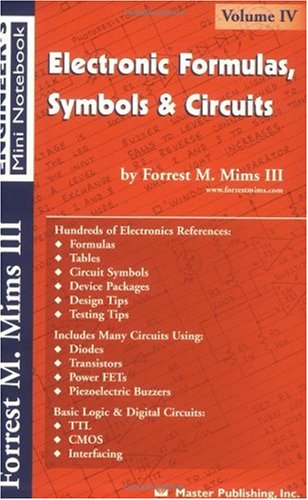
by Forrest M., III Mims
Paperback: 144 Pages (2004-02)
list price: US$12.95 -- used & new: US$12.95
(price subject to change: see help)
Asin: 0945053312
Average Customer Review: 4.0 out of 5 stars
Canada | United Kingdom | Germany | France | Japan
Editorial Review

Book Description
Electronic sensor circuits convert light, temperature, sound, and other signalsinto a form that can be processed by electronic circuits.Learn about solar cells, photoresistors, thermistors, and magnet switches.Then build circuits that respond to heat, pressure, light, and more.This Engineer's Mini Notebook is a compilation of three of Forrest Mims's notebooks:Sensor Projects; Solar Cell Projects; and Magnet & Magnet Sensor Projects. ... Read more

Customer Reviews (4)

4-0 out of 5 stars Electronics parts are plentiful on the web
Music girl stated that the book contains hard to find parts...not sure if she means older outdated parts or simply because radio shack and other electronics stores are no longer serving electronics hobbyists.

There are many web resources for electronics parts. Some with small minimum order requirements. Mouser, electronics express, digi-key are three of the ones I use.

Please search the net for electronic components. If you are serious about the hobby these larger electronics companies will serve you well.

The companies above also have print catalogs they will mail you which is handy for seeing their product lines and they also have very good online ordering sites.

4-0 out of 5 stars great, EXCEPT...
This book suffers from the same problem all 80's Mims books suffer from: difficult-to-obtain parts.Gone are the days when you could pop down to your local Radio Shack and choose from a wall of components.Nevertheless, this book has some interesting projects.

5-0 out of 5 stars Interesting little circuits that can easily be expanded
This is a pretty interesting entry in Forrest Mims' Engineering Notebook series. In this short book Mims introduces the reader to circuits that convert physical phenomena such as light, temperature, and sound into electrical signals that can be processed by circuits comprised of commonly found electronic parts such as the 741 op-amp. Mims includes brief explanations of the operation of a variety of sensors and then uses these sensors to build small useful circuits. He includes construction notes and a theory of operation for each circuit. Mims includes such interesting circuits as those that detect the cursor on your computer screen and the position of a compass needle. As far as their usefulness, that is really up to the imagination of the reader once he or she gets these smaller circuits working as to what larger task they would like to employ them in.As with most of Mims' books, his circuits do seem to work the first time and you can't beat the price. A very interesting addition to your electronics library assuming you already have a basic understanding of electronics and circuit construction methods.

4-0 out of 5 stars Neat little projects to help you learn.
The projects are interesting and fun.You can learn things from this book, but will certainly need to know some foundations and basics first.Other books serve that purpose, however.This isn't meant to be complex or a book to learn those things, of course. ... Read more


13. Electronic Devices (Conventional Current Version) (8th Edition)
by Thomas L. Floyd
Hardcover: 1008 Pages (2007-04-06)
list price: US$106.80 -- used & new: US$81.11
(price subject to change: see help)
Asin: 013242973X
Average Customer Review: 3.0 out of 5 stars
Canada | United Kingdom | Germany | France | Japan
Editorial Review

Book Description
This popular, up-to-date devices book takes a strong systems approach that identifies the circuits and components within a system, and helps readers see how the circuit relates to the overall system function. Floyd is well known for straightforward, understandable explanations of complex concepts, as well as for non-technical, on-target treatment of mathematics. The extensive use of examples, Multisim simulations, and graphical illustrations makes even complex concepts understandable. From discrete components, to linear integrated circuits, to programmable analog devices, this books¿ coverage is well balanced between discrete and integrated circuits. Also includes focus on power amplifiers; BJT and FET amplifiers; advanced integrated circuits–instrumentation and isolation amplifiers; OTAs; log/antilog amplifiers; and converters. Thorough coverage of optical topics–high intensity LEDs and fiber optics. Devices sections on differential amplifiers and the IGBT (insulated gate bipolar transistor) are now included. For electronics technicians. ... Read more

Customer Reviews (10)

5-0 out of 5 stars Simple enough to understand
I have several college electronics text books. Compared to the others this one was basic enough for me to understand the bare basics. Only after using this book have I been able to use the more advanced books.

I appreciate this book does not have the depth others have, but that is exactly why it helped me get started in electronics. I am self studying so I really needed the simplicity.

I want to thank the author for inviting me into the fascinating world of electronics design.

5-0 out of 5 stars Handled Cancellation Well
Needed to cancel the order after I was given incorrect information by my instructor.The cancellation was handled quickly with no difficulty.

1-0 out of 5 stars Not for university students...
My teacher used this book (fifth edition) in a basic electronics course (university). The book begins with some semiconductor basics, the pn-junction is explained and this chapter is OK if one just needs the very basic understanding (which in some schools might be enough). The second chapter contains some diodeapplications and power supply filters, the third chapter is about zener diode applications and some special purpose diodes. Then he goes on with the BJT, FET and the opamp. The physics behind the BJT is very superficially covered but he explains the operation of the BJT in principle. The book considers the basic transistor amplifier circuits but a lot of important material is left out. He uses the r-parameter model as the transistor smallsignal equivalent model, which is not a very common smallsignal model. The FET transistor comes as the next chapter, and here I miss the physics behind the FET. Of course one can design circuits without knowing the physics behind these devices, but knowing the physics will give you a much better understanding. It should also be mentioned that this book is limited to low frequency applications. Further, he doesn't say anything at all about feedback in transistoramplifiers which is one of the most important concepts in electronics. One should know that without feedback you are more or less limited to one-transistor amplifier stages, at least for the practical situation.
The chapters contaning the opamp is good as starting point, although the basics could be explained in more detail. Most of the material in these chapters are limited to simple opamp circuits, and you will therefore run through these chapters without the need for any deeper analysis.

What an electronics engineer should learn isn't all contained in this book, neither in any other book, but I must say this book is unsuccesful because almost everything in the book isn't deeply enough covered. You will probably not learn to design anything (at least not well enough), you just learn to calculate nodevoltages and the amplifier gain in different basic circuits. What is also left out is a general discussion about some certain problems, such as practical considerations for example. You will neither develop your basic mathematical skills using this book, because the author has left out most of the math (although very basic math), formulas are sometimes just stated without a derivation and so on. This book is just big and heavy because of the big font size and the many big pictures.
One might think that I do not need a book that consideres everything in very detail. The problem is that this book is too far from that and isn't therefore intended to students at a university level. I neither think that the author wrote a book, which can be compared to other "more serious" books in the field. This is a book for those who wants to learn the basics without any deeper mathematical insight.

There is a lot of books in this field, and I could mention a couple of good books that gave me a much better understanding of basic electronics. If you wanna learn op amp circuits, "Design with operational amplifiers and analog integrated circuits" by Sergio Franco, is just superior and contains everything you need about opamps, and is also well written. Books which covers transistors quite good are "Mircoelectronic circuits" by Sedra/Smith and "Microelectronics" by Millman/Grabel. The book by Sedra/Smith is quite easy to understand and contains very good homework problems. The only thing I'm missing here are some practical considerations.

5-0 out of 5 stars Good practical guide to electronics
I am an instructor and find all of Floyd's books to be excellent...the problem is that many students like the ones in this forum are ill prepared in algebra, trig, basic calculus and just plain old problem solving, plus some don't read English well enough.Let's face it, a lot of [people] are trying to become technicians and engineers when they should be preparing themselves for fast food service.

2-0 out of 5 stars good for beginner but not well for studing
In my first studing the subject of electronic , my teacher decide to using its, and the grade is E in the end term . its not a good news for me and depression in my heart . In the strain , i do my best to read this, but i deed don't know what's is BJT CMOS pnp npn and what the DC current differents the AC current .
the resistance how to work , and how tocompute the stand side by side or in the string .

i don't like this book so the rate of this book is 2 stars
i know its right .

i recommand the mircoelectronic ( sedra/smith) 4thand millman mircoelectronic (2nd 1989) its a bible for electronic which i thinking . ... Read more


14. Electronic Projects for Musicians
by Craig Anderton
Paperback: 300 Pages (2003-09-26)
list price: US$27.95 -- used & new: US$20.66
(price subject to change: see help)
Asin: 0825695023
Average Customer Review: 4.5 out of 5 stars
Canada | United Kingdom | Germany | France | Japan
Editorial Review

Book Description
How to build pre-amps, tone controls, ring modulators, mixers, and many other inexpensive electronic accessories. Written in simple language, with hundreds of clear illustrations and step-by-step instructions. ... Read more

Customer Reviews (6)

5-0 out of 5 stars Great Book, Great Price
I've been around stomp boxes for a few years now (I worked at 4 Guitar Centers and was consistently the 'go-to' guy in the guitar accessories/effects department) and have had a chance to hear good natural sounding botique type pedals and really compressed not so great pedals.For me, this motivated me to get into building stompboxes.

The book is really easy to follow.Topics covered include:
* Tools to have in your electronics lab
* Straight forward schematics and projects
* Concepts of electronics
* Component overviews

Be warned:This book is not intended to teach the mathematics and calculations down to a component level.It touches on basic ideas but in order to understand this book's contents, it might be beneficial to have some prior exposure to electronics to really understand it (ie: schematically literate, able to assemble circuits, etc...).

Overall, an amazing value!After reading online reviews, I understand why this book is a standard in hobbyist's and professional's workbenches :)

4-0 out of 5 stars IMHO This is Still the Bible forElectronic Guitar Effects
This book was first published in 1975, I believe.I purchased it in the 1980s.At the time, it was the only authoritative book on the subject of building your own effects.Finding schematics and parts was, to say the least, difficult.Rackmount processors were just beginning to dominate the marketplace.Craig Anderton emphasized low noise in designing the circuits and the projects represented the state of the art, but they might be somewhat noisy by today's standards (they are still fairly quiet, though).

In this modern age, schematics, parts, and tips on building your own projects are just a mouse click away.For the amount of money it would cost to build the projects in this book, one could buy a multieffects box that is, arguably, more versatile with better fidelity.

However, EPFM is far from obsolete, especially in an era where analog effects are (thankfully) becoming all the rage again.The book might benefit from a revision that addresses the increased resources available via the internet and, if feasible, circuit design modifications which reflect any technological advancement in noise reduction.

Nonetheless, EPFM is still the standard for entering into the field of audio electronics.That is no accident.Some reviewers lament the book is not very in-depth and does little more than teach you to solder.Craig Anderton makes no secret of the fact that his objective is to whet your appetite and give you the opportunity to create some usable effects as effortlessly as possible.

He succeeds.The accompanying CD reveals that these are all wonderful sounding effects.The ring modulator is my personal favorite and the phaser sounds as good as any on the market.Be aware you will need to study further if you want to delve deeply into the field of audio electronics. This book has an entire chapter devoted to pointing you in the proper direction.

In the forward to EPFM, guitarist Joe Walsh writes "I couldn't think of a better place to begin than right where you are."Thirty years later, this statement holds true.

3-0 out of 5 stars The projects work, but you won't learn a lot
Most of the projects in the book will work fine, but you are not going to learn very much from building them besides how to solder. I had worked as an electronics assembler before upgrading to technician and I can solder, all modesty aside, much better than "the guys" (the mostly male technician pool) but working with audio design is a little new to me.

Vacuum tubes, which is where most of the interest from guitar players is today, aren't covered in this book, but neither are discrete transistors with their biasing and multi-pole filters. To be honest, I get the idea that Mr.Anderton regards the reader as having the technical ability of twelve-year-olds.

The projects do work though, so if you just want a constructon exercise or to save money (if you already have a electronics bench of gear-you need a scope, bench supply and generator to do this,regardless of what he says) I can't criticize.

5-0 out of 5 stars Still relevant after all these years...
I was in a bunch of bands growing up in the late 80's. I wasn't really sure what I wanted to do with my life but was dabbling in electronics. Then I found this book at the library...

To make a long story short I don't play music much anymore but am an electrical engineer.

I still own a copy of this book and would never think of getting rid of it. Though we are in an age of digital signal processing, this book still stands the test of time. It is literally a timeless classic in applied electronics!!!!

5-0 out of 5 stars great book i need a new copy
i made a few of the projects they worked great and were cheap ... Read more


15. Schaum's Outline of Electronic Devices and Circuits, Second Edition
by Jimmie J. Cathey
Paperback: 304 Pages (2002-06-05)
list price: US$17.95 -- used & new: US$7.99
(price subject to change: see help)
Asin: 0071362703
Average Customer Review: 3.5 out of 5 stars
Canada | United Kingdom | Germany | France | Japan
Editorial Review

Book Description

This updated version of its internationally popular predecessor provides and introductory problem-solved text for understanding fundamental concepts of electronic devices, their design, and their circuitry. Providing an interface with Pspice, the most widely used program in electronics, new key features include a new chapter presenting the basics of switched mode power supplies, thirty-one new examples, and twenty-three PS solved problems.

Download Description
Master the fundamentals of Electronic Devices and Circuits with Schaum's--the high-performance study guide. It will help you cut study time, hone problem-solving skills, and achieve your personal best on exams and projects! ... Read more

Customer Reviews (5)

5-0 out of 5 stars help for the hardest transitional subject for undergrad EE students
For both physics and electrical engineering undergraduates alike, the one to two semester courses you take in electronics shall probably be a difficult transition regardless of how well you did in your circuit analysis course. This is largely due to the fact that nobody tells you WHY this subject is important (to produce nonlinear transfer functions & to perform power amplification- neither which can be accomplished with RLC circuits), or bothers to show you sufficient examples so that you can perform designs of your own. This Schaum's outline is an excellent companion to all of those electronics textbooks that are failing miserably. Other reviewers are right- as a practicing engineer you will probably never be called upon to bias a transistor to get a specified gain, or several other of the basic tasks that this outline goes over in detail. However, you won't be able to graduate until you master these techniques. As an example of its usefulness, I got a B in my first semester of electronics years ago, and for years I could not have told you the first thing about what went on in that class.It seemed that the students that really did well were part magician and part TV repairman. I bought this outline to learn what I should have mastered back in 1979, and the book made me understand the circuit design techniques involved plus brought me up-to-date in design and analysis techniques.
The outline does not talk about the semiconductor physics of electronic devices. Instead it concentrates on design techniques for circuits that incorporate the diode, BJT, FET, and operational amplifier, which are crafts you must master. Included in this outline is how to define an electronic circuit in PSPICE and the last chapter incorporates all you have learned throughout the book into the analysis and design of a switched mode power supply. I highly recommend this book as a supplement to undergraduate electronics textbooks.