e99 Online Shopping Mall

Geometry.Net - the online learning center Help  
Home  - Technology - Nuclear Power (Books)

  1-20 of 100 | Next 20

click price to see details     click image to enlarge     click link to go to the store

$16.00
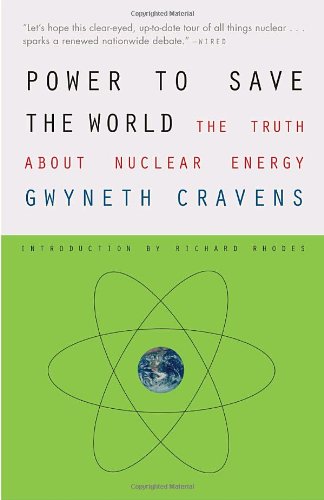
1. Power to Save the World: The Truth
$10.42
2. The Environmental Case for Nuclear
$18.77
3. Nuclear Power: Both Sides
$5.59
4. Nuclear Energy Now: Why the Time
 
5. Nuclear Power: Technology on Trial
$15.00
6. Tales from Nuclear Power School
$55.00
7. Introduction To Nuclear Power
 
$40.00
8. Design of the Reactor Core for
 
$40.00
9. Safety Culture in the Maintenance
 
$30.00
10. Design of the Reactor Coolant
 
$40.99
11. Nuclear Power Plant Design Characteristics:
$49.00
12. Sustainable Nuclear Power (Sustainable
$3.40
13. Nuclear Power Is Not the Answer
$165.06
14. IEC 60880 Ed. 2.0 b:2006, Nuclear
 
$20.00
15. Safety of Nuclear Power Plants;
 
$12.00
16. Owners of Nuclear Power Plants
 
$18.00
17. Safety of Nuclear Power Plants:
$34.95
18. Commercial Nuclear Power
 
19. Nuclear Power Reactor Safety
$7.95
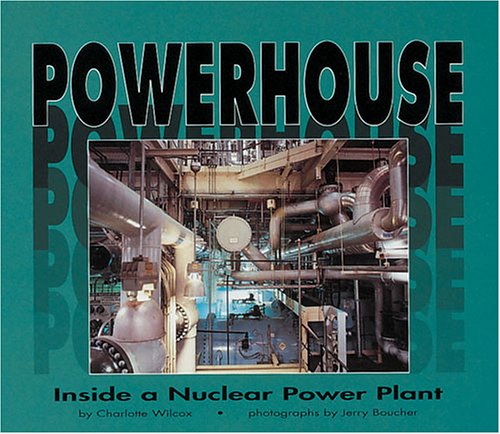
20. Powerhouse: Inside a Nuclear Power

1. Power to Save the World: The Truth About Nuclear Energy
by Gwyneth Cravens
Hardcover: 464 Pages (2007-10-30)
list price: US$27.95 -- used & new: US$16.00
(price subject to change: see help)
Asin: 0307266567
Average Customer Review: 4.5 out of 5 stars
Canada | United Kingdom | Germany | France | Japan
Editorial Review

Amazon.com
Gwyneth Cravens on Why Going Green Means Going Nuclear

"Most of us were taught that the goal of science is power over nature, as if science and power were one thing and nature quite another. Niels Bohr observed to the contrary that the more modest but relentless goal of science is, in his words, 'the gradual removal of prejudice.' By 'prejudice,' Bohr meant belief unsupported by evidence."
--Pulitzer Prize-winner Richard Rhodes, author of the introduction to Power to Save the World: The Truth About Nuclear Energy by Gwyneth Cravens

"Nothing in life is to be feared, it is only to be understood. Now is the time to understand more, so that we may fear less."
--Marie Curie

My book is fundamentally about prejudice based on wrong information.

I used to oppose nuclear power, even though the Sierra Club supported it. By the mid-1970s the Sierra Club turned against nuclear power too. However, as we witness the catastrophic consequences of accelerated global temperature increase, prominent environmentalists as well as skeptics like me have started taking a fresh look at nuclear energy. A large percentage of the heat-trapping greenhouse gases, especially carbon dioxide, that thaw Arctic ice and glaciers comes from making electricity, and we rely upon it every second of our lives.

There are three ways to provide large-scale electricity—the kind that reliably meets the demands of our civilization around the clock. In the United States:

  • 75% of that baseload electricity comes from power plants that burn fossil fuels, mainly coal, and emit carbon dioxide. Toxic waste from coal-fired plants kills 24,000 Americans annually.
  • 5% comes from hydroelectric plants.
  • Less than 1% comes from wind and solar power.
  • 20% comes from nuclear plants that use low-enriched uranium as fuel, burn nothing, and emit virtually no CO2. In 50 years of operation, they have caused no deaths to the public.

When I began my research eight years ago, I'd assumed that we had many choices in the way we made electricity. But we don't. Nuclear power is the only large-scale, environmentally-benign, time-tested technology currently available to provide clean electricity. Wind and solar power have a role to play, but since they're diffuse and intermittent, they can't provide baseload, and they always require some form of backup--usually from burning fossil fuels, which have a huge impact on public health.

My tour of the nuclear world began with a chance question I asked of Dr. D. Richard ("Rip") Anderson. He and his wife Marcia Fernández work tirelessly to preserve open land, clean air, and the aquifer in the Rio Grande Valley. Rip, a skeptically-minded chemist, oceanographer, and expert on nuclear environmental health and safety, told me that the historical record shows that nuclear power is cleaner, safer, and more environmentally friendly than any other form of large-scale electricity production.I was surprised to learn that:

  • Nuclear power emits no gases because it does not burn anything; it provides 73% of America's clean-air electricity generation, using fuel that is tiny in volume but steadily provides an immense amount of energy.
  • Uranium is more energy-dense than any other fuel. If you got all of your electricity for your lifetime solely from nuclear power, your share of the waste would fit in a single soda can. If you got all your electricity from coal, your share would come to 146 tons: 69 tons of solid waste that would fit into six rail cars and 77 tons of carbon dioxide that would contribute to accelerated global warming.
  • A person living within 50 miles of a nuclear plant receives less radiation from it in a year than you get from eating one banana. Someone working in the U.S. Capitol Building is exposed to more radioactivity than a uranium miner.
  • Spent nuclear fuel is always shielded and isolated from the public. Annual waste from one typical reactor could fit in the bed of a standard pickup. The retired fuel from 50 years of U.S. reactor operation could fit in a single football field; it amounts to 77,000 tons. A large coal-fired plant produces ten times as much solid waste in one day, much of it hazardous to health. We discard 179,000 tons of batteries annually--they contain toxic heavy metals.
  • Nuclear power's carbon dioxide emissions throughout its life-cycle and while producing electricity are about the same as those of wind power.
  • Nuclear plants offer a clean alternative to fossil-fuel plants. In the U.S. 104 nuclear reactors annually prevent emissions of 682 million tons of CO2. Worldwide, over 400 power reactors reduce CO2 emissions by 2 billion metric tons a year.

I wanted to know if what Rip was telling me was true.He took me on a tour of the nuclear world so that I could learn firsthand its risks and benefits. I visited many facilities, talked to many scientists in different disciplines, and researched the conclusions of the National Academy of Sciences and various international scientific bodies. As I learned more, I became persuaded that the safety culture that prevails at U.S. nuclear plants and the laws of physics make them a safe and important tool for addressing global warming. Clearly many of my beliefs had originated in misinformation and fear-mongering.

I've now met many people dedicated to saving the environment while supporting nuclear power as well as other green resources. This path is only logical. Nuclear power is the only large-scale, non-greenhouse-gas emitting electricity source that can be considerably expanded while maintaining only a small environmental footprint. If as a society we're going to reduce those emissions, we'll need every resource to do so, and we'll have to set aside our ideological blinkers, look at the facts, and unite to meet the greatest challenge humanity has ever faced.

The power to change our world does not lie in rocks, rivers, wind, or sunlight.It lies within each of us.

--Gwyneth Cravens


Book Description

In this timely book, Gwyneth Cravens takes an informed and clarifying look at the myths, the fears, and the truth about nuclear energy.

With concerns about catastrophic global warming mounting, it is vital that we examine all our energy options. Power to Save the World describes the efforts of one determined woman, Gwyneth Cravens, initially a skeptic about nuclear power, as she spends nearly a decade immersing herself in the subject. She teams up with a leading expert in risk assessment and nuclear safety who is also a committed environmentalist to trace the path of uranium—the source of nuclear fuel—from start to finish. As we accompany them on visits to mines as well as to experimental reactor laboratories, fortress-like power plants, and remote waste sites normally off-limits to the public, we come to see that we already have a feasible way to address the causes of global warming on a large scale.

On the nuclear tour, Cravens converses with scientists from many disciplines, public health and counterterrorism experts, engineers, and researchers who study both the harmful and benign effects of radiation; she watches remote-controlled robotic manipulators unbolt a canister of spent uranium fuel inside a “hot cell” bathed in eerie orange light; observes the dark haze from fossil-fuel combustion obscuring once-pristine New Mexico skies and the leaky, rusted pipes and sooty puddles in a coal-fired plant; glimpses rainbows made by salt dust in the deep subterranean corridors of a working nuclear waste repository.

She refutes the major arguments against nuclear power one by one, making clear, for example, that a stroll through Grand Central Terminal exposes a person to more radiation than a walk of equal length through a uranium mine; that average background radiation around Chernobyl and in Hiroshima is lower than in Denver; that there are no “cancer clusters” near nuclear facilities; that terrorists could neither penetrate the security at an American nuclear plant nor make an atomic bomb from its fuel; that nuclear waste can be—and already is—safely stored; that wind and solar power, while important, can meet only a fraction of the demand for electricity; that a coal-fired plant releases more radiation than a nuclear plant and also emits deadly toxic waste that kills thousands of Americans a month; that in its fifty-year history American nuclear power has not caused a single death. And she demonstrates how, time and again, political fearmongering and misperceptions about risk have trumped science in the dialogue about the feasibility of nuclear energy.

In the end, we see how nuclear power has been successfully and economically harnessed here and around the globe to become the single largest displacer of greenhouse gases, and how its overall risks and benefits compare with those of other energy sources.

Power to Save the World is an eloquent, convincing argument for nuclear power as a safe energy source and an essential deterrent to global warming.

... Read more

Customer Reviews (23)

5-0 out of 5 stars Reads like a novel.....
Well-written, plenty of detail, lots of perspective.Also cites both sides of controversy.As an admirer of Richard Rhode's book, The Making of the Atomic Bomb, I will put this book alongside his book on my library shelf.

5-0 out of 5 stars READ THIS AND BE ENLIGHTENED, then pass the message on!

EXCELLENT, excellent work. Thankyou Gwenyth for your clear and enquiring mind, one of the most important books of our time.

5-0 out of 5 stars nuclear energy for layman
Nuclear energy is explored and data provided so a reader obtains an understanding based on fact rather than emotion. This is a must read for those on either side of the nuclear energy discussion. To discuss the merits of nuclear energy both sides must be informed and have that information supported by FACTS developed by the international science, engineering, and medical community. This book is one tool to establish common understanding of nuclear energy.

The book is well written and really engages the reader. The author frames her discussion to assist readers in understanding the specifics and significance of the data presented but the book does not read like a college engineering text - thank heavens. She also demystifies the science of nuclear energy as she takes you along on her personal journey to explore the potential of nuclear energy as part of a balanced national and international energy portfolio. She starts her journey with many fears, half-truths, and misunderstandings about nuclear energy. As she explores all the major facets from uranium mining to power generation, you gain essential knowledge, vocabulary, and facts about nuclear energy to participate in an informed debate on the merits of nuclear power to address global warming.

5-0 out of 5 stars Informative Book that Covers all Bases
This is an important read for people that care about global warming.The world simply won't accept a solution that means we consume substantially less energy that we do today.We can continue to pretend that a carbon free mass energy source will magically appear, or we can use the safe nuclear alternative we have today.Hopefully, this book will help people see the light.Where are you Al Gore on this matter?

(Note: Last time I checked, this book was not available at Borders.I sense a political agenda)

5-0 out of 5 stars A Must Read
I learned so much by reading Mrs. Craven's book, Power to Save the World: Truth About Nuclear Energy and I highly recommend this book to others.You will come away with lots of knowledge of a complicated subject.I wish every high school student could read this book in a science class. Americans generally have little understanding of the topic, nuclear energy. ... Read more


2. The Environmental Case for Nuclear Power: Economic, Medical, and Political Considerations
by Robert C. Morris
Paperback: 192 Pages (2000-06-26)
list price: US$16.95 -- used & new: US$10.42
(price subject to change: see help)
Asin: 1557787808
Average Customer Review: 3.5 out of 5 stars
Canada | United Kingdom | Germany | France | Japan
Editorial Review

Book Description
In the 20th Century, air pollution produced by the fossil fuels killed over five million

Americans. It contributes to two of our worst environmental problems—acid rain and global warming. By contrast, Western-built nuclear power has not been responsible for even one death in the public sector. It's increased use would lessen our trade deficit, and decrease acid rain and global warming. So, why aren't we building nuclear power plants? Since 1974, anti-nuclear power activists have prevented the construction of nuclear power plants through the dissemination of fear and superstition. When the records of the fossil fuels and nuclear power are set straight, nuclear power is clearly superior. This is the opinion of almost one million scientists and medical doctors who have gone on record as favoring the use of nuclear power. ... Read more

Customer Reviews (16)

3-0 out of 5 stars Unconventional Wisdom
Contains perspectives on environmental risks of nuclear power compared to other energy sources.
The book is circa 1999, and some parts are out of date:
- In presenting the risks of air pollution from autos, the author points to the higher death toll from (producing electricity from coal-fired power plants) electric cars vs. relatively reduced levels of sulphor dioxide from gas-powered cars. Then, he seems way off base in saying "Los Angeles plans to completely ban gas-powered automobiles in just a few more years." Huh?
- Likewise, the book is not current in the plans to dispose of spent nuclear fuel from nuclear power plants at Yucca Mountain, NV. He says the spent fuel will be encased in vitrified glass logs that will not corrode or release radioactive materials. The current plan is to use corrosion-resistant metal containers. He is right to say that disposal of nuclear waste is not "unsolvable" from a technical standpoint, although it remains to be seen whether it is solvable politically.

4-0 out of 5 stars Obviously Partial, Yet A Generally Good Effort
In this book Robert Morris does a generally credible job explaining the benefits of nuclear power. His book is factually accurate and informative, and particularly useful to people who have listened to extensive anti-nuclear rhetoric without attempting to hear the pro-nuclear arguments.

While I agree with most of the points Morris makes, I do have a couple of quibbles with the book. The first is endless, mind-numbing repetition. I don't know how many times he says that 50,000 people a year die in the US from carbon-based air pollution, but you can bet it's a lot. The basic point here is that while that is likely true, repeating it every other page for 200 pages or so does not help make the case: this book needs editing. The second issue I have with the book is the presence of grossly inflated, yet trivial arguments. There is no question, for instance, that coal and oil use are air polluters; that is a valid point to make in this book. Where the logic gets stretched, however, is when he claims that because of all this air pollution (that would not be present with more nuclear power) that humans probably have more fatal traffic accidents because carbon monoxide makes driver reaction times longer, seems improvable at best, and ludicrous at worst. These are the two big criticisms I have of the book.

While I believe his data on nuclear safety statistics, I do think that he overestimates nuclear safety features, and perhaps underestimates dangers. Safety engineering professionals study not only the accidents in an industry, but also the incidents that did not lead to accidents, yet could have. On this matter Morris is totally silent, and I think that detracts significantly from the scientific validity of some of his arguments: in other words, accidents are actually very rare, incidents more common. Since Three Mile Island the nuclear industry has become much better about sharing trend data, but this book leads readers to the conclusion that nuclear power is a 100 percent safe, utopian energy source. I personally agree that it is a generally safe source of power, and that the US would be wise to follow Europe's lead (for once) and develop more of it. Having said that, I also believe that nuclear accidents could potentially be quite dangerous, despite Morris' reassurances.

Most of the low rating reviewers here are clearly in the anti-nuclear camp, and I think it's admirable that they read the book (if they actually did). I do question where most of them got their information; some of the armchair critics seem unclear on basic physics or other issues (like Uranium ore production, for instance.) One particularly offensive reviewer thought that this book proves that Morris was worse than Hitler and hated babies. My take on that: if you can't objectively criticize the book, you must not have anything important to say...frequently like the media establishment. It is clear that Morris' assertion that the media spreads a virulently anti-nuclear message is correct, probably in part because they are politically to the left in general, but more likely simply because it sells. For the same reason that you never see a headline reading "Jetliner Lands On Time After a Smooth Flight: Passengers Enjoyed A Light Snack" you will also never see a headline reading "Nuclear Plant Releases No Radiation; Nobody Injured; Electricity Produced At A Reasonable Price." This is a differentiation that I think needs to me made, and while he attempts to make that argument in the book it falls a bit flat.

While parts of this book are a bit overblown, and the book is clearly in the pro-nuclear camp, at least Morris makes his sympathies clear at the outset. I am glad that he wrote the book, and despite a few qualms about the presentation, I think it is worthy reading for anyone on either side of the nuclear debate, preferably in conjunction with the excellent and considerably more unbiased masterwork on contemporary nuclear safety organizations, "Hostages of Each Other" by Joseph Rees.

1-0 out of 5 stars Simple simon nuke propoganda.
A one sided tome, missing two of the most basic facts about nuclear energy. A) The mineral, Uranium Oxide upon which today's nuclear power technology rests is depleting at the rate of between 1 and 2 percent a year. I.e. 50 - 100 year supply. (This includes all factors such as Russian missiles, etc.) B) Nuclear energy today only supplies about 8% of all world energy. Nuclear power would only last 5 to 10 years!
Once they get done explaining how safe and clean nuclear power is using today's technology, when confronted with the shortage of fuel, a quick side step is taken. Expense and dangers of bomb making technology, waste disposal at 10x the rate and magic are quickly mixed up and the lesson is over.

4-0 out of 5 stars Concise, lucid, and critical energy information
If you are only going to read one book about nuclear energy, fossil fuels and alternative energy sources, this is the one.If you are going to read more than one, this is the one to start with.It is easy to read, packed with solid scientifically based information, and easy to understand with little or no scientific background.It smashes many of the myths promoted by alarmist "environmentalists" who usually speak in generalities and have little or no scientific background.Dr. Morris tells you what the science says, and what the scientists believe in concise lucid detail.

The book fills the critical need for a logical explanation of the advantages and disadvantages of various methods of meeting our energy needs: fossil fuels (oil, natural gas, coal), nuclear, hydroelectric, solar, windmills, oil shales, hydrogen.It also explains the alarming consequences of failing to meet these needs.It discusses the advantages, environmental effects, economics and practicality of all these sources of energy.It sounds like a huge undertaking, but Dr. Morris explains it easily and soundly.

If you want real scientific information for the layman about nuclear and other forms of energy, this is the book to read.

5-0 out of 5 stars Outstandingly Level Headed
This is a book that the New Zealand government should read and backs up a book that I read years ago called the "The Day the Bomb Fell". I would like to add my two cents worth in relation to the five worst coal mining disasters on P 132. The Number 2 colliery at the Wankie Coal Mine in what was then Rhodesia (now Zimbabwe) suffered a coal dust explosion in 1972 which killed 427 miners. This is a prophetic book and the powers that be need to take note, particularly here in New Zealand which has suffered electricty shortages because hydro dams have dried up recently as a result of 1 in 50 year droughts that seem to happen every year now. It's time to wake up and smell the coffee. ... Read more


3. Nuclear Power: Both Sides
Paperback: 284 Pages (1989-01-01)
list price: US$25.00 -- used & new: US$18.77
(price subject to change: see help)
Asin: 0393301281
Average Customer Review: 4.0 out of 5 stars
Canada | United Kingdom | Germany | France | Japan

Customer Reviews (1)

4-0 out of 5 stars Lots of Info
This book contains lots of info. about Nuclear Power.

Here are some quotes: With radioactive cobalt, botanists can produce new types of plants. Structural variations that normally take years of selective breeding todevelop can be made to occur in a few months.

The radiation has evencaused genetic mutations in children whose parents were exposed to theradiation.

Other renewable power sources such as solar and hydroelectric,cannot provide the large scale power generation which is needed. ... Read more


4. Nuclear Energy Now: Why the Time Has Come for the World's Most Misunderstood Energy Source
by Alan M. Herbst, George W. Hopley
Hardcover: 230 Pages (2007-03-23)
list price: US$27.95 -- used & new: US$5.59
(price subject to change: see help)
Asin: 0470051361
Average Customer Review: 2.5 out of 5 stars
Canada | United Kingdom | Germany | France | Japan
Editorial Review

Book Description
A timely and thought-provoking solution to the world's energy shortfall

The dramatic increases in oil and natural gas prices, the finite supply of fossil fuels, and concerns over emissions and global warming are forcing us to consider alternatives. In this measured and knowledgeable book, energy experts Alan Herbst and George Hopley argue that the time has come for the U.S. to revitalize its nuclear generation assets in order to successfully meet growing domestic electricity requirements and lessen our dependence on foreign sources of energy. Nuclear Energy Now provides an informed look at the benefits and drawbacks associated with this controversial alternative to traditional energy sources.

It opens with a brief overview of commercial nuclear development in the U.S. during the past half-century and moves on to discuss what the future may hold if new initiatives-supported by the Energy Policy Act of 2005-gain traction. Along the way, readers will find informed insights into why the need for nuclear power has become so critical and how we can safely add capacity in the coming years. Exploring all of the issues related to developing America's nuclear energy capabilities safely and cost-effectively, Nuclear Energy Now is a must-read for anyone concerned about our oil dependency, the environment, and future of the nation. ... Read more

Customer Reviews (4)

1-0 out of 5 stars Damming with faint praise
This book purports to support nuclear power and then doesn't make much of a case for it. I am sorry that I wasted my money on this book.

Try Power to Save the World: The Truth About Nuclear Energy by Gwyneth Craven who is a 30 year green activist and makes a fact based argument for nuclear. She puts forward all the standard arguments against nuclear and shows how they don't hold up. She spent 8 years researching her book with another environmentalist who works at the Sandia National Laboratory.

2-0 out of 5 stars Is this a satire?
As someone who has studied the pros and cons of nuclear energy for over 30 years, I am always interested to see what reasons people muster for supporting what I have come to see as "Jurassic technology" (doomed to extinction because of inherent insupportability). This book reads like a satire. For example, the authors list the huge cost overruns in nuclear plant construction, and note that nuclear "overnight" KWh costs are almost 4 times those of natural gas and double coal's. For them, those turn into reasons why we should pursue nuclear electricity. They say that if we ignore the environmental legislation that gave nukes a "clean image" (note: "image," letting these dinosaurs irradiate us til kingdom come), they would be price-competitive. And their safety record--since the last big accident--is exemplary!
Their clinching argument (p. 185): "Simply stated, if new reactor technology is good enough for Tanzania, Portugal and Mexico, it should be good enough for further expansion in the United States." Why sure, if those global leaders in developing new technologies (as the authors note, Tanzania can't even afford to actually construct a nuke), renowned for their stringent environmental laws and oversight, are thinking about building new nukes, why shouldn't the US?
I have to believe the authors wrote this with tongue firmly in cheek.

3-0 out of 5 stars no bad, nevertheless.....
If you are only interested in economic, this book is your book.

However,if you want to learn something about Nuclear Energy and you are no an enginer "A CASE FOR NUCLEAR-GENERATED ELECTRICITY ... or why I think nuclear power is cool and why it is important that you think so too", written by Scott W. Heaberlin is your book.

"THE REVENGE OF GAIA" written by James Lovelock is your book if you are the kind of guy who enjoys learning and who is worried about environmental isuues.

Have a look in internet ....EFN - Environmentalists For Nuclear Energy.

Bye and thanks. I afraid ofmy English is a bit sad. See you.

4-0 out of 5 stars We Need to Embrace Nuclear Energy Now
NEN is filled with tons of facts, yet is a quick read and a very good primer on the subject of nuclear energy. For those who are concerned about carbon emissions, nuclear energy is the ONLY economically viable alternative to petroleum for electricity generation. Anyone who thinks solar and wind can fill this void is simply wrong. It takes hundreds of windmills to produce the same power as a single nuclear or coal plant. Solar cells are approximately 20% efficient, and like wind farms, require vast tracts of land. Additionally, both are entirely dependent on weather conditions. Sheryl Crow's vacuous endorsement of these "alternatives" on the Bill Maher show once again demonstrates the majority's poverty of understanding of these basic facts. This is not surprising; nuclear energy has received a bad rap from environmentalists for decades. Issues with waste and proliferation are easily solvable with prudent policies. The real problem is fear: an intense, quivering fear cultivated by the environmental movement that leaves us incapable of dealing with our energy problems in an intelligent manner.

Although I am not a global warming catastrophist, I believe it is prudent to limit what we pump into the atmosphere. Sure, driving hybrid cars helps a little, but remember that all of our automobiles combined emit less than half of the carbon produced by our power plants. The greatest single strategy to limit carbon emissions is producing electricity with nuclear power. Environmentalists need to abandon their religious dogma and accept this fact; otherwise, they relinquish their right to shrill hectoring about global warming.

Here is what I would propose as a simple roadmap to lower CO2 emissions:

1) Gradually phase out all coal/gas/oil power plants and replace with nuclear plants.
2) Continue to develop rapid-recharge high-capacity lithium ion battery technology for automobiles.
3) Investigate other energy storage alternatives like ultracapacitors, which may be practical in the near future.
4) Reform and streamline industrial processes to reduce emissions.
5) Investigate prudent sources of ethanol (no corn, please) and biodiesel fuels.
6) Continue nuclear fusion research. ... Read more


5. Nuclear Power: Technology on Trial
by James J. Duderstadt, Chihiro Kikuchi
 Paperback: 240 Pages (1979-12-15)
list price: US$19.95
Isbn: 047206312X
Canada | United Kingdom | Germany | France | Japan
Editorial Review

Book Description

The authors argue for the continued development of nuclear energy.
... Read more

6. Tales from Nuclear Power School
by Aaron Mccarty
Paperback: 176 Pages (2006-03-01)
list price: US$15.00 -- used & new: US$15.00
(price subject to change: see help)
Asin: 1419625527
Average Customer Review: 3.0 out of 5 stars
Canada | United Kingdom | Germany | France | Japan

Customer Reviews (2)

1-0 out of 5 stars Yuck
I really want the time it took me to read this book back. Don't get me wrong. Some of the stories were amusing. But reading around the horrible editing gave me a headache. And, really, the whole "this is what power school is all about" theme is mentioned only as a sideline to the retarded antics.

5-0 out of 5 stars Power School sucks......this book doesn't
Don't know who's idea this book was, but it hits home when describing the Infamous Naval Nuclear Power Training Command.

The long hours of study in Rickover center, the crazy morons running around Campus all stressed out, the terrible female to male ratio.

The guys in these books are a bunch of punks and screw ups from what I can tell, nowhere near as smart as the guys in my class, but they do some funny, retarded stuff.And the Southern Belle does bring back some crazy memories.Hats off to whoever managed to get this one published. ... Read more


7. Introduction To Nuclear Power (Series in Chemical and Mechanical Engineering)
by Geoffrey Hewitt
Hardcover: 256 Pages (2000-06-01)
list price: US$157.00 -- used & new: US$55.00
(price subject to change: see help)
Asin: 1560324546
Canada | United Kingdom | Germany | France | Japan
Editorial Review

Book Description
The authors of this text aim to educate the reader on nuclear power and its future potential. It focuses on nuclear accidents such as Chernobyl and Three Mile Island, and their consequences, with the understanding that there are safety lessons to be learned if nuclear power generation is going to be expanded to meet our growing energy needs. ... Read more


8. Design of the Reactor Core for Nuclear Power Plants: Safety Guide (Safety Standards Series)
 Paperback: 59 Pages (2005-09)
list price: US$40.00 -- used & new: US$40.00
(price subject to change: see help)
Asin: 9201160046
Canada | United Kingdom | Germany | France | Japan

9. Safety Culture in the Maintenance of Nuclear Power Plants (Safety Reports Series)
 Paperback: 49 Pages (2005-12-30)
list price: US$40.00 -- used & new: US$40.00
(price subject to change: see help)
Asin: 920112404X
Canada | United Kingdom | Germany | France | Japan

10. Design of the Reactor Coolant System and Associated Systems in Nuclear Power Plants: Safety Guide (Safety Standards Series)
 Paperback: 79 Pages (2004-01)
list price: US$30.00 -- used & new: US$30.00
(price subject to change: see help)
Asin: 9201034040
Canada | United Kingdom | Germany | France | Japan

11. Nuclear Power Plant Design Characteristics: Structure of Nuclear Power Plant Design Characteristics in the IAEA Power Reactor Information System (PRIS) (Iaea-Tecdoc Series)
by International Atomic Energy Agency
 Paperback: 33 Pages (2007-05-31)
list price: US$25.00 -- used & new: US$40.99
(price subject to change: see help)
Asin: 9201025076
Canada | United Kingdom | Germany | France | Japan

12. Sustainable Nuclear Power (Sustainable World)
by Galen J. Suppes, Truman Storvick
Hardcover: 416 Pages (2006-12-08)
list price: US$62.95 -- used & new: US$49.00
(price subject to change: see help)
Asin: 0123706025
Average Customer Review: 3.0 out of 5 stars
Canada | United Kingdom | Germany | France | Japan
Editorial Review

Book Description
Sustainable Nuclear Power provides non-nuclear engineers, scientists and energy planners with the necessary information to understand and utilize the major advances in the field.The book demonstrates that nuclear fission technology has the abundance and attainability to provide centuries of safe power with minimal greenhouse gas generation. It also addresses the safety and disposal issues that have plagued the development of the nuclear power industry and scared planners and policy makers as well as the general public for more than two decades. In addition, the authors provide a Companion website, http://books.elsevier.com/companions, which gives access to government reports and case studies

*No need for a background in nuclear science!This book guides engineers, scientists and energy professionals through a concise and easy-to-understand overview of key safety and sustainability issues affecting their work.

*Details the very latest information about today's safest and most energy-efficient reactor designs and reprocessing procedures.


*Brings to light the fears and hesitation of using nuclear energy and explains that technologies and procedures for safe production and processing are available today. ... Read more

Customer Reviews (1)

3-0 out of 5 stars Largely non tecnical treatment of energy in general
The book is largeley non technical and devotes a lot of space to economic considerations and non nuclear energy sources.It presents a solid arguement for fuel reprocessing and reactor technology updating to provide an energy source for millenia.Engineers however are not at their best when writing about economics. ... Read more


13. Nuclear Power Is Not the Answer
by Helen Caldicott
Paperback: 240 Pages (2007-09-01)
list price: US$15.95 -- used & new: US$3.40
(price subject to change: see help)
Asin: 1595582134
Average Customer Review: 2.5 out of 5 stars
Canada | United Kingdom | Germany | France | Japan
Editorial Review

Book Description
The world-renowned antinuclear activist's "expertly argued" (The Guardian) case against nuclear energy.

In a world torn apart by wars over oil, politicians have increasingly begun to look for alternative energy sources—and their leading choice is nuclear energy. Among the myths that have been spread over the years about nuclear-powered electricity are that it does not cause global warming or pollution, that it is inexpensive, and that it is safe.

Helen Caldicott's look at the actual costs and environmental consequences of nuclear energy belies the incessant barrage of nuclear industry propaganda. Caldicott "reveals truths," Martin Sheen has said, "that confirm we must take positive action now if we are to make a difference." In fact, nuclear power contributes to global warming; the true cost of nuclear power is prohibitive, with taxpayers picking up most of the tab; there's simply not enough uranium in the world to sustain nuclear power over the long term; and the potential for a catastrophic accident or a terrorist attack far outweighs any benefits. Concluding chapters detail alternative sustainable energy sources that are the key to a clean, green future. ... Read more

Customer Reviews (17)

5-0 out of 5 stars Well worth the read
I always thought that a nuclear power plant was something like a sketch from a Simpson's cartoon, with a rock (uranium) behind a piece of glass emitting radiation which somehow turned into electricity.

After reading this book my metaphor for a nuclear plant has changed --rather it's a type of giant Rube Goldberg device with thousands and thousands of interconnected parts which are jumbled together, which leak radiation in innumerable ways, and which, as they continue to age, are deteriorating more and more.What comes to mind in this regard, is the space shuttle -- how many have blown up and how many do we have left anyway?(Who else but the government would send a thirty year old vehicle into space, when we scrap cars after fifteen year.)Who else but the government would support an industry where after forty years, we still haven't been able to figure out what to do with the highly toxic waste products, tons and tons of which are created each year.

This book provides a lot of information about nuclear power which seems worth knowing.I noticed that this book has received "Ones" by quite a few of the reviewers. It seems their criticisms are based on something other than the interesting insights into nuclear power provided by this book.Personally I am fairly optistic about alternative energy and believe that USA civlization can move forward without nuclear power or coal generated energy for that matter.

2-0 out of 5 stars She's Soft on Coal
Readers looking for an objective look at nuclear power will not find it here.The author's hysterical and passionate fear of radiation pervades the discussion.Caldicott does get most of the major issues on the table, but she distorts the facts badly:she repeatedly condemns the cost of nuclear power and praises solar even though solar clearly costs more than nuclear (and she ignores the large roll that anti-nuclear activists have had in driving up the cost of nuclear power through law-suits and licensing delays); she does not like government assistance for new nuclear power, but tax credits for wind power are just fine; she complains of nuclear power plants' need for cooling water (which has causedsome river-side plants in France to shutdown temporarily during a recent drought) but ignores the same need in geothermal plants; she criticizes the large amount of energy it takes to build a nuclear plant even though solar voltaic plants are similar; and she says we don't have enough affordable uranium to grow the industry (only a century worth at the current usage rate) even though government reports say that a small increase in price would enormously multiply the accessible reserves; and she totally ignores the very promising thorium-cycle breeder reactor types, which like all breeders turn nuclear power into an in-exhaustible resource via their miserly fuel use and have no nuclear bomb useable materials in the waste, but unlike some plutonium breeders (which she does discuss and dismiss) could potentially meet or beat today's prices, would avoid creation of long-lived radioactive waste, and would have much lower risk of a severe accident.

But worst of all, she totally conceals the enormous environmental damage and loss of human life caused by the coal industry, and the enormous difficulty and expense we'll face if we try to phase out coal without using nuclear power.How could any evaluation of the risks of nuclear power fail to compare this risk to that associated with coal which produces more that half the USA's electrical power?Caldicott offers a wildly optimistic world view, powered by wind, solar power, and other renewables.She apparently has chosen not to listen to the often repeated statement by experts that these sources can supply at most about 20% of our power because they are intermittent (with the exception of geothermal, but most of the affordable geothermal is already in use).Even reaching the 20% level requires either energy storage using big hydro (which most parts of the U.S.A. do not have) or plentiful natural gas (which is quickly becoming a depleted resource in the USA) for use in cost-effecting "peaking" plants and with compresses air energy storage systems (which boost the efficiency of natural gas fired generation).Hydrogen-based storage is possible of course, but with an optimistic round trip efficiency of about 50%, it will likely be two to four times more expensive than electricity from coal, so it will be a tough sell in the USA.Renewable energy is a wonderful thing, but it cannot compete economically with coal, so ultimately a "no" to nuclear power is a "yes" to coal.

With all of that said, she did have some useful points:our nuclear plants are aging and need to be replaced one way or another; new plants should be more robust against terrorists; the nuclear industry (like any big business) can sometimes get too cozy with the government.There's room for improvement, but nuclear power is still a good answer.

1-0 out of 5 stars Solar Morons, Nuclear Geniuses
Caldicott's book is just one more example of why "California style" left-coast politics will always fall flat on their face whenever forced to deal with real world issues like electrical power.Caldicott rants and raves for page after page, but nowhere does she address the actual issue at hand:all power sources have advantages and disadvantages.Nuclear has disadvantages yes, but it works.The entire nation of France runs completely on cheap nuclear power.Solar power DOESN'T work, at least on a large scale.It's just a lousy energy source, end of story.

Somewhere in the next 50 years, the world will abandon Solar power, Wind power, and the other energy sources that never delivered on their promises.Solar and Wind power promoters will be derided as the incompetant fools they are, and nuclear engineers will be praised as far-sighted idealists.When that day comes...and it will...those of us who supported nuclear power can enjoy the satisfaction that we've earned.

1-0 out of 5 stars SOMETHING YOU AND DR. CALDICOTT NEED TO UNDERSTAND
Dr. Caldicott's book is full of mis-information on nuclear power. Reviewer Kevin Cahill got it right. He wrote:

"Helen Caldicott was right, if somewhat extreme, about nuclear weapons, but she is wrong about nuclear power. We have two choices: coal and nuclear. Clean coal is impossible with current technology. We can slow and perhaps reverse global warming by replacing all our coal-fired electric power plants with nuclear, solar, and wind power plants, and by using electric cars."

Almost no new gas and oil plants are being built in the US due to high fuel costs / high carbon emissions (greenhouse gas CO2). Even maximizing wind, hydro, solar output will supply only about 10% of future needs. The choice really comes down to coal or nuclear, and the choice of industry is coal. When you factor in carbon costs, nuclear is as cheap as coal, but nuclear is scary to the public and so the choice is coal. Coal has the highest pollution / greenhouse gas emissions of any source (emits more carbon than the transportation industry - more than all the US cars / trucks / vehicles combined), emits mercury pollution (a serious problem causing brain damage in developing infants), fine particle pollution (which an EPA / abt study indicates is responsible for 24,000 US deaths per year due to lung cancer, respiratory disease) and emits nitrous / sulfur oxides (causing acid rain, dead lakes, deforestation). Due to trace uranium in the coal, coal plants actually emit more radiation into the environment than nuclear plants.

Nuclear power in the US since it began 40 years ago has killed no one, while during this time (if studies are correct) coal energy has killed about a million in the US alone. Since US plants have never been graphite moderated (it was rejected as too risky) US plants can never go "Chernobyl". What about all the people killed by Chernobyl radiation since 1986? According to the World Health Organization, as of 2005 the people killed by radiation from Chernobyl total about 50. Over time about 4000 people are expected to die earlier than otherwise due to radiation. Since 1986 US coal pollution has killed about 1/2 million people. Again, US plants, including TMI in 1979 (a >90% core meltdown, about the worst accident that can be imagined from a US plant) have killed no one, have not affected the health of anyone, and are not likely to. If, over the past 40 years we had been making the equivalent amount of energy with coal instead of nuclear, we would have had about 500,000 additional US deaths. I don't believe this is what Dr. C wants, but this is the kind of US energy policy she is promoting with her actions.

1-0 out of 5 stars Complete Nonsense
She fails to understand that the most radioactive isotopes have the shortest shelf life.Everyone else is reprocessing the spent fuel which simplifies the storage problem. Chernobyl was built with a faulty design which was rejected by all western nuclear facilities.Three Mile Island caused serious damage to the plant but no deaths or serious injuries.Lots of lawsuits which were finally thrown out of court.
A 20 year study by the National Safety Council showed millions of Accidental Fatalities from many sources and none from nuclear plants.The rest of the world is going all out for nuclear because it is the best answer for future energy requirements. ... Read more


14. IEC 60880 Ed. 2.0 b:2006, Nuclear power plants - Instrumentation and control systems important to safety - Software aspects for computer-based systems performing category A functions
by IEC TC/SC 45A
Paperback: 226 Pages (2007-08-19)
list price: US$262.00 -- used & new: US$165.06
(price subject to change: see help)
Asin: B000Y2LOOA
Canada | United Kingdom | Germany | France | Japan
Editorial Review

Product Description
Provides requirements for the software of computer-based instrumentation and control (I&C) systems of nuclear power plants performing functions of safety category A as defined by IEC 61226. Provides requirements for the purpose of achieving highly reliable software. Addresses each stage of software generation and documentation, including requirements specification, design, implementation, verification, validation and operation. ... Read more


15. Safety of Nuclear Power Plants; Design Safety Requirements
 Paperback: Pages (2005-10)
list price: US$20.00 -- used & new: US$20.00
(price subject to change: see help)
Asin: 9202066051
Canada | United Kingdom | Germany | France | Japan

16. Owners of Nuclear Power Plants
 Paperback: Pages (2002-03)
list price: US$12.00 -- used & new: US$12.00
(price subject to change: see help)
Asin: 0160671523
Canada | United Kingdom | Germany | France | Japan

17. Safety of Nuclear Power Plants: Design (Safety Standards Series)
by Iaea
 Paperback: 67 Pages (2000-10)
list price: US$18.00 -- used & new: US$18.00
(price subject to change: see help)
Asin: 9201019009
Canada | United Kingdom | Germany | France | Japan

18. Commercial Nuclear Power
by Charles B. Ramsey
Hardcover: 536 Pages (2006-04-04)
list price: US$34.95 -- used & new: US$34.95
(price subject to change: see help)
Asin: 1419635425
Average Customer Review: 4.5 out of 5 stars
Canada | United Kingdom | Germany | France | Japan
Editorial Review

Product Description
This book provides everything we need to understand nuclear power.Written in easy-to-follow prose, it frankly describes the role that nuclear power could and should play in meeting our electrical energy needs.It disambiguates nuclear controversy from all sides of the nuclear debate and discusses the potential of energy production from other available fuels.It authenticates the energy policy decisions that each nation must make to address reaching the peak of oil supplies, while effectively dealing with societys' increasing energy consumption needs and associated environmental consequences.The authors are very astute at explaining the complexity of nuclear issues and reducing them to general terms for reader comprehension.They dissect how accidents have occurred and outline how accidents can be avoided in the future.They are well versed in the special problems of nuclear engineering and use their expertise to show how nuclear energy can be produced safely by examining nuclear plant operations and the potential for accidents to occur. They provide the necessary background to really grasp the reality of nuclear energy and the vital elements of nuclear safety systems that prevent accidents.They discuss radioactive elements, including their decay properties and provide good background information on the basic physics involved in actual practice. ... Read more

Customer Reviews (5)

5-0 out of 5 stars Not just technical info
I thoroughly enjoyed this book.Although I picked it up for its scientific information, Ramsey and Modarres have also included some of the intrigue that we all know exists within the industry.I found the geo-political and cross-industrial information insightful.I'd love to see more on this... like, "who wants to kill off the nuclear power industry?And why?"

5-0 out of 5 stars Excellent Introduction To Nuclear Safety
"Commercial Nuclear Power" is a must-read book for anyone with an interest in nuclear energy specifically, or with electricity production and consumption generally. The book is fairly technical, and would be most easily understood by people with some basic knowledge of chemistry, physics, or engineering; having said that, the authors are very good at explaining difficult ideas from general concept to specific application, which makes the book comprehensible to an average reader. One thing that makes the book easier to digest is the lack of higher math, which is frequently where this subject can bog down for non-professionals.

I like the book especially because I appreciate the focus the authors have on system safety, including human factors issues (and the use of simulation in training). The book is great at presenting all sides of the nuclear debate, and provides the necessary background to really grasp the vital elements of nuclear safety systems. The section on Accident Sequence Precursors (ASP) is particularly strong, and demonstrates the efforts undertaken to prevent accidents by the study of minor incidents and precursors. Specific methods are discussed in terms of different types of Fault Tree Analysis (FTA), as well, which effectively shows how the pieces of the puzzle fit together (although I disagree with one of the procedural steps in Figure 2-3 "Accident Sequence Precursor Analysis" on page 117). This plus the discussion of the "Defense In Depth" (Chapter Four) concept are the most useful components of the book from a safety perspective.

There is a very good discussion of all radioactive elements, including their decay properties, and good background information on the basic physics involved in actual practice. The discussion of core thermal hydraulic design, reactivity control, Doppler effect considerations, and the remainder of Chapter Three ("Control and Safety Systems") is particularly well written and interesting, though Chapter Four ("Accident Prevention") is probably the single most valuable chapter in the book for safety professionals.

The book concludes with several interesting documents, including a forecast to 2015 of expected electricity consumption by country, and deals with the problems each nation faces in energy production decisions, with good coverage of the problems in China and Africa.

This book is invaluable for nuclear safety professionals, students of nuclear energy, or concerned citizens. It is the single most readable and comprehensive background book on nuclear power that I have yet seen, and I recommend it very highly.


5-0 out of 5 stars Nuclear Energy - From Jane Fonda to Reality
This book, though somewhat technical, is a primer in the problems and great potential of nuclear power. It dissolves the fog of "junk science" perpetuated by some environmentalist groups and the Press in particular. A must read if you want to have an informed, accurate opinion as a 21st century power consumer.

3-0 out of 5 stars a well composed,(although lengthy ) abstract of past/future
As an Electrical Engineer, I found this book to be a learning tool in the areas of non-fossil fuel power.Should be required reading for undergraduate science majors.

S.J. Clarke MSEE

5-0 out of 5 stars Enlighting - Nuclear History - Past, Present & Future
If you want to learn more about the Commerical Nuclear Power - Is it safe? Where are we now?Where are we going?This is the book to read. It's all here!Yes, it's technical, but obviously written to be understood by the layperson as well. Thanks! ... Read more


19. Nuclear Power Reactor Safety
by E. E. Lewis
 Hardcover: 648 Pages (1978-03)
list price: US$65.95
Isbn: 0471533351
Canada | United Kingdom | Germany | France | Japan

20. Powerhouse: Inside a Nuclear Power Plant (Carolrhoda Photo Books)
by Charlotte Wilcox
Paperback: 48 Pages (1995-06)
list price: US$7.95 -- used & new: US$7.95
(price subject to change: see help)
Asin: 0876149794
Average Customer Review: 5.0 out of 5 stars
Canada | United Kingdom | Germany | France | Japan

Customer Reviews (1)

5-0 out of 5 stars A Great Pictorial of Nuclear Power Plants
This book is actually a pictorial book of a Nuclear Power Plant. It has a narrative that explains the nuclear power industry, and an overview of how the plant operates: Its key components, etc. However, this is not a scholarly work, and seems to be geared more toward a jr high student level. I used it to explain nuclear power to my children. The pictures are also excellent. ... Read more


  1-20 of 100 | Next 20

Prices listed on this site are subject to change without notice.
Questions on ordering or shipping? click here for help.

site stats