
|
Help |
| Home - Celebrities - Austen Jane (Books) | |
e99 Online Shopping Mall
|
|
Help |
| Home - Celebrities - Austen Jane (Books) | |
| 1-20 of 100 | Next 20 |
click price to see details click image to enlarge click link to go to the store
| 1. Persuasion by Jane Austen | |
 | Kindle Edition:
Pages
(2009-10-04)
list price: US$1.99 Asin: B002RKSZWG Average Customer Review: 
Canada | United Kingdom | Germany | France | Japan |
|
Editorial Review Product Description Customer Reviews (7)
| |
| 2. Love and Freindship [sic] by Jane Austen | |
 | Paperback: 84
Pages
(2010-07-06)
list price: US$9.99 -- used & new: US$9.99 (price subject to change: see help) Asin: B003VS1520 Average Customer Review: 
Canada | United Kingdom | Germany | France | Japan |
|
Editorial Review Product Description Customer Reviews (7)
| |
| 3. Northanger Abbey by Jane Austen | |
 | Paperback: 168
Pages
(2010-08-14)
list price: US$6.95 -- used & new: US$6.95 (price subject to change: see help) Asin: 1453767533 Average Customer Review:
Canada | United Kingdom | Germany | France | Japan |
|
Editorial Review Product Description Catherine grows up to be a passably pretty girl and is invited to spend afew weeks in Bath with a family friend. While there she meets Henry Tilneyand his sister Eleanor, who invite her to visit their family estate,Northanger Abbey. Once there, Austen amuses herself and us as Catherine, agreat reader of Gothic romances, allows her imagination to run wild,finding dreadful portents in the most wonderfully prosaic events. ButAusten is after something more than mere parody; she uses her rapier wit tomock not only the essential silliness of "horrid" novels, but to expose theeven more horrid workings of polite society, for nothing Catherine imaginescould possibly rival the hypocrisy she experiences at the hands of hersupposed friends. In many respects Northanger Abbey is the mostlighthearted of Jane Austen's novels, yet at its core is a serious,unsentimental commentary on love and marriage, 19th-century British style.--Alix Wilber Customer Reviews (147)
| |
| 4. Sense And Sensibility by Jane Austen | |
 | Paperback: 266
Pages
(2010-03-10)
list price: US$8.95 -- used & new: US$8.50 (price subject to change: see help) Asin: 1451539401 Average Customer Review:
Canada | United Kingdom | Germany | France | Japan |
|
Editorial Review Product Description Customer Reviews (198)
| |
| 5. Complete Works of Jane Austen. Emma, Lady Susan, Mansfield Park, Northanger Abbey, Persuasion, Pride and Prejudice, Sense and Sensibility. ILLUSTRATED. (mobi) by Jane Austen | |
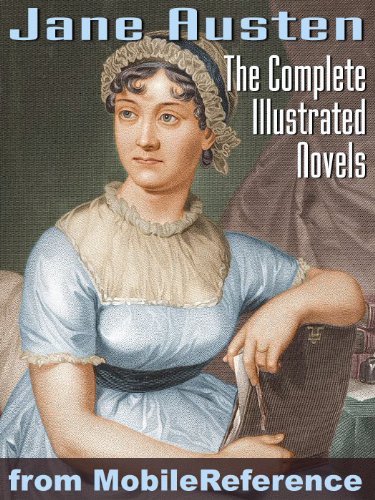 | Kindle Edition: 1088
Pages
(2008-02-25)
list price: US$3.99 Asin: B0014U4X3U Average Customer Review: 
Canada | United Kingdom | Germany | France | Japan |
Customer Reviews (6)
| |
| 6. Pride And Prejudice by Jane Austen | |
 | Paperback: 256
Pages
(2010-09-17)
list price: US$9.99 -- used & new: US$9.94 (price subject to change: see help) Asin: 1453837736 Average Customer Review:
Canada | United Kingdom | Germany | France | Japan |
|
Editorial Review Product Description Next to the exhortation at the beginning of Moby-Dick,"Call me Ishmael," the first sentence of Jane Austen's Pride andPrejudice must be among the most quoted in literature. And certainlywhat Melville did for whaling Austen does for marriage--tracing theintricacies (not to mention the economics) of 19th-century British matingrituals with a sure hand and an unblinking eye.As usual, Austen trainsher sights on a country village and a few families--in this case, theBennets, the Philips, and the Lucases. Into their midst comes Mr. Bingley,a single man of good fortune, and his friend, Mr. Darcy, who is evenricher. Mrs. Bennet, who married above her station, sees their arrival asan opportunity to marry off at least one of her five daughters. Bingley iscomplaisant and easily charmed by the eldest Bennet girl, Jane; Darcy,however, is harder to please. Put off by Mrs. Bennet's vulgarity and theuntoward behavior of the three younger daughters, he is unable to see thetrue worth of the older girls, Jane and Elizabeth. His excessive prideoffends Lizzy, who is more than willing to believe the worst that other peoplehave to say of him; when George Wickham, a soldier stationed in thevillage, does indeed have a discreditable tale to tell, his words fall onfertile ground. Having set up the central misunderstanding of the novel, Austen then bringsin her cast of fascinating secondary characters: Mr. Collins, thesycophantic clergyman who aspires to Lizzy's hand but settles for her bestfriend, Charlotte, instead; Lady Catherine de Bourgh, Mr. Darcy'sinsufferably snobbish aunt; and the Gardiners, Jane and Elizabeth'slow-born but noble-hearted aunt and uncle. Some of Austen's best comedycomes from mixing and matching these representatives of different classesand economic strata, demonstrating the hypocrisy at the heart of so manysocial interactions. And though the novel is rife with romanticmisunderstandings, rejected proposals, disastrous elopements, and arequisite happy ending for those who deserve one, Austen never gets socarried away with the romance that she loses sight of the hard economicrealities of 19th-century matrimonial maneuvering. Good marriages forpenniless girls such as the Bennets are hard to come by, and even Lizzy,who comes to sincerely value Mr. Darcy, remarks when asked when she firstbegan to love him: "It has been coming on so gradually, that I hardly knowwhen it began. But I believe I must date it from my first seeing hisbeautiful grounds at Pemberley." She may be joking, but there's more than alittle truth to her sentiment, as well.Jane Austen considered ElizabethBennet "as delightful a creature as ever appeared in print". Readers ofPride and Prejudice would be hard-pressed to disagree. --AlixWilber Customer Reviews (1110)
| |
| 7. Pride and Prejudice (Qualitas Classics) by Jane Austen | |
 | Paperback: 382
Pages
(2010-04-02)
list price: US$9.95 -- used & new: US$6.67 (price subject to change: see help) Asin: 1897093578 Average Customer Review:
Canada | United Kingdom | Germany | France | Japan |
|
Editorial Review Product Description Next to the exhortation at the beginning of Moby-Dick,"Call me Ishmael," the first sentence of Jane Austen's Pride andPrejudice must be among the most quoted in literature. And certainlywhat Melville did for whaling Austen does for marriage--tracing theintricacies (not to mention the economics) of 19th-century British matingrituals with a sure hand and an unblinking eye.As usual, Austen trainsher sights on a country village and a few families--in this case, theBennets, the Philips, and the Lucases. Into their midst comes Mr. Bingley,a single man of good fortune, and his friend, Mr. Darcy, who is evenricher. Mrs. Bennet, who married above her station, sees their arrival asan opportunity to marry off at least one of her five daughters. Bingley iscomplaisant and easily charmed by the eldest Bennet girl, Jane; Darcy,however, is harder to please. Put off by Mrs. Bennet's vulgarity and theuntoward behavior of the three younger daughters, he is unable to see thetrue worth of the older girls, Jane and Elizabeth. His excessive prideoffends Lizzy, who is more than willing to believe the worst that other peoplehave to say of him; when George Wickham, a soldier stationed in thevillage, does indeed have a discreditable tale to tell, his words fall onfertile ground. Having set up the central misunderstanding of the novel, Austen then bringsin her cast of fascinating secondary characters: Mr. Collins, thesycophantic clergyman who aspires to Lizzy's hand but settles for her bestfriend, Charlotte, instead; Lady Catherine de Bourgh, Mr. Darcy'sinsufferably snobbish aunt; and the Gardiners, Jane and Elizabeth'slow-born but noble-hearted aunt and uncle. Some of Austen's best comedycomes from mixing and matching these representatives of different classesand economic strata, demonstrating the hypocrisy at the heart of so manysocial interactions. And though the novel is rife with romanticmisunderstandings, rejected proposals, disastrous elopements, and arequisite happy ending for those who deserve one, Austen never gets socarried away with the romance that she loses sight of the hard economicrealities of 19th-century matrimonial maneuvering. Good marriages forpenniless girls such as the Bennets are hard to come by, and even Lizzy,who comes to sincerely value Mr. Darcy, remarks when asked when she firstbegan to love him: "It has been coming on so gradually, that I hardly knowwhen it began. But I believe I must date it from my first seeing hisbeautiful grounds at Pemberley." She may be joking, but there's more than alittle truth to her sentiment, as well.Jane Austen considered ElizabethBennet "as delightful a creature as ever appeared in print". Readers ofPride and Prejudice would be hard-pressed to disagree. --AlixWilber Customer Reviews (1110)
| |
| 8. The Complete Novels of Jane Austen by Jane Austen | |
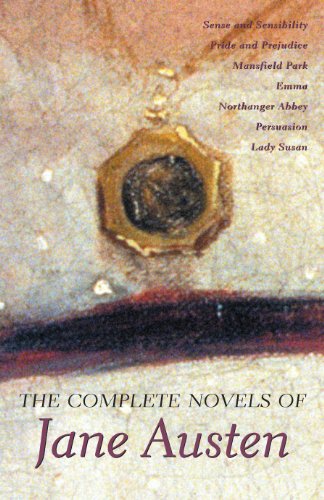 | Paperback: 1436
Pages
(2005-02-05)
list price: US$12.99 -- used & new: US$10.66 (price subject to change: see help) Asin: 1840220554 Average Customer Review:
Canada | United Kingdom | Germany | France | Japan |
|
Editorial Review Product Description Customer Reviews (15)
| |
| 9. The Complete Works of Jane Austen by Jane Austen | |
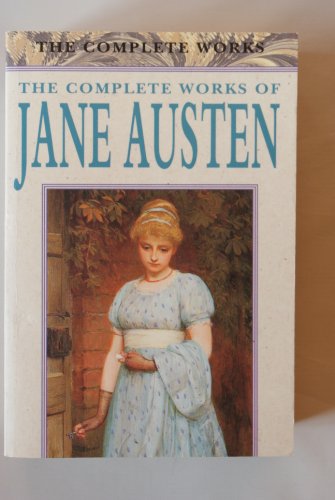 | Paperback:
Pages
(1993-12-31)
-- used & new: US$102.66 (price subject to change: see help) Asin: 1858131111 Average Customer Review:
Canada | United Kingdom | Germany | France | Japan |
|
Editorial Review Product Description Customer Reviews (6)
| |
| 10. Persuasion by Jane Austen | |
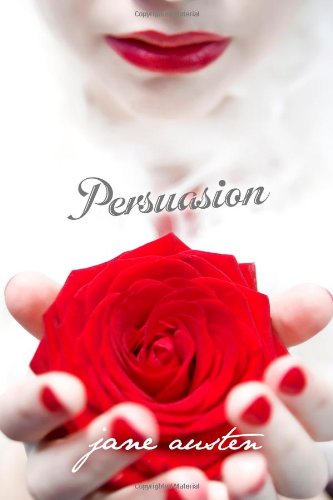 | Paperback: 168
Pages
(2010-03-10)
list price: US$7.95 -- used & new: US$7.49 (price subject to change: see help) Asin: 1451539347 Average Customer Review:
Canada | United Kingdom | Germany | France | Japan |
|
Editorial Review Product Description Customer Reviews (207)
| |
| 11. The Jane Austen Book Club (movie tie-in) by Karen Joy Fowler | |
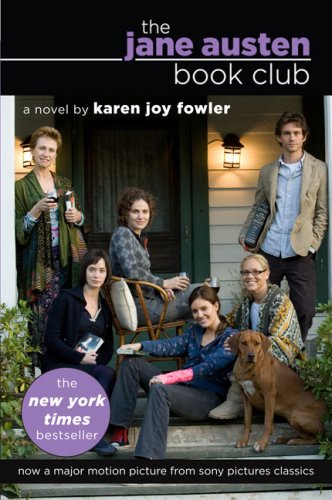 | Paperback: 304
Pages
(2007-08-28)
list price: US$14.00 -- used & new: US$0.01 (price subject to change: see help) Asin: 0452289009 Average Customer Review: 
Canada | United Kingdom | Germany | France | Japan |
|
Editorial Review Product Description Customer Reviews (310)
| |
| 12. The Complete Novels of Jane Austen (Wordsworth Library Collection) by Jane Austen | |
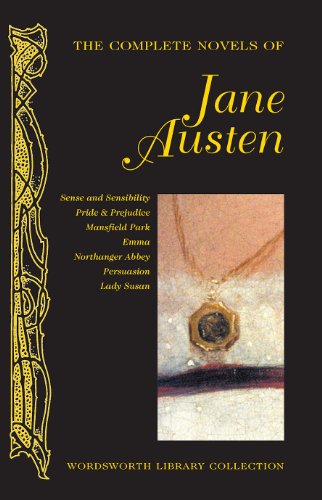 | Hardcover: 1440
Pages
(2007-09-01)
list price: US$14.37 -- used & new: US$15.40 (price subject to change: see help) Asin: 1840225564 Average Customer Review:
Canada | United Kingdom | Germany | France | Japan |
|
Editorial Review Product Description Customer Reviews (17)
| |
| 13. The Jane Austen Cookbook by Maggie Black | |
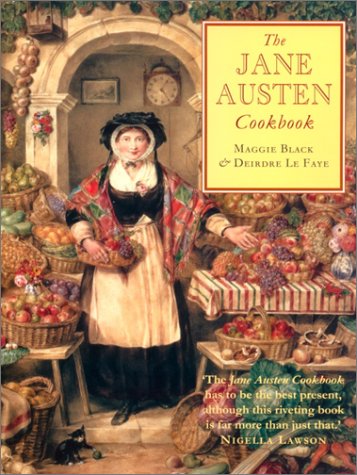 | Paperback: 128
Pages
(2002-05-10)
list price: US$19.95 -- used & new: US$13.57 (price subject to change: see help) Asin: 0771014171 Average Customer Review:
Canada | United Kingdom | Germany | France | Japan |
|
Editorial Review Product Description Customer Reviews (7)
| |
| 14. Jane Austen Ruined My Life by Beth Pattillo | |
 | Paperback: 288
Pages
(2009-02-03)
list price: US$14.99 -- used & new: US$2.92 (price subject to change: see help) Asin: 0824947711 Average Customer Review:
Canada | United Kingdom | Germany | France | Japan |
|
Editorial Review Product Description Denied tenure in the wake of the scandal and left penniless by the ensuing divorce, Emma packs up what few worldly possessions she has left and heads to England on a quest to find the missing letters of Jane Austen. Locating the elusive letters, however, isn't as straightforward as Emma hoped. The owner of the letters proves coy about her prize possessions, sending Emma on a series of Austen-related tasks that bring her closer and closer to the truth, but the sudden reappearance of Emma's first love makes everything more complicated. In the end, Emma learns that doing the right thing has very little to do with other people's expectations and everything to do with her own beliefs. Laced with fictional excerpts from the missing letters, Jane Austen Ruined My Life is the story of a woman betrayed who uncovers the deeper meaning of loyalty. Customer Reviews (55)
| |
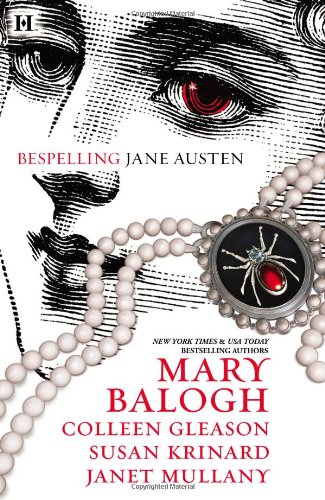
| 15. Bespelling Jane Austen: Almost Persuaded\Northanger Castle\Blood and Prejudice\Little to Hex Her by Mary Balogh, Colleen Gleason, Susan Krinard, Janet Mullany | |
 | Paperback: 384
Pages
(2010-09-28)
list price: US$14.95 -- used & new: US$8.85 (price subject to change: see help) Asin: 0373775016 Average Customer Review:
Canada | United Kingdom | Germany | France | Japan |
|
Editorial Review Product Description What if Austen had believed in reincarnation and vampires? Join four bestselling romance authors as they channel the wit and wisdom of Jane Austen. Almost Persuaded In this Regency tale of Robert and Jane, New York Times bestselling author Mary Balogh brings together former lovers who have seen beyond the veil of forgetfulness to their past mistakes, and are determined to be together in this life, and forever. Northanger Castle Caroline's obsession with Gothic novels winds up being good training for a lifetime of destroying the undead with her newfound beau, in this Regency by Colleen Gleason. Blood and Prejudice Set in the business world of contemporary New York City, Liz Bennett joins Mr. Darcy in his hunt for a vampire cure in New York Times bestselling author Susan Krinard's version of the classic story. Little to Hex Her Present-day Washington, D.C., is full of curious creatures in Janet Mullany's story, wherein Emma is a witch with a wizard boyfriend and a paranormal dating service to run. Customer Reviews (5)
| |
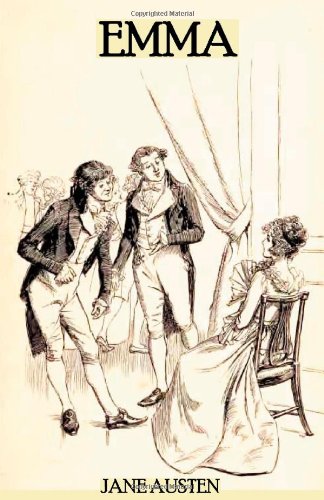
| 16. Emma by Jane Austen | |
 | Paperback: 298
Pages
(2010-03-13)
list price: US$34.64 -- used & new: US$14.14 (price subject to change: see help) Asin: 1451537948 Average Customer Review:
Canada | United Kingdom | Germany | France | Japan |
|
Editorial Review Product Description For Emma, raised to think well of herself, has such a high opinionof her own worth that it blinds her to the opinions of others. The storyrevolves around a comedy of errors: Emma befriends Harriet Smith, a youngwoman of unknown parentage, and attempts to remake her in her own image.Ignoring the gaping difference in their respective fortunes and stations inlife, Emma convinces herself and her friend that Harriet should look ashigh as Emma herself might for a husband--and she zeroes in on an ambitiousvicar as the perfect match. At the same time, she reads too much into aflirtation with Frank Churchill, the newly arrived son of family friends,and thoughtlessly starts a rumor about poor but beautiful JaneFairfax, the beloved niece of two genteelly impoverished elderly ladies inthe village. As Emma's fantastically misguided schemes threaten to surgeout of control, the voice of reason is provided by Mr. Knightly, theWoodhouse's longtime friend and neighbor.Though Austen herself described Emma as "a heroine whom no one but myselfwill much like," she endowed her creation with enough charm to see herthrough her most egregious behavior, and the saving grace of being able tolearn from her mistakes. By the end of the novel Harriet, Frank, and Janeare all properly accounted for, Emma is wiser (though certainly notsadder), and the reader has had the satisfaction of enjoying Jane Austen atthe height of her powers. --Alix Wilber Customer Reviews (286)
| |
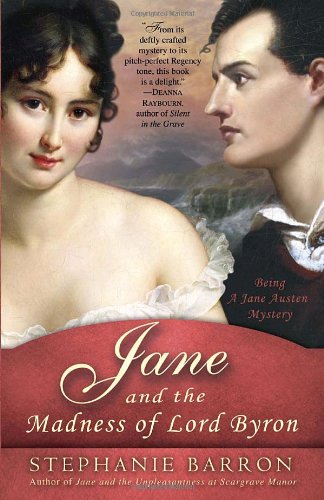
| 17. Jane and the Madness of Lord Byron: Being A Jane Austen Mystery by Stephanie Barron | |
 | Paperback: 352
Pages
(2010-09-28)
list price: US$15.00 -- used & new: US$9.40 (price subject to change: see help) Asin: 0553386700 Average Customer Review:
Canada | United Kingdom | Germany | France | Japan |
|
Editorial Review Product Description Customer Reviews (10)
| |
| 18. Confessions of a Jane Austen Addict by Laurie Viera Rigler | |
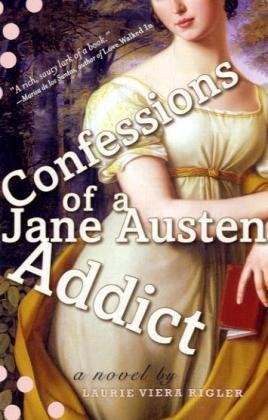 | Paperback: 304
Pages
(2008-04-29)
list price: US$14.00 -- used & new: US$1.06 (price subject to change: see help) Asin: B001G8WRGU Average Customer Review:
Canada | United Kingdom | Germany | France | Japan |
|
Editorial Review Product Description Customer Reviews (111)
| |
| 19. The Oxford Illustrated Jane Austen (Six Volume Set) by Jane Austen | |
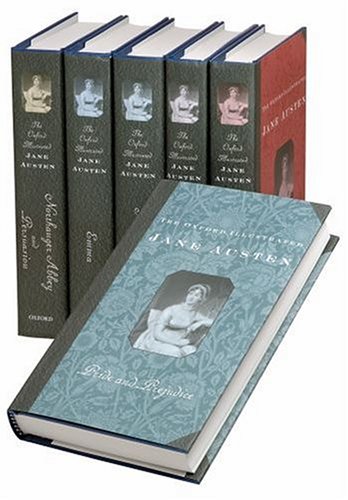 | Hardcover: 2832
Pages
(1988-11-17)
list price: US$175.00 -- used & new: US$105.00 (price subject to change: see help) Asin: 0192547070 Average Customer Review:
Canada | United Kingdom | Germany | France | Japan |
|
Editorial Review Product Description Customer Reviews (14)
| |
| 20. The Complete Novels(Penguin Classics Deluxe Edition) by Jane Austen | |
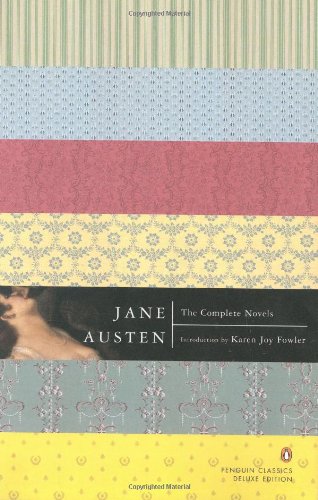 | Roughcut: 1278
Pages
(2006-03-28)
list price: US$25.00 -- used & new: US$13.55 (price subject to change: see help) Asin: 0143039504 Average Customer Review:
Canada | United Kingdom | Germany | France | Japan |
|
Editorial Review Product Description Customer Reviews (32)
| |
| 1-20 of 100 | Next 20 |
 A very immature work of a wonderful writer
 Missing what it is supposed to contain