
|
Help |
| Home - Celebrities - Neuwirth Bebe (Books) | |
e99 Online Shopping Mall
|
|
Help |
| Home - Celebrities - Neuwirth Bebe (Books) | |
| 1-11 of 11 |
click price to see details click image to enlarge click link to go to the store
| 1. 45th ANNUAL DRAMA DESK AWARDS - STAGEBILL - MAY 14, 2000 by BEBE (HOSTED BY) NEUWIRTH | |
| Paperback:
Pages
(2000)
Asin: B003YE7016 Canada | United Kingdom | Germany | France | Japan | |
| 2. Bebe Neuwirth.(QUICK Q&A)(interview)(Interview): An article from: Dance Magazine by Gale Reference Team | |
| Digital: 3
Pages
(2007-01-01)
list price: US$9.95 -- used & new: US$9.95 (price subject to change: see help) Asin: B000M9C8U4 Canada | United Kingdom | Germany | France | Japan | |
|
Editorial Review Product Description | |
| 3. The lady in black: a slinky Bebe Neuwirth brings Morticia Addams to life.(on broadway): An article from: Dance Magazine by Sylviane Gold | |
| Digital: 3
Pages
(2010-03-01)
list price: US$9.95 -- used & new: US$9.95 (price subject to change: see help) Asin: B003BHK8B0 Canada | United Kingdom | Germany | France | Japan | |
|
Editorial Review Product Description | |
| 4. Can Opera Escape Opera? The Gamble Behind the Oprah Winfrey Network / If Women Ran Wallstreet: Testosterone, Risk, and the Financial Mess / Kelsey Grammer & Bebe Neuwirth, Together Again! (New York, March 29, 2010) | |
| Journal: 116
Pages
(2010)
Asin: B003Q0YIMC Canada | United Kingdom | Germany | France | Japan | |
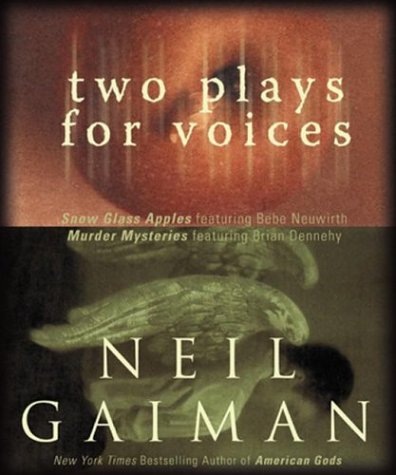
| 5. Two Plays for Voices by Neil Gaiman | |
 | Audio CD:
Pages
(2002-09-01)
list price: US$22.95 -- used & new: US$6.17 (price subject to change: see help) Asin: 0060012560 Average Customer Review: 
Canada | United Kingdom | Germany | France | Japan |
|
Editorial Review Product Description "The joy for me is knowing that somebody can have this strange audio experience. They're getting something as good as you get from radio." - Neil Gaimen Produced by the Sci-Fi Channel and Seeing Ear Theatre - these two plays are adapted for voice by Neil Gaiman from two of his short stories (both stories can be found in Smoke & Mirrors). SNOW GLASS APPLES: Once upon a time there lived a young princess with skin as white as snow, with hair as black as coal, with lips redder than blood. Most people think they know what happens to this young unfortunate girl. Most people are wrong. Tony-award winning actress Bebe Neuwirth (Chicago, Sweet Charity, and TV's Cheers) stars as a wise Queen who wants nothing more than to reign over her kingdom peacefully but is forced to match wits with an inhuman child who has an unnatural taste for blood. Full Cast List: MURDER MYSTERIES: In this mystery noir set in heaven's City of Angels before the fall, the first crime has been committed. It is an awful one. While the angelic hosts labor to create the world and its workings, one of their number is mysteriously slain by one of their own. Raguel, Angel of Vengeance, is mandated by Lucifer to discover both motive and murderer in this holy dominion that had so recently known no sin. Full Cast List: Customer Reviews (8)
Murder Mysteries is expertly presented and the twist at the end is a surprise to say the least. Snow Glass Apples is a shivery fairy tale which cuts to the core of good vs. evil and that some things aren't always what they seem.
The two plays in this package provided my wife and I the best entertainment we were going to get while being stuck in 8 hours of traffic.Finally I got my wife to pay attention to Neil's stuff (she refused to read Sandman)and she dug it. If you like books on tape, this is better.If you like reading Neil's work, you'll like it even better this way. Neil, if you're reading this...can we have some more of these?
The two plays in this package provided my wife and I the best entertainment we were going to get while being stuck in 8 hours of traffic.Finally I got my wife to pay attention to Neil's stuff (she refused to read Sandman)and she dug it. If you like books on tape, this is better.If you like reading Neil's work, you'll like it even better this way. Neil, if you're reading this...can we have some more of these? ... Read more | |
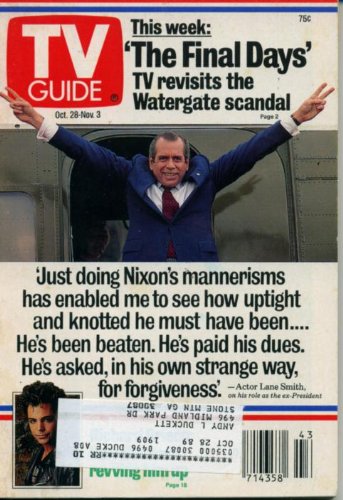
| 6. TV Guide October 28, 1989 Nixon, What Woodward and Bernstein Think of Watergate Now, Snoops, American Gladiators, Booker, Bebe Neuwirth on Cheers | |
 | Single Issue Magazine:
Pages
(1989)
Asin: B002IS1IB2 Canada | United Kingdom | Germany | France | Japan |
| 7. LeDivorce by Diane Johnson | |
| Audio Cassette:
Pages
(2003)
Asin: B00161M01E Canada | United Kingdom | Germany | France | Japan | |
|
Editorial Review Product Description | |
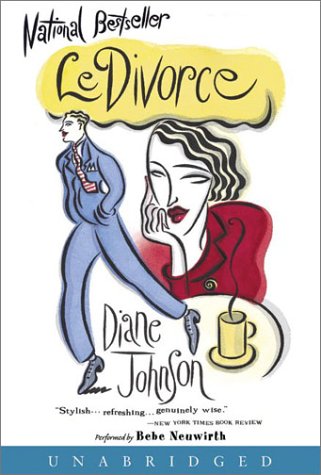
| 8. Le Divorce by Diane Johnson | |
 | Audio Cassette:
Pages
(2003-05)
list price: US$39.95 -- used & new: US$1.99 (price subject to change: see help) Asin: 0060523468 Average Customer Review: 
Canada | United Kingdom | Germany | France | Japan |
|
Editorial Review Product Description Imagine the heroine of Henry James's The Portrait of a Lady sporting a stylish haircut, miniskirt, and sunglasses, and you have Isabel Walker, the heroine of this incandescent novel. Le Divorce follows this smart, sexy American abroad as she arrives in Paris to visit her stepsister Roxy, whose marriage into an aristocratic French family has assured her of a coveted place in Parisian society. But Roxy's husband has just left her for the Czechoslovakian wife of an American lawyer. Could 'le divorce' be far behind? This bestselling novel -- a delightful comedy of manners and morals, money, marriage, and murder -- is as wickedly funny as it is deeply insightful. At the center of it all is the irrepressible Isabel -- captivated by Paris and a handsome, worldly French diplomat -- and trying to keep her perspective as cultures and human passions collide. Customer Reviews (122)
| |
| 9. Dance Magazine Awards 2007.: An article from: Dance Magazine by Gale Reference Team | |
| Digital: 9
Pages
(2007-11-01)
list price: US$9.95 -- used & new: US$9.95 (price subject to change: see help) Asin: B001268IZ0 Canada | United Kingdom | Germany | France | Japan | |
|
Editorial Review Product Description | |
| 10. Esquire Magazine - August 2002 - Hilary Swank Cover | |
 | Paperback: 140
Pages
(2002)
-- used & new: US$13.99 (price subject to change: see help) Asin: B0016HFNC6 Canada | United Kingdom | Germany | France | Japan |
|
Editorial Review Product Description | |
| 11. | |
Canada | United Kingdom | Germany | France | Japan | |
| 1-11 of 11 |
 Two tellings of disturbing (and enjoyable) tales...
 Le Suck