e99 Online Shopping Mall

Geometry.Net - the online learning center Help  
Home  - Philosophers - Adorno Theodor W (Books)

  1-20 of 100 | Next 20
A  B  C  D  E  F  G  H  I  J  K  L  M  N  O  P  Q  R  S  T  U  V  W  X  Y  Z  

click price to see details     click image to enlarge     click link to go to the store

$23.10
1. Theodor W. Adorno: One Last Genius
$13.23
2. Dream Notes
$19.89
3. Dialectic of Enlightenment (Cultural
 
$79.49
4. Notes to Literature (European
 
5. Negative dialectics (A Continuum
$38.43
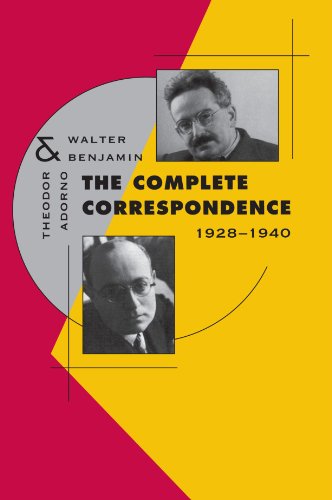
6. The Complete Correspondence, 1928-1940
$14.31
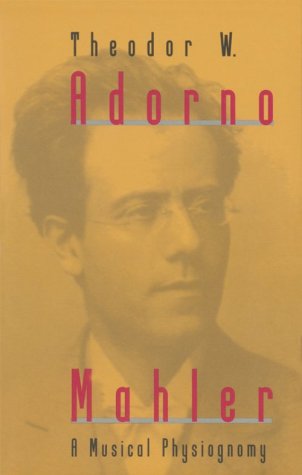
7. Mahler: A Musical Physiognomy
8. Philosophy of Modern Music (Athlone
$70.67
9. Zu einer Theorie der musikalischen
 
10. Beethoven: Philosophie der Musik
$9.95
11. Biography - Adorno, Theodor W(iesengrund)
 
$75.93
12. Kants "Kritik der reinen Vernunft"
13. Theodor W. Adorno: Negative Dialektik
$27.93
14. Ästhetische Theorie.
 
$39.99
15. The Authoritarian Personality
 
$34.40
16. Minima Moralia, Spanish Edition
$15.15
17. Hegel: Three Studies (Studies
$19.95
18. History and Freedom: Lectures
$18.05
19. Towards a Theory of Musical Reproduction:
 
20. PHILOSOPHY OF MODERN MUSIC

1. Theodor W. Adorno: One Last Genius
by Detlev Claussen
Hardcover: 464 Pages (2008-04-15)
list price: US$35.00 -- used & new: US$23.10
(price subject to change: see help)
Asin: 0674026187
Canada | United Kingdom | Germany | France | Japan
Editorial Review

Book Description

He was famously hostile to biography as a literary form. And yet this life of Adorno by one of his last students is far more than literary in its accomplishments, giving us our first clear look at how the man and his moment met to create “critical theory.” An intimate picture of the quintessential twentieth-century transatlantic intellectual, the book is also a window on the cultural ferment of Adorno’s day—and its ongoing importance in our own.

The biography begins at the shining moment of the German bourgeoisie, in a world dominated by liberals willing to extend citizenship to refugees fleeing pogroms in Eastern Europe. Detlev Claussen follows Theodor Wiesengrund Adorno (1903–1969) from his privileged life as a beloved prodigy to his intellectual coming of age in Weimar Germany and Vienna; from his exile during the Nazi years, first to England, then to the United States, to his emergence as the Adorno we know now in the perhaps not-so-unlikely setting of Los Angeles. There in 1943 with his collaborator Max Horkheimer, Adorno developed critical theory, whose key insight—that to be entertained is to give one’s consent—helped define the intellectual landscape of the twentieth century.

In capturing the man in his complex relationships with some of the century’s finest minds—including, among others, Arnold Schoenberg, Walter Benjamin, Thomas Mann, Siegfried Kracauer, Georg Lukács, Hannah Arendt, and Bertolt Brecht—Claussen reveals how much we have yet to learn from Theodor Adorno, and how much his life can tell us about ourselves and our time.

... Read more

2. Dream Notes
by Theodor W. Adorno
Hardcover: 128 Pages (2007-02-16)
list price: US$17.95 -- used & new: US$13.23
(price subject to change: see help)
Asin: 0745638309
Average Customer Review: 5.0 out of 5 stars
Canada | United Kingdom | Germany | France | Japan
Editorial Review

Book Description

"Dreams are as black as death."

Theodor W. Adorno

Adorno was fascinated by his dreams and wrote them down throughout his life. He envisaged publishing a collection of them although in the event no more than a few appeared in his lifetime.

Dream Notes offers a selection of Adornos writings on dreams that span the last twenty-five years of his life. Readers of Adorno who are accustomed to high-powered reflections on philosophy, music and culture may well find them disconcerting: they provide an amazingly frank and uninhibited account of his inner desires, guilt feelings and anxieties. Brothel scenes, torture and executions figure prominently. They are presented straightforwardly, at face value. No attempt is made to interpret them, to relate them to the events of his life, to psychoanalyse them, or to establish any connections with the principal themes of his philosophy.

Are they fiction, autobiography or an attempt to capture a pre-rational, quasi-mythic state of consciousness? No clear answer can be given. Taken together they provide a highly consistent picture of a dimension of experience that is normally ignored, one that rounds out and deepens our knowledge of Adorno while retaining something of the enigmatic quality that energized his own thought. ... Read more

Customer Reviews (1)

5-0 out of 5 stars One-of-a-kind collection
German philosopher and cultural critic Theodor W. Adorno wrote down his dreams throughout his life. Dream Notes is an unvarnished, as-is selection of Adorno's writings concerning his dreams, spanning the final twenty-five years of his life. No attempts are made to "interpret" Adorno's dreams, or force a connection between them and the events of his life, or to psychoanalyze them. They are simply offered for the reader to evaluate as he or she sees fit. An editorial foreword, an afterword by Jan Philipp Reemtsma, and an index round out this one-of-a-kind collection. Especially recommended for students and scholars seeking an extra dimension of insight and understanding into Adorno's works and ideas.
... Read more


3. Dialectic of Enlightenment (Cultural Memory in the Present)
by Max Horkheimer, Theodor W. Adorno
Paperback: 304 Pages (2007-03-13)
list price: US$24.95 -- used & new: US$19.89
(price subject to change: see help)
Asin: 0804736332
Average Customer Review: 4.5 out of 5 stars
Canada | United Kingdom | Germany | France | Japan
Editorial Review

Book Description

Dialectic of Enlightenment is undoubtedly the most influential publication of the Frankfurt School of Critical Theory.Written during the Second World War and circulated privately, it appeared in a printed edition in Amsterdam in 1947."What we had set out to do," the authors write in the Preface, "was nothing less than to explain why humanity, instead of entering a truly human state, is sinking into a new kind of barbarism."

Yet the work goes far beyond a mere critique of contemporary events. Historically remote developments, indeed, the birth of Western history and of subjectivity itself out of the struggle against natural forces, as represented in myths, are connected in a wide arch to the most threatening experiences of the present.

The book consists in five chapters, at first glance unconnected, together with a number of shorter notes.The various analyses concern such phenomena as the detachment of science from practical life, formalized morality, the manipulative nature of entertainment culture, and a paranoid behavioral structure, expressed in aggressive anti-Semitism, that marks the limits of enlightenment.The authors perceive a common element in these phenomena, the tendency toward self-destruction of the guiding criteria inherent in enlightenment thought from the beginning.Using historical analyses to elucidate the present, they show, against the background of a prehistory of subjectivity, why the National Socialist terror was not an aberration of modern history but was rooted deeply in the fundamental characteristics of Western civilization.

Adorno and Horkheimer see the self-destruction of Western reason as grounded in a historical and fateful dialectic between the domination of external nature and society.They trace enlightenment, which split these spheres apart, back to its mythical roots.Enlightenment and myth, therefore, are not irreconcilable opposites, but dialectically mediated qualities of both real and intellectual life."Myth is already enlightenment, and enlightenment reverts to mythology."This paradox is the fundamental thesis of the book.

This new translation, based on the text in the complete edition of the works of Max Horkheimer, contains textual variants, commentary upon them, and an editorial discussion of the position of this work in the development of Critical Theory.
... Read more

Customer Reviews (11)

5-0 out of 5 stars Nothing short of revolutionary
Marxist politics aside, Adorno and Horkheimer's staggering critique of post-enlightenment thought takes everything we "civilized" people take for granted and burns it---in front of your kids.

The examination of the oft-overlooked philosophy of the Marquis de Sade is especially significant, as it critiques the rogue philosopher while paying him his long-overdue respect as a true man of philosophy.

4-0 out of 5 stars Adorno presents a challenging look at the modern condition
Adorno and Horkheimer are associated with the Frankfurt school of thought in post-WWII Germany.In this book, Dialectic of Enlightenment, the two thinkers disect the post-war condition looking at all aspects of cultural identity as based on ancient enlightenment-esque ideals.This book illuminates the devestating results of progressivist models of history in late capitalism.Probably the most famous essay deals with the culture industry and how, in post-war capitalism, movies, books, television all become tools of subjegation through which a falsified sense of individuality is produced and commodified to the ends of keeping the consumers of this industry distracted enough to ignore the insideousness of that which we allow to control us.
A very dense read, poetic in areas, but challenging throughout.Adorno is often criticized for being a cynic, but I think that under his often scathing view of modern culture is a message that through exacting self-reflection change of the "total system" can occur.
These themes are expanded on in Adorno's other works: Minima Moralia, and Negative Dialectic.

5-0 out of 5 stars Gather the Fragments...
"Myth is already enlightenment, and enlightenment reverts back to mythology" (xviii).This statement is likely one of the most explosive philosphical theses penned in the 20th century, for not only did it give expression to much of the suspicion and pessimism that people experienced in the early 20th century, particularly under the Nazi regime, but this statement set into motion much of the later suspicion concerning the Enlightenment project and its relation to not just freedom, but domination under freedom's guise.

Dialectic of Enlightenment: Philosophical Fragments is the most important work ever written by any of the members of the Frankfurt School; it stands as a type of manifesto really for the possibility of Critical Theory as a post-positivistic discipline.It is easy to miss, but this is not just a work of philosophy - it is not a work written by old men with elbow patches on their jackets pondering various ideas in a scientific and socio-historical philosophical vacuum.Quite the opposite: this is a book that drew upon then-current sociology and anthropology (particularly pertaining to religion), in addition to the history of philosophy and philosophical currents such as Marxism (Western Marxism, to be specific).This is a book that draws - obviously - on history; it is a book that has much to say about media and the effects of what Adorno called "The Culture Industry".

Several authors, such as Jurgen Habermas and Leszek Kolakowski, have noted the the structure of the book - what we might call its "poetics" - is quite abnormal for a work of philosophy.The subtitle of the book comes well into play here as a means of understanding the book; "Philosophical Fragments" very much describes what it is like reading this work.The genuinely fragmentary nature of the book - it begins with an essay titled "The Concept of Enlightenment" before two excurses (one on Odysseus and the other on Marquis de Sade), the chapter "The Culture Industry", a series of theses titled "Elements of Angi-Semitism: Limits of Enlightenment", and the closing section "Notes and Sketches" (which is anything but smooth) - only adds to the sense of urgency.

The attempt to ascertain "why humanity, instead of entering a truly human state, is sinking into a new kind of barbarism" (xiv) animates the work.This regression ultimately has to do with the very nature of myth, which is "obscure and luminous at once" (xvii).It is with positivism that science believes it can banish all mystery from the world such that humans become masters of it (1); art itself has fallen prey to this myth (14).Perhaps surprisingly, this does not begin in the 18th century European Enlightenment, but with one of our most ancient of founding myths: Odysseus.The deceptive nature of the sacrifice in Odysseus is the beginning of our journey towards enlightenment, for it places us on a similar footing with the gods.The attempt of persons such as Sade to advocate a world without superstition not only turns us into beasts with "the innocence of wild animals" (77), but means that we still must hold onto one myth: that we can actually live in a world where all is entirely as it seems.Transgression of the previous morality (Catholicism) is the necessary mythical supplement to this view; it brings no pleasure but only violence.Both the Culture Industry and Anti-Semitism ultimately have the same totalitarian goal: to make everyone the same, as economic cogs in the machine, devoid of their individuality.Thus Enlightenment is necessarily violent against the Other, who doesn't fit in.The book ends with Notes and Sketches in a kind of anti-climax; Dialectic of Enlightenment is left open.

In many ways, this edition by Stanford University Press, in their uber-fine series "Cultural Memory in the Present", is like a critical edition in English.Dialectic of Enlightenment was printed various times and in various editions from 1944 thru 1969; this edition collects each of the prefaces for the various editions, and notes every single textual variant for each edition, some of which are seen as rather unimportant, but others of which show that the text was very much a continual work in progress for Horkheimer and Adorno.In addition to an Editor's Afterword, there is an essay appended at the end of the book titled "The Disappearance of Class History in "Dialectic of Enlightenment": A Commentary on the Textual Variants (1944 and 1947)", which many will likely to find insightful reading.This is an important addition to the library of many different fields - political thought, intellectual history, philosophy, theology, religious studies, and social theory, among others - regardless of how it has been produced.Stanford University Press should really be commended for producing it in such a way that it is a fine addition to one's library as well.

One does well to remember that this work should not be simply taken at face value.In their 1969 Preface, Horkheimer and Adorno mention that they ascribe a "temporal core to truth" (xi), which means that as an older text, what remains applicable in it should be used today, and what no longer applies should be left alone as having been applicable at one time in the past.Neither author ever endorsed the irresponsible usage of their work in the 1960s by protesting students who had become little more than mobs; that they have been linked to irresponsible New Left anti-politics (via their friend Herbert Marcuse) is not their fault.Rather, what Horkheimer and Adorno endorsed then (and would continue to endorse, were they still alive) is not a brutal application of a particular theory, but a sustained, thoughtful and well informed engagement of theory with the whole of the modern world."As a critique of philosophy, it does not seek to abandon philosophy itself" (xii).In short, they believed in wisdom: and this is what philosophy is ultimately all about.

4-0 out of 5 stars A masterpiece of critical theory
Max Horkheimer and Theodor Adorno, both prominents of the Frankfurter Schule of critical theory, wrote this work during WWII. In their own words, the purpose of the book was to explain why humanity, instead of entering a truly human state, is sinking into a new kind of barbarism. Obviously their experiences as Jewish intellectuals fleeing for the national-socialist regime to the United States was a strong impulse for this view, but the book is not limited to a critique of nazism or even totalitarianism altogether.

The main subject of the book, though that itself is already difficult to disentangle, is Enlightenment's betrayal of its own liberating capacity. Adorno & Horkheimer analyze this by means of various cultural metaphors, which in highly abstract, contradictory and aesthetic language (especially the parts by Adorno) trace the development of Enlightenment and its subsequent 'dark side' throughout an equally metaphorical history of culture and ideas. In a certain sense this may most remind readers not familiar with both authors of Foucault and his use of concepts like the Panopticon to express a view of power relations. The method of Adorno and Horkheimer is however not so much genealogical, as Foucault's is, as dialectical in its idealist form.

The book consists of an introduction, two "excursions" and two chapters on the Enlightenment itself, as well as a series of aphorisms provided at the end as "notes and sketches". Each part of the book consists of a very abstract, very metaphysical and almost entrancing analysis of, in turn, the development of Enlightenment as myth out of earlier myth, the form of modern Enlightenment as instrumental reason and mass deception, and the limits of Enlightenment to its own rationality, in the form of anti-semitism. The language of the book is extremely difficult, even in English, and in the best (and worst) traditions of continental philosophy it contains a very great amount of layers and meanings, not all of which are free of internal contradiction. Readers familiar to Situationist works are perhaps best prepared for the effect, which is somewhat similar in method, if not in style, to Guy Debord.

The introduction, "The Concept of Enlightenment", posits Enlightenment as thought liberating man from his natural shackles, and creating man as master of the earth. This process of liberation entails at the same time the possibility of man to protect himself from, and understand the workings of, nature, and also mankind's loss of being one with nature. In this process, the self is created as a subjectivity divorced from direct experience of the outside world. Man's memory of this is very vague and distant, but is present in everyone as a certain inchoate feeling of loss.

This is also the main subject of the first Exkurs, "Odysseus, or Myth and Enlightenment". The story of the Odysseia is here used in many ways to provide metaphorical expressions for the role of myth in and against Enlightenment. Myths are primitive descriptions of the world, and in being so are already classifications used as a form of instrumental reason, which is the seed of Enlightenment. The role of sacrifice to the Gods, for example, is presented as manipulation of those Gods, and in so doing already expression of an Enlightened mind avant la lettre. Odysseus' adventure with the Sirens is metaphor for man's loss as described above: Odysseus, the Enlightened ruler, knows his loss but is constrained by his knowledge from acting on it; and the shipmates, the great mass of modernity, is only vaguely aware of the loss, and are not affected. But Circe, the Cyclops, and many other themes are used besides.

The second Exkurs is "Juliette, or Enlightenment and Morality". The works of De Sade, in particular Juliette, here provide an expression of Enlightenments freeing and therefore contradictory character. Kant is contrasted with Juliette; where Kant is the restrained form of reason, reason as classifying and ordening power, Juliette is reason's destructive power of old orders. Because Enlightenment destroys the validity of any appeal to tradition, religion, etc., it falls pray to itself, in that Enlightenment's appeal to its own absolute values is undermined, in the same way that Juliette uses and is used by Catholicism in undermining it.

The third chapter is "Enlightenment as Mass Deception", covering the subject of the culture industry. Here Adorno rants against all the vapid and degraded culture forms he perceives in the United States, although he never states it as valid only for the US, of course. There are many interesting insights and observations about modern culture and still valid ones too in this chapter, but Adorno's general tone is that of the "hochbürgerliche" bourgeois annoyed about the offenses against good taste he sees. Yet to dismiss it based on that would be superficial, even if we cannot agree with Adorno's hatred for radio and jazz. His observations on American movies are very poignant, and in between his cultural criticism he hits on certain relations between the capitalist mode of production, its Enlightenment ideology, and the cultural superstructure that are very worthwhile for a patient radical.

The fourth chapter is called "Limits of Enlightenment", and addresses directly the subject of anti-semitism and fascism more generally. Fascism is posited as Enlightenment turned against itself (it must be noted Adorno & Horkheimer were among the first to state this, even if it is somewhat of a cliche now). Enlightenment's general instrumental reason knows only power as a measure of behavior. Therefore, it cannot tolerate the existence of groups that thrive, yet never have power, such as Jews and women. Whenever Enlightened society fails to satisfy the needs of its members, their anger is turned against such groups.

The last chapter, "Notes and Sketches", is as said a series of aphorisms, familiar to people who have read situationist works, or for example Walter Benjamin's notebooks.

Overall, this book is an extremely complex, but very worthwhile philosophical critique of modern culture, and a very pessimistic and negative analysis of Enlightenment and its possibilities. It is hard work to get to the bottom of it, but nevertheless rewarding for any student of philosophy.

5-0 out of 5 stars The Black Book of Western Philosophy
The dialectic of Enlightenment is a history of appearances and false totalities that end up in totalitarianism. It is history presented as instrument of dominion. The false totalities of myth and rationality hides the primordial lie in which the law of identity appears in the world. By this logic, everything must be the same. Appearance is mythical in the sense that promise something that can never be fulfilled. The central argument of this wonderful book is that myth is already enlightenment because it tries to explain the world and gain utility from it; and enlightenment is already myth for it tries to exorcise everything different from it. As Adorno & Horkheimer puts it: "Enlightenment has a mythical horror to myth." The impulse for which Enlightenment tries to free itself from myth goes against itself in the form of saturating technical, formal rationality that will end up in the horror of ethnic genocide. This is the black book of Western philosophy. ... Read more


4. Notes to Literature (European Perspectives: A Series in Social Thought and Cultural Criticism)
by Theodor W. Adorno
 Hardcover: 350 Pages (1992-05-12)
list price: US$79.50 -- used & new: US$79.49
(price subject to change: see help)
Asin: 023106912X
Canada | United Kingdom | Germany | France | Japan

5. Negative dialectics (A Continuum book)
by Theodor W Adorno
 Unknown Binding: 416 Pages (1973)

Isbn: 0816491291
Average Customer Review: 5.0 out of 5 stars
Canada | United Kingdom | Germany | France | Japan

Customer Reviews (5)

5-0 out of 5 stars Frankfurt School Genius
Philosopher, Sociologist, Musicologist...and the list goes on with the accomplishments of this amazingly creative person. Adorno studied philosophy first (forming a long friendship with Walter Benjamin). He also studied composition with Berg in Vienna. One of this centuries most critical theorists, Adorno brings us thought provoking, difficult conceptualizations of the instrumentalisation of rationality and means for the utilization of art to oppose our modern, repressive society. Negative Dialects -his anti system- is one of his most important works. As stated by earlier reviewers, this oeuvre is best read when you've laid the necessary previous theoretical foundations. Then it's a joy...

5-0 out of 5 stars Masterpiece Theater
I once had a professor who exclaimed to me that Negative Dialects was "impossible," "the most obscure, impenetrable philosophy every written."From that moment, I knew that I must read this book.
The first reading was a disaster.I'd read nothing else of Adorno, knew only very superficially Kant and Hegel, and consequently made it to about the end of the fifth page before throwing it down in disgust.
But I persevered, read Teddie's lectures, the Hegel Studies, the Culture Industry essays, and most importantly, read Kant's Critiques and Hegel's Logic--strangely, the fog started to disappear and little gems began popping up everywhere.
Other reviewers are correct that this text is obscure, but it is never willfully so.It has an analogous place in Adorno's Oeuvre to Difference and Repetition in Deleuze's.It is a skeleton key to his whole philosophy, but you can't understand it until you already understand that philosophy.So it goes.I say this only to frighten readers off who are about to make the same mistake I initially did.Truly, it is impossible to understand this book without a more than passing knowledge of Kant and Hegel, at least, and without some familiarity with Adorno's ideas.I'm serious about this: I don't mean "impossible to understand" in the sense that you'll think you understand it but really you don't.I mean it in the sense that it will read like Attic Greek, and will be, as my professor said, "impenetrable."
But if you feel prepared, then this book will be a goldmine.Adorno's critiques of Heidegger, Kant, and Hegel are included here in massive detail, and then bound up together in his grand vision of society and thought.And they are all so brilliant, you feel as though you've died and gone to philosophical seventh heaven.Whatever your bents as a thinker and whatever your opinions on the aforementioned giants, exposing yourself to Adorno's razor sharp dialectical blade will only enhance your capacities and broaden your opinions.This text, along with Bergson's Matter and Memory, may be the two most criminally ignored works in philosophy today.It is inexcusable to not come to terms with Adorno, even if only to rip him to shreds.
But that by the way.If you want to know what this book is "about" then I certainly can't tell you.The gist of it is that concepts do not fit objects without leaving a remainder, a fact which logical thought, our thought, must see as a contradiction.This sets dialectics in motion."Negative" means basically that focus is directed to the remainder, to the "non-identity," instead of, as with Hegel, to reconciling that remainder with the concept.A similar line of thought, in case you're interested in another criminally neglected masterpiece, is pursued in Franz Rosenzweig's Star of Redemption.
Good Luck, and may the force-field be with you!

5-0 out of 5 stars Read it at your own peril
Negative Dialectic is very thought-provoking and difficult text in itself, but it is worth of the effort.If you are interested in Adorno, it is a must-have.Yet the English translation is unbearably inadequate, you may make better sense of it, if you consult with the original German text.The companion piece to Negative Dialectics is Adorno's Prism.Get Prism first, and wait for a better translation of ND.

4-0 out of 5 stars Wait for new translation
Famously bad translation of the central piece of Adorno's philosophy.I recommend getting Aesthetic Theory now and waiting for the next translator's attempt.

5-0 out of 5 stars unfashionable sense
Michel Foucault once stated that it was a great tragedy that the Frankfurt School and the French post-structuralists were unaware of each other's work. He felt that the two schools of thought could have gained much fromdialogue, and this text illustrates his point in its relatedness topostmodern discourses on the limits of knowledge and the ends ofpositivistic philosophy.

Adorno addresses the relationship between theconcept and the nonconceptualities, which is nothing more that therelationship between discourse and the Other in post-structuralistphraseology. The text is extraordinarily difficult - not always a problemexplainable via the difficulties of the ideas involved - and I often findmyself spending an hour reading and re-reading a page or two before beingable to come to terms with the content. Personally, I enjoy such difficultreading, however, and find it an avenue for developing critical reasoningskills at the sime time as I re-investigate the problems addressed in thedifficult prose.

I highly recommend this text for anyone interested inpessemistic, carefully thought-out discourses on the limits placed onunderstanding by the "pigeon-holeing" of conceptualization,anyone who enjoys cracking hard nuts via time, sweat, and frustration, andanyone looking for a difficult text to read superficially and criticizeemptily as being an example of the poverty of post WWII continentalphilosophy. In a sense, it is a book for all . . . ... Read more


6. The Complete Correspondence, 1928-1940
by Theodor W. Adorno, Walter Benjamin
Paperback: 392 Pages (2003-10-01)
-- used & new: US$38.43
(price subject to change: see help)
Asin: 0745632149
Canada | United Kingdom | Germany | France | Japan
Editorial Review

Book Description

The correspondence between Walter Benjamin and Theodor Adorno, which appears here for the first time in its entirety in English translation, must rank among the most significant to have come down to us from that notable age of barbarism, the twentieth century. Benjamin and Adorno formed a uniquely powerful pair. Benjamin, riddle-like in his personality and given to tactical evasion, and Adorno, full of his own importance, alternately support and compete with each other throughout the correspondence, until its imminent tragic end becomes apparent to both writers. Each had met his match, and happily, in the other. This book is the story of an elective affinity. Adorno was the only person who managed to sustain an intimate intellectual relationship with Benjamin for nearly twenty years. No one else, not even Gershom Scholem, coaxed so much out of Benjamin.

The more than one hundred letters in this book will allow readers to trace the developing character of Benjamin's and Adorno's attitudes toward each other and toward their many friends. When this book appeared in German, it caused a sensation because it includes passages previously excised from other German editions of the letters--passages in which the two friends celebrate their own intimacy with frank remarks about other people. Ideas presented elliptically in the theoretical writings are set forth here with much greater clarity. Not least, the letters provide material crucial for understanding the genesis of Benjamin's Arcades Project.

... Read more

7. Mahler: A Musical Physiognomy
by Theodor W. Adorno
Paperback: 188 Pages (1996-08-15)
list price: US$18.00 -- used & new: US$14.31
(price subject to change: see help)
Asin: 0226007693
Average Customer Review: 4.0 out of 5 stars
Canada | United Kingdom | Germany | France | Japan
Editorial Review

Book Description

Theodor W. Adorno goes beyond conventional thematic analysis to gain a more complete understanding of Mahler's music through his character, his social and philosophical background, and his moment in musical history. Adorno examines the composer's works as a continuous and unified development that began with his childhood response to the marches and folk tunes of his native Bohemia.

Since its appearance in 1960 in German, Mahler has established itself as a classic of musical interpretation. Now available in English, the work is presented here in a translation that captures the stylistic brilliance of the original.

Theodor W. Adorno (1903-69), one of the foremost members of the Frankfurt school of critical theory, studied with Alban Berg in Vienna during the late twenties, and was later the director of the Institute of Social Research at the University of Frankfurt from 1956 until his death. His works include Aesthectic Theory, Introduction to the Sociology of Music, The Jargon of Authenticity, Prism, and Philosophy of Modern Music.
... Read more

Customer Reviews (3)

2-0 out of 5 stars A dated classic
Anyone familiar with the growing oevre of Mahler biographies must have come across Adorno's now-classic work. Long considered the authoritative analysis of Mahler's psyche, next to Bruno Walter's first-hand account, this work has not aged well. Clogged with psychoanalytic jargon - yet strangely devoid of the details of Mahler's brief analysis with Freud himself - and weak on the facts, this book should be eclipsed by the far more informative, objective accounts of Mahler's life that have appeared in recent years. Carr's superb volume comes to mind.

5-0 out of 5 stars provocative and stimulating analysis of Mahler's music
The subject of this classic of musical analysis is the complicated phenomenon ofMahler's music and our response to it.The treatment is philosophical/psychological/analytic and the abstractness and complexity ofthe prose is typical of what one would find in a doctoral thesis, exceptthat it is beautifully written (and Jephcott's translation is itself a workof art).

To introduce the subject let me start with an experience of myown, which is no doubt typical.My introduction to Mahler's music wasthrough the Ninth and Tenth symphonies, which is like starting a mountainclimb already at the top of the mountain.I was 22 and naturally quitebowled over.Imagine my chagrin then at hearing the Fourth for the firsttime -- what is this Haydnesque genre piece that ends with a naive song? How could it have been written by the same composer? As always, though,Mahler's music works on one's subconscious and a few days later I feltcompelled to listen again, and what a revelation this was!The firstmovement, in particular, is absolutely extraordinary.It starts with acurious repeated figure, four flutes in unison playing fifths plus a gracenote, accompanied by bells; this leads directly into the deceptivelyclassical-sounding main theme and reappears throughout the first movement(and also in the last) as a kind of magic talisman with multiple meanings. The main theme is followed by a striking sunny interlude in A, with basesrocking pizzicato in fifths, a scurrying violin figure, and violas trillinglike insects singing in a meadow.I had the impression of an adult andchild walking through a field on a summer day.There's a brief change tothe minor, then some high sustained notes in the flutes.These arerepeated more emphatically by high clarinets, heralding an ominous change,as if the bucolic scene were being overrun by scudding clouds.Things arenot what they seemed, and we don't know where we are!Somehow, we'vegotten lost in a forest inhabited by goblins, spooky though not actuallymenacing. There's a swirling sensation accompanied by dark intimations inthe bass, chromatic muted trumpets, and repeated sustained high chords inthe flutes; the effect is weirdly haunting.After a while a commotion in Cdevelops, drums crescendo, and then suddenly pure terror -- a high trumpetplaying fortissimo.By some process of pure magic, the music suddenlyrecovers its former equanimity and adult and child (who turn out to be oneand the same) find themselves back in the sunny meadow.What sublimeirony, and how true to human nature -- when we see something uncanny thatdisturbs us, we try to put it behind us, forget it.Mahler alone iscapable of evoking such feelings. Only a magician could have written theFourth, and Mahler's achievement here is just as great as in the verydifferent late works, not to mention the middle symphonies.

I couldcite other personal examples, as could any Mahlerian.We might disagreeabout particulars, but each of us carries away something essential fromMahler's music and is enriched by it.And we are quite confident that theexperience is qualitatively the same from listener to listener.

Adornoapproaches the subject of our response to Mahler's music and what it meansthrough his own experiences of it.But what a listener! It's as if a verylearned friend with a doctorate in Mahler stopped by to discuss the subjectover tea and ended up staying all week.A gifted writer and philosopher,as well as a professionally trained composer who studied with Berg, Adornodiscusses all the symphonies except the Tenth and is always interestingeven when you disagree with him.Musicological jargon is mostly avoided,although philosophical-rhetorical terms abound (he loves the word"aporia").

Two caveats.First, the treatment is vulnerable tothe charge of "over-intellectualization".One recalls Mahler'sreply to William Ritter, an early admirer:"... I find myself much lesscomplicated than your image of me, which could almost throw me into a stateof panic."It seems that we, and particularly Adorno, are thecomplicated ones.We project our feelings onto the music, which seems toinvite them to an extent that would surprise even the composer.Themystery of why this is so, and the multifariousness of Mahler, the capacityof his music to be offensive, highly questionable, fascinating, and sublimeall at the same time, form the subject of the book.

Second, and moreseriously, he disparages Mahler's "ominous positivity" andthereby underestimates the Eighth Symphony at least (readers may agree thatthe finale of the Seventh is problematic; he does not discuss theextraordinary Tenth, which achieves a wholly serene, positive conclusion). But the positive in Mahler is an essential part of his dynamicdisequilibrium; without it, there would be no aporia and the music woulddegenerate into mere cynicism.Most of the symphonies follow a pattern --conflict, followed by attempted reconciliation and reconstruction.Thisprocess is entirely sincere, and if it fails even in Mahler's hands, it'sbecause he's attempting to do the impossible.Even in the Sixth, the most"tragic" and "despairing" of the symphonies, a goodperformance will reveal powerful updrafts.To deny the positive in Mahleris to chop him in two.That Adorno's book is nonetheless required readingis testimony to the value of his other observations.

Who then is thisbook for?It is best for Mahlerians of long standing, those who are wellpast the first flush of discovery and have regained their musicalequilibrium so to speak, and who want to put Mahler in perspective, or evenjust "share" opinions with an uncommonly intelligent andsensitive critic.

5-0 out of 5 stars the musical crevices and fault-linesare probed with Adorno
If you know anything about Theodor Adorno, you might well be familiar with the entire edifice of western cultural and philosophic thought; Kant,Hegel,Kierkegaard,and Marx,the history of art,literature,painting and music. Less film,a realm Adorno never got to know. Here in Mahler,we have a concise profile of this one time neglected composer, long misunderstood,even today. I recall a rehearsal with Bernstein and the Vienna Philharmonic who couldn't quite understand Bernstein's raving from the heart,for clarity yet passion. Adorno knew Mahler's art much better than Mahler ever did for we learn this from Adorno, that Mahler simply abandoned himself to his own intuition to resolve his creative problems. Each chapter in this masterwork in miniature is self-sustaining. In the chapter "Tone" Adorno reveals the basic music materials of Mahler his orchestral pallete.The high positioned violins,in uncomfortable registers where they loose their souls to a menanced, shrill, thin timbre. The string section for Mahler is creatively undisciplined to begin with, each playing differing roles, each contributing its own independence, as in the opening of Mahler's "Ninth" Symphony, the melody tossed between the violins, tremoli in the violas, and the contrbass above or equal in register to all with harmonics. Mahler's progressiveness was in pure content,he was not one to pursue "tangible innovations" but secured his tenuous position with the diatonic mode,familiar scales and harmonic surfaces. A chiaroscuro of means (schatten) the shadows he creates with reliefs of foreground and background.Tonality is not so much renewed as an unheard voice enters the stage, Mahler's voice cracks,is overstrethched, the various woodwind passages like in the "Scherzo" of his "Seventh" Symphony. The forced tone is itself an expressive innovation of his own making a premonition of the darker legubrious brooding up the road in the orchestral works of Arnold Schoenberg. In fact we find ev! ery bit of these darker pages in Mahler before the horrors which await the citizens of Eastern Europe,even up to Bosnia.Adorno's focus is always how Mahler creates meaning within familiar confines,the roads that lead to simple harmonies. He disrupts the stabilityof rhythm,of gesture that once was, the familiar in Mahler's orchestral context becomes something quite different, no longer can the romantic symphony depend on redemption. Bruckner could depend on this, for he already found his spirituality, whereas Mahler spent his life in pursuit of it . Adorno in the chapter "Novel" reveals the non-progressive side of Mahler.He needed to depend on some stability so his musical characters come and go untarnished at times, the lowlife natural trombone,to the intimate/elegant solo violin, and thecracking horn moments in Mahler. This is where we find"Stufenreichtum" the richness of texture,the musical thread running from the full orchestral (tutti) everyone's voice heard, tothe single voice the solos. This is Mahler's context from the distance "in sehr weiter entfernung" to the immediate. It is this expressive immediacy, he learned from Beethoven that gives way to developed chaos as his life wears away. The overblown vacuous "Eighth Symphony" resolved nothing for his real creativity, and the "Ninth" the ideas begin toward the irrational,Mahler is serious even in the "Rondo-Burleske" from the "Ninth",the almost improvised gesture reminded me of Charles Ives,who was writing just about the same time. Adorno's chapter "Variant-Form" we learn Mahler's technique progressed away from what an academic would consider "good" Mahler needn't be as glib as Richard Strauss,nor as consummate as Wagner. He learned music in another wayand pointed toward a profound goal. A goal in which his music simply breaks its own voice"Durchbruch" as Adorno mentions where there was no comfort in traditional moments. Adorno opens thi! s expressive vault of Mahler and we can see Mahler again. As recently as Pierre Boulez in his ongoing recordings with The Chicago Symphony we find a Mahler quite as a turning point to the 20th century. Well Boulez brings Mahler into our century whether we want him there or not. Boulez brings a sublime ugliness at times to Mahler's simplicity, the functional predictable movements of harmony creates a kind of timbral dirt. Mahler wanted this. No we are not done with his marvelous "Symphonies" we can contemplate them for some time. ... Read more


8. Philosophy of Modern Music (Athlone Contemporary European Thinkers)
by Theodor W. Adorno
Paperback: 240 Pages (2003-05-03)
list price: US$26.95
Isbn: 0826467571
Average Customer Review: 4.0 out of 5 stars
Canada | United Kingdom | Germany | France | Japan

Customer Reviews (5)

5-0 out of 5 stars This is the core book of modern aesthetics. (SPANISH)
a) Desde el punto de vista puramente artístico, la estética de Adorno es una estética sociológica.Adorno hace de inmediato la diferencia entre una filosofía del arte y una estética filosófica de tipo dialéctico.Adorno diferencia entre una filosofía o ciencia del arte y la estética filosófica porque en la primera, al igual que en Hegel, se da solamente una consideración externa del arte.La estética filosófica, por su lado, considera al arte como objeto social, es decir, en el plexo de relaciones con la sociedad.Por eso, la estética de Adorno se considera a menudo como una sociología del arte.Sin embargo, el arte tiene una doble relación con la sociedad. Por un lado, el arte es un plexo de problemas propios de la sociedad; por otro, en su proceder innovador apunta más allá de dicho conjunto de problemas. El arte moderno es cerrado porque no imita lo exterior, no posee ventanas, pero su oficio interno viene determinado por la transformación del mundo social: "La totalidad de fuerzas reflejadas en la obra de arte, aparentemente solo subjetiva, es presencia potencial de lo colectivo según la medida de fuerzas productivas de que se disponga." (TE, 64).La mimesis en este primer plano artístico viene determinada por la exigencia de imitar lo no existente, y en poner en evidencia la catástrofe social, al hacerse el arte igual (mimesis) a ella.

b)Desde una posición teológica, la teoría de Adorno es una estética negativa.Históricamente la estética ha tenido una relación cercana con la teología filosófica. Desde una estética afirmativa o idealista, el arte se entiende como símbolo de una idea estética, reflejo o participación de ésta.Por otro lado, desde la estética negativa el arte se entiende como imitación de lo decadente, donde se constituye en un fragmento del símbolo, en una cifra ilegible de una realidad remotísima.La representación no tiene ninguna conexión con lo ideal, no se confunde con la realidad ontológica.En su fijación con la catástrofe y el simulacro, el arte niega cualquier realidad trascendente.Pero precisamente, por su carácter de maldad y simulacro (por ejemplo, en el Barroco) se esconde la esperanza de que la verdadera realidad es buena: "Es en la mirada vuelta hacia el horror donde el arte moderno tiene su belleza que extrae de la esperanza."La teología se expresa en dos cuestiones fundamentales: en el concepto de utopía como de "lo que no es" (Nicht-seiendes), de lo otro y en el concepto de la esperanza extrema que se hace visible precisamente en renunciar al optimismo que significaría afirmación.

El carácter teológico de esta "Teoria Estetica" se constituye desde dos nociones: 1) de la mimesis de lo catastrófico propio del ámbito sociológico se convierte en una mimesis de lo posible precisamente por la constitución monadológica del arte de crear mundos cerrados, 2) mediante el concepto de memoria, donde el arte trata de imitar una naturaleza redimida de la dominación técnica. El arte mediante la mimesis se constituiría en una memoria de la naturaleza para-sí.

c)Desde el punto de vista filosófico, la estética de Adorno es una estética dialéctica que tiene como fin una realidad reconciliada desde los términos de la razón y no desde los términos de la teología.En este sentido, la teoría estética tiene como programa construir un tipo de racionalidad que supere definitivamente el concepto de racionalidad instrumental.Se trata de una racionalidad mimética que en vez de identificar bajo un mismo principio, es identificarse racionalmente con lo otro.La Teoría Estética es la crítica de la racionalidad instrumental desde el punto de vista constructivista de la racionalidad mimética que se hace presente en el arte moderno auténtico.

5-0 out of 5 stars so what
If he doesn't like Curtis Mayfield.Should he?

1-0 out of 5 stars Fundamentally The Intellectual Equivalent of White Flight
I do not understand Adorno's fame or appeal. The consequences--witting or unwitting--of many of his ideas are frighteningly inhuman. This is to speak only of the ideas I found scrutable.But really, the parts I didn't understand could have been a map to the unattended cook's entrance of Heaven; but it would not mitigate that which concerned me most about what I DID understand.
No offense to the Schoenberg estate, and no offense to those who enjoy experimentations with tonality, but to my sensibility the elevation of Arnold Schoenberg to aesthetic eminence just seems representative of the lengths to which many will go to avoid thinking about black traditions in art, literature and music. Adorno's music writings insist that only classical music might liberate us from the pull of ideology and/or 'mere' existence.It offends me that a man who will not even try to appreciate Coltrane's A LOVE SUPREME--and moreover a man who would immediately equate said album to one of the means by which we maintain and spread cultural sickness--insists that he has navigated some sort of means for salvation to which we all should turn.
Not being grossly essentialist, I would expand the concept of 'black' within this context to mean "people who do not insist on the idea that resentment and worldweariness are ontic categories and/or define these traits as, to use K. Burke's term, 'necessary equipment for living'."This means that each of us can escape Adorno's grasp.Let's consider: Curtis Mayfield was paralyzed by an accident backstage during a concert venue.He could not move below the neck.For the rest of his years he persevered, making one more album.Adorno, on the other hand, escaped the Final Solution, then returned to Germany for the rest of his life.For most of the time, he enjoyed not a little comfort.And yet somehow Adorno was melancholy, almost comically so.Mayfield made music Adorno couldn't understand.Was the humanity of Mayfield's perseverence something Adorno couldn't understand as well?
If black world traditions of music, art, speech etc. were just as advertised--traditions--shouldn't many of us develop a useful understanding of those traditions? (Or could we at least recognize the courage of Fela Kuti and Adorno's failure to match up?)The task does not even seem particularly difficult, yet the rewards are great.Yes, many times more people will 'understand' pieces within these traditions than people would 'understand' a piece by Schoenberg.But the summitt of the former, I am certain, towers over the summitt of the latter.
It would behoove us to address the reasons that Adorno's work is scoured day and night, with the intent purpose of locating 'genius.'And it behooves us as well to investigate into why the semantic vagaries of a term like "tha bomb" renders the same scavenger hunters for Adorno totally lost.It is noted about Adorno's book that paragraphing and cohesion and coherence are abandoned, forgotten or arranged idiosyncratically so as to instigate some kind of paradigmatic challenge, apparently.But minimal immersion within a vernacular culture would provide any student with the means of vernacular comprehension and comfort, if not vernacular mastery.Adorno's supporters strain for any act or utterance from Adorno to have profound meaning.A short survey of vernacular urban culture, for example, would provide a wealth of possibility for finding profound meaning.No strain, but a fair, competent consideration of many aspects of vernacular urban culture will reveal clearly the wealth of possibilities within that culture.Why insist on the insistence of genius?Why accept, especially, a flat denial of art's social value or social nature, in a way that always places Adorno's aesthetic theory in a position of strength compared to more 'grounded' ones?Doesn't this automatic suspicion help to hide the excesses of the idea of ideological contamination and underpinnings?
Finally, consider two victims of the Nazis: Bruno Schulz and J. Huizenga.Schulz' comic outrageousness still inspires; Huizenga made the perceptive argument that man is by nature 'one who plays,' and that that was the best way to understand ourselves and to liberate ourselves.The Nazis killed these two.But is not, in a fundamental way, Adorno, who, in his declaration that, "There is no poetry after Auschwitz," reduces those two to ash and dust?To proscribe such essential ways to see the world with love, hope, and the possibility of one's agency, in the name of theory or aesthetics, is to me something that cannot be defended.Adorno did not fall then.Neither did he risk falling: he had escaped to LA.Yet he felt it imperative to strip certain sensibilities from our psyche, sensibilities that might get us over such attempts to destroy humanity as the Final Solution.Has Adorno stooped to a level of 'inhumanity'?In some real way, his concepts of ideology and classical music in effect see his brethren who enjoyed Klezmer music as getting what should be expected: victims of ideology are victimized to the last.

5-0 out of 5 stars *The* aesthtic theory of modernism
Adorno keeps your mind at thinking, not consuming thoughts. Even when you disagree with his brilliant idiosyncrasies they provoce you to think about modern art, philosophy and society.

5-0 out of 5 stars in English we've never experienced Adorno's thought till now
Theodor Adorno's "Aesthetic Theory" is in one respect about the end of art;it was written partially in response to his friend Walter Benjamin. Benjamin's views on the ends of art and the pontentialities, the encrusted meanings waiting to me unleashed in mass produced art. Benjamin had thought there was an emancipatory moment in art in now the age of mechanical production. Since Adorno had outlived Benjamin until 1969, Adorno's task was to furnish us with the conception of art now as a pennyless child gazing into the candystore, an art in exile, an art where the disintegration of cultural pillars have long eroded away. Schoenberg's varigated orchestral scores was the ultimate rebellion in a private world, the subject at last trying to find truth and resemblance within the aesthetic crumbs leftover from the 19th century.

Adorno's " Aesthetic Theory" is not only a treatise, a counterflow, a tone-poem of fragments, symphonic forms exploded into motives and cells of thought, it is a bridge between all arts,although the relativily new form of film is neglected. Adorno had thought this fragmentary style of writing as satisfying with the collapse of system-building within philosophic thought.The aesthetic strategy of Adorno's thought then is one which interfaces, interrelates, crosses itself in its various readings of art. And the reader expects this complexity to be apparent. Robert Hullot-Kentor's translation is indeed something which encourages this reading of Adorno. He allows us to enter Adorno's thought in its full complexity. So, graphically he allows the undivision of paragraphs to remain as Adorno had originally composed in draft form. Adorno's thought continually overflows,continually creates layers, multilayers of references. Hullot-Kentor's term "paratactical form" is the localized struture of Adorno's thought and if form at all survives it is within this density of Adorno's thought and not any external structure. The first English translation by C. Lenhardt(1984)! maintains these divisions within the body of text and is still indespensible despite all the American jargon.Adorno's thought on first encounter needs all the divisions one can find,but once learned you canmove beyond it into Hullot-Kentor's.The introduction to Hullot-Kentor provides a good history of Adorno's work with aesthetics a subject he came to late within these treatise-like dimensions. Adorno has been the focus of numerous studies, Frederic Jameson,Martin Jay, Albrecht Wellmer,Peter Berger, as well as art critics Donald Kuspit. Lambert Zuidervaart has a book-length critique of "Aesthetic Theory". All have used Adorno's thought to advance a particular cause mostly justified.Jameson's diatribes with the post-structural cadre for one, Wellmer in making a bridge to the communicative theories of Adorno's former assistant Jurgan Habermas. Who has been left out of this theoretical landscape? has been the practicing artist, and understandibly so for thoseI've mentioned are not burdened with the daily committment to creation of the artistic object and the set of philosophic problematics that entails. As a practicing composer myself I came to Adorno long ago, his "Philosophy of Modern Music" was a seminal text, a breath of fresh air from the self-serving pitch-set-theory ideas of academia. In fact Adorno's legacy is only now entering the mainstream of thought in musicology, with profound contributions into the creativity,and historical dimensions in opera,social sub-themes in the 19th centuryor new music. "Aesthetic Theory" is a fundamental resource for the composer, the poet, the performing artist,especially within the collapse of genre distinctions in today's art. Within the complexity of Adorno's thought we find the crossing of genres. Although he had structured his thought for quite different reasons for the search in locating truth and meaning and non-meaning wherever it may reside.In "Aesthetic Theory"although you may only find the grand auteurs,Kafka,! Mahler,Wedekind,Proust,certainly Beckett(where Adorno had found a pinnicle of his idea of the disintegration of value) we today can find parallels for creativity in the collapse of genre distinctions today. Certainly the positive side of postmodernity has been the proclivity toward research. A composer for instance may learn the complexity of Central American culture as pre-compositional studies for a set of piano preludes, a wonderful enrichment of the genre. If nothing else Adorno's thought compells one toward research and the meaning in art from a conceptual global perspective. For that's the definition of truth that Adorno adheres to. Truth must reside for everyone, truth is not an elitist endeavor. The truth content in a Beethoven symphony for instance is in its relative accessible directness of musical gesture. You, anyone understands his musical motives immediately. It was this clearness of meaning which produced a conceptual impasse within for instance Mahler who could not resolve the dilemma of the symphonic form apart from accreting its length. Today then a composerin his/her search for instance can no longer ignore thecomplex use of text, and the challenge that represents, or a playwright in the subtle use of lighting. Every creative artist must explore his/her creativity beyond the four-corners of the page, and I'd like to offer this perspective as one part of Adorno's legacy. ... Read more


9. Zu einer Theorie der musikalischen Reproduktion: Aufzeichnungen, ein Entwurf und zwei Schemata (Nachgelassene Schriften. Abteilung I, Fragment gebliebene Schriften / Theodor W. Adorno)
by Theodor W Adorno
Unknown Binding: 400 Pages (2001)
-- used & new: US$70.67
(price subject to change: see help)
Asin: 3518583069
Canada | United Kingdom | Germany | France | Japan

10. Beethoven: Philosophie der Musik : Fragmente und Texte (Nachgelassene Schriften. Abteilung I, Fragment gebliebene Schriften / Theodor W. Adorno)
by Theodor W Adorno
 Hardcover: 387 Pages (1993)

Isbn: 351858166X
Canada | United Kingdom | Germany | France | Japan

11. Biography - Adorno, Theodor W(iesengrund) (1903-1969): An article from: Contemporary Authors
by Gale Reference Team
Digital: 15 Pages (2003-01-01)
list price: US$9.95 -- used & new: US$9.95
(price subject to change: see help)
Asin: B0007S9QLY
Canada | United Kingdom | Germany | France | Japan
Editorial Review

Book Description
This digital document, covering the life and work of Theodor W(iesengrund) Adorno, is an entry from Contemporary Authors, a reference volume published by Thompson Gale. The length of the entry is 4234 words. The page length listed above is based on a typical 300-word page. Although the exact content of each entry from this volume can vary, typical entries include the following information:

  • Place and date of birth and death (if deceased)
  • Family members
  • Education
  • Professional associations and honors
  • Employment
  • Writings, including books and periodicals
  • A description of the author's work
  • References to further readings about the author
... Read more

12. Kants "Kritik der reinen Vernunft" (1959) (Nachgelassene Schriften / Theodor W. Adorno. Abteilung IV, Vorlesungen)
by Theodor W Adorno
 Hardcover: 440 Pages (1995)
-- used & new: US$75.93
(price subject to change: see help)
Asin: 351858216X
Canada | United Kingdom | Germany | France | Japan

13. Theodor W. Adorno: Negative Dialektik
by Theodor W. Adorno
Paperback: 218 Pages (2006-09-30)

Isbn: 3050030461
Canada | United Kingdom | Germany | France | Japan

14. Ästhetische Theorie.
by Theodor W. Adorno
Paperback: 544 Pages (2003-05-01)
-- used & new: US$27.93
(price subject to change: see help)
Asin: 3518293079
Canada | United Kingdom | Germany | France | Japan

15. The Authoritarian Personality (Studies in Prejudice)
by Theodor W. Adorno, Else Frenkel-Brunswik
 Paperback: 506 Pages (1993-11)
list price: US$14.95 -- used & new: US$39.99
(price subject to change: see help)
Asin: 0393311120
Average Customer Review: 3.0 out of 5 stars
Canada | United Kingdom | Germany | France | Japan

Customer Reviews (5)

3-0 out of 5 stars The Authoritarian Personality - A Dangerous Study.
_The Authoritarian Personality_ involved a series of studies sponsored by the American Jewish Committee which were supposed to define a certain personality type which would be easily taken up with antidemocratic propaganda, in light of the tragedy and disaster that was the Third Reich.Scales were developed to assess Antisemitism, Political-Economic Conservativism (which amounted to support for laissez-faire capitalism), and Authoritarianism (the F (for Fascist) scale).Both the Antisemitism scale and the Political-Economic Conservativism scale involved predictable statements in which the subjects had to state their level of agreement with in order to achieve a score.The F scale, involved a series of statements which were designed to measure conventionalism, authoritarian submission, authoritarian aggression, anti-intraception (i.e. "Opposition to the subjective, the imaginative, and the tender-minded."), superstition and stereotypy, power and "toughness", destructiveness and cynicism, projectivity (i.e. "The disposition to believe that wild and dangerous things go on in the world"), and concern about "sexual goings-on".While some of these statements were predictable, others were rather strange (and could not be easily answered in terms of Agree/Disagree because they were too broad and categorical).(My own score on this scale was rather high, about 4 out of a possible 6.)Various populations including college students and criminals were examined in terms of these scales and various theories were proposed to explain different personality sub-types.The ironic thing about this research is that it does not really show much of anything.While the authoritarian type may be interesting from a theoretical perspective, it is doubtful that such a type actually amounts to the kind of person who would unleash a fascist tyranny.In my view, the authoritarian type would be a rather eccentric individual, but probably not one who would engage in mass murder.This study must be seen in light of the fact that among the main authors were Marxists (prime among them Theodore Adorno) who wanted to advance an anticonservative agenda, downplaying conventional morality among other things.Also, the authors seem to think that those prone to give a "mystical" explanation for world events are also those prone to be sympathetic to a fascist state.I find this ironic because in my view the fascist state was a completely technicized one, created along "rationalist"/scientistic lines.I believe this reveals the bias of the Marxist materialist against philosophical worldviews which incorporate transcendental non-material elements.Also, in terms of stereotypy it is assumed that the stereotypes in question are always false.While stereotypes may reveal a dysfunction in rational thought, there is no reason to assume that a stereotype need be always false.Actual empirical study is necessary to confirm or disconfirm the truth of a given stereotype, provided of course that that stereotype is even phrased in a manner which leads itself to verification/falsification.Finally, it is assumed that conventional morality is something that involves submission to an unjust authority, rather than being a natural outgrowth of biological and natural constraints upon the human animal.Since these sorts of questions were not addressed in the study, I believe that while it may be interesting from some theoretical perspective, its practical utility is limited.In terms of actual practice, the results of this study could be disastrous, in fact resulting in a sort of "reverse tyranny" in which individuals categorized as "authoritarian" by such measures are denied civil liberties.A good book which deals with this question is by Paul Gottfried entitled _After Liberalism:Mass Democracy in the Managerial State_.In addition, much of the theorizing in this book is based on Freudian theories of the unconscious.These types of Freudian theories are highly problematic in themselves, and their scientific standing is highly dubious to say the least.Many of the individuals interviewed in this book could clearly be described as unbalanced and possibly insane; however, there is little reason to think that these are the individuals who would be at the forefront of a future fascism.

3-0 out of 5 stars Early studies in bad character
The index of names on page 990 is only a page, but few people in the list would become more famous than Freud and F.D.R., one of whom was dead when a conference of American scholars in May, 1944, set out to seek solutions to crucial problems of religious and racial prejudice.The book praises those that it can describe as liberal in their attitudes:

"An extreme example of fully conscious anti-stereotypy is 5046, an executive secretary in the movie industry, in her late thirties, actively engaged in the labor movement. . . . When given the check list, she laughed and said:`Of course, one can't generalize . . . these are the stereotypes used by the anti-Semites to blame the Jews for certain faults . . . I don't think one should label any group like this . . . it is dangerous, especially in regard to the Jews,' " (p. 646).

Examples of the checklist items begin to appear on page 63, in Table I (III) Anti-Semitism Subscale "Offensive."Table 3 (III) Anti-Semitism Subscale "Attitudes" even has the suggestion, "II-24.It would be to the best interests of all if the Jews would form their own nation and keep more to themselves."(p. 65).Then there were wars in 1948, 1967, 1973, and an occupation in Lebanon in the 1980s or 1990s that begin to look like Israel and the United States were not seeing this situation in the same way as the rest of the world.Opinions are not totally antagonistic to some form of sanity throughout the entire book.Part IV, Qualitative Studies in Ideology, starting on page 601, includes Chapter XVI, Prejudice in the Interview Material, in which subjects of this study had the opportunity to express themselves in whatever manner best accentuates their own characters.Though this book was published in 1950, it has some comments that seem perfectly capable of looking ahead to the kind of policy that America is pursuing today.

"Sending them to Palestine is silly because it is not big enough.A good idea to have a country of their own, but big enough so that they can go ahead with their pursuits in a normal way, but the Jews would not be happy.They are only happy to have others work for them."(p. 631).

The first suggestion on page 631 was called "mental perversion," and the authors are quick to label "this subject's pseudorational statement on Palestine:while apparently willing to `give Jews a chance,' he simultaneously excludes any prospect of success by referring to the Jews supposedly unchangeably bad nature:"(p. 631).This seems to be particularly cruel to Jewish anti-Semites, who treat being Jewish as a family imperative which individuals attempt to escape:

"I have a cousin who was in love with me and wanted to marry me.He was more Jewish than I.I loved him, but wouldn't marry him.I told him why--because he's Jewish.He is now married to a Gentile with two children.He's more anti-Semitic than I.That's true of so many Jews--like they were lame or hunchback.They hate it or resent it."(p. 639).

I wouldn't have picked this book up if I didn't expect to find a lot of perverse mentality relating to authoritarianism.As you might expect, the authors of this book had a fit or funk whenever they had to write about anyone who expressed sympathy for Hitler in this book for being able to discipline most of Europe in a manner that might be considered punitive by people who did not share his ideals.Scoring of their psychological tests was most concerned with identifying people who were high in ethnocentricity and fascism.The references on pages 977-982 has 121 numbered items, mostly used as they were intended, as:

"83.Morgan, C.D., and Murray, H.A.:A method for investigating fantasies:the Thematic Apperception Test.`Archives of Neurology and Psychiatry' 34:289-306, 1935."(p. 981).

Psychological testing does not have the same reputation in the 21st century that it was trying to project in 1950.The Unabomber might be the most famous example of someone whose views were shaped by being involved in psychological experiments as an undergraduate at Harvard University, possibly for secret research being conducted for the CIA, though without LSD.The book HARVARD AND THE UNABOMBER by Alston Chase has an attitude about some professor Murray and the undergraduate curriculum in disillusionment that is quite a contrast to the presentation contained in THE AUTHORITARIAN PERSONALITY.Mainly due to television, I'm afraid that social scientists failed to achieve a humane society, and the greatest mental perversion maintains its hold on public opinion in spite of those who planned to work with humanities viewpoints to educate Americans out of their attitudes, like "57.Most people don't realize how much our lives are controlled by plots hatched in secret by politicians."(p. 250).Having access to actual information about how often the system has been abused has fostered an anti-political attitude that rigidly associates politics with bloodshed, particularly in and around Palestine, that may ultimately be more likely to bring out the worst nature in peoples than American missiles being able to put a thermonuclear weapon into the men's room at the Kremlin.

For people who are interested in what scales particular psychological questions are graded on, there are a number of examples given in this book, which are now considered merely prejudices of the bigoted:

"I-12.The Jewish problem . . ." (p. 65).

"II-20.Jewish millionaires . . ." (p. 66).

"5.The Negroes . . ." (pp. 105, 110).

"8.Negro musicians . . ." (pp. 105, 110).

"31.Homosexuality is a particularly rotten form of . . ." (p. 226).

"46.The . . . of the old Greeks and Romans are nursery school stuff . . ."(pp. 226, 239, 240 and no. 52 on p. 250).

"75.Sex crimes . . ."(pp. 227, 240).

5-0 out of 5 stars A very important book
Donýt be thrown of by some of the other reviews. If you start of by stating that Adorno is a Marxist and therefore must have had an agenda, your doing exactly what you have accused Adorno of. Furthermore this book wasnýt single-handedly written by Adorno, far from it, and whether or not Adorno realy was a Marxist is irellevant since Adornoýs latter ideas have little or nothing to do with this book. The Authoritarian Personality remains a very interesting study in human behaviour and nature. It has clearly been written as a reaction to the horrors of what was happening then in Nazi Germany and the authors tried to come up with a full explanation. Although I donýt doubt the integrity of authorsý motives, they did obviously not succeed in there goal to come up with an extensive theory for the existence of Adolf Hitler and the Third Reich, because the focussed almost entirely on the personality of the individual and disregarded the unique social en economical circumstances in Germany after WWI, that have undoubtedly played an important role as well. The fact that, in hindsight, it has become apparent that the authors have not succeeded to live up to the overambitious conclusions does, however, certainly not make The Authoritarian Personality any less interesting. A lot can still be learned about the causes of ethnocentrism from this book. It is unique in itýs scale and historical value and should not be disregarded by anyone who wants to learn more about ethnocentrism as long as you keep the books apparent short comings in mind. You should, however, also keep in mind that the criticism this book has received is certainly not allways justified at all, but caused by the fact that a lot of it's conclusions still remain valid, but these are not always pleasant for everyone.

2-0 out of 5 stars Not scientific....
This book was clearly written to advance a Marxist/Liberal agenda, while being disguised as a scholarly work.
The conclusions in my opinion are contrary to common sense and observable fact. Those with some experience under their belts will recognize that fact.
The authors dispense with any notions of scientific inquiry and simply custom tailor their research to their own needs/agendas. So, in their twisted logic, someone with strong family ties, strong religious affiliations and a great career is "aggresive", "with unconscious layers of psychopathology" and of course "racist".
While folks from broken homes lacking in parental affection are "independent", "responsible" and "open minded"
If you believe that, run and buy this book

2-0 out of 5 stars Authoritarian Personalities Everywhere?
Adorno wanted to explain the catastrophe that was the Nazi regime and WW II. How could this happen in the midst of Western civilization? What of Western education, morality, and cultural achievements? Why did they fail to prevent this disaster?

Adorno, while a Marxist, was heavily influenced by Nietzsche. He belonged to the so-called Frankfurt school, a group of German intellectuals, the center of whose activities was Frankfurt, before Hitler came to power, and they had no practical choice but to flee. Adorno was the most psychologizing of the Frankfurt school. He believed that many answers to social and political problems are found in the psyche of the individual.

The political debacle that was the Nazi Germany led him to believe that his native country's case was not unique, that all Western societies, the U.S. included, are full of authoritarian personalities ready to follow tyrants at any moment. In fact, Adorno claimed that this is already happening everywhere, but in ways less subtle than in the Nazi Germany. The crisis in not merely German, or European, it is the crisis of Western civilization. The conditions of what he called "late capitalism" produce abundance of authoritarian personalities. There is not much direct coercion in America a la Nazi-ism, because we coerce ourselves internally, we are not really free spiritually and emotionally, so no concentration camps are needed for us--we are enslaved already. I have no response to this, as Adorno's extrapolation from the Nazi Germany to the U.S. of the second half of the twentieth century is absurd. What else can one say about it? He also belonged to a holistic tradition that tied together culture with social and political phenomena. So he argues that our music and our popular culture indicate that we are far on the road to enslavement. Adorno considered jazz as an artistic equivalent of castration, and the fondness for jazz as a desire to be castrated. He believed that surf boards, rock-n-roll, and popular culture in general were fetters of the "late capitalism" that de-spiritualized America and made it not very different socities that are openly dictatorial.

By and large, I think, Adorno's insights are not valid. He overgeneralizes. He is too Eurocentric, and especially, German-centric. He did not know great jazz musicians, such as Charlie Parker and Miles Davis, and he did not understand the American popular culture in general. He comes across as too speculative, gloomy, and Eurocentric. ... Read more


16. Minima Moralia, Spanish Edition
by Theodor W. Adorno
 Paperback: 256 Pages (1999-08)
list price: US$34.40 -- used & new: US$34.40
(price subject to change: see help)
Asin: 8430602836
Average Customer Review: 4.0 out of 5 stars
Canada | United Kingdom | Germany | France | Japan

Customer Reviews (13)

5-0 out of 5 stars Pure thought
Though largely unknown outside of certain obscure academic circles, Theodore W. Adorno was, without a doubt, the foremost socio-political theorist of the 20th century. For truly intelligent, literate, questing minds (free of occultist nonsense) Adorno's MINIMA MORALIA is absolutely indispensible. A compendium of always eloquent, surprising, mournful, and deeply humane musings on modern capitalist society in all its terrible unfreedom, this book is among the most uncompromisingly radical ever written (cf. Max Stirner's THE EGO AND ITS OWN). To read and understand Adorno--even imperfectly--is to experience the tremendous pleasure of being in the presence of impeccable historical awareness, great moral rectitude, and visionary wisdom.

5-0 out of 5 stars We're all damaged
This is essential reading for our times, and Adorno's insights can be applied to many different areas e.g. literature, sociology, politics, and philosophy.Highly recommended.

5-0 out of 5 stars Firme Vatos
Dis is puro...firme vato locs. Down for Adorno por vida..Smile now, Cry later..

3-0 out of 5 stars a damp, dark mine of of thought, with a few sparkling gems
Adorno is a sort of Nabokov of the armchair left: elitist, haughty, immaculately cultured, cynical and despairing, and capable of penetrating aphorisms and sparkling metaphors.

This collection of brief meditations on life and culture under late capitalism is maddening, provocative, illuminating, opaque, invigorating, and dour-- and often all of these on the same page.

Adorno is a writer capable of keen insights and exquisite turns of phrase, and the book contains a half dozen aphorisms that will stay with me. But reading Adorno fruitfully requires a lot of prereading: references to Hegel, Marx, Freud, Nietzche, Goethe and lesser figures of German philosophy and literature are tossed around with little hand-holding. In the end, his arcane cultural references and dour, despairing worldview cast doubts in my mind whether his books are worth the trouble.

His insights into the more subtle mechanisms of domination and comformity that pervade our society are important, but are rendered with greater clarity by writers such as Gramsci, Reich, P. Goodman, Debord, Chomsky, Marcuse, and Postman, writers who align themselves more closely with social struggles to resist these forms of oppression and thus have a more measured, hopeful view of the possibilities for reconstituting society along humane lines.

Ultimately, Adorno offers no way out of the morass, only criticism of those who seek it. His outlook of despair and non-involvement serves only to justify his elitist, impotent musings on esthetics and philosophy, and offers little instruction for resistance. Perhaps this is why his writings are so avidly championed in graduate programs in the humanities. His followers would do well to take heed of the warning Adorno himself ran afoul of:

"He who stands aloof runs the risk of believing himself better than others and misusing his critique of societyas an ideology for his private interest." (MM 6)

2-0 out of 5 stars Mediocre insights disguised and packaged in florid, flatulent prose
This book would make a perfect gift for the wanna be intelligent idiot in your family.

Theodor Adorno use his overly complex prose to dance about linguistically and make big intelligent sounding noises. It's sure to impress anyone looking for something deep SOUNDING.

"In its absurd readiness to accept these, impotently prostrate humanity tries desperately to assimilate to experience what defies all experience"

You see?Movies are bad.

Almost all reality changing ideas can be said with common language. So what is the purpose of this book?

Me thinks it amounts to simple written [...].

I actually burst out laughing more than a few times while reading this. Or in the style of Mr. Adorno...

"Whereas the blank page speaks none so much as a latent novelist who has bequeathed his mightiest thoughts, so does flooding of pages with equally blank ink. This dark coloring arranged and thoroughly thought out as to light a question unto the reader in such a manner as to ask "what is the purpose of the unnecessary prose?Thus, laughter develops, envelops and utterly denies the its intended purpose.Namely, the communication of ideas."

Sadly, I have a feeling many literary snobs and ego-maniacs will fall for Mr. Adorno's slight-of-language tricks.

Great thoughts are best disseminated though common language.Don't let his complex packaging fool you.There isn't much inside.

Try reading Mises/Hazlat/Rockwell and co.... ... Read more


17. Hegel: Three Studies (Studies in Contemporary German Social Thought)
by Theodor W. Adorno
Paperback: 204 Pages (1994-09-29)
list price: US$22.00 -- used & new: US$15.15
(price subject to change: see help)
Asin: 0262510804
Canada | United Kingdom | Germany | France | Japan
Editorial Review

Book Description
This short masterwork in twentieth-century philosophy provides both a major reinterpretation of Hegel and insight into the evolution of Adorno's critical theory. The first study focuses on the relationship of reason, the individual, and society in Hegel, defending him against the criticism that he was merely an apologist for bourgeois society. The second examines the experiential content of Hegel's idealism, considering the notion of experience in relation to immediacy, empirical reality, science, and society. The third study, "Skoteinos," is an unusual and fascinating essay in which Adorno lays out his thoughts on understanding Hegel. In his reflections, which spring from his experience of teaching at the Goethe University in Frankfurt, questions of textual and philosophical interpretation are intertwined. ... Read more


18. History and Freedom: Lectures 1964-1965
by Theodor W. Adorno
Paperback: 348 Pages (2006-10-23)
list price: US$24.95 -- used & new: US$19.95
(price subject to change: see help)
Asin: 0745630138
Average Customer Review: 5.0 out of 5 stars
Canada | United Kingdom | Germany | France | Japan
Editorial Review

Book Description
Despite all of humanity's failures, futile efforts and wrong turnings in the past, Adorno did not let himself be persuaded that we are doomed to suffer a bleak future for ever. One of the factors that prevented him from identifying a definitive plan for the future course of history was his feelings of solidarity with the victims and losers. As for the future, the course of events was to remain open-ended; instead of finality, he remained committed to a Hölderlin-like openness. This trace of the messianic has what he called the colour of the concrete as opposed to mere abstract possibility.

Early in the 1960s Adorno gave four courses of lectures on the road leading to Negative Dialectics, his magnum opus of 1966. The second of these was concerned with the topics of history and freedom. In terms of content, these lectures represented an early version of the chapters in Negative Dialectics devoted to Kant and H