
|
Help |
| Home - Philosophers - Berkeley George (Books) | |
e99 Online Shopping Mall
|
|
Help |
| Home - Philosophers - Berkeley George (Books) | |
| 1-20 of 100 | Next 20 |
click price to see details click image to enlarge click link to go to the store
| 1. Three Dialogues Between Hylas and Philonous by George Berkeley | |
 | Paperback: 156
Pages
(2010-03-26)
list price: US$21.75 -- used & new: US$13.65 (price subject to change: see help) Asin: 1148046100 Average Customer Review: 
Canada | United Kingdom | Germany | France | Japan |
|
Editorial Review Product Description Customer Reviews (3)
As for Berkeley himself,he probably needs no introduction from me. Arguably the most judiciouscommentary on his thought is that of T.H. Green, who in his great_Introduction_ to Locke and Hume remarked as follows: "His[Berkeley's] purpose was the maintenance of Theism, and a true instincttold him that pure Theism, as distinct from nature-worship and daemonism,has no philosophical foundation, unless it can be shown that there isnothing real apart from thought. But in the hurry of theological advocacy,and under the influence of a misleading terminology, he failed todistinguish this true proposition -- there is nothing real apart fromthought -- from this false one, its virtual contradictory -- that there isnothing other than feeling. The confusion was covered, if not caused, bythe ambiguity, often noticed, in the use of the term 'idea.' This toBerkeley's generation stood alike for feeling proper . . . and forconception, or an object thought of under relations. . . . Misled by thephrase 'idea of a thing,' we fancy that idea and thing have each a separatereality of their own, and then puzzle ourselves with questions as to howthe idea can represent the thing . . . . These questions Berkeley asked andfound unanswerable. There were two ways of dealing with them before him.One was to supersede them by a truer view of thought and its object, astogether in essential correlation constituting the real; but this way hedid not take. The other was to avoid them by merging both thing and idea inthe indifference of simple feeling . . . -- an attempt which contradictsitself, since it virtually admits [the] existence [of such oppositions asinner and outer, subjective and objective] while it renders themunaccountable." [_Hume and Locke_, 1968 Apollo edition, pp.140-142.] This summary may not be quite adequate to Berkeley's thoughtoverall, as later in life he does appear to have come round to a view notaltogether unlike Green's. However, it seems to me to be an eminently fairassessment of the Berkeley represented in the present volume. At any rateBerkeley was a fascinating thinker and this volume is as good anintroduction to him as is available. The _Dialogues_ should eventually beread in conjunction with the _Principles_ (which they were intended tosupport), but anyone looking for a single volume in which to meet thisgreat and seminal philosopher will be safe in beginning with this one. ... Read more | |
| 2. Querist by George Berkeley | |
 | Paperback: 60
Pages
(2010-03-07)
list price: US$20.00 -- used & new: US$20.00 (price subject to change: see help) Asin: 1153741520 Canada | United Kingdom | Germany | France | Japan |
|
Editorial Review Product Description | |
| 3. Principles of Human Knowledge and Three Dialogues Between Hylas and Phil (Penguin Classics) by George Berkeley | |
 | Paperback: 224
Pages
(1988-07-05)
list price: US$14.00 -- used & new: US$8.44 (price subject to change: see help) Asin: 0140432930 Average Customer Review: 
Canada | United Kingdom | Germany | France | Japan |
|
Editorial Review Product Description Customer Reviews (2)
Berkeley reasons that philosophy has gotten away from common sense, and that the way to make philosophy and natural science more accessible is to use the vocabulary and understanding of the 'vulgar' masses. Berkeley's philosophy is called Immaterialism. He holds that the only things that can properly be said to exist are 'ideas' and 'spirits.' Ideas are all objects perceived by our five senses or by logic and inference from those objects. Spirits are our minds or souls, those things that perceive, think, and exercise will. He says that all other philosophical terminology only tends to confuse us. We cannot doubt the real existence of anything in the world, because we see, feel, hear, touch, and taste these things every day. What we can doubt are philosophical quandaries like abstract ideas - for existence, while we can think of a particular person in motion, we can neither conceive of a person in abstract nor of motion in general. This, Berkeley contends, is all that common sense gives to the plainest of people. Ordinary people do not doubt the existence of trees or gloves, nor do they conjecture about matter or substrata underlying the things they interact with everyday. The 'Three Dialogues between Hylas and Philonous' serve to support the philosophical arguments that Berkeley made in the 'Principles.' Hylas is a materialist, while Philonous represents Berkeley's immaterialist argument. Their three dialogues are extremely entertaining and informative. They compliment the technical philosophy by providing concrete examples, which are many times missing from Berkeley's treatise. While the treatise and the dialogues can be read and understood on their own, the fullest appreciation of Berkelely comes from reading both. One limitation of Berkeley is that his 'vulgar' notions are almost too simplistic. He takes Occom's razor almost to the point of absurdity, which causes him to dispute notions like gravity, which these days one may well frown upon. Other than matters of advanced mathematical or scientific complexity, however, Berkeley's immaterialism seems, on the surface, to make great sense. Another interesting facet of these two works is their religious component. An Anglican bishop, Berkeley makes use of his belief in God both to support his arguments, and uses immaterialist arguments to simply (far more simply than Descartes) prove the existence of God. Not quite an enthralling read, but, who reads philosophy to be enthralled? The arguments are interesting, the arguments well-supported, and possible objections deftly handled. ... Read more | |
| 4. Principles of Human Knowledge and Three Dialogues (Oxford World's Classics) by George Berkeley | |
 | Paperback: 288
Pages
(2009-05-05)
list price: US$13.95 -- used & new: US$7.86 (price subject to change: see help) Asin: 0199555176 Average Customer Review: 
Canada | United Kingdom | Germany | France | Japan |
|
Editorial Review Product Description Customer Reviews (1)
| |
| 5. An Essay Towards A New Theory Of Vision by George Berkeley | |
| Hardcover: 58
Pages
(2010-09-10)
list price: US$25.56 -- used & new: US$24.24 (price subject to change: see help) Asin: 1169210899 Average Customer Review: 
Canada | United Kingdom | Germany | France | Japan | |
|
Editorial Review Product Description Customer Reviews (2)
| |
| 6. A Treatise Concerning the Principles of Human Knowledge by George Berkeley | |
 | Kindle Edition:
Pages
(2009-10-04)
list price: US$1.99 Asin: B002RKT55C Canada | United Kingdom | Germany | France | Japan |
|
Editorial Review Product Description | |
| 7. The Works of George Berkeley, D.D., Formerly Bishop of Cloyne, Including Many of His Writings Hitherto Unpublished: The Pure Philosophical Works by Anonymous | |
 | Paperback: 474
Pages
(2010-02-04)
list price: US$37.75 -- used & new: US$21.37 (price subject to change: see help) Asin: 1143553276 Canada | United Kingdom | Germany | France | Japan |
| 8. The Works Of George Berkeley V1: Formerly Bishop Of Cloyne (1871) by George Berkeley | |
 | Hardcover: 466
Pages
(2010-05-23)
list price: US$52.95 -- used & new: US$38.07 (price subject to change: see help) Asin: 1161950095 Canada | United Kingdom | Germany | France | Japan |
|
Editorial Review Product Description | |
| 9. The Works Of George Berkeley V3: Philosophical Works, 1734-1752 (1901) by George Berkeley | |
| Paperback: 420
Pages
(2010-09-10)
list price: US$27.96 -- used & new: US$26.37 (price subject to change: see help) Asin: 1164073761 Canada | United Kingdom | Germany | France | Japan | |
|
Editorial Review Product Description | |
| 10. A Treatise Concerning The Principles Of Human Knowledge by George Berkeley | |
 | Paperback: 80
Pages
(2004-06-17)
list price: US$17.95 -- used & new: US$10.76 (price subject to change: see help) Asin: 1419103849 Average Customer Review:
Canada | United Kingdom | Germany | France | Japan |
|
Editorial Review Product Description Customer Reviews (5)
The most substantial contribution is the extensive introduction comprised of 15 punchy sections, covering Berkeley's life, his academic heritage, and analysis of his thought (both internal and external to that given in the Treatise). Dancy is fair to Berkeley in setting forth the most robust defences of his position, and marshalling critical arguments against the Berkelian stance. This is supplemented by an extremely thorough set of endnotes that are continually present in the background of the text, offering detailed guidance whenever necessary, or desired. Additionally, the book offers a summarised concise overview of the arguments provided in the Treatise, a glossary of archaic terms(!), and a very helpful short section entitled "How to use this book" (why don't more books include this sort of thing?). There is also a manageable annotated bibliography of further reading to trail a path for academic expansion. Overall, I found that this book provided a systematic treatment of the text and provided a solid structure of support surrounding the subject. Also included, the letters between Berkeley and Johnson, provide an unexpected bonus. This book is relatively cheap, considering its breadth and depth. In my opinion, it is an ideal text through which to study (and enjoy) Berkeley's Treatise.
| |
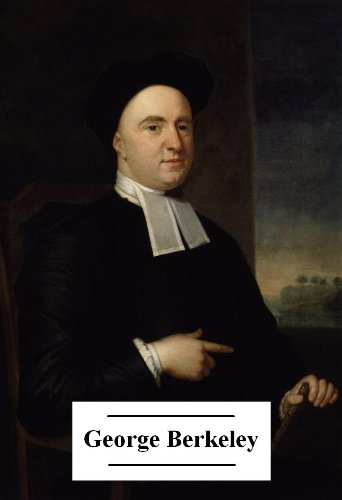
| 11. The Works of George Berkeley by George Berkeley | |
 | Kindle Edition:
Pages
(2010-01-20)
list price: US$0.99 Asin: B0035FZL2O Average Customer Review:
Canada | United Kingdom | Germany | France | Japan |
|
Editorial Review Product Description Customer Reviews (3)
The most important work of Berkeley is "A Treatise Concerning the Principals of Human Knowledge [Part I]" (there is no part II - the partial manuscript for it was lost while Berkeley was travelling). "Principals" has two principal sections: one epistemological and the other metaphysical. In the epistemological section of "Principals", Berkeley argued that when we use words to describe entities which we literally cannot imagine, we block our own understanding - "that we have first raised a dust and then complain we cannot see." We can use words to stand for a multiplicity of different entities (such as "triangle" to stand for all possible triangles), but that an abstract triangle, one that is "neither oblique nor rectangle, neither equilateral, equicrural, nor scalenon, but all and none of these at once", (here he was quoting Locke) is an impossibility. The significance of this is subtle, but critical to his argument since he came back to it again and again throughout his works to differentiate between meaningful and meaningless words. Having laid out a differentiation between meaningful and meaningless words in his epistemological section, Berkeley then proceeded to the metaphysical section, in which he attacked the idea of matter, principally as expounded by Locke. Berkeley argued that matter is a meaningless word, signifying nothing that we can imagine. He argued that all of the properties that materialists ascribe to matter are either perceptions (non-existent in the absence of a perceiver) or utterly meaningless. Thus, Berkeley argued that a theory of matter to account for our perceptions was a meaningless proposition. Our perceptions of the world (our ideas of it), however, still required an explanation. To this end, Berkeley argued the things we perceive are ideas that are put into our minds by God. They differ from things that we imagine by our lack of control over them, and in their consistency and vividness - properties that are the result of their being the product of a mind other than and vastly more powerful than our own. In this argument, Berkeley felt that he had discovered a powerful counter to atheism, that his theistic idealism could account for the world whereas atheism, with its dependency on matter, could not. "Principals" did not meet with the acceptance that Berkeley had hoped for it (to say the least), so he presented his metaphysics again in a more accessible form in "Three Dialogues Between Hylas and Philonous." "Dialogs" is easier to read, but not as good a source as "Principals" for really understanding Berkeley. In either form, the critical side of his argument against matter had and has great force, even if his proposed alternative has never attracted many adherents. Berkeley also presented his metaphysics again in less detail in two other works: the fourth dialogue in "Alciphron; or, the Minute Philosopher" and in "The Theory of Vision, or Visual Language, Shewing the Immediate Presence and Providence of a Deity." "Commonplace Book - Berkeley's notes from 1705-08." is a collection of short notes that Berkeley jotted down while he was working through his philosophical ideas and preparing to publish them. "Commonplace Book" itself was never intended for publication but is of interest in understanding how Berkeley's thought developed. Berkeley also wrote on scientific matters, consistent with his views as laid out in "Principals", on vision in "An Essay Towards a New Theory of Vision", (which he actually wrote before "Principals" which he hoped would soften the audience for the presentation of the full theory in "Principals" and also in "De Motu" (On Motion). Berkeley also wrote on mathematics, again consistently with his philosophical writings in "The Analyst; or a Discourse Addressed to an Infidel Mathematician" and the follow-on works "A Defense of Free-Thinking in Mathematics" and "Reasons for not Replying to Mr. Walton's Full Answer". "The Analyst" - an attack on the foundations of Newton's calculus, set off a furor in British mathematics that lasted a century. "Alciphron" alluded to earlier, was a work of Christian apologetics, and was Berkeley's longest work. It is not without interest today, but it has not aged as well as his other works mentioned above. "Passive Obedience: or The Christian Doctrine of not resisting the Supreme Power", was a work of political philosophy. It is not at all connected with his other philosophical works and was regarded as dangerous and somewhat subversive. The last work of Berkeley that deserves individual mention is "Siris: A Chain of Philosophical Reflexions and Inquiries Concerning the Virtues of Tar-Water and Divers Other Subjects Connected Together and Rising From One Another", a curious (to put it mildly) work on both "tar-water", which Berkeley held to be a panacea, and metaphysical speculation inspired by reading classical sources (if you don't know what tar-water is, don't worry - you can get the recipe in "Siris"). "Siris" was written near the end of Berkeley's life. The metaphysical speculation in it did not constitute an abandonment of his earlier ideas, but it did not strike me as at all developed - he was going somewhere new but had not yet arrived when he wrote it. Apart from his intellectual endeavors above, Berkeley also led a full life and was an active Anglican clergyman. He travelled, wrote on purely religious matters, and also wrote in support of social justice and tolerance. These works round out the man, as does "Life of Berkeley", Fraser's biographical essay at the start of the collection. The collection is not without its flaws. Chief among these is that "De Motu" is left in Latin and untranslated both it and "The Analyst" really require more extensive introductions to be easily understood by a contemporary reader. Douglas Jesseph's "De Motu and The Analyst", Volume 41 of "The New Syntheses Historical Library" is a highly recommended supplement to the "Works".
Volume I: Life of Berkeley - by Fraser. Commonplace Book - Berkeley's notes from 1705-08. An Essay Towards a New Theory of Vision. A Treatise Concerning the Principals ofHuman Knowledge [Part I]. Three Dialogs Between Hylas and Philonous. DeMotu - this is in Latin and is NOT translated. Volume II: Alciphron;or, the Minute Philosopher. The Theory of Vsion, or Visual Language,Shewing the Immediate Presence and Providence of a Deity. VolumeIII: The Analyst; or a Discourse Addressed to an InfidelMathemetician. A Defense of Free-Thinking in Mathematics. Reasons fornot Replying to Mr. Walton's Full Answer. Siris: A Chain of PhilosophicalReflexions and Inquiries Concerning the Virtues of Tar-Water and DiversOther Subjects Connected Together and Rising From One Another. ThreeLetters to Thomas Prior, Esq., and a Letter to the Rev. Dr. Hales, on theVirtues of Tar-Water. Farther Thoughts on Tar-Water. VolumeIV: Arithmetica Absque Algebra Aut Euclide Demonstrata -this is inLatin and is NOT translated. Miscella Mathematica... - this is in Latinand is NOT translated. Description of the Cave of Dunmore. TheRevelation of Life and Immortality. Passive Obedience: or The ChristianDoctrine of not resisting the Supreme Power... Essays in theGuardian. Two Sermons Preached at Leghorn in 1714. Journal in Italy in1717, 1718. An Essay Toward Preventing the Ruin of GreatBritain. Verses on the Prospect of Planting Arts and Learning inAmerica. Notes of Sermons Preached at Newport in Rhode Island and in theNarragansett country in 1729-31. A Sermon Preached before theIncorporating Society for the Propagation of the Gospel in ForeignParts...1732. The Querist, containing several queries, proposed to theconsideration of the public. A Discourse Addressed to Magistrates and Menin Authority. Primary Visitation Charge Delivered to the Clergy of theDiocese of Cloyne. Address on Confirmation. A Letter to Sir John James,Bart., on the Differences Between the Roman and Anglican Churches. TwoLetters on the Occasion of the Rebellion in 1745. A Word to the Wise: or,an Exhortation to the Roman Catholic Clergy of Ireland. Maxims ConcerningPatriotism. Appendix: The First Edition of the Querist. GeneralComments: The books are very well produced. Cloth bound, acid-free paper,burgundy colored, with a simple and elegant design. All in all, this is ahandsome edition that will physically grace your library. Fraser'scommentary and footnotes are helpful and abundant (note: this is a reprintof a 1901 work, so there is of course no commentary on how Berkeley hasbeen read in this century). The only thing I would have wanted differentthan what I got would have been translations of the Latin essays intoEnglish. Insofar as Berkeley the philosopher, he is one of the majorphilosophers of history, and one of the clearest writers. He is also oftenscathingly funny. ... Read more | |
| 12. George Berkeley: Three Dialogues Between Hylas and Philonous (Longman Library of Primary Sources in Philosophy) by George B Berkeley, Michael B. Mathias, Daniel Kolak | |
 | Paperback: 160
Pages
(2006-12-29)
list price: US$12.00 -- used & new: US$9.50 (price subject to change: see help) Asin: 0321276132 Canada | United Kingdom | Germany | France | Japan |
|
Editorial Review Product Description Part of the “Longman Library of Primary Sources in Philosophy,” this edition of Berkeley's Three Dialogues Between Hylas and Philonous is framed by a pedagogical structure designed to make this important work of philosophy more accessible and meaningful for readers. A General Introduction includes biographical information on Berkeley, the work's historical context, and a discussion of historical influences, and a conclusion discusses how the work has influenced other philosophers and why it is important today. Annotations and notes from the editor clarify difficult passages for greater understanding. A bibliography gives the reader additional resources for further study. | |
| 13. A Study of George Berkeley's Philosophy in the Light of the Philosophy of St. Thomas Aquinas by John Joseph Laky | |
| Paperback:
Pages
(1950)
Asin: B001IAO02U Canada | United Kingdom | Germany | France | Japan | |
| 14. George Berkeley Alciphron in Focus (Philosophers in Focus) | |
 | Paperback: 248
Pages
(1993-04-19)
list price: US$36.95 -- used & new: US$32.08 (price subject to change: see help) Asin: 0415063736 Canada | United Kingdom | Germany | France | Japan |
|
Editorial Review Product Description In his introduction, David Berman shows that Alciphron has a closer connection with Berkeley's Immaterialist philosophy than is generally thought. The only edition available of Alciphron, this book also includes critical essays which will assist the student in evaluating the theoretical importance of Berkeley's work. | |
| 15. Berkeley's Philosophical Writings by George Berkeley | |
| Paperback:
Pages
(1965-06)
list price: US$6.95 -- used & new: US$10.99 (price subject to change: see help) Asin: 0020641702 Canada | United Kingdom | Germany | France | Japan | |
| 16. The Works of George Berkeley, Volume 1 by George Berkeley, Joseph Stock | |
 | Paperback: 512
Pages
(2010-03-21)
list price: US$39.75 -- used & new: US$22.33 (price subject to change: see help) Asin: 1147741638 Canada | United Kingdom | Germany | France | Japan |
|
Editorial Review Product Description | |
| 17. Locke, Berkeley, Hume: Central Themes by Jonathan Bennett | |
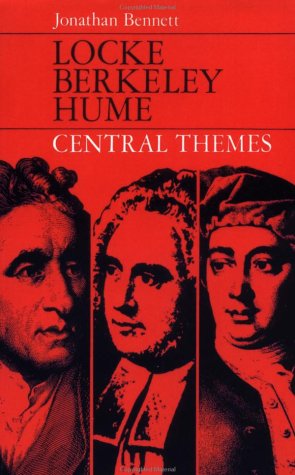 | Paperback: 372
Pages
(1971-05-15)
list price: US$55.00 -- used & new: US$25.00 (price subject to change: see help) Asin: 0198750161 Canada | United Kingdom | Germany | France | Japan |
|
Editorial Review Product Description | |
| 18. The Works of George Berkeley: Volume 2 by George Berkeley | |
 | Paperback: 461
Pages
(2001-04-27)
list price: US$19.99 -- used & new: US$19.99 (price subject to change: see help) Asin: 1402184328 Canada | United Kingdom | Germany | France | Japan |
|
Editorial Review Product Description | |
| 19. Querist by George Berkeley | |
| Paperback: 60
Pages
(2010-03-07)
list price: US$20.00 -- used & new: US$20.00 (price subject to change: see help) Asin: 1153741520 Canada | United Kingdom | Germany | France | Japan |
|
Editorial Review Product Description | |
| 20. Treatise Concerning the Principles of Human Knowledge: Three Dialogues Between Hylas and Philonous by George Berkeley, G. J. Warnock | |
 | Paperback: 288
Pages
(1986-02)
list price: US$8.00 -- used & new: US$8.00 (price subject to change: see help) Asin: 0875484468 Canada | United Kingdom | Germany | France | Japan |
| 1-20 of 100 | Next 20 |
 Hylas and Philonous
 peculiar small press edition, but not bad