e99 Online Shopping Mall

Geometry.Net - the online learning center Help  
Home  - Philosophers - Camus Albert (Books)

  1-20 of 100 | Next 20
A  B  C  D  E  F  G  H  I  J  K  L  M  N  O  P  Q  R  S  T  U  V  W  X  Y  Z  

click price to see details     click image to enlarge     click link to go to the store

$14.12
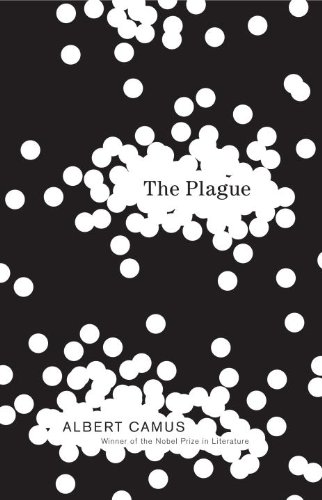
1. The Plague, The Fall, Exile and
$7.29
2. The Rebel: An Essay on Man in
$6.67
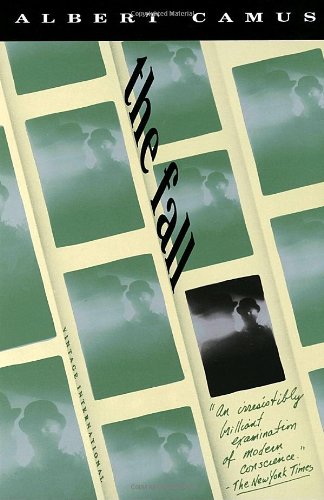
3. The Fall
$7.31
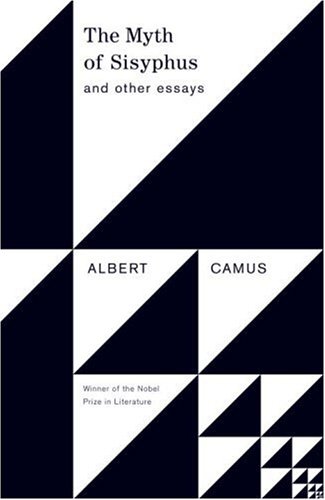
4. The Myth of Sisyphus: And Other
$15.90
5. Albert Camus: A Biography
$14.88
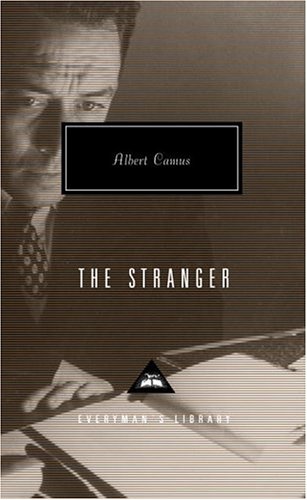
6. The Stranger
 
7. THE STRANGER
$12.31
8. Stranger
 
$7.86
9. Resistance, Rebellion, and Death:
 
10. Albert Camus: L'Étranger
$8.08
11. Exile and the Kingdom
$17.41
12. Albert Camus the Algerian: Colonialism,
 
$8.96
13. Caligula and Three Other Plays
 
$4.90
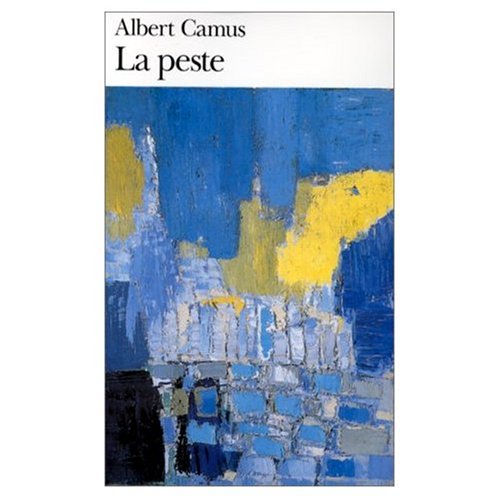
14. The Plague
$5.60
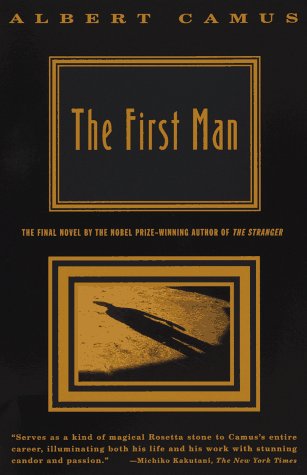
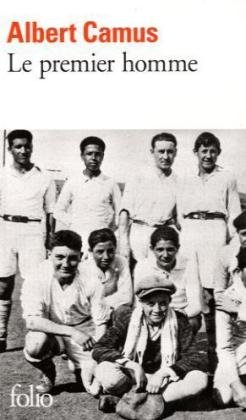
15. The First Man
 
$12.00
16. Lyrical and Critical Essays
17. Looking for Heroes in Postwar
 
18. Spiritual Quest of Albert Camus
19. Notebooks 1935-1951
$11.63
20. Camus at "Combat": Writing 1944-1947

1. The Plague, The Fall, Exile and the Kingdom, and Selected Essays (Everyman's Library)
by Albert Camus
Hardcover: 656 Pages (2004-08-17)
list price: US$23.00 -- used & new: US$14.12
(price subject to change: see help)
Asin: 1400042550
Average Customer Review: 5.0 out of 5 stars
Canada | United Kingdom | Germany | France | Japan
Editorial Review

Book Description
(Book Jacket Status: Jacketed)

From one of the most brilliant and influential thinkers of the twentieth century–two novels, six short stories, and a pair of essays in a single volume. In both his essays and his fiction, Albert Camus (1913—1960) de-ployed his lyric eloquence in defense against despair, providing an affirmation of the brave assertion of humanity in the face of a universe devoid of order or meaning.

The Plague–written in 1947 and still profoundly relevant–is a riveting tale of horror, survival, and resilience in the face of a devastating epidemic. The Fall (1956), which takes the form of an astonishing confession by a French lawyer in a seedy Amsterdam bar, is a haunting parable of modern conscience in the face of evil. The six stories of Exile and the Kingdom (1957) represent Camus at the height of his narrative powers, masterfully depicting his characters–from a renegade missionary to an adulterous wife –at decisive moments of revelation. Set beside their fictional counterparts, Camus’s famous essays “The Myth of Sisyphus” and “Reflections on the Guillotine” are all the more powerful and philosophically daring, confirming his towering place in twentieth-century thought. ... Read more

Customer Reviews (5)

5-0 out of 5 stars Haven't even read it, but
I've read the books and the essays, Vintage has them seperately, but get them here.Camus is a secular "god,"one of the greatest (and bravest) writers of the twentieth century.Don't trust me, just read something short.(Maybe the editorial from "Combat" on the dropping of the atom bomb in Aout 1945.)

5-0 out of 5 stars Moving, Thought-Provoking, and Genius
I had read Camus's "The Stranger" and was taken aback by the wonderful understanding he had of the human mind. I needed to read more, and in this handsome book was a great feast for the mind. It is not meant to be read all at once, I found it helpful to read another book inbetween the full-length novels within the collection.
There has been no singular work that has moved me as much as the "The Plague, The Fall, Exile and the Kingdom, and Selected Essays", it goes beyond existentialism and his philosophy. It delves into the very mind, that which makes us human. The stories are not lost through their translation from French, the characters are the people you see in the streets, but they are put under the eye of a profound intellectual. It is more than worth the price, and the time spent reading the words is time well spent. His contribution to modern philosophy and existentialism is unchallenged, but he is also an amazing author and voice. The Plague may be the highlight of the book, but one will not lose enthusiasm reading that which follows.

5-0 out of 5 stars Excellent
Albert Camus is one of my favorite authors. His stories are some of the greatest of the past century.

5-0 out of 5 stars The Ultimate Albert Camus Anthology
If you're a fan of existentialism or just great literature then this is the book for you.Just by buying this set you're already saving money and the hardcover makes it great for book shelf eye candy.If you want to read what each section is about then just read the next review but if you're reading this, take into consideration that Camus wasn't awarded the Nobel Prize in Literature for nothing.He was deeply involved in the struggles for Algerian freedom and you can tell from his novels that he is consciensly involved with the questions of the absurd and the freedom of man in a messed up world.These books and essays will make you think and start to ask yourself questions.

5-0 out of 5 stars Love, Exile, and Suffering Illuminated by Life around Death
What is the meaning of life? For many, that question is an abstraction except in the context of being aware of losing some of the joys of life, or life itself. In The Plague, Camus creates a timeless tale of humans caught in the jaws of implacable death, in this case a huge outbreak of bubonic plague in Oran, Algeria on the north African coast. With the possibility of dying so close, each character comes to see his or her life differently. In a sense, we each get a glimpse of what we, too, may think about life in the last hours and days before our own deaths. The Plague will leave you with a sense of death as real rather than as an abstraction. Then by reflecting in the mirror of that death, you can see life more clearly.

For example, what role would you take if bubonic plague were to be unleashed in your community? Would you flee? Would you help relieve the suffering? Would you become a profiteer? Would you help maintain order? Would you withdraw or seek out others? These are all important questions for helping you understand yourself that this powerful novel will raise for you.

The book is described as objectively as possible by a narrator, who is one of the key figures in the drama. That literary device allows each of us to insert ourselves into the situation.

Let me explain the main themes. Love is expressed in many ways. There is the love of men and women for each other. Dr. Rieux's wife is ill, and has just left for treatment at a sanitarium. Rambert, a journalist on temporary assignment, is separated from his live-in girl friend in Paris. Dr. Rieux's mother comes to stay with him during his mother's absence, so there is also love of parent and child. The magistrate also loses his son to the plague after a desperate battle. Separations occur because of the quarantine on Oran, which causes love to be tested. What is love without the other person being present? The characters find that their memories soon become abstractions. But they reach out to establish new love with each other. Tarrou, who is also caught in Oran, decides or organize a volunteer corps to help with the sick and dead. Rambert decides to stay in Oran to help after having arranged to escape the quarantine. The survivors find succor in increasing closeness with each other. Rieux and Tarrou become close, almost like brothers. Even Rieux's patients become people with whom he develops an emotional bond, even though the waves of death become an abstraction as he can do little to avert them. The priest figure also helps to explore the notion of love for God and God's love for us. The exile theme is reinforced by the quarantine. People cannot leave Oran. The disease itself causes that exile to become worse. If someone in your household becomes ill, each well person has to be quarantined. So you may be living in a tent in the soccer stadium wondering what is happening to the rest of your family. Cottard is a criminal who is on the run from the authorities. He is in despair as the plague begins, and tries to kill himself. The distractions of the plague keep the authorities from troubling him, so the period of the plague is an exile from his criminal past.

Suffering is easy to explain. Bubonic plague came in two forms in the book. Both brought painful and rapid death, with few reprieves. There is high fever, painful swelling or difficulty in breathing, and enormous pain. Those who tend the suffering also suffer, from the enormous workloads, the sense of futility, and the fear that they, too, will be next.

Camus does a nice job of pointing out that these themes also recur in everyday life. We just don't see them very clearly. The people in Oran live in an ugly city that deliberately built itself away from the beauty of the ocean on a sun-scorched plateau plagued by winds. They take little time to enjoy each other or the ocean, because they are caught up with making money. Commerce is their passion. So they cut themselves off from love, in an exile of spirit, which causes them to shrivel and suffer emotionally even before the plague comes. Tarrou also describes is own sense of the plague in everyday life when he discovers that his father is a prosecuting attorney who helps bring criminals to the justice of a firing squad. Even that faint connection of not trying to stop the legal killing causes Tarrou to feel like he carries the plague within him.

The book is masterful in its use of metaphor. In the beginning, dying rats and small animals presage the plague attacking humans. At the end, their return presages the return of normal life to Oran. The scenes alternate between illuminating the main themes in the context of the physical plague and the emotional plague. Religion is used as a bridge between the two, raising the fundamental question about what God's purpose is in unleashing the plague. The priest is fully tested in his love of God through this development, which is one of the most moving parts of the book.

I have read the book both in French and in English, and found this translation to be a perfectly appropriate one. There are few nuances that you will miss by reading this in English. Obviously, if you read French well, you should read the book in its original form.

This book is an excellent example of why Albert Camus was named a Nobel Laureate in Literature.

After you read this great novel, I encourage you to consider the subject of complacency. That's the author's ultimate target. Where are you complacent in ways that cost you love, closeness with others, and happiness? What else is complacency costing you? How can you help others learn to overcome complacency in loving, happy ways without the spectre of death to help you? ... Read more


2. The Rebel: An Essay on Man in Revolt
by Albert Camus
Paperback: 320 Pages (1992-01-01)
list price: US$12.95 -- used & new: US$7.29
(price subject to change: see help)
Asin: 0679733841
Average Customer Review: 4.5 out of 5 stars
Canada | United Kingdom | Germany | France | Japan
Editorial Review

Book Description
By one of the most profoundly influential thinkers of our century, The Rebel is a classic essay on revolution. For Albert Camus, the urge to revolt is one of the "essential dimensions" of human nature, manifested in man's timeless Promethean struggle against the conditions of his existence, as well as the popular uprisings against established orders throughout history. And yet, with an eye toward the French Revolution and its regicides and deicides, he shows how inevitably the course of revolution leads to tyranny. As old regimes throughout the world collapse, The Rebel resonates as an ardent, eloquent, and supremely rational voice of conscience for our tumultuous times.

Translated from the French by Anthony Bower. ... Read more

Customer Reviews (21)

4-0 out of 5 stars The Rebel meets every expectation set out by The Stranger and The Myth of Sisyphus
Camus' The Rebel is yet another brilliant outcry of the human conscience, the urge to revolt and man's timeless struggle against the conditions of his existence. Albert Camus is one of the most profoundly influential thinkers of this century. The Rebel is a definite must read for lovers of L'etranger and Myth of Sisyphus. Camus maintains his signature style of short, simple yet hard-hitting sentences that leave a lot to the imagination, thus giving the reader a chance to re-create their our vision. One of the best writers to come out of France, Camus' sharp eye toward the French Revolution shows how inevitably the course of revolution leads to tyranny. Much like his predecessors such as Kierkegaard and Dostoevsky, Albert Camus writes with an unshakable decency and his work is eloquent and supremely rational.

5-0 out of 5 stars Camus eclipses nihilism and brings news of a new age!
I first became interested in Albert Camus after reading a quote from The Rebel online."I rebel, therefore we exist" was the quote, and I must admit that, after reading the book, there has never been anything truer written.When I was in a bookstore a few months ago I found a copy of The Rebel, which is apparently a rare sight these days, since The Rebel is often ignored.Camus is one of the most famous writers of the 20th century, so why would one of his masterpieces be ignored?

It has been ignored, from what I can gather, because it is a philosophical work in which Camus pulls no punches and examines thoroughly why the excessive crime and violence of our era exist.Camus explains how, in both philosophy and politics, the reigning attitude has been one of nihilism for the past two centuries.This nihilism, being necessarily without an aim, leads to dictatorship and gross amounts of suffering for humans, no matter what principles it claims on the surface.Camus systematically destroys those who have used the philosophies of Hegel, Nietzsche, Marx, surrealism, u.s.w., to justify their murderous plots.

Camus proposes that instead of nihilism and murder, we take to heart the ancient concepts of moderation and responsibility.Camus' destruction of modern governents and his proposals of these ancient ideas seem to have made this book unpopular.In this era of oppression, it is easy to ignore what offends us or makes us think.Camus gives the reader no choice.He must either raise a defiant fist to the giants of power, or he must give way to these minds that are utterly without scruples.I admire Camus deeply because of this--he has summed up the ideas I have been carrying around for years--but some will be deeply hurt by his comments.I leave you with a final thought: everyone is partly to blame for the state of the present and the future.You have the choice to make it either good or bad.

5-0 out of 5 stars An inquiry into the ethics of rebellion
This book followed his 'The Myth of Sisyphus'. Camus explains in the beginning that while his previous work was about the question of suicide, this one is about the other aspect of taking human lives - other people's lives (murder). The book however is not so much about murder, as it is about the ethics of rebellion.

At a deeper ideological level, Camus was reacting to the excesses of Soviet style communism with which he disagreed. He felt that rebellion is always at the risk of falling prey to the very tyranny it revolts against and destroys.

Camus however does not believe that rebellion is therefore not desirable. His humanitarian ideals harmonize with the dream of rebellion. So he tries to answer the question of how rebellion can escape falling prey to tyranny, albiet unsuccessfully, by taking the examples of Russian nihilists who fought tyranny through murder, but nevertheless punished themsleves for that act (because the act of murder becomes tyrranny if routinized).

In all his works, Camus is generally good with analysis but poor in his conclusions. This book is brilliant for its analysis of the ethics of rebellion and the dilemmas of a rebel. It raises important questions and leaves you free to find your own answers. That also harmonizes better with the spirit of existentialism.

5-0 out of 5 stars The Logic of Rebellion
Without straying into the dogamtism or the sentinmental romantic mindset that Camus warns of, this book had a profound affect on me as it helped me reconcile my 'reasoned' agnosticism and irreligion with my 'intuitive' socialism. I have since come to the conclusion (with the help of Camus) that both the above aspects of my world-view are logical, and perhaps most importantly,that it is necessary to temper whatever ideolgies you happen to find yourself agreeing with, your own intuitive morality.

This is in my opinion the crux of The Rebel as Camus examines the history of religous (metaphysical) and social rebellion. From the Marquis De Sade and Neitzche in the former to the French Revolution and USSR in the later.

Camus seems to have started from a point of being at a loss to explain the seeming contradictions in apparently well meaning revolution's that dole out (or promise freedom over here) and practice tyranny over there. Camus shows the depth and originality of his thinking by showing that these contradictions can be seen as the logical conclusions to total obediance to the doctrines of Marx, Hegel and Rosseau amoungst others ( these contradictions are found in the works themselves of Marx et al as these thinkers have been 'slaves' to their own logic which can be seen as analagous to Weber's notion of 'over-rationalism' and the 'iron cage' ). The result is a wise and profound analysys of social rebellion and a proscription for future reform as well as presenting a kind of 'eudaimon' for the contemporary existentialist.

5-0 out of 5 stars The Unsung Work of Camus
This is largely the explanation behind all of Camus's works.Everything Camus ever wrote, from "The Myth of Sisyphus" to "The Plague," had some form of rebellion.What kind, though?In order to understand, you must read this book.There are different types of rebellion (metaphysical and romantic), and different types of circumstances surrounding both.Camus seeks to explore individual's humanity through the notion of rebellion.

This book is not for the faint of heart, but Camus fanatics will enjoy this extremely well-written work. ... Read more


3. The Fall
by Albert Camus
Paperback: 160 Pages (1991-05-07)
list price: US$11.95 -- used & new: US$6.67
(price subject to change: see help)
Asin: 0679720227
Average Customer Review: 4.5 out of 5 stars
Canada | United Kingdom | Germany | France | Japan
Editorial Review

Book Description
Elegantly styled, Camus' profoundly disturbing novel of a Parisian lawyer's confessions is a searing study of modern amorality. ... Read more

Customer Reviews (90)

3-0 out of 5 stars Am I missing Something?
"The Fall" was my introduction to Camus.I believed it was high time that I read the work of this Nobel Laureate and, so, in I dived.

I regret to say that I was disappointed.Camus' short work is a monologue from its principal character, Jean-Batiste Clamence, who serves as the narrator of the tale.First person grammar is used to tell what can best be described as a very meandering story.To use the term plot would be unfair.The book simply has little or no such plot.

Now, it is probably quite unfair to come to a sweeping conclusion on the basis of one short work.The work of Camus is widely praised.Many people deem him to be one of the literary giants of the twentieth century.So, it is incumbent on me to read further into the work of Camus.I trust that my efforts will be rewarded in due course.For the moment, I feel somewhat cheated.

5-0 out of 5 stars Probably Too Complicated To Fully Describe in a Brief Review Here
Albert Camus (1913 - 1960) was a French writer and philosopher. He is often associated with existentialism, but Camus rejected any ideological classification. Camus was a young recipient of the Nobel Prize for Literature when he became the first African-born writer to receive the award in 1957. He died in a car crash only three years after receiving the award. He was a social activist and Communist, and fought with the French resistance in WWII. Later he rejected Communism. The present book is one of his last works.

Camus combined his philosophy with his writing skills to produce literary art. The end result is sometimes complicated. It takes a close and careful examination to see exactly what points he is trying to make. Camus descibed The Stranger as a story about someone who was telling the unvarnished truth, but it was more complicated than that.

For The Fall, the analysis needed to discuss the work is far beyond the scope of a simple one page review as we have here. I humbly suggest that those wishing to learn more about Camus and The Fall should read some of the lengthy analysis found elsewhere.

Back then to The Fall and two basic points. As most know, the present work is a monologue set in an Amsterdam bar and parts are set on a foggy winter evening. A former Paris lawyer tells his tale to a listener. This is not a novel as we think of a novel but a slightly confused story in prose. In any case, there are two major points and a few others that we do not have space to discuss.

The first is that Camus's ideas and his theory can be found in the non-fiction work The Myth of Sisyphus (Le Mythe de Sisyphe) (1942): it is about "the absurd sensitivity." That idea is continued here in The Fall. We cannot conclude that Camus"found religion" in the present work nor are there any changes in Camus's philosophy. Any idea that he found religion is a misunderstanding of Camus's method. To say he found religion or God would be a bit like having Dostoevsky come out as an aetheist in one of his final books, i.e.: impossible. Also, Camus remains involved in "the confrontation of this irrational and the wild longing for clarity whose call echoes in the human heart." This is a continuation of his past themes, but with a different setting and with a different plot and characters.

Secondly, a similarity exists in the existential condition of loneliness and isolation that is "man's lot" in this world without "transcendental hopes."So, the character of Jean-Baptiste Clamencebrings us the monologue and he describes and he reacts to his inner discovery. He does so in an extremely ironic fashion - and that is part of the "art" part of the novel along with accepting the notion of the absurd.

Overall, this is a good book from Camus that takes only a few hours to read and probably will take much more time to understand. Some will want to read it a second time, or even three or four times. It is far more complicated than The Stranger, and it is less straighforward to read and understand.

This is one instance where you should look beyond the reviews here to get a deeper understanding of the work; and, it is probably best to read some of the detailed analysis found elswhere in critical books or on the net.

5-0 out of 5 stars Superb Dramatic Monologue
As others have stated so far this is an interesting and deep novel, one that drags you into its questionable and illusory narration through the use of the first person monologue. With this in mind, the novel becomes necessarily more complex and demands the reader's attention at all times. Nothing should be taken for granted - not the speaker's ideologies, professed history, and certainly not the way in which he is talking to another character. The manner in which the tone and companionship moves throughout the novel is as important as anything else - do not for a second fall into the persistent trap of thinking that Monsieur Clamence is speaking to you, the reader.

The novel requires no extensive knowledge of philosophic topics in order to be appreciated, however, having that knowledge will only enrich the experience. Anyone with an interest in ethics, social roles, confession or simple artistic capability will enjoy this short, but dense novel.

On a final note, the novel presents a startling insight into the nature and power of confession, which is ultimately what Clamence is performing (reliable or not). Foucault's the History of Sexuality Part 1 speaks to this matter, one which is every bit as pertinent to the content and experience of *The Fall* as is any other philosophic or artistic reference, and one that is consistently relevant.

3-0 out of 5 stars Not the First Choice for Camus Fans
Having read Albert Camus's two most famous novels, "The Stranger" and "The Plague", I had high expectations for "The Fall."However, this novel comes up a bit short compared with the others.Although Camus does capture the angst and insecurity of the protagonist through his "confession," the novel lacks the poignancy and coherency of his better works.

Perhaps I am being too harsh, though, for this is still a thought-provoking novel.In it, we are treated to a monologue by an ex-lawyer who is "confessing" his past transgressions to a potential client of his.The narrator, who gives himself the pseudo name Jean-Baptiste Clamence, is unreliable at best.He suffers from delusions of self-grandeur and an innate need for attention and self-importance.The reader is left to question the author's version of events, as his diatribes and confessions render an image of a selfish, self-absorbed man who views himself superior to all others.Indeed, his haughty and arrogant nature has maligned himself with his former colleagues and led to his "fall" from grace.

Although the narrator may be abhorrent in some respects, his weaknesses and failures lead us to ponder how we might behave in a similar situation.In particular is the episode of the woman and the bridge, where he walked away and never turned back after he heard a woman plunge into the Seine River.This haunts him the rest of his days, as he is deathly afraid of encountering a similar situation again.Perhaps it is not the thought of another woman drowning that haunts him, but the revelation that he would not jump in and rescue her merely because he does not want to become cold and wet.

The theme of judges and the ability to judge each other recurs throughout.In a literal sense, Jean has a stolen painting of "The Just Judges" in his abode, whose icy gaze looks out into his life.Indeed, he views himself as the ultimate judge of people, and is fearful of anyone rendering the same judgment upon him.Although an avowed atheist, it is his vague fear of the "Last Judgment" of God that troubles him the most, unlikely as it may be.

There is no action in this novel, as all events are conveyed in flashbacks by the narrator.Indeed, this is is merely one side of a conversation that takes place over a number of days in Amsterdam.At first, we are given a vague view of the narrator as he attempts to piece together his life story through flashbacks.As this jigsaw puzzle nears completion, we are at last rewarded with an understanding of the narrator and his failings.Yet, the story takes time to develop and is droll and dry at times.

Although "The Fall" may fall short in measuring up to Camus's other masterpieces, it is still worth the time to read it.Still, for a Camus novice, "The Plague" or "The Stranger" are better choices.

4-0 out of 5 stars Clearing the air
It is essential to note that Camus was raised in the Catholic tradition, however widely he distanced himself from it in later life; he was not Jewish as a previous reviewer states, perhaps confusing only in that regard Camus with Elie Wiesel.

In all his work, Camus deals with the dilemma posed by the injustices suffered by all humanity. Believing himself faced with the choice between an all-powerful God who allows man's inhumanity to man and a benevolent God who seems powerless to prevent injustice, Camus chose no God at all. I can't agree with him--these two options are not the only possible explanations of injustice--but I respect the courage with which, time and again, Camus confronts us with the question: why do the innocent suffer?

In doing so, he is no respecter of persons, nor is Wiesel. Both are or were profoundly moved by injustice in all forms and instances, and each champions the human rights of all people. ... Read more


4. The Myth of Sisyphus: And Other Essays
by Albert Camus
Paperback: 224 Pages (1991-05-07)
list price: US$12.95 -- used & new: US$7.31
(price subject to change: see help)
Asin: 0679733736
Average Customer Review: 4.5 out of 5 stars
Canada | United Kingdom | Germany | France | Japan

Customer Reviews (46)

5-0 out of 5 stars Years ago
This popped up on my screen to be reviewed, so what the hell.I read this book many years ago, and I liked it.It is if I remember a collection of philosophical/ethical essays.I preferred his collection of descriptions.I know the story of Sisyphus, and I remember that Camus compared that to the human condition.That's certainly how it feels when it gets near payday.I preferred Sartre.I thought he was more interesting and humane and complex.I never understood Nausea (though I loved the chapter in the portrait gallery), never understood his point though of course the story as a story made sense.It's one of my favorite books.My favorite book for many years, however, was The Stranger.I think it's a gem.(Nausea, Sartre; Stranger, Camus.)For me the overall problem with Camus is his obsession with violence.I don't like it and now that I'm older I won't read it.His first book (A Happy Death, the main character of which has thesame name as the central character in The Stranger, Mersault, why?) is a nightmare.Camus said that the most important thing in life is justice.In my pre-Bush years, that always struck me as a strange, almost superfluous credo.I don't recommend this book to anyone but philosophy majors (I'm not one), but (if you can stand things like Caligula), Camus is an interesting writer (not as much as Sartre I don't think), and I recommend over Sisyphus his collection of descriptions.

5-0 out of 5 stars Not an easy but a worthwhile read
I don't think Camus could have written a bad book if he had tried.In this case, I think it's accurate to say that this is the sort of book that makes you think and enjoy thinking.

5-0 out of 5 stars amazing
i have read this book in hebrew
it is absolutely great
i recommend it to everyone who wants to "think outside of the box" and had wondered about the meaning of life...

4-0 out of 5 stars Life's the thing
The myth of Sisyphus is a model essay to comfort people in those moods of bleak, existential despair that assail us all from time to time. The moral to emerge from this fable is a simple one - life in the post Nietzsche age, with no god, is absurd, there is no overarching meaning outside life itself, but there is still great nobility in fighting the good fight right to the death.

The best part comes for those readers who stick it out through the final appendix: Camus offers a stunning commentary of Kafka's work - the fate of his tragic protagonists in 'The Trial' and 'The Castle', viewed in light of the universal plight of mankind. Very telling is his addendum which acknowledges that he is not precluding aesthetic critiques of Kafka's work. Great art offers so much, yet resolves nothing. Like life.

3-0 out of 5 stars A treatise on absurdism.
The Myth of Sisyphus is a treatise on absurdism, and while absurdism is an admittedly interesting topic in its own right, Camus never convincingly demonstrates a connection between the absurd and the impulse to suicide.

The average man could care less about the limits of knowledge, the evasions of nature, and all of the other epistemological concerns that Camus manages to exalt to godlike stature in the concept of the absurd.He posits a sort of ethic in which we are expected to ignore the pointless nature of life, and continue to "play the game", because somehow this is in accordance with his absurd valuations:

"It is essential to die unreconciled and not of one's own free will. Suicide is a repudiation. The absurd man can only drain everything to the bitter end, and deplete himself. The absurd is his extreme tension, which he maintains constantly by solitary effort, for he knows that in that consciousness and in that day-to-day revolt he gives proof of his only truth, which is defiance."

As such, his conclusions are not conclusions as much as an attempt by Camus to impose his values on the reader -- I asked for enlightenment and instead Camus does the intellectual equivalent of taking me to the Church of the Absurd (TM). ... Read more


5. Albert Camus: A Biography
by Herbert R. Lottman
Paperback: 805 Pages (1997-04)
list price: US$24.95 -- used & new: US$15.90
(price subject to change: see help)
Asin: 3927258067
Average Customer Review: 4.0 out of 5 stars
Canada | United Kingdom | Germany | France | Japan
Editorial Review

Book Description
When Albert Camus died in a car crash in January 1960 he was only 46 years old - already a winner of the Nobel Prize for Literature and a world figure - author of the enigmatic The Stranger, the fable called The Plague, but also of the combative The Rebel - which attacked the 'politically correct' among his contemporaries.

Thanks to his early literary achievement, his work for the underground newspaper Combat and his editorship of that daily in its Post-Liberation incarnation, Camus' voice seemed the conscience of postwar France. But it was a very personal voice that rejected the conventional wisdom, rejected ideologies that called for killing in the cause of justice. His call for personal responsibility will seem equally applicable today, when Camus' voice is silent and has not been replaced. The secrecy which surrounded Algerian-born Camus' own life, public and private - a function of illness and psychological self-defense in a Paris in which he still felt himself a stranger - seemed to make the biographer's job impossible.

Lottman's Albert Camus was the first and remains the definitive biography - even in France. On publication it was hailed by New York Times reviewer John Leonard: "What emerges from Mr. Lottman's tireless devotions is a portrait of the artist, the outsider, the humanist and skeptic, that breaks the heart." In The New York Times Book Review British critic John Sturrock said: Herbert Lottman's life (of Camus) is the first to be written, either in French or English, and it is exhaustive, a labor of love and of wonderful industry." When the book appeared in London Christopher Hitchens in New Statesman told British readers: "Lottman has written a brilliant and absorbing book... The detail and the care are extraordinary... Now at last we have a clear voice about the importance of liberty and the importance of being concrete." The new edition by Gingko Press includes a specially written preface by the author revealing the challenges of a biographer, of some of the problems that had to be dealt with while writing the book and after it appeared. ... Read more

Customer Reviews (4)

3-0 out of 5 stars An admirable effort misses the forest for the trees
A long time ago, I started trying to think somewhat seriously about whether life without God had any meaning. A friend pointed me to Camus' The Myth of Sisyphus. So I read it - twice actually. And I went on to read The Stranger, The Plague and even The Rebel. I found in those books some powerful passages (and in the case of The Plague, a pretty good story) and considerable evidence that their author was a decent man, writing in indecent times. But to be honest, Camus' underlying message eluded me. I found his philosophical musings needlessly complicated. Why, for example, does he start The Myth of Sisyphus by asking whether life's absurdity demands suicide? Surely, the survival instinct alone renders the question meaningless; not to mention the possibility of experiencing earthly pleasure. Isn't a better question - the one I wanted answered anyway - how, not whether, to live in a world with no God watching over us? But I wasn't ready to give up on Camus. So I picked up this biography in search of clarity. I didn't get it. Lottman is no better at explaining Camus' philosophy (to me) than Camus himself. Take this Camus line, transcribed as if it were self-evident: "There is only one case in which despair is pure. It is that of a man sentenced to die.'' Huh? What about a parent who loses a child? What about a man or woman betrayed by someone they love? Is their despair somehow different from "pure despair"? And if so, does it matter? Lottman does do a valuable service in compiling the details of Camus' life. He is a relentless searcher of truth, separating fact from myth, getting the dates right, admitting when the evidence is unclear. It's yeoman's work, and deserves praise. And he makes a long story readable. His feisty preface to this new edition is a wonderful rebuke to those who supported Stalin's butchery and condemned Camus (who, as an earlier Amazon review nicely put it, had the good fortune to be "hated by idiots.") But Lottman sometimes doesn't see the forest for the trees and doesn't always put Camus' activities in a context that gives them meaning - assuming, apparently, that the reader already understands the backdrop. For example, I still don't totally understand the Camus-Sartre split, though Lottman tells us the names of the cafes and magazines in which it played out. In summary, this is a valuable book for Camus scholars and those already grounded in his philosophy. For the rest of us, the search continues.


4-0 out of 5 stars reiterating what has already been said
i agree with both comments below. lottman did an excellent job in his research. and ,at times, he seems to hesitate to cut out all the extra detail that makes it an unnecessarily long read. but i really have to commend him for the work he did. you can find any information you need if you're doing research on camus, all you have to do is look a little.

what i most enjoyed, however, was the feel of lottman's writing. you can just tell that lottman knows his subject and has the right kind of passionate drive to deliver the biography.

5-0 out of 5 stars This is the Single Best Camus Biography
I think I most love this magnificent book because the chilly reception it has received mirrors the deeply ironic incivility the French elite reserved for Camus himself.One can love Camus for his words, his insight, and his passion, but I think I love him most for the fact that he was hated by idiots.It is this theme that runs throughout Lottman's wonderful biography, and it also seems to describe to an extent Lottman's own experience.

For nearly the last quarter of Camus's short life, he lived in disfavor amongst the Paris literati.And for what?Because he, virtually alone amongst French intellectuals, recognized early on the horror that was the true nature of the regime of Joseph Stalin(socialism being virtually an article of faith with the likes of Sartre and others in France at the time).

Lottman himself seems to have had a rather similar experience in his publication of this book.As he points out in his preface to this second edition, a cottage industry has evolved in France and elsewhere in Camus scholarship and criticism.However, though that body of work is deeply indebted to Lottman's research, his preeminent role is rarely acknowledged.I think this is probably because, like Camus, Lottman is an outsider.Neither man was a French native (Camus was an Algerian of mixed French-Spanish descent, Lottman is an American expatriate living in Paris) and neither is an academic by trade (Camus was a newspaper editor, novelist and a man of the theatre, while Lottman is a journalist).Thus, Lottman has seemed at times as unwelcome amongst the French elite as Camus did himself.Again the irony is too much; Lottman has received comparatively little recognition even though he himself is an extremely important cornerstone of current Camus research.

Anyway, this book for whatever reason has received little more attention here in the United States than it has gotten anywhere else, and I think that is a shame.It is a wonderful, readable book.Most importantly, it is non-judgmental and it is very deferential.By that I mean that Lottman nowehere preaches to us how we should understand Camus; as he himself says, the essence of an artist is not in his biography, but in his works. It is long, but has only that level of detail befitting an intellectual biography of this caliber.

For anyone who really wants to understand Camus's literature, a thorough understanding of his life--like Lottman's--is priceless.

4-0 out of 5 stars Very thorough, but gets bogged down with detail
Although an accomplished and thorough book, it sometimes get bogged down in detail. However, it is a very carefully compiled and analytical book. Good selection of pictures and details of others artists in Camus' life. Ienjoyed it greatly. ... Read more


6. The Stranger
by Albert Camus
Hardcover: 144 Pages (1988-03-12)
list price: US$25.00 -- used & new: US$14.88
(price subject to change: see help)
Asin: 0394533054
Average Customer Review: 4.0 out of 5 stars
Canada | United Kingdom | Germany | France | Japan
Editorial Review

Amazon.com
The Stranger is not merely one of the most widely readnovels of the 20th century, but one of the books likely to outlive it. Written in 1946, Camus's compelling and troubling tale of a disaffected, apparently amoral young man has earned a durable popularity (and remains a staple of U.S. high school literature courses) in part because it reveals so vividly the anxieties of its time. Alienation, the fear of anonymity, spiritual doubt--all could have been given a purely modern inflection in the hands of a lesser talent than Camus, who won the Nobel Prize in 1957 and was noted for his existentialist aesthetic. The remarkable trick of The Stranger, however, is that it's not mired in period philosophy.

The plot is simple. A young Algerian, Meursault, afflicted with a sort of aimless inertia, becomes embroiled in the petty intrigues of a local pimp and, somewhat inexplicably, ends up killing a man. Once he's imprisoned and eventually brought to trial, his crime, it becomes apparent, is not so muchthe arguably defensible murder he has committed as it is his deficientcharacter. The trial's proceedings are absurd, a parsing ofincidental trivialities--that Meursault, for instance, seemed unmoved by his ownmother's death and then attended a comic movie the evening after her funeral are two ostensibly damning facts--so that the eventual sentence the jury issues is both ridiculous and inevitable.

Meursault remains a cipher nearly to the story's end--dispassionate,clinical, disengaged from his own emotions. "She wanted to know if I loved her," he says of his girlfriend. "I answered the same way I had the last time, that it didn't mean anything but that I probably didn't." There's a latent ominousness in such observations, a sense that devotion is nothing more than self-delusion. It's undoubtedly true that Meursault exhibits an extreme of resignation; however, his confrontation with "the gentle indifference of the world" remains as compelling as it was when Camus first recounted it. --Ben GutersonBook Description
Since it was first published in English, in 1946, Albert Camus's extraordinary first novel, The Stranger (L'Etranger), has had a profound impact on millions of American readers. Through this story of an ordinary man who unwittingly gets drawn into a senseless murder on a sun-drenched Algerian beach, Camus was exploring what he termed "the nakedness of man faced with the absurd."

Now, in an illuminating new American translation (the only English version available for more than forty years was done by a British translator), the original intent of The Stranger is made more immediate, as Matthew Ward captures in exact and lucid language precisely what Camus said and how he said it, thus giving this haunting novel a new life for generations to come.

Albert Camus, son of a working-class family, was born in Algeria in 1913. He spent the early years of his life in North Africa, where he worked at Various jobs -- in the weather bureau, in an automobile-accessory firm, in a shipping company -- to help pay for his courses at the University of Algiers. He then turned to journalism as a career. His report on the unhappy state of the Muslims of the Kabylie region aroused the Algerian government to action and brought him public notice. From 1935 to 1938 he ran the Theatre de L'Equipe, a theatrical company that produced plays by Malraux, Gide, Synge, Dostoevski, and others. During World War II he was one of the leading writers of the French Resistance and editor of Combat, then an important underground newspaper. Camus was always very active in the theater, and several of his plays have been published and produced. His fiction, including The Stranger, The Plague, The Fall, and Exile and the Kingdom; his philosophical essays, The Myth of Sisyphus and The Rebel; and his plays have assured his preeminent position in modern French letters. In 1957 Camus was awarded the Nobel Prize for Literature. His sudden death on January 4, 1960, cut short the career of one of the most important literary figures of the Western world when he was at the very summit of his powers. ... Read more

Customer Reviews (510)

3-0 out of 5 stars Boring and absurd
Kind of boring, and truly absurd as his philosophy represents. If you're not interested in his absurdism, then better find some other books to read.

5-0 out of 5 stars A Horrid Book Everyone Should Read!
Albert Camus superbly takes us through the thoughts of a Godless heathen; A Nihilist.The author shows us the husk of a man.A hollow being who cares for nothing except his selfish desires.Our protagonist (and I use that label lightly) does not love his mother, whom he just days ago buried.Does not care, and looks on as his acquaintance beats his ex-girlfriend.He also does not care of the consequences or immorality of roaming the beach in search of someone to kill.He is mildly interested in sex.However, the woman whom he shares a bed with is viewed only as a means to the eventual end of satisfy his base needs.The main character is naive, loathsome individual whom everyone who reads this book should take great strength and pains never to be.

4-0 out of 5 stars goth background research
"and the stranger - the killing of an arab"
It was those lyrics in Killing An Arab by The Cure that made me want to read this book. Plus, in high school, I thought I was an existentialist.
This story is really interesting and a great book to read if you're at all into the Cure - it's like adding some street cred or something - not really, but I feel somehow more orderly by having read it.
It's short, easy to read and gives an interesting view of life - it is written by quite a well known (ie. accessible) philosopher after all. One could call it a nice intro to existentialism or an addition to your goth music research, cuz you know you love to research music.

4-0 out of 5 stars A True Classic
I have used this book in a variety of classes ranging from beginning level French culture to teaching college reading prep skills.I choose it because students are often surprised at the lack of involvement Meursault has in his own life.This was the point Camus was trying to make, to be sure.This book is separated into two distinct parts: before and after M. goes to jail for killing some arabs.The book will spart a debate on racism, gender issues, cultural issues of the pied-noir and lliterary styles like absurdism.Did I mention that it is not that long?That is the students' favorite part.

Anyone should try it for something different.You don't need to be in a lit class to enjoy it.

3-0 out of 5 stars Warning: May cause depression
The Stranger is a danger to read. I found myself depressed and uncaring throughout the piece. The Stranger is about a Frenchman, Muersault, and his life. The book takes place with Muersault finding out that his mother had died, creating a feeling of pity for the character, only to find out later that he doesn't even care. At his on mother's funeral, Muersault shows no feeling, he just sits and waits for things to end so he can go back to his life. This is the case from beginning to end. Muersault tortures his girlfriend mentally by telling her he doesn't love her but marriage makes no difference one way or the other, he watches everyday as a heartless man relentlessly beats and curses his dog, he gives his friend reason to think physical abuse on a woman is okay, and he eventually commits murder. At the end of the book Muersault is tried and rightfully put on death row.
When I read this book, my feelings did not change at any point. I respect the author and his style but Muersault is not the type of character I prefer to read about. He is overwhelmingly uncaring and not to mention boorrrriinnggg! I do believe there is something good to come out of everything though and what I pulled out of this book is a new appreciation for my own life. I'm much more exciting.
In conclusion, the book is obviously a classic and well known novel but just not for me. Camus is not the most uplifting person in this book; on the other hand, life is not always like the Disney channel. I only hope I don't develop some sort of mental illness now, after reading about the dark side of life.

Jimbo Martin
10th grade
LHS
... Read more


7. THE STRANGER
by Albert Camus
 Paperback: Pages (1988)

Asin: B000GR5LVK
Canada | United Kingdom | Germany | France | Japan

8. Stranger
by Albert Camus
Audio CD: Pages (2005-05)
list price: US$19.99 -- used & new: US$12.31
(price subject to change: see help)
Asin: 1419337319
Average Customer Review: 5.0 out of 5 stars
Canada | United Kingdom | Germany | France | Japan

Customer Reviews (1)

5-0 out of 5 stars The best way to get introduced to Camus
If you always wanted to learn more about Camus and read his books, get this CD before a long trip and put it on!!It thrills the intellect and keeps you captivated. You will finish your trip looking for more existentialism. ... Read more


9. Resistance, Rebellion, and Death: Essays
by Albert Camus
 Paperback: 288 Pages (1995-08-29)
list price: US$13.95 -- used & new: US$7.86
(price subject to change: see help)
Asin: 0679764011
Average Customer Review: 5.0 out of 5 stars
Canada | United Kingdom | Germany | France | Japan

Customer Reviews (6)

5-0 out of 5 stars The agony of a humanist
This collection of essays is the most brilliant one of Camus' diverse smaller non-fiction writings. The bulk of this book concerns his journalistic writings on the Algerian Revolution, Soviet Union etc. Through these essays, you understand the pain of Camus. Camus' ethics doesn't agree to mindless violence for the sake of power. He makes an impassioned plea for tolerance and humanitarian solutions to the problems of war and peace.

Camus is not necessarily logical or politically correct. His stand on the issue of independence of Algeria is a compromised position between French imperialism and Algerian aspirations for freedom during that period. However, in his passion for diagnozing the problems of his time and addressing them, he hits upon a lot of interesting insights and arguments.

Particularly brilliant for both its analysis and its conclusion is Camus' landmark long essay 'Reflections on the Guillotine' which occupies a fair part of the book. In this essay, Camus systematically demolishes all legal or quasi-moral justifications for capital punishment and answers the third aspect of the question - Whether human life is worth taking?

In his 'The Myth of Sisyphus', he had argued against self-murder. In 'The Rebel', he argued against murder and genocide. In this essay, he argues against legalized murder. But unlike his earlier works where he offered weak arguments after a brilliant analysis, here he hits the mark by demolishing the justifications for capital punishment, totally. This particular essay deserves to be considered a classic in the philosophy of law and justice.

5-0 out of 5 stars Bracing clarity
I cannot recommend this book highly enough. It has provided me with the strongest, most clear-headed confidence in the face of unrelenting hypocrisy and struggle. Camus was on the side of the angels for all of the conflicts of his time, a time that saw the darkest face of humanity. His arguments for compassion and justice are utterly transfixing and revelatory, and written with a clarity and insight that are simply breath-taking.

I challenge anyone that supports the death penalty to read "Reflections on the Guillotine" and walk away with their arguments intact. In this piece Camus utterly demolishes every argument for state-sanctioned murder while defending the right to live with dignity, a right that can easily encompass the self-defense by combat necessitated by circumstance.

Camus was a moral, intellectual, and physical hero, and reading these essays one is almost overcome by his sense of humilty, justice, and compassion. His writing is so crystalline, it's almost jolting. This is a powerful tonic for all those that despair of creating a place for the best qualities of the human race in times of utter darkness. A must-read.

5-0 out of 5 stars An essential to the library called your mind
For nearly 30 years I have carried this book with me virtually everywhere. No, it's not "an easy read" - but it is worth buying (owning)and treasuring - if only for the FOURTH LETTER (to a German Friend)- it is the most moving argument/declaration for humanity and choosing it that I have ever seen anywhere.

Some (like Sartre?) might call it a "rationalization". But even those who have resigned themselves to the religions ofcynicism and despair - could find a remnant of fight and even "goodness" (yikes!) inside themselves. Camus' words remind us that resignation and the inevitable indifference and inhumanity that follow are the ultimate betrayals of life.

While there is nothing "cheerful" or even optimistic about these writings - you'd have to be cold-blooded, heartless and completely beyond repair or redemption not to be inspired by the wistful aspirations that Camus exudes from his admittedly battered heart and soul.

I disagree with the reviewer (who did praise this precious book) Sartre is smart - but so is Camus - and Camus exudes the humanity that Sartre can't even see or imagine.

Sartre would tell us that we always have the freedom to at least rattle our chains (at least theoretically) - but Camus has the power to inspire us to want to.

5-0 out of 5 stars "In the service of truth and the service of freedom."
"I step onto the podium only when forced to by the pressure of circumstances and by my conception of my function as a writer." (p. 132) From the circumstances of Fascist Spain and Nazi occupied France, to the circumstances of the Hungarian and Algerian struggles for freedom, Camus' essays demand involvement, require action in the face of hopelessness. He never offers a moment's peace for couch-potato complacency. "Freedom is not made up principally of privileges; it is made up especially of duties."(p. 96)

To read these essays is to step into the world of a man who said to Christians "I share with you the same revulsion from evil. But I do not share your hope, and I continue to struggle against this universe in which children suffer and die." (p. 71) And "Perhaps we cannot prevent this world from being a world in which children are tortured. But we can reduce the number of tortured children." (p. 73)

Camus is recalled to the podium, in a day when children are tortured and die in Chiapas while most turn a blind eye and complain that sitcoms just aren't what they used to be. These essays, possibly his most accessible work, demand an active response from the modern reader. Our struggle today, although not against Nazi minions, still must echo his "There are means that cannot be excused. I should like to be able to love my country and still love justice." (p. 5) [See Jamal's Live from Death Row and Peltier's Prison Writings, elsewhere on Amazon.]

Camus is outspoken about capital punishment, too. "It is obviously no less repulsive than the crime, and this new murder, far from making amends for the harm done to the social body, adds a new blot to the first one." (p. 176) His "Reflections on the Guillotine" is the longest essay in book. He views capital punishment, even in "free" societies, as an act of totalitarianism.

Camus proclaims the call to justice and the struggle for freedom found in the Old Testament, especially in the minor prophets. But he does so in a modern context, where God is silent and man is the maker of his own destiny. Although he sees no messianic age, he proclims the hope that by continuous effort evil can be diminished and freedom and justice may become more prevalent.

Five stars for courage, five stars for clarity, five stars for consistency. After the abortion of democracy on December 9, 2000, every freedom and justice seeking American needs to read this book.

(If you would like to respond to this review, click on the "about me" link above & send me email. Thanks!)

5-0 out of 5 stars A good book.....
Camus' essays are obviously more difficult to read than hisstories, and quite possibly more difficult to read than his philosophical investigations as well. Should they be read? Of course. In them, he speaks of similar topics (i.e. what to do in the face of absurditiy, human moral dilemmas, etc.) as he does in the other books, though in a more precise, more direct fashion. His views on the death penalty shaped my own almost completely.

What you get in this book are coherent arguments by a coherent, nuainced thinker. Is Sartre smarter than Camus? Camus knew enough to fear most -isms and -ologies where Sartre did not... (not that I recommend ignoring Sartre either! ) ... Read more


10. Albert Camus: L'Étranger
 Paperback: 182 Pages (1955)

Asin: B000NVTL10
Canada | United Kingdom | Germany | France | Japan

11. Exile and the Kingdom
by Albert Camus
Paperback: 192 Pages (2007-02-13)
list price: US$13.95 -- used & new: US$8.08
(price subject to change: see help)
Asin: 0307278581
Average Customer Review: 4.0 out of 5 stars
Canada | United Kingdom | Germany | France | Japan
Editorial Review

Book Description
From a variety of masterfully rendered perspectives, these six stories depict people at painful odds with the world around them.A wife can only surrender to a desert night by betraying her husband. An artist struggles to honor his own aspirations as well as society's expectations of him. A missionary brutally converted to the worship of a tribal fetish is left with but an echo of his identity.Whether set in North Africa, Paris, or Brazil, the stories in Exile and the Kingdom are probing portraits of spiritual exile, and man’s perpetual search for an inner kingdom in which to be reborn. They display Camus at the height of his powers.

Now, on the 50th anniversary of the book’s publication, Carol Cosman’s new translation recovers a literary treasure for our time.

Albert Camus won theNobel Prize for Literature in 1957. ... Read more

Customer Reviews (16)

5-0 out of 5 stars A Good Selection of Both Solid and Eclectic Works
As a point of reference, I have read most of Camus's major works. The present collection is an interesting mixture of six short stories. The stories are more varied than his novels which tend to reflect his philosophy of the absurd. I thought the present stories were among his best works. The story The Guest is outstanding, two or three of the stories are excellent, and the others are good or are at least interesting.

Albert Camus (1913 - 1960) was a French writer and philosopher. He is often associated with existentialism, but Camus rejected any ideological classification. Camus was a young recipient of the Nobel Prize for Literature when he became the first African-born writer to receive the award in 1957. He died in a car crash only three years after receiving the award. He was a social activist and Communist, and fought with the French resistance in WWII. Later he rejected Communism. The present book was copyrighted in 1957.

The present novel contains six works:
- The Adulterous Woman
- The Renegade
- The Silent Men
- The Guest
- The Artist at Work, and
- The Growing Stone.

I had previously read The Guest in other collections of short stories. It is one of his best short works and it it is about an Arab prisoner who had murdered a family member and who is now transferred to a schoolmaster, Daru, at an isolated outpost in the desert of North Africa. Daru is supposed to deliver the prisoner to a jail the next day.

The Silent Men are a group of workers who have returned to work at a barrel factory after a strike, and who are not interested in talking to the boss who stopped the strike. The Artist at Work is about the rise and fall of a young painter. The Growing Stone is about a civil engineer on an assignment in the coastal jungles of South America, while the remaining two are set in desert towns of North Africa, and are the most eclectic and imaginative stories in the group.

The stories are all interesting and I enjoyed the reads.

The Stranger and perhaps The Fall remain as his best works and they are must reads, followed by The Plague. Those works include his use of irony and philosophical views. Also, Camus has written some good drama and non-fiction. The present work shows the broader range of his writing skills and is an entertaining set of stories.

2-0 out of 5 stars A high-school reunion gone bad...


Having not read Camus since my school days, with the exception, that is, of his play *Caligula,* I picked up this collection of short stories remembering Camus as an old favorite. I wonder if I would now find *The Stranger* and *The Plague* just as passé.

These stories just don't hold up, if they ever did. Are they really considered representative of Camus `at the height of his power,' as the biographical note to this edition maintains? I'd have to think, indeed hope, that was just hype.

Delivered with all the subtlety of a trumpeting elephant, the themes comprising *The Exile and The Kingdom* seemed terribly dated, naïve, and without any particular distinction as great literature. As translated, the stories are written with admirable clarity in predominately short, clean sentences reminiscent to me somewhat of Hemingway, which makes the reading quick and simple--but after fifty years, Camus isn't only saying nothing new; he isn't saying anything old in a particularly compelling way either.

Perhaps the best story is *The Renegade*--a `mad' monologue delivered by a missionary captured by a savage tribe in the middle of a salt wasteland and converted to their religion of uncompromising cruelty. Probably the worst of the lot is *The Artist At Work*--a didactic author omniscient narrative that has the simplicity of a fable and all the clichés of one, too.

In the end, I'd like to think that *The Exile and the Kingdom* is a collection of basically throw-away work of fourth-rate Camus that nonetheless made its way into print--and stayed in print so long--because of Camus's Nobel Prize-winning status. And because, at his level of literary importance and influence, everything he's written is of lasting interest, if only to Camus scholars. I'd like to think that, but I'm not so sure. One thing I am sure of, however, is that these weren't of much interest to me at all.

4-0 out of 5 stars Short stories for philosophers, literature snobs, and lovers of the unusual
Albert Camus, born in Algeria in 1913, won the Nobel Prize in Literature in 1957 and died three years later, but his writings live on. This collection of six unusual, strange-endinged stories will probably be of interest to a wide range of short story fans. Sometimes seemingly vague and symbolic (and with odd titles and endings), they are thoroughly enjoyable and readable. Though similar in complexity, subject matter and settings vary greatly: a woman joins her fabric-selling husband on a business trip, a detongued former missionary awaits his replacement, barrel makers strike, a prisoner is foisted on a schoolmaster, an artist works amidst ever-changing chaos, and an engineer visits inhabitants near the site of a future dam. Exile and the Kingdom is an excellent, strange, brief book. Other strange short stories: Blind Willow, Sleeping Woman by Haruki Murakami.

5-0 out of 5 stars A gathering of some of Camus' finest short stories
Justin O'Brien's translation renders beautifully into English six of Camus' finest stories, including the masterpiece "The Guest."

5-0 out of 5 stars Amazing.
This is one of my favorite books. All deep meaning and pointless over evaluation aside, these stories are amazing. The descriptions of the landscapes, the actions of the characters, the intense things that went on, were all described with amazing language. I loved how, expecially in "The Growing Stone" and "The Renegade" you feel as if you are in the world that is being described. The realness of these very strange situations is an amazing vacation of a sort, and shows the inherent beauty in reality. ... Read more


12. Albert Camus the Algerian: Colonialism, Terrorism, Justice
by David Carroll
Hardcover: 256 Pages (2007-04-13)
list price: US$29.50 -- used & new: US$17.41
(price subject to change: see help)
Asin: 023114086X
Canada | United Kingdom | Germany | France | Japan
Editorial Review

Book Description

In this original reading of Albert Camus' novels, short stories, and political essays, David Carroll concentrates on Camus' conflicted relationship with his Algerian background and finds important critical insights into questions of justice, the effects of colonial oppression, and the deadly cycle of terrorism and counterterrorism that characterized the Algerian War and continues to surface in the devastation of postcolonial wars today.

During France's "dirty war" in Algeria, Camus called for an end to the violence perpetrated against civilians by both France and the Algerian National Liberation Front (FLN) and supported the creation of a postcolonial, multicultural, and democratic Algeria. His position was rejected by most of his contemporaries on the Left and has, ironically, earned him the title of colonialist sympathizer as well as the scorn of important postcolonial critics.

Carroll rescues Camus' work from such criticism by emphasizing the Algerian dimensions of his literary and philosophical texts and by highlighting in his novels and short stories his understanding of both the injustice of colonialism and the tragic nature of Algeria's struggle for independence. By refusing to accept that the sacrifice of innocent human lives can ever be justified, even in the pursuit of noble political goals, and by rejecting simple, ideological binaries (West vs. East, Christian vs. Muslim, "us" vs. "them," good vs. evil), Camus' work offers an alternative to the stark choices that characterized his troubled times and continue to define our own.

"What they didn't like, was the Algerian, in him," Camus wrote of his fictional double inThe First Man. Not only should "the Algerian" in Camus be "liked," Carroll argues, but the Algerian dimensions of his literary and political texts constitute a crucial part of their continuing interest. Carroll's reading also shows why Camus' critical perspective has much to contribute to contemporary debates stemming from the global "war on terror."

... Read more

13. Caligula and Three Other Plays
by Albert Camus
 Paperback: 320 Pages (1962-02-12)
list price: US$13.60 -- used & new: US$8.96
(price subject to change: see help)
Asin: 0394702077
Average Customer Review: 5.0 out of 5 stars
Canada | United Kingdom | Germany | France | Japan

Customer Reviews (5)

5-0 out of 5 stars Amazing as always
Albert Camus is as good at writing plays as he is at everything else he does. Whether you are new to Camus or not, you will definately enjoy this.

5-0 out of 5 stars Which is more dangerous, insane people or insane societies?
Camus does an excellent job of contrasting individual insanity and collective insanity in his play Caligula. Basically, Caligula is insane. He is a despot who holds the lives of his subjects in his hands. At times, for very arbitrary reasons, he kills or executes someone from his court. This seems arbitrary and frightenging. Yet, Caligula is contrasted against sane military officers who engage in terrible acts of war where thousands upon thousands of civilians and soldiers are killed. So who is insane?Is it the dictator who might execute someone in his court for very trivial reasons or is it the rational military general who kills thousands and thousands of persons in rational and supposedly justified warfare?Camus reveals to the careful reader that societal evil is far more dangerous than individual evil.This is a wonderful thoughtful classic play that demonstrates Camus' ability to bring complex concepts to dramatic life.

The Misunderstanding, another play in this volume, is another complex drama. An innkeeper and her old maid daughter kills guests of the inn when they are able to discern that the guest's death can not be tracked. They rob the guests which supplements their income.They long for the return of the beloved son of the innkeeper who has been gone for years and years without contact. As you might expect, the son returns to the inn and is murdered by his mother and sister.The deed is revealed when his wife arrives and finds him missing. Camus here deals with the concept of objectification of others so that violence may be done to them without remorse.When the innkeeper and her daughter find they have murdered the long lost son, they are beside themselves with grief. But yet they have murdered many innocent travelers without remorse because they have been able to divorce themselves from any thoughts that these travelers were fellow humans. A simple play with a simple point, yet it points to a terrible feature of human existence, that we can commit unspeakable horror on others once we have convinced ourselves that they are no longer human beings.Camus recognized that prejudice kills, it is not beneign.

I appreciate Camus' ability to make a point without preaching or overstating. I strongly suggest this book of 4 short plays.

5-0 out of 5 stars What a play!
The cover of Caligula shows an abstract horse bucking, and that is just what Caligula does to us. It knocks us off our high-horse by bringing us face-to-face with death. Only (and I do not choose that word lightly) a true understanding of death can put lives in perspective. Sure Caligula is a despot who could have the life of any of his subjects, but the fact-of-the-matter is that our lives can end at any second. Caligula teaches us not to take life for granted, which is something that is all to easily done in this era. This theme also exists in State of Seige. The other two plays, The Misunderstanding, and The Just Assasins are more subtle, but they also deal with idea that we take petty concerns and ideas too seriously, and fail to look and the big picture. I should also add that the language and passion of the plays are exceptional.

5-0 out of 5 stars Great stage work from a master
Encompassing the doctorine of the Ubermensch cast alongside the dictatorship of Hitler, Camus creates an absurd, absolute ruler whom thepeople are at his beck and call.Every whim, be it for food or a specificperson's death for the merge specticle of it, are just some of the scenesdepicted in this play.It forces the question of whether one would ratherpossess a ruler who is consistant in all actions, thought, etc. or one whois willing to contradict him or herself for the good of the people.Thisis a complex work whose depths it seems may never be compeletly explored. Often overlooked due to the potency of his prose, Camus has produced yetanother masterwork.

5-0 out of 5 stars To tell the reader what he WILL find in this book!
Camus' raw talent.There isn't anything negative to say about Camus, other than he died too young.If he'd lived through the 60's, he'd at the most give Sartre a good run for his money.

I love Camus simply becausehe's the only writer/philosopher who 'beats you up' with the truth, andcomforts you with the notion, that he too has done this to himself.Hedoesn't try to replace your religion or your belief, or even question yourplace in the world.And he certainly didn't trade in one 'ism' for anotherlike his Toad-faced contemporary!

Read this!It's wonderful.Camus sumsup life's absurdities simplier than Kierkergaard and a tad bitkinder--maybe even sublte--than Nietzsche (who in my estimation is the oneand only TRUE existential----maybe Che Guevara is a close second) ... Read more


14. The Plague
by Albert Camus
 Paperback: 278 Pages (1965-02-01)
list price: US$9.06 -- used & new: US$4.90
(price subject to change: see help)
Asin: 0075536498
Average Customer Review: 4.5 out of 5 stars
Canada | United Kingdom | Germany | France | Japan
Editorial Review

Amazon.com
A parable of the highest order, The Plague tells the story of a terrible disease that descends upon Oran, Algiers, in a year unknown. After rats crawl from the sewer to die in the streets, people soon begin perishing from terrible afflictions. How the main characters in the book--a journalist, a doctor and a priest--face humanity in the wake of the plague presents one of the book's many lessons. The book deserves to be read on several levels, because the pandemic in The Plague represents any of a number of worldwide catastrophes--both past and future--and the difficult choices everyone must make to survive them.Book Description
Translated by Stuart Gilbert ... Read more

Customer Reviews (145)

4-0 out of 5 stars "... One Way to Make People Hang Together is to Give'em a Spell of the Plague."
A book that watches a city's population slowly die of a plague will never be an uplifting book.Other reviewers have suggested that this book gives a glimpse into a dying man's soul.At least to analyze the surface, one can analyze the book as a city's reactions when they are quarantined for a period of plague.

Readers may find the book difficult to follow as the perspective of the story changes often.It is not until the last chapter that we discover the narrator.As the book begins with rats dying, people deny the existence of a problem.Even as people begin to die, the denial continues.As the bureaucrats decide if a problem exists, people die in greater quantities.This is the expected shot at an unfeeling bureaucracy that one expects from Camus.As a plague is recognized, the people must make unpopular sacrifices and decisions.While one might not expect the entire town to die out, the morbid nature of the story leaves some doubt in the readers mind.

Many reviewers give this book lofty praise, calling it one of the best books ever written.In truth, I do not even think it is the best book by Camus.I prefer "The Stranger".Yet I respect that each has his/her own tastes.

5-0 out of 5 stars A beautiful testament to the human condition...
And masterfully written. I now understand why Camus won the Nobel Prize in Literature.

just a note.. the Vintage version has a few typos which don't at all disrupt the book's reading and are actually quite funny.

5-0 out of 5 stars One of The Easier Reads From Camus
This is one of the easier reads from Camus and it is a straightforward story. It was published in 1947 after Camus's basic ideas on religion, life, and the absurd had been formed. The novel brings forth Camus's ideas on the absurd, and the revolt against a world of the absurd and of injustice. The plagues is an event that tests man's reaction to the crisis, and the city and the plague are literary vehicles used by Camus to describe human reactions.

Albert Camus (1913 - 1960) was a French writer and philosopher. He is often associated with existentialism, but Camus rejected any ideological classification. Camus was a young recipient of the Nobel Prize for Literature when he became the first African-born writer to receive the award in 1957. He died in a car crash only three years after receiving the award. He was a social activist and Communist, and fought with the French resistance in WWII. Later he rejected Communism. The present book is one of his last works.

Camus combined his philosophy with his writing skills to produce literary art. The end result is sometimes complicated. It takes a close and careful examination to see exactly what points he is trying to make. For example, Camus descibed his novel The Stranger as a story about someone who was telling the unvarnished truth, but it was more complicated than simply that.

For The Plague, he has created a relatively simple story about a plague that grips the Algerian city of Oran brought on by a disease carried by rats. It is a narrative by a doctor Rieux who treats the sick and deals with the survivors.

Camus's ideas can be found in the non-fiction work The Myth of Sisyphus (Le Mythe de Sisyphe) (1942): it is about "the absurd sensitivity." That idea is continued here in The Plague. We cannot conclude that Camus "found religion" in the present work nor are there any changes in Camus's philosophy. There are a number of interesting characters in Ther Plague who are used by Camus to make his point. One such character is a priest. A controversey surrounds the priest because he calls for a simple choice: total acceptance or rejection of religion.

Overall, this is a good book from Camus that takes only four or five hours to read and is relatively easy to understand. It is far less complicated than The Fall, and it is straighforward to read and understand similar to The Stranger. It is less philosphical than some of his other books and a few ideas are subtle.

This is one instance, similar to The Fall by Camus, where you should look beyond the reviews here to get a deeper understanding of the work; and, it is probably best to read some of the detailed analysis found elswhere in critical books or on the net.


5-0 out of 5 stars A great and moving work of literature
Camus is not writing about the plague, as graphic as some of the descriptions of disease may be. He is writing about the human spirit and how it deals not just with adversity but with absurdity. The least appropriate response to the plague is the most common -- that of banality. For many residents, life just goes on but becomes infinitely boring. For those who strive with evil and death, life becomes infinitely valuable and infinitely interesting. Think of Rieux, putting in his 20-hour days. Even the miscreant Cottard finds meaning in the plague; for him, it means that all the inhabitants are in the same situation as he is.

Quite a remarkable work. A true classic.

5-0 out of 5 stars One of the best books I've read
I was incredibly taken in by The Plague.The languaga is so ,agnificent that I imagine the original French must be even more so.The way Camus conveys the mindsets of the townfolk serves as a perfect example of the hu,an condition. ... Read more


15. The First Man
by Albert Camus
Paperback: 336 Pages (1996-08-06)
list price: US$13.95 -- used & new: US$5.60
(price subject to change: see help)
Asin: 0679768165
Average Customer Review: 4.5 out of 5 stars
Canada | United Kingdom | Germany | France | Japan
Editorial Review

Book Description
Camus tells the story of Jacques Cormery, a boy who lived a life much like his own. Camus summons up the sights, sounds and textures of a childhood circumscribed by poverty and a father's death yet redeemed by the austere beauty of Algeria and the boy's attachment to his nearly deaf-mute mother. Published thirty-five years after its discovery amid the wreckage of the car accident that killed Camus, The First Man is the brilliant consummation of the life and work of one of the 20th century's greatest novelists. Translated from the French by David Hapgood.


"The First Man is perhaps the most honest book Camus ever wrote, and the most sensual...Camus is...writing at the depth of his powers...It is a work of genius."--The New Yorker


"Fascinating...The First Man helps put all of Camus's work into a clearer perspective and brings into relief what separates him from the more militant literary personalities of his day...Camus's voice has never been more personal."--New York Times Book Review ... Read more

Customer Reviews (27)

5-0 out of 5 stars sad to see it end.
I just finished this book, and can only voice my disappointment. Not that it was a bad book,It was great, but that It wasn't finished. I have read The Stranger, The plague, The myth of sysyphus, and the fall. This book really helped to understand Camus more. You can see how his life overflowed into his other works, and i only wish he could have finished. I have been a fan of his work ever since a high school literature teacher recommended the plague, after a heated discussion about the belief that we need God to be moral people. I couldn't believe the criticism I was getting for turning away from religion, especially from some very immoral characters. Camus has had a major influence on me ever since, and I am sad this book will never be finished.

4-0 out of 5 stars An Unfinished Novel Not As Good As His Other Works
As a point of reference, I have read most of Camus's major works. The present novel is a straightforward story and it is supposed to be partially biographical. It was published decades after Camus's death by his daughter. The work was unfinished and it was never edited by Camus. As such, it has a bit of a raw feel to the story and I thought it was not as good as his other works, all of which are all excellent.

It could have been a much better novel if he had finished the work. The work does not contain Camus's famous irony and references to the absurd that are found in other works, i.e.: unlike his other works, he does not delve into his ideas on the absurd, and the revolt against a world of the absurd and of injustice.

Albert Camus (1913 - 1960) was a French writer and philosopher. He is often associated with existentialism, but Camus rejected any ideological classification. Camus was a young recipient of the Nobel Prize for Literature when he became the first African-born writer to receive the award in 1957. He died in a car crash only three years after receiving the award. He was a social activist and Communist, and fought with the French resistance in WWII. Later he rejected Communism. The p