e99 Online Shopping Mall

Geometry.Net - the online learning center Help  
Home  - Philosophers - Camus Albert (Books)

  Back | 21-40 of 100 | Next 20
A  B  C  D  E  F  G  H  I  J  K  L  M  N  O  P  Q  R  S  T  U  V  W  X  Y  Z  

click price to see details     click image to enlarge     click link to go to the store

21. Myth of Sisyphus & Other Essays
$71.12
22. The Stranger
23. Der Fremde.
 
24. Notebooks 1935 - 1942
$3.39
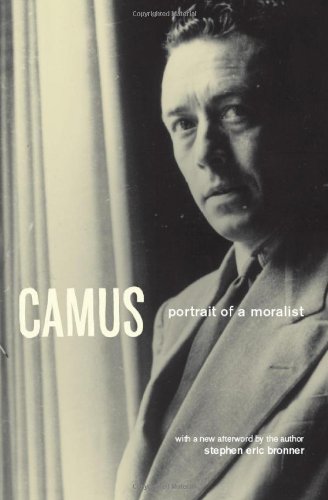
25. Albert Camus: The Thinker, the
$10.16
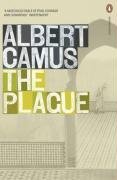
26. The Plague (Penguin Modern Classics)
 
$14.95
27. Peste
$5.01
28. L'Etranger (Collection Folio,
29. L'Homme Revolte
 
30. The Stranger: A Novel (A Vintage
 
31. Notebooks 1942-1951
$14.19
32. Albert Camus and the Minister
$6.95
33. Introducing Camus
 
$8.68
34. Albert Camus's The stranger (Monarch
$10.02
35. The Outsider (Penguin Modern Classics)
 
$11.99
36. The stranger by Albert Camus:
 
$28.96
37. Youthful Writings
$5.95
38. Albert Camus's "The Plague": A
 
39. Unique Creation of Albert Camus
$29.95
40. Christian Metaphysics and Neoplatonism

21. Myth of Sisyphus & Other Essays
by Albert Camus
Mass Market Paperback: Pages (1955)

Asin: B000J1I5BG
Canada | United Kingdom | Germany | France | Japan

22. The Stranger
by Albert Camus
Paperback: 164 Pages (2006-11-12)
list price: US$26.95 -- used & new: US$71.12
(price subject to change: see help)
Asin: 1406711284
Canada | United Kingdom | Germany | France | Japan
Editorial Review

Book Description
Many of the earliest books, particularly those dating back to the 1900s and before, are now extremely scarce and increasingly expensive. Hesperides Press are republishing these classic works in affordable, high quality, modern editions, using the original text and artwork. ... Read more


23. Der Fremde.
by Albert Camus
Hardcover: Pages (1998-09-01)

Isbn: 3498090666
Average Customer Review: 5.0 out of 5 stars
Canada | United Kingdom | Germany | France | Japan

Customer Reviews (1)

5-0 out of 5 stars Mersault der Eigenbrötler
This is a German translation of Albert Camus "L'étranger" (1942), which was translated into English as "The Stranger". As this is the German version, it seems to be best to give you my oppinion in the books language. Here we go:

Mersault - der Icherzähler dieses Romans - beginnt seine Geschichte mit dem Tod seiner Mutter. Er muss zu ihrem Begräbnis reisen, nimmt dort aber alles mehr oder weniger teilnahmslos zur Kenntnis. Genau dieser Schlag Mensch ist nämlich Mersault, jemand der keinen Ehrgeiz hat, der sich für keinen anderen interessiert, wohl auch jemand der keinen Sinn in seinem Leben sieht. Anders als Rieux in 'Die Pest', hat Mersault aus seinem Atheismus die Lehre gezogen, dass die Gottlosigkeit einer Sinnlosigkeit gleichkommt.

Jedenfalls gerade von der Beerdigung zurückgekehrt stürzt sich Mersault in eine Beziehung, von Liebe kann da allerdings keine Rede sein. Völlig irrational erschießt Mersault in eingebildeter Notwehr danach einen Araber - er selbst ist ein Pied Noir - und dafür wird ihm der Prozess gemacht. Letztlich wird er aufgrund seiner Gottlosigkeit und seiner Lebenseinstellung zum Tode verurteilt werden und seine Lebensbeichte und -einstellung einem Priester erzählen.

Die Person Mersault ist hervorragend gezeichnet, glaubwürdig und dennoch unbegreiflich. Stilistisch hat Camus ein wirklich gutes Werk geschaffen. Sprachlich jedoch hatte ich mit dem Werk allerdings ein riesiges Problem. Der ständige Wechsel zwischen Vergangenheit und Mitvergangenheit - teilweise sogar innerhalb desselben Satzes - macht das Lesen schwierig, ja richtiggehend unangenehm. Dies ist wohl eher dem Übersetzer als Camus anzulasten, da sich die französische Grammatik hier grundsätzlich von der deutschen unterscheidet. ... Read more


24. Notebooks 1935 - 1942
by Albert Camus
 Hardcover: Pages (1963)

Asin: B000G7LHVS
Canada | United Kingdom | Germany | France | Japan
Editorial Review

Product Description
Originally published in France in 1962 as "Carnets, Mai 1935 - Fevrier 1942". ... Read more


25. Albert Camus: The Thinker, the Artist, the Man (Impact Biography)
by Stephen Eric Bronner
School & Library Binding: 144 Pages (1996-10)
list price: US$24.00 -- used & new: US$3.39
(price subject to change: see help)
Asin: 0531113051
Canada | United Kingdom | Germany | France | Japan

26. The Plague (Penguin Modern Classics)
by Albert Camus
Paperback: 256 Pages (2002-12-05)
list price: US$16.50 -- used & new: US$10.16
(price subject to change: see help)
Asin: 0141185139
Canada | United Kingdom | Germany | France | Japan

27. Peste
by Albert Camus
 Paperback: Pages (1942-10-01)
list price: US$14.95 -- used & new: US$14.95
(price subject to change: see help)
Asin: 0318635755
Average Customer Review: 5.0 out of 5 stars
Canada | United Kingdom | Germany | France | Japan

Customer Reviews (5)

5-0 out of 5 stars THE NOVEL "POR EXCELENCIA" FROM CAMUS
Having submitted this review in spanish and not having it posted, I'll try again in english.......
Camus reached fame with his elaborations about the concept of the absurd (the purposeless search of the meaning of existence in a universe void of any)in three works: The Stranger, a novel; Caligula, a teathrical opus; and The Myth of Sisyphus, a recopilation of philosophical essays.
In his second famous novel, The Plague, we find a different Camus. Perhaps, more concerned about moral values and solidarity between human beings, in the face of massive destruction.
The plot of the novel unfolds in the city of Oran, Algeria. The central image has to do with a rat invasion that causes a plague epidemy, with disastrous consecuences. Here we find metaphorically portraited the invasion by the Nazis in 1943 of non occupied France (Camus said that the Nazis came like rats).
Then we find a description of the evolution of the plague, the reaction of the authorities (at first, self denial), the progressive isolation of the town from outside world, and on the onset the "normalization" of the tragedy (people grow accostumed to live with it, and become zombies). After the evolution and the growth of the problem, the inhabitants become completely isolated from the outside, and become prisoners in the inside, due to the drastic measures taken by the authorities. The plague becomes a collective problem that requires recognition and reaction by all. We have here a clear metaphorical reference to the need of a collective reaction to the Vichy government by all the citizens. The call to participate and react becomes a moral issue. Camus then describes with certain detail the soccer stadium where people are forcibly concentrated by the authorities, and this is an allusion to the Nazi concentration camps. More than the persons, the protagonist of this novel is the city.
In the sense that the values of solidarity and participation against a common disaster or enemy are called for, this novel is much more developed, from an ethical standpoint, than The Stranger.

5-0 out of 5 stars magnifica
esta novela, que da la sensacion de claustrofobia y terror provocada por una enfermedad que pone en cuarentena a toda la poblacion, es otro logro de albert camus, un tremendo escritor, autor de ese otro libro llamado elextranjero. la peste, de caracter menos nihilista, nos muestra a los sereshumanos aislados por la enfermedad y en busca de una causa comun, perosiempre solos, con su interior muy buena... LUIS MENDEZ

5-0 out of 5 stars La Peste est une premonition de ce fin de siecle
Only in French, but comments in English are welcome:un des plus puissants livres de tous les temps, du point de vue litteraire inimitable, du point de vue humain la transcription artistique et a la fois humaine des profondeurs sensibles et distantes en meme temps de l'espece humaine.

5-0 out of 5 stars Perhaps one of the most important books ever written.
Camus's second novel "La Pest" is probably his richest and most widely accessable.The importance of the novel, however, is that it strives to create "existential ethics."Camus powerfully builds upon the ideas of absurdity that he estiblished in "The Myth of Sysiphus" and also expands upon how and why people must face and oppose suffering in the world.

4-0 out of 5 stars Light hearted, entertaining.Page after page of easy fun.
Just kidding!Actually this book was heavy, depressing, and tedious to slog through.All that means is I didn't like it. I could still tell that La Peste is Camus' best attempt at converting the world to existentialism-- it just wasn't my cup of tea.Skillfully written, well thought-out and planned.Rough going throughout, but it will change you if you let it. ... Read more


28. L'Etranger (Collection Folio, 2)
by Albert Camus
Paperback: 185 Pages (1990-10)
list price: US$8.75 -- used & new: US$5.01
(price subject to change: see help)
Asin: 2070360024
Average Customer Review: 4.5 out of 5 stars
Canada | United Kingdom | Germany | France | Japan

Customer Reviews (17)

2-0 out of 5 stars Not Camus' Best
The language in this short novel is simple and engaging, and probably the best (if not only) reason to read this book, particularly for students of french such as myself.

Unfortunately the story is very contrived and unconvincing, despite Camus' apparent attempts to ground it in a believable, ordinary world. The problem (as I see it) is that Mersault is easily Camus' least interesting protagonist, and the entire story is told in first person from his perspective. Mersault feels nothing and thinks nothing throughout the narrative, so that the narration gives the reader an intimate view of... nothing. Admittedly, previous and subsequent authors have dealt quite thoroughly with the thoughts and feelings of human characters in somewhat analogous situations to that of Mersault. Perhaps Camus was consciously treading new ground by placing his protagonist in what would be trying and difficult situations if only he cared about anything, but he doesn't, so they aren't.

There is plenty of good Camus out there, particularly his short stories and plays, but this is not it.

5-0 out of 5 stars Classique de la litterature francaise
Je fais mon debut comme instite a un lycee.Pour le cours de francais V, on va commencer la litterature avec L'ETRANGER de Camus.Je crois que c'est l'endroit ideal pour commencer, car le livre se presente simplement au lecture, mais le mene aux themes importants de la philosophie francaise/absurdiste.A mon avis personnel, la scene du meurtre sur la plage est exceptionnellement emouvante et vive.Ceux qui disent que c'est n'importe quoi comme livre completement ratent un chef-d'oeuvre.

5-0 out of 5 stars Aujourd'hui, Maman est morte.
What a way to begin a story?! And what can one say about Camus that hasn't already been said? This is a great novel filled with observations, images and actions carefully stitched into words by a master narrator. If you're a novice to French literature, this is a perfect place to begin.

5-0 out of 5 stars Tout simplement exquis!
Quel roman savoureux.Du passé simple, j'en prendrais volontier.Un incontournable.

5-0 out of 5 stars The "Sacred Cow" of Camus and Existentialism
I first read the novel in english, but I read it in french once I became fluent in that language. After the first sentence: "Aujourd'hui, Maman est morte," you know that you are in the good hands of Albert Camus. The existential theme is just awsome, and it was all the better en français! Surtout, je sait que je l'aimais. ... Read more


29. L'Homme Revolte
by Albert CAMUS
Paperback: Pages (1951)

Asin: B000H0UJIG
Canada | United Kingdom | Germany | France | Japan

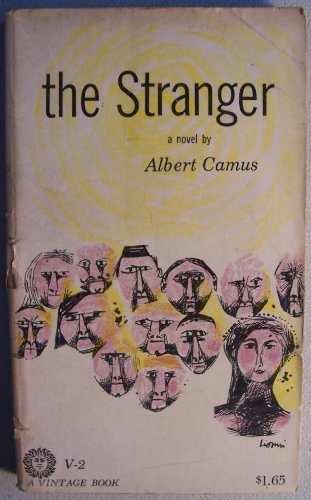
30. The Stranger: A Novel (A Vintage Book, V-2)
by Albert Camus
 Paperback: Pages (1961)

Asin: B000QIYPB6
Canada | United Kingdom | Germany | France | Japan

31. Notebooks 1942-1951
by Albert Camus
 Hardcover: Pages (1965)

Asin: B000GTNWGE
Canada | United Kingdom | Germany | France | Japan

32. Albert Camus and the Minister
by Howard E. Mumma
Paperback: 215 Pages (2000-04-30)
list price: US$15.95 -- used & new: US$14.19
(price subject to change: see help)
Asin: B000I0RSKC
Average Customer Review: 2.5 out of 5 stars
Canada | United Kingdom | Germany | France | Japan
Editorial Review

Book Description
In the early 1950's, Albert Camus, the renowned existentialist and Nobel prize-winner, visited the American Church in Paris to hear the music of the famous organist Marcel Dupre. What he found was an unexpected friend--Howard Mumma, a Methodist minister from Ohio who was serving as a guest preacher. Intrigued by Mumma's philosophy and theology based on a living faith in a higher power, Camus invited Mumma to lunch and thus a surprising friendship was formed.

Over the next several years, through a series of profound conversations with Howard Mumma, Camus explored the Christian faith. These discussions, as recalled by Mumma in the first part of this book, offer a deeply personal side of Camus not seen by the public eye. In the second part, Mumma shares personal glimpses of the people and experiences that had a profound influence on his own life enabling him to understand what Camus was facing in his personal life. ... Read more

Customer Reviews (11)

1-0 out of 5 stars Too Many Unanswered Questions
It's a matter of record that Albert Camus wrote his Master's thesis on "Christian Metaphysics and Neo-Platonism: Plotinus and Saint Augustine" under the supervision of a professor, Jean Grenier, who was something of an expert on Eastern religions. Considering all his study, considering The Plague, The Fall, all else that he wrote, is it possible that Albert Camus could have been as naive as Howard Mumma portrays him? We may never know the truth, but somehow this book seems to have the taste of the same sort of pious fiction that gave us Voltaire's supposed deathbed horrors.

1-0 out of 5 stars very, very suspect
i am not quite an encyclopedia entry on Camus, but I am very VERY suspicious of this account by Howard Mumma.this man basically claims that Camus had most decidedly chosen to become a Christian just prior to his death.he also asserts that Camus committed suicide.as an interested reader, does this not strike you as odd?if this is one man's attempt to disgrace the reputation of Camus - a "man and a thinker" - for the sake of political gain...shame shame SHAME ON YOU!if not, well, i apologize for calling you a filthy liar.

4-0 out of 5 stars Flawed and Beautiful
Mumma in the foreword acknowledges his bias and inaccuracy (he wrote the book almost 40 years after Camus' death, and was around 90 at its publishing).One cannot take the book in a 100% literal fashion - there are clear victims of inaccuracy in the text.However, the story as a whole is an excellent narrative of the existential struggle between the two extremes of Jean-Paul Sartre's thoughts and Mumma's Christianity, with Albert Camus' frustration with the universe straddling the chasm.

On another note, it is impossible to verify the book, Mumma notes that Camus did not want to be identified with a Methodist "priest".In the text, when speaking over dinner, Camus shuns any and all publicity.It is clear that these conversations were never intended to be public - and Camus and his biographers did not mention it.

2-0 out of 5 stars biased
While interesting for anecdotal pieces on Camus himself, Mr. Mumma is, however, biased & blinded by his religious beliefs and misunderstands Camus (not to mention that one wonders if some of the memories themselves are not... biased...). Certainly not a major addition to the body of intellectual studies related to Camus...

1-0 out of 5 stars Mumma makes me angry!
Whether Mumma has accurately portrayed Camus, I don't know, but I am sure that Mumma knew what he said to Camus.

When Camus requested adult Christian baptism, Mumma completely twisted the scriptures regarding the reason and purpose and urgent importance of being baptized (immersed).He told Camus that salvation came not upon baptism, but when he was sprinkled as a baby, and he would not baptise him.

When one reads about the nine conversions in the book of Acts in the Bible, it was always the same day or the same hour that people believed, that they were baptized.There wasn't any such thing as waiting until the next week or for spring or summer or whatever.They were always immersed in water right away.

Why is baptism so important?In the New Testament, salvation, and those things that accompany salvation, always occurs upon being baptized.

Look at the following scriptures that give a reason or purpose for being baptized.

Mar 16:16He who has believed and has been baptized shall be saved; but he who has disbelieved shall be condemned.

Acts 2:37-38Now when they heard this, they were pierced to the heart, and said to Peter and the rest of the apostles, "Brethren, what shall we do?"38Peter said to them, "Repent, and each of you be baptized in the name of Jesus Christ for the forgiveness of your sins; and you will receive the gift of the Holy Spirit."

Acts 22:16'Now why do you delay? Get up and be baptized, and wash away your sins, calling on His name.'

Romans 6:3-4Or do you not know that all of us who have been baptized into Christ Jesus have been baptized into His death?4Therefore we have been buried with Him through baptism into death, so that as Christ was raised from the dead through the glory of the Father, so we too might walk in newness of life.

Colossians 2:12-13having been buried with Him in baptism, in which you were also raised up with Him through faith in the working of God, who raised Him from the dead.13When you were dead in your transgressions and the uncircumcision of your flesh, He made you alive together with Him, having forgiven us all our transgressions,

1 Peter 3:20-21who once were disobedient, when the patience of God kept waiting in the days of Noah, during the construction of the ark, in which a few, that is, eight persons, were saved through the water.21Corresponding to that, baptism now saves you, not the removal of dirt from the flesh, but an appeal to God for a good conscience through the resurrection of Jesus Christ,

Mammu is a false teacher in the worst way.Not only did he keep Camus from becoming a Christian, he spreads his doctrines(teachings) of men though this book.There will be people who do not know the Bible and read Mammu's theory on how to become a Christian and believe it.

By the way, Mammu also showed he knew little about baptism, for in the Bible, baptism was always by immersion in water (John 3:23 and Acts 8:38-39).

I liked the book as it shows that even a soul like Camus searches for the truth and was not satisfied with what he had found earlier in his life.


... Read more


33. Introducing Camus
by David Zane Mairowitz, Richard Appignanesi
Paperback: 176 Pages (1998-09)
list price: US$10.95 -- used & new: US$6.95
(price subject to change: see help)
Asin: 1840460008
Average Customer Review: 4.5 out of 5 stars
Canada | United Kingdom | Germany | France | Japan
Editorial Review

Book Description
Here both the student and the lay reader will learn more of a "man of letters" who in both his life and his work embraced the sun, the sea, sensualtiy, soccer and the theater as the solutions to life's "absurdity." ... Read more

Customer Reviews (3)

4-0 out of 5 stars Fine introduction to Camus's life and works
Not every book in the "Introducing..." series is good, but this dealing (in a comic book fashion) with the life and works of French author Albert Camus (1913-1960) is really fine. Two of his novels are covered at some length: "The Stranger" and "The Plague". Besides, we get his biography: his birth in Algeria from working-class French colonists (the so-called pied-noirs), his start as a novelist in Paris in the pre-World War II years, his activities during the German occupation, his political positions (after starting out in the left, he became an anticommunist in the 1950s, becoming at odds with the majority of France's intelligentsia), his position on the Algerian War (he was opposed to independence, probably out of fear for the fate of his mother, who was living there, and put forward some naive proposals for peace), his opposition to the death penalty, his philosophical positions. Reccomended.

5-0 out of 5 stars Great value in money, time and effort
I wish I had picked up this book before I plodded through a THICK, renowed biography of Camus.

Considering I wasn't writing a thesis on Camus, and was only interested in learning about the man for my own knowledge, "Introducing Camus" filled my needs very well.

The book is set up like a comic book, with the odd "see notes below" parts, and I was able to read it in about 1.5 hours. With remarkable clarity, the book distilled Camus' essential philosophies and much of the important points in his life. But make no mistake; this book is not some superficial glamourization about Camus. I would say that a person reading the thick biography of Camus vs. the person reading "Introducing Camus" would come away with basically the same points. Isn't that amazing? (Now I'm starting to think that the thick book was filled with WAAAAY too much filler...how very un-Camus-esque).

Not only is "Introducing Camus" factually and philosophically sound, it is also engaging and gives great background and point-of-reference when reading Camus' actual works. For example, now that I know what was going on in Camus' life when he wrote "The Plague," I can read it with more insight. And now, I'm excited to read more of Camus' works (imagine if you gave this book to your high school or college kid!)

Overall, great primer for Camus. Start with this first, then read his books, and then maybe start reading those massive biographies.

4-0 out of 5 stars The Man Behind the Novels
Originally titled "Camus for Beginners", this concise biography combines personal information, short excerpts, and vivid cartoons to illuminate the man behind the modern literary myth.

Although I had read The Fall, The Plague, The Stranger, and a few collections of essays a decade earlier, I had only a vague memory of Camus' actual life and conflicts. This fine book, which I read in less than two hours, remains a solid primer. Both longtime admirers of Camus and undergraduate students forced to read his celebrated novels should find this brief work a valuable investment of time.

It's also worth noting that cartoons are often read by adults in Europe. The format provides readers with a superficial, yet accessible and non-threathening, way to enter into academic and philosophical discussions. College and high school teachers of French, literature, and philosophy would benefit from adding this book to their students while assigning any novel by Camus. ... Read more


34. Albert Camus's The stranger (Monarch notes)
by Laurie Rozakis
 Unknown Binding: 32 Pages (1997)
-- used & new: US$8.68
(price subject to change: see help)
Asin: 0760705844
Canada | United Kingdom | Germany | France | Japan

35. The Outsider (Penguin Modern Classics)
by Albert Camus
Paperback: 128 Pages (2000-02-24)
list price: US$16.50 -- used & new: US$10.02
(price subject to change: see help)
Asin: 0141182504
Average Customer Review: 4.5 out of 5 stars
Canada | United Kingdom | Germany | France | Japan

Customer Reviews (7)

2-0 out of 5 stars Camus: great thinker, lesser novelist
The Outsider, one of Camus' earlier works, reads distinctly as a vehicle for Camus' philosophy. The novel is a short, icy delienation of the notion that life is absurd. People serch for meaning, for shape, for explanations behind actions. What if a person existed who found no meaning in the course of his life? Meursalut is a man who lives an unremarkable bachelor life in Algiers. His mother dies - he does not grieve, circumstances lead him to shoot an Arab man at point blank range on a boiling hot day at the beach - he feels the stinging sweat and reflection of the sunlight off the knife held by the man.

The second part of the novel focuses on his trial for this killing, which is where the novel fails to convince. The scenes of the prosecution are rigged to provide convenient metaphors for the alienation of Meursalut: a chaplain is provided, he is not interested, the judge asks him if he felt grief for his mother, he says he didn't. Finally he is condemed to death for his murder.

In the afterword by Camus to my Penguin Classic edition, Camus sums up The Outsider in a sentence: 'In our society any man who doesn't cry at his mother's funeral is liable to be condemned to death.' The hero is condemned because he fails to comply by the normative rules of society. Well hang on, surely Meursalut is condemned because he has murdered a man? The fact that he comes across as indifferent, shows surprise rather than remorse, does not believe in God are all tangental to this central moment in the book. As the character of Meursault developed he reminded me of those chilly serial killers who stare blankly in court offering no explanation for their crimes. It is not like 'The Trial' by Kafka where the protagonist is alienated and bewildered, condemned for a crime he doesn't know he has committed. Thus the predominant image that comes out of The Outsider for me is not a man refusing to play the game, but the struggles of the prosecutors to find a motive for a crime which, nevertheless, must be punished anyway.


4-0 out of 5 stars Short But Sweet.
Camuses book 'The Outsider' follows in a very vivid and simple style the life of Meursault, whilst wearing the spectacles of a society 64 years previous the book has as much significance today as it did then. Just over 100 pages of carefully crafting western society and the morals and laws that underpin everybodies lives...the legal constraints the tabloid lines taken through the eyes of one man...whether protagonist or hero young Meursault is still an 'open verdict' today. Recommended reading.

4-0 out of 5 stars More than what it seems to be
Originally L'Etranger, the english version I read was (obviously) a translation from the original French language in which the book was conceived.

The story is in two parts. The first is of Meursault, the main character- establishing and developing his character. It traces his days up until the point where he commits a murder for no apparent reason. The second part describes his incarceration, reflections on what has transpired, and his trial.

It is written plainly enough to be taken as a simple story, which makes it somewhat enjoyable on a most basic level- though to take it as such ultimately defies the purpose of the novel. I wish my French was strong enough to have read the original. I hate translations as they destroy half of any author's story- the language he chooses for his tale.

**WARNING** SPOILERS POSTED BELOW **WARNING**

Historically, the book was partly written to defy the conventions of the time by utilizing the common daily language of the people (instead of the rigid formality that was enforced at the time). It was also written to identify, interpret, explain the ins and outs of Existentialist thought.

The basis of Existentialism, as I understand it, is that life is simply what it is, and no more. Concepts such as God, Heaven, Hell, the Soul, Eternity, Destiny, and so on, are but illusions that we feed upon to define some form of meaning for ourselves. Wake up, (says the Existentialist) your life is only your life. You are not pre-ordained to greatness. There is no Master Plan. You live and die, and in between you will make some choices that are of no ultimate consequence- nothing stops when you do; only you cease to exist. Our life, if I may, is just the flip-side of a coin. When no one is flipping anymore, the coin remains.

In The Outsider, Meursault essentially wakes up one day and realizes that his "life" is manmade, and really, dictated by society; that anything he does or has done will not and can not have any consequence. With this new liberation, he begins a fresh journey, unchained from the burden of the concept of "consequence". Though the story is told from a first-person perspective, it is conveyed in a flat, impersonal tone that would suggest even Meursault himself feels detached from the events that surround him.

When his Mother dies, Mersault is unaffected emotionally (though complains of the distance he must travel for the funeral and the inconvenience of having to miss work) and refuses to put on the show that society demands in such a situation. I believe that Camus had a clear point to prove in how the other characters responded to him. Though he is sincere in his responses, he is perceived by some to be alienating and suspicious, while others continue on playing their game/roles (i.e., his girlfriend Marie) despite his inability (or lack of wont) to play along with them- the former outcast him for not playing along, while the latter simply keep playing as though he were. This illustrates our lack of autonomy from the social body and, ironically, our immobility without it. If this helps, check out www dot yourwords dot ca for more.

Don't bother with this book unless you're into philosophy and pulling a higher meaning out of people's writing. The first time I read it I thought it was garbage until I talked with my Philosophy professor about it and got some insight into the imagery of the text.

**WARNING** SPOILERS POSTED ABOVE **WARNING**

5-0 out of 5 stars A book of thought and existentialism
Albert Camus' "Outsider" is a short, to the point, two part novel.The first introduces us to the characters and leads up to the killing of an Arab on the beach by the principal characters.The second follows his ordeal afterwards, his thoughts and his trial.He is persecuted as a cold killer due to his lack of visible emotion or remorse.He is concerned only for himself.

As mentioned in a previous review, this is a book of thought and questioning.Camus questions the pillars of Western society and questions humanities uncanny ability to believe that the majority is correct and that anybody else is different and thus can be persecuted.

I would recommed "Outsider" for a quick, extremely thought-provoking read.This classic is reknowned as one of the basic foundations of existentialist philosophy.

5-0 out of 5 stars L'Etranger de Albert Camus
Il est un homme qui ne joue pas le jeu.Il est un peu différent et pour cette raison, il n'est pas accepté dans la société. Il est Meursault. Meursault est un homme 'taciturne et renferme' et parce qu'il ne montre pas ses emotions, il est condamne a mort.Le livre commence avec l'enterrement de sa mere ou il ne pleure pas.Il est indifferent a la mort de sa mere, et il continue sa vie, comme si rien s'est passé.Un jour quand il va a la plage avec ses amies, il tue un Arabe.Il pretend que c'est a cause de la chaleur et du soleil, mais est-ce-que c'est?Ce livre pose beaucoup de questions intriguantes, au sujet de la psychologie de Meursault. Pendant le proces nous apprenons que Meursault est condamné a mort parce qu'il ne conforme pas, et pas parce qu'il a tué un Arabe. La société ne peut pas accepter un homme qui n'est pas comme tous le monde. L'Etranger est un livre qui vous fait penser, je vous conseille de le lire car ca changera votre vie. ... Read more


36. The stranger by Albert Camus: Teacher guide (Novel Units) (Novel Units)
by Mary L Dennis
 Paperback: 40 Pages (1999-01-01)
list price: US$11.99 -- used & new: US$11.99
(price subject to change: see help)
Asin: 1561379298
Canada | United Kingdom | Germany | France | Japan
Editorial Review

Book Description
This time-saving, easy-to-use teacher guide includes inspiringlesson plans which provide a comprehensive novel unit-the legwork is donefor you!The guide incorporates essential reading, writing and thinkingpractice.(This is NOT the paperback novel.) ... Read more


37. Youthful Writings
by Camus
 Paperback: 279 Pages (1994-06-17)
list price: US$12.95 -- used & new: US$28.96
(price subject to change: see help)
Asin: 1569249687
Average Customer Review: 4.0 out of 5 stars
Canada | United Kingdom | Germany | France | Japan

Customer Reviews (1)

4-0 out of 5 stars A Unique Perspective
A long time student of Camus' works, I thought I knew everything there was to know about this man.However, this book along with "Albert Camus and the Minister" have left me with a fresh perspective on Camus.Not to say that it destroys the image of the man that other works personify, but it does work to fill in the gaps and in some cases bring to light new things about a well known man, of whom little is truely known. ... Read more


38. Albert Camus's "The Plague": A Study Guide from Gale's "Novels for Students" (Volume 16, Chapter 9)
Digital: 29 Pages (2003-06-20)
list price: US$5.95 -- used & new: US$5.95
(price subject to change: see help)
Asin: B0000A9B1B
Canada | United Kingdom | Germany | France | Japan
Editorial Review

Book Description

Term paper due tomorrow? Need to cram for a test? Or just looking for the best information about a favorite literary work?

Turn to "Novels for Students" to get your research done in record time. Brought to you by Thomson Gale--the world's leading source of literary criticism and analysis--this e-doc contains: author biography; plot summary; character analysis; an overview of the novel's themes, style, and historical context; a compendium of in-depth critical material; study questions; suggestions for further reading; and much more.

Why choose "Novels for Students"? Because no other source offers so much in such a compact package. Trust the experts: Thomson Gale--and "Novels for Students."Download Description

Term paper due tomorrow? Need to bone up for a test? Or just looking for the best information about a favorite literary work?

Turn to "Novels for Students" to get your research done in record time. Brought to you by the Gale Group--the world's leading source of literary criticism and analysis--this e-doc contains: author biography; plot summary; character analysis; an overview of the novel's themes, style, and historical context; a compendium of in-depth critical material; study questions; suggestions for further reading; and much more.

Why choose "Novels for Students"? Because no other source offers so much in such a compact package. Trust the experts: The Gale Group--and "Novels for Students." ... Read more


39. Unique Creation of Albert Camus
by Donald Lazere
 Hardcover: 271 Pages (1973-11-23)
list price: US$16.00
Isbn: 0300015895
Canada | United Kingdom | Germany | France | Japan

40. Christian Metaphysics and Neoplatonism (Eric Voegelin Institute Series in Political Philosophy: Studies in Religion and Politics) (Eric Voegelin Institute ... Studies in Religion and Politics)
by Albert Camus
Hardcover: 176 Pages (2008-01-01)
list price: US$29.95 -- used & new: US$29.95
(price subject to change: see help)
Asin: 0826217532
Canada | United Kingdom | Germany | France | Japan
Editorial Review

Product Description
Camus called the transition from Hellenism to Christianitythe true and only turning point in history.For Camus, modernity was not fully comprehensible without an examination of the aspirations that were first articulated in antiquity and that later received their clearest expression in Christianity. These aspirations amounted to a fundamental reorientation of human life in politics, religion, science, and philosophy. This work marks his first attempt to understand the relationship between Greek philosophy and Christianity as he charted the movement from the Gospels through Gnosticism and Plotinus to what he calls Augustine ssecond revelationof the Christian faith. Srigley s translation retains a great degree of literalness, and his annotations include nearly all of Camusoriginal citations. ... Read more


  Back | 21-40 of 100 | Next 20
A  B  C  D  E  F  G  H  I  J  K  L  M  N  O  P  Q  R  S  T  U  V  W  X  Y  Z  

Prices listed on this site are subject to change without notice.
Questions on ordering or shipping? click here for help.

site stats