e99 Online Shopping Mall

Geometry.Net - the online learning center Help  
Home  - Philosophers - Derrida Jacques (Books)

  Back | 41-60 of 100 | Next 20
A  B  C  D  E  F  G  H  I  J  K  L  M  N  O  P  Q  R  S  T  U  V  W  X  Y  Z  

click price to see details     click image to enlarge     click link to go to the store

$16.32
41. On Cosmopolitanism and Forgiveness
$18.12
42. The Architecture of Deconstruction:
$20.64
43. On Touching-Jean-luc Nancy
$17.24
44. Rogues: Two Essays on Reason (Meridian:
45. Applied Grammatology: Post(e)-Pedagogy
$111.00
46. Acts of Religion
$16.95
47. Dissemination
$15.59
48. A Derrida Dictionary
 
$8.98
49. Feminist Interpretations of Jacques
$19.13
50. The Last Interview: Learning to
$18.21
51. On the Name (Meridian: Crossing
 
$22.95
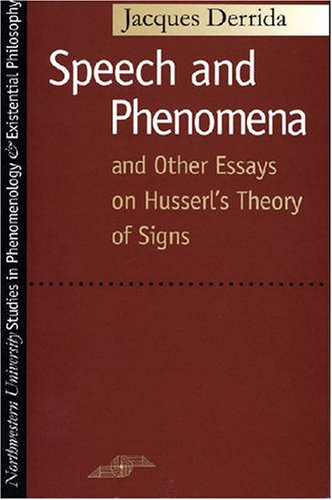
52. Speech and Phenomena: And Other
$23.95
53. Taking on the Tradition: Jacques
$29.94
54. The Politics of Deconstruction:
$19.15
55. Later Derrida: Reading the Recent
$19.00
56. Understanding Derrida
 
$35.00
57. The Gift of Death, Second Edition
$16.22
58. Resistances of Psychoanalysis
$22.50
59. Derrida: A Critical Reader (Blackwell
 
$9.95
60. This auto-bio-graphical animal

41. On Cosmopolitanism and Forgiveness (Thinking in Action) (Thinking in Action)
by Jacques Derrida
Paperback: 94 Pages (2001-06-26)
list price: US$19.95 -- used & new: US$16.32
(price subject to change: see help)
Asin: 0415227127
Average Customer Review: 4.0 out of 5 stars
Canada | United Kingdom | Germany | France | Japan
Editorial Review

Amazon.com
Reading Jacques Derrida requires an unusual blend of wit and patience. Ever the magician, Derrida dazzles again in his slim treatise On Cosmopolitanism and Forgiveness. Part of the Thinking in Action series, providing clear and accessible pieces from major thinkers, the book contains two surprisingly lucid essays from a writer notorious for producing difficult prose. Derrida is the consummate French philosopher, and hiswork has mainly been the province of grad students and the coffeehouse set, which is unfortunate because he has much more to offer. In this volume, he turns his attention to international human rights, asking penetrating questions about our capacity to forgive, heal, and reconcile in a world fraught with incalculable evil.

Derrida's most important contribution to modern philosophy is his infamous technique of textual interpretation, deconstruction. The technique doesn't come easily, but its critical perspective allows one to draw connections between seemingly unrelated ideas. And that's what Derrida does here, tracing lines between cities, asylum, and reconciliation. On Cosmopolitanism and Forgiveness is grounded in the immediacy of present-day happenings, taking up questions about human rights, amnesty, the Gulf War, and East Timor. Of course, readers will do well to have some background in philosophy, but the heart of the book is for all of us. --Eric de Place Book Description
One of the world's most famous philosophers, Jacques Derrida, explores difficult questions in this important and engaging book. Is it still possible to uphold international hospitality and justice in the face of increasing nationalism and civil strife in so many countries? Drawing on examples of treatment of minority groups in Europe, he skillfully and accessibly probes the thinking that underlies much of the practice, and rhetoric, that informs cosmopolitanism. What have duties and rights to do with hospitality? Should hospitality be grounded in a private or public ethic, or even a religious one? This fascinating book will be illuminating reading for all. ... Read more

Customer Reviews (4)

5-0 out of 5 stars Clear and Engaging--on the impossibility of doing and saying ordinary things
This book by Derrida is wonderfully synthetic.In it, he engages with a large number of other philosophers, including Hannah Arendt, Emmanuel Levinas, and Immanuel Kant, and he also discusses at some length the Hebraic and Pauline scriptures.The book is also remarkably clear.

In my opinion, however, the clarity of this book makes it more difficult to read than some of his others, since its clarity might give the impression that a quick read would be sufficient.I think, instead, that one's guard should be up and that each word of Derrida's book should be read carefully, since many times the argument hinges on an 'if' or a 'perhaps.'However, having said that, I do believe that there is nothing in this book that an educated person (not just a philosopher) would not understand with a bit of work.

Let me back up a second again.Although Derrida writes (actually, speaks)here to be read, the things that Derrida discusses can be quite challenging.But they are challenging here not because he uses jargon but for the simple reason that one _does indeed_ understand what he means.It is not easy to be confronted by someone who says that the concepts one takes for granted are not stable.

In the first essay on Cosmopolitanism Derrida asks what it would mean to be hospitable to others and to create cities of refuge.Thinking of our own struggles in the US as we attempt to come to terms BOTH with the message on the Statue of Liberty that marks the beginning of New York City AND with current economic and political pressures that make any city living problematic, I find his essay exciting and troubling.As Derrida notes, the Torah in the book of _Numbers_ does seem to require a kind of hospitality in the very structure and experience of the city.But can we simply take over that requirement?If so, how?How can openness to others and to their plight be enacted without giving up the reliability and necessary limitations or boundaries of the city?How can openness not become overrun by those who seek it?

In the second essay, Derrida shows that forgiveness is only what it is if the person or event to be forgiven cannot actually be reached or touched by my effort to forgive.Very notably, his discussion of forgiveness here is the contrary to that of Arendt and others on the Holocaust.Forgiveness for Derrida must forgive the unforgivable (read the Holocaust) to be what it is.And yet Derrida acknowledges that unconditional forgiveness must still negotiate the very real, conditional demands of life together.This essay very much troubles me.How can I forgive the person who will later not be the same as the one who wronged me?How can I forgive the unforgivable and not perish as a victim of my own far-too-universal love?[I hear in Derrida's description of the problem of unconditional and conditional forgiveness an acknowledgment of Freud's _Civilization and Its Discontents_.]

For me, Derrida's second essay is more searing and interesting.Coming out of a Christian tradition, I find that Derrida's discussion of forgiveness opens new meaning in my re-reading of some of Jesus' final words: Father, forgive them, for they know not what they do.This 'not knowing' is precisely what prevents forgiveness from being powerful in a political sense.It is precisely what makes forgiveness impossible, since those who do not know what they do cannot really ask for forgiveness and cannot (it would _seem_) be changed by it.Does the impossibility of forgiveness make it unnecessary or futile?Derrida does not think so.But what then is its value if it is always prevented from reaching its object from before it begins?

As a final note, I think that Derrida's point throughout this book and throughout his corpus might be that none of us know what we are doing.We transgress, do violence, and rely on contradictions as if they were sure, foundational entities.What he wants us to do in this work is, to quote Arendt from _The Human Condition_ to think what we are doing.Or, to put it another way, to think what we _think_ we are doing and to see if in fact we are _really_ doing it at all.

5-0 out of 5 stars Le Grand Pardon
As Derrida points out, the two virtues of hospitality and forgiveness belong to the Abrahamic tradition common to Jews, Christians and Moslems. They were defined and codified at a time when nation-states didn't exist, and point toward forms of solidarity that are both archaic and highly modern, in the sense that they help us expand our legal and political horizon.

Granting hospitality or giving forgiveness are what linguists call speech acts, when enunciation creates its own performance and engages the speaker through the strength of the given word. One would need to establish fine-grained distinctions between the related notions of hospitality, asylum, refuge, sanctuary, safe haven, tolerance, openness, or within the even richer field of words connected to forgiveness: pardon, clemency, grace, acquittal, amnesty, reconciliation, excuse, exemption, prescription, repentance, apology, self-accusation, confession, etc. These are not only linguistic distinctions: differences in legal status and socio-economic conditions between asylum-seekers, refugees, immigrants, foreigners, deported, heimatlosen, stateless or displaced persons have very real consequences.

Derrida identifies a contradiction or a double imperative contained in these two notions, a tension that leads to unanswerable questions. Forgiveness presupposes a call for pardon, but usually the worst offenders don't ask for forgiveness and manifest no repentance: can one forgive the guilty as guilty? And if true forgiveness consists in forgiving the unforgivable, what does forgiveness forgive if the unforgivable is forgiven? Likewise, the concept of hospitality points toward a right of refuge that should be granted unconditionally to all foreigners; but all political organizations, be they the modern nation-states or the cities of refuge of the ancient Jews, impose limitations on the rights of residence.

Hospitality and forgiveness therefore exhibit a tension between the conditional and the unconditional, the calculus of politics and the imperative of ethics. One should not try to solve this contradiction or reconcile those two poles: inflections in politics and international law, such as the notion of crime against humanity or the French law that makes such crimes imprescriptible, usually stem from this tension between the two orders of injunctions.

Another point common to these two notions is that they belong to a 'politics of friendship', they create a personal bind between individuals or communities that can sometimes contradict the rules of citizenship and sovereignty imposed by the nation-state. Derrida's first lecture before the International Parliament of Writers occurred at a time when the tightening of laws against foreigners without rights of residence, the so-called 'sans papiers', generated mass protests in Paris. In a bold move, Derrida reconnects with the philosophical tradition that treats the city as the matrix of all political organizations and mulls over the ancient cities of refuge mentioned in the Laws of Moses. As he acknowledges, "if we look to the city, it is because we have given up hope that the state might create a new image to the city." Hospitality granted by individuals or communities such as churches sometimes go against the laws of the states, and can even be treated as 'acts of terrorism' or 'participation in a criminal conspiracy' in a post 9/11 world.

The second lecture, On Forgiveness, also underscores the tension between the individual and the state. Despite the political performance of the "theater of forgiveness" on which "the grand scene of repentance" is played over and again, Derrida insists that a public institution has neither the right nor the power to forgive. Pure forgiveness must engage two singularities, the victim and the perpetrator, without the intervention of a third party. It is therefore distinct from the "therapy of reconciliation" that nevertheless needs to be played so that wounds may be healed by the work of mourning.

To conclude, let me quote from the excellent preface that puts the two lectures in their intellectual context: "On Forgiveness and On Cosmopolitanism are proof, if proof were needed, that deconstruction is not some obscure textual operation initiated in a mandarin prose style, but is a concrete intervention in contexts that is governed by the undeconstructable concern for justice."

3-0 out of 5 stars Accessible introduction to a major thinker
This is a review of _On Cosmopolitanism and Forgiveness_ by Jacques Derrida (Routledge, 2001).

Jacques Derrida, who died in 2004, was one of the most influential intellectuals of the twentieth century.But if you peekinto his seminal work _Of Grammatology_ (1967), you'll see why he has a reputation for being quite hard to understand.What is nice about _On Cosmopolitanism and Forgiveness_ is that it gives you a general sense for what Derrida is all about, but in a style that you can actually follow.

This book consists of two brief essays by Derrida, on specific topics and in response to specific occasions. On Cosmopolitanism,which was an address to the International Parliament of Writers (1996), discusses the problem ofcities of refuge :cities which are specifically intended to be open to refugees from around the world.It seems that, on the one hand, there is a need for such cities, because there are many refugees from political oppression and natural disasters around the world.On the other hand, how can there becities of refugein a world in which nation-states are the basic political units?Derrida gives an overview of the issue, and briefly discusses the views of Hannah Arendt (see her _The Origins of Totalitarianism_) and Kant (see his _Perpetual Peace:A Philosophical Essay_).

On Forgiveness,which was originally a reply to a series of questions posted to Derrida by a French publication (1999), discusses the problem of forgiveness as it arises in response to outrages like aparthied and the Holocaust.For example, South Africa's famous Truth and Reconciliation Commission is sometimes conceptualized as promotingforgivenessfor the perpetrators of aparthied. But can anything as awful as institutionalized racism and torture be forgiven?And even if it can be forgiven, can a political body (as opposed to a victim) offer it?

Although Derrida is much-discussed, and has had an immense influence on literary criticism, he is also extremely controversial.When he was given an honorary degree by Cambridge, one member of the faculty objected that "Mr. Derrida is forced to write more and more obscurely in order to conceal the fact that he has nothing to say." I think that particular comment is too harsh.But it is certainly an open question, at this point, what Derrida's long-term historical legacy will be.So how insightful are the essays in this volume?

I foundOn Cosmopolitanisminteresting, but not particularly original or challenging.Derrida argues that there is a tension between a demand for unconditioned hospitality (shouldn't we be open to anyone who needs our help?) and a demand for conditioned hospitality (practically speaking, whom will we allow in, and under what conditions?).I foundOn Cosmopolitanismto be like a good (but not great) essay one might run across in a magazine like The Atlantic or The New York Review of Books. On Forgivenesswas a bit more engaging.Derrida's primary thesis is that one can only forgive the unforgivable.Here is how I, at least, understand this idea.Suppose you have wronged me in some minor way, and I really ought to forgive you.Since I OUGHT to forgive you, there is nothing really special or problematic required of me.Indeed, if I don't forgive you in this case, it seems that I have wronged you.What IS special is when a person has done something so wrong that they are not entitled to forgiveness, but their victims offer them forgiveness anyway.But how is it possible for the victims to forgive, when what the perpetrators have done does not entitle them to forgiveness?

It is characteristic of Derrida's work to identify what he sees as contradictions, but then to argue that they are ultimately inescapable, and that we must learn to operate within them.So the ideas that we can only forgive the unforgivable and that hospitality is both unconditional and conditioned are very characteristic of his work.Would we learn more if we tried to resolve these contradictions?Or would the effort to resolve them be oversimplifications?This is precisely the sort of issue that divides Derrida's critics.

This work does not explain or even mention the key notions for underlying Derrida's method ofdeconstruction,includinglogocentrismanddifference. But if you are looking for a brief, accessible introduction to Derrida's general approach, then I would recommend this book, especiallyOn Forgiveness.

4-0 out of 5 stars Towards a union of theory and politics
After seeing the newdocumentary on Derrida(Nov. 2002)I decided to reconnect with this thinker whose work I studied with great vigor twelve years ago.Coming back to Derrida throughOn Cosmopolitanism and Forgiveness wasboth interesting and enjoyable. In these all too brief essays Derrida addresses two concerns of human rights. The first beingthe ideas of hospitality and refuge in the contemporary geo-political environment.The second, being the nature, meaning, and limits of forgiveness.
In on Cosmopolitanism he extends the existing call for"cities of refuge" while examining the rights of hospitality as they are(n't) currently allowed to refugees. these movements arepart of Derrida's advocating for a new consideration of cosom-politics.
When addressing forgiveness, Derrida argues against the economy of forgiveness that is created whenever forgiveness is called for, insisted upon, or deployed as a way of re-establishing normalcy.That is when the concept is used by a system of political / spiritual exchange.Derrida argues very well that the only things that can be forgiven are those considered unforgivable, and that the right to forgive is owned by specific individuals.
Back in the 1970's and 80s one of the most common attacks launched against post-structural thought in general, and deconstruction in particular was that it lacked political utility, or worse, was apolitical, or even worse, was politically regressive. Many of us at the time felt that such criticisms were both over stated and ill-informed.A book such as this leaves no doubt that post-structural thought and methods are relevant and helpful to progressive politics.
If you arenew to Derrida and want to experience deconstruction this is not the book. Derrida's method here is well structured and worth examining, but, it is clearly not an example of the explorations he has undergone elsewhere to examine those elements "always already" present within philosophical texts that undermine in unusual and interesting ways both what and how we understand said texts to mean. ... Read more


42. The Architecture of Deconstruction: Derrida's Haunt
by Mark Wigley
Paperback: 296 Pages (1995-08-04)
list price: US$28.00 -- used & new: US$18.12
(price subject to change: see help)
Asin: 0262731142
Average Customer Review: 3.0 out of 5 stars
Canada | United Kingdom | Germany | France | Japan
Editorial Review

Book Description
Nowhere, Mark Wigley asserts, are the stakes higher for deconstruction than in architecture -- architecture is the Achilles' heel of deconstructive discourse, the point of vulnerability upon which all of its arguments depend.

By locating the architecture already hidden within deconstructive discourse, Wigley opens up more radical possibilities for both architecture and deconstruction. He tracks the tacit argument about architecture embedded within Jacques Derrida's discourse, a curious line of argument that passes through each of the philosopher's texts, provocatively turning Derrida's reading strategy back on his texts to expose the architectural dimension of their central notions like law, economy, writing, place, domestication, translation, spacing, laughter, and dance. ... Read more

Customer Reviews (2)

3-0 out of 5 stars A ghost dance with a conspiracy theorist
Originally written as a PhD thesis in 1986, this book should have been published sooner than it was (1993) because it forewarns just where Jacques Derrida's elusive philosophy was taking us - to a ghost dance, specificallyto Derrida's latest ill-fated attempt to prove the ethico-politicalrelevance of his Deconstruction in his book, Specters of Marx, 1993. TheArchitecture of Deconstruction focuses on Derrida's essays on Husserl(Introduction to the Origin of Geometry) and on Abraham and Torok (Fors)rather than Derrida's essays on architecture (there are enough now to fulla book, many concerning Plato's intriguing use of the word Chora, but in'86 there was only one published) in order, writes Wigley, "to thinkthe covert architectural economy of his (Derrida's) work", thus, apoverty of resource is disguised as a guiding principle. Wigley had ampleopportunity to correct this before publishing but he chose not to. The coreof Wigley's thesis is that there exists an unspoken contract betweenarchitecture and philosophy. The former lends itself to the latter as acluster of metaphors for stability (spatially systematised concepts insidebuilt on solid foundations outside) and in return architectural discourseis granted the authority and respectability of higher learning that onlyphilosophy can give. And like all good conspiracy theories this is aself-fulfilling prophesy: someone will inevitably contradict you, therebyproving the conspiracy is operative by attempting to cover it up. Ifanything, this book proves that conspiracy theories do indeed work, butwhen Deconstruction dances, its partner will always be a ghost.

3-0 out of 5 stars A ghost dance with a conspiracy theorist
Originally written as a PhD thesis in 1986, this book should have been published sooner than it was (1993) because it forewarns just were Jacques Derrida's elusive philosophy was taking us - to a ghost dance, specificallyto Derrida's latest ill-fated attempt to prove the ethico-politicalrelevance of his Deconstruction in his book, Specters of Marx, 1993. TheArchitecture of Deconstruction focuses on Derrida's essays on Husserl(Introduction to the Origin of Geometry) and on Abraham and Torok (Fors)rather than Derrida's essays on architecture (there are enough now to fulla book, many concerning Plato's intriguing use of the word Chora, but in'86 there was only one published) in order, writes Wigley, "to thinkthe covert architectural economy of his (Derrida's) work", thus, apoverty of resource is disguised as a guiding principle. Wigley had ampleopportunity to correct this before publishing but he chose not to. The coreof Wigley's thesis is that there exists an unspoken contract betweenarchitecture and philosophy. The former lends itself to the latter as acluster of metaphors for stability (spatially systematised concepts insidebuilt on solid foundations outside) and in return architectural discourseis granted the authority and respectability of higher learning that onlyphilosophy can give. And like all good conspiracy theories this is aself-fulfilling prophesy: someone will inevitably contradict you, therebyproving the conspiracy is operative by attempting to cover it up. Ifanything, this book proves that conspiracy theories do indeed work, butwhen Deconstruction dances, its partner will always be a ghost. ... Read more


43. On Touching-Jean-luc Nancy
by Jacques Derrida
Paperback: 400 Pages (2005-08-16)
list price: US$25.95 -- used & new: US$20.64
(price subject to change: see help)
Asin: 0804742448
Canada | United Kingdom | Germany | France | Japan
Editorial Review

Book Description

Using the philosophy of Jean-Luc Nancy as an anchoring point, Jacques Derrida in this book conducts a profound review of the philosophy of the sense of touch, from Plato and Aristotle to Jean-Luc Nancy, whose ground-breaking book Corpus he discusses in detail.Emmanuel Levinas, Maurice Merleau-Ponty, Edmund Husserl, Didier Franck, Martin Heidegger, Francoise Dastur, and Jean-Louis Chrétien are discussed, as are René Descartes, Diderot, Maine de Biran, Félix Ravaisson, Immanuel Kant, Sigmund Freud, and others.The scope of Derrida’s deliberations makes this book a virtual encyclopedia of the philosophy of touch (and the body).

Derrida gives special consideration to the thinking of touch in Christianity and, in discussing Jean-Luc Nancy’s essay “Deconstruction of Christianity,” devotes a section of the book to the sense of touch in the Gospels.Another section concentrates on “the flesh,” as treated by Merleau-Ponty and others in his wake.Derrida’s critique of intuitionism, notably in the phenomenological tradition, is one of the guiding threads of the book.

On Touching includes a wealth of notes that provide an extremely useful bibliographical resource.Personal and detached all at once, this book, one of the first published in English translation after Jacques Derrida’s death, serves as a useful and poignant retrospective on the work of the philosopher.A tribute by Jean-Luc Nancy, written a day after Jacques Derrida’s death, is an added feature.

... Read more

44. Rogues: Two Essays on Reason (Meridian: Crossing Aesthetics)
by Jacques Derrida
Paperback: 200 Pages (2005-01-18)
list price: US$21.95 -- used & new: US$17.24
(price subject to change: see help)
Asin: 0804749515
Average Customer Review: 5.0 out of 5 stars
Canada | United Kingdom | Germany | France | Japan
Editorial Review

Book Description

Rogues, published in France under the title Voyous, comprises two major lectures that Derrida delivered in 2002 investigating the foundations of the sovereignty of the nation-state.The term “État voyou” is the French equivalent of “rogue state,” and it is this outlaw designation of certain countries by the leading global powers that Derrida rigorously and exhaustively examines.

Derrida examines the history of the concept of sovereignty, engaging with the work of Bodin, Hobbes, Rousseau, Schmitt, and others.Against this background, he delineates his understanding of “democracy to come,” which he distinguishes clearly from any kind of regulating ideal or teleological horizon.The idea that democracy will always remain in the future is not a temporal notion.Rather, the phrase would name the coming of the unforeseeable other, the structure of an event beyond calculation and program.Derrida thus aligns this understanding of democracy with the logic he has worked out elsewhere.But it is not just political philosophy that is brought under deconstructive scrutiny here: Derrida provides unflinching and hard-hitting assessments of current political realities, and these essays are highly engaged with events of the post-9/11 world.

... Read more

Customer Reviews (1)

5-0 out of 5 stars Derrida Deconstructs the notion of "Rouge States"
If you are in to Derrida, political science, contemporary political philosophy, understanding the contemporary political landscape, and notions of a new Democracy to come -this is a must read. ... Read more


45. Applied Grammatology: Post(e)-Pedagogy from Jacques Derrida to Joseph Beuys (E-Pedagogy from Jacques Derrida to Joseph Beuys)
by Gregory L. Ulmer
Paperback: 352 Pages (1984-11-01)
list price: US$18.95
Isbn: 0801832578
Canada | United Kingdom | Germany | France | Japan
Editorial Review

Book Description

"Applied Grammatology offers a full, rigorous, and perceptive reading of my published work, from the earliest to the most recent. Gregory Ulmer's interpretation is at once subtle, faithful, and educational, and would be of immense use for this alone. It is, moreover, an original and path-breaking book whether discussing new art forms or the transformation of the pedagogical scene... I read this book with recognition and admiration."--Jacques Derrida

... Read more

46. Acts of Religion
by Jacques Derrida
Hardcover: 416 Pages (2001-11-16)
list price: US$115.00 -- used & new: US$111.00
(price subject to change: see help)
Asin: 0415924006
Average Customer Review: 3.0 out of 5 stars
Canada | United Kingdom | Germany | France | Japan
Editorial Review

Book Description
Is there, today," asks Jacques Derrida, "another 'question of religion'?"Derrida's writings on religion situate and raise anew questions of tradition, faith, and sacredness and their relation to philosophy and political culture.He has amply testified to his growing up in an Algerian Jewish, French-speaking family, to the complex impact of a certain Christianity on his surroundings and himself, and to his being deeply affected by religious persecution.Religion has made demands on Derrida, and, in turn, the study of religion has benefited greatly from his extensive philosophical contributions to the field.

Acts of Religion brings together for the first time Derrida's key writings on religion, along with two new essays translated by Gil Anidjar that appear here for the first time in any language.These texts are organized around the secret holding of links between the personal, the political, and the theological.In these texts, Derrida's reflections on religion span from negative theology to the limits of reason and to hospitality.

Acts of Religion will serve as an excellent introduction to Derrida's remarkable contribution to religious studies. ... Read more

Customer Reviews (2)

2-0 out of 5 stars Derrida Not Dead Another Death
Derrida, who passed away on Oct 10 2004. His last thoughts were to his dearly departed friend, Giles de Leuze. Most of you know that the Oxford philosophical committee wanted to reject him for an honorary award, because they considered his "work" "useless". It is precisely because of Derrida that one was able to question and in this subtle work he traces the steps of "Igmar", who was a religious fanatic who existed in 700 AD with a large following in Persia. Devotees were said to wrap used loin clothes around their head and weep to an ancient statue which was later discovered to be a sign post.

4-0 out of 5 stars A Significant Philosophical / Religious Touchstone
This collection of Derrida's essays is impressive for its scope and intellectual utility.The writings cover a wide range of Derrida's various themes and modes from his more poetic and challenging 'A Silkworm of One's Own', to 'Faith and Knowledge' that consists of a long series of point emanating from his reading of Kant's essay Religion at the Limits of Reason Alone; to 'Force of Law' a text constructed from the transcript of a spoken address and a written text, that together elaborate the affinity between, or the possibility of deconstruction and Justice, or deconstruction as justice if you like.

Acts of Religion:A title that those familiar with Derrida's work may find questionable. After all he was open about his relation to religion, "[it is] foreign to me . . . My atheism develops in the churches, all the churches . . ." Yet, the word 'acts' suggests an interiority, that Derrida participates within religion. But these essays are often conspicuous for the way they are able to address religion, even to use scripture, in a way that avoids just this type of interiority. Derrida's great distance from religion, its institutions, and from faith, will be evident to any reader who approaches the text from a point of view informed by religious practice.This is not a criticism by any means for Derrida's writings are seriously engaged with, perhaps even enchanted by philosophical themes that are essential to religion. Thus, these texts will be most appreciated by readers whose point of view is dynamic enough to encompass both post-structural thought, and their own personal faith.For such readers these essays suggest a project, a re-reading and re-engagement with religious texts that is of value exactly for its distance from the a priori that our religious affiliations ask us bring to the reading of scripture.

I found 'Force of Law' to be of particular benefit in this regard. It addresses the conditions of possibility of justice, its relation to deconstruction, to enforcement and to the founding violence that institutes the law in a way that has two distinct trajectories.

The first is indeed religious, in that it offers a frame of reference with which to challenge the institutionalized notions of God's law, justice, and agency found in Christianity, and other monotheisms.For this challenge to take the form of a violence in which secular philosophy is used to "disprove" or "discredit" religious faith would miss the point. Rather, 'Force of Law' offers the reader a way of examining the ways that political ideology is often conflated with religious ideology, or a way of facing (not without some fear) the difficulties and inconsistencies found in religious interpretations / constructions of law and justice found in sacred texts.

The second trajectory is societal and significant to where we find ourselves in America today.Events occurring now (in 2005) show that America is indeed in something of a crisis: judicial, religious, and in terms of human rights. The level of public discourse concerning the appointing of new justices to the Supreme Court, and judicial interpretive methodology is painfully low, and seems to be divorced from or ignorant of the potentials of justice.Religion in America today is more a matter of politics than ofour experience of the Devine, or comitment to the highest ethical/spiritual ideals. Human rights in regards to international immigration, the treatment of prisoners of war, and civilians in military conflict have been seriously undermined. By pointing to this obvious crisis, I don't want to overstate this collection's direct political appeal, Derrida is often working in a realm that confounds the desire for simple pragmatics, although a few essays such as 'Taking a Stand for Algeria' and 'Hospitality' certainly have a political drive.

In the end Acts of Religion is a complex, and rewarding philosophical text. I believe it offers a place of refuge to intellectuals involved in both post-structural and religious thought, who are looking to be challenged by a thinker working across a broad range of themes that are both very old and yet still significant today. Its is Derrida's gift to present them in a vital and energetic manner. ... Read more


47. Dissemination
by Jacques Derrida
Paperback: 400 Pages (1983-02-15)
list price: US$20.00 -- used & new: US$16.95
(price subject to change: see help)
Asin: 0226143341
Average Customer Review: 4.5 out of 5 stars
Canada | United Kingdom | Germany | France | Japan
Editorial Review

Book Description

"The English version of Dissemination [is] an able translation by Barbara Johnson . . . . Derrida's central contention is that language is haunted by dispersal, absence, loss, the risk of unmeaning, a risk which is starkly embodied in all writing. The distinction between philosophy and literature therefore becomes of secondary importance. Philosophy vainly attempts to control the irrecoverable dissemination of its own meaning, it strives—against the grain of language—to offer a sober revelation of truth. Literature—on the other hand—flaunts its own meretriciousness, abandons itself to the Dionysiac play of language. In Dissemination—more than any previous work—Derrida joins in the revelry, weaving a complex pattern of puns, verbal echoes and allusions, intended to 'deconstruct' both the pretension of criticism to tell the truth about literature, and the pretension of philosophy to the literature of truth."—Peter Dews, New Statesman
... Read more

Customer Reviews (7)

3-0 out of 5 stars Important book
As important as Of Gramatology, is this book in the thought of Derrida. If you want to get into Derrida's World you should read this book.

3-0 out of 5 stars This made my head spin!
This book was cool man! It's like forget everything because nothing exists, right? I think the only other time I had this much fun was when I whooped Gabe's arse in Power Stone 2.

5-0 out of 5 stars Barbara Johnson provides an erudite translation.
Reading most of Jacques Dierrda's body of work is a task akin to Chinese water torture.Dierrda's project is to debunk the foundation of Western philosophy by subverting it's classic texts. Dierrida uses deconstructive readings of these texts to point out logical flaws, indeterminate meanings and self referrential errors which call into question all that we understand about the structuralist notion of the relationship of the self to the other.In short, Dierrda may be the most radical thinker in modern history, because the success of his project would leave western civilization in the lurch. If Plato was wrong, then all we have learned from the beginning of philosophy is rendered useless.Barbara Johnson's translation of this difficult text is the best grip on Dierrda's project that I have ever read. Stay away from other intrepetations of Derrida, Johnson's translation is elegant and erudite.

5-0 out of 5 stars An Admittedly Limited Perspective
My experience with this book is mostly limited to "Plato's Pharmacy," so my comments apply primarily to that essay, even though the book very much has structure as a whole. This is a nice introduction to Derrida, though still a very difficult read. If nothing else, the text thatDerrida is "rereading"(Plato's Phaedrus, mostly) is short,though deep, and might well have been read previously by someone interestedin philosophy. This spares the reader the trouble of engaging a new anddifficult text merely as a preliminary to reading Derrida. And sincePlato's Pharmacy is a reasonably short, though challenging, essay, it givesthe reader the opportunity to finish a mostly self-contained piece byDerrida quickly enough so as not to have totally forgotten what was beingdiscussed in the first place. Plato's Pharmacy revolves around Derrida'scentral questions about language and meaning. At the same time, it isrecognized in the world of Platonic philosophy as an importantinterpretation (I have a significant interest in Plato, and found itfascinating as a commentary). So, while I am far from being well-read inDerrida, I recommend this book a challenging, interesting, and relativelyaccessible starting point.

5-0 out of 5 stars Masterful translation of a masterwork
Where Derrida is concerned, the translator must be of equal worth to the superlative standards of the text.One of the reasons the man is considerd so hard to read is that he exploits ambiguity and wordplay in (his native)language to its fullest extent.For Barbara Johnson, the complexity of thefrench is not an obstacle, but allows her to search out parallel plays inenglish that mimic those in the original at the same time that they addtheir own nuances to this amazingly rich work.Understanding Derrida isimportant, but equally important is understanding what he is *not* -particularly when it comes to his philosophical method.This work helps toshow clearly what a high regard he holds for the texts he"re-reads", and his particular use of the methods ofdeconstruction.For those new to Derrida, I recommend reading this work inconjunction with _Derrida for Beginners_ by Jim Powell, published byWriters and Readers press in New York.Powell's book helps you keep yourbearings amongst the many twists and turns of _Dissemintation_. ... Read more


48. A Derrida Dictionary
by Niall Lucy
Paperback: 200 Pages (2004-02-23)
list price: US$28.95 -- used & new: US$15.59
(price subject to change: see help)
Asin: 0631218432
Canada | United Kingdom | Germany | France | Japan
Editorial Review

Book Description
This Dictionary offers points of entry into Derrida’s complex and extensive works.


  • This Dictionary offers points of entry into Derrida’s complex and extensive works.
  • From ‘aporia’ to ‘yes’, the Dictionary suggests ways into Derrida that show what is at stake in his work.
  • Demonstrates that Derrida is not just about philosophy, but also about politics and pop music.
  • Explains why deconstruction matters, and how Derrida can change the way you think.
  • The A-Z entries are framed by essays on the inherent interdisciplinarity of Derrida’s work and on Derrida’s relationship to a range of other thinkers.
... Read more

49. Feminist Interpretations of Jacques Derrida (Re-Reading the Canon)
 Paperback: 224 Pages (1997-04)
list price: US$23.00 -- used & new: US$8.98
(price subject to change: see help)
Asin: 0271016353
Average Customer Review: 4.0 out of 5 stars
Canada | United Kingdom | Germany | France | Japan

Customer Reviews (1)

4-0 out of 5 stars excellent collection, but . . .
This is an excellent collection of essays on Derrida's relevance for Feminist theory . . . ranging from an early piece by Spivak (1980) to articles published for the first time right here.It also includesDerrida's "Choreographies" interview, which is pretty essentialreading for anyone interested in JD an feminism.As most of thecontributers point out, Derrida's usefulness for feminist theory andpolitics has long been debated.But since this is the case, why didn'tHolland include a few more negative appraisals?There are plenty ofinteresting CRITICAL interpretations of JD by feminists as well . . . ... Read more


50. The Last Interview: Learning to Live Finally
by Jacques Derrida
Paperback: 100 Pages (2007-11-27)
list price: US$17.95 -- used & new: US$19.13
(price subject to change: see help)
Asin: 0230537855
Canada | United Kingdom | Germany | France | Japan

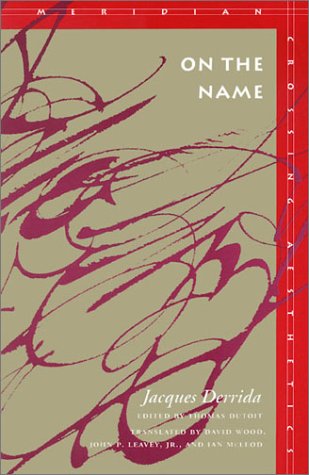
51. On the Name (Meridian: Crossing Aesthetics)
by Jacques Derrida
Paperback: 168 Pages (1995-08-01)
list price: US$22.95 -- used & new: US$18.21
(price subject to change: see help)
Asin: 0804725551
Average Customer Review: 4.0 out of 5 stars
Canada | United Kingdom | Germany | France | Japan
Editorial Review

Book Description

“The name: What does one call thus? What does one understand under the name of name? And what occurs when one gies a name? What does one give then? One does not offer a thing, one delivers nothing, and still something comes to be, which comes down to giving that which one does not have, as Plotinus said of the Good. What happens, above all, when it is necessary to sur-name, renaming there where, precisely, the name comes to be found lacking? What makes the proper name into a sort of sur-name, pseudonym, or cryptonym at once singular and singularly untranslatable?”

Jacques Derrida thus poses a central problem in contemporary language, ethics, and politics, which he addresses in a liked series of the three essays. Passions: “An Oblique Offering” is a reflection on the question of the response, on the duty and obligation to respond, and on the possibility of not responding—which is to say, on the ethics and politics of responsibility. Sauf le nom (Post Scriptum) considers the problematics of naming and alterity, or transcendence, raised inevitably by a rigorous negative theology. Much of the text is organized around close readings of the poetry of Angelus Silesius.

The final essay, Khora, explores the problem of space or spacing, of the word khora in Plato’s Tmaeus. Even as it places and makes possible nothing less than the whole world, khora opens and dislocates, displaces, all the categories that govern the production of that world, from naming to gender. In addition to readers in philosophy and literature, Khora will be of special interest to those in the burgeoning field of “space studies”(architecture, urbanism, design).

... Read more

Customer Reviews (1)

4-0 out of 5 stars aPOPHATICALLY, by way of naming...
A book like this...a review thereof for whom?
A certain amount of "familiarity" with Jackie's style of writing will probably be necessary to get into these three short essays around (and whatever other prepositions you care to put in) the theme of the name, naming, saving the name, keeping the name safe, and the name's refusal to be called by a name.
The first of the essays is titled "Passions" and is the most fragmented of the three in terms of delivery. A bit taxing, really. By way of introduction, Jack commits an abduction by way of "apophasis" -- a kind of an irony, whereby we deny that we say or do that which we especially say or do (OED) -- to bring about the idea of the passions of secrets: Secrets not by being hidden nor by being shared by a privileged few, but the kind that is open to all, perhaps taking on the form of a non-secret.

The second essay has a little more to sink one's teeth into. The subject is "negative theology" as such, or the (im)possibility thereof. A very penetrating reading of Angelus Silesius' The Cherubinic Wanderer.

The third essay, "Khora" -- non-placeable place, the third genus -- is a reading of Plato's notion of that "mother", "nurse", "the Receiver" that gives place for all that "takes place": A placing, a positing of displacement and differance, a displacement by way of oscillation between two types of oscillation: the double exclusion(neither/nor) and the participation(both this and that).

In short, this collection of essays opens up another (that is to say, the very same) horizon of thinking toward what used to be under the care of religion, and as such can be rewarding reading to those who are already aware of the necessity of reworking the language of absence without resorting to what was once named "mysticism". If Nagarjuna were born into the French language in the 20th century, he'd probably speak like this.

The writing on the back cover says that the last essay will be of particular interest to those in the burgeoning fields of "space studies"(architecture, urbanism, design). Interest? Maybe. Clarity and enlightenment? I wouldn't bet my lunch money on it myself. ... Read more


52. Speech and Phenomena: And Other Essays on Husserl's Theory of Signs (SPEP)
by Jacques Derrida
 Paperback: 166 Pages (1973-01-01)
list price: US$27.00 -- used & new: US$22.95
(price subject to change: see help)
Asin: 081010590X
Average Customer Review: 4.5 out of 5 stars
Canada | United Kingdom | Germany | France | Japan

Customer Reviews (2)

5-0 out of 5 stars Inside and Outside
Derrida, for all the supposed density of his writing, is a simplifier. Deconstruction owes much of its popularity (in America) to the fact that it says: philosophy is not all that complicated, just see how the inside andoutside collapse into one another and you can tear any text at its seams.Derrida follows the same procedure with poor old Edmund: the entirety ofthe LU shamble if Husserl is unable to maintain the integrity of silentthought, in which no Anzeichen point toward anything. Unlike the canals onMars, which may point to intelligent life, silent thought is unmediated andnot supplemented (to use a Deriddaism) by a sign. The collapse (or rending)of inside and outside by the supplement mark the presence of absence: theword, a mere supplement to the presence of silent thought, separates andjoins the "life" and "presence" of consciousness withabsence, repetition, and death.

4-0 out of 5 stars An introduction to Derrida and his related "différance"
Arguably one of the most convtroversial philosophers within the Continental tradigion, Derrida's work either heralds a revolution in philosophy or its utter destruction.

Derrida cites two importantpedigrees (as the title suggests):Husserl and (tacitly) de Saussure.

Using the "course in general linguistics" of de Saussure,Derrida notes a certain degree of freedom, a "jeu," between thewords-as-symbols and the thought contents they produce.Exploiting deSaussure's note that the relation between the sign and the mental contentis arbitrary, Derrida questions the validity of any text (where the notionof text includes, but is not limited to, books, magazines, commercials,art, sex).

Derrida sees behind any "text" its entirerecursive history, the weight of all the words, the mental experience ofthe reader.

At the point he considers the reader's experience he startsto deal with phenomenology - the study proposed and defined by Husserlhimself in his Vienna and Paris lectures.A short definition might be thatPhenomenology is the study of how man mentally relates to the objects ofhis experience(I admit, debatably so).

This book proposes Derrida'sfamous example of "différance" and its effect upon the Gallicallytrained ear and mind.So if you want to seem witty and "with-it"this introductory tome shall suffice.

As far as my own deconstruction /critique of the work.As an introductory work it is dense.Derrida isoften criticized for losing himself in intellectual crevices, being prolix,and employing poor stylistics.These are not unmerited.Yet for thereader who wishes to move beyond the fashionability of tossing"deconstructionist" out at cocktail parties, this is a must read. It is certainly part of the 20th century canon.

My own conclusions aremixed.In his later works Derrida becomes truly absurd, laughable, silly,and occasionally brilliant.Yet his work never fails to move its readerseither to agree that he is either an idiot, a bad writer, or thatphilosophy as we know it has long been dead. Perhaps like a Socraticgadfly, Derrida is moving us to an entire gestalt shift vis-à-vis ourrelationship with philosophy and social institutions.

A solid backgroundof Kant/Hegel, as well as a familiarity with lingustics (the aforementionedcourse in general lingustics of de Saussure) greatly ease the difficulty inpenetrating his work. ... Read more


53. Taking on the Tradition: Jacques Derrida and the Legacies of Deconstruction (Cultural Memory in the Present)
by Michael Naas
Paperback: 248 Pages (2002-10-03)
list price: US$23.95 -- used & new: US$23.95
(price subject to change: see help)
Asin: 080474422X
Canada | United Kingdom | Germany | France | Japan
Editorial Review

Book Description

Taking on the Tradition focuses on how the work of Jacques Derrida has helped us rethink and rework the themes of tradition, legacy, and inheritance in the Western philosophical tradition.It concentrates not only on such themes in the work of Derrida but also on his own gestures with regard to these themes—that is, on the performativity of Derrida’s texts.The book thus uses Derrida’s understanding of speech act theory to reread his own work.

The book consists in a series of close readings of Derrida’s texts to demonstrate that the claims he makes in his work cannot be fully understood without considering the way he makes those claims.The book considers Derrida’s relation to the Greek philosophical tradition and to his immediate predecessors in the French philosophical tradition, as well as his own legacy within the contemporary scene.

Part I examines Derrida’s analyses of Plato and Aristotle on the themes of writing and metaphor.Part II looks at themes of donation, inheritance, pedagogy, and influence in relation to Derrida’s readings of the works of Michel Foucault, Jacques Lacan, and Jean-Pierre Vernant.Part III considers the promises and legacies of Derrida’s work on autobiography, friendship, and hospitality, themes Derrida has recently taken up in his readings of Martin Heidegger, Maurice Blanchot, and Emmanuel Levinas.

In the Conclusion, the author analyzes what Derrida has recently called a “messianicity without messianism” and shows how Derrida develops two different notions of the future and of legacy: one that always determines a horizon for the donation and reception of any legacy or tradition, and one that leaves open a radically unknown and unknowable future for that legacy and tradition.

... Read more

54. The Politics of Deconstruction: Jacques Derrida and the Other of Philosophy
by Martin McQuillan
Paperback: 272 Pages (2007-10-10)
list price: US$29.95 -- used & new: US$29.94
(price subject to change: see help)
Asin: 0745326749
Canada | United Kingdom | Germany | France | Japan
Editorial Review

Book Description

Jacques Derrida has had a huge influence on contemporary political theory and political philosophy. Derrida's thinking has inspired Slavoj Zizek, Richard Rorty, Ernesto Laclau, Judith Butler and many more contemporary theorists. This book brings together a first class line up of Derrida scholars to develop a deconstructive approach to politics.
Deconstruction examines the internal logic of any given text or discourse. It helps us analyze the contradictions inherent in all schools of thought,and as such it has proved revolutionaty in political analysis,particularly ideology critique.
This book is ideal for all students of political theory,and anyone looking for an accessible guide to Derrida's thinking and how it can be used as a radical tool for political analysis.
... Read more

55. Later Derrida: Reading the Recent Work
by Herman Rapaport
Paperback: 168 Pages (2002-10-25)
list price: US$22.95 -- used & new: US$19.15
(price subject to change: see help)
Asin: 0415942691
Canada | United Kingdom | Germany | France | Japan
Editorial Review

Book Description
For many readers ofJacques Derrida, the philosopher's work since the appearance of The Post Card in 1987 has been enriched by a new set of concerns and questions. In Later Derrida, Herman Rapaport offers four extended essays that examines Derrida's work of the past fifteen years. Drawing on his own deep familiarity with theory and with Derrida's work in particular, he shows what Derrida has to say on such subjects as postcolonialism, monolingualism, trauma, memory, and the archive. Of particular interest to readers ofDerrida will be Rapaport's explanation of the concepts of Gemeinschaft (sect, society, etc.) and Gesellschaft (democracy, globalization, etc.) in the French philosopher's work.The essays also consider Derrida's relation to the work of Trinh Minh-ha, Gayatri Spivak, Artaud, and Heidegger.
This lucid book will be a necessary companion to all readers of Derrida's writing. ... Read more


56. Understanding Derrida
Paperback: 168 Pages (2004-06)
list price: US$31.78 -- used & new: US$19.00
(price subject to change: see help)
Asin: 0826473164
Canada | United Kingdom | Germany | France | Japan
Editorial Review

Book Description
Jacques Derrida continues to be the world's single most influential philosophical and literary theorist. He is also one of the most controversial and most complex. His own works and critical studies of his work proliferate, but where can a student, utterly new to the work of Derrida, start?

Understanding Derrida is written as an introduction to the full range of Derrida's key ideas and influences. It brings together the world's leading authorities on Derrida, each writing a short, accessible essay on one central aspect of his work.

Framed by a clear introduction and a complete bibliography of Derrida's publications in English, the essays systematically analyse one aspect of Derrida's work, each essay including a quick summary ofDerrida's books which have addressed this theme, guiding the student towards a direct engagement with Derrida's texts.

The essays cover language, metaphysics, the subject, politics, ethics, the decision, translation, religion, psychoanalysis, literature, art, and Derrida's seminal relationship to other philosophers, namely Husserl, Heidegger, Levinas, Hegel and Nietzsche. ... Read more


57. The Gift of Death, Second Edition & Literature in Secret (Religion and Postmodernism Series)
by Jacques Derrida
 Hardcover: 160 Pages (2008-04-01)
list price: US$35.00 -- used & new: US$35.00
(price subject to change: see help)
Asin: 0226142760
Average Customer Review: 4.0 out of 5 stars
Canada | United Kingdom | Germany | France | Japan
Editorial Review

Book Description

In The Gift of Death, Jacques Derrida's most sustained consideration of religion to date, he continues to explore questions introduced in Given Time about the limits of the rational and responsible that one reaches in granting or accepting death, whether by sacrifice, murder, execution, or suicide. Derrida analyzes Patocka's Heretical Essays on the History of Philosophy and develops and compares his ideas to the works of Heidegger, Levinas, and Kierkegaard.

A major work, The Gift of Death resonates with much of Derrida's earlier writing and will be of interest to scholars in anthropology, philosophy, and literary criticism, along with scholars of ethics and religion.

"The Gift of Death is Derrida's long-awaited deconstruction of the foundations of the project of a philosophical ethics, and it will long be regarded as one of the most significant of his many writings."—Choice

"An important contribution to the critical study of ethics that commends itself to philosophers, social scientists, scholars of relgion . . . [and those] made curious by the controversy that so often attends Derrida."—Booklist

"Derrida stares death in the face in this dense but rewarding inquiry. . . . Provocative."—Publishers Weekly
... Read more

Customer Reviews (5)

2-0 out of 5 stars Read On
I started to give a review in "deconstructionist" fashion - blather on about architecture surpassing old notions of "in" and "our", of reason giving way to the Neitzhien Uberwill, of absurd interpretations of text, relative yet "ultimate" truth and the unholy trinity of angst, subconscienceness and desire.
I was afraid, though, that it would be taken seriously by students (quote unquote) of post-modern "thought".

The danger of deconstructionism is undeniable. When literature and music are culturally interpreted, ethics are situational, when one speaks of slavery as freedom or humanity as inhumanity, we are lost in a sea of intellectual flotsam.The personal connections to fascism - Heidegger, Paul de Man, Blanchot, Bataille - can be overlooked. The intellectual similarities can't: The supremacy ofwill (Nietzsche) over reason and logic ("homogenising"), an obsession with emotion and political discourse, the celebration of the group over the individual (identity politics) and the idea that truth is what the critic, dictator or prophet says it is. Deconstructionism is, needless to say, popular among folks favoring modern "intellectual" movements with fuzzy tenets.

Here, he speaks to us eliptically (of course) as he partakes in the familiar one step forward - two steps backward approach. But if one follows Deconstructionism, why can't HIS writings be interpreted as an S&M fantasy or a desire to be a Greek Orthodox priest in drag?How do we know what he really means since he suggests that we often write exactly opposite of what we mean?.He writes of God, death, solitude, life and sacrifice BUT in a new voice of existentialism and doubt.He employs vague, self-defined and self-referential terms whicheffectively shield him from serious study.

Derrida, for all his rampant explicating, gets hot under the collar when his own words undergo the deconstruction challenge.Few have questioned his writings since (1) many are impossible to understand and (2) they may or may not mean what they say. What began as a new approach to literature has evolved into the language of intellectual totalitarianism. No one denies his extensive knowledge of Western literature; what galls are the bewieldering interpretations and his ironic attempt at building a new ethos based on syllogism.As another reviewer stated, take it slow, read several times, search for meaning even when there is none.

4-0 out of 5 stars Responsibility?
Deconstruction is a deceptively useful philosophical device.However, this usefulness is severely limited.Deconstruction can present no positive conclusions.All it can do is show the fallibility of any attempt at such certain knowledge, primarily by exposing the inadequacy of language, a faculty so intimately connected with understanding.As a skeptic, I personally find deconstuction to be very pleasing.However, I am constantly annoyed by Derrida's insistance on frequently ignoring this aspect of his process.As a philosopher, I suppose the inclination to make some sort of positive assertion could be irresitible.I love the "play" and the analysis, but the attempt at ethical conclusions leaves me cold.

In "The Gift of Death," Derrida uses the story of Abraham and Isaac to distinguish between an absolute responsibility to "the other" from the typical ethical, "known" responsibility.I have never understood why it is that philosophers use this parable and others to decipher ethical realities.How much truth can one expect to extract from a fictional story?However, the idea that originary responsibility is always irresponsible is intriguing.Derrida proposes that Abraham's responsibility to God, the other, takes precedence over his lesser responsibilty to his son.And yet, later he makes the assertion that every other is an absolute other, making all responsibility absolute.

All of this emphasis on otherness ultimately leads to a kind of ethical paralysis, but Derrida does not acknowledge this.Throughout history, small differences have been blown up into impenetrable divisions.Racism, homophobia, sexism, ethnicity, nationality, religion, all the institutions that Deconstruction usually attacks are fully supported by these "irresponsible" ethical conclusions.

As I said before, the analysis reads like poetry and there are some very interesting ideas here.Derrida is frustrating, but worthwhile.I recommend this as well as "Writing and Difference."

4-0 out of 5 stars RESUMPTION
I write not long after the passing of Jacques Derrida. He was a man of questions and flights of powerfully intellectual fancy. He changed how the world looks at literature.

I will not clang the bells and start up the chorus of "ding-dong Derrida's dead" that might be expected from a Christian reader of the man's work (if anyone expected Derrida to have such readers--we are inexcusably few).

Instead, I will say that in Derrida, and in this set of essays, his look into Kierkegaard in particular, I have found a kindred seeker after truth, if not a kindred professor of it.

Jacques is now with the undeconstructable--both the source, fulfillment, and, in most cases, the negation of all his observations and questions. He is with the pure ineffable which choses to speak to and through the failable.

The very mention of such belies most of Derrida's work.

The certainty that springs from his work's invalidation gives me peace that the seeker has at last found, that Jacques Derrida is now fully and forever constructed.

His work is over, but his true life--as with all the lives of those who seek and ask--has resumed an ancient, intended course.

Rest in freedom and fulfillment, Mr Derrida.

5-0 out of 5 stars The Father of Deconstruction Reconstructed
You can give someone life--or you can put someone to death. But you cannot "give" someone their own death. Death is a "gift" because it insures our irreplaceableness in God's eyes; it is ours and ours alone. No one can die in my place no more than I can die in theirs. Our willingness to acknowledge this relationship with our own deaths (which above all requires "responsibility," a term Derrida seems to prefer to "faith") in turn unites us with God and the self, with the giver and the receiver.

I'll admit I hadn't expected a deconstructionist to use terms like "absolute," "transcendant," "God," "self"--in profusion and in earnest. But perhaps Derrida has sufficiently exposed the instability, metaphoric basis and deceptive play of language to be able to employ it without qualifiers, disclaimers, and tedious textual self-referentiality. As is his custom, he represents his own work as a critique of others' works--Plato's "Phaedo," Nietzsche's "Genealogy of Morals," Kierkegaard's "Fear and Trembling," and the contemporary, politically executed Polish philosopher Jan Potocka. While he establishes his distance from Plato and Nietzsche, his re-visioning of Kierkegaard offers new angles without questioning or challenging the great Dane's existential reading of the Abraham-Isaac story. And his alignment with Potocka is so complete as to suggest more an apologia than a critique of the latter's work. Add to these texts numerous references to Heidegger and to both the Old and New Testaments as well as to stories by Poe and Hawthorne, and you'll have some idea of how richly allusive, not to mention dense, Derrida's discourse can be, even in a brief work such as this.

The primary requisite for reading "The Gift of Death" is some knowledge of its precursor, "Fear and Trembling." Like Kierkegaard, Derrida defines religion as access to the responsibility of a free self, which in turn is defined as a relationship consciously and secretly experienced by the individual subject who sees him or herself in the gaze of God. Truth is separated from Socrates' truth by its interiority, by its replacement of reason, ethics, and aesthetics with the sheer horror of the abyss. Compared to Kierkegaard, however, Derrida's account is less romantic, less inspiring, more disturbing. The leap of faith involves not a sacrifice of Isaac but of oneself, a secret and senseless meeting with one's own death. Derrida interprets the absence of woman in the Abraham and Bartleby stories as proof that the "knight of faith's" quest is not the "tragic hero's". Instead, it is beyond all knowledge, a confrontation with the abyss that marks the Absolute singularity of the self. (This latter observation is reminiscent of Marlowe's inability, or unwillingness, in Conrad's "Heart of Darkness," to share the "truth" of Kurtz' final words, "The horror, the horror," with Kurtz' fiance.)

In the latter part of his critique, Derrida offers a paradoxical criticism of the technological, modern age. Far from becoming quantified or de-naturalized, we have returned to the demonic and orgiastic from which religion arose. Modern man has fallen into inauthenticity, becoming not a self or person but assuming the mask of a "role."Present-day democracy, in turn, is not about the equality of individuals but of roles. Hence the importance of discovering and accepting the gift of death that determines human uniqueness. Responsibility is the criterion; freedom is the result.

This is a work not to be read quickly or only once. Derrida moves slowly, taking two steps backward before moving one step forward, but his method insures the communication of his meanings.If it's any inducement to the reader, I would suggest that the fourth and final chapter, "Tout autre est tout autre," is anticlimactic and unhelpful. By then the attentive reader will already have located the gift.

5-0 out of 5 stars This book seems like Jacques being Jacques.
Derrida, as usual, is able to tease apart the conventional ways of thinking--in this case about the (im)possibility of ethics--and force us to think in a completely different way. I might disagree with his analysis of the ramifications of the ethical gesture explicated in Kierkegaard's "Fear and Trembling," but i can't say old Jack didn't make me think. ... Read more


58. Resistances of Psychoanalysis (Meridian: Crossing Aesthetics)
by Jacques Derrida
Paperback: 140 Pages (1998-07-01)
list price: US$19.95 -- used & new: US$16.22
(price subject to change: see help)
Asin: 0804730199
Average Customer Review: 3.0 out of 5 stars
Canada | United Kingdom | Germany | France | Japan
Editorial Review

Book Description

In the three essays that make up this stimulating and often startling book, Jacques Derrida argues against the notion that the basic ideas of psychoanalysis have been thoroughly worked through, argued, and assimilated. The continuing interest in psychoanalysis is here examined in the various “resistances” to analysis—conceived not only as a phenomenon theorized at the heart of psychoanalysis, but as psychoanalysis’s resistance to itself, an insusceptibility to analysis that has to do with the structure of analysis itself.

Derrida not only shows how the interest of psychoanalysis and psychoanalytic writing can be renewed today, but these essays afford him the opportunity to revisit and reassess a subject he first confronted (in an essay on Freud) in 1966. They also serve to clarify Derrida’s thinking about the subjects of the essays—Freud, Lacan, and Foucault—a thinking that, especially with regard to the last two, has been greatly distorted and misunderstood.

The first essay, on Freud, is a tour de force of close reading of Freud’s texts as philosophical reflection. By means of the fine distinctions Derrida makes in this analytical reading, particularly of The Interpretation of Dreams, he opens up the realm of analysis into new and unpredictable forms—such as meeting with an interdiction (when taking an analysis further is “forbidden” by a structural limit).

Following the essay that might be dubbed Derrida’s “return to Freud,” the next is devoted to Lacan, the figure for whom that phrase was something of a slogan. In this essay and the next, on Foucault, Derrida reencounters two thinkers to whom he had earlier devoted important essays, which precipitated stormy discussions and numerous divisions within the intellectual milieus influenced by their writings. In this essay, which skillfully integrates the concept of resistance into larger questions, Derrida asks in effect: What is the origin and nature of the text that constitutes Lacanian psychoanalysis, considering its existence as an archive, as teachings, as seminars, transcripts, quotations, etc.?

Derrida’s third essay may be called not simply a criticism but an appreciation of Foucault’s work: an appreciation not only in the psychological and rhetorical sense, but also in the sense that it elevates Foucault’s thought by giving back to it ranges and nuances lost through its reduction by his readers, his own texts, and its formulaic packaging.
... Read more

Customer Reviews (1)

3-0 out of 5 stars Derrida has said what he says here more clearly elsewhere.
This book is not really three essays. It is three lectures.For Derrida,this is a big difference.Derrida is both a brilliant writer and abrilliant lecturer, but his lectures don't read that well.I think itsadmirable that publishers are making so much of Derrida's materialavailable, but this book is inferior to much of the rest of Derrida'savailable work (such as: Margins of Philosophy, Glas, Of Spirit, ...) Thisbook is really only for those who have worked their way through at least acouple of Derrida's other books. ... Read more


59. Derrida: A Critical Reader (Blackwell Critical Reader)
by David Wood
Paperback: 312 Pages (1991-01-15)
list price: US$32.95 -- used & new: US$22.50
(price subject to change: see help)
Asin: 063116121X
Canada | United Kingdom | Germany | France | Japan
Editorial Review

Book Description
Jacques Derrida's prolific output has been the delight of philosophers and literary theorists for over twenty years. His influence on the way we read theoretical texts continues to be profound. ... Read more


60. This auto-bio-graphical animal that I am.(critical response to Etienne Terblanche's article "That 'Incredible Unanimal/Mankind': Jacques Derrida, E.E. ... An article from: Journal of Literary Studies
by Andrea Hurst
 Digital: 46 Pages (2007-06-01)
list price: US$9.95 -- used & new: US$9.95
(price subject to change: see help)
Asin: B000Y768W8
Canada | United Kingdom | Germany | France | Japan
Editorial Review

Book Description
This digital document is an article from Journal of Literary Studies, published by Thomson Gale on June 1, 2007. The length of the article is 13760 words. The page length shown above is based on a typical 300-word page. The article is delivered in HTML format and is available in your Amazon.com Digital Locker immediately after purchase. You can view it with any web browser.

Citation Details
Title: This auto-bio-graphical animal that I am.(critical response to Etienne Terblanche's article "That 'Incredible Unanimal/Mankind': Jacques Derrida, E.E. Cummings and a Grasshopper")(Critical essay)
Author: Andrea Hurst
Publication: Journal of Literary Studies (Magazine/Journal)
Date: June 1, 2007
Publisher: Thomson Gale
Volume: 23Issue: 2Page: 118(30)

Article Type: Critical essay

Distributed by Thomson Gale ... Read more


  Back | 41-60 of 100 | Next 20
A  B  C  D  E  F  G  H  I  J  K  L  M  N  O  P  Q  R  S  T  U  V  W  X  Y  Z  

Prices listed on this site are subject to change without notice.
Questions on ordering or shipping? click here for help.

site stats