e99 Online Shopping Mall

Geometry.Net - the online learning center Help  
Home  - Philosophers - Habermas Jurgen (Books)

  Back | 21-40 of 100 | Next 20
A  B  C  D  E  F  G  H  I  J  K  L  M  N  O  P  Q  R  S  T  U  V  W  X  Y  Z  

click price to see details     click image to enlarge     click link to go to the store

 
$29.32
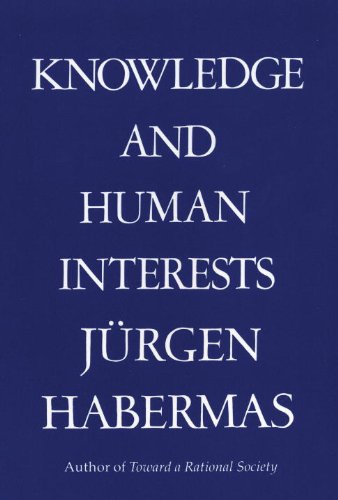
21. Knowledge and Human Interests
$22.17
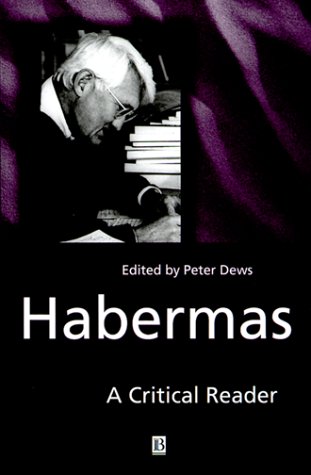
22. Habermas: A Critical Reader (Blackwell
$21.99
23. Theory and Practice
 
$105.01
24. Jurgen Habermas
$17.88
25. The Inclusion of the Other: Studies
$15.74
26. Religion and Rationality: Essays
$20.05
27. Communication and the Evolution
$22.00
28. On the Pragmatics of Social Interaction:
$17.88
29. The Postnational Constellation:
$28.57
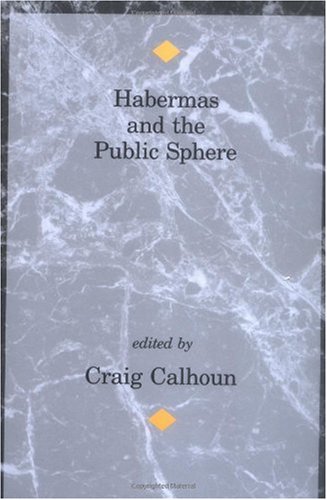
30. Habermas and the Public Sphere
$150.00
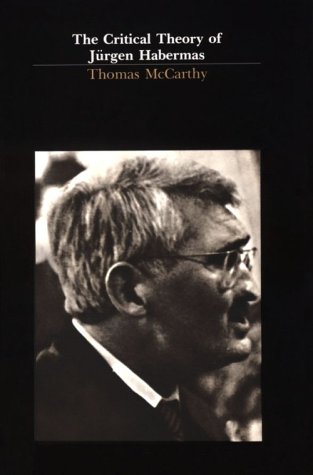
31. The Critical Theory of Jurgen
$49.95
32. Habermas on Law and Democracy:
$33.13
33. Jurgen Habermas (Key Sociologists)
$8.99
34. Philosophy in a Time of Terror:
35. Jürgen Habermas
$28.91
36. Covenant and Communication: A
 
$17.50
37. The Emancipative Theory of Jurgen
$8.57
38. Glauben und Wissen.
 
$58.00
39. Reading Freire and Habermas: Critical
$22.79
40. The Cambridge Companion to Habermas

21. Knowledge and Human Interests
by Jurgen Habermas
 Paperback: 356 Pages (1972-02-01)
list price: US$30.00 -- used & new: US$29.32
(price subject to change: see help)
Asin: 0807015415
Average Customer Review: 5.0 out of 5 stars
Canada | United Kingdom | Germany | France | Japan
Editorial Review

Book Description
"For those concerned with the relationships between thought and action, KNOWLEDGE AND HUMAN INTERESTS will quickly be recognized as a brilliant book -- and a bold outline for a new social theory." (Times Literary Supplement) ... Read more

Customer Reviews (1)

5-0 out of 5 stars climactic transition in thought
Habermas says in an interview that he has basically followed the same research program since 1970--that is, since "Knowledge and Human Interests." (KHI) In many ways, KHI marks the peak of Habermas's effort to carry out the classic program of the critical theory of the Frankfurt School. In this, one crucial question is how to integrate the individual psychology of Freud with the sociology of Marx. Another is how to integrate a generally Darwinian paradigm into the Continental philosophical tradition stemming from Hegel.
In KHI, Habermas argues that our "interests," by which he means our basic life concerns--almost in a Maslow-like sense--from survival to meaning, are ultimately evolutionarily rooted. Knowledge does "ride on top of" these interests--thus keeping, barely Marx's distinction between "base" and "superstructure"--in the sense that we want to know things because we are the sort of creature who know in order to survive, to live together, to find meaning in life, etc. But since knowledge--culture in all its forms--is the tool we use, as it were, to meet our needs (to address our interests), what we need to pay attention to in order to meet the needs of our bodies and selves is culture, human understanding.
Habermas evidently felt that with KHI he had reached a dead end. During the 1970s (following lectures at Princeton) he set off to ground social theory in social existence--that is, in our relationships as they occur by means of talking with each other. This led to his magnum opus, "The Theory of Communicative Action." His work in the 1980s and 1990s was a defense and elaboration of TCA, especially in the direction of political and legal philosophy.
But in my reading of Habermas, he has remained a secular philosopher of hope from his very first writings in the 1950s. Both in terms of tools--for instance, his use, unusual for a Continental, of Anglo-American philosophy of language, and his use, unusual for a philosopher, of empirical sociology and psychology--and in terms of themes--emancipation, freedom from self-delusion, consensual and informed participation as the guarantor against a repeat of the Nazi disaster--he has remained on a life quest to see that his boyhood under Hitler is never repeated.
KHI is a major step on that path, an effort to summarize a tradition's ability to contribute before he struck out on his own. It is odd for English-world people because of how seriously he takes Freud and Marx. It is dated in its 1960s references and atmosphere of young revolt and idealistic remaking of society, and in its pre-spirituality craze secularism. But it is a magisterial reading of many European authors, including especially Nietzsche, and by no means of interest only to Habermas scholars. Anyone looking for answers as to how to avoid both tyranny and terror while dealing with globalization and pluralism will benefit from Habermas's struggle with the same issues.
Note: not as technical and encumbered by social-scientific jargon as many of his later works. Habermas is no friend to readers, but a "New York Times" regular will be able to manage it.
Recommended for serious readers. ... Read more


22. Habermas: A Critical Reader (Blackwell Critical Reader)
Paperback: 368 Pages (1999-11-22)
list price: US$40.95 -- used & new: US$22.17
(price subject to change: see help)
Asin: 0631201351
Canada | United Kingdom | Germany | France | Japan
Editorial Review

Book Description
Comprised of classic and newly-commissioned papers from leading theorists, this volume provides a wide-ranging critical introduction to the thought of Jürgen Habermas. Some contributions explore the relation between Habermas's philosophy and the thought of major predecessors, including Kant, Hegel, Marx and Heidegger.Others elucidate the political context of Habermas's thinking, while a final section presents the responses of leading German contemporaries to his work. The result is a more rounded picture of Habermas's oeuvre and achievement than has previously been available.Habermas emerges as a thinker whose outstanding powers of renewal and innovation are inseparable from his engagement with the major traditions of European thought, and his own intellectual and political context. ... Read more


23. Theory and Practice
by Jurgen Habermas
Paperback: 324 Pages (1988-03-09)
list price: US$30.00 -- used & new: US$21.99
(price subject to change: see help)
Asin: 080701527X
Canada | United Kingdom | Germany | France | Japan

24. Jurgen Habermas
by Martin Beck Matußt'k
 Hardcover: 384 Pages (2001-06-20)
list price: US$109.00 -- used & new: US$105.01
(price subject to change: see help)
Asin: 0742507963
Canada | United Kingdom | Germany | France | Japan
Editorial Review

Book Description
This philosophical-political profile offers the first of its kind intellectual reconstruction of Habermas' defining existential and historical situations, his generational profile and interventions, his impact on as well as the discontents that his life work generates in others. Written as a lively dramatic engagement with major themes of Habermas' adult life in postwar Germany, the entire study occupies a unique place between the standard genres of a biography and a theoretical commentary on the oeuvre. In this work the reader is taken on a journey with Habermas through the 20th-century intellectual and political history from the defeat of Nazism, to the Cold War restoration of the '50s, the student movement of the '60s, the historical revisions of the '70s and '80s, the hope of the post-Wall era after 1989, all the way to the controversies surrounding the allied wars of intervention against Iraq and Serbia in the 1990s. Both beginning and advanced readers of 20th century socio-political thought gain greater insight into the existential, political, and philosophical influences that proved to be formative of Habermas' writing and activism in the public sphere. The first part of the study emphasizes the unfolding, linear view of Habermas' postwar history, punctuated by the major existential and political situations of his young adult life from 1945 to 2000. The second part returns to the same time-span in order to reconstruct Habermas' mature post-Wall intellectual profile in contrast to the profiles of the preceding generation of 1945 and the later protesting generation of 1968. The third part examines the tremendous Habermas-effect exercised on 20th-century thought and public policy. The concluding chapters discuss critically the lasting place as well as the limits of Habermas' achievement in contribution to a development of new critical theory. The book is enhanced by an introduction that provides a historical and conceptual background to the major themes discussed, twelve helpful thematic tables and figures, and a glossary of foreign terms. ... Read more


25. The Inclusion of the Other: Studies in Political Theory (Studies in Contemporary German Social Thought)
by Jürgen Habermas
Paperback: 338 Pages (2000-01-31)
list price: US$25.00 -- used & new: US$17.88
(price subject to change: see help)
Asin: 0262581868
Average Customer Review: 4.0 out of 5 stars
Canada | United Kingdom | Germany | France | Japan
Editorial Review

Book Description
Since its appearance in English translation in 1996, Jürgen Habermas's Between Facts and Norms has become the focus of a productive dialogue between German and Anglo-American legal and political theorists. The present volume contains ten essays that provide an overview of Habermas's political thought since the original appearance of Between Facts and Norms in 1992 and extend his model of deliberative democracy in novel ways to issues untreated in the earlier work.

Habermas's theory of democracy has at least three features that set it apart from competing positions. First, it combines a concern with questions of normative justification with an empirical analysis of the social conditions necessary for the realization of democratic institutions. Second, at the heart of his model is the assertion of an internal relationship between liberalism and democracy. Finally, Habermas defends a conception of universal human rights that is not only sensitive to cultural differences but also calls for legal and political institutions that facilitate the cultivation of cultural and religious identities within pluralistic societies.

These essays demonstrate the extraordinary power of Habermas's theory of democracy through a further engagement with Rawls's political liberalism and through original contributions to current debates over nationalism, multiculturalism, and the viability of supranational political institutions. ... Read more

Customer Reviews (1)

4-0 out of 5 stars INCLUDING DEMOCRACY
After his major work on legal theory (Between Facts and Norms), Jürgen Habermas revisits some of the hottest issues on metaethics, political theory and moral philosophy. The book is nicely divided in five parts.The first is the most specialized one. Habermas offers an excitingcontribution to metaethics. As readers might know, most disputes incontemporary metaethics revolve around the question whether we could find acognitive basis for "first principles" or "values", orwhat is the same, whether there is an objective ground for things likehuman rights and principles like those of liberty and equality. By means ofreflecting on his discursive ethics (the main insight of which is thatstandards of right are to be related to the necessary assumptions which wemake each and every time we enter into discourses concerning practicalquestions, like that all those with which we talk could contributesomething to the issue at stake), Habermas puts forwards a convincing casefor a moderate cognitivism, or what is the same, for an objectivefoundation. This implies moving beyond the relativism characteristic ofmuch liberal thinking. Specialized readers will be interested inconfronting Habermas' argument with that of Alexy, and will find thechapter an expansion of his 1997 article on the Aristotelian SocietyProceedings. The second part contains two chapters, devoted to one of themajor events in contemporary political thinking: the lectures in which JohnRawls (author of the world-known Theory of Justice, second editionpublished in September 1999) and Jürgen Habermas revisited the work of eachother. Habermas stresses the similarities of his and Rawls' theory, butstresses the dialogical conception of his theory of justice, vis a vis themonological character of the well-known Rawlsian original position. Thethird part is an essential reading for all those interested inglobalisation. Habermas offers his insights on the process of Europeanintegration. The articles there included reflect his commitment to thefurther development of the Communities, based both in his own fear of anisolated Germany and his hope for extending solidarity beyondnation-states. Specialized readers will find specially interesting his newinsights on the cement of liberal post-nationalistic societies, whatHabermas himself labeled as "constitutional patriotism". Thefourth part contains Habermas contributions with the occasion of the 200thanniversary of the publication of Kant's pamphlet "Towards PerpetualPeace", a major statement in favor of cosmopolitan democracy. Habermastakes the opportunity to challenge realists, that is, those claiming thatinternational relations are mainly a matter of force and deception (thelike of Carl Schmitt, a favorite target of his criticisms). The fifth andlast part deals with the expanding number of writers who adhere todeliberative democracy as the legitimate political arrangement (like JoshuaCohen and Seyla Benhabib, to quote some names). Habermas makes a niceanalysis of the main trends and implications of this line of argumentation,which basically aims at transcending majoritarian politics and reinforcingthe effective participation of citizens in politics. The Inclusion ofthe Other is especially recommended to all those interested in having ataste of the work of Habermas but who were deterred by the complicatedprose of Continental Philosophers. The book is clearly written and crisplytranslated. Habermas himself supervises the English translation of hisbooks. A colleague from Germany told me that she preferred reading him inEnglish because the texts were always more rich and complete than in theoriginal edition! ... Read more


26. Religion and Rationality: Essays on Reason, God and Modernity (Studies in Contemporary German Social Thought)
by Jürgen Habermas
Paperback: 184 Pages (2002-09-09)
list price: US$22.00 -- used & new: US$15.74
(price subject to change: see help)
Asin: 0262582163
Average Customer Review: 4.0 out of 5 stars
Canada | United Kingdom | Germany | France | Japan
Editorial Review

Book Description
This important new volume brings together Jürgen Habermas's key writings on religion and religious belief. In these essays, Habermas explores the relations between Christian and Jewish thought, on one hand, and the Western philosophical tradition on the other. He often approaches these issues through critical encounters with the work of others, including Walter Benjamin, Martin Heidegger, Johann Baptist Metz, and Gershom Scholem.

In an introduction written especially for this volume, Eduardo Mendieta places Habermas's engagement with religion in the context of his work as a whole. Mendieta also discusses Habermas's writings in relation to Jewish Messianism and the Frankfurt School, showing how these essays reflect an important yet often neglected dimension of critical theory. The volume concludes with an original extended interview that examines Habermas's current views on religion and modern society. ... Read more

Customer Reviews (1)

4-0 out of 5 stars Habermas is interesting, but selection of essays is questionable
This collection of Habermas's essays dealing with religion is a very mixed bag. A number of them are so specific in topic (and so historically-minded) that it's hard to draw any real inferences about Habermas's own opinions. The introductory essay by Eduardo Mendieta is nearly worthless for those who don't already know Habermas's other work quite well, so it fails to open up the volume to theologians and clergy who want to engage with his thought.

Nevertheless, some of the essays are very illuminating, including "Transcendence from Within, Transcendence in this World," "Israel or Athens: Where does Anamnestic Reason Belong?" "Tracing the Other of History in History," and the final interview. Given some of Habermas's commitments to reason and methodological atheism, I expected him to travel down roads similar to the ones Dewey explores in Common Faith, which folks like Richard Dawkins and Sam Harris are exploring in the present day, but I never found him actually rejecting the way religious people now enter the public sphere. It definitely gives cause for hope and entices the reader to explore Habermas's philosophical work. ... Read more


27. Communication and the Evolution of Society
by Jurgen Habermas
Paperback: 264 Pages (1979-03-08)
list price: US$22.00 -- used & new: US$20.05
(price subject to change: see help)
Asin: 080701513X
Canada | United Kingdom | Germany | France | Japan
Editorial Review

Book Description
A collection of essays byJurgen Habermas, the "foremost social and political thinker in Germany today." (Times Literary Supplement)Included are essays on his theories on communication, socialization, social evolution, and the development of law and morality. ... Read more


28. On the Pragmatics of Social Interaction: Preliminary Studies in the Theory of Communicative Action (Studies in Contemporary German Social Thought)
by Jürgen Habermas
Paperback: 216 Pages (2002-02-07)
list price: US$22.00 -- used & new: US$22.00
(price subject to change: see help)
Asin: 0262582139
Canada | United Kingdom | Germany | France | Japan
Editorial Review

Book Description
In 1971 Jürgen Habermas delivered the Gauss Lectures at Princeton University. These pivotal lectures, entitled "Reflections on the Linguistic Foundation of Sociology," anticipate The Theory of Communicative Action and offer an excellent introduction to it. They show why Habermas considers the linguistic turn in social philosophy to be necessary and contain the first formulation of formal pragmatics, including an important discussion of truth.

In these lectures and two additional essays, Habermas outlines an intersubjective approach to social theory that takes the concepts of meaning and communication to be central. In doing so, he situates his project relative to other influential accounts of how meaning is constituted, in particular those of Edmund Husserl, Wilfrid Sellars, and Ludwig Wittgenstein. He examines the nature of social interaction and its connection to communication, developing a linguistic conception of convention and intentionality. He also offers an account of social and individual pathologies using the concept of systematically distorted communication. Taken together, these analyses contribute significantly to current debates in the philosophy of action and language. ... Read more


29. The Postnational Constellation: Political Essays (Studies in Contemporary German Social Thought)
by Jürgen Habermas
Paperback: 216 Pages (2001-03-19)
list price: US$25.00 -- used & new: US$17.88
(price subject to change: see help)
Asin: 0262582066
Average Customer Review: 5.0 out of 5 stars
Canada | United Kingdom | Germany | France | Japan
Editorial Review

Book Description
Does a global economy render the traditional nation-state obsolete? Does globalization threaten democratic life, or offer it new forms of expression? What are the implications of globalization for our understanding of politics and of national and cultural identities?

In The Postnational Constellation, Jürgen Habermas addresses these and other questions. He explores the historical and political origins of national identity, the achievements and catastrophes of the twentieth century, the future of democracy in the wake of the era of the nation-state, the political and moral challenges facing the European Union, and the status of global human rights in the ongoing debate on the sources of cultural identity. In their scope, critical insight, and clarity, the essays present a powerful vision of the contemporary political scene and the opportunities and challenges facing us. Those new to Habermas's work will find in this book a lucid and engaging introduction to one of the twentieth century's most influential thinkers. Those familiar with Habermas's writings will appreciate the application of his social and political theories to current political realities. ... Read more

Customer Reviews (1)

5-0 out of 5 stars Gets me interested in political philosophy
I started noticing the works of Habermas because of his discourse ethics and its affinity with Kant's position.I never really had much interests in political / social philosophy (e.g. Locke, Hobbes, Marx, Weber, Freud, etc.) but this book changed me.

The issue addressed by the keynote essay 'Postnational Constellation' explores the problem of the possibility of democracy in the process of globalization (esp. in Europe) where the traditional power of the nation states-- the traditional home of democracy-- continues to decline.While this might not be a very important problem say 50 years from now, the analysis is very interesting to me because:

1.It emphasizes the importance of 'normative basis' in social-political debates. 2.It incorporates many insightful (at least to me) observations of empirical historical trends with normative considerations. 3.Habermas is a real thinker!

After reading the book, which also includes a short summary of his account of the history of the philosophical idea of modernity and a short essay concerning human rights among other works, I am now interested in Habermas' social / political theory as expounded in his other books Facts and Norms and the Inclusion of Others.

A side-note: Habermas' shorter essay Against Human Cloning is not as well-argued as other essays in the collection. ... Read more


30. Habermas and the Public Sphere (Studies in Contemporary German Social Thought)
Paperback: 510 Pages (1993-03-02)
list price: US$40.00 -- used & new: US$28.57
(price subject to change: see help)
Asin: 0262531143
Canada | United Kingdom | Germany | France | Japan
Editorial Review

Book Description
The relationship between civil society and public life has become a major topic of discussion in many disciplines, and no single scholarly voice informs this discussion more than that of J�rgen Habermas. His contributions have shaped the nature of debates over critical theory, feminism, cultural studies, and democratic politics. In this book, scholars from a wide range of disciplines respond to Habermas's most directly relevant work, The Structural Transformation of the Public Sphere.

Ranging from political theory to cultural criticism, from ethics to gender studies, from history to media studies, these essays challenge, refine, and extend our understanding of the social foundations and changing character of democracy and public discourse.

Craig Calhoun is Professor of Sociology and History and Director of the Program of Social Theory and Cross-Cultural Studies at the University of North Carolina at Chapel Hill. ... Read more


31. The Critical Theory of Jurgen Habermas
by Thomas McCarthy
Paperback: 504 Pages (1981-09-30)
list price: US$38.00 -- used & new: US$150.00
(price subject to change: see help)
Asin: 0262630737
Canada | United Kingdom | Germany | France | Japan

32. Habermas on Law and Democracy: Critical Exchanges (Philosophy, Social Theory, and the Rule of Law, 6)
Hardcover: 400 Pages (1998-09-01)
list price: US$60.00 -- used & new: US$49.95
(price subject to change: see help)
Asin: 0520204662
Canada | United Kingdom | Germany | France | Japan
Editorial Review

Book Description
In the first essay, Habermas himself succinctly presents the centerpiece of his theory: his proceduralist paradigm of law. The following essays comprise elaborations, criticisms, and further explorations by others of the most salient issues addressed in his theory. The distinguished group of contributors--internationally prominent scholars in the fields of law, philosophy, and social theory--includes many who have been closely identified with Habermas as well as some of his best-known critics. The final essay is a thorough and lengthy reply by Habermas, which not only engages the most important arguments raised in the preceding essays but also further elaborates and refines some of his own key contributions in Between Facts and Norms. This volume will be essential reading for philosophers, legal scholars, and political and social theorists concerned with understanding the work of one of the leading philosophers of our age.
These provocative, in-depth debates between Jürgen Habermas and a wide range of his critics relate to the philosopher's contribution to legal and democratic theory in his recently published Between Facts and Norms. Drawing upon his discourse theory, Habermas has elaborated a novel and powerful account of law that purports to bridge the gap between democracy and rights, by conceiving law to be at once self-imposed and binding. ... Read more


33. Jurgen Habermas (Key Sociologists)
by M. Pusey
Paperback: 132 Pages (1988-02-25)
list price: US$37.95 -- used & new: US$33.13
(price subject to change: see help)
Asin: 0415104513
Canada | United Kingdom | Germany | France | Japan
Editorial Review

Book Description
A lucid and authoritative introduction to the work of Habermas. His sometimes difficult and inaccessible work is rendered accessible by Michael Pusey for the student reader.

  • This title available in eBook format.Click here for more information.
  • Visit our eBookstore at:www.ebookstore.tandf.co.uk. ... Read more

  • 34. Philosophy in a Time of Terror: Dialogues with Jurgen Habermas and Jacques Derrida
    by Giovanna Borradori
    Paperback: 224 Pages (2004-09-01)
    list price: US$15.00 -- used & new: US$8.99
    (price subject to change: see help)
    Asin: 0226066665
    Average Customer Review: 3.5 out of 5 stars
    Canada | United Kingdom | Germany | France | Japan
    Editorial Review

    Book Description

    The idea for Philosophy in a Time of Terror was born hours after the attacks on 9/11 and was realized just weeks later when Giovanna Borradori sat down with Jürgen Habermas and Jacques Derrida in New York City, in separate interviews, to evaluate the significance of the most destructive terrorist act ever perpetrated. This book marks an unprecedented encounter between two of the most influential thinkers of our age as here, for the first time, Habermas and Derrida overcome their mutual antagonism and agree to appear side by side. As the two philosophers disassemble and reassemble what we think we know about terrorism, they break from the familiar social and political rhetoric increasingly polarized between good and evil. In this process, we watch two of the greatest intellects of the century at work.
    ... Read more

    Customer Reviews (18)

    4-0 out of 5 stars Postmodern situations, postmodern ideas
    As Borradori states in his introduction, 'Both [Habermas and Derrida] hold that terrorism is an elusive concept that exposes the global political arena to imminent dangers as well as future challenges.'I think that this sums up what many people feel about the war on terrorism - unlike conflicts such as World War I and World War II, or even the more vaguely defined Cold War or Vietnam war, this is a war where there the front-line can be anywhere and nowhere, where the enemies can be anyone and no one, and where the tactics, strategies, motives and hoped-for achievables are so far removed from what traditional political and military methodology deals with that it requires a paradigm shift in our thinking.'While the Cold War was characterized by the possibility of balance between two superpowers, it is impossible to build a balance with terrorism because the threat does not come from a state but from incalculable forces and incalculable responsibilities.'

    As is typical of Derrida, he sees the relationship between terrorism and communication to be paramount.(I was first exposed to Derrida in theology classes, dealing with the postmodern predicament of looking for meaning in language and behind language in ways that make sense).It is perhaps ironic that the term that springs to mind most when contemplating Derrida is 'deconstruction', which is, in often a dramatically literal sense, what terrorism also hopes to achieve.'The intellectual grounding of Derrida's deconstruction owes much to the nineteenth- and twentieth-century lineage constituted by Nietzsche, Heidegger and Freud.For Derrida, many of the principles to which the Western tradition has attributed universal validity do not capture what we all share or even hope for.'This becomes all the more problematic when dealing with those outside the Western tradition, such as occurred in Vietnam, Korea, and now in the war on terror.

    For Derrida, communication is not simply political.'Derrida engaged the themes of terror as a psychological and metaphysical state as well as terrorism as a political category.'This draws upon philosophical ideas that can reinterpret the events in various ways, as plays out in various media outlets even to this day.But the events of 9/11 for Derrida are not surprising.'Was 9/11 truly unpredictable?Not for Derrida.... The kind of attack that the terrorists launched in 2001 had already been prefigured in detail by the technocinematic culture of our days.'

    Habermas also sees communication as a critical element.One issue for Habermas is the speed of modern mass communication - it 'works in the interest of those who select and distribute the information rather than those who receive it.Habermas suggests that the pressure of thinking and evaluating data quickly has a political import, because it facilitates an experience of politics based on the persona of the actors rather than the ideas that each of them defends.' Habermas' theory of communicative action, including its idea of violence as distorted communication, shows the importance of perception, understanding, critical analysis and response.

    'Habermas understands modernity to be a change in belief attitude rather than a coherent body of beliefs.A belief attitude indicates the way in which we believe rather than what we believe in.Thus, fundamentalism has less to do with any specific text or religious dogma and more to do with the modality of belief.'This fits in many ways when one commentator I read recently who discussed the overall state of Muslim theology, expressing the understanding that the Muslims have never gone through a period of Reformation as Christendom did, nor have Muslims come to embrace the idea of a society and nation-state separate from religious.Indeed, we can hear echoes of this latter idea in political speech in America, often from groups that can be described as (and often embrace the term) fundamentalist.This will continue to be an issue in the war on terror.

    Another issue for Habermas will be the issue of nation-state vs. international organisation power.'Habermas is convinced that what separates the present moment from a full transition to cosmopolitanism is not only a theoretical matter but a practical one, too, for the decisions of the international community need to be respected. ... Unfortunately, the power differential between national and international authorities threatens to weaken the legitimacy of any military intervention and to retool police action as war.'This has been true not just in the twentieth century, but previously as well.The Congress of Vienna, the League of Nations, and the United Nations have all failed to have power to counter the superpowers of their times; alliances such as NATO and the Warsaw Pact relied heavily on one particular partner.

    For both Derrida and Habermas, the war on terror is not as simple as Arab vs. West, Muslim against Christian/post-Christian society, or particular nations against one another.Perhaps had this been written after the recent situation with the Dubai acquisition of American ports being stopped, they would have pointed out that once again, our definitions and communicative premises fail - how does one balance the idea that foreign ownership of ports is unwise with the fact that few are concerned when British, Canadian, Australian or Norwegian firms do the same?There is a lack of definition about it all, even when all the words we use, to bring about clarity.The war on terror might be the quintessential post-modern situation.

    5-0 out of 5 stars Great, thought-provoking
    It's a privilege to hear what these two minds have to say about our times, especially because their styles of thinking and the way they articulate today's problems are so divergent.

    4-0 out of 5 stars A most noble endeavour
    Although the section dedicated to Habermas is brief and Derrida is allowed to make a more dynamic impact, Borradori knows very well what she is doing, and ensures that the end relult is that they both complement each other. These two thinkers might occupy opposite ends of the spectrum when it comes to a whole host of issues, but "Philosophy in a Time of Terror" is not about who is right and who is wrong or about the reader choosing his/her favourite.
    Habermas lays much of the groundwork, reminding us of the relevance of the Enlightenment, championing notions of the public sphere and communicative action. Reason, rationality and discourse have been, and always will be, essential components of any society wishing to realise the Enlightenment ideal. Just as philosophy was vital at the time of the Enlightenment, so too is it needed today in helping us come to terms with terrorism and in conceptualising a future which re-addresses the notion of citizenship, bestowing upon it a global and cosmopolitan character.
    Derrida gets to work on much of what Habermas proposes, questioning received wisdom and conceptual systems through his own deconstructive methods. Focusing on 9/11 as an "event" and putting his own spin on globalization, we are invited to temporarily suspend belief and look at things from a more unfamiliar angle. Yes, some of Derrida's points are questionable, overblown and occasionally ridiculous, but his concerns have much in common with those of Habermas: how to realise a world society where primacy is given to international law and the religious undercurrents of political rhetoric are abandoned once and for all,dangerous as they all too often are.

    This book is a reminder to us all of the role played by philosophy in shaping our present and a call for a return to philosophical reflection in order to forge a sustainable future for everybody. It's a start, and credit is due to Habermas, Derrida and of course Borradori for their collaboration. The world may well be awash with pragmatism (much of it needed admittedly) but there has to be a degree of reflexivity if we are going to avoid a groundhog day scenario. I mean, we're all idealists at heart, aren't we?

    3-0 out of 5 stars A Philosophy left on the table....
    The main issues I have with this book are:
    1. the dialogue with Habermas is way too short. I don't know if he was on a time line, but, it is just as he is gathering a full head of steam that everything ends, and what he has to say and to subject to thoughtful consideration is profoundly worth mulling over deeply. I kept wishing Borradori would continue to probe further with Habermas. He is the foremost thinker in Germany since Heidegger and is as creatively determined to tackle this issue of terrorism as anyone could aspire to. He goes after the issues with a passion and a commitment. Perhaps there will be more from him in his own write in the future.
    2. Derrida likes to hear himself talk and see himself write. The foremost exponent of Thesaurus Philosophy, Derrida does not so much hermeneutically deconstruct as blather on, much like a Michael Palin riff in Monty Python. Read the opening pages of the dialogue with Derrida, and then go watch Palin in THE CONCERT FOR GEORGE HARRISON, and I dare you to deconstruct the difference. I keep expecting Derrida to launch into the Lumberjack Song. He gets to the meat of the issue but then becomes obsessed with his own vocabulary, like the boring uncle at family gatherings. You would think there would be more drive from somone who experienced the sort of childhood and coming of age that he did, but, like so many other French thinkers, he seems to fall in love with the way words roll off.
    3. Borradori comes up short with Habrmas and doesn't cut off or focus Derrida enough. Too much of her post dialogue analyses is reiiterative.
    That's a pity on many fronts, because there is a significant trail to be traced from Kant through Hegel and into the Twentieth Century about the nature of peace, government and the fact that as Kant observed this is a bloody small planet and we need to figure out how we are all going to live on it without resorting to the criminality of these past centuries. Habermas is clearly focused on such questions. Derrida can clearly see the need to come to terms with them. A more disciplined interviewer might have made this the tome it could have been. God knows we need it.

    4-0 out of 5 stars But Read Truth and Justification
    Amazon has really hyped this one for folks with my categories of interest and as a dialogue with supporting essays I found the relative closeness I felt with Habermas and Derrida interesting. The views of both in a discourse over the tragedy of 9/11 were close enough to the reader to touch. The discussion was in my living room. As one who normally reads Habermas for philosophical wisdom and has grown to avoid reading Derrida whenever possible -- what a difference! -- to avoid a loss of wisdom -- I felt this book was far more interview and less philosophy for some reason. The words were smaller than usual. The sentences shorter. There is the tie in with Europe's past of course. There is also the clear note that most American's are missing the bigger picture -- the European picture especially.

    Reading this book was the better part of an evening in many ways. ... Read more


    35. Jürgen Habermas
    by Alessandro Pinzani
    Perfect Paperback: 231 Pages (2007-03-31)

    Isbn: 3406547648
    Canada | United Kingdom | Germany | France | Japan

    36. Covenant and Communication: A Christian Moral Conversation with Jurgen Habermas
    by Hak Joon Lee
    Paperback: 250 Pages (2006-03-01)
    list price: US$33.00 -- used & new: US$28.91
    (price subject to change: see help)
    Asin: 0761833730
    Canada | United Kingdom | Germany | France | Japan
    Editorial Review

    Book Description
    In dialogue with Jyrgen Habermas's communicative ethics, Covenant and Communication constructively explores a covenantal-communicative model of Christian ethics. Author Hak Joon Lee analyzes themes of freedom, equality, and reciprocity in Habermas's theory of communication from the perspective of the Reformed Christian doctrines of covenant and the Trinity. ... Read more


    37. The Emancipative Theory of Jurgen Habermas and Metaphysics (Cultural Heritage and Contemporary Change Series I. Culture and Values, Vol 13)
    by Robert Peter Badillo
     Paperback: 222 Pages (1991-09)
    list price: US$17.50 -- used & new: US$17.50
    (price subject to change: see help)
    Asin: 1565180429
    Canada | United Kingdom | Germany | France | Japan

    38. Glauben und Wissen.
    by Jürgen Habermas, Jan Philipp Reemtsma
    Paperback: 56 Pages (2001-11-01)
    -- used & new: US$8.57
    (price subject to change: see help)
    Asin: 351806651X
    Canada | United Kingdom | Germany | France | Japan

    39. Reading Freire and Habermas: Critical Pedagogy and Transformative Social Change
    by Raymond Allen Morrow, Carlos Alberto Torres
     Hardcover: 211 Pages (2002-05)
    list price: US$58.00 -- used & new: US$58.00
    (price subject to change: see help)
    Asin: 0807742031
    Average Customer Review: 5.0 out of 5 stars
    Canada | United Kingdom | Germany | France | Japan

    Customer Reviews (1)

    5-0 out of 5 stars Reading Freire & Habermas: Critical Pedagogy & Transformativ
    This book is very much relevant today.
    It is said that education is the solution to the pathologies of modernization. It cannot be denied that the effect of modernization is two-pronged. Although it brings great advantages to people but it also leads into relativism, competition and individualism. Hence, education plays a vital role in the solution process. However, how can education be the tool toward the solution of the pathologies of modernity if education itself has its defect. Indeed, this book will provide a clearer view of the ideal direction or aim of education. I believe, having a comprehensive direction of education will help the people to realize who they are and their role in community building. Indeed, this book of Freire and Habermas answers the quest for a comprehensive notion of education. ... Read more


    40. The Cambridge Companion to Habermas (Cambridge Companions to Philosophy)
    Paperback: 366 Pages (1995-04-28)
    list price: US$37.99 -- used & new: US$22.79
    (price subject to change: see help)
    Asin: 052144666X
    Average Customer Review: 2.5 out of 5 stars
    Canada | United Kingdom | Germany | France | Japan
    Editorial Review

    Book Description
    This volume examines the historical and intellectual contexts out of which Habermas' work emerged, and offers an overview of his main ideas, including those in his most recent publication. Among the topics discussed are: his relationship to Marx and the Frankfurt School of critical theory, his unique contributions to the philosophy of social sciences, the concept of "communicative ethics," and the critique of postmodernism. Particular attention is paid to Habermas' recent work on democratic theory and the constitutional state. ... Read more

    Customer Reviews (2)

    4-0 out of 5 stars Introduction without Bowdlerization
    The previous reviewer, Mr. Craig Chalquist, complains that despite having read "a lot of philosophy," he found this book tough going.One can certainly sympathize with him; Habermas is not easy to read, and people writing on Habermas tend not to be easy to read.I believe that Mr. Chalquist is right in saying that Habermasian prose tends to drive students away from philosophy and critical theory.But the denseness and opacity of Teutonic philosophical language is an old story; Marx had already shuddered at the "mostrous melodies" of Hegel.Mr. Chalquist does not proceed to ask if students who are turned off by dense prose do not deserve to be driven out of philosophy.Must philosophy be clothed in the language of the marketplace?Hegel could already speak of the old prejudice that, whereas everyone realizes it takes training and a certain native talent to be a great craftsman or a great mathematician, everyone thinks she is ready to philosophize.

    Let us take the pasage cited by Mr. Chalquist.From his review, I had the impression that the author simply dropped that sentence out of the blue.But when I discovered the relevant passage on page 274, I found it situated within a discussion that begins on the previous page regarding the "tension between the comprehensible and the incomprehensible," a tension that the authors claim is embodied most clearly in Kant's Critique of Judgment.Anybody with a passing familiarity with Kant will recognize immediately how apropos this claim is.And those who are unfamiliar with Kant--well, is it not the duty of a good introduction to lead readers to the great works that have set the agenda for later philosophers and thinkers?I know some readers do not believe so.They believe that the task of a good introduction is to present profound insights in easily digestible form so that they can be spared hard thinking: fortune cookie wisdom, wisdom for dummies.I wonder if these readers know what the word "bowdlerize" means.As far as I am concerned, Stanley Rosen has articulated what ought to be the guiding principle for anyone who undertakes the daunting and noble task of writing an introductory work of philosophy: An oversimplified account is no account at all.

    By that standard, this Companion does a decent, and at times even a good, job.The authors generally display a great deal of familiarity with Habermas and do a nice job of presenting his position concisely and without too much distortion, though obviously some glossing over of subtleties is inescapable in the format of the short essay.The Strong and Sposito chapter, from which Mr. Chalquist lifted his example of bad writing, is actually one of the best chapters in the book.I describe it briefly to show up the virtues of this collection.The chapter points out that according to Habermas, rationality is a "moral social concept" (263), that rationality is tied to the fact that we speak to one another (in neo-Kantian terms, that human beings are situated in the space of reasons), and that this speaking to one another implies a "we."But the act of speaking, precisely as an act, is an embodied act--which is to say, when we speak, we do not speak to everyone all at once, if only because we do not all share the same language.This means that the "we" is at least immediately circumscribed by the "others" to whom we are not speaking.Given the link between reason and the "we," the "other" to the "we" is thus at the same time the "other" of reason.And from here the authors build their critique of Habermas.

    I should perhaps add that I rate this book solely on the basis of its worth as an initial guide to Habermas.I do not rate it on the basis of its intrinsic philosophical worth.I am not a sympathizer of Habermas' philosophical project.I believe that what is right about it has almost all been said, and said better, by others, especially by Kant and Hegel, and that what is new about it is almost all wrong.The contributors to this volume, in contrast, are all sympathetic critics, to varying degrees.They disagree with Habermas at the margins, but not at the core.I could put this simply by saying that they are all moderns for whom their modernity is not a problem.

    1-0 out of 5 stars turgid
    The back of the book says this series is "a reference work for students and non-specialists." Don't you believe it.

    I've read a lot of philosophy, but even I had a hard time getting through this book, and I didn't learn much about Habermas. I do not accept the justification that complex philosophical matters require bad writing. Prose loaded with twenty-cent words and pompous jargon is not only a poor start for the struggling student, but an unwitting comment on the writer's capacity for the kind of pompous intellectualizing that drives students and seekers OUT of philosophy.

    With the exception of essayists Nancy Love and Simone Chambers, most of the contributors to this troublesome tome need to go back to Strunk and White, William Zinsser, and basic English composition to learn how NOT to write sentences like this one:

    "The insight of the metacritique of pure reason is that the comprehensiveness of a system of reason cannot be predicated on comprehensiveness itself, and that a certain amount of incomprehensibility is necessary to make 'systematic' or 'complete comprehension' possible."

    Setting aside the question of how many times can we work "compre-" into an incomprehensible phrasing, in plain English it means--I think--that a thought system's clarity doesn't guarantee the scope of its applicability. Why the hell not say so, and in a way that doesn't unconsciously make an irony of itself?

    One expects this sort of thing in a journal, but for beginners it's useless and discouraging. ... Read more


      Back | 21-40 of 100 | Next 20
    A  B  C  D  E  F  G  H  I  J  K  L  M  N  O  P  Q  R  S  T  U  V  W  X  Y  Z  

    Prices listed on this site are subject to change without notice.
    Questions on ordering or shipping? click here for help.

    site stats