e99 Online Shopping Mall

Geometry.Net - the online learning center Help  
Home  - Philosophers - Hobbes Thomas (Books)

  1-20 of 100 | Next 20
A  B  C  D  E  F  G  H  I  J  K  L  M  N  O  P  Q  R  S  T  U  V  W  X  Y  Z  

click price to see details     click image to enlarge     click link to go to the store

 
$164.94
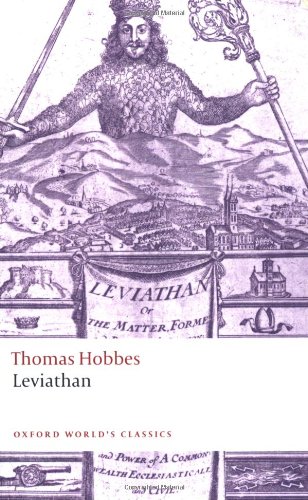
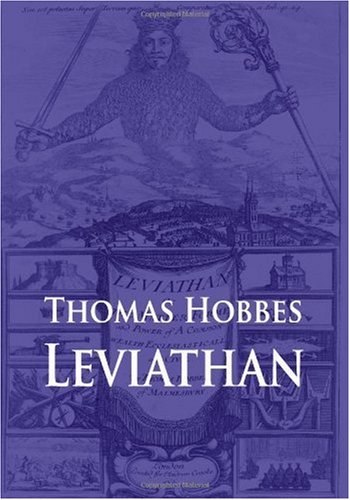
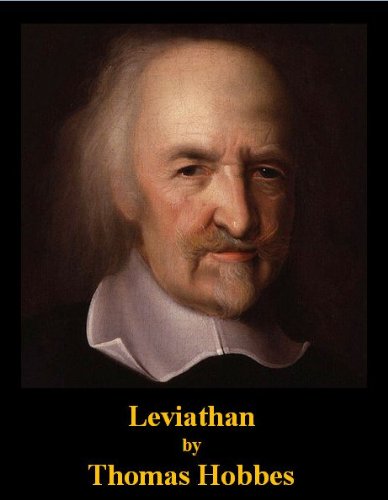
1. Leviathan
$6.89
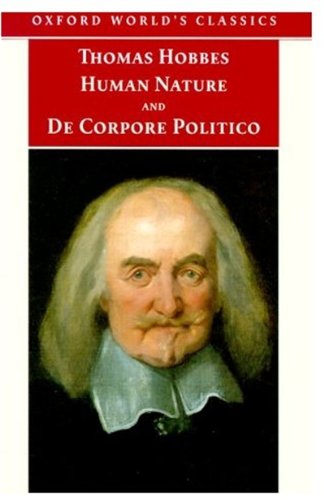
2. Human Nature and DeCorpore Politico
$8.75
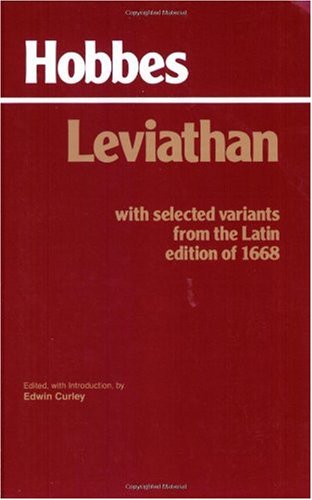
3. Leviathan: With Selected Variants
$23.48
4. Made with Words: Hobbes on Language,
$6.60
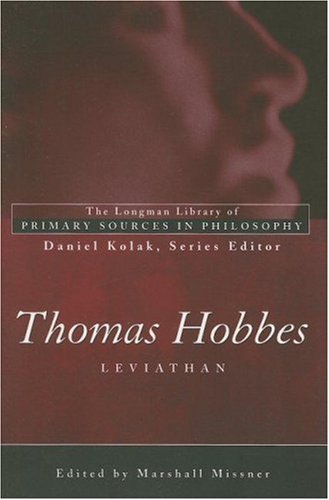
5. Thomas Hobbes: Leviathan (Longman
$12.47
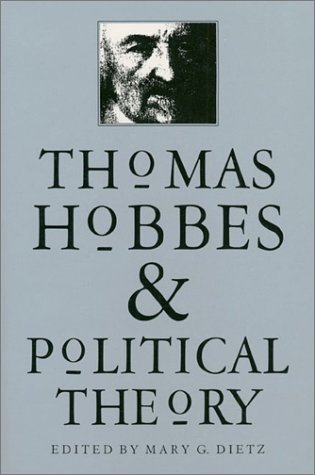
6. Thomas Hobbes and Political Theory
$9.00
7. Man and Citizen: De Homine and
$23.99
8. The Works of Thomas Hobbes of
$49.12
9. The Two Gods of Leviathan: Thomas
$8.75
10. Hobbes's 'Leviathan': Reader's
$36.00
11. Thomas Hobbes: Writings on Common
$16.99
12. Thomas Hobbes and the Natural
$22.98
13. The Cambridge Companion to Hobbes
$33.32
14. Hobbes: A Biography
$9.28
15. Leviathan: Authoritative Text
$30.49
16. Subverting the Leviathan: Reading
$29.99
17. The Works of Thomas Hobbes of
 
$560.00
18. Opera Philosophica
$6.96
19. Leviathan
$23.30
20. Hobbes, Locke, and Confusion's

1. Leviathan
by Thomas Hobbes
 Hardcover: 800 Pages (2003-11-01)
list price: US$225.00 -- used & new: US$164.94
(price subject to change: see help)
Asin: 1843710269
Average Customer Review: 4.0 out of 5 stars
Canada | United Kingdom | Germany | France | Japan
Editorial Review

Book Description

In their substantial introduction, the editors examine all previous editions of Leviathan, throwing light on its history, calling into question the assumptions of previous editors, and thus providing an entirely new picture of its production. Through these new perspectives they are able to offer the first complete critical edition, one that takes proper account of the book's publishing history and of Hobbes's own wishes. The result is as definitive an edition of Leviathan as modern scholarship can provide.

Download Description
Thomas Hobbes wrote this definitive thesis on how to establish a manageable government. "Leviathan" is a treatise similar to Machiavelli's approach to the jurisdiction allowed to independent countries. Hobbes believed that the first principle of human conduct is self-interest, and this behavior is the base element of social confrontation. In order to maintain peace and uphold the law, a sovereign is needed to guard the people's safety and punish anyone who breaks the regulations. The sovereign is one power, not a division of controlling elements. The commonwealth he commands can only be built by force or agreement. When the government has such power, the individual citizen can allocate his time and energy to serving the needs of his family and satisfying the requirements of a good administration. This same system also allows the privilege of self-defense but not aggression. Hobbes surmised the God's natural law is an education of rational enlightenment which influences all situations. Please Note:This book is easy to read in true text, not scanned images that can sometimes be difficult to decipher.The Microsoft eBook has a contents page linked to the chapter headings for easy navigation. The Adobe eBook has bookmarks at chapter headings and is printable up to two full copies per year.Both versions are text searchable. ... Read more

Customer Reviews (36)

4-0 out of 5 stars Written thoroughly.
Hobbes is a master of rhetoric and builds up a convincing arguement that you have to spot early on in order to not be pulled into his flawed statements. Human beings cannot be pigeonholed and I would not choose Stalin and communism over a democratic society even if we were in a state of chaos. And no, I do not think it's such a tragedy that there are no notes. Think for yourself. Come up with your own notes, not someone else's.

1-0 out of 5 stars DO NOT BUY THIS CLASSIC IN THIS EDITION!!!!
This is not a review of the work itself.

One comment only: surprisingly enough, the editor of this volume, the 'world renowned' Richard Tuck DOES NOT PROVIDE NOTES, please pay attention: the book was originally published in 1651 (or something) but nevertheless the so called Hobbes scholar does not provide scholarly notes... and this is supposed to be a 'student's edition'... ha ha

Shame on you, Mr. Tuck!

5-0 out of 5 stars What to do with Modern World
This huge work is the foundation of classical liberalism; it is the basis for Locke, for Smith, and all economic neo-liberalists all the way up to the current period. Written during the English Reformation, Hobbes was confronted with the problem of absolute individualism; he begins this work of political theory with a demolishment of objective truth swift enough to impress any post-modernist. He then proceeds to demonstrate the logical conclusion of man in a state of nature, and compels the modern world to enter into his social contract, or Leviathan out of necessity and fear. It is tempting to write off Hobbes as a cynic, but who can deny that much of what motivates individuals in the modern world is simply a fear to maintain survival and acceptance. It is the driving force of modern societies in terms of economic competition, and inter-national conflicts. Hobbes was a thinker of true depth and insight, though his ideas are so commonly ingrained in modern society that it is difficult to see why they were revolutionary when they were composed.

4-0 out of 5 stars Book for High School
My stepson needed this book for class and he really enjoyed it.

5-0 out of 5 stars A classic in political philosophy
Three essential hallmarks of the Hobbesian system are important: the war of each against all, the role of human rationality in ending this; the use of knowledge/science as a basis for societal engineering.His view of the state of nature--that time before government and the state existed--is unsurprising when one understands that he was born in the year of the erstwhile invasion by the Spanish Armada (1588) and lived through civil turmoil and revolution in England throughout his life.

Hobbes begins with a view of human life that would be inconceivable to the Greeks--life in a state of nature, the time before government, laws, and the state existed.In this state, humans are equal.In terms of physical prowess, of course, some are stronger than others.However, the weakest, through guile, can still kill the strongest.In that sense, there is equality.Without the power of government to keep people in check, though, we find quarrels routinely breaking out.The motives are threefold: self-gain, safety, and reputation (or glory).The result is horrible, and here follows perhaps the single most well known statement penned by Hobbes: "Hereby it is manifest, that during the time men live without a common Power to keep them all in awe, they are in a condition which is called Warre; and such a warre, as is of every man, against every man. . . .In such condition, there is no place for Industry; because the fruit thereof is uncertain; and consequently no Culture of the Earth; no navigation, nor use of the commodities that may be imported by Sea; no commodious Building; no Instruments of moving, and removing such things as require much force; no Knowledge of the face of the Earth; no account of Time; no Arts; no Letters; no Society; and which is worst of all, continual feare, and danger of violent death; And the life of man, solitary, poore, nasty, brutish, and short."

However, the fear and terror of the state of nature can be escaped.Humans are, after all, according to Hobbes, capable of reason.Individual reason leads people to realize that they must do something to escape ". . .Feare of Death; Desire of such things as are necessary to commodious living; and a Hope by their Industry to obtain them."Furthermore, human reason allows individuals to understand laws of nature.This is defined by Hobbes as ". . .a Precept, or general Rule, found out by Reason, by which a man is forbidden to do, that, which is destructive of his life, or taketh away the means of preserving the same."To preserve life, and the fruits of industry that might be gained by peace, human reason lets people realize that only by giving up some of their freedoms, liberties, rights in order to establish a system that will end perpetual war of each against all.The mechanism for this is the "social contract," by which people in the state of nature covenant with one another to form a powerful government, so powerful that it can suppress individuals' efforts to seek self-advantage as under the state of nature.A "Leviathan" is needed.

However, if the state ceases to protect people's lives, the contract can be voided; revolution is an acceptable option for the citizenry then.However, the price is terrible, for with the dissolution of the state, people are plunged back into the nightmare of the state of nature.They would have to re-enact a contract to escape the ravages of the perpetual war.

Key points in Hobbes:the focus is on the individual rather than society, hence this is an individualistic system; human reason is considered to be central to attaining peace and harmony; humans can perceive the essence of natural laws through the powers of their reason; by contracting with one another, the people can control their destinies and produce an environment which they find more commodious for living fruitfully.An important early work in the development of Modern thinking and liberal political thought.A must read work for those interested in Western political philosophy.
... Read more


2. Human Nature and DeCorpore Politico (Oxford World's Classics)
by Thomas Hobbes
Paperback: 284 Pages (1999-08-19)
list price: US$12.95 -- used & new: US$6.89
(price subject to change: see help)
Asin: 019283682X
Average Customer Review: 5.0 out of 5 stars
Canada | United Kingdom | Germany | France | Japan
Editorial Review

Book Description
`the state of men without civil society (which state we may properly call the state of nature) is nothing else but a mere war of all against all.'Thomas Hobbes was the first great philosopher to write in English.His account of the human condition, first developed in The Elements of Law (1640), which comprises Human Nature and De Corpore Politico, is a direct product of the intellectural and political strife of the seventeenth century.It is also a remarkably penetrating look at human nature, and a permanently relevant analysis of the fears of self-seeking that result in the war of `each against every man'.In The Elements of Law Hobbes memorably sets out both the main lines of his general philosophy, later augmented in De Corpore (1655), and the moral and political philosophy later made famous in Leviathan (1651).Copies of Human Nature and De Corpore Politico, until 1889 printed as separate works, are rare antiques or scarcely less rare scholarly texts; this is the first complete popular edition.It is here supplemented by chapters from De Corpore and Three Lives, two from Hobbes's original Latin.These have never before been published together in English. ... Read more

Customer Reviews (2)

5-0 out of 5 stars Hobbes for starters
This book is quite brilliant, and I would recommend this before Leviathan to most people that would want to get to know Hobbes' writing. It's a "lighter" text all over as far as I'm concerned, and it still gets most of it's points across in a great manner. The two books are also very similar, and for me, having read Leviathan beforehand, this was much of the same, only a little easier to read, as the translater has removed the capitalization etc that made the version I read of Leviathan a little archaic.

Think what you want of Hobbes suggestions, I can fully understand why many shrink from his authoritative prescriptions, but read him nevertheless, because the foundations of his writing is incredibly fascinating and fun to read, and that part (About human nature etc.) should be interesting regardless of political views, contrary to his politics.

5-0 out of 5 stars The First Modern Political Philosopher
Thomas Hobbes (1588-1679) wrote "Leviathan" in 1651, it was his most important philosophical work.I think you should know something of Hobbes to understand how his thinking was influenced by his experiences.He was born 2 months prematurely on the day the Spanish Armada approaches the English coast.His mother's fear of invasion caused the premature birth.Hobbes remarked late in life, "his mother brought forth twins-myself and fear."Fear seems to be Hobbes life long companion and the key passion in his political system, which uses human passions as its foundation.He was a child prodigy reading Latin and Greek at the age of six years old.At fifteen, he entered Oxford University and hated his educational experience there.He thought the curriculum was too immersed in the ancient Greek philosophers like Aristotle.He called them "erroneous doctrines," and throughout his life he railed against English universities for there stodgy curriculum.

At the age of 22, he graduates and takes a job to tutor the son of the Earl of Devonshire.It gives him the opportunity to travel throughout Europe where he meets with Galileo in Florence and Descartes in Paris.Descartes calls Hobbes the greatest political philosopher of his day.During the British civil war, Hobbes flees to Paris because he is a well-known monarchist sympathizer.In 1651, he publishes his monumental work "Leviathan."He returns to England, submits to Cromwell's government, and withdraws from politics.He is on friendly terms with Charles II when the Stuart's are restored to the throne.

Hobbes philosophy is "materialistic"; he is greatly influenced by Galileo's mechanistic approach to science, and Euclidian geometry.His ambition was to explain all phenomena, man, and government with mathematical precision.In "Leviathan," he explains human conduct is a product of human passions.The most dominant passions are fear of violent death and desire for power, both are manifestations of man's most basic impulse, "self preservation."Hobbes asserts that the basic impulse is the right of the individual; he calls it a "natural right."All men process this natural right equally.This theory leads Hobbes to believe man's natural state to be one of constant conflict with each other.This leads him to write the following quote he is most known for: "men's lives are solitary, poor, nasty, brutish, and short."So as not to have to live in constant state of fear or conflict, men make a contract for protection with the state.Hobbes believes that the best state is one led by a single sovereign whose power must be unrestricted with all three branches of government devolving to him.A single sovereign who has absolute power and cannot be replaced by the people.

His political writing had immediate influence in the world and influences other philosophers like Spinoza, Hutcheson, Locke, and Hume.Hobbes is the first man to write about political philosophy in such methodical terms.He is an excellent writer and his theories are easy to understand by the laymen.As a graduate student of political philosophy, I recommend if you have an interest in politics, philosophy, or government then you must start with reading Hobbes "Leviathan."
... Read more


3. Leviathan: With Selected Variants from the Latin Edition of 1668
by Thomas Hobbes
Paperback: 584 Pages (1994-03)
list price: US$12.95 -- used & new: US$8.75
(price subject to change: see help)
Asin: 0872201775
Average Customer Review: 5.0 out of 5 stars
Canada | United Kingdom | Germany | France | Japan

Customer Reviews (5)

5-0 out of 5 stars Excellent edition
There are lots of editions of Leviathan around, so why buy this one? The things the editor, Ed Curely, has done to make this edition accessible yet scholarly, like:

1. Updated spelling and punctuation. Although I personally miss Hobbes' original spelling (see the Penguin edition for that), as a teacher I appreciate Ed's making it easier for beginners to read Hobbes' words.

2. Index. Most editions do not have one.

3. Glossary. Hobbes used many terms that are now archaic, and Ed's brief but clear glossary helps clarify the text.

4. Ed's Introduction. Curley is one of the most careful and knowledgeable commentators out there, and he briefly but expertly introduces some of the major themes of the book.

5. Latin variants. Hobbes wrote Leviathan in English and in Latin, and there are some interesting differences between the two versions. Ed presents many of these in the footnotes, plus he includes English translations of the Appendices of the Latin version.

5-0 out of 5 stars The First Modern Political Philosopher
Thomas Hobbes (1588-1679) wrote "Leviathan" in 1651, it was his most important philosophical work.I think you should know something of Hobbes to understand how his thinking was influenced by his experiences.He was born 2 months prematurely on the day the Spanish Armada approaches the English coast.His mother's fear of invasion caused the premature birth.Hobbes remarked late in life, "his mother brought forth twins-myself and fear."Fear seems to be Hobbes life long companion and the key passion in his political system, which uses human passions as its foundation.He was a child prodigy reading Latin and Greek at the age of six years old.At fifteen, he entered Oxford University and hated his educational experience there.He thought the curriculum was too immersed in the ancient Greek philosophers like Aristotle.He called them "erroneous doctrines," and throughout his life he railed against English universities for there stodgy curriculum.

At the age of 22, he graduates and takes a job to tutor the son of the Earl of Devonshire.It gives him the opportunity to travel throughout Europe where he meets with Galileo in Florence and Descartes in Paris.Descartes calls Hobbes the greatest political philosopher of his day.During the British civil war, Hobbes flees to Paris because he is a well-known monarchist sympathizer.In 1651, he publishes his monumental work "Leviathan."He returns to England, submits to Cromwell's government, and withdraws from politics.He is on friendly terms with Charles II when the Stuart's are restored to the throne.

Hobbes philosophy is "materialistic"; he is greatly influenced by Galileo's mechanistic approach to science, and Euclidian geometry.His ambition was to explain all phenomena, man, and government with mathematical precision.In "Leviathan," he explains human conduct is a product of human passions.The most dominant passions are fear of violent death and desire for power, both are manifestations of man's most basic impulse, "self preservation."Hobbes asserts that the basic impulse is the right of the individual; he calls it a "natural right."All men process this natural right equally.This theory leads Hobbes to believe man's natural state to be one of constant conflict with each other.This leads him to write the following quote he is most known for: "men's lives are solitary, poor, nasty, brutish, and short."So as not to have to live in constant state of fear or conflict, men make a contract for protection with the state.Hobbes believes that the best state is one led by a single sovereign whose power must be unrestricted with all three branches of government devolving to him.A single sovereign who has absolute power and cannot be replaced by the people.

His political writing had immediate influence in the world and influences other philosophers like Spinoza, Hutcheson, Locke, and Hume.Hobbes is the first man to write about political philosophy in such methodical terms.He is an excellent writer and his theories are easy to understand by the laymen.As a graduate student of political philosophy, I recommend if you have an interest in politics, philosophy, or government then you must start with reading Hobbes "Leviathan."

5-0 out of 5 stars Greatest Work of Philosophy in English
This is one of the few books in western thought that cannot recieve enough praise.It is all at the same time a compilation of classical and medieval thought, a biting commentary and critique of 17th century Europe (England in particular), an exploration of philosophy as science, and to top it all off the first truly modern work of political philosophy.This is one of those works that anyone who truly wants to call themselves educated must read, whether their focus of studies is philosophy, politics, literature, science or even mathematics.

The fundamental nature of this work is to construct a reasoned materialistic account of human behavior starting from basic definitions and postulates (very similar to geometry).From these basic principles Hobbes constructs an account of human physchology based on human desires which then culminates in man's need to leave the natural state of the world into the constructed society, which Hobbes calls the leviathan.I cannot even attempt to give a summation of the steps of Hobbes's argument here that would do him justice, but suffice it to say that Hobbes's conclusion is that in order to be happy and safe man must give up his rights to a strong soveriegn.This is a conclusion that may not look modern or attractive at all to most readers, but Hobbes's reasonong is so clear and detailed that it forces the reader to, if not agree with all of his principles, at least take them very seriously.This is one of those books that forces one to reaxamine all of their assumptions about the world.Hobbes is also one of those misunderstood authors who are portrayed as being cold and ruthless, but are simply trying to provide their readers with an accurate and analytic account of humanities problems and hopefully providing solutions.

If all of this hasn't scared you away yet I do have to say thatLeviathan is not an easy book to read.Its thought is difficult and its language is archaic, but for those who are willing to accept the work this book can be very interesting and rewarding.Hobbes might be a dense writer, but unlike many philosophical writers, he is a very clear and concise and often surprisingly witty and wry.

There are two editons that I recommend.The first is the Hackett edition.Not only does it take the liberty of changing the veried spellings of Hobbes's 17th century english, but it also includes textual variances from the earlier Latin edition of the work.Some of these variants are significant and should be takin into consideration by the serious student.The other is the Cambridge Student Edition, which is the edition I used because I'm one of those students that enjoy reading the early english texts with their strange spellings.The disadvantage of this edition is that it does not include the latin variations.The introductions and suplementary material in both of these editionsare fine, but my personal favorite is the introduction written byMichael Oakeshott which can be fond in a collection of his essays entitled, "Hobbes on Civil Association".Another work which greatly elucidates some of Hobbes's strong almost vehement reactions to anything democratic is Hobbes's "Behemoth" in which he provides his account of the English Civil War.If you are really interested in Hobbes I also highly recommend his work "De Cive".Hobbes is hard, but he is unavoidable for anyone interested in understanding our modern world and our world in general.You may even find that, like myself, you just can't get enough of Hobbes.

5-0 out of 5 stars Essay; Absolute Sovereignty can not offer Perpetual Peace
Why Absolute Sovereignty Can Not Offer Perpetual Peace
-On the Desires of Men

In the Leviathan, Hobbes brings forward the theory that Commonwealths arise because without governments, people live in a state of nature with the constant danger of death. Furthermore, he believes that the best form of Commonwealth is one ruled by a monarch with absolute power; just like a person with two brains will not function, if the power of the monarch is not absolute, the commonwealth will fall back into the warring state of nature. When the sovereign power becomes truly absolute, Hobbes believes the Commonwealth could "live as long as mankind" unless attacked by foreign powers (p210).

Indeed, Hobbes is right in that life under any government is better than life with no government, and also that multiple powers inside one commonwealth will cause an end to the commonwealth. Nevertheless, he is wrong in asserting that absolute monarchy is the panacea for perpetual internal peace. There are two intrinsic flaws in the his system which are bound to push the commonwealth into the state of nature: one flaw is the unchecked greed of the monarch, another is caused by the unfulfilled desire for power of the subjects. Although this paper can not offer a better formula for governments, it will show that absolute monarchy does not provide the perpetual security that Hobbes promises.

First of all, extraordinary greed of the absolute ruler can break the Commonwealth. A ruler's greed can impoverish his subjects so abjectly that they no longer have enough food to survive on. Since the purpose of the commonwealth is to guarantee the security of life, and without food there is no life, the greed of the ruler will force the absolute Commonwealth to fall back into the state of nature.

Hobbes believes that the interest of the ruler and the interest of his subjects are so interdependent that the actions of the ruler will always be in the interest of his people. He writes,

"Now in monarchy the private interest is the same with the public...the riches, power, and honor of a monarch arise only from the riches, strength and reputation of his subjects." (P120)

Hobbes is right; the sovereign is the incorporation of its subjects, and so any injuries to the people are collectively an injury to the sovereign. Nevertheless, arising out of the great complications of the businesses of state and the wide expanse of a Commonwealth, there will always be a lag between when acts of the sovereign takes effect with people and when the sovereign feels the reactions of his people himself. A ruler with perfect prudence might be able to see through the gap and act in ways that are only ultimately good for the people and himself, but as Hobbes rightly observes, no one has perfect prudence (P14). This imperfect prudence becomes especially short-sighted when the ruler's reason is clouded by his present desires. Hobbes acknowledges these desires, for he says:

"And hence it is that kings, whose power is greatest, turn their endeavors to the assuring it at home by laws or abroad by wars; and when that is done, there succeeded a new desire, in some of fame from new conquest, in others of ease and sensual pleasures, in others of admiration or being flattered for excellence in some art or other ability of the mind." (p58)

So clouded by the lack of prudence and by excessive desires, the monarch might take actions that seem good at the moment for himself, but which turn out harmful for himself later. To illustrate this, let us observe the following scenario:

The new ruler of a poor but secured country builds a modest palace, for he has learnt from history books that he should not splurge. A couple years later, however, a desire for great things tempts him, and he wants to build a winter palace. He seeks advices from ten advisors, who had all the qualities that Hobbes praises (Chapter XXV); nine out of ten advisors privately dissuade the king from this luxury for a flood is raging and their nation is poor. Saddened, the king turns to the last advisor, who, seeing an opportunity to gain favor with the ruler, loudly exclaims that the other counselors do not love their king who needs a winter palace to escape the cold. The king happily agrees with him as his reason becomes clouded by desires; and soon, the construction begins.

Having gained favor, the 10th advisor convinces the ruler to imprison the other advisors for their "bad mouthing" of the king, making him the sole voice by the ruler's ear. As time goes on, the king exerts ever greater taxes on his people to pay for ever grander palaces, and every time, the advisor not only finds more elaborate excuses for the king but praises him for his greatness and also funnels some of the money for construction into his own coffer. The affairs of the nation are in utter neglect.

One night, the king remembers his father's warnings against indulgence, and he shakes with fear; but when he sees his gardens filled with singing girls half naked, lacking the prudence to see the future awaiting him, he says to himself, "I have been endowed differently by God, the fate of others can not be my own."

The poor people of this nation become more desperate by the day, yet the ruler who lives deep inside his palaces can not know their suffering. Some years later, the harvest is so bad that people have barely enough to feed themselves, yet the king sends his money collectors for even higher tax quotas. Realizing that they could either die of starvation or die fighting against the dictator with at least a chance to live, the farmers revolt. Hobbes would support them, for he writes, "the obligation of subjects to the sovereign is understood to last as long, and no longer, than the power lasteth by which he is able to protect hem." (P144)

When the farmers' army charges into his bed chamber, the king finally feels the injuries that he has done to the people and to himself, yet reason and prudence are too late.

Absolute sovereignty means absolute power, and as the old saying goes, "power corrupts, and absolute power corrupts absolutely." In fact, Hobbes acknowledges the greedy corruption of the monarchs, and even gives his justification. He writes,

"A man may here object that the condition of subjects is very miserable, as being obnoxious to the lusts and other irregular passions of him or them that have so unlimited a power in their hands...not considering that the estate of man can never be without some incommodity or other, and that the greatest that in any form of government can possibly happen to the people in general is scarce sensible, in respect of the miseries and horrible calamities that accompany a civil war." (P117)

Hobbes makes no mistakes here. Any government is better than no government, but as mentioned before, he makes the claim later that Commonwealths, "by the nature of their constitution they are designed to live as long as mankind" unless attacked by foreign powers (210). In the same chapter (XXIX), Hobbes attributes all the internal infirmities of the Commonwealth that shorten its "natural" life to variations of the lack of absolute power, but describes no infirmities when the Commonwealth is ruled by an absolute monarch. He thus makes it clear that if there is absolute power, then the commonwealth will "live as long as mankind" even if the monarch is corrupted. However, as shown in the illustration above, Hobbes' absolute monarchy does have tremendous infirmities.

Hobbes can, however, still argue that the previous illustration is an extreme example that barely happens in reality. Hobbes might say that if only the absolute sovereigns all studied the Leviathan carefully, they will always initiate policies for the interest of the people. Granted, Hobbes' excellent book can convert many, yet, even when the absolute sovereign is good and strong, the Commonwealth can still fall back into the state of chaos.

To Hobbes, the foremost law of nature is to find security ("a man is forbidden to do that which is destructive to his life" [P79]), but is survival the only thing that men search for? No. As Hobbes points out himself, survival is the means and not the ends of life. And while people all want to survive, they live for different ends of life as influenced by their education and upbringings. Hobbs indirectly talks about the fulfillment of some ends life when he writes,

"In such condition (of war) there is no place for industry, because the fruit thereof is uncertain, and consequently, no culture of the earth, no navigation, nor use of the commodities that may be imported by sea, no commodious building" (p76)

For certain people, the end of their life lies in gaining political power-to be the ruler instead of the ruled. Hobbes indirectly recognizes people's "unnecessary" desire for power, when he writes (OL) "there are those who, from pride and a desire for glory, would conquer the whole world, which they pursue farther than their security requires." (P75)

This kind of desire, nevertheless, can not be fully satisfied in a state of absolute sovereignty. For one, the greatest prize of all, the prize of becoming your own sovereign is off-limits. Additionally, although those borne with the heart of Napoleon might be few, lower offices and positions in a state of absolute power come merely at the mercy of the sovereign-for one eager for any honor and position, his dream may never fly high because the sovereign can give the honor he deserves to someone else. As Hobbes says himself, "a man may be worthy of riches, office, and employment, that nevertheless can plead no right to have it before another, and therefore cannot be said to merit or deserve it." (p57)

For some, the limitation on of the fulfillment of their political dreams results in nothing other than the acceptance of their fates, yet history never fails to produce some who have the eagerness and bravery to challenge the ultimate authority and break the bondage of power.

Hobbes would call the act of such eager men anti-nature, since dissenters will almost certainly face unnatural deaths by the sword of the king, or face the danger of death by returning to the state of nature. However, again, survival is the means, not ends of life. The following example illustrates why people might endanger their means for their ends.

Colonized people have throughout history fought for independence against their colonial sovereigns. To Hobbes, these wars for independence must be irrational: for one, the colonized people could be enjoying many benefits either from direct aid or commercial links with their colonizer; additionally, hundreds of thousands of colonized people might die in the immediate war or during the consequent internal power struggles caused by the revolt. Yet, despite the "practical benefits" and the peace that the colonial sovereigns bestows upon the colonized, this smooth highway of subjugation is not the one that the people want; they desire for a road, smaller and rougher maybe, but one that is built by themselves to a destination that they determined for themselves. Thus, in their search for the power that is forbidden to them, they set out for the "unreasonable".

To be sure, Hobbes' Law of Nature still holds: on the battle fields, those who fight against the sovereign will always do all they could to triumph over their enemy and avoid death, but again, the need for survival is only a part of the story.

Regarding this fight for independence, Hobbes might say, as he writes, "those men that are so remissly governed that they dare take up arms to defend or introduce an opinion are still in war." (P113) This means that since the any revolutionaries must never have been a part of the commonwealth, and hence the commonwealth was only attacked from the outside and did not fall internally. Nevertheless, Hobbes also says that a monarch's "subjects" are delivered from their former obligation, and become obliged" to the victor in a war against their original sovereign. (P145) The new subjects of the monarch might have a high tendency toward revolting against ruler for the same reasons mentioned before, and in this case, Hobbes must certainly recognize that the revolutionaries are a part of the Commonwealth.

In the Leviathan, Thomas Hobbes dedicates himself to finding the best form of government, that perfect house which can last forever and provide eternal peace for all. The book is quiet admirable with its precise arguments and high ideals. Nevertheless, Hobbes ignores the fact that people will always willingly take actions that might hurt their security because they are either short-sighted or desire for something other than mere survival. Still, the Leviathan is a work of Epic proportion, and this essay does not find a form of government better than absolute sovereignty.

5-0 out of 5 stars Say yes to British philosophy!
Hobbes is a misunderstood philosopher. He envisaged that executive power would be based on the will of the people who allow it to be exercised.In this way Hobbes saw the development of a social contract between members of society and those who govern, based on individual rights not to subsciptive service as vassals. He also warned that agreements (or covenants) without either armed or moral right to be enforced would remain simply that - words.Hobbes does indeed speak to all peoples who live in our society - white, black and any shade in between. ... Read more


4. Made with Words: Hobbes on Language, Mind, and Politics
by Philip Pettit
Hardcover: 192 Pages (2008-01-03)
list price: US$29.95 -- used & new: US$23.48
(price subject to change: see help)
Asin: 0691129290
Canada | United Kingdom | Germany | France | Japan
Editorial Review

Book Description

Hobbes's extreme political views have commanded so much attention that they have eclipsed his work on language and mind, and on reasoning, personhood, and group formation. But this work is of immense interest in itself, as Philip Pettit shows in Made with Words, and it critically shapes Hobbes's political philosophy.

Pettit argues that it was Hobbes, not later thinkers like Rousseau, who invented the invention of language thesis--the idea that language is a cultural innovation that transformed the human mind. The invention, in Hobbes's story, is a double-edged sword. It enables human beings to reason, commit themselves as persons, and incorporate in groups. But it also allows them to agonize about the future and about their standing relative to one another; it takes them out of the Eden of animal silence and into a life of inescapable conflict--the state of nature. Still, if language leads into this wasteland, according to Hobbes, it can also lead out. It can enable people to establish a commonwealth where the words of law and morality have a common, enforceable sense, and where people can invoke the sanctions of an absolute sovereign to give their words to one another in credible commitment and contract.

Written by one of today's leading philosophers, Made with Words is both an original reinterpretation and a clear and lively introduction to Hobbes's thought.

... Read more

5. Thomas Hobbes: Leviathan (Longman Library of Primary Sources in Philosophy) (Longman Library of Primary Sources)
by Thomas Hobbes, Marshall Missner, Daniel Kolak
Paperback: 304 Pages (2006-12-29)
list price: US$11.00 -- used & new: US$6.60
(price subject to change: see help)
Asin: 0321276124
Canada | United Kingdom | Germany | France | Japan
Editorial Review

Book Description
Part of the “Longman Library of Primary Sources in Philosophy,” this edition of Hobbes's The Leviathan is framed by a pedagogical structure designed to make this important work of philosophy more accessible and meaningful for readers. A General Introduction includes biographical information on Hobbes, the work's historical context, and a discussion of historical influences.Annotations and notes from the editor clarify difficult passages for greater understanding. A bibliography gives the reader additional resources for further study. ... Read more


6. Thomas Hobbes and Political Theory
by Mary G. Dietz
Paperback: 224 Pages (1991-09)
list price: US$14.95 -- used & new: US$12.47
(price subject to change: see help)
Asin: 0700605193
Canada | United Kingdom | Germany | France | Japan
Editorial Review

Book Description
This volume explores, from a variety of perspectives, the political theory of the man who is arguably the greatest English political thinker. It is the first substantial collection of new, critical essays on Thomas Hobbes by leading scholars in over a decade.

Hobbes's writings stirred debate in his own lifetime, for two centuries thereafter, and continue to do so in ours. They emerged in a period of intense political turmoil-a time of civil war and regicide, of puritanical rule and royal restoration. "They were motivated," Dietz argues, "by concrete political problems and a practical concern--namely, to secure political order, absolute sovereignty, and civil peace." The contributors emphasize and answer a series of expressly political questions that, to date, have not been fully addressed in the Hobbes literature. They contend that Hobbes's writings are not mere static artifacts of a particular historical milieu, but rather rich sources of a variety of interpretations and criticisms that spur discussion and debate in their turn. ... Read more


7. Man and Citizen: De Homine and De Cive
by Thomas Hobbes
Paperback: 388 Pages (1991-04)
list price: US$12.95 -- used & new: US$9.00
(price subject to change: see help)
Asin: 0872201112
Average Customer Review: 5.0 out of 5 stars
Canada | United Kingdom | Germany | France | Japan

Customer Reviews (1)

5-0 out of 5 stars The First Modern Political Philosopher
Thomas Hobbes (1588-1679) wrote "Leviathan" in 1651, it was his most important philosophical work.I think you should know something of Hobbes to understand how his thinking was influenced by his experiences.He was born 2 months prematurely on the day the Spanish Armada approaches the English coast.His mother's fear of invasion caused the premature birth.Hobbes remarked late in life, "his mother brought forth twins-myself and fear."Fear seems to be Hobbes life long companion and the key passion in his political system, which uses human passions as its foundation.He was a child prodigy reading Latin and Greek at the age of six years old.At fifteen, he entered Oxford University and hated his educational experience there.He thought the curriculum was too immersed in the ancient Greek philosophers like Aristotle.He called them "erroneous doctrines," and throughout his life he railed against English universities for there stodgy curriculum.

At the age of 22, he graduates and takes a job to tutor the son of the Earl of Devonshire.It gives him the opportunity to travel throughout Europe where he meets with Galileo in Florence and Descartes in Paris.Descartes calls Hobbes the greatest political philosopher of his day.During the British civil war, Hobbes flees to Paris because he is a well-known monarchist sympathizer.In 1651, he publishes his monumental work "Leviathan."He returns to England, submits to Cromwell's government, and withdraws from politics.He is on friendly terms with Charles II when the Stuart's are restored to the throne.

Hobbes philosophy is "materialistic"; he is greatly influenced by Galileo's mechanistic approach to science, and Euclidian geometry.His ambition was to explain all phenomena, man, and government with mathematical precision.In "Leviathan," he explains human conduct is a product of human passions.The most dominant passions are fear of violent death and desire for power, both are manifestations of man's most basic impulse, "self preservation."Hobbes asserts that the basic impulse is the right of the individual; he calls it a "natural right."All men process this natural right equally.This theory leads Hobbes to believe man's natural state to be one of constant conflict with each other.This leads him to write the following quote he is most known for: "men's lives are solitary, poor, nasty, brutish, and short."So as not to have to live in constant state of fear or conflict, men make a contract for protection with the state.Hobbes believes that the best state is one led by a single sovereign whose power must be unrestricted with all three branches of government devolving to him.A single sovereign who has absolute power and cannot be replaced by the people.

His political writing had immediate influence in the world and influences other philosophers like Spinoza, Hutcheson, Locke, and Hume.Hobbes is the first man to write about political philosophy in such methodical terms.He is an excellent writer and his theories are easy to understand by the laymen.As a graduate student of political philosophy, I recommend if you have an interest in politics, philosophy, or government then you must start with reading Hobbes "Leviathan."
... Read more


8. The Works of Thomas Hobbes of Malmesbury: Volume 11. Index
by Thomas Hobbes
Paperback: 278 Pages (2007-02-03)
list price: US$23.99 -- used & new: US$23.99
(price subject to change: see help)
Asin: 0543868281
Canada | United Kingdom | Germany | France | Japan
Editorial Review

Book Description
Edited by William Molesworth. This Elibron Classics book is a facsimile reprint of a 1845 edition by Longman, Brown, Green, and Longmans, London. ... Read more


9. The Two Gods of Leviathan: Thomas Hobbes on Religion and Politics
by A. P. Martinich
Paperback: 448 Pages (2003-02-20)
list price: US$60.00 -- used & new: US$49.12
(price subject to change: see help)
Asin: 0521531233
Canada | United Kingdom | Germany | France | Japan
Editorial Review

Book Description
As well as being considered the greatest English political philosopher, Hobbes has traditionally been thought of as a purely secular thinker, highly critical of all religion. In this provocative new study, Professor Martinich argues that conventional wisdom has been misled. In fact, he shows that religious concerns pervade Leviathan and that Hobbes was really intent on providing a rational defense of the Calvinistic Church of England that flourished under the reign of James I.Professor Martinich presents a close reading of Leviathan in which he shows that, for Hobbes, Christian doctrine is not politically destabilizing and is consistent with modern science. ... Read more


10. Hobbes's 'Leviathan': Reader's Guide (Reader's Guides)
by Laurie M. Johnson Bagby
Paperback: 152 Pages (2007-03-06)
list price: US$14.95 -- used & new: US$8.75
(price subject to change: see help)
Asin: 0826486207
Canada | United Kingdom | Germany | France | Japan

11. Thomas Hobbes: Writings on Common Law & Hereditary Right (Clarendon Edition of the Works of Thomas Hobbes)
Paperback: 263 Pages (2008-05-01)
list price: US$36.00 -- used & new: US$36.00
(price subject to change: see help)
Asin: 0199236232
Canada | United Kingdom | Germany | France | Japan
Editorial Review

Book Description
This volume in the Clarendon Edition of the Works of Thomas Hobbes contains A dialogue between a philosopher and a student, of the common laws of England, edited by Alan Cromartie, supplemented by the important fragment on the issue of regal succession, 'Questions relative to Hereditary Right', discovered and edited by Quentin Skinner. The former work is the last of Hobbes's major political writings. As a critique of common law by a great philosopher, it should be essential reading for anybody interested in English political thought or legal theory. Although it was written when Hobbes was at least eighty, it is a lively piece of work that goes beyond a recapitulation of earlier Hobbesian doctrines, not least in applying his central ideas to the details of the English constitution. This edition supplies the extensive annotation on matters of legal and historical detail that is required by non-specialist readers; it also assists students by offering cross-references to other treatises. Cromartie's introduction is an authoritative account of seventeenth-century thinking about the common law and of Hobbes's shifting attitudes towards it. It has often been suspected that the book was motivated by fear of being burned for heresy. Cromartie disentangles the complex evidence (scattered across a number of late works) that documents this fear's development, and shows why the philosopher's acute anxieties eventually led him to write a legal treatise. In clarifying these questions, the edition casts fresh light upon his attitude to law and sovereignty. The second piece takes the form of a question put to Hobbes about the right of succession under hereditary monarchies, together with Hobbes's response. The question is in the handwriting of the fourth Earl of Devonshire, the son of the third Earl, whom Hobbes had tutored in the 1630s. He asks Hobbes whether an heir can be excluded if he is incapable of protecting his prospective subjects. The question of 'exclusion' became the most burning issue in English politics in the course of 1679, when a bill to exclude the future James II was introduced into the House of Commons. Hobbes answers with a robust defence of hereditary right, in the course of which he also makes some important general observations about the concept of a right. The manuscript is also of special interest as it constitutes Hobbes's last word on politics. It was almost certainly written in the summer of 1679, less than six months before Hobbes's death. ... Read more


12. Thomas Hobbes and the Natural Law Tradition
by Norberto Bobbio
Paperback: 246 Pages (1993-03-15)
list price: US$22.00 -- used & new: US$16.99
(price subject to change: see help)
Asin: 0226062481
Canada | United Kingdom | Germany | France | Japan
Editorial Review

Book Description

Pre-eminent among European political philosophers, Norberto Bobbio has throughout his career turned to the political theory of Thomas Hobbes. Gathered here for the first time are the most important of his essays which together provide both a valuable introduction to Hobbes's thought and a fresh understanding of Hobbes's place in the theory of modern politics.

Tracing Hobbes's work through De Cive and Leviathan, Bobbio identifies the philosopher's relation to the tradition of natural law. That Hobbes must now be understood in both this tradition as well as in the seemingly contradictory positivist tradition becomes clear for the first time in Bobbio's account. Bobbio also demonstrates that Hobbes cannot be easily labelled "liberal" or "totalitarian"; in Bobbio's provocative analysis of Hobbes's justification of the state, Hobbes emerges as a true conservative.

Though his primary concern is to reconstruct the inner logic of Hobbes's thought, Bobbio is also attentive to the philosopher's biography and weaves into his analysis details of Hobbes's life and world—his exile in France, his relation with the Mersenne circle, his disputes with Anglican bishops, and accusations of heresy leveled against him. The result is a revealing, thoroughly new portrait of the first theorist of the modern state.

... Read more

13. The Cambridge Companion to Hobbes (Cambridge Companions to Philosophy)
Paperback: 416 Pages (1996-01-26)
list price: US$39.99 -- used & new: US$22.98
(price subject to change: see help)
Asin: 0521422442
Canada | United Kingdom | Germany | France | Japan
Editorial Review

Amazon.com
It is for Leviathan, his controversial work of political philosophy, that Thomas Hobbes is best known, but his interests extended beyond morals and politics to metaphysics and epistemology, physics and geometry, history and law, and biblical interpretation. (Also, he wrote his autobiography at the age of 84--in Latin verse!) Thus the aim of The Cambridge Companion to Hobbes is "to offer a much broader view of Hobbes's intellectual preoccupations than is usually available," and "to bring together the different perspectives on Hobbes that are now being developed in parallel by philosophers, historians of mathematics and science, historians of early modern England, political scientists, and writers of literary studies." It succeeds admirably, rising to a challenge set by the man himself: "It must be extremely hard to find out the opinions and meanings of those men that are gone from us long ago, and have left us no other signification thereof but their books."

The Companion follows the order of Hobbes's own system, working from physics to psychology to politics. His views on psychology, moral philosophy, and political philosophy--traditionally considered the crucial topics of his system--are expertly handled by Bernard Gert, Richard Tuck, and Alan Ryan. Perhaps more gratifying are the essays on less familiar topics: Yves Charles Zarka reveals Hobbes's unexpected commitment to what superficially looks like Aristotelian metaphysics, while Hardy Grant discusses his career in mathematics, a diversion marred by an embarrassing claim to have squared the circle. --Glenn Branch Book Description
Hobbes had distinctive views in metaphysics and epistemology, and wrote about such subjects as history, law, and religion.He also produced full-scale treatises in physics, optics, and geometry.All of these areas are covered in this Companion, most in considerable detail. The volume also reflects the multidisciplinary nature of current Hobbes scholarship by drawing together perspectives on Hobbes that are now being developed in parallel by philosophers, historians of science and mathematics, intellectual historians, political scientists, and literary theorists. ... Read more


14. Hobbes: A Biography
by A. P. Martinich
Paperback: 422 Pages (2007-08-20)
list price: US$36.99 -- used & new: US$33.32
(price subject to change: see help)
Asin: 0521039347
Average Customer Review: 5.0 out of 5 stars
Canada | United Kingdom | Germany | France | Japan
Editorial Review

Book Description
Thomas Hobbes (1588-1679) is now recognized as one of the fathers of modern philosophy and political theory. In his own time he was as famous for his work in physics, geometry, and religion. He associated with some of the greatest writers, scientists, and politicians of his age including Ben Jonson, Galileo and King Charles II. A. P. Martinich has written the most complete and accessible biography of Hobbes available. The book takes full account of the historical and cultural context in which Hobbes lived, drawing on both published and unpublished sources. It will be a great resource for philosophers, political theorists, and historians of ideas. The clear, crisp prose style will also ensure that the book appeals to general readers with an interest in the history of philosophy, the rise of modern science, and the English Civil War.A. P. Martinich is a Professor of Philosophy and the author or editor of nine books, including The Philosophy of Language (1996), Philosophical Writing (1997), and The Two Gods of Leviathan (Cambridge University Press, 1992). ... Read more

Customer Reviews (1)

5-0 out of 5 stars As Close to the Standard Edition As It Gets
One, if not the first, in a series of biographies of European philosophers by Cambridge University Press, this volume more than holds its own and is bound to becomne the standard text on the life of Thomas Hobbes.

Deftly written and extremely well researched, this is a volume not only for the scholar of English philosophy or history, but for the well-read layman as well. Martinich presents his subject chronologically, as any good biography should, with brief stopovers for analysis of each Hobbes text both philosophically and within the historical context against which it was written. Martinich is most unusual in that he does not take his own words as the last ones on the subject; there are pages on his disagreements with other writers on interpretations of both the life and thought of Hobbes, which makes this volume both unusual and valuable to any understanding of its subject.

Pricey, but strongly recommended, especially if one has any of the other volumes in the Cambridge series. If possible, wait for the paperback . . . but not too long, for there is much about Hobbes one will miss. ... Read more


15. Leviathan: Authoritative Text : Backgrounds Interpretations (Norton Critical Editions)
by Thomas Hobbes
Paperback: 381 Pages (1996-10)
list price: US$14.20 -- used & new: US$9.28
(price subject to change: see help)
Asin: 0393967980
Average Customer Review: 5.0 out of 5 stars
Canada | United Kingdom | Germany | France | Japan

Customer Reviews (2)

5-0 out of 5 stars The First Modern Political Philosopher
Thomas Hobbes (1588-1679) wrote "Leviathan" in 1651, it was his most important philosophical work.I think you should know something of Hobbes to understand how his thinking was influenced by his experiences.He was born 2 months prematurely on the day the Spanish Armada approaches the English coast.His mother's fear of invasion caused the premature birth.Hobbes remarked late in life, "his mother brought forth twins-myself and fear."Fear seems to be Hobbes life long companion and the key passion in his political system, which uses human passions as its foundation.He was a child prodigy reading Latin and Greek at the age of six years old.At fifteen, he entered Oxford University and hated his educational experience there.He thought the curriculum was too immersed in the ancient Greek philosophers like Aristotle.He called them "erroneous doctrines," and throughout his life he railed against English universities for there stodgy curriculum.

At the age of 22, he graduates and takes a job to tutor the son of the Earl of Devonshire.It gives him the opportunity to travel throughout Europe where he meets with Galileo in Florence and Descartes in Paris.Descartes calls Hobbes the greatest political philosopher of his day.During the British civil war, Hobbes flees to Paris because he is a well-known monarchist sympathizer.In 1651, he publishes his monumental work "Leviathan."He returns to England, submits to Cromwell's government, and withdraws from politics.He is on friendly terms with Charles II when the Stuart's are restored to the throne.

Hobbes philosophy is "materialistic"; he is greatly influenced by Galileo's mechanistic approach to science, and Euclidian geometry.His ambition was to explain all phenomena, man, and government with mathematical precision.In "Leviathan," he explains human conduct is a product of human passions.The most dominant passions are fear of violent death and desire for power, both are manifestations of man's most basic impulse, "self preservation."Hobbes asserts that the basic impulse is the right of the individual; he calls it a "natural right."All men process this natural right equally.This theory leads Hobbes to believe man's natural state to be one of constant conflict with each other.This leads him to write the following quote he is most known for: "men's lives are solitary, poor, nasty, brutish, and short."So as not to have to live in constant state of fear or conflict, men make a contract for protection with the state.Hobbes believes that the best state is one led by a single sovereign whose power must be unrestricted with all three branches of government devolving to him.A single sovereign who has absolute power and cannot be replaced by the people.

His political writing had immediate influence in the world and influences other philosophers like Spinoza, Hutcheson, Locke, and Hume.Hobbes is the first man to write about political philosophy in such methodical terms.He is an excellent writer and his theories are easy to understand by the laymen.As a graduate student of political philosophy, I recommend if you have an interest in politics, philosophy, or government then you must start with reading Hobbes "Leviathan."

5-0 out of 5 stars Abridged, yet worthwhile.
What you first need to know is that the word "Authoritative" used in this edition refers to the fact that it utilizes several different manuscript versions to capture what Hobbes meant to convey.However, what is not mentioned is that this is an abridged version of the text. Much of parts III & IV are omitted. Which is a bit disappointing.

I gave this 5 stars because Hobbes himself deserves 5 stars for his provocative ideas. If you're familiar & comfortable with Shakespeare's language, you won't be put off by the cavalier spelling & grammar rules of Hobbes' era.This is not to say that Hobbes writes in blank verse (haha), but that the language is a bit arcane & takes some acclimatization.

Footnotes were, for the most part good - in the body of the text, foreign phrases were translated for those woefully ignorant (like me) of Latin & ancient Greek. However, in the post-ceding criticisms, this very positive practice was discontinued. As in, whole footnotes in Latin & German were not translated. So, get your browsers set to Babelfish, baby.

The accompanying criticisms are a mixed bag - some worth reading, some, not so much. They help elucidate some points - which is great for a casual reader like myself.Others just serve to annoy.

Eitherway, if you're looking for a definitive edition of the Leviathan, don't look here because you will miss about 1/3 of the actual text which Hobbes wrote down. If you want to skip the parts about theology & much of that which was tied into the Christian Commonwealth, then this is your edition. ... Read more


16. Subverting the Leviathan: Reading Thomas Hobbes as a Radical Democrat
by James Martel
Hardcover: 240 Pages (2007-09-14)
list price: US$34.50 -- used & new: US$30.49
(price subject to change: see help)
Asin: 0231139845
Canada | United Kingdom | Germany | France | Japan
Editorial Review

Book Description

InLeviathan, Thomas Hobbes's landmark work on political philosophy, James Martel argues that although Hobbes pays lip service to the superior interpretive authority of the sovereign, he consistently subverts this authority throughout the book by returning it to the reader.

Martel demonstrates that Hobbes's radical method of reading not only undermines his own authority in the text, but, by extension, the authority of the sovereign as well. To make his point, Martel looks closely at Hobbes's understanding of religious and rhetorical representation. InLeviathan, idolatry is not just a matter of worshipping images but also a consequence of bad reading. Hobbes speaks of the "error of separated essences," in which a sign takes precedence over the idea or object it represents, and warns that when the sign is given such agency, it becomes a disembodied fantasy leading to a "kingdom of darkness."

To combat such idolatry, Hobbes offers a method of reading in which one resists the rhetorical manipulation of figures and tropes and recognizes the codes and structures of language for what they are-the only way to convey a fundamental inability to ever know "the thing itself." Making the leap to politics, Martel suggests that following Hobbes's argument, the sovereign can also be seen as idolatrous-a separated essence-a figure who supplants the people it purportedly represents, and that learning to be better readers enables us to challenge, if not defeat, the authority of the sovereign.

... Read more

17. The Works of Thomas Hobbes of Malmesbury: Volume 6. The history of the causes of the civil wars of England. The whole art of rhetoric. The art of rhetoric, plainly set forth. The art of sophistry
by Thomas Hobbes
Paperback: 544 Pages (2004-10-25)
list price: US$29.99 -- used & new: US$29.99
(price subject to change: see help)
Asin: 0543686450
Canada | United Kingdom | Germany | France | Japan
Editorial Review

Product Description
Edited by William Molesworth. This Elibron Classics book is a facsimile reprint of a 1840 edition by John Bohn, London. ... Read more


18. Opera Philosophica
by Thomas Hobbes
 Hardcover: 2780 Pages (2000-01)
list price: US$560.00 -- used & new: US$560.00
(price subject to change: see help)
Asin: 1855068095
Canada | United Kingdom | Germany | France | Japan

19. Leviathan
by Thomas Hobbes
Paperback: 512 Pages (1997-02-01)
list price: US$11.95 -- used & new: US$6.96
(price subject to change: see help)
Asin: 0684842955
Average Customer Review: 5.0 out of 5 stars
Canada | United Kingdom | Germany | France | Japan

Customer Reviews (1)

5-0 out of 5 stars The First Modern Political Philosopher
Thomas Hobbes (1588-1679) wrote "Leviathan" in 1651, it was his most important philosophical work.I think you should know something of Hobbes to understand how his thinking was influenced by his experiences.He was born 2 months prematurely on the day the Spanish Armada approaches the English coast.His mother's fear of invasion caused the premature birth.Hobbes remarked late in life, "his mother brought forth twins-myself and fear."Fear seems to be Hobbes life long companion and the key passion in his political system, which uses human passions as its foundation.He was a child prodigy reading Latin and Greek at the age of six years old.At fifteen, he entered Oxford University and hated his educational experience there.He thought the curriculum was too immersed in the ancient Greek philosophers like Aristotle.He called them "erroneous doctrines," and throughout his life he railed against English universities for there stodgy curriculum.

At the age of 22, he graduates and takes a job to tutor the son of the Earl of Devonshire.It gives him the opportunity to travel throughout Europe where he meets with Galileo in Florence and Descartes in Paris.Descartes calls Hobbes the greatest political philosopher of his day.During the British civil war, Hobbes flees to Paris because he is a well-known monarchist sympathizer.In 1651, he publishes his monumental work "Leviathan."He returns to England, submits to Cromwell's government, and withdraws from politics.He is on friendly terms with Charles II when the Stuart's are restored to the throne.

Hobbes philosophy is "materialistic"; he is greatly influenced by Galileo's mechanistic approach to science, and Euclidian geometry.His ambition was to explain all phenomena, man, and government with mathematical precision.In "Leviathan," he explains human conduct is a product of human passions.The most dominant passions are fear of violent death and desire for power, both are manifestations of man's most basic impulse, "self preservation."Hobbes asserts that the basic impulse is the right of the individual; he calls it a "natural right."All men process this natural right equally.This theory leads Hobbes to believe man's natural state to be one of constant conflict with each other.This leads him to write the following quote he is most known for: "men's lives are solitary, poor, nasty, brutish, and short."So as not to have to live in constant state of fear or conflict, men make a contract for protection with the state.Hobbes believes that the best state is one led by a single sovereign whose power must be unrestricted with all three branches of government devolving to him.A single sovereign who has absolute power and cannot be replaced by the people.

His political writing had immediate influence in the world and influences other philosophers like Spinoza, Hutcheson, Locke, and Hume.Hobbes is the first man to write about political philosophy in such methodical terms.He is an excellent writer and his theories are easy to understand by the laymen.As a graduate student of political philosophy, I recommend if you have an interest in politics, philosophy, or government then you must start with reading Hobbes "Leviathan."
... Read more


20. Hobbes, Locke, and Confusion's Masterpiece: An Examination of Seventeenth-Century Political Philosophy
by Ross Harrison
Paperback: 288 Pages (2002-12-16)
list price: US$27.99 -- used & new: US$23.30
(price subject to change: see help)
Asin: 052101719X
Average Customer Review: 5.0 out of 5 stars
Canada | United Kingdom | Germany | France | Japan
Editorial Review

Book Description
In this major study of the foundations of modern political theory, the eminent political philosopher Ross Harrison explains, analyzes, and criticizes the work of Hobbes, Locke and their contemporaries.He provides a complete account of the turbulent historical background that shaped the political, intellectual and religious content of this philosophy.The book explores the limits of political authority and the relationship of the legitimacy of government to the will of its people in non-technical, accessible prose.Download Description
In this major study of the foundations of modern political theory the eminent political philosopher Ross Harrison explains, analyzes, and criticizes the work of Hobbes, Locke, and their contemporaries. He provides a full account of the turbulent historical background that shaped the political, intellectual, and religious content of this philosophy. The book explores such questions as the limits of political authority and the relation of the legitimacy of government to the will of its people in non-technical, accessible prose that will appeal to students of philosophy, politics, theology and history. ... Read more

Customer Reviews (1)

5-0 out of 5 stars Best comparison of Hobbes and Locke I've read
Harrison does a great job of putting Hobbes and Locke into comparative perspective.This makes it easier to understand both philosophers' concept of the state of nature and the social contract.Moreover, the book adds in material about contemporaries such as Filmer, Hooker, and Grotius which places the thought of Hobbes and Locke in the context of the intellectual history of the times.Whatever the merits of Harrison's conclusions, the process of getting there is engaging and enlightening. ... Read more


  1-20 of 100 | Next 20
A  B  C  D  E  F  G  H  I  J  K  L  M  N  O  P  Q  R  S  T  U  V  W  X  Y  Z  

Prices listed on this site are subject to change without notice.
Questions on ordering or shipping? click here for help.

site stats