e99 Online Shopping Mall

Geometry.Net - the online learning center Help  
Home  - Philosophers - Hume David (Books)

  1-20 of 100 | Next 20
A  B  C  D  E  F  G  H  I  J  K  L  M  N  O  P  Q  R  S  T  U  V  W  X  Y  Z  

click price to see details     click image to enlarge     click link to go to the store

$5.06
1. Dialogues and Natural History
$4.02
2. An Enquiry Concerning Human Understanding
$19.13
3. A Treatise of Human Nature
$7.42
4. Selected Essays (Oxford World's
$4.95
5. Dialogues Concerning Natural Religion:
$8.96
6. An Enquiry concerning Human Understanding
$12.40
7. An Enquiry Concerning The Principles
$40.60
8. An Enquiry Concerning Human Understanding
 
$39.30
9. History of England [6-Volume Set]
$13.75
10. Enquiries Concerning Human Understanding
 
11. DAVID HUME - An Inquiry Concerning
$7.40
12. The Natural History of Religion
$36.00
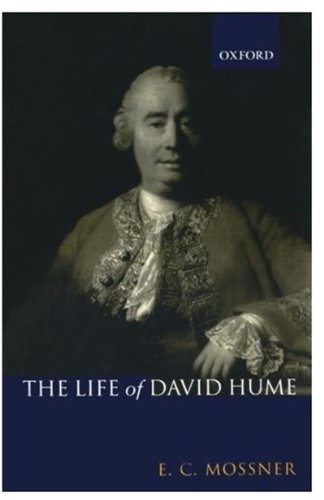
13. The Life of David Hume
$26.90
14. The Philosophy of David Hume:
$70.00
15. David Hume: A Treatise of Human
$38.28
16. David Hume: Moral and Political
 
$9.29
17. David Hume: Scotland (1711-1776)
$42.50
18. An Enquiry concerning the Principles
$28.00
19. The Cambridge Companion to Hume
 
$19.07
20. History of England: From the Invasion

1. Dialogues and Natural History of Religion (Oxford World's Classics)
by David Hume
Paperback: 256 Pages (1999-01-28)
list price: US$9.95 -- used & new: US$5.06
(price subject to change: see help)
Asin: 0192838768
Average Customer Review: 5.0 out of 5 stars
Canada | United Kingdom | Germany | France | Japan
Editorial Review

Book Description
David Hume is the greatest and also one of the most provocative philosophers to have written in the English language. No philosopher is more important for his careful, critical, and deeply perceptive examination of the grounds for belief in divine powers and for his sceptical accounts of the causes and consequences of religious belief, expressed most powerfully in the Dialogues Concerning Natural Religion and The Natural History of Religion. The Dialogues ask if belief in God can be inferred from the nature of the universe or whether it is even consistent with what we know about the universe. The Natural History of Religion investigates the origins of belief, and follows its development from harmless polytheism to dogmatic monotheism. Together they constitute the most formidable attack upon the rationality of religious belief ever mounted by a philosopher.This edition also includes Section XI of The Enquiry Concerning Human Understanding and a letter concerning the Dialogues, as well as particularly helpful critical apparatus and abstracts of the main texts, enabling the reader to locate or relocate key topics. ... Read more

Customer Reviews (8)

5-0 out of 5 stars Dynamite
How lucky am I to have this namesake.

This work is dynamite.

Hume walks right in and starts slaying every Sacred Cow in the place.

Not one God is left standing when he's finished. This is like watching Darwin taking the secateurs to church. Richard Dawkins doesn't even come close to Hume's intellectual power or economy of thought. They are in completely different leagues.

The introduction to this particular compilation paints a wonderful portrait of a man who deserves far more attention than he has received.

Erudite, clever, intellectually unassailable.

Apologists are left with nothing.

This work should be required reading for every school age child in the world.

It's fine to believe, but know what you're believing first.

Hume will take you there.

5-0 out of 5 stars A Must,A Classic, etc.
This is a great resource for any theological library.Whether you agree or disagree with what Hume writes, this book is `a must' as you wrestle with faith and epistemic certainty.It is used in many theology and philosophy classes and will aid any reader to become more familiar with a different perspective on the origin of religion, the Enlightenment struggle with reason and faith and the broader conversation of contemporary epistemology.

5-0 out of 5 stars A philosopher thinks about God's existence
David Hume, a philosopher of the period often classified as British Empiricism, is the intellectual associate of philosophers John Locke and George Berkeley. Born in Edinburgh in 1711, he attended the University of Edinburgh but did not graduate. He went to France during his 20s, and spent time there working on what would become his most famous work, 'An Enquiry into Human Understanding', first published under the title 'Treatise of Human Nature'. However, Hume was a prolific writer, and dealt with many areas of philosophy, including politics and ethics, epistemology, and metaphysics. He wrote in the area of history as well, and had a politic career as British ambassador to France and a post as a minister in the government for a few years. His final work, 'Dialogues Concerning Natural Religion', was published posthumously in 1779, although work had begun on it as early as the 1750s.

Hume was very concerned about rationality. Hume was never publicly and explicitly an atheist, but his rational mind, concerned about sensory and intelligible evidence, led him to question and doubt most major systems of religion, including the more general philosophical sense of religion and proofs of the existence of God. The primary arguments in his 'Dialogues Concerning Natural Religion' deal with the Argument from Design, and the Cosmological Argument. There is an assumed distinction here between natural religion and revealed religion, an especially important distinction in the Enlightenment and post-Enlightenment philosophical structure.


- Natural Religion and Revealed Religion -

Natural religion is the idea that we come to know and understand God (and, consequently, what God wants or expects of us, if anything) simply from nature and our sensory perceptions, as well as our interpretations (emotion and rational) of this kind of understanding. From very early in his writing career, Hume attacked the idea of natural religion and most of its conclusions, drawing a sharp line between what we can actually know and what ends up being fanciful extrapolations based on other-than-rational ideas and evidence. Revealed religion is primary what most religions base themselves upon - the burning bush to Moses, the resurrection and post-resurrection appearances to the Apostles, the Buddha's enlightenment under the tree - these are examples of revelation. While Hume does take on the idea of revealed religion in his other works, this particular text does not concern itself with that topic, and stays in the domain of addressing natural religion.


- The Argument from Design -

Arguments from Design have always had a strong appeal to believers within religious frameworks; they have often been used as tools of evangelism, as attempts to show that beyond the revealed doctrines, the very nature of things points to a creator. In very short order, the Argument from Design in Hume's newly-industrial time might have read like this:

- Machines are designed by beings with intelligence.
- The world and the universe it is in resembles a machine.
- Therefore, the world must have been created by means of intelligent design.

This is an argument by analogy, and is convincing to some, but often more convincing to those already inclined to believe in the existence of God.


- The Cosmological Argument -

The Cosmological Argument is at once both more subtle and more simple. The most simple way of stating it would be that God is the 'first cause' of everything. If everything has to have a cause (even the whole universe), then that first cause must be God. In the twentieth century era of thinking of a universe that began with a Big Bang, it seemed to some that the Cosmological Argument was confirmed.

Hume would have been familiar with Leibniz's more subtle form of the Cosmological Argument, which argues for a world of infinite contingent causes. However, there has to be something outside of this system of infinite causes that produced the series - thus, even in a universe with no set beginning or ending, there would still need to be an overarching cause.


- Hume's Arguments -

Hume argues on many levels. His first criticism of the Argument from Design is that this analogy (as are most arguments from analogy) is faulty and not exact; we have no idea if the universe is like a machine. Even if it was, machines are often designed and built by several designers - why argue for one God rather than several? How do we know that matter and the universe don't have their own, internal self-organising principles?

With regard to the Cosmological Argument, the argument is a little more strained. Hume argues that, in any series of causality, once one knows about each cause, it makes no sense to inquire beyond the sequence of causes to some other effect. This is a very Empirical argument, to be sure, and while perhaps not entirely satisfying, it still has merit in philosophy to this day.


- Hume's Structure -

This is a dialogue, set up in the classical way of people talking with each other about the subjects. Hume draws primarily from Cicero, whose work 'On the Nature of the Gods' uses characters of the same names. However, whereas Cicero was concerned about the nature of the Gods (their attributes, powers, etc.) and not their existence, it is the very existence of God that occupies Hume's thoughts.

Hume, despite many years of work on this text, probably never quite thought it was finished. He left the work to Adam Smith (the noted economist, and friend of Hume in Edinburgh), who also thought the arguments against the existence of God were too strong, and likely too damaging to Hume's overall reputation. The tug-of-war over the publication makes for interesting reading in and of itself.

These are important arguments, worthy of discussion and dialogue in philosophy classes, theology classes, and among others who ponder the existence of God.

5-0 out of 5 stars Essential Philosophy in a Nice (and Cheap) Edition
This is a wonderful collection of Hume's most famous and influential writings on religion.Few books I've encountered include this much first-rate philosophy for the price, and so I recommend this book to anyone who is interested in Hume's thinking about religion.It includes the section on miracles from Hume's Enquiry concerning the Principles of Morals and the full versions of both The Natural History of Religion and the Dialogues concerning Natural Religion.(Hume's short autobiography, "My Own Life," is also included.)Furthermore, Gaskin has provided some helpful editorial material:there's a useful introductory essay discussing the selections, and he includes explanatory notes that clarify some of Hume's more obscure references.

The central theme of Hume's religious thought is the central theme of his philosophical thought as a whole--namely the extent of our ignorance and the impotence of human reason to discover the things we really want to discover.And, for this reason, his writing on religion provides a good illustration of his general philosophical method:he begins by pointing out the impotence of reason, and then he offers a naturalistic psychological explanation of why we continue to think as we do.Our tendency to believe various religious thesis, he argues, cannot be explained as a justifiable way of thinking about the world that we arrive at through the use of reason.It is, instead, explained by certain general principles governing the operation of human minds.And two major works in this volume illustrate the two components of Hume's philosophical method.In the Dialogues he argues that neither empirical research nor the a priori exercise of reason is likely to reveal that our religious beliefs are justified.In The Natural History he begins the project of explaining why we do in fact believe what we do about religion.

As I said above, the Dialogues pertain to the first part of the method.Most of the Dialogues is devoted to discussion of a posteriori arguments for the existence of God, though there is also a short section on various a priori arguments.The main argument considered here is the classical argument from design, which Hume seems to understand as an analogical argument of the following sort:the complexity and order of the universe show that it is similar to artifacts created by human intelligences; similar causes have similar effects; therefore, the universe must have been created by a being with something like a human intelligence; therefore, the universe must have been created by God.

Hume's objections to this argument are legion, and many of the individual objections are both ingenious and forceful.He provides reasons for thinking that the universe isn't all that similar to artifacts created by human beings.Hume also provides for thinking that, even if we think the universe is similar to a human artifact, we ought to think the universe was created by a being quite unlike God.In addition, he suggests certain speculative naturalistic explanations of the existence and nature of the universe; and he claims that it's unclear why an appeal to divine creation is to be preferred to these speculative naturalistic stories of the universe's creation.Hume's cumulative case against the argument from design is quite impressive.Indeed, I'm pretty sure that Hume has shown that the argument from design is more or less worthless as support for anything resembling traditional theism.

But where, in the end, does Hume come down on the issue of theism?It seems clear that he has no sympathy for organized religion, or for any religious views that purport to describe the nature of God, His intentions, or how and why He created the universe as He did.For any such religious view is going to overstep the bounds within which he thinks human reason can operate.And the only positive religious claim that is given respectful treatment here is the bare claim that we have reason to think that the cause of the universe as a whole is somewhat similar to a human intelligence.But does acceptance of this minimal thesis amount to his being a theist?It's very hard to tell.The problem is that it often seems Hume's explicit advocation of this position amounts to little more than a description of what he thinks is an inevitable human tendency to think this way.

And this is where the second part of his project, the part carried out in The Natural History of Religion, becomes relevant.For The Natural History is the work in which Hume sets out to trace the sources of religious belief to certain natural principles of the human mind.There he argues that the the operation of our minds, along with the conditions in which we find ourselves, leads us to arrive at the sorts of religious beliefs we find to be popular in past and present human societies.Our ignorance about the way the world operates and our apprehensiveness about the ways these unknowns can affect our lives naturally lead human beings to a form of polytheism. We tend to attribute the underlying principles by which the world operates to a large number human-like beings, and this is what polytheistic religion amounts to.But once polytheism is in place our tendency to attribute greater powers and more perfect natures to individual gods leads us to something closer to monotheistic views according to which there is a single wholly perfect being behind all the underlying principles governing the world and behind the existence of the world itself.

It should be clear, then, why it's difficult to pin down just what Hume though about religion.He does think that it's hard for beings like us to deny the general thesis that the universe as a whole was probably created by a human-like intelligence.For given how our minds actually work, he seems to think, we're bound to think something like this about the origin of the universe.Yet it's somewhat unclear that he thinks forming beliefs in this way is reliable.It may simply be that we have a brute instinct to think in a way that insures we'll see the world as resulting from some human-like intelligence, and it's at least not clear that that isn't a debunking account of the plausibility of theism.

5-0 out of 5 stars The truth that they will never teach you.
Hume is a master, one of the most important philosophers ever.In the Natural History, Hume masterfully shows the natural evolution of religion.From its crude beginings of polytheism to the more refined monotheism, comparing the value systems of each.Monotheism has roots and can be traced to a source.He concludes that any rational mind would aviod the unstable houses of religion altogether. ... Read more


2. An Enquiry Concerning Human Understanding
by David Hume
Paperback: 96 Pages (2006-01-01)
list price: US$4.99 -- used & new: US$4.02
(price subject to change: see help)
Asin: 1420926993
Average Customer Review: 3.5 out of 5 stars
Canada | United Kingdom | Germany | France | Japan
Editorial Review

Book Description
Philosopher David Hume was considered to one of the most important figures in the age of Scottish enlightenment. In "An Enquiry Concerning Human Understanding" Hume discusses the weakness that humans have in their abilities to comprehend the world around them, what is referred to in the title as human understanding. This work, now commonly required reading in philosophy classes, exposed a broad audience to philosophy when it was first published. A great introduction to the philosophy of David Hume, "An Enquiry Concerning Human Understanding" and the ideas within it are as intriguing today as when they were first written. ... Read more

Customer Reviews (4)

1-0 out of 5 stars Great writing style, but that's about it
Hume contradicts himself all over the place.If our knowledge is so impoverished, how does he establish unalterable natural laws in order to dispense with miracles?Humanist magazines regard Hume as a model humanist.Yet, how many of these humanists, including Hume, ever did anything for their fellow man?I know plenty of Christians, such as Mother Theresa and so forth, who have spent their lives feeding, clothing and sheltering the poor; but, I cannot recall one humanist who has ever done anything unselfish and philanthropic."Humanism" is perhaps the greatest misnomer of all time.And Hume's thesis is nothing more than another freemasonic attack upon Christianity because they hate the Truth of Christianity, which is Jesus Christ and His message.

3-0 out of 5 stars Should not be read alone
Hume is over-rated.He skirts between the obvious and the incorrect.He asserts that geometry and math are unreal or analytical, to use a technical term, as opposed to real or synthetic.He is right about Euclidian geometry, but not math.Math is not analytical but synthetic.
While the proposition (a = b therefore b = a) is analytical, as it is a definition, from which (c = b therefore c = a) may be derived.
The initial proposition is a definition, not any type of observation.The conclusion is a derivation from the definition, not an observation.

But,(1 + 1 = 2) is an observation, synthetic knowledge.The ability to count is derived from the initial thing counted; it is not a mere definition.Were Hume correct, an analytical proposition could be used to establish a synthetic reality, which is impossible.

v = f(x) where v is variation and f means a function and x is a value.
It is a concept, analytical, saying nothing about reality.If you add reality:v being variation in gender of an human individual and w being weight.Gender does not alter because weight changes.But if you say v is weight and x is age, there will be a change in weight with age.

If the analytical could prove the synthetic, existance would become a true predicate.

5-0 out of 5 stars Excellent.
I am surprised that Desmond David Hume had time to write such an amazing book while he was a monk, a military grunt, a sailing enthusiast and of course a member of the Dharma Initiative.Perhaps his catchphrase "See you in another life, brutha" is his hint that he has multiple lives like a cat, thus giving him time to write such an amazing piece of work.

5-0 out of 5 stars Hume at his best
David Hume was perhaps the leading light in the Empiricist movement in philosophy. Empiricism is seen in distinction from Rationalism, in that it doubts the viability of universal principles (rational or otherwise), and uses sense data as the basis of all knowledge - experience is the source of knowledge. Hume was a skeptic as well as empiricist, and had radical (for the time) atheist ideas that often got in the way of his professional advancement, but given his reliance on experience (and the kinds of experiences he had), his problem with much that was considered conventional was understandable.

Hume's major work, 'A Treatise of Human Nature', was not well received intially - according to Hume, 'it fell dead-born from the press'. Hume reworked the first part of this work in a more popular way for this text, which has become a standard, and perhaps the best introduction to Empiricism.

In a nutshell, the idea of empiricism is that experience teaches, and rules and understanding are derived from this. However, for Hume this wasn't sufficient. Just because billiard balls when striking always behave in a certain manner, or just because the sun always rose in the morning, there was no direct causal connection that could be automatically affirmed - we assume a necessary connection, but how can this be proved?

Hume's ideas impact not only metaphysics, but also epistemology and psychology. Hume develops empiricism to a point that empiricism is practically unsupportable (and it is in this regard that Kant sees this text as a very important piece, and works toward his synthesis of Empiricism and Rationalism). For Hume, empirical thought requires skepticism, but leaves it unresolved as far as what one then needs to accept with regard to reason and understanding. According to scholar Eric Steinberg, 'A view that pervades nearly all of Hume's philosophical writings is that both ancient and modern philosophers have been guilty of optimistic and exaggerated claims for the power of human reason.'

Some have seen Hume as presenting a fundamental mistrust of daily belief while recognising that we cannot escape from some sort of framework; others have seen Hume as working toward a more naturalist paradigm of human understanding. In fact, Hume is open to a number of different interpretations, and these different interpretations have been taken up by subsequent philosophers to develop areas of synthetic philosophical ideas, as well as further developments more directly out of Empiricism (such as Phenomenology).

This is in fact a rather short book, a mere 100 pages or so in many editions. As a primer for understanding Hume, the British Empiricists (who include Hobbes, Locke, and Berkeley), as well as the major philosphical concerns of the eighteenth century, this is a great text with which to start.
... Read more


3. A Treatise of Human Nature
by David Hume
Paperback: 448 Pages (2007-07-18)
list price: US$29.99 -- used & new: US$19.13
(price subject to change: see help)
Asin: 1595478590
Average Customer Review: 4.0 out of 5 stars
Canada | United Kingdom | Germany | France | Japan
Editorial Review

Book Description
Nothing is more usual and more natural for those, who pretend to discover anything new to the world in philosophy and the sciences, than to insinuate the praises of their own systems, by decrying all those, which have been advanced before them. And indeed were they content with lamenting that ignorance, which we still lie under in the most important questions, that can come before the tribunal of human reason, there are few, who have an acquaintance with the sciences, that would not readily agree with them. It is easy for one of judgment and learning, to perceive the weak foundation even of those systems, which have obtained the greatest credit, and have carried their pretensions highest to accurate and profound reasoning. Principles taken upon trust, consequences lamely deduced from them, want of coherence in the parts, and of evidence in the whole, these are every where to be met with in the systems of the most eminent philosophers, and seem to have drawn disgrace upon philosophy itself.Download Description
It is therefore certain, that the imagination reaches a minimum, and may raise up to itself an idea, of which it cannot conceive any sub-division, and which cannot be diminished without a total annihilation. When you tell me of the thousandth and ten thousandth part of a grain of sand, I have a, distinct idea of these numbers and of their different proportions; but the images, which I form in my mind to represent the things themselves, are nothing different from each other, nor inferior to that image, by which I represent the grain of sand itself, which is supposed so vastly to exceed them. What consists of parts is distinguishable into them, and what is distinguishable is separable. But whatever we may imagine of the thing, the idea of a grain of sand is not distinguishable, nor separable into twenty, much less into a thousand, ten thousand, or an infinite number of different ideas. ... Read more

Customer Reviews (13)

1-0 out of 5 stars An Awful Edition, Full of Typos
If you are looking to buy Hume's Treatise of Human Nature, buy another edition.In addition to making poor font choices, this edition's editors have let an unconscionable number of typos slip through.There are so many, perhaps as many as one per page, that sometimes Hume's meaning is obscured, and reading is made difficult.

5-0 out of 5 stars philosophy as social science
Hume's `Treatise on Human Nature', the book, which, in the report of the author "fell stillborn from the press", and yet remains of continuing interest to us four centuries hence, is, among all else, the primordial exposition of a systematic psychology in the West.Hume's elevation of "the passions" ("Reason is and ought only to be the slave of the passions, and can never pretend to any other office than to serve and obey them.") and centralization of intentionality in the study of ourselves, are as significant contributions to the modern turn, more specifically, the transition to late modernity, as are the fruits of his more notorious skeptical detachment and trenchant empiricism and naturalism. Of all the so-called classical empiricists, none prefigures those characteristically late modern naturalist, positivist, analytic, and, to an extent, pragmatist, andeven (surprisingly) existentialist outlooks as clearly as Hume. Also, the profound impact of Hume, the social scientist, on social organization and social forms is indisputable. In this work, Hume fathers the concept of rule utilitarianism (he was the original modern occidental utilitarian), the most influential articulation of which is found in the U.S. Constitution, established little more than a decade after his death in 1776.

The celebrated Selby-Bigge/Nidditch edition is, for the general reader or undergraduate, at under $5, still a terrific value. Why?First and foremost, the Index: among the best ever!Hume is complex.While his initial presentation is often (intentionally, I'd say) disarmingly direct, the justifications for and commentary on the ramifications of his assertions often engender and weave into vast and subtle conceptual patterns, which meander over a 662 page corpus of text.The index locates and situates the basic concepts and allows the individual to structure the reading. Incredibly useful -- as one may not wish to read all of Hume or all of Hume at once!More likely, the prospective reader is searching for a very specific concept or issue, and the precise and comprehensive Index makes penetration of what is in many places a difficult and arcane text quite doable.

2-0 out of 5 stars Misadvertised/mis-linked to different edition
This was not the edition I wanted, as follows: I initially found the desired edition, including a photo of the cover, followed the links for available copies, including this one which I purchased (which, BTW, did not have a photo of cover, but I assumed it was same edition as on the initial page). Was dismayed to receive this different edition. It matters because it was for a friend's college course. Professors often reference pages in the assigned edition, which do not correspond to another edition's page numbering. Please minimize such confusion by more accurate advertising (include a cover photo on every linked page, to ensure it matches the initial one) or more accurate linking--i.e. don't show a specific search result but then link to other books that are not the same one, unless again, there are cover photos or other info displayed to distinguish them.

5-0 out of 5 stars Great Principles on Understanding, Emotions, & Morals
According to David Hume, the mind and body are integral units, with one unable to exist or operate without the other. There are no "innate" ideas, nor logically a priori knowledge, only sense impressions that arise out of direct experience of the five senses and concomitant sense ideas that arise in the imagination. The imagination (i.e., mind) then makes associations. From these various sense impressions and ideas, the imagination commingles the ideas with inferences from resemblance, contiguity, and causality. Examples: The imagination relates one sense impression and its concomitant sense idea with another when they share similar characteristics or resemble one another, such as in shape, height, weight, distance, proportion, color, etc. The imagination associates one sense impression and its concomitant sense idea with another when they are in close contiguity, such as proximity in time, place, situation, connection, succession, etc. Lastly, the imagination associates one sense impression and its concomitant sense idea with another when there appears to be some cause and effect, for example when one turns on a wall switch, and a light appears, or one turns a key in an ignition, and a car starts, or other causal inferences. Only from the sense ideas and impressions, commingled with the imagination's inferences of resemblance, contiguity, and causality, can any opinion or belief or knowledge be known. The difference between an opinion, belief, or knowledge is only one of degree, namely, how strong, convincingly, and lively (Hume uses the word "vivacity") the senses, their ideas, and the inferences work themselves out in the imagination. Generally, knowledge is reserved only for the strongest of degrees of inference, such as those verifiable and not refutable by inferential (cf., deductive) logic or experimentation; all else is either opinion or belief. But no knowledge, no matter how often repeated and examined inductively, is absolute; all knowledge, like opinion and belief, is contingent. For "absolute" knowledge once held the earth to be flat, to be the center of the universe, and non-rotating. Even Einstein's Theory of Relativity had to be revised by a Special Theory of Relativity. We still don't understand how the universe can be "full" and still "expanding," yet both are true (so far!). Only knowledge, belief, and opinion derived from the senses, their ideas, and imaginative inferences have merit; all other "imaginations," such as the deductive existence of a "God" or Supreme Being, absolute morals, or correct emotions, are merely speculative imaginations, and ultimately all such speculation leads to nothing more than myth or superstition, false dogmas, and irrational beliefs.

The passions, better known as either sensations or emotions, are derived from sense experience as well and are derived from the other sense impressions and sense ideas. Sensations are those experiences that arise within the imagination itself, based on something the body itself produces, such as hunger, pain, thirst, pleasure, and uneasiness. Emotions are those experiences that arise from the sensations and sense impressions and their concomitant sense ideas. The four principle emotions are: (1) Pride, and its opposite (2) Humility; (3) Love, and its opposite (4) Hatred. Pride and Love are desirable, whereas Humility and Hatred are undesirable. All other emotions are derived from, or are in one degree or another, always reducible to these four. Beauty, for example, is the love of something well-figured and loved for its own sake, while ugliness is something disfigured or ill-figured and hated. Anger is a form of hatred, while happiness is a form of either Pride or Love or both. Jealousy is a form of hatred (of another), while compassion is a form of Love. All emotions, when considered in their origins, have these four emotions as their foundation; it's all a matter of degree and kind.

There is no absolute morality; no moral principle can be deductively arrived at (except to be pure speculation). Morals can only be inferred from the two principles of (1) maximize pleasure and (2) avoid pain. These principles are natural inclinations of the body itself, not derived from logic or reason (i.e., speculation), but by verifiable experimentation, inferred from experience itself, especially the emotions of pride, humility, love, and hatred. We like to be loved, we despise to be hated, so we do those things that maximize these natural inclinations, because we want pleasure and to avoid pain, and they alone are what count as "moral." All virtue is that which brings us pleasure; all vice is that which brings us pain. For example, we are just to one another, not because we ought to be, but because we desire that being just toward others will merit other's affection, whereas being unjust will cause others to avoid us; the first is pleasurable, the latter is painful. We respect each other's property because it brings us mutual pleasure to enjoy the fruits of our own labor, whereas it causes us pain to have our property taken from us. The origin of government is from the experience where doing things socially imparts pleasure, whereas doing things in isolation causes pain. No one is an island, is true. Warding off an enemy as an individual forces the individual to bear all the weight, thus causing pain. Fighting the enemy together fosters our mutual interests (i.e., pleasure), and allows all to participate in the fruits of individual endeavors. We benefit from mutual cooperation, which good government ought to foster, whereas we lose and experience pain when we try to fight all battles by our own selves. There really is benefit in "numbers," to having more people in favor of the things we collectively sponsor and work hard for, and are opposed to those things that oppress. Showing how "each person benefits by collective effort" is how to operate good government; showing "how each person loses by individual effort alone" is another good reason for government. Government's sole function and purpose is to advance the collective cooperation, wherein each individual ultimately flourishes (and brings pleasure).

5-0 out of 5 stars Oxford's edition by the Nortons is the only one to buy
Since Hume's Treatise first appeared in 1739-1740, several distinct editions have been published. While most of these are fine for casual use, the Oxford University Press edition, recently prepared by David and Mary Norton, stands alone as an outstanding scholarly achievement. Their edition, at present only available in the Oxford Philosophical Texts student edition, will within the next year or so also be available in a scholarly edition (Oxford's Clarendon Edition). These two versions have the same text of the Treatise. The difference between them lies in their introductions and annotations, which are suited to different sets of readers. Part of the value of both versions lies in these exceptional introductions and annotations. The other part, though, involves the Nortons' editing of the text of the Treatise itself, which, ironically, makes their edition more accurate than Hume's original. While the original edition of the Treatise was being printed, Hume instructed the printer to make changes to the text, and thus some first editions read differently than others. The Nortons have compared first-edition copies of the Treatise page by page to locate these changes. Pen in hand, Hume also scribbled other changes into several printed copies of the Treatise; the Nortons have accounted for those alterations as well. These are just two examples of many editorial tasks that have gone into making this the definitive edition of Hume's Treatise, the edition which will remain the standard for decades. Let me add a word regarding the critical comments that an anonymous amazon.com reviewer made about the Nortons' edition ("A reader", January 18, 2003). This reviewer's comments may be well-meaning, but I can say with confidence there is little substance to her/his objections. The edition has been widely hailed as a triumph by Hume scholars and scholarly reviewers, and the philosophy editors at Oxford University Press tell me they are completely delighted with the work. ... Read more


4. Selected Essays (Oxford World's Classics)
by David Hume
Paperback: 448 Pages (1998-11-19)
list price: US$13.95 -- used & new: US$7.42
(price subject to change: see help)
Asin: 0192836218
Average Customer Review: 5.0 out of 5 stars
Canada | United Kingdom | Germany | France | Japan
Editorial Review

Book Description
In his writings, David Hume set out to bridge the gap between the learned world of the academy and the marketplace of polite society. This collection, drawing largely on his Essays Moral, Political, and Literary (1776 edition), which was even more popular than his famous Treatise of Human Nature, comprehensively shows how far he succeeded.From `Of Essay Writing' to `Of the Rise and Progress of the Arts and Sciences' Hume embraces a staggering range of social, cultural, political, demographic, and historical concerns. With the scope typical of the Scottish Enlightenment, he charts the state of civil society, manners, morals, and taste, and the development of political economy in the mid-eighteenth century. These essays represent not only those areas where Hume's arguments are revealingly typical of his day, but also where he is strikingly innovative in a period already famous for its great thinkers. ... Read more

Customer Reviews (5)

5-0 out of 5 stars My son loved this
My 18 year old suddenly became the philosopher and wanted to explore new thoughts. This is a good, thought provoking collection that he thoroughly enjoyed.

5-0 out of 5 stars Move Over Montaigne
First, I am assuming the essays in the Oxford edition are sufficiently similar to the LibertyClassics edition (the latter a far more elegant paperback and includes "Essays Written and Withdrawn"). Second, these essays (including one on how to write one in the L/C edition) are more in the tradition of Montaigne, Marcus Arelius, and Emerson, to cite some exemplars of the tradition, meaning that these essays are not as logically rigorous as his "Treatise on Human Nature," "Essays Concerning Human Understanding," "Principles of Morals," and "Natural Religion," but are more an astute and empirical observation of what causes pleasure and satisfaction versus what causes discomfort and uneasiness. This emprical motif permeates all the essays.

The "moral" essays are a continuation of Vol. III of his "Treatise on Human Nature," and "Principles of Morals," and contribute to how our "tastes" and "utility," rather than apriori logic, delimit and describe moral ideas and ideals. His "political" essays are the most prominent among the group and are often prescient of subsequent developments, clearly anticipating a more democratic society, but they often come across as antediluvian, despite Hume's analytical dexterity and his compassionate motivation. The "literary" essays are the least in number and the most impotent of his contributions. Not that they lack value or interest, they simply lack novelty or new understanding. All his essays have an empirical bent, which should not surprise anyone familiar with Hume's other works.

Many of these 48 essays have perennial value, while others are clearly cotemporaneous with his time and place (mid-18th century England). In either case, they contribute to our understanding of the period, while making perspicacious observations about subjects that are both endearing and enduring. The LibertyClassics' edition uses current locution and spellings in Caslon 540 typeface on durable, acid-free paper, making Hume's lucid and elegant prose an even more attractive presentation. Highly recommended.

5-0 out of 5 stars Excellent View of Hume
Hume is known today primarily for his seminal philosophical works.He regarded himself, however, as a man of letters who contributed to many areas and he was known best to his contemporaries as a historian.This nice collection of essays displays the breadth of Hume's interests and his well developed writing style.Hume was particularly interested in essays which would bring important topics before a broad public and wrote in an accessible and often entertaining style.Some of Hume's best known essays on philosophical and religous topics are included in this collection.What may be of greatest interest are some of the lesser known essays which display both the versatility and the power of Hume's intellect.Included are essays on economics and international trade, and also some political theory.Hume was an opponent of mercantilist ideas, supporting the largely correct notion that trade would enrich all parties.His political theory is particularly interesting.In contradistinction to the widely accepted ideas of the time, Hume suggested that republican governments could be stable if the size of the republic was large enough to encompass enough competing groups to prevent one from assuming complete control.It is known that James Madison read Hume in the period leading up to the Constitutional Convention and many scholars suspect that Hume's ideas were the germ of the defense of republicanism/federalism developed by Madison in the Federalist Papers.A momentous idea with momentous consequences.

5-0 out of 5 stars Highly entertaining corpus of essays
Written in the highly polished Augustan prose style of the period, this is a fine selection of essays from the pen of the great Scottish philosopher, historian and economist, David Hume. The essays range from aesthetics, commerce, history and ethics, which include such pieces as "The Epicurean", "The Stoic" and "The Sceptic" (Hume's own credo) all which are rather curiously positioned and excellently written guides to living. "Of the Immortality of the Soul" and "Of Suicide", two of Hume's most controversial essays touching on theological topics, are also included in this volume. Both succeeded, with their bold, original arguments, in outraging the British clergy, which helps us to understand why Hume decided to have them published posthumously.

5-0 out of 5 stars Fine selection of essays by a great man
This comparatively short book consists of extremely well-selected essays by the great Scottish philosopher and historian, on everything from public credit to delicacy of taste.Also included are the different classes of philosphers, including the class Hume falls under, The Sceptic (Hume's sp.).There is also an exceedingly interesting essay on the populousness of the world in ancient times.Apparently, the accepted notion at Hume's time was that there were hordes of people in ancient times and that our race has been dwindling ever since.Hume, on the other hand, proposes the radical notion that just the opposite is the case, and sets out to prove it quite handily.-Overall, the best introduction to one of my favorite writers that I've yet to read. ... Read more


5. Dialogues Concerning Natural Religion: The Posthumous Essays of the Immortality of the Soul and of Suicide
by David Hume, Richard H. Popkin
Paperback: 129 Pages
list price: US$5.95 -- used & new: US$4.95
(price subject to change: see help)
Asin: 0872204022
Average Customer Review: 5.0 out of 5 stars
Canada | United Kingdom | Germany | France | Japan

Customer Reviews (7)

5-0 out of 5 stars Slender paperback stuffed with ideas
I bought this book for a class, and although we were only required to read sections of the book I ended up reading the entire thing, including the extra two essays (Immortality of the Soul & Suicide). The entire thing was extremely well-written and thought-provoking, even to a novice philosopher such as myself.

This isn't a book you can fly through. Hume requires the reader to slow down and really think about what is being said. The main section of the book (Dialogues Concerning Natural Religion) involves four characters, three discussing theories, and one student (technically the narrator) listening and occasionally commenting. By using this dialogue technique, Hume is able to present several sides of each argument in a unique way, and not simply expound his own theories. The method is most effective.

I won't go into depth of what this book discusses, the theory of design, arguments about God's nature and being, the argument from the existence of evil, and whether a posteriori or a priori arguments are best suited for proving God's existence. Overall this book is interesting and exciting, even for a 200 year old publication. Even if you're interested in modern philosophy, this book still offers some interesting theories. And obviously if you're interested in philosophy at all, it's a good book to check out for some history on the subject.

The introduction offers a good deal of information about the essays included in the book as well as Hume himself.

5-0 out of 5 stars Classic statement of arguments against God's existence
While being a theist I do not accept Hume's conclusions, he is no doubt the finest philosophical skeptic in the West since the time of Sextus Empiricus.

Hume, the philosopher who woke Kant from his 'dogmatic slumbers', takes a very empirical approach to reality and philosophy.In Hume's mind, the pretensions of the human mind to certain truth and knowledge do not accord with the way things are.Many things are believed on insufficient evidence or sloppy thinking or for reasons of emotional need rather than on evidence and reason.The task he set himself was in many ways like that of Descartes, except unlike Descartes Hume did not believe that either the methods of science or God (Hume was an atheist) could give us grounds for certain knowledge.

The dialogues on Natural Religion are one of his supreme masterpieces.Published after his death, this dialogue features a conversation between two philosophers about the nature and existence of God and the proofs for his existence.One philosopher is a skeptic, Philo, and the other is a theist, Carneades.Demea the Deist provides a third interlocutor in the dialogue.Carneades states several popular arguments for God's existence in Hume's time, including the teleological argument, moral argument, and argument from design.Philo responds to this arguments, mostly using the argument from evil as well as appeals to the rule of regular law in nature, to refute ideas about miracles, providence, and evidential design from a supreme 'architect.'Hume states the counter-arguments in extremely powerful terms, essentially completely demolishing the position of Carnedes and concluding that at best, only a very weak inference can be made for God's existence from the structure of the world.

Hume's arguments have been recently re-stated by several atheist philosophers, including J.L. Mackie and Daniel Dennett.For Mackie, Hume was right in arguing theism is philosophical nonsense, and for Dennett, God is a redundant hypothesis when the order and beauty of the universe is readily and clearly explained by science, and at best a kind of Spinoza-style pantheism is where the sacred can enter into the cosmos.While I disagree, the adoption of Hume's arguments by many leading philosophers shows both the power, beauty and logical coherence of Hume's position, which should be read carefully by any philosopher who wants to offer a rational proof that God exists.

For me it is not the order but the beauty of the universe which suggests God exists, but perhaps for others this beauty is marred too much by suffering and evil to come to such a conclusion, and Hume would surely agree.

4-0 out of 5 stars Pretty Dense, Very thought provoking
This nearly pamphlet sized book is pretty dense with things to ponder. Hume speaks mostly about how a deity would function as the head of the world. The reviewer is not intent on being cute here. Hume addresses many notions about "God" through a series of dialogues amongst three intellectuals. They are intent on convincing each other of their individual views. Essentially those three have to come to terms with the anthropomorphism associated with the God of Christian belief system. It really is more complicated than that but this is a short review.

In addition to the Dialogues are a short essays on the Immortality of the Soul and the rationality of Suicide. Finally there is a discussion of Miracles. The latter three are well placed with the Dialogues as they address the philosophy of religion in much the same manner but come from Hume rather than the fictional characters of the Dialogue.

This book as short as it is, requires a considerable amount of time to consume. Not only are the concepts that Hume presents detailed and valuable, but the language is particularly arcane and often requires re-reading in order to understand where Hume is going.

5-0 out of 5 stars A few alternative paths to belief in God
The two excellent reviews of this book , one by Kurt Messick and the other by CT Dreyer outline the background to, and the principal content of the work. Hume takes apart the argument from Design as proof of God's Existence, raising objections to the analogy between Machine- design and world- design. I do not believe however that Hume in the work really considers two other major arguments for belief in God. One argument might be called the existensial - personal decision argument , in which the individual out of his own need and will decides for belief in God. This decision can be a rational calculation as Pascal suggests that we should make in order to give our own immortality a chance, or it can be a profound deeply moving conviction something that grows out of our own deepest being and need. Another path to belief in God is through the kinds of mystical experience that thousands of human beings from all cultures have had. William James collects some of these testimonies in 'The Variety of Religious Experience'. Another path is through the path of accepting the Tradition given us by our ancestors.
Now it might be said that these alternative paths to belief in God do not deal with the kind of ' proofs ' Hume is talking about. Hume is really talking about the ' rational way' to God through mind and reason. But I believe that every reader should have these other ways to God in mind , if only not to be devastingly shattered by Hume 's demolition job of the Design Argument.
It is well to remember that there are other ways to God aside from the ones spoken of and questioned here.
I write this as a believer in God who also believes that a very great share of Mankind needs God, needs the belief in God to make their own lives ultimately meaningful. And this when I would also keep in mind the following idea. If the Proof of God were certain and absolute , then there would be no test/ trial / challenge for humanity in its belief in God.
And here I add the idea central in the Jewish tradition, and probably important in others, that God wants our decision for God, our free choice of God, and not a slavish obedience even to an airtight logical principle.

5-0 out of 5 stars Does God exist?
David Hume, a philosopher of the period often classified as British Empiricism, is the intellectual associate of philosophers John Locke and George Berkeley. Born in Edinburgh in 1711, he attended the University of Edinburgh but did not graduate. He went to France during his 20s, and spent time there working on what would become his most famous work, 'An Enquiry into Human Understanding', first published under the title 'Treatise of Human Nature'. However, Hume was a prolific writer, and dealt with many areas of philosophy, including politics and ethics, epistemology, and metaphysics. He wrote in the area of history as well, and had a politic career as British ambassador to France and a post as a minister in the government for a few years. His final work, 'Dialogues Concerning Natural Religion', was published posthumously in 1779, although work had begun on it as early as the 1750s.

Hume was very concerned about rationality. Hume was never publicly and explicitly an atheist, but his rational mind, concerned about sensory and intelligible evidence, led him to question and doubt most major systems of religion, including the more general philosophical sense of religion and proofs of the existence of God. The primary arguments in his 'Dialogues Concerning Natural Religion' deal with the Argument from Design, and the Cosmological Argument. There is an assumed distinction here between natural religion and revealed religion, an especially important distinction in the Enlightenment and post-Enlightenment philosophical structure.


- Natural Religion and Revealed Religion -

Natural religion is the idea that we come to know and understand God (and, consequently, what God wants or expects of us, if anything) simply from nature and our sensory perceptions, as well as our interpretations (emotion and rational) of this kind of understanding. From very early in his writing career, Hume attacked the idea of natural religion and most of its conclusions, drawing a sharp line between what we can actually know and what ends up being fanciful extrapolations based on other-than-rational ideas and evidence. Revealed religion is primary what most religions base themselves upon - the burning bush to Moses, the resurrection and post-resurrection appearances to the Apostles, the Buddha's enlightenment under the tree - these are examples of revelation. While Hume does take on the idea of revealed religion in his other works, this particular text does not concern itself with that topic, and stays in the domain of addressing natural religion.


- The Argument from Design -

Arguments from Design have always had a strong appeal to believers within religious frameworks; they have often been used as tools of evangelism, as attempts to show that beyond the revealed doctrines, the very nature of things points to a creator. In very short order, the Argument from Design in Hume's newly-industrial time might have read like this:

- Machines are designed by beings with intelligence.
- The world and the universe it is in resembles a machine.
- Therefore, the world must have been created by means of intelligent design.

This is an argument by analogy, and is convincing to some, but often more convincing to those already inclined to believe in the existence of God.


- The Cosmological Argument -

The Cosmological Argument is at once both more subtle and more simple. The most simple way of stating it would be that God is the 'first cause' of everything. If everything has to have a cause (even the whole universe), then that first cause must be God. In the twentieth century era of thinking of a universe that began with a Big Bang, it seemed to some that the Cosmological Argument was confirmed.

Hume would have been familiar with Leibniz's more subtle form of the Cosmological Argument, which argues for a world of infinite contingent causes. However, there has to be something outside of this system of infinite causes that produced the series - thus, even in a universe with no set beginning or ending, there would still need to be an overarching cause.


- Hume's Arguments -

Hume argues on many levels. His first criticism of the Argument from Design is that this analogy (as are most arguments from analogy) is faulty and not exact; we have no idea if the universe is like a machine. Even if it was, machines are often designed and built by several designers - why argue for one God rather than several? How do we know that matter and the universe don't have their own, internal self-organising principles?

With regard to the Cosmological Argument, the argument is a little more strained. Hume argues that, in any series of causality, once one knows about each cause, it makes no sense to inquire beyond the sequence of causes to some other effect. This is a very Empirical argument, to be sure, and while perhaps not entirely satisfying, it still has merit in philosophy to this day.


- Hume's Structure -

This is a dialogue, set up in the classical way of people talking with each other about the subjects. Hume draws primarily from Cicero, whose work 'On the Nature of the Gods' uses characters of the same names. However, whereas Cicero was concerned about the nature of the Gods (their attributes, powers, etc.) and not their existence, it is the very existence of God that occupies Hume's thoughts.

Hume, despite many years of work on this text, probably never quite thought it was finished. He left the work to Adam Smith (the noted economist, and friend of Hume in Edinburgh), who also thought the arguments against the existence of God were too strong, and likely too damaging to Hume's overall reputation. The tug-of-war over the publication makes for interesting reading in and of itself.

These are important arguments, worthy of discussion and dialogue in philosophy classes, theology classes, and among others who ponder the existence of God.
... Read more


6. An Enquiry concerning Human Understanding (Oxford World's Classics)
by David Hume
Paperback: 272 Pages (2007-05-18)
list price: US$15.95 -- used & new: US$8.96
(price subject to change: see help)
Asin: 0199211582
Canada | United Kingdom | Germany | France | Japan
Editorial Review

Book Description
'Commit it then to the flames: for it can contain nothing but sophistry and illusion.' Thus ends David Hume's Enquiry concerning Human Understanding, the definitive statement of the greatest philosopher in the English language.His arguments in support of reasoning from experience, and against the 'sophistry and illusion' of religiously inspired philosophical fantasies, caused controversy in the eighteenth century and are strikingly relevant today, when faith and science continue to clash.The Enquiry considers the origin and processes of human thought, reaching the stark conclusion that we can have no ultimate understanding of the physical world, or indeed our own minds. In either sphere we must depend on instinctive learning from experience, recognizing our animal nature and the limits of reason. Hume's calm and open-minded scepticism thus aims to provide a new basis for science, liberating us from the 'superstition' of false metaphysics and religion. His Enquiryremains one of the best introductions to the study of philosophy, and this edition places it in its historical and philosophical context. ... Read more


7. An Enquiry Concerning The Principles Of Morals
by David Hume
Paperback: 116 Pages (2004-06-30)
list price: US$19.95 -- used & new: US$12.40
(price subject to change: see help)
Asin: 1419106325
Average Customer Review: 4.5 out of 5 stars
Canada | United Kingdom | Germany | France | Japan
Editorial Review

Book Description
AS the mutual shocks, in SOCIETY, and the oppositions of interest and self-love have constrained mankind to establish the laws of JUSTICE, in order to preserve the advantages of mutual assistance and protection: in like manner, the eternal contrarieties, in COMPANY, of men's pride and self-conceit, have introduced the rules of Good Manners or Politeness, in order to facilitate the intercourse of minds, and an undisturbed commerce and conversation.Download Description
AS the mutual shocks, in SOCIETY, and the oppositions of interest and self-love have constrained mankind to establish the laws of JUSTICE, in order to preserve the advantages of mutual assistance and protection: in like manner, the eternal contrarieties, in COMPANY, of men's pride and self-conceit, have introduced the rules of Good Manners or Politeness, in order to facilitate the intercourse of minds, and an undisturbed commerce and conversation. ... Read more

Customer Reviews (6)

3-0 out of 5 stars Disappointed with the production of the book
I expected more from the production of the book. Yes, it contains the complete text of "An Enquiry Concerning the Principles of Morals," but:
1. There is nothing else, not even a page giving the year in which David Hume first published it.
2. There are numerous formatting errors. For example, in several places a paragraph is broken in the middle of a sentence.
3. Footnotes are put in the body of the text rather than at the bottom of the page.

On the other hand:
1. A decent sized font has been used, so the text is easy to read.
2. The book is printed on high quality paper.

In retrospect, I wish I had bought a book with an editor's introduction.

3-0 out of 5 stars Of Two Minds
Hume treats of morals in two distinct fashions. His major and last contribution is his "Enquiry," which was written late in his life; the other is Part III of his "Treatise on Human Nature," which was written much earlier in life. The two treatments are very different, and of the two, I much prefer the latter, as it is "demonstrated" a posteriori that man has a "natural inclincation" to maximize pleasure and to avoid pain. Besed on this natural inclination, humans endeavor to do those things that produce happiness, pride, joy, etc., because it maximizes pleasure, whereas humans endeavor to avoid those things that produce uneasiness, disturbances, misery, etc., because those things produce pain. From this a posteriori of natural inclinations, Hume explores the reasons why some things count as virtures (because they maximize pleasure), while some things count as vices (because they produce pain).

His "Enquiry," however, takes an altogether different approach, one based on the sentiments of utility and beneficence. Here humans do things that maximize their usefulness to themselves and to society that concomitantly bring beneficence. Those sentiments that are distinguished in natural language such as dexterity, perserverance, chastity, endurance, honesty, etc., count as virtues because they are "useful," while those that produce in natural language such things as sloth, lethargy, dishonesty, misery, etc., count as vice because they are "not useful." Our language itself is the measure of their untility.

The two theories, juxtaposed, are not at odds with each other, but definitely have distinctively different aetiologies. What I prefer about the "Treatise" is that one can infer the logical necessity of "natural inclinations" (dare I say "instinct") to maximize pleasure and avoid pain. This seems indisputably true empirically. Morals are indeed an a posteriori part of the human constitution. All the virtues and vices derived from this single principle have a solid foundation in human nature itself. Conversely, to merely posit that virtues and vices are merely sentiments according to their "utility" is less grounded in the person's natural inclinations, and is something one observes about human behavior in general.

Which approach will the reader prefer? That's difficult to determine, which is a good reason to read both the "Treatise" and the "Enquiry." As I already mentioned, they are not at odds with each other, they just have different starting points. Personally, the approach in the "Treatise" appeals because it starts with a intrinsic feature of what it is to be human, i.e., it seems to have a stronger foundation and logically inferred consequences from observances. Yet, the approach in the "Enquiry" is more vivacious, but is less grounded, because it is merely posits observances of ephemeral conditions that continually change from time to time and from culture to culture. If one wants to affirm that morals do have a solid foundation in human nature, you'll probably prefer the "Treatise," but if one wants to affirm that morals are merely "preferences" built into our natural language that differ from culture to culture and from time to time, you'll probably prefer the "Enquiry." Either way, however, they take us away from pie-in-the-sky metaphysical speculations!

5-0 out of 5 stars A Humane and Optimistic Account of Morality
Hume, for most people, is largely defined by his work in metaphysics and epistemology.There's no doubt that his work in these areas is of signal importance, but I think a tendency to focus on these areas at the expense of his moral thinking suggests a somewhat misleading interpretation of what he's up to.It's really only in his non-moral works that the picture of Hume as a radical skeptic has much plausibility. For here it seems clear that Hume's primary aim in his moral works is to ground his philosophical theses in a careful consideration of human nature; and it's also clear that he doesn't intend this to be a skeptical and debunking account of morality.

Now, it's true that there are ways in which Hume is skeptical about a certain way of thinking about the origin and nature of morality.The fact that he thinks morality is based in human sentiments show that he is, in some sense, a subjectivist about morality.He doesn't think there is any plausible account of our moral thinking as based on reason or empirical inquiry alone.Against the view that our awareness of moral distinctions is based on the exercise of reason, he argues that we do not figure out whether a person is virtuous or vicious, or an action good or bad, simply by thinking about things.And against the view that our awareness of moral distinctions is empirical, he argues that we do not figure out which things possess which moral qualities by going out and looking or by anything else of this sort.Morality, then, is more a matter of feeling than a matter of thinking, observing, and reasoning.

Hume's basic argument for the conclusion that morality is based on human sentiment is that the essential practicality of morality requires us to understand its basis in this way.Morality is about action, and neither reasoning nor ordinary empirical inquiry can be the source of our moral thinking since they are impotent to prompt us to action.Reason does not motivate, and our moral judgments, concerns, sentiments are intimately connected to motivation.Nor does recognition of the empirical facts motivate all on its own.Motivation always requires the existence of certain conative states in addition to the relevant beliefs arrived at through reason and empirical inquiry.So, in order to account for the practicality of morality (i.e. for the connection between morality and motivation), we need something to make us care about moral goodness and badness; and that something is to be found within the emotional part of our nature.

But, importantly, Hume doesn't think this is indicative of some problem with morality, and so he doesn't understand himself to be undermining ordinary morality.His aim is to expose the groundless pretensions of reason in order to make room for a wholly naturalistic account morality; it's not to show that morality doesn't have a firm basis.For he does not think that morality would ideally be based on reason and empirical evidence rather than sentiment.Rather, he thinks there is a sort of philosophical overreaching involved in trying to base morality on reason or empirical evidence as opposed to sentiment.

So far, so good.But what is the relevant sentiment? According to Hume, it is a general sort of benevolence, of concern for others.At least where our own interests do not intrude on this feeling, we can take pleasure in the pleasure of others and we can be disturbed and pained by their pains and difficulties.Our possessing such a feeling does not mean that we'll always set aside our own interest in the interest of others; nor does it mean that we are not largely self-interested.It does, however, mean that we're not wholly self-interested, as we are motivated to do (and not do) certain things even when they do not affect our own interests and desires.Such a feeling, Hume argues, must be the basis for the sort of general and unselfish concern for welfare of others that morality requires of us.And since this sentiment is a common component of human nature, it provides morality with a non-parochial basis.The moral point of view, Hume argues, is one we take up when our sentiments and feelings about people and actions are based on a shared perspective based in human nature.And since we share similar sentiments and sensibilities in virtue of our shared nature, morality possesses a sort of intersubjectivity.

But what inspires these sentiments, and how exactly do they translate into moral judgments?Morality, Hume argues, is based on sentiments of approbation and disapprobation that are prompted by a recognition of the connection between human actions, dispositions, etc. and what is in the best interest of oneself and of mankind in general.What we take to be virtues, Hume argues, are those dispositions that lead a person to perform actions tending to promote his own happiness and the happiness of others, whereas vices are dispositions that do the opposite.And this allows us to see the source of Hume's optimism.For it is his view that being moral is in our own interest, and in the interest of others.The morally good person is one whose actions are for the good of himself and for the good of others, and this is why we approve of such people.This is why we find them pleasant, why we enjoy their company, and why we think it's a good thing to be virtuous.So this is anything but a dark, self-denying account of morality and our moral obligations.Morality is not a set of chains holding us back from realizing ourselves, from expressing our true nature.Given what our nature is actually like, Hume claims, there is no need to understand morality as involving self-abnegation for nothing more than self-abnegation's sake.

If I had to recommend a single book in moral philosophy to the general reader, I suppose it would be this one.There may be greater works of moral philosophy--Kant's works and Aristotle's Nichomachean Ethics, for instance--but those are works for the philosopher and this is a book for everyone.It's wise, accessible, inspiring, beautifully written, occasionally quite funny, and largely convincing.

5-0 out of 5 stars Outstanding Edition
This is another outstanding edition in the Oxford Philosophical Texts series.This is a first rate book for both students and experts on Hume.It contains an excellent annotated edition of the Enquiry itself, excellent background information on Hume, a very nice introduction to the Enquiry written by Tom Beauchamp, a leading Hume scholar and moral philosopher, an outstanding guide to the Hume literature, and a good glossary.All for a very reasonable price.

An Enquiry Concerning the Principles of Morals (EPM) is one of the cornerstone texts in Western philosophy and is written with Hume's characteristic combination of incisive analysis and charming style.Hume's goal is to describe the bases of human moral conduct.As stated by Tom Beauchamp, EPM is descriptive rather than prescriptive.While Hume clearly has strong opinions about what constitutes appropriate moral conduct, in EPM his focus is really on moral psychology rather than moral direction.This approach is what would now be called metaethical.As with his work on epistemology, Hume is also concerned with establishing the limits of human reason.In Hume's analysis, reason has an important but limited role in moral judgements, crucial for reaching appropriate judgements but does not establish the basic principles for moral judgement.Hume sees morality as based on an interesting interplay of moral sentiments, which he sees as intrinsic to human nature, self-interest, and social utility.The importance of each of these varies with considerably in different social settings.In family life and close personal relationships, moral sentiments dominate but the force of moral sentiment weakens as the range of socieity increases.In more complex social settings, Hume sees a form of utilitarianism as restraining self-interest.For Hume, specific moral systems are variable, somewhat situation dependent, and historically contingent.Thought provoking and very readable.

5-0 out of 5 stars Hume was one of the most forward-thinking men of his time.
David Hume is a genius philosopher. His basic principle-- knowledge can only come from experience. His ideas on morality are indicative of a rich understanding of the mind and its surrounding world. This book should beread by anybody interested in morality, religion (its viability) andexperience. He is a fascinating thinker. ... Read more


8. An Enquiry Concerning Human Understanding (The Clarendon Edition of the Works of David Hume)
by David Hume
Paperback: 456 Pages (2006-06-15)
list price: US$55.00 -- used & new: US$40.60
(price subject to change: see help)
Asin: 0199266344
Average Customer Review: 5.0 out of 5 stars
Canada | United Kingdom | Germany | France | Japan
Editorial Review

Book Description
about Hume: David Hume (1711-1776) is one of the greatest of philosophers.Today he probably ranks highest of all British philosophers in terms of influence and philosophical standing.His philosophical work ranges across morals, the mind, metaphysics, epistemology, and aesthetics; he had broad interests not only in philosophy as it is now conceived but in history, politics, economics, religion, and the arts.He was a master of English prose. about the Clarendon Hume Edition: The Clarendon Hume will include all of his works except his History of England and minor historical writings; it will be the only thorough critical edition, and will provide a far more extensive scholarly treatment than any previous editions.This edition (which has been in preparation since the 1970s) offers authoritative annotation, bibliographical information, and indexes, and draws upon the major advances in textual scholarship that have been made since the publication of earlier editions--advances both in the understanding of editorial principle and practice and in knowledge of the history of Hume's own texts. General Editors: Professors T. L. Beauchamp (Georgetown University, USA), D. F. Norton (McGill University, Canada), M. A. Stewart (University of Lancaster, England). The Edition will comprise: Vols. 1 and 2: A Treatise of Human Nature, edited by D. F. Norton Vol. 3: An Enquiry concerning Human Understanding, edited by T. L. Beauchamp Vol. 4: An Enquiry concerning the Principles of Morals, edited by T. L. Beauchamp Vol. 5: The Natural History of Religion and the Dissertation on the Passions Vols. 6 and 7: Essays Vol. 8: Dialogues concerning Natural Religion and other posthumous publications, edited by M. A. StewartDownload Description
Extracted from: Enquiries Concerning the Human Understanding, and Concerning the Principles of Morals, By David Hume. Reprinted from The Posthumous Edition of 1777, and Edited with Introduction, Comparative Tables of Contents, and Analytical Index by L.A. Selby-Bigge, M.A., Late Fellow of University College, Oxford. ... Read more

Customer Reviews (15)

5-0 out of 5 stars Not An Ending, But A Beginning
This review mostly concerns the Enquiry.The Letter is primarily a defense of Hume's earlier Treatise of Human Nature, while his Abstract is an anonymous review of the Treatise.It strikes me as very funny, though not surprising, that Hume would review his own work.Funny because any author would give his right arm to get at least one favorable review when all the other critics are completely missing its point.Unsurprising because Hume was probably one of the only people alive at that time who could truly grasp all the facets of his radical philosophical claims.

The Enquiry was written after the Treatise.Hume, though he claimed the opposite, seems never to have really recovered from the blow he took from seeing his Treatise "fall dead born from the press."As a result, his Enquiry is far more cautious in the steps it takes.(For those of you who have read both, yes, I swear, Hume IS more cautious.Compare the claims.)A more robust philosophical stance is taken in his Treatise, while a more focused stance is taken in his Enquiry.

The Enquiry is mainly a work of epistemology and as such, scrutinizes our methods of acquiring knowledge.Making perhaps the most radical (and poignant) claim in all of modern philosophy, it posits, and supports, that there is NO causation, only conjunction.That, for example, when we see a glass drop and break, we cannot say we know gravity caused this (in the way we know two plus two equals four).All we see is constant conjunction.The connection is lacking, i.e., it is not inconceivable that the glass wouldn't bounce, turn to ash, or dissolve into sand (the way it is inconceivable that two plus two equals five).This, in effect, nullifies all the so called "laws" of nature that are formed by science.(Note that this does not state that there are no laws of nature, just that we really can never make the claim that we ever really know there are laws of nature.)

This could be thought of as the philosophical shot heard round the world.Agree or disagree, Hume must be answered.Hume has historically been charged with creating an intellectual and philosophical cul-de-sac with his skepticism.To paraphrase Bertrand Russell, Hume makes a claim which none can refute, but at the same time one which none can accept.In effect, Hume's philosophy seems to bind the human mind, stopping its journey of discovery and ultimately accomplishing what his predecessor, John Locke, set out to do, i.e., map the extent of human knowledge.

However, where one may see Hume's philosophy as shackles and fetters in the search for truth, one could also equally see his philosophy as liberation.Implicit in his philosophy is the idea that ANYTHING is possible.There are no shackles, no fetters, no limits; only those that we create for ourselves.Our limits are self-imposed, constructs of our observance (and inference) of connection.In this way Hume appears in the same light as the Eastern masters seeing that reality is not what we have (through experiential knowledge) believed it to be.It is something much more wondrous.In Zen, our causal thinking is the only barrier between the person and enlightenment.Hume could be seen as implying that when the idea of causality is removed, with only conjunction remaining in its place, the state of true knowledge and wisdom (true zen) is achieved.

This, of course, is only idle speculation.But it is stated so as to demonstrate the richness and immense possibility Hume's philosophy possesses when seen in the correct light.Instead of saying, "Nothing is certain," after reading Hume, one can say, with equal validity, "Anything is possible."The first statement approaches philosophy with despair.The second approaches it with a sense of childlike wonder and hope at the immense possibilities of reality.It approaches life as a beginning, not an ending.It approaches life as the philosopher approaches it.

5-0 out of 5 stars Descartes' Ultimate Error
If one accepts the methodology of Descartes in applying scepticism to reason and the senses, in effect denying the existence of all things but a "thinking thing," two entailments are logically consequent: Either Berkeley's idealism or Hume's scepticism. I don't accept Descartes' starting point, so I find the entailments confused and incoherent. But if one does accept Descartes' starting point, then the two extremes must be heeded. If for no other reason than observing the absurdity of either man's conclusions, it is valuable to read both entailments. But in their confused process, both men bring certain salient features to light.

Hume accepts Descartes starting point, making it his own. But to Descartes method, he adds Pyrrhonist scepticism: That all reason leads to infinite regress, and that all sensations (or impressions) can not be trusted.

Hume begins with the conclusion that all sense perception is either an impression or idea. Even memory and imagination, two other faculties of the mind, are conflated into these two species of perceptions, as impressions. Their difference is one of degree (vivacity), not of kind. Hence, Hume is the author of what is known as the "Copy Principle." Instead of unmediated, direct perception through the ordinary senses, all perception is mediated by the imagination into impressions and ideas. From this follows certain resemblances, contiguity, and causal associations between impressions or ideas, and from this association we develop a sense of self. But even the notion of causality here is one of implied inference, not of actual inductive reason. Hume denies there is any real causality that can be known, although we operate "as if" we infer cause from effect. Even probability is reduced to a mere association of ideas and/or impressions; because neither reason (which always leads to infinite regress) or senses (which can always be deceived) can actually be true. The Enquiry also treats of miracles and the testimony of others derisively; but don't we rely on the testimony of others who claim the earth is round rather than flat, just as we rely on others who testify to miracles in a byegone era? After all, few of us have direct experience with a spherical earth (Popper makes this observation).

Hume's method incorporates five kinds of scepticism: (i) methodological, (ii) conceptual, (ii) nomological, (iv) explanatory, and (v) reductive empiricism. His commitment to scepticism is not without some capitulation. While he denies absolute causality and inductive inference and probability in an actual senses, he relies on them for practical purposes. One can't remain a pyrrhonist for long; some elements of reason and some degree of confidence in impressions is necessary for ordinary life. But if one starts with Descartes' starting point, extreme scepticism is a necessary entailment. Which, after seeing Hume deny so much intuition, is it really worth starting with Descartes' scepticism? Answering that question is what makes Hume interesting.

5-0 out of 5 stars Hume at his best
David Hume was perhaps the leading light in the Empiricist movement in philosophy.Empiricism is seen in distinction from Rationalism, in that it doubts the viability of universal principles (rational or otherwise), and uses sense data as the basis of all knowledge - experience is the source of knowledge.Hume was a skeptic as well as empiricist, and had radical (for the time) atheist ideas that often got in the way of his professional advancement, but given his reliance on experience (and the kinds of experiences he had), his problem with much that was considered conventional was understandable.

Hume's major work, 'A Treatise of Human Nature', was not well received intially - according to Hume, 'it fell dead-born from the press'.Hume reworked the first part of this work in a more popular way for this text, which has become a standard, and perhaps the best introduction to Empiricism.

In a nutshell, the idea of empiricism is that experience teaches, and rules and understanding are derived from this.However, for Hume this wasn't sufficient.Just because billiard balls when striking always behave in a certain manner, or just because the sun always rose in the morning, there was no direct causal connection that could be automatically affirmed - we assume a necessary connection, but how can this be proved?

Hume's ideas impact not only metaphysics, but also epistemology and psychology.Hume develops empiricism to a point that empiricism is practically unsupportable (and it is in this regard that Kant sees this text as a very important piece, and works toward his synthesis of Empiricism and Rationalism).For Hume, empirical thought requires skepticism, but leaves it unresolved as far as what one then needs to accept with regard to reason and understanding.According to scholar Eric Steinberg, 'A view that pervades nearly all of Hume's philosophical writings is that both ancient and modern philosophers have been guilty of optimistic and exaggerated claims for the power of human reason.'

Some have seen Hume as presenting a fundamental mistrust of daily belief while recognising that we cannot escape from some sort of framework; others have seen Hume as working toward a more naturalist paradigm of human understanding.In fact, Hume is open to a number of different interpretations, and these different interpretations have been taken up by subsequent philosophers to develop areas of synthetic philosophical ideas, as well as further developments more directly out of Empiricism (such as Phenomenology).

This is in fact a rather short book, a mere 100 pages or so in many editions.As a primer for understanding Hume, the British Empiricists (who include Hobbes, Locke, and Berkeley), as well as the major philosphical concerns of the eighteenth century, this is a great text with which to start.


5-0 out of 5 stars A comment on one part of Hume 's classic
First I would like to commend the excellent review of this book by CT Dreyer in which he correctly shows how Hume extended the empiricism of Locke and Berkeley to the point whereskepticism seemed our only honest way of thinking about our knowledge of the world. Hume's questioning of induction, of how we can be sure tomorrow will be like today , his questioning of how we can trust our senses to know the outside world, his questioning of how we can hold our world logically together when analysis reveals that there is no necessary connection between ' cause' and 'effect' in everyday life action means he wakened not only Kant from his dogmatic slumber but Philosophy itself from the sense that it will provide absolute understanding.
Hume is a very clear writer. I remember reading the famous billiard ball account of causality in which our common sense view of ' before' and ' after' is questioned and taken apart. I believe Hume says after this account, something to the effect and ' still when we leave the room we leave by the door and not by the window'. A friend of mine in this class when the class ended opened the window ( on the ground floor ) and went out that way.
This is difficult and great philosophy. I do not pretend to understand it or its implications fully. A test of the mind and a necessary read for anyone who would know Western Philosophy.

5-0 out of 5 stars As Exciting and Thought-Provoking as Philosophy Gets
Hume, I and many others think, was the greatest philosopher to have written in English, and this is the book to pick up if you want to introduce yourself to Saint David's distinctive brand of classical empiricism.This is a must-read for anyone with even a passing interest in philosophy, and it's hard for me to see how anyone interested in the history of modern thought can avoid reading this book or the corresponding sections of Hume's Treatise.

As is well-known, the Enquiry concerning Human Understanding was intended as an encapsulation and popularization of the views Hume defended in Book I of his magnum opus, A Treatise of Human Nature.Hume assumed that book's commercial failure could be accounted for by its length, difficulty, and lack of accessibility, and so, being a man who desired literary fame, he hoped to acquire commercial success by presenting the same ideas in a more appealing and accessible manner.Unfortunately, it seems Hume misunderstood what the literati of his day were looking for in a philosophical treatise.For the Enquiry, like the Treatise before it, didn't bring him the fame he sought.Still, Hume did understand what goes into writing excellent philosophical prose, and consequently this book is a much easier read than Book I of the Treatise.Indeed, this book constitutes an excellent introduction to Hume's thought, and, except for maybe Berkeley's Three Dialogues, I can't think of another primary source that would serve as a better introduction to classical British empiricism.

Now, let's get to the ideas here.Hume, like the other classical empiricists, was primarily concerned with the psychological question of the origin of our concepts.About the answer to this question, the empiricists were all agreed--our concepts are furnished by experience, which includes both sensory experience and introspection (i.e., the experience of our own mental states).And the empiricists also agreed about the way we can justify our beliefs.Some beliefs are true (or false) in virtue of the ideas they contained, and we can know their truth (or falsity) simply by thinking about them; other beliefs are true (or false) in virtue of how the external world is, and we can know their truth (or falsity) only by drawing on our experiences of the world.According to Hume, all substantial conclusions about the world fall into this second category.That is, the truth (or falsity) of all substantial claims about the existence and nature of things in the external world can be discovered only by checking those claims against the evidence of our senses.

The traditional way of placing Hume within the story of empiricism goes something like this.Hume takes up the empiricism of Locke and Berkeley and pushes it to its logical conclusion.Whereas Locke and Berkeley hadn't been wholly consistent empiricists, Hume, the true believer, demonstrates that classical empiricism leads to a pretty thoroughgoing skepticism.Since he's wholly convinced of the truth of his empiricist premises, Hume is willing to accept the skepticism that goes along with them.However, those who aren't convinced of that his empiricism is obviously correct think that Hume has actually demonstrated the implausibility of his empiricism.If this is where empiricism leads, they think, then it's clear that we need to reject empiricism. Indeed, some, like Thomas Reid, view Hume's arguments as constituting a reductio ad absurdum of his sort of empiricism.On this interpretation, Hume's philosophy essentially presents a dilemma for all future thinkers:abandon empiricism, or accept empiricism along with Humean skepticism.

But a different view of Hume, one of Hume as proposing a wholly naturalistic account of the human mind, has recently emerged as a competitor to the general conception of Hume's place within philosophy sketched in the previous paragraph.This interpretation downplays Hume's skepticism and emphasizes his professed intentions to provide a positive account of the operation of the human mind that appealed to nothing beyond the evidence of our senses.According to proponents of this interpretation, Hume is most interested in a description of the operation of the human mind.He's describing what human nature allows us to know and what it doesn't allow us to know.Furthermore, he argues that our nature is such that, where it fails to provide us with the resources to acquire the knowledge we might want, it provides us with a natural habit of forming the right conclusions anyway.Even though our nature limits our knowledge of the world, it ensures that we possess the habits of mind needed to make our way in the world.Hume dubs all these habits of mind "custom."

If this view is correct, then Hume has abjured many of the normative aims of traditional epistemological inquiry.He isn't attempting to show how we can answer a skeptic or why we have good reason to believe what we think we know.Instead, he wants us to stand back from our everyday beliefs and think about the natural processes that result in them.How, exactly, do our minds operate?How do we come to think what we do about the world?Hume thinks that this sort of inquiry will lead us see that, at some point, the explanation of why we think what we think reaches certain brute facts about the operation of the human mind.When we reach these points, there is nothing more to be said.We simply can't help thinking in these ways, and we lack the resources to demonstrate that these ways of thinking constitute an accurate way to represent the operation of the external world.And, Hume claims, it turns out that many of the fundamental elements of our conception of the world--the belief that things stand in causal relations to one another, the belief that we can know that there is a world outside our minds, the belief the future will resemble the past--end up not being open to ratification by experience.With respect to beliefs of these sorts, we ultimately have to appeal to custom in order to explain their existence and popularity.Hume, then, can be seen as demolishing the pretensions of reason in order to make room for a wholly naturalistic account of human thinking. ... Read more


9. History of England [6-Volume Set]
by DAVID HUME
 Paperback: 3332 Pages (1985-10-01)
list price: US$50.00 -- used & new: US$39.30
(price subject to change: see hel