e99 Online Shopping Mall

Geometry.Net - the online learning center Help  
Home  - Philosophers - Jaspers Karl (Books)

  1-20 of 100 | Next 20
A  B  C  D  E  F  G  H  I  J  K  L  M  N  O  P  Q  R  S  T  U  V  W  X  Y  Z  

click price to see details     click image to enlarge     click link to go to the store

$11.59
1. Karl Jaspers: A Biography--Navigations
$28.00
2. General Psychopathology
$19.85
3. Philosophy of Existence (Works
$4.46
4. Socrates, Buddha, Confucius, Jesus:
$8.91
5. Kant: From The Great Philosophers,
$19.45
6. Reason and Existenz: Five Lectures
$8.75
7. Way to Wisdom: An Introduction
 
8. Karl Jaspers: An Introduction
 
$13.00
9. Nietzsche: An Introduction to
$22.35
10. Karl Jaspers: Basic Philosophical
$40.42
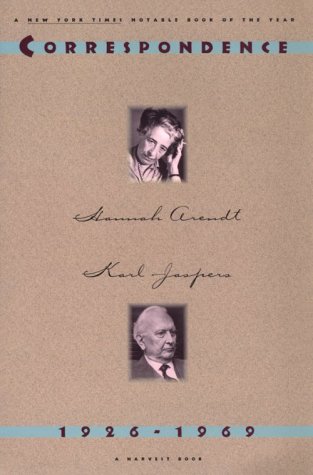
11. Correspondence 1926-1969
$8.44
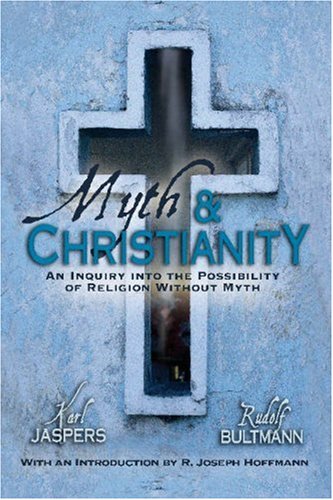
12. Myth & Christianity: An Inquiry
$148.97
13. Life Conduct in Modern Times:
$39.48
14. Karl Jaspers on Philosophy of
$10.80
15. Anselm and Nicholas of Cusa: From
 
16. Karl Jaspers
 
$10.95
17. Philosophy and the World: Selected
 
$20.49
18. Pluralism and Truth in Religion:
 
$22.95
19. Karl Jasper - Philosophy, Volume
 
20. The Question of German Guilt

1. Karl Jaspers: A Biography--Navigations in Truth
by Suzanne Kirkbright
Hardcover: 400 Pages (2004-05-10)
list price: US$38.00 -- used & new: US$11.59
(price subject to change: see help)
Asin: 0300102429
Average Customer Review: 4.0 out of 5 stars
Canada | United Kingdom | Germany | France | Japan
Editorial Review

Book Description

Throughout his life, German philosopher Karl Jaspers (1883–1969) recorded his experiences and reflections in diaries and correspondence. This comprehensive biography is the first to explore these extensive and candid private writings that illuminate not only Jaspers’ life and relationships but also the ideas he proposed in Way to Wisdom, The Question of German Guilt, and many other published works.
Suzanne Kirkbright provides a sensitive and intimate portrait of the philosopher whose work on truth, personal integrity, and the capacity for communication contrasted acutely with the erosion of such values in Germany in his lifetime. She describes how Jaspers’ Jewish wife, Gertrud, influenced his thinking, the loss in 1937 of his professorship at Heidelberg University, and his relationship with such celebrated colleagues as Martin Heidegger and Hannah Arendt. Kirkbright examines the unshakeable ethical content of Jaspers’ philosophy and demonstrates his unique and scrupulous personal adherence to the philosophical principles he espoused.
... Read more

Customer Reviews (5)

4-0 out of 5 stars It is possible to learn much about Jaspers from this work
I am not a real student of the work of Jaspers though I have read some of it especially his work on 'The Axial Age , that age in which Mankind in several different places seemed to simultaneously discover the higher moral life.Much of what I knew about Jasperscame from Hannah Arendt's chapter on him in her book 'Men in Dark Times'. There Arendt paints a picture of Jaspers as a person of highest integrity and fidelity to truth.She highlypraises the humanityof her former teacher and thesis supervisor. They remained lifelong friends and were too connected by their respective relationships to Heidegger.
Kirkbright tells the story of the frail sickly Heidegger and his lifelong search for truth. She tells of the specially good marriage he had, and how wife Gertrude ( nee Mayer) contributed to his thought. Jaspers and his wife survived the war and he afterwards became a kind of moral spokesman to German society. The book does not go deeply into Jaspers' thought, nor does it analyze in depth many of the incidents and events in Jaspers' life. I for instance would have liked to know more about what Gertrude Mayer's marriage meant for her father, who was an Orthodox Jew. Kirkbright tells of how Jaspers after years of struggle achieved a position and recognition as thinker.The booktells the basic story of his life in a convincing and highly readable way.
And I am sure all those interested in Jaspers can learn much from it.

5-0 out of 5 stars how to live in dignity ...
Already as a child, German philosopher Karl Jaspers (1883-1969) suffered under bronchiktasis and an accompanying heart insufficiency, which was classified as incurable and life-shortening. the fear to die early pushed him to live concentrated and not to waste any time. Being exhausted very soon, throughout his life he was forced to work lying horizontal on a divan. His daily creative working periods (of reading and writing) had been very short, so he was obliged to budget his targets carefully. "A man will be, what he will be, via the things, he has chosen for his own affair..." was the way, he programmed himself. "The minimum of being self-determinate is associated with the joy to work. without that, everyone will get paralyzed. Therefore to save the joy of working is the main problem in the technical world. Assigned work mostly is a work, which separates being a human and being a worker. But the duties of a physician, teacher, minister etc. cannot not be technically rationalized, because they depend on vital existence ..." Jaspers noted in his tiny but important book "The Mental Situation Of Our Age". Beginning as psychiatrist (among other things with the fundamental work "PSYCHOLOGY of the WORLD VIEWS") he extended his horizon of views to a stable existence-philosophical theory, which at first united him with the academic colleague Martin Heidegger, then however, ethical standardizes taking seriously, had to lead him away from this Nazi-collaborator. Jaspers wrote after the end of WWII to the American Military Government in Germany: "Heidegger's kind of thinking appears to me unfreely, dictatorial, without any sense for communication. Nowadays it would (practiced at universities) have a fatal effect ...". Added to the lifelong illness of Jaspers was the threat by the Third Reich. Jaspers' woman was Jewess. The married couple during the Nazi-era always carried in their pockets cyanide-capsules, to be faster, if Gestapo would try to arrest them. "No longer able to continue the fight, suicide becomes more and more fascinating. It seems to be the last moral effort of autonomous humans. To end voluntary is like coming home to oneself... " Jaspers wrote in those dark days. "The rule of the apparatus favors humans, who live contemplativelessly without any leisure , bedeviled sleeplessly by their wishes of climbing up the social ladders. It is required to be skilful, slippery, oily. You have to become beloved, you must ingratiate on everyone with a clever fuss of persuading and captivating, you have to become zealous, indispensable, you have to be silent, insidious, you have to present a modest gesture, you have to work only to please your chief, you never are allowed to show any independence against a superior ...". Jaspers analyzed the Hitler-Germany and Martin Heidegger, the post war German society and "The Question of German Guilt" - but in the center he defined how to live with dignity - in any time...

5-0 out of 5 stars how to live in dignity ...
Already as a child, German philosopher Karl Jaspers (1883-1969) suffered under bronchiktasis and an accompanying heart insufficiency, which was classified as incurable and life-shortening. the fear to die early pushed him to live concentrated and not to waste any time. Being exhausted very soon, throughout his life he was forced to work lying horizontal on a divan. His daily creative working periods (of reading and writing) had been very short, so he was obliged to budget his targets carefully. "A man will be, what he will be, via the things, he has chosen for his own affair..." was the way, he programmed himself. "The minimum of being self-determinate is associated with the joy to work. without that, everyone will get paralyzed. Therefore to save the joy of working is the main problem in the technical world. Assigned work mostly is a work, which separates being a human and being a worker. But the duties of a physician, teacher, minister etc. cannot not be technically rationalized, because they depend on vital existence ..." Jaspers noted in his tiny but important book "The Mental Situation Of Our Age". Beginning as psychiatrist (among other things with the fundamental work "Psychology of the World Views") he extended his horizon of views to a stable existence-philosophical theory, which at first united him with the academic colleague Martin Heidegger, then however, ethical standardizes taking seriously, had to lead him away from this Nazi-collaborator. Jaspers wrote after the end of WWII to the American Military Government in Germany: "Heidegger's kind of thinking appears to me unfreely, dictatorial, without any sense for communication. Nowadays it would (practiced at universities) have a fatal effect ...". Added to the lifelong illness of Jaspers was the threat by the Third Reich. Jaspers' woman was Jewess. The married couple during the Nazi-era always carried in their pockets cyanide-capsules, to be faster, if Gestapo would try to arrest them. "No longer able to continue the fight, suicide becomes more and more fascinating. It seems to be the last moral effort of autonomous humans. To end voluntary is like coming home to oneself... " Jaspers wrote in those dark days. "The rule of the apparatus favors humans, who live contemplativelessly without any leisure , bedeviled sleeplessly by their wishes of climbing up the social ladders. It is required to be skilful, slippery, oily. You have to become beloved, you must ingratiate on everyone with a clever fuss of persuading and captivating, you have to become zealous, indispensable, you have to be silent, insidious, you have to present a modest gesture, you have to work only to please your chief, you never are allowed to show any independence against a superior ...". Jaspers analyzed the Hitler-Germany and Martin Heidegger, the post war German society and "The Question of German Guilt" - but in the center he defined how to live with dignity - in any time...

4-0 out of 5 stars Inspirational
I have read every work of the late Karl Jaspers.I believe Ms. Kirkbright summarizes her approach in her introduction.She chooses a difficult path to explore.She must write about Jasper's life without focusing on his specific philosophy.She explains in the introduction that she will write about Jaspers seeking truth without going into detail about his idea of truth.Personally I can not put the book down, but I keep reading and reading.Too many academic snobs keep trying to kill the spirit of philosophy.Why is it wrong to look at Karl Jaspers through the lens of his family correspondence?I recommend this book to anyone who is interesting in learning about the man who wrote so much philosophy and began the long tradition known as existentialism.I do not recommend this book to anyone who is too pretentious to actually read a book!

1-0 out of 5 stars A Flawed Biography
In general, I do not like to post negative reviews to the Amazon Web site. For Suzanne Kirkbright's work, I am making an exception.This is a very poorly written and narrated biography.Very briefly, I would like to itemize its most obvious flaws,

1.Writing.Ms Kirkbright writes in an English that is all but incomprehensible.The book reads like an inept translation. Here are the first two sentences of the book:

"In Oldenburg, where Karl Jaspers was born on 23 February 1883, the changing attitudes that shape the fabric of civilized society were all but sheltered from view. (footnote 1)During these years of Bismark's Germany, political lifewas in flux, for modernizing the regions in a federal, secular and unified nation appeared to exacerbate disagreement among political parties which--apart from the higher authority of Emperor Willhelm I--could have been scrutinizing Bismarck's policies of social and cultural integration. (footnote 2)"

Throughtout her book, Ms Kirkbright has trouble with standard English idioms and the use of prepositions.One has to wonder how this prose slipped passed the editorial staff at YUP.

2. Historical.Ms Kirkbright's rendering of the historical and cultural background of Jasper's place and time is substandard.

3. Narrative.This biography achieves no smooth narrative but skips around and does not build any kind of systematic portrait of anything--not the family, not Karl, not the political events.

4. Ideas.Mr Kirkbright seems to have little understanding of the ideas that circulate in Jaspers work.She seems to be culling them from secondary sources rather than from her own reading and understanding.

5. Research.Ms Kirkbright is working on a fascinating subject with many primary sources.However, she uses these sources in a very unskilled way.She has the tendency to footnote sentence after sentence, often with no serious goal.

6. Bibliographical.Her reference section is not up to contemporary scholarly standards.One rather humorous example is her reference to "The Complete Works of Plato"...in the Jowett translation.Hmmm...?

In conclusion, because of its awkwardness this book is hard to follow for a someone who simply wants to know a bit about Jaspers; for the scholar, it's probably worth a quick glance because of the value of Suzanne Kirkbright's source material.

All in all, this is a poor book that needs revision

rs

... Read more


2. General Psychopathology
by Karl Jaspers
Paperback: 594 Pages (1997-11-18)
list price: US$30.95 -- used & new: US$28.00
(price subject to change: see help)
Asin: 0801858151
Average Customer Review: 5.0 out of 5 stars
Canada | United Kingdom | Germany | France | Japan
Editorial Review

Book Description

In 1910, Karl Jaspers wrote a seminal essay on morbid jealousy in which he laid the foundation for the psychopathological phenomenology that through his work and the work of Hans Gruhle and Kurt Schneider, among others, would become the hallmark of the Heidelberg school of psychiatry. In General Psychopathology, his most important contribution to the Heidelberg school, Jaspers critiques the scientific aspirations of psychotherapy, arguing that in the realm of the human, the explanation of behavior through the observation of regularity and patterns in it (Erklärende Psychologie) must be supplemented by an understanding of the "meaning-relations" experienced by human beings (Verstehende Psychologie).

... Read more

Customer Reviews (7)

4-0 out of 5 stars Intruiging exploration of psychology from an existentialist viewpoint
This work by Jaspers explores psychology, psychoanalysis and psychotherapy from his philosophical viewpoint of Existentialism.While much of what Jaspers says from the medical/scientific view is certainly looks out of date, this work remains a fascinating exploration of human conciousness and being-in the world with a strongly scientific slant.While it does not match the rigor of Freud and his school or the philosophical insight and depth of Sartre and Merlau-Ponty, for the philosopher it retains much of interest and also gives one a good insight into Jasper's later philosophical work.

5-0 out of 5 stars Jasper;s Psychopathology
Still the most accurate phenomenological definitions in psychopathology.
Dense, a must for all those in the subject.

5-0 out of 5 stars I still like this book.
People who learned to diagram sentences and outline thoughts when they were in school might be interested in how this book is organized around, in, and through an outline.Picking any particular topic, it is often surprising how well Karl Jaspers has placed it within a scheme of things.Normally, there wouldn't be much reason to consider how a history of thinking as bombing might find a place in a book like General Psychotherapy, but at the moment, it is interesting that the following ideas in this book can be assigned to a particular place on a thread that runs through it, largely about the "worlds of obsessional patients."On page 390, in Chapter VI, MEANINGFUL CONNECTIONS AND THEIR SPECIFIC MECHANISMS, SECTION TWO, ABNORMAL MECHANISMS, 1. Pathological Psychogenic Reactions, ( c ) Classifications of reactive states, 2.According to the type of the reactive states:"(b)There may be an explosion in the form of fits, tantrums, rages, disjointed movements, blind acts of violence, threats and abuse.There is a working up of the self into a state of narrowed consciousness (prison-outbreaks, frenzies, short-circuit reactions, are some of the terms used)."

5-0 out of 5 stars The Doctor is In
There is much more in this book than the average patient is ever going to learn in personal visits to a shrink.A thorough knowledge of the point of view presented by Jaspers goes a long way in support of the view that modern drug treatments of psychiatric problems attempt to mask symptoms,which are much easier to define and classify than the problems of existencethat attempt to surface in situations where people would like an infinitesolution to individual problems.In Jaspers's examination of therelationship between the doctor and the patient, any doctor who approachesa fixed view of the best remedy is in danger of failing to understand thenature of the individual patient.It helps to have some background in thepersonal issues which are most meaningful to the reader.In our own time,there is a controversy about the use of ancient remedies like marijuana,and I found it useful to compare therapeutic suggestions in this book withthe federal government's position that smoking such stuff isn't medicine,"it's more like a Cheech and Chong show."If you want to livethrough reading this book, you will have to inhale while you read.Best ofall, there is no point in this book at which the doctor says, "Yourtime is up."

5-0 out of 5 stars A good book for mental health professionals
This is a classic work on the observation of psychopathology without the theoretical overlay of other works.This author also founded phenomenology,a type of existential philosophy.This book is a must formental health diagnosticians but might be a bit dense for the generalpublic. ... Read more


3. Philosophy of Existence (Works in Continental Philosophy)
by Karl Jaspers
Paperback: 128 Pages (1971-01-19)
list price: US$19.95 -- used & new: US$19.85
(price subject to change: see help)
Asin: 0812210107
Average Customer Review: 5.0 out of 5 stars
Canada | United Kingdom | Germany | France | Japan

Customer Reviews (1)

5-0 out of 5 stars Fantastic overview of Jaspers' thought
Written between "Philosophie" and "Von der Wahrheit," this slim volume provides a fantastic and surprisingly readable overview of Jaspers' metaphysics. Based on a series of lectures, the text is less technical than Philosophie; however, Jaspers manages to explain the Encompassing, Transcendence, Existenz and Ciphers in moderate detail.

I found Grabau's translation much more lucid than the texts included (for instance) within Walter Kaufmann's "Existentialism from Dostoyevsky to Sartre." Since Grabau's translation of key terms is similar to E. B. Ashton's translation of Philosophie, I have had no trouble going from one to the other.

Overall, I recommend this book for those interested in delving into Jaspers' metaphysics. ... Read more


4. Socrates, Buddha, Confucius, Jesus: From The Great Philosophers, Volume I
by Karl Jaspers
Paperback: 120 Pages (1966-03-23)
list price: US$10.00 -- used & new: US$4.46
(price subject to change: see help)
Asin: 0156835800
Average Customer Review: 4.0 out of 5 stars
Canada | United Kingdom | Germany | France | Japan
Editorial Review

Amazon.com
Arguably the four most influential individuals in human history, Socrates, the Buddha, Confucius and Jesus have cast shadows on history that are nearly inescapable even today. Who were they, what were their doctrines, and what was their influence? These are some of the questions that the 20th-century philosopher Karl Jaspers explores in this short excerpt from his larger volume, Great Philosophers.Book Description
A part of JaspersÂ's planned universal history of philosophy, focusing on the four paradigmatic individuals who have exerted a historical influence of incomparable scope and depth. Edited by Hannah Arendt; Index. Translated by Ralph Manheim. ... Read more

Customer Reviews (6)

5-0 out of 5 stars Excellent introduction to world-historical figures of interest
Karl Jaspers was a somewhat unusual and enigmatic thinker.While being an excellent philosopher, he strongly distanced himself from the dominant philosophical schools of his time, both the continental and the analytical and positivist movements which dominated academic discourse.This was somewhat unfortunate and relegated Jaspers to being a lonely and marginalised figure, yet Jaspers published many works which are of enduring interest.

Of these are his four volumes on the history of philosopy and studies of great philosophers.In this volume Jaspers looks at Jesus, the Buddha, Socrates and Confucius as 'paradigmatic' figures who unleashed new visions which changed the world forever.Jaspers also adopts a somewhat unusual hermeneutical approach to these philosophers, taking the facts of scientific history not as starting points which constrain what can be said about these philsophers, but assessing their thought instead from Jasper's own existentialist framework.It is hard sometimes not to see Jaspers reading his own philosophy and philosophical viewpoint into that of these past philosophers, an approach closer to that of Nietzsche and Kierkegaard than that favoured by modern historians of philosophy.

Even so, Jasper's analysis of these philosopher-sages is fascinating and repays careful study.

3-0 out of 5 stars There's scholarship and there's scholarship
The previous reviewer, in reminding us of recent scholarship on Jesus and the Gospel tradition, raises several pertinent considerations.Jaspers' book generally reflects the more modern scholarship that has focused increasingly on certain parallel sayings in Matthew and Luke as "Q Gospel" remnants and on the earliest Vaticanus and Sinaiticus manuscripts of the earliest extant Gospel, Mark.Yet recent similarly focused studies on the other three paradigmatic figures covered here don't seem reflected in Jaspers' book to the same extent.Personally, I am not as disturbed as the previous reviewer may be by applying modern scholarship to the Gospels.Rather, what I miss is the same strictness applied to the other three written traditions.Confucius, for example, is eventually described as having held high office only when we get to relatively late texts in the Confucian tradition.Yet Jaspers accepts this description of him without question.In fact, if, as Jaspers does by inference in his Jesus chapter, we are to set some of what we read in the Gospel of John aside, then oughtn't we set aside similar texts describing Confucius as having had conspicuous political success?If the "Q Gospel" passages in Matthew/Luke and the earliest manuscript tradition for Mark are to be highlighted as delineations of the "historical Jesus", then only Chapters 3 through 9 of the Analects of Confucius, generally regarded as the earliest stratum of Confucian text, should be the primary basis for the kind of modern philosophical scrutiny Jaspers purports to offer.Jaspers' Confucius chapter does not confine itself to the kind of wandering, almost homeless, figure found in these seven earliest chapters.To be consistent, shouldn't it?While it's useful for Jaspers, at the outset of his Buddha chapter, to single out the Digha-Nikaya collection as the earliest stratum of Buddha sermons, the rest of the Buddha chapter goes well beyond the Digha-Nikaya collection, even flirting occasionally with Buddha traditions lying outside the Pali tradition, let alone the Digha-Nikaya collection!There's nothing inherently wrong with this, but it becomes inconsistent in the light of Jaspers' tacit adoption of certain tenets of modern historical criticism in his Jesus chapter.(To do Jaspers justice, he never explicitly offers quite the detailed textual background on the Gospel tradition that I attempt here.)What, IMO, might prove a more creditable effort -- since I would agree that these four figures indeed emerge as the most strongly verified human beings in history to live an essentially blameless life oriented toward an entirely self-made, and therefore inherently courageous, ethic -- would be a survey based exclusively on those fifteen or so sermons in the Digha-Nikaya regarded by modern scholars as the earliest for Buddha, on Chapters 3 through 9 of the Analects for Confucius, on the earliest, least "spun", Plato dialogues, such as the Charmides, the Hippias Minor, the Euthyphro, the Apology and the Crito, for Socrates, and on the Vaticanus/Sinaiticus Mark tradition plus the "Q" passages in Matthew/Luke for Jesus.It is unfortunate that Jaspers' book, with all its modern trappings (not in itself a bad thing, IMO), fails to do this rigorously.Hence, my three-star rating.Jaspers should be given credit, though, for a worthwhile start at the important task of evaluating perhaps the four finest human beings ever to walk this earth.

2-0 out of 5 stars Interesting idea, but is it trustworthy scholarship?
Karl Jaspers has undertaken an interesting study in the little book.He looks at the teachings of four men who have had the most far-reaching impact on our world.He claims that the greatness of their influence is measured in centuries as well as globally.The four great men he chose for this book are, as the title suggests, Socrates, Buddha, Confucius and Jesus.He entertained the thought of including Mohammed but chose not to.He explains that Mohammed "might be comparable in historical importance but not in individual depth (p. 87)."One other interesting insight comes from Jaspers on the same page.We have no writings from any of the four themselves - what we do have comes from their disciples after they died.

So much for the interesting, now for the question of trustworthiness.

Jaspers examined the biblical accounts of Jesus through the lens of higher criticism.In other words, Jaspers did not deal with the biblical text itself when he studied Jesus, he dealt with the text after sifting through what others thought was truly the teaching of Jesus.The reason this poses a problem is important to all readers, not merely to Christians.If he did not take the teachings of Jesus (as recorded by his disciples) at face value, did he take the teachings of Socrates, Buddha and Confucius (as recorded by their disciples) at face value?Is the reader really getting Socrates, Buddha, Confucius and Jesus, or is the reader getting Karl Jaspers?Knowing the aspects of Jesus' teachings that have been ignored in this study, and their importance to understanding Jesus' view of himself and the world around him, makes me wonder what we may have lost, in this study, from the other three great men included here.

This book is a very interesting idea.But, is it trustworthy scholarship?Not in my humble opinion.However, those who do not wish to sift through the original writings will inevitably want to read Jasper's abridgement of those writings.This may be to the readers' benefit, or to their detriment.

5-0 out of 5 stars Made a big impression on me!
Aside from being an intelligently written book, I gave this book 5 stars because it made a big impression on me.Jaspers explanation of Confucius made the strength of Confucious's teaching clear.Now I'm very interested in Confucious and am reading more books about him. In that respect, this slim volume changed my life: It brought Confucious to life.What's more, by explaining Confucius's feelings about Taoism, this slim book did more to explain classic Taoism than the 2 books on the Tao I've already read.

Be aware that this book is due to the editing of Hannah Arendt. This means that Jaspers did not put this book out and say "Ta Da, the 4 Greatest!"No, Jaspers wrote a 2 volume book on the great philosophers due to his post War interest in increasing tolerance among men (per the Encyclopedia Britanica). This book does not appear to have any noticable Existentialist influence.

Finally, if you are a fundamentalist Christian, be warned that it is clear from his writing that Jaspers does not believe that Jesus is the Son of God, nor does he believe the Bible is free of error. He is not disrespectful of Jesus nor of Christianity, but do not think that because Jesus is in this book that the book is strongly pro-Jesus.

5-0 out of 5 stars Well Written
This book is a joy to read.Jaspers has a real talent for breaking down complex thoughts into detailed, easy to read format.Jaspers presents a broad overview that should be attractive to newcomers.More advanced readers will appreciate his style and his refreshing perspective. ... Read more


5. Kant: From The Great Philosophers, Volume 1
by Karl Jaspers
Paperback: 180 Pages (1966-03-23)
list price: US$14.00 -- used & new: US$8.91
(price subject to change: see help)
Asin: 0156466856
Average Customer Review: 5.0 out of 5 stars
Canada | United Kingdom | Germany | France | Japan
Editorial Review

Book Description

A masterful exploration of Kant’s intellectual development, theory of knowledge, politics, and ethics. Edited by Hannah Arendt; Index. Translated by Ralph Manheim.
... Read more

Customer Reviews (1)

5-0 out of 5 stars The Best Introduction to the Philosophy of Kant
The one philosopher who discourages more students of philosophy is Immanuel Kant, the hands-down winner. Yet, it is not his ideas that are difficult to understand, but, rather, getting to his ideas, which are cocooned in a maze of needlessly bad technical writing.

Thus, most would-be students of Kant seek a basic introduction to his thought, only to find that the vast majority of these are even denser than that which they seek to explain. Who wants to shell out $19.95 for an introduction to Kant that itself needs an introduction?

Well, you can relax, because there is a highly readable introduction to the great man's philosophy that sells for less than ten dollars. Written by the great 20th Century existential philosopher Karl Jaspers as part of his "Great Philosophers" series, it stands out as an easy to read, easy to understand introduction to one of the giants of philosophy. Armed in such a manner, Kant's actual writings will become less formidible, more appealing to both eye and mind.

Do not waste your time reading an academic's explanation of Kant. Read a major philosopher's introduction instead, for it not only takes a great mind to understand a great mind, but also to make the thought of that great mind accessible to all. ... Read more


6. Reason and Existenz: Five Lectures (Marquette Studies in Philosophy, No 11)
by Karl Jaspers
Paperback: 181 Pages (1996-05)
list price: US$20.00 -- used & new: US$19.45
(price subject to change: see help)
Asin: 0874626110
Average Customer Review: 4.0 out of 5 stars
Canada | United Kingdom | Germany | France | Japan

Customer Reviews (2)

3-0 out of 5 stars Not the best introduction to Jaspers' thought
While Reason and Existenz remains one of Jaspers' more popular books, it is not one of his better books. I would argue this for several reasons. First, Jaspers' focus here is much narrower than his other works. To get a well-rounded view of Jaspers' thought, read Philosophy ("Philosophie," 3 vols), or his shorter overview Philosophy of Existence ("Existenzphilosophie").

Second, Jaspers' typically contorted language seems somehow worse in this book. Jaspers has always been heavy on jargon (Existenz, Transcendenz, the Encompassing, Dasein, etc.), but, to his benefit, he typically counters the confusing aspect of the jargon with a well-structured (and well outlined) argument. His careful structuring struck me as less prominent in this work. Again, Philosophy of Existence offered more bang for the buck on this one.

Third, my understanding of this work is that Jaspers intends to focus specifically on the problem of reason and how it relates to one's task (or act) of transcending. This is a fairly narrow topic within Jaspers' overall work. I think that to begin studies of Jaspers with this book might lead one to a mis-understanding of Jaspers' overarching philosophy. A more digestible approach to studying Jaspers is found in Ehrlich, Ehrlich, and Pepper's volume entitled (I think) "The Basic Writings of Karl Jaspers."

In summary, Reason and Existenz will be useful to the reader with a background in Jaspers -- especially if the reader has an interest in Jaspers' arguments for reason's place in mediating between the immanent and the transcendent. For most others, though, this may not be the best place to start.

5-0 out of 5 stars Gem of a Book

Jasper's book is one of those books that you are so impressed by you work to memorize and apply in all thinking processes. His discription of existentialism in one's chaotic center of concealed knowledge with how we perceive reality is essential and the foundation behind all thinking in philosophy, science and religion.

Jasper speaks of all thinking within a horizon that can be transcended. All horizons being within a horizon he names "the encompassing," which can be seen in two modes, as all Being in itself, or as all Being within which we are. It is here within which we are, we perceive reality in three ways: by empirical existence, consciousness and spirit. In turn we use reason to formulate, objectify and create absolutes, yet at the same time we need to use our irrational concealed knowledge, that is, the dark ground and center, of all modes, the existenz, to allow our reason to be open and apart from mere intellectual indifference. All demarcations are relative, yet existenz without reason is unrelated to Transcendence. Each without the other loses the genuine continuity of Being, and therefore, the reliability ceases to be authentic.

Reason clarifies our existenz, while our existenz gives content to our reason. Jaspers also goes into the idea of communicating truth, the prioity and limits of ratonal thought and compares the ideas of Nietzsche and Kiergaard. The book is brilliant. ... Read more


7. Way to Wisdom: An Introduction to Philosophy, Second Edition (Yale Nota Bene)
by Karl Jaspers
Paperback: 224 Pages (2003-05-11)
list price: US$15.95 -- used & new: US$8.75
(price subject to change: see help)
Asin: 0300097352
Average Customer Review: 5.0 out of 5 stars
Canada | United Kingdom | Germany | France | Japan
Editorial Review

Book Description
One of the founders of existentialism, the eminent philosopher Karl Jaspers here presents for the general reader an introduction to philosophy.In doing so, he also offers a lucid summary of his own philosophical thought.In Jaspers' view, the source of philosophy is to be found "in wonder, in doubt, in a sense of forsakenness," and the philosophical quest is a process of continual change and self-discovery.In a new foreword to this edition, Richard M. Owsley provides a brief overview of Jaspers' life and achievement. ... Read more

Customer Reviews (2)

5-0 out of 5 stars The Way of The Unknown, Using The Known, Yet Never Absolute
.
This is a great, practical and user friendly book in the basics of what philosophy is, the history of philosophy which includes the idea of the axial age, the difference between absolute and relative knowledge, the idea of nonknowledge and the connection of philosophy with science.

Jaspers, like Plato, tells us that philosophy is the direction we take, the idea of the whole picture. While science is the measurable analysis and empirical observation, philosophy is the direction behind such, the idea of why we are learning the what. This is very much like Plato's Meno, where Socrates and Meno decide that virtue is beyond knowledge and is instead the direction of opinion, or as Jaspers calls it "nonknowledge."

On page 127, Jaspers writes:

"By technically applying my knowledge I can act outwardly but nonknowledge makes possible an inner action by which I transform myself. This is another and deeper kind of thought; it is not detached from being and oriented toward an object but is a process of my innermost self, in which though and being become identical. Measured by outward, technical power, this thought of inner action is as nothing, it is no applied knowledge that can be possessed, it cannot be fashioned according to plan and purpose; it is an authentic illumination and growth into being."

Philosophy must reside in uncertainty, waywardness towards the unknown, never absolute like science. On page 129,

"Philosophy must even leave the possibility of full communication in uncertainty, though it lives by faith in communication and stakes everything on communication. We can believe in it but not know it. To believe that we possess it is to have lost it."

We must have philosophy to direct our science (virtue) and remove us froe scientific superstition and we must have science to have substance to our philosophy and remove us from philosophical superstition.

Pages 159-160:

"Any philosopher who is not trained in a scientific discipline and who fails to keep his scientific interests constantly alive will inevitably bungle and stumble and mistake uncritical rough drafts for definitive knowledge. Unless an idea is submitted to the coldly dispassionate test of scientific inquiry, it is rapidly consumed in the fire of emotions and passions, or else it withers into a dry and narrow fanaticism . . . rejecting superstitious belief in science as well as contempt of science, philosophy grants its unconditional recognition to modern science."

Jasper ends his book with a short outline on the major thinkers and writers in philosophy and our personal decision of who to study to build up our knowledge. But can virtue be taught? He endorses what an old counsel to study Plato and Kant since they cover all the essentials. An overall good read, a substantial subject in a modern society devoid of substance and profound meaning.

"Today independence seems to be silently disappearing beneath the inundation of all life by the typical, the habitual, the unquestioned commonplace." - 1954, KARL JASPERS, Way to Wisdom, An Introduction to Philosophy, p. 110

5-0 out of 5 stars An introduction to philosophising by Karl Jaspers
This book originated from 12 radio talks given by Karl Jaspers, right after World War II. It is written in an extremely lucid and direct manner, and it is more of an introduction to the art, or process, of philosophisingrather than to philosophy itself as a discipline. In this book existentialphilosophy, the brand of philosophy so successfuly cultivated by Jaspers,is described, so to speak, "from inside". There is hardly anyanalysis of philosophical terms, but rather a presentation of the innerprocess of approach to the metaphysical questions confronting theindividual person. Jaspers belongs to the great idealist tradition,initiated by Plato, developed further by the medieval schoolmen, and lastlyby Immanuel Kant, Friedrich Schelling, Soeren Kirekegaard and others.According to Jaspers the core-meaning of man's identity is his sense offreedom. Freedom is presented as an immediate datum of consciousness, asthat part of man's personality which "evades all object knowledge butis always present in him as a potentiality". Irrespective of what isomitted, this book offers a subject-matter of impeccable honesty andundiluted spirituality. This is a great book superbly well written. Also,the translation by Ralph Manheim is quite masterly. It is an out and outexample of what every translation should actually be: a representation inanother language of the meaning and style of the original text. ... Read more


8. Karl Jaspers: An Introduction to His Philosophy
by Charles F. Wallraff
 Paperback: 250 Pages (1970-06)
list price: US$14.95
Isbn: 0691019711
Canada | United Kingdom | Germany | France | Japan

9. Nietzsche: An Introduction to the Understanding of His Philosophical Activity
by Karl Jaspers
 Paperback: 512 Pages (1997-09-29)
list price: US$21.95 -- used & new: US$13.00
(price subject to change: see help)
Asin: 0801857791
Average Customer Review: 4.5 out of 5 stars
Canada | United Kingdom | Germany | France | Japan
Editorial Review

Book Description

Nietzsche claimed to be a philosopher of the future, but he was appropriated as a philosopher of Nazism. His work inspired a long study by Martin Heidegger and essays by a host of lesser disciples attached to the Third Reich. In 1935, however, Karl Jaspers set out to "marshall against the National Socialists the world of thought of the man they had proclaimed as their own philosopher." The year after publishing Nietzsche, Jaspers was discharged from his professorship at Heidelberg University by order of the Nazi leadership.

Jaspers does not fall into the same trap as idealogues do, citing bits and pieces from Nietzsche's work to reinforce already held opinions. Instead, he openly shows the wide range of Nietzsche's views, including his endorsement of wars and warriors, his prophecies of world struggle and "new masters," and the cruel arrogance of the supermen. Yet Jaspers finds Nietzsche's philosophy to be extraordinary not only because he foresaw all the monstrosities of the twentieth century, but also because he saw through them.

"The appearance which Nietzsche's work presents can be expressed figuratively: it is as though a mountain wall had been dynamited; the rock, already more or less shaped, conveys the idea of a whole. But the building for the sake of which the dynamiting seems to have been done has not been erected. However, the fact that the work lies about like a heap of ruins does not appear to conceal its spirit from the one who happens to have found the key to the possibilities of construction; for him, many fragments fit together. But not unambiguously; many functionally suitable pieces are present in numerous, only slightly varied repetitions, others reveal themselves as precious and unique forms, as though each were meant to furnish a cornerstone somewhere or a keystone for an arch." -- Karl Jaspers, from the introduction

... Read more

Customer Reviews (3)

4-0 out of 5 stars Good introduction for the philosophically initiated
This is a good introduction if you have some background in philosophy. Otherwise, it is likely to be over your head. Jaspers' look at Nietzsche is philosophically creative and sometimes complex. It is not just a guide to Nietzsche's thinking but a sometimes intense reading of his philosophy. If you are looking for a guidebook of sorts Kaufmann's 'Nietzsche: Philosopher, Psychologist, Antichrist' is the best one.

5-0 out of 5 stars Keep this Depth in Sight
Consider Karl Jaspers a master of multiplicity, whose understanding of Nietzsche's thought is like the complexity of a physiologist's understanding of the peristaltic activity involved in swallowing anything. For Jaspers, an interest in Nietzsche is mainly meaningful if it isaccompanied by a wish for intellectual growth (this may be a valid careergoal for those who are lucky enough to pursue this kind of thingprofessionally).At least, such a view of Jaspers could be supported bywhat he wrote on the topic, "Ways of Criticizing Nietzsche" inthis book.Anyone who does not accept and assume the full multiplicity ofthe topic being considered falls into the error described on page 420. "He is bound to consider as fixed and final formulae what to Nietzschewere only steps and to pervert these formulae by turning them into jargon,demogogic means of persuasion, or sensationalistic journalese."Theworld which offered Nietzsche such foolish models for demonstrating therecklessness of typical thinking does not receive due consideration here,this being a book on a lonely thinker.The self of Nietzsche can onlyemerge for readers who are able "to keep this depth in sight"while overcoming "the rationally onesided formulations of theunderstanding which he himself recognized in his own thinking but failed tocheck."Such a view of Nietzsche springs from the desire of those whoneed to consider themselves fully educated, but sensible.The kind ofthought-check which is being suggested by Jaspers is supposed to thwart thekind of racing thoughts which are not productive.Don't forget that KarlJaspers was also a doctor, an expert on General Psychopathology, a field inwhich facts are not as important as the emotional experiences of the kindof person who becomes the subject of such studies.In the field ofphilosophy, where Nietzsche's desire to learn the truth about thelimitations which always prevent the full realization of this desire fortruth, thereby setting a new standard for intellectual integrity, Jaspersfelt that Nietzsche's sense of "knowing full well where to findexactly what I have to learn" (p. 421) when it came to matters fullycovered by books "was of little consequence for his trulyphilosophical thinking."(p. 421)I must be over-simplifying this ~this is only a review, and Jaspers's sympathy with Nietzsche's awareness ofthe limitations placed on his knowledge by the fact that "he wasforced to content himself with the reading of books" (p. 421) must betrue as well for people who are only reading reviews.

5-0 out of 5 stars A wonderful translation of a historically significant work
This wonderful introduction to Nietsche by Karl Jaspers was written in 1936 after Jaspers had been disgraced by the Nazis and forced out of his professorship.He had taken refuge in Bern.This work is his offering to help us see that Nietsche was critically important to 20th centruy philosophy, and was not the pop-philosopher the Nazis tried to make him out to be.Jasper's work is the first real undertaking to show Nietsche as he was, and to appreciate him for what he was and is. ... Read more


10. Karl Jaspers: Basic Philosophical Writings : Selections
by Karl Jaspers
Paperback: 557 Pages (1994-08)
list price: US$42.00 -- used & new: US$22.35
(price subject to change: see help)
Asin: 1573925292
Average Customer Review: 4.5 out of 5 stars
Canada | United Kingdom | Germany | France | Japan

Customer Reviews (2)

5-0 out of 5 stars The best introduction to Jaspers
I've read a _lot_ of (and about) Jaspers, but this book has proven the most effective resource for my Jaspers studies.

Ehrlich, Ehrlich, and Pepper selected excerpts from throughout Jaspers' career in philosophy (not a lot from his psychology, as the title indicates). They then grouped these texts together in logical and cohesive sections, adding short introductions to each section as well as each individual text. The result: it is possible to sit down and read the collection cover-to-cover and feel the continuity of the work.

E, E, and P have gotten over a major hurdle in making Jaspers' work accessible. Many of the available translations of Jaspers are sub-par. Jaspers' frequent coinage and usage of technical jargon has posed a translation problem (i.e. words that no one knows exactly how to translate) that has resulted in discrepancies between translations. E, E, and P resolve this (to a large degree) by retranslating or correcting many of the passages in this book. Since I happened to have both a German and an English (trans. E. B. Ashton) copy of Jaspers' 3 volume work "Philosophie" -- a text quoted often in this volume -- I compared translations. E, E, and P's revisions to E. B. Ashton's translation were consistently more readible.

In addition to providing a fantastic overview of Jaspers, this volume does have a couple of other highlights:
* Many passages translated from Von Der Wahrheit -- Jaspers' last major work (which remains largely untranslated).

* Great coverage of some of his writings on religion (Buddhism, Christian mysticism, etc.)
* Selected entries from his journals.
* Correspondence with other philosophers (notably Arendt and Heidegger).

In short, I highly recommend this book for those looking for a good Jaspers reader. If you are new to Jaspers, I would also suggest reading Philosophy of Existenz -- a great (and short) overview of Jaspers' project.

4-0 out of 5 stars fine collection of essential writings....
....Jaspers is difficult reading in places but has a plenitude of existentially worthwhile ideas:historicity, Existenz, the Encompassing... worth the trouble. ... Read more


11. Correspondence 1926-1969
by Hannah Arendt, Karl Jaspers
Paperback: 848 Pages (1993-11-18)
list price: US$19.95 -- used & new: US$40.42
(price subject to change: see help)
Asin: 0156225999
Average Customer Review: 5.0 out of 5 stars
Canada | United Kingdom | Germany | France | Japan
Editorial Review

Book Description

The correspondence between Hannah Arendt and Karl Jaspers begins in 1926, when the twenty-year-old Arendt studied philosophy with Jaspers in Heidelberg. It is interrupted by Arendt's emigration and Jaspers's "inner emigration, " and it is resumed immediately after World War II. The initial teacher-student relationship develops into a close friendship, in which Jasper's wife, Gertrud, is soon included and then Arendt's husband, Heinrich Blucher. These letters show not only the way both philosophers lived, thought, and worked but also how they experienced the postwar years. Since neither ever dreamed that this correspondence would be published, and each had absolute trust in the other, they reveal themselves here - for the first time - in a personal and spontaneous way. Brilliant, vulnerable, forthright, Arendt speaks about America, her adopted country. About American universities, American politics from McCarthyism to Kennedy, American urban decay. She speaks about Germany, the country she left: its anti-Semitism, its guilt for the Holocaust, its politics. And about Israel, which she always supported as a Jew but also criticized, especially in her controversial book about the trial and execution of Adolf Eichmann in 1961. In his dialogue with Arendt, the thoughtful, generous, concerned Jaspers considers the question of the German essence, and of the Jewish character. He speaks about philosophers past and present - Spinoza, Heidegger. About old age and retirement. Corrupt journalism. Suicide. Man's future on this planet. Here is a fascinating dialogue between a woman and a man, a Jew and a German, a questioner and a visionary, both uncompromising in their examination of our troubledcentury.
... Read more

Customer Reviews (3)

5-0 out of 5 stars Nice considerations of when these people should sound off
I have found CORRESPONDENCE 1926 - 1969 of Hannah Arendt and Karl Jaspers to be enormously entertaining, easy to read, and surprisingly foreboding about problems in the book trade caused by foreign indebtedness.Politically, each date brings chilling summaries.For Hannah Arendt in America, on June 3, 1949, "At the moment, the general political atmosphere is dismal here, particularly at the universities and colleges (with the exception of the very eminent ones)."(pp. 136-137).This letter 90 has several notes on pages 714-715 which give details that are sure to be humorous now for anyone who has ever heard of Aspen, where the leaves all turn at the same time because the roots are interconnected, as perjury suspect Libby Scooter informed New York Times reporter Judy Miller in a letter urging her to end her days in prison and testify in 2005 so an investigation of White House activities relating to the identity of CIA WMD analyst Plame could be resolved quickly.According to this book, Hutchins, the president of Chicago University, was the nominal organizer of a two-week conference and Goethe celebration in July 1949 in Aspen, Colorado, attended by José Ortega y Gasset, Albert Schweitzer, Ernst Simon, Stephen Spender, and Thornton Wilder.Letter 90 was a response to articles that had been written by the "Bonn Romanticist Ernst Robert Curtius, 1886-1956," (p. 714) who would also be at the conference:

"The real power behind it is a German-American, a real-estate dealer, who recently bought up a ghost town and then had the commercially brilliant idea of tying Goethe into his business.His sole motive is to exploit Goethe to make this town world famous, so he can then make a bundle of money from tourists.The whole thing is really quite marvelous.The second backer, however, is a less amusing figure:Do you remember Bergstrasser from Heidelberg?After he had successfully accommodated himself to the regime, it was shown that he had a whole string of Jewish ancestors.He is the real moving force behind this program."(p. 136).

Curtius had published a polemic in Germany on April 2, 1949 which accused Jaspers of making "our collective guilt so plain to us that we can continue to live only with a guilty conscience.A Wilhelm von Humboldt of our time, he laid out guidelines for German universities, until he turned his back on them. ... He is crowning these national pedagogical efforts with a `campaign in Switzerland' that is directed against Goethe.Habemus Papam!"(pp. 714-715).In response to the comments of some Heidelberg professors, Curtius replied on May 17, 1949, and finally on July 2, 1949, with a title, "Goethe, Jaspers, Curtius."(p. 715).`Die Zeit' might be to blame for that title, which reeks of arrogance.

In any event, books in those days were considered significant enough that the move by Jaspers to Switzerland, as advised by Hannah Arendt on June 30, 1947, (when Jaspers was giving guest lectures in Basel), "we would do best not to settle down too permanently anywhere, not really to depend on any nation, for it can change overnight into a mob and a blind instrument of ruin" (p. 91), which made publication of books by Jaspers much easier, was resented by Germans who had already spent the money those books would earn.America was a great place for books by Jaspers to make money, and Hannah Arendt did her part to make sure that the translators selected by the publishers were able to express what Jaspers was saying in some form of English that readers could understand.Sounding like an American, Jaspers wrote on July 20, 1947:

"We are living in paradise here.My wife is already cutting back at table for fear of putting on weight."(p. 93)

5-0 out of 5 stars Heartwarming and Intellectually Engaging
Jaspers and Arendt cover everything and everyone: Sartre, Heidegger, Marx, Goethe, Camus; post-WWII Germany, "the infinitely complex red-tape existence of stateless persons," the Cold War, the "senile" Eisenhower administration, Eichmann, totalitarianism, the atom bomb, local democracy--it's all there. So too is a life-long, extremely close friendship between people who weathered a war from different sides of the globe, who faced cold war terror in radically different ways, who loved their spouses intensely but felt somehow separated by differences in world-view tracable to ethnicity(Gertrude was ethnically Jewish and Heinrich was ethnically Christian). Her admiration of him, her intellectual debt to him, her love for him; his seeming amazement at her vivacity, his admiration of her intellect, his cold, German form of love--and the walls cracking, and his sentiment sometimes pouring through.

It's a warm book up until the very last entry, Arendt's address at Jaspers' funeral. That's enough to send a shiver up your spine--but only if you read it in the context of everything else.

5-0 out of 5 stars More Than a Correspondence - A Dialogue
In 1926 Hannah Arendt was a student of Karl Jaspers at Heidelberg University. What began as the questions of a student to her teacher in 1926 blossomed into a friendly correspondence that ended with Arendt's forced emigration from Nazi Germany to the United States, with a stopover in France in the 30s, and then resumed in the Postwar years completely transformed into a rich, detailed dialogue between colleagues and friends, taking on a father-daughter feeling in many of the letters.

It was during the years after 1945 that the two examined everything about their world and themselves. Of particular importance were the dual issues of German guilt for the war and, for Jaspers, what it meant to be a Jew, for not only was Arendt and her husband Jewish, but also Jaspers's wife. This issue becomes intertwined in their conversations about the future of West Germany, the Suez War of 1956, and Arendt's trip to Jerusalem to cover the trial of Adolf Eichmann. When they shift the political into the personal, Martin Heidegger, a colleague of Jaspers and a teacher of Arendt, is there for taking. The passages concerning Heidegger are quite gossipy at times and lend the reader a voyeuristic look into the private worlds of Arendt and Jaspers. It's almost as if when things get dull and weighty, a little dirt about Heidegger adds just the spice to make the letter memorable.

The other strong point of this book is the portrait Arendt paints of politics in 1950s America, succinctly analyzing the Eisenhower (and later Kennedy) Administrations, describing the collapse of the cities in the 60s, and the "pointless" war in Vietnam. It's almost as if a mirror were held up to history, as insights about those turbelent times pour forth from every letter dispatched.

An invaluable book, not only for those interested in the scholarly events of the times, but for anyone interested in the history of the times. ... Read more


12. Myth & Christianity: An Inquiry Into The Possibility Of Religion Without Myth
by Karl Jaspers, Rudolf Bultmann
Paperback: 109 Pages (2005-05-06)
list price: US$18.00 -- used & new: US$8.44
(price subject to change: see help)
Asin: 1591022916
Canada | United Kingdom | Germany | France | Japan
Editorial Review

Book Description
Two of the most brilliant German thinkers of the twentieth century were Karl Jaspers and Rudolf Bultmann. Jaspers, the philosopher, and Bultmann, the theologian, were both influenced by the philosophy of Martin Heidegger and the rise of the existentialist movement. Late in their careers they interacted on the subject of Bultmann's attempt to divest Christianity of its mythical components and make sense of it in more modern terms.This work is a compilation of articles by Jaspers and Bultmann that formed a running debate originally published in various scholarly journals. The first half of the book is Jaspers' lengthy and critical analysis of Bultmann's interpretation of Christianity, in which Jaspers essentially rejects the premise that Christianity or any other religion can or should be understood without its mythical framework. Jaspers charges that Bultmann has radically misunderstood the nature of myth and that myth is an irreplaceable form of symbolic communication.In the second part, Bultmann defends his approach, suggesting that Jaspers has not really understood his intent or meaning. Contemporary people today, schooled in the scientific tradition, are likely to reject the biblical texts because of their miraculous claims and supernatural content. Bultmann insists that the scholarly, scientific study of the Bible is a legitimate way to reveal its true message, apart from all the supernatural trappings. Finally, in response, Jaspers accepts some of Bultmann's clarifications but takes him to task on the subject of "justification by faith," which he feels Bultmann defines too narrowly and too exclusively.This stimulating work by two penetrating minds will give anyone interested in perennial philosophical and theological questions much to ponder. ... Read more


13. Life Conduct in Modern Times: Karl Jaspers and Psychoanalysis (Philosophy and Medicine)
by Matthias Bormuth
Hardcover: 173 Pages (2006-07-28)
list price: US$149.00 -- used & new: US$148.97
(price subject to change: see help)
Asin: 1402047649
Canada | United Kingdom | Germany | France | Japan
Editorial Review

Book Description

This award-winning book investigates the critique of psychoanalysis formulated by the psychiatrist and philosopher Karl Jaspers (1883-1969) over a period of five decades. His arguments against Freud and his followers are examined from systematic perspectives. The study traces the medico-historical roots of Jaspers criticism of psychoanalysis and then places it within the framework of scientific theory before devoting itself extensively to medico-ethical aspects of the controversy, which are ultimately treated in terms of a history of mentalities. According to this view, Jaspers student Hannah Arendt saw to it that the philosopher be made aware of the socio-cultural impact which psychoanalysis was beginning to have in the USA. The philosopher came to look upon psychoanalysis as a theoryin particular as it was propagated after 1945 in Germany and the USwhose claim to scientific objectivity constituted a serious threat to the freedom of the individual. Max Webers theory of science and his concept of modernity serve as a critical guide for the interpretation. Thus the normative premise of the investigation is the liberal idea that in a secular and pluralistic society it is ultimately the individual who is to take responsibility for life conduct.

... Read more

14. Karl Jaspers on Philosophy of History and History of Philosophy
Hardcover: 316 Pages (2003-01)
list price: US$69.00 -- used & new: US$39.48
(price subject to change: see help)
Asin: 1591020026
Average Customer Review: 5.0 out of 5 stars
Canada | United Kingdom | Germany | France | Japan
Editorial Review

Book Description
This groundbreaking volume offers for the first time much-needed English-language translations of texts by Karl Jaspers on Thomas Aquinas, Immanuel Kant, Georg W.F. Hegel, and Soren Kierkegaard.In addition, interpretive and critical essays by such renowned scholars as Leonard H. Ehrlich, Graham Parkes, and Merold Westphal assess Jaspers's contributions to the history of philosophy and the philosophy of history.

Coming to philosophy from psychiatry, Jaspers was an inspired observer of the human psyche.He devised a unique set of categories for classifying history's great philosophers, including the term "paradigmatic individuals" for those whose singular humanity forced itself into historical consciousness to inspire world religions and philosophies.In this special category he placed Socrates, Buddha, Confucius, and Jesus.Among the giants of "systematic philosophical thinking" he grouped Plato, Augustine, and Kant as the "great founders" of Western thought.

To the philosophy of history Jaspers contributed the provocative idea of an "axial age."This singular era, extending from 800 B.C.E. to 200 C.E., witnessed the simultaneous but independent unfolding of virtually all the major religious, philosophical, and cultural traditions.Several essays illuminate his understanding of this tremendously active period in human history.

This stimulating collection of new translations and in-depth essays by noted experts on one of the twentieth century's great minds is a must read for anyone interested in Eastern and Western philosophy, the history of ideas, and the interrelatedness of biography and history. ... Read more

Customer Reviews (1)

5-0 out of 5 stars Philosophy and the Axial Age
Most works on Jaspers fail to even mention his seminal work on the Axial Age in his _Origin and Goal of History_. This work explores Jaspers' philosophy of history (& history of philosophy) and in the process corrects the neglected side of his oeuvre. Jaspers in many ways, perhaps unconsciously, provides a correction on the Eurocentric philosophy of history in the Hegelian vein, and explores the fuller dimension of world philosophy from Confucius, Lao Tse, to Nagarjuna, and others. This fuller view is latent in the implications of the Axial period's mysterious globalizing integration of transculture.
The work on the Axial Age brings together the observations of a whole century of historians and is one of the most important historical discoveries of modern times--yet one passed over in silence in a scientific culture that can't handle the obvious suggestions about the universal history of man.
Interesting book, filling a gap in the record. ... Read more


15. Anselm and Nicholas of Cusa: From the Great Philosophers : The Original Thingers (Harvest Book, Hb 289)
by Karl Jaspers
Paperback: 200 Pages (1974-10)
list price: US$15.00 -- used & new: US$10.80
(price subject to change: see help)
Asin: 0156076004
Canada | United Kingdom | Germany | France | Japan
Editorial Review

Book Description
Taken from the Great Philosphers, Volume II.
... Read more


16. Karl Jaspers
 Hardcover: 600 Pages (1986-04)

Isbn: 0821407139
Canada | United Kingdom | Germany | France | Japan

17. Philosophy and the World: Selected Essays and Lectures
by Karl Jasper
 Paperback: 314 Pages (1989-11)
list price: US$10.95 -- used & new: US$10.95
(price subject to change: see help)
Asin: 0895267578
Canada | United Kingdom | Germany | France | Japan
Editorial Review

Book Description
Germany's foremost existentialist discusses the philosophy of purpose, the doctor/patient relationship, immortality, and the truth of religion. ... Read more


18. Pluralism and Truth in Religion: Karl Jaspers on Existential Truth (American Academy of Religion Academy Series)
by John F. Kane
 Paperback: 206 Pages (1981-01-02)
list price: US$24.95 -- used & new: US$20.49
(price subject to change: see help)
Asin: 0891304142
Canada | United Kingdom | Germany | France | Japan
Editorial Review

Book Description
Taking up one of the basic issues raised by modern awareness of religious pluralism, John F. Kane examines and criticizes the idea that differing religions could be equally true. He focuses on Karl Jasper's analysis of the symbolic character of religious truth as one major example of a widely accepted way of explaining the possibility of a plurality of true religions. The inadequacies of Jasper's approach are seen as instructive for future efforts to wrestle with the problem of pluralism and truth. ... Read more


19. Karl Jasper - Philosophy, Volume 3
by Karl Jaspers
 Hardcover: 240 Pages (1971)
list price: US$16.95 -- used & new: US$22.95
(price subject to change: see help)
Asin: 0226394948
Canada | United Kingdom | Germany | France | Japan

20. The Question of German Guilt
by Karl Jaspers (Translated by E. B. Ashton)
 Mass Market Paperback: Pages (1961)

Asin: B000YI7W9U
Canada | United Kingdom | Germany | France | Japan

  1-20 of 100 | Next 20
A  B  C  D  E  F  G  H  I  J  K  L  M  N  O  P  Q  R  S  T  U  V  W  X  Y  Z  

Prices listed on this site are subject to change without notice.
Questions on ordering or shipping? click here for help.

site stats