e99 Online Shopping Mall

Geometry.Net - the online learning center Help  
Home  - Philosophers - Levinas Emmanuel (Books)

  1-20 of 100 | Next 20
A  B  C  D  E  F  G  H  I  J  K  L  M  N  O  P  Q  R  S  T  U  V  W  X  Y  Z  

click price to see details     click image to enlarge     click link to go to the store

 
$12.00
1. Difficult Freedom: Essays on Judaism
$14.26
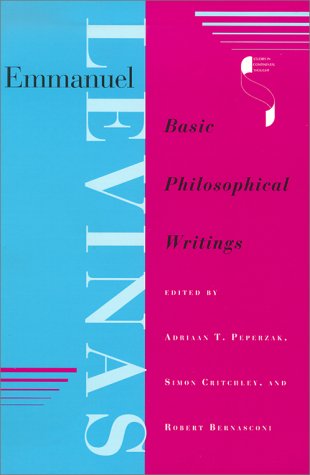
2. Emmanuel Levinas: Basic Philosophical
$147.26
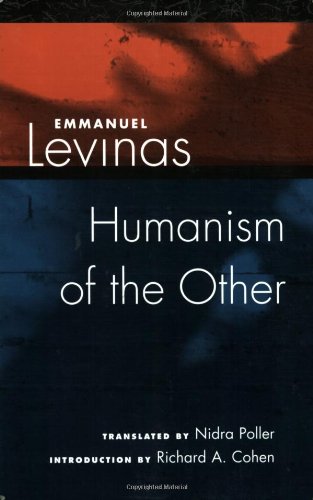
3. Humanism of the Other
$27.29
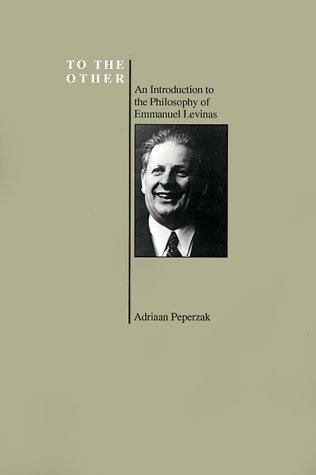
4. To the Other: An Introduction
$18.68
5. God, Death, and Time (Meridian:
$12.45
6. Adieu to Emmanuel Levinas (Meridian:
$12.69
7. In the Time of the Nations (Continuum
$21.10
8. Otherwise Than Being: Or Beyond
$24.50
9. Collected Philosophical Papers
$13.22
10. On Escape: De l'evasion (Cultural
$18.95
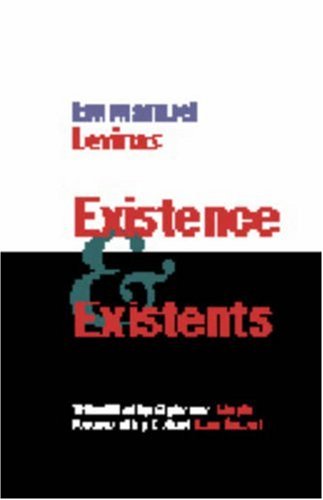
11. Existence and Existents
$17.80
12. Entre Nous
$14.95
13. Origins of the Other: Emmanuel
$23.00
14. Elevations: The Height of the
$15.43
15. Levinas: A Guide For The Perplexed
$65.00
16. Is It Righteous to Be? Interviews
 
$18.19
17. Levinas: An Introduction
$19.64
18. Emmanuel Levinas: His Life And
 
$22.99
19. The Wisdom of Love in the Service
$13.93
20. Proper Names (Meridian: Crossing

1. Difficult Freedom: Essays on Judaism (Johns Hopkins Jewish Studies)
by Emmanuel Levinas
 Paperback: 320 Pages (1997-10-28)
list price: US$20.95 -- used & new: US$12.00
(price subject to change: see help)
Asin: 080185783X
Average Customer Review: 5.0 out of 5 stars
Canada | United Kingdom | Germany | France | Japan
Editorial Review

Book Description

Jean Paul Sartre hailed him as the philosopher who introduced France to Husserl and Heidegger. Derrida has paid him homage as "master." An original philosopher who combines the insights of phenomenological analysis with those of Jewish spirituality, Emmanuel Levinas has proven to be of extraordinary importance in the history of modern thought. Collecting Levinas's important writings on religion, Difficult Freedom contributes to a growing debate about the significance of religion -- particularly Judaism and Jewish spiritualism -- in European philosophy. Topics include ethics, aesthetics, politics, messianism, Judaism and women, and Jewish-Christian relations, as well as the work of Spinoza, Hegel, Heidegger, Franz Rosenzweig, Simone Weil, and Jules Issac.

... Read more

Customer Reviews (3)

5-0 out of 5 stars Levinas attitude to Judaism
Emmanuel Levinas came from an orthodox Lithuanian background but left for France in the 1930' to study with Edmund Husserl and Martin Heidegger in Germany. In time he developed his ethical theory of "The Other" for which Levinas is famous today. He remained an observant Jew all his life but seperated strictly his involvement in the Jewish community with his academic life as professor of philosophy at the Sorbonne. He even published his "Jewish" books with a different publisher than his "philosophical" books. "Difficult Freedom" is a collection of his view on a variety of topics concerning Judaism, Zionism, Israel, God and is a fascinating read.

5-0 out of 5 stars A collection highly memorable and engaging
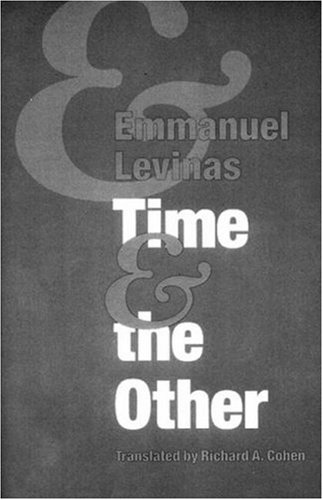
Emmanuel Levinas takes Jewish thought to new levels, adding very new, yet very ancient ways of thinking into his works.He has several highly recognized works in the philosphy world- "Time and the Other", amd "Existence and Existents", but his works that build directlyoff of Jewish thought (such as this one) are my favorites.He manages tocut through the shell of everything and shed a beautiful yet heavy light onlife.... I think it would be more fitting to put a Levinas quotes fromDifficult Freedom in this review, and let you see for yourself.

"Atthe dawning of the new world, Judaism has the consciousness to possess,through its permanence, a function in the general economy of Being.No onecan replace it.Someone has to exist in the world who isas old as theworld.For Judaism, the great migrations of the people , the migrationsamong the people and the upheavals of history have never presented a deadlythreat.It always found what remained to it.It has a painful experienceof living on; its performance accustomed it to judging history and refusingto accept the verdict of a History that that proclaimed itself judge. Perhaps Jewish thought in general consists today in holding on more firmlythan ever to this permanence and this eternity.Judaism has traversedhistory history without taking up history's causes.It has the power tojudge, alone against all, the victory of visible and organized forces - ifneed be in order to reject them.Its head may be held high or its head maybe down, but it is always stiff-necked.This temerity and this patience,which are as long as eternity itself, will perhaps be more necessary tohumanity tomorrow or the day after tomorrow than they were yesterday or theday before." Difficult Freedom, p.166

5-0 out of 5 stars difficult to read, perhaps, but will open up new worlds!
Several essays on Jewish issues and a brief and quirky, incompleteautobiography of Levinas, perhaps the finest thinker in post-modern Jewishphilosophy. In this little volume are commentaries on Biblical and talmudicmaterial, thoughts about current philosophical trends, what it means to bea Jew in the modern and post-holocaust world by a thoughtful survivor, andhis unique wordplay. This book will shake your assumptions to theirfoundations. Never a casual read, but amazing to study. ... Read more


2. Emmanuel Levinas: Basic Philosophical Writings (Studies in Continental Thought)
by Emmanuel Levinas
Paperback: 224 Pages (1996-11)
list price: US$14.95 -- used & new: US$14.26
(price subject to change: see help)
Asin: 0253210798
Average Customer Review: 5.0 out of 5 stars
Canada | United Kingdom | Germany | France | Japan

Customer Reviews (1)

5-0 out of 5 stars A Good Reader Long-Overdue
*Basic Philosophical Writings* is the first Levinas essay anthology since *Collected Philosophical Papers."Drs. Pepperzak, Crichtly and Bernasconi write wonderful introductions and great notes (even those that Levinas never wrote).An excellent anthology and very textbook-oriented.A must-buy for Levinas scholars! ... Read more


3. Humanism of the Other
by Emmanuel Levinas, Nidra Poller
Hardcover: 144 Pages (2003-09-03)
list price: US$29.95 -- used & new: US$147.26
(price subject to change: see help)
Asin: 0252028406
Average Customer Review: 5.0 out of 5 stars
Canada | United Kingdom | Germany | France | Japan
Editorial Review

Book Description
In Humanism of the Other, Emmanuel Levinas argues that it is not only possible but of the highest exigency to understand one's humanity through the humanity of others. Based in a new appreciation for ethics, and taking new distances from the phenomenology of Hegel, Heidegger, Husserl, and Merleau-Ponty, the idealism of Plato and Kant, and the skepticism of Nietzsche and Blanchot, Levinas rehabilitates humanism and restore its promises.

He expresses disappointment with the revolutions that became bureaucracies and totalitarian governments, and the national liberation movements that eventually led to oppression and international wars. Defining the human as subject, ego, synthesis, identification, cognition, and mood all too easily lead to subjugation, persecution, and murder.

Painfully aware of the long history of dehumanization which reached its apotheosis in Hitler and Nazism, Levinas does not underestimate the difficulty of reconciling oneself with another. The humanity of the human, Levinas argues, is not discoverable through mathematics, rational metaphysics or introspection. Rather, it is found in the recognition that the suffering and mortality of others are the obligations and morality of the self. ... Read more

Customer Reviews (1)

5-0 out of 5 stars A word of warning--you may already own this book
All five of the essays collected and (re)translated in this volume, _Humanism of the Other_, have previously appeared as chapters in Levinas' _Collected Philosophical Papers_, edited and translated by Alphonso Lingis (Duquesne Univ Press, 1998:ISBN#:0820703060). That is not to say that the essays here collected are no good. The new translation is self-avowedly more accurate to Levinas' French than the Lingis translation.

With the above proviso in mind, the five essays collected and published as _Humanism of the Other_ are wonderful representations of the radicality of Levinas' notions of ethics. Of particular is the essay "No Identity." Students and scholars of Levinas in particular and Continental ethics in general are well served by being or becoming familiar with this work.

The introductory essay by Richard Cohen is very clear and worthy of a serious reading in its own right. Cohen is a top-notch Levinas scholar and translator. ... Read more


4. To the Other: An Introduction to the Philosophy of Emmanuel Levinas (Purdue University Series in the History of Philosophy) (Purdue Series in the History of Philosophy)
by Adriaan Theodoor Peperzak, Emmanuel Levinas
Paperback: 247 Pages (2005-02-02)
list price: US$28.95 -- used & new: US$27.29
(price subject to change: see help)
Asin: 1557530246
Average Customer Review: 5.0 out of 5 stars
Canada | United Kingdom | Germany | France | Japan
Editorial Review

Book Description

The fruit of the author's many courses on Emmanuel Levinas in Europe and the United States, this study is a clear introduction for graduate students and scholars who are not yet familiar with Levinas's difficult but exceptionally important oeuvre. After a first chapter on the existential background and the key issues of his thought, chapters 2, 3, and 4 concentrate on and include a short text, "Philosophy and the idea of the Infinite," which contains the program of Levinas's entire oeuvre. Chapter 5 is a companion to the reading of Levinas's first opus magnum, Totality and the Infinite. It analyzes the structure of this book and shows how its questions and answers adhere together. "Through phenomenology toward a saying beyond phenomena and essence" could be the summary of Levinas's attempt to think, with and against Martin Heidegger, the otherness of the Other. This is brought out even more clearly in his second opus magnum, Otherwise Than Being or Beyond Essence, whose significance is shown in chapter 6. A bibliography is added to facilitate further study.
... Read more

Customer Reviews (1)

5-0 out of 5 stars Important contribution to understanding a difficult thinker
The previous reviewer seems to misunderstand this book and the series to which it belongs.The series provides classic texts with commentaries by scholars who are expert in the field.Adriaan Peperzak is certainly one of the best Levinas scholars around, and this book gives us a good introduction to, and superbcommentary on, Levinas' essay, "Philosophy and the Idea of Infinity".

Having said that, it is certainly true that this book is not the place to start if you are approaching Levinas for the first time.In that case, the best place to start is the collection of Philippe Nemo's interviews with Levinas, gathered under the title "Ethics and Infinity."This is quite accessible to the educated reader.This might then be followed up with Colin Davis' genuinely introductory book on Levinas.

After some such background, then the reader should be ready to take up Peperzak's commentary here.At this stage it is very good to have a guide like Peperzak to lead you through the difficult nuances and reference points of so complex a thinker as Levinas. "Philosophy and the Idea of Infinity" is a kind of summary of Levinas' philosophy, but it is not easy going.Peperzak helps you see what you would have missed on your own.

I highly recommend this book, as well as the series as a whole.Levinas is a difficult, but very rewarding thinker--one of those who has the power to change your whole outlook on life. ... Read more


5. God, Death, and Time (Meridian: Crossing Aesthetics)
by Emmanuel Levinas
Paperback: 320 Pages (2000-11-01)
list price: US$23.95 -- used & new: US$18.68
(price subject to change: see help)
Asin: 0804736669
Canada | United Kingdom | Germany | France | Japan
Editorial Review

Book Description

This book consists of transcripts from two lecture courses Levinas delivered in 1975-76, his last year at the Sorbonne. They cover some of the most pervasive themes of his thought and were written at a time when he had just published his most important—and difficult—book, Otherwise than Being, or Beyond Essence. Both courses pursue issues related to the question at the heart of Levinas’s thought: ethical relation. The Foreword and Afterword place the lectures in the context of his work as a whole, rounding out this unique picture of Levinas the thinker and the teacher.

The lectures are essential to a full understanding of Levinas for three reasons. First, he seeks to explain his thought to an audience of students, with a clarity and an intensity altogether different from his written work. Second, the themes of God, death, and time are not only crucial for Levinas, but they lead him to confront their treatment by the main philosphers of the great continental tradition. Thus his discussions of accounts of death by Heidegger, Hegel, and Bloch place Levinas’s thought in a broader context. Third, the basic concepts Levinas employs are those of Otherwise than Being rather than the earlier Totality and Infinity: patience, obsession, substitution, witness, traumatism. There is a growing recognition that the ultimate standing of Levinas as a philosopher may well depend on his assessment of those terms. These lectures offer an excellent introduction to them that shows how they contribute to a wide range of traditional philosophical issues.

... Read more

6. Adieu to Emmanuel Levinas (Meridian: Crossing Aesthetics)
by Jacques Derrida
Paperback: 168 Pages (1999-07-01)
list price: US$19.95 -- used & new: US$12.45
(price subject to change: see help)
Asin: 0804732752
Average Customer Review: 3.0 out of 5 stars
Canada | United Kingdom | Germany | France | Japan
Editorial Review

Book Description

This volume contains the speech given by Derrida at Emmanuel Levinas's funeral on December 27, 1995, and his contribution to a colloquium organized to mark the first anniversary of Levinas's death.For both thinkers, the word adieu names a fundamental characteristic of human being:the salutation or benediction prior to all constative language (in certain circumstances, one can say adieu at the moment of meeting) and that given at the moment of separation, sometimes forever, as at the moment of death, it is also the a-dieu, for God or to God before and in any relation to the other.

In this book, Derrida extends his work on Levinas in previously unexplored directions via a radical rereading of Totality and Infinity and other texts, including thelesser-known talmudic readings.He argues that Levinas, especially in Totality and Infinity, bequeaths to us an “immense treatise of hospitality,” a meditation on the welcome offered to the other. The conjunction ofan ethics of pure prescription with the idea of an infinite and absolute hospitality confronts us with the most pressing political, juridical, and institutional concerns of our time.What, then, is an ethics and what is a politics of hospitality? And what, if it ever is, would be a hospitality surpassing any ethics and any politics we know?

As always, Derrida raises these questions in the most explicit of terms, moving back and forth between philosophical argument and the political discussion of immigration laws, peace, the state of Israel, xenophobia—reminding us with every move that thinking is not a matter of neutralizing abstraction, but a gesture of hospitality for what happens and still may happen.

... Read more

Customer Reviews (2)

5-0 out of 5 stars excellent...
Contrary to an above reviewer of this book, Derrida's project is not "designed to cast great doubt on the classical notions of truth, reality, meaning, and knowledge." Especially not in Derrida's writingsof the last 15 years, following his so-called "ethical" or"religious" turn. This volume includes two essays, "Adieu toEmmanuel Levinas" and "A Word of Welcome." The former is theeulogy Derrida gave at Levinas's burial, and the latter is an excellentanalaysis of Levinas's ethics in the terms of "hospitality."Valuable for anyone interested in Levinas, recent developments in ethics,or Derrida's later philosophy.

1-0 out of 5 stars A Dismal Effort by Dinosaur-of-a-Philosopher
Derrida, the renowned French postmodernist and author of, among other things, "Writing and Difference", is at it again in his latest effort, "Adieu to Emmanuel Levinas." His work is designed to cast great doubt onthe classical notions of truth, reality, meaning, and knowledge. The goalis reprehensible, but Derrida can usually pull it off. "Adieu to EmmanuelLevinas" is thus a major disappointment to all those fans of outmodeddeconstructionist French philosophers.The book suffers from being far toopersonal, and lacks detail. Anecdotes abound, but they are, in toto, notparticularly interesting or helpful ones, mostly along the lines ofchildhood vacations to the beach and the like. As for the few attemptsDerrida makes to actually deal with PHILOSOPHY, detail is sorely lacking.When a reader comes upon phrases like "the hermeneutics of orangutans,"he/she really deserves to have some idea what the author is talking about.Sometimes you just want to read about eschatalogical polemics orsignifier/signified interrelations, but you won't find that here. Seen inthis, or any other light, "Adieu to Emmanuel Levinas" falls pancake-flat.Spend your money on something that makes sense to somebody other than theauthor. I am sad now and it is Jaques Derrida's fault. ... Read more


7. In the Time of the Nations (Continuum Impacts)
by Emmanuel Levinas
Paperback: 180 Pages (2007-11-15)
list price: US$19.95 -- used & new: US$12.69
(price subject to change: see help)
Asin: 082649904X
Canada | United Kingdom | Germany | France | Japan
Editorial Review

Book Description
In this major collection of essays, Emmanuel Levinas, a leading philosopher of the 20th century, considers Judaism's uncertain relationship to European culture since the Enlightenment, problems of distance and integration. The book includes five Talmudic readings from between 1981 and 1986, essays on Franz Rosenzweig and Moses Mendelssohn, and a discussion with Francoise Armengaud which raises questions of central importance to Jewish philosophy in the context of general philosophy. This work brings to the fore the vital encounter between philosophy and Judaism, a hallmark of Levinas's thought. ... Read more


8. Otherwise Than Being: Or Beyond Essence
by Emmanuel Levinas
Paperback: 205 Pages (1998-05)
list price: US$23.00 -- used & new: US$21.10
(price subject to change: see help)
Asin: 0820702994
Average Customer Review: 4.5 out of 5 stars
Canada | United Kingdom | Germany | France | Japan

Customer Reviews (3)

4-0 out of 5 stars Levinas' best work, but not easy to understand
Much though I am fascinated with Levinas, I do find it nearly unreadable. His text is so dense, it requires (but definitely merits) slow reading.

Although it might be helpful to have read earlier Levinas, this book takes a bit of a departure from the philosophy he espoused in his younger days. I don't believe it is such a radical departure so much as a reorientation and increased sophistication, but that's a topic for another discussion!

I highly recommend this read if you are familiar with phenomenology, particulary Husserl and Heidegger, and Kant. I believe they are essential to understanding his arguments.

If you are willing to put in the time and mental effort to unpack this, it is a very rewarding book. For some additional explanation, a good companion is Beyond by Peperzak.

5-0 out of 5 stars otherwise than self
"Otherwise Than Being" is one of the only metaphysical text that seriously revise and rehabilitate the notion of the subject after Heidegger's deconstruction and critique of it. Proposing a "de-nucleated" subject, a subject that is non-indifferent to the other, Emmanuel Levinas continues the intuitions he first draw in "Totality and Infinity". But rather than simply continue directly and without revision the acquisitions of "Totality and Infinity", Levinas integrates Derrida's critique (drawn in his important article on Levinas,"Violence and Metaphysics") of the still to ontological/phenomenological discourse of "Totality and Infinity". Therefore, in "Otherwise than Being", his second Masterpiece, Levinas is developing a completely new style, a radically new way-of-thinking. Being not committed anymore neither to phenomenology nor to ontology, Levinas offers us an exercise of post-heidegerrian metaphysics that doesn't fall under the critique of philosophy as onto-theo-logy. The pre-original dimension of psychism, the an-archic dimension of the Self, or subjectivity as "other-in-the-Self" are themes breaking the classical metaphysical discourse without abandoning the primacy of the subject, or of ethics. Finally, "Otherwise than Being" is the first important challenge to Nietzsche's parricide, the first (and maybe only) text that tries to re-hear the authentic signification of the word (or name?): God.

5-0 out of 5 stars The Otherwise than Being
This title deals with the otherwise than.A true masterpiece of the pre-ontological and ontological discouse which not only binds self to Other (through an asymetric responsibility--see substition) but also uncovers andbuilds off the earlier work of Heidegaar. ... Read more


9. Collected Philosophical Papers
by Emmanuel Levinas
Paperback: 191 Pages (1998-08)
list price: US$24.95 -- used & new: US$24.50
(price subject to change: see help)
Asin: 0820703060
Canada | United Kingdom | Germany | France | Japan

10. On Escape: De l'evasion (Cultural Memory in the Present)
by Emmanuel Levinas
Paperback: 136 Pages (2003-02-25)
list price: US$16.95 -- used & new: US$13.22
(price subject to change: see help)
Asin: 0804741409
Average Customer Review: 5.0 out of 5 stars
Canada | United Kingdom | Germany | France | Japan
Editorial Review

Book Description

First published in 1935, On Escape represents Emmanuel Levinas’s first attempt to break with the ontological obsession of the Western tradition.In it, Levinas not only affirms the necessity of an escape from being, but also gives a meaning and a direction to it.Beginning with an analysis of need not as lack or some external limit to a self-sufficient being, but as a positive relation to our being, Levinas moves through a series of brilliant phenomenological analyses of such phenomena as pleasure, shame, and nausea in order to show a fundamental insufficiency in the human condition.

In his critical introduction and annotation, Jacques Rolland places On Escape in its historical and intellectual context, and also within the context of Levinas’s entire oeuvre, explaining Levinas’s complicated relation to Heidegger, and underscoring the way Levinas’s analysis of “being riveted,” of the need for escape, is a meditation on the body.

... Read more

Customer Reviews (1)

5-0 out of 5 stars An important early work by Levinas
Originally published in 1935, this English translation and publication of _On Escape_ brings the reader closer to the early thoughts and writings of Emmanuel Levinas than previous publications. His first major original manuscript after his dissertation on Husserl's theory of intuition, _Existence and Existents_, would not appear until 1947, and the lectures collected and published as _Time and the Other_ not until 1948, so the publication of this text should prove to be indispensable to English-reading audiences who have interests in Levinas' (early) work, as well as that of twentieth century Continental European philosophy. Here traditionally accepted phenomenological and existential concepts are introduced, studied, and discussed, such as the following: ontological Being, existents (beings), the identity of the self, the lived-body, radical finitude, etc.

The human subject, which modern philosophy has argued is dual in nature, no longer wishes to escape its existence, its Being; rather it seeks to be "delivered" or "deneutralized" from the world (47). As he concludes _Existence and Existents_, Levinas will later seek a way out of the there is (il y a), and discovers it in the concept of the hypostasis. One must go beyond Being to actualize this point. Philosophy, traditionally accepted, has not thought through the implications of such a task. Throughout history, philosophers have been too concerned with beings. Heidegger introduced the ontological distinction, and began teaching us to (re)think Being. Levinas now wishes to help us think through and beyond Being to get to the ethical relation to, and the infinite responsibility for, the absolute Other -- the other human being.

[for a longer review, go to: http://www.othervoices.org/2.3/mmichau/index.html] ... Read more


11. Existence and Existents
by Emmanuel Levinas
Paperback: 113 Pages (2001-04)
list price: US$18.95 -- used & new: US$18.95
(price subject to change: see help)
Asin: 0820703192
Canada | United Kingdom | Germany | France | Japan
Editorial Review

Book Description
First published in 1947, and written mostly during Levinas's imprisonment during World War II, this work provides the first sketch of his mature thought—later developed in Totality and Infinity and Otherwise Than Being, or Beyond Essence. This is essential reading for understanding both Levinas's own philosophy and the developments in philosophical thought in the twentieth century. ... Read more


12. Entre Nous
by Emmanuel Levinas
Paperback: 256 Pages (2000-04-15)
list price: US$26.95 -- used & new: US$17.80
(price subject to change: see help)
Asin: 0231079117
Average Customer Review: 5.0 out of 5 stars
Canada | United Kingdom | Germany | France | Japan
Editorial Review

Book Description

Emmanuel Levinas is one of the most important figures of twentieth-century philosophy. Exerting a profound influence upon such thinkers as Derrida, Lyotard, Blanchot, and Irigaray, Levinas's work bridges several major gaps in the evolution of continental philosophy -- between modern and postmodern, phenomenology and poststructuralism, ethics and ontology. He is credited with having spurred a revitalized interest in ethics-based philosophy throughout Europe and America.

Entre Nous (Between Us) is the culmination of Levinas's philosophy. Published in France a few years before his death, it gathers his most important work and reveals the development of his thought over nearly forty years of committed inquiry. Along with several trenchant interviews published here, these essays engage with issues of suffering, love, religion, culture, justice, human rights, and legal theory. Taken together, they constitute a key to Levinas's ideas on the ethical dimensions of otherness.

Working from the phenomenological method of Edmund Husserl and Martin Heidegger, Levinas pushed beyond the limits of their framework to argue that it is ethics, not ontology, that orients philosophy, and that responsibility precedes reasoning. Ethics for Levinas means responsibility in relation to difference. Throughout his work, Levinas returns to the metaphor of the face of the other to discuss how and where responsibility enters our lives and makes philosophy necessary. For Levinas, ethics begins with our face to face interaction with another person -- seeing that person not as a reflection of one's self, nor as a threat, but as different and greater than self. Levinas moves the reader to recognize the implications of this interaction: our abiding responsibility for the other, and our concern with the other's suffering and death.

Situated at the crossroads of several philosophical schools and approaches, Levinas's work illuminates a host of critical issues and has found resonances among students and scholars of literature, law, religion, and politics.Entre Nous is at once the apotheosis of his work and an accessible introduction to it. In the end, Levinas's urgent meditations upon the face of the other suggest a new foundation upon which to grasp the nature of good and evil in the tangled skein of our lives.

... Read more

Customer Reviews (1)

5-0 out of 5 stars Difficult and Deep

After taking an intense and exceptionally stimulating course in Current Continental Philosophy at Texas A&M University (under Professor Steve Daniel, who has a published book that goes along with this pioneering undergraduate course), I bought this book to delve more into the highly intriguing thought of the Jewish philosopher Emmanuel Levinas -- one of the most important thinkers of the day and of all time for that matter, who is usually associated with the twentieth century enterprise of Deconstruction, as of that of Jacques Derrida who is vocal in his indebtedness to the "masterful" thought of Levinas.I would very much recommend this book, but only if you have an appropriate background in philosophical context, as to accommodate to the text's highly difficult and complex prose and content.

As the back cover of the book indicates, I did find this book to actually be an unexpectedly helpful and engaging guide (in spite of its difficulty) to serve as a proficient introduction to the prolific thought of this outstanding author.The essays contained in the book span over a spectrum of about forty years; so the reader is able to glimpse the progression and difference from Levinas's earlier work to his later essays, of which the book is for the better mainly comprised.

For me, these essays are paradigmatic of very technical and complex philosophy mixed with soaring religious insights into the inter-human (and ultimately highly ethical) condition.In Entre-Nous, the reader meets in a face-to-face way why Levinas's work is so vital -- in which ontology is unravelled into ethics, as philosophy is ultimately undone into what is truly religious.

... Read more


13. Origins of the Other: Emmanuel Levinas Between Revelation and Ethics
by Samuel Moyn
Paperback: 268 Pages (2007-01)
list price: US$17.95 -- used & new: US$14.95
(price subject to change: see help)
Asin: 0801473667
Average Customer Review: 5.0 out of 5 stars
Canada | United Kingdom | Germany | France | Japan
Editorial Review

Book Description
The French-Jewish thinker Emmanuel Levinas (1906-1995) is today rememberedas the central moralist of the twentieth century and remains a majorpresence in the contemporary humanities. In this book, written in lucid andjargon-free prose, Samuel Moyn provides a first and controversial historyof the makings of his thought, and especially of his trademark concept of"the other."

Restoring Levinas to the intellectually rich and combative atmosphere ofinterwar Europe, Origins of the Other overturns a number of views that haveattained almost stereotypical familiarity. In a careful overview ofLevinas's career, Moyn documents the philosopher's early allegiance to thegreat German thinker Martin Heidegger. Showing that Levinas crafted anidiosyncratic vision of Judaism, rather than returning to any traditionalsource, Moyn makes the startling suggestion that Protestant theology, as itspread across the continent in new forms, may have been the most plausiblesource of Levinas's core concept. In Origins of the Other, Moyn offers newreadings of the work of a host of crucial thinkers, such as Hannah Arendt,Karl Barth, Karl Löwith, Gabriel Marcel, Franz Rosenzweig, Jean-PaulSartre, and Jean Wahl, who help explain why Levinas's thought evolved as itdid.

Moyn concludes by showing how "the other" assumed an ethical bearing (longafter its first invention) when Levinas's thought crystallized in Cold Wardebates about intellectual engagement and the relation of morality andpolitics. An epilogue relates Levinas's Totality and Infinity to currentphilosophical discussions in Europe and America and reflects on thedifficult relationship between philosophy and religion in the modern world. ... Read more

Customer Reviews (2)

5-0 out of 5 stars At their very best: both the history of ideas and intellectual history
As an historian of ideas who wrote a doctoral disseration in 1968 at the University of Wisconsin in Madison on "Ideas of Individualism: A Twentieth Century Social Critique," the author's study of the idea of otherness is truly brilliant. While the history of ideas is more philosophical in its orientation, analysizing an idea's interior content, intellectual history is more sociological in its orientation, identifying an idea's exterior context.From both of these perspectives, Samuel Moyn's study of the thought of Emmanuel Levinas is a remarkable achievement.

As intellectual history, the "Origins of the Other" deals not only with the historical milieu in which Levinas found himself, but also with how others were responding to this same milieu. Since ideas do not emerge in an historical vacuum, in dealing with these others, this volume readily becomes a history of philosophical presuppositions through time.For the present, conceived in the past, is pregnant with the future.

As a history of the interior content of an idea of the "other," this otherness has several dimensions, two of which I note. Its most primary dimension involves what I call the primacy of individuality or sociality.Although in my dissertation I employ a mode of analysis and synthesis that is doubly dialectical, individuality and sociality nurturing one another as well is being an impediment, more recently I have realized that we are one-anothered into existence through parents who themselves represent the vast genetic pool of not only the human species, but indeed the humus of our earth and the stardust of our universe. Thus, one-anothered into existence, we never cease one-anothering one another into the fullness of our humanity.

The other dimension to be noted is a relationship between our humanity and what we call divinity, in other words, between the sacrality and secularity of our lives.It is at this point that the subtitle of Moyn's prophetic study becomes most relevant, "Emmanuel Levinas Between Revelation and Ethics."

Presently many forms of religious fundamentalism have arisen to challenge the brutalizing secular fundamentalism of a globalized market. For decades it has been my conviction that this secularity has triumphed by default, the by-product of a myopic sacrality that has forsaken an holistic vision of our humanity for-the-sake of an idolartrous ritual.

As Moyn argues im the 268 pages of his study, Levinas struggled mightly to bring us to this threshold, the ethics of how we otherize one another, that we do so otherwise than through the violence of our lives.

5-0 out of 5 stars Great intellectual history, well-written scholarship
The previous negative review of this book is way off base.This is a superb piece of scholarship ably dealing with high-level philosophy to provide an astute contextualizing intellectual history of not just Levinas, but also of some of the key philosophical debates in 20th-century continental thought which contributed to the formulation of "the Other" as a concept.

Prof. Moyn is assiduously reasonable and even-handed throughout.He's a model scholar who keeps a critical distance and is not out to wage a vendetta and dishonestly forward an agenda.(Maybe that just riles some people who comes to the book with strong allegiances to Levinas or other related thinkers.)

And given the difficulty and often impenetrable-ness of many of these continental thinkers' idiom, Moyn's writing is admirably lucid, readable, and free of windiness.He's not out to intimidate the reader and discourage understanding.So, in its own way, even as it asserts its place as a pathbreaking addition to scholarship in intellectual history, it can also stand, somewhat, as a primer for those looking to understand the ideas and historical import of 20th-century continental thought. ... Read more


14. Elevations: The Height of the Good in Rosenzweig and Levinas (Chicago Studies in the History of Judaism)
by Richard A. Cohen
Paperback: 364 Pages (1994-12-12)
list price: US$23.00 -- used & new: US$23.00
(price subject to change: see help)
Asin: 0226112756
Canada | United Kingdom | Germany | France | Japan
Editorial Review

Book Description

Elevations is a series of closely related essays on the ground-breaking philosophical and theological work of Emmanuel Levinas and Franz Rosenzweig, two of the twentieth century's most important Jewish philosophers. Focusing on the concept of transcendence, Richard A. Cohen shows that Rosenzweig and Levinas join the wisdom of revealed religions to the work of traditional philosophers to create a philosophy charged with the tasks of ethics and justice. He describes how they articulated a responsible humanism and a new enlightenment which would place moral obligation to the other above all other human concerns. This elevating pull of an ethics that can account for the relation of self and other without reducing either term is the central theme of these essays.

Cohen also explores the ethical philosophy of these two thinkers in relation to Nietzsche, Husserl, Heidegger, Buber, Sartre, and Derrida. The result is one of the most wide-ranging and lucid studies yet written on these crucial figures in philosophy and Jewish thought.
... Read more

15. Levinas: A Guide For The Perplexed (Guides for the Perplexed)
by B. C. Hutchens
Paperback: 191 Pages (2004-11-30)
list price: US$24.95 -- used & new: US$15.43
(price subject to change: see help)
Asin: 0826472834
Canada | United Kingdom | Germany | France | Japan
Editorial Review

Book Description
Continuum's Guides for the Perplexed are clear, concise and accessible introductions to thinkers, writers and subjects that students and readers can find especially challenging - or, indeed, downright bewildering.Concentrating specifically on what it is that makes the subject difficult to fathom, these books explain and explore key themes and ideas, guiding the reader towards a thorough understanding of demanding material.

Emmanuel Levinas is one of the most influential ethicists of recent times. The importance and relevance of his work has been recognised and celebrated within philosophy, religion, sociology, political theory and other disciplines.His writing, however, undoubtedly presents the reader with a significant challenge. Often labyrinthine, paradoxical and opaque, Levinas' work seeks to articulate a complex ideology and some hard-to-grasp concepts.

Levinas: A Guide for the Perplexed is the ideal text for the student, teacher or lay reader who wants to develop a full and effective understanding of this major modern philosopher. Focused upon precisely why Levinas is a difficult subject for study, the text guides the reader through the core themes and concepts in his writing, providing a thorough overview of his work.Valuably, the book also emphasises Levinas's importance for contemporary ethical problems and thinking. ... Read more


16. Is It Righteous to Be? Interviews with Emmanuel Levinas
Hardcover: 315 Pages (2002-11-01)
list price: US$65.00 -- used & new: US$65.00
(price subject to change: see help)
Asin: 0804743088
Average Customer Review: 5.0 out of 5 stars
Canada | United Kingdom | Germany | France | Japan
Editorial Review

Book Description

Recent debates within Continental philosophy have decisively renewed the question of the ethical, with the French philosopher Emmanuel Levinas (1905-1995) as its center. Coming from yet in contestation with the phenomenological traditions of Husserl and Heidegger, Levinas defines ethics as an originary response to the face of the other. For him, language is an exception to a habitual economy that represses alterity and maintains the asymmetry and distance constitutive of the nontotalizing relation to the other. Ethics occurs in the interlocutionary relation to the other, and interpellation—a kind of interruption by speaking—is the essential feature of ethical language.

Between 1982 and 1992, Levinas gave numerous interviews, closing a distinguished sixty-year career. Of the twenty interviews collected in this volume, seventeen appear in English for the first time. In the interviews Levinas sets forth the central features of his ethical philosophy, previously enunciated in Totality and Infinity (1961), in a language that bridges to the idiom of his later work. He underlines his dedication to the phenomenological search for the concrete and the nonformal signification of alterity. He also elaborates issues that do not receive extensive treatment in his formal philosophical works, including the question of prephilosophical experiences and the ethical signification of money, justice, and the State.

The informality of the interviews prompts Levinas to address matters about which he is reticent in his published works, notably the relation of his ethical philosophy to theological questions, the intrication of the Hebrew Bible in Greek philosophy, his substantial corpus of “nonphilosophical” or “confessional” writings on the Talmud, and recollections of his extraordinary talmudic teacher, Shoshani.

The centerpiece of the volume is a previously untranslated 1986 interview with François Poirié. Containing Levinas’s sole extended discussion of biographical matters with an interviewer, this text helps to situate Levinas in his contemporary intellectual world and to clarify his place in French thought.

... Read more

Customer Reviews (1)

5-0 out of 5 stars Entry Into Levinas
This collection of interviews is one of the best ways to enter into the world of Levinas. It is a world from which one exits transformed. Levinas may be the most important thinker of the past century; he is certainly the one thinker who has been willing to gaze into the suffering of the 20th century and to emerge with a vision and a challenge for those of us who are seeking for a way of thinking that does not ignore the bloody past. These interviews introduce one to Levinas through his own descriptions of his childhood. They, moreover, usher the reader into the difficult, yet profound, thoughts of levinas: the face, the other, God, and justice. If you are tempted to jump into the world of Levinas, do so first through these interviews. Then, when you have acclimated yourself to his world, you might consider some of his more challenging works. ... Read more


17. Levinas: An Introduction
by Colin Davis
 Paperback: 168 Pages (1996-11)
list price: US$22.00 -- used & new: US$18.19
(price subject to change: see help)
Asin: 0268013144
Average Customer Review: 4.5 out of 5 stars
Canada | United Kingdom | Germany | France | Japan

Customer Reviews (3)

5-0 out of 5 stars Terrific Introduction
I am very pleased with this book.Davis begins by orienting Lev's work within Husserl's phenomenology and distinguishes Lev from Heidegger.So many thinkers are difficult to comprehend because lousy intro books don't place them in context.Davis elegantly relates the role of ethics in distinction to Heidegger's concerns.He goes deeper by discussing the influence of Descartes and Kant leading to Lev's postmodern ethic.Davis writing is direct, yet still conveys passion for Lev's accomplishments.Finally, he consistently iterates that he is in some ways doing a disservice to Lev by paraphasing his work into a meager introduction.It may have disserved Lev, but it sure helped me and many others.Great book I highly recommend.

5-0 out of 5 stars to repeat
just wanted to confirm the sense described in the previous review (and add an additional star) -- this is a very helpful and interesting introduction to Levinas (which is, i think, pretty unusual for intros to french thinkers).it's short and easy to read while also pointing to the complexity in both the thought and reception of Levinas.also, even if you've already read some Levinas, this book can still help orient you within his work by discussing some of the conceptual stakes with which he is engaged.

4-0 out of 5 stars Levinas Unveiled
Davis' book takes the reader through Levinas' major works clarifying some of the ideas that have puzzled readers for some time.His discussions on "Totality and Infinity" include expositions of the central ideasand, more importantly, thoughts regarding Levinas' writing style. Davisdescribes the "Levinas effect" which is often the product ofreading his difficult prose.This effect is the tendency of interpretersto use Levinas in order to forward their own ideas.Davis argues that thiseffect shows us how Levinas has the ability to take the reader beyond Beingsince the text is constantly questioning and often frustrating the reader. This ability to question the reader is a reflection of the relationshipthat exists between the "Same" and the "Other," therelationship with which Levinas spent his life writing about. Mostimportantly, Davis' book takes the reader through other works by showingtheir relationship to "Totality and Infinity," Levinas' magnumopus. In summary, an essential aid in understanding the thinker becauseof its chronological discussions of Levinas' major works, from essays onHeidegger and Husserl to the writings on Rabbinic Judaism. ... Read more


18. Emmanuel Levinas: His Life And Legacy
by Salomon Malka
Paperback: 330 Pages (2006-09-30)
list price: US$21.50 -- used & new: US$19.64
(price subject to change: see help)
Asin: 0820703583
Canada | United Kingdom | Germany | France | Japan

19. The Wisdom of Love in the Service of Love: Emmanuel Levinas on Justice, Peace and Human Rights (Marquette Studies in Philosophy, #29.)
by Roger Burggraeve, Jeffrey Bloechl
 Paperback: 213 Pages (2003-01)
list price: US$25.00 -- used & new: US$22.99
(price subject to change: see help)
Asin: 0874626528
Canada | United Kingdom | Germany | France | Japan

20. Proper Names (Meridian: Crossing Aesthetics)
by Emmanuel Levinas
Paperback: 208 Pages (1997-02-01)
list price: US$19.95 -- used & new: US$13.93
(price subject to change: see help)
Asin: 0804723524
Average Customer Review: 3.0 out of 5 stars
Canada | United Kingdom | Germany | France | Japan
Editorial Review

Book Description

Combining elements from Heidegger’s philosophy of “being-in-the-world” and the tradition of Jewish theology, Levinas has evolved a new type of ethics based on a concept of “the Other” in two different but complementary aspects. He describes his encounters with those philosophers and literary authors (most of them his contemporaries) whose writings have most significantly contributed to the construction of his own philosophy of “Otherness”: Agnon, Buber, Celan, Delhomme, Derrida, Jabès, Kierkegaard, Lacroix, Laporte, Picard, Proust, Van Breda, Wahl, and, most notably, Blanchot.

At the same time, Levinas’s own texts are inscriptions and documents of those encounters with “Others” around which his philosophy is turning. Thus the texts simultaneously convey an immediate experience of how his intellectual position emerged and how it is put into practice. A third potential function of the book is that it unfolds the network of references and persons in philosophical debates since Kierkegaard.

... Read more

Customer Reviews (1)

3-0 out of 5 stars Best for those already familiar with Levinas' work.
Proper Names is a fascinating collection of essays previously available only in French. The pieces range from discussions of ethical, philosophical and theological questions in the work of Buber, Max Picard, Proust, Derrida and, especially, Maurice Blanchot. These works will be of interest to anyone who is already familiar with the extraordinary work of Emmanuel Levinas, who is, in my mind, one of the most important and original thinkers of the 20th century. The texts allow one to watch Levinas engaged in acts of response/responsibility to and for the Other within the framework of his own ethical system. It is my experience that, if one is concerned with the possibility of ethics after Hegel or, more precisely, Heidegger, everything that Levinas wrote is worth reading. However, if one is not already acquainted with this writer, one should start elsewhere. Infinity and Totality is the best starting point, but The Levinas Reader and Otherwise than Being (the more difficult of these three works) are better starting points. ... Read more


  1-20 of 100 | Next 20
A  B  C  D  E  F  G  H  I  J  K  L  M  N  O  P  Q  R  S  T  U  V  W  X  Y  Z  

Prices listed on this site are subject to change without notice.
Questions on ordering or shipping? click here for help.

site stats