e99 Online Shopping Mall

Geometry.Net - the online learning center Help  
Home  - Philosophers - Macintyre Alasdair (Books)

  1-20 of 100 | Next 20
A  B  C  D  E  F  G  H  I  J  K  L  M  N  O  P  Q  R  S  T  U  V  W  X  Y  Z  

click price to see details     click image to enlarge     click link to go to the store

$18.99
1. Three Rival Versions of Moral
$21.12
2. The Macintyre Reader
 
$66.59
3. Alasdair MacIntyre (Contemporary
$17.94
4. Whose Justice? Which Rationality?
$23.88
5. After Virtue: A Study in Moral
$60.15
6. Ethics and Politics: Volume 2:
$22.50
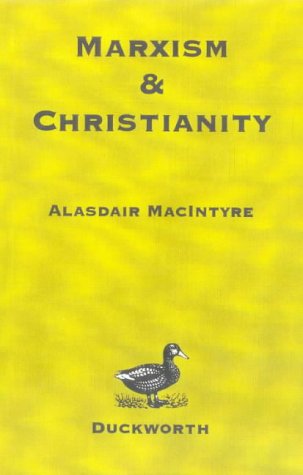
7. Marxism and Christianity
$20.04
8. Aristotelian Philosophy: Ethics
$59.97
9. The Tasks of Philosophy: Volume
$11.32
10. Dependent Rational Animals: Why
$22.50
11. After Macintyre: Critical Perspectives
$18.95
12. Edith Stein: A Philosophical Prologue,
$70.01
13. Tradition in the Ethics of Alasdair
 
14. A Short History of Ethics
$126.75
15. After Virtue
$24.00
16. Against the Self-Images of the
$145.00
17. Alasdair MacIntyre's Engagement
$114.95
18. Tradition, Rationality And Virtue:
$154.31
19. Alasdair MacIntyre: Critic of
 
20. After virtue: A study in moral

1. Three Rival Versions of Moral Enquiry: Encyclopaedia, Genealogy, and Tradition
by Alasdair Macintyre
Paperback: 241 Pages (1991-08-31)
list price: US$21.00 -- used & new: US$18.99
(price subject to change: see help)
Asin: 0268018774
Average Customer Review: 4.5 out of 5 stars
Canada | United Kingdom | Germany | France | Japan
Editorial Review

Book Description
Alasdair MacIntyre—whom Newsweek has called "one of the foremost moral philosophers in the English-speaking world"—here presents his 1988 Gifford Lectures as an expansion of his earlier work Whose Justice? Which Rationality? He begins by considering the cultural and philosophical distance dividing Lord Gifford's late nineteenth-century world from our own. The outlook of that earlier world, MacIntyre claims, was definitively articulated in the Ninth Edition of the Encyclopaedia Brittanica, which conceived of moral enquiry as both providing insight into and continuing the rational progress of mankind into ever greater enlightenment. MacIntyre compares that conception of moral enquiry to two rival conceptions also formulated in the late nineteenth century: that of Nietzsche's Zur Genealogie der Moral and that expressed in the encyclical letter of Pope Leo XIII Aeterni Patris.

The lectures focus on Aquinas's integration of Augustinian and Aristotelian modes of enquiry, the inability of the encyclopaedists' standpoint to withstand Thomistic or genealogical criticism, and the problems confronting the contemporary post-Nietzschean genealogist. MacIntyre concludes by considering the implications for education in universities and colleges. ... Read more

Customer Reviews (4)

3-0 out of 5 stars Catholicism vying for a place at the table?
Trusted sources recommended this book and it indeed carries an air of great intelligence. The theme is also interesting--the fragmenting of the Victorian consensus. I learned a lot about that consensus, what it consisted of, and how figures I'd learned about contributed to its collapse. The author nicely contrasts an iconic statment of that consensus with Nietsche, using him as the evolutionary origin of those doing the collapsing. So far, so good. But I sensed a hidden agenda behind this book, which is to make sure that whenever other philosophies gather at any table, place be made for Roman Catholicism as one of them. I've no objection to Roman Catholocism that I know of, but I felt the status claimed for it in this discussion, as the ultimate bastion of Western tradition, uncalled for. Despite the huge intelligence of the text and the insight I felt I gained, at base I felt I was being fed a line by a spin doctor. I would gladly read more by this author, but I will watch out for the spin.

5-0 out of 5 stars Clarifies the alternative streams of modern thought.
It is not often that a book of moral philosophy provides both a deep education in the history and content of thought, and a concrete set of alternatives to transform modern living.

In this book, MacIntryre argues that the three supposedly incommensurable approaches to moral life that are left on the table in modern moral philosophy ought to be acknowledged.The battle between the three approaches is too often papered over.A better method would be to acknowledge to students that the Universities themselves are at war over these approaches, and are in fact an arena for this conflict, rather than an equal and uninvolved home for all ways of thinking.

He is right.Any student of philosophy recognizes quickly that the instructors are speaking within incommensurable theories, speaking past one another.This book explains why, and does not attempt to provide a solution, other than to recognize that a war is going on.

A Thomist like MacIntrye argues that a child must be brought up within the traditions of the truth as preparation to learn the truth.Yet modern science and the 19th century encyclopedists argue that truth is progressive.And Nietzche argues that an exposition of truth is merely the will to state the truth as seen by the person, a form of the will to power.

These incommensurable approaches can only be the source of conflict in learning.To win, MacIntyre argues, would require one to transcend the others by explaining the problems of the other modes of thinking, solving those problems for the other mode, and moving the debate on.None have as yet triumphed, although MacIntyre holds out hope for Thomistic arguments, based in Aristotle and moving from there.

His discussion of the Augustine/Aristotle debates of the 14th Century Parisian university is rivetting (OK, I admit it, I am exaggerating).This is a difficult but worthwile compendium of lectures, informative and educational.A reader will understand modern philosophy better as a byproduct of reading this book.

5-0 out of 5 stars Clarifies the alternative streams of modern thought.
It is not often that a book of moral philosophy provides both a deep education in the history and content of thought, and a concrete set of alternatives to transform modern living.

In this book, MacIntryre argues that the three supposedly incommensurable approaches to moral life that are left on the table in modern moral philosophy ought to be acknowledged.The battle between the three approaches is too often papered over.A better method would be to acknowledge to students that the Universities themselves are at war over these approaches, and are in fact an arena for this conflict, rather than an equal and uninvolved home for all ways of thinking.

He is right.Any student of philosophy recognizes quickly that the instructors are speaking within incommensurable theories, speaking past one another.This book explains why, and does not attempt to provide a solution, other than to recognize that a war is going on.

A Thomist like MacIntrye argues that a child must be brought up within the traditions of the truth as preparation to learn the truth.Yet modern science and the 19th century encyclopedists argue that truth is progressive.And Nietzche argues that an exposition of truth is merely the will to state the truth as seen by the person, a form of the will to power.

These incommensurable approaches can only be the source of conflict in learning.To win, MacIntyre argues, would require one to transcend the others by explaining the problems of the other modes of thinking, solving those problems for the other mode, and moving the debate on.None have as yet triumphed, although MacIntyre holds out hope for Thomistic arguments, based in Aristotle and moving from there.

His discussion of the Augustine/Aristotle debates of the 14th Century Parisian university is rivetting (OK, I admit it, I am exaggerating).This is a difficult but worthwile compendium of lectures, informative and educational.A reader will understand modern philosophy better as a byproduct of reading this book.

5-0 out of 5 stars a essential text for those interested in moral philosophy
In Three Rival Versions Alasdair MacIntyre contends that there are three primary modes of moral inquiry.The first he calls encyclopeadia and is primarly a cateloging of moral principles understood as mirroring realitybypost-Enlightenment moral philosophers.The second is the genealogicalmethod which finds its orgin in Nietzsche's critique of morality.Althoughmany think of these two modes of inquiry as exhaustive of the possiblemodes of inquiry, MacIntyre claims that there is a third alternative rootedin the Thomistic tradition.In Three Rival Versions MacIntyre articulatesand defends this third alternative against the encyclopeadic andgenealogical versions of moral inquiry.This work is an essential text forunderstanding the contemporary debates in moral philosophy. ... Read more


2. The Macintyre Reader
by Alasdair C. MacIntyre, Kelvin Knight
Paperback: 300 Pages (1998-12)
list price: US$22.00 -- used & new: US$21.12
(price subject to change: see help)
Asin: 026801437X
Average Customer Review: 4.0 out of 5 stars
Canada | United Kingdom | Germany | France | Japan

Customer Reviews (1)

4-0 out of 5 stars Lucid Presentation of MacIntyre
Kelvin Knight provides a concise, but adequate sample of MacIntyre's work.The articles contained in the text are sufficient for a novice ofphilosophy to gain a light grasp on MacIntyre's main points, especiallyconcerning Machiavelli in response to Strauss's analysis of the topic. Thearticles collected, especially "The Claims of 'After Virtue'",contain a counterpoint to much of Strauss and Mansfield's work. This isvery valuable considering the proliferation of the historian and hisprodigy's opinions on the topic. ... Read more


3. Alasdair MacIntyre (Contemporary Philosophy in Focus)
 Hardcover: 238 Pages (2003-06-30)
list price: US$80.00 -- used & new: US$66.59
(price subject to change: see help)
Asin: 0521790425
Canada | United Kingdom | Germany | France | Japan
Editorial Review

Book Description
Alasdair MacIntyre's writings on ethics, political philosophy, philosophy of religion, philosophy of the social sciences and the history of philosophy have established him as one of the philosophical giants of the last fifty years. His best-known book, After Virtue (1981), spurred the profound revival of virtue ethics.Moreover, MacIntyre, unlike so many of his contemporaries, has exerted a deep influence beyond the bounds of academic philosophy.This volume focuses on the major themes of MacIntyre's work with critical expositions of MacIntyre's views on the history of philosophy, the role of tradition in philosophical inquiry, the philosophy of the social sciences, moral philosophy, political theory, and his critique of the assumptions and institutions of modernity. Written by a distinguished roster of philosophers, this volume will have a wide appeal outside philosophy to students in the social sciences, law, theology, and political theory. Mark C. Murphy is Associate Professor of Philosophy at Georgetown University.He is author of Natural Law and Practical Rationality (Cambridge, 2001) and An Essay on Divine Authority (Cornell, 2002), as well as of a number of articles on natural law theory, political obligation, and Hobbes' moral, political, and legal philosophy.His papers have appeared in Ethics, Philosophy and Public Affairs, Nous, Faith and Philosophy, Law and Philosophy, American Philosophical Quarterly, the Thomist, and elsewhere.Download Description
The contribution to contemporary philosophy of Alasdair MacIntyre is enormous. His writings on ethics, political philosophy, philosophy of religion, philosophy of the social sciences and the history of philosophy have established him as one of the philosophical giants of the last fifty years. His best-known book, After Virtue (1981), spurred the profound revival of virtue ethics. Moreover, MacIntyre, unlike so many of his contemporaries, has exerted a deep influence beyond the bourns of academic philosophy. This volume focuses on the major themes of MacIntyre's work with critical expositions of MacIntyre's views on the history of philosophy, the role of tradition in philosophical inquiry, the philosophy of the social sciences, moral philosophy, political theory, and his critique of the assumptions and institutions of modernity. Written by a distinguished team of philosophers, this volume will have a wide appeal outside philosophy to students in the social sciences, law, theology, and political theory. ... Read more


4. Whose Justice? Which Rationality?
by Alasdair C. MacIntyre
Paperback: Pages (1989-12)
list price: US$20.00 -- used & new: US$17.94
(price subject to change: see help)
Asin: 0268019444
Average Customer Review: 4.5 out of 5 stars
Canada | United Kingdom | Germany | France | Japan
Editorial Review

Book Description
Whose Justice? Which Rationality?, the sequel to After Virtue, is a persuasive argument of there not being rationality that is not the rationality of some tradition. MacIntyre examines the problems presented by the existence of rival traditions of inquiry in the cases of four major philosophers: Aristotle, Augustine, Aquinas, and Hume. ... Read more

Customer Reviews (5)

3-0 out of 5 stars Slightly dull sequel to AFTER VIRTUE
This so-called sequel to After Virtue is heavier in both its abstruse argumentation, erudition and physical mass.In many ways, it lacks the excitement and provocative character of After Virtue, and its contents are much more specialized. One can feel this particularly in the heavy treatment of Homer, Aristotle and Plato, which is neck-deep in linguistic hairsplitting over the precise meanings of Greek words.For those readers with scant interest in the classics, the first part of the book, despite its many gems, tries one's patience.

The overarching thesis of the book is sound nonetheless.To give a very basic outline, MacIntyre traces several traditions, broadly being the predominant Hellenist and Christian ones, before moving on to establish liberalism as its owntradition.Not every philosopher is give exhaustive or detailed treatment.Aristotle, Plato, Augustine, Aquinas, and Hume are the real stars here.The Scottish Enlightenment is dwelt upon in much detail to explain Hume, so other important philosophical movements such as British Empiricism, German Idealism, etc. are marginalized.Despite these omissions [the book is long enough as it is], the central thesis coheres nicely and arrives at its conclusion in a most decisive manner.

Though MacIntyre's thesis that liberalism itself constitutes a tradition may seem tame, taken into proper perspective, it is actually quite revolutionary.Considering that modernity [à la Descartes] rejected all appeal to tradition and sought to construct a purely rational account of the human and his society and to, thereby, construct a utopian future applicable to all times and places, to claim that it is itself a traditional is a smack on the face that effectively historicizes the Enlightenment tradition.Therefore, justice and rationality-in other words what is proper action and what are the proper reasons for acting-must be understood through the historicized lens of the context of a specific tradition that any ethical discourse plugs into for its legitimacy.

The book concludes with a cogent discussion of the nature of traditions, their birth, evolution, death, and how we can understand the nature of our own beliefs as being a part of tradition.The key, determinant events in these narratives are `epistemological crises'.MacIntyre tries to makes the case that Thomism has hitherto best weathered the tests of time.

5-0 out of 5 stars A major work of contemporary philosophy
This is a review of _Whose Justice? Which Rationality?_ by Alasdair MacIntyre.

This is a very challenging book to read, but also one that will deepen your thinking about the world, whether you agree with it or not.

We largely take it for granted that (1) people disagree significantly about a wide range of issues related to ethics, and that (2) people do not agree about enough standards of rationality to resolve these ethical disagreements.MacIntyre puts this by saying that "logical incompatibility and incommensurability" both obtain (p. 351).What conclusion should we draw from these facts?One common response is relativism, which is roughly the view that the truth or falsity of a claim depends on the perspective from which it is evaluated.However, MacIntyre argues against relativism based on a brilliant reinterpretation of several major Western philosophical traditions.

The Western Englightenment (of which Descartes is paradigmatic), rejected appeals to tradition, canonical texts and authority, and attempted to put in their place the "appeal to principles undeniable by any rational person," and hence independent of culture, history, etc."Yet both the thinkers of the Enlightenment and their successors proved unable to agree as to what precisely those principles were which could be found undeniable by all rational persons" (p. 6).Since the Enlightenment, most Western thinkers have either (1) continued to search for principles that are universally acceptable to all minimally rational humans (and continued to fail in this quest), or (2) given up on the quest for universal principles of reason, but -- paradoxically -- continued to assume the Enlightenment prejudice that any rational justification would have to be universal, ahistorical, and acultural.

MacIntyre suggests that neither approach has learned the lesson of the failure of the Enlightenment project, which is that any rational justification has to be parochial, historical and in a particular cultural context.

Since rational justification must be historical, the bearers of justification are not "theories" in the abstract, but embodied traditions.MacIntyre examines four sample traditions in this book (although he admits there are many more):the Aristotelian-Thomistic, the Augustinean, and those of the "Scottish Enlightenment" and modern liberalism.

Traditions like these can undergo "epistemological crises":situations in which a tradition, by its own standards, increasingly discloses "new inadequacies, hitherto unrecognized incoherences, and new problems for the solution of which there seem to be insufficient or no resources within the established fabric of belief" (p. 362).A tradition may find a way to survive such a crisis (as Thomas Aquinas helped Christianity to do by synthesizing Augustineanism and Aristotelianism), but it may also fail.And because the possibility of failure is there, relativism is false:a tradition can come to see that its claims are false even by its own standards.

Even if my tradition is not in an obvious crisis, I can realize that I have a rational justification for rejecting or modifying it.Suppose I am confronted with an alien intellectual tradition which is both incompatible and incommensurable with my own.Because the two are incompatible, I cannot simply agree with both traditions.But because of incommensurability, I cannot directly convince the adherents of the rival tradition that they are wrong (nor can they directly convince me).I can, however, learn to be "bilingual" in the two traditions.The Aristotelian can learn, for example, to "speak Confucian," as it were.Having done so, he occupies a special perspective, from which he may conclude that the Confucian worldview offers a superior interpretation of the strengths and weaknesses of his own tradition.Or he may conclude the opposite.Or he may conclude that some sort of synthesis is possible, which is superior to either one individually.For this reason also, relativism is not true, despite the fact that traditions are, when speaking one to the other, incommensurable:someone occupying one tradition *can* see that his views are fundamentally mistaken.

MacIntyre argues that, of the four traditions he considers in this book, three have entered inescapable epistemological crises, while one (the tradition of Thomas Aquinas) has answered all challenges so far.The bulk of the book is a history of the four traditions.If you want to get the outline of MacIntyre's view, I recommend chapters 1 (the intro), 7-8 (on Aristotle), 9 (on Augustine), 10-11 (on Aquinas's synthesis), 16 (on Hume), 17 (on liberalism), and 18-20 (MacIntyre's grand theory).

This is, of course, an easier book to read if you have read some previous philosophy (Thomas Kuhn's _The Structure of Scientific Revolutions_ is in the background of much of what MacIntyre says, even though he doesn't cite Kuhn very often), but a bright, motivated non-philosopher can read and greatly enjoy this book too.

4-0 out of 5 stars Almost more trouble than it was worth
Why in the world did MacIntyre feel that he needed to provide a sequel to After Virtue, his magnum opus?Well, as he states in his introduction, his moral system demands a fuller account of rationality and justice.He givesa detailed historical exposition of justice and rationality in HomericGreece, Plato, and Aristotle then moving on to Augustine, Aquinas, and theScottish Enlightenment.The retelling of each of these viewpoints' ideason justice and rationality are lucid and breathtaking at times if you canstand MacIntyre's rather wordy writing style.

So how, in his mind, doeshis account of rationality and justice 'win?'It seems automatic to seeksome purely objective standard by which to weigh the arguments of each ofthese specific systems, but as MacIntyre points out, the mere idea of apurely objective standard is deeply embedded in the Enlightenmenttradition: a tradition which MacIntyre showed in "After Virtue"to be seriously flawed.Instead, the system first must be internallycoherent but second, and more importantly, must overcome epistimologicalcrises that it faces.A certain system gets into trouble if a rival systemcan better resolve the epistimological crises facing it.MacIntyre thinksthat the Aristotelian tradition, especially as embedded in Thomism, 'wins'by this account.While the sense of victory is not as obvious as in AfterVirtue, I think that MacIntyre has a coherent and reasonably compellingargument in his favor.

This book can be read in isolation, but is bestread after reading After Virtue, giving you a clearer idea of the problemthat MacIntyre is addressing.

5-0 out of 5 stars Whose JusticeMWhich Rationality?
I,m not claer on the concepts of justice on this book of Macintyre .I need someone help me the clearity.Please!

5-0 out of 5 stars a pivotal work
In another cogent examination of contemporary moral philosophy, Alasdair MacIntyre examines moral philosophies from the perspective of their bases.He points out the critical need to remember which frame of thought we arespeaking in. ... Read more


5. After Virtue: A Study in Moral Theory, Third Edition
by Alasdair MacIntyre
Paperback: 312 Pages (2007-03-01)
list price: US$26.00 -- used & new: US$23.88
(price subject to change: see help)
Asin: 0268035040
Average Customer Review: 4.5 out of 5 stars
Canada | United Kingdom | Germany | France | Japan
Editorial Review

Book Description
"After Virtue is a striking work. It is clearly writtenand readable. The nonprofessional will find MacIntyre perspicuous andlively. He stands within the best modern traditions of writing on suchmatters." --New York Review of Books

"MacIntyre's arguments deserve to be taken seriously by anybody whothinks that the mere acceptance of pluralism is not the same thing asdemocracy, who worries about politicians wishing to give opinions abouteverything under the sun, and who stops to think of how importantAristotelian ethics have been for centuries." --The Economist

When After Virtue first appeared in 1981, it was recognized as asignificant and potentially controversial critique of contemporary moralphilosophy. Newsweek called it "a stunning new study of ethics byone of the foremost moral philosophers in the English-speaking world." Now,twenty-five years later, the University of Notre Dame Press is pleased torelease the third edition of After Virtue, which includes a newprologue "After Virtue after a Quarter of a Century."

In this classic work, Alasdair MacIntyre examines the historical andconceptual roots of the idea of virtue, diagnoses the reasons for itsabsence in personal and public life, and offers a tentative proposal forits recovery. While the individual chapters are wide-ranging, once piecedtogether they comprise a penetrating and focused argument about the priceof modernity. In the Third Edition prologue, MacIntyre revisits the centraltheses of the book and concludes that although he has learned a great dealand has supplemented and refined his theses and arguments in other works,he has "as yet found no reason for abandoning the major contentions" ofthis book. He remains "committed to the thesis that it is only from thestandpoint of a very different tradition, one whose beliefs andpresuppositions were articulated in their classical form by Aristotle, thatwe can understand both the genesis and the predicament of moralmodernity." ... Read more

Customer Reviews (3)

4-0 out of 5 stars Cut out the Marxist Thought and this would be a Masterpiece
Chapter five - Why the Enlightenment Project Failed - is the best, most persuasive chapter I have read in modern philosophy.The build up to this chapter and the content of the chapter, in itself, make the work a very rewarding read.The argument in Chapter Five is unassailable to both historical and rational argument.

After Chapter Five, however, I feel MacIntrye lost his compass and wandered Quixotically trying to substantiate Marxism and its founders against the evils of Western Capitalist thought.

The most troubling point of all this, which MacIntyre of all people should have known, is when he crossed his own rule (about the necessity of moral philosophy being argued testing both its internal logical consistency and its historical effectiveness) to try and justify his Marxist philosophy.He obdurately defends Marxism in the face of all the evil it has produced throughout history (without producing good fruit similar to Christianity that has also had its time of dark age) by saying its application has never been purely applied and therefore he feels he can throw out all the historical facts that could be used to invalidate its claims.If MacIntyre really believes this Marxist defence holds, then the philosophies of the Enlightenment have been given a similar position to retreat.

I do not think this argument holds and therefore I loved half the book (so much so that I will give it a four as a whole).

5-0 out of 5 stars Nietzsche or Aristotle? the question is the same 20 years later.
I am rather flabbergasted that the only review on this page thus far is one comparing Alisdair MacIntyre to radical islamists.That is rather disconcerting as the author's roots, as others have already noted, come from the 1960-70's British Labour movement and from a very deep, very thought-out Marxism in the context Marxism demands to be judged on, namely, not only as a socio-economic theory, but as a robust and encompassing worldview.When MacIntyre finally decided to officially leave the Communist party, he noticed that his moral critique of Marxism seemed to lack any force, as the only two seemingly possible moral outlooks were that of a rather brass individualism ( an odd modern mixture of Kantian and Sartrean thought where each person chooses the moral law for himself ) and the tradition he was leaving, i.e. Marxism, which seemed incapable of serious self-critique. (SeeThe Macintyre Reader).The shrillness of his own protest sent him on a philosophical journey which he continues to go on to this day but we are lucky enough to have collection of his thoughts along the way.After Virtue was a tour de force when it hit the shelves roughly 20 years ago.It laid bare the utter incoherence of the use of moral language in societies of "advanced modernity", i.e., modern Europe, the former USSR, and the US.His critique of the various descendents of the Enlightenment, from utilitarians and Nietzscheans, blasted moral philosophy out of its slumber into a field that continues to grow to this day.Even today, most moral philosophers have spent most of their time attacking Macintyre's positive theses rather than critiquing his critique (a definite sign of the respect at his assessment of the use of modern moral language).To summarize it here would definitely deprive the would-be reader of the insightful journey that MacIntyre brings the reader on as he tries to look at the state of modern society.However, I will summarize the major motivations on why this book was written and why someone would read it:

1)Why are there so many types of moral disagreements in modern societies?

2) Why do these disagreements never seem to end but go on indefinitely?

3) Can any moral theory be related to actual facts or is all moral language sui generis?

Not surprisingly, MacIntyre traces most of these problems to those thinkers of the Enlightenment yet it would be a MISTAKE (as the first reviewer makes) in thinking that MacIntyre is somehow laying the blame solely on the Enlightenment for the current situation.Rather, his whole thesis is that they did the best they could in defending in what they thought was the CONTENT of morality (the culture of post-Enlightenment Europe being as it were a mix of
Christian values with an intense admiration of newly re-discovered Greco-Roman pagan texts on a range of subjects) with their own philosophical methods (See Hume's reasoning on why women should remain chaste until marriage).MacIntyre's insight is that they HAD to fail.No philosophical brilliance they could muster could save the CONTENT they wished to save (for example,"always tell your mother the truth") with their prescribed METHODS of doing philosophy (for example a la Kant, "all moral laws have the character of being assented to by all rational persons at all times in all cultures").The Enlightenment thinkers chose an impossible task and thus failed (and moreover had to fail in such a way that their failure was relatively hidden from the thinkers themselves and their respective cultures at large).It is only with Nietzche do we have a thinker brave enough to raze the CONTENT they wished to save with the METHODS and start totally anew.

Thus, half-way through the book, MacIntyre offers the reader a stark choice: either we must choose that all moral talk (talk of right & wrong) is really an attempt to impose one's will on another person a la Nietzsche or that there is form of moral language that is not undercut by Nietzsche's own rather devastating attack on (post-)Enlightenment moral theories.

Hence begins MacIntyre's foray from critique to laying out a positive philosophical programme that leads to several books (See Whose Justice? Which Rationality? & Dependent Rational Animals: Why Human Beings Need the Virtues (Paul Carus Lectures) especially) and a refining of his ideas.

Does Nietzsche win?

That is for the reader to decide.MacIntyre has been steadily producing a body of work that tries to show that Nietzsche does not win (it starts as a whisper in this book and finally gets turned into a shout in later works).However, like all philosophy, his attempt is an argument, and it is up to the reader to decide if it is a good one.

5 stars, hands down.I really hope you decide to buy(or check-out) this important work which deserves to taken seriously for years to come. ( 20 and counting!)

4-0 out of 5 stars The Enlightenment as perceived by a typical reactionary
In this Third Edition, MacIntyre remains "committed to the thesis that it is only from the standpoint of a very different tradition, one whose beliefs and presuppositions were articulated in their classical form by Aristotle, that we can understand both the genesis and the predicament of moral modernity."

This book is a sophistical attack on the alleged fruits of the historical epoc known as the Enlightenment. The Enlightenment: A Brief History with Documents (The Bedford Series in History and Culture) MacIntyre claims that the Enlightenment deprived European Civilization of "a rational basis for moral analysis." He pretends to find such a basis in what he calls "Classical Civilization."

Most people would agree that the qualtities of the Enlightenment provide the essential characteristics of Western Civilization, as that civilization is defined by Samuel P. Huntington The Clash of Civilizations and the Remaking of World Order. MacIntyre's view of the Enlightenment is not so different from the view of the founder of the Muslem Brotherhood, Sayyid Qutb. Qutb hates Western Civilization. But, Qutb has no problem with Aristotle. Basic Principles of Islamic Worldview Remember, Aristotle was reintroduced to Europe by the Moslem scholar Ibn Rushd (Averroes: His Life, Work). His works had been treasured by Moslem scholars for centuries after having been discarded by Europe.

Europe, as can easily be seen by reference to Ceasar's "Gallic Wars" and his description of Vercingetorix and early Europeans, was different from Classical Civilization. The Gallic War (Loeb Classical Library) Europe took a different route.

Classic Civilization fled to Constantinople and was overwhelmed by the Ottomans in the course of becoming modern day Istanbul. The Emperor Romanus Lecapenus and his Reign: A Study of Tenth-Century Byzantium (Cambridge Paperback Library) When Europe rediscovered Classical Civilization, it provided an inspiration for thinking outside the box of the Dark Ages.

The works of the Classic Civilization were stimulating to a people locked within narrow Scholasticism of the Roman Church. The stimulation of a different point of view provoked Europeans to rethink the communitarian spirit of the Dark Ages and define for themselves a new reality based upon individualism and science. In doing so, they transcended both the Dark Ages and Classic Civilization. It was a synthesis that has been enormously productive up to the modern age.

Aristotle was not writing about individual freedom. He was writing about civic virtues. The primary civic virtue was participation in the affairs of state. Aristotle had no concept of individualism. In Aristotle's day, everyone existed to serve the city-state. By the same token, for Qutb (and sadly, MacIntyre), the individual only exists to serve the theocracy.

This book certainly represents a showcase of skills in the arts of rhetoric, philosophy, and ethical analysis. But, it is hardly of any use to modern man in trying to sort through the competing demands and opportunities of individual freedom. If we are willing to give up individualism in exchange for civic virtue as defined by the ancients, not only would we be living in a society much like an Islamic State ruled by Sharia Law, but we would be barring our children from a future in which mankind is able to survive by using the tools of science.

Our challenges are enormous. While "Civic Virtue" sounds like a concept on which no one could disagree, it is only found in its original form in a communitarian (or even totalitarian) environment. Plato's Republic, for example, was a totalitarian society. The Republic (Penguin Classics) If such a society were capable of solving basic problems like polution, then surely the U.S.S.R. might have avoided the wholesale destruction of it's own environment.

Our United States Constitution is the pre-eminent fruit of the Enlightenment. Only the scientific method, powered by the energy of the individual freedoms propounded in our wonderful Constitution can marshal the creativity necessary to work our way out of nature's trap. Otherwise, like a colony of bacteria in a petri dish, the human race will simply consume all its resources and die out.

The communitarians have nothing to offer us, other than the hope of being transported to a heaven located some where above the concentric crystaline spheres surrounding a world as it was thought to exist prior to Galileo. To this very day, Galileo has had no impact on their understanding of mankind's relationship to God. For Qtub and MacIntyre, it is still as if the "firmament" of concentric crystalline spheres holding the "lesser light to rule the night" were really up there, and as if a normal human body carried up into the clouds wouldn't need oxygen tanks to survive the lack of air.

Galileo was the prototype for the modern individual. He was persecuted by the communitarians. He lacked MacIntyre's civic virtue. He thought for himself. He started the scientific revolution and the Enlightenment.NOVA - Galileo's Battle for the Heavens

The communitarians, for thousands of years, had watched the moon go through its phases and never once realized that it was a sphere orbiting the earth, both of which were illuminated by a distant light. Brainwashing from birth, the power of prejudice and the shamanism of the religious leaders was so difficult to surmount that even Galileo had to observe moons orbiting Jupiter before he realized God's truth about our solar system. It was a truth that was not revealed in any of the communitarian "Holy Scriptures."

Until the rise of the individual as exemplified in the Enlightenment, it never occurred to anyone to wonder why writing supposedly authored by God did not include a simple explanation of [...] the relationship between the Moon, Earth and Sun - a truth that could easily have been understood by any keen and unbiased observer by mere observation of the phases of the Moon.

If God were actually the author of these "inerrant" scriptures, He would surely have wanted us to share His pride in the simple grandeur of His solar system. Perhaps there were those who understood God's message in the phases of the Moon, but in every age they were surpressed and persecuted for their individualism. Imagine living in a world where the truth of God must be suppressed for the sake of the prejudices of the community.

The Dark Ages of Europe were terrible. Death by plagues and warlords were the norm. Life was nasty, brutish, and short. Think of the difference the Enlightenment made. Without the ability to think "outside the box" for example, would society have adopted a means to end recurring small pox epidemics? What a terrible world it would be today but for the Enlightenment.

So, MacIntyre has written a superb example of rhetoric, but it is only the highest example of the rhetoric of reaction described by Albert O. Hirschman in his groundbreaking work:"The Rhetoric of Reaction: Perversity, Futility, Jeopardy." The Rhetoric of Reaction: Perversity, Futility, Jeopardy Anyone who is required to read MacIntyre for school would do himself a favor by reading Hirschman in advance. By doing so, one would avoid being seduced by the siren song of communitarian conformity. By reading Hirschman in advance, one would recognize that, for all his erudition and scholastic ability, MacIntyre is only following well established patterns in reactionary thought.

Just like Sayyid Qutb, [...] Bin Laden, the followers of Wahhabism, or even Aleksandr Solzhenitsyn, MacIntyre despises our Western Civilization because of the disorder caused by our freedom to think outside the communitarian box. We can't return to the age of Saladin, the Knights Templar, or the Greek Hoplite Warrior. We wouldn't want to even if we could. For 99% of mankind in those days, life was nasty, brutish, and short.

Most American reactionaries are working day and night to return America to the world of the 1890's. It is astonishing to find one who is obsessed with returning the world to the 14th century. But, it seems to be the fashion among Holy Warriors these days.

Because this book is such an extraordinary example of the art of rhetoric, I give it four stars. For it's ability to contribute anything meaningful to the solutions of the problems of our age, it would be worthy of only one star.
... Read more


6. Ethics and Politics: Volume 2: Selected Essays
by Alasdair MacIntyre
Hardcover: 252 Pages (2006-06-19)
list price: US$70.00 -- used & new: US$60.15
(price subject to change: see help)
Asin: 0521854385
Canada | United Kingdom | Germany | France | Japan
Editorial Review

Book Description
Alasdair MacIntyre is one of the most creative and important philosophers working today. This volume presents a selection of his classic essays on ethics and politics collected together for the first time, focussing particularly on the themes of moral disagreement, moral dilemmas, and truthfulness and its importance. The essays range widely in scope, from Aristotle and Aquinas and what we need to learn from them, to our contemporary economic and social structures and the threat which they pose to the realization of the forms of ethical life. They will appeal to a wide range of readers across philosophy and especially in moral philosophy, political philosophy, and theology. ... Read more


7. Marxism and Christianity
by Alasdair Macintyre
Paperback: 184 Pages (2003-08-18)
list price: US$27.00 -- used & new: US$22.50
(price subject to change: see help)
Asin: 0715626736
Average Customer Review: 4.0 out of 5 stars
Canada | United Kingdom | Germany | France | Japan
Editorial Review

Book Description
This volume explores the common ground between Marxism and Christianity. It argues that Marxism shares in good measure both the content and functions of Christianity and does so because it inherits it from Christianity. It details the religious attitudes and modes of belief that appear in Marxism as it developed historically from the philosophies of Hegel and Feuerbach, and as it has been carried on by its latter-day interpreters from Rosa Luxemberg and Trotsky to Kautsky and Lukacs. It sets out to show that Marxism, no less than Christianity, is subject to the historical relativity that affects all ideologies. This new edition has been updated to take account of the collapse of Communism in the former Eastern bloc and whether Marxism, in particular, is still relevant to those who seek a changed social order today. ... Read more

Customer Reviews (2)

3-0 out of 5 stars Compact introduction to Marxism
There was certainly more about Marxism than Christianity in this book. Seeds of political wisdom were there - even though at times I thought there was a bit too much contemplation about some individual philosophies. From what I read, Marx was basing his thoughts mostly on philosophies of Hegel, trying to bring his ideas closer to practice. -I think I'll have to go find myself some Hegel's book too...

Anyway, the ideal society for Marx was a kind of a socialistic one... The real problem under modern days liberalistic capitalism is that the true workers lose their understanding of their own contribution to society. And this in turn leads to the ever widening gap between the rich property owners and the poor workers. The anarchy of production is actually turning a man himself into a commodity. We are like witless animals donating our personal power to external forces. -Even the moral laws have been externalized in form of some written laws which too often contradicts with the benefit of the society.

5-0 out of 5 stars Marxism from a master Hegelian
Mac Intyre is always worth reading. This is a slim volume, and despite thetitle, contains little concerning Christianity. Mainly the book serves asan overview of modern Marxism from a sympathetic vantage point.Importantly, the author finds certain key areas of overlap between Marxismand Christianity. At a philosophical level, he believes Marx takes overHegel's reworking of core Christian themes and turns them into asecularized version of history and the millenium. Moreover, Mac Intyre seesin Marxian practice a paradox: a tendency to perpetuate proto-religiousphenomena in what at times seem like cultish practices, such as Stalin'scult of the personality.More substantially, he sees a pervasive ambiguityin Marx's writings between determinism and voluntarism. In short, just howmuch difference does the "human factor" make in the shaping of history, aquestion that, in Mac Intyre's view, Marx was never able to resolve.

Hebelieves Christianity and Marxism share a key objection tomodernliberalism, the dominantideology of our age. Liberalism systematicallyseparates fact from value: facts are one kind of thing, values are another,and there is no logical connection between them. Therefore, the individualis sovereign in deciding what to do and not do, because the world does notimply any one set of values to live by.For both Christians and Marxists,knowledge of the world and its order leads to self-knowledge and theability to avoid predictable frustrations. Knowledge thus becomes aprerquisite to formative action that is valid not just for one person(liberalism), but for all people. At its best Marxism, like Christianity,functions as a relentless critic of society's reigning illusions - aconclusion not uncongenial to Hegel's philosophy of spiritualprogression.Thus the author remains a leading Christian Hegelian in thiswork as well as in others. ... Read more


8. Aristotelian Philosophy: Ethics and Politics from Aristotle to MacIntyre
by Kelvin Knight
Paperback: 256 Pages (2007-03-23)
list price: US$26.95 -- used & new: US$20.04
(price subject to change: see help)
Asin: 0745619770
Average Customer Review: 5.0 out of 5 stars
Canada | United Kingdom | Germany | France | Japan
Editorial Review

Book Description
Aristotle is the most influential philosopher of practice, and Knight's new book explores the continuing importance of Aristotelian philosophy. First, it examines the theoretical bases of what Aristotle said about ethical, political and productive activity. It then traces ideas of practice through such figures as St Paul, Luther, Hegel, Heidegger and recent Aristotelian philosophers, and evaluates Alasdair MacIntyre's contribution. Knight argues that, whereas Aristotle's own thought legitimated oppression, MacIntyre's revision of Aristotelianism separates ethical excellence from social elitism and justifies resistance.

With MacIntyre, Aristotelianism becomes revolutionary. MacIntyre's case for the Thomistic Aristotelian tradition originates in his attempt to elaborate a Marxist ethics informed by analytic philosophy. He analyses social practices in teleological terms, opposing them to capitalist institutions and arguing for the cooperative defence of our moral agency. In condensing these ideas, Knight advances a theoretical argument for the reformation of Aristotelianism and an ethical argument for social change. ... Read more

Customer Reviews (2)

5-0 out of 5 stars A welcome addition to college library and philosophical studies shelves.
Written by Kelvin Knight (senior lecturer in politics, London Metropolitan University), Aristotelian Philosophy: Ethics and Politics from Aristotle to MacIntyre is a scholarly intellectual history of Aristotelian philosophy, and its long-running importance up to the present day. Chapters explore the theoretical bases behind what Aristotle said about ethical, political and productive activity; Aristotle's practical philosophy as well as his theoretical philosophy; and applications of his ideas in settings ranging from medieval Christian times to Germany to revolutionary Aristotelianism in modern history including MacIntyre's Marxism. At times highly technical due to its depth and nuance of complex concepts, Aristotelian Philosophy is a welcome addition to college library and philosophical studies shelves.

5-0 out of 5 stars outstanding study
Kelvin Knight puts his readers greatly in debt for this masterful and erudite study of the history of Aristotelian philosophy, with particular emphasis on MacIntyre's place in that history.Notwithstanding his disclaimers in the conclusion, Knight has in fact produced a clear account of "the conceptual subtleties and political implications" of MacIntyre's Aristotelianism elsewhere unmatched.And Knight really knows his MacIntyre, drawing on some 100 of his publications in this explication. An especially welcome element of the study is the manner in which Knight shows us the continuity of MacIntyre's early engagement with Marx and his latest work, an important corrective against political conservatives' misemployment of MacIntyre's work.Indeed, Knight finds MacIntyre's political philosophy to remain revolutionary.A great book on the most important ethical philosopher of our time. ... Read more


9. The Tasks of Philosophy: Volume 1: Selected Essays
by Alasdair MacIntyre
Hardcover: 244 Pages (2006-06-19)
list price: US$70.00 -- used & new: US$59.97
(price subject to change: see help)
Asin: 0521854377
Canada | United Kingdom | Germany | France | Japan
Editorial Review

Book Description
How should we respond when some of our basic beliefs are put into question? What makes a human body distinctively human? Why is truth an important good? These are among the questions explored in this collection of essays by Alasdair MacIntyre, one of the most creative and influential philosophers working today. Ten of MacIntyre's most influential essays written over almost thirty years are collected together here for the first time. They range over such topics as the issues raised by different types of relativism, what it is about human beings that cannot be understood by the natural sciences, the relationship between the ends of life and the ends of philosophical writing, and the relationship of moral philosophy to contemporary social practice. They will appeal to a wide range of readers across philosophy and especially in moral philosophy, political philosophy, and theology. ... Read more


10. Dependent Rational Animals: Why Human Beings Need the Virtues (Paul Carus Lectures)
by Alasdair MacIntyre
Paperback: 180 Pages (2001-05-18)
list price: US$16.95 -- used & new: US$11.32
(price subject to change: see help)
Asin: 081269452X
Average Customer Review: 4.5 out of 5 stars
Canada | United Kingdom | Germany | France | Japan
Editorial Review

Book Description

To flourish, humans need to develop virtues of independent thought and acknowledged social dependence. In this book, a leading moral philosopher presents a comparison of humans to other animals and explores the impact of these virtues.
... Read more

Customer Reviews (5)

5-0 out of 5 stars Philosophical account for the need of virtues as toanimals and humans
Alasdair Macintire, well known forseveral renowned philosophical books, for example "After virtue". He is an authority on the issue of virtues and Aristotelian philosophy, where virtue plays an inmportant role. What is striking about this book however,is that recent research done on dolphins, chimpanzees and other intelligent nonhuman animals, has been taken notice of by the author. This includes self consciousness and rationality. He, in an excellent way, made these insights philsophically relevant In his previous works he has never made much about animal existence. Now for the first time he meaningfully incorporated new scientific insights on intelligent and rational animals in his thinking on virtues. This indeed a gain in thinking on animal (and human) existence. He does not hesitate to put his views forward. For those who are interested in philosophy and animal issues,this book will be an great asset.

In the second half of the book he also addresses the issue of dependence on and the need for virtues in human social life. Amonst many other things , he explains why neither the state nor the family would be primarily normative, why virtues guide us, but are not rigid rules. While he regards emotions as as important, his wisdom namely"Sentiment , unguided by reason , becomes sentimentalism and sentimantality is a sign of moral failure" (p124)is most relevant today;This surely applies to our making sense of both human and nonhuman animal exsistence.

In a time where the killing and possible extinction of whales dolphins,chimpanzess orang utangs by human ignorance, arrogance and error as well as and certainenvironmental problems, and where people are looking for moral answers, this book indeed tells us why humans need virtues. The book itself fulfill in a contemporary need.

4-0 out of 5 stars Unflinching attempt to address fundamental questions
Many virtue theorists seem to think it enough to say that "qua humans" we should flourish, and that figuring out how to flourish "just is" what practical reasoning is, and hence that virtue is intrinsic to being human in about the same way that having roots is intrinsic to being a tree, and that those of us who fail to "see" that are somehow irrational in wanting some further argument. They skip blithely over the obvious fact that much reasoning that seems quite practical and wildly successful seems rather less than virtuous. MacIntyre indulges in no such self-satisfied question-begging. Whatever else is to be said for MacIntyre's "Dependent Rational Animals," he displays the virtue of engaging directly and forthrightly the hard questions that unsympathetic or unconvinced souls would pose for his position.

The way he argues that we need the virtues is quite startling in originality. Generally, ethicists take as their standard the autonomous, self-sufficient reasoner--where "reason" means something like "able to give a logically defensible verbal justification," usually in terms of some sort of universal rule. MacIntyre sees this as a mistake. The question, he thinks, is how any of us ever come to be independent practical reasoners and what it means to be such. We must, he thinks, understand that "reasons to act" have little to do with our linguistic ability or capacity to display verbally a syllogism that concludes with the action in question. Rather, "reasons to act" are more concrete, pragmatic, and instrumental.
Thus, we can say that intelligent animals act with reasons, despite having no language, if their actions are clearly aimed at ends, especially if it is clear that they choose their instrumental acts on the basis of perceptions of the current environment.

*Human practical resoning* begins in this aspect of our animal nature--our ability to learn in practice what we need to do in order to accomplish the things we need to accomplish if we are to flourish. Note that the issue here is learning in practice, and identifying correctly through our practice what we find to be needful for our flourishing. Reason, then, is grounded in the practice of flourishing.

And rather than look at "autonomous" adults, MacIntyre points out the obvious fact, usually overlooked by ethical theorists, that we are actually always dependent on each other in myriad ways. Our mutual dependency dictates that we need communities of giving and receiving various things--including education, formal and otherwise--not only to flourish but to be able to know, and reason, about flourishing. Without the virtues, the conditions for practical reasoning *at all* cannot exist.

The argument, then, is that our animality and dependency dictate what constitutes both flourishing and practical reason about flourishing, and that we can demonstrate that the virtues are necessary for being independent practical reasoners who flourish.

Rather, that's the strategy of the argument. The argument itself is, of course, much more involved. In its entirety, does it work? I'm not sure. I don''t know that everyone would agree with his axiomatic/unargued starting point, that to flourish requires us to be independent rational thinkers, even in the sense of "rational" he's spelled out here. We of democratic mien see thing that way, of course--but so far as I know, MacIntyre doesn't provide an argument for the overriding necessity of independence.

A couple of things are troubling--his apparent reliance on D.W. Winnicott's psychoanalytic account of child development, for instance. I'm not sure whether it really matters--so long as one accepts the notion that persons cannot develop into independent rational thinkers without the support of others, MacIntyre's affinity for Winnicott can be seen as a personal quirk, I think.

But that does lead to one perplexity: a lot of what MacIntyre says about the necessities of human life--matters of our dependence--is empirical, in a fairly straightforward sense, more than philosophical. Does this matter? It seems so to me. At least some of his argument turns on empirical claims about conditions for human flourishing for which he provides no argument or evidence.

Finally, MacIntyre sees current society as more or less beyond the pale ethically--according to him, neither our families nor our nation states promote virtue or independent practical rationality of the sort he has spelled out. One could conclude, of course, that we live in vicious ands heathen times, so to speak--and perhaps we do. Or one could wonder whether MacIntyre's empirical claims, and the philosophical argument he bases upon them, may not have more to do with his tastes than with the conditions of human flourishing. Is it really so obvious that in our culture we fail to flourish? Taken from the perspective of human history, our developed nation states have a few things going for them that resemble flourishing: the highest levels of material welfare, more equitably spread (in spite of the great distance we have to go in achieving equality); the most widespread education and highest rates of literacy; the lowest rates of infant mortality; the longest life spans; the greatest emphasis on human rights, including for women and minoeriites; the easiest access by non-elites to the arts; the cheapest books (relative to per capita income); the most efficient (if not yet ideal) institutions for international consultation and cooperation, and . . .

I like MacIntyre''s version of how life ought to be. I recommend reading the book. But I suggest that one not fail to note that his empirical claims are less than obviously true, while some empirical facts about our flourishing seem to have escaped his notice--or at least been given less weight than many folks would give them.

One other thing: This book is badly written.Never mind the needlessly poor sentence structure in which he so often indulges (and he obviously knows better, since he often writes clearly). But the structure of the argument and its exposition is generally less than transparent. (The reviewer who thought first that MacIntyre had gone soft reflects this fact.) For instance, on page 107, he tells us there are two ways that a certain thing is important, then spends twelve pages discussing the first--without ever getting around to identifying the second, so far as I can discern. That sort of sloppiness is not unusual in the book. Do you think maybe one of the minor virtues, one of the small obligations owed by people who write books for which they ask our money, is that they not be lazy about how they express themselves?

5-0 out of 5 stars Okay, so I was wrong
I take back my previous review, in which I speculated that MacIntyre had "gone soft." On second and third reading, this is just a wonderful book - a welcome return to ambitious Aristotelian naturalism in ethics. So much better than "After Virtue".

4-0 out of 5 stars Has MacIntyre gone soft?
This book is more moving than it is carefully argued. There's lots of unsupported assertion, and the detailed account of our need for the virtues is full of holes. But the approach is an attractive one. And this is a bookof philosophical ethics that betrays a real concern for our frailties.Unlike a lot of dry philosophy, you get the sense that ethics reallymatters.

5-0 out of 5 stars MacIntyre's project is starting to produce results.
For years the knock on MacIntyre was that his devastating critique of modernity left nothing standing, with the unintended result that the central question of _After Virtue_ ("Nietzsche or Aristotle?")ultimately cut against Aristotle.

_Dependent Rational Animals_ presents apositive account of practical rationality against the background of anunderstanding of human nature on which we are first of all animals -- andthus always vulnerable -- and often (some of us always) disabled. Thisleads MacIntyre to distinguish what he calls the "virtues ofacknowledged dependence" from the more widely recognized "virtuesof independent practical reasoners".

This book, an expanded seriesof lectures, is quite easy to read, especially when it focuses on suchlively questions as whether dolphins and chimpanzees have beliefs andintentions, or why we have obligations to those thoroughly dependent humanbeings who will never develop into autonomous agents.

I've long thought_After Virtue_ was the best introduction to MacIntyre, but I now suspect_Dependent Rational Animals_ may be the way to go. That way, one can beginwith his positive account, and locate the critique in relation to it. ... Read more


11. After Macintyre: Critical Perspectives on the Work of Alasdair Macintypr
Paperback: 322 Pages (1994-06)
list price: US$22.50 -- used & new: US$22.50
(price subject to change: see help)
Asin: 0268006431
Canada | United Kingdom | Germany | France | Japan

12. Edith Stein: A Philosophical Prologue, 1913-1922
by Alasdair MacIntyre
Paperback: 208 Pages (2007-08-28)
list price: US$19.95 -- used & new: US$18.95
(price subject to change: see help)
Asin: 074255953X
Canada | United Kingdom | Germany | France | Japan
Editorial Review

Book Description
Edith Stein lived an unconventional life. Born into a devout Jewish family, she drifted into atheism in her mid teens, took up the study of philosophy, studied with Edmund Husserl, the founder of phenomenology, became a pioneer in the women's movement in Germany, a military nurse in World War I, converted from atheism to Catholic Christianity, became a Carmelite nun, was murdered at Auschwitz-Birkenau in 1942, and canonized by Pope John Paul II. Renowned philosopher Alasdair MacIntyre here presents a fascinating account of Edith Stein's formative development as a philosopher. ... Read more


13. Tradition in the Ethics of Alasdair MacIntyre
by Christopher Stephen Lutz
Hardcover: 228 Pages (2004-02-28)
list price: US$74.00 -- used & new: US$70.01
(price subject to change: see help)
Asin: 0739107496
Average Customer Review: 5.0 out of 5 stars
Canada | United Kingdom | Germany | France | Japan
Editorial Review

Book Description
Tradition in the Ethics of Alasdair MacIntyre presents a stimulating intellectual history and expertly reasoned defense of this towering figure in contemporary American philosophy. Drawing on interviews and published works, Christopher Lutz traces MacIntyreUs philosophical development and refutes the criticisms of the major thinkers--including Martha Nussbaum and Thomas Nagel--who have most vocally attacked him. Permanently shifting the debate on MacIntyreUs oeuvre, Lutz convincingly demonstrates how MacIntyreUs neo-Aristotelian ethical thought provides an essential corrective to the contemporary discussions of relativism and ideology, while successfully drawing on the objectivity of Thomistic natural law. ... Read more

Customer Reviews (1)

5-0 out of 5 stars A great read
This is a very illuminating work on MacIntyre's moral philosophy.The reader who has no familiarity with this ethicist will find a very clear introduction.Those who are already well-read in MacIntyre will find an interpreter who MacIntyre himself says has written "a splendid and measured exposition of my work and has discussed some major criticisms of it with unusual insight into what is at issue."

I have read every page of this work and find it remarkably lucid and engaging.I appreciate how he laid out the story of MacIntyre's own philsophical development at the beginning and then gave a very clear exposition of "tradition" and "rationality," key terms in MacIntyre's philosophy. Lutz also gives a careful exposition of major objections to MacIntyre's philosophy, i.e., one camp claims that he is relativistic while another argues that he is fideistic.Lutz offers impressive replies to these and other objections.I was especially impressed with how he dealt with Martha Nussbaum.

MacIntyre's thought has gone through many stages of development, from a fideistic Christian Marxist analytic philosopher, atheist Hume scholar, dissatisfied Aristotelian to a Catholic Thomist.If you need a map of this development, you could not do better than to read this work. ... Read more


14. A Short History of Ethics
by Alasdair MacIntyre
 Paperback: 288 Pages (1990-12)

Isbn: 0415040272
Average Customer Review: 3.5 out of 5 stars
Canada | United Kingdom | Germany | France | Japan

Customer Reviews (8)

5-0 out of 5 stars Indispensible Classic For Students of Moral Philosophy
MacIntyre's now classic history of moral theory was written in the highly individualistic years of the mid-late sixties.Today, MacIntyre is regarded as one of the world's most significant moral philosophers, but when he wrote this book, few outside of the discipline had ever heard of him.No doubt, the book reflects MacIntyre's strong opinions, but they are well-considered, deeply thought, and generally well-argued.Further, the nature of the project keeps MacIntyre in the mainstream of his subject, and the book provides an extremely comprehensive and relatively concise (270 pages) survey of the peaks in the development of western moral theory (which, despite the many claims of post-modern pundits, is still at the heart of the philosophic project as a whole). A number of MacIntyre's arguments show a fascinating and appropriate application of Wittgenstein's ideas, which, at the time of this writing, still basked in the glow of the apotheosis they had undergone in the 1950's.

MacIntyre is strong on the Greeks.His sections on Socrates, Plato, and Aristotle, and the development of Greek moral thought fill the first 100 pages.Socrates' basic teachings are examined, and while MacIntyre is a bit too materialistic to really "get" Plato, he details the main strokes well, in a fairly thorough discussion of The Republic.His examination of Aristotle's moral theory is enlightening, one of the best available in brief.
The middle of the book deftly deals with the impact of Christian moral thought (see Max Weber for more), the development of early modernity (good on Hobbes; interesting on Spinoza), further developments in 18th century France and Britain (if you've ever wanted to know how the ideas of Locke, Mandeville, Shaftesbury, Hutchinson, Bishop Butler, Paley, Price, Reed, and Hume, et al. fit together in less than ten pages, look no further). Hume is discussed more deeply in other books of this sort (see Norman "The Moral Philosophers"). The discussion is followed by excellent summaries of Montesquieu and Rousseau. (For some reason Montaigne is ignored along with the rest of late 16th and early 17th century French thought).
Then comes what, in my opinion, is the gem of the book, his analysis of Kant. The final claim in the chapter, that the arbitrary nature ("the logical emptiness") of Kant's categorical imperative ironically did far more than any other philosophic claims to prepare the German psyche to rationalize the acceptance of totalitarian National Socialism, albeit controversial, deserves careful perusal.
The final third of the book includes informative sections on Hegel, Marx, Kierkegaard, Nietzsche (R. Soloman and K. Higgins are better in the brief style format on Nietzsche), Utilitarianism (R. Norman is stronger on Mill, but MacIntyre is sfficient) and ends about halfway through the 20th century, mostly discussing developments in British moral philosophy (Moore, et al).There's a few pages on Sarte (not nearly enough), Dewey, and less known figures such as Stevenson.All in all, better buy a seperate book which deals with this turbulant century all by itself.MacIntyre, however, provides enough of an intro.
The book is excellent in showing the interrelation and development of the most stimulating ideas which have arisen in Europe over two-and a-half thousand years in regard to how we ought to live, how we do, and the whys and wherefores of most of what matters most in philosophy.

5-0 out of 5 stars Fascinating and difficult
Yes this book is difficult for a non-philosopher like myself. I found the initial chapter on Homeric values very interesting, but then got stranded when he discusses Plato: he assumes indirectly that the reader is familiar with the Gorgias and the Republic. So I didn't give up, and laid the book to the side for one year, and did a slow reading of both of those dialogues on an internet reading group. I then picked up the Short History, and continued: his account of Aristotle is crystal clear. Somewhat excessive detail on recent English philosophy perhaps. My next step, that I'm busy with now, is "After Virtue", much easier to read after having tackled his Short History, and that book is even more riveting and revolutionary.

5-0 out of 5 stars Great for those with adequate background
This is a reissue of a 1964 work. MacIntyre provides a new introduction that critically reviews what he sees as the strength and weaknesses of the book. The book itself, however, is unchanged from the 1964 text.

Beginners will find this a difficult book to work through. MacIntyre presumes the reader has a basic understanding of the ideas and philosophers he discusses.

But for those with adequate background this is a wonderful book, full of many insights. Be warned, though, this book is not a neutral review of the subject matter. In this book MacIntyre lays the groundwork for his own particular version of ethics (developed most fully in After Virtue).

Much of the book is dense and part of it is, arguably, poorly written. But it is worth the work needed to get through it.

2-0 out of 5 stars MacIntyre, Alasdair
short history of ethics A short history of ethics: A history of Moral Philosophy from The Homeric Age to The Twentieth Century

2-0 out of 5 stars MacIntyre, Alasdair
short history of ethics A short history of ethics: A history of Moral Philosophy from The Homeric Age to The Twentieth Century ... Read more


15. After Virtue
by Alasdair MacIntyre
Paperback: 252 Pages (1997-09-04)
list price: US$37.20 -- used & new: US$126.75
(price subject to change: see help)
Asin: 0715616633
Average Customer Review: 5.0 out of 5 stars
Canada | United Kingdom | Germany | France | Japan

Customer Reviews (2)

5-0 out of 5 stars The very best of Wim Mertens
I've been following Mertens' carreer for the last 10 years and After Virtue stays my favorite cd. This almost hermetical music is to me a deep reflexion on sound and silence. A perfect summer night put into music. It'smy favorite birthday present, try it you will be amased.

5-0 out of 5 stars INCREDIBLY BEAUTIFUL
I'm sorry the critic above heard a different album than the one I've listened to a hundred times. This album never grows thin. Never boring, Wim Mertens is a musical genius virtually unknown in the U.S. he's notdistributed here.AFTER VIRTUE is a favorite among Merten'senthusiast.Besides solo piano and voice Mertens also creates magnificentmusic for ensemble. TRY JARDIN CLOS or the latest 3cd set INTEGER VALORINTEGRALE.Many with ears to hear believe him to be one of the greatestliving composers. Give him a listen. ... Read more


16. Against the Self-Images of the Age: Essays on Ideology and Philosophy
by Alasdair C. MacIntyre
Paperback: 284 Pages (1978-04)
list price: US$25.00 -- used & new: US$24.00
(price subject to change: see help)
Asin: 0268005877
Canada | United Kingdom | Germany | France | Japan

17. Alasdair MacIntyre's Engagement with Marxism: Selected Writings 1953-1974 (Historical Materialism Book Series) (Historical Materialism Book Series)
Hardcover: 500 Pages (2008-03-15)
list price: US$145.00 -- used & new: US$145.00
(price subject to change: see help)
Asin: 9004166211
Canada | United Kingdom | Germany | France | Japan

18. Tradition, Rationality And Virtue: The Thought of Alasdair Macintyre
by Thomas D. D'andrea
Hardcover: 486 Pages (2006-12-21)
list price: US$114.95 -- used & new: US$114.95
(price subject to change: see help)
Asin: 0754651126
Canada | United Kingdom | Germany | France | Japan

19. Alasdair MacIntyre: Critic of Modernity
by Peter Mcmylor
Hardcover: 236 Pages (1993-12-07)
list price: US$160.00 -- used & new: US$154.31
(price subject to change: see help)
Asin: 041504426X
Canada | United Kingdom | Germany | France | Japan
Editorial Review

Book Description
This book is the first full length account of the significance of MacIntyre's work for the social sciences. MacIntyre's moral philosophy is shown to provide the resources for a powerful critique of liberalism. His discussion of the managerist and emotivist roots of modern culture is seen as the inspiration for a critical social science of Modernity. ... Read more


20. After virtue: A study in moral theory
by Alasdair C MacIntyre
 Unknown Binding: 252 Pages (1981)

Isbn: 026800594X
Average Customer Review: 4.5 out of 5 stars
Canada | United Kingdom | Germany | France | Japan
Editorial Review

Amazon.com
Morality, according to Alasdair MacIntyre, is not what it used to be. In the Aristotelian tradition of ancient Greece and medieval Europe, morality enabled the transformation from untutored human nature as it happened to be to human nature as it could be if it realized its telos (fundamental goal). Eventually, belief in Aristotelian teleology waned, leaving the idea of imperfect human nature in conflict with the perfectionist aims of morality. The conflict dooms to failure any attempt to justify the claims of morality, whether based on emotion, such as Hume's was, or on reason, as in the case of Kant. The result is that moral discourse and practice in the contemporary world is hollow: although the language and appearance of morality remains, the substance is no longer there. Disagreements on moral matters appeal to incommensurable values and so are interminable; the only use of moral language is manipulative.

The claims presented in After Virtue are certainly audacious, but the historical erudition and philosophical acuity behind MacIntyre's powerful critique of modern moral philosophy cannot be disregarded. Moreover, independently of its principal claims, the book, first published in 1981, helped to stimulate philosophical work on the virtues, to reinvigorate traditionalist and communitarian thought, and to provoke valuable discussion in the history of moral philosophy. It was so widely discussed that MacIntyre added another chapter to the second edition in order to reply to his critics. After Virtue continues to deserve attention from philosophers, historians, and anyone interested in moral philosophy and its history. --Glenn Branch Book Description
"[I]t is something to have a book, devoted to certain quite central technical philosophical questions, which is likely to produce so passionate a response." —New York Review of Books

"A remarkable synthesis . . . ."—Richard Rorty

"A stunning new study of ethics. . . ." —Newsweek

"The best book of philosophy in years." —John Gardner

"To call this a good book is to be patronizing; it is an important book, one that will have to be followed up or answered. It may be a great one, as are all turning points in a tide of drama whose protagonists have thought their courses inexorable." —Choice, February 1982

When After Virtue first appeared in 1981, it was recognized at once as a significant and potentially controversial critique of contemporary moral philosophy. Now, in a new chapter, Alasdair MacIntyre responds to the questions and considerations raised by the many admirers and critics who made After Virtue such a widely read and discussed work of philosophy. Taking into account the dialogue generated by his book over the past three years, he elaborates his position on the relationship of philosophy to history, the virtues and the issue of relativism, and the relationship of moral philosophy to theology. In doing so, MacIntyre sustains the claims of his central conclusions to rational justification and demonstrates further the accountability of philosophy to the world and times it seeks to describe. ... Read more

Customer Reviews (24)

5-0 out of 5 stars Philosophy and History
MacIntyre's book is very clear and well written.Without for a moment slipping into the contemporary trap of "relativism" he explores how an understanding of context is necessary to understanding a philosophers work.This necessary link between history and philosophy forces an acceptance that the development of new philosophical ideas may indicate and/or cause the loss of certain societal characteristics.The title gives this away...

1-0 out of 5 stars A feeble effort to justify feudal aristocracy
Continuing in the line of communitarian know-it-all savants like Karl Marx, who is better at describing a problem than solving it, MacIntyre displays a dazzling grasp of the short comings of the Western liberal tradition that brought us such things as the Declaration of Independence and the U.S. Constitution. However, once he tries to introduce his alternative, his "traditionalism project" quickly degenerates into logical absurdities and ridiculous posturing.
He should be embarrassed to claim the "good watch" example of clerical logic. Not only is his logic