
|
Help |
| Home - Philosophers - Plotinus (Books) | |
e99 Online Shopping Mall
|
|
Help |
| Home - Philosophers - Plotinus (Books) | |
| 1-20 of 100 | Next 20 |
click price to see details click image to enlarge click link to go to the store
| 1. The Enneads by Plotinus | |
 | Paperback: 484
Pages
(2009-01-01)
list price: US$14.99 -- used & new: US$13.48 (price subject to change: see help) Asin: 1420933507 Average Customer Review: 
Canada | United Kingdom | Germany | France | Japan |
|
Editorial Review Product Description Customer Reviews (13)
| |
| 2. An essay on the beautiful. From the Greek of Plotinus. by Plotinus | |
 | Paperback: 78
Pages
(2010-05-28)
list price: US$17.75 -- used & new: US$11.12 (price subject to change: see help) Asin: 1140977938 Canada | United Kingdom | Germany | France | Japan |
|
Editorial Review Product Description | |
| 3. Plotinus or the Simplicity of Vision by Pierre Hadot | |
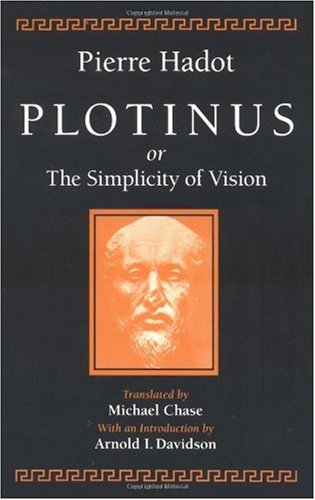 | Paperback: 145
Pages
(1998-04-28)
list price: US$18.00 -- used & new: US$15.38 (price subject to change: see help) Asin: 0226311945 Average Customer Review: 
Canada | United Kingdom | Germany | France | Japan |
|
Editorial Review Product Description Hadot carefully examines Plotinus's views on the self, existence, love, virtue, gentleness, and solitude. He shows that Plotinus, like other philosophers of his day, believed that Plato and Aristotle had already articulated the essential truths; for him, the purpose of practicing philosophy was not to profess new truths but to engage in spiritual exercises so as to live philosophically. Seen in this light, Plotinus's counsel against fixation on the body and all earthly matters stemmed not from disgust or fear, but rather from his awareness of the negative effect that bodily preoccupation and material concern could have on spiritual exercises. Customer Reviews (9)
| |
| 4. Plotinus: The Enneads (LP Classic Reprint Series) by Lorenz Books | |
 | Hardcover: 768
Pages
(2004-07-25)
list price: US$75.00 -- used & new: US$49.55 (price subject to change: see help) Asin: 0943914558 Average Customer Review: 
Canada | United Kingdom | Germany | France | Japan |
|
Editorial Review Product Description Customer Reviews (8)
Everything Plotinus says - points to a crowning experience, what he termed 'henosis' - realising a state of 'at-onement.' Hence, any idea of identifying Plotinus use of the term 'Nous' (translated as 'intellect' in English) with its narrower, modern equivalent, would be a fatal misunderstanding. Plotinus leaves no room for distinctions between the knower and the known, presenting a marked parallel with Buddhist intuitions. Given theextensive influence that Buddhism has exerted upon western culture in recent years, it would be a crime to ignore the fruit-ful parallels afforded by Plotinus. More to the point, a reading of Plotinus raises some serious questions about the verdict of people like Heidegger - when it comes to the history of Western philosophy. Moreover, it would not do to whinge about the Christian refutation of 'pagans,'as ifthe Church ignored Plotinus. His ideas influenced the early Church fathers - an influence that continued with people like Aquinus, Augustine - Eckhart etc.Hence, Heidegger's view of Western philosophy/theology as a kind of degeneration and fragmentation of 'Being' - is open to question, and one wonders why a whole generation of scholars like him, have persistently ignored what philosophers like Plotinus had to say. It is not all 'bad news.' A certain kind of 'Platonism' may well amount to what Nietzsche called 'the palest and thinnest ideas of all,' but by the same token, another form of it helped shape the intuitions of Meister Eckhart, and inspired Renaissance thinkers like Ficino. W.Y. Evans-Wentz, the noted American scholar-gypsy, a Rhodes scholar who sat at the feet of eminent Tibetan Lamas, and helped pave the way for a Western absorption of Buddhist ideas, held Plotinus in great esteem - seeing a perennial philosophy in the best of Western and Oriental civilisation.Hence, the Paul Brunton foundation endeavoured to promote a proper study of Plotinus' thought. Stephen Mackenna's translation of the Enneads was a labour of love, and gave his life to the task. It taxed Mackenna's strength, some portions of the text being completed by people like B.S. Page. The Larson edition is of especial value here, examining the nuance of various terms found in Plotinus' work - all told, the best single volume edition of the Enneads. Thanks to John Dillon's endeavours, an economically priced, abridged version of Mackenna's work is available in p/back. Dillon's comments are well worth taking into account. A.H. Armstrong's translation (with the Greek text) is available in separate volumes, but the Larson/Mackenna version - with plentiful notes, cross references etc., is the best buy for the general reader who wants to devote some time to the idioms used by Plotinus. Nobody finds Plotinus an easy read, but as the other reviews testify, those who allow Plotinus' intuitions to play upon their minds, and read between the lines, will find their vision enlarged. It is no small thing to discover that our microcosmic selves participate in the life of the divine energeia - embodying some-thing of its power, enabling us to share in the life of the whole - to feel and know that we are at one with it. Like the Yi-Ching, the Upanishads, or Prajnaparamita, Plotinus' is one of those seminal influences, providing the pinnacle of insight for a whole civilisation. Wells may be forgotten or blocked over, but the water is always there to drink.
| |
| 5. Essential Plotinus: Representative Treatises from the Enneads by Plotinus, Elmer O'Brien | |
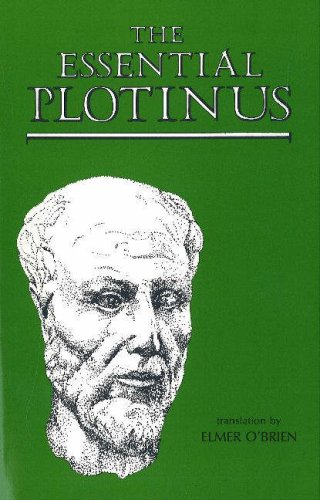 | Hardcover: 236
Pages
(1975-06-01)
list price: US$27.95 -- used & new: US$16.84 (price subject to change: see help) Asin: 0915144107 Average Customer Review:
Canada | United Kingdom | Germany | France | Japan |
Customer Reviews (5)
| |
| 6. Return To The One: Plotinus's Guide To God-Realization by Brian Hines | |
 | Paperback: 390
Pages
(2009-01-01)
list price: US$17.99 -- used & new: US$15.80 (price subject to change: see help) Asin: 0977735214 Average Customer Review:
Canada | United Kingdom | Germany | France | Japan |
|
Editorial Review Product Description Customer Reviews (13)
| |
| 7. The Six Enneads by Plotinus | |
 | Hardcover: 766
Pages
(2010-05-23)
list price: US$67.95 -- used & new: US$48.60 (price subject to change: see help) Asin: 116147708X Average Customer Review: 
Canada | United Kingdom | Germany | France | Japan |
|
Editorial Review Product Description Customer Reviews (1)
| |
| 8. Plotinus: Volume VI, EnneadVI.1-5 (Loeb Classical Library No. 445) by Plotinus | |
 | Hardcover: 368
Pages
(1988-01-01)
list price: US$24.00 -- used & new: US$19.20 (price subject to change: see help) Asin: 0674994906 Average Customer Review:
Canada | United Kingdom | Germany | France | Japan |
|
Editorial Review Product Description Plotinus (204/5-270 CE) was the first and greatest of Neoplatonic philosophers. His writings were edited by his disciple Porphyry, who published them many years after his master's death in six sets of nine treatises each (the Enneads). Plotinus regarded Plato as his master, and his own philosophy is a profoundly original development of the Platonism of the first two centuries of the Christian era and the closely related thought of the Neopythagoreans, with some influences from Aristotle and his followers and the Stoics, whose writings he knew well but used critically. He is a unique combination of mystic and Hellenic rationalist. His thought dominated later Greek philosophy and influenced both Christians and Moslems, and is still alive today because of its union of rationality and intense religious experience. In his acclaimed edition of Plotinus, Armstrong provides excellent introductions to each treatise. His invaluable notes explain obscure passages and give reference to parallels in Plotinus and others. Customer Reviews (7)
Plotinus I: Porphyry on Plotinus, Ennead I (Loeb Classical Library, 440) Plotinus II: Ennead II (Loeb Classical Library, 441) Plotinus III: Ennead III (Loeb Classical Library, 442) Plotinus IV: Ennead IV (Loeb Classical Library, 443) Plotinus V: Ennead V (Loeb Classical Library, 444) Plotinus VI: Ennead VI, Books 1-5 (Loeb Classical Library, 445) Plotinus VII: Ennead VI, Books 6-9 (Loeb Classical Library, 468) - Below is the combined table of contents for those volumes: TABLE OF CONTENTS FOR VOLUME I: Preface (editors) Sigla (editors) On the Life of Plotinus and the Order of his Books (Porphyry) Ennead I: 1. What is the Living Being, and What is Man? (53) 2. On Virtues (19) 3. On Dialectic (20) 4. On Well-being (46) 5. On Whether Well-being Increases with Time (36) 6. On Beauty (1) 7. On the Primal Good and the Other Goods (54) 8. On What Are and Whence Come Evils (51) 9. On Going Out of the Body (16) TABLE OF CONTENTS FOR VOLUME II: Sigla (editors) Ennead II: 1. On Heaven (40) 2. On the Movement of Heaven (14) 3. On Whether the Stars are Causes (52) 4. On Matter (12) 5. On What Exists Actually and What Potentially (25) 6. On Substance, or On Quality (17) 7. On Complete Transfusion (37) 8. On Sight, or How Distant Objects Appear Small (35) 9. Against the Gnostics (33) TABLE OF CONTENTS FOR VOLUME III: Sigla (editors) Ennead III: 1. On Destiny (3) 2. On Providence I (47) 3. On Providence II (48) 4. On Our Allotted Guardian Spirit (15) 5. On Love (50) 6. On the Impassibility of Things without Body (26) 7. On Eternity and Time (45) 8. On Nature and Contemplation and the One (30) 9. Various Considerations (13) TABLE OF CONTENTS FOR VOLUME IV: Preface to the Loeb Plotinus IV-V (A. H. Armstrong) Sigla (editors) Ennead IV: 1. [2] On the Essence of the Soul I (4) 2. [1] On the Essence of the Soul II (21) 3. On Difficulties About of the Soul I (27) 4. On Difficulties About of the Soul I (28) 5. On Difficulties About of the Soul III, Or On Sight (29) 6. On Sense Perception and Memory (41) 7. On the Immortality of the Soul (2) 8. On the Descent of the Soul into Bodies (6) 9. If All Souls are One (8) TABLE OF CONTENTS FOR VOLUME V: Preface to the Loeb Plotinus IV-V (A. H. Armstrong) Sigla (editors) Ennead V: 1. On the Three Primary Hypostases (10) 2. On the Origin and Order of the Beings Which Come After the First (11) 3. On the Knowing Hypostases and That Which is Beyond (49) 4. How That Which is After the First Comes From the First, And on the One (7) 5. That the Intelligibles are not Outside the Intellect, and on the Good (32) 6. On the Fact that that Which is Beyond Being does not Think, and on What is the Primary and What the Secondary Thinking Principle (24) 7. On the Question Whether there are Ideas of Particular Things (18) 8. On the Intelligible Beauty (31) 9. On Intellect, the Forms, and Being (5) TABLE OF CONTENTS FOR VOLUME VI: Preface to the Loeb Plotinus VI, VII (A. H. Armstrong) Sigla (editors) Ennead VI (continued in volume VII): 1. On the Kinds of Being I (42) 2. On the Kinds of Being II (43) 3. On the Kinds of Being III (44) 4. On the Presence of Being, One and the Same, Everywhere as a Whole I (22) 5. On the Presence of Being, One and the Same, Everywhere as a Whole II (23) TABLE OF CONTENTS FOR VOLUME VII: Preface to the Loeb Plotinus VI, VII (A. H. Armstrong) Sigla (editors) Ennead VI (continued from volume VI): 6. On Numbers (34) 7. How the Multitude of Forms Came into Being, and on the Good (38) 8. On Free Will and the Will of the One (39) 9. On the Good or the One (9) The numbers in parentheses indicate Plotinus' order of composition, which differs from the order given them by Porphyry and which this edition follows. The bracketed numbers for the first two chapters of Ennead IV are an alternate ordering for them.
The Preface describes the historical context within which Plotinus wrote, offers a summary of this thought, and a survey of Plotinus translations, commentaries, and studies. This material is supplemented by short introductions and synopses at the start of each chapter, and by abundant and detailed footnotes. The footnotes explain translation difficulties (not uncommon with Plotinus), and also identify the sources of Plotinus' references to other writers. These materials are excellent. The only thing that this edition lacks is an index. The editors plead the difficulty of indexing Plotinus, and recommend "Lexicon Plotinianum" by J. H. Sleeman and Gilbert Pollet as an alternative. This work is, however, out of print (is it even in English? I am not sure) so it is not a very helpful suggestion. As it is, given Plotinus' rather scattered way of writing, an index is missed. The Enneads are a collection of Plotinus' writings from fairly late in his life. Porphyry, his student, encouraged him in writing down his teachings, and acted as his posthumous editor (he also wrote a short biography of Plotinus which is included in the first volume). The works as they exist today are as they were received from Porphyry. As editor, Porphyry created his own organization for the works based on subject matter. This order is completely different from the order in which Plotinus wrote them. Porphyry, however, did document the original ordering. From my own experience, however, I would recommend strongly reading Plotinus' writings in the order Plotinus wrote them rather than the order in which Porphyry arranged them. The major advantage I found was that it was much easier to follow the reasons why Plotinus believed what he did, even if the subject matter does jump around a bit. I tried Porphyry's order first, and almost gave up in despair before trying again in Plotinus' order. I have come to the conclusion that much of Plotinus' reputation as a bad writer is due to unfortunate but well-intended editorial decisions by Porphyry. Given that the Loeb edition presents Plotinus' writings in Porphyry's order, and that the Loeb edition is in multiple volumes, reading Plotinus this way does have a certain entertaining quality as well (first get volume IV, read a treatise, then get volume VI, read another, then get volume I, read another, and so on). An important recommendation I would make for the reader is that he be properly prepared in his background reading. All of Aristotle and all of Plato would be ideal (as well as a worthwhile activity in its own right), but if the would-be reader of Plotinus finds that a little daunting and wants to get started sooner, there are a few works that he should make a particular effort to read: Plato's "Phaedo", "Republic" (Books VI, VII), "Parmenides", and "Timaeus"; Aristotle's "Physics", "On the Heavens", "On the Soul", and "Metaphysics". Plato, as the earlier writer, should be read first (by the way - don't be discouraged when you find you don't understand the second half of "Parmenides", Plotinus is going to tell you what he thinks it means in due course, so all you need to do is understand the references). If you don't have Plato or Aristotle, for Plato, Cooper's "Plato: Complete Works" (in one volume), and for Aristotle, Barnes' "Complete Works of Aristotle" (in two volumes), are excellent. ... Read more | |
| 9. Plotinus: Road to Reality by Rist | |
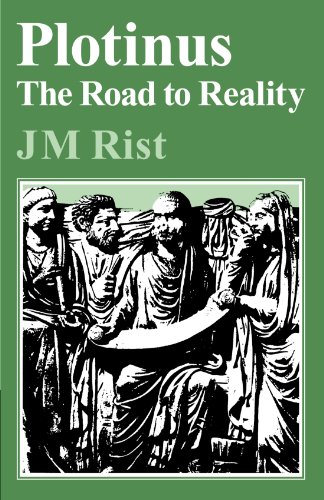 | Paperback: 290
Pages
(1977-06-24)
list price: US$23.99 -- used & new: US$23.31 (price subject to change: see help) Asin: 0521292026 Canada | United Kingdom | Germany | France | Japan |
|
Editorial Review Product Description | |
| 10. The Heart of Plotinus: The Essential Enneads (The Perennial Philosophy) by Algis Uzdavinys | |
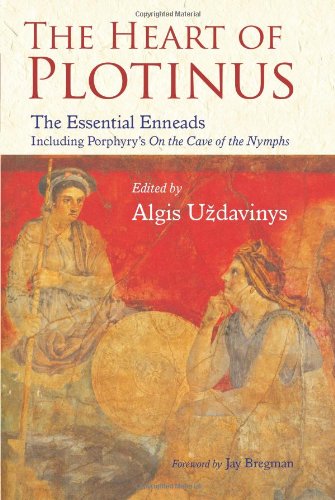 | Paperback: 296
Pages
(2009-04-25)
list price: US$24.95 -- used & new: US$16.38 (price subject to change: see help) Asin: 1933316691 Canada | United Kingdom | Germany | France | Japan |
|
Editorial Review Product Description | |
| 11. Plotinus on Number by Svetla Slaveva-Griffin | |
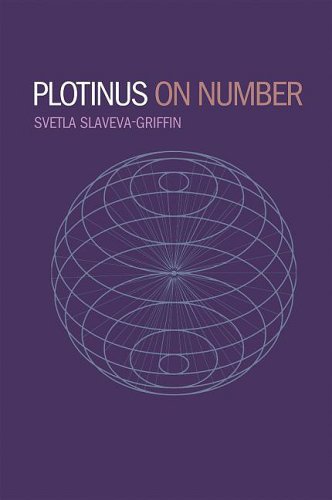 | Hardcover: 192
Pages
(2009-03-04)
list price: US$74.00 -- used & new: US$65.40 (price subject to change: see help) Asin: 0195377192 Canada | United Kingdom | Germany | France | Japan |
|
Editorial Review Product Description | |
| 12. Culture and Philosphy in the Age of Plotinus (Classical Literature and Society) by Mark Edwards | |
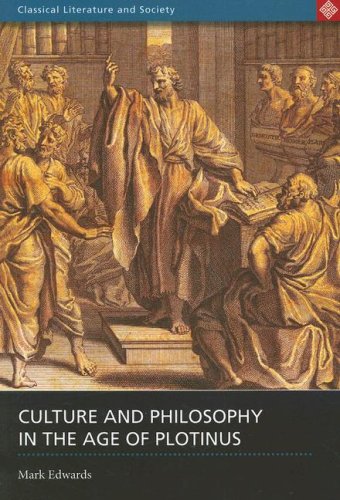 | Paperback: 192
Pages
(2006-12-19)
list price: US$31.00 -- used & new: US$19.58 (price subject to change: see help) Asin: 0715635638 Canada | United Kingdom | Germany | France | Japan |
|
Editorial Review Product Description | |
| 13. The philosophy of Plotinus ... by William Ralph Inge, James Nairne, W K. C. 1906-1981 Guthrie | |
 | Paperback: 274
Pages
(2010-08-30)
list price: US$27.75 -- used & new: US$19.97 (price subject to change: see help) Asin: 1178010996 Canada | United Kingdom | Germany | France | Japan |
|
Editorial Review Product Description | |
| 14. The Cambridge Companion to Plotinus (Cambridge Companions to Philosophy) | |
 | Paperback: 480
Pages
(1996-08-13)
list price: US$39.99 -- used & new: US$29.00 (price subject to change: see help) Asin: 0521476763 Average Customer Review: 
Canada | United Kingdom | Germany | France | Japan |
|
Editorial Review Product Description Customer Reviews (3)
However, it was very difficult reading for me, with some of the essays nearly impenetrable. The back cover of the book says it was an aim of the Cambridge Companion series to "dispel the intimidation such readers [ non-specialists] feel when faced with the work of a difficult and challenging thinker". Could have fooled me since The Enneads seem easier going than this collection. Nor did I find these collection the "most convenient and accessible guide to Plotinus currently available". The opposite seems closer to the truth. The introductory essays presented by the editor John Dillon in Penguin's abridged publication of Stephen McKenna's translation of The Enneads were vastly more readable for me. Avoid the mistake I made of reading this book first: what you may lack in context even if you read Plotinus cold, Plotinus will more than make up for by his sweeping vision and attentiveness to clear explanation. If not, you might try the Karl Jaspers book on the great philosphers that includes a big section on Plotinus. I wouldn't not recommend this book, because it does provide a great deal of context (e.g. on Plotinus's place within Platonism and his debt to Aristotle and the Stoics), the essayists are indeed top scholars, and the price is excellent. Even if you find one or two of the essayists you really benefit from and read more of them in the future, this book will have served as a good sampler. But be careful thinking that because you are very smart or very interested in Plotinus that this book is worth your time: you may find, like I am finding, that it serves mostly as a reminder of the twisty passages of academia. ... Read more | |
| 15. Opera, Vol. 2: Enneades 4-5 by Plotinus | |
 | Hardcover: 338
Pages
(1977-04-07)
list price: US$74.00 -- used & new: US$74.00 (price subject to change: see help) Asin: 0198145829 Canada | United Kingdom | Germany | France | Japan |
| 16. Opera, Vol. 3: Ennead 6 (Latin and Greek Edition) (Vol 3) by Paul Henry | |
 | Hardcover: 402
Pages
(1983-12-01)
list price: US$74.00 -- used & new: US$74.00 (price subject to change: see help) Asin: 0198145918 Canada | United Kingdom | Germany | France | Japan |
| 17. Plotinus on the Good or the One (Enneads VI, 9 : An Analytical Commentary) by P. A. Meijer | |
 | Paperback: 381
Pages
(1992-05-01)
list price: US$88.00 -- used & new: US$83.88 (price subject to change: see help) Asin: 9050630820 Canada | United Kingdom | Germany | France | Japan |
| 18. Arabic Plotinus: A Philosophical Study of the 'Theology of Aristotle' by Peter Adamson | |
 | Hardcover: 256
Pages
(2003-03-17)
list price: US$81.00 -- used & new: US$81.00 (price subject to change: see help) Asin: 0715631632 Canada | United Kingdom | Germany | France | Japan |
|
Editorial Review Product Description This is the first book-length study of the text, devoted to understanding the ideas and motivations of the translator who helped to determine how philosophers for centuries thereafter would confront Greek thought. | |
| 19. Plotinus on Eudaimonia: A Commentary on Ennead I.4 by Kieran McGroarty | |
 | Hardcover: 260
Pages
(2006-11-30)
list price: US$110.00 -- used & new: US$72.74 (price subject to change: see help) Asin: 0199287120 Canada | United Kingdom | Germany | France | Japan |
|
Editorial Review Product Description | |
| 20. Plotinus: Enneads by Plotinus | |
 | Kindle Edition:
Pages
(2010-07-06)
list price: US$0.99 Asin: B003UYUYSQ Canada | United Kingdom | Germany | France | Japan |
|
Editorial Review Product Description | |
| 1-20 of 100 | Next 20 |
 Fascinating Insight Into The Thought of The Ancients
 Skip this Penguin travesty of a book