e99 Online Shopping Mall

Geometry.Net - the online learning center Help  
Home  - Philosophers - Popper Karl (Books)

  Back | 41-60 of 100 | Next 20
A  B  C  D  E  F  G  H  I  J  K  L  M  N  O  P  Q  R  S  T  U  V  W  X  Y  Z  

click price to see details     click image to enlarge     click link to go to the store

 
41. Rationalitat und Theoriebildung:
$56.08
42. Karl Poppers kritischer Rationalismus.
$95.71
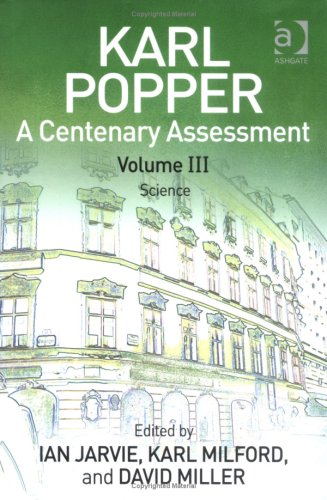
43. Karl Popper: A Critical Appraisal
$18.25
44. Karl R. Popper (Grosse Denker)
 
$9.95
45. Notes on Karl Popper.(Brief biography):
$38.17
46. Realism and the Aim of Science:
$8.95
47. Popper: The Great Philosophers
 
$83.00
48. Essays On Realism And Rationalism.(Schriftenreihe
 
$75.60
49. Karl Popper's Philosophy of Science:
 
$84.09
50. Truth, Hope, and Power: The Thought
 
$32.95
51. The Ethical Nature of Karl Popper's
 
$37.95
52. Altern Und Alterssicherung Aus
$47.60
53. Karl Popper : Un philosophe heureux
 
$5.95
54. Social work method: Karl Popper
 
55. Learning from Error: Karl Popper's
 
56. Rationalitat und Begrundung: Das
 
$5.95
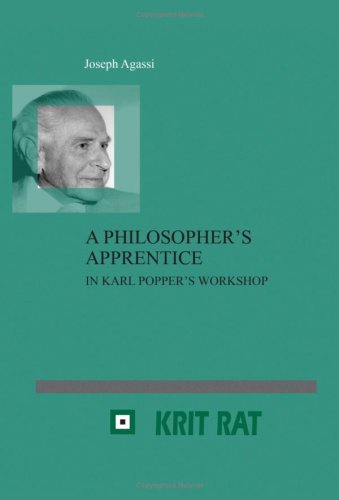
57. The Philosopher's Apprentice:
58. Odyssee meines Lebens und die
 
$5.95
59. Sistema proporcional: menos democrático:
 
$44.80
60. L'inconnu devant soi: Karl Popper

41. Rationalitat und Theoriebildung: Studien zu Karl R. Poppers Methodologie der Sozialwissenschaften (Series in the philosophy of Karl R. Popper and critical rationalism)
by Michael Schmid
 Unknown Binding: 339 Pages (1996-01)
list price: US$63.00
Isbn: 9051839928
Canada | United Kingdom | Germany | France | Japan
Editorial Review

Book Description
Der Band rekonstruiert und kritisiert die verstreuten VorschlÄge, die Karl R. Popper zur Philosophie der Sozialwissenschaften gemacht hat. Dabei stehen drei Themenbereiche im Vordergrund: Zum einen wird der von Popper verteidigte Methodologische Individualismus in der Absicht untersucht, dessen begrenzte heuristische Fruchtbarkeit sichtbar zu machen; zum weiteren wird die von Popper favorisierte Logik von HandlungserklÄrungen einer nachhaltigen Revision unterzogen, was eine umfassendere handlungstheoretische ErklÄrungspraxis erlaubt, als sie Popper im Auge hatte; und zum dritten diskutiert der Autor die Frage, inwieweit Poppers Theorie des Wissensfortschritts fÜr die sozialwissenschaftliche Theoriebildung verbindlich ist; auch in diesem Falle werden MÄngel diagnostiziert und Wege zu deren Beseitigung erkundet. Relevanz und Reichweite der Popperschen Gedanken zur Philosophie der Handlungswissenschaften lassen sich damit deutlicher abstecken, als dies der bisherigen Popper-Rezeption mÖglich war. Es stellt sich heraus, daß Poppers sozialwissenschaftliche MethodenvorschlÄge in revidierter Form durchaus Beachtung verdienen und manchem neueren Versuch, der sozialwissenschaftlichen Theoriebildung Halt und Richtung zu verleihen, vorzuziehen sind. ... Read more


42. Karl Poppers kritischer Rationalismus.
by Karl R. Popper, Ingo Pies, Martin Leschke
Paperback: 249 Pages (1999-10-01)
-- used & new: US$56.08
(price subject to change: see help)
Asin: 316147211X
Canada | United Kingdom | Germany | France | Japan

43. Karl Popper: A Critical Appraisal
by Philip Catton
Hardcover: 240 Pages (2004-12-03)
list price: US$115.00 -- used & new: US$95.71
(price subject to change: see help)
Asin: 0415319706
Average Customer Review: 4.0 out of 5 stars
Canada | United Kingdom | Germany | France | Japan
Editorial Review

Book Description
One of the most original thinkers of the century, Karl Popper's work has inspired generations of philosophers, historians, and politicians.
This collection of papers, specially written for this volume, offers fresh philosophical examination of key themes in Popper's philosophy, including philosophy of knowledge, science and political philosophy.Drawing from some of Popper's most important works, contributors address Popper's solution to the problem of induction, his views on conventionalism and criticism in an open society and explore his unique position in twentieth century philosophy. Contributors also examine the current relevance of Popper to understanding liberal democracy, his critique of tribalism and offer new evaluations on Popper's relationship with analytic philosophy in general, and with Wittgenstein in particular as well as drawing on the studies of Isaac Newton and Albert Einstein to assess Popper's conception of science.
This volume offers new insights on key topics from some of Popper's most important work and is essential reading for students of Popper and anyone interested in political philosophy and the philosophy of science. ... Read more

Customer Reviews (1)

4-0 out of 5 stars Celebration of Popper down under
Most of the eleven papers in this collection were delivered at the Popper Centenary conference in New Zealand in July 2002, in the city were Popper wrote The Open Society and its Enemies sixty years ago. Some of the contributors were fresh (actually a little jet-lagged) from the Vienna Conference a few days before.

Alan Musgrave describes how Popper (might have) solved the problem of induction, though what he actually achieved was not a solution but an explanation that the problem is rather like the problem of building a perpetual motion machine, insoluble and not a barrier to progress.

Semiha Akini explained how Popper's conventionalism is different from that ofDuhem and Pioncare because it points to the indispensable role of conventions in the methods of science and it does not underwrite decisions about the content or truth of theories. A reference to Jarvie's latest book on the role of conventions or rules ofthe game of science would have supported this case.

Phillip Catton undertook some really interesting and fine grained criticism of Popper's "conjecture and refutation" methodology with reference to Harvey's work on the role of the heart, Wegener on Continental Drift, Newton and the Einstein's early work. The gist of his argument is that these developments were "rational in ways that Popper ill equips us to fathom". I suspect that this criticism may not be as telling as he believes, for example finding out that Newton was a fallibilist hardly unsettles Popper's theory of conjectural knowledge, though it may correct some ideas that Popper and others had about Newton.

Wenceslao J Gonzalez discussed the many faces of Popper's methodological approach to prediction, with some reference to economics. Unfortunately there is no mention of the large body of work in this field by Larry Boland is not mentioned here although he is the outstanding Popperian contributor to the philosophy and methodology of economics.

Jeremy Shearmur provided a challenge to the bulk of the philosophical profession to see ifthey might have something to learn from Popper, at least from his habit of addressing problems that have both intellectual and practical import, and writing in language that is accessible to interested members of the public. It seems that Popper has practically ceased to register among both Continental and analytical philosophers, on which topic see some evidence presented below by Jeremy Waldron. Peter Munz was also entertaining and especially challenging with his thesis that Popper and Wittgenstein should have gone into partnership to provide elements that are missing from each other's schemes.

Alan Ryan is a veteran commentator on these issues and he addressed the relationship between science and politics with three questions in mind. One, is democracy good for science? Two, can or should scientists seek consensus in their own fields in the same way that citizens seek consensus on public policy? Three, is science good for democracy? It seems that democracy is good for science. On the matter ofscientific rationality as a model for rationality in the political domain, the answer is a muted yes, with some help from Dewey and a cryptic reference to Habermas. On the benefits of science for democracy, Ryan is not encouraging, noting the way that Big Science has generated demands for big money and that is the root of a great deal of political evil.

Anthony O'Hear contributed an interesting and challenging criticism of the notion of the open society as a utopia.His main criticism is that social institutions are not just problem-solving instruments that can be designed by social engineers and put in placeon order (football clubs to solve the problem of people who want to play football), they function in many ways that give meaning and purpose to people's lives. This is a fascinating paper although I think if the open society is regarded as an ideal type (in contrast with an equally idealised closed society) rather than a utopian aim, then we can get the benefit ofPopper's ideas without collapsing into that form ofconstructivist rationalism that Hayek has identified as the great and destructive superstition of modern times.

Jeremy Waldron writes on tribalism and the myth of the framework with special attention to the politics of cultural recognition. This is an intricate defence of the idea of expanding the scope of critical rationalism to address problems of culture clash inmulticultural and multiracial societies. One of his targets, following Popper, is the idea that people need to share a whole framework of beliefs before they can get on together or discuss anything usefully. The example of trade would appear to be a major counter-example, where goods can be traded across all manner of social divisions just provided that both parties want to do business. I think there is a rather significant lesson to be learned there.
... Read more


44. Karl R. Popper (Grosse Denker)
by Lothar Schafer
Perfect Paperback: 187 Pages (1988)
-- used & new: US$18.25
(price subject to change: see help)
Asin: 3406332153
Canada | United Kingdom | Germany | France | Japan

45. Notes on Karl Popper.(Brief biography): An article from: Modern Age
by Philip Brantingham
 Digital: 14 Pages (2007-01-01)
list price: US$9.95 -- used & new: US$9.95
(price subject to change: see help)
Asin: B000PDZDRM
Canada | United Kingdom | Germany | France | Japan
Editorial Review

Book Description
This digital document is an article from Modern Age, published by Thomson Gale on January 1, 2007. The length of the article is 3951 words. The page length shown above is based on a typical 300-word page. The article is delivered in HTML format and is available in your Amazon.com Digital Locker immediately after purchase. You can view it with any web browser.

Citation Details
Title: Notes on Karl Popper.(Brief biography)
Author: Philip Brantingham
Publication: Modern Age (Magazine/Journal)
Date: January 1, 2007
Publisher: Thomson Gale
Volume: 49Issue: 1Page: 37(7)

Article Type: Brief biography

Distributed by Thomson Gale ... Read more


46. Realism and the Aim of Science: From the Postscript to the Logic of Scientific Discovery
by Karl Popper
Paperback: 464 Pages (1992-04-10)
list price: US$42.95 -- used & new: US$38.17
(price subject to change: see help)
Asin: 0415084008
Average Customer Review: 4.5 out of 5 stars
Canada | United Kingdom | Germany | France | Japan
Editorial Review

Book Description
Popper formulates and explains his non-justificationist theory of knowledge. Science--empirical science--aims at true explanatory theories, yet it can never prove, finally establish, or justify any of its theories as true, not even if it is in fact a true theory. Science must continue to question and criticize all its theories, even those which happen to be true. ... Read more

Customer Reviews (2)

4-0 out of 5 stars The other shoe falls - after 50 years
During the 1950s, while "Logik der Forschung" was being translated to become "The Logic of Scientific Discovery" Popper prepared almost a thousand pages of manuscript for publication as a companion volume to be called "The Postscript to The Logic of Scientific Discover: After 20 Years". The 20 years was the time from the original publication of "Logik". It eventually became almost 50 years. For various reasons publication was delayed until William W. Bartley undertook the task of editing the large manuscript. At last The Postscript appeared in three volumes (with further additions) in 1982 and 1983. Volume 1 is "Realism and the Aim of Science", volume 2 is "The Open Universe: An Argument for Indeterminism" and volume 3 is "Quantum Theory and the Schism in Physics".

This is probably the least enjoyable of Popper's works, though it offers an important corrective to the widespread idea that Popper's ideas were superseded by Kuhn and Lakatos. In the first part, "The Critical Approach" Popper replies to Kuhn and Lakatos and shows that they never really offered significant criticisms (or alternatives) to the critical approach or to Popper's theory of conjectural objective knowledge. They did identify some problems with "falsification" and these were widely regarded as serious criticisms of Popper's ideas, even though he had recognized the problems some decades before and answered them. For example, Popper had always realised that falsification was only logically decisive (in a way that verification was not) because in real life observations are fallible and they need to be interpreted in the light of theories.

In the second part of the book Popper outlines his thoughts on the propensity interpretation of probability. This is his effort to overcome the defects of subjective theories of probability and the challenge of providing a theory of the probability of single events. This is an important but technical area of his work which some people find engrossing and others approach with a kind of mental block. I suggest that you ask David Miller to comment on Part II.

5-0 out of 5 stars Most impressive defense of Popper's epistemology
Popper has presented his controversial views of induction and the nature of scientific discovery in a number of essays and books, but no where does he advance some of his seemingly paradoxical views better than in"Realism and the Aim of Science."At first blush, Popper's viewsof the nature of scientific inquiry seem to defy common sense.Hebelieves, for instance, that the distinguishing mark of scientific theoriesare their falsibiability, rather than verifiability; that audacity, ratherthan caution, is the essence of science; that irrefutability is not avirtue in a theory but a vice; and that no scientific theory ever becomesmore probable when evidence is discovered in its favor but must alwaysremain infinitely improbable.What makes this book so remarkable is thebrilliant arguments Popper advances for these seemingly absurd views. Popper demonstrates why these views are necessary in order to have arational view of science, arguing that the opposite view of knowledge, theview thatregards verifiability as central to scientific inquiry, tends toblind those seeking the truth from facts which would refute their theories. Hence Popper's belief that, instead of trying to prove our theories, weshould try to falsify them instead.That way, if there are facts out therewhich would disprove them, we are much more likely to find them. ... Read more


47. Popper: The Great Philosophers (The Great Philosophers Series)
by F. Raphael
Paperback: 59 Pages (1999-07)
list price: US$8.95 -- used & new: US$8.95
(price subject to change: see help)
Asin: 0415923913
Average Customer Review: 4.0 out of 5 stars
Canada | United Kingdom | Germany | France | Japan
Editorial Review

Book Description
Philosophy is one of the most intimidating and difficult of disciplines, as any of its students can attest. This book is an important entry in a distinctive new series from Routledge: The Great Philosophers. Breaking down obstacles to understanding the ideas of history's greatest thinkers, these brief, accessible, and affordable volumes offer essential introductions to the great philosophers of the Western tradition from Plato to Wittgenstein.
In just 64 pages, each author, a specialist on his subject, places the philosopher and his ideas into historical perspective. Each volume explains, in simple terms, the basic concepts, enriching the narrative through the effective use of biographical detail. And instead of attempting to explain the philosopher's entire intellectual history, which can be daunting, this series takes one central theme in each philosopher's work, using it to unfold the philosopher's thoughts. ... Read more

Customer Reviews (5)

2-0 out of 5 stars NOT the book to start with; reductionistic and misleading!
I've not read any others in the "great philosophers" series but I have read a few of the "x in 90 minutes" and " on x" series (very similar in that they run about 70 pages each and are meant to serve as brief layperson's overviews). From what I know of this type of book, this one is quite badley done.

As a long time fan of Popper, I sympathize with how Mr. Raphael must have felt in attempting this project. Karl Raimond Popper was a thinker whose ideas lead him from and to many topics. From ontological speculation (realism) to epistemology (critical rationalism) to the progress of science (conjecture and refutation) to ethics (a very bizarre and unfortunately not so discript pragmatic liberal humanism) to politics (democracy with again, not so discript piecemeal engineering). If you read his autobiography "An Unended Quest", he even has a philosophy of music!

For all that, Mr. Raphael could have done 10 times better than he did. Out of all the ideas above, Mr. Raphael talks about only conjecture and refutation (in 10 intro pages that compares in attitude to a kid being forced to eat her brussel sprouts).

The next 49 pages are spent discussing Popper's views on the impossibility of historical prophecy. Not that these views arent important but in light of Popper's humongous contribution to the philosophies of science and epistemology (and the non-contriversial nature, at least in todays world, of Popper's anti-historicism) focusing, by in large, the whole book on it is putting pages to bad use.

What caused me, though, to give the book 2 stars (I may have given it 4 otherwise) is that the book is marketed as an introduction to the ideas of Popper for those who've either never heard of him or never read of him. Had this book been marketed as an intro specifically to his anti-historicism, it would have been much easier to swallow. As it is, the reader taking this as an apropos introduction will be infinitely misled.

Fortunately there are better introductions. Bryan Magee's "Philosophy in the Real World: An introduction to Karl Popper" is, with maybe 40 more pages than this volume, a much better, more accurate, and proportional volume written by someone who knew Popper as a teacher and friend. For the student who has more time, Geoffrey Stokes "Popper: Philosophy, Politics and the Scientific Method" is a book that examines, first, Popper's political philosophy and works backwards to reveal how his philosophy of science gets him there. The best introduction, however, is going to be Popper's own "In Search of a Better World".

4-0 out of 5 stars Excellent introduction but not complete.
This small book deals only with the political and not the scientific part of Popper's work, thus mainly with 'The open society and its enemies' and 'The poverty of historicism'.
It is an excellent introduction for this part of Popper's work.
The author clearly explains that improvement or self-correction through freedom of speech (criticism) is only possible in democracies and not in dictatorial (fascist) or pseudo-scientific (marxist) systems of government.
For me, he correctly recognizes the possible limits of Popper's proposition of 'piecemeal engineering' of political, social or environmental problems: "Is piecemeal engineering grand enough to deal with global pollution, genocidal oppression of minorities and pandemics such as AIDS?"
He also sees clearly the actual dangers for democracies: "How are major corporations, with transnational funds and managements, to be controlled by democratic authorities whose writs run only to their frontiers?"
Also some interesting facts (rare) about Popper's personal life.
A very worth-while read.

3-0 out of 5 stars Pretty good, but a bit misplaced in my eyes
Another short book from The Great Philosophers Series.Although Popper is most famous for his philosophy of science, this book dwells mostly upon his political theory.I suppose that is okay, but this approach somewhat misrepresents why Popper is an important philosopher for us today.After all, he is generally regarded as one of the greatest philosophers of science of this century.I get the feeling Raphael was not comfortable with science writing, which makes me wonder why the editors put him on this project.Don't get me wrong, the writing was accessible and informative on Popper's political theory, but it just seemed a bit misplaced, given what I take this series of books is concerned with.

5-0 out of 5 stars Great short summary
I will ditto the previous review... an outstanding short summary.Raphael does an outstanding survey and treatment.He grandly collapses pages of Popper into individual "magic paragraphs".My only complaint is that Raphael often uses a past and almost passive tense, which really saps some of his sentences' potential electricity.

I would dearly love to see a full Raphael treatment of the entire Popper library.

5-0 out of 5 stars Frederic Raphael's Brief Book On Karl Popper is Invaluable
I purchased this small book of only fifty-nine pages regarding the twentieth century philosophical giant Karl Popper with a certain degree ofpessimism. Could the author truly succeed in doing justice to the person and thoughts of this great man in such a brief manner? The adamant and unhesitatinganswer is in the affirmative. Raphael brilliantly outlines the impact of Popper's thinking upon both the political and scientific spheres of human investigation.Popper thoroughly demolished the philosophical underpinnings of totalitarianism. It is an utter disgrace, I might add, that Popper's brilliant attackon the error of historicism is rarely discussed in today's academic circles. Much horror and blood shed could have been avoided in the previous century hadthe Austrian born philosopher received the attention he had overwhelmingly earned.

The blunt side of Popper's character often irritated those around him. Karl Popper and Ludwig Wittgenstein, for example, on one occasionalmost came to blows. Was Popper a pleasant man to know on a personal basis? He may very well have been inclined to treat disagreement in an unfair manner.Nonetheless, this possible character fault should not blind us to the value of Popper's philosophical insights. After all, since when has philosophical inquirybeen about winning a popularity contest? I wholeheartedly recommend this book. Even someone already familiar with Karl Popper's thinking will find it of value.This is the first book I have ordered in "The Great Philosophers" series put together by Frederic Raphael and Ray Monk. It most certainly will not be the last! ... Read more


48. Essays On Realism And Rationalism.(Schriftenreihe zur Philosophie Karl R. Poppers und des Kritischen Rationalismus/Series in the Philosophy of Karl R. ... of Karl R.Popper & Critical Rationalism)
by Alan Musgrave
 Paperback: 380 Pages (1999-01)
list price: US$83.00 -- used & new: US$83.00
(price subject to change: see help)
Asin: 9042004185
Canada | United Kingdom | Germany | France | Japan
Editorial Review

Book Description
The book's essays represent an important contribution to the contemporary philosophical debate concerning Realism and Rationalism. The author defends in a clear and consistent fashion a fallibilist, realistic, and rationalist position in opposition to the idealistic and relativistic viewpoint characteristic of present postmodern philosophy.

Hans Albert
... Read more


49. Karl Popper's Philosophy of Science: Rationality without Foundations (Routledge Studies in the Philosophy of Science)
by Stefano Gattei
 Hardcover: 432 Pages (2008-08-01)
list price: US$120.00 -- used & new: US$75.60
(price subject to change: see help)
Asin: 0415378311
Canada | United Kingdom | Germany | France | Japan
Editorial Review

Book Description

Focusing on one of the most significant figures in twentieth-century philosophy, this important new book seeks to rectify misrepresentations of Popperian thought with a historical approach to his philosophy. This approach is one which applies his own mature view - that we gain knowledge through conjectures and refutations - to his own development, by portraying him in his intellectual growth as just such a series. Stefano Gattei reconstructs the logic of Poppers development to highlight how one problem and its tentative solution led to a new problem.

Lucidly written by a widely-respected author, this book is an invaluable resource for philosophers of science, historians of philosophy and those interested in science criticism and the growth of knowledge.

... Read more

50. Truth, Hope, and Power: The Thought of Karl Popper
by Douglas E. Williams
 Hardcover: 256 Pages (1989-01)
list price: US$37.50 -- used & new: US$84.09
(price subject to change: see help)
Asin: 0802026435
Average Customer Review: 2.0 out of 5 stars
Canada | United Kingdom | Germany | France | Japan

Customer Reviews (1)

2-0 out of 5 stars A strange kind of balance
Douglas Williams of the Department of Political Studies at Queens University in Kingston (Canada) has written a wide-ranging account of Popper's thought with the emphasis on the social and political aspects of his ideas. The intention of the author was to draw out both the strengths and limitations of Popper's work from the perspective of a critical admirer. This stance has enabled him to identify some aspects of Popper's work that are generally neglected, especially the moral dimension of his thought which Williams regards as a pervasive unifying principle. He also notes that virtually nothing has been written about Popper's defence of the cultural ideals of Western society and a major aim of the book is to show "the sustaining unity and power of Popper's vision" as it runs through his work in cosmology, philosophy, science, history and politics.

Despite these promising indications, the results are disappointing. This is not because Williams dissents radically from many salient features of Popper's philosophy. These disagreements, from a professed admirer of Popper's achievement, should be challenging and illuminating. The problem is that Williams does not provide the arguments and the evidence that are required to make his objections convincing, or to drive the discussion to a deeper level. Inconsistencies and inaccuracies abound. What is one to make of an author who on page 164 rebukes Popper for his 'failure to apppreciate the ideal of the good life in a free and egalitarian society', having previously (p 15) quoted from Popper's Unended Quest 'For nothing could be better than living a modest, simple, and free life in an egalitarian society...'?

Williams comments that Popperian exegesis has polarised between disciples and vehement critics. It appears that he has achieved a balance of a kind by occupying each extreme in turn. In one mode he writes:
'During the last four decades, and spanning a seemingly endless number of fields of inquiry, Popper has established himself as one of the most significant thinkers of our century...Few thinkers in our century have possessed the intellectual powers, the courage, and the faith in humanity necessary to sustain such a project. Bertrand Russell is perhaps the last that comes to mind'(viii).

In the critical mode he raises myriad objections, large and small, to Popper's psychology, his epistemology, and his politics, concluding that some of Popper's ideas, especially his concept of rationality, are not consistent with the maintenance of human freedom and autonomy.

Williams digs deep to locate the roots of Popper's ideas. He suggests that Popper followed Kant's defence of human dignity and moral autonomy against the twin threats of mechanistic determinism (Newton) and skepticism (Hume.) This is a fertile formulation that could have led directly to an account of Popper's responses to these threats, namely indeterminism, fallibilism, a non-authoritarian theory of knowledge and a limited 'non-justificationist' theory of rationality. Instead, Williams embarks on an account of the rise of science and the battle to maintain a sense of enchantment in a culture of science and technocratic politics. The remaining chapters examine Popper's methodology for the natural sciences (Chapter 4), his prescriptions for the social sciences (Chapter 5) and his defence of liberalism (Chapter 7 and Chapter 8). Chapter 6 defends Mannheim from some Popperian criticism.

One of Williams's problems is that he has tried to achieve too much in 200 pages. This tendency is especially apparent in Chapter 4, where in less than thirty pages he covers the development of most of Popper's leading ideas in epistemology and the philosophy of science. This is too densely packed for an introduction and it is likely to confuse people who come to the book in search of Popper's social philosophy. At the end of the chapter Williams changes from the descriptive to the critical mode and delivers an essentially negative verdict on Popper's psychology and also his epistemology.

In Williams' conclusion, he wrote that his aim was to faithfully reconstruct the unity of Popper's vision by pursuing an 'immanent critique'. That is, 'criticism of a man or woman's thought is held to flow from his or her own assumptions and values' (185). He wanted to improve on the excessively specialised and polemical nature of most of the commentary on Popper's work. This is a worthy aim but not one that Williams achieved, possibly because he did not make use of Bartley's account of the 'metacontextual shift' generated by Popper's non-authoritarian theory of knowledge and politics. Consequently Williams has been unable to do justice to Popper's epistemology and its cultural implications.

A similar problem has apparently occurred with Williams' critique of Popper's politics, especially Popper's views on the limited, protective role of the state. Williams has promulgated some very misleading statements, on Popper's views about the role of technocrats and social engineering, for example. This is a situation where the imminent critique may need to be supplemented by an account of Williams' own assumptions and values because they have apparently influenced his adverse comments on Popper.

The result is a book containing a confusing mixture of praise and criticism. If the criticisms were valid, Williams' high opinion of Popper would appear to be unwarranted. For the most part they are not valid, and one wonders how some of the more spectacular misreadings survived the screening of all the helpers he acknowledged. One also wonders what kind of impression this book will make on people who have not read Popper. Clearly the best thing that can happen will be for people to read some of the books and make up their own minds on the problems and issues raised by Williams. ... Read more


51. The Ethical Nature of Karl Popper's Theory of Knowledge: Including Popper's unpublished comments on Bartley and critical rationalism
by Mariano Artigas
 Paperback: 153 Pages (1999-09)
list price: US$32.95 -- used & new: US$32.95
(price subject to change: see help)
Asin: 0820446068
Canada | United Kingdom | Germany | France | Japan
Editorial Review

Book Description
This book invites to interpret Karl Popper under the light of his ethical attitudes. In the first part a previously unpublished text by Popper is reproduced and commented which is most relevant to acquire a new insight on Popper's philosophy and should be taken into account in any future interpretation of it. In the second part, under the light of the new insight, the ethical roots of Popper's theory of knowledge are analysed, jointly with the meaning and reach of his fallibilism. ... Read more


52. Altern Und Alterssicherung Aus Wissenschaftlicher Sicht (Schriftenreihe Der Karl Popper Foundation Klagenfurt)
by Reinhard Neck
 Paperback: 193 Pages (2003-01-31)
list price: US$37.95 -- used & new: US$37.95
(price subject to change: see help)
Asin: 3631506600
Canada | United Kingdom | Germany | France | Japan

53. Karl Popper : Un philosophe heureux
by Michèle-Irène Brudny
Paperback: 254 Pages (2002-03-13)
-- used & new: US$47.60
(price subject to change: see help)
Asin: 2246506816
Canada | United Kingdom | Germany | France | Japan

54. Social work method: Karl Popper "justified," induction (justification) falsified--a response to Eileen Munro.: An article from: Journal of Social Work Education
by Tomi Gomory
 Digital: 11 Pages (2002-09-22)
list price: US$5.95 -- used & new: US$5.95
(price subject to change: see help)
Asin: B0008FLI1C
Canada | United Kingdom | Germany | France | Japan
Editorial Review

Book Description
This digital document is an article from Journal of Social Work Education, published by Council On Social Work Education on September 22, 2002. The length of the article is 3180 words. The page length shown above is based on a typical 300-word page. The article is delivered in HTML format and is available in your Amazon.com Digital Locker immediately after purchase. You can view it with any web browser.

Citation Details
Title: Social work method: Karl Popper "justified," induction (justification) falsified--a response to Eileen Munro.
Author: Tomi Gomory
Publication: Journal of Social Work Education (Refereed)
Date: September 22, 2002
Publisher: Council On Social Work Education
Volume: 38Issue: 3Page: 475(7)

Distributed by Thomson Gale ... Read more


55. Learning from Error: Karl Popper's Psychology of Learning
by William Berkson, John Wettersten
 Hardcover: 155 Pages (1984-10)
list price: US$29.95
Isbn: 0912050748
Canada | United Kingdom | Germany | France | Japan

56. Rationalitat und Begrundung: Das Grundlagenproblem in der Philosophie Karl Poppers (Mainzer philosophische Forschungen)
by Heinz Weinheimer
 Hardcover: 213 Pages (1986)

Isbn: 3416019873
Canada | United Kingdom | Germany | France | Japan

57. The Philosopher's Apprentice: In Karl Popper's Workshop.: An article from: The Review of Metaphysics
by Michael Chiariello
 Digital: 4 Pages (1996-03-01)
list price: US$5.95 -- used & new: US$5.95
(price subject to change: see help)
Asin: B00095N4D6
Canada | United Kingdom | Germany | France | Japan
Editorial Review

Book Description
This digital document is an article from The Review of Metaphysics, published by Philosophy Education Society, Inc. on March 1, 1996. The length of the article is 972 words. The page length shown above is based on a typical 300-word page. The article is delivered in HTML format and is available in your Amazon.com Digital Locker immediately after purchase. You can view it with any web browser.

Citation Details
Title: The Philosopher's Apprentice: In Karl Popper's Workshop.
Author: Michael Chiariello
Publication: The Review of Metaphysics (Refereed)
Date: March 1, 1996
Publisher: Philosophy Education Society, Inc.
Volume: v49Issue: n3Page: p639(3)

Article Type: Book Review

Distributed by Thomson Gale ... Read more


58. Odyssee meines Lebens und die Grundung Europas in Alpbach: Mit dem letzten handschriftlichen Brief Sir Karl Poppers an den Autor
by Otto Molden
Hardcover: 318 Pages (2001)

Isbn: 3850024598
Canada | United Kingdom | Germany | France | Japan

59. Sistema proporcional: menos democrático: según Karl Popper, "la creencia en que un Congreso o un Parlamento elegidos según un sistema de votación proporcional ... deseos es falsa".: An article from: Epoca
by Enrique De Diego
 Digital: Pages (2003-12-12)
list price: US$5.95 -- used & new: US$5.95
(price subject to change: see help)
Asin: B0008GETOE
Canada | United Kingdom | Germany | France | Japan
Editorial Review

Book Description
This digital document is an article from Epoca, published by Difusora de Informacion Periodica, S.A. (DINPESA) on December 12, 2003. The length of the article is 894 words. The page length shown above is based on a typical 300-word page. The article is delivered in HTML format and is available in your Amazon.com Digital Locker immediately after purchase. You can view it with any web browser.

Citation Details
Title: Sistema proporcional: menos democrático: según Karl Popper, "la creencia en que un Congreso o un Parlamento elegidos según un sistema de votación proporcional refleja mejor al pueblo y sus deseos es falsa".
Author: Enrique De Diego
Publication: Epoca (Magazine/Journal)
Date: December 12, 2003
Publisher: Difusora de Informacion Periodica, S.A. (DINPESA)
Issue: 982Page: 34(2)

Distributed by Thomson Gale ... Read more


60. L'inconnu devant soi: Karl Popper et l'angoisse du theoricien moderne (Collection Philosophie, epistemologie)
by Nicole-Edith Thevenin
 Unknown Binding: 225 Pages (1991)
-- used & new: US$44.80
(price subject to change: see help)
Asin: 2908212080
Canada | United Kingdom | Germany | France | Japan

  Back | 41-60 of 100 | Next 20
A  B  C  D  E  F  G  H  I  J  K  L  M  N  O  P  Q  R  S  T  U  V  W  X  Y  Z  

Prices listed on this site are subject to change without notice.
Questions on ordering or shipping? click here for help.

site stats