e99 Online Shopping Mall

Geometry.Net - the online learning center Help  
Home  - Philosophers - Rand Ayn (Books)

  1-20 of 100 | Next 20
A  B  C  D  E  F  G  H  I  J  K  L  M  N  O  P  Q  R  S  T  U  V  W  X  Y  Z  

click price to see details     click image to enlarge     click link to go to the store

$4.64
1. Capitalism: The Unknown Ideal
$10.99
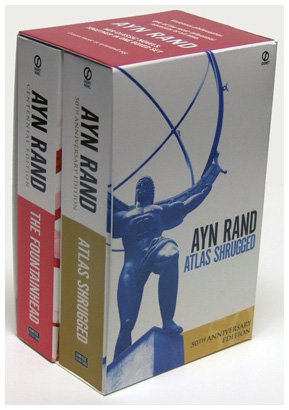
2. Atlas Shrugged
$3.99
3. For the New Intellectual: The
 
$4.76
4. The Ayn Rand Lexicon: Objectivism
$9.95
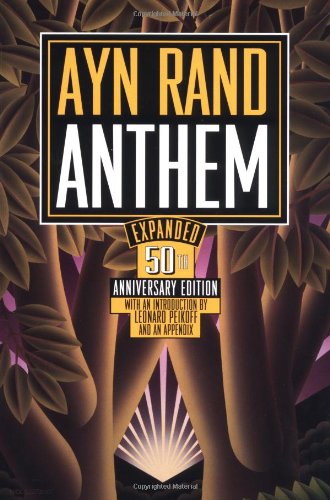
5. Anthem
$370.76
6. Anthem : 50th Anniversary Edition
$3.50
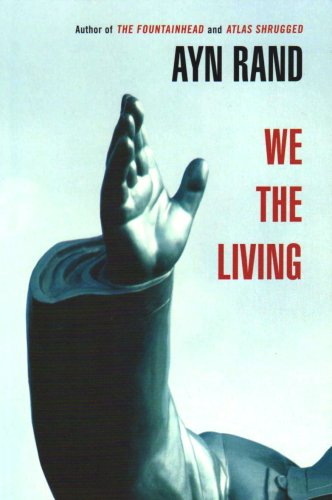
7. We the Living
$5.67
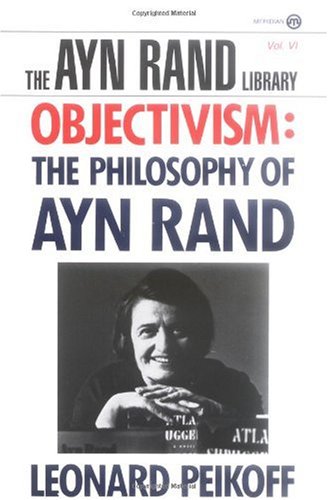
8. Objectivism: The Philosophy of
$3.21
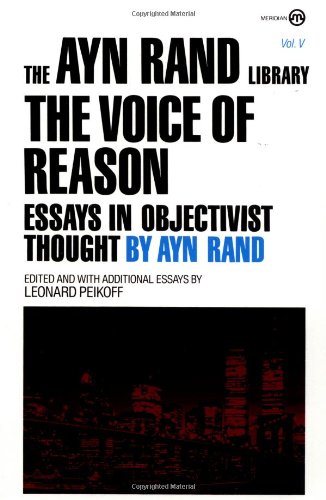
9. The Voice of Reason: Essays in
$19.22
10. Ayn Rand Answers: The Best of
$9.58
11. The Return of the Primitive: The
$3.99
12. The Romantic Manifesto
$21.24
13. The Fountainhead (Centennial Edition
 
$30.24
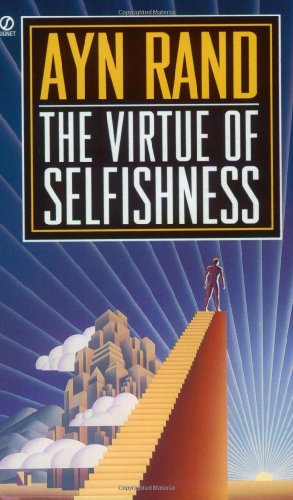
14. The Virtue of Selfishness
$4.80
15. The Early Ayn Rand: Revised Edition:
$7.20
16. The Art of Fiction: A Guide for
$11.17
17. Ayn Rand Reader
$4.89
18. Three Plays
$13.91
19. The Journals of Ayn Rand
$11.95
20. Letters of Ayn Rand

1. Capitalism: The Unknown Ideal
by Ayn Rand, Nathaniel Branden, Alan Greenspan, Robert Hessen
Paperback: 416 Pages (1986-07-15)
list price: US$8.99 -- used & new: US$4.64
(price subject to change: see help)
Asin: 0451147952
Average Customer Review: 4.0 out of 5 stars
Canada | United Kingdom | Germany | France | Japan

Customer Reviews (110)

4-0 out of 5 stars Rand at her best
Yes, she is abrasive and condescending. That is because she tells the truth. Here is Ayn Rand at her fiery, angry best. Her logic is impeccable although her style may irritate many readers. If you are angry about what's happening to America today, at least attempt to read her prescient message.

2-0 out of 5 stars Capitalism is wrong
Capitalism has a number of failings but perhaps the most basic one
is its theory of values.Capitalism acts as if there is a common
currency with which we can measure all that is valuable (money).
This value monism is incorrect.See "The non-existence of a utility
function and the structure of non-representable preference relations"
(Beardon, et al, J. of Math. Econ., vol. 37, pg 17-38, 2002) and refs.
therein.Capitalists simply get the math wrong.Money isn't everything.
Value pluralism is the correct axiology.There are things of value
that can not be bought and sold (thank god! like love and votes).
This failure of values within capitalism is why it is ultimately evil.
Rand is an apologist for evil, a tragic figure.

4-0 out of 5 stars The moral case for the free market
For anyone interested in an economic case for capitalism, this is not the right book - Rand was a philosopher, not an economist (in spite of her sound understanding of economic theorems.) However, for anyone interested in a moral defence of the system and an understanding of its intellectual history and opponents, this is a vital piece of work. Rand includes essays on voluminous topics, such as the gold standard, distortions of what actually happened during the Industrial Revolution, the proper role of government (I disagree with her on this), and so on. It is essential to understand that Rand was not a corporate shill, nor did she approve of the status quo - to the contrary, she strongly opposed the notion of corporate welfare and the like, and believed in a free market economy. Unfortunately, her adulation of big business gave ample ammunition to her critics. She replicates her essay on the rights of individuals toward the end of the book, which is in itself an excellent read. Taken in conjunction with The Virtue of Selfishness, this work will spur the youthful mind into further inquiry on the philosophical origins and defences of laissez-faire.

5-0 out of 5 stars AMAZON! PLEASE READ THIS
Can you please take down that disgraceful "editorial review" you've allowed to creep its slimy way onto this site (and somehow barnes and nobles as well? who is pushing this stuff?). It is a smear on this book's page, and frankly it makes your site look tawdry and muckraking.

Unless of course, you posted that review to get all of these wonderful reviews defending the author of this book from attack by its own salesman.

Take that review down and replace it with something neutral at the very least.

Really, its almost criminal.

5-0 out of 5 stars Very well written book about capitalism and democracy
Although this book was written many years ago, it rings true for today's issues.The book is made up of multiple (25 or so) mini essays, each about 5-10 pages long.

The book has a clear and logical philosophy that is consistent.Its' basic premise is that pure capitalism is the first and only moral system for man.This is because capitalism equals freedom which frees a man from coercive oppression, and that man can only create wealth and new ideas when free to use his mind.The book states that the US briefly came close to pure capitalism in the 1700 and 1800s, but is now heading to fascism, as the state leaves property in private ownership, but the state controls output and use of the private property.

This book is the best I've read in several years, because it helped me unify my outlook on several fronts (political, economic, legal, social, etc) into one grand, consistent theory.I think this book will appeal to liberals and conservatives alike.Both are damned in this book by Rand, but I think the left, right, and center will recognize parts of Rand's philosophy that are dear to them too.

Read it for yourself to see, the book is cheap. ... Read more


2. Atlas Shrugged
by Ayn Rand
Paperback: 1200 Pages (1999-08-01)
list price: US$22.00 -- used & new: US$10.99
(price subject to change: see help)
Asin: 0452011876
Average Customer Review: 4.0 out of 5 stars
Canada | United Kingdom | Germany | France | Japan
Editorial Review

Book Description
At last, Ayn Rand's masterpiece is available to her millions of loyal readers in trade paperback.

With this acclaimed work and its immortal query, "Who is John Galt?", Ayn Rand found the perfect artistic form to express her vision of existence. Atlas Shrugged made Rand not only one of the most popular novelists of the century, but one of its most influential thinkers.

Atlas Shrugged is the astounding story of a man who said that he would stop the motor of the world--and did. Tremendous in scope, breathtaking in its suspense, Atlas Shrugged stretches the boundaries further than any book you have ever read. It is a mystery, not about the murder of a man's body, but about the murder--and rebirth--of man's spirit.

* Atlas Shrugged is the "second most influential book for Americans today" after the Bible, according to a joint survey conducted by the Library of Congress and the Book of the Month ClubDownload Description
Who is John Galt?

This famous rhetorical question rings through Ayn Rand's best-selling novel as the people's anthem of despair in depressed economic times.

Set in the future, the novel follows capitalist magnates as they battle looters, strikers, and the impending ruin of the United States' economy. The romantic and intellectual relationship between Dagny Taggart, the heroine, and John Galt, whose identity as the leader of the strike is eventually revealed, carries the novel to its climax.

This novel, controversial when it first appeared in 1957, purports Rand's objectivist philosophy that the individual is free to pursue his or her own happiness without bowing to God or society. Objectivism in action upholds full laissez-faire capitalism as the only philosophy that can protect humankind's freedom to think, to be inventive, and to live productively. ... Read more

Customer Reviews (1470)

3-0 out of 5 stars Read but with a giant grain of salt on hand.
This used to be my favourite book of all time.

Until I sat back and really THOUGHT about it. Then I started to smell something fishy. I began to notice that whenever people read this book for the first time and loved it, myself included, they spend the next few months acting like self important [...].

A strong sense of self is important but we actually do have to share this planet with millions of people of all sorts - if we all walked around with Ayn Rand size bloated egos there wouldn't be enough room for us all.

Imagine if we all applied the "every genius for himself" (as another reviewer here put i) philosophy to life... Well, surely I'm not to only one here to notice that even the biggest morons to set foot on the planet tend to believe themselves to be absolute genius.

Enough almost incoherent babbling. By all means, read this book and love a lot of what is being said but take it all with a giant grain of salt. Seriously, a grain of salt as big as your head. A grain of salt as big as Ayn Rand's ego.

5-0 out of 5 stars Atlas Shrugged
Book was in exact condition buyer said it would be and was shipped fast and a great price - thanks!

4-0 out of 5 stars slightly over-rated
I approached this book nervously, as i have watched many people be effected by it in questionable ways, and also have heard it quoted in contexts that i now believe to be not entirely...valid.
Ayn Rand saw things in black and white, which is i suppose necessary if one wants to state things didactically. That being said, her world is not the real world, not the way things are. Unfortunately life isnt black and white, and the self made man doesnt exist in quite the way she leads one to believe, at least not in this day and age. I have heard it said that much of our culture has been influencenced by Any Rand and i suppose i can see that but i believe that if our current corprate and governmental state is partially modeled after her philosophy it has been grossly missused. She was not a fan of the man who makes his money by being born into a wealthy family, gains his power by being the progeny of a powerful man. That form of familial preferance, not having to work for ones success, or working by bribe and compramise was something she put in the "socialist" catagory.
That little personal rant being out of the way, the story...
Ayn Rands writing is similar to that of a good dime novel.it's fairly addictive, very predictable and packed with ideas, some of which are very interesting. The first 900 or so pages are very hooking. the life force of the world, the business men, the industrialist, the people who make things run, are mysteriously vanishing to a destroyer that nobody can see or find. Mrs. Rands characters are a little two dementional, Dagny Tagart being a very thinly veiled version of i think mrs. rand herself, with most of the male characters of substance in love with her. Mrs. Tagart is highly idealistic, ambitious, and efficiant, also apparently very good in bed. The Hero, John Galt (Mrs. Rands "perfect man") I found to be very arrogant adn obnoxious. Hank Reardon also was less than appealing, although his family was so ourtrageously obnoxious and "socialist" as to be very comical. The Pirate, who's name i'll never be able to spell, and Fransico d'Anconia, the copper tycoon, playboy/aristocrat, are, however, very intruiging. Mrs. Rand gives both of them some very intersting speeches. d'Anconia's speech on the nature of sex i found especially interesting.
i read the reveiw of Atlas Shrugged that said John Galt gives a 50 page speech on the evils of "socialism", and i wanted to correct that, it is, in fact, exactly 60 pages. And i have to agree with that reviewer, that speech is definately overkill. The ending is rather a letdown in my oppinoin. Very anticlimactic and unrealistic, although by the end she has definately made her point. On the whole it's not the best piece of fiction i've read, although it is very interesting philosophy and definatly a classic that demands reading.

1-0 out of 5 stars One star if you want to be brainwashed
Ayn Rand : Atlas Shrugged, the Fountainhead

I agree with other reviewers who say that her characters are robot-like and the plot could easily be missed.It is a lengthy repetition of a philosophy and an attempt to show people how this personally developed philosophy could be lived out in an atheistic manner.

This is an influential book.I have not read fiction extensively and I read this book at the age of 17.When I read it, I believed that I had found "gold".I am now 40 years older and as I look back on my life, I believe that my own understandings and misunderstandings of this book have led to grievious errors in my life.I believe that it pulled me away from the Christian teachings of my youth.While I was a nominal Christian at that time of my life, I do have a rich Christian heritage that could have been built upon and appreciated, but after reading this book, I ceased to investigate the mysteries of my own faith and concentrated on my own understanding of her philosophy.While I accept responsibility for my own foolishness and mistakes and I do agree that there are aspects of her philosophy that are important to understand, I believe that in the wrong hands this philosophy is potentially damaging to self and others.It should have a "warning" label attached and maybe this will be an acceptable one to some.

5-0 out of 5 stars It's not a Philosophy book
Please don't let people tell you that you should read it because it's philosophy. that's what I was told and was turned off. I mean, really, who is interested in philosophy? who would read a PHILOSOPHY book for entertainment?
It's not philosophy.
It's fiction.
The best romance book I have ever read. I read it three or four years ago, and am still connected with the characters! I even had dreams about Dagny Taggart. that's how deep into the book you get. you actually FEEL the story!
Ayn Rand is a genius of an author - reading the book, you scream with indignation reading some parts, at some parts you actually jump for joy... my family thought I was nuts when I was in the process of reading it.
Rand is so talented that she was even able to create a "slang" that I sometimes find myself using in my everyday life ("Who is John Galt?")

*************************spoiler**********************

when you find out that john is a real person, you realize just how talented this autor is... ... Read more


3. For the New Intellectual: The Philosophy of Ayn Rand
by Ayn Rand
Paperback: 224 Pages (1963-12-01)
list price: US$7.99 -- used & new: US$3.99
(price subject to change: see help)
Asin: 0451163087
Average Customer Review: 3.5 out of 5 stars
Canada | United Kingdom | Germany | France | Japan

Customer Reviews (54)

4-0 out of 5 stars An introduction...
As introductions go, this was fair.The book is a compilation of an essay and excerpts from Rand's fiction.Her philosophy of Objectivism, developed somewhat in her fiction, is obviously in its infancy in this essay.But the pure nature of it is visible.

If you are unsure about Rand and picked up one of her books and were a bit overwhelmed at its depth, this is a good place to skim the surface and get a sampling of her fiction and her non-fiction work that followed.

3-0 out of 5 stars Way better than her fiction
The problem with Objectivism is that Ayn Rand used fiction as a vehicle for its presentation.

The result of this (The Fountainhead) is artistically bankrupt and incredibly frustrating to read. Her two-dimensional characters are nothing but mouthpieces for her moralizing vitriol or crude strawmen of her opponents, and lengthy author-talking speeches like John Galt's in Atlas Shrugged are mockeries towards real creative writers.

Fortunately, FTNI excises the polemic passages from her fiction writings, meaning that the reader gets the gist of Objectivist beliefs without having to labor through thousands of pages of terrible storytelling.

While it's by no means an exhaustive system, Objectivism is good for getting oneself motivated and maintaining a feeling of superiority towards everyone else.

It's definitely worth spending a day or two reading, but probably not going back for seconds.

2-0 out of 5 stars Not the best place to start
This was Rand's first work of nonfiction, and it is supposed to be an introduction to her philosophy of Objectivism. But it is certainly not the best place to start. The book consists of one rather lengthy essay, followed by excerpts from her four novels. As expected, more pages are devoted to excerpts from Atlas Shrugged than to any of the other novels - in fact, than to all of the others put together. Galt's seventy-plus page speech is included in its entirety.

Unfortunately, the excerpts aren't as interesting outside the context of the novels. Even worse, the title essay is probably the weakest Rand ever wrote. In it, Rand attempts to explain all of history in terms of the two types of men who have dominated it, Attila and the Witch Doctor. Attila represents those who have ruled men by force, whereas the Witch Doctor represents the irrational mystics who have controlled men's minds. The whole thing is just plain ridiculous.

If you want to know what Rand thought, you'd be better off starting with The Virtue of Selfishness, followed by Capitalism: the Unknown Ideal.

1-0 out of 5 stars Rand's Worst
In 1957 Ayn Rand published ATLAS SHRUGGED, her epic novel of individual freedom versus the mass state.ATLAS SHRUGGED contained "Galt Speaks," a lengthy speech in which John Galt (the protagonist of the novel) sets forth the basics of Rand's philosophy, known as Objectivism.FOR THE NEW INTELLECTUAL (FTNI) contains "Galt Speaks" and philosophical portions from her fiction.It also includes a lengthy essay explaining Rand's philosophy of history, which will be the focus of my review.

Rand starts FTNI with two characters she believes define most of history: the Witch Doctor and Attila.Attila rules by force and the Witch Doctor is his "ideas man."History is largely the influence of the Witch Doctor on Attila.The supreme Witch Doctor of the ancient world was Plato; the chief Witch Doctor of the modern era was Immanuel Kant.Their antipode is Aristotle, the philosopher of reason and the real world, whose philosophy unfortunately contained elements of Plato's otherworldliness.Through most of history the Witch Doctor has been calling the shots.However, Aristotle's philosophy hasn't been completely forgotten and emerged, due to Thomas Aquinas, in the Renaissance and in the founding of the United States.Ayn Rand purged Aristotle's thought from its remnants of Platonism.With the publication of ATLAS SHRUGGED a core of new intellectuals is being formed, ready to save the world from irrationalism."Aristotle, Aquinas and Ayn" as Rand once put it.Or, as one Objectivist thinker said: "The big three [Plato, Aristotle and Kant] are now the big four" adding, you guessed it, Ayn Rand to the list.

FTNI follows the Attila/Witch Doctor description with an analysis of the history of philosophy.Rand critiques numerous philosophers and their influence on history: Plato, Aristotle, Aquinas, Descartes, Hume, Kant, Comte, Spencer and others.She gives little evidence that she has read any of these thinkers, much less understood them. For example, she says of Kant: "An action is moral, for Kant, only if one has no desire to perform it . . .(p. 32)."Where, Miss Rand, does Kant say this? Or, "[t]he prelude to the Renaissance was the return of Aristotle via Thomas Aquinas (p. 23)."Doesn't she know of Aristotle's influence on theologians who influenced Aquinas, such as Albertus Magnus?Moreover, in her praise of the Renaissance (which she claims was essentially Aristotelian) she is oblivious to the fact that the many important Renaissance thinkers were Platonists.

There isn't much good I can say about FNTI.While reading it may encourage you to take an interest in philosophy, the hatchet job she does on individual philosophers, schools of philosophy, and their influence on history is likely to set your study of philosophy back by years.Sure it's exciting to think you know something about history that hardly anyone else has knows, even those with doctorates in philosophy.That's probably why FTNI and ATLAS SHRUGGED were the most exciting things I read in high school (with the possible exception of WORLDS IN COLLISION, where I learned that Earth almost collided with Mars and that Venus was a comet shot out from Jupiter).

1-0 out of 5 stars If you're an adult, read it.
I admit that I tried to read this twice and failed both times.I got to around page 20 or so.I'll probably try again.However, if you're an adult who has already read other philosophies I would suggest attempting to read it just so you'll know what Objectivism is about.I wouldn't suggest it for teens that haven't had any prior readings, though.Objectivism is about the self and about "reason", and it can be heady stuff for someone who has no real experience in anything else.

The strange thing about the tone of the writing is that it comes across as venomous.I assume that's in my head, but judge for yourself.Her caricatures of "The Witch Doctor" (who controls others from a spiritual perspective) and "Attila" (who controls by brute force) are actually interesting.Wrong, but interesting.Since Objectivists rely on reason alone for their survival (or think they do, anyway), it's rather surprising the lack of logical thinking early in the book.

My suggestion is to attempt to read it without dismissing her out of hand (she's not wrong on everything), or swallowing it all without using your own critical thinking skills. Judging by previous reviews, it seems there were plenty of both kinds of readers.

If you buy into it, you can get a feeling of superiority over others in a kind of pseudo-intellectual way.If you don't buy into it, however, you're evil (either the Witch Doctor or Attila) and probably just too stupid to "get it".

Why I didn't finish it yet...
I just couldn't get past her ignorance of history, frankly. If you're writing a work of fiction, the historical innacuracies don't matter, but this isn't supposed to be fiction.I like history and most people don't, so it probably won't bother most people.
Also, while she denounces religion, Ms. Rand has no problem hopping up to the pulpit herself.Like all other religions and cults, the world is messed up basically because people don't think like she does. ... Read more


4. The Ayn Rand Lexicon: Objectivism from A to Z (Ayn Rand Library)
by Ayn Rand
 Paperback: 560 Pages (1988-01-01)
list price: US$25.00 -- used & new: US$4.76
(price subject to change: see help)
Asin: 0452010519
Average Customer Review: 3.5 out of 5 stars
Canada | United Kingdom | Germany | France | Japan

Customer Reviews (19)

5-0 out of 5 stars An excellent look into the mind of an original thinker
Ayn Rand held so many unconventional views it is hard to remember them all.There are times when you hear some politician or college professor speaking or read some writer who is writing on a subject as if there can be no other valid point of view, and it will occur to you to wonder what Ayn Rand had to say on the subject.By no means is this a reference to all of her works, but it does contain the some of the topics which she wrote on with insight and with passion.Reason, pride, love and sex are there as are sacrifice, abortion, socialism and religion.The thing that makes reading her thoughts so valuable is that she is so clear in her explanation of _why_ she believes what she does and her views are often exactly opposite what everyone in the mainstream is saying and writing.One good insight gleaned from this book is worth more than the purchase price--and I have personally gained much by referring to it.

5-0 out of 5 stars Great for the student of Objectivism
Ayn Rand had comments on a vast array of topics of interest to all of us.For the student of Objectivism or the student of philosophy studying Objectivism you can find answers to her positions on this myriad of subjects along with what is more important her reasons as well as references to the source texts where you can garner broader understanding.No significant topic is overlooked.

5-0 out of 5 stars A healthy supply of ... rope.
On writing in general and reviews in particular, my High School English teacher always told her students, once begun half done.
Half done.
Part II.
How it is possible to give less than 6 stars to a Professional Objectivist is beyond me, but let me try.
For Dr. Harry B's Book, The Ayn Rand Lexicon I give:
1 STAR for taking on the task in the first place,
1 STAR for providing me with a really quick reference for refreshing my understanding of a particular Ayn Rand argument (something I periodically need--especially after reading the daily newspaper),
1 STAR for Harry B being Harry B (that is, for being one of the good guys),
1 STAR for NOT using clichés--e.g, "give `em enough rope and they'll hang themselves" and
1 STAR for providing a healthy supply of rope for Ayn Rand's critics to do you know what with.
In my arithmetic that's 1+1+1+1+1 which equals 5 which is less than 6.
There, I did it.
My English teacher was correct.
All done.

5-0 out of 5 stars Convenient reference to Objectivist Thought

Ayn Rand was one of the most original thinkers of the 20th century and a magnificent defender of freedom and capitalism. She was also a prescient critic of a consensus that has since proved harmful and been discarded. This encyclopaedic work provides easy reference to all the key ideas in her extensive writings and the vast range of issues that she dealt with. Approximately 400 entries are arranged alphabetically, making it easy to access her thoughts on many topics of enduring importance.

The lexicon draws on the books Atlas Shrugged, Capitalism: The Unknown Ideal, Introduction To Objectivist Epistemology, The New Left, Philosophy: Who Needs It?, The Romantic Manifesto, The Virtue Of Selfishness, We The Living, and The Ominous Parallels by Leonard Peikoff. Other material comes from journals like The Ayn Rand Letter, The Objectivist, The Objectivist Forum and The Objectivist Newsletter.

There is an introduction by Leonard Peikoff and preface by the editor Harry Bingswanger. A Conceptual Index classifies the topics under the headings Philosophy, Psychology, Economics and General. Philosophy is further subdivided into Metaphysics, Epistemology, Ethics, Politics and Aesthetics.

All the relevant matters from the objectivist corpus in the above disciplines and in intellectual history are covered here. The text includes some work by other authors like Peikoff only where it was specifically endorsed by Rand. The entries, from Abortion to Zero, are meticulously cross-referenced.

The Ayn Rand Lexicon is a treasure trove of original thought and information on this most radical of all philosophies devoted to reason, freedom and capitalism. It is a valuable reference work and compelling compendium of Rand's contribution to literature and philosophy.

3-0 out of 5 stars An Objectivist Lexicon
THE AYN RAND LEXICON is an alphabetically organized collection of excerpts from the writings of Ayn Rand and other Objectivists.A concept or topic is listed, and excerpts from Objectivist writings follow.For example, the entry "Renaissance" contains three paragraphs from Ayn Rand, one from Leonard Peikoff, and a multiple paragraph entry from an article in "The Objectivist" by Mary Ann Sures.

According to the editor, Harry Binswanger, Rand approved of the idea for the LEXICON and was consulted during the early stages of production.(Rand died in 1982 and this work came out in 1986.)Needless to say, one's opinion of this work will in large part depend on one's view of Rand and Objectivism.

On the positive side, this is a useful way to look up what Rand believed on a variety of topics.Her writing was crisp and at times insightful, and at other times simplistic and ill informed.Take the above section on "Renaissance."Rand thought the Renaissance represented the rebirth of reason and Aristotelianism, but there is no indication that Rand studied this period of history.These excerpts (and her writings in general) show no understanding that the Renaissance represented the rebirth of Platonism.In fact, I'm not aware of a single Renaissance figure that Rand ever discussed in any detail.

As I stated, THE AYN RAND LEXICON contains excerpts from Rand and her associates.Following Rand, the most entries are Peikoff's with a smattering of others.I'd say Rand makes up about 80% to 85% of the book.Most of the additional entries are those that were published under Rand's auspices, so I assume they represent "official Objectivism."On other hand, when Rand broke with the Brandens in 1968, she said that their writings published prior to the break were consistent with Objectivism.Why have none of these writings been included?

A good compliment to this work is THE AYN RAND READER, published in 1999.The excerpts are much lengthier and contain no writings from second-handers.If you want to know what a "second-hander" is, check the LEXICON and "check the premises" of the Official Objectivist movement. ... Read more


5. Anthem
by Ayn Rand
Paperback: 62 Pages (2006-07-06)
list price: US$9.95 -- used & new: US$9.95
(price subject to change: see help)
Asin: 1600961738
Canada | United Kingdom | Germany | France | Japan
Editorial Review

Book Description
Anthem is Ayn Rands classic tale of a dark future age of the great "We"a world that deprives individuals of name, independence, and values. Written a full decade before George Orwell's "1984," this dystopian novel depicts a man who seeks escape from a society in which individuality has been utterly destroyed. Rand expertly shows how collectivism (including social programs in the United States) destroys freedom and individuality. Her philosophy is simple: "planning" is a synonym for "collectivism," and "collectivism" is a metaphor for communism and tyranny. This important book should be read by all who are concerned about the role of government in modern life. Newly designed and typeset in a modern 6-by-9-inch format by Waking Lion Press. ... Read more


6. Anthem : 50th Anniversary Edition
by Ayn Rand, Leonard Peikoff
Hardcover: 128 Pages (1995-08-01)
list price: US$23.95 -- used & new: US$370.76
(price subject to change: see help)
Asin: B000BTH5GM
Average Customer Review: 4.0 out of 5 stars
Canada | United Kingdom | Germany | France | Japan
Editorial Review

Book Description
Available for the first time in trade paperback--this provocative book is "an anthem sung in praise of man's ego"--from the legendary author Ayn Rand

Anthem has long been hailed as one of Ayn Rand's classic novels, and a clear predecessor to her later masterpieces, The Fountainhead and Atlas Shrugged. In Anthem, Rand examines a frightening future in which individuals have no name, no independence, and no values. Equality 7-2521 lives in the dark ages of the future where all decisions are made by committee, all people live in collectives, and all traces of individualism have been wiped out. Despite such a restrictive environment, the spark of individual thought and freedom still burns in him--a passion which he has been taught to call sinful. In a purely egalitarian world, Equality 7-2521 dares to stand apart from the herd--to think and choose for himself, to discover electricity, and to love the woman of his choice. Now he has been marked for death for committing the ultimate sin. In a world where the great "we" reign supreme, he has rediscovered the lost and holy word--"I."Download Description
A stunning and brilliantly realized future world in which individuality has been crushed is the theme of Ayn Rand's bestselling masterpiece, "Anthem". Rand presents her tale of a man who dares to make individual choices, to seek knowledge in a dark age, to love the woman of his choice. In a society in which people have no name, no independence, and no values, he is hunted for the unpardonable crime: having the courage to stand above the crowd. Introduction by Leonard Peikoff. ... Read more

Customer Reviews (434)

5-0 out of 5 stars Excellent Book
If you read only one book this year, read this one. Thought provoking, moving, soul stirring.

3-0 out of 5 stars Neither the best of Rand nor of the dystopian genre
I am a big fan of Ayn Rand, and I love dystopian literature, so I expected to be blown away by Anthem. Instead, I was quite disappointed. It seems as though Rand read Evgeny Zamyatin's We (published over a decade before Anthem) and penned a much weaker version of her own.

5-0 out of 5 stars Wonderful and thought provoking!
Thought provoking and a great choice for anyone in a book club. It is sure to drum up excellent conversation, philosophical differences among friends and enable to reader to do more than just pass the time with a good book. This book gave me goosebumps as it made me consider the possibilities of what if...

4-0 out of 5 stars Good Introduction to Ayn Rand's Ideas
ANTHEM is a very short novel written by Ayn Rand in 1938.It deals with a dystopian future where individualism is banned and the collective reigns supreme.

I enjoyed reading ANTHEM.It serves as a good introduction to Ayn Rand's objectivist philosophy.You should keep in mind, however, the story itself is only about eighty-five pages long.I finished the book in about ninety minutes.

Half of the mass-market paperback edition consists of the entire British manuscript of ANTHEM, with Ayn Rand's handwritten editorial changes for the American edition.Although some people might find this material interesting, I found it to be a waste of space.Nearly all the edits are technical in nature, designed to tighten the writing style and nothing more.I learned nothing new from it.

ANTHEM is worth reading, but I'm not a big fan of this particular edition.Why not combine ANTHEM with a set of essays dealing with Rand's philosophy?That would make more sense to me.

4-0 out of 5 stars Great Ayn Rand starter book. Ayn Rand-Lite
I'm embarrassed to admit I just found out about this book and read it for the first time recently.

Anthem's contribution to the Ayn Rand philosophy is almost negligible compared to The Fountainhead and Atlas Shrugged. But Anthem is short and accessible to the average reader. My gifted 10 year old read Anthem and understood it.

This should be the first Ayn Rand book you read. If you like it, read The Fountainhead. Save Atlas Shrugged, her finest achievement, for last.

Ayn Rand is the most important writer since Adam Smith. Her works are as timely now as when they were written. If they were required reading in high school and college ours would be much smarter (and more prosperous, and more free, etc.) ... Read more


7. We the Living
by Ayn Rand
Paperback: 464 Pages (1996-01-01)
list price: US$7.99 -- used & new: US$3.50
(price subject to change: see help)
Asin: 0451187849
Average Customer Review: 4.5 out of 5 stars
Canada | United Kingdom | Germany | France | Japan

Customer Reviews (126)

5-0 out of 5 stars We The Living tells a facinating tale of life under the early soviet system
In her self-proclaimed near-autobiography, Ayn Rand writes of the tumultuous time after Russia's fall to Soviet rule through the lives of a few individuals stuck in it.The descriptions of daily life, the frustrations of everything from heating to food to dealing with corrupt bureaucracy, give a realism to the time period and conditions that aren't so easily conveyed in history texts.While people tend towards caricatures, as can be typical in Rand's work, the core of humanity within them, both high and low points, clearly shine through.

It's a love story gone all wrong as Kira, the young woman who wishes to design bridges but won't ever achieve that goal under the red boot of socialism, watches the man she loves succumb to the dehumanizing effects of the system which surrounds and controls them.Other characters, friends and relatives of the main characters give the story a great deal of depth.

This book does not fall prey to the excess wordiness that Atlas Shrugged did.There are not redundant speeches which take up dozens of pages.I'd not re-read this book without a box of tissues handy.Whether or not you tend to agree with Rand, this is an excellent book which gives a deeper understanding to a particularly unique and dark period in history.

4-0 out of 5 stars Perspective from a Christian fan of Ayn Rands books
I read Anthem in High School, Atlas Shrugged recently and today I just finished We the Living. I consider myself an Ayn Rand fan tho I'm no cult follower. I love her views on individualism and capitalism tho we part ways when it comes to belief in God. As a Christian and a capitalist I appreciate the rights of the individual and I think most Christians can agree with her on that. She feels that sacrificing herself for a deity is foolish where I feel that you sacrificing for others can be an end in itself and further one's own life positively. I don't believe that I should sacrifice for another at the point of a gun, i.e. the government telling me that my money really belongs to someone else and I think Christians and objectivists can agree on that point.

So for Christians out there, I think you can take away from this book ideas that are beneficial without endorsing her anti-God beliefs. Also I think the story is fantastic and easier to get through than say Atlas Shrugged. I highly recommend both books by the way. Enjoy!

5-0 out of 5 stars Read the others first
If you read Atlas Shrugged and The Fountainhead before you read this book then you will truly be able to appreciate We the Living. While there are whole sections in Atlas and Fountainhead that are purely sermons about objectivism, we the living takes the points of those sermons and incorporates them in the story. Kinda weird since this came first if I am not mistaken. I am recomending them all, but this one demonstrates the point in a much better way, since no one likes to be beat over the head with a concept like she does with Atlas and The Fountainhead.

2-0 out of 5 stars Please enter a title for your review
This book might reward a long attention span but dull is really all I can say about it. The writing is typically cryptic, leaving it up to the reader to fill in the blanks, but generic banal detail fills up most of the space on the pages.
The characters lifestyles are inactive, the environment never changes, and the relationships between the characters never get very complex although the relative lack of detail about the characters natures and motives always seems to want to keep you guessing. With every character in the book I was consistently thinking maybe there's more to them but there never was. Edited down to a quarter of it's length this book could have been a more engaging narrative and still maintained the value in it's depictions of everyday living in oppressive USSR society, but even then Kira's tragic romances, which were romantic for about ten seconds before they lost their lustre, would still seem pointless.

5-0 out of 5 stars Accessible
As others have written, this novel is story driven.It's not filled with polemics.Primus Stoves are also mentioned frequently. ... Read more


8. Objectivism: The Philosophy of Ayn Rand (The Ayn Rand Library, Volume 6)
by Leonard Peikoff
Paperback: 512 Pages (1993-12-01)
list price: US$20.00 -- used & new: US$5.67
(price subject to change: see help)
Asin: 0452011019
Average Customer Review: 4.0 out of 5 stars
Canada | United Kingdom | Germany | France | Japan

Customer Reviews (76)

5-0 out of 5 stars Objectivism: The Philosophy of Ann Rand
A superb grounding in Objective philosophy expanding on Ayn Rand's "Introduction to Objectivist Epistemology".This book at least equals in quality an earlier book by Leonard Peikoff, "The Ominous Parallels" ,in explaining this Philosophy to a layman like myself.

1-0 out of 5 stars boring
- YES, I am an advocate of the Rand "philosophy" and have read most of her books repeatedly.

- NO, I do not need someone else to come along and tell me in 50 pages what she managed to say in one page.

An heir is meant to look after the inheritance, NOT turn it into gobbledygook. Ms. Rand did really well without you Mr. Peikoff - would you just reimburse me the money I have spent purchasing your long and convoluted book please?

5-0 out of 5 stars A Philosophy for Living On Earth
Dr Peikoff worked closely with Ayn Rand for thirty years and was designated by her as her intellectual heir. Therefore, it is not surprising that, after having read a number of books explaining this philosophy, Peikoffs' presentation ofObjectivism turns out to be the best. Every time I reread this book, I find new and useful ways of applying this original and exciting "philosophy for living on earth".

5-0 out of 5 stars Finally, a Philosophy One Can Understand
For people who have read Ayn Rand's novels and want to learn more about her ideas, Objectivism: The Philosophy of Ayn Rand is the book to read. For people who have not read Ayn Rand's novels, this is still the book to read.One unique feature of Ayn Rand's novels We the Living, TheFountainhead, and Atlas Shrugged is that they help to express her very original philosophical ideas, which she later called Objectivism.But from these novels, it is difficult to understand the logical structure of Rand's philosophy.Some people might get the impression that Ayn Rand was primarily concerned with politics, but in fact, she wrote on all branches of philosophy, from metaphysics to epistemology to esthetics.Leonard Peikoff is very knowledgeable about Objectivism because he knew Ayn Rand and studied her philosophy for most of his life.His purpose in writing this book is to put her philosophical ideas together in one text starting with the foundation of metaphysics and epistemology, and then showing how these fundamental ideas logically led to Rand's views on ethics, politics, and esthetics.Even though Peikoff takes on some very abstract subjects, he never fails to write in a very clear style, using several concrete examples to help in understanding.One doesn't need a degree in philosophy to understand this well-written book.

5-0 out of 5 stars One of the Greatest Books Ever Written.
One could improve the book and philosophy by subsuming Objectivism under materialism while retaining almost all of its conclusions.Even Peikoff admits that if one argued consistently from materialist premises he'd conclude the same things as one does if he invents the falsehoods that consciousness is immaterial and a "prime mover," as Objectivists do.There are other errors, but a reader would improve himself so much by reading this that the book more than deserves five stars despite them.If it doesn't deserve five stars despite its errors, only a few books in the world do, and they contain their own errors.Moreover, the book trains people well enough in some cases that they can correct the book, so sometimes the end result is as if the book were perfect. ... Read more


9. The Voice of Reason: Essays in Objectivist Thought (The Ayn Rand Library, Vol V)
by Ayn Rand
Paperback: 368 Pages (1990-06-30)
list price: US$18.00 -- used & new: US$3.21
(price subject to change: see help)
Asin: 0452010462
Average Customer Review: 3.5 out of 5 stars
Canada | United Kingdom | Germany | France | Japan

Customer Reviews (10)

5-0 out of 5 stars What a mind........
I found this book an excellent excellent read and it confirmed my belief that Ayn was trapped behind those big dark eyes ... she was 1 of a kind. buy it, Read it, and cherish it ....

5-0 out of 5 stars This is the voice of reason.
Ayn Rand applies reason to a variety of significant matters with stunning and convincing effect.A must read for any person who has been raised on pablum in public/private schools and the media and who desires a true, meaningful educational experience.

Jim

3-0 out of 5 stars Mostly Forgettable
Following the death of Ayn Rand (1905-1982) several posthumous collections of Rand's essays, seminars and even jottings she scribbled in books she read ("marginalia") have been published.

THE VOICE OF REASON contains essays by Rand and her associates Leonard Peikoff and Peter Schwartz.The essays by Rand are not her best.Those by Peikoff and Schwartz lack Rand's fiery prose, but it at least appears that they (unlike Rand) have read more than the New York Times.

Rand's lack of citations often gives her an aura of "plausible deniability."If you criticize Rand's misunderstanding of Kant, you'll get responses such as: (1) her interpretation of Kant was mainstream at the time (by whom? Blank out); or (2) it is a combined summary and interpretation of Kant based on what a Kantian would believe if he interpreted Kant based on his alleged premises (that's what Objectivists call "context dropping" when it's done to Rand).

Peikoff and Schwartz don't have this luxury.Particularly outrageous is Peter Schwartz's essay "Libertarianism: The Perversion of Liberty."The problem for Objectivists is that libertarian politics is quite similar to Rand's politics.Since Rand wanted Objectivism to be the only game in town for believers in freedom, she made (more than once) the absurd statement that libertarians "plagiarize" her ideas (or arguing somewhat inconsistently their ideas had nothing in common with hers).Schwartz tries to provide documents for Rand's jeremiad against libertarianism.The libertarian movement is quite broad and contains more than a few odd ducks.Some libertarians, though certainly not all, hold subjectivist ethics.By painting libertarianism with a broad brush, Schwartz tries to show that all libertarians are loons.Schwartz launches a particularly misguided attack on Murray Rothbard asserting that Rothbard had "utter scorn for ideas-even his own."The quote from Rothbard which Schwartz (inaccurately) reproduces does not support this contention; it actually stands for the opposite. Of course, anyone familiar with even a portion of Rothbard's vast output has to laugh at the claim that Rothbard didn't take ideas seriously.

4-0 out of 5 stars More Amazon.com Bias
Amazon.com would do well to select a different Editorial Review, as the one from Publishers Weekly above displays some (willful?) misunderstanding of Rand's philosophy, Objectivism. In several books, Rand explains why she opposes monopolies. Yet, Publishers Weekly calls her a staunch proponent of "monopoly capitalism" -- a contradiction in terms, given that only government can hand out legal monopolies. The review also cites "Rand's strident right-wing rhetoric," employing two all-too-common biased journalistic terms -- 'right-wing' (a characterization which any thinker who reads Rand's passionate defenses of the right to abortion would find laughable), and 'rhetoric' (a dismissive term for those who don't have enough brainpower to successfully explain their disapproval).

Just because Amazon.com is headquartered in Seattle shouldn't mean that it has to adopt the silly political biases common to the region.

1-0 out of 5 stars What Kind of Reason?
Rand is ever the hyper-rationalist, believing that all problems can be solved by using humankind's unique endowment of "reason." After all, didn't Boethius claim mankind is the superior species, because "man is a rational animal?" Rand certainly agrees with Boethius' apotheosis of reason.

But, what KIND of reason? There are at least TWO types of reason: (1) hyper-reason based on a priori, deductive, syllogistic logic, and (2) ordinary reason, based on a posteriori, experiential, inferential logic. (There is a third kind of reason, called mathematical propositional calculus, that is a blend of the two, while heavily favoring the latter.)

Rand is certainly in the first camp, and that's her problem. Almost anything can be deduced syllogistically as Aristotle and Aquinas amply demonstrate. Pick up either author's tomes on how the world "is," and you'll quickly find out they were consistently wrong. They both started from one or more false premises, that lead to false conclusions. More importantly, people, no matter how "rational" they may appear, do not used deductive, a priori logic as consistently as Rand would suggest, much less like. It's not in our nature. The very few that do are "hyper-rationalists," and they are more annoying than satisfying.

Most people, if they use logic at all, use the SECOND kind, and this is the kind that is based on experience, on inferences drawn from direct experience with the senses. It is the development of this kind of reason that has led to the most ambitious outcomes in the history of mankind. But this reason admits up front that nothing is certain, all knowledge and morals are contingent, and that there are no eternal truths. This is the logic Rand deplores. Not because it isn't the most appropriate, but because everything is contingent -- there are no "objective" or "absolute" conclusions. Rand cannot assert her dogmas under this kind of logic. Only "hyper-rationality" of the FIRST kind will allow her to do that!

Most philosophers and scientists have minimized or abandoned the first kind of logic for all the myths, false dogmas, and irrational conclusions that ensue from it. Read Aristotle or Aquinas to see just how wrong they are on practically everything, yet these are the two best paradigms of the first kind of reason. Rand is one of the last holdouts for this kind of irrational logic. That is why the "objectivist" project is doomed from the start; it merely changes the "old" dogmas for "new" ones, "old" myths for "new" ones. That is why here project is doomed from the start, and why reading her "new" claptrap is no better than reading the "old" ones. No serious student of philosophy or science uses "her" kind of logic anymore, and nor should we. ... Read more


10. Ayn Rand Answers: The Best of Her Q&A
by Robert Mayhew
Paperback: 256 Pages (2005-11-01)
list price: US$15.00 -- used & new: US$19.22
(price subject to change: see help)
Asin: B000I2JP6A
Average Customer Review: 4.0 out of 5 stars
Canada | United Kingdom | Germany | France | Japan
Editorial Review

Book Description
After the publication of Atlas Shrugged in 1957, Ayn Rand occasionally lectured in order bring her philosophy of Objectivism to a wider audience and apply it to current cultural and political issues. These taped lectures and the question-and-answer sessions that followed not only added an eloquent new dimension to Ayn Rand's ideas and beliefs, but a fresh and spontaneous insight into Ayn Rand herself. Never before available in print, this publishing event is a collection of those enlightening Q & As.

This is Ayn Rand on: ethics, Ernest Hemingway, modern art, Vietnam, Libertarians, Jane Fonda, religious conservatives, Hollywood Communists, atheism, Don Quixote, abortion, gun control, love and marriage, Ronald Reagan, pollution, the Middle East, racism and feminism, crime and punishment, capitalism, prostitution, homosexuality, reason and rationality, literature, drug use, freedom of the press, Richard Nixon, New Left militants, HUAC, chess, comedy, suicide, masculinity, Mark Twain, improper questions, and more. ... Read more

Customer Reviews (10)

5-0 out of 5 stars A fascinating look at Ayn Rand in action
A great compilation of the best of Ayn Rand's question and answer periods following her lectures.

Robert Mayhew's excellent editing organizes the questions and answers into chapters drawn around broad themes (e.g., politics, ethics, metaphysics and epistemology, and art), then into smaller sub-sections. This keeps the reading flowing, instead of jumping around from topic to topic almost at random as would occur in a live Q&A session.

While some of Ayn Rand's answers will be obvious to long-time students of Objectivism, many of them shed new light on her philosophy, and almost all of them give the reader a better picture of Ayn Rand as a person, whether it is her quick wit, her warm benevolence in giving the benefit of the doubt to most questioners and patiently explaining her philosophical principles to them, or her righteous indignation at genuinely dishonest, hostile, or insulting questions. Even her answers to questions on narrow, concrete issues at the time of the session (such as the Vietnam war) are applicable to events today (such as the current Iraq war) because her answers address the deeper abstract principles involved (such as proper foreign policy).

On my first reading, I noticed only two drawbacks. First, a few of her answers leave you wanting more, and you wish that she were still alive and in the room with you so that you could ask her follow-up questions. That's not to say that she doesn't give a full enough answer to the question as asked, given the context of a live public Q&A session, but rather that her intriguing answers leave you feeling sad that you are merely reading a book and not actually in the room during one of those Q&A sessions. Second, if you've ever heard a recording of one of her Q&A's (or were lucky enough to have attended one), you are aware of how much you are missing from the live setting--for example, from the audience reactions, as they audibly gasp in shock or indignation at some remark Ayn Rand makes, but by the end of her answer after she explains the comment, they are cheering. That's an added bonus of the live setting that the book format unfortunately can't reproduce, but if you're a student like me and can't yet afford to spend a few hundred dollars on recordings of all her lectures, this book is the next best thing.

5-0 out of 5 stars An Ayn Rand Sampler
Here's a quick intro to Ayn Rand's thought. It's not a big book but it's pretty wide-ranging. She talks about specific people and issues but her favorite topics are philosophical. With those topics, she explains her chain of reasoning as best she can within the brevity required of the Q&A situation -- so she manages more than a superficial answer. Finally, of course, you get a taste of her difficult personality. That's part of Ayn Rand, too.

5-0 out of 5 stars The Genius of Ayn Rand
This book is a good clear and concise guide to Ayn Rand's thoughts on a variety of issues. From taxes to ethics to Ernest Hemingway to capitalism to homosexuality, Rand forthrightly, clearly and honestly answers many questions put to her.

This book also cleared up many questions I had about Ayn Rand and this book solidifies here as the great intellectual and philosopher she was.

While the book is not, as Robert Mayhew points out, official Objectivism, due to the editing, anyone interested in her philosophy would find this book useful if they would like a short but pointed look at her thought.

As far as the editing is concerned, in my view that's really Robert Mayhew sort of eating his cake and having it too. If it can't be considered Rand's ideas because he edited it then why edit it? Why not release it as she said it? Because if he did they would destroy the myth that she always said brilliant things off the cuff instead of horrible things which she later had to restate and edit.

I also cringe at the term "official Objectivism" since that implies there is a body, in this case the Ayn Rand Institute, that decides what is official. Yet the philosophy itself is supposed to be based on reality. If it is reality based then no one can control it except reality.

I can also see where Dr. Reisman is coming from but, overall, this book is a good introduction to the genius of Ayn Rand.

4-0 out of 5 stars Interesting, brief look at Ayn Rand's opinions.
Ayn Rand's opinions on all things -- and I mean all things -- political, economical, aesthetic, ethical, metaphysical -- are inside of this book. At ~220 pages, it's good to read in short blocks, jumping around to wherever you like, or as reference. It's an excellent book for all fans of Ayn Rand and/or Objectivism -- new or die-hard. A good insight into Rand's opinions. I only have to wonder if she'd have changed her mind about Reagan or the Libertarian Party today.

As a sidenote -- this book looks and feels great! I love Penguin Publishing (publisher of the New American Library series).

5-0 out of 5 stars Ayn Rand did answer
First of all: I do agree with George Reisman's criticism. Nobody has any business changing Ayn Rand's wording, just because he has discovered some contradiction which might as well be imagined as real.

But this is still Ayn Rand, and the book is too valuable not to be recommended. For one thing, it contains the best answer to the question of "free will" that I have ever seen. And there is much more.

One complaint is that the book could be much more extensive. I have heard many insightful answers from Miss Rand on tape that are not included in the book; and there certainly are answers that I have not heard. So I am looking forward to an expanded edition - hopefully without attempts to "improve" on her thinking. ... Read more


11. The Return of the Primitive: The Anti-Industrial Revolution
by Ayn Rand
Paperback: 352 Pages (1999-01-01)
list price: US$17.00 -- used & new: US$9.58
(price subject to change: see help)
Asin: 0452011841
Average Customer Review: 4.0 out of 5 stars
Canada | United Kingdom | Germany | France | Japan
Editorial Review

Book Description
In the tumultuous late 60s and early 70s, a social movement known as the "New Left" emerged as a major cultural influence, especially on the youth of America. It was a movement that embraced "flower-power" and psychedelic "consciousness-expansion," that lionized Ho Chi Minh and Fidel Castro and launched the Black Panthers and the Theater of the Absurd.In Return Of The Primitive (originally published in 1971 as The New Left), Ayn Rand, bestselling novelist and originator of the theory of Objectivism, identified the intellectual roots of this movement. She urged people to repudiate its mindless nihilism and to uphold, instead, a philosophy of reason, individualism, capitalism, and technological progress.Editor Peter Schwartz, in this new, expanded version of The New Left, has reorganized Rand's essays and added some of his own in order to underscore the continuing relevance of her analysis of that period. He examines such current ideologies as environmentalism and multiculturalism and argues that the same primitive, tribalist, "anti-industrial" mentality which animated the New Left a generation ago is shaping society today. ... Read more

Customer Reviews (34)

5-0 out of 5 stars The only argument against "modern" political ideas, written 30+ years ago!
Have you thought, when hearing your friends fall blindly for the latest global warming hype, or hearing your professors disparage the American White Male as the cause of all the world's problems, that there is something terribly wrong with their positions?But have you found it difficult to argue effectively for your side because, no matter what facts or logical argument you raise, they respond with "facts" of their own and a "logical" argument that just doesn't seem right?

Ayn Rand is a master at uncovering the philosophical premises that are behind modernist fads like environmentalism (of course back then it was the next ice age, not global warming!), progressive education, racism, gender studies, etc.The ideas in Ayn Rand's Return of the Primitive and other books show the rottenness of many of the terrible ideas that are a part of our culture and will not only help you to understand and argue for better ideas but will arm you with principles against accidentally accepting the terribly mistaken philosophical premises that are behind them.

5-0 out of 5 stars Beware of Chaos and Destruction in the Front Yard
Return of the Primitive is a well-written, well-structured work of literature that revisits, repeats and updates the viewpoints of Objectivist ethics and the merits regarding laissez-faire capitalism. Several passages will often come from Rand's earlier work, Capitalism: The Unknown Ideal but with a contemporary brandishing of reflection and reaffirmation of Rand's philosophy, some of which would come from Rand's latter volumes of her Objectivist Newsletter, the earlier of which established the framework of Capitalism.

While The Virtue of Selfishness, Rand's introduction to her Objectivism, has the reader to consider the importance of self-awareness and the pursuit of happiness and while Capitalism: The Unknown Ideal postulates the type of money market system that would comply with merits of rational thinking and achievement, Return of the Primitive seems to weld tightly together the themes of both of these earlier nonfiction publications. With additional commentaries and chapters that would be contributed by Peter Schwartz, Chairman of the Board of the Ayn Rand Institute, several years later in this updated edition, Rand's Objectivism now has a distinctive, twenty-first century ring in the realm of property rights Why? Because the frequent reporting of the Hurricane Katrina aftermath and the recurring disputes of raising the tax base via eminent domain seem to render the words of Rand and Schwartz as prophecies for what would happen if the rights of the individual, personal or property, are undermined in the slightest way in the name of the so-called "public good". As Rand would state: the public good is not any specific person or people. So just what is it? Blank out!

Also included is a passage written by Rand over thirty years ago that one might label as an ominous warning (though I do not believe that it was intended as such) of the deficiencies of multiculturalism, a topic that only Schwartz would specifically identify and attack. Within these words, Rand, admitting that she did not do thorough research on the matter, let the reader know that after having travelled the world over she believed that countries that had only one nationalized language were the most productive, both socially and economically. It is understandable that any American, including myself, who would read these lines would begin to wonder about what is going to happen to the United States; more specifically, one might ponder on whether the increasing presence of illegal foreigners is going to drastically diminish the dominance of the English language and, in consequence, cause declines in technological innovation and production to the extent that the world's wealthiest nation will soon lose its standing as such.

As a key strength of this work Rand reinforces her Objectivist ethics, not just by revisiting her earlier works, both fiction and nonfiction, but also by attacking leading academic institutions for having their philosophy departments espouse what she deemed as ideologies that were irrational and whose ultimate consequences, if not underlying goals, were destructive to the essential foundations of establishing or maintaining a civilization. Of those particular subjects despised by Rand is Kantian Nihilism, which Rand regarded as damnable in the sense of undercutting rationality, meaning, and reason, all of which were her central themes in constituting what is a purposeful, human existence.

Intermittently, Rand would cite passages and news events that she would claim were the fruits of Kantian Nihilism and were thus antitheses to her Objectivist ethics. Among the mentioned were the Berkeley student riots in 1964 that led to the types of disorderly conduct which she said opposed and undermined the very merits of academic excellence and, more importantly, the laws and ordinances set up so as to affirm and maintain those same standards. Another case in point was the behavior of the crowds at Woodstock (I will admit that I liked the music and the movie) which, she said, served as a definitive paradigm of Kantian Nihilism; prevalent were wild sex orgies among strangers, drug overdoses, continual wallowings in mud and feces, riotous behavior resulting in varying levels of destruction to others' property (thus property rights), and the need for food and water by those who ended up starving and dehydrated because they did not plan ahead and consider potential troubles that could and would lie ahead, all of which, figuratively speaking, amassed one big festival of animals ready to be sacrificed to the gods of Nihilism.

Quite graphic are some of Rand's accounts. Nonetheless, she was quite effective in equating the Objectivism/Nihilism duality with that of order versus chaos or of structure versus destruction.

Return of the Primitive is a well thought out exposition of why one must not cave in to outside pressures at mere whims. Where religious dogma and "Just Say No" fall far short of equipping one to walk the straight and narrow, the passages of Return of the Primitive will expose one to the consequences of the aimless and wide and why this alternative pathway is so horrendous.

In closing, for those wondering where their part of the world is philosophically and sociologically situated, I will leave you with these few words from this most valuable reference on living: "As Ayn Rand said:'The uncontested absurdities of today are the accepted slogans of tomorrow'...Appeasement is not consideration for the feelings of others, it is consideration for and compliance with the unjust, irrational feelings of others. It is a policy of exempting the emotions of others from moral judgment, and of willingness to sacrifice innocent, virtuous victims to the evil malice of such emotions."

5-0 out of 5 stars A very insightful look at several aspects of our culture!
In this book Ayn Rand looks at numerous aspects of our culture from Woodstock and the space missions to public education and relates them to various philosophic principles.She shows not only how irrational the current left-wing philosophy is, but also how it is now morally bankrupt, especially compared with 'the old left'.Despite the colossal failure of socialism time and time again, modern liberals- to this day- continue to idealize it, even the horrors of the former Soviet Union.Just look at the book 'In Denial: Historians, Communism, & Espionage' by John Earl Haynes and Harvey Klehr.Or look at the cover story "Missing the Good Old Soviet Days" in the March 8th, 2004 Los Angeles Times.

This is a new release of the classic "The New Left: The Anti-Industrial Revolution" with a few additional pieces by Ayn Rand and a few new pieces by Peter Schwartz, a contemporary Objectivist.The new book offers better organization of the content, and the new essays clearly illustrate how the trend continues with Environmentalism and Multiculturalism.

5-0 out of 5 stars This Book Changed My Outlook On Life and The World
Those who dismiss Ayn Rand as a right-wing idealogue really miss out on a life-changing experience. What would life be like without phones?Electricity?Ovens?Doctors?All technological advances?

It would be a barbarous place, where people's lives would be shorter, but no one would carebecause life wouldn't be worth living.This is what Ayn Rand reminds us of here, with her own degree of moral clarity.

Even if you don't agree with Rand's hard core capitalist tendencies, her basic points about peoples' fear (or even hatred) of technology are timely and powerful.

This is a great read!

4-0 out of 5 stars Communally shared confusion
Even from an early age, I was distrustful of the glory others saw in something like Woodstock, for instance.I remember thinking that there was something terribly wrong about hordes of unwashed stoners swaying together in a field of mud to the sounds of musicians who, shortly after, began dropping like flies from gnawing at handfuls of drugs.So this is the enlightenment we've all been overlooking?It just never seemed to make a lot of sense to my young mind.

Now, of course, I can see what was so vacant in the notion of everyone joining together, taking several steps backward into the dark ages, tossing material comforts out of the window and wallowing in a mud pit to the sounds of 'revolution' with thousands of chronically-unemployed fiends. Namely:

-If someone can afford to pitch a tent at a rock concert for days on end, you can be sure that some 'prude' or 'unenlightened' person, namely, a parent, is paying for their folly.I just could never convince myself that taking money from someone in one hand and flipping them off with the other was consistent enough to earn my admiration.

-Listening to howling revolutionary inanities calling for a 'return to nature' through a microphone connected to a 5 million dollar sound system, and not falling down in laughter at the contradiction, is apparently confusing only to those who don't have peppermints for eyes.

-The unfolding philosophical and moral blackhole left in the wake of people like David Crosby who, after years of free-basing & drinking himself into liver-eroding blindness....all the while caterwauling songs about how screwed-up everyone else is....required a liver transplant.Why he didn't go to the river Ganges and find a fakir to do this remains a mystery, but here's one thing that is right out there in the open:he took a liver that someone who had the misfortune of being born with a liver defect could have used.He got one, though, and we get the payoff of suffering another decade of painfully repetious reunion shows featuring three wasted, jaded old men screeching "Teach Your Children".Thanks for the advice.

Anyway, buy this book.....Peter Schwartz also has some good essays toward the end. ... Read more


12. The Romantic Manifesto
by Ayn Rand
Paperback: 200 Pages (1971-10-01)
list price: US$7.99 -- used & new: US$3.99
(price subject to change: see help)
Asin: 0451149165
Average Customer Review: 3.5 out of 5 stars
Canada | United Kingdom | Germany | France | Japan

Customer Reviews (40)

4-0 out of 5 stars More words to live by...thank you, Ayn Rand...
The Romantic Manifesto is a collection of essays connecting Ayn Rand's objectivist philosophy to the aesthetic concepts of "romanticism" in visual art, literature, music, etc.For those like me who live by the philosophy presented in The Fountainhead and Atlas Shrugged and just can't get enough of Ayn Rand's emphatically reasonable point of view, this book is another shady spot of respite, though not for the idealogically-challeneged.Her non-fiction plays out mostly as pure philosophical reading in a much more wordy, less tangible sphere, and readers may find themselves hunting around the text for key points and word definitions, and re-reading paragraphs over and over again in order to stay on track.While Rand does briefly step back from the "higher-level" discourse, I found myself craving more frequent concrete examples and more frank discussion of the real-life implications of her ideas (although the few demonstrations in the book from her own novels are perfectly presented).However, the message underlying all the metaphysics and psycho-epistemology (my new favorite, and in this book, possibly even Rand's favorite, word), beneath the musings about Pollock as a quack and the inherent doom of popular music, is a truly inspiring look at the reasons why man is uniquely master of his domain, why man's existence is of utmost importance, and why the future of humanity depends on understanding the indisputable difference between right and wrong. As things in the world continue to spin out of control, in this book lives one of Rand's most determined and motivating statements of purpose: "Anyone who fights for the future, lives in it today." (Ayn Rand, The Romantic Manifesto)

5-0 out of 5 stars Invaluable and irreplaceable
When discussing the theory of art in Outdoor Monuments of Manhattan: A Historical Guide, I cited only Ayn Rand's esthetics. An early reader suggested I "balance" the presentation by mentioning other writers on esthetics.

But here's the problem: no one surpasses or even equals Ayn Rand in the field of esthetics. Rand treats art with the same rigor she applies to metaphysics, epistemology, ethics and politics. She begins her discussion by stating what art is and what purpose it serves for human beings. Her definition, "a selective re-creation of reality based on an artist's metaphysical value-judgments," indicates that an artist chooses his subject and style based on what he considers important, and creates something recognizable so that others will see it and grasp his message: "THIS matters - pay attention to THIS."

Rand lays out the fundamentals of the field of esthetics. Using her definition of art plus her theory of knowledge (see Introduction to Objectivist Epistemology: Expanded Second Edition), one can determine what is and is not art: driftwood, paint splattered on a canvas, the Parthenon frieze? One can determine the esthetic requirements for good art: Is a portrait by Rembrandt better than one by Picasso in his Cubist phase? One can even explain why people often react so violently to works of art: "It repulses me but I can't turn away!"

I have read hundreds of books by art critics and historians, many of whom have an encyclopedic grasp of their subject and descriptive abilities that make me wildly jealous. Not one of them offers a proper definition of art. The fifth edition of Janson's widely used Janson's History of Art: Western Tradition (7th Edition), for example, says a work of art is "an esthetic object" and that "esthetic" means "that which concerns the beautiful." The term is, he promptly admits, unsatisfactory, but "will have to do for lack of a better one."

When I'm visiting a gallery or reading a novel, I can and do revel in art without first subjecting it to rigorous esthetic analysis. I've found, though, that I can extend my enjoyment if I THINK about a particular work as well. For purposes of thinking about art and conveying my ideas to others, a proper definition is indispensable. In that respect, I have found Ayn Rand's essays on esthetics in Romantic Manifesto, The Art of Fiction: A Guide for Writers and Readers, The Art of Nonfiction: A Guide for Writers and Readers, and Ayn Rand Answers: The Best of Her Q&A(the esthetics section) invaluable and irreplaceable.

5-0 out of 5 stars An analysis of art as a value
I found this work of Ayn Rand's intriguing, not only in terms of literary criticism but with respect to her whole approach to art as a value in human life. In fact, it's the latter which makes the book unique. Herapproach is an education in itself as the thinking reader at the end of it is left to ponder just why their favourite works of art are what they are. Further, her value-oriented approach leads to a new classificational concept, of 'romantic realist' art. Whether a person likes 'romatic realist' art or not, I believe it is a very useful concept to have in your analysis kit because it enables categorisation of art work in a more precise way.

For Ayn Rand fans, the RM has an additional worth. You can discover what sort of works she loved and did not love as she analyses each work. If you follow the reasoning that art can reveal your deeply- and even deepest-held values, then her selections reveal a tremendous amount about her. And in reading RM, I found the revelations extremely interesting.

5-0 out of 5 stars The Revolutionary Esthetics
The Romantic Manifesto is the revolutionary esthetics of novelist/philosopher Ayn Rand. Never has any individual---philosopher, esthetician or otherwise---offered a comprehensive, intelligible and objective explanation of what art is, why man needs it, and how to evaluate it.

Not only does Miss Rand define art--- no one ever had, which in itself is revolutionary---but she also provides a philosophical and psychological explanation of the importance of art in man's individual life, its broad fundamental foundations, and its relationship to man's means of cognition.

For those interested in the position of esthetics in Miss Rand's philosophy, Objectivism, I also highly recommend Leonard Peikoff's Objectivism: The Philosophy of Ayn Rand.

3-0 out of 5 stars food for thought but should be taken with a grain of salt
I've become a fan of Ayn Rand since being dazzled by Anthem and The Virtue of Selfishness. Sadly, I did not enjoy this volume of interwoven essays as much as the aforementioned works. First and foremost, this book does NOT teach you how to rationally interpret art or force it's views upon you - although it does come on strong. A familiarity with Rand's philosophy (Objectivism) and themes will go a long way in helping a reader understand where she's coming from (and potentially agree or disagree).

The beginning is exceptionally interesting. Almost effortlessly, it offers the reader a clear, concise definition of art (amid some philosophical-terminology). Rand gets off to a riveting start with her discussions about the purpose of art, sense of life, art and philosophy, and art and cognition. As the book progresses, it slows down a bit but offers insight into Rand's opinion of famous creators and their works - from Victor Hugo to Alfred Hitchcock and from Dostoevsky to Ian Fleming. However controversial her opinions are, they are usually justified or at least attempts at reasoning her criticisms out have been made.

Her ballsy assertions such as "Is photography art? No." are not without merit. If anything, they got me to play devil's advocate with myself - on the one hand using her reasoning and arguments, on the other hand being more accepting and trying to think of counter-examples to her logic. She grows partial at times and has a few moments of adulation for her favorites (most notably, Hugo) but I believe that just shows her devotion and emotional investment in the struggle to reason about art. I would think the people who thoroughly disliked this work would probably accuse her of being completely cold and numb if not for her slight fanaticism over certain works.

The problem with the overall stretch of this book is that it feels like it's almost running on empty near the end. It is worth finishing and thinking about but Rand's intensity and clear, masterful handling of phenomena that few good writers could describe is simply lacking in the later parts of the book. Besides the great suggestion of a reasonable, systematic, and objective system of judging art - I fail to recall any really great ideas from the beyond the first four chapters. This book whet my appetite but it simply did not keep me hungry 'till the end. Nonetheless worth reading...with an OPEN mind (be willing to put your ideas to the test against Rand's). ... Read more


13. The Fountainhead (Centennial Edition Hardcover)
by Ayn Rand
Hardcover: 752 Pages (2005-04-26)
list price: US$39.95 -- used & new: US$21.24
(price subject to change: see help)
Asin: 0452286751
Average Customer Review: 4.0 out of 5 stars
Canada | United Kingdom | Germany | France | Japan
Editorial Review

Amazon.com
The Fountainhead has become an enduring piece of literature, more popular now than when published in 1943. On the surface, it is a story of one man, Howard Roark, and his struggles as an architect in the face of a successful rival, Peter Keating, and a newspaper columnist, Ellsworth Toohey. But the book addresses a number of universal themes: the strength of the individual, the tug between good and evil, the threat of fascism. The confrontation of those themes, along with the amazing stroke of Rand's writing, combine to give this book its enduring influence.Book Description
A special edition hardcover in celebration of Ayn Rand’s centennial.

When it was first published in 1943, The Fountainhead--containing Ayn Rand’s daringly original literary vision with the seeds of her groundbreaking philosophy, Objectivism—won immediate worldwide acclaim. This instant classic is the story of an intransigent young architect, his violent battle against conventional standards, and his explosive love affair with a beautiful woman who struggles to defeat him. This centennial edition of The Fountainhead, celebrating the controversial and eduring legacy of its author, features an afterword by Rand’s literary executor, Leonard Peikoff, offering some of Ayn Rand’s personal notes on the development of her masterwork.

“A writer of great power. She has a subtle and ingenious mind and the capacity of writing brilliantly, beautifully, bitterly.”
--The New York Times
... Read more

Customer Reviews (943)

4-0 out of 5 stars No redemption
I had been curious about this book in particular and Ms. Rand's philosophy in general.
Every character in this book is reprehensible.
Not one major character has the slightest in redeeming values or value.
No major character is noble in any sense of the word.
The book is interesting and worth the time but if you are looking here for answers keep looking.
PS
The stilted 30's dialogue is laughable and ludicrous unless you keep in mind the context.

1-0 out of 5 stars Can't stand Annie Rand
Her philosophy doesn't make any sense to me.It's not logical and it's not human.Never have and never will.Peace out.

5-0 out of 5 stars The Fountainhead
The book that change my life.Everybody MUST read this book, especially excellent architects.

1-0 out of 5 stars Vestigial Leftover from the Cold War era
For the sake of clarity, I will separate this review into two parts that are often, in other reviews, confused, and need be distinguished to accurately review a work of "philosophical literature." The first part will review THE FOUNTAINHEAD as literature; the second, as philosophy.

THE FOUNTAINHEAD as Literature:
As literature, I cannot see much, if any, value to this novel. The plot is decent, though nothing to rave about as others do; for an explication of it I point you to the plot summary above. My biggest complaint with Rand's literature is her characters.
Here, as elsewhere in her corpus of writings, characters serve merely as mouthpieces for philosophical ideals. Out with psychological realism, out with any sort of compelling, human elements--here we see "ideal men" who be either pinnacles of perfection, or paradigms of evil. Some proclaim the originality of this, but I can point out myriad cases in which other authors have attempted to create archetypes of various ideals; none of them are very compelling, despite being far better framed and in the hands of far more skilled writers than Rand.
Take, for example, Alyosha from Dostoevsky's The Brothers Karamazov. Dostoevsky is a phenomenal writer, yet even he could not save his "hero" from failure as a compelling character; Mitya and, especially, Ivan, steal the book an